

Prediction of Liver Transplant Rejection With a Biologically Relevant Gene Expression Signature
Open accessThe DOI matches its Crossref record; 69 of the 69 references it cites were found in a registry or an index.
Abstract
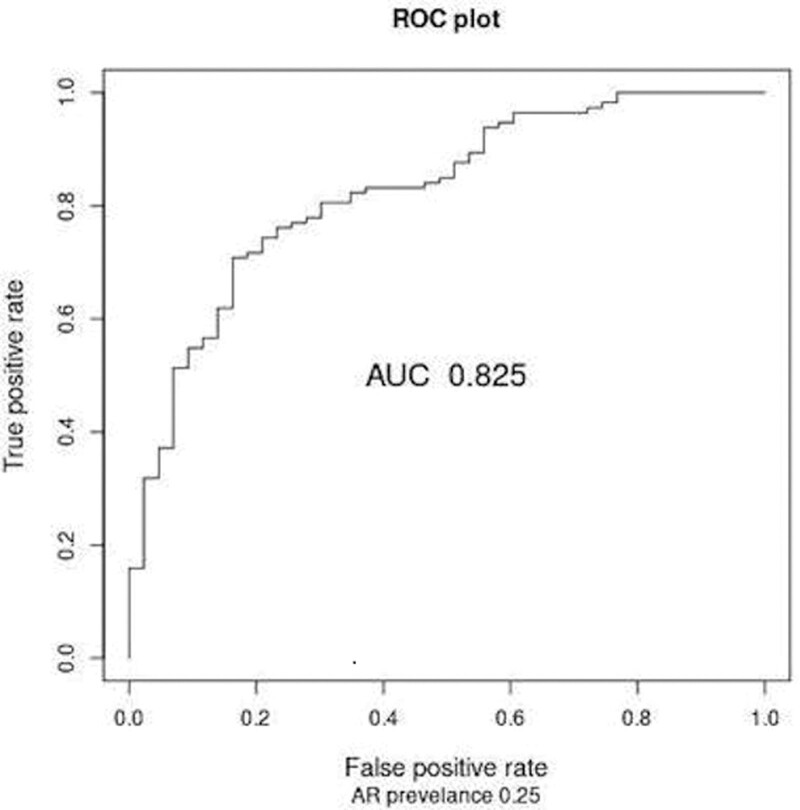
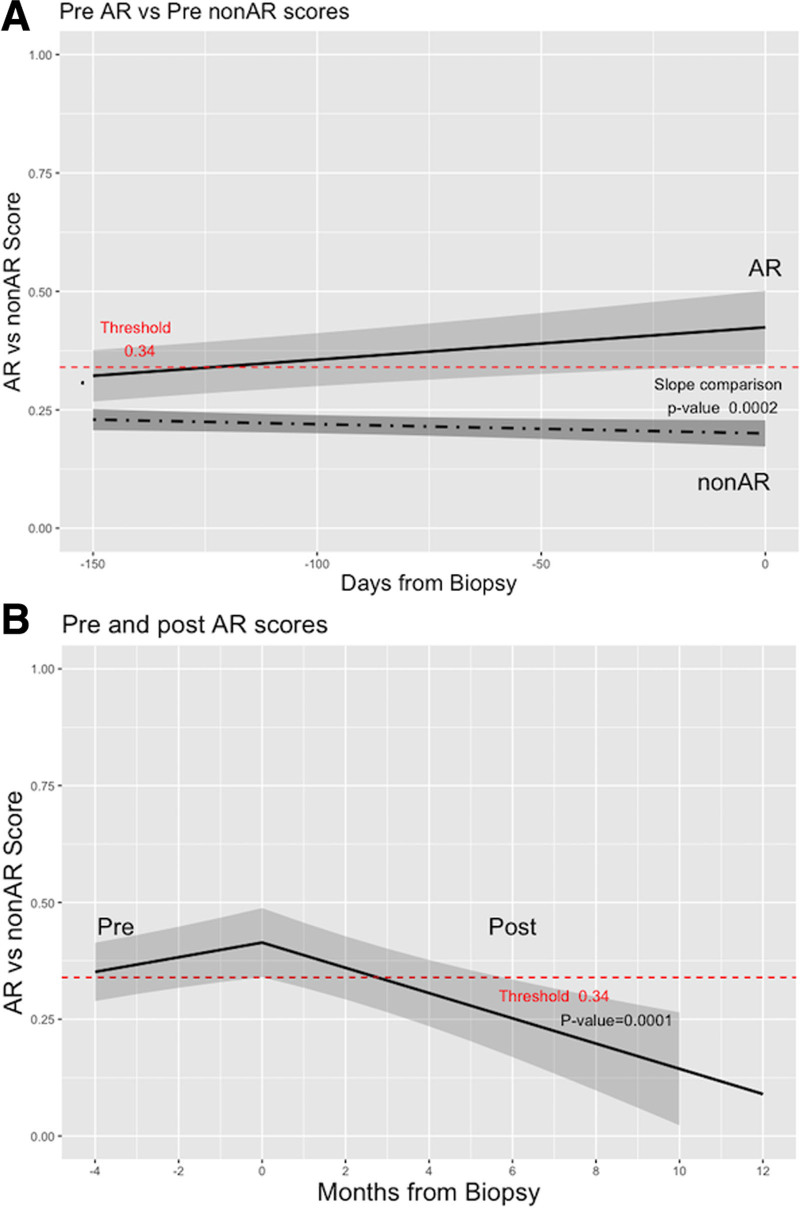
Background.: Noninvasive biomarkers distinguishing early immune activation before acute rejection (AR) could more objectively inform immunosuppression management in liver transplant recipients (LTRs). We previously reported a genomic profile distinguishing LTR with AR versus stable graft function. This current study includes key phenotypes with other causes of graft dysfunction and uses a novel random forest approach to augment the specificity of predicting and diagnosing AR. Methods.: Gene expression results in LTRs with AR versus non-AR (combination of other causes of graft dysfunction and normal function) were analyzed from single and multicenter cohorts. A 70:30 approach (61 ARs; 162 non-ARs) was used for training and testing sets. Microarray data were normalized using a LT-specific vector. Results.: Random forest modeling on the training set generated a 59-probe classifier distinguishing AR versus non-AR (area under the curve 0.83; accuracy 0.78, sensitivity 0.70, specificity 0.81, positive predictive value 0.54, negative predictive value [NPV] 0.89; F-score 0.61). Using a locked threshold, the classifier performed well on the testing set (accuracy 0.72, sensitivity 0.67, specificity 0.73, positive predictive value 0.48, NPV 0.86; F-score 0.56). Probability scores increased in samples preceding AR versus non-AR, when liver function tests were normal, and decreased following AR treatment (P < 0.001). Ingenuity pathway analysis of the genes revealed a high percentage related to immune responses and liver injury. Conclusions.: We have developed a blood-based biologically relevant biomarker that can be detected before AR-associated graft injury distinct from LTR never developing AR. Given its high NPV (“rule out AR”), the biomarker has the potential to inform precision-guided immunosuppression minimization in LTRs.
Overview
The claims and statistics of this paper haven’t been checked yet.
Free: it reads the open-access text and checks the first 5 claims that cite a source we can check. Create a free account to check every claim.
Integrity signals
Registry
Cites
Statistics
Figures
Verification
Claims the paper makes
The claims and statistics of this paper haven’t been checked yet.
Free: it reads the open-access text and checks the first 5 claims that cite a source we can check. Create a free account to check every claim.
Claims other papers make about this one
Each is checked against this paper’s own text: does it say what the citing paper says it does?
In the citing paper
“The AR and ADNR phenotypes were diagnosed by needle biopsy, and TX by clinical and laboratory criteria, as previously described (31–34).”
From The Blood Proteoform Atlas: A reference map of proteoforms in human hematopoietic cells (2022) · cites this paper as [33]
Self-check
Percentages, sums and reported differences re-computed from the paper’s own numbers.
The self-check needs the paper’s full text.
Citations
Cites
1 retracted
Immune Cell Functional Assay in Monitoring of Adult Liver Transplantation Recipients With Infection
Xue, F., Zhang, J., Han, L., Li, Q., Xu, N., Zhou, T., Xi, Z., Wu, Y., & Xia, Q. (2010) · Transplantation · doi:10.1097/tp.0b013e3181c690fa · Cited by 58 · cited 1×
“Routine serial monitoring with IST drug levels and liver function tests (LFTs) constitute nonspecific, insensitive tools to assess or predict immune status, specifically the onset of early immune activation preceding AR versus sustained immune quiescence.(12-15) Consequently, transplant clinicians practice “trial-and-…”
BackgroundRetractedRegularization Paths for Generalized Linear Models via Coordinate Descent
Friedman, J., Hastie, T., & Tibshirani, R. (2010) · Journal of Statistical Software · doi:10.18637/jss.v033.i01 · Cited by 19,927
Classification and Regression by randomForest
Liaw, A. I., & Wiener, M. C. (2007) · Cited by 18,594
Diagnosis of multiple cancer types by shrunken centroids of gene expression
Tibshirani, R., Hastie, T., Narasimhan, B., & Chu, G. (2002) · Proceedings of the National Academy of Sciences · doi:10.1073/pnas.082099299 · Cited by 2,930
Thévenot, E. A., Roux, A., Xu, Y., Ezan, E., & Junot, C. (2015) · Journal of Proteome Research · doi:10.1021/acs.jproteome.5b00354 · Cited by 1,735
Prediction models need appropriate internal, internal-external, and external validation
Steyerberg, E. W., & Harrell, F. E. (2016) · Journal of Clinical Epidemiology · doi:10.1016/j.jclinepi.2015.04.005 · Cited by 1,304 · cited 1×
“The split-sample approach with bootstrapping is an established methodology that still allows for sufficient discovery and validation of a biomarker in the absence of large sample sizes and gives reasonably valid estimates of the predictive performance of a given model.(38,65-67) That said, we recognize that additional…”
MethodBanff Schema for Grading Liver Allograft Rejection: An International Consensus Document
Demetris, A. J., Batts, K. P., Dhillon, A. P., Ferrell, L., Fung, J., Geller, S. A., Hart, J., Hayry, P., Hofmann, W. J., Hubscher, S., et al. (1997) · Hepatology · doi:10.1002/hep.510250328 · Cited by 1,272
A Comparison of Tacrolimus (FK 506) and Cyclosporine for Immunosuppression in Liver Transplantation
(1994) · New England Journal of Medicine · doi:10.1056/nejm199410273311702 · Cited by 920
Biomarkers: Potential uses and limitations
Mayeux, R. (2004) · NeuroRX · doi:10.1602/neurorx.1.2.182 · Cited by 916 · cited 1×
“While not representing determinants of disease, they still may be connected to the causal pathway.(64) Ultimately, biological relevance can be an important consideration for using functional biomarkers in clinical practice.”
BackgroundWatt, K. D. S., Pedersen, R. A., Kremers, W. K., Heimbach, J. K., & Charlton, M. R. (2010) · American Journal of Transplantation · doi:10.1111/j.1600-6143.2010.03126.x · Cited by 785 · cited 1×
“Malignancy, cardiovascular events, infections, and chronic kidney disease, all exacerbated by IST, are the leading causes of death in this patient population.(8-10) Importantly, CNIs specifically contribute to the development of chronic kidney disease, observed in a high percentage of LTRs.”
Background
Cited by
The Blood Proteoform Atlas: A reference map of proteoforms in human hematopoietic cells
Melani, R. D., Gerbasi, V. R., Anderson, L. C., Sikora, J. W., Toby, T. K., Hutton, J. E., Butcher, D. S., Negrão, F., Seckler, H. S., Srzentić, K., et al. (2022) · Science · doi:10.1126/science.aaz5284 · Cited by 140
Self-citationDonor-derived cell-free DNA levels predict graft injury in liver transplant recipients
Levitsky, J., Kandpal, M., Guo, K., Kleiboeker, S., Sinha, R., & Abecassis, M. (2022) · American Journal of Transplantation · doi:10.1111/ajt.16835 · Cited by 102
Self-citationNoninvasive biomarkers for the diagnosis and management of autoimmune hepatitis
Harrington, C., Krishnan, S., Mack, C. L., Cravedi, P., Assis, D. N., & Levitsky, J. (2022) · Hepatology · doi:10.1002/hep.32591 · Cited by 69
Self-citationLoupy, A., Sablik, M., Khush, K. K., & Reese, P. P. (2025) · The Lancet · doi:10.1016/s0140-6736(25)00195-3 · Cited by 67
Biomarkers of rejection in liver transplantation
Perottino, G. M., Harrington, C., & Levitsky, J. (2022) · Current Opinion in Organ Transplantation · doi:10.1097/mot.0000000000000959 · Cited by 30
Self-citationMillán, O., Ruíz, P., Julian, J. A., Lizana, A. M., Fundora, Y., Crespo, G., Colmenero, J., Navasa, M., & Brunet, M. (2023) · Frontiers in Immunology · doi:10.3389/fimmu.2023.1196882 · Cited by 20
Merola, J., Emond, J. C., & Levitsky, J. (2023) · Transplantation · doi:10.1097/tp.0000000000004580 · Cited by 19
“Markers of relevant immune pathways that included transcripts such as alpha synuclein, tyrosine phosphate, and X inactive specific transcript were included in this panel, rendering a high negative predictive value of 89% and a lower positive predictive value of 54%.(8) This panel is being evaluated prospectively in a…”
BackgroundSelf-citationExpression of unfolded protein response genes in post-transplantation liver biopsies
Liu, X., Taylor, S. A., Celaj, S., Levitsky, J., & Green, R. M. (2022) · BMC Gastroenterology · doi:10.1186/s12876-022-02459-8 · Cited by 16
“5] Immunosuppression (%) CNI therapy 3 (100) 3 (100) 4 (100) 9 (100) Mycophenolic acid therapy 3 (100) 3 (100) 2 (50) 2 (22) Predisone 1 (33) 3 (100) 1 (25) 4 (44) Laboratory Values (mean, [range]) ALT (U/L) 172 [68, 252] 165 [27, 302] 54 [20, 84] 98 [22, 303] AST (U/L) 115 [27, 178] 104 [50, 134] 41 [18, 64] 44 [22,…”
Self-citationWang, G., Chen, H., Sun, P., Zhou, W., Jiang, H., Zhong, Z., Chen, M., Xie, X., Luo, Z., & Zhou, L. (2023) · Hepatology Research · doi:10.1111/hepr.13948 · Cited by 14
Harding-Theobald, E. R., & Kriss, M. S. (2023) · Clinical Liver Disease · doi:10.1097/cld.0000000000000057 · Cited by 13
“A 2022 study by Levitsky et al[8] demonstrated the validity of a 59-gene biomarker, which succeeds in distinguishing transplant recipients with acute rejection.”
BackgroundChichelnitskiy, E., Goldschmidt, I., Ruhl, L., Rübsamen, N., Jaeger, V. K., Karch, A., Beushausen, K., Keil, J., Götz, J. K., D’Antiga, L., et al. (2024) · Journal of Hepatology · doi:10.1016/j.jhep.2024.05.032 · Cited by 8
Millán, O., Julian, J., & Brunet, M. (2024) · Therapeutic Drug Monitoring · doi:10.1097/ftd.0000000000001276 · Cited by 6
“Recently, Levitsky et al 4,7 developed a novel discovery modeling approach to augment the clinical and biological speci fi city of blood-based genomic biomarkers of AR in liver transplant recipients.”
Personalized Nanomedicine-Mediated immune regulation for Anti-Rejection in organ transplantation
Wang, H., Li, Y., Qiu, D., Pan, Q., Xu, Y., Liu, Y., & Wu, Y. (2025) · International Journal of Pharmaceutics · doi:10.1016/j.ijpharm.2025.125450 · Cited by 4
Giraudi, P. J., Codotto, G., Baccarani, U., Baralle, F. E., Gondolesi, G. E., Licastro, D., & Tiribelli, C. (2025) · Transplantation · doi:10.1097/tp.0000000000005466 · Cited by 3
Les inferences en lecture : Intervenir dès le préscolaire
Makdissi, H., Boisclair, A., & Sánchez, C. (2006) · Érudit (Université de Montréal) · Cited by 3
How to Estimate the Probability of Tolerance Long-Term in Liver Transplant Recipients
Eurich, D., Schlickeiser, S., Saidy, R. R. O., Uluk, D., Roßner, F., Postel, M. P., Schoening, W. N., Oellinger, R., Lurje, G., Pratschke, J., et al. (2023) · Journal of Clinical Medicine · doi:10.3390/jcm12206546 · Cited by 4
“Previously published work largely suggests complex analyses of rejection or tolerance markers to clusters of parameters obtained at the subcellular level, which are costly, complicated, and furthermore fail validation [17,25].”
BackgroundBaciu, C., Ghosh, S., Naimimohasses, S., Rahmani, A., Pasini, E., Naghibzadeh, M., Azhie, A., & Bhat, M. (2024) · Metabolites · doi:10.3390/metabo14050254 · Cited by 3
“Levitsky et al. used a panel of gene expression signatures to distinguish LT recipients with TCMR from another group encompassing all other graft pathologies (AUC = 0.83, accuracy 0.78, sensitivity 0.70, specificity 0.81) [15].”
BackgroundInfluentialAmjad, E., & Sokouti, B. (2025) · OBM Transplantation · doi:10.21926/obm.transplant.2502251 · Cited by 2
Ai, C., Song, J., Chi, Y., Xu, G., Yang, J., Lv, T., Jin, S., Wu, H. M., Xiang, B., & Yang, J. (2025) · International Journal of Surgery · doi:10.1097/js9.0000000000002279 · Cited by 2
“…adults, with little focus on TCMR. Previous studies have identified several factors, such as elevated eosinophil count, increased circulating Th17 cells, specific serum miRNA and lncRNA, and the presence of HLA antibodies, as promising markers of TCMR with significant outcomes [ 10 , 11 , 25–29 ] .”
Modern xenotransplantation: rewiring glycan-mediated immunogenicity via genome-glycome convergence
Wang, M., Wang, Q., Liu, Y., Xu, J., Su, Y., Bai, H., Wang, Y., & Dong, J. (2026) · EBioMedicine · doi:10.1016/j.ebiom.2025.106109 · Cited by 3
“104,105 These predictive tools help guide personalised immunosuppression regimens and inform the selection of appropriate genetically engineered donor organs.”
Li, Q.-X., Zhang, J.-X., Li, H., Li, X.-L., He, Q., Han, D., & Zhu, J. Y. (2026) · Frontiers in Immunology · doi:10.3389/fimmu.2026.1760409 · Cited by 1
“Studies by Levitsky et al (31) have demonstrated impressive performance (AUC 0.95 for rejection vs normal function) and the ability to detect rejection up to 100 days before clinical manifestation.”
InfluentialOmics Biomarkers for Prediction of Rejection—A Thermometer for Alloimmune Activation
Shaked, A., & Loza, B.-L. (2021) · Transplantation · doi:10.1097/tp.0000000000003896
中村, 祥., & ビートたけし (2006) · 新潮45
Molecular Characterization of Injury and Rejection in Solid Organ Transplant
Barner, M., & Kashi, Z. (2024) · Wiley eBooks · doi:10.1002/9781683674023.ch117
A Unified Metric of Human Immune Health?
Baird, T., & Sansom, S. N. (2025) · Transplantation · doi:10.1097/tp.0000000000005378
Ruíz, P., Millán, O., Fundora, Y., Julian, J., Crespo, G., Bataller, R. A., Colmenero, J., & Brunet, M. (2025) · Scientific Reports · doi:10.1038/s41598-025-32120-9 · Cited by 1
Liu, X., Taylor, S. A., Celaj, S., Levitsky, J., & Green, R. M. (2022) · Figshare · doi:10.6084/m9.figshare.20472415
Self-citationLiu, X., Taylor, S. A., Celaj, S., Levitsky, J., & Green, R. M. (2022) · Figshare · doi:10.6084/m9.figshare.20472418
Self-citationLiu, X., Taylor, S. A., Celaj, S., Levitsky, J., & Green, R. M. (2022) · Figshare · doi:10.6084/m9.figshare.20472421
Self-citationLiu, X., Taylor, S. A., Celaj, S., Levitsky, J., & Green, R. M. (2022) · Figshare · doi:10.6084/m9.figshare.20472406
Self-citationLiu, X., Taylor, S. A., Celaj, S., Levitsky, J., & Green, R. M. (2022) · Figshare · doi:10.6084/m9.figshare.20472409
Self-citationLiu, X., Taylor, S. A., Celaj, S., Levitsky, J., & Green, R. M. (2022) · Figshare · doi:10.6084/m9.figshare.20472412
Self-citationExploring Chronic Rejection in Organ Transplantation Through Computational Modeling
Casarin, S., & Serafini, E. (2026) · Results and problems in cell differentiation · doi:10.1007/978-3-032-07686-1_3
Khosroshahi, H. T., Farnood, F., Adigozali, F., Shamlou, Z. H., Hashemi, A., & Mardomi, A. (2026) · Transplant Immunology · doi:10.1016/j.trim.2026.102407 · Cited by 1
An Approach to Antibody‐Mediated Rejection in Pediatric Liver Transplantation
Jaramillo, C., Randhawa, P. S., Narang, A., Gareau, A. J., Weckwerth, J. A., Mavis, A., Mazariegos, G. V., Furuya, K. N., & Kerkar, N. N. (2026) · Pediatric Transplantation · doi:10.1111/petr.70455
“Levitsky et al. [79] have reported a genomic profile in LTx recipients with stable graft function versus rejection, and developed a blood-based biomarker that can be detected before acute rejection develops, which is distinct from the pattern seen in LTx recipients who have not developed acute…”
Gao, J., Shi, Z., Jin, X., Jiao, Z., Xu, Z., Ye, G., Wang, Y., Guo, F., Yang, L., & Gao, Z. (2026) · Frontiers in Immunology · doi:10.3389/fimmu.2026.1982931
Metadata
- Authors
- Levitsky, J., Kandpal, M., Guo, K., Zhao, L., Kurian, S., Whisenant, T., & Abecassis, M.
- Affiliations
- Northwestern University (US)
- Scripps Green Hospital (US)
- University of California San Diego (US)
- University of Arizona (US)
- Corresponding author
- Levitsky, Josh
- ORCID
- Venue
- Transplantation
- Published
- 2021-07-22
- Volume
- 106
- Issue
- 5
- Pages
- 1004-1011
- ISSN
- 0041-1337 (ISSN-L)
- PMC
- PMC9301991
- OpenAlex
- W3185370477
- Cited by
- 36
- References
- 69
- Citations by year
- 2026: 6 · 2025: 7 · 2024: 4 · 2023: 5 · 2022: 10 · 2021: 2
- FWCI
- 4.93
- Type
- journal article
- Language
- en
- Open access
- hybrid
- doi.org
- Licence
- Locations
- Transplantation (publishedVersion, cc-by-nc-nd)
- PubMed Central (publishedVersion, cc-by-nc-nd)
- PubMed (publishedVersion)
- Funders
- National Institute of Allergy and Infectious Diseases (U01AI084146)
- Topics
- Health Sciences › Medicine › Surgery › Organ Transplantation Techniques and Outcomes
- Health Sciences › Medicine › Surgery › Transplantation: Methods and Outcomes
- Health Sciences › Medicine › Transplantation › Renal Transplantation Outcomes and Treatments
- Keywords
- liver transplant rejection, acute rejection, gene expression signatures, random forest, non-invasive biomarkers, graft dysfunction, immunosuppression management, blood-based biomarkers, liver injury, immune response genes, Ingenuity Pathway Analysis
- MeSH terms
- Graft Rejection, Humans, Postoperative Complications, Biomarkers, Kidney Transplantation, Liver Transplantation, Transcriptome
About these checks
Registry, retraction, Cites and statistics results are computed, not judged, with one exception: a printed reference that no index lists is read once by a model before it counts as a citation error. Claims are extracted by a model and kept only when their quote appears verbatim in the text; each cited source is then checked, with a model’s help, for whether it says what the claim relies on. Those verdicts can be wrong — read the claim’s quote and the cited source before relying on one.
Statistics and arithmetic are recomputed, not judged.
Confidence bands are shown only for fields calibrated on our annotated test set. None is calibrated yet, so no band is shown.
What counts as a claim ›How we measure confidence ›How we check this ›
Are you an author, or do you see a problem with this page? Request a review
Data sources
Bibliographic data: Semantic Scholar, OpenAlex, Crossref.
Contains information from the Semantic Scholar Academic Graph Datasets, made available under the ODC Attribution License (ODC-BY 1.0).
Semantic Scholar’s data is described in: Kinney, R., et al. (2023). The Semantic Scholar Open Data Platform. arXiv:2301.10140.
