

Prediction of Liver Transplant Rejection With a Biologically Relevant Gene Expression Signature
Open accessThe DOI matches its Crossref record; 69 of the 69 references it cites were found in a registry or an index.
Abstract
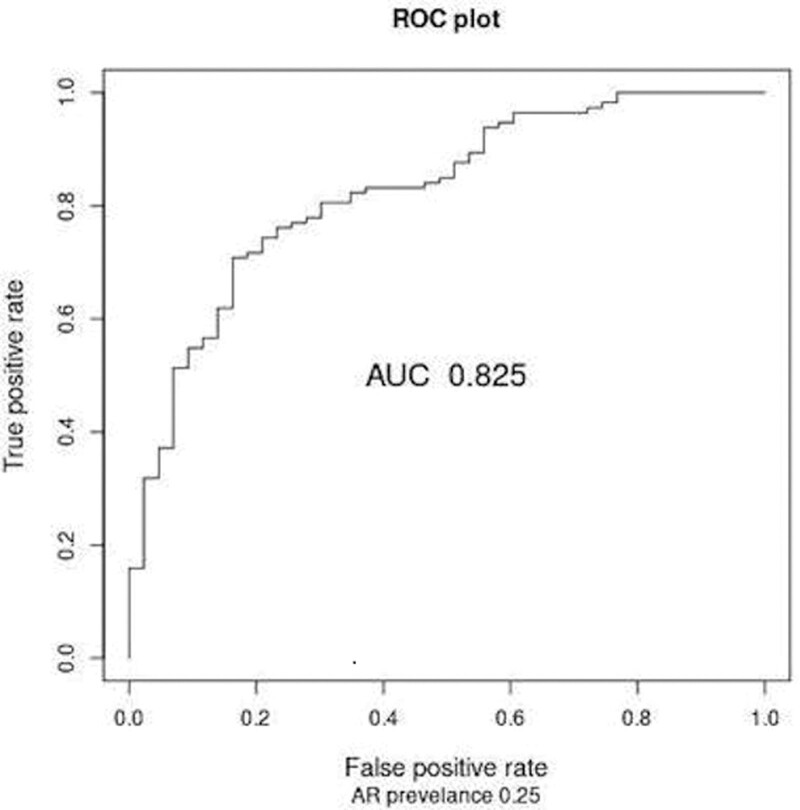
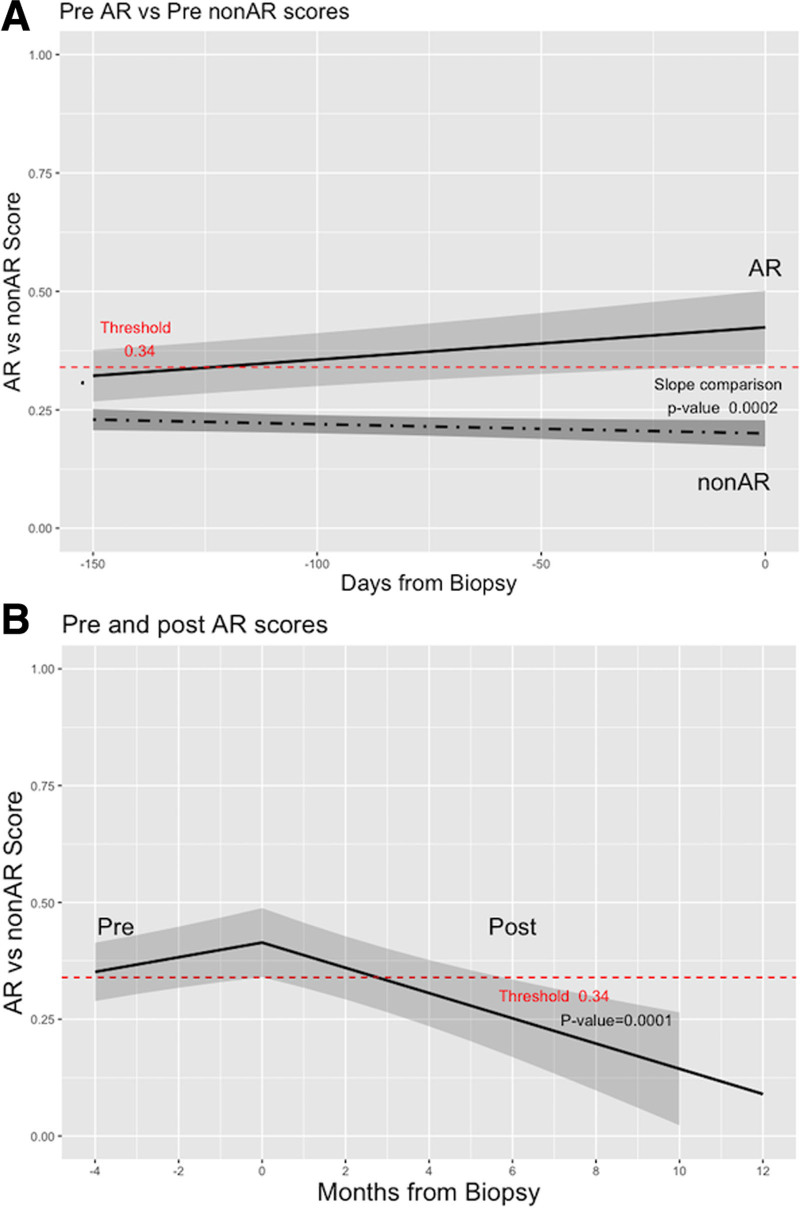
Background.: Noninvasive biomarkers distinguishing early immune activation before acute rejection (AR) could more objectively inform immunosuppression management in liver transplant recipients (LTRs). We previously reported a genomic profile distinguishing LTR with AR versus stable graft function. This current study includes key phenotypes with other causes of graft dysfunction and uses a novel random forest approach to augment the specificity of predicting and diagnosing AR. Methods.: Gene expression results in LTRs with AR versus non-AR (combination of other causes of graft dysfunction and normal function) were analyzed from single and multicenter cohorts. A 70:30 approach (61 ARs; 162 non-ARs) was used for training and testing sets. Microarray data were normalized using a LT-specific vector. Results.: Random forest modeling on the training set generated a 59-probe classifier distinguishing AR versus non-AR (area under the curve 0.83; accuracy 0.78, sensitivity 0.70, specificity 0.81, positive predictive value 0.54, negative predictive value [NPV] 0.89; F-score 0.61). Using a locked threshold, the classifier performed well on the testing set (accuracy 0.72, sensitivity 0.67, specificity 0.73, positive predictive value 0.48, NPV 0.86; F-score 0.56). Probability scores increased in samples preceding AR versus non-AR, when liver function tests were normal, and decreased following AR treatment (P < 0.001). Ingenuity pathway analysis of the genes revealed a high percentage related to immune responses and liver injury. Conclusions.: We have developed a blood-based biologically relevant biomarker that can be detected before AR-associated graft injury distinct from LTR never developing AR. Given its high NPV (“rule out AR”), the biomarker has the potential to inform precision-guided immunosuppression minimization in LTRs.
Overview
The claims and statistics of this paper haven’t been checked yet.
Free: it reads the open-access text and checks the first 5 claims that cite a source we can check. Create a free account to check every claim.
Integrity signals
Registry
Cites
Statistics
Figures
Verification
Claims the paper makes
The claims and statistics of this paper haven’t been checked yet.
Free: it reads the open-access text and checks the first 5 claims that cite a source we can check. Create a free account to check every claim.
Claims other papers make about this one
Each is checked against this paper’s own text: does it say what the citing paper says it does?
In the citing paper
“The AR and ADNR phenotypes were diagnosed by needle biopsy, and TX by clinical and laboratory criteria, as previously described (31–34).”
From The Blood Proteoform Atlas: A reference map of proteoforms in human hematopoietic cells (2022) · cites this paper as [33]
Self-check
Percentages, sums and reported differences re-computed from the paper’s own numbers.
The self-check needs the paper’s full text.
Citations
Cites
1 retracted
Immune Cell Functional Assay in Monitoring of Adult Liver Transplantation Recipients With Infection
Xue, F., Zhang, J., Han, L., Li, Q., Xu, N., Zhou, T., Xi, Z., Wu, Y., & Xia, Q. (2010) · Transplantation · doi:10.1097/tp.0b013e3181c690fa · Cited by 58 · cited 1×
“Routine serial monitoring with IST drug levels and liver function tests (LFTs) constitute nonspecific, insensitive tools to assess or predict immune status, specifically the onset of early immune activation preceding AR versus sustained immune quiescence.(12-15) Consequently, transplant clinicians practice “trial-and-…”
BackgroundRetractedRegularization Paths for Generalized Linear Models via Coordinate Descent
Friedman, J., Hastie, T., & Tibshirani, R. (2010) · Journal of Statistical Software · doi:10.18637/jss.v033.i01 · Cited by 19,927
Classification and Regression by randomForest
Liaw, A. I., & Wiener, M. C. (2007) · Cited by 18,594
Diagnosis of multiple cancer types by shrunken centroids of gene expression
Tibshirani, R., Hastie, T., Narasimhan, B., & Chu, G. (2002) · Proceedings of the National Academy of Sciences · doi:10.1073/pnas.082099299 · Cited by 2,930
Thévenot, E. A., Roux, A., Xu, Y., Ezan, E., & Junot, C. (2015) · Journal of Proteome Research · doi:10.1021/acs.jproteome.5b00354 · Cited by 1,735
Prediction models need appropriate internal, internal-external, and external validation
Steyerberg, E. W., & Harrell, F. E. (2016) · Journal of Clinical Epidemiology · doi:10.1016/j.jclinepi.2015.04.005 · Cited by 1,304 · cited 1×
“The split-sample approach with bootstrapping is an established methodology that still allows for sufficient discovery and validation of a biomarker in the absence of large sample sizes and gives reasonably valid estimates of the predictive performance of a given model.(38,65-67) That said, we recognize that additional…”
MethodBanff Schema for Grading Liver Allograft Rejection: An International Consensus Document
Demetris, A. J., Batts, K. P., Dhillon, A. P., Ferrell, L., Fung, J., Geller, S. A., Hart, J., Hayry, P., Hofmann, W. J., Hubscher, S., et al. (1997) · Hepatology · doi:10.1002/hep.510250328 · Cited by 1,272
A Comparison of Tacrolimus (FK 506) and Cyclosporine for Immunosuppression in Liver Transplantation
(1994) · New England Journal of Medicine · doi:10.1056/nejm199410273311702 · Cited by 920
Biomarkers: Potential uses and limitations
Mayeux, R. (2004) · NeuroRX · doi:10.1602/neurorx.1.2.182 · Cited by 916 · cited 1×
“While not representing determinants of disease, they still may be connected to the causal pathway.(64) Ultimately, biological relevance can be an important consideration for using functional biomarkers in clinical practice.”
BackgroundWatt, K. D. S., Pedersen, R. A., Kremers, W. K., Heimbach, J. K., & Charlton, M. R. (2010) · American Journal of Transplantation · doi:10.1111/j.1600-6143.2010.03126.x · Cited by 785 · cited 1×
“Malignancy, cardiovascular events, infections, and chronic kidney disease, all exacerbated by IST, are the leading causes of death in this patient population.(8-10) Importantly, CNIs specifically contribute to the development of chronic kidney disease, observed in a high percentage of LTRs.”
BackgroundDemetris, A. J., Bellamy, C., Hübscher, S. G., O’Leary, J., Randhawa, P. S., Feng, S., Neil, D., Colvin, R. B., McCaughan, G., Fung, J. J., et al. (2016) · American Journal of Transplantation · doi:10.1111/ajt.13909 · Cited by 650 · cited 2×
“Recent data have however continued to show the impact of AR on survival, stimulating a resurgence of interest in rejection types, management, and outcomes.(5-7) Thus, this ongoing concern may influence clinicians to maintain a higher level of IST Original Clinical Science—Liver”
BackgroundSelf-citationSteyerberg, E. W., Bleeker, S. E., Moll, H. A., Grobbee, D. E., & Moons, K. G. M. (2003) · Journal of Clinical Epidemiology · doi:10.1016/s0895-4356(03)00047-7 · Cited by 611 · cited 1×
“The split-sample approach with bootstrapping is an established methodology that still allows for sufficient discovery and validation of a biomarker in the absence of large sample sizes and gives reasonably valid estimates of the predictive performance of a given model.(38,65-67) That said, we recognize that additional…”
MethodFrozen robust multiarray analysis (fRMA)
McCall, M. N., Bolstad, B. M., & Irizarry, R. A. (2010) · Biostatistics · doi:10.1093/biostatistics/kxp059 · Cited by 590
Gene-Expression Profiling for Rejection Surveillance after Cardiac Transplantation
Pham, M. X., Teuteberg, J. J., Kfoury, A. G., Starling, R. C., Deng, M. C., Cappola, T. P., Kao, A., Anderson, A. S., Cotts, W. G., Ewald, G. A., et al. (2010) · New England Journal of Medicine · doi:10.1056/nejmoa0912965 · Cited by 520
Acute hepatic allograft rejection: Incidence, risk factors, and impact on outcome †
Wiesner, R. H., Demetris, J. A., Belle, S. H., Seaberg, E. C., Lake, J. R., Zetterman, R. K., Everhart, J., & Detre, K. M. (1998) · Hepatology · doi:10.1002/hep.510280306 · Cited by 495 · cited 2×
“This changed with the institution of calcineurin inhibitor (CNI) therapies that lowered AR rates resulting in significant improvements in graft and patient survival.(1-4) Recent data have however continued to show the impact of AR on survival, stimulating a resurgence of interest in rejection types, management, and ou…”
BackgroundLiver Transplantation with Use of Cyclosporin a and Prednisone
Starzl, T. E., Klintmalm, G. B. G., Porter, K. A., Iwatsuki, S., & Schröter, G. P. J. (1981) · New England Journal of Medicine · doi:10.1056/nejm198107303050507 · Cited by 492 · cited 1×
“This changed with the institution of calcineurin inhibitor (CNI) therapies that lowered AR rates resulting in significant improvements in graft and patient survival.(1-4) Recent data have however continued to show the impact of AR on survival, stimulating a resurgence of interest in rejection types, management, and ou…”
BackgroundEvolution of Translational Omics: Lessons Learned and the Path Forward
Micheel, C., Nass, S. J., & Omenn, G. S. (2013) · Cited by 414
Hendriks, J., Xiao, Y., & Borst, J. (2003) · The Journal of Experimental Medicine · doi:10.1084/jem.20030916 · Cited by 376 · cited 1×
“CD9, a tetraspanin, has been targeted for modulating inflammation, and CD27 has been shown to promote survival and expansion of activated T cells.(56) In addition, the rapid resolution of the signature along with LFT normalization with corticosteroid therapy further suggests its specificity for immune-related graft in…”
BackgroundAssessing Relative Risks of Infection and Rejection: A Meta-analysis using an Immune Function Assay
Kowalski, R. J., Post, D. R., Mannon, R. B., Sebastian, A., Wright, H. I., Sigle, G., Burdick, J., Elmagd, K. A., Zeevi, A., Lopez-Cepero, M., et al. (2006) · Transplantation · doi:10.1097/01.tp.0000234837.02126.70 · Cited by 330 · cited 1×
“Routine serial monitoring with IST drug levels and liver function tests (LFTs) constitute nonspecific, insensitive tools to assess or predict immune status, specifically the onset of early immune activation preceding AR versus sustained immune quiescence.(12-15) Consequently, transplant clinicians practice “trial-and-…”
BackgroundCharlton, M., Levitsky, J., Aqel, B., O'Grady, J., Hemibach, J., Rinella, M., Fung, J., Ghabril, M., Thomason, R., Burra, P., et al. (2018) · Transplantation · doi:10.1097/tp.0000000000002147 · Cited by 310 · cited 1×
“Recent data have however continued to show the impact of AR on survival, stimulating a resurgence of interest in rejection types, management, and outcomes.(5-7) Thus, this ongoing concern may influence clinicians to maintain a higher level of IST Original Clinical Science—Liver”
BackgroundSelf-citationAcute Rejection Increases Risk of Graft Failure and Death in Recent Liver Transplant Recipients
Levitsky, J., Goldberg, D., Smith, A. R., Mansfield, S. A., Gillespie, B. W., Merion, R. M., Lok, A. S. F., Levy, G., Kulik, L., Abecassis, M., et al. (2017) · Clinical Gastroenterology and Hepatology · doi:10.1016/j.cgh.2016.07.035 · Cited by 236 · cited 4×
“%) to report an adjusted PPV and NPV.5,45-47”
BackgroundMethodSelf-citationThe Role of Donor-Specific HLA Alloantibodies in Liver Transplantation
O’Leary, J. G., Demetris, A. J., Friedman, L. S., Gebel, H. M., Halloran, P. F., Kirk, A. D., Knechtle, S. J., McDiarmid, S. V., Shaked, A., Terasaki, P. I., et al. (2014) · American Journal of Transplantation · doi:10.1111/ajt.12667 · Cited by 216 · cited 1×
“We did not test for donor-specific antibodies, and, given emerging data, they should be included in future immune monitoring studies predicting or diagnosing different rejection types.(50,68-70) That said, there were no CPs of AR or ADNR evident for 90 d before and after the TX sample, and the phenotypes all were vali…”
MethodFarid, W. R. R., Pan, Q., van der Meer, A. J. P., de Ruiter, P. E., Ramakrishnaiah, V., de Jonge, J., Kwekkeboom, J., Janssen, H. L. A., Metselaar, H. J., Tilanus, H. W., et al. (2012) · Liver Transplantation · doi:10.1002/lt.22438 · Cited by 212
Bohne, F., Martínez-Llordella, M., Lozano, J.-J., Miquel, R., Benítez, C., Londoño, M.-C., Manzia, T.-M., Angelico, R., Swinkels, D. W., Tjalsma, H., et al. (2012) · Journal of Clinical Investigation · doi:10.1172/jci59411 · Cited by 210 · cited 1×
“In studies of other organ transplant recipients, blood/graft biomarkers of rejection have not reliably demonstrated biological relevance to immune or inflammatory pathways.(36,58-62) Even in cancer, the most widely studied disease, there are hundreds of genetic variants that might predict response to radiation, yet th…”
BackgroundCharlton, M., & Seaberg, E. (1999) · PubMed · doi:10.1053/jtls005s00107 · Cited by 180 · cited 3×
“This changed with the institution of calcineurin inhibitor (CNI) therapies that lowered AR rates resulting in significant improvements in graft and patient survival.(1-4) Recent data have however continued to show the impact of AR on survival, stimulating a resurgence of interest in rejection types, management, and ou…”
BackgroundMethodInfluentialVanWagner, L. B., Serper, M., Kang, R., Levitsky, J., Hohmann, S., Abecassis, M., Skaro, A., & Lloyd-Jones, D. M. (2016) · American Journal of Transplantation · doi:10.1111/ajt.13779 · Cited by 180 · cited 1×
“Malignancy, cardiovascular events, infections, and chronic kidney disease, all exacerbated by IST, are the leading causes of death in this patient population.(8-10) Importantly, CNIs specifically contribute to the development of chronic kidney disease, observed in a high percentage of LTRs.”
BackgroundSelf-citationXist regulation and function eXplored
Pontier, D. B., & Gribnau, J. H. (2011) · Human Genetics · doi:10.1007/s00439-011-1008-7 · Cited by 176 · cited 1×
“The most upregulated gene in AR was X inactive specific transcript (XIST), which is a long noncoding RNA involved in X chromosome silencing.(51) XIST upregulation in AR may reflect the gender differences in the 2 cohorts and the role of XIST in modulating injury in organ transplantation.”
BackgroundFeng, S., Bucuvalas, J. C., Demetris, A. J., Burrell, B. E., Spain, K. M., Kanaparthi, S., Magee, J. C., Ikle, D., Lesniak, A., Lozano, J. J., et al. (2018) · Gastroenterology · doi:10.1053/j.gastro.2018.08.023 · Cited by 160
Friedewald, J. J., Kurian, S. M., Heilman, R. L., Whisenant, T. C., Poggio, E. D., Marsh, C. L., Baliga, P. K., Odim, J. N. K., Brown, M. M., Iklé, D. N., et al. (2018) · American Journal of Transplantation · doi:10.1111/ajt.15011 · Cited by 158
Self-citationOutcomes of immunosuppression minimization and withdrawal early after liver transplantation
Shaked, A., DesMarais, M. R., Kopetskie, H., Feng, S., Punch, J. D., Levitsky, J., Reyes, J., Klintmalm, G. B., Demetris, A. J., Burrell, B. E., et al. (2019) · American Journal of Transplantation · doi:10.1111/ajt.15205 · Cited by 155 · cited 1×
“More recent studies using serial samples have demonstrated increasing levels of microRNAs, donor-specific antibodies, and blood CXCL10 gene expression before rejection, mainly during the course of full IST withdrawal.(28,29,49,50) These may have a role in predicting AR in highly select LTRs enrolled in tolerance studi…”
BackgroundSelf-citationLevitsky, J., O’Leary, J. G., Asrani, S., Sharma, P., Fung, J., Wiseman, A., & Niemann, C. U. (2016) · American Journal of Transplantation · doi:10.1111/ajt.13765 · Cited by 140 · cited 8×
“In this report, we have used a novel modeling approach to augment the clinical and biological specificity of bloodbased genomic biomarkers of AR in LTRs.”
BackgroundSelf-citationO’Leary, J. G., Kaneku, H., Jennings, L. W., Bañuelos, N., Susskind, B. M., Terasaki, P. I., & Klintmalm, G. B. G. (2013) · Liver Transplantation · doi:10.1002/lt.23687 · Cited by 132 · cited 1×
“We did not test for donor-specific antibodies, and, given emerging data, they should be included in future immune monitoring studies predicting or diagnosing different rejection types.(50,68-70) That said, there were no CPs of AR or ADNR evident for 90 d before and after the TX sample, and the phenotypes all were vali…”
MethodThurairajah, P. H., Carbone, M., Bridgestock, H., Thomas, P., Hebbar, S., Gunson, B. K., Shah, T., & Neuberger, J. (2013) · Transplantation · doi:10.1097/tp.0b013e3182845f6c · Cited by 122 · cited 9×
“Using a locked threshold, the classifier performed well on the testing set (accuracy 0.72, sensitivity 0.67, specificity 0.73, positive predictive value 0.48, NPV 0.86; F-score 0.56).”
BackgroundMethodInfluentialKurian, S. M., Williams, A. N., Gelbart, T., Campbell, D., Mondala, T. S., Head, S. R., Horvath, S., Gaber, L., Thompson, R., Whisenant, T., et al. (2014) · American Journal of Transplantation · doi:10.1111/ajt.12671 · Cited by 112 · cited 2×
“Blood samples in PAXgene tubes (BD BioSciences, San Jose, CA) were processed, as described previously.(30,35,36) Raw expression (.”
BackgroundMethodSelf-citationModena, B. D., Kurian, S. M., Gaber, L. W., Waalen, J., Su, A. I., Gelbart, T., Mondala, T. S., Head, S. R., Papp, S. L., Heilman, R. L., et al. (2016) · American Journal of Transplantation · doi:10.1111/ajt.13728 · Cited by 112 · cited 1×
“In studies of other organ transplant recipients, blood/graft biomarkers of rejection have not reliably demonstrated biological relevance to immune or inflammatory pathways.(36,58-62) Even in cancer, the most widely studied disease, there are hundreds of genetic variants that might predict response to radiation, yet th…”
BackgroundSelf-citationLoon, E. V., Gazut, S., Yazdani, S., Lerut, E., de Loor, H., Coemans, M., Noël, L., Thorrez, L., Lommel, L. V., Schuit, F. C., et al. (2019) · EBioMedicine · doi:10.1016/j.ebiom.2019.07.028 · Cited by 100
Late acute rejection after liver transplantation impacts patient survival
Uemura, T., Ikegami, T., Sanchez, E. Q., Jennings, L. W., Narasimhan, G., McKenna, G. J., Randall, H. B., Chinnakotla, S., Levy, M. F., Goldstein, R. M., et al. (2008) · Clinical Transplantation · doi:10.1111/j.1399-0012.2007.00788.x · Cited by 91 · cited 9×
“Using a locked threshold, the classifier performed well on the testing set (accuracy 0.72, sensitivity 0.67, specificity 0.73, positive predictive value 0.48, NPV 0.86; F-score 0.56).”
BackgroundMethodInfluentialCheng, Q., & Wang, L. (2020) · Cell Cycle · doi:10.1080/15384101.2019.1707454 · Cited by 90 · cited 1×
“The interaction of XIST with microRNAs modulates acute kidney injury.(53) Another immune response gene in the panel is alpha-synuclein, which is highly expressed in monocytes and hematopoietic precursor cells, which could reflect impaired hematopoiesis in liver rejection.”
BackgroundShaked, A., Chang, B., Barnes, M. R., Sayre, P., Li, Y. R., Asare, S., DesMarais, M., Holmes, M. V., Guettouche, T., & Keating, B. J. (2017) · Hepatology · doi:10.1002/hep.28786 · Cited by 81
Mengel, M., Sis, B., Kim, D., Chang, J. J., Famulski, K. S., Hidalgo, L. G., Einecke, G., de Freitas, D. G., Tymchak, W. J., Burton, J., et al. (2010) · American Journal of Transplantation · doi:10.1111/j.1600-6143.2010.03182.x · Cited by 64 · cited 1×
“In studies of other organ transplant recipients, blood/graft biomarkers of rejection have not reliably demonstrated biological relevance to immune or inflammatory pathways.(36,58-62) Even in cancer, the most widely studied disease, there are hundreds of genetic variants that might predict response to radiation, yet th…”
BackgroundLong-term outcome of ‘long-term liver transplant survivors’
Rubín, A., Sánchez-Montes, C., Aguilera, V., Juan, F. S., Ferrer, I., Moya, A., Montalva, E., Pareja, E., López-Andujar, R., Prieto, M., et al. (2013) · Transplant International · doi:10.1111/tri.12118 · Cited by 64 · cited 1×
“Malignancy, cardiovascular events, infections, and chronic kidney disease, all exacerbated by IST, are the leading causes of death in this patient population.(8-10) Importantly, CNIs specifically contribute to the development of chronic kidney disease, observed in a high percentage of LTRs.”
BackgroundDonor-Specific HLA Antibodies in Living Versus Deceased Donor Liver Transplant Recipients
Levitsky, J., Kaneku, H., Jie, C., Walsh, R. C., Abecassis, M., & Tambur, A. R. (2016) · American Journal of Transplantation · doi:10.1111/ajt.13757 · Cited by 64 · cited 1×
“We did not test for donor-specific antibodies, and, given emerging data, they should be included in future immune monitoring studies predicting or diagnosing different rejection types.(50,68-70) That said, there were no CPs of AR or ADNR evident for 90 d before and after the TX sample, and the phenotypes all were vali…”
MethodSelf-citationJucaud, V., Shaked, A., DesMarais, M., Sayre, P., Feng, S., Levitsky, J., & Everly, M. J. (2019) · Hepatology · doi:10.1002/hep.30281 · Cited by 64 · cited 2×
“More recent studies using serial samples have demonstrated increasing levels of microRNAs, donor-specific antibodies, and blood CXCL10 gene expression before rejection, mainly during the course of full IST withdrawal.(28,29,49,50) These may have a role in predicting AR in highly select LTRs enrolled in tolerance studi…”
BackgroundMethodSelf-citationLondoño, M.-C., Souza, L. N., Lozano, J.-J., Miquel, R., Abraldes, J. G., Llovet, L.-P., Quaglia, A., Rimola, A., Navasa, M., & Sánchez-Fueyo, A. (2018) · Journal of Hepatology · doi:10.1016/j.jhep.2018.04.012 · Cited by 61
Bonaccorsi-Riani, E., Pennycuick, A., Londoño, M.-C., Lozano, J.-J., Benítez, C., Sawitzki, B., Martínez-Picola, M., Bohne, F., Martínez-Llordella, M., Miquel, R., et al. (2016) · American Journal of Transplantation · doi:10.1111/ajt.13488 · Cited by 56 · cited 2×
“More recent studies using serial samples have demonstrated increasing levels of microRNAs, donor-specific antibodies, and blood CXCL10 gene expression before rejection, mainly during the course of full IST withdrawal.(28,29,49,50) These may have a role in predicting AR in highly select LTRs enrolled in tolerance studi…”
BackgroundMassoud, O., Heimbach, J., Viker, K., Krishnan, A., Poterucha, J., Sanchez, W., Watt, K., Wiesner, R., & Charlton, M. (2011) · Liver Transplantation · doi:10.1002/lt.22266 · Cited by 51 · cited 9×
“In this report, we have used a novel modeling approach to augment the clinical and biological specificity of bloodbased genomic biomarkers of AR in LTRs.”
BackgroundInfluentialRaghavakaimal, S., Rasmussen, D. L., Wiesner, R. H., & Charlton, M. (2002) · Liver Transplantation · doi:10.1053/jlts.2002.35173 · Cited by 50
Shen, C., & Li, J. (2020) · Inflammation · doi:10.1007/s10753-020-01321-x · Cited by 50 · cited 1×
“XIST silencing has been shown to protect against sepsis-induced acute liver injury via inhibition of the Bromodomain-containing protein 4 expression.(52) Bromodomain inhibitors are currently being evaluated in clinical trials for their anti-inflammatory and anticancer properties.”
BackgroundLate acute rejection after liver transplantation: The Western Canada experience
Ramji, A., Yoshida, E. M., Bain, V. G., Kneteman, N. M., Scudamore, C. H., Ma, M. M., Steinbrecher, U. P., Gutfreund, K. S., Erb, S. R., Partovi, N., et al. (2002) · Liver Transplantation · doi:10.1053/jlts.2002.34969 · Cited by 47 · cited 9×
“Using a locked threshold, the classifier performed well on the testing set (accuracy 0.72, sensitivity 0.67, specificity 0.73, positive predictive value 0.48, NPV 0.86; F-score 0.56).”
BackgroundMethodInfluentialLevitsky, J., Asrani, S. K., Schiano, T., Moss, A., Chavin, K., Miller, C., Guo, K., Zhao, L., Kandpal, M., Bridges, N., et al. (2020) · American Journal of Transplantation · doi:10.1111/ajt.15953 · Cited by 44
Self-citationToby, T. K., Abecassis, M., Kim, K., Thomas, P. M., Fellers, R. T., LeDuc, R. D., Kelleher, N. L., Demetris, J., & Levitsky, J. (2017) · American Journal of Transplantation · doi:10.1111/ajt.14359 · Cited by 42 · cited 8×
“In this report, we have used a novel modeling approach to augment the clinical and biological specificity of bloodbased genomic biomarkers of AR in LTRs.”
BackgroundSelf-citationFan, H., Li, L., Han, D., Kou, J., Li, P., & He, Q. (2012) · Hepatobiliary & pancreatic diseases international · doi:10.1016/s1499-3872(12)60231-8 · Cited by 37 · cited 9×
“In this report, we have used a novel modeling approach to augment the clinical and biological specificity of bloodbased genomic biomarkers of AR in LTRs.”
BackgroundInfluentialJoshi, D., Salehi, S., Brereton, H., Arno, M., Quaglia, A., Heaton, N., O'Grady, J., Agarwal, K., & Aluvihare, V. (2013) · Liver Transplantation · doi:10.1002/lt.23613 · Cited by 36
Karimi, M. H., Daneshmandi, S., Pourfathollah, A. A., Geramizadeh, B., Malek‐Hosseini, S. A., Nikeghbalian, S., Yaghobi, R., & Bolandparvaz, S. (2010) · Molecular Biology Reports · doi:10.1007/s11033-010-0572-6 · Cited by 36 · cited 9×
“In this report, we have used a novel modeling approach to augment the clinical and biological specificity of bloodbased genomic biomarkers of AR in LTRs.”
BackgroundInfluentialIntracellular Alpha-Synuclein and Immune Cell Function
Grozdanov, V., & Danzer, K. M. (2020) · Frontiers in Cell and Developmental Biology · doi:10.3389/fcell.2020.562692 · Cited by 29 · cited 1×
“Another immune response gene in the panel is alpha-synuclein, which is highly expressed in monocytes and hematopoietic precursor cells, which could reflect impaired hematopoiesis in liver rejection.(54) Similarly, protein tyrosine phosphatase receptor type C (CD45), a tyrosine phosphatase required by T, B, and natural…”
BackgroundSindhi, R. K., Higgs, B. W., Weeks, D. E., Ashokkumar, C., Jaffe, R., Kim, C., Wilson, P., Chien, N., Glessner, J., Talukdar, A., et al. (2008) · Gastroenterology · doi:10.1053/j.gastro.2008.05.080 · Cited by 27 · cited 1×
“Several genomic biomarkers have been reported to distinguish various causes of graft dysfunction in LTRs but until recently have not been subjected to validation or analyzed before events.(16-29) With this in mind, we have reported a 36-gene biomarker of AR distinct from healthy graft function (Transplant eXcellence […”
BackgroundAsaoka, T., Kato, T., Marubashi, S., Dono, K., Hama, N., Takahashi, H., Kobayashi, S., Takeda, Y., Takemasa, I., Nagano, H., et al. (2009) · Liver Transplantation · doi:10.1002/lt.21883 · Cited by 26 · cited 1×
“Several genomic biomarkers have been reported to distinguish various causes of graft dysfunction in LTRs but until recently have not been subjected to validation or analyzed before events.(16-29) With this in mind, we have reported a 36-gene biomarker of AR distinct from healthy graft function (Transplant eXcellence […”
BackgroundGehrau, R. C., Maluf, D. G., Archer, K. J., Stravitz, R. T., Suh, J. L., Le, N., & Mas, V. R. (2011) · Molecular Medicine · doi:10.2119/molmed.2011.00072 · Cited by 25 · cited 1×
“Several genomic biomarkers have been reported to distinguish various causes of graft dysfunction in LTRs but until recently have not been subjected to validation or analyzed before events.(16-29) With this in mind, we have reported a 36-gene biomarker of AR distinct from healthy graft function (Transplant eXcellence […”
BackgroundImpact of Recipient HLA-C in Liver Transplant: A Protective Effect of HLA-Cw*07 on Acute Rejection
Moya‐Quiles, M. R., Alvarez, R., Miras, M., Gómez-Mateo, J., Lopez-Alvarez, M. R., Marin-Moreno, I., Martínez‐Barba, E., Sanchez-Mozo, M. P. S., Gomez, M., Arnal, F. M., et al. (2006) · Human Immunology · doi:10.1016/j.humimm.2006.10.009 · Cited by 25
Next level of immunosuppression: Drug/immune monitoring
Levitsky, J. (2011) · Liver Transplantation · doi:10.1002/lt.22385 · Cited by 25
Self-citationTGF-β1 gene polymorphism in liver graft recipients
Gómez-Mateo, J., Marı́n, L., López-Álvarez, M. R., Moya‐Quiles, M. R., Miras, M., Marin-Moreno, I., Botella, C., Parrilla, P., López-Álvarez, M. R., & Muro, M. (2006) · Transplant Immunology · doi:10.1016/j.trim.2006.09.011 · Cited by 20
Kurian, S. M., Whisenant, T. C., Mas, V. R., Heilman, R. L., Abecassis, M. M., Salomon, D. R., Moss, A. A., & Kaplan, B. E. (2017) · Transplantation · doi:10.1097/tp.0000000000001622 · Cited by 18
Self-citationKearns, G. L., & Artman, M. (2015) · Current Pharmaceutical Design · doi:10.2174/1381612821666150901105337 · Cited by 15 · cited 1×
“These findings are important because having a classifier that clinically predicts and has biological relevance to the outcome (eg, AR) provides further validation for its use in clinical practice as a functional biomarker.(57) Biological pathway mapping of our previously reported AR versus TX profile revealed less spe…”
ResultImmunosuppressive Drug Levels in Liver Transplant Recipients: Impact in Decision Making
Kourkoumpetis, T. K., & Levitsky, J. (2019) · Seminars in Liver Disease · doi:10.1055/s-0039-1688443 · Cited by 15 · cited 1×
“Routine serial monitoring with IST drug levels and liver function tests (LFTs) constitute nonspecific, insensitive tools to assess or predict immune status, specifically the onset of early immune activation preceding AR versus sustained immune quiescence.(12-15) Consequently, transplant clinicians practice “trial-and-…”
BackgroundSelf-citationLONG-TERM LIVER TRANSPLANT SURVIVORS
Haberal, M. A., Soy, E. H. A., Moray, G., Özçay, F., & Torgay, A. (2020) · Transplantation · doi:10.1097/01.tp.0000701360.42550.b9 · Cited by 12
Soma, O., Hatakeyama, S., Yoneyama, T., Saito, M., Sasaki, H., Tobisawa, Y., Noro, D., Suzuki, Y., Tanaka, M., Nishimura, S., et al. (2019) · Clinical and Experimental Nephrology · doi:10.1007/s10157-019-01820-8 · Cited by 9 · cited 1×
“In studies of other organ transplant recipients, blood/graft biomarkers of rejection have not reliably demonstrated biological relevance to immune or inflammatory pathways.(36,58-62) Even in cancer, the most widely studied disease, there are hundreds of genetic variants that might predict response to radiation, yet th…”
BackgroundKamei, H., Masuda, S., Nakamura, T., Oike, F., Takada, Y., & Hamajima, N. (2013) · PubMed · Cited by 8
Shabtai, M., Waltzer, W. C., Ayalon, A., Shabtai, E., & Malinowski, K. (2002) · International Urology and Nephrology · doi:10.1023/a:1025641404743 · Cited by 4 · cited 1×
“Similarly, protein tyrosine phosphatase receptor type C (CD45), a tyrosine phosphatase required by T, B, and natural killer cells for optimal signal transduction after stimulation, has been shown to be modulated in acute kidney rejection.(55) CD9 and CD27 were downregulated in the AR subjects.”
BackgroundHarrell, F., Jr. (1996) · doi:10.1002/(sici)1097-0258(19960229)15:4<361::aid-sim168>3.0.co;2-4
Cited by
The Blood Proteoform Atlas: A reference map of proteoforms in human hematopoietic cells
Melani, R. D., Gerbasi, V. R., Anderson, L. C., Sikora, J. W., Toby, T. K., Hutton, J. E., Butcher, D. S., Negrão, F., Seckler, H. S., Srzentić, K., et al. (2022) · Science · doi:10.1126/science.aaz5284 · Cited by 140
Self-citationDonor-derived cell-free DNA levels predict graft injury in liver transplant recipients
Levitsky, J., Kandpal, M., Guo, K., Kleiboeker, S., Sinha, R., & Abecassis, M. (2022) · American Journal of Transplantation · doi:10.1111/ajt.16835 · Cited by 102
Self-citationNoninvasive biomarkers for the diagnosis and management of autoimmune hepatitis
Harrington, C., Krishnan, S., Mack, C. L., Cravedi, P., Assis, D. N., & Levitsky, J. (2022) · Hepatology · doi:10.1002/hep.32591 · Cited by 69
Self-citationLoupy, A., Sablik, M., Khush, K. K., & Reese, P. P. (2025) · The Lancet · doi:10.1016/s0140-6736(25)00195-3 · Cited by 67
Biomarkers of rejection in liver transplantation
Perottino, G. M., Harrington, C., & Levitsky, J. (2022) · Current Opinion in Organ Transplantation · doi:10.1097/mot.0000000000000959 · Cited by 30
Self-citation
Metadata
- Authors
- Levitsky, J., Kandpal, M., Guo, K., Zhao, L., Kurian, S., Whisenant, T., & Abecassis, M.
- Affiliations
- Northwestern University (US)
- Scripps Green Hospital (US)
- University of California San Diego (US)
- University of Arizona (US)
- Corresponding author
- Levitsky, Josh
- ORCID
- Venue
- Transplantation
- Published
- 2021-07-22
- Volume
- 106
- Issue
- 5
- Pages
- 1004-1011
- ISSN
- 0041-1337 (ISSN-L)
- PMC
- PMC9301991
- OpenAlex
- W3185370477
- Cited by
- 36
- References
- 69
- Citations by year
- 2026: 6 · 2025: 7 · 2024: 4 · 2023: 5 · 2022: 10 · 2021: 2
- FWCI
- 4.93
- Type
- journal article
- Language
- en
- Open access
- hybrid
- doi.org
- Licence
- Locations
- Transplantation (publishedVersion, cc-by-nc-nd)
- PubMed Central (publishedVersion, cc-by-nc-nd)
- PubMed (publishedVersion)
- Funders
- National Institute of Allergy and Infectious Diseases (U01AI084146)
- Topics
- Health Sciences › Medicine › Surgery › Organ Transplantation Techniques and Outcomes
- Health Sciences › Medicine › Surgery › Transplantation: Methods and Outcomes
- Health Sciences › Medicine › Transplantation › Renal Transplantation Outcomes and Treatments
- Keywords
- liver transplant rejection, acute rejection, gene expression signatures, random forest, non-invasive biomarkers, graft dysfunction, immunosuppression management, blood-based biomarkers, liver injury, immune response genes, Ingenuity Pathway Analysis
- MeSH terms
- Graft Rejection, Humans, Postoperative Complications, Biomarkers, Kidney Transplantation, Liver Transplantation, Transcriptome
About these checks
Registry, retraction, Cites and statistics results are computed, not judged, with one exception: a printed reference that no index lists is read once by a model before it counts as a citation error. Claims are extracted by a model and kept only when their quote appears verbatim in the text; each cited source is then checked, with a model’s help, for whether it says what the claim relies on. Those verdicts can be wrong — read the claim’s quote and the cited source before relying on one.
Statistics and arithmetic are recomputed, not judged.
Confidence bands are shown only for fields calibrated on our annotated test set. None is calibrated yet, so no band is shown.
What counts as a claim ›How we measure confidence ›How we check this ›
Are you an author, or do you see a problem with this page? Request a review
Data sources
Bibliographic data: Semantic Scholar, OpenAlex, Crossref.
Contains information from the Semantic Scholar Academic Graph Datasets, made available under the ODC Attribution License (ODC-BY 1.0).
Semantic Scholar’s data is described in: Kinney, R., et al. (2023). The Semantic Scholar Open Data Platform. arXiv:2301.10140.
