

Efficacy and safety of vortioxetine (Lu AA21004), 15 and 20 mg/day: a randomized, double-blind, placebo-controlled, duloxetine-referenced study in the acute treatment of adult patients with major depressive disorder
Open accessThe DOI matches its Crossref record, with a small difference in title or year; 33 of the 34 references it cites were found in a registry or an index.
Abstract
This study assessed the efficacy, tolerability and safety of vortioxetine versus placebo in adults with recurrent major depressive disorder. This double-blind, randomized, placebo-controlled study included 608 patients [Montgomery-Åsberg Depression Rating Scale (MADRS) total score ≥ 26 and Clinical Global Impression - Severity score ≥ 4]. Patients were randomly assigned (1 : 1 : 1 : 1) to vortioxetine 15 mg/day, vortioxetine 20 mg/day, duloxetine 60 mg/day or placebo. The primary efficacy endpoint was change from baseline in MADRS total score at week 8 (mixed model for repeated measurements). Key secondary endpoints were: MADRS responders; Clinical Global Impression - Improvement scale score; MADRS total score in patients with baseline Hamilton Anxiety Rating Scale ≥ 20; remission (MADRS ≤ 10); and Sheehan Disability Scale total score at week 8. On the primary efficacy endpoint, both vortioxetine doses were statistically significantly superior to placebo, with a mean difference to placebo (n = 158) of -5.5 (vortioxetine 15 mg, P < 0.0001, n = 149) and -7.1 MADRS points (vortioxetine 20 mg, P < 0.0001, n = 151). Duloxetine (n = 146) separated from placebo, thus validating the study. In all key secondary analyses, both vortioxetine doses were statistically significantly superior to placebo. Vortioxetine treatment was well tolerated; common adverse events (incidence ≥ 5%) were nausea, headache, diarrhea, dry mouth and dizziness. No clinically relevant changes were seen in clinical safety laboratory values, weight, ECG or vital signs parameters. Vortioxetine was efficacious and well tolerated in the treatment of patients with major depressive disorder.
Overview
The claims and statistics of this paper haven’t been checked yet.
Free: it reads the open-access text and checks the first 5 claims that cite a source we can check. Create a free account to check every claim.
Integrity signals
Registry
Cites
Statistics
Figures
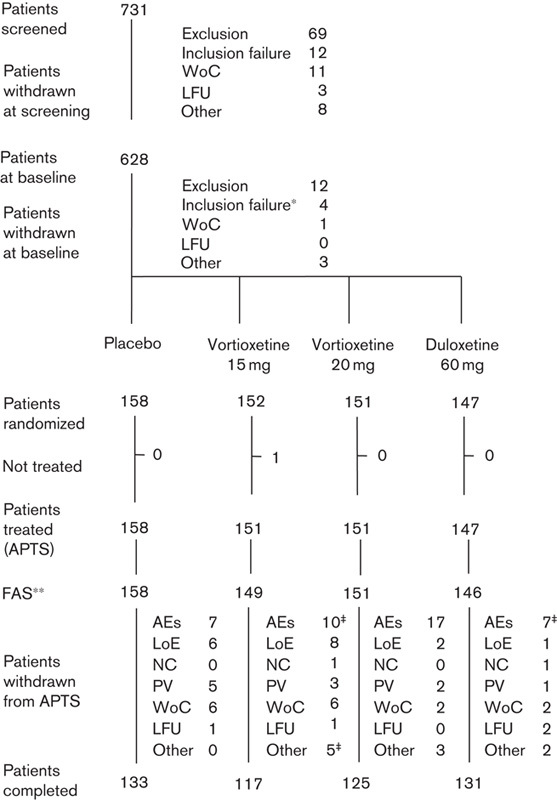
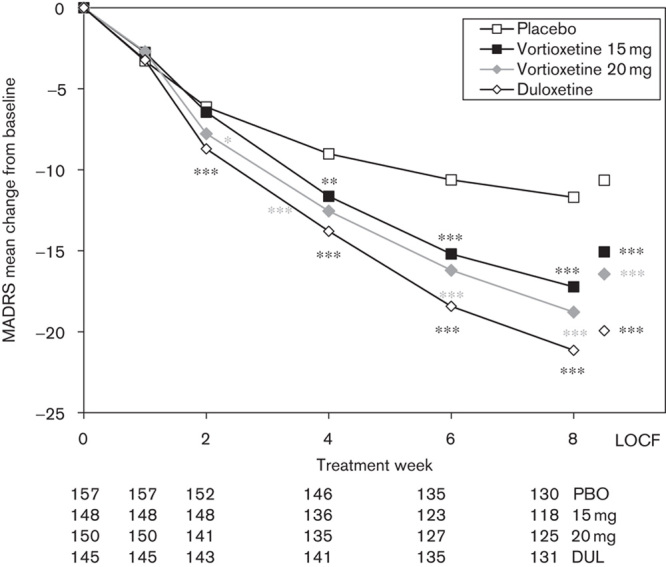
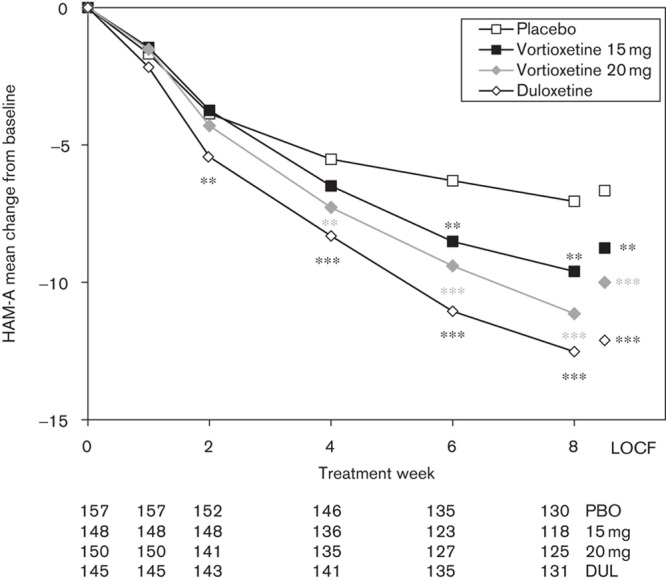
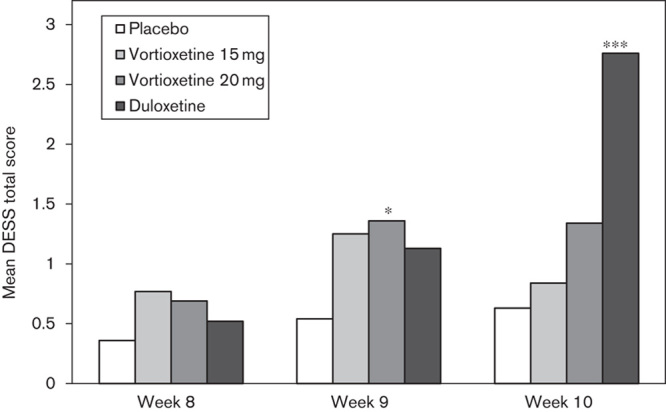
Verification
Claims the paper makes
The claims and statistics of this paper haven’t been checked yet.
Free: it reads the open-access text and checks the first 5 claims that cite a source we can check. Create a free account to check every claim.
Claims other papers make about this one
Each is checked against this paper’s own text: does it say what the citing paper says it does?
The source backs part of the claim, not all of it — or backs it for a different population, condition or comparison.
In the citing paper
“Vortioxetine 20 mg has been shown to be significantly superior to placebo on multiple depression endpoints (MADRS total score, response rate, CGI-I, SDS, and MADRS in patients with high baseline HAM-A) after 8 weeks of treatment in two other studies, one conducted in the USA and the other conducted outside of the USA”
From A randomized, double-blind, duloxetine-referenced study comparing efficacy and tolerability of 2 fixed doses of vortioxetine in the acute treatment of adults with MDD (2015) · cites this paper as Boulenger et al. 2014
Experimental — accuracy not yet measuredThe cited source says what the claim attributes to it.
In the citing paper
“this dose did demonstrate statistically significant improvement over placebo in a previous study conducted outside of the USA”
From A randomized, double-blind, duloxetine-referenced study comparing efficacy and tolerability of 2 fixed doses of vortioxetine in the acute treatment of adults with MDD (2015) · cites this paper as Boulenger et al. 2014
The cited source says what the claim attributes to it.
In the citing paper
“Vortioxetine (1-[2-(2,4-dimethyl-phenylsulfanyl)-phenyl]-piperazine-hydrobromide, Lu AA21004) is a novel antidepressant that has demonstrated efficacy in doses up to 20 mg/d in short-term studies of 6–8 wk duration in adult patients with MDD (Alvarez et al., 2012; Henigsberg et al., 2012; Boulenger et al., 2014).”
From A randomized, double-blind, placebo-controlled study of vortioxetine on cognitive function in depressed adults (2014) · cites this paper as Boulenger et al., 2014
Self-check
Percentages, sums and reported differences re-computed from the paper’s own numbers.
The self-check needs the paper’s full text.
Citations
Cites
A new depression scale designed to be sensitive to change
Montgomery, S. A., & Åsberg, M. (1979) · British Journal of Psychiatry · doi:10.1192/bjp.134.4.382 · Cited by 13,962 · cited 1×
“The primary endpoint was the change from baseline in Montgomery–Åsberg Depression Rating Scale (MADRS) (Montgomery and Åsberg, 1979) total score as primary endpoint after 8 weeks of treatment.”
MethodThe assessment of anxiety states by rating
HAMILTON, M. (1959) · British Journal of Medical Psychology · doi:10.1111/j.2044-8341.1959.tb00467.x · Cited by 11,455
(1976) · Medical Entomology and Zoology · Cited by 8,899
Lecrubier, Y., Sheehan, D., Weiller, E., Amorim, P., Bonora, I., Sheehan, K. H., Janavs, J., & Dunbar, G. (1997) · European Psychiatry · doi:10.1016/s0924-9338(97)83296-8 · Cited by 3,513 · cited 2×
“All the raters underwent formal training in the MADRS and the Mini International Neuropsychiatric Interview, and the scoring conventions for the CGI, the Hamilton Anxiety Rating Scale (HAM-A) (Hamilton, 1959) and the Discontinuation-Emergent Signs and Symptoms checklist (DESS) (Rosenbaum et al., 1998) to maximize inte…”
MethodThe functioning and well-being of depressed patients. Results from the Medical Outcomes Study
Wells, K. B. (1989) · JAMA · doi:10.1001/jama.262.7.914 · Cited by 2,808
The Functioning and Well-being of Depressed Patients: Results From the Medical Outcomes Study
Wells, K. B. (1989) · JAMA · doi:10.1001/jama.1989.03430070062031 · Cited by 2,130
Antidepressant Drug Effects and Depression Severity: A Patient-Level Meta-analysis
Fournier, J. C., DeRubeis, R. J., Hollon, S. D., Dimidjian, S., Amsterdam, J. D., Shelton, R. C., & Fawcett, J. (2010) · JAMA · doi:10.1001/jama.2009.1943 · Cited by 2,009
(1993) · PubMed · Cited by 1,900
Sheehan, D. V., Harnett-Sheehan, K., & Raj, B. A. (1996) · International Clinical Psychopharmacology · doi:10.1097/00004850-199606003-00015 · Cited by 1,440
The Medical Dictionary for Regulatory Activities (MedDRA)
Brown, E. G., Wood, L., & Wood, S. (1999) · Drug Safety · doi:10.2165/00002018-199920020-00002 · Cited by 1,390
Cited by
A brief history of the development of antidepressant drugs: From monoamines to glutamate.
Hillhouse, T. M., & Porter, J. H. (2015) · Experimental and Clinical Psychopharmacology · doi:10.1037/a0038550 · Cited by 605
Sanchez, C., Asin, K. E., & Artigas, F. (2015) · Pharmacology & Therapeutics · doi:10.1016/j.pharmthera.2014.07.001 · Cited by 547
McIntyre, R. S., Lophaven, S., & Olsen, C. K. (2014) · The International Journal of Neuropsychopharmacology · doi:10.1017/s1461145714000546 · Cited by 433
Self-citationBaldwin, D. S., Chrones, L., Florea, I., Nielsen, R., Nomikos, G. G., Palo, W., & Reines, E. (2016) · Journal of Psychopharmacology · doi:10.1177/0269881116628440 · Cited by 187
Restoring function in major depressive disorder: A systematic review
Sheehan, D. V., Nakagome, K., Asami, Y., Pappadopulos, E. A., & Boucher, M. (2017) · Journal of Affective Disorders · doi:10.1016/j.jad.2017.02.029 · Cited by 182
Vortioxetine: Clinical Pharmacokinetics and Drug Interactions
Chen, G., Højer, A.-M., Areberg, J., & Nomikos, G. (2018) · Clinical Pharmacokinetics · doi:10.1007/s40262-017-0612-7 · Cited by 164
Thase, M. E., Mahableshwarkar, A. R., Dragheim, M., Loft, H., & Vieta, E. (2016) · European Neuropsychopharmacology · doi:10.1016/j.euroneuro.2016.03.007 · Cited by 162
Self-citationCitrome, L. (2014) · International Journal of Clinical Practice · doi:10.1111/ijcp.12350 · Cited by 140
Montgomery, S. A., Nielsen, R. Z., Poulsen, L. H., & Häggström, L. (2014) · Human Psychopharmacology: Clinical and Experimental · doi:10.1002/hup.2424 · Cited by 143
Millan, M. J., Goodwin, G. M., Meyer-Lindenberg, A., & Ove Ögren, S. (2015) · European Neuropsychopharmacology · doi:10.1016/j.euroneuro.2015.01.016 · Cited by 132
Jacobsen, P. L., Mahableshwarkar, A. R., Chen, Y., Chrones, L., & Clayton, A. H. (2015) · The Journal of Sexual Medicine · doi:10.1111/jsm.12980 · Cited by 116
Jacobsen, P. L., Mahableshwarkar, A. R., Serenko, M., Chan, S., & Trivedi, M. H. (2015) · The Journal of Clinical Psychiatry · doi:10.4088/jcp.14m09335 · Cited by 115
Vortioxetine: a novel antidepressant for the treatment of major depressive disorder
Gonda, X., Sharma, S. R., & Tarazi, F. I. (2019) · Expert Opinion on Drug Discovery · doi:10.1080/17460441.2019.1546691 · Cited by 123
Vortioxetine (brintellix): a new serotonergic antidepressant.
(2015) · PubMed Central · Cited by 112
Lee, Y. L., Rosenblat, J. D., Lee, J., Carmona, N. E., Subramaniapillai, M., Shekotikhina, M., Mansur, R. B., Brietzke, E. M., Lee, J.-H., Ho, R., et al. (2017) · Journal of Affective Disorders · doi:10.1016/j.jad.2017.11.003 · Cited by 113
The noradrenergic paradox: implications in the management of depression and anxiety
Montoya, A., Bruins, R., Katzman, M. A., & Blier, P. (2016) · Neuropsychiatric Disease and Treatment · doi:10.2147/ndt.s91311 · Cited by 108
Baldwin, D. S., Florea, I., Jacobsen, P. L., Zhong, W., & Nomikos, G. G. (2016) · Journal of Affective Disorders · doi:10.1016/j.jad.2016.07.015 · Cited by 93
Efficacy of Vortioxetine on Cognitive Functioning in Working Patients With Major Depressive Disorder
McIntyre, R. S., Florea, I., Tonnoir, B., Loft, H., Lam, R. W., & Christensen, M. C. (2017) · The Journal of Clinical Psychiatry · doi:10.4088/jcp.16m10744 · Cited by 100
Self-citationMahableshwarkar, A. R., Jacobsen, P. L., Chen, Y., Serenko, M., & Trivedi, M. H. (2015) · Psychopharmacology · doi:10.1007/s00213-014-3839-0 · Cited by 98
Smith, J., Browning, M., Conen, S., Smallman, R., Buchbjerg, J., Larsen, K. G., Olsen, C. K., Christensen, S. R., Dawson, G. R., Deakin, J. F., et al. (2018) · Molecular Psychiatry · doi:10.1038/mp.2017.104 · Cited by 89
Self-citationApplication of antidepressants in depression: A systematic review and meta-analysis
Yuan, Z., Chen, Z., Xue, M., Zhang, J., & Leng, L. (2020) · Journal of Clinical Neuroscience · doi:10.1016/j.jocn.2020.08.013 · Cited by 94
McIntyre, R. S., Loft, H., & Christensen, M. C. (2021) · Neuropsychiatric Disease and Treatment · doi:10.2147/ndt.s296451 · Cited by 84
Self-citationVortioxetine: a New Treatment for Major Depressive Disorder
Connolly, K. R., & Thase, M. E. (2016) · Expert Opinion on Pharmacotherapy · doi:10.1517/14656566.2016.1133588 · Cited by 92
Pharmacology and clinical potential of vortioxetine in the treatment of major depressive disorder
Alvarez, E., Artigas, F., & Perez, V. (2014) · Neuropsychiatric Disease and Treatment · doi:10.2147/ndt.s41387 · Cited by 84
Pae, C.-U., Wang, S.-M., Han, C., Lee, S.-J., Patkar, A. A., Masand, P. S., & Serretti, A. (2015) · Journal of Psychiatry and Neuroscience · doi:10.1503/jpn.140120 · Cited by 71
Vortioxetine for depression in adults
Koesters, M., Ostuzzi, G., Guaiana, G., Breilmann, J., & Barbui, C. (2017) · Cochrane Database of Systematic Reviews · doi:10.1002/14651858.cd011520.pub2 · Cited by 56
A Review of Novel Antidepressants: A Guide for Clinicians
Faquih, A. E., Memon, R. I., Hafeez, H., Zeshan, M., & Naveed, S. (2019) · Cureus · doi:10.7759/cureus.4185 · Cited by 77
Turner, E. H., Cipriani, A., Furukawa, T. A., Salanti, G., & de Vries, Y. A. (2022) · PLOS Medicine · doi:10.1371/journal.pmed.1003886 · Cited by 68
Vieta, E., Sluth, L. B., & Olsen, C. K. (2018) · Journal of Affective Disorders · doi:10.1016/j.jad.2017.11.053 · Cited by 72
Self-citationJacobsen, P. L., Mahableshwarkar, A. R., Palo, W. A., Chen, Y., Dragheim, M., & Clayton, A. H. (2016) · CNS Spectrums · doi:10.1017/s1092852915000553 · Cited by 66
Vortioxetine: First Global Approval
Gibb, A. D., & Deeks, E. D. (2013) · Drugs · doi:10.1007/s40265-013-0161-9 · Cited by 70
Pae, C., Wang, S., Han, C., Lee, S.-J., Patkar, A. A., Masand, P. S., & Serretti, A. (2015) · Journal of Psychiatric Research · doi:10.1016/j.jpsychires.2015.02.017 · Cited by 65
Meeker, A. S., Herink, M. C., Haxby, D. G., & Hartung, D. M. (2015) · Systematic Reviews · doi:10.1186/s13643-015-0001-y · Cited by 58
Al-Sukhni, M., Maruschak, N. A., & McIntyre, R. S. (2015) · Expert Opinion on Drug Safety · doi:10.1517/14740338.2015.1046836 · Cited by 58
Emerging antidepressants to treat major depressive disorder
Block, S. G., & Nemeroff, C. B. (2014) · Asian Journal of Psychiatry · doi:10.1016/j.ajp.2014.09.001 · Cited by 63
Citrome, L. (2016) · Journal of Affective Disorders · doi:10.1016/j.jad.2016.02.042 · Cited by 61
Vortioxetine: A Review of Its Use in Major Depressive Disorder
Garnock-Jones, K. P. (2014) · CNS Drugs · doi:10.1007/s40263-014-0195-x · Cited by 52
Adamo, D., Pecoraro, G., Coppola, N., Calabria, E., Aria, M., & Mignogna, M. D. (2020) · Oral Diseases · doi:10.1111/odi.13602 · Cited by 50
Deardorff, W. J., & Grossberg, G. T. (2014) · Expert Opinion on Pharmacotherapy · doi:10.1517/14656566.2014.960842 · Cited by 49
Meta-analysis: Risk of dry mouth with second generation antidepressants
Cappetta, K., Beyer, C., Johnson, J. A., & Bloch, M. H. (2018) · Progress in Neuro-Psychopharmacology and Biological Psychiatry · doi:10.1016/j.pnpbp.2017.12.012 · Cited by 49
Consistency Checks to Improve Measurement with the Hamilton Rating Scale for Anxiety (HAM-A)
Rabinowitz, J., Williams, J. B. W., Hefting, N., Anderson, A., Brown, B., Fu, D., Kadriu, B., Kott, A., Mahableshwarkar, A. R., Sedway, J. A., et al. (2022) · Journal of Affective Disorders · doi:10.1016/j.jad.2023.01.029 · Cited by 50
Chokka, P., Bougie, J., Rampakakis, E., & Proulx, J. (2019) · CNS Spectrums · doi:10.1017/s1092852918000913 · Cited by 48
“Comparing with previous studies with vortioxetine, the response and remission rates were high, which were consistent with previous studies with vortioxetine.(30,38,39) In the past, very few studies have explored the association between the change in perceived cognitive symptoms and change in workplace productivity.”
ResultBerhan, A., & Barker, A. (2014) · BMC Psychiatry · doi:10.1186/s12888-014-0276-x · Cited by 43
Efficacy of vortioxetine on the physical symptoms of major depressive disorder
Christensen, M. C., Florea, I., Lindsten, A., & Baldwin, D. S. (2018) · Journal of Psychopharmacology · doi:10.1177/0269881118788826 · Cited by 37
Jacobsen, P. L., Zhong, W., Nomikos, G. G., & Clayton, A. H. (2019) · The Journal of Sexual Medicine · doi:10.1016/j.jsxm.2019.06.018 · Cited by 46
Jacobsen, P. L., Nomikos, G. G., Zhong, W., Cutler, A. J., Affinito, J., & Clayton, A. H. (2019) · CNS Spectrums · doi:10.1017/s1092852919000750 · Cited by 46
Nishimura, A., Aritomi, Y., Sasai, K., Kitagawa, T., & Mahableshwarkar, A. R. (2018) · Psychiatry and Clinical Neurosciences · doi:10.1111/pcn.12565 · Cited by 45
Mahableshwarkar, A. R., Jacobsen, P. L., Serenko, M., & Chen, Y. (2014) · Human Psychopharmacology: Clinical and Experimental · doi:10.1002/hup.2371 · Cited by 44
Vortioxetina: una nueva alternativa en el trastorno depresivo mayor
Salagre, E., Grande, I., Solé, B., Sánchez‐Moreno, J., & Vieta, E. (2017) · Revista de Psiquiatría y Salud Mental · doi:10.1016/j.rpsm.2017.06.006 · Cited by 45
The effect of vortioxetine on overall patient functioning in patients with major depressive disorder
Florea, I., Loft, H., Danchenko, N., Rive, B., Brignone, M., Merikle, E., Jacobsen, P. L., & Sheehan, D. V. (2017) · Brain and Behavior · doi:10.1002/brb3.622 · Cited by 40
Self-citationNomikos, G., Tomori, D., Zhong, W., Affinito, J., & Palo, W. (2016) · CNS Spectrums · doi:10.1017/s1092852916000626 · Cited by 37
Incidence and Nature of Antidepressant Discontinuation Symptoms
Kalfas, M., Tsapekos, D., Butler, M., McCutcheon, R. A., Pillinger, T., Strawbridge, R., Bhat, B. B., Haddad, P. M., Cowen, P. J., Howes, O. D., et al. (2025) · JAMA Psychiatry · doi:10.1001/jamapsychiatry.2025.1362 · Cited by 42
An Overview of Vortioxetine: (Academic Highlights)
Schatzberg, A. F., Blier, P., Culpepper, L., Jain, R., Papakostas, G. I., & Thase, M. E. (2014) · The Journal of Clinical Psychiatry · doi:10.4088/jcp.14027ah1 · Cited by 36
Under the Influence: The Interplay among Industry, Publishing, and Drug Regulation
Cosgrove, L., Vannoy, S. D., Mintzes, B. J., & Shaughnessy, A. F. (2016) · Accountability in Research · doi:10.1080/08989621.2016.1153971 · Cited by 39
Vortioxetine as a new frontier in the treatment of chronic neuropathic pain: a review and update
Adamo, D., Calabria, E., Coppola, N., Pecoraro, G., & Mignogna, M. D. (2021) · Therapeutic Advances in Psychopharmacology · doi:10.1177/20451253211034320 · Cited by 39
Cognitive dysfunctions in depression – underestimated symptom or new dimension?
Jarema, M., Dudek, D., & Czernikiewicz, A. (2014) · Psychiatria Polska · doi:10.12740/pp/31215 · Cited by 38
Fiorillo, A., Carpiniello, B., Giorgi, S. D., Pia, S. L., Maina, G., Sampogna, G., Spina, E., Tortorella, A. A. V., & Vita, A. (2018) · Frontiers in Psychiatry · doi:10.3389/fpsyt.2018.00493 · Cited by 39
Brivio, P., Corsini, G., Riva, M. A., & Calabrese, F. (2019) · Pharmacological Research · doi:10.1016/j.phrs.2019.02.006 · Cited by 39
Florea, I., Danchenko, N., Brignone, M., Loft, H., Rive, B., & Abetz-Webb, L. (2015) · Clinical Therapeutics · doi:10.1016/j.clinthera.2015.08.008 · Cited by 35
Self-citationChristensen, M. C., McIntyre, R. S., Florea, I., Loft, H., & Fagiolini, A. M. (2021) · CNS Spectrums · doi:10.1017/s1092852921000936 · Cited by 36
Self-citationChristensen, M. C., Schmidt, S. N., & Grande, I. (2022) · Journal of Psychopharmacology · doi:10.1177/02698811221090627 · Cited by 35
Bobo, W. V., Kelliny, M., Croarkin, P. E., & Moore, K. M. (2015) · Therapeutics and Clinical Risk Management · doi:10.2147/tcrm.s55313 · Cited by 34
Llorca, P., Lançon, C., Brignone, M., Rive, B., Salah, S., Ereshefsky, L., & François, C. (2014) · Current Medical Research and Opinion · doi:10.1185/03007995.2014.969566 · Cited by 33
Zhang, X., Cai, Y., Hu, X., Lu, C. Y., Nie, X., & Shi, L. (2022) · Frontiers in Psychiatry · doi:10.3389/fpsyt.2022.922648 · Cited by 34
Stimpfl, J. N., Walkup, J. T., Robb, A. S., Alford, A. E., Stahl, S. M., McCracken, J. T., Stancil, S. L., Ramsey, L. B., Emslie, G. J., & Strawn, J. R. (2025) · Journal of Child and Adolescent Psychopharmacology · doi:10.1089/cap.2024.0099 · Cited by 32
Thase, M. E., Danchenko, N., Brignone, M., Florea, I., Diamand, F., Jacobsen, P. L., & Vieta, E. (2017) · European Neuropsychopharmacology · doi:10.1016/j.euroneuro.2017.05.009 · Cited by 33
Vortioxetine – pharmacological properties and use in mood disorders. The current state of knowledge
Krupa, A. J., Wojtasik-Bakalarz, K., & Siwek, M. (2023) · Psychiatria Polska · doi:10.12740/pp/onlinefirst/151570 · Cited by 32
Adair, M., Christensen, M. C., Florea, I., Loft, H., & Fagiolini, A. M. (2023) · Journal of Affective Disorders · doi:10.1016/j.jad.2023.01.074 · Cited by 32
Self-citationVortioxetine: A new alternative for the treatment of major depressive disorder
Salagre, E., Grande, I., Solé, B., Sánchez‐Moreno, J., & Vieta, E. (2018) · Revista de Psiquiatría y Salud Mental (English Edition) · doi:10.1016/j.rpsmen.2018.02.005 · Cited by 31
Brignone, M., Diamand, F., Painchault, C., & Takyar, S. (2016) · Current Medical Research and Opinion · doi:10.1185/03007995.2015.1128404 · Cited by 30
Wiesinger, T., Kremer, S., Bschor, T., & Baethge, C. (2023) · Acta Psychiatrica Scandinavica · doi:10.1111/acps.13541 · Cited by 30
Mi, W., Yang, F., Li, H., Xu, X., Li, L., Tan, Q., Wang, G., Zhang, K., Tian, F., Luo, J., et al. (2021) · The International Journal of Neuropsychopharmacology · doi:10.1093/ijnp/pyab074 · Cited by 29
Vortioxetine for the Treatment of Depression
Pearce, E. F., & Murphy, J. A. (2014) · Annals of Pharmacotherapy · doi:10.1177/1060028014528305 · Cited by 29
María Elisa Irarrázaval, O., & Leonardo Gaete, G. (2016) · Revista médica de Chile · doi:10.4067/s0034-98872016001000013 · Cited by 29
Lupton‐Smith, C., Nguyen, T. Q., Tang, T., Zhao, C., Hong, H., & Stuart, E. A. (2024) · Statistics in Medicine · doi:10.1002/sim.9955 · Cited by 28
Baldwin, D. S., Necking, O., Schmidt, S. N., Ren, H., & Reines, E. H. (2022) · Journal of Affective Disorders · doi:10.1016/j.jad.2022.05.098 · Cited by 28
Shah, A., & Northcutt, J. (2018) · Annals of General Psychiatry · doi:10.1186/s12991-018-0190-6 · Cited by 23
Meta-analysis: Risk of hyperhidrosis with second-generation antidepressants
Beyer, C., Cappetta, K., Johnson, J. A., & Bloch, M. H. (2017) · Depression and Anxiety · doi:10.1002/da.22680 · Cited by 27
Orsolini, L., Tomasetti, C., Valchera, A., Iasevoli, F., Buonaguro, E. F., Vellante, F., Fornaro, M., Fiengo, A. L. C., Mazza, M., Vecchiotti, R., et al. (2016) · Expert Review of Neurotherapeutics · doi:10.1586/14737175.2016.1173545 · Cited by 28
Christensen, M. C., Florea, I., Loft, H., & McIntyre, R. S. (2020) · Journal of Affective Disorders · doi:10.1016/j.jad.2019.11.074 · Cited by 26
Self-citationMaciukiewicz, M., Marshe, V. S., Tiwari, A. K., Fonseka, T. M., Freeman, N., Rotzinger, S., Foster, J. A., Kennedy, J. L., Kennedy, S. H., & Müller, D. J. (2015) · Pharmacogenomics · doi:10.2217/pgs.15.136 · Cited by 26
The Black Book of Psychotropic Dosing and Monitoring
DeBattista, C., & Schatzberg, A. F. (2025) · Psychopharmacology Bulletin · doi:10.64719/pb.4493 · Cited by 26
Ngen, C. C., Zain, A. M., Hemrungrojn, S., Ung, E. K., Kwansanit, P., Yong, K. C. A., Chong, M. S. W., Inpa, C., Yen, T. H., Yeoh, B. B. D., et al. (2018) · Current Medical Research and Opinion · doi:10.1080/03007995.2018.1477746 · Cited by 25
Vortioxetine for the treatment of major depressive disorder
Tritschler, L., Felice, D., Colle, R., Guilloux, J., Corruble, E., Gardier, A. M., & David, D. J. P. (2014) · Expert Review of Clinical Pharmacology · doi:10.1586/17512433.2014.950655 · Cited by 24
McIntyre, R. S. (2017) · Neuropsychiatric Disease and Treatment · doi:10.2147/ndt.s150589 · Cited by 25
Meta-analysis: Second generation antidepressants and headache
Telang, S., Walton, C., Olten, B., & Bloch, M. H. (2018) · Journal of Affective Disorders · doi:10.1016/j.jad.2018.04.047 · Cited by 23
Mi, W., Di, X.-L., Wang, Y., Li, H., Xu, X., Li, L., Wang, H., Wang, G., Zhang, K.-R., Tian, F., et al. (2023) · Translational Psychiatry · doi:10.1038/s41398-023-02435-0 · Cited by 23
Subeesh, V., Singh, H., Maheswari, E., & Beulah, E. (2017) · Asian Journal of Psychiatry · doi:10.1016/j.ajp.2017.09.005 · Cited by 21
Li, G., Wang, X., & Ma, D. (2016) · Clinical Drug Investigation · doi:10.1007/s40261-016-0396-9 · Cited by 20
Mattingly, G. W., Necking, O., Schmidt, S. N., Reines, E. H., & Ren, H. (2023) · Current Medical Research and Opinion · doi:10.1080/03007995.2023.2178082 · Cited by 20
Yang, Y. K., Chen, C., Tsai, C.-F., Chang, C., Lai, T.-J., Lee, C.-T., Lin, C., Lan, T., & Herr, K. J. (2021) · Current Medical Research and Opinion · doi:10.1080/03007995.2021.1980869 · Cited by 19
Wang, W.-T., Qian, H., Wu, J.-W., Chen, X., & Li, J. (2019) · Bioorganic & Medicinal Chemistry Letters · doi:10.1016/j.bmcl.2019.126769 · Cited by 18
Repurposing Zileuton as a Depression Drug Using an AI and In Vitro Approach
Kubick, N., Pajares, M., Enache, I., Manda, G., & Mickael, M. (2020) · Molecules · doi:10.3390/molecules25092155 · Cited by 19
Mahableshwarkar, A. R., Affinito, J., Reines, E. H., Xu, J., Nomikos, G. G., & Jacobsen, P. L. (2019) · CNS Spectrums · doi:10.1017/s109285291900097x · Cited by 17
Evans, V. C., Alamian, G., McLeod, J., Woo, C., Yatham, L. N., & Lam, R. W. M. (2016) · CNS Drugs · doi:10.1007/s40263-016-0334-7 · Cited by 17
Practical pathway for the management of depression in the workplace: a Canadian perspective
Chokka, P. R., Bender, A., Brennan, S., Ahmed, G., Corbière, M., Dozois, D. J. A., Habert, J., Harrison, J., Katzman, M. A., McIntyre, R. S., et al. (2023) · Frontiers in Psychiatry · doi:10.3389/fpsyt.2023.1207653 · Cited by 16
Bronson, J. J., Black, A., Dhar, T. G. M., Ellsworth, B. A., & Merritt, J. R. (2014) · Annual reports in medicinal chemistry · doi:10.1016/b978-0-12-800167-7.00027-4 · Cited by 17
Clinical benefits of vortioxetine 20 mg/day in patients with major depressive disorder
Christensen, M. C., McIntyre, R. S., Adair, M., Florea, I., Loft, H., & Fagiolini, A. M. (2023) · CNS Spectrums · doi:10.1017/s1092852923002249 · Cited by 15
Self-citationYang, X., Fang, S., Lyu, W., Hu, Y., Xu, H., Jiang, X., Zhao, Y., Zhang, Y., Li, J., & Kuang, W. (2024) · Psychiatry and Clinical Neurosciences · doi:10.1111/pcn.13709 · Cited by 15
Naik, H., Chan, S., Vakilynejad, M., Chen, G., Loft, H., Mahableshwarkar, A. R., & Areberg, J. (2015) · Basic & Clinical Pharmacology & Toxicology · doi:10.1111/bcpt.12513 · Cited by 15
Self-citation
Metadata
- Authors
- Boulenger, J.-P., Loft, H., & Olsen, C. K.
- Affiliations
- Centre Hospitalier Universitaire de Montpellier (FR)
- Lundbeck (Denmark) (DK)
- Corresponding author
- Boulenger, Jean-Philippe
- Venue
- International Clinical Psychopharmacology
- Published
- 2014-05
- Volume
- 29
- Issue
- 3
- Pages
- 138-149
- ISSN
- 0268-1315 (ISSN-L)
- PMC
- PMC3979887
- OpenAlex
- W2001782289
- Cited by
- 176
- References
- 34
- Citations by year
- 2026: 4 · 2025: 14 · 2024: 10 · 2023: 11 · 2022: 11 · 2021: 10 · 2020: 7 · 2019: 15 · 2018: 14 · 2017: 17 · 2016: 16 · 2015: 29 · 2014: 16
- FWCI
- 15.42
- Type
- journal article
- Language
- en
- Open access
- hybrid
- doi.org
- Licence
- cc-by-nc-nd
- Locations
- International Clinical Psychopharmacology (publishedVersion, cc-by-nc-nd)
- Europe PMC (PubMed Central) (publishedVersion, cc-by-nc-nd)
- PubMed Central (publishedVersion, cc-by-nc-nd)
- PubMed (publishedVersion)
- Funders
- H. Lundbeck A/S
- Topics
- Health Sciences › Medicine › Pharmacology (medical) › Treatment of Major Depression
- Social Sciences › Psychology › Experimental and Cognitive Psychology › Anxiety, Depression, Psychometrics, Treatment, Cognitive Processes
- Health Sciences › Medicine › Psychiatry and Mental health › Bipolar Disorder and Treatment
- Keywords
- vortioxetine, major depressive disorder, duloxetine, antidepressant efficacy, drug safety, tolerability, dose comparison, recurrent depression, adverse events, remission, disability
- MeSH terms
- Duloxetine Hydrochloride, Vortioxetine, Adolescent, Adult, Aged, Major Depressive Disorder, Double-Blind Method, Female, Headache, Humans, Male, Middle Aged, Nausea, Piperazines, Psychiatric Status Rating Scales, Sulfides, Thiophenes, Treatment Outcome, Selective Serotonin Reuptake Inhibitors, Internationality, Young Adult
About these checks
Registry, retraction, Cites and statistics results are computed, not judged, with one exception: a printed reference that no index lists is read once by a model before it counts as a citation error. Claims are extracted by a model and kept only when their quote appears verbatim in the text; each cited source is then checked, with a model’s help, for whether it says what the claim relies on. Those verdicts can be wrong — read the claim’s quote and the cited source before relying on one.
Statistics and arithmetic are recomputed, not judged.
Confidence bands are shown only for fields calibrated on our annotated test set. None is calibrated yet, so no band is shown.
What counts as a claim ›How we measure confidence ›How we check this ›
Are you an author, or do you see a problem with this page? Request a review
Data sources
Bibliographic data: Semantic Scholar, OpenAlex, Crossref.
Contains information from the Semantic Scholar Academic Graph Datasets, made available under the ODC Attribution License (ODC-BY 1.0).
Semantic Scholar’s data is described in: Kinney, R., et al. (2023). The Semantic Scholar Open Data Platform. arXiv:2301.10140.
