

The DOI matches its Crossref record; 38 of the 38 references it cites were found in a registry or an index.
OpenSAFELY: factors associated with COVID-19-related hospital death in the linked electronic health records of 17 million adult NHS patients
Open accessPreprint — published as 10.1038/s41586-020-2521-4 · Paper page
Abstract
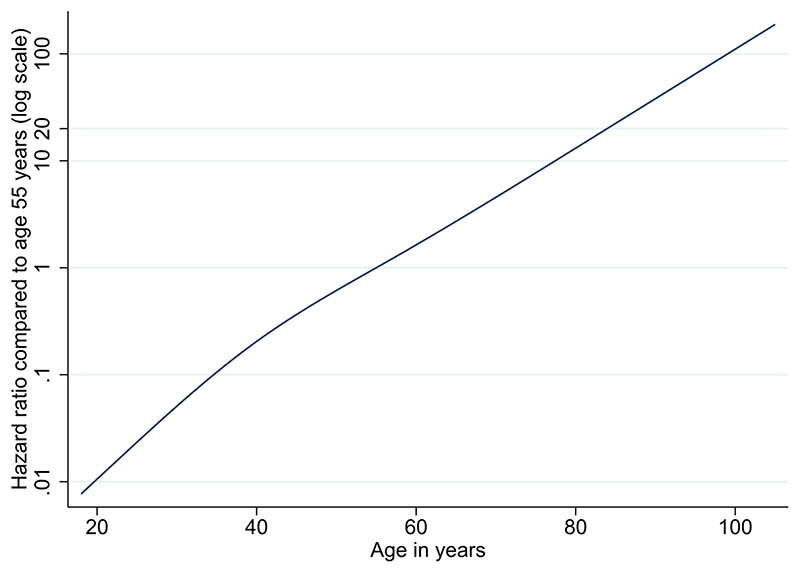
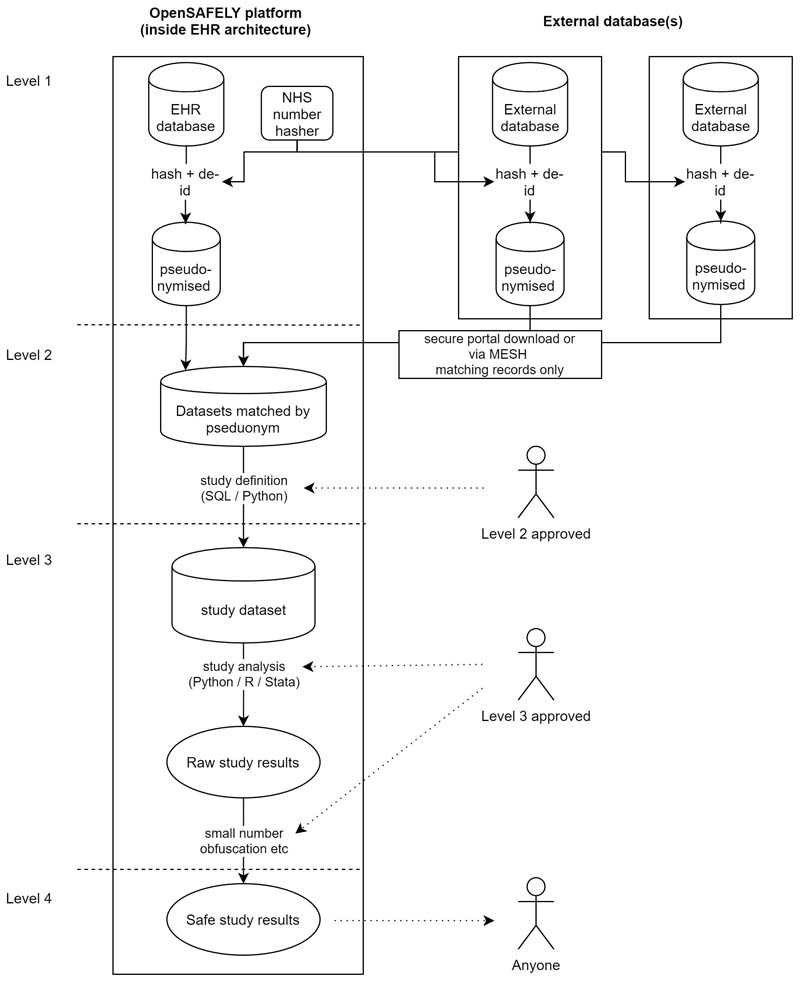
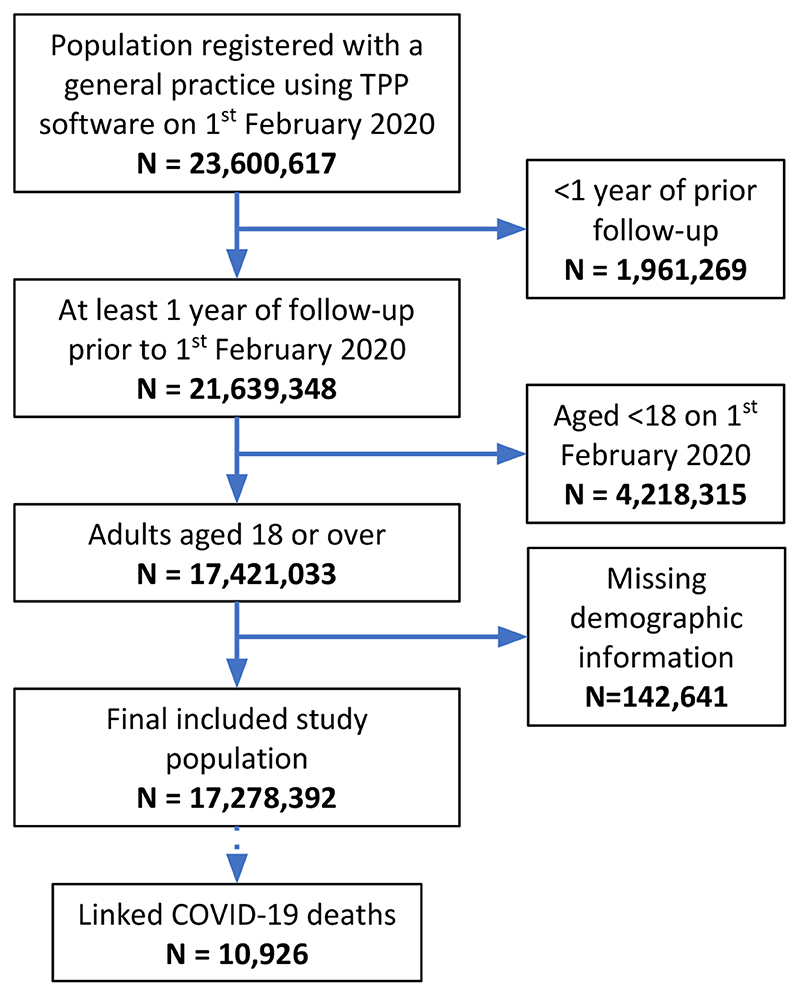
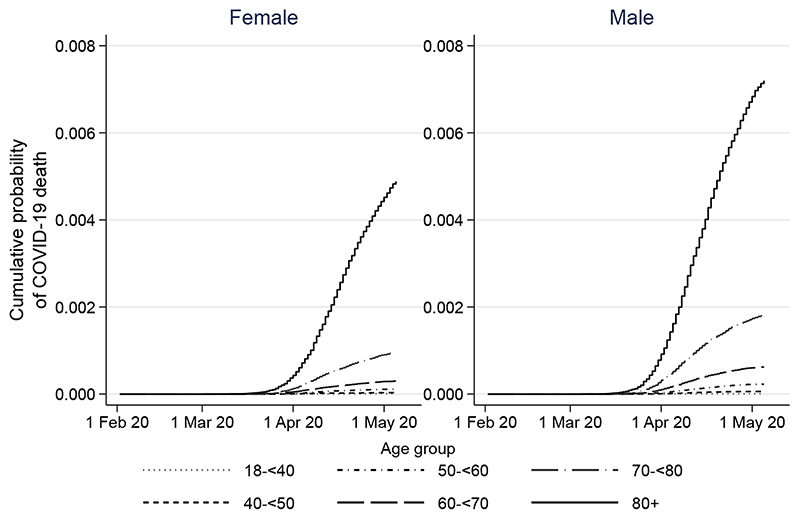
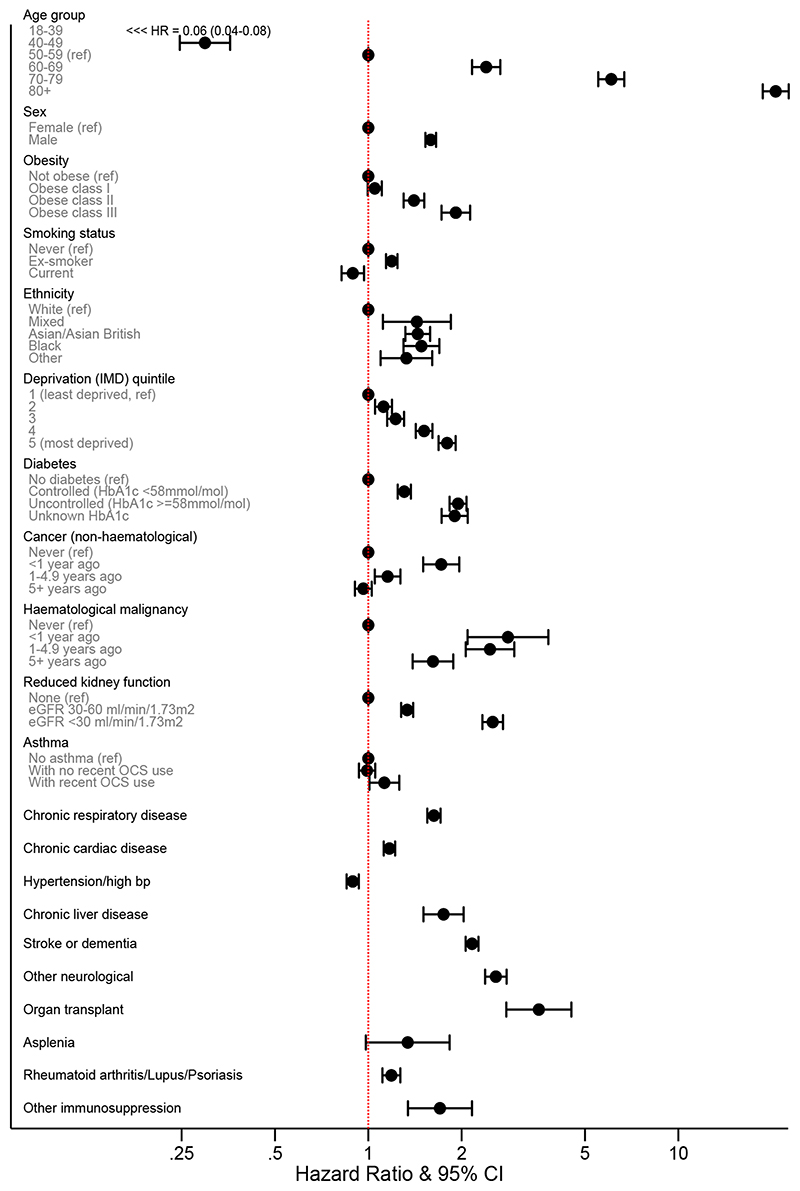
Background: Establishing who is at risk from a novel rapidly arising cause of death, and why, requires a new approach to epidemiological research with very large datasets and timely data. Working on behalf of NHS England we therefore set out to deliver a secure and pseudonymised analytics platform inside the data centre of a major primary care electronic health records vendor establishing coverage across detailed primary care records for a substantial proportion of all patients in England. The following results are preliminary. Data sources: Primary care electronic health records managed by the electronic health record vendor TPP, pseudonymously linked to patient-level data from the COVID-19 Patient Notification System (CPNS) for death of hospital inpatients with confirmed COVID-19, using the new OpenSAFELY platform. Population: 17,425,445 adults. Time period: 1st Feb 2020 to 25th April 2020. Primary outcome: Death in hospital among people with confirmed COVID-19. Methods: Cohort study analysed by Cox-regression to generate hazard ratios: age and sex adjusted, and multiply adjusted for co-variates selected prospectively on the basis of clinical interest and prior findings. Results: There were 5683 deaths attributed to COVID-19. In summary after full adjustment, death from COVID-19 was strongly associated with: being male (hazard ratio 1.99, 95%CI 1.88-2.10); older age and deprivation (both with a strong gradient); uncontrolled diabetes (HR 2.36 95% CI 2.18-2.56); severe asthma (HR 1.25 CI 1.08-1.44); and various other prior medical conditions. Compared to people with ethnicity recorded as white, black people were at higher risk of death, with only partial attenuation in hazard ratios from the fully adjusted model (age-sex adjusted HR 2.17 95% CI 1.84-2.57; fully adjusted HR 1.71 95% CI 1.44-2.02); with similar findings for Asian people (age-sex adjusted HR 1.95 95% CI 1.73-2.18; fully adjusted HR 1.62 95% CI 1.431.82). Conclusions: We have quantified a range of clinical risk factors for death from COVID-19, some of which were not previously well characterised, in the largest cohort study conducted by any country to date. People from Asian and black groups are at markedly increased risk of in-hospital death from COVID-19, and contrary to some prior speculation this is only partially attributable to pre-existing clinical risk factors or deprivation; further research into the drivers of this association is therefore urgently required. Deprivation is also a major risk factor with, again, little of the excess risk explained by co-morbidity or other risk factors. The findings for clinical risk factors are concordant with policies in the UK for protecting those at highest risk. Our OpenSAFELY platform is rapidly adding further NHS patients’ records; we will update and extend these results regularly.
Overview
The claims and statistics of this paper haven’t been checked yet.
Run the check — free, no account needed. It reads the open-access text and checks the sources it cites.
Integrity signals
Registry
Cites
Statistics
Figures
Verification
Claims the paper makes
The claims and statistics of this paper haven’t been checked yet.
Run the check — free, no account needed. It reads the open-access text and checks the sources it cites.
Claims other papers make about this one
Each is checked against this paper’s own text: does it say what the citing paper says it does?
In the citing paper
“However, most associations observed between baseline characteristics and mortality or intubation are in line with prior epidemiological studies [17,19].”
From Association between antidepressant use and reduced risk of intubation or death in hospitalized patients with COVID-19: results from an observational study (2021) · cites this paper as [17]
Self-check
Percentages, sums and reported differences re-computed from the paper’s own numbers.
The self-check needs the paper’s full text.
Citations
Cites
Clinical characteristics of coronavirus disease 2019 in China
Guan, W.-J., Ni, Z.-Y., Hu, Y., Liang, W.-H., Ou, C.-Q., He, J.-X., Liu, L., Shan, H., Lei, C.-L., Hui, D. S. C., et al. (2020) · New England Journal of Medicine · doi:10.1056/nejmoa2002032 · Cited by 30,246
A New Equation to Estimate Glomerular Filtration Rate
Levey, A. S., Stevens, L. A., Schmid, C. H., Zhang, Y. (., Castro, A. F., Feldman, H. I., Kusek, J. W., Eggers, P., Van Lente, F., Greene, T., et al. (2009) · Annals of Internal Medicine · doi:10.7326/0003-4819-150-9-200905050-00006 · Cited by 25,603
Clinical Characteristics of Coronavirus Disease 2019 in China
Eastin, C., & Eastin, T. (2020) · Journal of Emergency Medicine · doi:10.1016/j.jemermed.2020.04.004 · Cited by 24,945 · cited 2×
“9 Smoking prevalence among hospitalised patients was lower than expected in China (1,099 patients, 12.6% vs 28% in the general population), 10 and in a small French study (139 outpatients and 343 inpatients; Standardized Incidence Ratios 0.197 and 0.246, respectively).”
BackgroundInfluentialSimonnet, A., Chetboun, M., Poissy, J., Raverdy, V., Noulette, J., Duhamel, A., Labreuche, J., Mathieu, D., Pattou, F. N., Jourdain, M., et al. (2020) · Obesity · doi:10.1002/oby.22831 · Cited by 2,150
Hagard, S. (1995) · The Knight and the Blast Furnace · doi:10.1177/102538239500200213 · Cited by 1,914
Robertson, J. (1988) · Public Health · doi:10.1016/s0033-3506(88)80059-3 · Cited by 1,472
Clegg, A. P., Bates, C. J., Young, J. B., Ryan, R. P., Nichols, L., Teale, E. A., Mohammed, M. A., Parry, J., & Marshall, T. P. (2016) · Age and Ageing · doi:10.1093/ageing/afw039 · Cited by 1,341
Self-citationObesity in Patients Younger Than 60 Years Is a Risk Factor for COVID-19 Hospital Admission
Lighter, J., Phillips, M., Hochman, S. E., Sterling, S., Johnson, D., François, F., & Stachel, A. G. (2020) · Clinical Infectious Diseases · doi:10.1093/cid/ciaa415 · Cited by 1,233 · cited 3×
“63)(6); obesity was also reported as a risk factor for treatment escalation in smaller studies in France and New York.(7,8) .”
BackgroundInfluentialStrongman, H., Gadd, S. C., Matthews, A., Mansfield, K. E., Stanway, S. J., Lyon, A. R., dos‐Santos‐Silva, I., Smeeth, L. L., & Bhaskaran, K. (2019) · The Lancet · doi:10.1016/s0140-6736(19)31674-5 · Cited by 548
Self-citationIs ethnicity linked to incidence or outcomes of covid-19?
Khunti, K. K., Singh, A. K., Pareek, M., & Hanif, W. (2020) · BMJ · doi:10.1136/bmj.m1548 · Cited by 493 · cited 1×
“12,13,46 Commentators and researchers have reasonably speculated that this might be due to higher prevalence of medical problems such as cardiovascular disease or diabetes among BME people, or higher deprivation.”
Background
Cited by
Sorted by citations
How mental health care should change as a consequence of the COVID-19 pandemic
Moreno, C., Wykes, T., Galderisi, S., Nordentoft, M., Crossley, N., Jones, N., Cannon, M., Correll, C. U., Byrne, L., Carr, S., et al. (2020) · The Lancet Psychiatry · doi:10.1016/s2215-0366(20)30307-2 · Cited by 1,840
Why does COVID-19 disproportionately affect older people?
Mueller, A. L., McNamara, M. S., & Sinclair, D. A. (2020) · Aging · doi:10.18632/aging.103344 · Cited by 1,128
Dietary Choices and Habits during COVID-19 Lockdown: Experience from Poland
Sidor, A., & Rzymski, P. (2020) · Nutrients · doi:10.3390/nu12061657 · Cited by 1,178
Aftab, R. (2020) · InnovAiT Education and inspiration for general practice · doi:10.1177/1755738020938394 · Cited by 3
Metadata
- Authors
- Collaborative, T. O., Williamson, E., Walker, A. J., Bhaskaran, K., Bacon, S., Bates, C., Morton, C. E., Curtis, H. J., Mehrkar, A., Evans, D., Inglesby, P., Cockburn, J., McDonald, H. I., MacKenna, B., Tomlinson, L., Douglas, I. J., Rentsch, C. T., Mathur, R., Wong, A., Grieve, R., Harrison, D., Forbes, H., Schultze, A., Croker, R., Parry, J., Hester, F., Harper, S., Perera, R., Evans, S., Smeeth, L., & Goldacre, B.
- Affiliations
- London School of Hygiene & Tropical Medicine (GB)
- University of Oxford (GB)
- National Institute for Health and Care Research (GB)
- Corresponding author
- Goldacre, Ben
- ORCID
- Williamson, Elizabeth
- Walker, Alex J
- Bhaskaran, Krishnan
- Bacon, Seb
- Morton, Caroline E
- Curtis, Helen J
- Inglesby, Peter
- Cockburn, Jonathan
- McDonald, Helen I
- MacKenna, Brian
- Tomlinson, Laurie
- Douglas, Ian J
- Rentsch, Christopher T
- Mathur, Rohini
- Wong, Angel
- Grieve, Richard
- Harrison, David
- Schultze, Anna
- Croker, Richard
- Hester, Frank
- Perera, Raf
- Evans, Stephen
- Smeeth, Liam
- Goldacre, Ben
- Venue
- Nature
- Publisher
- openRxiv
- Published
- 2020-05-07
- Volume
- 584
- Issue
- 7821
- Pages
- 430-436
- ISSN
- 0028-0836 (ISSN-L)
- PMC
- PMC7611074
- OpenAlex
- W3047144258
- Cited by
- 6,674
- References
- 32
- Citations by year
- 2026: 176 · 2025: 303 · 2024: 698 · 2023: 904 · 2022: 1505 · 2021: 2173 · 2020: 908
- FWCI
- 179.94
- Type
- journal article
- Language
- en
- Open access
- bronze
- doi.org
- Locations
- Nature (publishedVersion)
- medRxiv (acceptedVersion, cc-by)
- PubMed (publishedVersion)
- LSHTM Research Online (London School of Hygiene and Tropical Medicine) (acceptedVersion)
- PubMed Central (acceptedVersion, cc-by)
- RePEc: Research Papers in Economics (submittedVersion)
- Queen Mary Research Online (Queen Mary University of London) (submittedVersion)
- Funders
- London School of Hygiene and Tropical Medicine
- Wellcome Trust (107731/Z/15/Z, 201375/Z/16/Z, 201375, 107731)
- UK Research and Innovation
- National Institute for Health Research Health Protection Research Unit
- National Institute for Health and Care Research
- British Heart Foundation (FS/19/19/34175)
- Department of Health and Social Care
- Royal Society
- Diabetes UK
- Public Health England
- Medical Research Council (MR/S003940/1)
- NIHR Oxford Biomedical Research Centre
- National Institute for Health and Care Research Applied Research Collaboration Oxford and Thames Valley
- Topics
- Health Sciences › Medicine › Infectious Diseases › COVID-19 Clinical Research Studies
- Health Sciences › Medicine › Oncology › COVID-19 and healthcare impacts
- Physical Sciences › Mathematics › Modeling and Simulation › COVID-19 epidemiological studies
- Keywords
- COVID-19 pandemic, COVID-19 mortality, risk factors, OpenSAFELY, primary care electronic health records, sex differences, age, socioeconomic deprivation, diabetes mellitus, severe asthma, ethnicity, NHS England, cohort studies
- MeSH terms
- Betacoronavirus, COVID-19, SARS-CoV-2, Adolescent, Adult, Age Factors, Aged, Aged, 80 and over, Aging, Asthma, Diabetes Mellitus, Female, Humans, Hypertension, Male, Middle Aged, Pneumonia, Viral, Sex Characteristics, Smoking, State Medicine, Cohort Studies, Proportional Hazards Models, Age Distribution, Coronavirus Infections, Risk Assessment, Black People, Asian People, Young Adult, Pandemics
About these checks
Registry, retraction, Cites and statistics results are computed, not judged, with one exception: a printed reference that no index lists is read once by a model before it counts as a citation error. Claims are extracted by a model and kept only when their quote appears verbatim in the text; each cited source is then checked, with a model’s help, for whether it says what the claim relies on. Those verdicts can be wrong — read the claim’s quote and the cited source before relying on one.
Statistics and arithmetic are recomputed, not judged.
Confidence bands are shown only for fields calibrated on our annotated test set. None is calibrated yet, so no band is shown.
What counts as a claim ›How we measure confidence ›How we check this ›
Are you an author, or do you see a problem with this page? Request a review
