

The DOI matches its Crossref record; 1 of the 1 references it cites were found in a registry or an index.
Study on horizon-scanning with a focus on the development of AI-based medical products: citation network analysis
Open accessPreprint — published as 10.1007/s43441-021-00355-z
Abstract
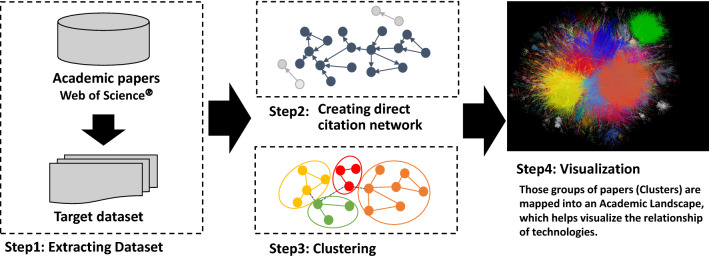
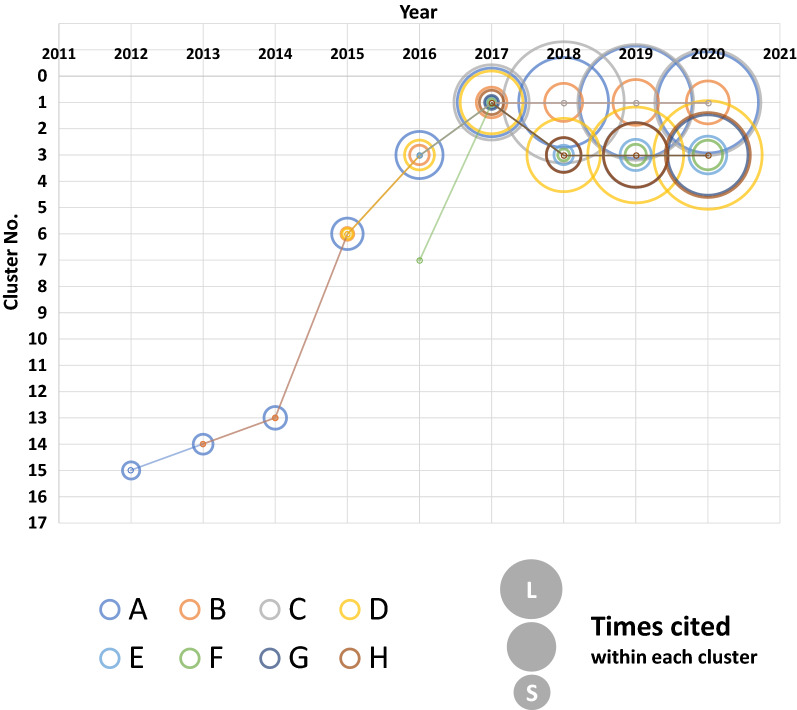
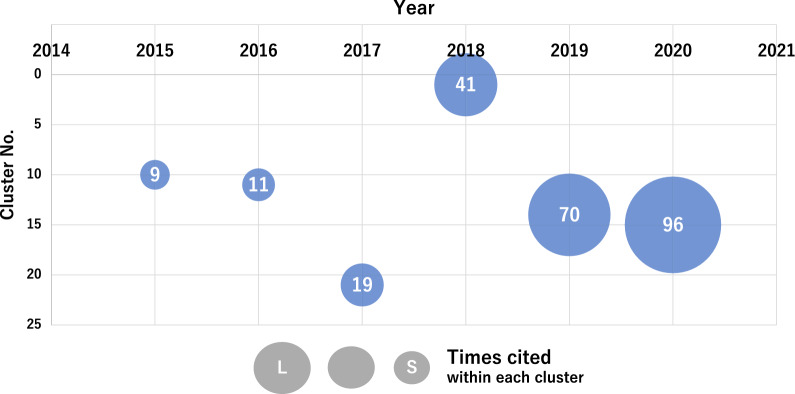
Objectives: Horizon-scanning for innovative technologies that might be applied to medical products and require new assessment approaches/regulations will help to prepare regulators, allowing earlier access to the product for patients and an improved benefit/risk ratio. In this study, we focused on the field of AI-based medical image analysis as a retrospective example of medical devices, where many products have recently been developed and applied. We proposed and validated horizon-scanning using citation network analysis and text mining for bibliographic information analysis. Methods and analysis: Research papers for citation network analysis which contain “convolutional*” OR “machine-learning” OR “deep-learning” were obtained from Science Citation Index Expanded (SCI-expanded) in the Web of Science (WoS). The citation network among those papers was converted into an unweighted network with papers as nodes and citation relationships as links. The network was then divided into clusters using the topological clustering method and the characteristics of each cluster were confirmed by extracting a summary of frequently cited academic papers, and the characteristic keywords, in the cluster. Results: We classified 119,553 publications obtained from SCI and grouped them into 36 clusters. Hence, it was possible to understand the academic landscape of AI applications. The key articles on AI-based medical image analysis were included in one or two clusters, suggesting that clusters specific to the technology were appropriately formed. Based on the average publication year of the constituent papers of each cluster, we tracked recent research trends. It was also suggested that significant research progress would be detected as a quick increase in constituent papers and the number of citations of hub papers in the cluster. Conclusion: We validated that citation network analysis applies to the horizon-scanning of innovative medical devices and demonstrated that AI-based electrocardiograms and electroencephalograms can lead to the development of innovative products. Article Summary: Strengths and limitations of this study: Citation network analysis can provide an academic landscape in the investigated research field, based on the citation relationship of research papers and objective information, such as characteristic keywords and publication year. It might be possible to detect possible significant research progress and the emergence of new research areas through analysis every several months. It is important to confirm the opinions of experts in this area when evaluating the results of the analysis. Information on patents and clinical trials for this analysis is currently unavailable.
Overview
The claims and statistics of this paper haven’t been checked yet.
Run the check — free, no account needed. It reads the open-access text and checks the sources it cites.
Integrity signals
Registry
Cites
Statistics
Figures
Verification
Claims the paper makes
The claims and statistics of this paper haven’t been checked yet.
Run the check — free, no account needed. It reads the open-access text and checks the sources it cites.
Self-check
Percentages, sums and reported differences re-computed from the paper’s own numbers.
The self-check needs the paper’s full text.
Citations
Cites
Deep Convolutional and LSTM Recurrent Neural Networks for Multimodal Wearable Activity Recognition
Ordóñez, F., & Roggen, D. (2016) · Sensors · doi:10.3390/s16010115 · Cited by 2,761
Research works printed but not linked: 62
- 10.1136/bmjopen-2018-026764 · DOI
- 10.1016/S0306-4573(98)00068-5 · DOI
- 2002, Visualizing and tracking the growth of competing paradigms: Two case studies, Journal of the American Society for information Science and Technology, 53, 678, 10.1002/asi.10075 · DOI
- 10.1002/(SICI)1097-4571(1999)50:9<799::AID-ASI9>3.3.CO;2-7 · DOI
- 2007, Creating an academic landscape of sustainability science: an analysis of the citation network, Sustainability Science, 2, 221, 10.1007/s11625-007-0027-8 · DOI
- 2008, Tracking emerging technologies in energy research: Toward a roadmap for sustainable energy, Technological forecasting and social change, 75, 771, 10.1016/j.techfore.2007.05.005 · DOI
- Detecting emerging research fronts in regenerative medicine by citation network analysis of scientific publications. PICMET’09-2009 Portland International Conference on Management of Engineering & Technology; 2009. IEEE.
- 2014, Finding linkage between technology and social issue: A Literature Based Discovery approach, Journal of Engineering and Technology Management, 32, 160, 10.1016/j.jengtecman.2013.05.006 · DOI
- 2012, Identifying knowledge structure of patent and innovation research, Journal of Intellectual Property Association of Japan, 8, 56
- 10.13044/j.sdewes.2016.04.0032 · DOI
- 2020, Emerging Scientific Field Detection Using Citation Networks and Topic Models—A Case Study of the Nanocarbon Field, Applied System Innovation, 3, 40, 10.3390/asi3030040 · DOI
- 10.1109/5.726791 · DOI · Paper page
- 10.1109/TPAMI.2012.231 · DOI · Paper page
- 10.1145/3065386 · DOI · Paper page
- 10.1001/jamaophthalmol.2013.1743 · DOI
- Deep feature learning for knee cartilage segmentation using a triplanar convolutional neural network. International conference on medical image computing and computer-assisted intervention; 2013. Springer.
- U-net: Convolutional networks for biomedical image segmentation. International Conference on Medical image computing and computer-assisted intervention; 2015. Springer.
- 10.1038/nature14539 · DOI · Paper page
- Deep residual learning for image recognition. Proceedings of the IEEE conference on computer vision and pattern recognition; 2016.
- 10.1109/TMI.2016.2536809.69 · DOI
- 10.1167/iovs.16-19964 · DOI · Paper page
- 10.1038/nature21056 · DOI · Paper page
- 10.1016/j.media.2017.07.005 · DOI · Paper page
- 10.1111/aos.13613 · DOI · Paper page
- 10.1088/1742-5468/2008/10/p10008 · DOI · Paper page
- 10.1016/j.jmb.2004.04.047 · DOI
- 2016, Academic landscape of hydropower: citation-analysis-based method and its application, International Journal of Energy Technology and Policy, 12, 84, 10.1504/IJETP.2016.074493 · DOI
- 10.1001/jama.2016.17216 · DOI · Paper page
- 10.1016/j.media.2016.10.004 · DOI · Paper page
- 10.1001/jama.2017.14585 · DOI · Paper page
- 10.1148/radiol.2017162326 · DOI · Paper page
- 10.1038/srep13087 · DOI
- 10.1109/tbme.2015.2468589 · DOI
- 2016, A novel deep learning approach for classification of EEG motor imagery signals, Journal of neural engineering, 14, 016003
- 10.1016/j.compbiomed.2017.09.017 · DOI
- 10.1109/TBME.2010.2048568 · DOI
- 10.1038/sdata.2014.53 · DOI
- 10.1109/TPAMI.2012.59 · DOI
- 10.1016/j.imavis.2008.08.005 · DOI · Paper page
- 10.1016/j.jbiomech.2004.05.002 · DOI
- 10.1145/2629500 · DOI
- 10.1056/NEJMp1606181 · DOI · Paper page
- 10.1136/amiajnl-2011-000203 · DOI
- 10.1257/jep.31.2.87 · DOI · Paper page
- 10.1038/s41746-018-0029-1 · DOI · Paper page
- 10.1097/CCM.0000000000002936 · DOI · Paper page
- 2016, A combined deep-learning and deformable-model approach to fully automatic segmentation of the left ventricle in cardiac MRI, Medical image analysis, 30, 108, 10.1016/j.media.2016.01.005 · DOI
- 10.1016/j.neuroimage.2016.02.079 · DOI · Paper page
- 10.1016/j.neubiorev.2012.01.004 · DOI · Paper page
- 10.1016/j.neuroimage.2014.06.077 · DOI · Paper page
- 10.1016/j.neuroimage.2017.03.057 · DOI · Paper page
- 10.1177/2167702617691560 · DOI
- 10.1016/j.nicl.2017.08.017 · DOI · Paper page
- 10.1023/a:1010933404324 · DOI · Paper page
- 10.1021/ci500747n · DOI · Paper page
- 10.1038/nbt.3300 · DOI · Paper page
- 10.1524/auto.2011.0951 · DOI
- 10.1016/j.knosys.2018.10.007 · DOI
- 2010, Convolutional neural networks for P300 detection with application to brain-computer interfaces, IEEE transactions on pattern analysis and machine intelligence, 33, 433
- 10.7748/nr.3.4.79.s8 · DOI
- 10.1038/nbt0818-673a · DOI · Paper page
- 2017, Trends and typology of emerging antenna propagation technologies: Citation network analysis, International Journal of Innovation and Technology Management, 14, 1740005, 10.1142/S0219877017400053 · DOI
Metadata
- Authors
- Takata, T., Sasaki, H., Yamano, H., Honma, M., & Shikano, M.
- Affiliations
- Tokyo University of Science (JP)
- Institute for Future Initiatives, The University of Tokyo (JP)
- University of Tokyo Hospital (JP)
- Corresponding author
- Shikano, Mayumi
- Venue
- Therapeutic Innovation & Regulatory Science
- Publisher
- openRxiv
- Published
- 2021-03-01
- Volume
- 56
- Issue
- 2
- Pages
- 263-275
- ISSN
- 2168-4790 (ISSN-L)
- PMC
- PMC8854249
- OpenAlex
- W4220993218
- Cited by
- 11
- References
- 1
- Citations by year
- 2025: 3 · 2024: 2 · 2023: 3 · 2022: 1 · 2021: 2
- FWCI
- 1.16
- Type
- journal article
- Language
- en
- Open access
- hybrid
- doi.org
- Licence
- cc-by
- Locations
- Therapeutic Innovation & Regulatory Science (publishedVersion, cc-by)
- medRxiv (acceptedVersion, cc-by-nc)
- PubMed Central (publishedVersion, cc-by)
- PubMed (publishedVersion)
- Funders
- Japan Agency for Medical Research and Development (JP20mk0101155)
- Topics
- Social Sciences › Library and Information Sciences › scientometrics and bibliometrics research
- Health Sciences › Medicine › Health Informatics › Artificial Intelligence in Healthcare and Education
- Health Sciences › Medicine › Public Health, Environmental and Occupational Health › Diverse Approaches in Healthcare and Education Studies
- Keywords
- horizon scanning, citation network analysis, text mining, research trends, machine learning, deep learning, medical image analysis, human activity recognition, clinical natural language processing, drug discovery, FDA draft guidance, regulatory science
- MeSH terms
- Artificial Intelligence, Humans, Technology, Data Mining
About these checks
Registry, retraction, Cites and statistics results are computed, not judged, with one exception: a printed reference that no index lists is read once by a model before it counts as a citation error. Claims are extracted by a model and kept only when their quote appears verbatim in the text; each cited source is then checked, with a model’s help, for whether it says what the claim relies on. Those verdicts can be wrong — read the claim’s quote and the cited source before relying on one.
Statistics and arithmetic are recomputed, not judged.
Confidence bands are shown only for fields calibrated on our annotated test set. None is calibrated yet, so no band is shown.
What counts as a claim ›How we measure confidence ›How we check this ›
Are you an author, or do you see a problem with this page? Request a review
How to cite
Cite CoChat for the checks on this page, and the paper for its own findings.
- This page
- CoChat. (2026). Citation check: Study on horizon-scanning with a focus on the development of AI-based medical products: citation network analysis. https://app.cochat.ai/papers/10.1101/2021.02.25.21252496
- The paper
- Takata, T., Sasaki, H., Yamano, H., Honma, M., & Shikano, M. (2021). Study on horizon-scanning with a focus on the development of AI-based medical products: citation network analysis. Therapeutic Innovation & Regulatory Science. https://doi.org/10.1101/2021.02.25.21252496
