

The DOI matches its Crossref record; 1 of the 1 references it cites were found in a registry or an index.
Structural features stabilized by divalent cation coordination within hepatitis E virus ORF1 are critical for viral replication
Open accessPreprint — published as 10.7554/elife.80529 · Paper page
Abstract
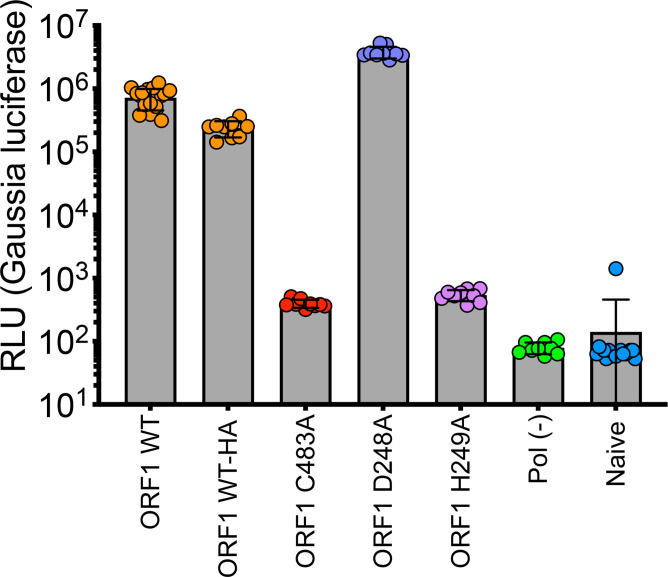
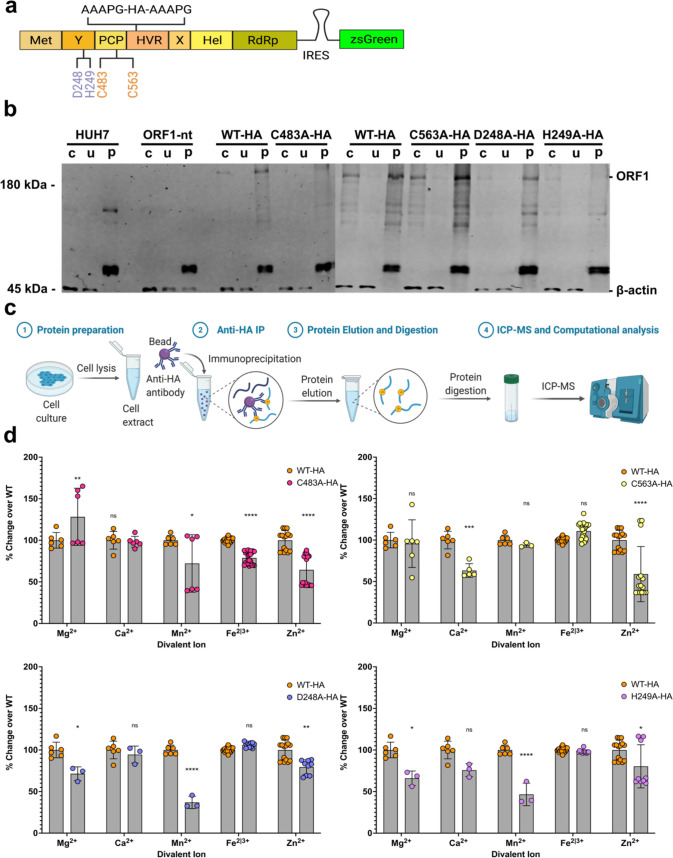
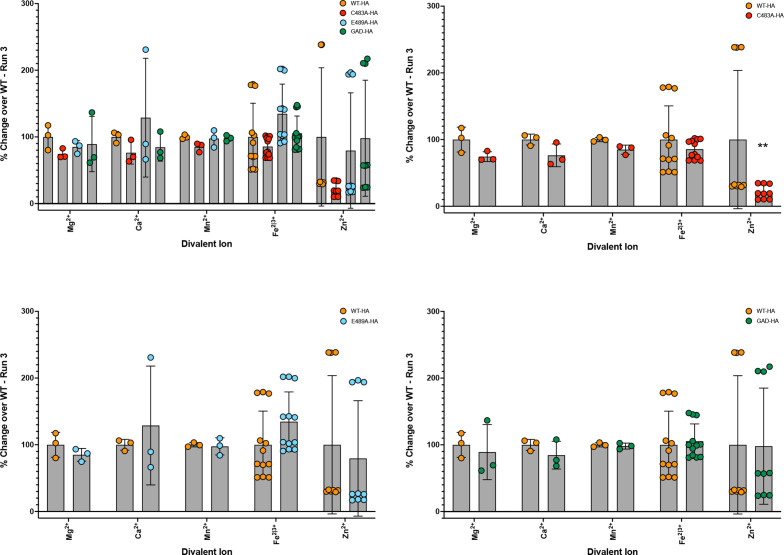
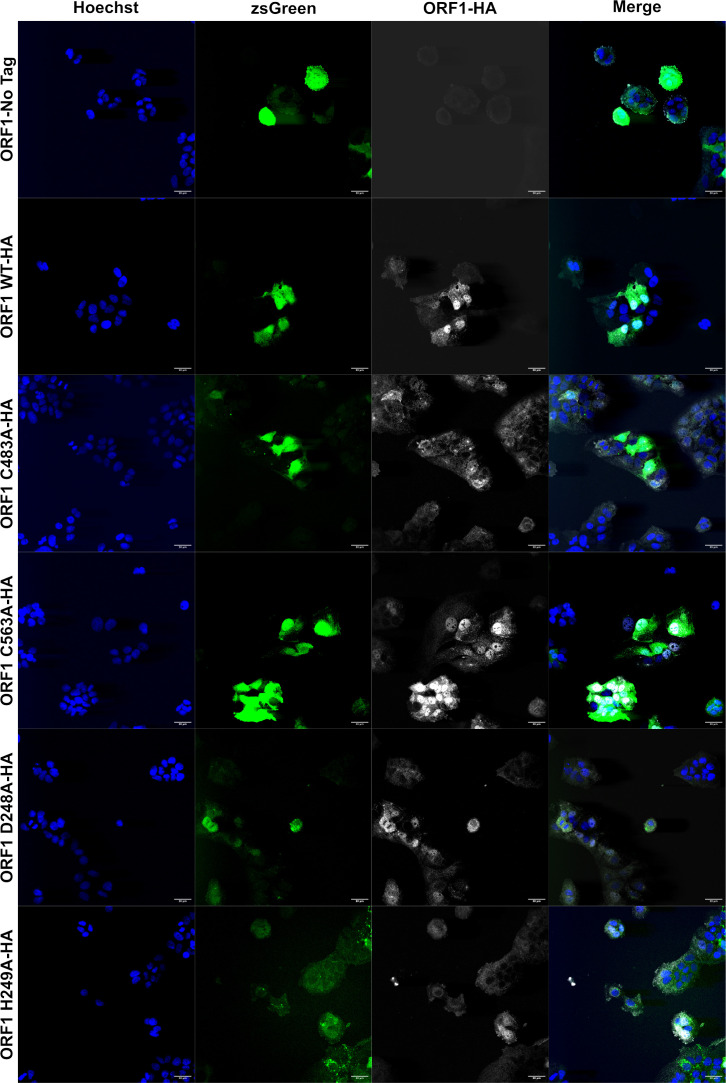
Hepatitis E virus (HEV) is an RNA virus responsible for over 20 million infections annually. HEV’s open reading frame (ORF)1 polyprotein is essential for genome replication, though it is unknown how the different subdomains function within a structural context. Our data show that ORF1 operates as a multifunctional protein, which is not subject to proteolytic processing. Supporting this model, scanning mutagenesis performed on the putative papain-like cysteine protease (pPCP) domain revealed six cysteines essential for viral replication. Our data are consistent with their role in divalent metal ion coordination, which governs local and interdomain interactions that are critical for the overall structure of ORF1; further, the “pPCP” domain can only rescue viral genome replication in trans when expressed in the context of the full-length ORF1 protein but not as an individual subdomain. Taken together our work provides a comprehensive model of the structure and function of HEV ORF1. Significance Statement: The development of non-teratogenic and potent antiviral therapies against HEV have been hindered by an incomplete understanding of the viral replication cycle. Our work provides a mechanistic insight into the complex replicative cycle of this understudied human pathogen and identifies a novel domain-domain interaction that is vital for replicative fitness.
Overview
The claims and statistics of this paper haven’t been checked yet.
Run the check — free, no account needed. It reads the open-access text and checks the sources it cites.
Integrity signals
Registry
Cites
Statistics
Figures
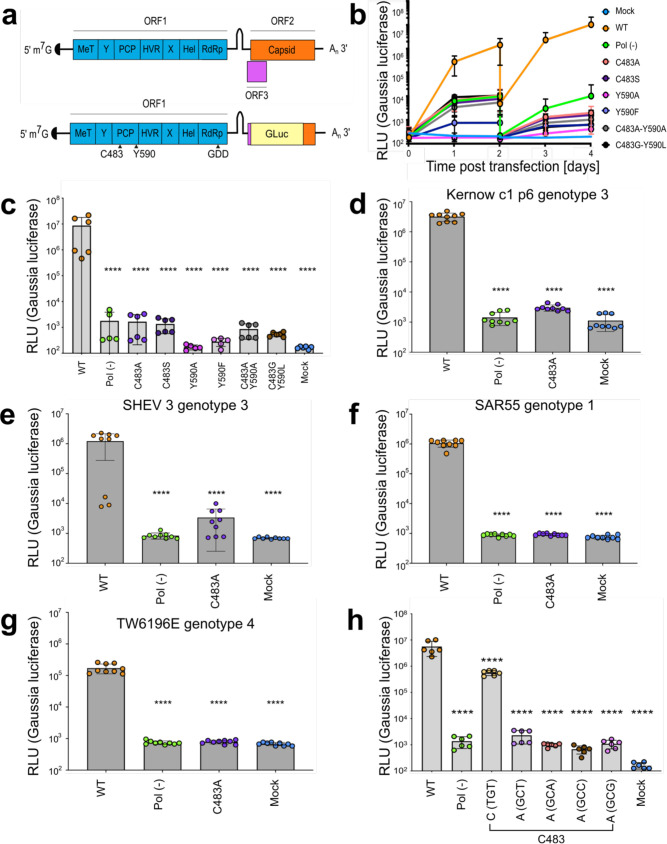
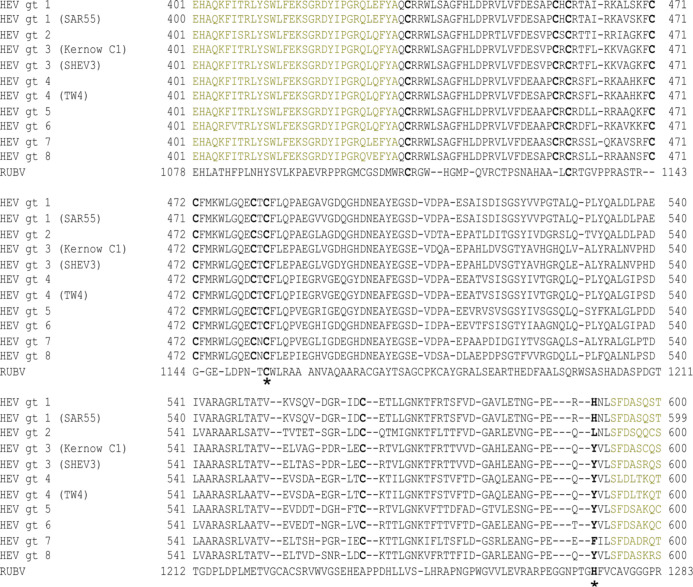
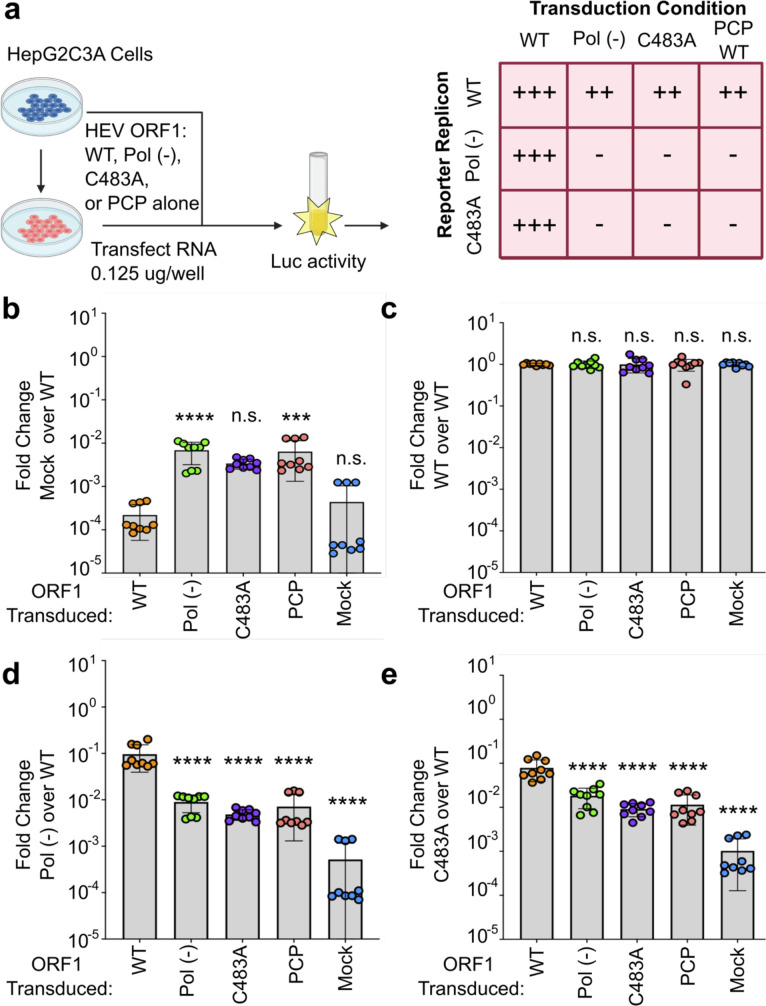
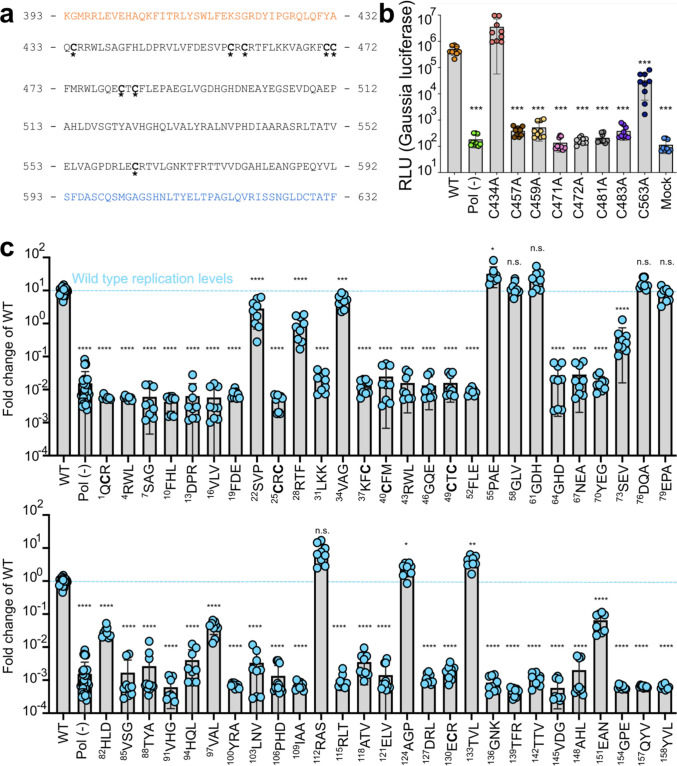
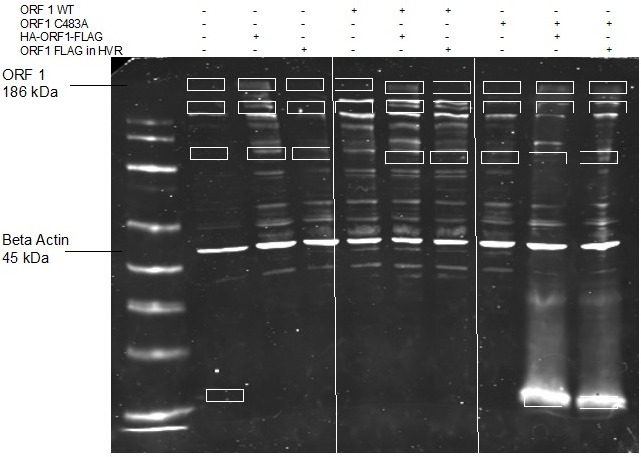
CC[x](7-9)CxC). This analysis brought forth 26 proteins with known functions, enriched for proteins with divalent metal ion binding activity. Green: proteins that matched the first stretch of [x 10–12]. Orange: proteins that matched the second stretch of [x 7–9].](/paper-figures/8421728cb5894c63b62e4f62050a1cdd/structural-features-stabilized-by-divalent-cation-coordination-within-hepatitis-figure-5.jpg)
Verification
Claims the paper makes
The claims and statistics of this paper haven’t been checked yet.
Run the check — free, no account needed. It reads the open-access text and checks the sources it cites.
Self-check
Percentages, sums and reported differences re-computed from the paper’s own numbers.
The self-check needs the paper’s full text.
Citations
Cites
Highly accurate protein structure prediction with AlphaFold
Jumper, J., Evans, R., Pritzel, A., Green, T., Figurnov, M., Ronneberger, O., Tunyasuvunakool, K., Bates, R., Žídek, A., Potapenko, A., et al. (2021) · Nature · doi:10.1038/s41586-021-03819-2 · Cited by 43,764
Research works printed but not linked: 72
- 10.1002/(SICI)1096-9071(200003)60:3<275::AID-JMV5>3.0.CO;2-9 · DOI
- 10.1093/nar/28.1.45 · DOI
- 10.1006/viro.1999.9968 · DOI
- 10.1093/nar/gkg095 · DOI
- 10.1093/bioinformatics/btz236 · DOI
- 2018, Interactions between metal binding viral proteins and human targets as revealed by network-based bioinformatics, J Inorg Biochem, 186, 157, 10.1016/j.jinorgbio.2018.06.012 · DOI
- de Castro, E. , Sigrist, C. J. , Gattiker, A. , Bulliard, V. , Langendijk-Genevaux, P. S. , Gasteiger, E. , Bairoch, A. , & Hulo, N. (2006). ScanProsite: detection of PROSITE signature matches and ProRule-associated functional and structural residues in proteins. Nucleic Acids Res, 34(Web Server issue), W362-365. https://doi.org/10.1093/nar/gkl124 · DOI · Paper page
- 10.1016/j.virusres.2014.02.018 · DOI
- 10.1073/pnas.1803406115 · DOI
- 10.1073/pnas.1614955114 · DOI
- 2018, Identification of the Intragenomic Promoter Controlling Hepatitis E Virus Subgenomic RNA Transcription, MBio, 9, 3
- 10.1128/JVI.78.9.4838-4846.2004 · DOI
- 10.1128/JVI.79.2.1017-1026.2005 · DOI
- 10.1002/lt.22014 · DOI
- 10.1111/jvh.12157 · DOI
- 10.1056/NEJMoa1215246 · DOI
- 2018, Activities of Thrombin and Factor Xa Are Essential for Replication of Hepatitis E Virus and Are Possibly Implicated in ORF1 Polyprotein Processing, J Virol, 92, 6
- 10.1128/JVI.02130-09 · DOI
- 10.1099/vir.0.033738-0 · DOI
- 10.1046/j.1365-2893.2003.00398.x · DOI
- 10.1099/0022-1317-72-9-2197 · DOI
- 10.1073/pnas.89.17.8259 · DOI
- 10.1021/ic401072d · DOI · Paper page
- 1991, Protease digestion of hepatitis A virus: disparate effects on capsid proteins, antigenicity, and infectivity, J Virol, 65, 5636, 10.1128/jvi.65.10.5636-5640.1991 · DOI
- 10.1016/j.jhep.2017.04.002 · DOI
- 10.1128/JVI.75.14.6249-6255.2001 · DOI
- 10.1128/JVI.00189-09 · DOI
- 2022, Processing and Subcellular Localization of the Hepatitis E Virus Replicase: Identification of Candidate Viral Factories, Front Microbiol, 13, 828636, 10.3389/fmicb.2022.828636 · DOI
- 2021, Isocotoin suppresses hepatitis E virus replication through inhibition of heat shock protein 90, Antiviral Res, 185, 104997, 10.1016/j.antiviral.2020.104997 · DOI
- 10.1093/bib/3.3.275 · DOI
- 2022, Hepatitis E virus RNA-dependent RNA polymerase is involved in RNA replication and infectious particle production, Hepatology, 75, 170, 10.1002/hep.32100 · DOI
- 10.1099/vir.0.066142-0 · DOI
- 10.1016/j.virusres.2013.07.020 · DOI
- 10.1016/j.gene.2015.04.026 · DOI
- 2017, Mutational analysis of hepatitis E virus ORF1 “Y-domain”: Effects on RNA replication and virion infectivity, World J Gastroenterol, 23, 590, 10.3748/wjg.v23.i4.590 · DOI
- 10.1016/j.virusres.2013.11.016 · DOI
- 10.1099/vir.0.049577-0 · DOI
- 10.1002/jcc.20084 · DOI · Paper page
- 2019, First Crystal Structure of a Nonstructural Hepatitis E Viral Protein Identifies a Putative Novel Zinc-Binding Protein, J Virol, 93, 13
- 10.1002/hep.25505 · DOI
- 10.1007/978-3-7091-9300-6_2 · DOI
- 10.1007/s007050070093 · DOI
- 2019, Hepatitis E Virus Cysteine Protease Has Papain Like Properties Validated by in silico Modeling and Cell-Free Inhibition Assays, Front Cell Infect Microbiol, 9, 478
- 10.1186/1743-422X-3-38 · DOI
- 10.1073/pnas.1210418109 · DOI
- 10.1128/JVI.00146-12 · DOI
- 10.1073/pnas.1018878108 · DOI
- 10.1099/vir.0.068429-0 · DOI
- 10.1186/1743-422X-8-245 · DOI
- 2019, Recombinant Hepatitis E Viruses Harboring Tags in the ORF1 Protein, J Virol, 93, 19
- 10.1016/0042-6822(91)90760-9 · DOI
- 10.1074/jbc.M407787200 · DOI
- 10.1038/nature03580 · DOI
- 10.1016/j.coviro.2018.10.001 · DOI
- 2021, Highly accurate protein structure prediction for the human proteome, Nature, 596, 590, 10.1038/s41586-021-03828-1 · DOI · Paper page
- 10.1007/s00705-001-0773-3 · DOI
- 10.1016/j.jhep.2016.09.014 · DOI
- 2019, Sofosbuvir Add-on to Ribavirin Treatment for Chronic Hepatitis E Virus Infection in Solid Organ Transplant Recipients Does Not Result in Sustained Virological Response, Open Forum Infect Dis, 6, 8
- 10.1006/viro.1999.0168 · DOI
- 10.1093/nar/gki524 · DOI · Paper page
- 10.1016/j.jinorgbio.2008.05.006 · DOI
- 10.1093/nar/28.1.45 · DOI
- 10.1006/viro.1999.9968 · DOI
- 10.1093/nar/gkg095 · DOI
- 10.1093/nar/gkl124 · DOI · Paper page
- 10.1128/JVI.00189-09 · DOI
- 10.1093/bib/3.3.275 · DOI
- 2022, Hepatitis E virus RNA-dependent RNA polymerase is involved in RNA replication and infectious particle production, Hepatology, 75, 170, 10.1002/hep.32100 · DOI
- 10.1002/jcc.20084 · DOI · Paper page
- 2019, First Crystal Structure of a Nonstructural Hepatitis E Viral Protein Identifies a Putative Novel Zinc-Binding Protein, J Virol, 93, 13
- 10.1073/pnas.1210418109 · DOI
- 10.1016/j.jinorgbio.2008.05.006 · DOI
Metadata
- Authors
- LeDesma, R., Biswas, A., Maya, S., Gili, S., Higgins, J., & Ploss, A.
- Affiliations
- Princeton University (US)
- Corresponding author
- Ploss, Alexander
- Venue
- eLife
- Publisher
- openRxiv
- Published
- 2022-06-14
- Volume
- 12
- ISSN
- 2050-084X (ISSN-L)
- PMC
- PMC9977285
- OpenAlex
- W4322488467
- Cited by
- 22
- References
- 1
- Citations by year
- 2026: 7 · 2025: 5 · 2024: 5 · 2023: 5
- FWCI
- 3.72
- Type
- journal article
- Language
- en
- Open access
- gold
- doi.org
- Licence
- cc-by
- Locations
- eLife (publishedVersion, cc-by)
- bioRxiv (Cold Spring Harbor Laboratory) (acceptedVersion, cc-by)
- PubMed Central (publishedVersion, cc-by)
- PubMed (publishedVersion)
- DOAJ (DOAJ: Directory of Open Access Journals) (submittedVersion, cc-by-sa)
- Funders
- National Science Foundation (T32GM007388, 2039656)
- Burroughs Wellcome Fund
- Princeton University (DGE-2039656, R01 AI107301, R01 AI153236, R01 AI146917, R01 AI138797)
- Rutgers Cancer Institute of New Jersey (P30 CA072720)
- National Institutes of Health
- Virginia-Maryland College of Veterinary Medicine
- National Science Foundation of Sri Lanka
- National Cancer Institute (P30CA072720)
- National Institute of General Medical Sciences (T32GM007388)
- National Institute of Allergy and Infectious Diseases (R01AI138797, AI138797, R01AI146917, AI107301, R01AI153236, R01AI107301)
- Topics
- Health Sciences › Medicine › Hepatology › Hepatitis Viruses Studies and Epidemiology
- Life Sciences › Agricultural and Biological Sciences › Animal Science and Zoology › Animal Virus Infections Studies
- Life Sciences › Biochemistry, Genetics and Molecular Biology › Structural Biology › Enzyme Structure and Function
- Keywords
- hepatitis E virus, papain-like cysteine protease, viral genome replication, protein structure-function relationship, cysteine residues, domain-domain interactions, RNA virus replication
- MeSH terms
- Calpain, Cations, Divalent, Cysteine, Viral Proteins, Virus Replication, Hepatitis E virus
About these checks
Registry, retraction, Cites and statistics results are computed, not judged, with one exception: a printed reference that no index lists is read once by a model before it counts as a citation error. Claims are extracted by a model and kept only when their quote appears verbatim in the text; each cited source is then checked, with a model’s help, for whether it says what the claim relies on. Those verdicts can be wrong — read the claim’s quote and the cited source before relying on one.
Statistics and arithmetic are recomputed, not judged.
Confidence bands are shown only for fields calibrated on our annotated test set. None is calibrated yet, so no band is shown.
What counts as a claim ›How we measure confidence ›How we check this ›
Are you an author, or do you see a problem with this page? Request a review
How to cite
Cite CoChat for the checks on this page, and the paper for its own findings.
- This page
- CoChat. (2026). Citation check: Structural features stabilized by divalent cation coordination within hepatitis E virus ORF1 are critical for viral replication. https://app.cochat.ai/papers/10.1101/2022.06.14.496061
- The paper
- LeDesma, R., Biswas, A., Maya, S., Gili, S., Higgins, J., & Ploss, A. (2022). Structural features stabilized by divalent cation coordination within hepatitis E virus ORF1 are critical for viral replication. eLife. https://doi.org/10.1101/2022.06.14.496061
Data sources
Bibliographic data: Semantic Scholar, OpenAlex, Crossref.
Contains information from the Semantic Scholar Academic Graph Datasets, made available under the ODC Attribution License (ODC-BY 1.0).
Semantic Scholar’s data is described in: Kinney, R., et al. (2023). The Semantic Scholar Open Data Platform. arXiv:2301.10140.
