

The DOI matches its Crossref record; 1 of the 1 references it cites were found in a registry or an index.
Tethering by Uso1 is dispensable: The Uso1 monomeric globular head domain interacts with SNAREs to maintain viability
Open accessPreprint — published as 10.7554/elife.85079 · Paper page
Abstract
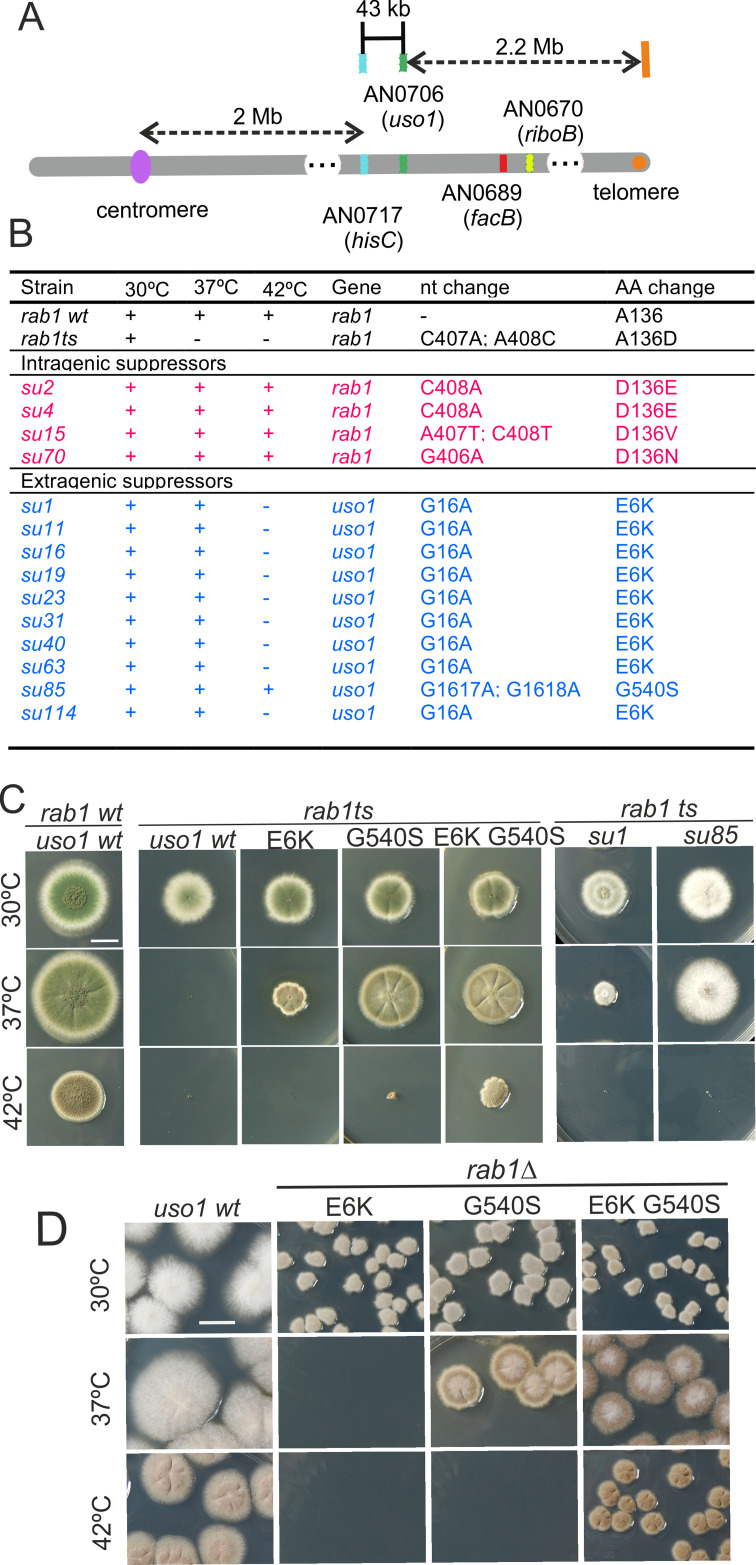
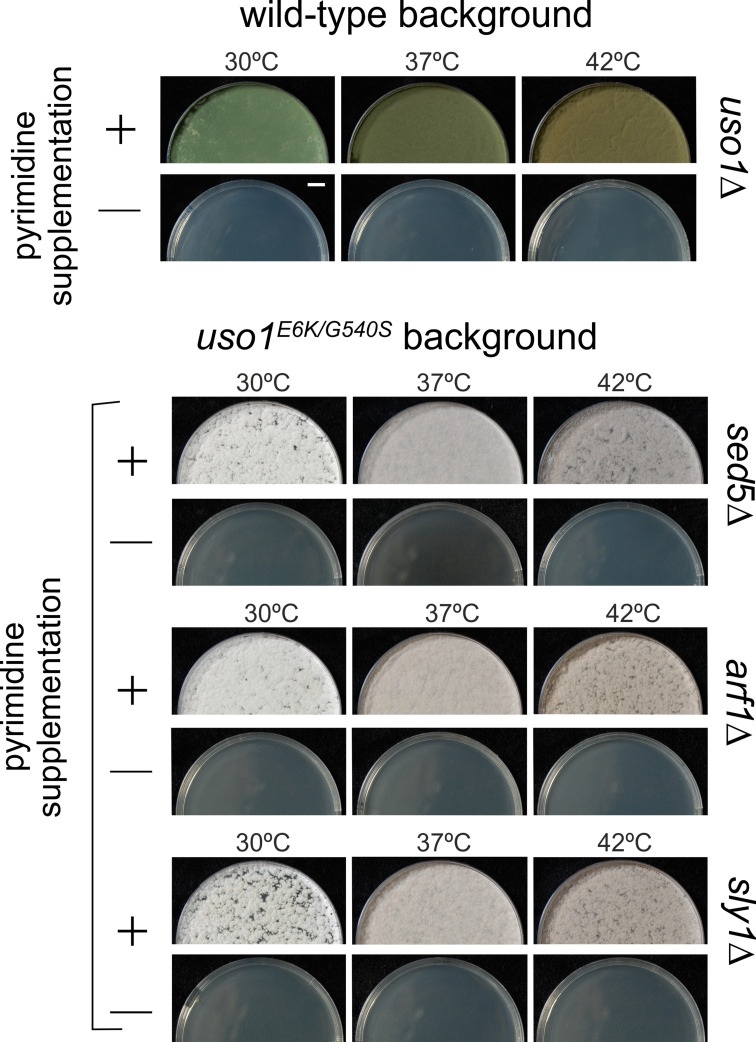
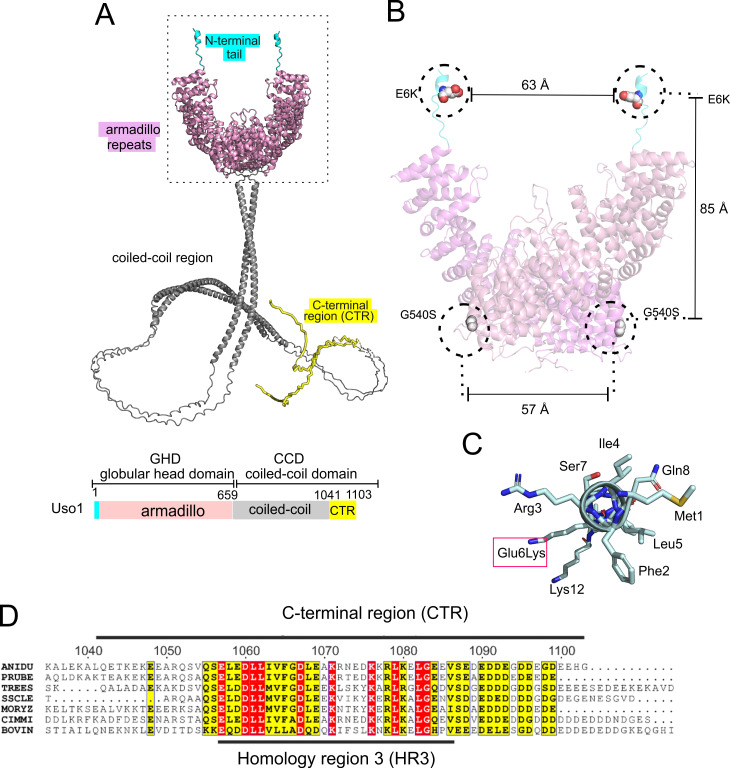
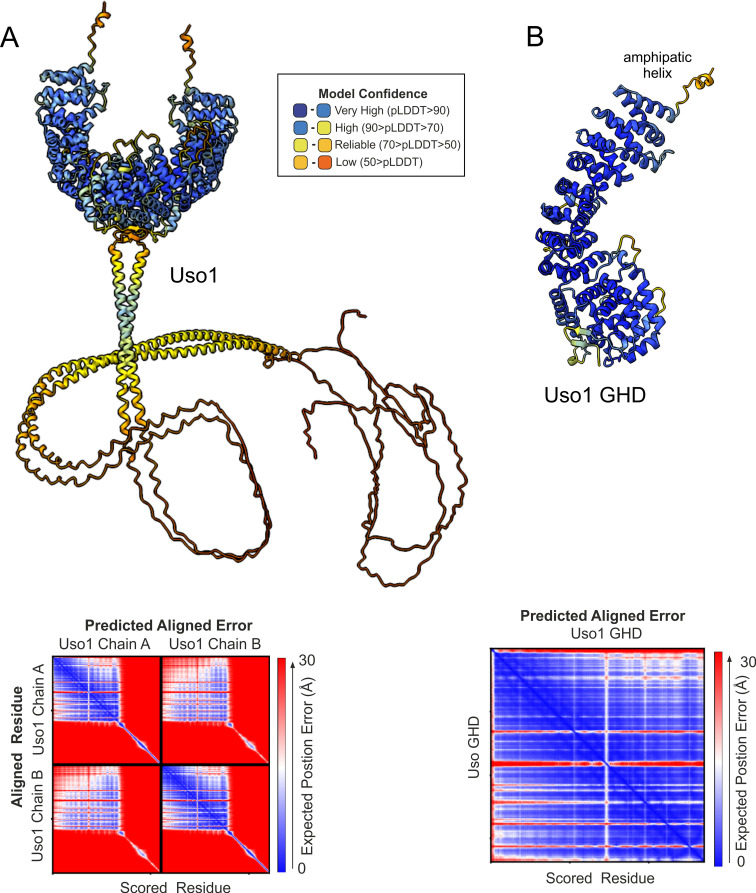
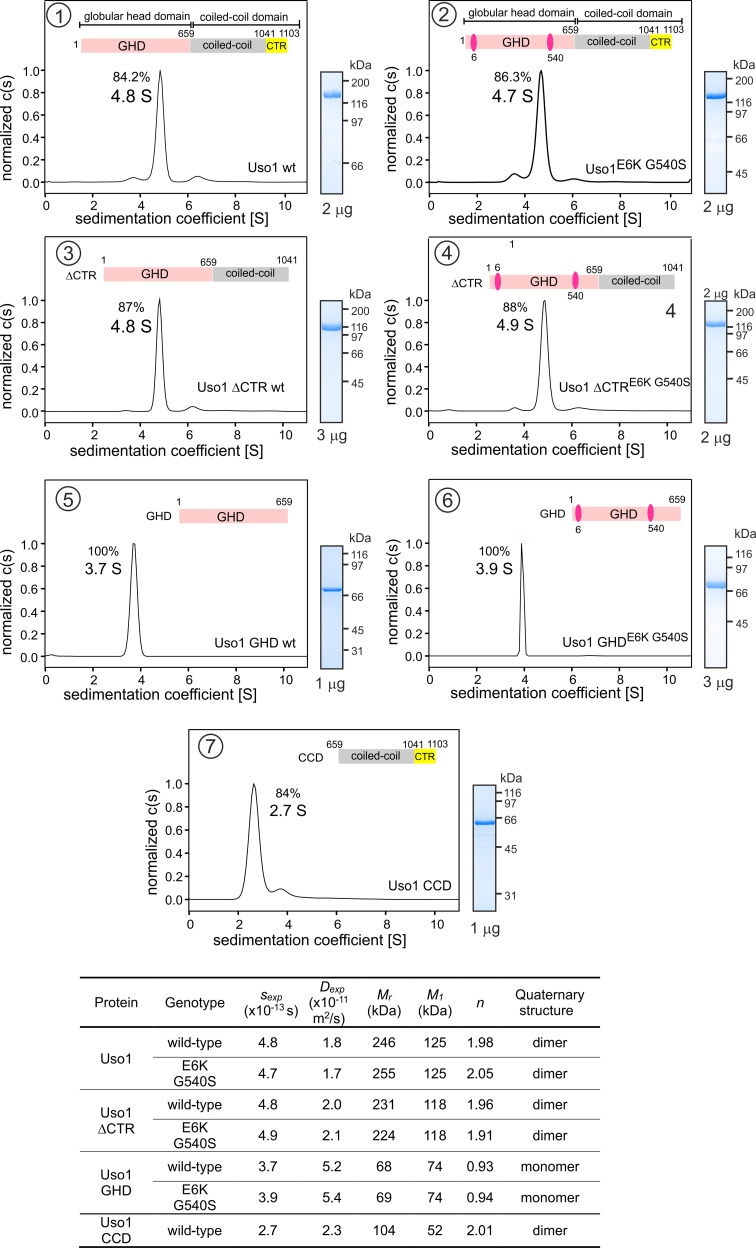
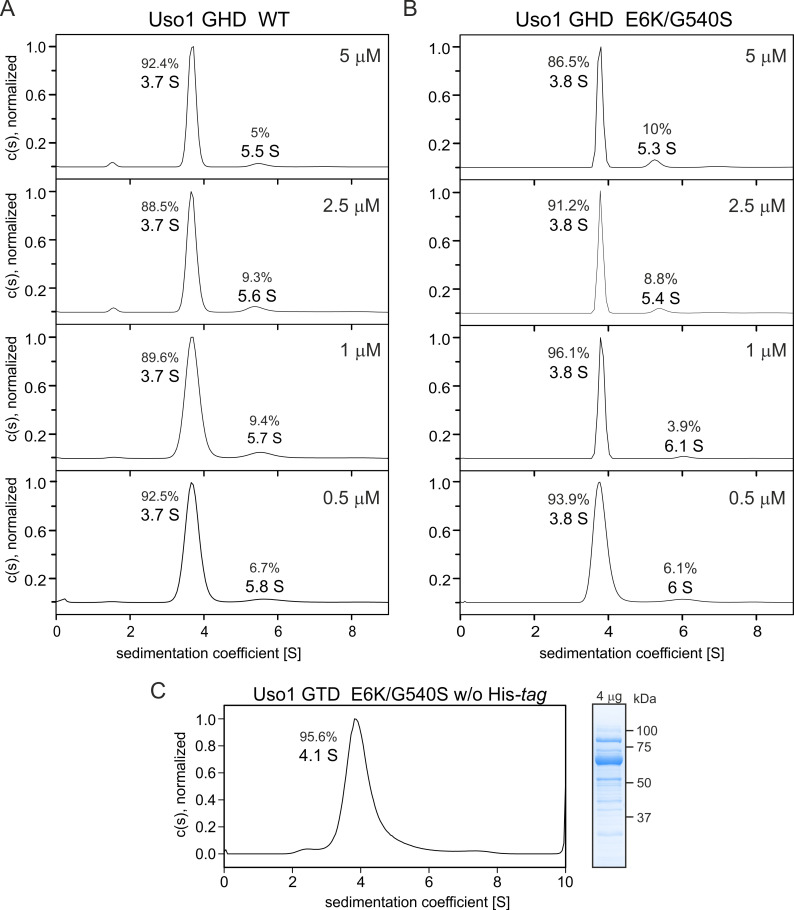
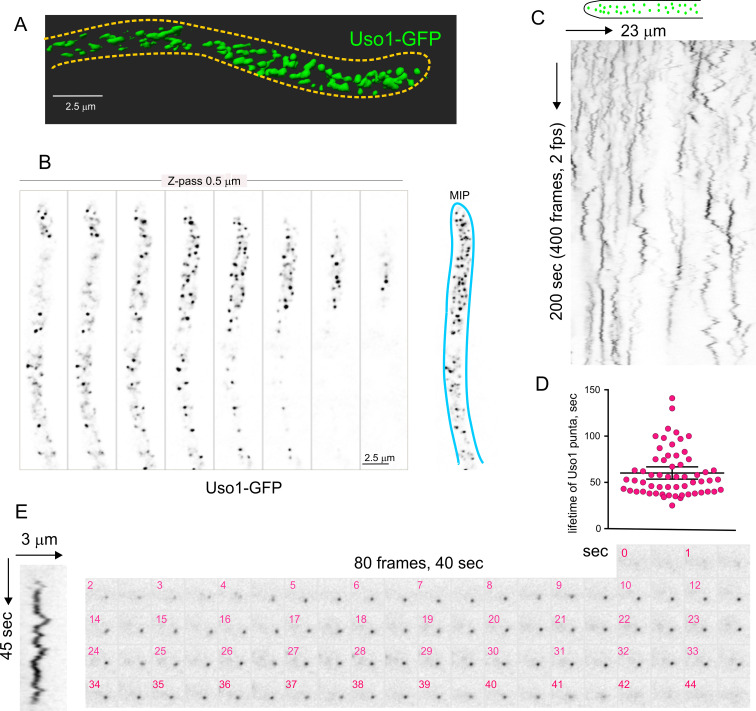
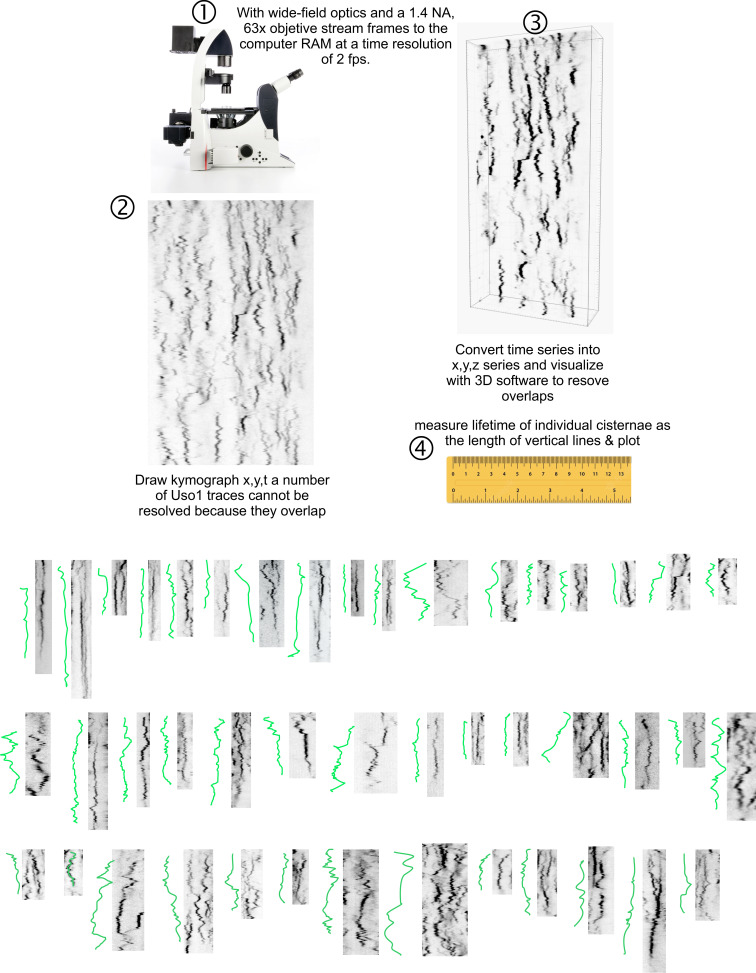
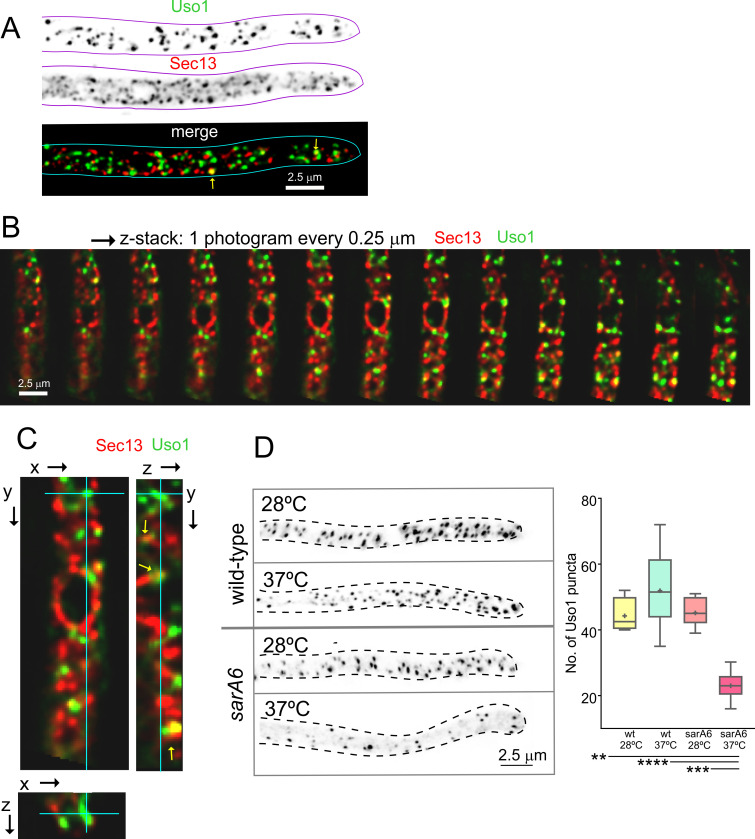
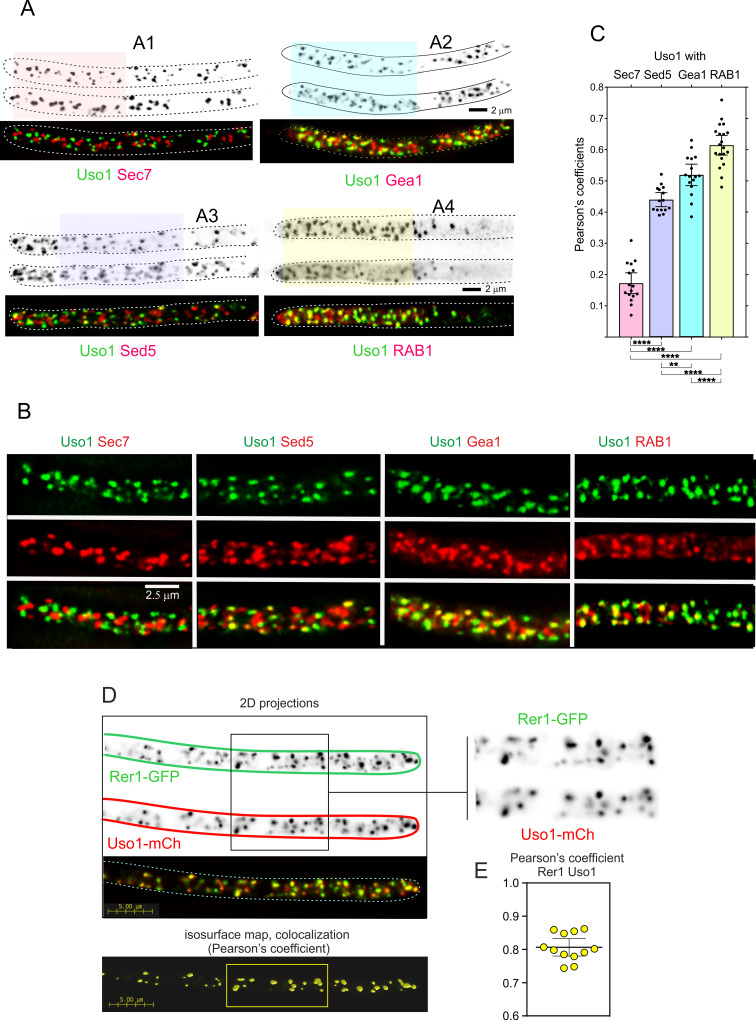
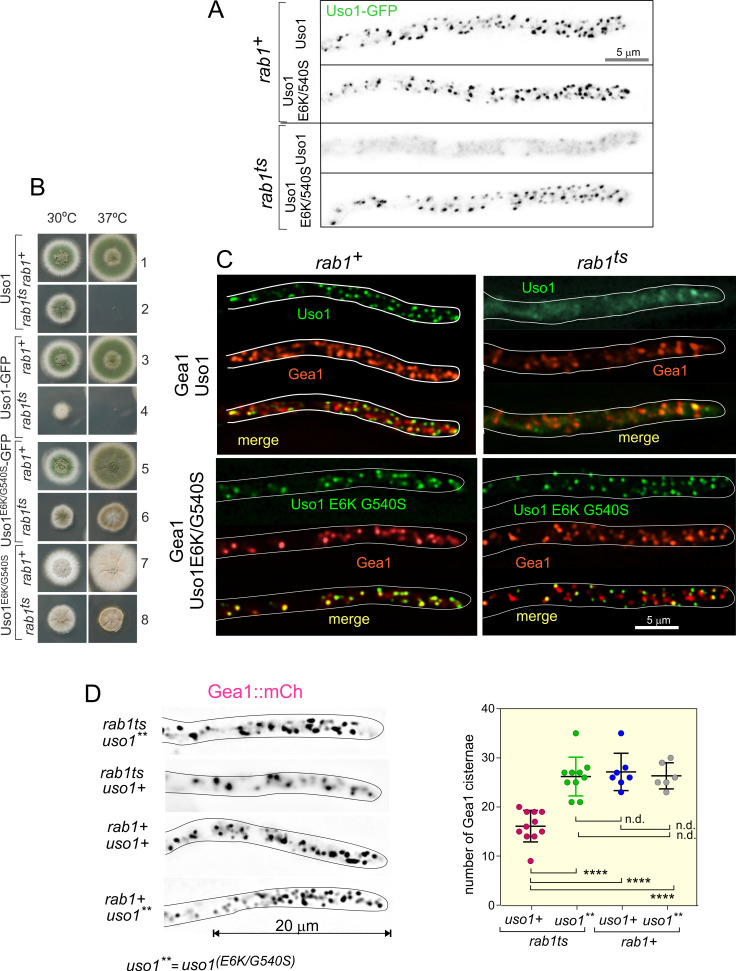
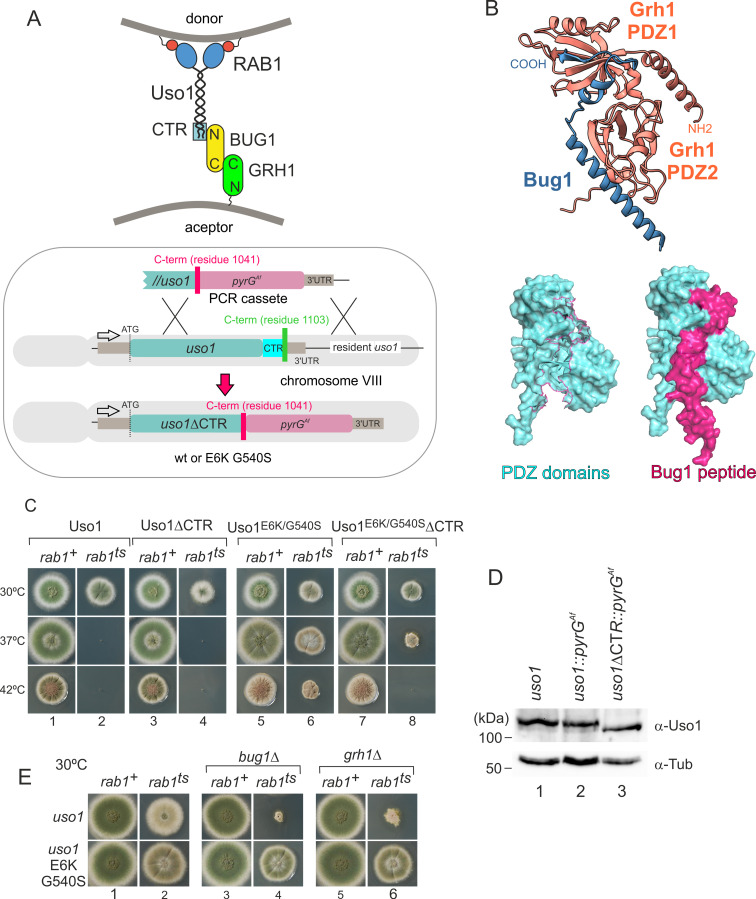
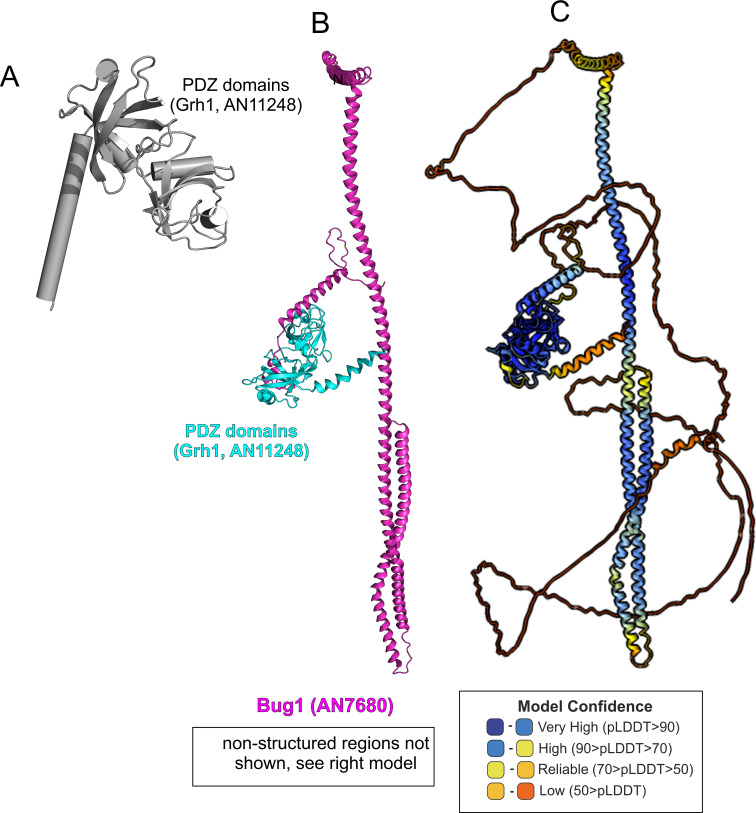
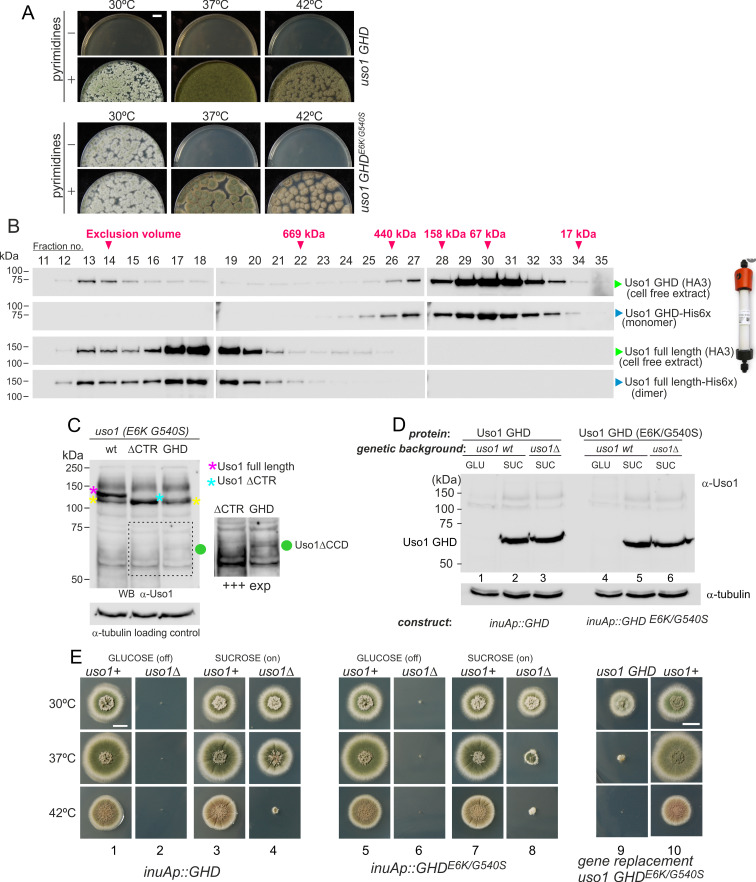
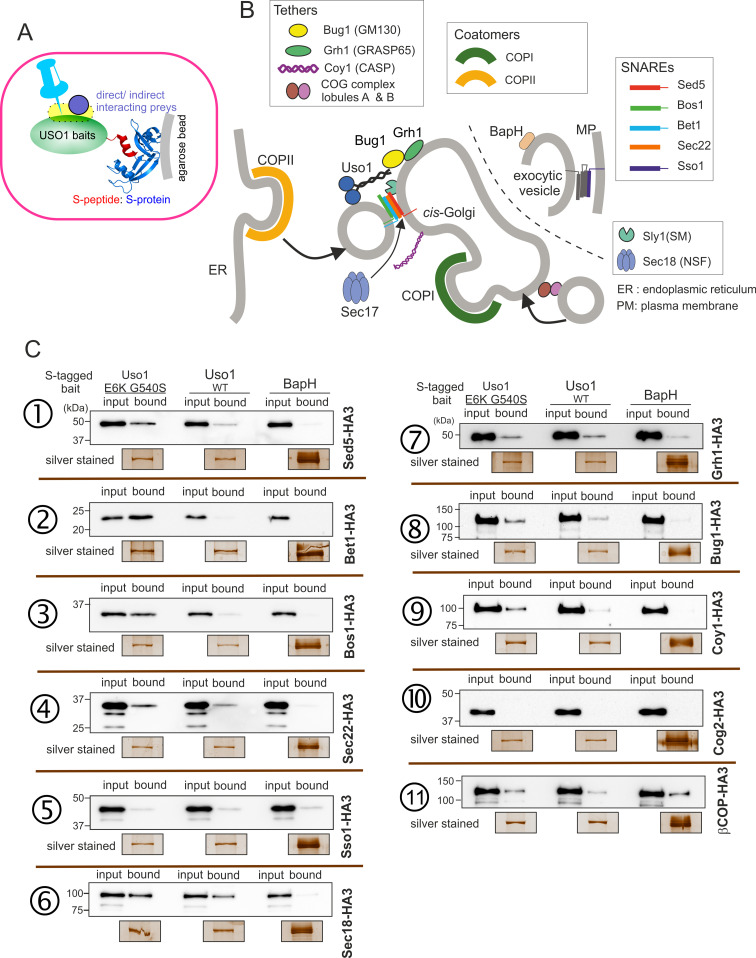
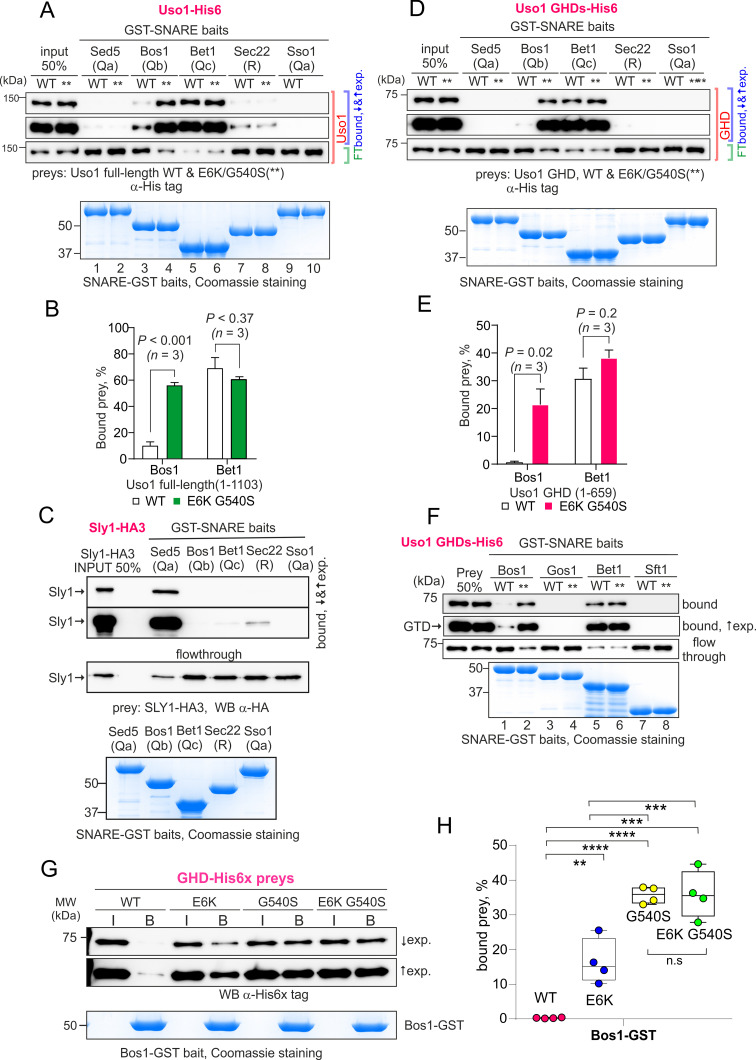
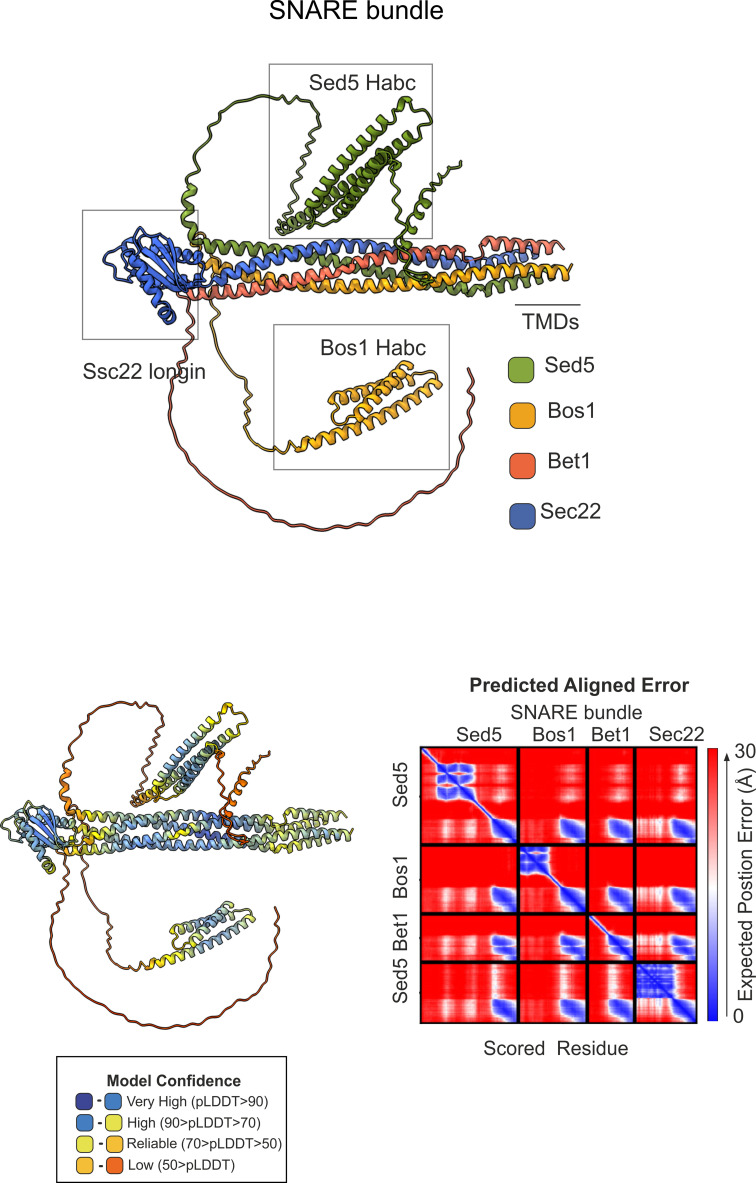
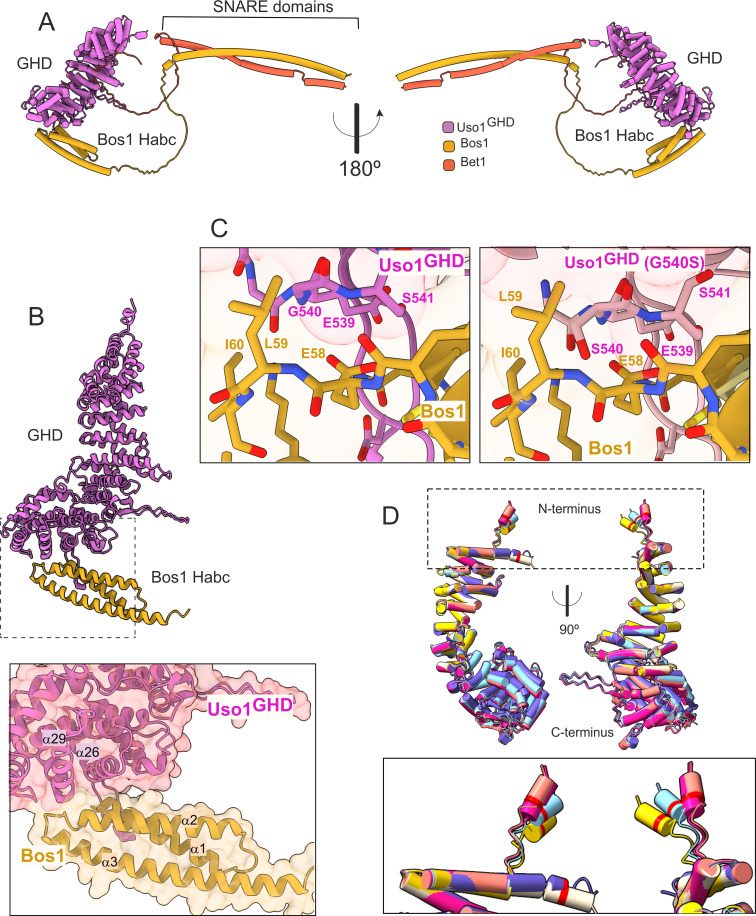
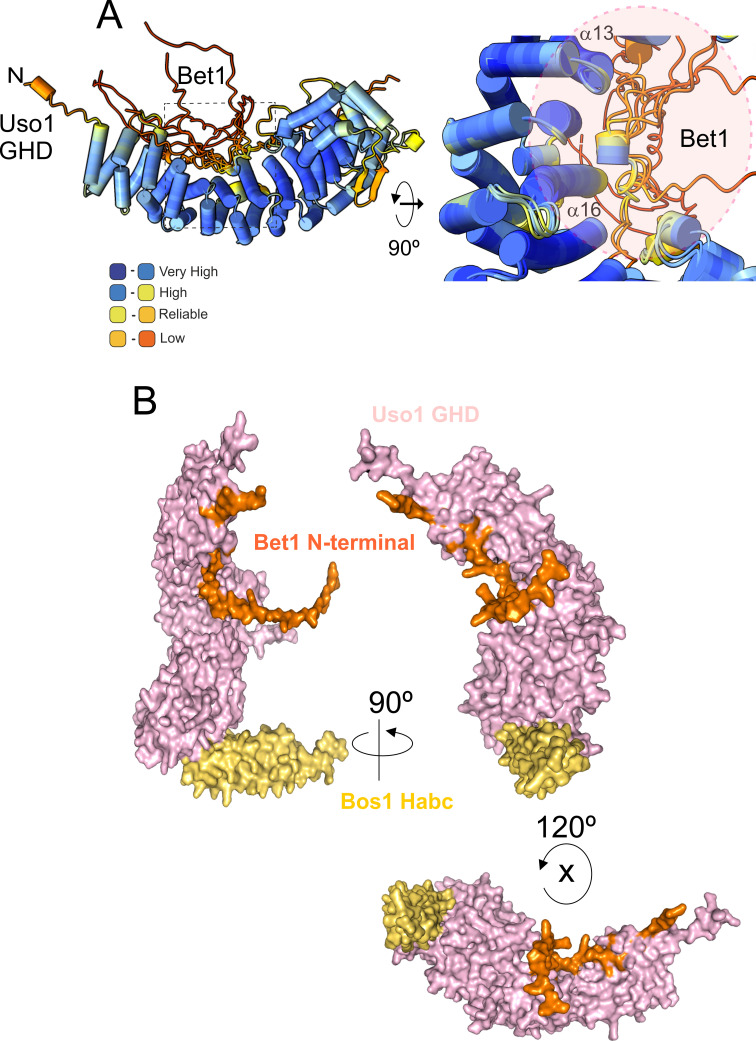
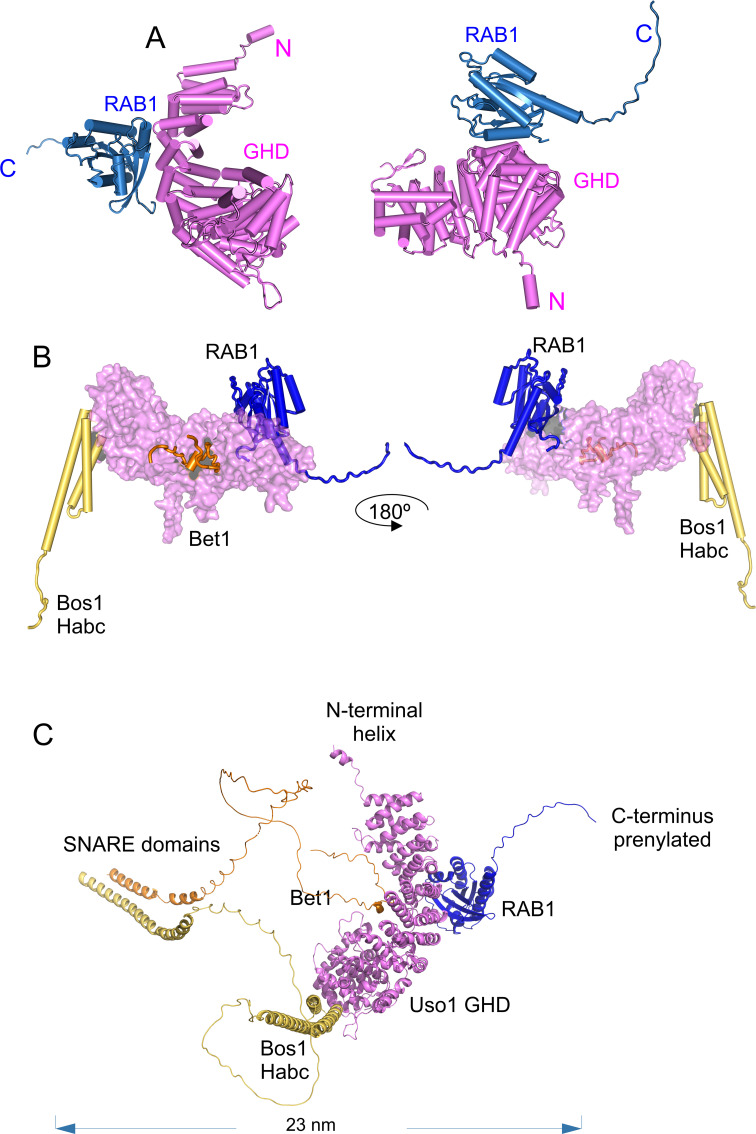
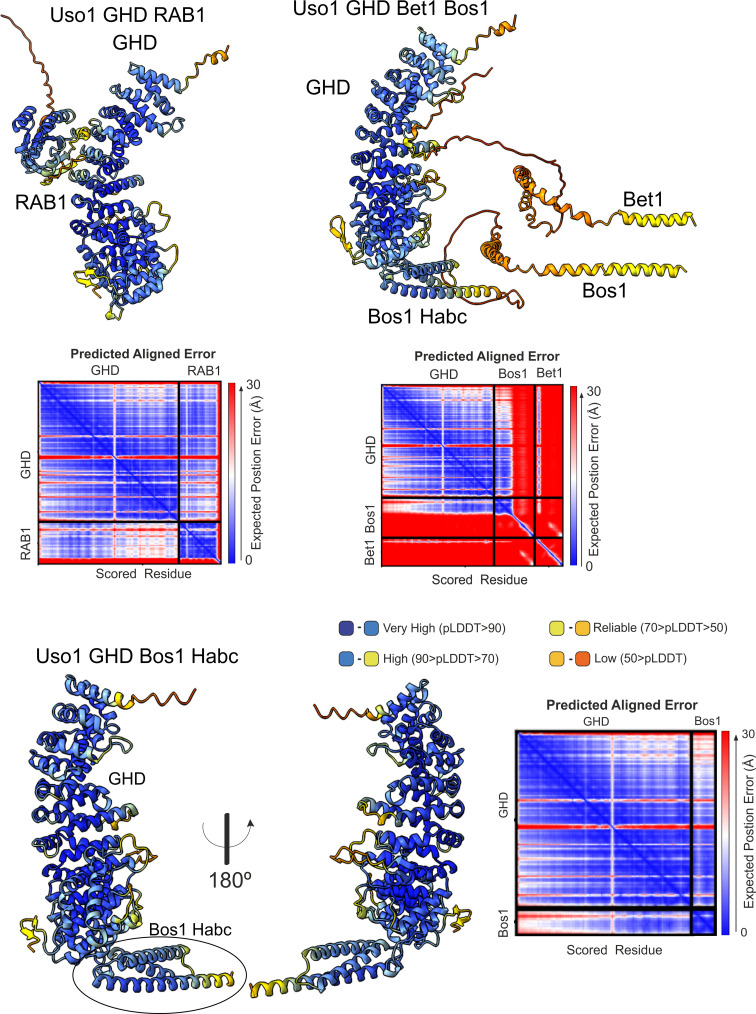
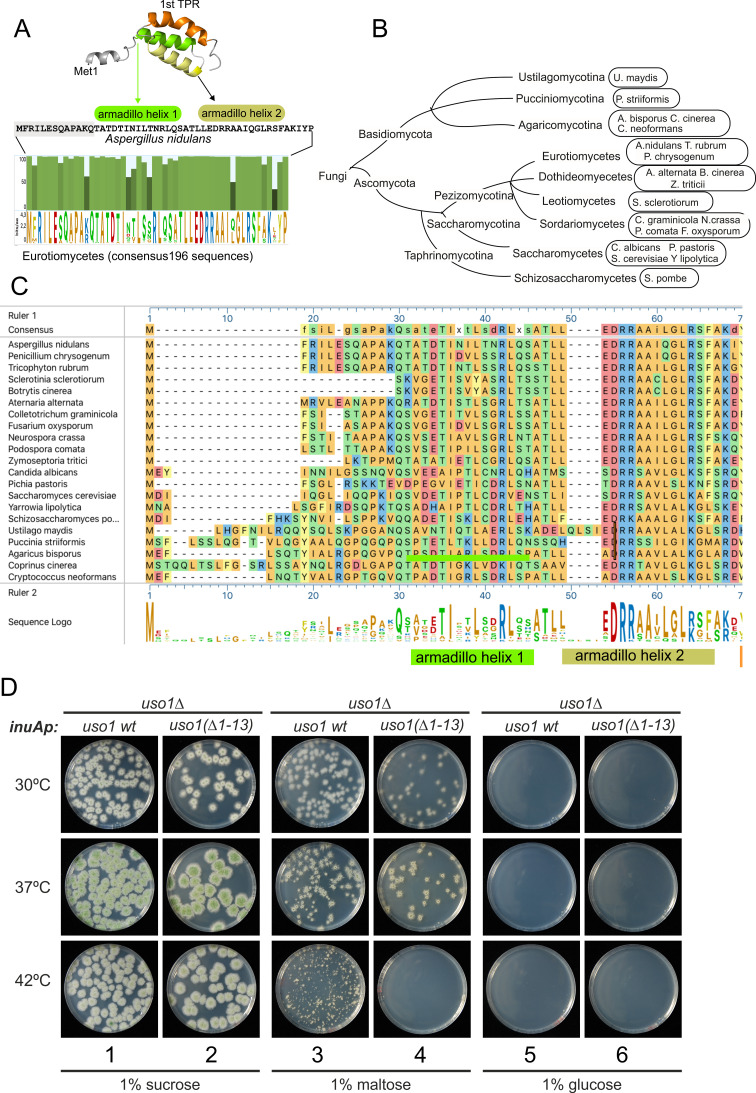
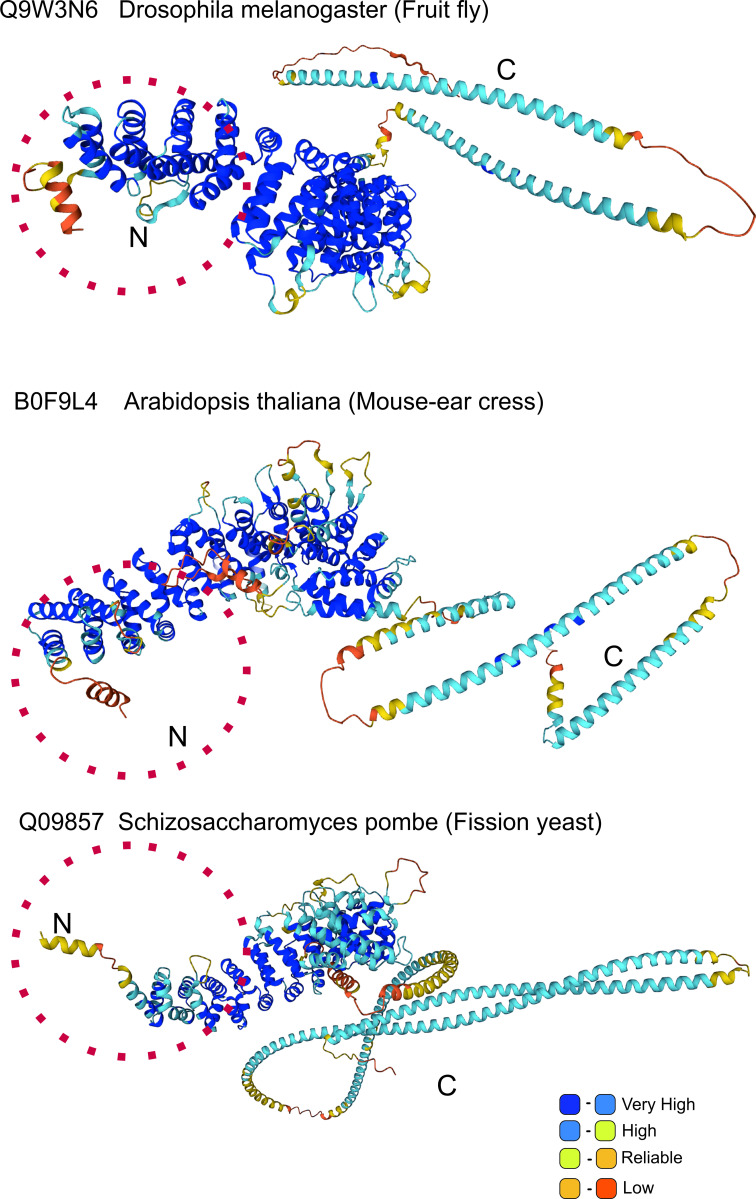
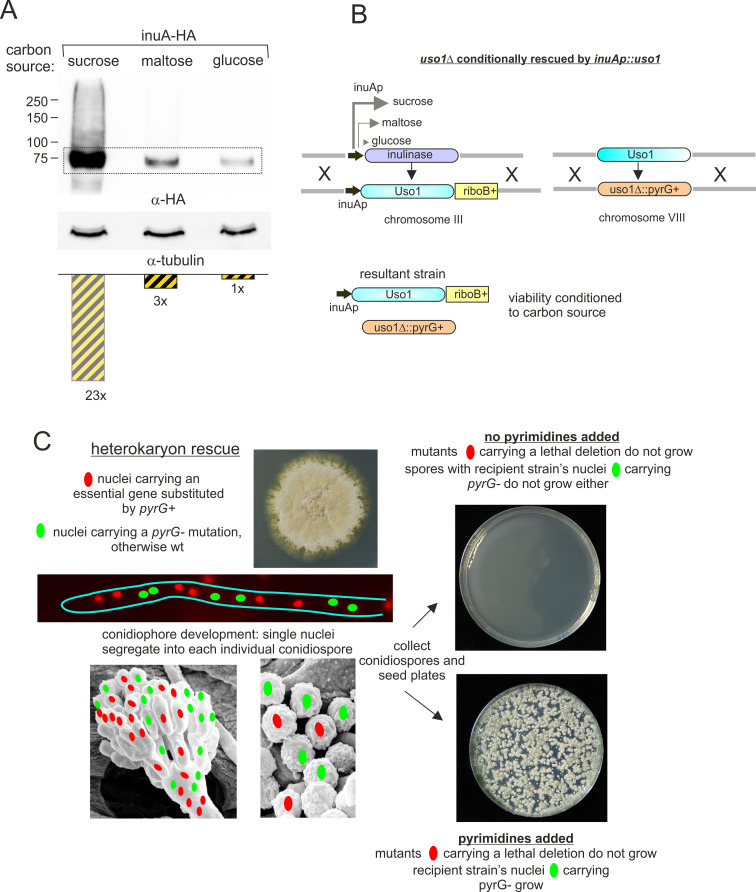
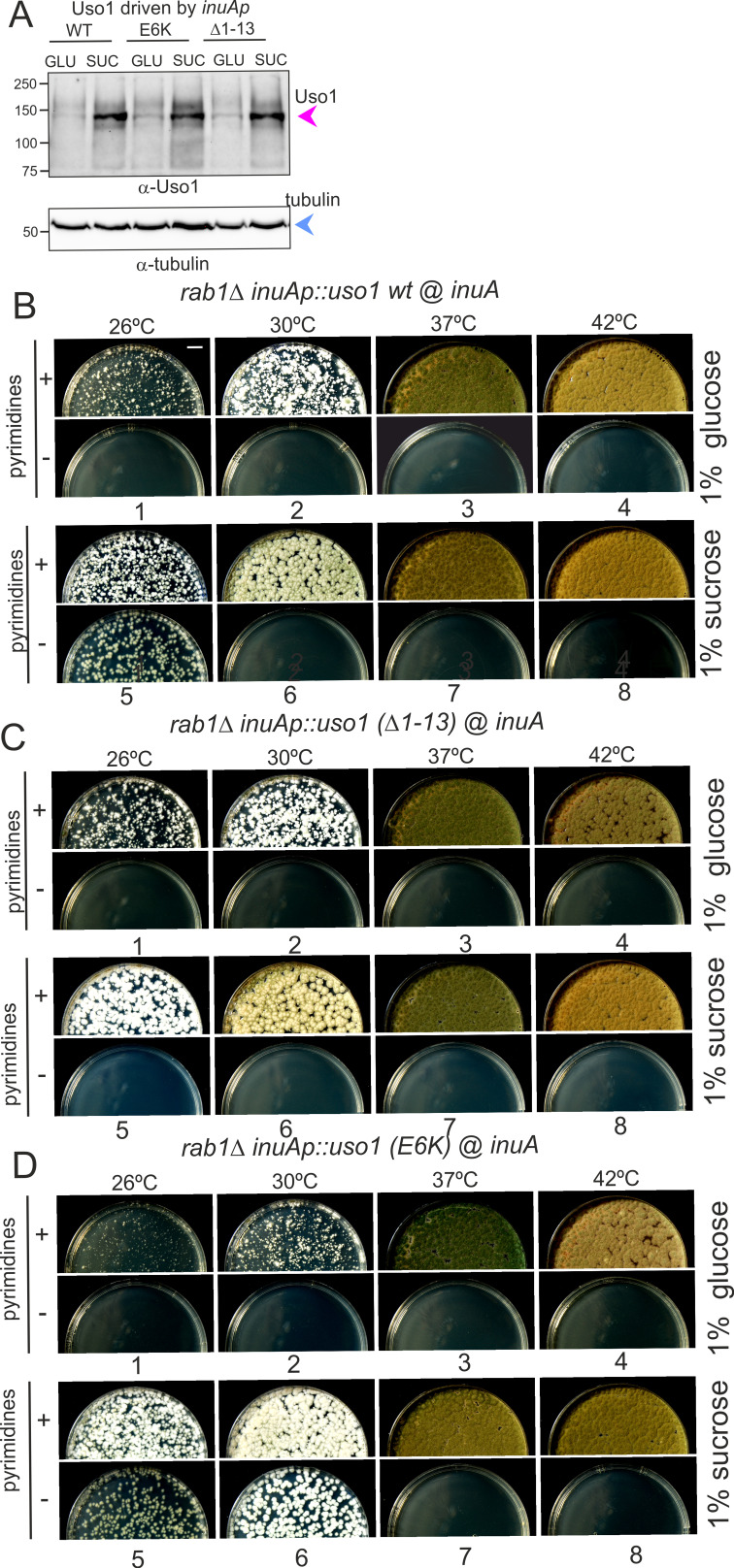
Summary: Uso1/p115 and RAB1 tether ER-derived vesicles to the Golgi. Uso1/p115 contains a globular-head-domain (GHD), a coiled-coil (CC) mediating dimerization/tethering and a C-terminal region (CTR) interacting with golgins. Uso1/p115 is recruited to vesicles by RAB1. Paradoxically, genetic studies placed Uso1 acting upstream of, or in conjunction with RAB1 (Sapperstein et al., 1996). We selected two missense mutations in uso1 resulting in E6K and G540S substitutions in the GHD permitting growth of otherwise inviable rab1- deficient Aspergillus nidulans. Remarkably, the double mutant suppresses the complete absence of RAB1. Full-length Uso1 and CTRΔ proteins are dimeric and the GHD lacking the CC/CTR is monomeric irrespective of whether they carry or not E6K/G540S. Microscopy showed recurrence of Uso1 on puncta (60 sec half-life) colocalizing with RAB1 and less so with early Golgi markers Sed5 and GeaA/Gea1/Gea2. Localization of Uso1 but not of Uso1 E6K/G540S to puncta is abolished by compromising RAB1 function, indicating that E6K/G540S creates interactions bypassing RAB1. By S-tag-coprecipitation we demonstrate that Uso1 is an associate of the Sed5/Bos1/Bet1/Sec22 SNARE complex zippering vesicles with the Golgi, with Uso1 E6K/G540S showing stronger association. Bos1 and Bet1 bind the Uso1 GHD directly, but Bet1 is a strong E6K/G540S-independent binder, whereas Bos1 is weaker but becomes as strong as Bet1 when the GHD carries E6K/G540S. AlphaFold2 predicts that G540S actually increases binding of GHD to the Bos1 Habc domain. In contrast, E6K seemingly increases membrane targeting of an N-terminal amphipathic α -helix, explaining phenotypic additivity. Overexpression of E6K/G540S and wild-type GHD complemented uso1Δ . Thus, a GHD monomer provides the essential Uso1 functions, demonstrating that long-range tethering activity is dispensable. Therefore, when enhanced by E6K/G540S, Uso1 binding to Bos1/Bet1 required to regulate SNAREs bypasses both the contribution of RAB1 to Uso1 recruitment and the reported role of RAB1 in SNARE complex formation (Lupashin and Waters, 1997), suggesting that the latter is consequence of the former.
Overview
The claims and statistics of this paper haven’t been checked yet.
Run the check — free, no account needed. It reads the open-access text and checks the sources it cites.
Integrity signals
Registry
Cites
Statistics
Figures
Verification
Claims the paper makes
The claims and statistics of this paper haven’t been checked yet.
Run the check — free, no account needed. It reads the open-access text and checks the sources it cites.
Self-check
Percentages, sums and reported differences re-computed from the paper’s own numbers.
The self-check needs the paper’s full text.
Citations
Cites
Highly accurate protein structure prediction with AlphaFold
Jumper, J., Evans, R., Pritzel, A., Green, T., Figurnov, M., Ronneberger, O., Tunyasuvunakool, K., Bates, R., Žídek, A., Potapenko, A., et al. (2021) · Nature · doi:10.1038/s41586-021-03819-2 · Cited by 43,764
Research works printed but not linked: 73
- 10.1126/science.289.5478.444 · DOI · Paper page
- 10.1016/j.jmb.2009.04.062 · DOI
- 2017, The Golgin protein Coy1 functions in intra-Golgi retrograde transport and interacts with the COG complex and Golgi SNAREs, Mol Biol Cell, 10, 1091
- 10.1016/j.febslet.2014.11.014 · DOI
- 10.1038/nrm.2016.65 · DOI
- 10.1126/science.aac7906 · DOI
- 10.1534/genetics.112.142810 · DOI
- 10.1074/jbc.M503925200 · DOI
- 10.1083/jcb.200607151 · DOI
- 10.1074/jbc.M606044200 · DOI
- 10.1093/emboj/cdf608 · DOI
- 10.1091/mbc.E05-09-0862 · DOI
- 10.1016/j.bbamcr.2019.118551 · DOI
- 10.1038/nature05527 · DOI
- 10.1093/emboj/17.8.2156 · DOI
- 10.1016/S0926-6593(66)80120-0 · DOI
- 10.1007/s00418-013-1128-3 · DOI
- 2021, Cryo-EM structure of metazoan TRAPPIII, the multi-subunit complex that activates the GTPase Rab1, Embo J, 40, e107608, 10.15252/embj.2020107608 · DOI
- 10.1042/BST20170188 · DOI
- 2016, Finding the Golgi: Golgin Coiled-Coil Proteins Show the Way, Trends Cell Biol, 26, 339
- 10.1038/s41598-020-66480-1 · DOI
- 10.1016/j.fgb.2018.12.003 · DOI
- 10.1111/mmi.14073 · DOI
- 10.1074/jbc.M115.657940 · DOI
- 10.1093/genetics/149.2.833 · DOI
- 2021, Structural basis of TRAPPIII-mediated Rab1 activation, Embo J, 40, e107607, 10.15252/embj.2020107607 · DOI
- 10.1038/nature09969 · DOI
- 10.1126/science.276.5316.1255 · DOI
- 10.1101/cshperspect.a005249 · DOI
- 10.1038/35025000 · DOI
- 10.1038/s41592-022-01488-1 · DOI · Paper page
- 10.1016/j.cub.2018.01.006 · DOI
- 10.1083/jcb.113.2.245 · DOI
- 10.1534/genetics.105.052563 · DOI
- 10.1016/0092-8674(88)90513-2 · DOI
- 2019, A Kinetic View of Membrane Traffic Pathways Can Transcend the Classical View of Golgi Compartments, Frontiers in Cell and Developmental Biology, 7, 153, 10.3389/fcell.2019.00153 · DOI
- 10.1111/j.1600-0854.2011.01164.x · DOI
- 10.1073/pnas.082100899 · DOI
- 10.1006/excr.1998.4356 · DOI
- 10.1016/S0962-8924(01)01929-8 · DOI
- 10.1083/jcb.200202006 · DOI
- 10.1016/j.fgb.2005.09.004 · DOI
- 2020, Tracking exocytosis of a GPI-anchored protein in Aspergillus nidulans, Traffic, 21, 675, 10.1111/tra.12761 · DOI
- 10.1016/j.isci.2022.104514 · DOI
- 2019, Characterization of Aspergillus nidulans TRAPPs uncovers unprecedented similarities with metazoans and reveals the modular assembly of TRAPPII, PLoS Genetics, 15, e1008557, 10.1371/journal.pgen.1008557 · DOI
- 10.1073/pnas.1419168112 · DOI
- 10.1111/mmi.12280 · DOI
- 10.1111/mmi.13777 · DOI
- 10.1242/jcs.241141 · DOI
- 2021, The fungal RABOME: RAB GTPases acting in the endocytic and exocytic pathways of Aspergillus nidulans (with excursions to other filamentous fungi), Mol Microbiol, 116, 53, 10.1111/mmi.14716 · DOI
- 10.1016/j.cell.2009.11.002 · DOI
- 10.1083/jcb.126.5.1133 · DOI · Paper page
- 10.1083/jcb.201705068 · DOI
- 10.1146/annurev-cellbio-101011-155818 · DOI
- 10.1083/jcb.132.5.755 · DOI
- 10.1073/pnas.92.2.522 · DOI
- 10.1016/S0006-3495(00)76713-0 · DOI
- 10.1093/oxfordjournals.jbchem.a124685 · DOI
- 10.1083/jcb.200112127 · DOI
- 10.1016/0092-8674(94)90270-4 · DOI
- 10.1371/journal.pone.0004656 · DOI
- 10.1038/nprot.2006.405 · DOI
- 10.1083/jcb.201705214 · DOI
- 10.1016/j.devcel.2018.11.013 · DOI
- 10.1016/0378-1119(83)90191-9 · DOI
- 10.1038/nprot.2007.112 · DOI
- 10.1091/mbc.12.3.521 · DOI
- 2014, p115-SNARE Interactions: A Dynamic Cycle of p115 Binding Monomeric SNARE Motifs and Releasing Assembled Bundles, Traffic, 10, 1111
- 10.1016/j.cell.2021.03.035 · DOI
- 10.1006/jsbi.1996.0053 · DOI
- 10.1146/annurev.cellbio.042308.113327 · DOI
- 10.1146/annurev-biochem-081820-103615 · DOI
- 10.1074/jbc.H120.014815 · DOI
Metadata
- Authors
- Bravo-Plaza, I., Tagua, V. G., Arst, H. N., Alonso, A., Pinar, M., Monterroso, B., Galindo, A., & Peñalva, M. Á.
- Affiliations
- Consejo Superior de Investigaciones Científicas (ES)
- Hospital Universitario Nuestra Señora de Candelaria (ES)
- Imperial College London (GB)
- MRC Laboratory of Molecular Biology (GB)
- ORCID
- Venue
- eLife
- Publisher
- openRxiv
- Published
- 2022-12-05
- Volume
- 12
- ISSN
- 2050-084X (ISSN-L)
- PMC
- PMC10275640
- OpenAlex
- W4378746447
- Cited by
- 10
- References
- 1
- Citations by year
- 2026: 2 · 2025: 4 · 2024: 4
- FWCI
- 1.44
- Type
- journal article
- Language
- en
- Open access
- gold
- doi.org
- Licence
- cc-by
- Locations
- eLife (publishedVersion, cc-by)
- bioRxiv (Cold Spring Harbor Laboratory) (acceptedVersion, cc-by)
- PubMed Central (publishedVersion, cc-by)
- PubMed (publishedVersion)
- DIGITAL.CSIC (Spanish National Research Council (CSIC)) (submittedVersion, cc-by)
- DOAJ (DOAJ: Directory of Open Access Journals) (submittedVersion, cc-by-sa)
- Funders
- Comunidad de Madrid (S2017/BMD‐3691, S2017/BMD)
- Ministerio de Ciencia e Innovación (RTI2018-093344-B100)
- European Regional Development Fund
- Agencia Estatal de Investigación (PID2021-124278OB-I00, BES-2016-077440, RTI2018-093344-B100)
- European Social Fund
- Topics
- Life Sciences › Biochemistry, Genetics and Molecular Biology › Cell Biology › Cellular transport and secretion
- Life Sciences › Biochemistry, Genetics and Molecular Biology › Molecular Biology › Fungal and yeast genetics research
- Life Sciences › Biochemistry, Genetics and Molecular Biology › Cell Biology › Autophagy in Disease and Therapy
- Keywords
- p115, coiled-coil domain, SNARE proteins, Rab1, ER-Golgi transport, Golgi cisternae, Aspergillus nidulans, missense mutations, vesicle tethering
- MeSH terms
- Protein Domains, Golgi Apparatus, Branchio-Oto-Renal Syndrome, Vesicular Transport Proteins, SNARE Proteins
About these checks
Registry, retraction, Cites and statistics results are computed, not judged, with one exception: a printed reference that no index lists is read once by a model before it counts as a citation error. Claims are extracted by a model and kept only when their quote appears verbatim in the text; each cited source is then checked, with a model’s help, for whether it says what the claim relies on. Those verdicts can be wrong — read the claim’s quote and the cited source before relying on one.
Statistics and arithmetic are recomputed, not judged.
Confidence bands are shown only for fields calibrated on our annotated test set. None is calibrated yet, so no band is shown.
What counts as a claim ›How we measure confidence ›How we check this ›
Are you an author, or do you see a problem with this page? Request a review
How to cite
Cite CoChat for the checks on this page, and the paper for its own findings.
- This page
- CoChat. (2026). Citation check: Tethering by Uso1 is dispensable: The Uso1 monomeric globular head domain interacts with SNAREs to maintain viability. https://app.cochat.ai/papers/10.1101/2022.11.30.518472
- The paper
- Bravo-Plaza, I., Tagua, V. G., Arst, H. N., Alonso, A., Pinar, M., Monterroso, B., Galindo, A., & Peñalva, M. Á. (2022). Tethering by Uso1 is dispensable: The Uso1 monomeric globular head domain interacts with SNAREs to maintain viability. eLife. https://doi.org/10.1101/2022.11.30.518472
