

The DOI matches its Crossref record; 2 of the 2 references it cites were found in a registry or an index.
Identification of potential molecular mimicry in pathogen-host interactions
Open accessPreprint — published as 10.7717/peerj.16339
Abstract
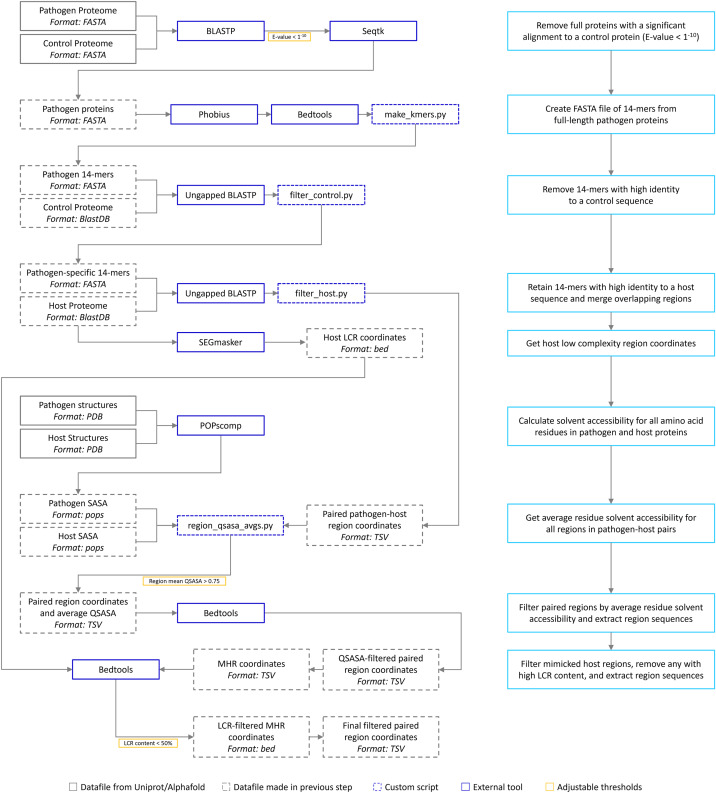
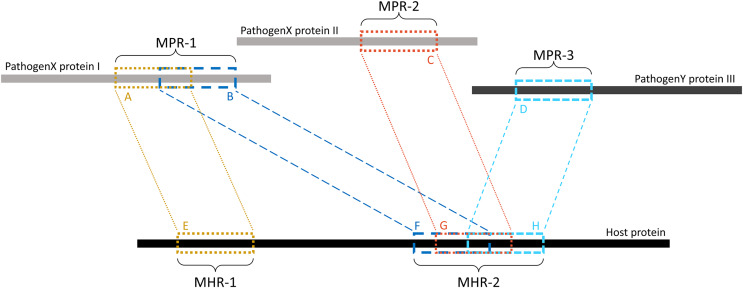
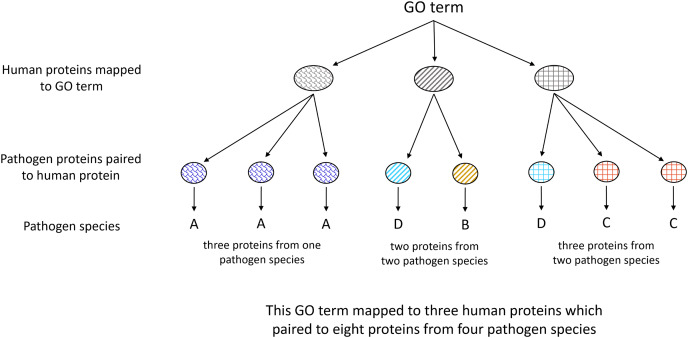
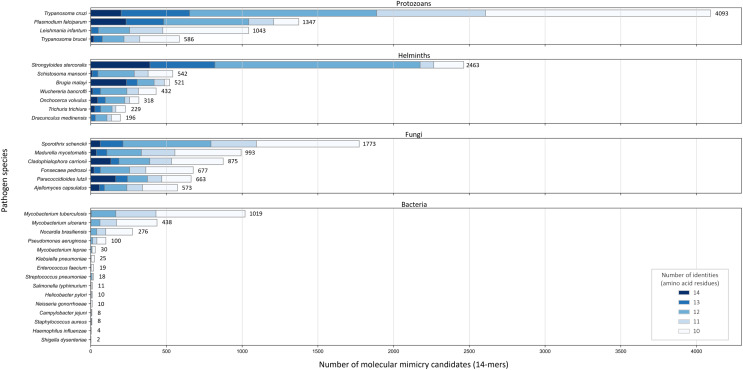
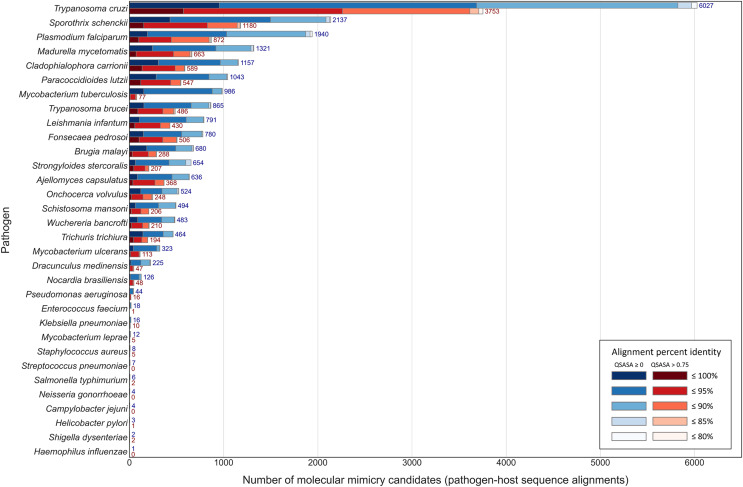
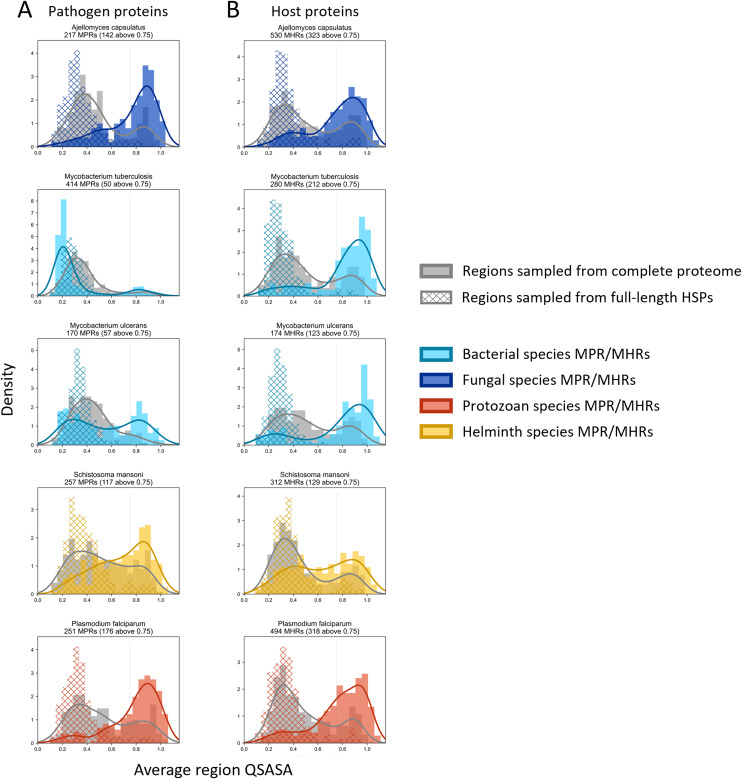
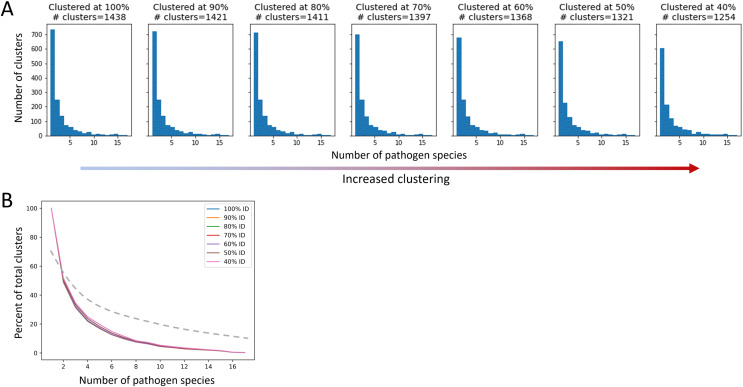
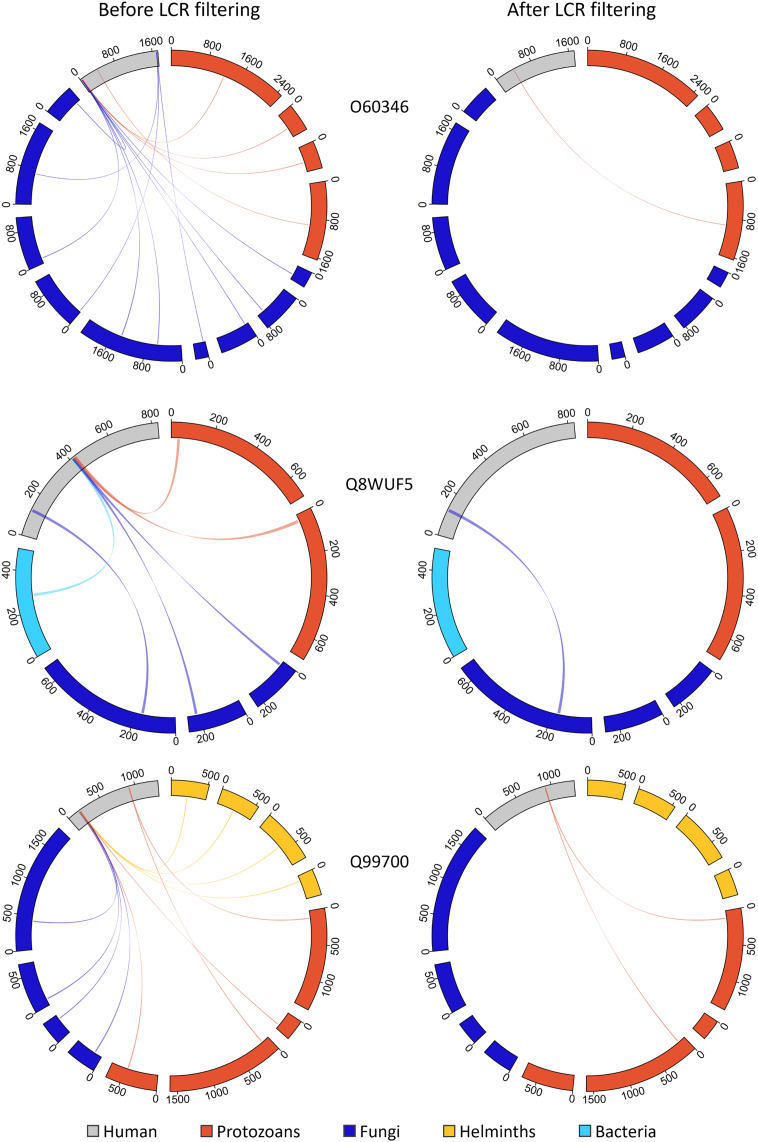
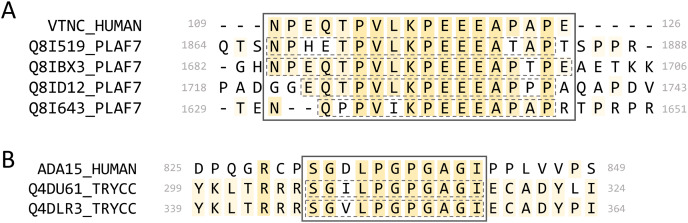
Pathogens have evolved sophisticated strategies to manipulate host signaling pathways, including the phenomenon of molecular mimicry, where pathogen-derived biomolecules imitate host biomolecules. In this study, we used a sequence-based bioinformatics pipeline to identify potential molecular mimicry candidates between humans and 32 pathogenic species—bacteria, fungi, protozoa, and helminths—of global health importance. We observed considerable variation in the number of mimicry candidates across pathogenic species, with pathogenic bacteria exhibiting fewer candidates compared to fungi and protozoans. Further analysis revealed that the candidate mimicry regions were enriched in solvent-accessible regions, highlighting their potential functional relevance. We identified a total of 1878 mimicked regions in 1439 human proteins, and clustering analysis indicated diverse target proteins across pathogen species. The human proteins containing mimicked regions revealed significant associations between these proteins and various biological processes, with an emphasis on host extracellular matrix organization and cytoskeletal processes. However, immune-related proteins were underrepresented as targets of mimicry. Our findings provide insights into the broad range of host-pathogen interactions mediated by molecular mimicry and highlight potential targets for further investigation. This comprehensive analysis contributes to our understanding of the complex mechanisms employed by pathogens to subvert host defenses and promotes the development of novel therapeutic strategies.
Overview
The claims and statistics of this paper haven’t been checked yet.
Run the check — free, no account needed. It reads the open-access text and checks the sources it cites.
Integrity signals
Registry
Cites
Statistics
Figures
Verification
Claims the paper makes
The claims and statistics of this paper haven’t been checked yet.
Run the check — free, no account needed. It reads the open-access text and checks the sources it cites.
Self-check
Percentages, sums and reported differences re-computed from the paper’s own numbers.
The self-check needs the paper’s full text.
Citations
Cites
Highly accurate protein structure prediction with AlphaFold
Jumper, J., Evans, R., Pritzel, A., Green, T., Figurnov, M., Ronneberger, O., Tunyasuvunakool, K., Bates, R., Žídek, A., Potapenko, A., et al. (2021) · Nature · doi:10.1038/s41586-021-03819-2 · Cited by 43,764
AlphaFold and Implications for Intrinsically Disordered Proteins
Ruff, K. M., & Pappu, R. V. (2021) · Journal of Molecular Biology · doi:10.1016/j.jmb.2021.167208 · Cited by 635
Research works printed but not linked: 62
- 10.1086/282313 · DOI
- 10.1016/j.jaut.2018.10.012 · DOI · Paper page
- 10.1084/jem.20130103 · DOI
- 10.1371/journal.ppat.1008572 · DOI
- 10.1128/EC.00279-10 · DOI · Paper page
- 10.1038/nature06187 · DOI
- 10.1006/jmbi.1990.9999 · DOI · Paper page
- 10.1371/journal.pone.0017546 · DOI
- 10.1094/MPMI-11-20-0332-R · DOI
- 10.4161/viru.25180 · DOI
- 10.1186/s13071-015-0834-1 · DOI
- 10.1093/nar/gkac1052 · DOI · Paper page
- 10.1016/j.jmb.2004.03.016 · DOI
- 10.1093/bioinformatics/btq033 · DOI · Paper page
- 10.1038/s41586-021-03828-1 · DOI · Paper page
- 10.1093/nar/gkf373 · DOI
- 10.1093/bioinformatics/bts565 · DOI · Paper page
- 10.1093/bioinformatics/btl158 · DOI
- 10.1038/s41596-019-0128-8 · DOI
- 10.1002/pro.4218 · DOI · Paper page
- 10.1093/nar/gkab408 · DOI
- 10.1186/1471-2105-10-421 · DOI · Paper page
- 10.1016/S0076-6879(96)66035-2 · DOI
- 10.1074/jbc.275.2.1209 · DOI
- 10.1016/j.yexcr.2008.08.011 · DOI
- 2000, Cloning, characterization, and functional studies of human and mouse glycoprotein VI: a platelet-specific collagen receptor from the immunoglobulin superfamily, Blood, 96, 1798, 10.1182/blood.V96.5.1798 · DOI
- 10.1101/cshperspect.a018275 · DOI
- 10.1152/physrev.2001.81.3.1353 · DOI
- 10.1016/j.isci.2021.103536 · DOI
- 10.1016/S1357-2725(99)00005-9 · DOI
- 10.1111/j.1365-2249.1993.tb05956.x · DOI
- 10.1371/journal.ppat.1002781 · DOI
- 10.1152/ajpgi.00262.2004 · DOI
- 10.1006/excr.2001.5353 · DOI
- 10.1038/s41598-019-49021-3 · DOI
- 10.1158/1541-7786.MCR-07-2028 · DOI
- 10.1186/1471-2199-8-90 · DOI
- 10.1371/journal.pone.0200430 · DOI
- Zakeri A , Hansen EP , Andersen SD , Williams AR , Nejsum P . Immunomodulation by Helminths: Intracellular Pathways and Extracellular Vesicles. Frontiers in Immunology. 2018;9. Available: https://www.frontiersin.org/articles/10.3389/fimmu.2018.02349 · DOI
- 10.1017/S0031182006000047 · DOI
- 10.1101/2023.04.17.535870 · DOI
- 10.1038/s41467-017-01886-6 · DOI · Paper page
- 10.3390/microorganisms11010061 · DOI
- 10.1038/s41598-021-86125-1 · DOI
- 10.3389/fimmu.2020.624178 · DOI
- 10.1371/journal.ppat.1000660 · DOI
- 10.1126/science.1126867 · DOI
- 10.1016/S0960-9822(01)00603-0 · DOI
- 10.1074/jbc.M006407200 · DOI
- 10.1016/j.tibs.2006.08.006 · DOI
- 10.1186/s12900-019-0104-0 · DOI
- 10.3390/genes12030451 · DOI
- 10.1139/G10-063 · DOI
- 10.1093/molbev/msm129 · DOI
- 10.1093/gbe/evt051 · DOI
- 10.1093/gbe/evu042 · DOI
- 10.1371/journal.pbio.1000622 · DOI
- 10.1038/nrm1589 · DOI · Paper page
- 10.1021/cr400514h · DOI
- 10.1016/j.tibs.2005.07.008 · DOI
- 10.1101/2021.08.26.457577 · DOI · Paper page
- 10.1101/2022.02.05.479274 · DOI
Metadata
- Authors
- Rich, K. D., Srivastava, S., Muthye, V., & Wasmuth, J. D.
- Affiliations
- University of Calgary (CA)
- Corresponding author
- Wasmuth, James D.
- Venue
- PeerJ
- Publisher
- openRxiv
- Published
- 2023-06-15
- Volume
- 11
- Pages
- e16339-e16339
- ISSN
- 2167-8359 (ISSN-L)
- PMC
- PMC10637249
- OpenAlex
- W4388458284
- Cited by
- 6
- References
- 2
- Citations by year
- 2026: 2 · 2025: 2 · 2024: 1 · 2023: 1
- FWCI
- 0.53
- Type
- journal article
- Language
- en
- Open access
- gold
- doi.org
- Licence
- cc-by
- Locations
- PeerJ (publishedVersion, cc-by)
- bioRxiv (Cold Spring Harbor Laboratory) (acceptedVersion, cc-by-nc-nd)
- PubMed Central (publishedVersion, cc-by)
- PubMed (publishedVersion)
- DOAJ (DOAJ: Directory of Open Access Journals) (submittedVersion, cc-by-sa)
- Funders
- University of Calgary
- Natural Sciences and Engineering Research Council of Canada (#04589-2020)
- Topics
- Life Sciences › Biochemistry, Genetics and Molecular Biology › Molecular Biology › vaccines and immunoinformatics approaches
- Life Sciences › Biochemistry, Genetics and Molecular Biology › Molecular Biology › Protein Structure and Dynamics
- Life Sciences › Biochemistry, Genetics and Molecular Biology › Molecular Biology › Biochemical and Structural Characterization
- Keywords
- molecular mimicry, host-pathogen interaction, protein structure prediction, extracellular matrix organization, immune evasion, therapeutic target, bioinformatics pipeline
- MeSH terms
- Bacteria, Humans, Molecular Mimicry, Computational Biology, Proteome, Host-Pathogen Interactions
About these checks
Registry, retraction, Cites and statistics results are computed, not judged, with one exception: a printed reference that no index lists is read once by a model before it counts as a citation error. Claims are extracted by a model and kept only when their quote appears verbatim in the text; each cited source is then checked, with a model’s help, for whether it says what the claim relies on. Those verdicts can be wrong — read the claim’s quote and the cited source before relying on one.
Statistics and arithmetic are recomputed, not judged.
Confidence bands are shown only for fields calibrated on our annotated test set. None is calibrated yet, so no band is shown.
What counts as a claim ›How we measure confidence ›How we check this ›
Are you an author, or do you see a problem with this page? Request a review
