

Online speech synthesis using a chronically implanted brain-computer interface in an individual with ALS
Open accessPreprint — published as 10.1038/s41598-024-60277-2
The DOI matches its Crossref record; 59 of the 59 references it cites were found in a registry or an index.
Abstract
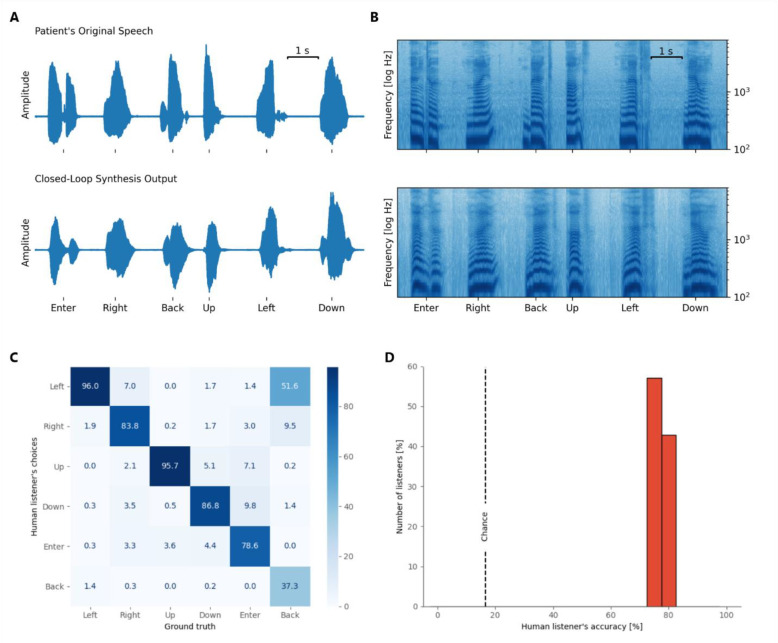
Recent studies have shown that speech can be reconstructed and synthesized using only brain activity recorded with intracranial electrodes, but until now this has only been done using retrospective analyses of recordings from able-bodied patients temporarily implanted with electrodes for epilepsy surgery. Here, we report online synthesis of intelligible words using a chronically implanted brain-computer interface (BCI) in a clinical trial participant (ClinicalTrials.gov, NCT03567213 ) with dysarthria due to amyotrophic lateral sclerosis (ALS). We demonstrate a reliable BCI that synthesizes commands freely chosen and spoken by the user from a vocabulary of 6 keywords originally designed to allow intuitive selection of items on a communication board. Our results show for the first time that a speech-impaired individual with ALS can use a chronically implanted BCI to reliably produce synthesized words that are intelligible to human listeners while preserving the participants voice profile.
Overview
The claims and statistics of this paper haven’t been checked yet.
Free: it reads the open-access text and checks the first 5 claims that cite a source we can check. Create a free account to check every claim.
Integrity signals
Registry
Cites
Statistics
Figures
Verification
Claims the paper makes
The claims and statistics of this paper haven’t been checked yet.
Free: it reads the open-access text and checks the first 5 claims that cite a source we can check. Create a free account to check every claim.
Claims other papers make about this one
Each is checked against this paper’s own text: does it say what the citing paper says it does?
The cited source says what the claim attributes to it.
In the citing paper
“Subsequent work has expanded this initial demonstration by directly decoding cortical activity into audible speech13,14 and allowing more generalizable and rapid text decoding14–16 in individuals with vocal-tract paralysis (Fig. 1).”
From The speech neuroprosthesis (2024) · cites this paper as [13]
The cited source says what the claim attributes to it.
In the citing paper
“Individuals with dysarthria may retain some intelligible vocalization over single, isolated words, allowing the acoustic regression approach to prove successful in synthesizing single words13 (Fig. 1; Angrick et al. 2023; and Supplementary Table 1).”
From The speech neuroprosthesis (2024) · cites this paper as Angrick et al. 2023
The cited source says what the claim attributes to it.
In the citing paper
“Individuals with dysarthria may retain some intelligible vocalization over single, isolated words, allowing the acoustic regression approach to prove successful in synthesizing single words13 (Fig. 1; Angrick et al. 2023; and Supplementary Table 1).”
From The speech neuroprosthesis (2024) · cites this paper as [13]
The cited source says what the claim attributes to it.
In the citing paper
“Given that most early studies in individuals with vocal-tract paralysis involve only single participants12–16,64,95,120, great care is needed when comparing results, as the broad spectrum of disease presentations is not sampled”
From The speech neuroprosthesis (2024) · cites this paper as [13]
Self-check
Percentages, sums and reported differences re-computed from the paper’s own numbers.
The self-check needs the paper’s full text.
Citations
Cites
(2014) · Cited by 33,419
Deep Inside Convolutional Networks: Visualising Image Classification Models and Saliency Maps
Simonyan, K., Vedaldi, A., & Zisserman, A. (2013) · arXiv · doi:10.48550/arxiv.1312.6034 · Cited by 5,370
An overview of gradient descent optimization algorithms
Ruder, S. (2016) · arXiv · doi:10.48550/arxiv.1609.04747 · Cited by 4,962
BCI2000: A General-Purpose Brain-Computer Interface (BCI) System
Schalk, G., McFarland, D. J., Hinterberger, T., Birbaumer, N., & Wolpaw, J. R. (2004) · IEEE Transactions on Biomedical Engineering · doi:10.1109/tbme.2004.827072 · Cited by 3,024
Methods for interpreting and understanding deep neural networks
Montavon, G., Samek, W., & Müller, K.-R. (2018) · Digital Signal Processing · doi:10.1016/j.dsp.2017.10.011 · Cited by 2,665
An Introduction to the Psychology of Hearing: Fourth Edition
Moore, B. (1997) · BRILL eBooks · doi:10.1163/9789004658820 · Cited by 2,646 · cited 1×
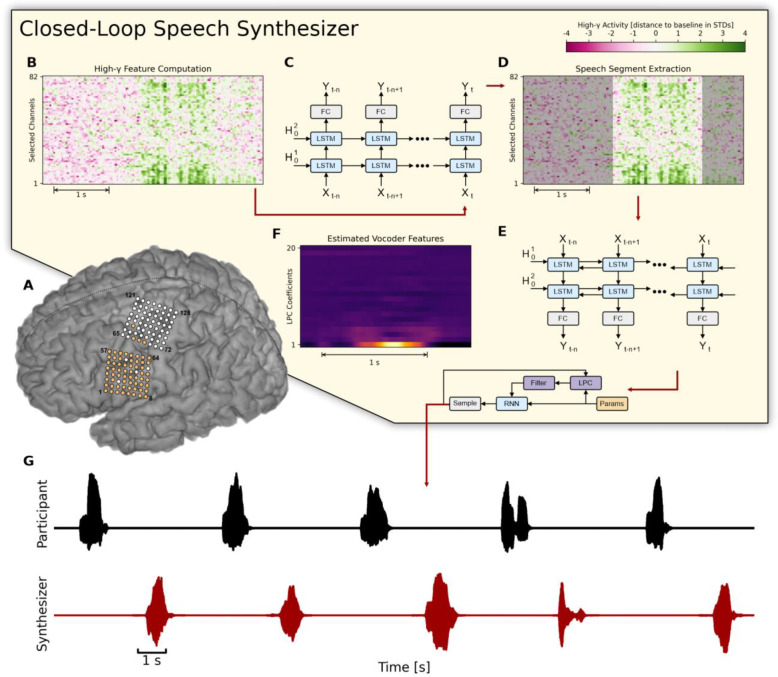
“Each buffered sequence was forwarded to a bidirectional decoding model that mapped high-gamma features onto 18 Bark-scale cepstral coefficients (Moore, 2012) and 2 pitch parameters, henceforth referred to as LPC coefficients (Taylor, 2009; Valin, 2019) (Figure 1.”
Responsive cortical stimulation for the treatment of medically intractable partial epilepsy
Morrell, M. J. (2011) · Neurology · doi:10.1212/wnl.0b013e3182302056 · Cited by 1,282 · cited 1×
“A potential advantage of ECoG for BCI is the stability of signal quality over long periods of time (Morrell, 2011).”
A Scale for the Measurement of the Psychological Magnitude Pitch
Stevens, S. S., Volkmann, J., & Newman, E. B. (1937) · The Journal of the Acoustical Society of America · doi:10.1121/1.1915893 · Cited by 1,107
Unmasking Clever Hans predictors and assessing what machines really learn
Lapuschkin, S., Wäldchen, S., Binder, A., Montavon, G., Samek, W., & Müller, K.-R. (2019) · Nature Communications · doi:10.1038/s41467-019-08987-4 · Cited by 1,047
High-performance brain-to-text communication via handwriting
Willett, F. R., Avansino, D. T., Hochberg, L. R., Henderson, J. M., & Shenoy, K. V. (2021) · Nature · doi:10.1038/s41586-021-03506-2 · Cited by 1,024
Research works printed but not linked: 2
- Povey D., Ghoshal A., Boulianne G., Burget L., Glembek O., Goel N.,... & Vesely K. (2011). The Kaldi speech recognition toolkit. In IEEE 2011 workshop on automatic speech recognition and understanding (No. CONF). IEEE Signal Processing Society.
- Kraft S., & Zölzer U. (2014, May). BeaqleJS: HTML5 and JavaScript based framework for the subjective evaluation of audio quality. In Linux Audio Conference, Karlsruhe, DE.
Cited by
Brain–computer interfaces: the innovative key to unlocking neurological conditions
Zhang, H., Jiao, L., Yang, S., Li, H., Jiang, X., Feng, J., Zou, S., Xu, Q., Gu, J., Wang, X., et al. (2024) · International Journal of Surgery · doi:10.1097/js9.0000000000002022 · Cited by 169
“…Amyotrophic Lateral Sclerosis (ALS) and visual impairments have demonstrated that integrating enhanced eye-tracking with SSVEP BCI and the Shuf fl e Speller interface can improve communication capabilities, although typing accuracy exhibits considerable variability among participants [146] .”
BackgroundSilva, A. B., Littlejohn, K. T., Liu, J. R., Moses, D. A., & Chang, E. F. (2024) · Nature Reviews Neuroscience · doi:10.1038/s41583-024-00819-9 · Cited by 103
“1; Angrick et al. 2023; and Supplementary Table 1).”
InfluentialAn instantaneous voice synthesis neuroprosthesisPreprint
Wairagkar, M., Card, N., Singer-Clark, T. S., et al. (2024) · bioRxiv · doi:10.1101/2024.08.14.607690 · Cited by 48
“Recently, intermittently intelligible speech was synthesized seconds after a user with ALS spoke overtly (and intelligibly) 17 from a six-word vocabulary.”
BackgroundResultNatraj, N., Seko, S., Abiri, R., Miao, R., Yan, H., Graham, Y., Tu-Chan, A., Chang, E. F., & Ganguly, K. (2025) · Cell · doi:10.1016/j.cell.2025.02.001 · Cited by 48
Meng, K., Goodarzy, F., Kim, E., Park, Y. J., Kim, J. S., Cook, M. J., Chung, C. K., & Grayden, D. B. (2023) · Journal of Neural Engineering · doi:10.1088/1741-2552/ace7f6 · Cited by 17
Gutman, B., Shmilovitch, A.-H., Aran, D., & Shelly, S. (2024) · JMIR Neurotechnology · doi:10.2196/59556 · Cited by 37
“Notably, it finds application in patients afflicted with ALS, particularly during the advanced, near-complete paralysis stages where it aids speech by synthesizing it real time directly from brain activity XSL • FO RenderX [133].”
Lim, M. J. R., Lo, Y. T., Tan, Y. Y., Lin, H.-Y., Wang, Y., Tan, D., Wang, E., Ma, Y. Y. N., Ng, J. J. W., Jefree, R. A., et al. (2025) · Journal of Neural Engineering · doi:10.1088/1741-2552/adb88e · Cited by 20
“…have and will continue to build upon previous work on cortical mappings of articulation and phonation [126–128] as well as advanced decoder algorithms such as recurrent neural networks [75, 129] to retrieve complex acoustic representations from neural activity for reconstructing speech waveforms.”
InfluentialAI in Medical Questionnaires: Scoping Review
Luo, X., Li, Y. L., Xu, J., Zheng, Z., Ying, F., & Huang, G. (2025) · Journal of Medical Internet Research · doi:10.2196/72398 · Cited by 18
“However, in doing so, health care professionals must ensure the accuracy of these physiological measurements [134].”
Schippers, A., Vansteensel, M. J., Freudenburg, Z. V., & Ramsey, N. F. (2024) · doi:10.1101/2024.01.21.23300437 · Cited by 9
Self-citationTime-Masked Transformers with Lightweight Test-Time Adaptation for Neural Speech Decoding
Feghhi, E., Kaasyap, S., Hadidi, N., et al. (2025) · Neural Information Processing Systems · doi:10.48550/arxiv.2507.02800 · Cited by 8
“The majority of speech neuroprostheses have employed some combination of CNNs and RNNs (2; 29; 20; 32; 33; 22; 3; 7; 27; 19), although a few studies have used Transformers (31; 9; 8).”
Neuroimplants and the Glial Scar: What Makes the Brain–Computer Link Work?
Paveliev, M., Melnikova, A., Egorchev, A. A., Parpura, V., & Aganov, A. V. (2025) · Journal of Neurochemistry · doi:10.1111/jnc.70203 · Cited by 11
“RNNs are capable of modeling long-term dependencies that are crucial for the analysis of neuronal activity recorded by neu-roimplants (Angrick et al. 2024; Yang et al. 2021).”
Natraj, N., Seko, S., Abiri, R., et al. (2023) · bioRxiv · doi:10.1101/2023.08.11.551770 · Cited by 4
“…(ECoG) (Leuthardt et al., 2004; Wang et al., 2013; Moses et al., 2021; Silversmith et al., 2021; Benabid et al., 2019; Degenhart et al., 2018; Angrick et al., 2023, 2021; Vansteensel et al., 2016; Pels et al., 2019; Metzger et al., 2022) to understand principles of how the nervous system…”
Lehner, K. R., Luo, S., Greene, B., Angrick, M., Candrea, D. N., Husari, K. S., Barth, K. J., Dister, J., Anushiravani, R., Miller, J. S., et al. (2026) · Neurosurgical FOCUS · doi:10.3171/2025.11.focus25908 · Cited by 5
Self-citation3M-CPSEED, An EEG-based Dataset for Chinese Pinyin Production in Overt, Mouthed, and Imagined Speech
Ma, X., Jiang, Y., & Jiang, N. (2025) · Scientific Data · doi:10.1038/s41597-025-06346-1 · Cited by 6
Motor Cortex Coverage Predicts Signal Strength of a Stentrode Endovascular Brain-Computer InterfacePreprint
Schone, H. R., Yoo, P. E., Fry, A., Chetty, N., Sawyer, A., Herbers, C., Liu, F., Moon, C., Hill, K. J., Majidi, S., et al. (2025) · medRxiv · doi:10.1101/2025.09.19.25335875 · Cited by 4
“This would suggest that cortical atrophy alone should not be an exclusion criteria for Stentrode BCI usability, especially given prior BCI studies demonstrating successful motor decoding in individuals with ALS 14,32,34–37 .”
EEG-based Speech Decoding Based on Multi-mode Joint Modeling
Li, P., Chen, F., & Wu, X.-X. (2025) · Interspeech · doi:10.21437/interspeech.2025-769 · Cited by 3
“[1] [2] [3] [4] Among the various modalities available for brain signal acquisition, electroencephalography (EEG) has gained much attention as a non-invasive and cost-effective method for recording neural activity [5].”
Silva, A. B., Liu, J. R., Anderson, V. R., Kurtz-Miott, C. M., Hallinan, I. P., Littlejohn, K. T., Brosler, S., Tu-Chan, A., Ganguly, K., Moses, D. A., et al. (2025) · Journal of Neural Engineering · doi:10.1088/1741-2552/adf50e · Cited by 7
Li, T., Gao, Y., Zhou, J., Chen, Y., Zhang, S., Gong, X., & Liu, Y. (2025) · Frontiers in Neuroscience · doi:10.3389/fnins.2025.1658315 · Cited by 8
“…2020; Aliakbaryhosseinabadi et al., 2021; Oxley et al., 2021; Savic et al., 2021; Chaudhary et al., 2022; Chuang et al., 2022; Pires et al., 2022; Luo et al., 2023; Mitchell et al., 2023; Angrick et al., 2024, 2025; Card et al., 2024; Séguin et al., 2024; Wyse-Sookoo et al., 2024; Wairagkar et…”
Angrick, M., Luo, S., Rabbani, Q., Joshi, S. R., Candrea, D. N., Milsap, G., Gordon, C. R., Rosenblatt, K. R., Clawson, L., Maragakis, N. J., et al. (2025) · Journal of Neural Engineering · doi:10.1088/1741-2552/ae0965 · Cited by 6
“Next, we selected the top 64 channels with the strongest activation during overt speech production, identified in a previous study [18] with the same clinical trial participant.”
InfluentialSelf-citationWu, X., Hu, K., Fu, Z., & Zhang, D. (2025) · Imaging Neuroscience · doi:10.1162/imag.a.146 · Cited by 2
“…is triggered to reconstruct speech step by step if the previous step detects speaking activity, otherwise no speech will be decoded (Angrick, Ottenhoff, Diener, et al., 2021; Angrick et al., 2024; Berezutskaya et al., 2022; Bocquelet et al., 2016; Luo et al., 2023; Moses et al., 2018, 2021).”
InfluentialSelf-paced silent speech brain-computer interface for device control
Luo, S., Angrick, M., Coogan, C. G., Candrea, D. N., Wyse‐Sookoo, K., Schippers, A., Ganji, R., Milsap, G., Anderson, W. S., Gordon, C. R., et al. (2026) · Communications Biology · doi:10.1101/2025.04.09.25325542 · Cited by 2
Self-citationStable speech BCI performance during slow progression of ALS: a longitudinal ECoG study
Ouyang, Z., Walmsley, K., Luo, S., Tippett, D. C., Wyse‐Sookoo, K., Fifer, M. S., Vansteensel, M. J., Angrick, M., Ramsey, N. F., & Crone, N. E. (2026) · Journal of NeuroEngineering and Rehabilitation · doi:10.21203/rs.3.rs-9156039/v1 · Cited by 3
“[5, 11, 18, 42] Through acoustic analysis of formant frequencies, we observed a mild reduction in subjects' speech intelligibility, but it was not re�ected in the clinically used ALSFRS-R scores.”
Self-citationGonçalves, F., Fernandes, C. S., Teixeira, M. M., Melo, C., & Dias, C. (2026) · Sclerosis · doi:10.3390/sclerosis4010002 · Cited by 3
The effect of perceived auditory feedback on speech Brain-Computer Interface decoding performance
Schippers, A., Berezutskaya, J., Vansteensel, M. J., Freudenburg, Z. V., Crone, N. E., & Ramsey, N. F. (2025) · Clinical Neurophysiology · doi:10.1016/j.clinph.2025.2111403 · Cited by 6
Self-citationDon’t put words in my mouth: speech perception can falsely activate a brain-computer interface
Schippers, A., Vansteensel, M. J., Freudenburg, Z. V., Luo, S., Crone, N. E., & Ramsey, N. F. (2025) · Journal of NeuroEngineering and Rehabilitation · doi:10.1186/s12984-025-01689-7 · Cited by 8
“Recent developments in speech decoding are very promising for individuals who can no longer speak [6–9 , 12– 14 The current results confirm that the area frequently used as a signal source for speech decoding BCIs, the ventral sensorimotor cortex, also displays activity during the perception of…”
Self-citationSpeech mode classification from electrocorticography: transfer between electrodes and participants
de Borman, A., Wittevrongel, B., Dyck, B. V., Rooy, K. V., Carrette, E., Meurs, A., Roost, D. V., & Hulle, M. M. V. (2025) · Journal of Neural Engineering · doi:10.1088/1741-2552/adf2de · Cited by 2
“In many cases, the first component of a speech BCI is a speech detector (Moses et al 2021, Metzger et al 2022, Angrick et al 2024).”
Recreating Neural Activity During Speech Production with Language and Speech Model Embeddings
Khanday, O. M., Esteban, P., Lone, Z., et al. (2025) · Interspeech · doi:10.48550/arxiv.2505.14074 · Cited by 1
“The potential applications of these devices are numerous [14], including the promise to restore communication to individuals with conditions such as amyotrophic lateral sclerosis (ALS) [15, 4, 11, 6, 16] or other severe speech disorders caused by brain damage (e.g. brain-stem stroke) [2, 3].”
Impact of Temporal Precision on Speech Synthesis Accuracy From Electrocorticographic Brain Signals
Rabbani, Q., Fifer, M. S., Crone, N. E., & Moro-Velázquez, L. (2025) · IEEE International Conference on Acoustics Speech and Signal Processing · doi:10.1109/icassp49660.2025.10888813 · Cited by 2
“Therefore, in this study we evaluated real-time neural speech synthesis performance with DNN architectures that leverage these features, such as the DenseNet (DN) [11], LSTM [7], [8], [10] and hybrid convolutional LSTM [5], [6], as they are commonly employed in practice for speech synthesis tasks.”
InfluentialSelf-citationA stereoencephalography study of internal speech
Naumov, A. V., Soghoyan, G. A., Makarova, A. V., Syrov, N., Skripnikov, A. A., Kustov, Y. V., Sufianov, A. A., & Lebedev, M. A. (2026) · Cognitive Neurodynamics · doi:10.1007/s11571-026-10554-9
“Much of this development has taken place in individuals with epilepsy who undergo intracranial electrode implantation for clinical monitoring, and more recently, in patients with speech loss from conditions such as ALS (Angrick, 2024).”
Do EEG Foundation Models Transfer to Speech? A Benchmark on Overt and Imagined Speech DecodingPreprint
Khanday, O. M., Ticha, M. B. B., Belfrouh, S., Ouellet, M., & Gonzalez-Lopez, J. A. (2026) · arXiv (Cornell University) · doi:10.48550/arxiv.2607.27268 · Cited by 3
“…and electrocorticography (ECoG) [6, 7, 8, 9, 10, 11] — yet attention is increasingly turning toward less invasive approaches such as stereo-EEG (sEEG) [12, 13, 14, 15, 16, 17], and toward fully non-invasive ones including magnetoencephalography (MEG) and electroencephalography (EEG) [18, 19, 20].”
Brain2voice 2.0: High-performance voice synthesis brain-computer interfacePreprint
Wairagkar, M., Srinivasan, A., Card, N. S., Singer-Clark, T., Hou, X., Iacobacci, C., Miller, L. M., Hochberg, L. R., Brandman, D. M., & Stavisky, S. D. (2026) · bioRxiv (Cold Spring Harbor Laboratory) · doi:10.64898/2026.06.30.735633 · Cited by 2
“This is in contradistinction with prior voice decoding systems using ECoG and sEEG, which were neither fully causal nor real-time [3, 20, 21].”
Swanson, E., Dohle, E., Bashford, L., Horsfall, H. L., Jovanovic, L., Muirhead, W. R., & Brannigan, J. (2026) · Journal of Neural Engineering · doi:10.1088/1741-2552/ae7694 · Cited by 2
“The advantage of choosing ECoG for long-term, stable recordings and the potential issues that may arise due to ALS disease progression were also addressed in one study [41].”
InfluentialArtificial intelligence for brain-to-speech decoding in paralysis: a systematic review
Belfrouh, S., Salmam, F. Z., Errattahi, R., Hanine, M., Obidallah, W. J., & Alhulayyil, H. A. (2026) · BMC Medical Informatics and Decision Making · doi:10.1186/s12911-026-03552-8 · Cited by 3
Does the Voice Have a Body? Esposito’s Vox Munus in an Age of Synthetic Voice
Vallee, M. (2026) · Body & Society · doi:10.1177/1357034x261441176
Neural Reconstruction in Disorders of Consciousness: Prospects and Emerging Challenges
Kolisnyk, M., Rankaduwa, S., Gupta, G., Kazazian, K., Debicki, D., & Owen, A. M. (2026) · The Neuroscientist · doi:10.1177/10738584261434939
“For instance, Angrick et al (2024) decoded 6 phrases and synthesized them in the patient’s preinjury voice.”
He, D.-Y., Siok, W., & Wang, N.-Z. (2026) · doi:10.48550/arxiv.2603.12279
“In 2024, Angrick et al. [13] demonstrated interoperability through communication board control, and in 2024, Card et al. [10] integrated their neuroprosthesis with personal computers via Bluetooth keyboard functionality, enabling activities like email writing and integration with eye tracking for…”
InfluentialHu, Z.-K., Wang, J.-Y., Zhou, K., et al. (2026) · Medical Science Monitor · doi:10.12659/msm.951399
“This approach yields the highest fidelity signals, enabling fine-grained decoding of motor intentions, speech, and even complex finger movements, which is crucial for advanced prosthetic control and communication in patients with paralysis [45-47].”
Grajski, K. A. (2025) · bioRxiv (Cold Spring Harbor Laboratory) · doi:10.1101/2025.08.21.671572
“Signal processing of ECoG data was implemented on a session-independent, task-independent, block-independent, trial-independent, and electrode channel-independent basis.”
InfluentialDoda, D. Y., He, R., Pang, M., Sun, Y., Li, C., Anwar, F., Yasi, A., Jiang, R., Wang, W., Ming, D., et al. (2025) · Journal of intelligent medicine. · doi:10.1002/jim4.70012 · Cited by 2
“15,16 However, despite these advances, translating laboratory prototypes into reliable user ‐ friendly consumer devices remains hindered by challenges in long ‐ term signal stability, hardware mini-aturization, regulatory approval, and ethical oversight.”
Comparing a BCI communication system in a patient with Multiple System Atrophy, with an animal model
Premchand, B., Toe, K. K., Wang, C., Wan, K. R., Selvaratnam, T., Toh, V. E., Ng, W. H., Libedinsky, C., Chen, W., Lim, R., et al. (2025) · Brain Research Bulletin · doi:10.1016/j.brainresbull.2025.111289
“…active channels were used as inputs for BCI decoding. p The number of active channels remained fairly consistent over the time scale of a year, in both P03 as well as our NHP. Nonetheless, we noted that there were consistently a lower number of active channels in P03 when compared to our NHP. e”
InfluentialLiu, L., & Zeng, X. (2024) · Journal of Aging and Rehabilitation · doi:10.1097/jagr.0000000000000022 · Cited by 2
Direct Speech Synthesis from Non-audible Speech Biosignals: A Comparative Study
Martín, J. L., Pérez-Córdoba, J. L., & González, J. A. (2024) · IberSPEECH · doi:10.21437/iberspeech.2024-18
“These biosignals can originate from various sources, such as neural activity in the brain’s speech and language areas [4, 5, 6], electrical activity of facial muscles measured with electromyography (EMG) [7, 8], or the motion of speech artic-ulators tracked through imaging techniques [9] or…”
Angrick, M., Luo, S., Rabbani, Q., et al. (2024) · medRxiv · doi:10.1101/2024.09.18.24313755 · Cited by 2
“Next, we selected the top 64 channels with the strongest activation during overt speech production, identified in a previous study 18 with the same clinical trial participant.”
BackgroundMethodInfluentialSelf-citationAn accurate and rapidly calibrating speech neuroprosthesis
Card, N. S., Wairagkar, M., Iacobacci, C., Hou, X., Singer-Clark, T., Willett, F. R., Kunz, E. M., Fan, C., Vahdati Nia, M., Deo, D. R., et al. (2023) · doi:10.1101/2023.12.26.23300110 · Cited by 244
“While the demonstrated brain-to-text capabilities can provide widely useful communication, they do not capture the full expressive richness of voice; the more difficult challenge of closed-loop brain-to-voice synthesis remains an active area of speech BCI research 18,34,40 .”
Background
Metadata
- Authors
- Angrick, M., Luo, S., Rabbani, Q., Candrea, D. N., Shah, S., Milsap, G. W., Anderson, W. S., Gordon, C. R., Rosenblatt, K. R., Clawson, L., Maragakis, N., Tenore, F. V., Fifer, M. S., Hermansky, H., Ramsey, N. F., & Crone, N. E.
- Affiliations
- Johns Hopkins University (US)
- Johns Hopkins University Applied Physics Laboratory (US)
- University Medical Center Utrecht (NL)
- Corresponding author
- Angrick, Miguel
- Crone, Nathan E.
- ORCID
- Venue
- Scientific Reports
- Publisher
- openRxiv
- Published
- 2023-07-01
- Volume
- 14
- Issue
- 1
- Pages
- 9617-9617
- ISSN
- 2045-2322 (ISSN-L)
- PMC
- PMC10327279
- OpenAlex
- W4395666645
- Cited by
- 95
- References
- 53
- Citations by year
- 2026: 33 · 2025: 47 · 2024: 13 · 2023: 2
- FWCI
- 22.59
- Type
- journal article
- Language
- en
- Open access
- gold
- doi.org
- Licence
- cc-by
- Locations
- Scientific Reports (publishedVersion, cc-by)
- medRxiv (acceptedVersion, cc-by-nc-nd)
- PubMed Central (publishedVersion, cc-by)
- PubMed (publishedVersion)
- PubMed Central (submittedVersion, cc-by-nc-nd)
- DOAJ (DOAJ: Directory of Open Access Journals) (submittedVersion)
- Utrecht University Repository (Utrecht University) (submittedVersion, other-oa)
- OSF Preprints (OSF Preprints) (submittedVersion, cc-by)
- Funders
- National Institutes of Health
- National Institute of Neurological Disorders and Stroke (UH3NS114439, NS114439)
- Topics
- Life Sciences › Neuroscience › Cognitive Neuroscience › EEG and Brain-Computer Interfaces
- Physical Sciences › Computer Science › Artificial Intelligence › Speech Recognition and Synthesis
- Physical Sciences › Computer Science › Human-Computer Interaction › Gaze Tracking and Assistive Technology
- Keywords
- brain-computer interface, amyotrophic lateral sclerosis, electrocorticography, intracranial electrodes, recurrent neural networks, speech decoding, communication aids, motor cortex, premotor cortex, somatosensory cortex, intelligibility
About these checks
Registry, retraction, Cites and statistics results are computed, not judged, with one exception: a printed reference that no index lists is read once by a model before it counts as a citation error. Claims are extracted by a model and kept only when their quote appears verbatim in the text; each cited source is then checked, with a model’s help, for whether it says what the claim relies on. Those verdicts can be wrong — read the claim’s quote and the cited source before relying on one.
Statistics and arithmetic are recomputed, not judged.
Confidence bands are shown only for fields calibrated on our annotated test set. None is calibrated yet, so no band is shown.
What counts as a claim ›How we measure confidence ›How we check this ›
Are you an author, or do you see a problem with this page? Request a review
Data sources
Bibliographic data: Semantic Scholar, OpenAlex, Crossref.
Contains information from the Semantic Scholar Academic Graph Datasets, made available under the ODC Attribution License (ODC-BY 1.0).
Semantic Scholar’s data is described in: Kinney, R., et al. (2023). The Semantic Scholar Open Data Platform. arXiv:2301.10140.
