

The DOI matches its Crossref record; 79 of the 81 references it cites were found in a registry or an index.
Systematic discovery of protein interaction interfaces using AlphaFold and experimental validation
Open accessPreprint — published as 10.1038/s44320-023-00005-6 · Paper page
Abstract
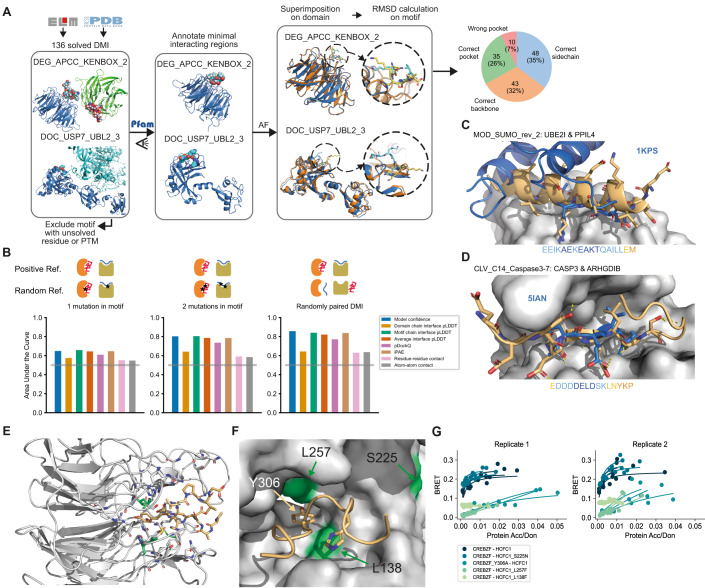
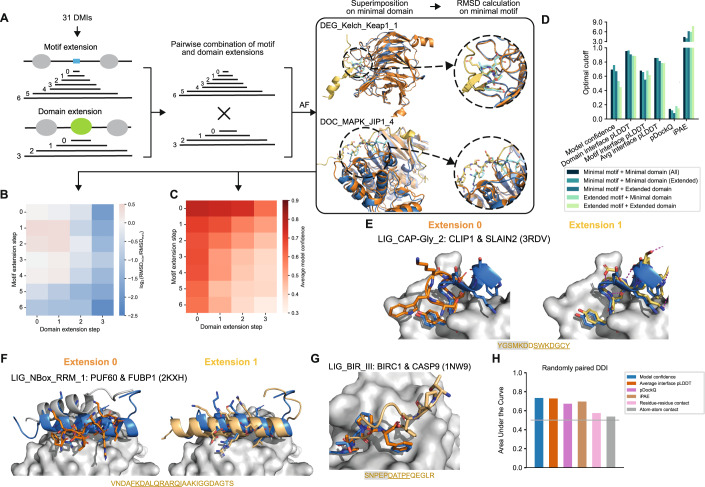
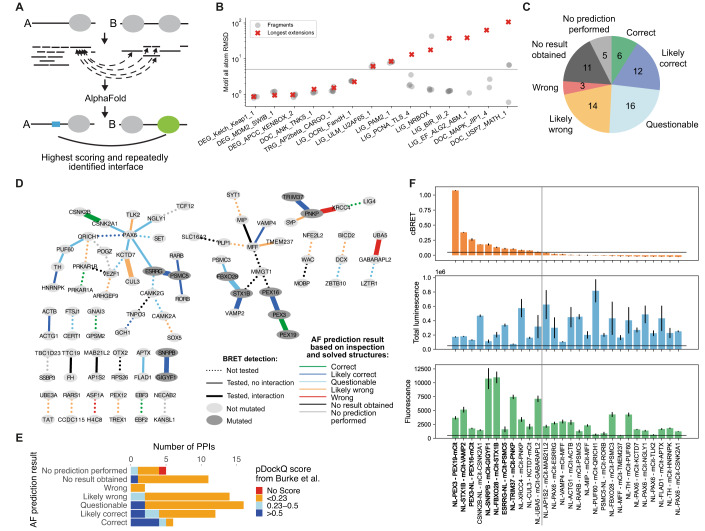
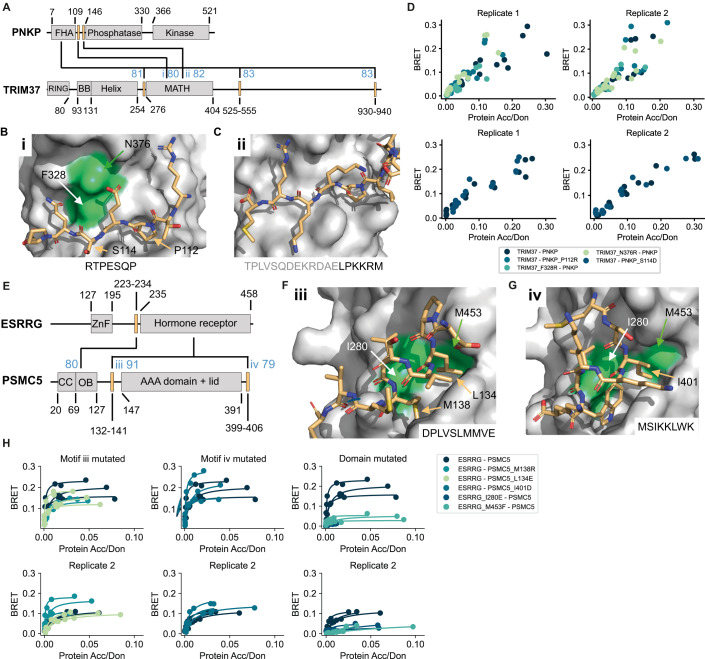
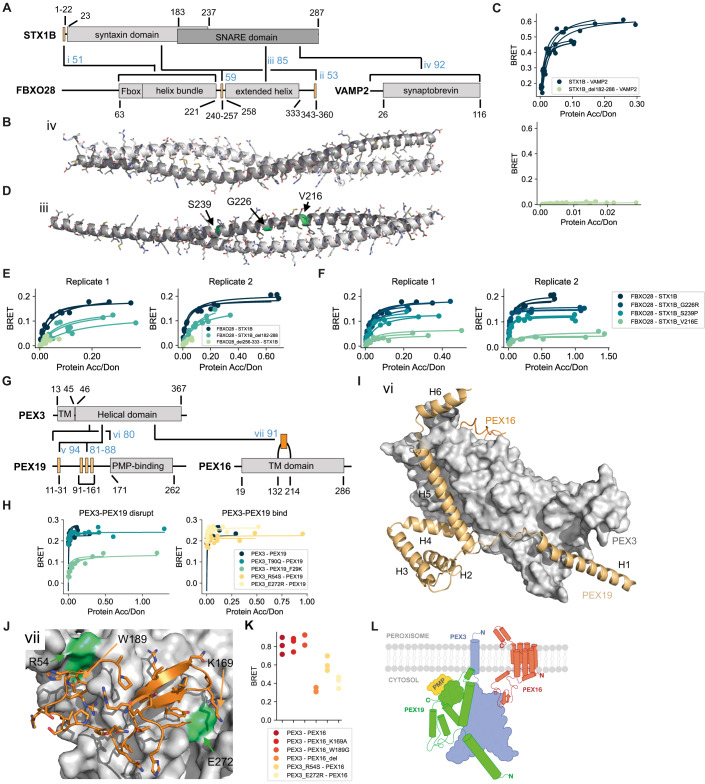
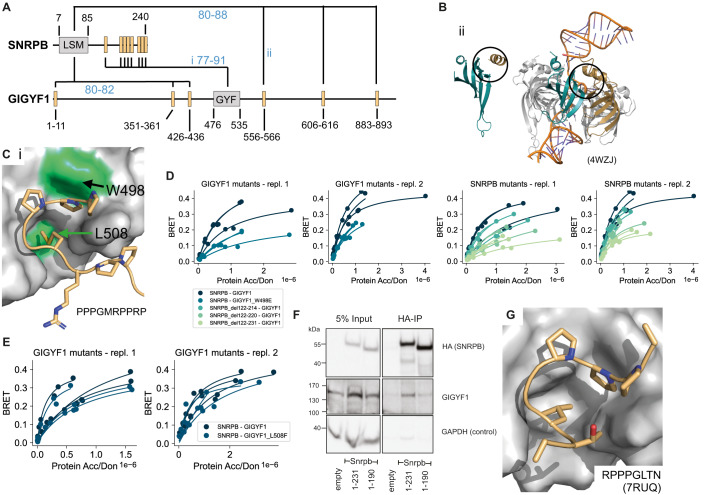
Structural resolution of protein interactions enables mechanistic and functional studies as well as interpretation of disease variants. However, structural data is still missing for most protein interactions because we lack computational and experimental tools at scale. We thoroughly assessed AlphaFold-Multimer accuracy for structure prediction of interactions involving folded domains binding to short linear motifs from the ELM database. The structure predictions were highly sensitive but not very specific when using small protein fragments. Sensitivity decreased substantially when using long protein fragments or full length proteins with intrinsically disordered regions. We delineated a fragmentation strategy to optimize sensitivity and applied it to interactions between proteins associated with neurodevelopmental disorders. This enabled prediction of highly confident and likely disease-related novel interfaces, but also resulted in many high scoring false positive predictions. Experiments supported predicted interfaces between CREBZF-HCFC1, FBXO23-STX1B, STX1B-VAMP2, ESRRG-PSMC5, PEX3-PEX19, PEX3-PEX16, and SNRPB-GIGYF1 providing novel molecular insights for diverse biological processes. Our work highlights exciting perspectives, but also reveals clear limitations and the need for future developments to maximize the power of Alphafold-Multimer for interface predictions.
Overview
The claims and statistics of this paper haven’t been checked yet.
Run the check — free, no account needed. It reads the open-access text and checks the sources it cites.
Integrity signals
Registry
Cites
Statistics
Figures
Verification
Claims the paper makes
The claims and statistics of this paper haven’t been checked yet.
Run the check — free, no account needed. It reads the open-access text and checks the sources it cites.
Self-check
Percentages, sums and reported differences re-computed from the paper’s own numbers.
The self-check needs the paper’s full text.
Citations
Cites
Highly accurate protein structure prediction with AlphaFold
Jumper, J., Evans, R., Pritzel, A., Green, T., Figurnov, M., Ronneberger, O., Tunyasuvunakool, K., Bates, R., Žídek, A., Potapenko, A., et al. (2021) · Nature · doi:10.1038/s41586-021-03819-2 · Cited by 43,764
Berman, H. M. (2000) · Nucleic Acids Research · doi:10.1093/nar/28.1.235 · Cited by 40,196
Matplotlib: a 2D graphics environment
Hunter, J. D. (2007) · Computing in Science & Engineering · doi:10.1109/mcse.2007.55 · Cited by 39,249
SciPy 1.0: fundamental algorithms for scientific computing in Python
Virtanen, P., Gommers, R., Oliphant, T. E., Haberland, M., Reddy, T., Cournapeau, D., Burovski, E., Peterson, P., Weckesser, W., Bright, J., et al. (2020) · Nature Methods · doi:10.1038/s41592-019-0686-2 · Cited by 38,430
A simple method for displaying the hydropathic character of a protein
Kyte, J., & Doolittle, R. F. (1982) · Journal of Molecular Biology · doi:10.1016/0022-2836(82)90515-0 · Cited by 22,927
Data Structures for Statistical Computing in Python
McKinney, W. (2010) · Proceedings of the Python in Science Conferences · doi:10.25080/majora-92bf1922-00a · Cited by 12,930
Varadi, M., Anyango, S., Deshpande, M., Nair, S., Natassia, C., Yordanova, G., Yuan, D., Stroe, O., Wood, G., Laydon, A., et al. (2022) · Nucleic Acids Research · doi:10.1093/nar/gkab1061 · Cited by 7,850
Pfam: The protein families database in 2021
Mistry, J., Chuguransky, S., Williams, L., Qureshi, M., Salazar, G. A., Sonnhammer, E. L. L., Tosatto, S. C. E., Paladin, L., Raj, S., Richardson, L. J., et al. (2021) · Nucleic Acids Research · doi:10.1093/nar/gkaa913 · Cited by 7,452
seaborn: statistical data visualization
Waskom, M. (2021) · Journal of Open Source Software · doi:10.21105/joss.03021 · Cited by 7,310
Biopython: freely available python tools for computational molecular biology and bioinformatics
Cock, P. J. A., Antao, T., Chang, J. T., Chapman, B. A., Cox, C. J., Dalke, A., Friedberg, I., Hamelryck, T., Kauff, F., Wilczynski, B., et al. (2009) · Bioinformatics · doi:10.1093/bioinformatics/btp163 · Cited by 6,080
Protein complex prediction with AlphaFold-Multimer
Evans, R., O’Neill, M., Pritzel, A., Antropova, N., Senior, A., Green, T., Žídek, A., Bates, R., Blackwell, S., Yim, J., et al. (2021) · doi:10.1101/2021.10.04.463034 · Cited by 3,808
SMART: recent updates, new developments and status in 2020
Letunić, I., Khedkar, S., & Bork, P. (2020) · Nucleic Acids Research · doi:10.1093/nar/gkaa937 · Cited by 2,182
Harnessing protein folding neural networks for peptide–protein docking
Tsaban, T., Varga, J. K., Avraham, O., Ben-Aharon, Z., Khramushin, A., & Schueler-Furman, O. (2022) · Nature Communications · doi:10.1038/s41467-021-27838-9 · Cited by 1,205
Self-citationA reference map of the human binary protein interactome
Luck, K., Kim, D.-K., Lambourne, L., Spirohn, K., Begg, B. E., Bian, W., Brignall, R., Cafarelli, T., Campos-Laborie, F. J., Charloteaux, B., et al. (2020) · Nature · doi:10.1038/s41586-020-2188-x · Cited by 1,197
Self-citationImproved prediction of protein-protein interactions using AlphaFold2
Bryant, P., Pozzati, G., & Elofsson, A. (2021) · doi:10.1101/2021.09.15.460468 · Cited by 1,022
Dual proteome-scale networks reveal cell-specific remodeling of the human interactome
Huttlin, E. L., Bruckner, R. J., Navarrete-Perea, J., Cannon, J. R., Baltier, K., Gebreab, F., Gygi, M. P., Thornock, A., Zarraga, G., Tam, S., et al. (2020) · doi:10.1101/2020.01.19.905109 · Cited by 960
A structural biology community assessment of AlphaFold2 applications
Akdel, M., Pires, D. E. V., Pardo, E. P., Jänes, J., Zalevsky, A. O., Mészáros, B., Bryant, P., Good, L. L., Laskowski, R. A., Pozzati, G., et al. (2022) · Nature Structural & Molecular Biology · doi:10.1038/s41594-022-00849-w · Cited by 675
Attributes of short linear motifs
Davey, N. E., Roey, K. V., Weatheritt, R. J., Toedt, G., Uyar, B., Altenberg, B., Budd, A., Diella, F., Dinkel, H., & Gibson, T. J. (2011) · Molecular BioSystems · doi:10.1039/c1mb05231d · Cited by 662
Self-citationA Million Peptide Motifs for the Molecular Biologist
Tompa, P., Davey, N. E., Gibson, T. J., & Babu, M. M. (2014) · Molecular Cell · doi:10.1016/j.molcel.2014.05.032 · Cited by 515
Self-citationInteractome3D: adding structural details to protein networks
Mosca, R., Céol, A., & Aloy, P. (2013) · Nature Methods · doi:10.1038/nmeth.2289 · Cited by 479
DockQ: A Quality Measure for Protein-Protein Docking Models
Basu, S., & Wallner, B. (2016) · PLOS ONE · doi:10.1371/journal.pone.0161879 · Cited by 460
Durocher, D., Taylor, I. A., Sarbassova, D. A., Haire, L. F., Westcott, S. L., Jackson, S. P., Smerdon, S. J., & Yaffe, M. B. (2000) · Molecular Cell · doi:10.1016/s1097-2765(00)00114-3 · Cited by 458
An experimentally derived confidence score for binary protein-protein interactions
Falter‐Braun, P., Tasan, M., Dreze, M., Barrios‐Rodiles, M., Lemmens, I. H., Yu, H., Sahalie, J. M., Murray, R. R., Roncari, L., de Smet, A.-S., et al. (2008) · Nature Methods · doi:10.1038/nmeth.1281 · Cited by 444
The IntAct database: efficient access to fine-grained molecular interaction data
del Toro, N., Shrivastava, A., Ragueneau, E., Meldal, B., Combe, C., Barrera, E., Perfetto, L., How, K., Ratan, P., Shirodkar, G., et al. (2022) · Nucleic Acids Research · doi:10.1093/nar/gkab1006 · Cited by 405
Can AlphaFold2 predict the impact of missense mutations on structure?
Buel, G. R., & Walters, K. J. (2022) · Nature Structural & Molecular Biology · doi:10.1038/s41594-021-00714-2 · Cited by 332
Two types of amino acid substitutions in protein evolution
Miyata, T., Miyazawa, S., & Yasunaga, T. (1979) · Journal of Molecular Evolution · doi:10.1007/bf01732340 · Cited by 321
3did: a catalog of domain-based interactions of known three-dimensional structure
Mosca, R., Ceol, A. G. M., Stein, A., Olivella, R., & Aloy, P. (2013) · Nucleic Acids Research · doi:10.1093/nar/gkt887 · Cited by 307
The peroxisome: an update on mysteries 2.0
Islinger, M., Völkl, A., Fahimi, H. D., & Schrader, M. (2018) · Histochemistry and Cell Biology · doi:10.1007/s00418-018-1722-5 · Cited by 296
Jilani, A., Ramotar, D., Slack, C., Ong, C., Yang, X. M., Scherer, S. W., & Lasko, D. D. (1999) · Journal of Biological Chemistry · doi:10.1074/jbc.274.34.24176 · Cited by 293
The deubiquitinating enzyme BAP1 regulates cell growth via interaction with HCF-1
Machida, Y. J., Machida, Y., Vashisht, A. A., Wohlschlegel, J. A., & Dutta, A. (2009) · Journal of Biological Chemistry · doi:10.1074/jbc.m109.046755 · Cited by 274
Towards a structurally resolved human protein interaction network
Burke, D. F., Bryant, P., Barrio-Hernandez, I., Memon, D., Pozzati, G., Shenoy, A., Zhu, W., Dunham, A. S., Albanese, P., Keller, A., et al. (2023) · Nature Structural & Molecular Biology · doi:10.1038/s41594-022-00910-8 · Cited by 269
Dana, J. M., Gutmanas, A., Tyagi, N., Qi, G., O’Donovan, C., Martin, M. J., & Velankar, S. S. (2018) · Nucleic Acids Research · doi:10.1093/nar/gky1114 · Cited by 268
The Eukaryotic Linear Motif resource: 2022 release
Kumar, M., Michael, S., Alvarado-Valverde, J., Mészáros, B., Sámano‐Sánchez, H., Zeke, A., Dobson, L., Lázár, T., Örd, M., Nagpal, A., et al. (2021) · Nucleic Acids Research · doi:10.1093/nar/gkab975 · Cited by 255
Self-citationDrew, K., Lee, C., Huizar, R. L., Tu, F., Borgeson, B., McWhite, C. D., Ma, Y., Wallingford, J. B., & Marcotte, E. M. (2017) · Molecular Systems Biology · doi:10.15252/msb.20167490 · Cited by 190
Self-citationThe Deciphering Developmental Disorders (DDD) study
FIRTH, H. V., WRIGHT, C. F., & Study, F. T. D. (2011) · Developmental Medicine & Child Neurology · doi:10.1111/j.1469-8749.2011.04032.x · Cited by 180
Lu, R., Yang, P., O’Hare, P., & Misra, V. (1997) · Molecular and Cellular Biology · doi:10.1128/mcb.17.9.5117 · Cited by 179
TRIM37 is a new histone H2A ubiquitin ligase and breast cancer oncoprotein
Bhatnagar, S., Gazin, C., Chamberlain, L., Ou, J., Zhu, X., Tushir, J. S., Virbasius, C.-M. A., Lin, L., Zhu, L. J., Wajapeyee, N., et al. (2014) · Nature · doi:10.1038/nature13955 · Cited by 177
Interactions by disorder – A matter of context
Bugge, K., Brakti, I., Fernandes, C. B., Dreier, J. E., Lundsgaard, J. E., Olsen, J. G., Skriver, K., & Kragelund, B. B. (2020) · Frontiers in Molecular Biosciences · doi:10.3389/fmolb.2020.00110 · Cited by 155
Matsuzaki, T., & Fujiki, Y. (2008) · Journal of Cell Biology · doi:10.1083/jcb.200806062 · Cited by 152
Motif switches: decision-making in cell regulation
Roey, K. V., Gibson, T. J., & Davey, N. E. (2012) · Current Opinion in Structural Biology · doi:10.1016/j.sbi.2012.03.004 · Cited by 150
Self-citationProtein complexes in cells by AI‐assisted structural proteomics
(2023) · doi:10.15252/msb.202311544 · Cited by 147
Import of peroxisomal membrane proteins: The interplay of Pex3p- and Pex19p-mediated interactions
Fujiki, Y., Matsuzono, Y., Matsuzaki, T., & Fransen, M. (2006) · Biochimica et Biophysica Acta (BBA) - Molecular Cell Research · doi:10.1016/j.bbamcr.2006.09.030 · Cited by 143
ClinVar Miner: Demonstrating utility of a Web-based tool for viewing and filtering ClinVar data
Henrie, A., Hemphill, S. E., Ruiz-Schultz, N., Cushman, B. J., DiStefano, M. T., Azzariti, D. R., Harrison, S. M., Rehm, H. L., & Eilbeck, K. L. (2018) · Human Mutation · doi:10.1002/humu.23555 · Cited by 138
Structure of the spliceosomal U4 snRNP core domain and its implication for snRNP biogenesis
Leung, A., Nagai, K., & Li, J. (2011) · Nature · doi:10.1038/nature09956 · Cited by 132
Viral mimicry: common mode of association with HCF by VP16 and the cellular protein LZIPPreprint
Freiman, R. N., & Herr, W. (1997) · Genes & Development · doi:10.1101/gad.11.23.3122 · Cited by 132
Luck, K., Charbonnier, S., & Travé, G. (2012) · FEBS Letters · doi:10.1016/j.febslet.2012.03.056 · Cited by 127
Self-citationThe ORFeome Collaboration: a genome-scale human ORF-clone resource
Wiemann, S., Jöcker, A., Wellenreuther, R., Heil, O., Hotz‐Wagenblatt, A., Pennacchio, C., Hu, Y., Hunter, P. D., Park, J., Seiler, C., et al. (2016) · Nature Methods · doi:10.1038/nmeth.3776 · Cited by 117
Krystkowiak, I., & Davey, N. E. (2017) · Nucleic Acids Res. · doi:10.1093/nar/gkx238 · Cited by 116
From interaction networks to interfaces, scanning intrinsically disordered regions using AlphaFold2
Bret, H., Gao, J., Zea, D. J., Andreani, J., & Guerois, R. (2024) · Nature Communications · doi:10.1038/s41467-023-44288-7 · Cited by 103
Ranking Peptide Binders by Affinity with AlphaFold**
Chang, L., & Perez, A. (2023) · Angewandte Chemie International Edition · doi:10.1002/anie.202213362 · Cited by 100
Ernst, J., & Brunger, A. (2003) · Journal of Biological Chemistry · doi:10.1074/jbc.m211889200 · Cited by 97
Zhu, Y., Wang, W. L., Yu, D., Ouyang, Q., Lu, Y., & Mao, Y. (2018) · Nature Communications · doi:10.1038/s41467-018-03785-w · Cited by 93
Dynamic interaction of CD2 with the GYF and the SH3 domain of compartmentalized effector molecules
Freund, C., Kühne, R., Yang, H.-L., Park, S., Reinherz, E., & Wagner, G. (2002) · EMBO Journal · doi:10.1093/emboj/cdf602 · Cited by 90
TRIM37 defective in mulibrey nanism is a novel RING finger ubiquitin E3 ligase
Kallijärvi, J., Lahtinen, U., Hämäläinen, R. H., Lipsanen‐Nyman, M., Palvimo, J. J., & Lehesjoki, A. (2005) · Experimental Cell Research · doi:10.1016/j.yexcr.2005.04.001 · Cited by 87
TRIM37, a novel E3 ligase for PEX5-mediated peroxisomal matrix protein import
Wang, W., Xia, Z.-J., Farré, J.-C., & Subramani, S. (2017) · Journal of Cell Biology · doi:10.1083/jcb.201611170 · Cited by 78
Maximizing binary interactome mapping with a minimal number of assays
Choi, S. G., Olivet, J., Cassonnet, P., Vidalain, P., Luck, K., Lambourne, L., Spirohn, K., Lemmens, I. H., Santos, M. D., Demeret, C., et al. (2019) · Nature Communications · doi:10.1038/s41467-019-11809-2 · Cited by 76
Self-citationSystematic discovery of mutation-directed neo-protein-protein interactions in cancer
Mo, X., Niu, Q., Ivanov, A. A., Tsang, Y. H., Tang, C., Shu, C., Li, Q., Qian, K., Wahafu, A., Doyle, S. P., et al. (2022) · Cell · doi:10.1016/j.cell.2022.04.014 · Cited by 73
Jehl, P., Manguy, J., Shields, D. C., Higgins, D. G., & Davey, N. E. (2016) · Nucleic Acids Research · doi:10.1093/nar/gkw265 · Cited by 71
Gene4Denovo: an integrated database and analytic platform for de novo mutations in humans
Zhao, G., Li, K., Li, B., Wang, Z., Fang, Z., Wang, X., Zhang, Y., Luo, T., Zhou, Q., Wang, L., et al. (2019) · Nucleic Acids Research · doi:10.1093/nar/gkz923 · Cited by 64
Schmidt, F., Treiber, N., Zocher, G., Bjelić, S., Steinmetz, M., Kalbacher, H., Stehle, T., & Dodt, G. (2010) · Journal of Biological Chemistry · doi:10.1074/jbc.m110.138503 · Cited by 60
Structural and functional characterization of the PNKP–XRCC4–LigIV DNA repair complex
Aceytuno, R. D., Piett, C. G., Havali-Shahriari, Z., Edwards, R. A., Rey, M., Ye, R., Javed, F., Fang, S., Mani, R. S., Weinfeld, M., et al. (2017) · Nucleic Acids Research · doi:10.1093/nar/gkx275 · Cited by 51
Molecular insights into peroxisome homeostasis and peroxisome biogenesis disorders
Fujiki, Y., Okumoto, K., Honsho, M., & Abe, Y. (2022) · Biochimica et Biophysica Acta (BBA) - Molecular Cell Research · doi:10.1016/j.bbamcr.2022.119330 · Cited by 47
Parsons, J. L., Khoronenkova, S. V., Dianova, I. I., Ternette, N., Kessler, B. M., Datta, P. K., & Dianov, G. L. (2012) · Nucleic Acids Research · doi:10.1093/nar/gks909 · Cited by 45
iELM--a web server to explore short linear motif-mediated interactions
Weatheritt, R. J., Jehl, P., Dinkel, H., & Gibson, T. J. (2012) · Nucleic Acids Research · doi:10.1093/nar/gks444 · Cited by 44
Self-citationEbersberger, S., Hipp, C., Mulorz, M. M., Buchbender, A., Hubrich, D., Kang, H.-S., Martínez‐Lumbreras, S., Kristofori, P., Sutandy, F. X. R., Allcca, L. L., et al. (2023) · Molecular Cell · doi:10.1016/j.molcel.2023.07.002 · Cited by 42
Self-citationTrepte, P., Kruse, S., Kostova, S., Hoffmann, S., Buntru, A., Tempelmeier, A., Secker, C., Diez, L., Schulz, A., Klockmeier, K., et al. (2018) · Molecular Systems Biology · doi:10.15252/msb.20178071 · Cited by 40
Mourão, A., Bonnal, S., Soni, K., Warner, L., Bordonné, R., Valcárcel, J., & Sattler, M. (2016) · eLife · doi:10.7554/elife.14707 · Cited by 37
AI-guided pipeline for protein–protein interaction drug discovery identifies a SARS-CoV-2 inhibitor
Trepte, P., Secker, C., Olivet, J., Blavier, J., Kostova, S., Maseko, S. B., Minia, I., Silva Ramos, E., Cassonnet, P., Golusik, S., et al. (2024) · Molecular Systems Biology · doi:10.1038/s44320-024-00019-8 · Cited by 35
Drinovec, L., Kubale, V., Larsen, J. N., & Vrecl, M. (2012) · Front. Endocrin. · doi:10.3389/fendo.2012.00104 · Cited by 34
InParanoiDB 9: Ortholog groups for protein domains and full-length proteins.
Persson, E., & Sonnhammer, E. L. L. (2023) · Journal of Molecular Biology · doi:10.1016/j.jmb.2023.168001 · Cited by 34
InterPepRank: Assessment of Docked Peptide Conformations by a Deep Graph Network
Johansson-Åkhe, I., Mirabello, C., & Wallner, B. (2021) · Frontiers in Bioinformatics · doi:10.3389/fbinf.2021.763102 · Cited by 28
Deorphanizing Peptides Using Structure Prediction
Teufel, F., Refsgaard, J. C., Kasimova, M. A., Deibler, K., Madsen, C. T., Stahlhut, C., Grønborg, M., Winther, O., & Madsen, D. (2023) · Journal of Chemical Information and Modeling · doi:10.1021/acs.jcim.3c00378 · Cited by 27
Limits and potential of combined folding and docking
Pozzati, G., Zhu, W., Bassot, C., Lamb, J., Kundrotas, P., & Elofsson, A. (2022) · Bioinformatics · doi:10.1093/bioinformatics/btab760 · Cited by 25
Ferry, C., Gianni, M., Lalevée, S., Bruck, N., Plassat, J.-L., Raska, I., Garattini, E., & Rochette-Egly, C. (2009) · Journal of Biological Chemistry · doi:10.1074/jbc.m808815200 · Cited by 24
Ajuh, P., Chusainow, J., Ryder, U., & Lamond, A. (2002) · EMBO Journal · doi:10.1093/emboj/cdf652 · Cited by 21
Molecular basis for GIGYF–TNRC6 complex assembly
Sobti, M., Mead, B. J., Stewart, A. G., Igreja, C., & Christie, M. (2023) · RNA · doi:10.1261/rna.079596.123 · Cited by 9
Bronkhorst, A. W., Lee, C. Y., Möckel, M. M., Ruegenberg, S., Domingues, A. M. D. J., Sadouki, S., Piccinno, R., Sumiyoshi, T., Siomi, M. C., Stelzl, L. S., et al. (2023) · The EMBO Journal · doi:10.15252/embj.2023114072 · Cited by 8
Self-citationMishra, M., Jiang, H., & Wei, Q. (2023) · European Journal of Pharmacology · doi:10.1016/j.ejphar.2023.175873 · Cited by 5
A quantitative mapping approach to identify direct interactions within complexomesPreprint
Trepte, P., Secker, C., Choi, S. G., Olivet, J., Ramos, E. S., Cassonnet, P., Golusik, S., Zenkner, M., Beetz, S., Sperling, M., et al. (2021) · bioRxiv (Cold Spring Harbor Laboratory) · doi:10.1101/2021.08.25.457734 · Cited by 2
Research works printed but not linked: 5
- 10.1101/2023.05.25.542287 · DOI · Paper page
- 10.1101/2023.03.23.533951 · DOI
- 10.1016/j.cell.2021.04.011 · DOI · Paper page
- Pedregosa F , Varoquaux G , Gramfort A , Michel V , Thirion B , Grisel O , Blondel M , Müller A , Nothman J , Louppe G , et al (2012) Scikit-learn: Machine Learning in Python. arXiv
- 10.1101/2023.06.14.544560 · DOI
Cited by
Sorted by citations
ELM—the Eukaryotic Linear Motif resource—2024 update
Kumar, M., Michael, S., Alvarado-Valverde, J., Zeke, A., Lázár, T., Glavina, J., Nagy‐Kanta, E., Donagh, J. M., Kálmán, Z. E., Pascarelli, S., et al. (2023) · Nucleic Acids Research · doi:10.1093/nar/gkad1058 · Cited by 185
Self-citationPredictomes, a classifier-curated database of AlphaFold-modeled protein-protein interactions
Schmid, E. W., & Walter, J. C. (2025) · Molecular Cell · doi:10.1016/j.molcel.2025.01.034 · Cited by 120
Masters, M. R., Mahmoud, A. H., & Lill, M. A. (2025) · Nature Communications · doi:10.1038/s41467-025-63947-5 · Cited by 141
From interaction networks to interfaces, scanning intrinsically disordered regions using AlphaFold2
Bret, H., Gao, J., Zea, D. J., Andreani, J., & Guerois, R. (2024) · Nature Communications · doi:10.1038/s41467-023-44288-7 · Cited by 103
Omidi, A., Møller, M. H., Malhis, N., Bui, J. M., & Gsponer, J. A. (2024) · Proceedings of the National Academy of Sciences · doi:10.1073/pnas.2406407121 · Cited by 109
Metadata
- Authors
- Lee, C. Y., Hubrich, D., Varga, J. K., Schäfer, C., Welzel, M., Schumbera, E., Đokić, M., Strom, J. M., Schönfeld, J., Geist, J. L., Polat, F., Gibson, T. J., Keller Valsecchi, C. I., Kumar, M., Schueler-Furman, O., & Luck, K.
- Affiliations
- Institute of Molecular Biology (DE)
- Hebrew University of Jerusalem (IL)
- European Molecular Biology Laboratory (DE)
- Corresponding author
- Luck, Katja
- ORCID
- Venue
- Molecular Systems Biology
- Publisher
- openRxiv
- Published
- 2023-08-09
- Volume
- 20
- Issue
- 2
- Pages
- 75-97
- ISSN
- 1744-4292 (ISSN-L)
- PMC
- PMC10883280
- OpenAlex
- W4390876228
- Cited by
- 105
- References
- 81
- Citations by year
- 2026: 36 · 2025: 46 · 2024: 20 · 2023: 3
- FWCI
- 13.84
- Type
- journal article
- Language
- en
- Open access
- gold
- doi.org
- Licence
- cc-by
- Locations
- Molecular Systems Biology (publishedVersion, cc-by)
- bioRxiv (Cold Spring Harbor Laboratory) (acceptedVersion, cc-by-nc-nd)
- PubMed Central (publishedVersion, cc-by)
- PubMed (publishedVersion)
- DOAJ (DOAJ: Directory of Open Access Journals) (submittedVersion, cc-by-sa)
- Funders
- European Commission (HORIZON2020, 860517)
- Deutsche Forschungsgemeinschaft (SFB1551, 464588647, LU2568/1–1)
- Israel Science Foundation (301/2021)
- Topics
- Life Sciences › Biochemistry, Genetics and Molecular Biology › Molecular Biology › Protein Structure and Dynamics
- Life Sciences › Biochemistry, Genetics and Molecular Biology › Structural Biology › Enzyme Structure and Function
- Life Sciences › Biochemistry, Genetics and Molecular Biology › Molecular Biology › Machine Learning in Bioinformatics
- Keywords
- protein-protein interfaces, AlphaFold-Multimer, intrinsically disordered regions, short linear motifs, neurodevelopmental disorders
- MeSH terms
- Carrier Proteins, Humans, Membrane Proteins, Proteins
About these checks
Registry, retraction, Cites and statistics results are computed, not judged, with one exception: a printed reference that no index lists is read once by a model before it counts as a citation error. Claims are extracted by a model and kept only when their quote appears verbatim in the text; each cited source is then checked, with a model’s help, for whether it says what the claim relies on. Those verdicts can be wrong — read the claim’s quote and the cited source before relying on one.
Statistics and arithmetic are recomputed, not judged.
Confidence bands are shown only for fields calibrated on our annotated test set. None is calibrated yet, so no band is shown.
What counts as a claim ›How we measure confidence ›How we check this ›
Are you an author, or do you see a problem with this page? Request a review
