

The DOI matches its Crossref record; 1 of the 1 references it cites were found in a registry or an index.
Transposase-Assisted Tagmentation: An Economical and Scalable Strategy for Single-Worm Whole-Genome Sequencing
Open accessPreprint — published as 10.1093/g3journal/jkae094 · Paper page
Abstract
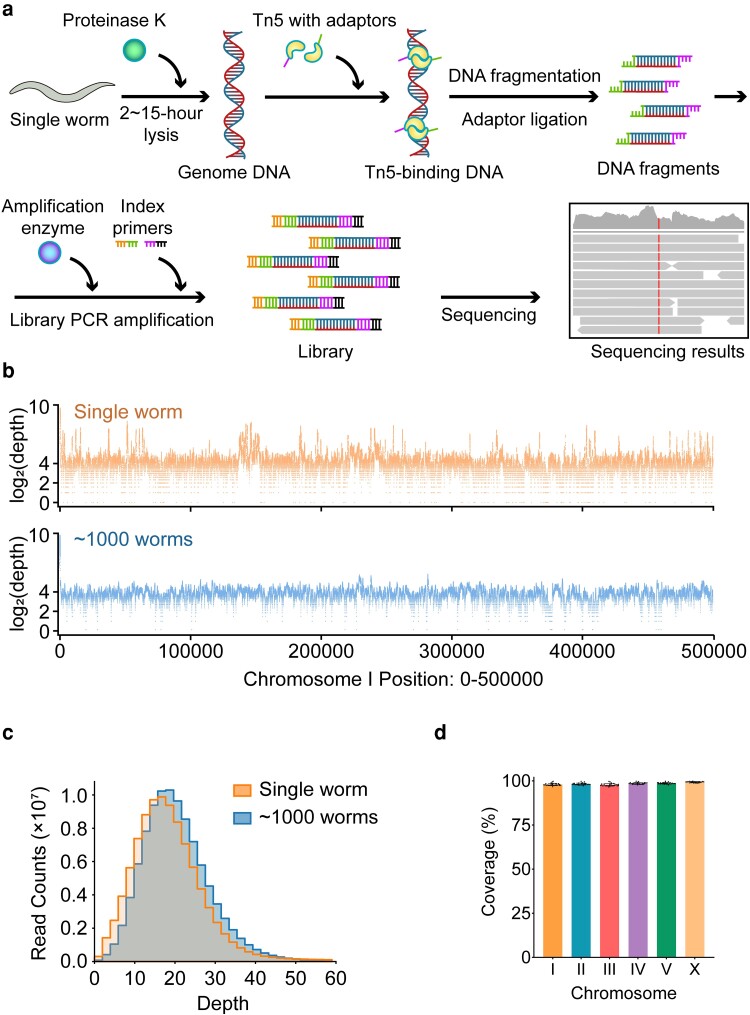
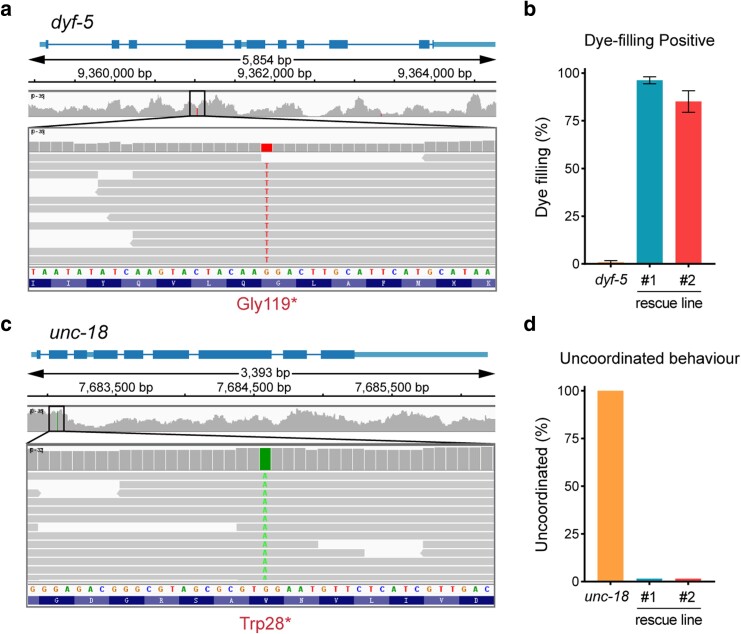
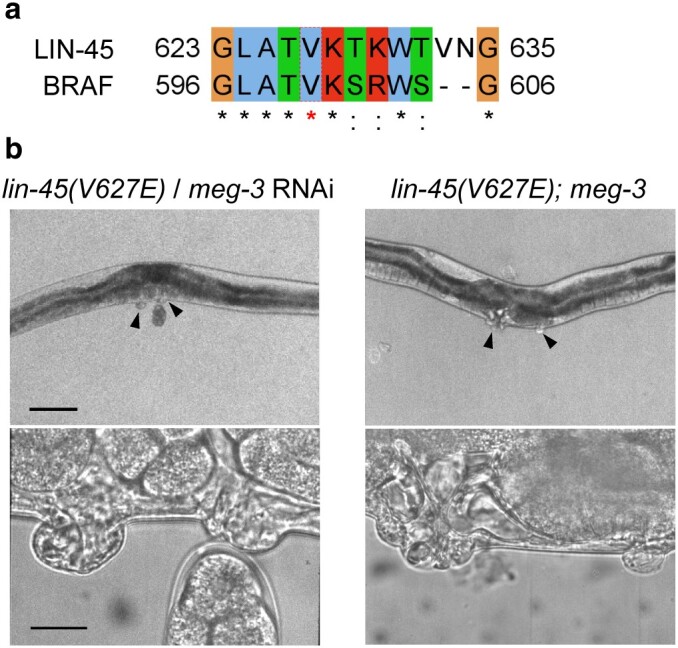
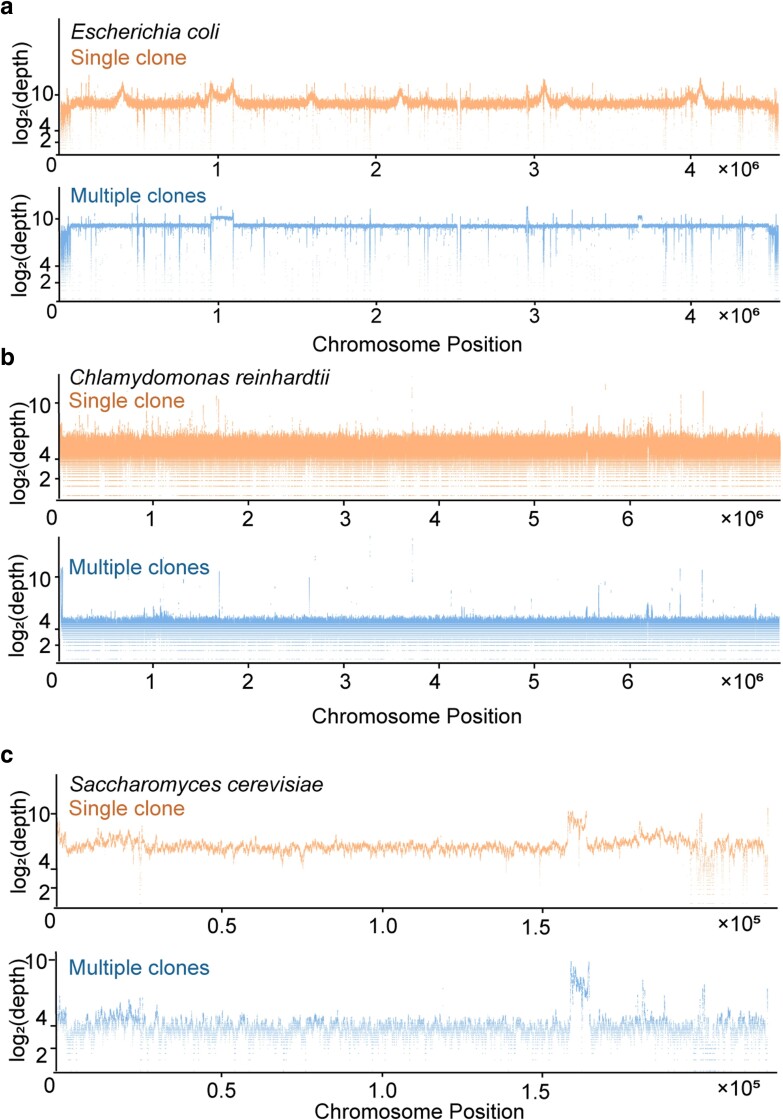
AlphaMissense identifies 23 million human missense variants as likely pathogenic, but only 0.1% have been clinically classified. To experimentally validate these predictions, chemical mutagenesis presents a rapid, cost-effective method to produce billions of mutations in model organisms. However, the prohibitive costs and limitations in the throughput of whole-genome sequencing (WGS) technologies, crucial for variant identification, constrain its widespread application. Here, we introduce a Tn5 transposase-assisted tagmentation technique for conducting WGS in C. elegans , E. coli , S. cervisiae , and C. reinhardtii . This method, demands merely 20 minutes of hands-on time for a single worm or single-cell clones and incurs a cost below 10 US dollars. It effectively pinpoints causal mutations in mutants defective in cilia or neurotransmitter secretion and in mutants synthetically sterile with a variant analogous to the oncogenic BRAF(V600E) mutation. Integrated with chemical mutagenesis, our approach can generate and identify missense variants economically and efficiently, facilitating experimental investigations of missense variants in diverse species.
Overview
The claims and statistics of this paper haven’t been checked yet.
Run the check — free, no account needed. It reads the open-access text and checks the sources it cites.
Integrity signals
Registry
Cites
Statistics
Figures
Verification
Claims the paper makes
The claims and statistics of this paper haven’t been checked yet.
Run the check — free, no account needed. It reads the open-access text and checks the sources it cites.
Self-check
Percentages, sums and reported differences re-computed from the paper’s own numbers.
The self-check needs the paper’s full text.
Citations
Cites
Highly accurate protein structure prediction with AlphaFold
Jumper, J., Evans, R., Pritzel, A., Green, T., Figurnov, M., Ronneberger, O., Tunyasuvunakool, K., Bates, R., Žídek, A., Potapenko, A., et al. (2021) · Nature · doi:10.1038/s41586-021-03819-2 · Cited by 43,764
Research works printed but not linked: 45
- 10.1126/science.adg7492 · DOI · Paper page
- 10.1126/science.1231143 · DOI · Paper page
- 10.1126/science.1232033 · DOI · Paper page
- 10.1038/s41467-018-04252-2 · DOI · Paper page
- 10.1038/s43586-022-00098-7 · DOI
- 10.1038/nrg730 · DOI
- 10.1016/0165-1218(84)90033-8 · DOI
- 10.1038/nrg794 · DOI
- 10.1051/medsci/20031967725 · DOI
- 10.1101/gr.157651.113 · DOI
- 10.1101/gr.9.9.859 · DOI
- 10.1073/pnas.86.14.5345 · DOI
- 10.1093/genetics/125.2.275 · DOI
- 10.1002/0471142727.mb1303bs82 · DOI
- 10.1016/0027-5107(69)90046-3 · DOI
- 10.1126/science.289.5476.77 · DOI
- 10.1128/JB.00524-07 · DOI
- 10.7554/eLife.54919 · DOI
- 10.1073/pnas.1919800117 · DOI
- 10.1534/g3.117.300257 · DOI
- 10.1101/gr.177881.114 · DOI · Paper page
- 10.1038/nature18606 · DOI
- 10.1126/science.aat5641 · DOI
- 10.1038/s41467-020-18035-1 · DOI
- 10.1016/j.molcel.2021.09.019 · DOI
- 10.1038/nature03818 · DOI · Paper page
- 10.1016/0012-1606(85)90443-9 · DOI
- 10.1073/pnas.0606974104 · DOI
- 10.1073/pnas.1009437108 · DOI
- 10.1523/JNEUROSCI.19-12-04772.1999 · DOI
- 10.1038/nature00766 · DOI · Paper page
- 10.1038/nature25478 · DOI
- 10.1016/j.molcel.2013.08.044 · DOI
- 10.1534/genetics.118.301307 · DOI
- 10.1053/j.semdp.2015.02.010 · DOI
- 10.1186/1476-4598-5-2 · DOI
- 10.3978/j.issn.2218-6751.2013.04.01 · DOI
- 10.1210/jc.2006-1613 · DOI
- 10.7554/eLife.52896 · DOI
- 10.1093/genetics/131.3.609 · DOI
- 10.1002/cm.970200108 · DOI
- 10.1093/nar/gkz966 · DOI
- 10.1093/genetics/164.2.731 · DOI
- 10.1073/pnas.76.11.5818 · DOI · Paper page
- 10.1002/j.1460-2075.1991.tb04966.x · DOI
Metadata
- Authors
- Wang, Z., Ke, J., Guo, Z., Wang, Y., Lei, K., Wang, S., Chen, G., shen, Z., Li, W., & Ou, G.
- Affiliations
- Center for Life Sciences (CN)
- Tsinghua University (CN)
- Corresponding author
- Ou, Guangshuo
- ORCID
- Venue
- G3 Genes Genomes Genetics
- Publisher
- openRxiv
- Published
- 2023-12-21
- Volume
- 14
- Issue
- 7
- ISSN
- 2160-1836 (ISSN-L)
- PMC
- PMC11228870
- OpenAlex
- W4399497879
- Cited by
- 5
- References
- 1
- Citations by year
- 2026: 2 · 2025: 3
- FWCI
- 0.68
- Type
- journal article
- Language
- en
- Open access
- gold
- doi.org
- Licence
- cc-by
- Locations
- G3 Genes Genomes Genetics (publishedVersion, cc-by)
- bioRxiv (Cold Spring Harbor Laboratory) (acceptedVersion)
- PubMed Central (publishedVersion, cc-by)
- PubMed (publishedVersion)
- Funders
- National Natural Science Foundation of China (32270721, 32071191, 31970180, 32021002, 31900535, 2017YFA0102900, 32070706, 31971160, 31991190)
- Tsinghua University
- National Key Research and Development Program of China (2017YFA0503501, 2017YFA0102900, 2019YFA0508401)
- Topics
- Life Sciences › Biochemistry, Genetics and Molecular Biology › Molecular Biology › Genomics and Phylogenetic Studies
- Life Sciences › Biochemistry, Genetics and Molecular Biology › Genetics › Genomics and Rare Diseases
- Life Sciences › Biochemistry, Genetics and Molecular Biology › Molecular Biology › CRISPR and Genetic Engineering
- Keywords
- Tn5 transposase, whole genome sequencing, low-cost sequencing, chemical mutagenesis, missense mutations, AlphaMissense, Caenorhabditis elegans, Escherichia coli, Saccharomyces cerevisiae, Chlamydomonas reinhardtii, BRAF V600E mutation, single-cell clones
- MeSH terms
- Whole Genome Sequencing, Animals, Escherichia coli, Saccharomyces cerevisiae, Chlamydomonas reinhardtii, Caenorhabditis elegans, Transposases
About these checks
Registry, retraction, Cites and statistics results are computed, not judged, with one exception: a printed reference that no index lists is read once by a model before it counts as a citation error. Claims are extracted by a model and kept only when their quote appears verbatim in the text; each cited source is then checked, with a model’s help, for whether it says what the claim relies on. Those verdicts can be wrong — read the claim’s quote and the cited source before relying on one.
Statistics and arithmetic are recomputed, not judged.
Confidence bands are shown only for fields calibrated on our annotated test set. None is calibrated yet, so no band is shown.
What counts as a claim ›How we measure confidence ›How we check this ›
Are you an author, or do you see a problem with this page? Request a review
