PreprintCited by 12Bacterial Genetics and BiotechnologyBacterial biofilms and quorum sensingTrace Elements in Health

The DOI matches its Crossref record; 1 of the 1 references it cites were found in a registry or an index.

Investigation of Zur-regulated metal transport systems reveals an unexpected role of pyochelin in zinc homeostasis

Open access

Preprint — published as 10.1128/mbio.02395-24

Abstract

Limiting the availability of transition metals at infection sites serves as a critical defense mechanism employed by the innate immune system to combat microbial infections. Pseudomonas aeruginosa exhibits a remarkable ability to thrive in zinc-deficient environments, which is facilitated by intricate cellular responses governed by numerous genes regulated by the zinc-responsive transcription factor Zur. Many of these genes have unknown functions, including those within the predicted PA2911-PA2914 and PA4063-PA4066 operons. A bioinformatic analysis revealed that PA2911-PA2914 comprises a TonB-dependent outer membrane receptor and an inner membrane ABC-permease responsible for importing metal-chelating molecules, whereas PA4063-PA4066 contains genes encoding a MacB transporter, likely involved in the export of large molecules. Molecular genetics and biochemical experiments, feeding assays, and intracellular metal content measurements demonstrated that PA2911-PA2914 and PA4063-PA4066 are engaged in the import and export of the pyochelin-cobalt complex, respectively. Notably, cobalt can reduce zinc demand and promote the growth of P. aeruginosa strains unable to import zinc, highlighting pyochelin-mediated cobalt import as a novel bacterial strategy to counteract zinc deficiency. These results unveil an unexpected role for pyochelin in zinc homeostasis and challenge the traditional view of this metallophore exclusively as an iron transporter.

Overview

The claims and statistics of this paper haven’t been checked yet.

Run the check — free, no account needed. It reads the open-access text and checks the sources it cites.

A few free checks a day · papers already verified open instantly · results are public

Integrity signals

Registry

Crossref · 10.1101/2024.01.07.574578

Cites

1 of 1 references verified0 citation errors · 0 not checkable

Statistics

Figures

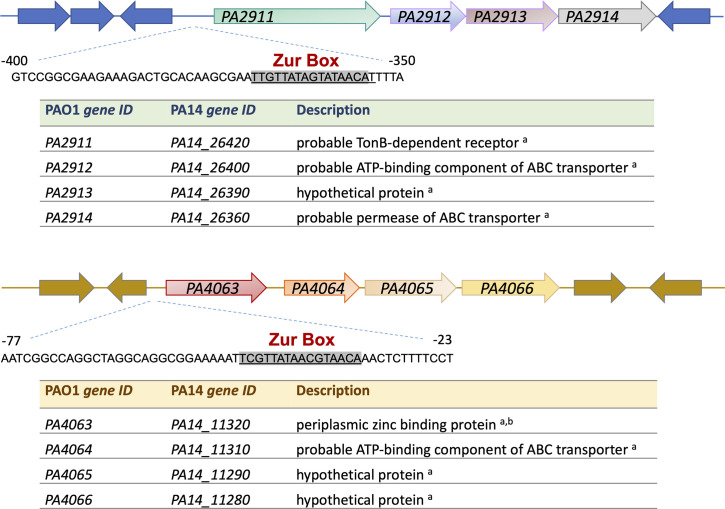
Fig 1 Schematic representation of the PA2911-PA2914 and PA4063-PA4066 operons. The corresponding gene ID in the PA14 strain and a brief description of the function are reported for each ORF. Sources are aPseudomonas Genome Database (https://www.pseudomonas.com) and b(33). The Zur boxes (highlighted sequences) were previously identified by Pederick et al. (34).
Fig 1 Schematic representation of the PA2911-PA2914 and PA4063-PA4066 operons. The corresponding gene ID in the PA14 strain and a brief description of the function are reported for each ORF. Sources are aPseudomonas Genome Database (https://www.pseudomonas.com) and b(33). The Zur boxes (highlighted sequences) were previously identified by Pederick et al. (34).CC BY · PubMed Central
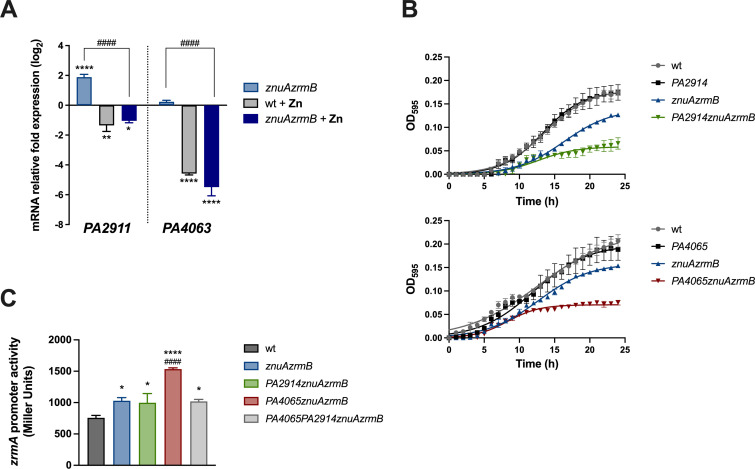
Fig 2 (A) Transcription of PA4063 and PA2911 in response to Zn availability. qRT-PCR on PA2911 and PA4063 from wild-type and znuAzrmB mutant strains grown for 20 hours in E-VBMM with or without ZnSO4 3 mM, as indicated in the legend. Data are mean values ± SD of triplicates and expressed as relative fold expression (log2DDCt) compared to the gene expression in the wild-type strain grown in E-VBMM (control). Statistical analyses were performed by two-way ANOVA and Bonferroni’s multiple comparison test. Asterisks indicate statistically significant differences between all samples and the control (*P < 0.05; **P < 0.01; ****P < 0.0001); hash signs indicate statistically significant differences between the znuAzrmB strain grown in E-VBMM and E-VBMM +Zn (####P < 0.0001). (B) Contribution of PA2914 and PA4065 to PA14 growth under conditions of Zn limitation. Growth curves of wild-type, znuAzrmB, and mutant strains carrying the PA2914 deletion or the PA4065 deletion, as indicated in the legends, grown in E-VBMM. Each symbol indicates the mean ± SD of triplicates, and lines represent nonlinear fit according to the Logistic Growth equation. (C) Effect of PA4065 and PA2914 deletions on intracellular Zn request. The beta-galactosidase activity driven by the zrmA promoter was evaluated after 20 hours of growth in E-VBMM in strains carrying plasmid pzrmApTZ110. Each bar represents the mean ± SD of three biological replicates. Statistical significance was calculated by one-way ANOVA and Bonferroni’s multiple comparison test. Asterisks indicate statistical significance between wild-type (wt) and mutant strains (*P < 0.05; ****P < 0.0001); hash signs indicate statistical significance between PA4065znuAzrmB and the other mutant strains (#### P < 0.0001).
Fig 2 (A) Transcription of PA4063 and PA2911 in response to Zn availability. qRT-PCR on PA2911 and PA4063 from wild-type and znuAzrmB mutant strains grown for 20 hours in E-VBMM with or without ZnSO4 3 mM, as indicated in the legend. Data are mean values ± SD of triplicates and expressed as relative fold expression (log2DDCt) compared to the gene expression in the wild-type strain grown in E-VBMM (control). Statistical analyses were performed by two-way ANOVA and Bonferroni’s multiple comparison test. Asterisks indicate statistically significant differences between all samples and the control (*P < 0.05; **P < 0.01; ****P < 0.0001); hash signs indicate statistically significant differences between the znuAzrmB strain grown in E-VBMM and E-VBMM +Zn (####P < 0.0001). (B) Contribution of PA2914 and PA4065 to PA14 growth under conditions of Zn limitation. Growth curves of wild-type, znuAzrmB, and mutant strains carrying the PA2914 deletion or the PA4065 deletion, as indicated in the legends, grown in E-VBMM. Each symbol indicates the mean ± SD of triplicates, and lines represent nonlinear fit according to the Logistic Growth equation. (C) Effect of PA4065 and PA2914 deletions on intracellular Zn request. The beta-galactosidase activity driven by the zrmA promoter was evaluated after 20 hours of growth in E-VBMM in strains carrying plasmid pzrmApTZ110. Each bar represents the mean ± SD of three biological replicates. Statistical significance was calculated by one-way ANOVA and Bonferroni’s multiple comparison test. Asterisks indicate statistical significance between wild-type (wt) and mutant strains (*P < 0.05; ****P < 0.0001); hash signs indicate statistical significance between PA4065znuAzrmB and the other mutant strains (#### P < 0.0001).CC BY · PubMed Central
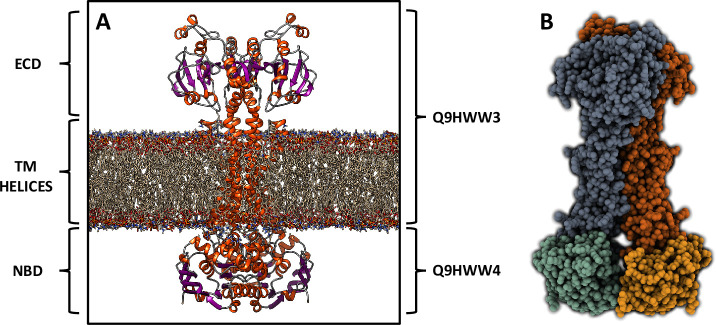
Fig 3 Molecular modeling of PA4064-PA4065. Molecular representation of the predicted MacB transporter. (A) Side view of the four protein subunits (Q9HWW3 and Q9HWW4) embedded within the lipid bilayer. The extracellular domain (ECD), transmembrane (TM) helices, and nucleotide-binding domain (NBD) are labeled. α-helices are represented as orange spirals, β-strands through violet arrows, while the membrane is shown using a stick representation. (B) Spacefill representation of the transporter, highlighting the arrangement of the four distinct protein subunits, each shown by a different color.
Fig 3 Molecular modeling of PA4064-PA4065. Molecular representation of the predicted MacB transporter. (A) Side view of the four protein subunits (Q9HWW3 and Q9HWW4) embedded within the lipid bilayer. The extracellular domain (ECD), transmembrane (TM) helices, and nucleotide-binding domain (NBD) are labeled. α-helices are represented as orange spirals, β-strands through violet arrows, while the membrane is shown using a stick representation. (B) Spacefill representation of the transporter, highlighting the arrangement of the four distinct protein subunits, each shown by a different color.CC BY · PubMed Central
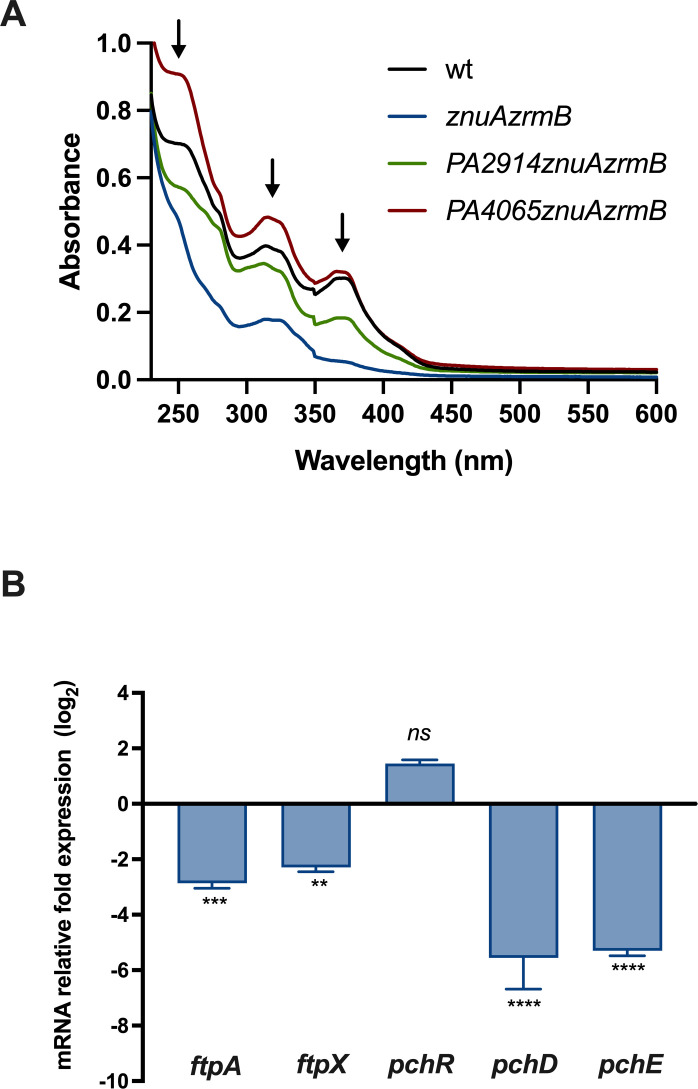
Fig 4 PCH synthesis is downregulated in the znuAzrmB strain. (A) UV-vis absorbance spectra (230–600 nm) of ethyl acetate fractions extracted from the supernatants of cultures grown for 20 hours in VBMM. The arrows denote peaks at 250 and 315 nm wavelength matching the PCH spectrum. (B) Relative fold expression (log2ΔΔCt) of genes involved in PCH uptake (ftpA and fptX), and synthesis (pchD and pchE), in the znuAzrmB mutant grown in E-VBMM for 20 hours, relative to the PA14 wild type. Data are mean values ± SD of triplicates, and statistical analysis was performed by paired t test. Asterisks indicate statistically significant differences between the znuAzrmB strain and wild type, grown in the same conditions (**P < 0.01; ***P < 0.001; ****P < 0.0001).
Fig 4 PCH synthesis is downregulated in the znuAzrmB strain. (A) UV-vis absorbance spectra (230–600 nm) of ethyl acetate fractions extracted from the supernatants of cultures grown for 20 hours in VBMM. The arrows denote peaks at 250 and 315 nm wavelength matching the PCH spectrum. (B) Relative fold expression (log2ΔΔCt) of genes involved in PCH uptake (ftpA and fptX), and synthesis (pchD and pchE), in the znuAzrmB mutant grown in E-VBMM for 20 hours, relative to the PA14 wild type. Data are mean values ± SD of triplicates, and statistical analysis was performed by paired t test. Asterisks indicate statistically significant differences between the znuAzrmB strain and wild type, grown in the same conditions (**P < 0.01; ***P < 0.001; ****P < 0.0001).CC BY · PubMed Central
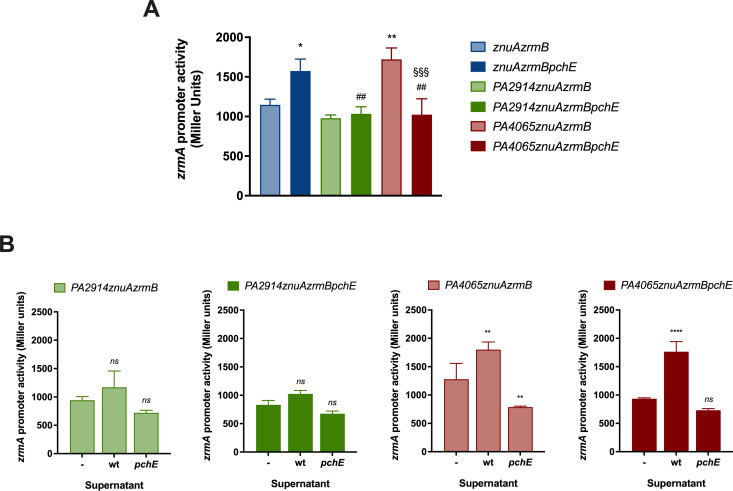
Fig 5 Effects of PCH on intracellular Zn request. (A) The zrmA promoter activity was evaluated in strains carrying plasmid pzrmApTZ110, grown in E-VBMM for 20 hours. Each bar represents the mean ± SD of three biological replicates, and statistical significance was calculated by one-way ANOVA and Bonferroni’s multiple comparison test. Asterisks indicate the statistical difference with the znuAzrmB strain (*P < 0.05; **P < 0.01); hash signs indicate the statistical difference between the znuAzrmBpchE and the other strains (##P < 0.01); § shows statistical difference with the PA4065znuAzrmB strain (§§§ P < 0.001) (B) The zrmA promoter activity was evaluated in strains carrying plasmid pzrmApTZ110, grown for 20 hours in E-VBMM (-) or supplemented with the ethyl acetate fraction of supernatants from wild-type (wt) or pchE strains (pchE). The decrease in zrmA expressions in cultures treated with supernatants from the pchE strain is likely caused by trace amounts of Zn introduced during the ethyl acetate extraction. Data represent means ± SD of three biological replicates. Two-way ANOVA and Tukey’s multiple comparison tests were performed to assess significant differences (***P < 0.001; ****P < 0.0001; ns: not significant).
Fig 5 Effects of PCH on intracellular Zn request. (A) The zrmA promoter activity was evaluated in strains carrying plasmid pzrmApTZ110, grown in E-VBMM for 20 hours. Each bar represents the mean ± SD of three biological replicates, and statistical significance was calculated by one-way ANOVA and Bonferroni’s multiple comparison test. Asterisks indicate the statistical difference with the znuAzrmB strain (*P < 0.05; **P < 0.01); hash signs indicate the statistical difference between the znuAzrmBpchE and the other strains (##P < 0.01); § shows statistical difference with the PA4065znuAzrmB strain (§§§ P < 0.001) (B) The zrmA promoter activity was evaluated in strains carrying plasmid pzrmApTZ110, grown for 20 hours in E-VBMM (-) or supplemented with the ethyl acetate fraction of supernatants from wild-type (wt) or pchE strains (pchE). The decrease in zrmA expressions in cultures treated with supernatants from the pchE strain is likely caused by trace amounts of Zn introduced during the ethyl acetate extraction. Data represent means ± SD of three biological replicates. Two-way ANOVA and Tukey’s multiple comparison tests were performed to assess significant differences (***P < 0.001; ****P < 0.0001; ns: not significant).CC BY · PubMed Central
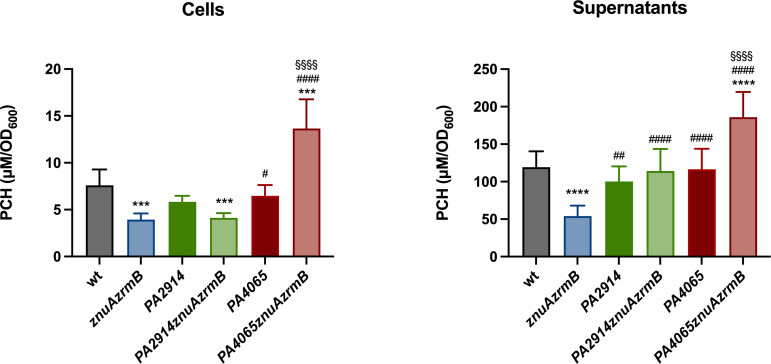
Fig 6 Quantification of PCH in cell lysates and cell-free supernatants. Wild-type and mutant strains were grown in VBMM, and PCH production was quantified using the P. aeruginosa ΔpvdAΔpchDΔfpvA PpchE::lux biosensor, as described in Materials and Methods. Data are expressed as µM/OD600; each bar is the mean value of three independent experiments ± SD. One-way ANOVA and Tukey’s multiple comparison tests were performed to assess significant differences among wild-type (wt) and mutant strains (***P < 0.001; ****P < 0.0001), znuAzrmB and other mutant strains (#P < 0.05; ##P < 0.01; ####P < 0.0001) and between PA4065 and PA4065znuAzrmB (§§§§P < 0.0001).
Fig 6 Quantification of PCH in cell lysates and cell-free supernatants. Wild-type and mutant strains were grown in VBMM, and PCH production was quantified using the P. aeruginosa ΔpvdAΔpchDΔfpvA PpchE::lux biosensor, as described in Materials and Methods. Data are expressed as µM/OD600; each bar is the mean value of three independent experiments ± SD. One-way ANOVA and Tukey’s multiple comparison tests were performed to assess significant differences among wild-type (wt) and mutant strains (***P < 0.001; ****P < 0.0001), znuAzrmB and other mutant strains (#P < 0.05; ##P < 0.01; ####P < 0.0001) and between PA4065 and PA4065znuAzrmB (§§§§P < 0.0001).CC BY · PubMed Central
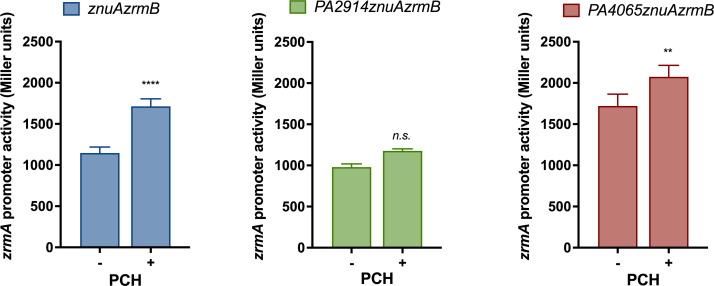
Fig 7 Influence of PCH on intracellular Zn request. The zrmA promoter activity was evaluated in znuAzrmB (left panel), PA2914znuAzrmB (middle panel), and PA4065znuAzrmB (right panel) strains carrying plasmid pzrmApTZ110, grown for 20 hours in VBMM supplemented (+) or not (−) with 1 µM apo-PCH. Each bar is the mean value of three biological replicates ±SD. Two-way ANOVA and Sidak’s multiple comparison tests were performed to assess significant differences, and asterisks indicate significant differences between untreated and PCH-treated samples (**P < 0.01; ****P < 0.0001); ns: not significant.
Fig 7 Influence of PCH on intracellular Zn request. The zrmA promoter activity was evaluated in znuAzrmB (left panel), PA2914znuAzrmB (middle panel), and PA4065znuAzrmB (right panel) strains carrying plasmid pzrmApTZ110, grown for 20 hours in VBMM supplemented (+) or not (−) with 1 µM apo-PCH. Each bar is the mean value of three biological replicates ±SD. Two-way ANOVA and Sidak’s multiple comparison tests were performed to assess significant differences, and asterisks indicate significant differences between untreated and PCH-treated samples (**P < 0.01; ****P < 0.0001); ns: not significant.CC BY · PubMed Central
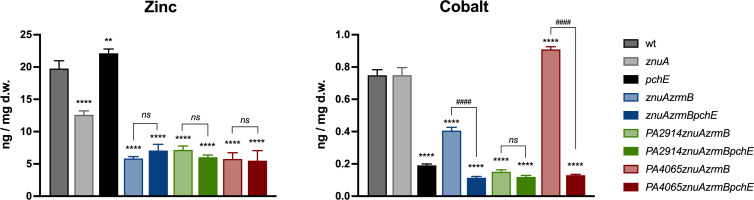
Fig 8 Intracellular Zn and Co content. ICP-MS analyses of bacteria grown for 20 hours in E-VBMM with trace metals (0.2 µM ZnSO4 and 0.1 µM FeSO4, NiSO4, Co(NO3)2, CuSO4 and MnCl2). Bars are the mean value of three biological replicates ±SD. Statistical analyses were performed by one-way ANOVA. Asterisks indicate statistically significant differences between mutant strains and wild type (**P < 0.01; ****P < 0.0001); hash signs indicate pairwise statistically significant differences (####P < 0.0001; ns: not significant).
Fig 8 Intracellular Zn and Co content. ICP-MS analyses of bacteria grown for 20 hours in E-VBMM with trace metals (0.2 µM ZnSO4 and 0.1 µM FeSO4, NiSO4, Co(NO3)2, CuSO4 and MnCl2). Bars are the mean value of three biological replicates ±SD. Statistical analyses were performed by one-way ANOVA. Asterisks indicate statistically significant differences between mutant strains and wild type (**P < 0.01; ****P < 0.0001); hash signs indicate pairwise statistically significant differences (####P < 0.0001; ns: not significant).CC BY · PubMed Central
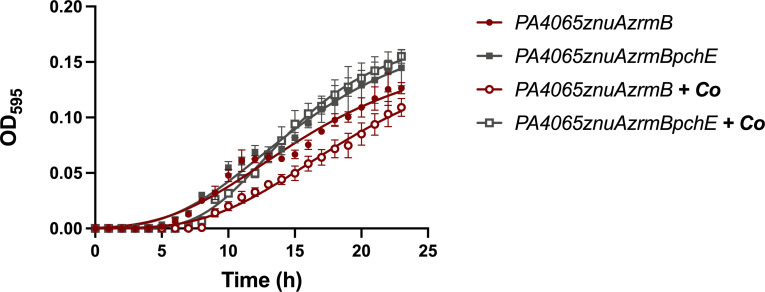
Fig 9 Effect of pchE on Co supplementation of strains carrying the PA4065 deletion. Growth curves of PA4065znuAzrmB and PA4065znuAzrmBpchE strains in E-VBMM (filled symbols) and E-VBMM + Co(NO3)2 10 µM (empty symbols). Each point indicates the mean value ±SD of triplicates, and lines represent nonlinear fit according to the logistic growth equation. Statistical differences among the end points of each curve were analyzed by two-way ANOVA (*P < 0.05; **P < 0.01; ns: not significant).
Fig 9 Effect of pchE on Co supplementation of strains carrying the PA4065 deletion. Growth curves of PA4065znuAzrmB and PA4065znuAzrmBpchE strains in E-VBMM (filled symbols) and E-VBMM + Co(NO3)2 10 µM (empty symbols). Each point indicates the mean value ±SD of triplicates, and lines represent nonlinear fit according to the logistic growth equation. Statistical differences among the end points of each curve were analyzed by two-way ANOVA (*P < 0.05; **P < 0.01; ns: not significant).CC BY · PubMed Central
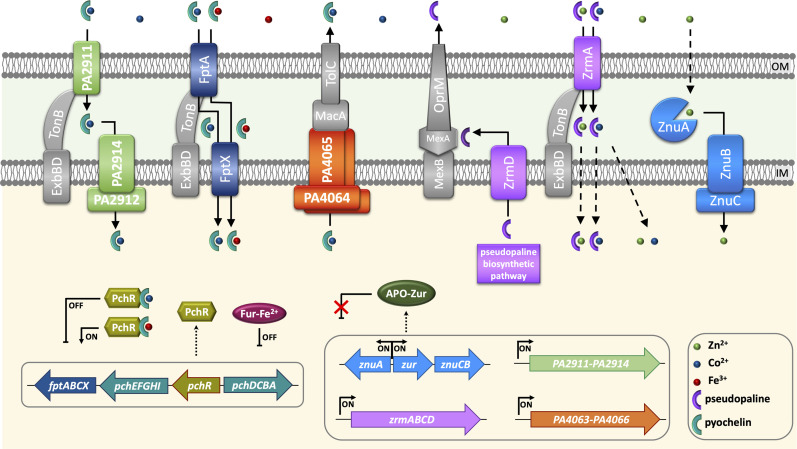
Fig 10 Schematic view of P. aeruginosa responses to Zn deficiency. The diagram illustrates the metal transport systems for which a role in the response to Zn deficiency is demonstrated. As in all Gram-negative bacteria, the Zur-regulated ZnuABC transporter has a central role in ensuring the transport of Zn from the periplasm to the cytoplasm (the dashed line through the Outer Membrane (OM) indicates that the entry routes of Zn into the periplasm are not defined). In addition to znuABCD, the operons zrmABCD (responsible for the synthesis and transport of pseudopaline), PA2911-PA2914, and PA4063-PA4066 are also negatively regulated by Zur under Zn-replete conditions and transcribed when the intracellular Zn concentration is low, a condition in which Zur is no longer properly metalated. The zincophore pseudopaline, synthesized in the cytoplasm by ZrmB and ZrmC, is transported into the periplasm by ZrmD and then exported out of the cell by the MexAB-OmpR efflux pump (64). Pseudopaline complexed to Zn or Co re-enters the periplasm via the TonB-dependent Outer Membrane receptor ZrmA. It is currently unknown whether the pseudopaline-bound metal is released in the periplasm or transported into the cytoplasm in complex with the pseudopaline (dashed arrows through the Inner Membrane—IM). Co, which can partially compensate for conditions of severe Zn deficiency, can enter either in a complex with pseudopaline or bound to PCH. The PCH-Co complex can enter the cell either from FptA, the receptor involved in the uptake of the PCH-Fe complex, or through the PA2911-PA2914 import system. The binding of PCH-Co to PchR, the main regulator of PCH synthesis, represses the synthesis of PCH and the FptA-FptX import system (53). By contrast, the expression of PA2911-PA2914 is not repressed by PchR, but induced under conditions of poor Zn availability, thereby allowing the entry of PCH-Co even if fptA-fptX is repressed. To avoid potentially toxic accumulations of PCH and Co within the cell, excess PCH-Co is exported through a pump involving the MacB transporter formed by PA4064/PA4065.
Fig 10 Schematic view of P. aeruginosa responses to Zn deficiency. The diagram illustrates the metal transport systems for which a role in the response to Zn deficiency is demonstrated. As in all Gram-negative bacteria, the Zur-regulated ZnuABC transporter has a central role in ensuring the transport of Zn from the periplasm to the cytoplasm (the dashed line through the Outer Membrane (OM) indicates that the entry routes of Zn into the periplasm are not defined). In addition to znuABCD, the operons zrmABCD (responsible for the synthesis and transport of pseudopaline), PA2911-PA2914, and PA4063-PA4066 are also negatively regulated by Zur under Zn-replete conditions and transcribed when the intracellular Zn concentration is low, a condition in which Zur is no longer properly metalated. The zincophore pseudopaline, synthesized in the cytoplasm by ZrmB and ZrmC, is transported into the periplasm by ZrmD and then exported out of the cell by the MexAB-OmpR efflux pump (64). Pseudopaline complexed to Zn or Co re-enters the periplasm via the TonB-dependent Outer Membrane receptor ZrmA. It is currently unknown whether the pseudopaline-bound metal is released in the periplasm or transported into the cytoplasm in complex with the pseudopaline (dashed arrows through the Inner Membrane—IM). Co, which can partially compensate for conditions of severe Zn deficiency, can enter either in a complex with pseudopaline or bound to PCH. The PCH-Co complex can enter the cell either from FptA, the receptor involved in the uptake of the PCH-Fe complex, or through the PA2911-PA2914 import system. The binding of PCH-Co to PchR, the main regulator of PCH synthesis, represses the synthesis of PCH and the FptA-FptX import system (53). By contrast, the expression of PA2911-PA2914 is not repressed by PchR, but induced under conditions of poor Zn availability, thereby allowing the entry of PCH-Co even if fptA-fptX is repressed. To avoid potentially toxic accumulations of PCH and Co within the cell, excess PCH-Co is exported through a pump involving the MacB transporter formed by PA4064/PA4065.CC BY · PubMed Central

Verification

Claims the paper makes

The claims and statistics of this paper haven’t been checked yet.

Run the check — free, no account needed. It reads the open-access text and checks the sources it cites.

A few free checks a day · papers already verified open instantly · results are public

Self-check

Percentages, sums and reported differences re-computed from the paper’s own numbers.

The self-check needs the paper’s full text.

Citations

Cites

Research works printed but not linked: 70

  1. 10.1021/ar900015x · DOI
  2. 2013, Competition for zinc binding in the host-pathogen interaction, Front Cell Infect Microbiol, 3, 1
  3. 10.1038/nrmicro.2017.15 · DOI · Paper page
  4. 10.1074/jbc.R114.588145 · DOI
  5. 10.1016/j.cbpa.2009.11.008 · DOI · Paper page
  6. 10.1016/j.chom.2011.08.006 · DOI · Paper page
  7. Barwinska-Sendra A , Waldron KJ . The Role of Intermetal Competition and Mis-Metalation in Metal Toxicity. In: Advances in Microbial Physiology. 2017. p. 315–79. · DOI
  8. 10.1126/science.1152449 · DOI · Paper page
  9. 10.1016/j.chom.2011.07.004 · DOI · Paper page
  10. 10.1016/j.chom.2012.01.017 · DOI · Paper page
  11. 10.1128/IAI.00559-07 · DOI
  12. 10.1111/j.1574-6968.2009.01762.x · DOI
  13. 10.1128/JB.02543-14 · DOI
  14. 10.1039/c7mt00126f · DOI
  15. 10.1126/science.aaf1018 · DOI · Paper page
  16. 10.1038/s41598-017-16765-9 · DOI
  17. Morey JR , Kehl-Fie TE . Bioinformatic Mapping of Opine-Like Zincophore Biosynthesis in Bacteria. mSystems. 2020;5(4). · DOI
  18. 10.3391/mbi.2017.8.1.01 · DOI
  19. 10.1111/mmi.13834 · DOI
  20. Oliver A , Mena A , Maciá MD . Evolution of Pseudomonas aeruginosa pathogenicity: from acute to chronic infections. In: Evolutionary biology of bacterial and fungal pathogens. 2007. p. 433–44. · DOI
  21. 10.1039/C5MT00017C · DOI
  22. 10.1016/j.jtemb.2018.03.009 · DOI
  23. 10.1093/FEMSLE/FNAC098 · DOI
  24. 10.1111/1462-2920.16328 · DOI
  25. 1992, Metal regulation of siderophore synthesis in Pseudomonas aeruginosa and functional effects of siderophore-metal complexes, Appl Environ Microbiol, 58, 2886, 10.1128/aem.58.9.2886-2893.1992 · DOI
  26. 10.1039/c1dt11804h · DOI
  27. 10.1126/science.1060331 · DOI · Paper page
  28. 10.1371/journal.pone.0075389 · DOI
  29. 2022, Zinc homeostasis in Pseudomonas, BioMetals, 36, 729
  30. 2021, Structure and metal-binding properties of PA4063, a novel player in periplasmic zinc trafficking by Pseudomonas aeruginosa, Acta Crystallogr Sect D Struct Biol, 77, 1401, 10.1107/S2059798321009608 · DOI
  31. Pederick VG , Eijkelkamp BA , Begg SL , Ween MP , McAllister LJ , Paton JC , et al. ZnuA and zinc homeostasis in Pseudomonas aeruginosa. Sci Rep. 2015;5:13139. · DOI · Paper page
  32. Greene NP , Kaplan E , Crow A , Koronakis V . Antibiotic resistance mediated by the MacB ABC transporter family: A structural and functional perspective. Front Microbiol. 2018;9:950. · DOI
  33. 10.1128/mBio.00939-20 · DOI
  34. 10.1021/bi6024403 · DOI
  35. 2021, A Highly Sensitive Luminescent Biosensor for the Microvolumetric Detection of the Pseudomonas aeruginosa Siderophore Pyochelin, ACS Sensors, 6, 3273, 10.1021/acssensors.1c01023 · DOI
  36. 1992, Metal regulation of siderophore synthesis in Pseudomonas aeruginosa and functional effects of siderophore-metal complexes, Appl Environ Microbiol, 58, 2886, 10.1128/aem.58.9.2886-2893.1992 · DOI
  37. 2023, Localized Infections with P. aeruginosa Strains Defective in Zinc Uptake Reveal That Zebrafish Embryos Recapitulate Nutritional Immunity Responses of Higher Eukaryotes, Int J Mol Sci, 24, 944, 10.3390/ijms24020944 · DOI
  38. 10.3389/fmicb.2021.666584 · DOI
  39. 10.1073/pnas.1712153114 · DOI
  40. 2017, Structure of the MacAB-TolC ABC-type tripartite multidrug efflux pump, Nat Microbiol, 2, 17070, 10.1038/nmicrobiol.2017.70 · DOI
  41. 10.1073/pnas.0908760106 · DOI
  42. 10.1038/s41467-017-01399-2 · DOI
  43. 2023, ZrgA contributes to zinc acquisition in Vibrio parahaemolyticus, Virulence, 14, 2156196, 10.1080/21505594.2022.2156196 · DOI
  44. 2023, Structure and Function of the Zinc Binding Protein ZrgA from Vibrio cholerae, Int J Mol Sci, 24, 548
  45. 10.1002/1873-3468.13396 · DOI
  46. Grim KP , Radin JN , Solórzano PKP , Morey JR , Frye KA , Ganio K , et al. Intracellular accumulation of staphylopine can sensitize staphylococcus aureus to host-imposed zinc starvation by chelation-independent toxicity. J Bacteriol. 2020;202(9). · DOI
  47. 2015, A novel siderophore system is essential for the growth of Pseudomonas aeruginosa in airway mucus, Sci Rep, 8, 14644
  48. 10.1073/pnas.78.7.4256 · DOI
  49. 2009, The Pseudomonas aeruginosa Pyochelin-Iron Uptake Pathway and Its Metal Specificity, J Bacteriol [Internet], 191, 3517, 10.1128/JB.00010-09 · DOI
  50. 10.1111/j.1758-2229.2009.00126.x · DOI · Paper page
  51. 2019, Non-specific interference of cobalt with siderophore-dependent iron uptake pathways, Metallomics, 11, 1937, 10.1039/C9MT00195F · DOI
  52. Price SL , Vadyvaloo V , De Marco JK , Brady A , Gray PA , Kehl-Fie TE , et al. Yersiniabactin contributes to overcoming zinc restriction during Yersinia pestis infection of mammalian and insect hosts. Proc Natl Acad Sci U S A. 2021;118(44). · DOI · Paper page
  53. Behnsen J , Zhi H , Aron AT , Subramanian V , Santus W , Lee MH , et al. Siderophore-mediated zinc acquisition enhances enterobacterial colonization of the inflamed gut. Nat Commun. 2021;12(1). · DOI · Paper page
  54. 10.1016/0076-6879(93)26005-T · DOI
  55. 10.1039/d0mt00145g · DOI
  56. 2017, The Components of the Unique Zur Regulon of Cupriavidus metallidurans Mediate Cytoplasmic Zinc Handling, J Bacteriol, 199, e00372
  57. 10.1186/1471-2164-10-470 · DOI · Paper page
  58. 10.1016/j.chom.2016.05.007 · DOI · Paper page
  59. 10.1111/1462-2920.14937 · DOI
  60. 10.1099/mic.0.057430-0 · DOI
  61. 2022, A role for PchHI as the ABC transporter in iron acquisition by the siderophore pyochelin in Pseudomonas aeruginosa, Environ Microbiol, 24, 866, 10.1111/1462-2920.15811 · DOI
  62. 2021, Involvement of the Pseudomonas aeruginosa MexAB-OprM efflux pump in the secretion of the metallophore pseudopaline, Mol Microbiol, 115, 84, 10.1111/mmi.14600 · DOI
  63. Dumas Z , Ross-Gillespie A , Kümmerli R . Switching between apparently redundant iron-uptake mechanisms benefits bacteria in changeable environments. Proc R Soc B Biol Sci. 2013;280(1764). · DOI
  64. Pasqua M , Visaggio D , Lo Sciuto A , Genah S , Banin E , Visca P , et al. Ferric Uptake Regulator Fur Is Conditionally Essential in Pseudomonas aeruginosa. J Bacteriol. 2017;199(22). · DOI
  65. Wardell SJT , Gauthier J , Martin LW , Potvin M , Brockway B , Levesque RC , et al. Genome evolution drives transcriptomic and phenotypic adaptation in Pseudomonas aeruginosa during 20 years of infection. Microb genomics. 2021;7(11). · DOI
  66. 2017, Understanding the biomimetic properties of gallium in Pseudomonas aeruginosa: an XAS and XPS study, Dalt Trans, 46, 7082, 10.1039/C7DT00651A · DOI
  67. 10.1016/S0378-1119(98)00130-9 · DOI
  68. 10.1093/nar/gky427 · DOI
  69. 2021, An optimized method for sample preparation and elemental analysis of extra-virgin olive oil by inductively coupled plasma mass spectrometry, Food Chem, 360, 130027, 10.1016/j.foodchem.2021.130027 · DOI
  70. 10.2139/ssrn.4028274 · DOI

Metadata

Authors
Secli, V., Michetti, E., Pacello, F., Iacovelli, F., Falconi, M., Astolfi, M. L., Visaggio, D., Visca, P., Ammendola, S., & Battistoni, A.
Affiliations
  • University of Rome Tor Vergata (IT)
  • Sapienza University of Rome (IT)
  • Roma Tre University (IT)
Corresponding author
Battistoni, Andrea
Venue
mBio
Publisher
openRxiv
Published
2024-01-08
Volume
15
Issue
10
Pages
e0239524-e0239524
ISSN
2150-7511 (ISSN-L)
OpenAlex
W4402766903
Cited by
12
References
1
Citations by year
2026: 5 · 2025: 6 · 2024: 1
FWCI
3.18
Type
journal article
Language
en
Open access
Licence
cc-by
Locations
  • mBio (publishedVersion, cc-by)
  • bioRxiv (Cold Spring Harbor Laboratory) (acceptedVersion, cc-by)
  • PubMed Central (publishedVersion, cc-by)
  • PubMed (publishedVersion)
  • IRIS Research product catalog (Sapienza University of Rome) (submittedVersion, cc-by)
  • Cineca Institutional Research Information System (Tor Vergata University) (submittedVersion, other-oa)
  • DOAJ (DOAJ: Directory of Open Access Journals) (submittedVersion, cc-by-sa)
  • Iris (Roma Tre University) (submittedVersion)
Funders
  • Cystic Fibrosis Foundation (BATTIS19IO)
  • European Commission (– CUP B83C22002820006, ECS 0000024, B83C22002820006, 0000024, PRIN-2022)
  • NextGenerationEU
Topics
  • Life Sciences › Biochemistry, Genetics and Molecular Biology › Genetics › Bacterial Genetics and Biotechnology
  • Life Sciences › Biochemistry, Genetics and Molecular Biology › Molecular Biology › Bacterial biofilms and quorum sensing
  • Health Sciences › Nursing › Nutrition and Dietetics › Trace Elements in Health
Keywords
pyochelin, zinc homeostasis, Pseudomonas aeruginosa, metallophores, siderophores, ABC transporters, zinc deficiency, metal transport
MeSH terms
Bacterial Proteins, Biological Transport, Cobalt, Homeostasis, Operon, Phenols, Pseudomonas aeruginosa, Repressor Proteins, Thiazoles, Zinc, Gene Expression Regulation, Bacterial

About these checks

Registry, retraction, Cites and statistics results are computed, not judged, with one exception: a printed reference that no index lists is read once by a model before it counts as a citation error. Claims are extracted by a model and kept only when their quote appears verbatim in the text; each cited source is then checked, with a model’s help, for whether it says what the claim relies on. Those verdicts can be wrong — read the claim’s quote and the cited source before relying on one.

Statistics and arithmetic are recomputed, not judged.

Confidence bands are shown only for fields calibrated on our annotated test set. None is calibrated yet, so no band is shown.

What counts as a claim ›How we measure confidence ›How we check this ›

Are you an author, or do you see a problem with this page? Request a review