

The DOI matches its Crossref record; 1 of the 1 references it cites were found in a registry or an index.
The vibriophage-encoded inhibitor OrbA abrogates BREX-mediated defense through the ATPase BrxC
Open accessPreprint — published as 10.1128/jb.00206-24 · Paper page
Abstract
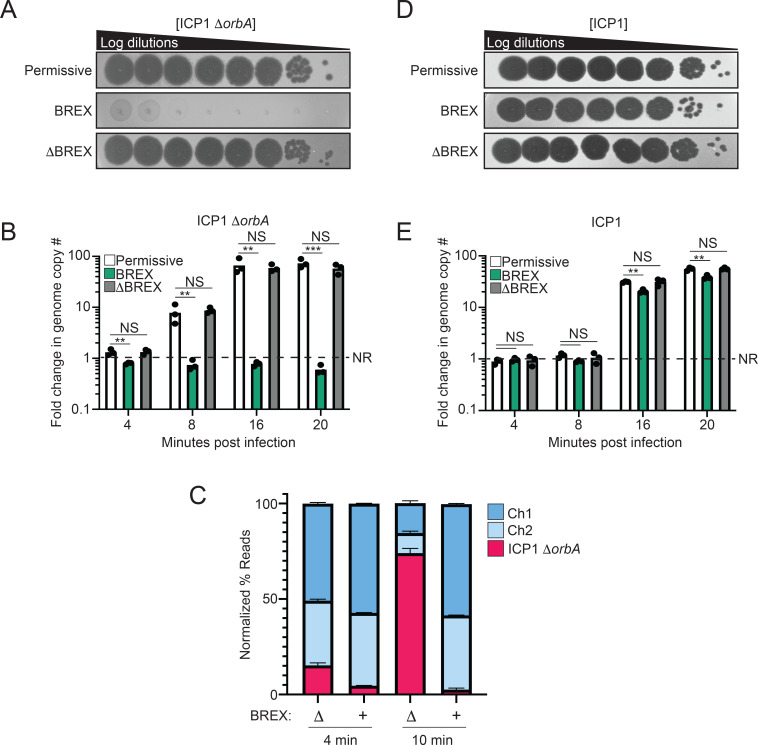
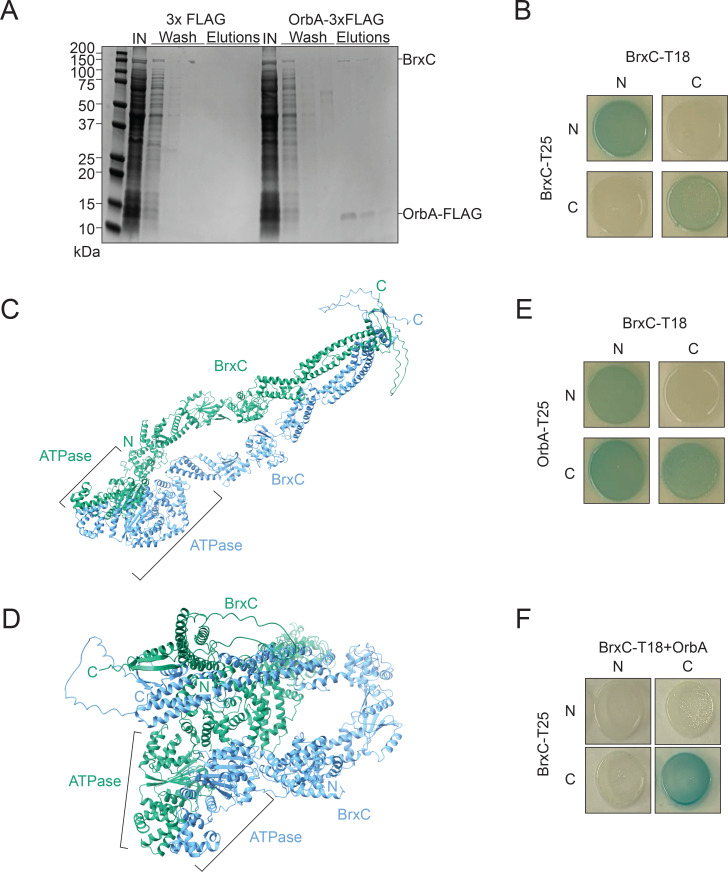
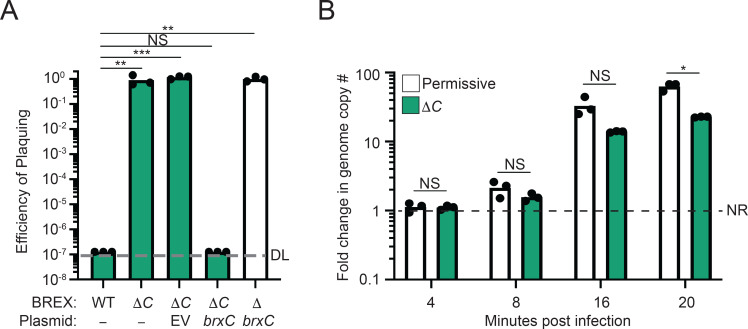
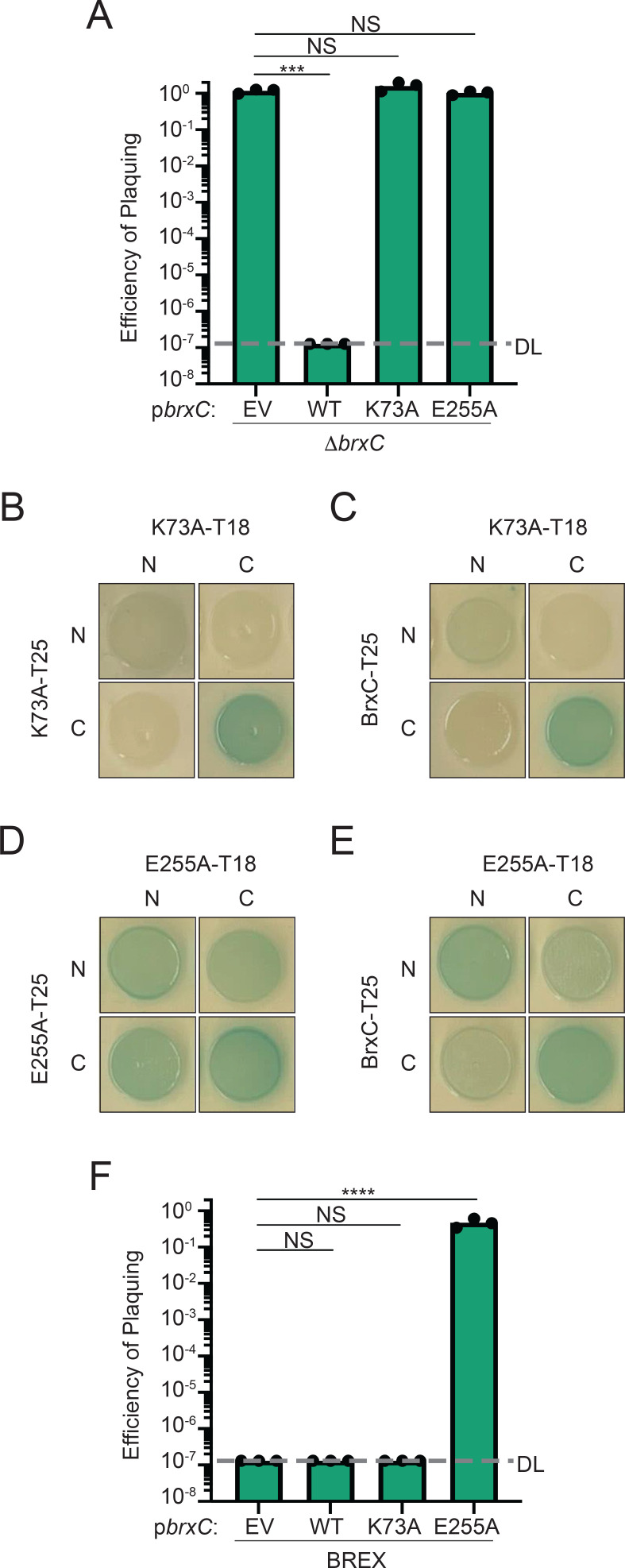
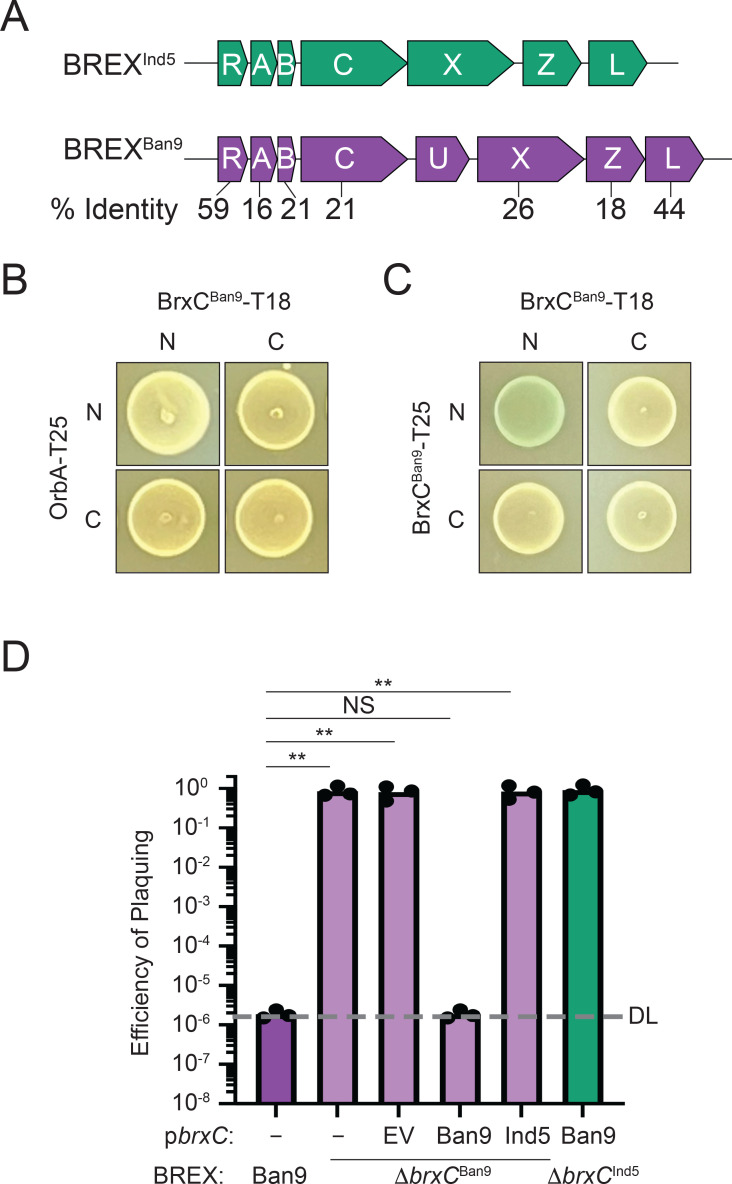
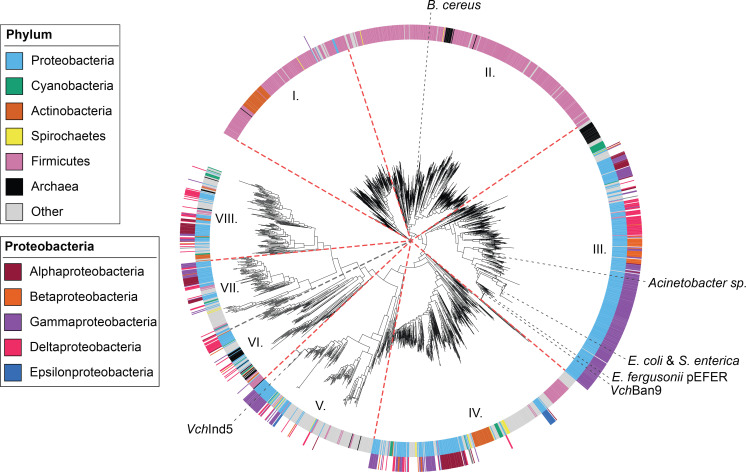
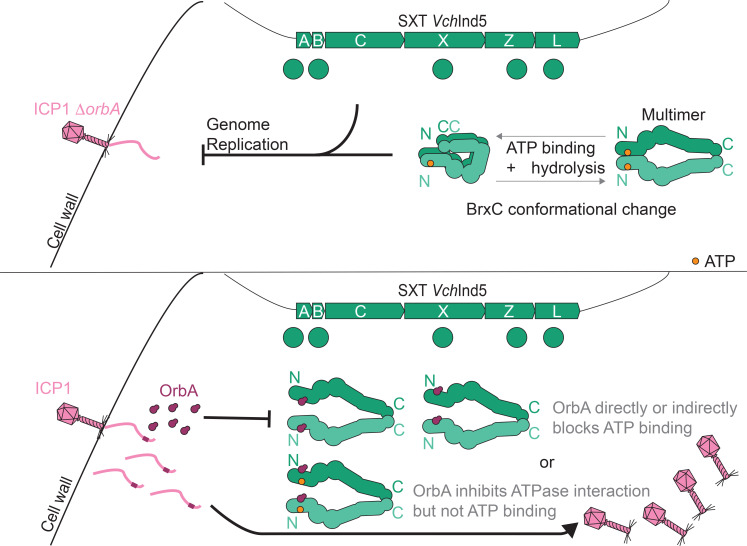
Bacteria and phages are locked in a co-evolutionary arms race where each entity evolves mechanisms to restrict the proliferation of the other. Phage-encoded defense inhibitors have proven powerful tools to interrogate how defense systems function. A relatively common defense system is BREX (Bacteriophage exclusion); however, how BREX functions to restrict phage infection remains poorly understood. A BREX system encoded by the SXT integrative and conjugative element, Vch Ind5, was recently identified in Vibrio cholerae , the causative agent of the diarrheal disease cholera. The lytic phage ICP1 that co-circulates with V. cholerae encodes the BREX inhibitor OrbA, but how OrbA inhibits BREX is unclear. Here, we determine that OrbA inhibits BREX using a unique mechanism from known BREX inhibitors by directly binding to the BREX component BrxC. BrxC has a functional ATPase domain that, when mutated, not only disrupts BrxC function but also alters how BrxC multimerizes. Furthermore, we find that OrbA binding disrupts BrxC-BrxC interactions. We determine that OrbA cannot bind BrxC encoded by the distantly related BREX system encoded by the SXT Vch Ban9, and thus fails to inhibit this BREX system that also circulates in epidemic V. cholerae . Lastly, we find that homologs of the Vch Ind5 BrxC are more diverse than the homologs of the Vch Ban9 BrxC. These data provide new insight into the function of the BrxC ATPase and highlight how phage-encoded inhibitors can disrupt phage defense systems using different mechanisms. Importance: With renewed interest in phage therapy to combat antibiotic-resistant pathogens, understanding the mechanisms bacteria use to defend themselves against phages and the counter-strategies phages evolve to inhibit defenses is paramount. Bacteriophage exclusion (BREX) is a common defense system with few known inhibitors. Here, we probe how the vibriophage-encoded inhibitor OrbA inhibits the BREX system of Vibrio cholerae , the causative agent of the diarrheal disease cholera. By interrogating OrbA function, we have begun to understand the importance and function of a BREX component. Our results demonstrate the importance of identifying inhibitors against defense systems, as they are powerful tools for dissecting defense activity and can inform strategies to increase the efficacy of some phage therapies.
Overview
The claims and statistics of this paper haven’t been checked yet.
Run the check — free, no account needed. It reads the open-access text and checks the sources it cites.
Integrity signals
Registry
Cites
Statistics
Figures
Verification
Claims the paper makes
The claims and statistics of this paper haven’t been checked yet.
Run the check — free, no account needed. It reads the open-access text and checks the sources it cites.
Self-check
Percentages, sums and reported differences re-computed from the paper’s own numbers.
The self-check needs the paper’s full text.
Citations
Cites
Highly accurate protein structure prediction with AlphaFold
Jumper, J., Evans, R., Pritzel, A., Green, T., Figurnov, M., Ronneberger, O., Tunyasuvunakool, K., Bates, R., Žídek, A., Potapenko, A., et al. (2021) · Nature · doi:10.1038/s41586-021-03819-2 · Cited by 43,764
Research works printed but not linked: 51
- 10.1016/j.mib.2005.06.003 · DOI · Paper page
- 10.1038/nrmicro2315 · DOI
- 10.1146/annurev.micro.112408.134123 · DOI · Paper page
- 2022, Structural biology of CRISPR–Cas immunity and genome editing enzymes, Nat. Rev. Microbiol, 20, 641, 10.1038/s41579-022-00739-4 · DOI
- 10.1038/s41467-022-30269-9 · DOI · Paper page
- 10.1038/s41564-022-01219-4 · DOI · Paper page
- 10.1016/j.chom.2022.09.017 · DOI · Paper page
- 10.1126/science.aar4120 · DOI · Paper page
- 10.1126/science.aba0372 · DOI · Paper page
- 10.1038/s41579-019-0299-x · DOI · Paper page
- 2020, CRISPR-Cas systems: Overview, innovations and applications in human disease research and gene therapy, Comput. Struct. Biotechnol. J, 18, 2401, 10.1016/j.csbj.2020.08.031 · DOI · Paper page
- 2021, Structure-based functional mechanisms and biotechnology applications of anti-CRISPR proteins, Nat. Rev. Mol. Cell Biol, 22, 563, 10.1038/s41580-021-00371-9 · DOI
- 10.1146/annurev-biochem-011520-105250 · DOI · Paper page
- 2023, Bacteriophages suppress CRISPR–Cas immunity using RNA-based anti-CRISPRs, Nature, 623, 601, 10.1038/s41586-023-06612-5 · DOI
- 10.15252/embj.201489455 · DOI · Paper page
- 10.1093/nar/gky1125 · DOI
- 10.1093/nar/gkac334 · DOI
- 10.1093/NAR/GKAB906 · DOI
- 10.1093/nar/gkac311 · DOI
- 2022, Reassembling a cannon in the DNA defense arsenal: Genetics of StySA, a BREX phage exclusion system in Salmonella lab strains, Plos Genet, 18, e1009943, 10.1371/journal.pgen.1009943 · DOI
- 2022, Crystal structure of the BREX phage defence protein BrxA, Curr. Res. Struct. Biol, 4, 211, 10.1016/j.crstbi.2022.06.001 · DOI
- 10.1093/nar/gkad083 · DOI
- 2020, Phage T7 DNA mimic protein Ocr is a potent inhibitor of BREX defence, Nucleic Acids Res, 48, 5397, 10.1093/nar/gkaa290 · DOI
- 10.1016/j.celrep.2023.112972 · DOI
- 10.1126/science.abg2166 · DOI
- 10.1016/0022-2836(85)90242-6 · DOI
- 10.1016/S1097-2765(02)00435-5 · DOI
- 10.1093/nar/gks516 · DOI
- 10.1128/JVI.19.1.136-145.1976 · DOI
- 10.1371/journal.pgen.1000786 · DOI · Paper page
- 2020, Genome replication dynamics of a bacteriophage and its satellite reveal strategies for parasitism and viral restriction, Nucleic Acids Res, 48, 249
- 2022, A phage parasite deploys a nicking nuclease effector to inhibit viral host replication, Nucleic Acids Res, 50, gkac002.
- 10.1146/annurev.ge.25.120191.003101 · DOI · Paper page
- 10.1073/pnas.95.10.5752 · DOI · Paper page
- 10.1038/S41592-022-01488-1 · DOI · Paper page
- 10.1016/j.jmb.2017.12.007 · DOI · Paper page
- 2020, Protein Sequence Analysis Using the MPI Bioinformatics Toolkit, Curr. Protoc. Bioinform, 72, e108, 10.1002/cpbi.108 · DOI · Paper page
- 2020, Pfam: The protein families database in 2021, Nucleic Acids Res, 49, gkaa913.
- 10.1038/nprot.2015.053 · DOI · Paper page
- 10.1111/j.1600-0854.2007.00642.x · DOI
- 10.1046/j.1365-2443.2001.00447.x · DOI · Paper page
- 10.1038/nature14239 · DOI
- 10.1073/pnas.131006898 · DOI
- 10.1038/nrg.2017.80 · DOI · Paper page
- 10.1073/pnas.1406478111 · DOI
- 10.1145/3093338.3093390 · DOI
- 2024, COSMIC2: A global resource for structure prediction and structural analysis, Biophys. J, 123, 334a, 10.1016/j.bpj.2023.11.2036 · DOI
- 10.1002/PRO.4792 · DOI · Paper page
- 10.1093/bioinformatics/bts565 · DOI · Paper page
- 10.1093/molbev/mst010 · DOI · Paper page
- 2021, Interactive Tree Of Life (iTOL) v5: an online tool for phylogenetic tree display and annotation, Nucleic Acids Res, 49, gkab301.
Metadata
- Authors
- Oshiro, R. T., Dunham, D. T., & Seed, K. D.
- Affiliations
- University of California, Berkeley (US)
- Corresponding author
- Seed, Kimberley D
- Venue
- Journal of Bacteriology
- Publisher
- openRxiv
- Published
- 2024-05-09
- Volume
- 206
- Issue
- 11
- Pages
- e0020624-e0020624
- ISSN
- 0021-9193 (ISSN-L)
- PMC
- PMC11580459
- OpenAlex
- W4403406635
- Cited by
- 15
- References
- 1
- Citations by year
- 2026: 8 · 2025: 7
- FWCI
- 4.12
- Type
- journal article
- Language
- en
- Open access
- hybrid
- doi.org
- Licence
- cc-by
- Locations
- Journal of Bacteriology (publishedVersion, cc-by)
- bioRxiv (Cold Spring Harbor Laboratory) (acceptedVersion, cc-by-nd)
- PubMed Central (publishedVersion, cc-by)
- PubMed (publishedVersion)
- eScholarship (California Digital Library) (submittedVersion, cc-by)
- PubMed Central (submittedVersion)
- Funders
- National Institutes of Health
- National Institute of Allergy and Infectious Diseases (R01AI153303)
- Topics
- Life Sciences › Immunology and Microbiology › Virology › Bacteriophages and microbial interactions
- Life Sciences › Biochemistry, Genetics and Molecular Biology › Genetics › Bacterial Genetics and Biotechnology
- Life Sciences › Biochemistry, Genetics and Molecular Biology › Molecular Biology › CRISPR and Genetic Engineering
- Keywords
- Vibrio cholerae, phage-bacteria coevolution, integrative and conjugative elements, protein-protein interaction, phage therapy, antibiotic resistance, cholera
About these checks
Registry, retraction, Cites and statistics results are computed, not judged, with one exception: a printed reference that no index lists is read once by a model before it counts as a citation error. Claims are extracted by a model and kept only when their quote appears verbatim in the text; each cited source is then checked, with a model’s help, for whether it says what the claim relies on. Those verdicts can be wrong — read the claim’s quote and the cited source before relying on one.
Statistics and arithmetic are recomputed, not judged.
Confidence bands are shown only for fields calibrated on our annotated test set. None is calibrated yet, so no band is shown.
What counts as a claim ›How we measure confidence ›How we check this ›
Are you an author, or do you see a problem with this page? Request a review
Data sources
Bibliographic data: Semantic Scholar, OpenAlex, Crossref.
Contains information from the Semantic Scholar Academic Graph Datasets, made available under the ODC Attribution License (ODC-BY 1.0).
Semantic Scholar’s data is described in: Kinney, R., et al. (2023). The Semantic Scholar Open Data Platform. arXiv:2301.10140.
