

The DOI matches its Crossref record; 1 of the 1 references it cites were found in a registry or an index.
TUG protein acts through a disordered region to organize the early secretory pathway
Open accessPreprint — published as 10.1038/s41467-025-60691-8 · Paper page
Abstract
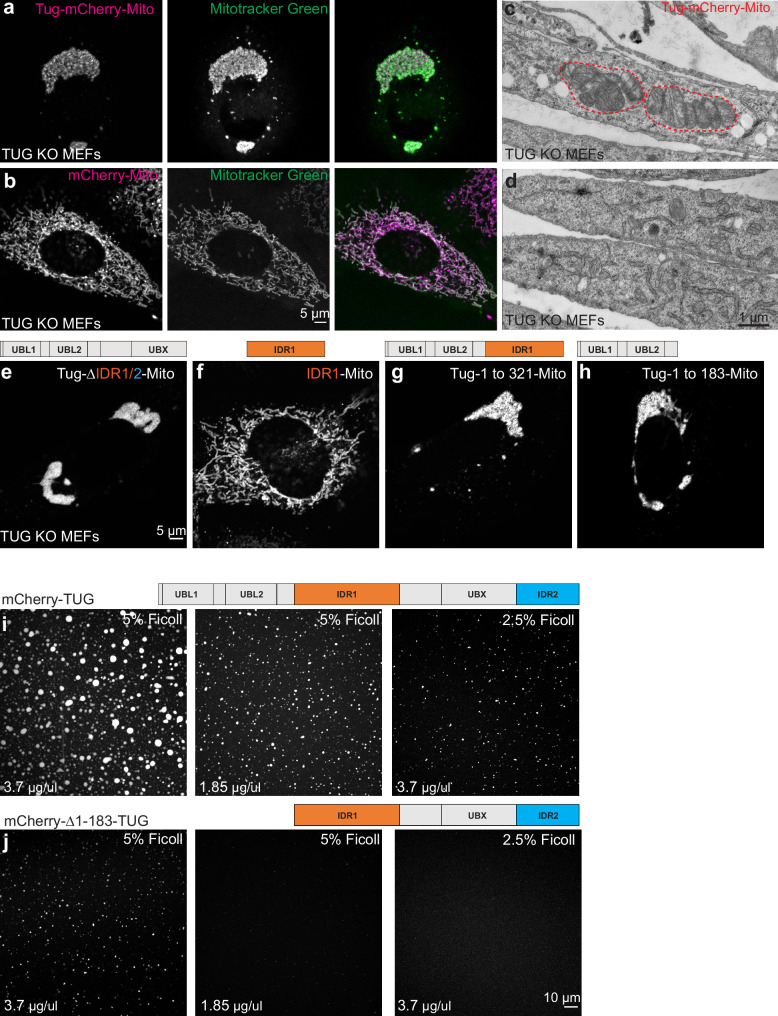
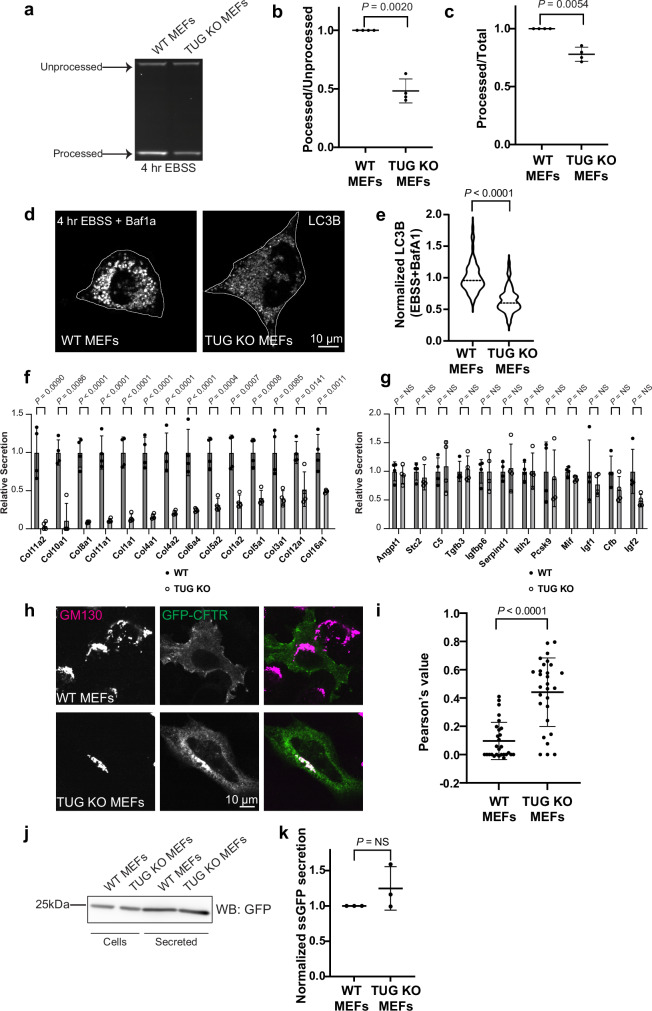
The endoplasmic reticulum (ER)-Golgi Intermediate Compartment (ERGIC) is a distinct compartment in mammalian cells, which forms in part by homotypic fusion of ER-derived vesicles and gives rise to the cis cisterna of the Golgi ribbon. How the ERGIC is regulated is not well understood. Here we show that the TUG protein is essential to maintain this compartment as a distinct organelle. TUG (UBXN9, Aspscr1) is known to regulate the cell type -specific trafficking of GLUT4 glucose transporters, but its role in more ubiquitous trafficking pathways has not been well characterized. TUG localized to the ERGIC and in fibroblasts its deletion enhanced anterograde flux and increased resorption of ERGIC markers into the cis-Golgi, perturbing membrane homeostasis in the early secretory pathway. TUG knockout cells had a compacted Golgi morphology, and ultrastructural studies revealed dilated cisterna with surrounding small vesicles. A central disordered region in TUG mediated its recruitment to ERGIC membranes, and an amino terminal domain was sufficient to induce oligomerization in cells. In TUG knockout cells, ERGIC-dependent processes such as autophagy are disrupted and model cargoes such as CFTR are missorted. Together, these results reveal a novel, TUG-dependent regulatory mechanism in the early secretory pathway, which modulates ERGIC organization and anterograde trafficking. This function is co-opted by GLUT4 and other proteins that employ an unconventional secretion pathway to the plasma membrane.
Overview
The claims and statistics of this paper haven’t been checked yet.
Run the check — free, no account needed. It reads the open-access text and checks the sources it cites.
Integrity signals
Registry
Cites
Statistics
Figures
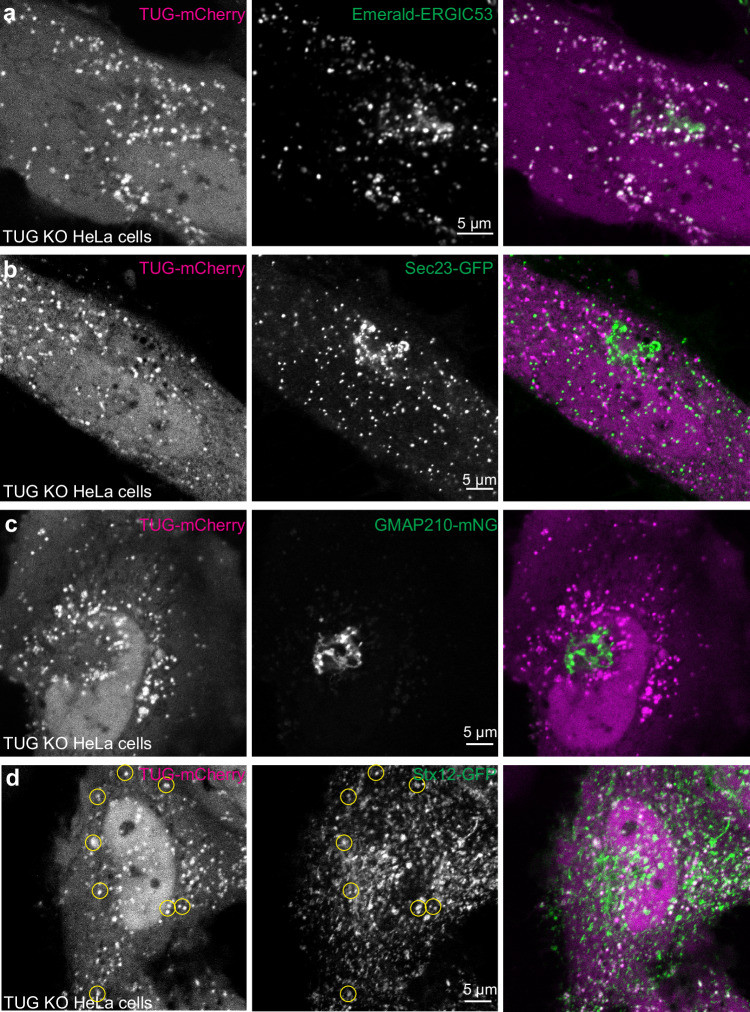
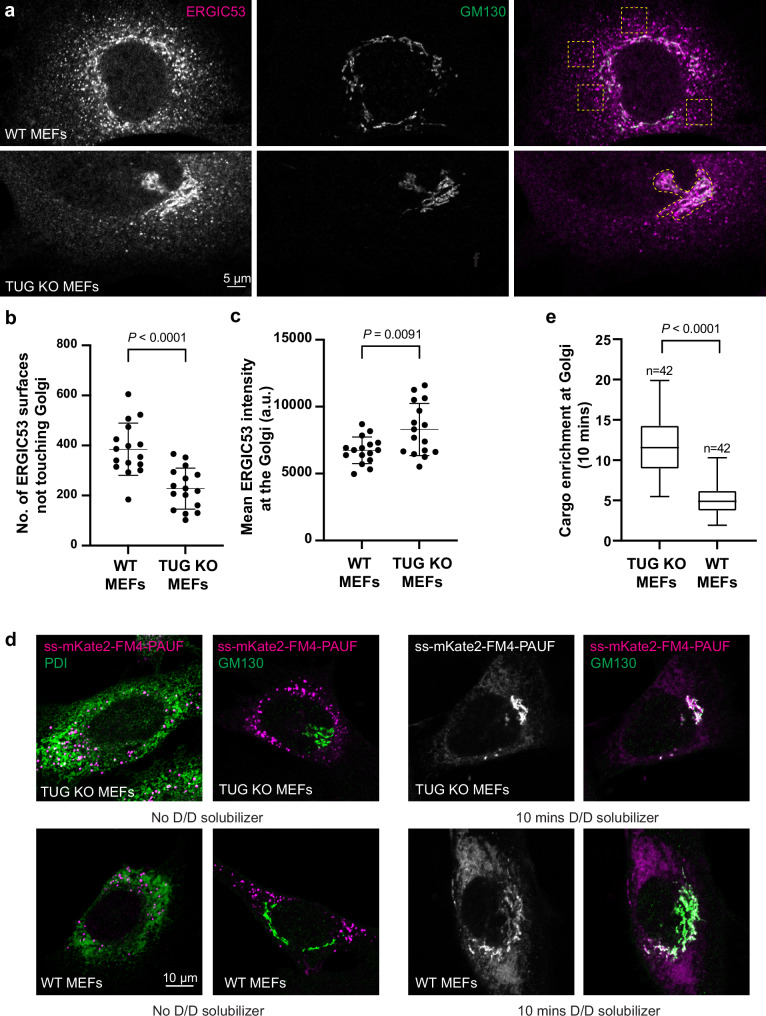
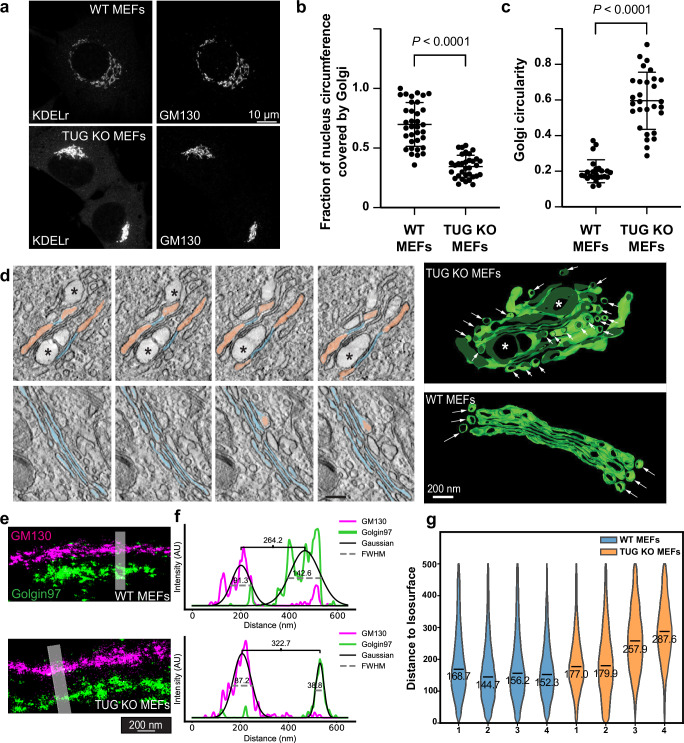
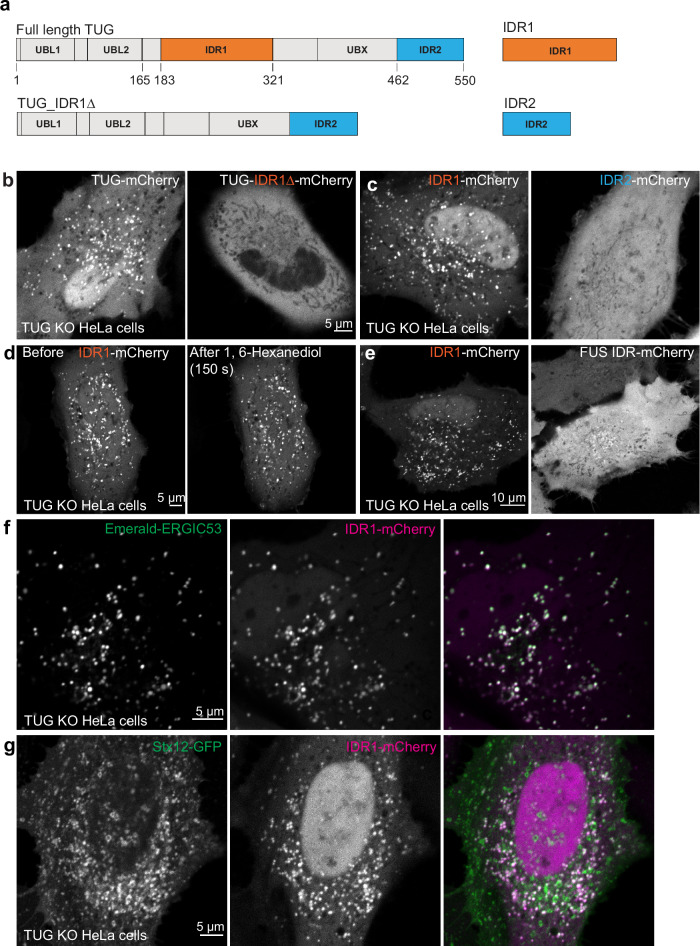
Verification
Claims the paper makes
The claims and statistics of this paper haven’t been checked yet.
Run the check — free, no account needed. It reads the open-access text and checks the sources it cites.
Self-check
Percentages, sums and reported differences re-computed from the paper’s own numbers.
The self-check needs the paper’s full text.
Citations
Cites
Highly accurate protein structure prediction with AlphaFold
Jumper, J., Evans, R., Pritzel, A., Green, T., Figurnov, M., Ronneberger, O., Tunyasuvunakool, K., Bates, R., Žídek, A., Potapenko, A., et al. (2021) · Nature · doi:10.1038/s41586-021-03819-2 · Cited by 43,764
Metadata
- Authors
- Parchure, A., Tejada, H., Xi, Z., Su, M., Julca-Zevallos, O., Alcazar-Roman, A. R., Yan, Y., Liu, X., Toomre, D., & Bogan, J. S.
- Affiliations
- Yale University (US)
- Centre National de la Recherche Scientifique (FR)
- Corresponding author
- Parchure, Anup
- Bogan, Jonathan S
- ORCID
- Venue
- Nature Communications
- Publisher
- openRxiv
- Published
- 2024-08-10
- Volume
- 16
- Issue
- 1
- Pages
- 5518-5518
- ISSN
- 2041-1723 (ISSN-L)
- PMC
- PMC12218103
- OpenAlex
- W4411886980
- Cited by
- 5
- References
- 1
- Citations by year
- 2026: 3 · 2025: 1 · 2024: 1
- FWCI
- 2.00
- Type
- journal article
- Language
- en
- Open access
- gold
- doi.org
- Licence
- Locations
- Nature Communications (publishedVersion, cc-by)
- bioRxiv (Cold Spring Harbor Laboratory) (acceptedVersion, cc-by-nc-nd)
- PubMed Central (publishedVersion, cc-by)
- PubMed (publishedVersion)
- HAL (submittedVersion, cc-by)
- DOAJ (DOAJ: Directory of Open Access Journals) (submittedVersion, cc-by-sa)
- Funders
- U.S. Department of Health and Human Services (R01 GM134148, R01DK129466, P30 DK045735, R01 GM151829)
- Yale University
- Blavatnik Family Foundation
- Agence Nationale de la Recherche
- Fondation pour la Recherche Médicale (AJE202210016216)
- Fondation ARC pour la Recherche sur le Cancer
- National Institutes of Health (DK045735)
- National Institute of General Medical Sciences (R01GM134148, R01GM151829)
- National Institute of Diabetes and Digestive and Kidney Diseases (P30DK045735, R01DK129466)
- Topics
- Life Sciences › Biochemistry, Genetics and Molecular Biology › Cell Biology › Cellular transport and secretion
- Life Sciences › Biochemistry, Genetics and Molecular Biology › Cell Biology › Autophagy in Disease and Therapy
- Life Sciences › Biochemistry, Genetics and Molecular Biology › Cell Biology › Endoplasmic Reticulum Stress and Disease
- Keywords
- ASPSCR1, ERGIC, early secretory pathway, intrinsically disordered regions, biomolecular condensates, protein oligomerization, Golgi morphology, cis-Golgi, autophagy, collagen secretion, GLUT4 trafficking, membrane trafficking
- MeSH terms
- Animals, Autophagy, Collagen, Endoplasmic Reticulum, Golgi Apparatus, Humans, Cystic Fibrosis Transmembrane Conductance Regulator, Protein Transport, COP-Coated Vesicles, Mice, Secretory Pathway
About these checks
Registry, retraction, Cites and statistics results are computed, not judged, with one exception: a printed reference that no index lists is read once by a model before it counts as a citation error. Claims are extracted by a model and kept only when their quote appears verbatim in the text; each cited source is then checked, with a model’s help, for whether it says what the claim relies on. Those verdicts can be wrong — read the claim’s quote and the cited source before relying on one.
Statistics and arithmetic are recomputed, not judged.
Confidence bands are shown only for fields calibrated on our annotated test set. None is calibrated yet, so no band is shown.
What counts as a claim ›How we measure confidence ›How we check this ›
Are you an author, or do you see a problem with this page? Request a review
How to cite
Cite CoChat for the checks on this page, and the paper for its own findings.
- This page
- CoChat. (2026). Citation check: TUG protein acts through a disordered region to organize the early secretory pathway. https://app.cochat.ai/papers/10.1101/2024.08.09.607373
- The paper
- Parchure, A., Tejada, H., Xi, Z., Su, M., Julca-Zevallos, O., Alcazar-Roman, A. R., Yan, Y., Liu, X., Toomre, D., & Bogan, J. S. (2024). TUG protein acts through a disordered region to organize the early secretory pathway. Nature Communications. https://doi.org/10.1101/2024.08.09.607373
