

Drosophila Trus, the orthologue of mammalian PDCD2L, is required for proper cell proliferation, larval developmental timing, and oogenesis
Open accessPreprint — published as 10.1371/journal.pgen.1011469 · Paper page
The DOI matches its Crossref record; 90 of the 90 references it cites were found in a registry or an index.
Abstract
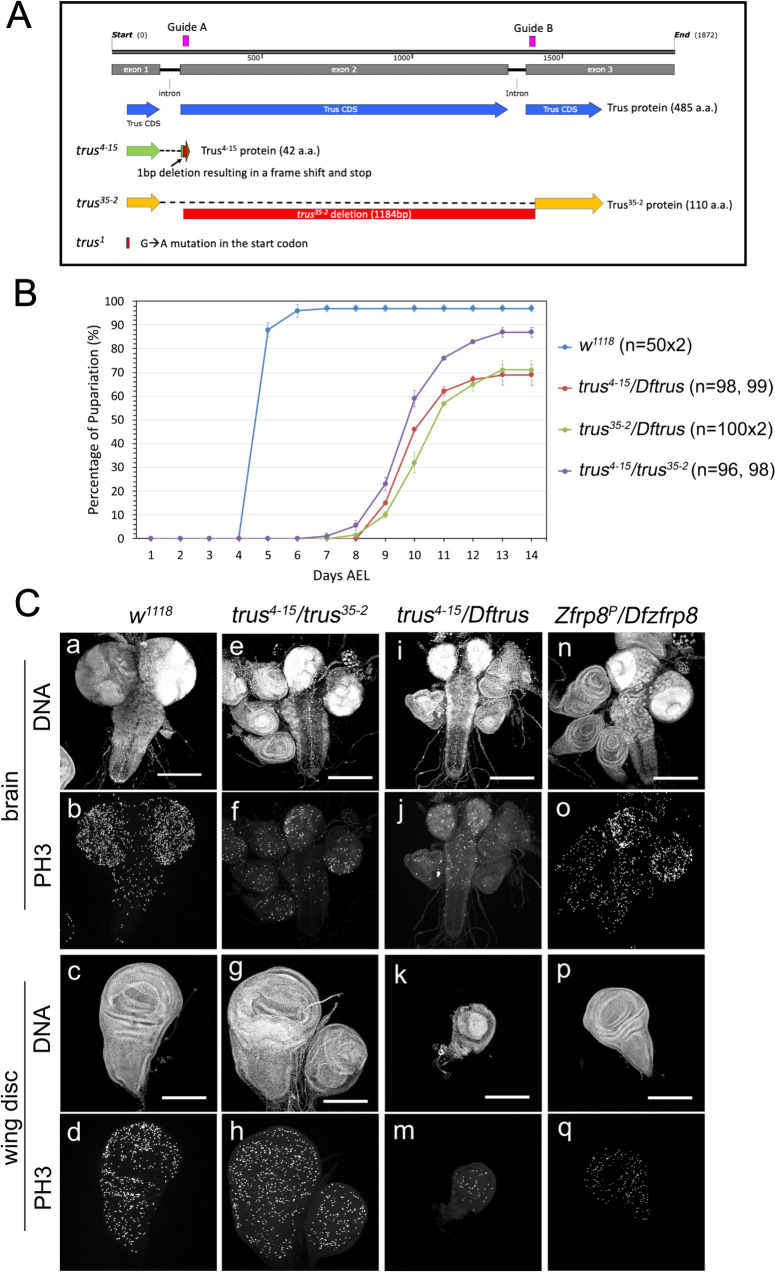
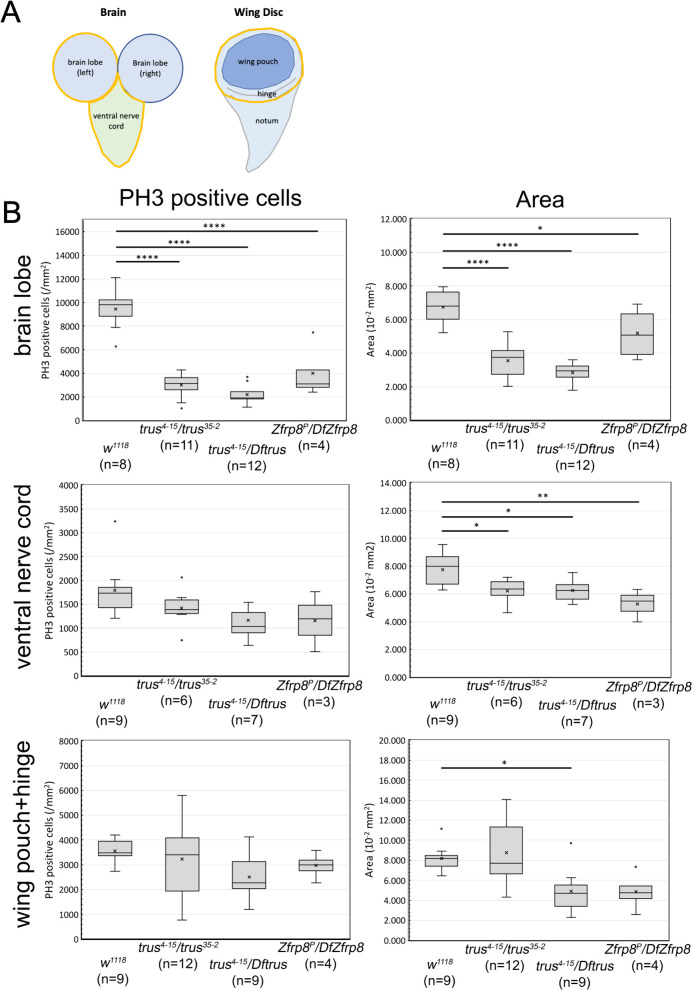
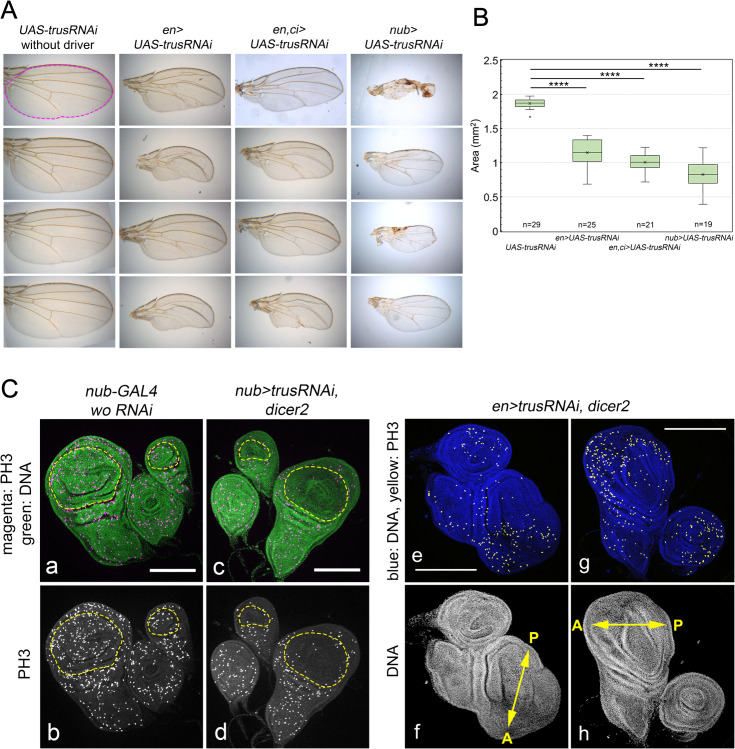
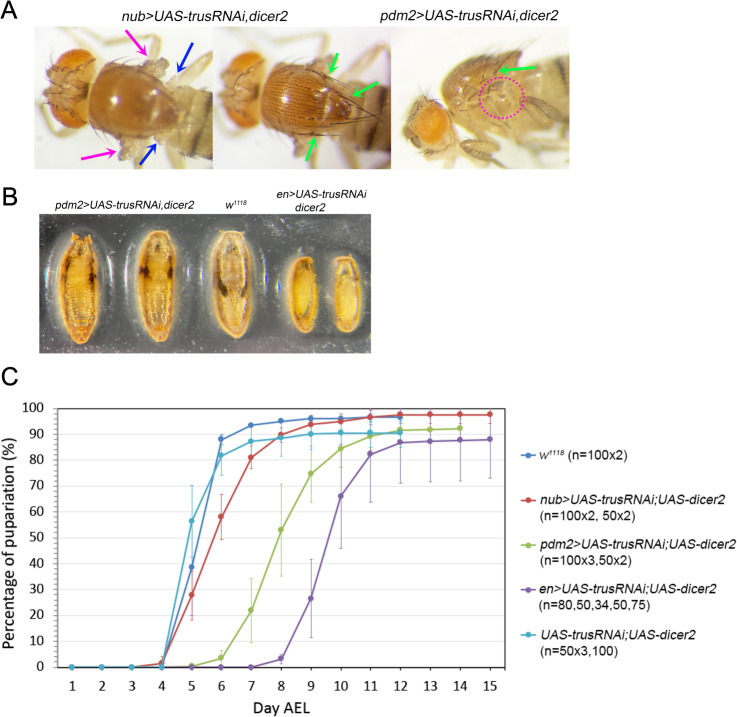
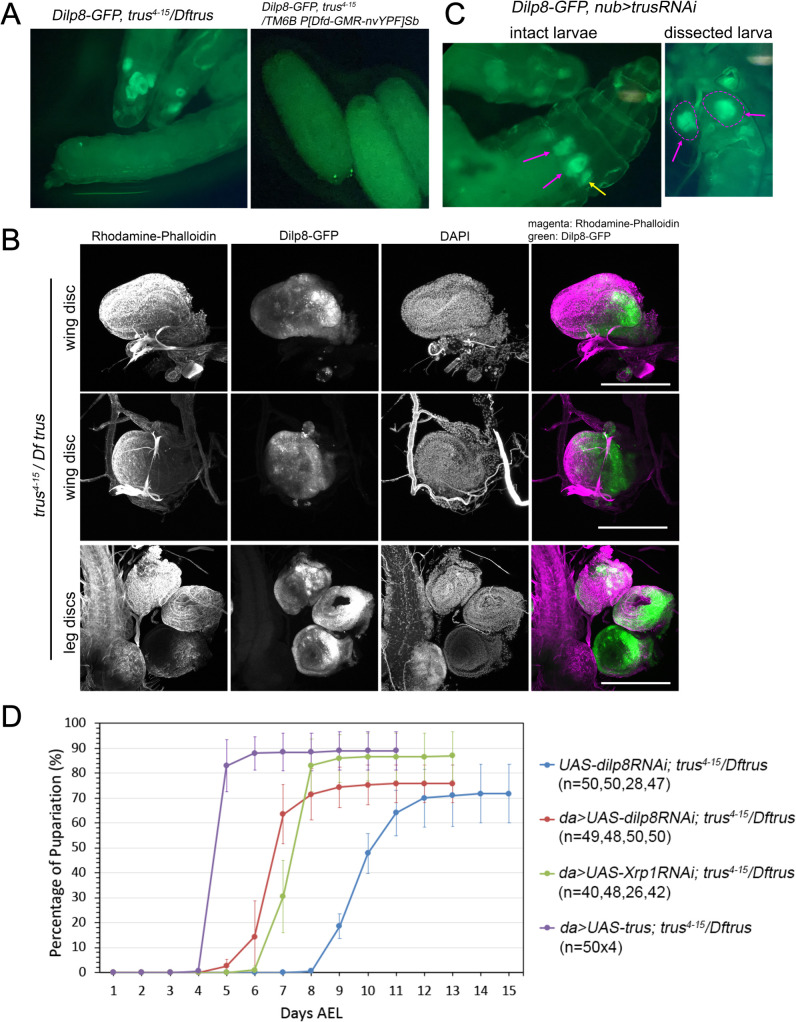
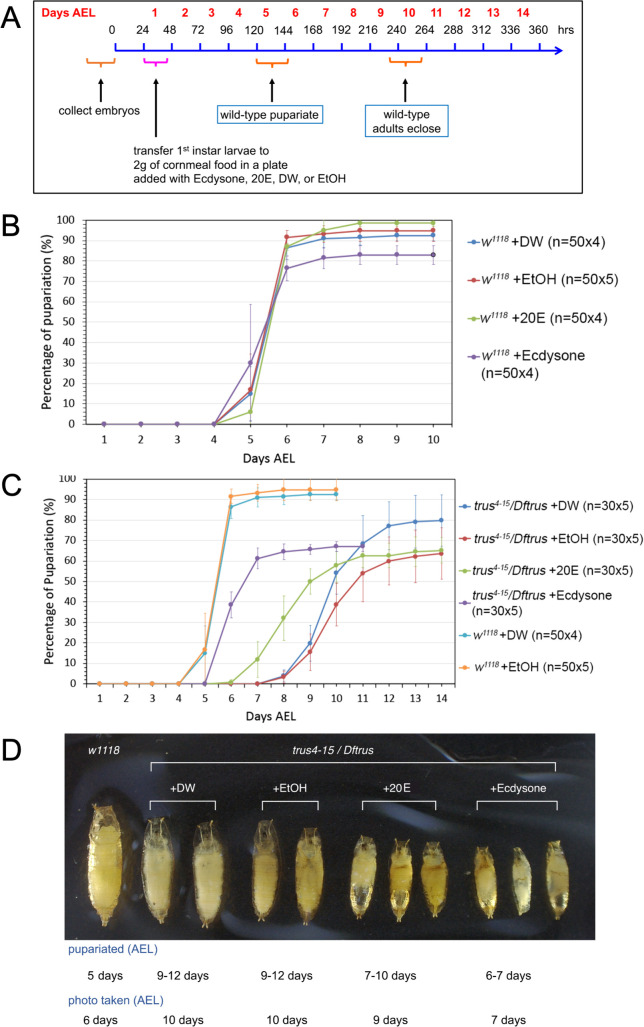
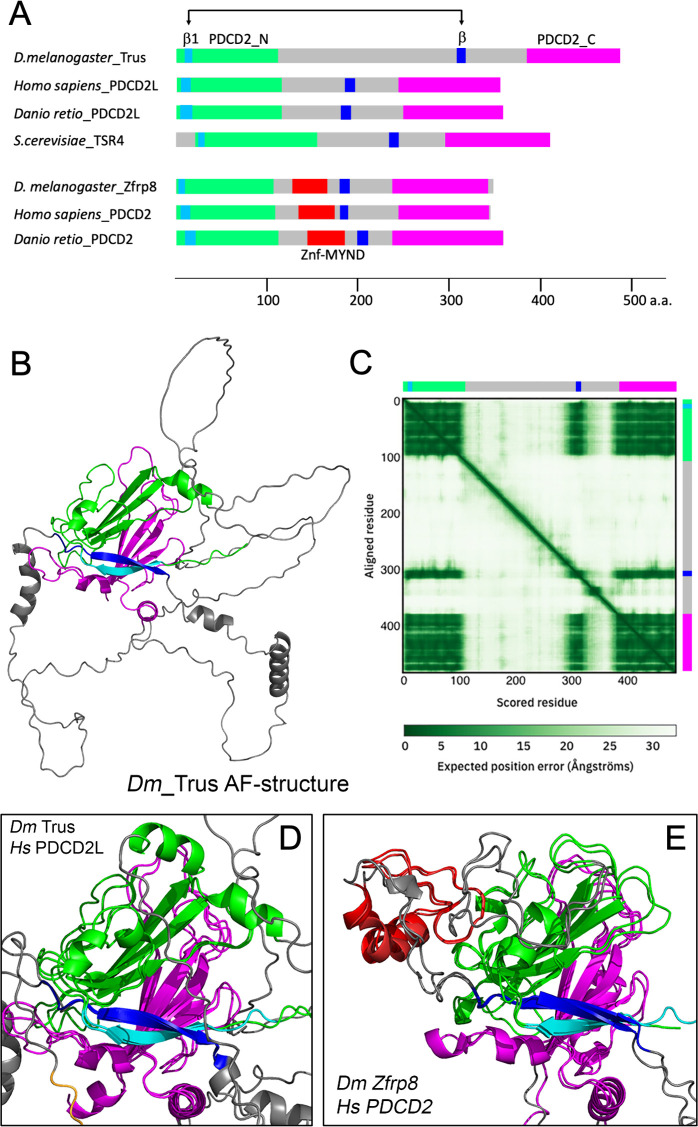
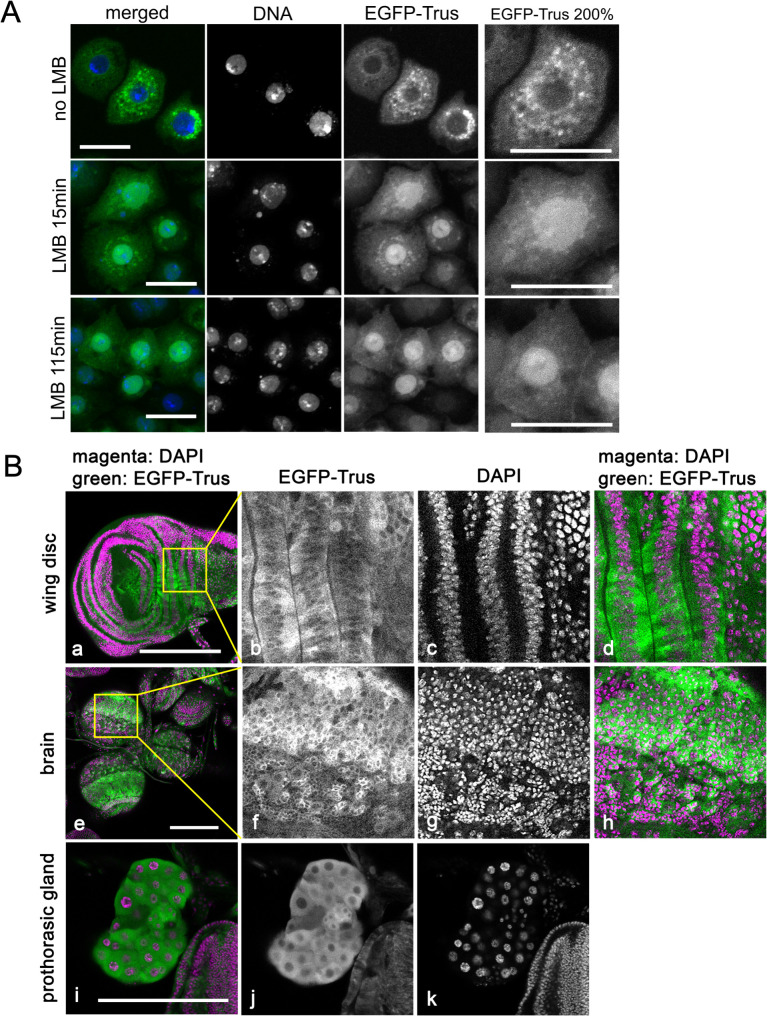
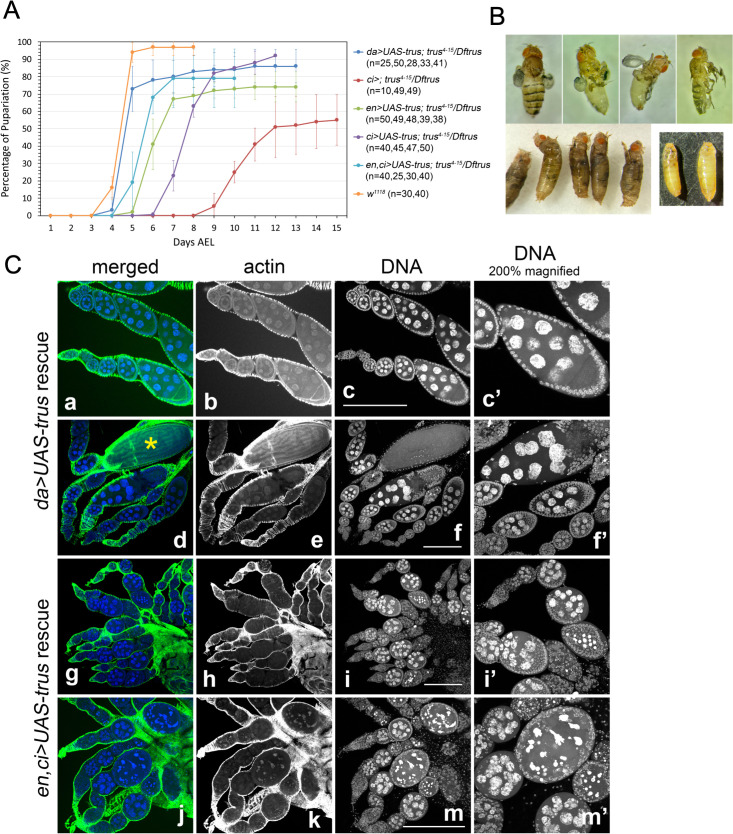
Toys are us (Trus) is the Drosophila melanogaster ortholog of mammalian Programmed Cell Death 2-Like (PDCD2L), a protein that has been implicated in ribosome biogenesis, cell cycle regulation, and oncogenesis. In this study, we examined the function of Trus during Drosophila development. CRISPR/Cas9 generated null mutations in trus lead to partial embryonic lethality, significant larval developmental delay, and complete pre-pupal lethality. In mutant larvae, we found decreased cell proliferation and growth defects in the brain and imaginal discs. Mapping relevant tissues for Trus function using trus RNAi and trus mutant rescue experiments revealed that imaginal disc defects are primarily responsible for the developmental delay, while the pre-pupal lethality is likely associated with faulty central nervous system (CNS) development. Examination of the molecular mechanism behind the developmental delay phenotype revealed that trus mutations induce the Xrp1-Dilp8 ribosomal stress-response in growth-impaired imaginal discs, and this signaling pathway attenuates production of the hormone ecdysone in the prothoracic gland. Additional Tap-tagging and mass spectrometry of components in Trus complexes isolated from Drosophila Kc cells identified Ribosomal protein subunit 2 (RpS2), which is coded by string of pearls (sop) in Drosophila, and Eukaryotic translation elongation factor 1 alpha 1 (eEF1α1) as interacting factors. We discuss the implication of these findings with respect to the similarity and differences in trus genetic null mutant phenotypes compared to the haplo-insufficiency phenotypes produced by heterozygosity for mutants in Minute genes and other genes involved in ribosome biogenesis. Authors Summary: Ribosomes are essential macromolecular machines required for decoding mRNA to make proteins, the major biomolecules that carry out all central cellular functions. As such, their structural and operational integrity is critical to organismal survival, and mutations that disrupt proper stoichiometry or assembly of ribosomes produce serious pathological consequences during an organism’s development and/or adult life. The ribosome assembly factor PDCD2L is highly conserved from yeast to man, yet its overall function and requirement during development is poorly understood. By examining the developmental consequences of null mutations in trus , which encodes the Drosophila PDCD2L homolog, we demonstrate an essential role for this factor in cell-cycle regulation. Furthermore, disruption of Trus function in mitotically dividing imaginal tissue activates the Xrp1-dilp8 stress response pathway which limits production of ecdysone, the major arthropod molting hormone, leading to severe developmental delay during larval stages. These studies provide new insights on the requirements of this highly conserved ribosome assemble factor during development.
Overview
The claims and statistics of this paper haven’t been checked yet.
Free: it reads the open-access text and checks the first 5 claims that cite a source we can check. Create a free account to check every claim.
Integrity signals
Registry
Cites
Statistics
Figures
Verification
Claims the paper makes
The claims and statistics of this paper haven’t been checked yet.
Free: it reads the open-access text and checks the first 5 claims that cite a source we can check. Create a free account to check every claim.
Self-check
Percentages, sums and reported differences re-computed from the paper’s own numbers.
The self-check needs the paper’s full text.
Citations
Cites
Fiji: an open-source platform for biological-image analysis
Schindelin, J., Arganda-Carreras, I., Frise, E., Kaynig, V., Longair, M., Pietzsch, T., Preibisch, S., Rueden, C., Saalfeld, S., Schmid, B., et al. (2012) · Nature Methods · doi:10.1038/nmeth.2019 · Cited by 66,890
Highly accurate protein structure prediction with AlphaFold
Jumper, J., Evans, R., Pritzel, A., Green, T., Figurnov, M., Ronneberger, O., Tunyasuvunakool, K., Bates, R., Žídek, A., Potapenko, A., et al. (2021) · Nature · doi:10.1038/s41586-021-03819-2 · Cited by 43,764
Varadi, M., Anyango, S., Deshpande, M., Nair, S., Natassia, C., Yordanova, G., Yuan, D., Stroe, O., Wood, G., Laydon, A., et al. (2022) · Nucleic Acids Research · doi:10.1093/nar/gkab1061 · Cited by 7,850
An analysis of 5'-noncoding sequences from 699 vertebrate messenger RNAs
Kozak, M. (1987) · Nucleic Acids Research · doi:10.1093/nar/15.20.8125 · Cited by 5,087
The Pfam protein families database
Punta, M., Coggill, P. C., Eberhardt, R. Y., Mistry, J., Tate, J., Boursnell, C., Pang, N., Forslund, K., Ceric, G., Clements, J., et al. (2012) · Nucleic Acids Research · doi:10.1093/nar/gkr1065 · Cited by 3,719
Defining a Cancer Dependency Map
Tsherniak, A., Vazquez, F., Montgomery, P. G., Weir, B. A., Kryukov, G., Cowley, G. S., Gill, S., Harrington, W. F., Pantel, S., Krill-Burger, J. M., et al. (2017) · Cell · doi:10.1016/j.cell.2017.06.010 · Cited by 3,276
An optimized transgenesis system for Drosophila using germ-line-specific φC31 integrases
Bischof, J., Maeda, R. K., Hediger, M., Karch, F., & Basler, K. (2007) · Proceedings of the National Academy of Sciences · doi:10.1073/pnas.0611511104 · Cited by 1,866
The Tandem Affinity Purification (TAP) Method: A General Procedure of Protein Complex Purification
Puig, O., Caspary, F., Rigaut, G., Rutz, B., Bouveret, E., Bragado-Nilsson, E., Wilm, M., & Séraphin, B. (2001) · Methods · doi:10.1006/meth.2001.1183 · Cited by 1,783
Minutes: Mutants of Drosophila autonomously affecting cell division rate
Morata, G., & Ripoll, P. (1975) · Developmental Biology · doi:10.1016/0012-1606(75)90330-9 · Cited by 979
Genome Engineering of Drosophila with the CRISPR RNA-Guided Cas9 Nuclease
Gratz, S. J., Cummings, A. M., Nguyen, J. N., Hamm, D. C., Donohue, L. K., Harrison, M. M., Wildonger, J., & O’Connor-Giles, K. M. (2013) · Genetics · doi:10.1534/genetics.113.152710 · Cited by 976
Metadata
- Authors
- Takada, S., Bolkan, B. J., O’Connor, M., Goldberg, M., & O’Connor, M. B.
- Affiliations
- University of Minnesota (US)
- Pacific University Oregon (US)
- Corresponding author
- Takada, Saeko
- Bolkan, Bonnie J.
- O’Connor, MaryJane
- Venue
- PLoS Genetics
- Publisher
- openRxiv
- Published
- 2024-10-26
- Volume
- 21
- Issue
- 6
- Pages
- e1011469-e1011469
- ISSN
- 1553-7390 (ISSN-L)
- PMC
- PMC12331172
- OpenAlex
- W4411725213
- Cited by
- 0
- References
- 90
- FWCI
- 0.00
- Type
- journal article
- Language
- en
- Open access
- gold
- doi.org
- Licence
- Locations
- PLoS Genetics (publishedVersion, cc-by)
- bioRxiv (Cold Spring Harbor Laboratory) (acceptedVersion, cc-by)
- PubMed Central (publishedVersion, cc-by)
- PubMed (publishedVersion)
- PubMed Central (submittedVersion, cc-by)
- DOAJ (DOAJ: Directory of Open Access Journals) (submittedVersion, cc-by-sa)
- Funders
- University of Toronto
- National Institutes of Health
- National Institute of General Medical Sciences (R01GM048430, R35GM118029)
- Topics
- Life Sciences › Biochemistry, Genetics and Molecular Biology › Molecular Biology › Developmental Biology and Gene Regulation
- Life Sciences › Neuroscience › Cellular and Molecular Neuroscience › Neurobiology and Insect Physiology Research
- Life Sciences › Biochemistry, Genetics and Molecular Biology › Molecular Biology › RNA and protein synthesis mechanisms
- Keywords
- Drosophila melanogaster, ribosome biogenesis, prothoracic gland, embryonic lethality, cell proliferation, ribosomal protein S2, haploinsufficiency
About these checks
Registry, retraction, Cites and statistics results are computed, not judged, with one exception: a printed reference that no index lists is read once by a model before it counts as a citation error. Claims are extracted by a model and kept only when their quote appears verbatim in the text; each cited source is then checked, with a model’s help, for whether it says what the claim relies on. Those verdicts can be wrong — read the claim’s quote and the cited source before relying on one.
Statistics and arithmetic are recomputed, not judged.
Confidence bands are shown only for fields calibrated on our annotated test set. None is calibrated yet, so no band is shown.
What counts as a claim ›How we measure confidence ›How we check this ›
Are you an author, or do you see a problem with this page? Request a review
How to cite
Cite CoChat for the checks on this page, and the paper for its own findings.
- This page
- CoChat. (2026). Citation check: Drosophila Trus, the orthologue of mammalian PDCD2L, is required for proper cell proliferation, larval developmental timing, and oogenesis. https://app.cochat.ai/papers/10.1101/2024.10.24.620039
- The paper
- Takada, S., Bolkan, B. J., O’Connor, M., Goldberg, M., & O’Connor, M. B. (2024). Drosophila Trus, the orthologue of mammalian PDCD2L, is required for proper cell proliferation, larval developmental timing, and oogenesis. PLoS Genetics. https://doi.org/10.1101/2024.10.24.620039
Data sources
Bibliographic data: Semantic Scholar, OpenAlex, Crossref.
Contains information from the Semantic Scholar Academic Graph Datasets, made available under the ODC Attribution License (ODC-BY 1.0).
Semantic Scholar’s data is described in: Kinney, R., et al. (2023). The Semantic Scholar Open Data Platform. arXiv:2301.10140.
