

An ER-resident lipid scramblase is crucial for biogenesis and function of apicomplexan parasite secretory organelles
Open accessPreprint — published as 10.1038/s41467-025-66303-9
The DOI matches its Crossref record; 92 of the 92 references it cites were found in a registry or an index.
Abstract
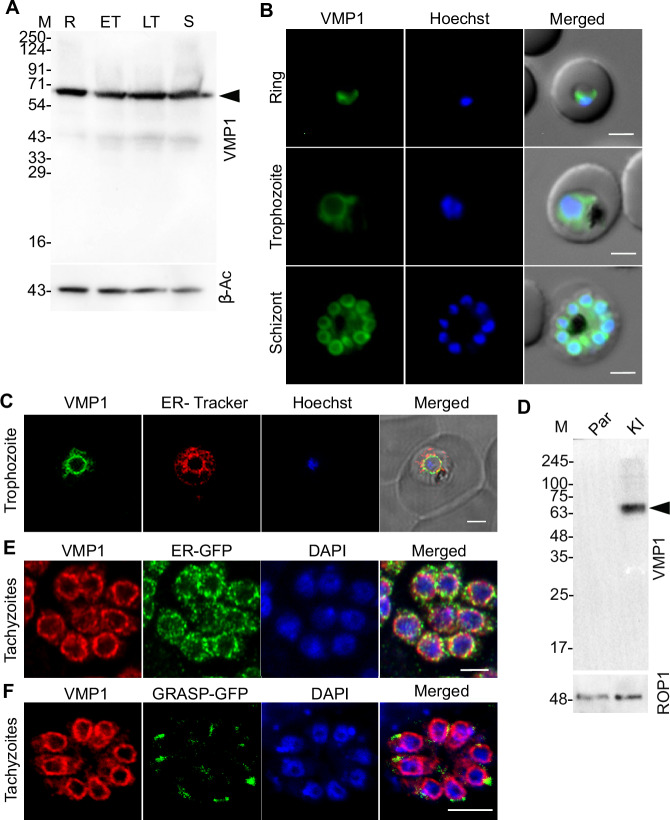
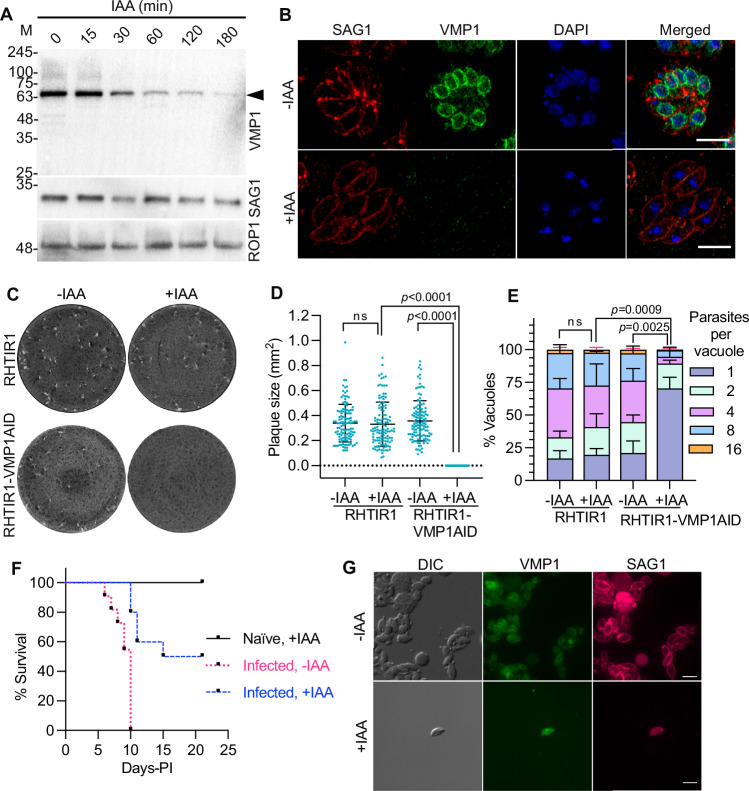
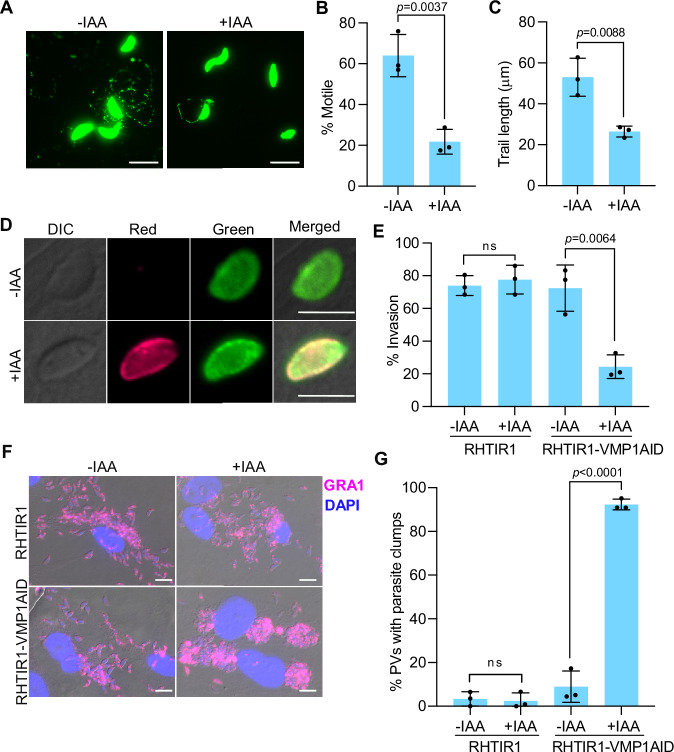
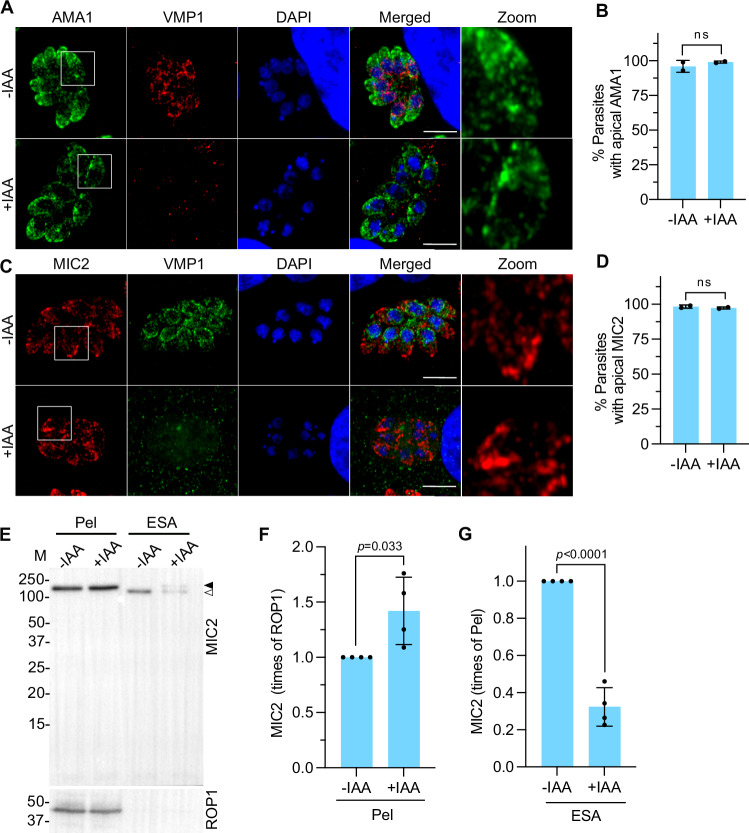
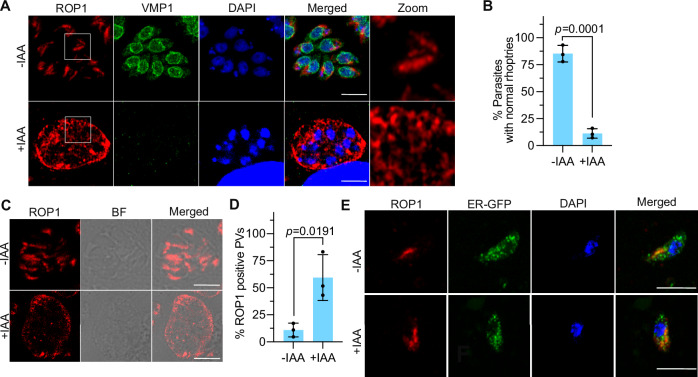
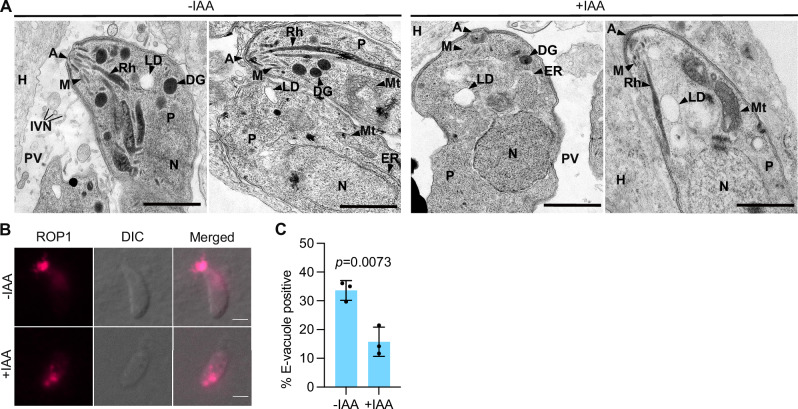
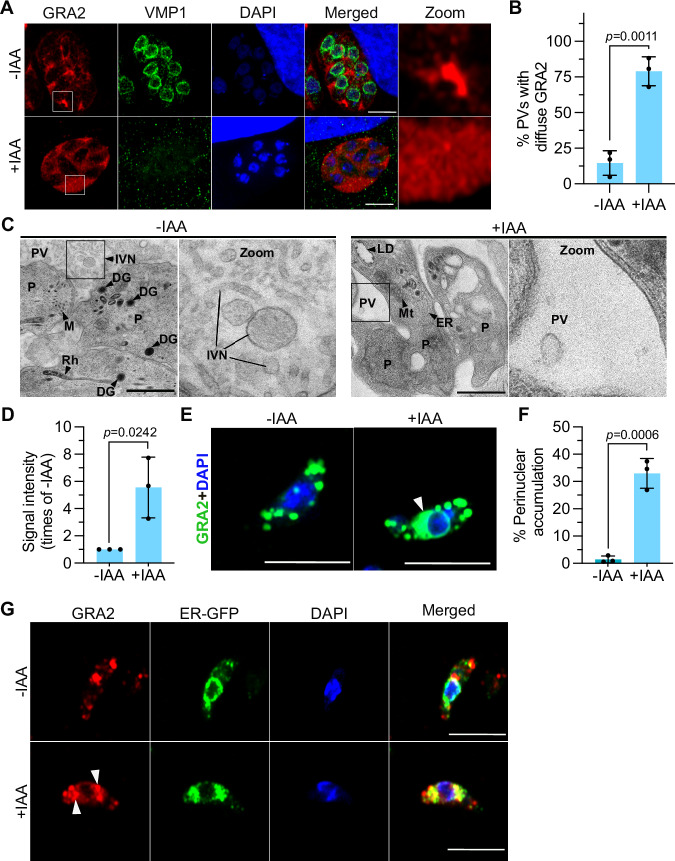
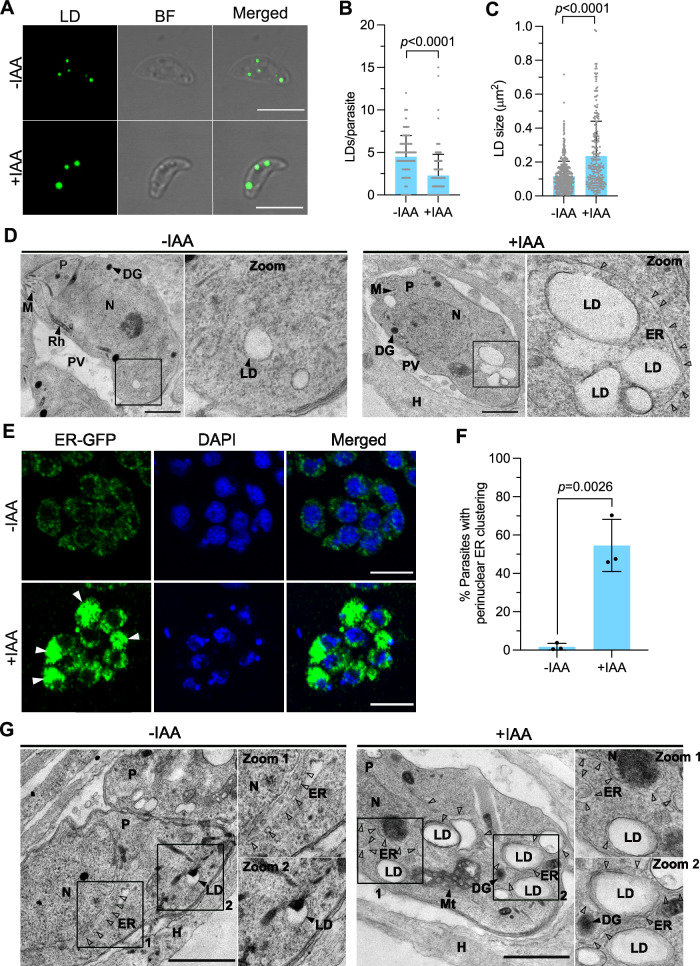
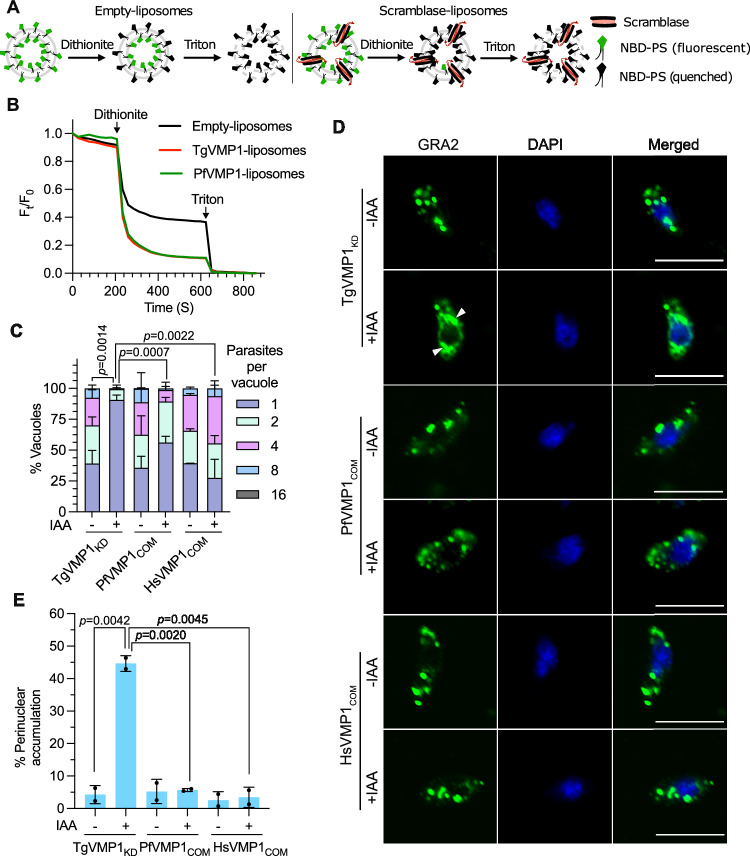
Apicomplexan parasites, including Plasmodium falciparum and Toxoplasma gondii , contain specialized secretory organelles such as micronemes, rhoptries, and dense granules, which are essential for parasite motility, host cell invasion, development, and egress. DedA superfamily proteins are implicated in lipid mobilization, which is a key requirement for organelle biogenesis. Herein, we identified and investigated the vacuole membrane protein 1 (VMP1), a DedA superfamily member, of P. falciparum (PfVMP1) and T. gondii (TgVMP1). PfVMP1 and TgVMP1 are ER-localized lipid scramblases. TgVMP1 depletion adversely affected parasite development, motility, host cell invasion, and egress. These phenotypes were consistent with impaired rhoptry and dense granule biogenesis, and decreased secretion of micronemes, rhoptries, and dense granules in TgVMP1-depleted parasites, indicating a crucial role for TgVMP1 in the biogenesis and function of these organelles. TgVMP1 depletion impaired lipid droplet homeostasis and ER organization. Restoration of the ER-localized lipid scramblase by complementing TgVMP1-depleted parasites with PfVMP1 or a homolog as distant as human VMP1 rescued the depleted parasites, indicating their functional conservation and a crucial role for ER-resident lipid scramblase activity in the biogenesis and function of secretory organelles. The essentiality of TgVMP1 for parasite development and likely functional conservation of apicomplexan VMP1 proteins highlight their drug-target potential.
Overview
The claims and statistics of this paper haven’t been checked yet.
Free: it reads the open-access text and checks the first 5 claims that cite a source we can check. Create a free account to check every claim.
Integrity signals
Registry
Cites
Statistics
Figures
Verification
Claims the paper makes
The claims and statistics of this paper haven’t been checked yet.
Free: it reads the open-access text and checks the first 5 claims that cite a source we can check. Create a free account to check every claim.
Self-check
Percentages, sums and reported differences re-computed from the paper’s own numbers.
The self-check needs the paper’s full text.
Citations
Cites
Highly accurate protein structure prediction with AlphaFold
Jumper, J., Evans, R., Pritzel, A., Green, T., Figurnov, M., Ronneberger, O., Tunyasuvunakool, K., Bates, R., Žídek, A., Potapenko, A., et al. (2021) · Nature · doi:10.1038/s41586-021-03819-2 · Cited by 43,764
Varadi, M., Anyango, S., Deshpande, M., Nair, S., Natassia, C., Yordanova, G., Yuan, D., Stroe, O., Wood, G., Laydon, A., et al. (2022) · Nucleic Acids Research · doi:10.1093/nar/gkab1061 · Cited by 7,850
Human Malaria Parasites in Continuous Culture
Trager, W., & Jensen, J. B. (1976) · Science · doi:10.1126/science.781840 · Cited by 7,844
Synchronization of Plasmodium falciparum Erythrocytic Stages in Culture
Lambros, C., & Vanderberg, J. P. (1979) · The Journal of Parasitology · doi:10.2307/3280287 · Cited by 3,677
Nile red: a selective fluorescent stain for intracellular lipid droplets.
Greenspan, P., Mayer, E. P., & Fowler, S. D. (1985) · The Journal of cell biology · doi:10.1083/jcb.100.3.965 · Cited by 2,543
Search and sequence analysis tools services from EMBL-EBI in 2022
Madeira, F., Pearce, M., Tivey, A. R. N., Basutkar, P., Lee, J., Edbali, O., Madhusoodanan, N., Kolesnikov, A., & Lopez, R. (2022) · Nucleic Acids Research · doi:10.1093/nar/gkac240 · Cited by 2,267
Structure and function of ER membrane contact sites with other organelles
Phillips, M. J., & Voeltz, G. K. (2016) · Nature Reviews Molecular Cell Biology · doi:10.1038/nrm.2015.8 · Cited by 933
Itakura, E., & Mizushima, N. (2010) · Autophagy · doi:10.4161/auto.6.6.12709 · Cited by 843
Fidock, D. A., & Wellems, T. E. (1997) · Proceedings of the National Academy of Sciences · doi:10.1073/pnas.94.20.10931 · Cited by 568
Lytic Cycle of Toxoplasma gondii
Black, M. W., & Boothroyd, J. C. (2000) · Microbiology and Molecular Biology Reviews · doi:10.1128/mmbr.64.3.607-623.2000 · Cited by 554
Research works printed but not linked: 2
- 10.1042/bj3420379 · DOI
- 2018, Conditional knockdown of proteins using auxin-inducible degron (AID) fusions in Toxoplasma gondii, Bio-protocol, 8, e2728
Metadata
- Authors
- Reddy, G. S., Gorde, S. M., Saxena, K., Behera, M. K., Deshmukh, A. S., & Sijwali, P. S.
- Affiliations
- Centre for Cellular and Molecular Biology (IN)
- National Institute of Animal Biotechnology (IN)
- Corresponding author
- Sijwali, Puran Singh
- Venue
- Nature Communications
- Publisher
- openRxiv
- Published
- 2024-11-15
- Volume
- 16
- Issue
- 1
- Pages
- 11463-11463
- ISSN
- 2041-1723 (ISSN-L)
- PMC
- PMC12749514
- OpenAlex
- W4417321616
- Cited by
- 1
- References
- 92
- Citations by year
- 2026: 1
- FWCI
- 0.89
- Type
- journal article
- Language
- en
- Open access
- gold
- doi.org
- Licence
- cc-by-nc-nd
- www.biorxiv.org/about/FAQ#license (vor)
- Locations
- Nature Communications (publishedVersion, cc-by-nc-nd)
- bioRxiv (Cold Spring Harbor Laboratory) (acceptedVersion)
- PubMed (publishedVersion)
- PubMed Central (publishedVersion, cc-by-nc-nd)
- DOAJ (DOAJ: Directory of Open Access Journals) (submittedVersion, cc-by-sa)
- Funders
- Council of Scientific and Industrial Research, India (MLP0148)
- University Grants Commission (/2024)
- Topics
- Life Sciences › Immunology and Microbiology › Parasitology › Toxoplasma gondii Research Studies
- Life Sciences › Biochemistry, Genetics and Molecular Biology › Cell Biology › Cellular transport and secretion
- Health Sciences › Medicine › Public Health, Environmental and Occupational Health › Malaria Research and Control
- Keywords
- VMP1, lipid scramblase, Apicomplexa, Plasmodium falciparum, Toxoplasma gondii, secretory organelles, dense granules, micronemes, lipid droplet homeostasis, parasitophorous vacuole, endoplasmic reticulum, host cell invasion, parasite motility, organelle biogenesis
- MeSH terms
- Animals, Organelle Biogenesis, Endoplasmic Reticulum, Host-Parasite Interactions, Humans, Membrane Proteins, Plasmodium falciparum, Toxoplasma, Vacuoles, Organelles, Protozoan Proteins, Phospholipid Transfer Proteins, Lipid Droplets
About these checks
Registry, retraction, Cites and statistics results are computed, not judged, with one exception: a printed reference that no index lists is read once by a model before it counts as a citation error. Claims are extracted by a model and kept only when their quote appears verbatim in the text; each cited source is then checked, with a model’s help, for whether it says what the claim relies on. Those verdicts can be wrong — read the claim’s quote and the cited source before relying on one.
Statistics and arithmetic are recomputed, not judged.
Confidence bands are shown only for fields calibrated on our annotated test set. None is calibrated yet, so no band is shown.
What counts as a claim ›How we measure confidence ›How we check this ›
Are you an author, or do you see a problem with this page? Request a review
How to cite
Cite CoChat for the checks on this page, and the paper for its own findings.
- This page
- CoChat. (2026). Citation check: An ER-resident lipid scramblase is crucial for biogenesis and function of apicomplexan parasite secretory organelles. https://app.cochat.ai/papers/10.1101/2024.11.14.623710
- The paper
- Reddy, G. S., Gorde, S. M., Saxena, K., Behera, M. K., Deshmukh, A. S., & Sijwali, P. S. (2024). An ER-resident lipid scramblase is crucial for biogenesis and function of apicomplexan parasite secretory organelles. Nature Communications. https://doi.org/10.1101/2024.11.14.623710
Data sources
Bibliographic data: Semantic Scholar, OpenAlex, Crossref.
Contains information from the Semantic Scholar Academic Graph Datasets, made available under the ODC Attribution License (ODC-BY 1.0).
Semantic Scholar’s data is described in: Kinney, R., et al. (2023). The Semantic Scholar Open Data Platform. arXiv:2301.10140.
