

How to explain AI systems to end users: a systematic literature review and research agenda
Open accessThe DOI matches its Crossref record; 66 of the 66 references it cites were found in a registry or an index.
Abstract
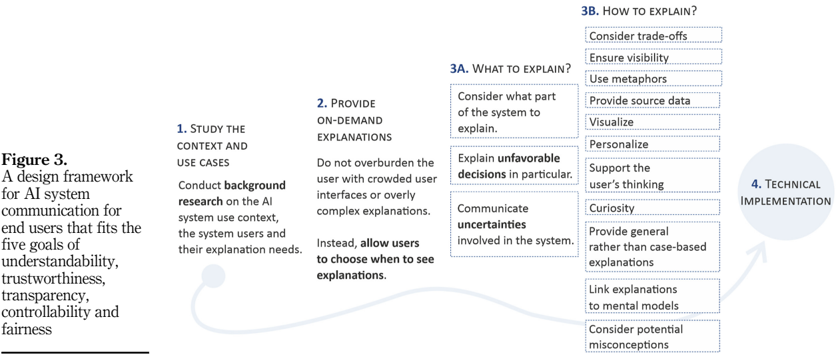
Purpose: Inscrutable machine learning (ML) models are part of increasingly many information systems. Understanding how these models behave, and what their output is based on, is a challenge for developers let alone non-technical end users. Design/methodology/approach: The authors investigate how AI systems and their decisions ought to be explained for end users through a systematic literature review. Findings: The authors’ synthesis of the literature suggests that AI system communication for end users has five high-level goals: (1) understandability, (2) trustworthiness, (3) transparency, (4) controllability and (5) fairness. The authors identified several design recommendations, such as offering personalized and on-demand explanations and focusing on the explainability of key functionalities instead of aiming to explain the whole system. There exists multiple trade-offs in AI system explanations, and there is no single best solution that fits all cases. Research limitations/implications: Based on the synthesis, the authors provide a design framework for explaining AI systems to end users. The study contributes to the work on AI governance by suggesting guidelines on how to make AI systems more understandable, fair, trustworthy, controllable and transparent. Originality/value: This literature review brings together the literature on AI system communication and explainable AI (XAI) for end users. Building on previous academic literature on the topic, it provides synthesized insights, design recommendations and future research agenda.
Overview
The claims and statistics of this paper haven’t been checked yet.
Free: it reads the open-access text and checks the first 5 claims that cite a source we can check. Create a free account to check every claim.
Integrity signals
Registry
Cites
Statistics
Figures






Verification
Claims the paper makes
The claims and statistics of this paper haven’t been checked yet.
Free: it reads the open-access text and checks the first 5 claims that cite a source we can check. Create a free account to check every claim.
Claims other papers make about this one
Each is checked against this paper’s own text: does it say what the citing paper says it does?
The cited source says what the claim attributes to it.
In the citing paper
“Previous reviews of XAI have also reported that explainability is sensitive to contextual factors and future research should investigate different groups of end users [15,16].”
From Explainable AI in hospital clinical decision support systems: A scoping review of healthcare professionals’ perspectives (2026) · cites this paper as [15]
Self-check
Percentages, sums and reported differences re-computed from the paper’s own numbers.
The self-check needs the paper’s full text.
Citations
Cites
Preferred reporting items for systematic reviews and meta-analyses: The PRISMA statement
Moher, D., Liberati, A., Tetzlaff, J., Altman, D. G., & the PRISMA Group* (2009) · Annals of Internal Medicine · doi:10.7326/0003-4819-151-4-200908180-00135 · Cited by 37,554
"Why Should I Trust You?": Explaining the Predictions of Any Classifier
Ribeiro, M. T., Singh, S., & Guestrin, C. (2016) · Proceedings of the 22nd ACM SIGKDD International Conference on Knowledge Discovery and Data Mining · doi:10.1145/2939672.2939778 · Cited by 17,555
Arrieta, A. B., Díaz-Rodríguez, N., Del Ser, J., Bennetot, A., Tabik, S., Barbado, A., García, S., Gil-López, S., Molina, D., Benjamins, R., et al. (2019) · arXiv · doi:10.48550/arxiv.1910.10045 · Cited by 11,321
Barredo Arrieta, A., Díaz-Rodríguez, N., Del Ser, J., Bennetot, A., Tabik, S., Barbado, A., Garcia, S., Gil-Lopez, S., Molina, D., Benjamins, R., et al. (2020) · Information Fusion · doi:10.1016/j.inffus.2019.12.012 · Cited by 10,423
Peeking Inside the Black-Box: A Survey on Explainable Artificial Intelligence (XAI)
Adadi, A., & Berrada, M. (2018) · IEEE Access · doi:10.1109/access.2018.2870052 · Cited by 6,294
The global landscape of AI ethics guidelines
Jobin, A., Ienca, M., & Vayena, E. (2019) · Nature Machine Intelligence · doi:10.1038/s42256-019-0088-2 · Cited by 6,220
Wohlin, C. (2014) · Proceedings of the 18th International Conference on Evaluation and Assessment in Software Engineering · doi:10.1145/2601248.2601268 · Cited by 4,234
How the machine “thinks”: Understanding opacity in machine learning algorithms
Burrell, J. (2016) · Big Data & Society · doi:10.1177/2053951715622512 · Cited by 3,196
Model Cards for Model Reporting
Mitchell, M., Wu, S., Zaldivar, A., Barnes, P., Vasserman, L., Hutchinson, B., Spitzer, E., Raji, I. D., & Gebru, T. (2019) · Proceedings of the Conference on Fairness, Accountability, and Transparency · doi:10.1145/3287560.3287596 · Cited by 2,681
Explainable artificial intelligence: A survey
Dosilovic, F. K., Brcic, M., & Hlupic, N. (2018) · 2018 41st International Convention on Information and Communication Technology, Electronics and Microelectronics (MIPRO) · doi:10.23919/mipro.2018.8400040 · Cited by 1,147
Research works printed but not linked: 2
- Sepp€ al€ a, A., Birkstedt, T. and M€ antym€ aki, M. (2021), "From ethical principles to governed AI", in Proceedings of the 42nd International Conference on Information Systems (ICIS2021).
- Strauss, A. and Corbin, J. (1998), Basics of Qualitative Research Techniques, Sage Publications, Thousand Oaks, CA.
Cited by
AI governance: themes, knowledge gaps and future agendas
Birkstedt, T., Minkkinen, M., Tandon, A., & Mäntymäki, M. (2023) · Internet Research · doi:10.1108/intr-01-2022-0042 · Cited by 309
Self-citationHaque, A. B., Islam, A. K. M. N., & Mikalef, P. (2023) · Technological Forecasting and Social Change · doi:10.1016/j.techfore.2022.122120 · Cited by 240
“An AI ecosystem contains different stakeholders, such as designers, domain experts, developers, data scientists, UX engineers, and regulatory bodies (Meske et al., 2022; Laato et al., 2022).”
BackgroundResultInfluentialAI and the quest for diversity and inclusion: a systematic literature review
Shams, R. A., Zowghi, D., & Bano, M. (2025) · AI and Ethics · doi:10.1007/s43681-023-00362-w · Cited by 192
“As the body of AI literature continues to expand, a growing number of traditional and systematic reviews reflects an increased focus on issues related to bias [17, 18], fairness [11, 19], transparency [20], and explainability [21].”
Personalized Tourism Recommendations and the E-Tourism User Experience
Yang, X., Zhang, L., & Feng, Z. (2024) · Journal of Travel Research · doi:10.1177/00472875231187332 · Cited by 160
“…concerns (Hornung & Smolnik, 2022; Su et al., 2022), algorithm aversion (Yeomans et al., 2019), inaccuracy of recommendations (J. Kim et al., 2021), discomfort and perceived risk (Ulker-Demirel & Ciftci, 2020), and a sense of unfairness (Kaur et al., 2023; Laato et al., 2022; J. Wang et al., 2022).”
BackgroundLaine, J., Minkkinen, M., & Mäntymäki, M. (2024) · Information & Management · doi:10.1016/j.im.2024.103969 · Cited by 228
“Second, we contribute to the literature on AI system stakeholders (e.g., [75,87]) by presenting a framework that clarifies the knowledge contributions of AI auditing literature to stakeholders and, thereby, illuminating how AI auditing can benefit the multi-stakeholder ecosystem involved in AI…”
InfluentialSelf-citationNaiseh, M., Al-Thani, D., Jiang, N., & Ali, R. (2023) · International Journal of Human-Computer Studies · doi:10.1016/j.ijhcs.2022.102941 · Cited by 170
Human-centered evaluation of explainable AI applications: a systematic review
Kim, J., Maathuis, H., & Sent, D. (2024) · Frontiers in Artificial Intelligence · doi:10.3389/frai.2024.1456486 · Cited by 130
Zafar, A. (2024) · Discover Artificial Intelligence · doi:10.1007/s44163-024-00121-8 · Cited by 147
“By defining explicit criteria for decisions, rule-based AI systems provide a transparent and objec-tive basis for legal judgments, reducing subjectivity and potential bias [30].”
Artificial intelligence in multi-objective drug design
Luukkonen, S., van den Maagdenberg, H. W., Emmerich, M., & van Westen, G. J. P. (2023) · Current Opinion in Structural Biology · doi:10.1016/j.sbi.2023.102537 · Cited by 125
“Other important developments in the broader field of AI research are explainable AI [57] and the uncertainty quantification of predictions which could be used in bayesian multi-objective optimisation [58,59].”
Cultural Bias in Explainable AI Research: A Systematic Analysis
Peters, U., & Carman, M. (2024) · Journal of Artificial Intelligence Research · doi:10.1613/jair.1.14888 · Cited by 113
“Only 2 reviews (Sperrle et al., 2020; Laato et al., 2022) displayed sensitivity to the relevance of being explicit about XAI users’ cultural, national, or regional background in XAI user studies.”
BackgroundCall for the responsible artificial intelligence in the healthcare
Upadhyay, U., Gradišek, A., Iqbal, U., Dhar, E., Li, Y., & Syed-Abdul, S. (2023) · BMJ Health & Care Informatics · doi:10.1136/bmjhci-2023-100920 · Cited by 94
“Users should have trust and confidence in the system’s output, as highlighted in the research by Cutillo et al 18 and Laato et al 19 In other words, the trust of the users in AI-driven decisions is contingent on the system being perceived as valid and reliable.”
BackgroundYue, B., & Li, H. (2023) · Frontiers in Psychology · doi:10.3389/fpsyg.2023.1277861 · Cited by 98
“Explaining the workings, algorithms, and data usage methods of AI products, addressing consumer doubts and inquiries, can alleviate the impact of negative outcome expectation on AI technology, thereby elevating consumer usage intention toward products and services (Laato et al., 2022, 1–31).”
BackgroundTrusting in Generative AI: Catalyst for Employee Performance and Engagement in the Workplace
Marimón, F., Mas‐Machuca, M., & Akhmedova, A. (2024) · International Journal of Human-Computer Interaction · doi:10.1080/10447318.2024.2388482 · Cited by 101
“Laato et al. (2021) conduct a literature review focused on AI tools for end users and identify five primary dimensions of muser experience, with the second being Trustworthiness.”
What is critical for human-centered AI at work? – Toward an interdisciplinary theory
Mazarakis, A., Bernhard-Skala, C., Braun, M., & Peters, I. (2023) · Frontiers in Artificial Intelligence · doi:10.3389/frai.2023.1257057 · Cited by 76
Ridley, M. (2024) · Journal of the Association for Information Science and Technology · doi:10.1002/asi.24889 · Cited by 74
“Four papers (Hoffman, Miller, et al., 2023; Laato et al., 2022; Mohseni et al., 2021; Mueller et al., 2021) offer different perspectives on HCXAI system design.”
Software Engineering by and for Humans in an AI Era
Abrahão, S., Grundy, J., Pezzè, M., Storey, M.-A., & Tamburri, D. A. (2025) · ACM Transactions on Software Engineering and Methodology · doi:10.1145/3715111 · Cited by 37
Explainable AI In E-Commerce: Enhancing Trust And Transparency In AI-Driven Decisions
Sarkar, M. (2024) · Innovatech Engineering Journal · doi:10.70937/itej.v2i01.53 · Cited by 63
The effectiveness of explainable AI on human factors in trust models
Cheung, J. C. T., & Ho, S. S. (2025) · Scientific Reports · doi:10.1038/s41598-025-04189-9 · Cited by 65
Alshahrani, A., Griva, A., Dennehy, D., & Mäntymäki, M. (2024) · Transforming Government People Process and Policy · doi:10.1108/tg-06-2024-0131 · Cited by 76
Self-citationLiu, Y., & Sun, X. (2023) · Computers in Human Behavior · doi:10.1016/j.chb.2023.108006 · Cited by 53
Wei, X., Chu, X., Geng, J., Wang, Y., Wang, P., Wang, H., Wang, C., & Lei, L. (2024) · Technology in Society · doi:10.1016/j.techsoc.2024.102566 · Cited by 54
Müller, R. (2024) · International Journal of Human-Computer Interaction · doi:10.1080/10447318.2024.2381929 · Cited by 54
“That is, these articles provide design recommendations, either for explanations (e.g., Laato et al., 2022) or for user studies (e.g., Davis et al., 2020; Scharowski et al., 2022).”
BackgroundUse case cards: a use case reporting framework inspired by the European AI Act
Hupont, I., Llorca, D. F., Baldassarri, S., & Gómez, E. (2024) · Ethics and Information Technology · doi:10.1007/s10676-024-09757-7 · Cited by 48
Envisaging AR travel revolution for visiting heritage sites: A mixed-method approach
Singh, P., Sharma, M., & Daim, T. U. (2023) · Technology in Society · doi:10.1016/j.techsoc.2023.102439 · Cited by 49
Hassan, R., Nguyen, N., Finserås, S. R., Adde, L., Strümke, I., & Støen, R. Ø. (2025) · Technological Forecasting and Social Change · doi:10.1016/j.techfore.2025.124265 · Cited by 55
Explainable Artificial Intelligence in Education: A Comprehensive Review
Chaushi, B. A., Selimi, B., Chaushi, A., & Apostolova, M. (2023) · Communications in computer and information science · doi:10.1007/978-3-031-44067-0_3 · Cited by 58
Darvishvand, L., Kamkari, B., Huang, M. J., & Hewitt, N. J. (2025) · Sustainable Cities and Society · doi:10.1016/j.scs.2025.106492 · Cited by 42
Putting AI Ethics into Practice: The Hourglass Model of Organizational AI Governance
Mäntymäki, M., Minkkinen, M., Birkstedt, T., & Viljanen, M. (2022) · arXiv · doi:10.48550/arxiv.2206.00335 · Cited by 38
Self-citationHaque, A. B., Islam, A. K. M. N., & Mikalef, P. (2024) · Electronic Markets · doi:10.1007/s12525-024-00741-z · Cited by 59
“Still, explanations justifying these recommendations are not readily available and easily accessible to users (Bilgic & Mooney, 2005; Haque et al., 2023; Laato et al., 2022; Zhang & Chen, 2020).”
InfluentialWhat is Missing in XAI So Far? An Interdisciplinary Perspective
Schmid, U., & Wrede, B. (2022) · Künstliche Intell. · doi:10.1007/s13218-022-00786-2 · Cited by 39
“In a review on user studies [48] identified five specific objectives and goals of XAI for end users: (1) understandability, (2) trustworthiness, (3) transparency, (4) controllability, and (5) fairness.”
BackgroundAdvancing AI governance with a unified theoretical framework: a systematic review
Robles, P., & Mallinson, D. J. (2025) · Perspectives on Public Management and Governance · doi:10.1093/ppmgov/gvaf013 · Cited by 18
Albarracin, M., Hipólito, I., Tremblay, S. E., Fox, J. G., René, G., Friston, K. J., & Ramstead, M. J. D. (2023) · Communications in computer and information science · doi:10.1007/978-3-031-47958-8_9 · Cited by 29
A unified and practical user-centric framework for explainable artificial intelligence
Kaplan, S., Uusitalo, H. M. T., & Lensu, L. T. (2023) · Knowledge-Based Systems · doi:10.1016/j.knosys.2023.111107 · Cited by 31
Fundira, M., Edoun, E. I., & Pradhan, A. (2024) · Sustainable Development · doi:10.1002/sd.2945 · Cited by 23
An extensive bibliometric analysis of artificial intelligence techniques from 2013 to 2023
Bajpai, A., Yadav, S., & Nagwani, N. K. (2025) · The Journal of Supercomputing · doi:10.1007/s11227-025-07021-3 · Cited by 24
Lammert, O., Richter, B., Schütze, C., Thommes, K., & Wrede, B. (2024) · Frontiers in Behavioral Economics · doi:10.3389/frbhe.2024.1377075 · Cited by 30
Schwarz, A., & Unselt, J. J. (2024) · Risk Analysis · doi:10.1111/risa.14299 · Cited by 24
“Recent contributions to AI research have also addressed the need to improve the explainability of AI systems (XAI) for end users to facilitate their understanding of AI decisions, its limitations, and context (Laato et al., 2022).”
Cheung, J. C. T., & Ho, S. S. (2024) · Public Understanding of Science · doi:10.1177/09636625241291192 · Cited by 23
Defining toxicity in multiplayer online games: A systematic literature review
Kordyaka, B., Karaosmanoglu, S., & Laato, S. (2025) · Computers in Human Behavior Reports · doi:10.1016/j.chbr.2025.100698 · Cited by 26
Self-citationSignaling transparency in the era of artificial intelligence
Wang, F., López, C., & Okazaki, S. (2025) · Internet Research · doi:10.1108/intr-11-2023-1041 · Cited by 27
Artificial intelligence for decision-making and the future of work
Dennehy, D., Griva, A., Pouloudi, N., Mäntymäki, M., & Pappas, I. O. (2022) · International Journal of Information Management · doi:10.1016/j.ijinfomgt.2022.102574 · Cited by 24
Self-citationA Conceptual Model Framework for XAI Requirement Elicitation of Application Domain System
Aslam, M., Segura-Velandia, D., & Goh, Y. M. (2023) · IEEE Access · doi:10.1109/access.2023.3315605 · Cited by 21
“At the end of an explanation process, an XAI product is revealed, expected to possess certain characteristics that help users achieve explainability goals, resulting in a useful experience with the XAI system [36], [60], [61].”
Martin, Y., Dai, X., & Deng, Z. (2023) · Internet Research · doi:10.1108/intr-02-2022-0113 · Cited by 23
When, What, and how should generative artificial intelligence explain to Users?
Jang, S., Lee, H., Kim, Y., Lee, D., Shin, J., & Nam, J. (2024) · Telematics and Informatics · doi:10.1016/j.tele.2024.102175 · Cited by 21
Navigating Privacy and Security in Telemedicine for Primary Care
Andreadis, K., Muellers, K., Lin, J. J., Mkuu, R. S., Horowitz, C. R., Kaushal, R., & Ancker, J. S. (2024) · The American Journal of Managed Care · doi:10.37765/ajmc.2024.89553 · Cited by 26
Waquar, A., Sujood, S., Kareem, S., Yasmeen, N., & Hussain, S. (2024) · Interactive Technology and Smart Education · doi:10.1108/itse-02-2024-0032 · Cited by 21
Shedding Light on Explainable AI: Insights, Challenges, and the Future of Infrastructure Management
Hu, Y., Atta, Z., Rahman, T. U., Qiu, S., Wang, J., Wei, W., Liang, Z., & Zaheer, Q. (2026) · ISPRS International Journal of Geo-Information · doi:10.3390/ijgi15030100 · Cited by 21
Xuan, Y., Small, E. A., Sokol, K., Hettiachchi, D., & Sanderson, M. (2024) · International Journal of Human-Computer Studies · doi:10.1016/j.ijhcs.2024.103376 · Cited by 20
Liu, H. K., Tang, M., & Collard, A. S. J. (2025) · Government Information Quarterly · doi:10.1016/j.giq.2024.102006 · Cited by 17
Tertiary Review on Explainable Artificial Intelligence: Where Do We Stand?
van Mourik, F., Jutte, A., Berendse, S. E., Bukhsh, F. A., & Ahmed, F. (2024) · Machine Learning and Knowledge Extraction · doi:10.3390/make6030098 · Cited by 20
Al-Zaman, M. S., Khemka, A., Zhang, A., & Rockwell, G. (2023) · Journal of Academic Ethics · doi:10.1007/s10805-023-09491-7 · Cited by 16
“Both databases are considered the two most comprehensive databases containing mostly high-quality journals and what other researchers are likely to use (Laato et al., 2022; Tang et al., 2021).”
Meaningful Transparency for Clinicians: Operationalising HCXAI Research with Gynaecologists
Schor, B. G. S., Kallina, E., Singh, J., & Blackwell, A. F. (2024) · ACM Conference on Fairness, Accountability, and Transparency (FAccT) · doi:10.1145/3630106.3658971 · Cited by 20
Aljuneidi, S., Heuten, W., Abdenebaoui, L., Wolters, M. K., & Boll, S. (2024) · CHI Conference on Human Factors in Computing Systems · doi:10.1145/3613904.3642535 · Cited by 17
Bubbleu: Exploring Augmented Reality Game Design with Uncertain AI-based Interaction
Kim, M., Lee, K., Balan, R. K., & Lee, Y. (2023) · CHI Conference on Human Factors in Computing Systems · doi:10.1145/3544548.3581270 · Cited by 17
“We carefully selected the guidelines from existing game design theories [23, 39, 83, 90] and Human-AI interaction guidelines [7, 51].”
MethodA review of literature on information poverty
Al-Zaman, M. S. (2023) · GeoJournal · doi:10.1007/s10708-023-10901-x · Cited by 15
“First, the data was collected from Scopus and Web of Science databases.”
InfluentialPhysician Preferences for an Electronic Lung Cancer Screening Decision Aid
Morgan, O., Schnur, J. B., Diefenbach, M. A., & Kale, M. (2024) · The American Journal of Managed Care · doi:10.37765/ajmc.2024.89551 · Cited by 16
Kreutz, H., & Jahankhani, H. (2024) · Advanced sciences and technologies for security applications · doi:10.1007/978-3-031-52272-7_1 · Cited by 19
Chiu, M., & Yang, L.-S. (2024) · Advanced Engineering Informatics · doi:10.1016/j.aei.2024.102583 · Cited by 15
Comparing XAI techniques for interpreting short-term burglary predictions at micro-places
Khalfa, R., Theinert, N., & Hardyns, W. (2025) · Computational Urban Science · doi:10.1007/s43762-025-00185-x · Cited by 18
“…machine learning model outputs and understand the processes shaping their predictions is not only a technical concern but also a critical requirement for end users, including police officers, policymakers, and the public, as well as a legal obligation (Laato et al., 2022; Vestby & Vestby, 2021).”
Navigating the decision‐making landscape of AI in risk finance: Techno‐accountability unveiled
Issa, H., Dakroub, R., Lakkis, H., & Jaber, J. (2024) · Risk Analysis · doi:10.1111/risa.14336 · Cited by 14
“In this sense, these characteristics and definitions have positioned AI as a complex and sophisticated technology, offering enhanced analytical and predictive capabilities, yet often shrouded in a degree of ambiguity that can be challenging to decipher and comprehend (Laato et al., 2022).”
Talaei-Khoei, J., Yang, A., Takishova, T., & Masialeti, M. (2024) · Journal of Global Information Management · doi:10.4018/jgim.354062 · Cited by 12
The bright side of AI in hiring: Collaborating with algorithms supports ethical decision-making
Leszczyński, G., Gaczek, P., & Ławrynowicz, M. (2025) · Journal of Business Research · doi:10.1016/j.jbusres.2025.115812 · Cited by 19
Explanatory Capabilities of Large Language Models in Prescriptive Process Monitoring
Kubrak, K., Botchorishvili, L., Milani, F., Nolte, A., & Dumas, M. (2024) · Lecture notes in computer science · doi:10.1007/978-3-031-70396-6_23 · Cited by 19
“One way to facilitate the understanding of recommendations produced by AI techniques is to supplement them with explanations.”
Developing an explainable hybrid deep learning model in digital transformation: an empirical study
Chiu, M., Chiang, Y.-H., & Chiu, J.-E. (2023) · Journal of Intelligent Manufacturing · doi:10.1007/s10845-023-02127-y · Cited by 12
“Laato et al. (2022) found that the main disadvantage of low explanatory deep learning is that humans cannot understand the thinking logic behind the black box, which leads to a human distrust of deep learning in practical applications.”
Towards Trustable Intelligent Clinical Decision Support Systems: A User Study with Ophthalmologists
Leist, R. A., Profitlich, H.-J., Hunsicker, T., & Sonntag, D. (2025) · ACM International Conference on Intelligent User Interfaces (IUI) · doi:10.1145/3708359.3712136 · Cited by 10
Hein, I., & Diefenbach, S. (2025) · International Journal of Human-Computer Interaction · doi:10.1080/10447318.2025.2502983 · Cited by 13
“…the perspective of users but also examined experts’ assessments of user perceptions to gain a comprehensive view on our guiding questions and uncover potential inconsistencies between professionals and end users, as current research argues for (e.g., Laato et al., 2022; Ribera & Lapedriza, 2019).”
Human-Centered Evaluation of XAI Methods
Tomotaki-Dawoud, K., Samek, W., Eisert, P., Lapuschkin, S., & Bosse, S. (2023) · IEEE ... International Conference on Data Mining workshops · doi:10.1109/icdmw60847.2023.00122 · Cited by 18
“A systematic literature review of explainable AI from the end user’s perspective to identify the explanation needed dimensions for the end users and examine its effect on perceptions of the user while finding gaps and proposing an agenda for future work [31].”
BackgroundVegas, J., & Llamas, C. (2024) · Future Internet · doi:10.3390/fi16120469 · Cited by 25
Van Dort, B. A., Engelsma, T., Sneekes, P., Peute, L., & Medlock, S. (2026) · PLOS Digital Health · doi:10.1371/journal.pdig.0001417 · Cited by 9
“Previous reviews of XAI have also reported that explain-ability is sensitive to contextual factors and future research should investigate different groups of end users [15,16].”
Reinhard, P., Li, M. M., Peters, C., & Leimeister, J. M. (2026) · Information Systems Frontiers · doi:10.1007/s10796-026-10716-4 · Cited by 13
“While prior reviews on XAI in IS and HCI have mapped the what, who, and why of explainability (e.g., Brasse et al., 2023; Laato et al., 2022), the how (i.e., the mechanisms linking explanations to user perceptions, behaviors, and outcomes) remained under-theorized.”
InfluentialArora, C., & Sarkar, D. (2023) · Hipertext net Revista Académica sobre Documentación Digital y Comunicación Interactiva · doi:10.31009/hipertext.net.2023.i26.10 · Cited by 11
Mucha, T., Ma, S., & Abhari, K. (2023) · Internet Research · doi:10.1108/intr-10-2022-0769 · Cited by 14
Beyond Explainable AI (XAI): An Overdue Paradigm Shift and Post-XAI Research DirectionsPreprint
Afroogh, S., Ahmed, S. I., Ahrweiler, P., Alvarez-Melis, D., Arief, M., Barakova, E. I., Bargagli-Stoffi, F. J., Bıyık, E., Chen, H., Chen, X. '., et al. (2026) · arXiv (Cornell University) · doi:10.48550/arxiv.2602.24176 · Cited by 9
“Some projects target end-users seeking trust [38], others focus on developers needing debugging tools [39], while still others aim to satisfy regulators requiring accountability [40].”
Equity and AI Governance at Academic Medical Centers
(2024) · The American Journal of Managed Care · doi:10.37765/ajmc.2024.89555 · Cited by 12
Explanation User Interfaces: A Systematic Literature Review
Cappuccio, E., Esposito, A., Greco, F., Desolda, G., Lanzilotti, R., & Rinzivillo, S. (2026) · ACM Computing Surveys · doi:10.1145/3834765 · Cited by 9
Kostenko, O. V. (2025) · doi:10.69635/978-1-0690482-5-7 · Cited by 10
Implementing Team-Based Telemedicine Workflows in Safety-Net Primary Care
Kong, M., Willard‐Grace, R., Khoong, E. C., Sharma, A. E., Mukerjee, M., Su, G., & Tuot, D. S. (2024) · The American Journal of Managed Care · doi:10.37765/ajmc.2024.89550 · Cited by 10
AI and Corruption: Legal Liability in Algorithmic Decision-Making
AllahRakha, N. (2025) · Access to Justice in Eastern Europe · doi:10.33327/ajee-18-8.3-a000120 · Cited by 23
Do ethical AI principles matter to users? A large-scale analysis of user sentiment and satisfaction
Pasch, S., & Cha, M. C. (2026) · Telematics and Informatics · doi:10.1016/j.tele.2026.102381 · Cited by 10
Chatbot-XAI—The New Age Artificial Intelligence Communication Tool for E-Commerce
Thapliyal, K., & Thapliyal, M. (2024) · Studies in computational intelligence · doi:10.1007/978-3-031-55615-9_6 · Cited by 7
Lei, D., He, Y., & Zeng, J. (2024) · Lecture notes in computer science · doi:10.1007/978-3-031-60606-9_13 · Cited by 11
The Pop-Out Effect of Rarer Occurring Stimuli Shapes the Effectiveness of AI Explainability
Pithayarungsarit, P., Rieger, T., Onnasch, L., & Roesler, E. (2024) · Proceedings of the Human Factors and Ergonomics Society Annual Meeting · doi:10.1177/10711813241261284 · Cited by 9
“For example, the system may provide information about different parts of the AI processing (e.g., inputs and outputs) or explain its decision by showing how much each parameter is weighed and added to the final decision (Laato et al., 2022).”
Where Are We and Where Can We Go on the Road to Reliance-Aware Explainable User Interfaces?
Filho, J. C. D. S., Belloum, R., & de Oliveira, K. M. (2024) · IEEE Symposium on Visual Languages and Human-Centric Computing (VL/HCC) · doi:10.1109/vl/hcc60511.2024.00038 · Cited by 8
“Human-AI Interaction includes studies on users’ characteristics who interact with intelligent systems [26] and AI system communication for end-users [40].”
BackgroundMethodVisiting and exploring digital transformation management: a bibliometric analysis and review study
Choudrie, J., Oredo, J. O., Anand, A., Patil, S., Kotecha, K. V., & Kusal, S. (2025) · Internet Research · doi:10.1108/intr-12-2023-1152 · Cited by 10
Vasiliki, M., Serdaris, P., Antoniadis, I. I., & Spinthiropoulos, K. G. (2025) · Digital · doi:10.3390/digital6010001 · Cited by 7
“Reducing the sense of algorithmic opacity also contributes to a stronger feeling of ethical legitimacy, as users are better able to assess whether automated decisions align with broader social and moral expectations [28].”
Söderlund, M., & Natorina, A. (2026) · European Journal of Marketing · doi:10.1108/ejm-10-2023-0736 · Cited by 7
Modeling the Economic Value of Cardiometabolic Virtual-First Care Programs
Noble, M. L., Chen, F., Linke, S., Dall, T. M., & Napoleone, J. M. (2024) · The American Journal of Managed Care · doi:10.37765/ajmc.2024.89549 · Cited by 7
Hughes, N. G. J., Jia, Y., Sujan, M. A., Lawton, T., Habli, I., & McDermid, J. A. (2024) · Applied Ergonomics · doi:10.1016/j.apergo.2024.104275 · Cited by 8
Cosentino, C., Gündüz-Cüre, M., Marozzo, F., & Birim, Ş. Ö. (2025) · Lecture notes in computer science · doi:10.1007/978-3-031-78977-9_1 · Cited by 11
Know Your Users: Towards Explainable AI in Bangladesh
Islam, F., Mayeesha, T. T., & Ahmed, N. (2024) · ACM International Joint Conference on Pervasive and Ubiquitous Computing (UbiComp) · doi:10.1145/3675094.3679002 · Cited by 5
Design Principles for Human-Centred Explainable AI: A Scoping Review
Hughes, N. G. J., Jia, Y., Sujan, M. A., Lawton, T., Habli, I., & McDermid, J. A. (2026) · ACM Transactions on Interactive Intelligent Systems · doi:10.1145/3771720 · Cited by 6
Toward an artifact that designs itself: generative design science research approach
Verma, D., Terziyan, V. Y., Tuunanen, T., & Shukla, A. K. (2026) · AI and Ethics · doi:10.1007/s43681-025-00965-5 · Cited by 17
“Central to responsible autonomy is the concept of weak autonomy where AI should detect misalignments, explain its decisions to peers, and refine its logic by seeking human input only when abso - lutely necessary [40, 41].”
Fan, S., Wang, X., Zhang, B., & Sun, X. (2026) · Telematics and Informatics · doi:10.1016/j.tele.2026.102434 · Cited by 5
Thalpage, N. S. (2024) · Journal of Digital Science · doi:10.33847/2686-8296.6.1_2 · Cited by 5
Explainable Artificial Intelligence in Consumer-Centric Business Practices and Approaches
Trivedi, S. (2024) · Advances in marketing, customer relationship management, and e-services book series · doi:10.4018/979-8-3693-1918-5.ch002 · Cited by 6
Ethical, Legal, and Social Implications of AI
Urbach, N., Feulner, D., & Mayer, V. (2026) · Future of business and finance · doi:10.1007/978-3-032-13308-3_13 · Cited by 5
Ethical issues of large language models: a multi-level thematic synthesis of the academic literature
Pervez, H., Minkkinen, M., Jylhä, H., & Mäntymäki, M. (2026) · AI and Ethics · doi:10.1007/s43681-026-01173-5 · Cited by 5
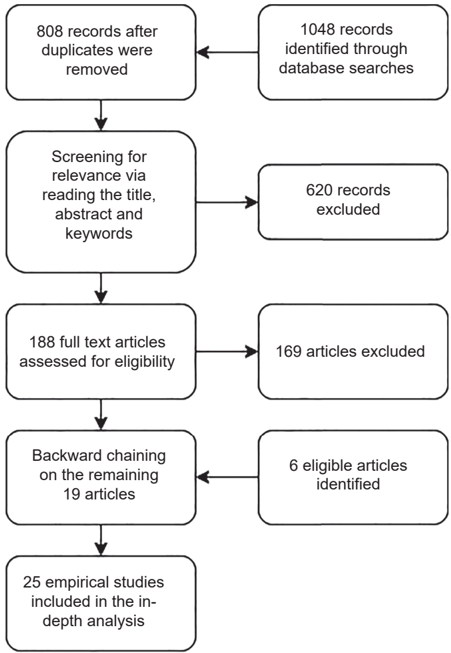
“We also consulted previous reviews in related fields [ 64, 65] to ensure systematic adherence to the PRISMA guidelines and conduct a rigorous and practically useful review [66].”
Self-citationHermann, J., Nierobisch, N., Arndt, R., Kubullek, A.-K., van Ledden, S., & Doğangün, A. (2023) · Mensch und Computer (MuC) · doi:10.1145/3603555.3608536 · Cited by 4
“Currently, AI decisions in such systems are not transparent to vehicle operators, making it difficult to evaluate vehicle safety [8].”
BackgroundKoo, S., Park, C., Lee, S., Seo, J., Eo, S., Moon, H., & Lim, H. (2023) · IEEE Access · doi:10.1109/access.2023.3310257 · Cited by 7
Graefe, J., Rittger, L., Carollo, G., Engelhardt, D., & Bengler, K. J. (2023) · Lecture notes in computer science · doi:10.1007/978-3-031-48047-8_19 · Cited by 5
Metadata
- Authors
- Laato, S., Tiainen, M., Najmul Islam, A. K. M., & Mäntymäki, M.
- Affiliations
- University of Turku (FI)
- Corresponding author
- Laato, Samuli
- Venue
- Internet Research
- Publisher
- Emerald
- Published
- 2022-05-02
- Volume
- 32
- Issue
- 7
- Pages
- 1-31
- ISSN
- 1066-2243 (ISSN-L)
- OpenAlex
- W4229079390
- Cited by
- 155
- References
- 65
- Citations by year
- 2026: 35 · 2025: 36 · 2024: 52 · 2023: 27 · 2022: 5
- FWCI
- 2.11
- Type
- journal article
- Language
- en
- Open access
- hybrid
- doi.org
- Licence
- cc-by
- www.emerald.com/insight/site-policies (tdm)
- Locations
- Internet Research (publishedVersion, cc-by)
- Tampere University Institutional Repository (Tampere University) (submittedVersion, cc-by)
- Topics
- Physical Sciences › Computer Science › Artificial Intelligence › Explainable Artificial Intelligence (XAI)
- Physical Sciences › Computer Science › Artificial Intelligence › Ethics and Social Impacts of AI
- Physical Sciences › Computer Science › Human-Computer Interaction › Usability and User Interface Design
- Keywords
- explainable AI, end users, explainability, model transparency, trustworthiness, fairness, controllability, comprehensibility, personalized explanations, AI governance
About these checks
Registry, retraction, Cites and statistics results are computed, not judged, with one exception: a printed reference that no index lists is read once by a model before it counts as a citation error. Claims are extracted by a model and kept only when their quote appears verbatim in the text; each cited source is then checked, with a model’s help, for whether it says what the claim relies on. Those verdicts can be wrong — read the claim’s quote and the cited source before relying on one.
Statistics and arithmetic are recomputed, not judged.
Confidence bands are shown only for fields calibrated on our annotated test set. None is calibrated yet, so no band is shown.
What counts as a claim ›How we measure confidence ›How we check this ›
Are you an author, or do you see a problem with this page? Request a review
Data sources
Bibliographic data: Semantic Scholar, OpenAlex, Crossref.
Contains information from the Semantic Scholar Academic Graph Datasets, made available under the ODC Attribution License (ODC-BY 1.0).
Semantic Scholar’s data is described in: Kinney, R., et al. (2023). The Semantic Scholar Open Data Platform. arXiv:2301.10140.
