

Quantum-Assisted Joint Multi-Objective Routing and Load Balancing for Socially-Aware Networks
Open accessThe DOI matches its Crossref record; 66 of the 66 references it cites were found in a registry or an index.
Abstract
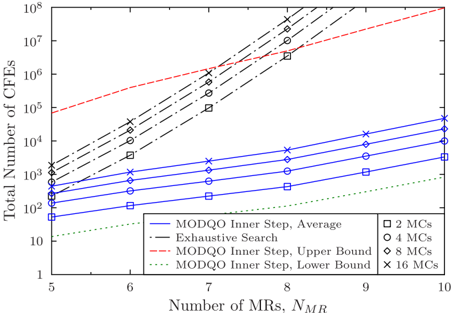
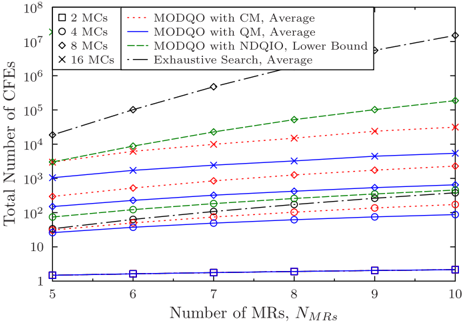
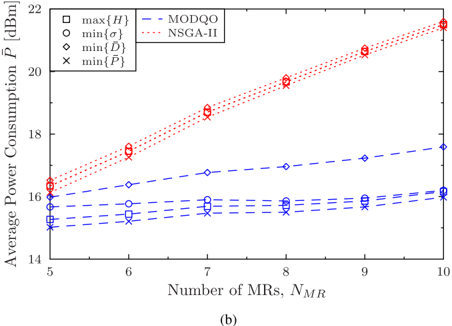
The widespread use of mobile networking devices, such as smart phones and tablets, has substantially increased the number of nodes in the operational networks. These devices often suffer from the lack of power and bandwidth. Hence, we have to optimize their message routing for the sake of maximizing their capabilities. However, the optimal routing typically relies on a delicate balance of diverse and often conflicting objectives, such as the route's delay and power consumption. The network design also has to consider the nodes' user-centric social behavior. Hence, the employment of socially aware load balancing becomes imperative for avoiding the potential formation of bottlenecks in the network's packet-flow. In this paper, we propose a novel algorithm, referred to as the multi-objective decomposition quantum optimization (MODQO) algorithm, which exploits the quantum parallelism to its full potential by reducing the database correlations for performing multi-objective routing optimization, while at the same time balancing the teletraffic load among the nodes without imposing a substantial degradation on the network's delay and power consumption. Furthermore, we introduce a novel socially aware load balancing metric, namely, the normalized entropy of the normalized composite betweenness of the associated socially aware network, for striking a better tradeoff between the network's delay and power consumption. We analytically prove that the MODQO algorithm achieves the full-search based accuracy at a significantly reduced complexity, which is several orders of magnitude lower than that of the full search. Finally, we compare the MODQO algorithm to the classic non-dominated sort genetic algorithm II evolutionary algorithm and demonstrate that the MODQO succeeds in halving the network's average delay, while simultaneously reducing the network's average power consumption by 6 dB without increasing the computational complexity.
Overview
The claims and statistics of this paper haven’t been checked yet.
Free: it reads the open-access text and checks the first 5 claims that cite a source we can check. Create a free account to check every claim.
Integrity signals
Registry
Cites
Statistics
Figures










Verification
Claims the paper makes
The claims and statistics of this paper haven’t been checked yet.
Free: it reads the open-access text and checks the first 5 claims that cite a source we can check. Create a free account to check every claim.
Self-check
Percentages, sums and reported differences re-computed from the paper’s own numbers.
The self-check needs the paper’s full text.
Citations
Cites
A Mathematical Theory of Communication
Shannon, C. E. (1948) · Bell System Technical Journal · doi:10.1002/j.1538-7305.1948.tb01338.x · Cited by 88,486
A fast and elitist multiobjective genetic algorithm: NSGA-II
Deb, K., Pratap, A., Agarwal, S., & Meyarivan, T. (2002) · IEEE Transactions on Evolutionary Computation · doi:10.1109/4235.996017 · Cited by 50,053 · cited 23×
“10022 VOLUME 4, 2016 For the sake of simplicity, we have assumed that the number Npop of individuals per generation is equal to the numberNgen of generetions, i.e. we have: Npop = Ngen, (100) yielding a total complexity in terms of the number of CFEs, which is equal to: LNSGA-II = N 3pop, (101) since the non-dominated…”
BackgroundMethodInfluentialQuantum Computation and Quantum Information
Nielsen, M. A., Chuang, I., & Grover, L. K. (2002) · American Journal of Physics · doi:10.1119/1.1463744 · Cited by 21,895
On Information and Sufficiency
Kullback, S., & Leibler, R. A. (1951) · The Annals of Mathematical Statistics · doi:10.1214/aoms/1177729694 · Cited by 20,193
The Structure and Function of Complex Networks
Newman, M. E. J. (2003) · SIAM Review · doi:10.1137/s003614450342480 · Cited by 18,719 · cited 1×
“the so-called BUBBLE algorithm, which exploits the social networking metrics of the centrality [17] routinely used in the community detection [18] for the sake of performing socially aware multi-cast routing in the context of DTNs.”
Handbook of Mathematical Functions with Formulas, Graphs, and Mathematical Tables
W., J. W., Abramowitz, M., & Stegun, I. A. (1965) · Mathematics of Computation · doi:10.2307/2004114 · Cited by 18,663
The Internet of Things: A survey
Atzori, L., Iera, A., & Morabito, G. (2010) · Computer Networks · doi:10.1016/j.comnet.2010.05.010 · Cited by 15,613
A Set of Measures of Centrality Based on Betweenness
Freeman, L. C. (1977) · Sociometry · doi:10.2307/3033543 · Cited by 10,295 · cited 2×
“Explicitly, the betweenness centrality Bsin is defined as [51]:”
BackgroundThe Computer for the 21st Century
Weiser, M. (1991) · Scientific American · doi:10.1038/scientificamerican0991-94 · Cited by 10,017
A fast quantum mechanical algorithm for database search
Grover, L. K. (1996) · Proceedings of the twenty-eighth annual ACM symposium on Theory of computing - STOC '96 · doi:10.1145/237814.237866 · Cited by 8,830 · cited 37×
“Subsequently, a BBHT-QSA process, which is termed as Backward BBHT-QSA (BW-BBHT-QSA) [43], is activated in order to search for route-solutions that are not dominated by the hitherto generated OPF.”
BackgroundInfluential
Research works printed but not linked: 3
- steele, 1999, Mobile Radio Communications Second and Third Generation Cellular and WATM Systems
- hu, 2016, Cross-layer design for wireless mesh networking aided content sharing in online social networks, IEEE Trans Veh Technol
- imre, 2013, Advanced Quantum Communications An Engineering Approach
Cited by
Quantum Machine Learning for 6G Communication Networks: State-of-the-Art and Vision for the Future
Nawaz, S. J., Sharma, S. K., Wyne, S., Patwary, M. N., & Asaduzzaman, M. (2019) · IEEE Access · doi:10.1109/access.2019.2909490 · Cited by 658
“In this regard, authors in [36] employed a multi-objective decomposition quantum optimization algo-rithm for the joint optimization of routing and load balancing in socially-aware networks.”
MethodIntegrated Data and Energy Communication Network: A Comprehensive Survey
Hu, J., Yang, K., Wen, G., & Hanzo, L. (2018) · IEEE Communications Surveys & Tutorials · doi:10.1109/comst.2018.2860778 · Cited by 156
“Pareto front based optimisation [295] can be relied upon for achieving the joint optimality of both WET and WIT, which deserves our further effort invested in multiple objective based optimisation algorithms and their applications in highdimensional resource allocation, as exemplified in the WIT”
MethodSelf-citationQuantum Search Algorithms for Wireless Communications
Botsinis, P., Alanis, D., Babar, Z., Nguyen, H. V., Chandra, D., Ng, S. X., & Hanzo, L. (2019) · IEEE Communications Surveys & Tutorials · doi:10.1109/comst.2018.2882385 · Cited by 149
“In fact, several quantum-assisted treatises have been disseminated in [65], [66], [122], and [134] in the context of the multi-objective routing problem.”
BackgroundMethodInfluentialSelf-citationDuality of Quantum and Classical Error Correction Codes: Design Principles and Examples
Babar, Z., Chandra, D., Nguyen, H. V., Botsinis, P., Alanis, D., Ng, S. X., & Hanzo, L. (2019) · IEEE Communications Surveys & Tutorials · doi:10.1109/comst.2018.2861361 · Cited by 82
“This massive parallel processing potential may be beneficially exploited in largescale communication systems’ processes, for example in multiuser detection [9], [10] and in routing optimization [11], [12], as well as in diverse other applications, such as data mining [13] and Gait Recognition [14], [15], just to name…”
BackgroundSelf-citationQuantum Information Processing, Sensing, and Communications: Their Myths, Realities, and Futures
Hanzo, L., Babar, Z., Cai, Z., Chandra, D., Djordjević, I. B., Koczor, B., Ng, S. X., Razavi, M., & Simeone, O. (2025) · Proceedings of the IEEE · doi:10.1109/jproc.2024.3510394 · Cited by 54
Self-citation
Metadata
- Authors
- Alanis, D., Hu, J., Botsinis, P., Babar, Z., Ng, S. X., & Hanzo, L.
- Affiliations
- University of Southampton (GB)
- University of Electronic Science and Technology of China (CN)
- Venue
- IEEE Access
- Published
- 2016
- Volume
- 4
- Pages
- 9993-10028
- ISSN
- 2169-3536 (ISSN-L)
- OpenAlex
- W2554636950
- Cited by
- 15
- References
- 65
- Citations by year
- 2025: 1 · 2024: 1 · 2022: 2 · 2021: 2 · 2020: 1 · 2019: 2 · 2018: 5 · 2017: 1
- FWCI
- 2.52
- Type
- journal article
- Language
- en
- Open access
- gold
- doi.org
- Locations
- IEEE Access (publishedVersion, cc-by)
- ePrints Soton (University of Southampton) (acceptedVersion)
- DOAJ (DOAJ: Directory of Open Access Journals) (submittedVersion, cc-by-sa)
- Funders
- EPSRC that of the European Research Council, Advanced Fellow Grant (EP/L018659/1)
- Royal Society’s Wolfson Research Merit Award
- University of Electronic Science and Technology of China (A03013023601053)
- National Natural Science Foundation of China (61601097)
- Topics
- Physical Sciences › Computer Science › Computer Networks and Communications › Network Traffic and Congestion Control
- Physical Sciences › Computer Science › Computational Theory and Mathematics › Advanced Multi-Objective Optimization Algorithms
- Physical Sciences › Computer Science › Computer Networks and Communications › Mobile Ad Hoc Networks
- Keywords
- quantum-assisted optimization, multi-objective routing, load balancing, mobile devices, power consumption, network latency, entropy measures, NSGA-II comparison
About these checks
Registry, retraction, Cites and statistics results are computed, not judged, with one exception: a printed reference that no index lists is read once by a model before it counts as a citation error. Claims are extracted by a model and kept only when their quote appears verbatim in the text; each cited source is then checked, with a model’s help, for whether it says what the claim relies on. Those verdicts can be wrong — read the claim’s quote and the cited source before relying on one.
Statistics and arithmetic are recomputed, not judged.
Confidence bands are shown only for fields calibrated on our annotated test set. None is calibrated yet, so no band is shown.
What counts as a claim ›How we measure confidence ›How we check this ›
Are you an author, or do you see a problem with this page? Request a review
How to cite
Cite CoChat for the checks on this page, and the paper for its own findings.
- This page
- CoChat. (2026). Citation check: Quantum-Assisted Joint Multi-Objective Routing and Load Balancing for Socially-Aware Networks. https://app.cochat.ai/papers/10.1109/access.2016.2629671
- The paper
- Alanis, D., Hu, J., Botsinis, P., Babar, Z., Ng, S. X., & Hanzo, L. (2016). Quantum-Assisted Joint Multi-Objective Routing and Load Balancing for Socially-Aware Networks. IEEE Access. https://doi.org/10.1109/access.2016.2629671
Data sources
Bibliographic data: Semantic Scholar, OpenAlex, Crossref.
Contains information from the Semantic Scholar Academic Graph Datasets, made available under the ODC Attribution License (ODC-BY 1.0).
Semantic Scholar’s data is described in: Kinney, R., et al. (2023). The Semantic Scholar Open Data Platform. arXiv:2301.10140.
