

The DOI matches its Crossref record; 92 of the 92 references it cites were found in a registry or an index.
Deep Learning and Explainable Artificial Intelligence Techniques Applied for Detecting Money Laundering–A Critical Review
Open accessAbstract
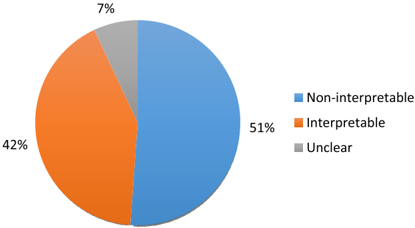
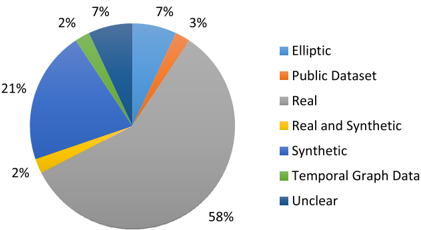
Money laundering has been a global issue for decades, which is one of the major threat for economy and society. Government, regulatory and financial institutions are combating it together in their respective capacity, however still billions of dollars in fines by authorities make the headlines in the news. High-speed internet services have enabled financial institutions to deliver better customer experience through multi-channel engagements, which has led to exponential growth in transactions and new avenues for laundering the money for fraudsters. Literature shows the usage of statistical methods, data mining and Machine Learning (ML) techniques for money laundering detection, but limited research on Deep Learning (DL) techniques, primarily due to lack of model interpretability and explainability of the decisions made. Several studies are conducted on application of ML for Anti-Money Laundering (AML), and Explainable Artificial Intelligence (XAI) techniques in general, but lacks the study on usage of DL techniques together with XAI. This paper aims to review the current state-of-the-art literature on DL together with XAI for identifying suspicious money laundering transactions and identify future research areas. Key findings of the review are, researchers have preferred variants of Convolutional Neural Networks, and AutoEncoder; graph deep learning together with natural language processing is emerging as an important technology for AML; XAI use is not seen in AML domain; 51% ML methods used in AML are non-interpretable, 58% studies used sample of old real data; key challenges for researchers are access to recent real transaction data and scarcity of labelled training data; and data being highly imbalanced. Future research directions are, application of XAI techniques to bring-out explainability, graph deep learning using natural language processing (NLP), unsupervised and reinforcement learning to handle lack of labelled data; and joint research programs between research community and industry to benefit from domain knowledge and controlled access to data.
Overview
The claims and statistics of this paper haven’t been checked yet.
Free: it reads the open-access text and checks the first 5 claims that cite a source we can check. Create a free account to check every claim.
Integrity signals
Registry
Cites
Statistics
Figures




Verification
Claims the paper makes
The claims and statistics of this paper haven’t been checked yet.
Free: it reads the open-access text and checks the first 5 claims that cite a source we can check. Create a free account to check every claim.
Claims other papers make about this one
Each is checked against this paper’s own text: does it say what the citing paper says it does?
The cited source says what the claim attributes to it.
In the citing paper
“Explainable artificial intelligence [12] offers both knowledgedriven and data-driven interpretability approaches [96].”
From A 2030 Roadmap for Software Engineering (2025) · cites this paper as [96]
Self-check
Percentages, sums and reported differences re-computed from the paper’s own numbers.
The self-check needs the paper’s full text.
Citations
Cites
Going deeper with convolutions
Szegedy, C., Liu, W., Jia, Y., Sermanet, P., Reed, S., Anguelov, D., Erhan, D., Vanhoucke, V., & Rabinovich, A. (2015) · 2015 IEEE Conference on Computer Vision and Pattern Recognition (CVPR) · doi:10.1109/cvpr.2015.7298594 · Cited by 48,562
Semi-supervised classification with graph convolutional networks
Kipf, T. N., & Welling, M. (2016) · arXiv · doi:10.48550/arxiv.1609.02907 · Cited by 24,853
A Unified Approach to Interpreting Model Predictions
Lundberg, S., & Lee, S.-I. (2017) · arXiv · doi:10.48550/arxiv.1705.07874 · Cited by 23,707
"Why Should I Trust You?": Explaining the Predictions of Any Classifier
Ribeiro, M. T., Singh, S., & Guestrin, C. (2016) · Proceedings of the 22nd ACM SIGKDD International Conference on Knowledge Discovery and Data Mining · doi:10.1145/2939672.2939778 · Cited by 17,555
Gauriat, C.-M., Pencolé, Y., Ribot, P., & Brouillet, G. (2024) · HAL (Le Centre pour la Communication Scientifique Directe) · doi:10.4230/oasics.dx.2024.27 · Cited by 12,586
Arrieta, A. B., Díaz-Rodríguez, N., Del Ser, J., Bennetot, A., Tabik, S., Barbado, A., García, S., Gil-López, S., Molina, D., Benjamins, R., et al. (2019) · arXiv · doi:10.48550/arxiv.1910.10045 · Cited by 11,321
Rudin, C. (2019) · Nature Machine Intelligence · doi:10.1038/s42256-019-0048-x · Cited by 10,561 · cited 1×
“While there is mammoth progress on XAI method, [102] argues that the development in XAI is a patchwork to existing ML models and major effort of research community is going in the wrong direction.”
MethodBarredo Arrieta, A., Díaz-Rodríguez, N., Del Ser, J., Bennetot, A., Tabik, S., Barbado, A., Garcia, S., Gil-Lopez, S., Molina, D., Benjamins, R., et al. (2020) · Information Fusion · doi:10.1016/j.inffus.2019.12.012 · Cited by 10,423
Peeking Inside the Black-Box: A Survey on Explainable Artificial Intelligence (XAI)
Adadi, A., & Berrada, M. (2018) · IEEE Access · doi:10.1109/access.2018.2870052 · Cited by 6,294
Explainable AI: a review of machine learning interpretability methods
Linardatos, P., Papastefanopoulos, V., & Kotsiantis, S. (2020) · Entropy · doi:10.3390/e23010018 · Cited by 2,922 · cited 1×
“[97] presented a comprehensive review of machine learning interpretabilitymethods using 4 categories– (i) Methods for explaining black box models (17 methods focused on DL method interpretations, 16 methods that can”
Method
Research works printed but not linked: 24
- han, 2015, NextGen AML: Distributed deep learning based language technologies to augment anti money laundering investigation, Proc Assoc for Computational Linguistics (ACL '01), 37
- kitchenham, 2007, Guidelines for performing systematic literature reviews in software engineering, Guidelines for Performing Systematic Literature Reviews in Software Engineering
- shaju, 2019, Measures for financial fraud detection using data analytics and machine learning, Int J Adv Sci Technol, 28, 270
- semenov, 2017, Survey of common design approaches in AML software development, Proc CEUR-WS, 1
- jayasree, 2016, Anti money laundering in financial institutions using affiliation mapping calculation and sequential mining, J Eng Appl Sci, 11, 51
- 2019, Anti-Money Laundering and Counter-Terrorism Financing Act 2006 AUSTRAC Editor
- 2021, O o P A Credit Suisse Group of Switzerland Was Fined $536 Million 2009
- 2021, Bank Secrecy Act (BSA) Statute
- 2012, HSBC to Pay $1 9B to Settle Money-Laundering Case www cbc ca
- quinn, 2009, The Telegraph The Telegraph
- 2012, ING Fined a Record Amount Penalty of $619 Million Tied to Cuba Iran for Violating U S Economic Sanctions
- 2018, Title 1 81 5 california consumer privacy act of 2018
- 10.1145/3409073.3409080 · DOI
- paula, 2017, Deep learning anomaly detection as suppor fraud investigation in Brazilian exports and anti-money laundering, Proc 15th IEEE Int Conf Mach Learn Appl (ICMLA), 954
- zhang, 2008, Research on money laundering recognition based on decision thee algorithm, Wuhan Ligong Daxue Xuebao/Journal of Wuhan University of Technology, 30, 154
- 2021, Money-laundering and globalization
- force, 2020, International Standards On Combating Money Laundering and The Financing Of Terrorism & Proliferation—FATF Recommendations F A T Force Editor 2020 Financial Action Task Force
- board, 0, Artificial Intelligence and Machine Learning in Financial Services 2017
- 2018, AUSTRAC and CBA Agree $700m Penalty
- monroe, 2021, Fincrime Briefing AML Fines in 2019 Breach $8 Billion Treasury Official Pleads Guilty to Leaking 2020 Crypto Compliance Outlook
- 2020, A T R a A AUSTRAC and Westpac Agree to Proposed $1 3bn Penalty
- 2019, Risk Transforming Approaches to AML and Financial Crime
- 2018, Machine Learning in Anti-Money Laundering—Summary Report
- 2021, Explainable AI Driving Business Value Through Greater Understanding 2017
Cited by
Explainable Artificial Intelligence Applications in Cyber Security: State-of-the-Art in Research
Zhang, Z., Hamadi, H. A., Damiani, E., Yeun, C. Y., & Taher, F. (2022) · IEEE Access · doi:10.1109/access.2022.3204051 · Cited by 450
A., S., & R., S. (2023) · Decision Analytics Journal · doi:10.1016/j.dajour.2023.100230 · Cited by 432
Weber, P., Carl, K. V., & Hinz, O. (2024) · Management Review Quarterly · doi:10.1007/s11301-023-00320-0 · Cited by 292
“Besides, anti-money laundering is one of the most pressing issues threatening financial systems (Kute et al. 2021).”
InfluentialExplainable AI Over the Internet of Things (IoT): Overview, State-of-the-Art and Future Directions
Jagatheesaperumal, S. K., Pham, Q.-V., Ruby, R., Yang, Z., Xu, C., & Zhang, Z. (2022) · IEEE Open Journal of the Communications Society · doi:10.1109/ojcoms.2022.3215676 · Cited by 171
The Impact of Artificial Intelligence Disclosure on Financial Performance
Shiyyab, F. S., Alzoubi, A. B., Obidat, Q. M., & Alshurafat, H. (2023) · International Journal of Financial Studies · doi:10.3390/ijfs11030115 · Cited by 236
Metadata
- Authors
- Kute, D. V., Pradhan, B., Shukla, N., & Alamri, A.
- Affiliations
- University of Technology Sydney (AU)
- King Saud University (SA)
- Venue
- IEEE Access
- Published
- 2021
- Volume
- 9
- Pages
- 82300-82317
- ISSN
- 2169-3536 (ISSN-L)
- OpenAlex
- W3171973514
- Cited by
- 209
- References
- 89
- Citations by year
- 2026: 45 · 2025: 65 · 2024: 46 · 2023: 34 · 2022: 16 · 2021: 3
- FWCI
- 8.71
- Type
- journal article
- Language
- en
- Open access
- gold
- doi.org
- Locations
- IEEE Access (publishedVersion, cc-by)
- DOAJ (DOAJ: Directory of Open Access Journals) (submittedVersion, cc-by-sa)
- Griffith Research Online (submittedVersion, cc-by)
- Greater South Information System
- Funders
- Centre for Advanced Modelling and Geospatial Information Systems (CAMGIS), Faculty of Engineering and IT, University of Technology Sydney (UTS), Sydney, NSW, Australia
- Researchers Supporting Project, King Saud University, Riyadh, Saudi Arabia (RSP-2020/14)
- Topics
- Physical Sciences › Computer Science › Artificial Intelligence › Imbalanced Data Classification Techniques
- Social Sciences › Sociology and Political Science › Crime, Illicit Activities, and Governance
- Physical Sciences › Computer Science › Artificial Intelligence › Explainable Artificial Intelligence (XAI)
- Keywords
- money laundering detection, anti-money laundering, deep learning, explainable AI, convolutional neural networks, autoencoder, graph-based deep learning, natural language processing, model interpretability, class imbalance, financial transaction data, fraud detection
About these checks
Registry, retraction, Cites and statistics results are computed, not judged, with one exception: a printed reference that no index lists is read once by a model before it counts as a citation error. Claims are extracted by a model and kept only when their quote appears verbatim in the text; each cited source is then checked, with a model’s help, for whether it says what the claim relies on. Those verdicts can be wrong — read the claim’s quote and the cited source before relying on one.
Statistics and arithmetic are recomputed, not judged.
Confidence bands are shown only for fields calibrated on our annotated test set. None is calibrated yet, so no band is shown.
What counts as a claim ›How we measure confidence ›How we check this ›
Are you an author, or do you see a problem with this page? Request a review
How to cite
Cite CoChat for the checks on this page, and the paper for its own findings.
- This page
- CoChat. (2026). Citation check: Deep Learning and Explainable Artificial Intelligence Techniques Applied for Detecting Money Laundering–A Critical Review. https://app.cochat.ai/papers/10.1109/access.2021.3086230
- The paper
- Kute, D. V., Pradhan, B., Shukla, N., & Alamri, A. (2021). Deep Learning and Explainable Artificial Intelligence Techniques Applied for Detecting Money Laundering–A Critical Review. IEEE Access. https://doi.org/10.1109/access.2021.3086230
Data sources
Bibliographic data: Semantic Scholar, OpenAlex, Crossref.
Contains information from the Semantic Scholar Academic Graph Datasets, made available under the ODC Attribution License (ODC-BY 1.0).
Semantic Scholar’s data is described in: Kinney, R., et al. (2023). The Semantic Scholar Open Data Platform. arXiv:2301.10140.
