

Deep Learning and Explainable Artificial Intelligence Techniques Applied for Detecting Money Laundering–A Critical Review
Open accessThe DOI matches its Crossref record; 92 of the 92 references it cites were found in a registry or an index.
Abstract
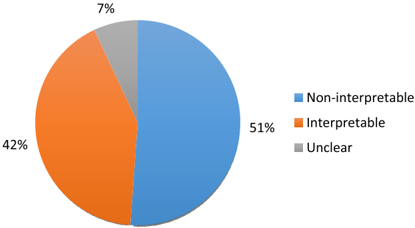
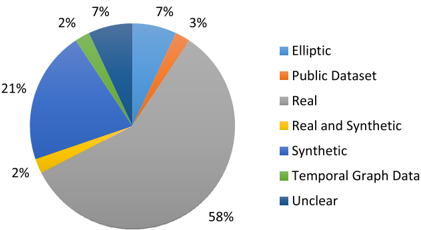
Money laundering has been a global issue for decades, which is one of the major threat for economy and society. Government, regulatory and financial institutions are combating it together in their respective capacity, however still billions of dollars in fines by authorities make the headlines in the news. High-speed internet services have enabled financial institutions to deliver better customer experience through multi-channel engagements, which has led to exponential growth in transactions and new avenues for laundering the money for fraudsters. Literature shows the usage of statistical methods, data mining and Machine Learning (ML) techniques for money laundering detection, but limited research on Deep Learning (DL) techniques, primarily due to lack of model interpretability and explainability of the decisions made. Several studies are conducted on application of ML for Anti-Money Laundering (AML), and Explainable Artificial Intelligence (XAI) techniques in general, but lacks the study on usage of DL techniques together with XAI. This paper aims to review the current state-of-the-art literature on DL together with XAI for identifying suspicious money laundering transactions and identify future research areas. Key findings of the review are, researchers have preferred variants of Convolutional Neural Networks, and AutoEncoder; graph deep learning together with natural language processing is emerging as an important technology for AML; XAI use is not seen in AML domain; 51% ML methods used in AML are non-interpretable, 58% studies used sample of old real data; key challenges for researchers are access to recent real transaction data and scarcity of labelled training data; and data being highly imbalanced. Future research directions are, application of XAI techniques to bring-out explainability, graph deep learning using natural language processing (NLP), unsupervised and reinforcement learning to handle lack of labelled data; and joint research programs between research community and industry to benefit from domain knowledge and controlled access to data.
Overview
The claims and statistics of this paper haven’t been checked yet.
Free: it reads the open-access text and checks the first 5 claims that cite a source we can check. Create a free account to check every claim.
Integrity signals
Registry
Cites
Statistics
Figures




Verification
Claims the paper makes
The claims and statistics of this paper haven’t been checked yet.
Free: it reads the open-access text and checks the first 5 claims that cite a source we can check. Create a free account to check every claim.
Claims other papers make about this one
Each is checked against this paper’s own text: does it say what the citing paper says it does?
The cited source says what the claim attributes to it.
In the citing paper
“Explainable artificial intelligence [12] offers both knowledgedriven and data-driven interpretability approaches [96].”
From A 2030 Roadmap for Software Engineering (2025) · cites this paper as [96]
Self-check
Percentages, sums and reported differences re-computed from the paper’s own numbers.
The self-check needs the paper’s full text.
Citations
Cites
Going deeper with convolutions
Szegedy, C., Liu, W., Jia, Y., Sermanet, P., Reed, S., Anguelov, D., Erhan, D., Vanhoucke, V., & Rabinovich, A. (2015) · 2015 IEEE Conference on Computer Vision and Pattern Recognition (CVPR) · doi:10.1109/cvpr.2015.7298594 · Cited by 48,562
Semi-supervised classification with graph convolutional networks
Kipf, T. N., & Welling, M. (2016) · arXiv · doi:10.48550/arxiv.1609.02907 · Cited by 24,853 · cited 1×
“First using the graph model GCN developed by [37], which took 611 seconds to converge in 32”
MethodA Unified Approach to Interpreting Model Predictions
Lundberg, S., & Lee, S.-I. (2017) · arXiv · doi:10.48550/arxiv.1705.07874 · Cited by 23,707 · cited 1×
“Local Interpretable Model-Agnostic Explanations (LIME) [99] and SHapley Additive exPlana-tions (SHAP) [100] are the highly referred and experimented methods for producing explanations on black box models that use any type of data, followed by Partial Dependence Plots (PDPs).”
Method"Why Should I Trust You?": Explaining the Predictions of Any Classifier
Ribeiro, M. T., Singh, S., & Guestrin, C. (2016) · Proceedings of the 22nd ACM SIGKDD International Conference on Knowledge Discovery and Data Mining · doi:10.1145/2939672.2939778 · Cited by 17,555
Gauriat, C.-M., Pencolé, Y., Ribot, P., & Brouillet, G. (2024) · HAL (Le Centre pour la Communication Scientifique Directe) · doi:10.4230/oasics.dx.2024.27 · Cited by 12,586
Arrieta, A. B., Díaz-Rodríguez, N., Del Ser, J., Bennetot, A., Tabik, S., Barbado, A., García, S., Gil-López, S., Molina, D., Benjamins, R., et al. (2019) · arXiv · doi:10.48550/arxiv.1910.10045 · Cited by 11,321 · cited 2×
“by these models to conclude a transaction is suspicious; and a mandatory ask by regulators to provide rationale of transaction being suspicious, is posing an impediment for adoption of AI/ML technology in finance crime units in financial institutes [16].”
MethodRudin, C. (2019) · Nature Machine Intelligence · doi:10.1038/s42256-019-0048-x · Cited by 10,561 · cited 1×
“While there is mammoth progress on XAI method, [102] argues that the development in XAI is a patchwork to existing ML models and major effort of research community is going in the wrong direction.”
MethodBarredo Arrieta, A., Díaz-Rodríguez, N., Del Ser, J., Bennetot, A., Tabik, S., Barbado, A., Garcia, S., Gil-Lopez, S., Molina, D., Benjamins, R., et al. (2020) · Information Fusion · doi:10.1016/j.inffus.2019.12.012 · Cited by 10,423
Peeking Inside the Black-Box: A Survey on Explainable Artificial Intelligence (XAI)
Adadi, A., & Berrada, M. (2018) · IEEE Access · doi:10.1109/access.2018.2870052 · Cited by 6,294 · cited 1×
“…wants the explanation to justify the decisions, security application domain wants the explanation to control the underlying data and IP that may be uncovered, some domains would need the explanation to improve the decisions, other domains would need the explanation to discover the knowledge [90].”
BackgroundExplainable AI: a review of machine learning interpretability methods
Linardatos, P., Papastefanopoulos, V., & Kotsiantis, S. (2020) · Entropy · doi:10.3390/e23010018 · Cited by 2,922 · cited 1×
“[97] presented a comprehensive review of machine learning interpretabilitymethods using 4 categories– (i) Methods for explaining black box models (17 methods focused on DL method interpretations, 16 methods that can”
Method
Research works printed but not linked: 17
- J. Han, ''NextGen AML: Distributed deep learning based language tech- nologies to augment anti money laundering investigation,'' in Proc. Assoc. Comput. Linguistics (ACL), 2015, pp. 37-42.
- B. Kitchenham and S. Charters, ''Guidelines for performing systematic literature reviews in software engineering,'' in Guidelines for Performing Systematic Literature Reviews in Software Engineering.
- B. Shaju and N. Valliammal, ''Measures for financial fraud detection using data analytics and machine learning,'' Int. J. Adv. Sci. Technol., vol. 28, no. 17, pp. 270-280, 2019.
- A. Semenov, ''Survey of common design approaches in AML software development,'' in Proc. CEUR-WS, 2017, pp. 1-9.
- V. Jayasree and R. V. S. Balan, ''Anti money laundering in financial institutions using affiliation mapping calculation and sequential mining,'' J. Eng. Appl. Sci., vol. 11, no. 1, pp. 51-56, 2016.
- Bank Secrecy Act (BSA) Statute, F.C.E. Netw., Vienna, Austria, Feb. 2021.
- CBS News. (2012). HSBC to Pay $1.9B to Settle Money-Laundering Case. www.cbc.ca [Online]. Available: https://www.cbc.ca/news/business/hsbc- to-pay-1-9b-to-settle-money-laundering-case-1.1226871
- I. Alarab, S. Prakoonwit, and M. Nacer, ''Competence of graph convolu- tional networks for anti-money laundering in bitcoin blockchain,'' in Proc. 5th Int. Conf. Mach. Learn. Technol. (ICMLT), 2020, pp. 23-27. · DOI
- E. L. Paula, ''Deep learning anomaly detection as suppor fraud investiga- tion in Brazilian exports and anti-money laundering,'' in Proc. 15th IEEE Int. Conf. Mach. Learn. Appl. (ICMLA), 2017, pp. 954-960.
- C. H. Zhang and X. H. Zhao, ''Research on money laundering recognition based on decision thee algorithm,'' Wuhan Ligong Daxue Xuebao/J. Wuhan Univ. Technol., vol. 30, no. 2, pp. 154-156, 2008.
- 2021, Money-laundering and globalization
- F. A. T. Force. (2020). International Standards On Combating Money Laundering and The Financing Of Terrorism & Proliferation-FATF Recommendations, F.A.T. Force, Editor. 2020, Financial Action Task Force. [Online]. Available: http://www.fatf-gafi.org/publications/fatfrecommendations/documents/ the40recommendationspublishedoctober2004.html
- F. S. Board, Artificial Intelligence and Machine Learning in Financial Services 2017. Basel, Switzerland: Financial Stability Board.
- B. Monroe. (Feb. 2021). Fincrime Briefing: AML Fines in 2019 Breach $8 Billion, Treasury Official Pleads Guilty to Leaking, 2020 Crypto Compliance Outlook. [Online]. Available: https://www.acfcs.org/ fincrime-briefing-aml-fines-in-2019-breach-8-billion-treasury- official-pleads-guilty-to-leaking-2020-crypto-compliance- outlook-and-more/#:~:text=Key%20observations%3A,25%20 penalties%20totaling%20%242.29bn
- Media Company. (2019). Risk Transforming Approaches to AML and Financial Crime. Accessed: Feb. 26, 2021. [Online]. Available: https://www.mckinsey.com/~/media/McKinsey/Business%20Functions/ Risk/Our%20Insights/Transforming%20approaches%20to%20AML%20 and%20financial%20crime/Transforming-approaches-to-AML-and- financial%20crime-vF.pdf
- Institute of International Finance. (2018). Machine Learning in Anti- Money Laundering-Summary Report. [Online]. Available: www.iif.com
- PricewaterhouseCoopers. (Feb. 2021). Explainable AI Driving Busi- ness Value Through Greater Understanding. 2017. [Online]. Avail- able: https://www.pwc.co.uk/services/risk-assurance/insights/explainable- ai.html
Cited by
Explainable Artificial Intelligence Applications in Cyber Security: State-of-the-Art in Research
Zhang, Z., Hamadi, H. A., Damiani, E., Yeun, C. Y., & Taher, F. (2022) · IEEE Access · doi:10.1109/access.2022.3204051 · Cited by 450
“To combat the finance crime targeting smart financial systems, one of the primary priorities in the smart financial domain should be the implementation of XAI [245].”
BackgroundA., S., & R., S. (2023) · Decision Analytics Journal · doi:10.1016/j.dajour.2023.100230 · Cited by 432
Weber, P., Carl, K. V., & Hinz, O. (2024) · Management Review Quarterly · doi:10.1007/s11301-023-00320-0 · Cited by 292
“Besides, anti-money laundering is one of the most pressing issues threatening financial systems (Kute et al. 2021).”
InfluentialExplainable AI Over the Internet of Things (IoT): Overview, State-of-the-Art and Future Directions
Jagatheesaperumal, S. K., Pham, Q.-V., Ruby, R., Yang, Z., Xu, C., & Zhang, Z. (2022) · IEEE Open Journal of the Communications Society · doi:10.1109/ojcoms.2022.3215676 · Cited by 171
“For instance, we do not mind if the model recommends a particular movie as the best match, but we certainly do care about the reason for rejecting a credit card application made by someone [3].”
The Impact of Artificial Intelligence Disclosure on Financial Performance
Shiyyab, F. S., Alzoubi, A. B., Obidat, Q. M., & Alshurafat, H. (2023) · International Journal of Financial Studies · doi:10.3390/ijfs11030115 · Cited by 236
Bhattacharya, S., Govindan, K., Dastidar, S. G., & Sharma, P. (2024) · Transportation Research Part E Logistics and Transportation Review · doi:10.1016/j.tre.2024.103455 · Cited by 145
Pocher, N., Zichichi, M., Merizzi, F., Shafiq, M. Z., & Ferretti, S. (2023) · Electronic Markets · doi:10.1007/s12525-023-00654-3 · Cited by 177
“In this context, we point out to the increase in the laundering-related use DeFi protocols of 1.964% between 2020 and 2021.”
BackgroundInfluentialA review on machine learning techniques for secured cyber-physical systems in smart grid networks
Hasan, M. K., Abdulkadir, R. A., Islam, S., Gadekallu, T. R., & Safie, N. (2024) · Energy Reports · doi:10.1016/j.egyr.2023.12.040 · Cited by 134
Explainable Artificial Intelligence (XAI) in Insurance
Owens, E., Sheehan, B., Mullins, M., Cunneen, M., Ressel, J., & Castignani, G. (2022) · Risks · doi:10.3390/risks10120230 · Cited by 182
Brasse, J., Broder, H. R., Förster, M., Klier, M., & Sigler, I. (2023) · Electronic Markets · doi:10.1007/s12525-023-00644-5 · Cited by 87
“…group of literature reviews on XAI focuses on specific application domains like healthcare (e.g., Amann et al., 2020; Chakrobartty & El-Gayar, 2021; Payrovnaziri et al., 2020; Tjoa & Guan, 2021), finance (e.g., Kute et al., 2021; Moscato et al., 2021), or transportation (e.g., Omeiza et al., 2021).”
Mutalib, N. H. A., Sabri, A. Q. M., Wahab, A. W. A., Abdullah, E. R. M. F., & AlDahoul, N. (2024) · Artificial Intelligence Review · doi:10.1007/s10462-024-10890-4 · Cited by 137
“This can be achieved using reinforcement learning to adapt models based on analyst feedback, ensuring that explanations remain accurate and relevant (Kute et al. 2021 ).”
Quach, L.-D., Quoc, K. N., Quynh, A. N., Thai-Nghe, N., & Nguyen, T. G. (2023) · IEEE Access · doi:10.1109/access.2023.3296792 · Cited by 99
“…[38]; the financial system automatically makes decisions that aid in interpretation, making it more audit-friendly, detecting illegal transactions [39], [40]; The military system starting from the DAPRA project demonstrates the development and reliability of XAI in supporting important decisions…”
BackgroundKhan, F. S., Mazhar, S. S., Mazhar, K., AlSaleh, D., & Mazhar, A. (2025) · Artificial Intelligence Review · doi:10.1007/s10462-025-11215-9 · Cited by 151
A review and benchmark of feature importance methods for neural networks
Mandler, H., & Weigand, B. (2024) · ACM Computing Surveys · doi:10.1145/3679012 · Cited by 77
Novel Vision Transformer–Based Bi-LSTM Model for LU/LC Prediction—Javadi Hills, India
Mohanrajan, S. N., & Loganathan, A. (2022) · Applied Sciences · doi:10.3390/app12136387 · Cited by 53
Amaretto: An Active Learning Framework for Money Laundering Detection
Labanca, D., Primerano, L., Markland-Montgomery, M., Polino, M., Carminati, M., & Zanero, S. (2022) · IEEE Access · doi:10.1109/access.2022.3167699 · Cited by 72
“RELATED WORKS In the last years, several systematic review papers have been published, which describe machine learning applied to the fraud and money laundering detection domains [4]–[12].”
BackgroundOztas, B., Çetinkaya, D., Adedoyin, F. F., Budka, M., Aksu, G., & Doğan, H. (2024) · Future Generation Computer Systems · doi:10.1016/j.future.2024.05.027 · Cited by 94
AI Driven Fraud Detection Models in Financial Networks: A Comprehensive Systematic Review
Sarna, N. J., Rithen, F. A., Jui, U. S., Belal, S., Amin, A., Oishee, T. K., & Islam, A. K. M. M. (2025) · IEEE Access · doi:10.1109/access.2025.3596060 · Cited by 51
“In Table 1, a comparison table is presented that identifies gaps and limitations in recent research ( [11], [25], [26], [28], [29], [63], [67], [69], [72], [73], [78], [82], [114], [115]), particularly in their failure to simultaneously focus on essential areas such as anomaly identification, fraud…”
InfluentialAlarab, I., & Prakoonwit, S. (2022) · Data Science and Management · doi:10.1016/j.dsm.2022.04.003 · Cited by 46
Visual Analysis of Money Laundering in Cryptocurrency Exchange
Zhou, F., Chen, Y., Zhu, C., Jiang, L., Liao, X., Zhong, Z., Chen, X., Chen, Y., & Zhao, Y. (2023) · IEEE Transactions on Computational Social Systems · doi:10.1109/tcss.2022.3231687 · Cited by 34
“Currently, machine learning techniques were mainstream for anti-money laundering [17].”
BackgroundGandhi, H., Tandon, K., Gite, S., Pradhan, B., & Alamri, A. M. (2024) · International Journal on Smart Sensing and Intelligent Systems · doi:10.2478/ijssis-2024-0024 · Cited by 53
Self-citationA Framework and Benchmarking Study for Counterfactual Generating Methods on Tabular Data
Oliveira, R., & Martens, D. (2021) · Applied Sciences · doi:10.3390/app11167274 · Cited by 44
“They also have vast application in various fields, including finance [21,22], medicine [23,24], and self-driving cars [25,26].”
BackgroundNavigating the nexus of security and privacy in modern financial technologies
Olweny, F. (2024) · GSC Advanced Research and Reviews · doi:10.30574/gscarr.2024.18.2.0043 · Cited by 41
Al‐Fakih, A., Abdulraheem, A., & Kaka, S. I. (2024) · Deep Underground Science and Engineering · doi:10.1002/dug2.12098 · Cited by 37
Teke, A., & Kavzoğlu, T. (2024) · Advances in Space Research · doi:10.1016/j.asr.2024.06.082 · Cited by 33
Kuppan, K., Acharya, D. B., & Divya, B. (2024) · IEEE Access · doi:10.1109/access.2024.3509918 · Cited by 62
Towards Learning to Discover Money Laundering Sub-network in Massive Transaction Network
Chai, Z., Yang, Y., Dan, J., Tian, S., Meng, C., Wang, W., & Sun, Y. (2023) · Proceedings of the AAAI Conference on Artificial Intelligence · doi:10.1609/aaai.v37i12.26656 · Cited by 39
“It’s estimated that the amount of money laundered globally every year accounts for 2-5% of global GDP and is expected to continue to grow (Kute et al. 2021).”
BackgroundDiga: Guided Diffusion Model for Graph Recovery in Anti-Money Laundering
Li, X., Li, Y., Mo, X., Xiao, H., Shen, Y., & Chen, L. (2023) · ACM SIGKDD Conference on Knowledge Discovery and Data Mining (KDD) · doi:10.1145/3580305.3599806 · Cited by 50
Torky, M. F., Gad, I., & Hassanien, A. E. (2023) · International Journal of Computational Intelligence Systems · doi:10.1007/s44196-023-00222-9 · Cited by 28
“Therefore, XAI can answer this challenge [12].”
RetractedRobust Credit Card Fraud Detection Based on Efficient Kolmogorov-Arnold Network Models
Le, T.-T.-H., Hwang, Y., Kang, H., & Kim, H. (2024) · IEEE Access · doi:10.1109/access.2024.3485200 · Cited by 21
“(3) Computational Intensity: Training and updating large MLPs can be computationally expensive, potentially limiting their real-time application in high-volume transaction environments [31], [32], [33].”
BackgroundDeprez, B., Vanderschueren, T., Baesens, B., Verdonck, T., & Verbeke, W. (2025) · INFORMS Journal on Data Science · doi:10.1287/ijds.2024.0042 · Cited by 55
“Transactions with label 2 (unknown) are included for the construction of the network, but they do not contribute to training or loss calculation [70, 147, 134].”
InfluentialA Dynamic Graph Convolutional Network for Anti-money Laundering
Wei, T., Zeng, B., Guo, W., Guo, Z., Tu, S., & Xu, L. (2023) · Lecture notes in computer science · doi:10.1007/978-981-99-4761-4_42 · Cited by 18
A Consolidated Volatility Prediction with Back Propagation Neural Network and Genetic Algorithm
Ke, Z., Xu, J., Zhang, Z., Cheng, Y., & Wu, W. (2024) · International Conference on Image Processing, Computer Vision and Machine Learning (ICICML) · doi:10.1109/icicml63543.2024.10958142 · Cited by 39
Reite, E. J., Karlsen, J., & Westgaard, E. G. (2024) · Journal of Money Laundering Control · doi:10.1108/jmlc-03-2024-0040 · Cited by 15
Deep Neural Networks for Anti Money Laundering Using Explainable Artificial Intelligence
Konstantinidis, G., & GEGOV, A. E. (2024) · IEEE International Conference on Intelligent Systems · doi:10.1109/is61756.2024.10705194 · Cited by 15
“Regulatory bodies and financial institutions may hesitate to rely on opaque systems, hindering their adoption and implementation [11].”
BackgroundMethodInfluentialExplainable machine learning in identifying credit card defaulters
Srinath, T., & Gururaja, H. S. (2022) · Global Transitions Proceedings · doi:10.1016/j.gltp.2022.04.025 · Cited by 19
Artificial Intelligence and Customer Experiences
(2024) · Advances in computational intelligence and robotics book series · doi:10.4018/979-8-3693-4322-7.ch004 · Cited by 14
Youssef, B., Frikh, B., & Ouhbi, B. (2023) · Lecture notes on data engineering and communications technologies · doi:10.1007/978-3-031-27762-7_8 · Cited by 15
Chaos, overfitting and equilibrium: To what extent can machine learning beat the financial market?
Peng, Y., & Souza, J. G. D. M. (2024) · International Review of Financial Analysis · doi:10.1016/j.irfa.2024.103474 · Cited by 20
A 2030 Roadmap for Software Engineering
Pezzè, M., Abrahão, S., Penzenstadler, B., Poshyvanyk, D., Roychoudhury, A., & Yue, T. (2025) · ACM Transactions on Software Engineering and Methodology · doi:10.1145/3731559 · Cited by 13
Mallika, B. K., & Ramasubramanian, V. H. (2025) · Journal of Money Laundering Control · doi:10.1108/jmlc-07-2024-0108 · Cited by 17
Dubey, G., Dubey, A. K., Kaur, K., Raj, G., & Kumar, P. (2025) · Expert Systems with Applications · doi:10.1016/j.eswa.2025.127300 · Cited by 13
Sharbek, N. (2022) · Proceedings of the ... International Conference on Business Excellence · doi:10.2478/picbe-2022-0078 · Cited by 18
Explainable AI: Machine Learning Interpretation in Blackcurrant Powders
Przybył, K. (2024) · Sensors · doi:10.3390/s24103198 · Cited by 16
“In turn, having the structure of the data, machine learning algorithms make decisions on the basis of ‘glass box’ and ‘black box’ [31–33].”
BackgroundMethodExplainable deep learning model for predicting money laundering transactions
Kute, D. V., Pradhan, B., Shukla, N., & Alamri, A. M. (2024) · International Journal on Smart Sensing and Intelligent Systems · doi:10.2478/ijssis-2024-0027 · Cited by 14
Self-citationMilon, M. N. U. (2024) · International Journal of Religion · doi:10.61707/py0fe669 · Cited by 27
“AI speeds up regulatory reporting, KYC due diligence, and transaction monitoring for financial institutions to comply with AML standards (Kute et al., 2021).”
BackgroundInfluentialHAMLET: A Transformer Based Approach for Money Laundering Detection
Tatulli, M. P., Paladini, T., D’Onghia, M., Carminati, M., & Zanero, S. (2023) · Lecture notes in computer science · doi:10.1007/978-3-031-34671-2_17 · Cited by 19
Karyamsetty, H. J., Khan, S. A., & Nayyar, A. (2024) · Elsevier eBooks · doi:10.1016/b978-0-323-95315-3.00005-x · Cited by 15
The Use of Artificial Intelligence in Anti-Money Laundering (AML)
Raj, M., Khan, H., Kathuria, S., Chanti, Y., & Sahu, M. (2024) · International Conference on Sentiment Analysis and Deep Learning (ICSADL) · doi:10.1109/icsadl61749.2024.00050 · Cited by 14
“The United Nations Office on Drugs and Crime (UNODC) estimates that between 2% to 5% of the world's GDP, or around $800 billion to $2 trillion, is laundered internationally every year [1].”
BackgroundPark, J., Lee, S., Shin, S., Kim, M., & Park, J. (2023) · International Journal of Automotive Technology · doi:10.1007/s12239-023-0047-0 · Cited by 15
“Kute et al .”
The Role of AI in Financial Services: A Bibliometric Analysis
Oke, O. A., & Çavuş, N. (2024) · Journal of Computer Information Systems · doi:10.1080/08874417.2024.2304545 · Cited by 11
“21 Also, in the case of card fraud detection, the implementation of hybrid models such as CatBoost, hyperparater tunings and the use of stronger and better hardware may bring better results according to.”
Explainable Generative Models in FinCrime
Mahida, A. (2023) · Journal of Artificial Intelligence Machine Learning and Data Science · doi:10.51219/jaimld/ankur-mahida/69 · Cited by 30
“Banks and regulators are demanding levels of transparency and explain ability from machine learning algorithms to assess the grounds of suspicious activity alerts or transaction flagging 3 .”
BackgroundPortfolio construction using explainable reinforcement learning
Cortés, D. G., Onieva, E., Pastor-López, I., Trinchera, L., & Wu, J. L. (2024) · Expert Systems · doi:10.1111/exsy.13667 · Cited by 16
Iqbal, M., Iqbal, A., Alshammari, A., Ali, I., Maghrabi, L. A., & Usman, N. (2024) · IEEE Access · doi:10.1109/access.2024.3448234 · Cited by 11
“The AUC is used to evaluate the performance of classifiers to reflect the higher impact of true instances over negative instances [47], where the TP and FP represent the count of true positives and number of false positives respectively.”
MethodChitimira, H. T., Torerai, E., & Jana, L. (2024) · Potchefstroom Electronic Law Journal/Potchefstroomse Elektroniese Regsblad · doi:10.17159/1727-3781/2024/v27i0a18024 · Cited by 20
Enhancing Transaction Monitoring Controls to Detect Money Laundering Using Machine Learning
Oztas, B., Çetinkaya, D., Adedoyin, F. F., & Budka, M. (2022) · IEEE International Conference on e-Business Engineering (ICEBE) · doi:10.1109/icebe55470.2022.00014 · Cited by 11
“Review papers such as [19], [8], [6], [20] have summarized the general AML methods in the”
BackgroundVilella, S., Capozzi, A. T. E., Fornasiero, M., Moncalvo, D., Ricci, V., Ronchiadin, S., & Ruffo, G. (2025) · Applied Network Science · doi:10.1007/s41109-025-00702-1 · Cited by 14
“Several approaches have been proposed and applied to fraud detection (Kute et al. 2021; Dou et al. 2020; Shi et al. 2022; Liu et al. 2021).”
Explainability, Robustness, and Fairness in User-Centric Intelligent Systems: A Systematic Review
Zahid, I. A., Garfan, S., Chyad, M. A., Albahri, A. S., Albahri, O. S., Alamoodi, A. H., Deveci, M., Homod, R. Z., & Alzubaidi, L. (2025) · IEEE Transactions on Emerging Topics in Computational Intelligence · doi:10.1109/tetci.2025.3567604 · Cited by 22
“In the field of fraud detection, generating interpretable explanations of ML decisions by human experts to enhance the detection of suspicious money laundering transactions has proven to be a challenging task [10].”
InfluentialKarthikeyan, G. K., & Bhowmik, B. R. (2025) · International Journal of Data Science and Analytics · doi:10.1007/s41060-025-00823-x · Cited by 10
Fan, J., Shar, L. K., Zhang, R., Liu, Z., Yang, W., Niyato, D. T., & Lam, K.-Y. (2026) · IEEE Internet of Things Journal · doi:10.1109/jiot.2026.3653434 · Cited by 40
“For example, Ozbayoglu et al. [34] classify research in financial domains such as algorithmic trading, risk assessment, fraud detection, and portfolio management.”
InfluentialMachine Learning Approach to Anti-Money Laundering: A Review
Mohammed, H. N., Malami, N. S., Thomas, S., Aiyelabegan, F. A., Imam, F. A., & Ginsau, H. H. (2022) · IEEE Nigeria International Conference on Disruptive Technologies for Sustainable Development (NIGERCON) · doi:10.1109/nigercon54645.2022.9803072 · Cited by 10
Investigate Financial Crime Patterns Using Graph Databases
Bhardwaj, A., & Kaushik, K. (2022) · IT Professional · doi:10.1109/mitp.2022.3157029 · Cited by 10
Generative & Responsible AI - LLMs Use in Differential Governance
Mhammad, A. F., Agarwal, R., Columbo, T., & Vigorito, J. (2023) · International Conference on Computational Science and Computational Intelligence (CSCI) · doi:10.1109/csci62032.2023.00051 · Cited by 12
Using data analytics to distinguish legitimate and illegitimate shell companies
Tiwari, M., Gepp, A., & Kumar, K. (2024) · Journal of Economic Criminology · doi:10.1016/j.jeconc.2024.100123 · Cited by 13
Omani Public Governance in the Age of Artificial Intelligence
Awashreh, R. A. (2025) · Advances in computational intelligence and robotics book series · doi:10.4018/979-8-3693-9286-7.ch007 · Cited by 20
Explainable Artificial Intelligence (XAI) for Knowledge Management (KM)
Majumder, S., & Dey, N. (2022) · Studies in big data · doi:10.1007/978-981-19-0316-8_6 · Cited by 11
Economic and financial crimes: evidence from the literature in emerging markets
Dote-Pardo, J., & Severino-González, P. E. (2025) · Journal of Money Laundering Control · doi:10.1108/jmlc-07-2024-0120 · Cited by 9
A systematic review of sentiment analytics in banking headlines
Jayanthakumaran, M., Shukla, N., Pradhan, B., & Beydoun, G. (2025) · Decision Analytics Journal · doi:10.1016/j.dajour.2025.100584 · Cited by 12
Self-citationPerspectives from Experts on Developing Transaction Monitoring Methods for Anti-Money Laundering
Oztas, B., Çetinkaya, D., Adedoyin, F. F., Budka, M., Doğan, H., & Aksu, G. (2023) · IEEE International Conference on e-Business Engineering (ICEBE) · doi:10.1109/icebe59045.2023.00024 · Cited by 8
“Overall, explaining how the method reaches its outcomes and proving effectiveness are crucial requirements for a new transaction monitoring method [4].”
BackgroundMethodDas, S., Chowdhury, U., Lijin, N. S., Deep, A., Saha, S., & Maurya, A. (2024) · IEEE Access · doi:10.1109/access.2024.3369033 · Cited by 8
“Due to the temporal nature of financial data, Explainable AI (XAI) can be utilized to determine the most significant features or inputs that contribute to predicting market trends [26] and making investment decisions [27] thereby mitigating risks [28] associated with financial investments.”
Searle, R., Gururaj, P., Gupta, A., & Kannur, K. (2022) · IEEE International Conference on Big Data (BigData) · doi:10.1109/bigdata55660.2022.10021108 · Cited by 8
“Traditional approaches fail to scale against the growing volume of transactions, shifting fraud patterns, and increasing complex regulatory environments [19] within which money laundering takes place.”
BackgroundBertrand, A., Eagan, J., Maxwell, W., & Brand, J. L. M. (2024) · CHI Conference on Human Factors in Computing Systems · doi:10.1145/3613904.3642326 · Cited by 10
“We chose to show the following justifcations and explanations based on what we considered as most common in the literature on XAI for AML-CFT [38, 58, 60, 114].”
Credit Card Fraud Detection Based on Machine Learning Classification Algorithm
Naman, B. M., & Abdulazeez, A. M. (2024) · Indonesian Journal of Computer Science · doi:10.33022/ijcs.v13i3.3996 · Cited by 7
Detecting Suspicious Customers in Money Laundering Activities Using Weighted HITS Algorithm
El-Kilany, A., Ayoub, A. M., & Kadi, H. M. E. (2024) · International Conference on Artificial Intelligence, Robotics and Control (AIRC) · doi:10.1109/airc61399.2024.10672043 · Cited by 7
AML-CFSim: An agent-based simulation model for anti-money laundering from cyber fraud crimes
Ding, N., Fan, Z., Zhai, Y., Wang, Y., & Zhang, E. (2025) · Expert Systems with Applications · doi:10.1016/j.eswa.2025.127995 · Cited by 7
Review of artificial intelligence-based applications for money laundering detection
Mousavian, S., & Miah, S. J. (2025) · Intelligent Systems with Applications · doi:10.1016/j.iswa.2025.200572 · Cited by 18
Predicting Suspicious Money Laundering Transactions using Machine Learning AlgorithmsPreprint
Lokanan, M. E., & Maddhesia, V. (2023) · Research Square · doi:10.21203/rs.3.rs-2530874/v1 · Cited by 9
Mazumder, P. T. (2026) · Discover Artificial Intelligence · doi:10.1007/s44163-026-00944-7 · Cited by 19
Unveiling Black-Boxes: Explainable Deep Learning Models for Patent Classification
Shajalal, M., Denef, S., Karim, M. R., Boden, A., & Stevens, G. (2023) · Communications in computer and information science · doi:10.1007/978-3-031-44067-0_24 · Cited by 11
“In recent years, there has been a growing interest in developing explainable artificial intelligence (XAI) to unveil the black-box decision-making process of DNN models in diverse fields, including image processing [12], text processing, finance [13, 14], and health applications [15, 16].”
BackgroundIrshad, F., Alkhalifah, T., Alturise, F., & Khan, Y. D. (2024) · IEEE Access · doi:10.1109/access.2024.3510115 · Cited by 13
Crime Forecasting using Interpretable Regression Techniques
David, M., Mbabazi, E. S., Nabende, J. N., & Marvin, G. (2023) · International Conference on Trends in Electronics and Informatics (ICOEI) · doi:10.1109/icoei56765.2023.10126071 · Cited by 6
“For this study, we used SHAP and LIME as our XAI technique [11].”
MethodA Dynamic Transaction Pattern Aggregation Neural Network for Money Laundering Detection
Luo, X., Han, X., Zuo, W., Xu, Z., Wang, Z., & Wu, X. (2022) · IEEE International Conference on Trust, Security and Privacy in Computing and Communications (TrustCom) · doi:10.1109/trustcom56396.2022.00114 · Cited by 6
“Besides, ML may feed back to finance criminal activities, such as fraud, drug trafficking, and illegal gambling [3].”
BackgroundA Federated Machine Learning Approaches For Anti-Money Laundering DetectionPreprint
Guembe, B., Azeta, A. A., Osamor, V. C., & Ekpo, R. H. (2023) · SSRN Electronic Journal · doi:10.2139/ssrn.4669561 · Cited by 6
Singh, B., Dutta, P. K., & Kaunert, C. (2025) · Wiley eBooks · doi:10.1002/9781394271078.ch6 · Cited by 9
Improving Classification Performance of Money Laundering Transactions Using Typological Features
Phyu, T. H., & Uttama, S. (2023) · doi:10.1109/incit60207.2023.10413155 · Cited by 5
Artificial intelligence enabled supply chain resilience: insights from FMCG industry
Singh, D., Sharma, A., Singh, R. K., & Rana, P. S. (2025) · Journal of Global Operations and Strategic Sourcing · doi:10.1108/jgoss-02-2024-0017 · Cited by 24
Mukhamadiyev, A., Nazarov, F. M., Yarmatov, S., & Cho, J. (2025) · Sensors · doi:10.3390/s25216683 · Cited by 9
“Each method is used to detect different types of fraud and together they help to increase efficiency [5,7,8].”
Kungu, C. O., Senagi, K., & Omondi, E. (2026) · Machine Learning with Applications · doi:10.1016/j.mlwa.2026.100856 · Cited by 13
Explainable artificial intelligence models for detecting suspicious bank transactions
Narasapuram, N. K., Shah, S. A. A., Shiratuddin, M. F., & Sohel, F. A. (2026) · International Journal of Machine Learning and Cybernetics · doi:10.1007/s13042-026-02994-w · Cited by 12
“These days, banks have begun to use AI and machine learning to detect and prevent financial crime [ 5 , 60, 61].”
Identifying Money Laundering Risks in Digital Asset Transactions Based on AI Algorithms
Yu, Q., Ke, Z., Xiong, G., Cheng, Y., & Guo, X. (2024) · International Conference on Electronic Information Engineering and Computer Communication (EIECC) · doi:10.1109/eiecc64539.2024.10929087 · Cited by 8
“While these methods show some improvements, they still cannot fully address issues such as adaptability across different samples, accuracy with small datasets, and performance when datasets are rough [12].”
Structural entropy minimization combining graph representation for money laundering identification
Wang, S., Wang, P., Wu, B., Zhu, Y., Luo, W., & Pan, Y. (2024) · International Journal of Machine Learning and Cybernetics · doi:10.1007/s13042-024-02129-z · Cited by 13
“[1, 2].”
Offender Characterization and Prediction: A Case Study of the Kingdom of Bahrain
Alasfoor, E. J., Alshaikh, O., Inuwa-Dutse, I., Khan, S., & Parkinson, S. (2025) · IEEE Access · doi:10.1109/access.2025.3531655 · Cited by 6
Chakkappan, G., Morshed, A., & Rashid, M. M. (2024) · IEEE Conference on Engineering Informatics (ICEI) · doi:10.1109/icei64305.2024.10912422 · Cited by 8
An Empirical Comparison among Supervised Learning Algorithms with Model Explainability
Tasnim, S. S., Jamal, M. K., Akter, S., Akter, S., & Hossain, S. (2023) · International Conference on Computer and Information Technology (ICCIT) · doi:10.1109/iccit60459.2023.10441508 · Cited by 5
“A thorough investigation on the capability of explainable deep learning base technique to identify money laundering was conducted by Dattatray Vishnu Kute et al [17].”
Backgroundhttps://allacademicresearch.com/index.php/AJSTEME/article/view/89
Nahar, J., Jahan, N., Shorna, S. A., & Joy, Z. H. (2024) · Academic journal on science, technology, engineering & mathematics education. · doi:10.69593/ajsteme.v4i03.89 · Cited by 9
Application of Advanced AI Algorithms for Fintech Crime Detection
Sharma, P., Prakash, A. S., & Malhotra, A. (2024) · International Conference on Computing, Communication and Networking Technologies (ICCCNT) · doi:10.1109/icccnt61001.2024.10725857 · Cited by 4
“This study addresses these challenges by developing an AI-driven approach to improve accuracy and efficiency in detecting suspicious transactions [4].”
BackgroundA Deep Learning Approach for Healthcare Insurance Fraud DetectionPreprint
Shungube, P., Bokaba, T., Ndayizigamiye, P., Mhlongo, S., & Dogo, E. M. (2024) · Research Square · doi:10.21203/rs.3.rs-5453482/v1 · Cited by 9
Application of Explainable Artificial Intelligence in Fintech
Kumar, R., Gupta, P., & Bhawna (2025) · Wiley eBooks · doi:10.1002/9781394271078.ch19 · Cited by 5
Robust Sequence-Based Self-Supervised Representation Learning for Anti-Money Laundering
Huang, S., Xiong, Y., Xie, Y., Qiu, T., & Wang, G. (2024) · ACM International Conference on Information and Knowledge Management (CIKM) · doi:10.1145/3627673.3680078 · Cited by 3
“These challenges highlight the urgent real-world need for efficient and precise Anti-Money Laundering ( AML ) algorithms within global financial institutions [20, 40].”
South Africa Aims to Increase Financial Inclusion to 90 Percent by 2030: Plausible or a Mere Ideal?
Ncube, M. (2024) · Potchefstroom Electronic Law Journal/Potchefstroomse Elektroniese Regsblad · doi:10.17159/1727-3781/2024/v27i0a18144 · Cited by 3
Metadata
- Authors
- Kute, D. V., Pradhan, B., Shukla, N., & Alamri, A.
- Affiliations
- University of Technology Sydney (AU)
- King Saud University (SA)
- Venue
- IEEE Access
- Published
- 2021
- Volume
- 9
- Pages
- 82300-82317
- ISSN
- 2169-3536 (ISSN-L)
- OpenAlex
- W3171973514
- Cited by
- 209
- References
- 89
- Citations by year
- 2026: 45 · 2025: 65 · 2024: 46 · 2023: 34 · 2022: 16 · 2021: 3
- FWCI
- 8.71
- Type
- journal article
- Language
- en
- Open access
- gold
- doi.org
- Locations
- IEEE Access (publishedVersion, cc-by)
- DOAJ (DOAJ: Directory of Open Access Journals) (submittedVersion, cc-by-sa)
- Griffith Research Online (submittedVersion, cc-by)
- Greater South Information System
- Funders
- Centre for Advanced Modelling and Geospatial Information Systems (CAMGIS), Faculty of Engineering and IT, University of Technology Sydney (UTS), Sydney, NSW, Australia
- Researchers Supporting Project, King Saud University, Riyadh, Saudi Arabia (RSP-2020/14)
- Topics
- Physical Sciences › Computer Science › Artificial Intelligence › Imbalanced Data Classification Techniques
- Social Sciences › Sociology and Political Science › Crime, Illicit Activities, and Governance
- Physical Sciences › Computer Science › Artificial Intelligence › Explainable Artificial Intelligence (XAI)
- Keywords
- money laundering detection, anti-money laundering, deep learning, explainable AI, convolutional neural networks, autoencoder, graph-based deep learning, natural language processing, model interpretability, class imbalance, financial transaction data, fraud detection
About these checks
Registry, retraction, Cites and statistics results are computed, not judged, with one exception: a printed reference that no index lists is read once by a model before it counts as a citation error. Claims are extracted by a model and kept only when their quote appears verbatim in the text; each cited source is then checked, with a model’s help, for whether it says what the claim relies on. Those verdicts can be wrong — read the claim’s quote and the cited source before relying on one.
Statistics and arithmetic are recomputed, not judged.
Confidence bands are shown only for fields calibrated on our annotated test set. None is calibrated yet, so no band is shown.
What counts as a claim ›How we measure confidence ›How we check this ›
Are you an author, or do you see a problem with this page? Request a review
Data sources
Bibliographic data: Semantic Scholar, OpenAlex, Crossref.
Contains information from the Semantic Scholar Academic Graph Datasets, made available under the ODC Attribution License (ODC-BY 1.0).
Semantic Scholar’s data is described in: Kinney, R., et al. (2023). The Semantic Scholar Open Data Platform. arXiv:2301.10140.
