

Deep Learning and Explainable Artificial Intelligence Techniques Applied for Detecting Money Laundering–A Critical Review
Open accessThe DOI matches its Crossref record; 92 of the 92 references it cites were found in a registry or an index.
Abstract
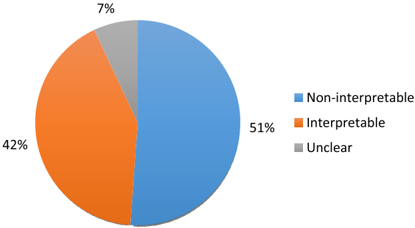
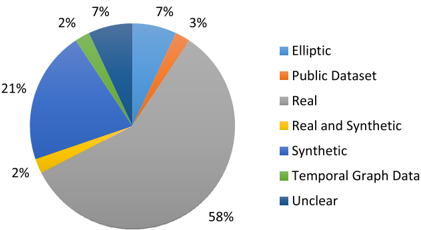
Money laundering has been a global issue for decades, which is one of the major threat for economy and society. Government, regulatory and financial institutions are combating it together in their respective capacity, however still billions of dollars in fines by authorities make the headlines in the news. High-speed internet services have enabled financial institutions to deliver better customer experience through multi-channel engagements, which has led to exponential growth in transactions and new avenues for laundering the money for fraudsters. Literature shows the usage of statistical methods, data mining and Machine Learning (ML) techniques for money laundering detection, but limited research on Deep Learning (DL) techniques, primarily due to lack of model interpretability and explainability of the decisions made. Several studies are conducted on application of ML for Anti-Money Laundering (AML), and Explainable Artificial Intelligence (XAI) techniques in general, but lacks the study on usage of DL techniques together with XAI. This paper aims to review the current state-of-the-art literature on DL together with XAI for identifying suspicious money laundering transactions and identify future research areas. Key findings of the review are, researchers have preferred variants of Convolutional Neural Networks, and AutoEncoder; graph deep learning together with natural language processing is emerging as an important technology for AML; XAI use is not seen in AML domain; 51% ML methods used in AML are non-interpretable, 58% studies used sample of old real data; key challenges for researchers are access to recent real transaction data and scarcity of labelled training data; and data being highly imbalanced. Future research directions are, application of XAI techniques to bring-out explainability, graph deep learning using natural language processing (NLP), unsupervised and reinforcement learning to handle lack of labelled data; and joint research programs between research community and industry to benefit from domain knowledge and controlled access to data.
Overview
The claims and statistics of this paper haven’t been checked yet.
Free: it reads the open-access text and checks the first 5 claims that cite a source we can check. Create a free account to check every claim.
Integrity signals
Registry
Cites
Statistics
Figures




Verification
Claims the paper makes
The claims and statistics of this paper haven’t been checked yet.
Free: it reads the open-access text and checks the first 5 claims that cite a source we can check. Create a free account to check every claim.
Claims other papers make about this one
Each is checked against this paper’s own text: does it say what the citing paper says it does?
The cited source says what the claim attributes to it.
In the citing paper
“Explainable artificial intelligence [12] offers both knowledgedriven and data-driven interpretability approaches [96].”
From A 2030 Roadmap for Software Engineering (2025) · cites this paper as [96]
Self-check
Percentages, sums and reported differences re-computed from the paper’s own numbers.
The self-check needs the paper’s full text.
Citations
Cites
Going deeper with convolutions
Szegedy, C., Liu, W., Jia, Y., Sermanet, P., Reed, S., Anguelov, D., Erhan, D., Vanhoucke, V., & Rabinovich, A. (2015) · 2015 IEEE Conference on Computer Vision and Pattern Recognition (CVPR) · doi:10.1109/cvpr.2015.7298594 · Cited by 48,562
Semi-supervised classification with graph convolutional networks
Kipf, T. N., & Welling, M. (2016) · arXiv · doi:10.48550/arxiv.1609.02907 · Cited by 24,853 · cited 1×
“First using the graph model GCN developed by [37], which took 611 seconds to converge in 32”
MethodA Unified Approach to Interpreting Model Predictions
Lundberg, S., & Lee, S.-I. (2017) · arXiv · doi:10.48550/arxiv.1705.07874 · Cited by 23,707 · cited 1×
“Local Interpretable Model-Agnostic Explanations (LIME) [99] and SHapley Additive exPlana-tions (SHAP) [100] are the highly referred and experimented methods for producing explanations on black box models that use any type of data, followed by Partial Dependence Plots (PDPs).”
Method"Why Should I Trust You?": Explaining the Predictions of Any Classifier
Ribeiro, M. T., Singh, S., & Guestrin, C. (2016) · Proceedings of the 22nd ACM SIGKDD International Conference on Knowledge Discovery and Data Mining · doi:10.1145/2939672.2939778 · Cited by 17,555
Gauriat, C.-M., Pencolé, Y., Ribot, P., & Brouillet, G. (2024) · HAL (Le Centre pour la Communication Scientifique Directe) · doi:10.4230/oasics.dx.2024.27 · Cited by 12,586
Arrieta, A. B., Díaz-Rodríguez, N., Del Ser, J., Bennetot, A., Tabik, S., Barbado, A., García, S., Gil-López, S., Molina, D., Benjamins, R., et al. (2019) · arXiv · doi:10.48550/arxiv.1910.10045 · Cited by 11,321 · cited 2×
“by these models to conclude a transaction is suspicious; and a mandatory ask by regulators to provide rationale of transaction being suspicious, is posing an impediment for adoption of AI/ML technology in finance crime units in financial institutes [16].”
MethodRudin, C. (2019) · Nature Machine Intelligence · doi:10.1038/s42256-019-0048-x · Cited by 10,561 · cited 1×
“While there is mammoth progress on XAI method, [102] argues that the development in XAI is a patchwork to existing ML models and major effort of research community is going in the wrong direction.”
MethodBarredo Arrieta, A., Díaz-Rodríguez, N., Del Ser, J., Bennetot, A., Tabik, S., Barbado, A., Garcia, S., Gil-Lopez, S., Molina, D., Benjamins, R., et al. (2020) · Information Fusion · doi:10.1016/j.inffus.2019.12.012 · Cited by 10,423
Peeking Inside the Black-Box: A Survey on Explainable Artificial Intelligence (XAI)
Adadi, A., & Berrada, M. (2018) · IEEE Access · doi:10.1109/access.2018.2870052 · Cited by 6,294 · cited 1×
“…wants the explanation to justify the decisions, security application domain wants the explanation to control the underlying data and IP that may be uncovered, some domains would need the explanation to improve the decisions, other domains would need the explanation to discover the knowledge [90].”
BackgroundExplainable AI: a review of machine learning interpretability methods
Linardatos, P., Papastefanopoulos, V., & Kotsiantis, S. (2020) · Entropy · doi:10.3390/e23010018 · Cited by 2,922 · cited 1×
“[97] presented a comprehensive review of machine learning interpretabilitymethods using 4 categories– (i) Methods for explaining black box models (17 methods focused on DL method interpretations, 16 methods that can”
MethodNgai, E. W. T., Hu, Y., Wong, Y. H., Chen, Y., & Sun, X. (2011) · Decision Support Systems · doi:10.1016/j.dss.2010.08.006 · Cited by 1,361 · cited 3×
“There are several review papers in literature that demonstrates the application of these methods for detecting suspicious trans-actions [3], [13], [20], [21], [24]–[29], however lacks the focused review on deep learning techniques or XAI techniques in the same domain.”
BackgroundMethodDARPA's Explainable Artificial Intelligence Program
Gunning, D., & Aha, D. W. (2019) · AI Magazine · doi:10.1609/aimag.v40i2.2850 · Cited by 1,360 · cited 3×
“few of them - [86, 99-101], however to the best of our knowledge none of it is applied in AML domain yet.”
BackgroundExplainable AI: From black box to glass box
Rai, A. (2020) · Journal of the Academy of Marketing Science · doi:10.1007/s11747-019-00710-5 · Cited by 1,317 · cited 2×
“few of them - [86, 99-101], however to the best of our knowledge none of it is applied in AML domain yet.”
BackgroundExplainable artificial intelligence: A survey
Dosilovic, F. K., Brcic, M., & Hlupic, N. (2018) · 2018 41st International Convention on Information and Communication Technology, Electronics and Microelectronics (MIPRO) · doi:10.23919/mipro.2018.8400040 · Cited by 1,147 · cited 1×
“The survey, conducted by [91], is emphasizing the literature based on the importance of the trust in the system and a genuine need of explainability, Transparency and Interpretability for the AI applications in judiciary, govern-”
General Data Protection Regulation (GDPR)
Deaves, M. (2017) · Cited by 816
Explainable AI: A Brief Survey on History, Research Areas, Approaches and Challenges
Xu, F., Uszkoreit, H., Du, Y., Fan, W., Zhao, D., & Zhu, J. (2019) · Lecture Notes in Computer Science · doi:10.1007/978-3-030-32236-6_51 · Cited by 758 · cited 1×
“Explainable AI work is categorized into two groups [92]–(i) transparency design that focuses on the internal functioning of the model from developer’s point of view and (ii) post-hoc design, which explains why a result is inferred from the user’s point of view.”
BackgroundFastGCN: Fast Learning with Graph Convolutional Networks via Importance Sampling
Chen, J., Ma, T., & Xiao, C. (2018) · arXiv (Cornell University) · doi:10.48550/arxiv.1801.10247 · Cited by 406 · cited 1×
“Second experiment using the improved graph model FastGCN [38], which took 386 seconds to converge on the same number of epochs.”
MethodStepin, I., Alonso, J. M., Catala, A., & Pereira-Farina, M. (2021) · IEEE Access · doi:10.1109/access.2021.3051315 · Cited by 376 · cited 1×
“[96] examined the theoretical foundation for C&C explanations and reported the state-of-the-art computation frameworks for generating the C&C explanations and identi-”
BackgroundKönigstorfer, F., & Thalmann, S. (2020) · Journal of Behavioral and Experimental Finance · doi:10.1016/j.jbef.2020.100352 · Cited by 297 · cited 2×
“Explainable AI has become a prerequisite for building the trust, and to drive adoption of AI systems in high stake domains such as finance crime, credit risks, healthcare which requires reliability, safety and fairness [42], [43] [18].”
BackgroundDetection of illicit accounts over the Ethereum blockchain
Farrugia, S., Ellul, J., & Azzopardi, G. (2020) · Expert Systems with Applications · doi:10.1016/j.eswa.2020.113318 · Cited by 284
Explaining the black-box model: A survey of local interpretation methods for deep neural networks
Liang, Y., Li, S., Yan, C., Li, M., & Jiang, C. (2021) · Neurocomputing · doi:10.1016/j.neucom.2020.08.011 · Cited by 253 · cited 2×
“The local interpretable methods for DNN published between 2012 and 2020 are categorized into two groups [94]as (i) model-driven– describes 20 methods and (ii) data-driven–describes 27 methods.”
BackgroundMethodExplainable Reinforcement Learning: A Survey
Puiutta, E., & Veith, E. M. S. P. (2020) · Lecture Notes in Computer Science · doi:10.1007/978-3-030-57321-8_5 · Cited by 252
Chen, Z., Van Khoa, L. D., Teoh, E. N., Nazir, A., Karuppiah, E. K., & Lam, K. S. (2018) · Knowledge and Information Systems · doi:10.1007/s10115-017-1144-z · Cited by 251 · cited 8×
“…researchers have started leveraging the machine learning technologies to automatically identify the suspicious transaction patterns using a variety of solution categories such as AML typologies, link analysis, behavioral modelling, risk scoring, anomaly detection, and geographic capability [13].”
BackgroundMethodInfluentialA Survey of Data-driven and Knowledge-aware eXplainable AI
Li, X.-H., Cao, C. C., Shi, Y., Bai, W., Gao, H., Qiu, L., Wang, C., Gao, Y., Zhang, S., Xue, X., et al. (2020) · IEEE Transactions on Knowledge and Data Engineering · doi:10.1109/tkde.2020.2983930 · Cited by 224 · cited 1×
“Li et al. [95] reviewed a literature of XAI published over the last decade and presented using three phases of XAI lifecycle– methodology, evaluation and application.”
MethodDetecting money laundering transactions with machine learning
Jullum, M., Løland, A., Huseby, R. B., Ånonsen, G., & Lorentzen, J. (2020) · Journal of Money Laundering Control · doi:10.1108/jmlc-07-2019-0055 · Cited by 205 · cited 2×
“…detection perspective’ are, keeping the rules up-to-date and relevant at all the times, and weighing different rules is almost impossible [32], generation of a large number of false positive alerts–up to 98% [33] and inability to handle a high volume of different type of structured data,…”
BackgroundMethodMachine Learning for Financial Risk Management: A Survey
Mashrur, A., Luo, W., Zaidi, N. A., & Robles-Kelly, A. (2020) · IEEE Access · doi:10.1109/access.2020.3036322 · Cited by 200 · cited 3×
“Explainable AI has become a prerequisite for building the trust, and to drive adoption of AI systems in high stake domains such as finance crime, credit risks, health-care which requires reliability, safety and fairness [42], [43] [18].”
BackgroundCompetence of Graph Convolutional Networks for Anti-Money Laundering in Bitcoin Blockchain
Alarab, I., Prakoonwit, S., & Nacer, M. I. (2020) · International Conference on Machine Learning Technologies (ICMLT) · doi:10.1145/3409073.3409080 · Cited by 183 · cited 2×
“First category is to identify the suspicious transactions , example - [23], [40] has presented the AutoEn-coder and Graph CNN deep learning methods respectively to identify suspicious transactions; and second category is to help investigate the identified suspicious transactions or alerts identified…”
BackgroundCanhoto, A. I. (2021) · Journal of Business Research · doi:10.1016/j.jbusres.2020.10.012 · Cited by 171
A review of money laundering literature: the state of research in key areas
Tiwari, M., Gepp, A., & Kumar, K. (2020) · Pacific Accounting Review · doi:10.1108/par-06-2019-0065 · Cited by 170 · cited 6×
“…several papers have been published with different machine learning techniques summarized in many comprehensive literature review papers such as [3], [21], [24], [25], however by looking at the penalties issued by authorities for financial institutions in single year 2019 [11], it is evident…”
BackgroundInfluentialScalable Graph Learning for Anti-Money Laundering: A First LookPreprint
Weber, M. C., Chen, J., Suzumura, T., Pareja, A., Ma, T., Kanezashi, H., Kaler, T., Leiserson, C. E., & Schardl, T. B. (2018) · arXiv (Cornell University) · doi:10.48550/arxiv.1812.00076 · Cited by 158 · cited 5×
“to help investigate the identified suspicious transactions or alerts identified by rule-based systems, which is commonly called as decision support systems, example - [22], [39] has presented amulti-channel CNN using NLP and scalable GCN method as a decision support system for investigating the”
BackgroundMethodInfluentialDeep learning the dynamic appearance and shape of facial action units
Jaiswal, S., & Valstar, M. (2016) · 2016 IEEE Winter Conference on Applications of Computer Vision (WACV) · doi:10.1109/wacv.2016.7477625 · Cited by 157 · cited 1×
“Deep learning techniques have been used in various fields for predictions and found to be giving highly accurate results [34]–[36].”
MethodMachine Learning and Sampling Scheme: An Empirical Study of Money Laundering Detection
Zhang, Y., & Trubey, P. (2018) · Computational Economics · doi:10.1007/s10614-018-9864-z · Cited by 150
Paula, E. L., Ladeira, M., Carvalho, R. N., & Marzagao, T. (2016) · 2016 15th IEEE International Conference on Machine Learning and Applications (ICMLA) · doi:10.1109/icmla.2016.0172 · Cited by 139 · cited 3×
“First category is to identify the suspicious transactions , example - [23], [40] has presented the AutoEn-coder and Graph CNN deep learning methods respectively to identify suspicious transactions; and second category is to help investigate the identified suspicious transactions or alerts identified…”
BackgroundMethodStatistical Methods for Fighting Financial Crimes
Sudjianto, A., Nair, S., Yuan, M., Zhang, A., Kern, D., & Cela-Díaz, F. (2010) · Technometrics · doi:10.1198/tech.2010.07032 · Cited by 135 · cited 3×
“[29] provided a survey of statistical methods, data mining and machine learning techniques used for”
BackgroundMethodInvestigation of Applying Machine Learning for Watch-List Filtering in Anti-Money Laundering
Alkhalili, M., Qutqut, M. H., & Almasalha, F. (2021) · IEEE Access · doi:10.1109/access.2021.3052313 · Cited by 129
Artificial Intelligence and Law Enforcement
Rademacher, T. (2019) · Springer eBooks · doi:10.1007/978-3-030-32361-5_10 · Cited by 113 · cited 1×
“clear-enough guidelines for directing legislative and administration considerations for adoption of AI [107].”
BackgroundScenario-Based Requirements Elicitation for User-Centric Explainable AI: A Case in Fraud Detection
Cirqueira, D., Nedbal, D., Helfert, M., & Bezbradica, M. (2020) · Lecture notes in computer science · doi:10.1007/978-3-030-57321-8_18 · Cited by 110 · cited 1×
“Thestudy conducted by [89] enforces the need to understand the operational environment of stakeholders who are going to use the explanations generated by XAI methods, to support their decision-making process.”
BackgroundSalazar, J., Vargas, M. J. S., & Camacho‐Miñano, M. (2020) · Expert Systems with Applications · doi:10.1016/j.eswa.2020.114470 · Cited by 105
Applying data mining in investigating money laundering crimes
Zhang, Z. M., Salerno, J. J., & Yu, P. S. (2003) · ACM SIGKDD Conference on Knowledge Discovery and Data Mining (KDD) · doi:10.1145/956750.956851 · Cited by 95
Developing an intelligent data discriminating system of anti-money laundering based on SVM
Tang, J., & Yin, J. (2005) · International Conference on Machine Learning and Cybernetics · doi:10.1109/icmlc.2005.1527539 · Cited by 91 · cited 1×
“…methods, machine learning to DL, severity of ‘suspicious money laundering transactions detection’ issue has remained more or less constant since last two decades (example Tang and Yin [103] presented a SVM based method in 2005, [32] presented machine learning based technique in year 2020).”
MethodChao, X., Kou, G., Peng, Y., & Alsaadi, F. E. (2019) · Technological and Economic Development of Economy · doi:10.3846/tede.2019.9383 · Cited by 88
Application of Data Mining for Anti-money Laundering Detection: A Case Study
Le‐Khac, N., & Kechadi, T. (2010) · IEEE ... International Conference on Data Mining workshops · doi:10.1109/icdmw.2010.66 · Cited by 86
Financial Crime & Fraud Detection Using Graph Computing: Application Considerations & Outlook
Kurshan, E., Shen, H., & Yu, H. (2020) · International Conference on Transdisciplinary AI (TransAI) · doi:10.1109/transai49837.2020.00029 · Cited by 85 · cited 2×
“eral challenges [104] such as complexities due to highspeed transaction systems, real-time systems, multi-channel updates, data size, data speed, data variety, and several business applications involved; which makes the practical implementation harder.”
BackgroundTownsend, J., Chaton, T., & Monteiro, J. M. (2020) · IEEE Transactions on Neural Networks and Learning Systems · doi:10.1109/tnnls.2019.2944672 · Cited by 78 · cited 1×
“Townsend et al. [93] presented a review of the old and new methods of extraction without relational explanation.”
MethodThe Application of Artificial Intelligence in Financial Compliance Management
Al-Shabandar, R., Lightbody, G., Browne, F., Liu, J., Wang, H., & Zheng, H. (2019) · International Conference on Artificial Intelligence and Advanced Manufacture (AIAM) · doi:10.1145/3358331.3358339 · Cited by 77 · cited 1×
“Having such a framework will not only increase the efficiency in AML operations but also reduce operational cost that goes into investigation of false positive alerts [15], [17].”
BackgroundBadal-Valero, E., Álvarez-Jareño, J. A., & Pavía, J. M. (2017) · Forensic Science International · doi:10.1016/j.forsciint.2017.11.008 · Cited by 74
A Model for Detecting Cryptocurrency Transactions with Discernible Purpose
Baek, H., Oh, J., Kim, C. Y., & Lee, K. (2019) · International Conference on Ubiquitous and Future Networks · doi:10.1109/icufn.2019.8806126 · Cited by 66
Finding Suspicious Activities in Financial Transactions and Distributed Ledgers
Camino, R. D., State, R., Montero, L. P., & Valtchev, P. (2017) · IEEE ... International Conference on Data Mining workshops · doi:10.1109/icdmw.2017.109 · Cited by 61 · cited 1×
“Example - [77] has applied the ensemble learning to find the suspicious transactions in distributed ledger payments.”
MethodState of the Art Control of Atari Games Using Shallow Reinforcement Learning
Liang, Y., Machado, M. C., Talvitie, E., & Bowling, M. (2016) · Adaptive Agents and Multi-Agents Systems · doi:10.5555/2936924.2936996 · Cited by 50
Suspicious activity reporting using dynamic bayesian networks
Raza, S., & Haider, S. (2011) · Procedia Computer Science · doi:10.1016/j.procs.2010.12.162 · Cited by 49
Han, J., Barman, U., Hayes, J., Du, J., Burgin, E., & Wan, D. (2018) · Proceedings of ACL 2018, System Demonstrations · doi:10.18653/v1/p18-4007 · Cited by 49 · cited 2×
“Han et al. [39] developed a novel distributed and scalable framework using DL driven natural language processing (NLP) technology to augment AML monitoring and investigation.”
MethodResearch on anti-money laundering based on core decision tree algorithm
Liu, R., Qian, X., Mao, S., & Zhu, S.-Z. (2011) · Chinese Control and Decision Conference (CCDC) · doi:10.1109/ccdc.2011.5968986 · Cited by 46
AI against money laundering networks: the Colombian case
García-Bedoya, O., Granados, O. M., & Burgos, J. C. (2020) · Journal of Money Laundering Control · doi:10.1108/jmlc-04-2020-0033 · Cited by 46
No Smurfs: Revealing Fraud Chains in Mobile Money Transfers
Zhdanova, M., Repp, J., Rieke, R., Gaber, C., & Hemery, B. (2014) · International Conference on Availability, Reliability and Security (ARES) · doi:10.1109/ares.2014.10 · Cited by 40
Anti-money laundering systems: a systematic literature review
Alsuwailem, A. A. S., & Saudagar, A. K. J. (2020) · Journal of Money Laundering Control · doi:10.1108/jmlc-02-2020-0018 · Cited by 40 · cited 4×
“The key findings by [24] are–Decision Tree, Radom Forest and SVM are most frequently used algorithms in AML system from supervised category, neural networks is mostly used in unsupervised category; Accuracy, Area Under the Curve (AUC) and precision are used for model evaluation; most of the data…”
BackgroundMethodInfluentialLabib, N. M., Rizka, M. A., & Shokry, A. E. M. (2020) · Lecture notes in networks and systems · doi:10.1007/978-981-15-3075-3_5 · Cited by 39 · cited 4×
“…papers have been published with different machine learning techniques summarized in many comprehensive literature review papers such as [3], [21], [24], [25], however by looking at the penalties issued by authorities for financial institutions in single year 2019 [11], it is evident that the…”
BackgroundMethodInfluentialData mining for statistical analysis of money laundering transactions
Lokanan, M. E. (2019) · Journal of Money Laundering Control · doi:10.1108/jmlc-03-2019-0024 · Cited by 35 · cited 2×
“Most of the published researches have used a limited set of data (limited to transactions) and ignored the data pre-processing part [13] and [19].”
BackgroundMethodState of the Art Control of Atari Games Using Shallow Reinforcement Learning
Liang, Y., Machado, M. C., Talvitie, E., & Bowling, M. (2015) · arXiv (Cornell University) · doi:10.48550/arxiv.1512.01563 · Cited by 33
Leite, G. S., Albuquerque, A. B., & Pinheiro, P. R. (2019) · Applied Sciences · doi:10.3390/app9224800 · Cited by 33 · cited 2×
“The key findings by [26] are, among the application domains, detection of suspicious transaction attracted more attention of researchers, from support systems adoption point of view, data mining techniques were used seldom for money laun-dering detection.”
BackgroundLi, X., Cao, X., Qiu, X., Zhao, J., & Zheng, J. (2017) · International Conference on Advanced Cloud and Big Data · doi:10.1109/cbd.2017.38 · Cited by 30
A Secure Framework for Anti-Money-Laundering using Machine Learning and Secret Sharing
Zand, A., Orwell, J., & Pflüegel, E. (2020) · International Conference on Cyber Security and Protection of Digital Services (Cyber Security) · doi:10.1109/cybersecurity49315.2020.9138889 · Cited by 30 · cited 1×
“A study conducted by 109] presents a secure framework for AML using ML and secret sharing between Banks, which is one step in this direction.”
BackgroundGraph mining approach to suspicious transaction detection
Michalak, K., & Korczak, J. (2011) · Cited by 29
Liu, X., & Zhang, P. (2010) · doi:10.1109/mediacom.2010.37 · Cited by 29
Westerski, A., Kanagasabai, R., Shaham, E., Amudha, N., Wong, J., & Singh, M. (2021) · International Transactions in Operational Research · doi:10.1111/itor.12968 · Cited by 28 · cited 1×
“…in bitcoin domain [87] presented a study of applying XAI techniques to visualize and understand the results obtained from unsupervised learning, [88] presented an explainable anomaly detection technique for procurement fraud detections; however no research found in the literature that describes…”
Applying Data Mining in Money Laundering Detection for the Vietnamese Banking Industry
Cao, D. K. M., & Do, P. (2012) · Lecture notes in computer science · doi:10.1007/978-3-642-28490-8_22 · Cited by 27
Le‐Khac, N., Markos, S., & Kechadi, T. (2010) · Lecture notes of the Institute for Computer Sciences, Social Informatics and Telecommunications Engineering · doi:10.1007/978-3-642-11534-9_8 · Cited by 26
Detection of money laundering groups: Supervised learning on small networks
Savage, D., Wang, Q., Zhang, X., Chou, P. L., & Yu, X. (2017) · National Conference on Artificial Intelligence · Cited by 26
Plaksiy, K. V., Nikiforov, A., & Miloslavskaya, N. G. (2018) · International Conference on Future Internet of Things and Cloud Workshops (FiCloudW) · doi:10.1109/w-ficloud.2018.00017 · Cited by 20
Anti Money Laundering detection using Naïve Bayes Classifier
Kumar, A., Das, S., & Tyagi, V. (2020) · IEEE International Conference on Computing, Power and Communication Technologies (IC2PCT) · doi:10.1109/gucon48875.2020.9231226 · Cited by 19
Irofti, P., Pătraşcu, A., & Bălțoiu, A. (2020) · Studies in computational intelligence · doi:10.1007/978-3-030-52067-0_23 · Cited by 18 · cited 2×
“Apart from the reviews listed in the above 4 categories, [25] presents the review of anomaly detection methods for fraud detection using graph structures, [27] presents the analysis of anomaly detection, machine learning and neural networks, and [28] presents the measures for fraud detection.”
BackgroundMethodMachine Learning Methodologies Against Money Laundering in Non-Banking Correspondents
Guevara, J., García-Bedoya, O., & Granados, O. M. (2020) · Communications in computer and information science · doi:10.1007/978-3-030-61702-8_6 · Cited by 18
A proposal for online analysis and identification of fraudulent financial transactions
Torres, R. A. L., & Ladeira, M. (2020) · International Conference on Machine Learning and Applications · doi:10.1109/icmla51294.2020.00047 · Cited by 18
Study on Anti-Money Laundering Service System of Online Payment Based on Union-Bank Mode
Yang, Q., Feng, B., & Song, P. (2007) · International Conference on Wireless Communications, Networking and Mobile Computing · doi:10.1109/wicom.2007.1223 · Cited by 17
Comparison of data mining techniques for Money Laundering Detection System
Dreżewski, R., Dziuban, G., Hernik, L., & Paczek, M. (2015) · International Conference on Science in Information Technology · doi:10.1109/icsitech.2015.7407767 · Cited by 17
Anomaly Detection with Machine Learning and Graph Databases in Fraud Management
Magomedov, S. G., Pavelyev, S., Ivanova, I., Dobrotvorskiy, A. S., Khrestina, M., & Yusubaliev, T. (2018) · International Journal of Advanced Computer Science and Applications · doi:10.14569/ijacsa.2018.091104 · Cited by 16
DBSCAN Clustering Algorithm Applied to Identify Suspicious Financial Transactions
Yang, Y. Q., Lian, B., Li, L., Chen, C., & Li, P. (2014) · International Conference on Cyber-Enabled Distributed Computing and Knowledge Discovery (CyberC) · doi:10.1109/cyberc.2014.89 · Cited by 15
Shokry, A. E. M., Rizka, M. A., & Labib, A. N. M. (2020) · doi:10.33965/ict_csc_wbc_2020_202008l012 · Cited by 15
Bitcoin Data Analytics: Scalable techniques for transaction clustering and embedding generation
Shah, R. S., Bhatia, A., Gandhi, A., & Mathur, S. (2021) · International Conference on Communication Systems & Networks (COMSNETS) · doi:10.1109/comsnets51098.2021.9352922 · Cited by 14 · cited 1×
“XAI techniques are applied in other related domains such as, in bitcoin domain [87] presented a study of applying XAI techniques to visualize and understand the results obtained from unsupervised learning, [88] presented an explainable anomaly detection technique for procurement fraud detections;…”
Tertychnyi, P., Slobozhan, I., Ollikainen, M., & Dumas, M. (2020) · Lecture notes in business information processing · doi:10.1007/978-3-030-64466-6_3 · Cited by 13 · cited 1×
“A study conducted by [48] has presented a two-layered approach to address the class-imbalance and scalability issue for machine learning.”
BackgroundIntegrating Client Profiling in an Anti-money Laundering Multi-agent Based System
Alexandre, C., & Balsa, J. (2016) · Advances in intelligent systems and computing · doi:10.1007/978-3-319-31232-3_88 · Cited by 11
Adaptive Pattern Matching with Reinforcement Learning for Dynamic Graphs
Kanezashi, H., Suzumura, T., García-Gasulla, D., Oh, M.-H., & Matsuoka, S. (2018) · IEEE International Conference on High Performance Computing, Data, and Analytics · doi:10.1109/hipc.2018.00019 · Cited by 10
Anti-money Laundering (AML) Research: A System for Identification and Multi-classification
Feng, Y., Li, C., Wang, Y., Wang, J., Zhang, G., Xing, C., Li, Z., & Lian, Z. (2019) · Lecture notes in computer science · doi:10.1007/978-3-030-30952-7_19 · Cited by 10 · cited 1×
“[41] has proposed a multi-classification method for detecting suspicious behavior and categorizing the money laundering related crime using SVM, Liner Regression (LR) and Multi-Layer Perceptron.”
MethodUsing quantitative methods to identify insecurity due to unusual business operations
Korauš, A., Gombár, M., Kelemen, P., & Backa, S. (2019) · Journal of Entrepreneurship and Sustainability Issues · doi:10.9770/jesi.2019.6.3(3 · Cited by 8
Artificial Intelligence and Law Enforcement
Fuster, G. G. (2020) · VUBIR (Vrije Universiteit Brussel) · Cited by 8
Global knowledge management of suspicious transaction reporting system in Japan
Yasaka, N. (2020) · Journal of Money Laundering Control · doi:10.1108/jmlc-04-2019-0032 · Cited by 7
Jayasree, V., & Balan, R. V. S. (2015) · Asian Journal of Applied Sciences · doi:10.3923/ajaps.2015.173.184 · Cited by 5
Sullivan, K. (2015) · Apress eBooks · doi:10.1007/978-1-4302-6161-2_1 · Cited by 4
Data Mining in the Investigation of Money Laundering and Terrorist Financing
George, I., & Kavakli, M. (2010) · IGI Global eBooks · doi:10.4018/978-1-61692-865-0.ch012 · Cited by 2
Cox, D. (2012) · doi:10.1002/9780470685259.ch1 · Cited by 2
Chen, Y., Zheng-ding, L., Rui-xuan, L., Li, Y., & Xiao-lin, S. (2006) · Wuhan University Journal of Natural Sciences · doi:10.1007/bf02829213 · Cited by 1
Data Mining in the Investigation of Money Laundering and Terrorist Financing
George, I., & Kavakli, M. (2011) · IGI Global eBooks · doi:10.4018/9781616928650.ch012 · Cited by 1
Chen, T., Wang, Z., Li, L., Li, D., Li, Z., Chang, X., Bian, P., Liang, G., Wang, Q., & Xie, T. (2025) · Schloss Dagstuhl – Leibniz-Zentrum für Informatik · doi:10.4230/lipics.ecoop.2025.6
Research works printed but not linked: 24
- han, 2015, NextGen AML: Distributed deep learning based language technologies to augment anti money laundering investigation, Proc Assoc for Computational Linguistics (ACL '01), 37
- kitchenham, 2007, Guidelines for performing systematic literature reviews in software engineering, Guidelines for Performing Systematic Literature Reviews in Software Engineering
- shaju, 2019, Measures for financial fraud detection using data analytics and machine learning, Int J Adv Sci Technol, 28, 270
- semenov, 2017, Survey of common design approaches in AML software development, Proc CEUR-WS, 1
- jayasree, 2016, Anti money laundering in financial institutions using affiliation mapping calculation and sequential mining, J Eng Appl Sci, 11, 51
- 2019, Anti-Money Laundering and Counter-Terrorism Financing Act 2006 AUSTRAC Editor
- 2021, O o P A Credit Suisse Group of Switzerland Was Fined $536 Million 2009
- 2021, Bank Secrecy Act (BSA) Statute
- 2012, HSBC to Pay $1 9B to Settle Money-Laundering Case www cbc ca
- quinn, 2009, The Telegraph The Telegraph
- 2012, ING Fined a Record Amount Penalty of $619 Million Tied to Cuba Iran for Violating U S Economic Sanctions
- 2018, Title 1 81 5 california consumer privacy act of 2018
- 10.1145/3409073.3409080 · DOI
- paula, 2017, Deep learning anomaly detection as suppor fraud investigation in Brazilian exports and anti-money laundering, Proc 15th IEEE Int Conf Mach Learn Appl (ICMLA), 954
- zhang, 2008, Research on money laundering recognition based on decision thee algorithm, Wuhan Ligong Daxue Xuebao/Journal of Wuhan University of Technology, 30, 154
- 2021, Money-laundering and globalization
- force, 2020, International Standards On Combating Money Laundering and The Financing Of Terrorism & Proliferation—FATF Recommendations F A T Force Editor 2020 Financial Action Task Force
- board, 0, Artificial Intelligence and Machine Learning in Financial Services 2017
- 2018, AUSTRAC and CBA Agree $700m Penalty
- monroe, 2021, Fincrime Briefing AML Fines in 2019 Breach $8 Billion Treasury Official Pleads Guilty to Leaking 2020 Crypto Compliance Outlook
- 2020, A T R a A AUSTRAC and Westpac Agree to Proposed $1 3bn Penalty
- 2019, Risk Transforming Approaches to AML and Financial Crime
- 2018, Machine Learning in Anti-Money Laundering—Summary Report
- 2021, Explainable AI Driving Business Value Through Greater Understanding 2017
Cited by
Explainable Artificial Intelligence Applications in Cyber Security: State-of-the-Art in Research
Zhang, Z., Hamadi, H. A., Damiani, E., Yeun, C. Y., & Taher, F. (2022) · IEEE Access · doi:10.1109/access.2022.3204051 · Cited by 450
“To combat the finance crime targeting smart financial systems, one of the primary priorities in the smart financial domain should be the implementation of XAI [245].”
BackgroundA., S., & R., S. (2023) · Decision Analytics Journal · doi:10.1016/j.dajour.2023.100230 · Cited by 432
Weber, P., Carl, K. V., & Hinz, O. (2024) · Management Review Quarterly · doi:10.1007/s11301-023-00320-0 · Cited by 292
“Besides, anti-money laundering is one of the most pressing issues threatening financial systems (Kute et al. 2021).”
InfluentialExplainable AI Over the Internet of Things (IoT): Overview, State-of-the-Art and Future Directions
Jagatheesaperumal, S. K., Pham, Q.-V., Ruby, R., Yang, Z., Xu, C., & Zhang, Z. (2022) · IEEE Open Journal of the Communications Society · doi:10.1109/ojcoms.2022.3215676 · Cited by 171
“For instance, we do not mind if the model recommends a particular movie as the best match, but we certainly do care about the reason for rejecting a credit card application made by someone [3].”
The Impact of Artificial Intelligence Disclosure on Financial Performance
Shiyyab, F. S., Alzoubi, A. B., Obidat, Q. M., & Alshurafat, H. (2023) · International Journal of Financial Studies · doi:10.3390/ijfs11030115 · Cited by 236
Metadata
- Authors
- Kute, D. V., Pradhan, B., Shukla, N., & Alamri, A.
- Affiliations
- University of Technology Sydney (AU)
- King Saud University (SA)
- Venue
- IEEE Access
- Published
- 2021
- Volume
- 9
- Pages
- 82300-82317
- ISSN
- 2169-3536 (ISSN-L)
- OpenAlex
- W3171973514
- Cited by
- 209
- References
- 89
- Citations by year
- 2026: 45 · 2025: 65 · 2024: 46 · 2023: 34 · 2022: 16 · 2021: 3
- FWCI
- 8.71
- Type
- journal article
- Language
- en
- Open access
- gold
- doi.org
- Locations
- IEEE Access (publishedVersion, cc-by)
- DOAJ (DOAJ: Directory of Open Access Journals) (submittedVersion, cc-by-sa)
- Griffith Research Online (submittedVersion, cc-by)
- Greater South Information System
- Funders
- Centre for Advanced Modelling and Geospatial Information Systems (CAMGIS), Faculty of Engineering and IT, University of Technology Sydney (UTS), Sydney, NSW, Australia
- Researchers Supporting Project, King Saud University, Riyadh, Saudi Arabia (RSP-2020/14)
- Topics
- Physical Sciences › Computer Science › Artificial Intelligence › Imbalanced Data Classification Techniques
- Social Sciences › Sociology and Political Science › Crime, Illicit Activities, and Governance
- Physical Sciences › Computer Science › Artificial Intelligence › Explainable Artificial Intelligence (XAI)
- Keywords
- money laundering detection, anti-money laundering, deep learning, explainable AI, convolutional neural networks, autoencoder, graph-based deep learning, natural language processing, model interpretability, class imbalance, financial transaction data, fraud detection
About these checks
Registry, retraction, Cites and statistics results are computed, not judged, with one exception: a printed reference that no index lists is read once by a model before it counts as a citation error. Claims are extracted by a model and kept only when their quote appears verbatim in the text; each cited source is then checked, with a model’s help, for whether it says what the claim relies on. Those verdicts can be wrong — read the claim’s quote and the cited source before relying on one.
Statistics and arithmetic are recomputed, not judged.
Confidence bands are shown only for fields calibrated on our annotated test set. None is calibrated yet, so no band is shown.
What counts as a claim ›How we measure confidence ›How we check this ›
Are you an author, or do you see a problem with this page? Request a review
Data sources
Bibliographic data: Semantic Scholar, OpenAlex, Crossref.
Contains information from the Semantic Scholar Academic Graph Datasets, made available under the ODC Attribution License (ODC-BY 1.0).
Semantic Scholar’s data is described in: Kinney, R., et al. (2023). The Semantic Scholar Open Data Platform. arXiv:2301.10140.
