

Deep Learning and Explainable Artificial Intelligence Techniques Applied for Detecting Money Laundering–A Critical Review
Open accessThe DOI matches its Crossref record; 92 of the 92 references it cites were found in a registry or an index.
Abstract
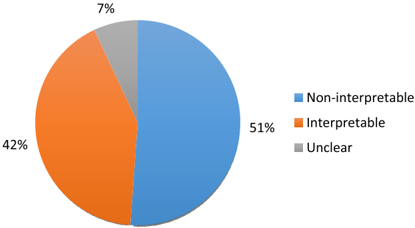
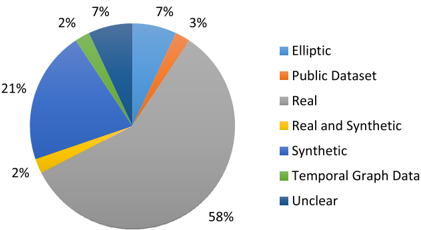
Money laundering has been a global issue for decades, which is one of the major threat for economy and society. Government, regulatory and financial institutions are combating it together in their respective capacity, however still billions of dollars in fines by authorities make the headlines in the news. High-speed internet services have enabled financial institutions to deliver better customer experience through multi-channel engagements, which has led to exponential growth in transactions and new avenues for laundering the money for fraudsters. Literature shows the usage of statistical methods, data mining and Machine Learning (ML) techniques for money laundering detection, but limited research on Deep Learning (DL) techniques, primarily due to lack of model interpretability and explainability of the decisions made. Several studies are conducted on application of ML for Anti-Money Laundering (AML), and Explainable Artificial Intelligence (XAI) techniques in general, but lacks the study on usage of DL techniques together with XAI. This paper aims to review the current state-of-the-art literature on DL together with XAI for identifying suspicious money laundering transactions and identify future research areas. Key findings of the review are, researchers have preferred variants of Convolutional Neural Networks, and AutoEncoder; graph deep learning together with natural language processing is emerging as an important technology for AML; XAI use is not seen in AML domain; 51% ML methods used in AML are non-interpretable, 58% studies used sample of old real data; key challenges for researchers are access to recent real transaction data and scarcity of labelled training data; and data being highly imbalanced. Future research directions are, application of XAI techniques to bring-out explainability, graph deep learning using natural language processing (NLP), unsupervised and reinforcement learning to handle lack of labelled data; and joint research programs between research community and industry to benefit from domain knowledge and controlled access to data.
Overview
The claims and statistics of this paper haven’t been checked yet.
Free: it reads the open-access text and checks the first 5 claims that cite a source we can check. Create a free account to check every claim.
Integrity signals
Registry
Cites
Statistics
Figures




Verification
Claims the paper makes
The claims and statistics of this paper haven’t been checked yet.
Free: it reads the open-access text and checks the first 5 claims that cite a source we can check. Create a free account to check every claim.
Claims other papers make about this one
Each is checked against this paper’s own text: does it say what the citing paper says it does?
The cited source says what the claim attributes to it.
In the citing paper
“Explainable artificial intelligence [12] offers both knowledgedriven and data-driven interpretability approaches [96].”
From A 2030 Roadmap for Software Engineering (2025) · cites this paper as [96]
Self-check
Percentages, sums and reported differences re-computed from the paper’s own numbers.
The self-check needs the paper’s full text.
Citations
Cites
Going deeper with convolutions
Szegedy, C., Liu, W., Jia, Y., Sermanet, P., Reed, S., Anguelov, D., Erhan, D., Vanhoucke, V., & Rabinovich, A. (2015) · 2015 IEEE Conference on Computer Vision and Pattern Recognition (CVPR) · doi:10.1109/cvpr.2015.7298594 · Cited by 48,562
Semi-supervised classification with graph convolutional networks
Kipf, T. N., & Welling, M. (2016) · arXiv · doi:10.48550/arxiv.1609.02907 · Cited by 24,853 · cited 1×
“First using the graph model GCN developed by [37], which took 611 seconds to converge in 32”
MethodA Unified Approach to Interpreting Model Predictions
Lundberg, S., & Lee, S.-I. (2017) · arXiv · doi:10.48550/arxiv.1705.07874 · Cited by 23,707 · cited 1×
“Local Interpretable Model-Agnostic Explanations (LIME) [99] and SHapley Additive exPlana-tions (SHAP) [100] are the highly referred and experimented methods for producing explanations on black box models that use any type of data, followed by Partial Dependence Plots (PDPs).”
Method"Why Should I Trust You?": Explaining the Predictions of Any Classifier
Ribeiro, M. T., Singh, S., & Guestrin, C. (2016) · Proceedings of the 22nd ACM SIGKDD International Conference on Knowledge Discovery and Data Mining · doi:10.1145/2939672.2939778 · Cited by 17,555
Gauriat, C.-M., Pencolé, Y., Ribot, P., & Brouillet, G. (2024) · HAL (Le Centre pour la Communication Scientifique Directe) · doi:10.4230/oasics.dx.2024.27 · Cited by 12,586
Arrieta, A. B., Díaz-Rodríguez, N., Del Ser, J., Bennetot, A., Tabik, S., Barbado, A., García, S., Gil-López, S., Molina, D., Benjamins, R., et al. (2019) · arXiv · doi:10.48550/arxiv.1910.10045 · Cited by 11,321 · cited 2×
“by these models to conclude a transaction is suspicious; and a mandatory ask by regulators to provide rationale of transaction being suspicious, is posing an impediment for adoption of AI/ML technology in finance crime units in financial institutes [16].”
MethodRudin, C. (2019) · Nature Machine Intelligence · doi:10.1038/s42256-019-0048-x · Cited by 10,561 · cited 1×
“While there is mammoth progress on XAI method, [102] argues that the development in XAI is a patchwork to existing ML models and major effort of research community is going in the wrong direction.”
MethodBarredo Arrieta, A., Díaz-Rodríguez, N., Del Ser, J., Bennetot, A., Tabik, S., Barbado, A., Garcia, S., Gil-Lopez, S., Molina, D., Benjamins, R., et al. (2020) · Information Fusion · doi:10.1016/j.inffus.2019.12.012 · Cited by 10,423
Peeking Inside the Black-Box: A Survey on Explainable Artificial Intelligence (XAI)
Adadi, A., & Berrada, M. (2018) · IEEE Access · doi:10.1109/access.2018.2870052 · Cited by 6,294 · cited 1×
“…wants the explanation to justify the decisions, security application domain wants the explanation to control the underlying data and IP that may be uncovered, some domains would need the explanation to improve the decisions, other domains would need the explanation to discover the knowledge [90].”
BackgroundExplainable AI: a review of machine learning interpretability methods
Linardatos, P., Papastefanopoulos, V., & Kotsiantis, S. (2020) · Entropy · doi:10.3390/e23010018 · Cited by 2,922 · cited 1×
“[97] presented a comprehensive review of machine learning interpretabilitymethods using 4 categories– (i) Methods for explaining black box models (17 methods focused on DL method interpretations, 16 methods that can”
Method
Research works printed but not linked: 17
- J. Han, ''NextGen AML: Distributed deep learning based language tech- nologies to augment anti money laundering investigation,'' in Proc. Assoc. Comput. Linguistics (ACL), 2015, pp. 37-42.
- B. Kitchenham and S. Charters, ''Guidelines for performing systematic literature reviews in software engineering,'' in Guidelines for Performing Systematic Literature Reviews in Software Engineering.
- B. Shaju and N. Valliammal, ''Measures for financial fraud detection using data analytics and machine learning,'' Int. J. Adv. Sci. Technol., vol. 28, no. 17, pp. 270-280, 2019.
- A. Semenov, ''Survey of common design approaches in AML software development,'' in Proc. CEUR-WS, 2017, pp. 1-9.
- V. Jayasree and R. V. S. Balan, ''Anti money laundering in financial institutions using affiliation mapping calculation and sequential mining,'' J. Eng. Appl. Sci., vol. 11, no. 1, pp. 51-56, 2016.
- Bank Secrecy Act (BSA) Statute, F.C.E. Netw., Vienna, Austria, Feb. 2021.
- CBS News. (2012). HSBC to Pay $1.9B to Settle Money-Laundering Case. www.cbc.ca [Online]. Available: https://www.cbc.ca/news/business/hsbc- to-pay-1-9b-to-settle-money-laundering-case-1.1226871
- I. Alarab, S. Prakoonwit, and M. Nacer, ''Competence of graph convolu- tional networks for anti-money laundering in bitcoin blockchain,'' in Proc. 5th Int. Conf. Mach. Learn. Technol. (ICMLT), 2020, pp. 23-27. · DOI
- E. L. Paula, ''Deep learning anomaly detection as suppor fraud investiga- tion in Brazilian exports and anti-money laundering,'' in Proc. 15th IEEE Int. Conf. Mach. Learn. Appl. (ICMLA), 2017, pp. 954-960.
- C. H. Zhang and X. H. Zhao, ''Research on money laundering recognition based on decision thee algorithm,'' Wuhan Ligong Daxue Xuebao/J. Wuhan Univ. Technol., vol. 30, no. 2, pp. 154-156, 2008.
- 2021, Money-laundering and globalization
- F. A. T. Force. (2020). International Standards On Combating Money Laundering and The Financing Of Terrorism & Proliferation-FATF Recommendations, F.A.T. Force, Editor. 2020, Financial Action Task Force. [Online]. Available: http://www.fatf-gafi.org/publications/fatfrecommendations/documents/ the40recommendationspublishedoctober2004.html
- F. S. Board, Artificial Intelligence and Machine Learning in Financial Services 2017. Basel, Switzerland: Financial Stability Board.
- B. Monroe. (Feb. 2021). Fincrime Briefing: AML Fines in 2019 Breach $8 Billion, Treasury Official Pleads Guilty to Leaking, 2020 Crypto Compliance Outlook. [Online]. Available: https://www.acfcs.org/ fincrime-briefing-aml-fines-in-2019-breach-8-billion-treasury- official-pleads-guilty-to-leaking-2020-crypto-compliance- outlook-and-more/#:~:text=Key%20observations%3A,25%20 penalties%20totaling%20%242.29bn
- Media Company. (2019). Risk Transforming Approaches to AML and Financial Crime. Accessed: Feb. 26, 2021. [Online]. Available: https://www.mckinsey.com/~/media/McKinsey/Business%20Functions/ Risk/Our%20Insights/Transforming%20approaches%20to%20AML%20 and%20financial%20crime/Transforming-approaches-to-AML-and- financial%20crime-vF.pdf
- Institute of International Finance. (2018). Machine Learning in Anti- Money Laundering-Summary Report. [Online]. Available: www.iif.com
- PricewaterhouseCoopers. (Feb. 2021). Explainable AI Driving Busi- ness Value Through Greater Understanding. 2017. [Online]. Avail- able: https://www.pwc.co.uk/services/risk-assurance/insights/explainable- ai.html
Cited by
Items 101–200 of 209
Salahi, P., Shady, R., Doush, I. A., & Kandil, M. (2024) · International Conference on Innovation and Intelligence for Informatics, Computing, and Technologies (3ICT) · doi:10.1109/3ict64318.2024.10824438 · Cited by 3
Dubey, G., Chadha, A., Jyoti, A., Raj, G., Kaur, K., & Dubey, A. K. (2025) · Computational Intelligence · doi:10.1111/coin.70081 · Cited by 3
LAS-GNN: A Graph Neural Network for Temporal Money Laundering Motif Detection
Verlaan, S., Hulpuş, I., & van Leeuwen, E. J. (2025) · ACM International Conference on AI in Finance (ICAIF) · doi:10.1145/3768292.3770410 · Cited by 7
Big data reporting: a driver of financial stability?
Lawati, H. A., & Sanad, Z. (2025) · Asian Review of Accounting · doi:10.1108/ara-03-2025-0078 · Cited by 3
Khan, H. U., Malik, M. Z., Nazir, S., & Ali, F. (2025) · Concurrency and Computation Practice and Experience · doi:10.1002/cpe.70459 · Cited by 5
“[99, 100] 3”
Abzhalelova, S. R., Ruziyeva, E. A., Kalkabayeva, G., Tyan, O. A., & Kurmanalina, A. (2025) · Banks and Bank Systems · doi:10.21511/bbs.20(4).2025.21 · Cited by 3
Money Laundering Fraudulent Prediction Using Classifiers
Ahluwalia, A., Goyal, I., & Bafna, P. B. (2023) · International Conference on Emerging Smart Computing and Informatics (ESCI) · doi:10.1109/esci56872.2023.10099770 · Cited by 3
“This study presented what is known as the "Walker Model of Global Money Laundering" based on various publicly available databases [1].”
BackgroundClassification Method of Fictitious Enterprises Based on Gaussian Naive Bayes
Krysovatyy, A., Lipyanina-Goncharenko, H., Desyatnyuk, O., Sachenko, S., Lukasevych-Krutnyk, I., & Butrin-Boka, N. (2021) · IEEE International Conference on Computer Sciences and Information Technologies (CSIT) · doi:10.1109/csit52700.2021.9648584 · Cited by 3
Areas of Technology That Helps in Combating Money Laundering: A Concept Paper
Yusoff, Y. H., Azlan, N. A. F., Zamzuri, N. N. M., Sufian, N., Kurniawan, S. N. R., & Hassan, R. (2023) · International Journal of Academic Research in Business and Social Sciences · doi:10.6007/ijarbss/v13-i5/16588 · Cited by 3
Enhancing Money Laundering Detection Through Machine Learning
Mishra, S. R., Pranati, Anika, & Mohapatra, H. (2023) · Advances in computational intelligence and robotics book series · doi:10.4018/979-8-3693-0659-8.ch012 · Cited by 3
Decrypting Disruptive Technologies: Review and Research Agenda of Explainable AI as a Game Changer
Dabas, V., Thomas, A., Khatri, P., Iandolo, F., & Usai, A. (2023) · IEEE International Conference on Technology Management, Operations and Decisions (ICTMOD) · doi:10.1109/ictmod59086.2023.10438156 · Cited by 4
“Other than machine learning, major AI sub fields adopted were Deep Learning (18 percent) [25], [41], [42] and Convolutional Neural Network (16 percent) [25], [43].”
GHM: An Ensemble Approach to Fraud Detection with a Graph-Based HMM Method
Khosravi, S., Kargari, M., Teimourpour, B., Talebi, M. A., Eshghi, A., & Aliabdi, A. (2024) · International Conference on Web Research (ICWR) · doi:10.1109/icwr61162.2024.10533348 · Cited by 4
“…due to challenges such as lack of real data, insufficient training data, the uninterpretable nature of 51% of machine learning models, difficulty in determining important features, ignoring the sequential nature of transaction data, and the inability to interpret collaborative behavior [7, 9-12].”
BackgroundMethodSawangarreerak, S., Thanathamathee, P., Lakkanawanit, P., & Wahab, N. S. A. (2025) · IEEE Access · doi:10.1109/access.2025.3557264 · Cited by 6
“XAI demystifies AI in financial services, fostering trust, promoting accountability, and ensuring the unbiased and equitable harnessing of AI’s benefits [21].”
Identifying Money Laundering Risks in Digital Asset Transactions Based on AI AlgorithmsPreprint
Yu, Q., Ke, Z., Xiong, G., Cheng, Y., & Guo, X. (2025) · SSRN Electronic Journal · doi:10.2139/ssrn.5129145 · Cited by 3
Tahir, S., Safeer, E., & Ahmad, F. (2024) · The Springer series in applied machine learning · doi:10.1007/978-3-031-64642-3_9 · Cited by 2
Enhancing Anti-Money Laundering Detection with Self-Attention Graph Neural Networks
Qian, Y., Wang, S., & Tao, Y. (2025) · SHS Web of Conferences · doi:10.1051/shsconf/202521301016 · Cited by 3
Data Engineering and ML for Real-Time Fraud Detection in Financial Transactions
Basani, M. A. R. (2024) · IEEE Conference on Energy Internet and Energy System Integration (EI2) · doi:10.1109/ei264398.2024.10991757 · Cited by 4
“Explainable AI (XAI) methods can be integrated to understand why transactions are flagged as fraudulent [17].”
Popik-Mazur, A. (2025) · Journal of Economics and Management · doi:10.22367/jem.2025.47.11 · Cited by 2
“Especially the use of AI and automated algorithms in IFF/ML detection and their impact on customer profiling in financial services for risk assessment (Kute et al., 2021; Tharani et al., 2024).”
InfluentialTab-AML: A Transformer Based Transaction Monitoring Model for Anti-Money Laundering
Oztas, B., Çetinkaya, D., Adedoyin, F. F., Budka, M., Doğan, H., & Aksu, G. (2025) · IEEE Conference on Artificial Intelligence (CAI) · doi:10.1109/cai64502.2025.00033 · Cited by 2
“Few studies focus on applying deep learning, particularly transformer-based models, to transaction monitoring in financial institutions [15].”
Nagaraj, P., Vallu, V. R., Chaluvadi, A., Pulakhandam, W., Kumar, P. M., & Antonidoss, A. (2025) · International Conference on Sustainable Computing and Data Communication Systems (ICSCDS) · doi:10.1109/icscds65426.2025.11167755 · Cited by 2
“These methods were explainable but not adaptable to new fraud tactics, rather often having higher false positives [20].”
Sharairi, M. H. (2025) · Data & Metadata · doi:10.56294/dm20251163 · Cited by 2
AI-Driven Reasoning Mechanism for Enhanced Detection of Illicit Money Flows
Adamyk, B., Benson, V., Shevchuk, R., Al‐Khateeb, H., Grydzhuk, D., & Adamyk, O. (2025) · International Conference on Advanced Computer Information Technologies (ACIT) · doi:10.1109/acit65614.2025.11185663 · Cited by 2
“When implementing computational algorithms for anti-money laundering (AML) analysis systems, operators use models to decode intricate data while identifying hidden patterns, which leads to drawing valid conclusions about criminal activities [1].”
Multilayer Credit Card Fraud Detection Using a Hybrid Autoencoder-BiLSTM-XGBoost Framework with XAI
Sathiyamoorthy, C., Parveen Banu, S., Mandal, P., S, H. K., Ayushi, C., & Kalra, G. (2025) · IEEE International Conference on Information Technology, Electronics and Intelligent Communication Systems (ICITEICS) · doi:10.1109/iciteics64870.2025.11340870 · Cited by 2
“This research integrates machine learning methods with LIME-based explainable artificial intelligence for interpretable fraud detection utilising a balanced dataset from Kaggle [15].”
Satoto, E. B., & Wibowo, Y. G. (2026) · Ilomata International Journal of Management · doi:10.61194/ijjm.v7i1.1919 · Cited by 5
Sampaio, I. G. B., Andrade, E. D. O., Fontes, S. D. S. B., Bernardini, F., & Viterbo, J. (2026) · Government Information Quarterly · doi:10.1016/j.giq.2026.102157 · Cited by 6
Phyu, T. H., & Uttama, S. (2024) · International Joint Conference on Computer Science and Software Engineering · doi:10.1109/jcsse61278.2024.10613724 · Cited by 2
“Developments in the field of technology have facilitated enhanced customer access to banking services via online platforms, enabling convenient "banking at your fingertips" solutions [1].”
BackgroundAzuikpe, P. F., Fabuyi, J. A., Balogun, A. Y., Adetunji, P. A., Peprah, K. N., Mmaduekwe, E., & Ejidare, M. C. (2024) · International Journal of Science and Research Archive · doi:10.30574/ijsra.2024.12.2.1614 · Cited by 2
Hossain, R. (2025) · Journal of Governance and Regulation · doi:10.22495/jgrv14i2art16 · Cited by 5
Agentic Artificial Intelligence in Finance: A Comprehensive SurveyPreprint
Aldridge, I., An, J., Burke, R., Cao, M., Chien, C.-Y., Deng, K., Deng, R., Gao, Y., Guo, O., He, S., et al. (2026) · SSRN Electronic Journal · doi:10.2139/ssrn.6460573 · Cited by 2
A framework for Anti-Money Laundering based on AI and SATP in CBDC Transactions
Kim, S., Lee, H., & Kim, K. (2025) · IEEE International Conference on Big Data and Smart Computing (BigComp) · doi:10.1109/bigcomp64353.2025.00049 · Cited by 1
“To overcome these limitations, AI systems are used and commonly categorized into Link Analysis, Behavioral Modeling, Risk Scoring, Anomaly Detection, and Geographic Capability [12].”
Fraud Detection in Banking Transaction Network Using a Hybrid Deep Learning Method
Omidi, O., Kargari, M., & Khosravi, S. (2025) · International Conference on Web Research (ICWR) · doi:10.1109/icwr65219.2025.11006253 · Cited by 3
“Any network can be represented as a graph, and graph mining techniques have emerged as a promising approach for fraud detection, attracting substantial attention from researchers [8].”
Kundu, S. (2025) · INTERANTIONAL JOURNAL OF SCIENTIFIC RESEARCH IN ENGINEERING AND MANAGEMENT · doi:10.55041/ijsrem19060 · Cited by 1
FlowSeries: flow analysis on financial networks
Capozzi, A. T. E., Vilella, S., Moncalvo, D., Fornasiero, M., Ricci, V., Ronchiadin, S., & Ruffo, G. (2025) · Applied Network Science · doi:10.1007/s41109-025-00711-0 · Cited by 4
“Alternative methods often rely on machine learning paradigms (Chen et al. 2018) or explore deep learning techniques, such as the use of graph neural networks (Kute et al. 2021).”
Multi-stage mortgage default prediction using ensemble machine learning: a comparative framework
Azimi, A. L., & Khaledian, N. (2025) · Digital Finance · doi:10.1007/s42521-025-00160-5 · Cited by 4
Can AI readiness and strong institutions curb AML risk? Cross-country evidence from panel data
Kirichok, O., Hurochkina, V., Zhanseitova, G., Dudchenko, V. Y., Rubanov, P. M., Babaiev, D., & Lyeonov, S. (2025) · Public and Municipal Finance · doi:10.21511/pmf.14(4).2025.05 · Cited by 1
Intelligent Anti-Money Laundering on Cryptocurrency: A CNN-GNN Fusion Approach
Sui, M., Su, Y., Shen, J., & Zhang, W. (2026) · International Conference on Big Data, Information and Computer Network (BDICN) · doi:10.1145/3801228.3801324 · Cited by 1
Self-Attention Mechanism in Multimodal Context for Banking Transaction Flow
Delestre, C., & Sola, Y. (2025) · International Conference on Emerging Technologies and Computing (IC_ETC) · doi:10.1109/ic_etc65981.2025.11141339 · Cited by 2
“Operational risks have also been addressed, notably in fraud detection [33], [41] and anti–money laundering [25].”
Neuromorphic Computing for Real-Time Threat Detection in Banking Networks: A Novel Approach
Sherifat, G. O. (2025) · International Journal of Scientific Research and Modern Technology. · doi:10.38124/ijsrmt.v4i8.714 · Cited by 1
Fraud Detection in Banking: A Deep Learning Approach with Explainable AI
Koppireddy, C. S., & S., V. D. R. V. D. (2025) · Journal of Soft Computing Paradigm · doi:10.36548/jscp.2025.3.004 · Cited by 1
A Framework and Benchmarking Study for Counterfactual Generating Methods on Tabular DataPreprint
Oliveira, R., & Martens, D. (2021) · arXiv (Cornell University) · doi:10.48550/arxiv.2107.04680 · Cited by 1
“They also have vast application in various fields, including finance [21,22], medicine [23,24], and self-driving cars [25,26].”
BackgroundExplainable AI (XAI) for Enhancing Transparency in Money Laundering Risk AssessmentPreprint
Adegbola, I. (2025) · doi:10.22541/au.175216956.69899227/v1 · Cited by 1
Godwill, J. (2025) · SSRN Electronic Journal · doi:10.2139/ssrn.5366133 · Cited by 1
Intelligent Anti-Money Laundering on Cryptocurrency: A CNN-GNN Fusion ApproachPreprint
Sui, M., Su, Y., & Shen, J. (2026) · SSRN Electronic Journal · doi:10.2139/ssrn.6006154 · Cited by 1
Метод виявлення фіктивних підприємств на підставі Гаусового наївного класифікатора Байєса
Lipianina-Honcharenko, K., Komar, M., Sachenko, A., & Lendyuk, T. (2022) · Науковий вісник НЛТУ України · doi:10.36930/40320513
Predicting the Data Science Employability Rate Using Data Mining Techniques
Mishra, R., Philip, K., & Bafna, P. B. (2023) · Springer tracts in human-centered computing · doi:10.1007/978-981-99-3478-2_27
Wang, Y., & Abidin, A. H. B. Z. (2023) · International Journal on Recent and Innovation Trends in Computing and Communication · doi:10.17762/ijritcc.v11i6.7725
A Short Review on XAI Techniques in Text Data
Ghosh, M., Das, A. K., & Chakrabarti, A. (2023) · Lecture notes in electrical engineering · doi:10.1007/978-981-99-3656-4_36
Detection of Fusarium Rot Using Deep Learning AlgorithmsPreprint
Aadeeb, M. S., Sharmin, N., Rahman, M. M., Majib, M. S., Sazzad, T. M. S., Islam, S. M. N., & Bhuiyan, M. A. B. (2023) · SSRN Electronic Journal · doi:10.2139/ssrn.4639504
Technology Applications in Private Equity Anti-Money Laundering
Xu, R., & Zhao, D. (2023) · Contributions to finance and accounting · doi:10.1007/978-981-99-8482-4_6
La Inteligencia Artificial: beneficios, consideraciones y responsabilidades para su desarrollo
Rubio, P. C. N. (2022) · Revista CINTEX · doi:10.33131/24222208.402
Kabra, S., & Gori, S. (2025) · ASR Chiang Mai University Journal of Social Sciences and Humanities · doi:10.12982/cmujasr.2025.002
Lokanan, M. E. (2025) · Journal of Economic Criminology · doi:10.1016/j.jeconc.2025.100138 · Cited by 2
Kundu, S. (2023) · Journal of Artificial Intelligence Machine Learning and Data Science · doi:10.51219/jaimld/subhasis-kundu/547
Reimagining Compliance: Explainable AI Models for Financial Regulatory Audits
Desai, H. (2025) · Advances in computational intelligence and robotics book series · doi:10.4018/979-8-3373-0209-6.ch013 · Cited by 2
Exploring Explainable Artificial Intelligence in Healthcare: Issues, Challenges, and Opportunities
Dubey, A., Bhanodia, P. K., Rathore, N. P. S., Sethi, K. K., & Khamparia, A. (2025) · Microorganisms for sustainability · doi:10.1007/978-981-96-3448-4_14
Obligaciones regulatorias del contador público en materia de lavado de activos
Carrasco, C. A. P., & Ipanaqué, C. I. V. (2025) · Impulso Revista de Administración · doi:10.59659/impulso.v.5i10.122
The Impact of Using Artificial Intelligence Applications on Reducing the Default Risk in MSMEs
Al-Afifi, A. A. M. (2025) · EuroMid Journal of Business and Tech-innovation (EJBTI) · doi:10.51325/ejbti.v5i2.211 · Cited by 17
Ahmedshaeva, M., Kurbanazarova, N., Karimov, N., Omonov, Q., Ivanov, T., & Sattorova, Z. I. (2025) · International Conference on Computational Innovations and Engineering Sustainability (ICCIES) · doi:10.1109/iccies63851.2025.11033115
Nguyen, V. D., & Nguyen, K. H. (2025) · Lecture notes in computer science · doi:10.1007/978-3-031-96962-1_10
The Role of Deep Learning Techniques in Financial Reporting Challenges and Opportunities
Meteab, H. L., Jameel, S. Z. M., & Ramo, R. M. (2025) · IEEE International Conference on Soft Computing and Measurements (SCM) · doi:10.1109/scm66446.2025.11060413
“[19] To address the black box issue in deep learning, two strategies can be explored.”
InfluentialIdentification of fake indian currency using an android app
Lakshmi, P. N., Guntur, L., Katru, S. K., Konda, D., & Korrapati, U. S. (2025) · i-manager s Journal on Mobile Applications and Technologies · doi:10.26634/jmt.12.1.21942
Gopikrishna, V., Srinidhi, D., Roshith, S., Ramakrishna, C., & SaiKrishna, A. (2025) · International Conference on Computing Methodologies and Communication (ICCMC) · doi:10.1109/iccmc65190.2025.11140770
Towards Explainable Transaction Risk Analysis With Dual Graph Retrieval Augmented Generation
Su, L., Zhang, M.-Y., Jia, K.-X., Liu, T., Wang, W.-Q., Xiong, Y., Wu, X.-X., Gao, X.-Y., Fu, Y., & Zhang, J. (2025) · International Conference on Information and Knowledge Management · doi:10.1145/3746252.3761562
“This inability to generate natural language explanations significantly limits their usability and practical value, as users must rely on additional human effort to investigate and confirm the reasons behind the suspicion of a transaction [24].”
Algorithms for Detecting Suspicious Transactions in Payment Systems Based on Artificial Intelligence
Nazarov, F. M., Yarmatov, S., Xamidov, M. M., & Sayidkulov, A. (2025) · Lecture notes in networks and systems · doi:10.1007/978-3-032-07275-7_32
Shirvanporzour, A. (2025) · SSRN Electronic Journal · doi:10.2139/ssrn.5784421 · Cited by 1
Fang, L., Liu, J., & Qiu, Y. (2025) · International Conference on Intelligent Computing and Data Analysis · doi:10.1145/3772726.3772762
“Enterprises using AI technology can quickly mine the potential laws of data, optimize experimental parameters and processes [9], reduce the cost of trial and error, greatly shorten the research cycle [10], and improve the efficiency of R&D.”
Roy, S., Bhattacharya, A., & Nayak, V. (2026) · Lecture notes in networks and systems · doi:10.1007/978-981-96-8632-2_21
Understanding the Role of Social Media in Corporate Identity Scandals: The Case of Money Laundering
Mutigandaa, B. J. C., & Lindholm, J. (2026) · Oxford University Press eBooks · doi:10.1093/9780198945253.003.0105
A mini-approach for retail banking with transparent recommendation system enabled by explainable AI
Bairagi, P., & Arora, S. (2026) · Discover Artificial Intelligence · doi:10.1007/s44163-025-00817-5 · Cited by 1
“…and update customer data as needed. b) Efficiency: The efficiency of retail banking recommendation systems means the operational efficiency [41, 43] which is measured with the help of explainable AI tools such as data collection, recommendation engine and machine learning model, will enhance…”
An Explainable Data Depth-Based Method in Anti-Money Laundering (AML) Domain
Ghabelialla, H., Bremner, D., & Shahsavarifar, R. (2025) · IEEE International Conference on Collaborative Advances in Software and Computing (CASCON) · doi:10.1109/cascon66301.2025.00028
“In sensitive domains like finance, strong results alone are not sufficient; without clear and understandable reasoning, models may fail to gain trust or meet compliance standards [7].”
Lokanan, M. E. (2026) · Journal of Economic Criminology · doi:10.1016/j.jeconc.2026.100207
A Behavioral Finance Research Agenda in the Era of AI-Driven Commercial Banking
Malik, N. I. S. A., & Subbarao, A. (2026) · Lecture notes on multidisciplinary industrial engineering · doi:10.1007/978-3-032-02452-7_19
Blockchain-enabled smart city services: integrating IoT and XAI for efficient public fund management
Singh, S., Malik, A., Kumar, M., & Gupta, M. (2026) · Elsevier eBooks · doi:10.1016/b978-0-44-327726-9.00024-1
Clean Code Against Dirty Cash: A Survey on Anti-Money Laundering Techniques
Kansal, R., Sharma, J., Bhatia, T. K., & Gupta, S. (2025) · International Conference on Internet of Things: Smart Innovation and Usages (IoT-SIU) · doi:10.1109/iot-siu65919.2025.11402854
Advancing Explainable AI in Deep Reinforcement Learning for Fraud Detection in Financial Systems
Das, A., Chauhan, K., Parvathy Thampi, M. S., Rengaraju, P., Sagar, M. E. C. V., & Mohanty, S. (2025) · Asian Conference on Intelligent Technologies (ACOIT) · doi:10.1109/acoit66109.2025.11436760
“Regulators and financial institutions require systems that are effective and capable of explaining their actions, which can be easily understood, to ascertain compliance with the necessary regulations and trust[2,3].”
Schema-Agnostic Fraud Detection System Using LLM-Based Schema Alignment and Explainability
Bhole, V. Y., Kudtarkar, P., Maurya, B., & Nikam, M. (2026) · Biennial International Conference on Nascent Technologies in Engineering (ICNTE) · doi:10.1109/icnte66387.2026.11437500
“To address the opaque nature of complex models, Explainable Artificial Intelligence (XAI) techniques like SHAP and LIME[3], [12] have been developed.”
Can internal controls prevent fraud? Evaluating COSO with statistical and machine learning methods
Lokanan, M. E. (2026) · Academia AI and Applications · doi:10.20935/acadai8205
Efficient Densest Flow Queries in Transaction Flow Networks
Jiang, J., Zhao, Y., Xu, L., Choi, B. K. K., He, B., Sun, S., & Chen, J. (2026) · IEEE Transactions on Knowledge and Data Engineering · doi:10.1109/tkde.2026.3669778
“Query for Money Laundering: Money laundering, a financial crime, unfolds in three phases: placement, layering, and integration [39], [40], [51], [55].”
Bertrand, A. (2024) · theses.fr (ABES) · doi:10.70675/216d3647z78bcz4c68z9ba9z2d0a029cf1b4 · Cited by 8
Fraud Unmasked: Leveraging Explainable AI for Transparent Detection Systems
Mitra, S., Saha, P., Mitra, S., Maity, A., Chowdhury, S., & CHATTERJEE, T. K. (2025) · International Conference on Emerging Trends in Electronic Devices and Computational Techniques (EDCT) · doi:10.1109/edct65302.2025.11495658
“When decisions directly impact customers, institutions, or compliance, the inability to explain the model output can undermine stakeholder trust, hinder accountability, and pose regulatory risks [6]–[8].”
Applications of machine learning in financial transactions: A method-centric review
Sai, B. K., & Bharathi Mohan, G. (2026) · International Journal of Information Management Data Insights · doi:10.1016/j.jjimei.2026.100414
Khosravi, S., Kargari, M., Teimourpour, B., & Talebi, M. A. (2026) · Evolving Systems · doi:10.1007/s12530-026-09823-z
“Thus, the pattern of interaction and the collaborative conduct exhibited by individuals can be discerned through the utilization of complex networks (Ebrahim and Golpayegani 2022; Kute et al. 2021; Van Belle et al. 2023 ).”
InfluentialAn Explainable Learning Framework with SLT-XAI for Robust Video Forgery Detection
Krittika, & Kumar, S. (2026) · International Conference on Computing for Sustainable Global Development · doi:10.23919/indiacom70271.2026.11525743
“Explainable AI has been used to explain ML decision in healthcare, finance and autonomous systems space [20] .”
Ravi, N., & Sathiamoorthy, S. (2026) · International Conference on Signal, Systems, and Computing for Next-Gen Automation (ICSSCNA) · doi:10.1109/icsscna68616.2026.11546951
“Financial crimes, especially fraud and AML, are becoming more difficult because of the quick development of online transactions and worldwide economic networks [1].”
Human-in-the-Loop Automation Patterns for Financial Services using Camunda and Modern Java UIs
Kumar, S. (2026) · International Conference on Intelligent Communication Technologies and Virtual Mobile Networks (ICICV) · doi:10.1109/icicv68925.2026.11554821
“The present banking systems now provide online banking, mobile banking solutions, online lending, computerised investment management, and real-time payment systems [2].”
InfluentialTackling Money Laundering with Generative AI: Ethical, Technical, and Regulatory Dimensions
Ramachandran, M. (2026) · Texts in computer science · doi:10.1007/978-3-032-25874-8_14
Effect of Artificial Intelligence on the financial performance of GCC banks
Rao, P., Panjwani, K., & Srivastava, N. (2026) · Journal of Digital Economy · doi:10.1016/j.jdec.2026.05.004 · Cited by 4
Zhang, Q., Chen, K., Jiang, M., Shui, Y., Tan, Y., Li, Z. J., Zhu, H., & Chai, H. (2026) · Journal of King Saud University - Computer and Information Sciences · doi:10.21203/rs.3.rs-10081676/v1
A Graph Convolutional Network Model for Anti-money Laundering
Bakhshinejad, N., Nguyen, U. T., Ghahremani, S., & Soltani, R. (2026) · Studies in computational intelligence · doi:10.1007/978-3-032-22633-4_15
Class‐Imbalance‐Aware Adaptive Dataset Distillation for Scalable Pretrained Model in Credit Scoring
Li, X., Zheng, H., Zhuang, X., Wang, Z., Chen, X., Liu, H., Bai, J., & Mao, M. (2026) · Intelligent systems in accounting, finance and management/Intelligent systems in accounting, finance & management · doi:10.1002/isaf.70042 · Cited by 1
Sabharwal, R., Shee, H., Miah, S. J., & Cook, P. (2026) · SSRN Electronic Journal · doi:10.2139/ssrn.7077609
Generative AI-Enabled Workflow Automation and Low-Latency Processing in Financial Technology
Moorty, S. K. (2026) · International Conference on Computational Intelligence and Communication Networks (CICN) · doi:10.1109/cicn70047.2026.11594336
“The later research switched to the application of more advanced paradigms of artificial intelligence in the form of generative models [22].”
Explainable AI Models for Financial Fraud Detection in Banking System
Ali, M. M. (2026) · International Conference on Computational Intelligence and Communication Networks (CICN) · doi:10.1109/cicn70047.2026.11594355
“Identity theft, credit card fraud, and transaction manipulation are some of the fraudulent practices that present a lot of economic losses and risk the security of financial institutions [9].”
Explainable Machine Learning for Risk-Based Transaction Monitoring
Tair, B., & Amirgaliyev, B. (2026) · IEEE International Conference on Smart Information Systems and Technologies (SIST) · doi:10.1109/sist61674.2026.11596060
Rusli, N. M., & Zainal, A. (2026) · Journal of Information System and Technology Management · doi:10.35631/jistm.1143008
TRuE-XAI: causal and explainable ai framework for trustworthy corporate earnings growth forecasting
Jamnal, G. S. (2026) · Frontiers in Artificial Intelligence · doi:10.3389/frai.2026.1885910
“Regulators increasingly require that financial institutions justify algorithmic decisions, especially when automated systems affect access to credit, pricing, or capital allocation (Kute et al., 2021).”
Yadav, H., Srivastava, E., & Kumar, S. (2026) · Journal of Business Analytics · doi:10.1080/2573234x.2026.2708658 · Cited by 1
Safety-Constrained Classification under Extreme Imbalance: Application to Payment Filtering
Panisson, A., Fazzone, A., Abrate, C., Starnini, M., & Allasia, W. (2026) · ACM SIGKDD Conference on Knowledge Discovery and Data Mining (KDD) · doi:10.1145/3770855.3818474 · Cited by 1
PaySHIELD: Fraud Analysis in UPI Transactions Using Hybrid Framework
Shanmukhi Rama, G., Sampujya, M., & Indu Priya, N. (2026) · IEEE Global Symposium on Emerging and Communication Technologies (GSEACT) · doi:10.1109/gseact68539.2026.11620056
“For understanding model decisions, explainable AI (XAI) techniques like SHAP increase transparency and user trust [3], [6], [7].”
Metadata
- Authors
- Kute, D. V., Pradhan, B., Shukla, N., & Alamri, A.
- Affiliations
- University of Technology Sydney (AU)
- King Saud University (SA)
- Venue
- IEEE Access
- Published
- 2021
- Volume
- 9
- Pages
- 82300-82317
- ISSN
- 2169-3536 (ISSN-L)
- OpenAlex
- W3171973514
- Cited by
- 209
- References
- 89
- Citations by year
- 2026: 45 · 2025: 65 · 2024: 46 · 2023: 34 · 2022: 16 · 2021: 3
- FWCI
- 8.71
- Type
- journal article
- Language
- en
- Open access
- gold
- doi.org
- Locations
- IEEE Access (publishedVersion, cc-by)
- DOAJ (DOAJ: Directory of Open Access Journals) (submittedVersion, cc-by-sa)
- Griffith Research Online (submittedVersion, cc-by)
- Greater South Information System
- Funders
- Centre for Advanced Modelling and Geospatial Information Systems (CAMGIS), Faculty of Engineering and IT, University of Technology Sydney (UTS), Sydney, NSW, Australia
- Researchers Supporting Project, King Saud University, Riyadh, Saudi Arabia (RSP-2020/14)
- Topics
- Physical Sciences › Computer Science › Artificial Intelligence › Imbalanced Data Classification Techniques
- Social Sciences › Sociology and Political Science › Crime, Illicit Activities, and Governance
- Physical Sciences › Computer Science › Artificial Intelligence › Explainable Artificial Intelligence (XAI)
- Keywords
- money laundering detection, anti-money laundering, deep learning, explainable AI, convolutional neural networks, autoencoder, graph-based deep learning, natural language processing, model interpretability, class imbalance, financial transaction data, fraud detection
About these checks
Registry, retraction, Cites and statistics results are computed, not judged, with one exception: a printed reference that no index lists is read once by a model before it counts as a citation error. Claims are extracted by a model and kept only when their quote appears verbatim in the text; each cited source is then checked, with a model’s help, for whether it says what the claim relies on. Those verdicts can be wrong — read the claim’s quote and the cited source before relying on one.
Statistics and arithmetic are recomputed, not judged.
Confidence bands are shown only for fields calibrated on our annotated test set. None is calibrated yet, so no band is shown.
What counts as a claim ›How we measure confidence ›How we check this ›
Are you an author, or do you see a problem with this page? Request a review
Data sources
Bibliographic data: Semantic Scholar, OpenAlex, Crossref.
Contains information from the Semantic Scholar Academic Graph Datasets, made available under the ODC Attribution License (ODC-BY 1.0).
Semantic Scholar’s data is described in: Kinney, R., et al. (2023). The Semantic Scholar Open Data Platform. arXiv:2301.10140.
