

Unsupervised Deep Learning to Detect Agitation From Videos in People With Dementia
Open accessThe DOI matches its Crossref record; 38 of the 38 references it cites were found in a registry or an index.
Abstract
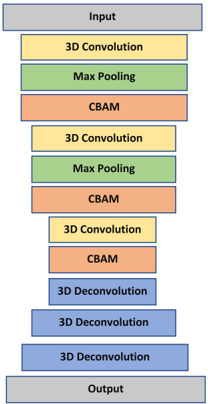
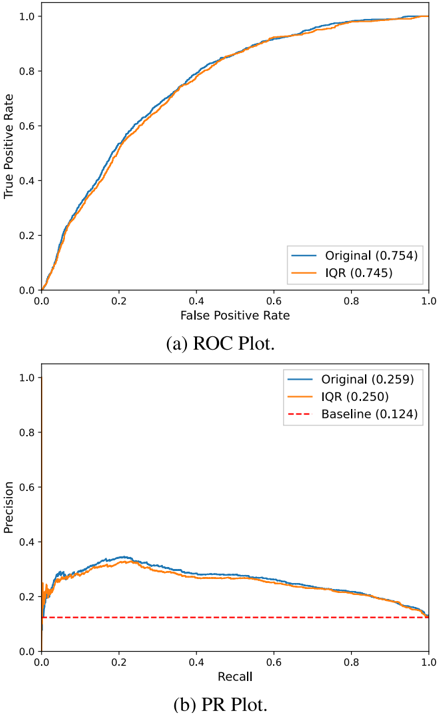
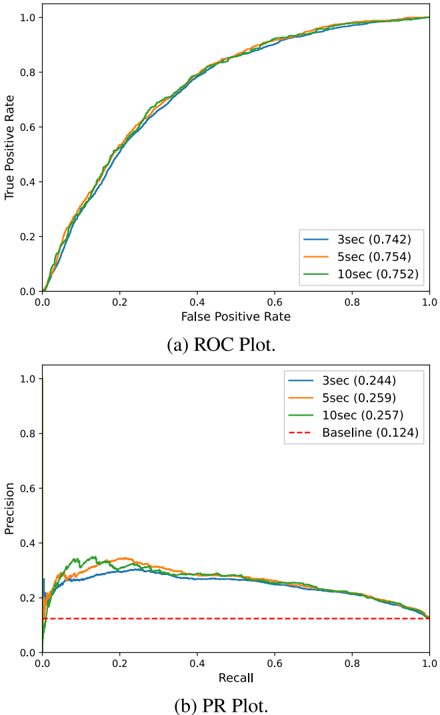
Behavioural symptoms of dementia present a significant risk within Long Term Care (LTC) homes, which face difficulties supporting residents and monitoring their safety with limited staffing resources. Many LTC facilities have installed video surveillance systems in common areas that can help staff to observe residents; however, typically these video streams are not monitored. In this paper, we present the development of a computer vision algorithm to use these video streams to detect episodes of clinically important agitation in people with dementia. Given that episodes of agitation are rare in comparison to normal behaviours, we formulated this as an anomaly detection problem. This involves using the video camera to monitor the scene rather than tracking individuals. We developed a customized spatio-temporal convolution autoencoder that is trained on the normal behaviours and then identified agitation during testing as anomalous behaviour. We present a proof-of-concept using video data collected from a specialized dementia unit and annotated for agitation events. We trained the unsupervised neural network on approximately 24 hours of normal activities and tested on 11 hours of videos containing both normal activities and agitation events, and obtained an area under the curve of the receiver operating characteristic curve of 0.754. This research paves the way for leveraging existing surveillance infrastructure in LTC and other mental health settings to detect agitation or aggression, with the potential for improved health and safety.
Overview
The claims and statistics of this paper haven’t been checked yet.
Free: it reads the open-access text and checks the first 5 claims that cite a source we can check. Create a free account to check every claim.
Integrity signals
Registry
Cites
Statistics
Figures
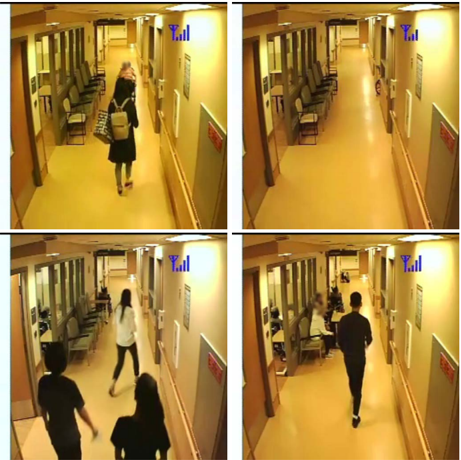
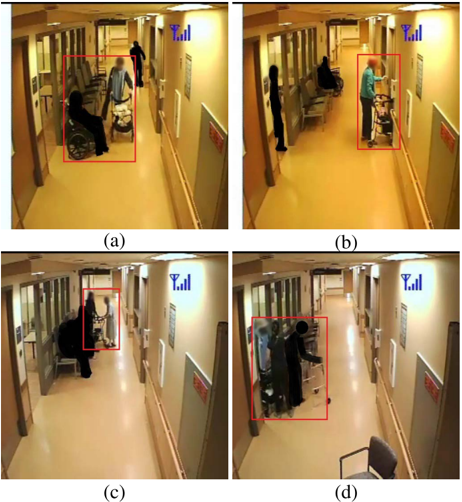

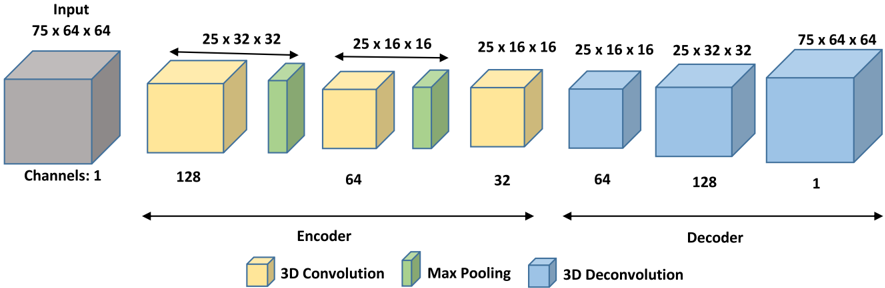
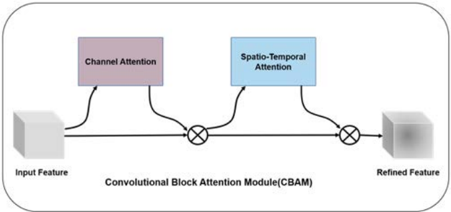







Verification
Claims the paper makes
The claims and statistics of this paper haven’t been checked yet.
Free: it reads the open-access text and checks the first 5 claims that cite a source we can check. Create a free account to check every claim.
Claims other papers make about this one
Each is checked against this paper’s own text: does it say what the citing paper says it does?
The source backs part of the claim, not all of it — or backs it for a different population, condition or comparison.
In the citing paper
“There is also increasing interest in expanding the role of artificial intelligence (AI) in nursing homes to process information collected by a full range of technologies, including CCTV cameras, virtual assistants, and electronic health records, and to develop predictive algorithms and automated decision-making systems about care”
From Algorithmic harms and digital ageism in the use of surveillance technologies in nursing homes (2022) · cites this paper as Khan et al., 2022
Experimental — accuracy not yet measured
Self-check
Percentages, sums and reported differences re-computed from the paper’s own numbers.
The self-check needs the paper’s full text.
Citations
Cites
CBAM: Convolutional Block Attention Module
Woo, S., Park, J., Lee, J.-Y., & Kweon, I. S. (2018) · Lecture Notes in Computer Science · doi:10.1007/978-3-030-01234-2_1 · Cited by 25,853
Chandola, V., Banerjee, A., & Kumar, V. (2009) · ACM Computing Surveys · doi:10.1145/1541880.1541882 · Cited by 11,687 · cited 1×
“A plausible approach to deal with this situation is anomaly detection [13] or one-class classification [14].”
BackgroundFuture Frame Prediction for Anomaly Detection - A New Baseline
Liu, W., Luo, W., Lian, D., & Gao, S. (2018) · 2018 IEEE/CVF Conference on Computer Vision and Pattern Recognition · doi:10.1109/cvpr.2018.00684 · Cited by 1,530
Behavioral and psychological symptoms of dementia
Cerejeira, J., Lagarto, L., & Mukaetova-Ladinska, E. B. (2012) · Frontiers in Neurology · doi:10.3389/fneur.2012.00073 · Cited by 1,425
Assessment and management of behavioral and psychological symptoms of dementia
Kales, H. C., Gitlin, L. N., & Lyketsos, C. G. (2015) · BMJ · doi:10.1136/bmj.h369 · Cited by 1,247
One-class classification: taxonomy of study and review of techniques
Khan, S. S., & Madden, M. G. (2014) · The Knowledge Engineering Review · doi:10.1017/s026988891300043x · Cited by 600 · cited 2×
“A plausible approach to deal with this situation is anomaly detection [13] or one-class classification [14].”
BackgroundSelf-citationSpatio-Temporal AutoEncoder for Video Anomaly Detection
Zhao, Y., Deng, B., Shen, C., Liu, Y., Lu, H., & Hua, X.-S. (2017) · Proceedings of the 25th ACM international conference on Multimedia · doi:10.1145/3123266.3123451 · Cited by 559 · cited 1×
“2D convolutional autoencoders can capture localized spatial features in images; however, they are unable to learn temporal features [32].”
BackgroundCummings, J., Mintzer, J., Brodaty, H., Sano, M., Banerjee, S., Devanand, D. P., Gauthier, S., Howard, R., Lanctôt, K., Lyketsos, C. G., et al. (2015) · International Psychogeriatrics · doi:10.1017/s1041610214001963 · Cited by 355 · cited 1×
“For the purposes of this study, agitation was defined using the International Psychogeriatric Association definition [30],”
MethodA comprehensive review on deep learning-based methods for video anomaly detection
Nayak, R., Pati, U. C., & Das, S. K. (2021) · Image and Vision Computing · doi:10.1016/j.imavis.2020.104078 · Cited by 324
A Survey of Single-Scene Video Anomaly Detection
Ramachandra, B., Jones, M., & Vatsavai, R. R. (2020) · IEEE Transactions on Pattern Analysis and Machine Intelligence · doi:10.1109/tpami.2020.3040591 · Cited by 173
Research works printed but not linked: 2
- Canadian Institute for Health Information (CIHI). (2021). Dementia in Long-Term Care. Accessed: Jan. 20, 2021. [Online]. Available: https://www.cihi.ca/en/dementia-in-canada/dementia-care-across-the- health-system/dementia-in-long-term-care
- Long-Term Care in Ontario: Fostering Systemic Neglect, Ontario Council Hospital Unions, Toronto, ON, Canada, 2014.
Cited by
Ensemble of Autoencoders for Anomaly Detection in Biomedical Data: A Narrative Review
Nawaz, A., Khan, S. S., & Ahmad, A. (2024) · IEEE Access · doi:10.1109/access.2024.3360691 · Cited by 60
“During testing, any significant deviation in the reconstruction error can be construed as an anomalous behavior or event [6].”
BackgroundSelf-citationIaboni, A., Spasojevic, S. S., Newman, K., Martin, L. S., Wang, A. H., Ye, B., Mihailidis, A., & Khan, S. S. (2022) · Alzheimer s & Dementia Diagnosis Assessment & Disease Monitoring · doi:10.1002/dad2.12305 · Cited by 95
“44,45 Thesmallsamplesizeinthisstudyisanimportantlim-itation.”
Self-citationSkeletal Video Anomaly Detection Using Deep Learning: Survey, Challenges, and Future Directions
Mishra, P. K., Mihailidis, A., & Khan, S. S. (2024) · IEEE Transactions on Emerging Topics in Computational Intelligence · doi:10.1109/tetci.2024.3358103 · Cited by 82
“…papers identified and addressed the need to detect specific types of anomalies, namely, multi-timescale anomalies occurring over different time duration [28], anomalies in both sparse and crowded scenes [29], fine and coarse-grained anomalies [38] and body movement and object position anomalies [43].”
BackgroundSelf-citationDetection of Anomaly using Machine Learning: A Comprehensive Survey
Mane, D., Sangve, S. M., Upadhye, G. D., Kandhare, S., Mohole, S., Sonar, S., & Tupare, S. (2022) · International Journal of Emerging Technology and Advanced Engineering · doi:10.46338/ijetae1122_15 · Cited by 56
Algorithmic harms and digital ageism in the use of surveillance technologies in nursing homes
Berridge, C., & Grigorovich, A. (2022) · Frontiers in Sociology · doi:10.3389/fsoc.2022.957246 · Cited by 47
Pathirannahalage, I., Jayasooriya, V., Samarabandu, J. K., & Akila Subasinghe, A. (2024) · Multimedia Tools and Applications · doi:10.1007/s11042-024-19204-w · Cited by 42
“Furthermore, the deployment of multi-camera systems can assist researchers and practitioners in addressing the increasing demand for more sophisticated anomaly detection capabilities in surveillance and security applications, ultimately fostering safer and more secure environments [36].”
Artificial intelligence in forensic mental health: A review of applications and implications
Olawade, D. B., Ayoola, F. I., Ebo, T. O., Asaolu, A. J., Egbon, E., & David-Olawade, A. C. (2025) · Journal of Forensic and Legal Medicine · doi:10.1016/j.jflm.2025.102895 · Cited by 34
Sensor-based agitation prediction in institutionalized people with dementia A systematic review
Deters, J. K., Janus, S. I. M., Silva, J. A. L., Wörtche, H. J., & Zuidema, S. U. (2024) · Pervasive and Mobile Computing · doi:10.1016/j.pmcj.2024.101876 · Cited by 33
Privacy-protecting behaviours of risk detection in people with dementia using videos
Mishra, P. K., Iaboni, A., Ye, B., Newman, K., Mihailidis, A., & Khan, S. S. (2023) · BioMedical Engineering OnLine · doi:10.1186/s12938-023-01065-3 · Cited by 28
“The first approach was window-level, where we trained the CAE with 3D convolution (CAE-3DConv) from using previous work [30] to leverage both spatial and temporal information in an input window.”
MethodInfluentialSelf-citationBadawi, A. A., Elmoghazy, S., Choudhury, S., Elgazzar, S., Elgazzar, K., & Burhan, A. M. (2025) · JMIR Aging · doi:10.2196/68156 · Cited by 24
“Some research [19, 20] used video cameras to detect AA from previously recorded videos at The Specialized Dementia Unit, Toronto Rehabilitation Institute, Canada.”
Lai, J., Ye, B., & Mihailidis, A. (2025) · Journal of Applied Gerontology · doi:10.1177/07334648251357031 · Cited by 14
“…al., 2019; Fletcher-Lloyd et al., 2024; Fuster-Garcia et al., 2015; Garc´ ı a-Requejo et al., 2022, 2023; Gayathri & Easwarakumar, 2016; Hao et al., 2016; Khan et al., 2022, 2023; Kim et al., 2020; Kolakowski et al., 2020; Larab et al., 2010; Lee et al., 2019; Lin et al., 2015; Parvin et al.,…”
Self-citationBag of states: a non-sequential approach to video-based engagement measurement
Abedi, A., Thomas, C., Jayagopi, D. B., & Khan, S. S. (2024) · Multimedia Systems · doi:10.1007/s00530-023-01244-1 · Cited by 13
“While the baseline AUC ROC for a random binary classifier stands at 0.5, the baseline AUC PR is determined by the ratio of engaged samples to the total [64].”
InfluentialSelf-citationKhan, S. S., Mishra, P. K., Ye, B., Patel, S., Newman, K., Mihailidis, A., & Iaboni, A. (2025) · ACM Transactions on Computing for Healthcare · doi:10.1145/3720550 · Cited by 11
“Our team has published several research studies on this dataset for the detection of agitation events under various settings [4, 16, 19, 20, 28, 29, 42].”
Self-citationSaket, O., Aicha, A. B., & Fathallah, H. A. (2025) · Applied Intelligence · doi:10.1007/s10489-025-06797-4 · Cited by 9
“We find that several studies includ - ing Chhetri et al. [55], Rajavel et al. [56], Fei et al. [6], and Li et al. [57] proposed fall detection methods for the elderly. khan et al [58] developed a model to detect agitation and recognize individuals with dementia.”
Unlocking Trust: Advancing Activity Recognition in Video Imagery
Yousuf, M. J., Lee, B., Asghar, M. N., Ansari, M. S., & Kanwal, N. (2024) · IEEE Access · doi:10.1109/access.2024.3503284 · Cited by 8
“Khan et al. [35] used unsupervised deep learning to detect agitations in dementia patients living in long-term care homes.”
Meng, Z., Iaboni, A., Ye, B., Newman, K., Mihailidis, A., Deng, Z., & Khan, S. S. (2023) · Biomedical Engineering Letters · doi:10.1007/s13534-023-00313-8 · Cited by 7
“For the parameters of RFC in MATLAB library, “Number of Trees” was set in the range of [30,50,70,90,110]; and “Number of Predictors to Sample” was set in the range of [1,4,7,10,...,34], which was calculated as round × step +1.”
BackgroundMethodSelf-citationTomaz, M. S. D. L. E. S., Fernandes, B., & Sciutti, A. (2025) · IEEE Access · doi:10.1109/access.2025.3540034 · Cited by 6
Khan, S. S., Mishra, P. K., Ye, B., Newman, K., Iaboni, A., & Mihailidis, A. (2023) · Canadian Conference on Computer and Robot Vision · doi:10.1109/crv60082.2023.00041 · Cited by 9
“Computer vision systems have been used to detect hand hygiene [10], patient mobilization activities in an adult intensive care unit [8], [11], and detecting agitation in a dementia care unit [4], [6].”
BackgroundMethodInfluentialSelf-citationAbedi, A., Chu, C. H., & Khan, S. S. (2025) · Communications in computer and information science · doi:10.1007/978-981-95-0568-5_1 · Cited by 5
Self-citationMalioukis, A., Snead, R. S., Marczika, J., Ambalavanan, R., Towett, G., & Mbogori-Kairichi, M. (2026) · Frontiers in Neurology · doi:10.3389/fneur.2026.1683517 · Cited by 4
“…as smart power plugs and door sensors not only can provide important contextual data but also complement the collection of physiological information, helping caregivers gain a more comprehensive understanding of agitation triggers and thus develop tailored interventions for each individual (24).”
The Significance and Limitations of Sensor-based Agitation Detection in People Living with Dementia
Sandhu, M. M., Prabhu, D., Lü, W., Kholghi, M., Packer, K., Higgins, L., Varnfield, M., & Silvera‐Tawil, D. (2023) · Annual International Conference of the IEEE Engineering in Medicine and Biology Society (EMBC) · doi:10.1109/embc40787.2023.10340349 · Cited by 6
“For example, using cameras [32] in residential care facilities is reported [33] to be sensitive and uncomfortable to PLwD.”
BackgroundXu, Q., Lin, F. V., Liu, Y. M., & Zhao, G. (2025) · Archives of Clinical Neuropsychology · doi:10.1093/arclin/acaf062 · Cited by 5
“Forexample,Khanetal.”
InfluentialMishra, P. K., Taati, B., Ye, B., Newman, K., Mihailidis, A., Iaboni, A., & Khan, S. S. (2026) · IEEE Transactions on Neural Systems and Rehabilitation Engineering · doi:10.1109/tnsre.2026.3656747 · Cited by 3
“The preprocessed frames were stacked into non-overlapping 5-second input windows (based on previous work [3]).”
InfluentialSelf-citationLozano, W., King, S. L., & Neal, T. J. (2023) · Lecture notes in computer science · doi:10.1007/978-3-031-34917-1_23 · Cited by 2
Al-Ghamdi, S., & Aleisa, N. (2025) · Computer Networks and Communications · doi:10.37256/cnc.3120255576 · Cited by 2
Farina, N., Smith, L., Rajalingam, R. M., & Banerjee, S. (2025) · Geriatrics · doi:10.3390/geriatrics10030070 · Cited by 2
“Khan and colleagues noted that there were potential ethical concerns about the use of cameras regarding privacy and surveillance [29].”
InfluentialVision-Based Toilet Assistant for People with Dementia in Real-Life Situations
Ballester, I., Gall, M., Münzer, T., & Kampel, M. (2024) · IEEE International Conference on Pervasive Computing and Communications Workshops (PerCom Workshops) · doi:10.1109/percomworkshops59983.2024.10503526 · Cited by 3
“However, studies indicate that wearables are not suitable for people with dementia due to the requirement that users remember to carry and charge the device [21], [22].”
BackgroundReview of the Deep Learning Models for Anomaly Detection-Based Video Scrutiny System
Kukade, J., & Panse, P. (2024) · Lecture notes in networks and systems · doi:10.1007/978-981-99-9040-5_17 · Cited by 1
Predicting Agitation in Dementia Patients Using IoT Sensor Data and Deep Learning Techniques
Umah, B., Palaniswamy, S., & Kumaran, U. (2026) · Lecture notes in electrical engineering · doi:10.1007/978-981-95-4452-3_11 · Cited by 1
PrismVAU: Prompt-Refined Inference System for Multimodal Video Anomaly Understanding
Erregue, I., Nasrollahi, K., & Escalera, S. (2026) · IEEE/CVF Winter Conference on Applications of Computer Vision Workshops (WACVW) · doi:10.1109/wacvw68408.2026.00011 · Cited by 4
Automatic Detection of Behaviours of Risk in People with Dementia using Unsupervised Deep Learning
Mishra, P. K. (2022) · doi:10.21428/594757db.7a497915 · Cited by 1
Self-citationLocal post-hoc interpretable machine learning model for prediction of dementia in young adults
Sharma, V., & Midhunchakkaravarthy, D. (2023) · Indonesian Journal of Electrical Engineering and Computer Science · doi:10.11591/ijeecs.v32.i3.pp1569-1579 · Cited by 1
“[18] shows implementation of video-based computer vision algorithm detecting violent behaviour in dementia-diagnosed people, having an accuracy of 75.4%.”
BackgroundInfluentialSVM Based AutoEncoder for Detecting Dementia in Young Adults
Sharma, V., & Midhunchakkaravarthy, D. (2023) · International Conference on Contemporary Computing and Informatics (IC3I) · doi:10.1109/ic3i59117.2023.10397637 · Cited by 1
“During training, the autoencoder learns to minimize the error in reconstruction, striving to generate reconstructed data that closely resembles the initial input data [11-14].”
MethodDepth-weighted detection of behaviours of risk in people with dementia using cameras
Mishra, P. K., Ballester, I., Iaboni, A., Ye, B., Newman, K., Mihailidis, A., & Khan, S. S. (2026) · Biomedical Signal Processing and Control · doi:10.1016/j.bspc.2026.110324 · Cited by 1
Self-citationMulti-layered Object Identification and Detection Using Deep CNN Detector
Vasudevan, I., & Nithya, N. S. (2024) · Lecture notes in networks and systems · doi:10.1007/978-981-99-8628-6_23
Dementia Disorder Analysis Using Optimized Deep ResiNet Based on Cognitive Approach
Duraipandian, K., & Ambigapathy, M. (2024) · Lecture notes in electrical engineering · doi:10.1007/978-981-97-7616-0_2
Assessing Frailty Using Behavioral and Physical Health Data in Everyday Living Settings
Bian, C., Khan, S. S., & Mihailidis, A. (2024) · Communications in computer and information science · doi:10.1007/978-3-031-74640-6_27
Self-citationScene Invariant Cross Camera Anomaly Detection of Behaviours of Risk in People with Dementia
Mishra, P. K., Iaboni, A., Ye, B., Newman, K., Mihailidis, A., & Khan, S. S. (2025) · Communications in computer and information science · doi:10.1007/978-981-95-0568-5_8
Self-citationA Cyber-Physical-Human System Design for Challenging Behaviour Monitoring in People with Dementia
Deters, J. K., Güvenatam, B., Silva, J. A. L., Bergsma, E., Janus, S. I. M., ZUIDEMA, S. U., & Wörtche, H. J. (2026) · Lecture notes in computer science · doi:10.1007/978-3-032-13312-0_6 · Cited by 1
Ingle, M., Rane, P., Sharma, H., Goyal, I., & Nakum, K. (2025) · AIJR Proceedings · doi:10.21467/proceedings.7.6.39
Assessing Frailty Using Sensors and Machine Learning in Home Settings
Bian, C. (2022) · TSpace (University of Toronto)
SenseLess: Minimal Vision, Maximum Insight for Smart Homes
Albazzai, N., RANA, O. F., & Perera, C. (2026) · IEEE International Conference on Pervasive Computing and Communications · doi:10.1109/percom67906.2026.11524273
“Vision-based systems provide rich contextual information and have been applied to illness monitoring [6], fall detection using RGB and 3D video [7], and behavioral anomaly recognition [8].”
Transforming Dementia Caregiving Through Assistive Technologies
Zhang, Q., Wu, Y., & Xu, L. (2026) · Frontiers research topics · doi:10.3389/978-2-8325-8067-7
CARE: A Multi-Agent Framework for Real-Time Adaptive Vocal Interaction in Dementia Care
Yaddanapalli, B. S., Zhang, J., Williams, T., Markanti, R., Fu, A., Fonzo, I., Villalobos, S. B., Wu, D., Wang, X., & Tao, C. (2026) · IEEE International Conference on Healthcare Informatics (ICHI) · doi:10.1109/ichi69079.2026.00152
“First, the detection of behavioral and psychological symptoms of dementia (BPSD) has advanced through wearable, video, and multimodal approaches, including privacy-aware clinical detection and video-based modeling of agitation-related behavior [7], [10].”
Rahman, A.-U., Rohan, T. I., Chakravarty, S., Ramos, M. D., & Sakib, N. (2026) · Communications in computer and information science · doi:10.1007/978-3-032-28463-1_4
Reporting of AI and ML Studies in Elderly Care Settings: A Rapid Systematic Scoping ReviewPreprint
Schropp, J., & Bochtler, K. (2026) · Research Square · doi:10.21203/rs.3.rs-9780627/v1
Metadata
- Authors
- Khan, S. S., Mishra, P. K., Javed, N., Ye, B., Newman, K., Mihailidis, A., & Iaboni, A.
- Affiliations
- University Health Network (CA)
- York University (CA)
- University of Toronto (CA)
- Toronto Metropolitan University (CA)
- Venue
- IEEE Access
- Published
- 2022
- Volume
- 10
- Pages
- 10349-10358
- ISSN
- 2169-3536 (ISSN-L)
- OpenAlex
- W4205221301
- Cited by
- 44
- References
- 38
- Citations by year
- 2026: 9 · 2025: 11 · 2024: 12 · 2023: 7 · 2022: 5
- FWCI
- 2.88
- Type
- journal article
- Language
- en
- Open access
- gold
- doi.org
- Locations
- IEEE Access (publishedVersion, cc-by)
- DOAJ (DOAJ: Directory of Open Access Journals) (submittedVersion, cc-by-sa)
- Funders
- SPARK Grant, Centre for Aging and Brain Health Innovation, Canada
- Alzheimer’s Society Research Program Catalyst Grant (ASRP 17-24)
- Walter and Maria Schroeder Institute for Brain Innovation and Recovery
- Academic Scholars Award, Department of Psychiatry, University of Toronto
- Topics
- Physical Sciences › Computer Science › Artificial Intelligence › Anomaly Detection Techniques and Applications
- Health Sciences › Medicine › Psychiatry and Mental health › Dementia and Cognitive Impairment Research
- Physical Sciences › Computer Science › Computer Vision and Pattern Recognition › Human Pose and Action Recognition
- Keywords
- dementia, agitation detection, video surveillance, long-term care, behavioural symptoms, anomaly detection, unsupervised learning, aggression detection, mental health settings
About these checks
Registry, retraction, Cites and statistics results are computed, not judged, with one exception: a printed reference that no index lists is read once by a model before it counts as a citation error. Claims are extracted by a model and kept only when their quote appears verbatim in the text; each cited source is then checked, with a model’s help, for whether it says what the claim relies on. Those verdicts can be wrong — read the claim’s quote and the cited source before relying on one.
Statistics and arithmetic are recomputed, not judged.
Confidence bands are shown only for fields calibrated on our annotated test set. None is calibrated yet, so no band is shown.
What counts as a claim ›How we measure confidence ›How we check this ›
Are you an author, or do you see a problem with this page? Request a review
Data sources
Bibliographic data: Semantic Scholar, OpenAlex, Crossref.
Contains information from the Semantic Scholar Academic Graph Datasets, made available under the ODC Attribution License (ODC-BY 1.0).
Semantic Scholar’s data is described in: Kinney, R., et al. (2023). The Semantic Scholar Open Data Platform. arXiv:2301.10140.
