

Unsupervised Deep Learning to Detect Agitation From Videos in People With Dementia
Open accessThe DOI matches its Crossref record; 38 of the 38 references it cites were found in a registry or an index.
Abstract
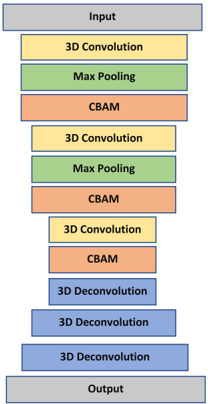
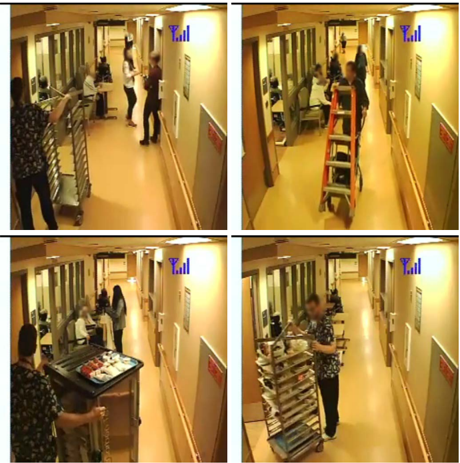
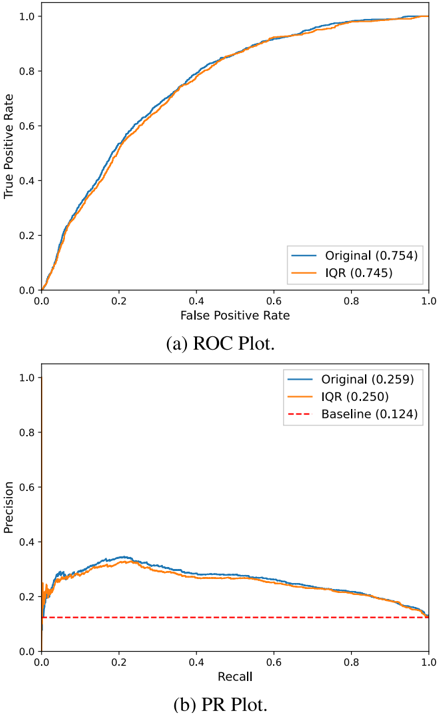
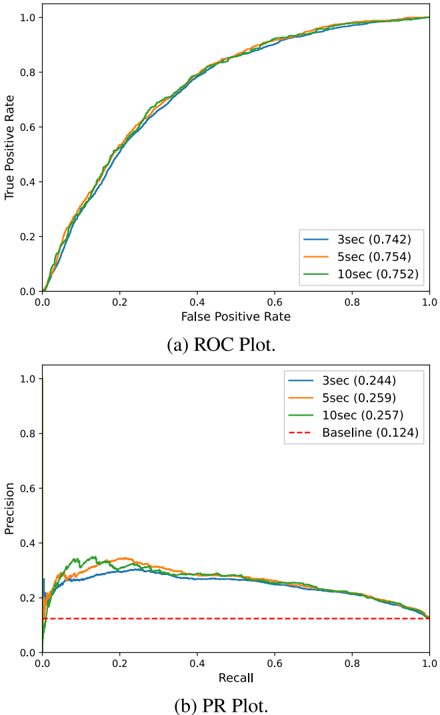
Behavioural symptoms of dementia present a significant risk within Long Term Care (LTC) homes, which face difficulties supporting residents and monitoring their safety with limited staffing resources. Many LTC facilities have installed video surveillance systems in common areas that can help staff to observe residents; however, typically these video streams are not monitored. In this paper, we present the development of a computer vision algorithm to use these video streams to detect episodes of clinically important agitation in people with dementia. Given that episodes of agitation are rare in comparison to normal behaviours, we formulated this as an anomaly detection problem. This involves using the video camera to monitor the scene rather than tracking individuals. We developed a customized spatio-temporal convolution autoencoder that is trained on the normal behaviours and then identified agitation during testing as anomalous behaviour. We present a proof-of-concept using video data collected from a specialized dementia unit and annotated for agitation events. We trained the unsupervised neural network on approximately 24 hours of normal activities and tested on 11 hours of videos containing both normal activities and agitation events, and obtained an area under the curve of the receiver operating characteristic curve of 0.754. This research paves the way for leveraging existing surveillance infrastructure in LTC and other mental health settings to detect agitation or aggression, with the potential for improved health and safety.
Overview
The claims and statistics of this paper haven’t been checked yet.
Free: it reads the open-access text and checks the first 5 claims that cite a source we can check. Create a free account to check every claim.
Integrity signals
Registry
Cites
Statistics
Figures
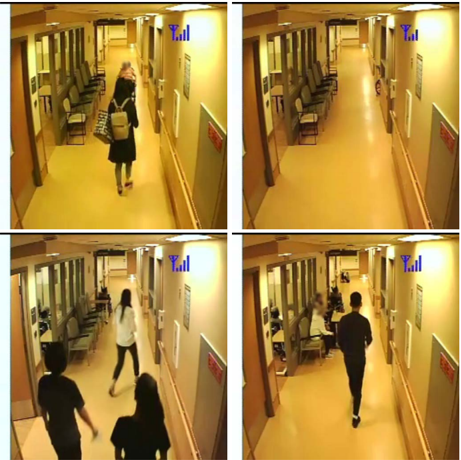
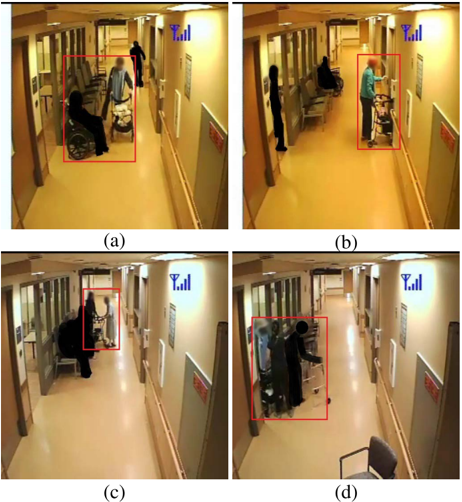

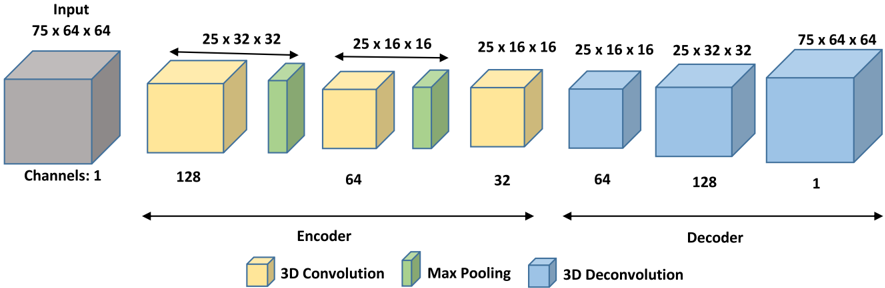
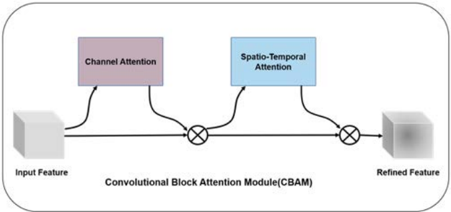







Verification
Claims the paper makes
The claims and statistics of this paper haven’t been checked yet.
Free: it reads the open-access text and checks the first 5 claims that cite a source we can check. Create a free account to check every claim.
Claims other papers make about this one
Each is checked against this paper’s own text: does it say what the citing paper says it does?
The source backs part of the claim, not all of it — or backs it for a different population, condition or comparison.
In the citing paper
“There is also increasing interest in expanding the role of artificial intelligence (AI) in nursing homes to process information collected by a full range of technologies, including CCTV cameras, virtual assistants, and electronic health records, and to develop predictive algorithms and automated decision-making systems about care”
From Algorithmic harms and digital ageism in the use of surveillance technologies in nursing homes (2022) · cites this paper as Khan et al., 2022
Experimental — accuracy not yet measured
Self-check
Percentages, sums and reported differences re-computed from the paper’s own numbers.
The self-check needs the paper’s full text.
Citations
Cites
CBAM: Convolutional Block Attention Module
Woo, S., Park, J., Lee, J.-Y., & Kweon, I. S. (2018) · Lecture Notes in Computer Science · doi:10.1007/978-3-030-01234-2_1 · Cited by 25,853
Chandola, V., Banerjee, A., & Kumar, V. (2009) · ACM Computing Surveys · doi:10.1145/1541880.1541882 · Cited by 11,687 · cited 1×
“A plausible approach to deal with this situation is anomaly detection [13] or one-class classification [14].”
BackgroundFuture Frame Prediction for Anomaly Detection - A New Baseline
Liu, W., Luo, W., Lian, D., & Gao, S. (2018) · 2018 IEEE/CVF Conference on Computer Vision and Pattern Recognition · doi:10.1109/cvpr.2018.00684 · Cited by 1,530
Behavioral and psychological symptoms of dementia
Cerejeira, J., Lagarto, L., & Mukaetova-Ladinska, E. B. (2012) · Frontiers in Neurology · doi:10.3389/fneur.2012.00073 · Cited by 1,425
Assessment and management of behavioral and psychological symptoms of dementia
Kales, H. C., Gitlin, L. N., & Lyketsos, C. G. (2015) · BMJ · doi:10.1136/bmj.h369 · Cited by 1,247
One-class classification: taxonomy of study and review of techniques
Khan, S. S., & Madden, M. G. (2014) · The Knowledge Engineering Review · doi:10.1017/s026988891300043x · Cited by 600 · cited 2×
“A plausible approach to deal with this situation is anomaly detection [13] or one-class classification [14].”
BackgroundSelf-citationSpatio-Temporal AutoEncoder for Video Anomaly Detection
Zhao, Y., Deng, B., Shen, C., Liu, Y., Lu, H., & Hua, X.-S. (2017) · Proceedings of the 25th ACM international conference on Multimedia · doi:10.1145/3123266.3123451 · Cited by 559 · cited 1×
“2D convolutional autoencoders can capture localized spatial features in images; however, they are unable to learn temporal features [32].”
BackgroundCummings, J., Mintzer, J., Brodaty, H., Sano, M., Banerjee, S., Devanand, D. P., Gauthier, S., Howard, R., Lanctôt, K., Lyketsos, C. G., et al. (2015) · International Psychogeriatrics · doi:10.1017/s1041610214001963 · Cited by 355 · cited 1×
“For the purposes of this study, agitation was defined using the International Psychogeriatric Association definition [30],”
MethodA comprehensive review on deep learning-based methods for video anomaly detection
Nayak, R., Pati, U. C., & Das, S. K. (2021) · Image and Vision Computing · doi:10.1016/j.imavis.2020.104078 · Cited by 324
A Survey of Single-Scene Video Anomaly Detection
Ramachandra, B., Jones, M., & Vatsavai, R. R. (2020) · IEEE Transactions on Pattern Analysis and Machine Intelligence · doi:10.1109/tpami.2020.3040591 · Cited by 173
Detection of Cardiac Structural Abnormalities in Fetal Ultrasound Videos Using Deep Learning
Komatsu, M., Sakai, A., Komatsu, R., Matsuoka, R., Yasutomi, S., Shozu, K., Dozen, A., Machino, H., Hidaka, H., Arakaki, T., et al. (2021) · Applied Sciences · doi:10.3390/app11010371 · Cited by 142 · cited 1×
“…abnormal breathing events with 3D cameras [22], CNN and its variants and LSTM for fetal anomaly detection in ultrasound video scans [23], [24], CNN and LSTM method for aberrant epileptic seizures from videos [25], ResNet-based contrastive representation for abnormal otoscopy video…”
MethodDeepFall: Non-Invasive Fall Detection with Deep Spatio-Temporal Convolutional Autoencoders
Nogas, J., Khan, S. S., & Mihailidis, A. (2019) · Journal of Healthcare Informatics Research · doi:10.1007/s41666-019-00061-4 · Cited by 110 · cited 3×
“[21] and customized for the problem of agitation detection.”
BackgroundMethodInfluentialSelf-citationHusebo, B. S., Heintz, H. L., Berge, L. I., Owoyemi, P., Rahman, A. T., & Vahia, I. V. (2020) · Frontiers in Pharmacology · doi:10.3389/fphar.2019.01699 · Cited by 97 · cited 1×
“One application of technology in supporting the care of people with dementia is the use of sensors to detect episodes of clinically important behavioural symptoms [7], [8].”
BackgroundDetecting agitation and aggression in people with dementia using sensors—A systematic review
Khan, S. S., Ye, B., Taati, B., & Mihailidis, A. (2018) · Alzheimer's & Dementia · doi:10.1016/j.jalz.2018.02.004 · Cited by 94 · cited 1×
“The wearable devices also need to be removed and re-applied to the participants on a daily basis to facilitate bathing, battery charging and data transfer [10], [11].”
BackgroundSelf-citationDetecting unseen falls from wearable devices using channel-wise ensemble of autoencoders
Khan, S. S., & Taati, B. (2017) · Expert Systems with Applications · doi:10.1016/j.eswa.2017.06.011 · Cited by 79 · cited 1×
“capture local spatial and temporal relationship in data [31].”
BackgroundSelf-citationKeszycki, R. M., Fisher, D. W., & Dong, H. (2019) · Frontiers in Pharmacology · doi:10.3389/fphar.2019.01109 · Cited by 73
Evaluation of Wearable Technology in Dementia: A Systematic Review and Meta-Analysis
Cote, A. C., Phelps, R. J., Kabiri, N. S., Bhangu, J. S., & Thomas, K. C. (2021) · Frontiers in Medicine · doi:10.3389/fmed.2020.501104 · Cited by 67 · cited 1×
“One application of technology in supporting the care of people with dementia is the use of sensors to detect episodes of clinically important behavioural symptoms [7], [8].”
BackgroundVerbal and Physical Aggression Directed at Nursing Home Staff by Residents
Lachs, M. S., Rosen, T., Teresi, J. A., Eimicke, J. P., Ramirez, M., Silver, S., & Pillemer, K. (2013) · Journal of General Internal Medicine · doi:10.1007/s11606-012-2284-1 · Cited by 64 · cited 1×
“…framework is valuable in that it accommodates a range of different types of risky behaviour that might be observed in these environments, such as climbing on, moving or throwing furniture and banging on doors, in addition to physically aggressive behaviours directed towards others [38], [39].”
BackgroundA Pilot Study to Detect Agitation in People Living with Dementia Using Multi-Modal Sensors
Spasojevic, S. S., Nogas, J., Iaboni, A., Ye, B., Mihailidis, A., Wang, A., Li, S. J., Martin, L. S., Newman, K., & Khan, S. S. (2021) · Journal of Healthcare Informatics Research · doi:10.1007/s41666-021-00095-7 · Cited by 56 · cited 2×
“In our previous work, we have explored the use of wearable sensors to detect episodes of clinically important agitation [9], [10].”
BackgroundSelf-citationDorsten, A.-M., Sifford, K. S., Bharucha, A., Mecca, L. P., & Wactlar, H. (2009) · Journal of Empirical Research on Human Research Ethics · doi:10.1525/jer.2009.4.1.25 · Cited by 54 · cited 1×
“Despite the widespread use of video surveillance in healthcare settings, this issue is far from settled [40], [41].”
BackgroundKhan, S. S., Zhu, T., Ye, B., Mihailidis, A., Iaboni, A., Newman, K., Wang, A. H., & Martin, L. S. (2017) · IEEE ... International Conference on Data Mining workshops · doi:10.1109/icdmw.2017.98 · Cited by 50
Self-citationCameras on beds: The ethics of surveillance in nursing home rooms
Berridge, C., Halpern, J., & Levy, K. (2019) · AJOB Empirical Bioethics · doi:10.1080/23294515.2019.1568320 · Cited by 46 · cited 1×
“Many LTC facilities have installed video surveillance to facilitate the digital monitoring of public spaces [12].”
BackgroundFall Detection from Thermal Camera Using Convolutional LSTM AutoencoderPreprint
Nogas, J., Khan, S. S., & Mihailidis, A. (2019) · EasyChair preprint · doi:10.29007/xt7r · Cited by 44 · cited 1×
“[20] formulated the fall detection problem as an anomaly detection problem and used convolutional Long Short-Term Memory (LSTM) autoencoders to identify falls using videos collected from thermal cameras.”
MethodSelf-citationReduction in Fall Rate in Dementia Managed Care Through Video Incident Review: Pilot Study
Bayen, É., Jacquemot, J., Netscher, G. M., Agrawal, P., Noyce, L. T., & Bayen, A. M. (2017) · Journal of Medical Internet Research · doi:10.2196/jmir.8095 · Cited by 40
Agitation Detection in People Living with Dementia using Multimodal Sensors
Khan, S. S., Spasojevic, S. S., Nogas, J., Ye, B., Mihailidis, A., Iaboni, A., Wang, A. H., Martin, L. S., & Newman, K. (2019) · Annual International Conference of the IEEE Engineering in Medicine and Biology Society (EMBC) · doi:10.1109/embc.2019.8857781 · Cited by 39 · cited 2×
“In our previous work, we have explored the use of wearable sensors to detect episodes of clinically important agitation [9], [10].”
BackgroundSelf-citationA Survey of Video-Based Crowd Anomaly Detection in Dense Scenes
Ma, J., Dai, Y., & Hirota, K. (2017) · Journal of Advanced Computational Intelligence and Intelligent Informatics · doi:10.20965/jaciii.2017.p0235 · Cited by 36 · cited 1×
“Computer vision techniques have been successfully used in identifying anomalous behaviours in homes [15], crowded scenes [16] and public areas [17].”
BackgroundDetecting falls with X-Factor Hidden Markov Models
Khan, S. S., Karg, M. E., Kulić, D., & Hoey, J. (2017) · Applied Soft Computing · doi:10.1016/j.asoc.2017.01.034 · Cited by 35 · cited 1×
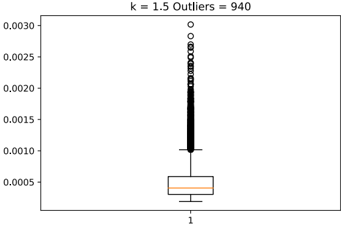
“Khan et al [37] proposed to remove such outliers in the training data using the inter-quartile range approach.”
MethodSelf-citationTowards responsible implementation of monitoring technologies in institutional care
Grigorovich, A., & Kontos, P. (2020) · The Gerontologist · doi:10.1093/geront/gnz190 · Cited by 29 · cited 1×
“Despite the widespread use of video surveillance in healthcare settings, this issue is far from settled [40], [41].”
BackgroundAberrant epileptic seizure identification: A computer vision perspective
Ahmedt‐Aristizabal, D., Fookes, C., Denman, S., Nguyen, K., Sridharan, S., & Dionisio, S. A. (2018) · Seizure · doi:10.1016/j.seizure.2018.12.017 · Cited by 28 · cited 1×
“More naturalistic applications include the following recent works; CNNs and LSTM approach for classifying abnormal breathing events with 3D cameras [22], CNN and its variants and LSTM for fetal anomaly detection in ultrasound video scans [23], [24], CNN and LSTM method for aberrant epileptic seizures from videos [25],…”
MethodInfluentialAutomated Recognition of Complex Agitation Behavior of Dementia Patients Using Video Camera
Fook, V. F. S., Thang, P. V., Htwe, T. M., Qiu, Q., Wai, A. A. P., Jayachandran, M., Biswas, J., & Yap, P. L. K. (2007) · IEEE International Conference on e-Health Networking, Applications and Services (Healthcom) · doi:10.1109/health.2007.381605 · Cited by 27
Finding behavioural anomalies in public areas using video surveillance data
Brax, C., Niklasson, L., & Smedberg, M. (2008) · doi:10.1109/icif.2008.4632410 · Cited by 27 · cited 1×
“Computer vision techniques have been successfully used in identifying anomalous behaviours in homes [15], crowded scenes [16] and public areas [17].”
BackgroundSpatio-Temporal Partitioning And Description Of Full-Length Routine Fetal Anomaly Ultrasound Scans
Sharma, H., Droste, R., Chatelain, P., Drukker, L., Papageorghiou, A. T., & Noble, J. A. (2019) · 2019 IEEE 16th International Symposium on Biomedical Imaging (ISBI 2019) · doi:10.1109/isbi.2019.8759149 · Cited by 26 · cited 1×
“…for classifying abnormal breathing events with 3D cameras [22], CNN and its variants and LSTM for fetal anomaly detection in ultrasound video scans [23], [24], CNN and LSTM method for aberrant epileptic seizures from videos [25], ResNet-based contrastive representation for abnormal otoscopy video…”
MethodChikhaoui, B., Ye, B., & Mihailidis, A. (2016) · Journal of Ambient Intelligence and Humanized Computing · doi:10.1007/s12652-016-0415-y · Cited by 24 · cited 1×
“The second study [28] used a dataset using Kinect camera from 10 participants who simulated various activities (hitting, pushing, throwing, tearing, kicking and wandering).”
MethodSelf-citationA Review on Vision Surveillance Techniques in Smart Home Environments
Brezovan, M., & Bădică, C. (2013) · International Conference on Control Systems and Computer Science · doi:10.1109/cscs.2013.30 · Cited by 21 · cited 1×
“Computer vision techniques have been successfully used in identifying anomalous behaviours in homes [15], crowded scenes [16] and public areas [17].”
BackgroundWoolford, M., Stacpoole, S. J., & Clinnick, L. M. (2021) · Journal of the American Medical Directors Association · doi:10.1016/j.jamda.2021.02.009 · Cited by 21 · cited 1×
“The use of an anomaly detection framework is valuable in that it accommodates a range of different types of risky behaviour that might be observed in these environments, such as climbing on, moving or throwing furniture and banging on doors, in addition to physically aggressive behaviours directed towards others [38],…”
BackgroundA Vision-based System for Breathing Disorder Identification: A Deep Learning Perspective
Martínez, M., Ahmedt‐Aristizabal, D., Vath, T., Fookes, C., Benz, A., & Stiefelhagen, R. (2019) · Annual International Conference of the IEEE Engineering in Medicine and Biology Society (EMBC) · doi:10.1109/embc.2019.8857662 · Cited by 7 · cited 1×
“More naturalistic applications include the following recent works; CNNs and LSTM approach for classifying abnormal breathing events with 3D cameras [22], CNN and its variants and LSTM for fetal anomaly detection in ultrasound video scans [23], [24], CNN and LSTM method for aberrant epileptic seizures from videos [25],…”
MethodInfluential3D Dual Path Networks and Multi-scale Feature Fusion for Human Motion Recognition
Che, W., & Peng, S. (2019) · IEEE Advanced Information Technology, Electronic and Automation Control Conference (IAEAC) · doi:10.1109/iaeac47372.2019.8997745 · Cited by 3 · cited 1×
“Che and Peng [35], extended it to 3D convolutions for human action recognition tasks.”
BackgroundOtoscopy video screening with deep anomaly detection
Wang, W., Tamhane, A., Rzasa, J. R., Clark, J., Canares, T., & Unberath, M. (2021) · SPIE Medical Imaging: Computer-Aided Diagnosis · doi:10.1117/12.2581902 · Cited by 2 · cited 1×
“More naturalistic applications include the following recent works; CNNs and LSTM approach for classifying abnormal breathing events with 3D cameras [22], CNN and its variants and LSTM for fetal anomaly detection in ultrasound video scans [23], [24], CNN and LSTM method for aberrant epileptic seizures from videos [25],…”
MethodInfluential
Research works printed but not linked: 2
- Canadian Institute for Health Information (CIHI). (2021). Dementia in Long-Term Care. Accessed: Jan. 20, 2021. [Online]. Available: https://www.cihi.ca/en/dementia-in-canada/dementia-care-across-the- health-system/dementia-in-long-term-care
- Long-Term Care in Ontario: Fostering Systemic Neglect, Ontario Council Hospital Unions, Toronto, ON, Canada, 2014.
Cited by
Ensemble of Autoencoders for Anomaly Detection in Biomedical Data: A Narrative Review
Nawaz, A., Khan, S. S., & Ahmad, A. (2024) · IEEE Access · doi:10.1109/access.2024.3360691 · Cited by 60
“During testing, any significant deviation in the reconstruction error can be construed as an anomalous behavior or event [6].”
BackgroundSelf-citationIaboni, A., Spasojevic, S. S., Newman, K., Martin, L. S., Wang, A. H., Ye, B., Mihailidis, A., & Khan, S. S. (2022) · Alzheimer s & Dementia Diagnosis Assessment & Disease Monitoring · doi:10.1002/dad2.12305 · Cited by 95
“44,45 Thesmallsamplesizeinthisstudyisanimportantlim-itation.”
Self-citationSkeletal Video Anomaly Detection Using Deep Learning: Survey, Challenges, and Future Directions
Mishra, P. K., Mihailidis, A., & Khan, S. S. (2024) · IEEE Transactions on Emerging Topics in Computational Intelligence · doi:10.1109/tetci.2024.3358103 · Cited by 82
“…papers identified and addressed the need to detect specific types of anomalies, namely, multi-timescale anomalies occurring over different time duration [28], anomalies in both sparse and crowded scenes [29], fine and coarse-grained anomalies [38] and body movement and object position anomalies [43].”
BackgroundSelf-citationDetection of Anomaly using Machine Learning: A Comprehensive Survey
Mane, D., Sangve, S. M., Upadhye, G. D., Kandhare, S., Mohole, S., Sonar, S., & Tupare, S. (2022) · International Journal of Emerging Technology and Advanced Engineering · doi:10.46338/ijetae1122_15 · Cited by 56
Algorithmic harms and digital ageism in the use of surveillance technologies in nursing homes
Berridge, C., & Grigorovich, A. (2022) · Frontiers in Sociology · doi:10.3389/fsoc.2022.957246 · Cited by 47
Metadata
- Authors
- Khan, S. S., Mishra, P. K., Javed, N., Ye, B., Newman, K., Mihailidis, A., & Iaboni, A.
- Affiliations
- University Health Network (CA)
- York University (CA)
- University of Toronto (CA)
- Toronto Metropolitan University (CA)
- Venue
- IEEE Access
- Published
- 2022
- Volume
- 10
- Pages
- 10349-10358
- ISSN
- 2169-3536 (ISSN-L)
- OpenAlex
- W4205221301
- Cited by
- 44
- References
- 38
- Citations by year
- 2026: 9 · 2025: 11 · 2024: 12 · 2023: 7 · 2022: 5
- FWCI
- 2.88
- Type
- journal article
- Language
- en
- Open access
- gold
- doi.org
- Locations
- IEEE Access (publishedVersion, cc-by)
- DOAJ (DOAJ: Directory of Open Access Journals) (submittedVersion, cc-by-sa)
- Funders
- SPARK Grant, Centre for Aging and Brain Health Innovation, Canada
- Alzheimer’s Society Research Program Catalyst Grant (ASRP 17-24)
- Walter and Maria Schroeder Institute for Brain Innovation and Recovery
- Academic Scholars Award, Department of Psychiatry, University of Toronto
- Topics
- Physical Sciences › Computer Science › Artificial Intelligence › Anomaly Detection Techniques and Applications
- Health Sciences › Medicine › Psychiatry and Mental health › Dementia and Cognitive Impairment Research
- Physical Sciences › Computer Science › Computer Vision and Pattern Recognition › Human Pose and Action Recognition
- Keywords
- dementia, agitation detection, video surveillance, long-term care, behavioural symptoms, anomaly detection, unsupervised learning, aggression detection, mental health settings
About these checks
Registry, retraction, Cites and statistics results are computed, not judged, with one exception: a printed reference that no index lists is read once by a model before it counts as a citation error. Claims are extracted by a model and kept only when their quote appears verbatim in the text; each cited source is then checked, with a model’s help, for whether it says what the claim relies on. Those verdicts can be wrong — read the claim’s quote and the cited source before relying on one.
Statistics and arithmetic are recomputed, not judged.
Confidence bands are shown only for fields calibrated on our annotated test set. None is calibrated yet, so no band is shown.
What counts as a claim ›How we measure confidence ›How we check this ›
Are you an author, or do you see a problem with this page? Request a review
Data sources
Bibliographic data: Semantic Scholar, OpenAlex, Crossref.
Contains information from the Semantic Scholar Academic Graph Datasets, made available under the ODC Attribution License (ODC-BY 1.0).
Semantic Scholar’s data is described in: Kinney, R., et al. (2023). The Semantic Scholar Open Data Platform. arXiv:2301.10140.
