

Machine Learning Methods in Smart Lighting Toward Achieving User Comfort: A Survey
Open accessThe DOI matches its Crossref record; 416 of the 431 references it cites were found in a registry or an index; 13 of the 141 sources its claims cite were checked for support.
Abstract
Smart lighting has become a universal smart product solution, with global revenues of up to US $5.9 billion by 2021. Six main factors drive the technology: light-emitting diode (LED) lighting, sensors, control, analytics, and intelligence.
Overview
CoChat Summary
## TL;DR
This survey reviews smart lighting research from 1993 to 2021 and maps how machine learning is used to solve smart lighting problems, especially for user comfort. It argues that activity recognition is the most promising direction for improving user comfort, but current solutions still face cost, accuracy, and real-time constraints.
## Key findings
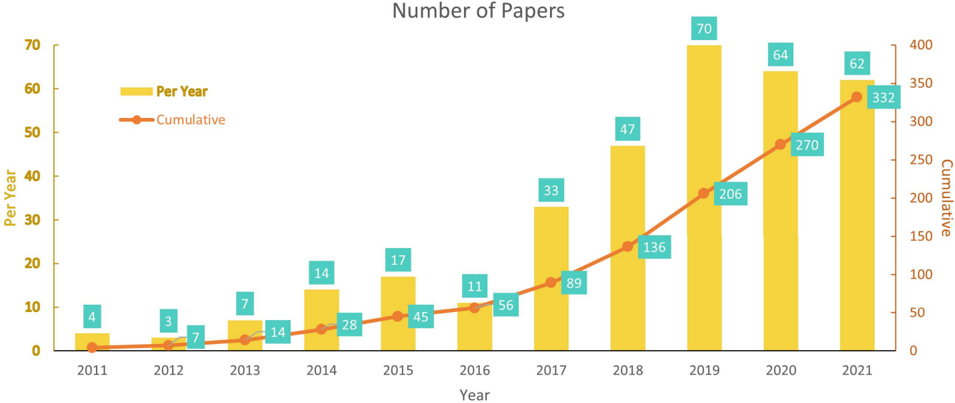
- The authors surveyed 332 papers on smart lighting and report that 59% of the publications were from 2019–2021.
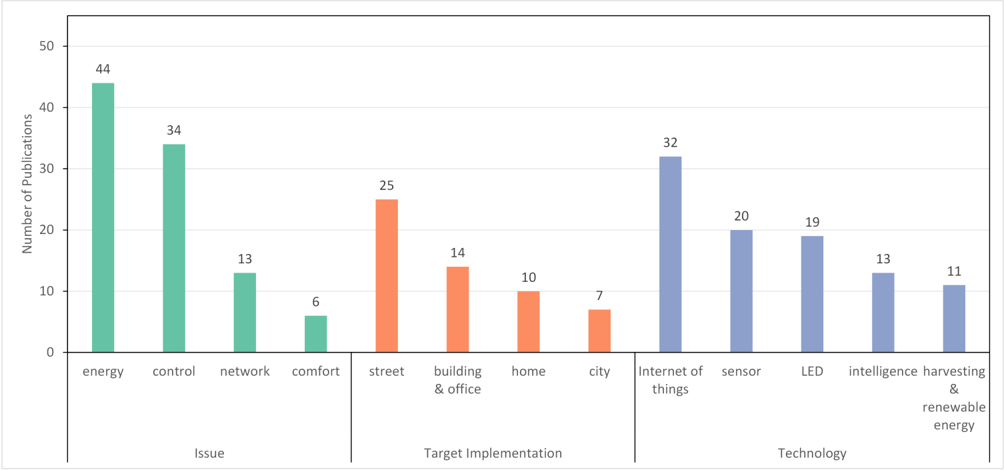
- From keyword-based classification, they found 4 main issues in smart lighting research (energy efficiency, computer network performance, control performance, and user comfort), 4 implementation targets (street lighting, building/office, home, and city), and 6 leading technologies (IoT, sensors, LED lights, intelligence, renewable energy, and energy harvesting).
- They identify 8 machine learning application areas in recent smart lighting research: predictive control, intelligent control, hand-gesture recognition, clustering, activity recognition, anomaly detection, optimization, computer vision, and elderly management.
- The paper reports that energy was the most popular topic with 44 papers, and only 6 papers discussed comfort in smart lighting.
- For user comfort metrics, the survey lists LUR, UNC, LCR, PRR, CCT, and others, and states that LUR = 1 is optimal while UNC is better when closer to 0.
## Methods
- The study is a systematic literature review (SLR) with stages of research question formulation, search strategy and selection, data extraction, and synthesis.
- Search and selection used inclusion criteria based on the strings “smart lighting,” “machine learning,” “user comfort,” and “activity recognition” in the title, with English or Indonesian papers from 1993 to 2021, available in Google Scholar, and in PDF or HTML format.
- The review analyzes the literature through topic classification, keyword extraction, and quality assessment, then synthesizes the results around smart lighting topics, machine learning methods, and user-comfort-related applications.
## Limitations
- The paper states that no survey paper had thoroughly discussed all machine learning techniques used in smart lighting research to achieve user comfort before this review.
- It says there is no existing research on activity recognition smart lighting that measures user comfort; this is explicitly presented as a research gap.
- Evident from the text: the review’s literature search is limited to papers available in Google Scholar and to English/Indonesian documents from 1993–2021, which may exclude relevant work in other languages or sources.
Model-written summary. Check it against the paper before relying on it.
Integrity signals
Registry
Cites
Statistics
Figures







Verification
Claims the paper makes
13 Valid · 36 Not valid · 136 Not checked · 97 Own results and interpretations
Every source the paper cites for this claim was checked and supports it.
In the paper
“Several environmental sensors play a role in this aspect, including magnetic switches, PIR sensors, and floor sensors [316].”
§ Machine Learning Methods in Smart Lighting Toward Achieving User Comfort: A Survey > 9) ELDERLY MANAGEMENT
What the sources say
- Supportedcites [316] 318. M. Z. Uddin, W. Khaksar, and J. Torresen, ''Ambient sensors for elderly care and independent living: A survey,'' Sensors, vol. 18, no. 7, p. 2027, 2018. source
The Introduction describes magnetic switches used to monitor an elderly person's movement. Sections 2.1 and 2.5 describe PIR motion sensors and floor sensors, respectively, as tools for elderly monitoring and care. (LLM, conf=0.91)
plainstates an association- Asserted: passes — The authors put it forward as true.
- Checkable: passes — It can be checked against evidence.
- Load-bearing: unclear — It is unclear whether the paper’s conclusions depend on it.
- Based: passes — The paper gives a reason why it holds.
- Supported
A result the paper reports from its own data — it cites no other source for it, so there is none to check. The quote shows it is in the paper.
In the paper
“We found six leading technologies through keyword searches in technology: IoT, sensors, LED lights, intelligence, renewable energy, and energy harvesting.”
§ Machine Learning Methods in Smart Lighting Toward Achieving User Comfort: A Survey > D. LITERATURE DEMOGRAPHICS
plain- Asserted: passes — The authors put it forward as true.
- Checkable: passes — It can be checked against evidence.
- Load-bearing: unclear — It is unclear whether the paper’s conclusions depend on it.
- Based: passes — The paper gives a reason why it holds.
- Rests on an assumption not shown here.
A result the paper reports from its own data — it cites no other source for it, so there is none to check. The quote shows it is in the paper.
In the paper
“The four main implementation targets obtained through keyword searches are street lighting, building and office, home, and city.”
§ Machine Learning Methods in Smart Lighting Toward Achieving User Comfort: A Survey > D. LITERATURE DEMOGRAPHICS
plain- Asserted: passes — The authors put it forward as true.
- Checkable: passes — It can be checked against evidence.
- Load-bearing: unclear — It is unclear whether the paper’s conclusions depend on it.
- Based: passes — The paper gives a reason why it holds.
- Rests on an assumption not shown here.
A result the paper reports from its own data — it cites no other source for it, so there is none to check. The quote shows it is in the paper.
In the paper
“Based on the keyword search on the issue, there are four main issues when people conduct smart lighting research: energy efficiency, computer network performance, control performance, and user comfort.”
§ Machine Learning Methods in Smart Lighting Toward Achieving User Comfort: A Survey > D. LITERATURE DEMOGRAPHICS
plain- Asserted: passes — The authors put it forward as true.
- Checkable: passes — It can be checked against evidence.
- Load-bearing: unclear — It is unclear whether the paper’s conclusions depend on it.
- Based: passes — The paper gives a reason why it holds.
- Rests on an assumption not shown here.
A result the paper reports from its own data — it cites no other source for it, so there is none to check. The quote shows it is in the paper.
In the paper
“There is an increasing trend where 59% of the publication year is within the range of 2019 -2021.”
§ Machine Learning Methods in Smart Lighting Toward Achieving User Comfort: A Survey > D. LITERATURE DEMOGRAPHICS
plainstates an association- Asserted: passes — The authors put it forward as true.
- Checkable: passes — It can be checked against evidence.
- Load-bearing: unclear — It is unclear whether the paper’s conclusions depend on it.
- Based: passes — The paper gives a reason why it holds.
- Rests on an assumption not shown here.
36 more claims
Create a free account to see all 282 claims and to verify the 26 references still open.
- Probably not a substantial claim. 225
- It may state two separate claims as one. 58
Self-check
Percentages, sums and reported differences re-computed from the paper’s own numbers.
Each contradiction between two passages listed here was confirmed by an independent check.
Rated minor: it would not touch a result — a value no result rests on, a p-value that stays on the same side of the significance level, or a conflict that is clerical, resolved elsewhere in the paper, or outside its own findings.
In the paper
§ Machine Learning Methods in Smart Lighting Toward Achieving User Comfort: A Survey > Abstract
“Six main factors drive the technology: light-emitting diode (LED) lighting, sensors, control, analytics, and intelligence.”
§ Machine Learning Methods in Smart Lighting Toward Achieving User Comfort: A Survey > A. MARKET TRENDS OF SMART LIGHTING
“There are six main driving factors in smart lighting: 1. light-emitting diode (LED) lighting, 2. sensors, 3. controls, 4. connectivity, 5. analytics, 6. intelligence.”
Citations
Cites
Guidance on Conducting a Systematic Literature Review
Xiao, Y., & Watson, M. (2019) · Journal of Planning Education and Research · doi:10.1177/0739456x17723971 · Cited by 3,467 · cited 1×
“All topics searched for and not related to RQ should be excluded [15].”
BackgroundSagi, O., & Rokach, L. (2018) · WIREs Data Mining and Knowledge Discovery · doi:10.1002/widm.1249 · Cited by 3,103 · cited 1×
“This method is considered a state-of-the-art method in the field of machine learning [218].”
MethodDeep learning for sensor-based activity recognition: A survey
Wang, J., Chen, Y., Hao, S., Peng, X., & Hu, L. (2019) · Pattern Recognition Letters · doi:10.1016/j.patrec.2018.02.010 · Cited by 2,014 · cited 1×
“The primary process of activity recognition is to detect high-level user activity from raw sensors [292].”
BackgroundA Review on Linear Regression Comprehensive in Machine Learning
Maulud, D., & Abdulazeez, A. M. (2020) · Journal of Applied Science and Technology Trends · doi:10.38094/jastt1457 · Cited by 1,262 · cited 1×
“Among the existing regression analysis methods, the simplest and most commonly used way is linear regression [194].”
MethodDeep Learning for Anomaly Detection: A Survey
Chalapathy, R., & Chawla, S. (2019) · arXiv · doi:10.48550/arxiv.1901.03407 · Cited by 1,240 · cited 1×
“Anomaly detection is implementable in intrusion detection systems (IDS), fraud detection, medical anomaly detection, industrial anomaly detection, or time-series anomaly data [299].”
BackgroundFast and wild: Bootstrap inference in Stata using boottest
Roodman, D., Nielsen, M. Ø., MacKinnon, J. G., & Webb, M. D. (2019) · The Stata Journal: Promoting communications on statistics and Stata · doi:10.1177/1536867x19830877 · Cited by 1,007 · cited 1×
“Bootstrap is a method of replicating multiple datasets from the main dataset using a sampling method [221].”
MethodLSTM-CNN Architecture for Human Activity Recognition
Xia, K., Huang, J., & Wang, H. (2020) · IEEE Access · doi:10.1109/access.2020.2982225 · Cited by 851 · cited 1×
“Xia et al. [332] compares three deep learning methods, namely LSTM, CNN, and a combination of LSTM and CNN. Predictions run on three different datasets with six movement classes.”
MethodLearning-Based Model Predictive Control: Toward Safe Learning in Control
Hewing, L., Wabersich, K. P., Menner, M., & Zeilinger, M. N. (2020) · Annual Review of Control, Robotics, and Autonomous Systems · doi:10.1146/annurev-control-090419-075625 · Cited by 835 · cited 1×
“The model is used to predict the future based on training data and then take control to deal with predicted future events [273].”
MethodAn overview of the supervised machine learning methods
Nasteski, V. (2017) · HORIZONS.B · doi:10.20544/horizons.b.04.1.17.p05 · Cited by 712 · cited 1×
“The class can be categorical or numerical, furtherly dividing the supervised method into classification and regression methods [177].”
MethodDeep Learning for Sensor-based Human Activity Recognition
Chen, K., Zhang, D., Yao, L., Guo, B., Yu, Z., & Liu, Y. (2022) · ACM Computing Surveys · doi:10.1145/3447744 · Cited by 690 · cited 1×
“Chen et al. [418] reveals that deep models can learn descriptive features from complex sensor data.”
Background
Research works printed but not linked: 30
- 3. Gartner Says Smart Lighting has the Potential to Reduce Energy Costs by 90 Percent. Accessed: Apr. 19, 2022. [Online]. Available: https://www.gartner.com/en/newsroom/press-releases/2015-07-15- gartner-says-smart-lighting-has-the-potential-to-reduce-energy-costs- by-90-percent
- 4. E. Shaulova and L. Biagi. Smart Home Report 2021-Comfort and Lighting. Accessed: Jul. 19, 2022. [Online]. Available: https://www.statista.com/study/50574/smart-home-report-comfort- and-lighting/
- 19. R. Yozell-Epstein, ''Economic, energy and user needs analysis of intelli- gent lighting systems,'' M.S. thesis, Univ. California Berkeley, Berkeley, CA, USA, 2003.
- 41. E. Prittinen, ''Message routing for in-network processing in wireless mesh lighting control system in hospitality environment,'' M.S. thesis, School Elect. Eng., Aalto Univ., Espoo, Finland, 2021.
- 53. M. Soheilian, G. Fischl, and M. Aries, ''Smart lighting application for energy saving and user well-being in the residential environment,'' Sus- tainability, vol. 13, no. 11, p. 6198, May 2021. · DOI · Paper page
- 68. S. Smys, A. Basar, and H. Wang, ''Artificial neural network based power management for smart street lighting systems,'' J. Artif. Intell., vol. 2, no. 1, pp. 42-52, 2020.
- 71. R. D. Mohit, R. K. Singh, and S. Kumar, ''Auto-street lighting system,'' Ph.D. dissertation, CMR Inst. Technol., Bangalore, India, 2020.
- 75. Ser., Mater. Sci. Eng., vol. 943, no. 1, Oct. 2020, Art. no. 012062.
- 86. E. Braw, ''Illuminating cities with sustainable smart lighting systems,'' Guardian, vol. 12, pp. 1-3, Mar. 2014.
- 109. E. Juškevičius, ''Smart home lighting system using IoT technologies,'' Bachelor Thesis, Dept. Inf. Technol., South-Eastern Finland Univ. Appl. Sci., Kouvola, Finland, 2021.
- 115. N. A. Lakade, R. Patel, and P. Panchal, ''Intelligent lighting system for classrooms and mall using iot,'' Int. Res. J. Eng. Technol., vol. 6, no. 6, pp. 3223-3227, 2019.
- 128. I. Mahandran and J. A. Sukor, ''IoT based smart lighting system in an auditorium,'' Prog. Eng. Appl. Technol., vol. 2, no. 2, p. 8, 2021.
- 132. A. Fanoon and A. R. F. Shafana, ''Smart lighting system for efficient street lighting,'' J. Technol. Value Addition, vol. 1, no. 2, pp. 36-47, 2030.
- 143. T. Y. Kim and N. H. Park, ''Design of path prediction smart street lighting system on the Internet of Things,'' J. Chosun Natural Sci., vol. 12, no. 1, pp. 14-19, 2019.
- 151. M. Y. Khachane, ''Intelligent street lighting system,'' Int. J. Eng. Res. Comput. Sci. Eng, vol. 5, pp. 587-590, Mar. 2018.
- 156. S. Rajarajeswari, S. U. Rani, A. Kataria, and S. Dutta, ''Home automation through smart lighting, smart security and other appliances,'' in Proc. ITM Web Conf., vol. 37, 2021, p. 01024. · DOI · Paper page
- 212. T. Saepurohman and B. E. Putro, ''Analisis principal component anal- ysis (PCA) untuk mereduksi faktor-faktor Yang mempengaruhi kualitas kulit kikil sapi,'' Prosiding Seminar Konferensi Nasional IDEC, vol. 6, p. C01, May 2019.
- 213. U. S. Dharma, ''Implementasi principal component analysis pada sistem rekomendasi film dengan pendekatan user based collaborative filtering skripsi,'' Telkom Univ., Indonesia, Tech. Rep., 2015, pp. 3464-3470, vol. 2, no. 2.
- 215. S. Manju and M. Punithavalli, ''An analysis of q-learning algorithms with strategies of reward function,'' Int. J. Comput. Sci. Eng., vol. 3, no. 2, pp. 814-820, 2011.
- 238. Techn., Electron. Mech. Syst. (CTEMS), Dec. 2018, pp. 92-99.
- 246. I. K. H. W. Kusuma, M. Abdurohman, and A. G. Putrada, ''Increasing home lighting efficiency using decision tree method by prediction of light usage patterns,'' Inst. Teknologi Bandung, Indonesia, Tech. Rep., 2019, pp. 111-114, vol. 1, no. 1.
- 283. F. H. Sakaci, E. Cetiner, H. Chaouch, and S. C. Yener, ''Smart office for managing energy of lighting control system,'' in Proc. 6th Int. Istanbul Smart Grids Cities Congr. Fair (ICSG), Istanbul, Turkey, Apr. 2018, pp. 101-104. · DOI · Paper page
- 302. K. Divya and N. S. Kumaran, ''Survey on outlier detection techniques using categorical data,'' Int. Res. J. Eng. Technol., vol. 3, no. 12, pp. 899-904, 2016.
- 304. X.-Z. Gao and L. Ping, ''Human action classification using adaptive boosting algorithm,'' Int. J. Elect., Electron., Comput. Eng. Technol., vol. 1, no. 1, p. 6, 2020.
- 311. Y. E. Almeida, A. S. Bhandare, and A. P. Nipane, ''Computer vision based adaptive lighting solutions for smart and efficient system,'' J. Impact Factor, vol. 6, no. 3, pp. 1-11, 2015.
- 350. S. I. Edition, D. H. Erbe, M. D. Lane, S. I. Anderson, P. A. Baselici, S. Hanson, R. Heinisch, J. Humble, S. Taylor, and R. D. Kurtz, ''Energy standard for buildings except low-rise residential buildings,'' ASHRAE, Atlanta, GA, USA, Tech. Rep. I-P Edition, 2010.
- 363. A. Garces-Jimenez, J. L. Castillo-Sequera, A. Del Corte-Valiente, J. M. Gómez-Pulido, and E. P. D. González-Seco, ''Analysis of artificial neural network architectures for modeling smart lighting systems for energy savings,'' IEEE Access, vol. 7, pp. 119881-119891, 2019. · DOI
- 368. F. Abdullayev and İ. Kiyak, ''Mimo ann to daylight harvested hybrid lighting control for an office building,'' in Proc. ICATCES, 2020, p. 169.
- 408. M. Bagheri-Sanjareh, M. H. Nazari, and G. B. Gharehpetian, ''A novel and optimal battery sizing procedure based on MG frequency security criterion using coordinated application of BESS, LED lighting loads, and photovoltaic systems,'' IEEE Access, vol. 8, pp. 95345-95359, 2020. · DOI · Paper page
- 422. P. T. Daely, G. B. Satrya, and S. Y. Shin, ''Implementation and analysis of real time scheduling for IoT: A case study of smart led street light,'' in Proc. Korea Inf. Process. Soc. Conf., 2016, pp. 622-623.
Cited by
Human Activity Recognition via Wi-Fi and Inertial Sensors With Machine Learning
Guo, W., Yamagishi, S., & Jing, L. (2024) · IEEE Access · doi:10.1109/access.2024.3360490 · Cited by 67
“To tackle these issues, studies introduce HAR systems based on acoustic signals [18], Millimeter Wave (mmWave) [19], Ultra-Wideband (UWB) [20] and Wi-Fi devices [21].”
BackgroundScandurra, G., Arena, A., & Ciofi, C. (2023) · Sensors · doi:10.3390/s23115264 · Cited by 51
Smart Street Light Control: A Review on Methods, Innovations, and Extended Applications
Agramelal, F., Sadik, M., Moubarak, Y., & Abouzahir, S. (2023) · Energies · doi:10.3390/en16217415 · Cited by 67
Ramadhan, N. G., Adiwijaya, A., Maharani, W., & Gozali, A. A. (2024) · IEEE Access · doi:10.1109/access.2024.3406748 · Cited by 54
“Extraction data has two stages, namely: (i) collecting paper information based on extraction form (Table 3), and (ii) find more in-depth information on quality assessments (QA) (Table 3) [30].”
BackgroundSystematic Review of Extended Reality for Smart Built Environments Lighting Design Simulations
Mohammadrezaei, E., Ghasemi, S., Dongre, P., Gračanin, D., & Zhang, H. (2024) · IEEE Access · doi:10.1109/access.2024.3359167 · Cited by 37
“…human-centric lighting, gesture and voice control, energy management, occupancy sensing, personalized lighting profiles, data analytics, predictive design, security and safety integration, sustainability efforts, IoT integration [296], user feedback analysis, and creative lighting displays.”
BackgroundInsights on the internet of things: past, present, and future directions
Sutikno, T., & Thalmann, D. (2022) · TELKOMNIKA (Telecommunication Computing Electronics and Control) · doi:10.12928/telkomnika.v20i6.22028 · Cited by 27
Putrada, A. G., Abdurohman, M., Perdana, D., & Nuha, H. H. (2022) · Complexity · doi:10.1155/2022/4989344 · Cited by 29
“(e PIR sensor is one of the most utilized sensor in smart lighting control [25].”
Self-citationA Meta-Survey on Intelligent Energy-Efficient Buildings
Islam, M. B., Guerrieri, A., Gravina, R., & Fortino, G. (2024) · Big Data and Cognitive Computing · doi:10.3390/bdcc8080083 · Cited by 30
XGBoost for IDS on WSN Cyber Attacks with Imbalanced Data
Putrada, A. G., Alamsyah, N., Pane, S. F., et al. (2022) · International Symposium on Electronics and Smart Devices (ISESD) · doi:10.1109/isesd56103.2022.9980630 · Cited by 22
“XGBoost is a boosting type of ensemble learning method, which is a method that repeats exercises in which, in each subsequent iteration, a change is made to the misclassified data [22].”
MethodSelf-citationPutrada, A. G., Abdurohman, M., Perdana, D., & Nuha, H. H. (2023) · IEEE Access · doi:10.1109/access.2023.3288425 · Cited by 26
“system enhances and operates in real-time [1].”
Self-citationIntelligent Resource Scaling for Container-Based Digital Twin Simulation of Consumer Electronics
Jeon, J., Jeong, B., & Jeong, Y. (2023) · IEEE Transactions on Consumer Electronics · doi:10.1109/tce.2023.3320174 · Cited by 19
“The development of these smart devices is gradually increasing the complexity of consumer electronics [3], [4].”
BackgroundNadweh, S., Mohammed, N., Konstantinou, C., et al. (2025) · IEEE Access · doi:10.1109/access.2025.3594171 · Cited by 18
“Intelligent street lighting systems possess the capability to adapt their operations based on traffic patterns and weather forecasts, leading to reduced energy consumption and enhanced efficiency [12].”
KNN imputation to missing values of regression-based rain duration prediction on BMKG data
Oktaviani, I. D., & Putrada, A. G. (2022) · JURNAL INFOTEL · doi:10.20895/infotel.v14i4.840 · Cited by 24
Self-citationSmart Dimmable LED Lighting Systems
Petkovic, M. I., Bajović, D., Vukobratović, D., et al. (2022) · Sensors · doi:10.3390/s22218523 · Cited by 17
“Complete surveys of the smart lighting systems were presented in [19,20].”
BackgroundOvercoming Data Imbalance Problems in Sexual Harassment Classification with SMOTE
Putrada, A. G., Wijaya, I. D., & Oktaria, D. (2022) · International Journal on Information and Communication Technology (IJoICT) · doi:10.21108/ijoict.v8i1.622 · Cited by 17
“According to the paper [33], naïve Bayes and KNN have very different characteristics.”
MethodSelf-citationPutrada, A. G., Alamsyah, N., Pane, S. F., et al. (2023) · IEEE International Conference on Communication, Networks and Satellite (COMNETSAT) · doi:10.1109/comnetsat59769.2023.10420613 · Cited by 15
“Several survey papers, such as the paper [27], stated that predictive maintenance is important to discover faulty devices during the manufacturing period to avoid customer inconvenience when a transaction has occurred.”
BackgroundSelf-citationAdaptive museum lighting using CNN-based image segmentation
Cerpentier, J., Rondelez, N., Slembrouck, N., Gielen, S., Acuña, P., & Meuret, Y. (2023) · Building and Environment · doi:10.1016/j.buildenv.2023.110552 · Cited by 17
Putrada, A. G., Abdurohman, M., Perdana, D., et al. (2022) · doi:10.1109/icoict55009.2022.9914831 · Cited by 10
“Example deep learning implementations are convolutional neural networks (CNN) and recurrent neural networks (RNN) [2].”
BackgroundSelf-citationSmart Homes: A Meta-Study on Sense of Security and Home Automation
Torres-Hernandez, C. M., Aparicio, M. G., & Rodríguez‐Reséndiz, J. (2025) · Technologies · doi:10.3390/technologies13080320 · Cited by 19
Bian, W., & Hu, W. (2024) · Energy and Buildings · doi:10.1016/j.enbuild.2024.115227 · Cited by 10
Putrada, A. G., Alamsyah, N., Pane, S. F., et al. (2023) · International Seminar on Intelligent Technology and Its Applications · doi:10.1109/isitia59021.2023.10220996 · Cited by 10
“DNN is a deep learning model that extends an artificial neural network (ANN) with several hidden layers [16].”
BackgroundSelf-citationLopes, J. M., Massano‐Cardoso, I., & Pedrosa, L. (2025) · Future Business Journal · doi:10.1186/s43093-025-00510-0 · Cited by 23
“This concept refers to the ease and convenience with which consumers can interact with mobile banking applications, which directly impacts their overall experience [56, 57].”
Smart Lighting Systems: State-of-the-Art in the Adoption of the EdgeML Computing Paradigm
Paolone, G., Paesani, R., Pilotti, F., Camplone, J., Piazza, A., & Felice, P. D. (2025) · Future Internet · doi:10.3390/fi17020090 · Cited by 14
Yu, Z., & Dang, J. (2025) · Scientific Reports · doi:10.1038/s41598-025-93553-w · Cited by 12
“These studies cover various aspects including health assessments, rehabilitation programs, and effectiveness evaluations of fitness activities for the elderly 13,14 .”
NS-SVM: Bolstering Chicken Egg Harvesting Prediction with Normalization and Standardization
Putrada, A. G., Alamsyah, N., Fauzan, M. N., et al. (2023) · JUITA Jurnal Informatika · doi:10.30595/juita.v11i1.15140 · Cited by 8
“SVM is a binary classifier, where this model will put data in one of the classes [15].”
MethodSelf-citationA PSO-GBR Solution for Association Rule Optimization on Supermarket Sales
Pane, S. F., Putrada, A. G., Alamsyah, N., et al. (2022) · International Conference on Informatics and Computing (ICIC) · doi:10.1109/icic56845.2022.10007001 · Cited by 8
“Gradient boosting, the basis of GBR in this research, is an ensemble-type machine learning method that promotes boosting [12].”
BackgroundSelf-citationColaco, S. G., Varghese, S. G., Kurian, C. P., & Kumar, T. S. (2023) · Science and Technology for Energy Transition · doi:10.2516/stet/2023035 · Cited by 15
Camera-Based Smart Lighting System that complies with Indonesia’s Personal Data Protection Act
Prabowo, S., Putrada, A. G., Oktaviani, I. D., & Abdurohman, M. (2023) · International Conference on Advancement in Data Science, E-learning and Information System (ICADEIS) · doi:10.1109/icadeis58666.2023.10271086 · Cited by 9
“Smart lighting is a research area with an increasing trend, especially in its focus on increasing energy efficiency [1].”
BackgroundSelf-citationSynthetic Data with Nested Markov Chain for CIMA-Based Smart Lighting Control Deployment Simulation
Putrada, A. G., Abdurohman, M., Perdana, D., et al. (2023) · doi:10.1109/icoict58202.2023.10262430 · Cited by 8
Self-citationCreation of AI-driven smart spaces for enhanced indoor environments – A survey
Varol, A., Motlagh, N. H., Leino, M., Tarkoma, S., & Virkki, J. (2026) · Internet of Things · doi:10.1016/j.iot.2026.101876 · Cited by 16
“Some studies specifically survey ML techniques for smart lighting applications [21] or introduce sensor technologies and deployment strategies leveraging AI methodologies [18,20].”
BERT for Sentiment Analysis on Rotten Tomatoes Reviews
Putrada, A. G., Alamsyah, N., & Fauzan, M. N. (2023) · International Conference on Data Science and Its Applications (ICoDSA) · doi:10.1109/icodsa58501.2023.10276800 · Cited by 7
“Here we use RBF, where the advantage of RBF is to separate data with the concept of distance, similar to the k-nearest neighbor (KNN) [28].”
MethodSelf-citationCheng, W., & Zeng, J. (2024) · IEEE Transactions on Consumer Electronics · doi:10.1109/tce.2024.3436686 · Cited by 8
Intelligent Personalized Lighting Control System for Residents
Zhang, J., Chen, Z., Wang, A., Li, Z., & Wan, W. (2023) · Sustainability · doi:10.3390/su152115355 · Cited by 8
Wireless network for Industrial application using ESP32 as Gateway
Samal, L., & Bute, P. (2023) · International Conference on Computing, Communication and Networking Technologies (ICCCNT) · doi:10.1109/icccnt56998.2023.10306864 · Cited by 6
“In modern industries, lighting systems have undergone significant advancements to prioritize energy efficiency, customization, automation, and connectivity [1].”
BackgroundFeature Importance on Text Analysis for a Novel Indonesian Movie Recommender System
Putrada, A. G., Alamsyah, N., Pane, S. F., & Fauzan, M. N. (2023) · doi:10.1109/icoict58202.2023.10262504 · Cited by 9
“The next step in this research is to perform text analysis on the dataset to extract the best keywords from the description feature [13].”
MethodSelf-citationEnhancing Indoor Environmental Quality through IoT: A Review of Applications and Challenges
Ghiai, M. M., & Pahlevani, M. (2025) · Journal of Information Technology in Construction · doi:10.36680/j.itcon.2025.060 · Cited by 6
A Comprehensive Exploration of Smart Lighting Aspects: Area of Use, Methodologies and Purposes
Parise, G., Kermani, M., Zissis, G., & Cumberbatch, T. J. (2023) · IEEE Industry Applications Society Annual Meeting (IAS) · doi:10.1109/ias54024.2023.10406744 · Cited by 5
Forecasting Model for Lighting Electricity Load with a Limited Dataset using XGBoost
Abdurohman, M., & Putrada, A. G. (2023) · Kinetik Game Technology Information System Computer Network Computing Electronics and Control · doi:10.22219/kinetik.v8i2.1687 · Cited by 10
Self-citationOffice Room Smart Lighting Control with Camera and SSD MobileNet Object Localization
Hadi, A., Pahlevi, R. R., & Putrada, A. G. (2022) · International Conference on Advanced Creative Networks and Intelligent Systems (ICACNIS) · doi:10.1109/icacnis57039.2022.10055274 · Cited by 5
“There have been many studies that offer smart lighting control for office space [1].”
BackgroundSelf-citationSet Up My Smart Home as I Want
Shirali-Shahreza, S. (2024) · Computer · doi:10.1109/mc.2024.3394673 · Cited by 4
Intelligent IoT Control System based on Hand Gesture Recognition
Balazh, D., Mrak, V., Sydor, A. R., et al. (2023) · IEEE International Conference on Advanced Information and Communication Technologies (AICT) · doi:10.1109/aict61584.2023.10452708 · Cited by 4
“Initially confined to the realms of gaming and specialized applications, gesture recognition is now finding broader applications, including in the realm of IoT [6,7].”
BackgroundŞenyapar, H. N. D., Çolak, İ., & Bayındır, R. (2024) · doi:10.1109/icsmartgrid61824.2024.10578198 · Cited by 8
“In smart grids, AI can forecast increased demand for energy-efficient solutions or interest in renewable energy sources based on historical energy usage data and evolving consumer trends toward sustainability [23], [24].”
BackgroundHuo, Y., Sun, K., Du, J., et al. (2025) · IEEE Access · doi:10.1109/access.2025.3531882 · Cited by 4
“In order to maintain the city’s image, efficiently utilize land resources, and reduce unexpected events that may threaten the safety of residents, the traditional elevated structure of the distribution network is gradually being replaced by underground cable systems [1].”
A Map of the Research About Lighting Systems in the 1995–2024 Time Frame
Paolone, G., Piazza, A., Pilotti, F., Paesani, R., Camplone, J., & Felice, P. D. (2025) · Computers · doi:10.3390/computers14080313 · Cited by 8
“This finding is in line with the conclusions of two recent systematic literature reviews [2,51].”
InfluentialAnalysis of ward lighting environment and design of comfortable ward lighting
Lin, A., Fang, M., & Zhou, C. (2024) · Measurement Sensors · doi:10.1016/j.measen.2023.101020 · Cited by 3
Utilisation of Machine Learning in Control Systems Based on the Preference of Office Users
Bilésimo, T. L., & Ghisi, E. (2024) · Sustainability · doi:10.3390/su16104258 · Cited by 2
“…occupation [24,25] and windows opening [25], improve different aspects of lighting (technologies, efficiency, security, comfort) in in-and outdoor environments [26], create personalised thermal comfort models [27] and analyse the impact of thermal comfort on users’ cognition, work and health [28].”
BackgroundLi, J., Huang, J., & Zhong, P. Y. (2025) · International Journal of Architectural Computing · doi:10.1177/14780771251362414 · Cited by 2
“8 These systems anticipate and proactively modify the parameters based on user behavior and ambient factors.”
Barjoee, S. S., & Родионов, В. А. (2024) · Journal of Infrastructure Policy and Development · doi:10.24294/jipd5918 · Cited by 5
“Putrada et al. (2022) reviewed the application of machine learning methods in smart illumination toward achieving user comfort.”
Putrada, A. G., Alamsyah, N., & Fauzan, M. N. (2023) · JOIV International Journal on Informatics Visualization · doi:10.30630/joiv.7.4.1498 · Cited by 3
Self-citationHaghighat, S., & Zhang, R. (2025) · Indoor Environments · doi:10.1016/j.indenv.2025.100137 · Cited by 7
The Future of Ageing: The Impact of Smart Home Technologies on Ageing in Place
Schmidt, L., & Erfurth, C. (2024) · Communications in computer and information science · doi:10.1007/978-3-031-60433-1_6 · Cited by 3
PCA-SVM for a Lightweight ASL Hand Gesture Image Recognition
Putrada, A. G., Alamsyah, N., Fauzan, M. N., et al. (2023) · doi:10.1109/iceei59426.2023.10346744 · Cited by 2
“On the other hand, deep learning has a weakness, which requires a lot of data for training [4].”
BackgroundSelf-citationEsmaeili, M., Hammes, S., Geisler‐Moroder, D., Weninger, J., Tosatto, S., & Zech, P. (2026) · ACM International Conference on Systems for Energy-Efficient Buildings, Cities, and Transportation (BuildSys) · doi:10.1145/3744256.3812574 · Cited by 1
“In the European Union, buildings account for 40% of total energy consumption and 36% of carbon dioxide emissions [1], with lighting systems consuming up to 40% of building energy [29].”
Iterative wireless node localization based on Bluetooth and visible light for smart lighting systems
Barandas, M., Santos, R., Filipe, J., et al. (2024) · Wireless Telecommunications Symposium · doi:10.1109/wts60164.2024.10536676 · Cited by 1
“The scope of applications for smart lighting systems is extensive, ranging from enhancing user-oriented lighting control to achieving energy savings and providing architectural augmentation [1], [2].”
BackgroundENHANCING INTRUSION DETECTION SYSTEM ON NODEMCU WITH ENSEMBLE VOTING
Alamsyah, N. (2023) · Jurnal Elektro dan Telekomunikasi Terapan · doi:10.25124/jett.v9i2.5437
A Daylight Adaptive Energy Optimization Technique for Indoor Lighting System Using Machine Learning
Ladhiya, H., & Malik, R. (2025) · International Conference in Advances in Power, Signal, and Information Technology (APSIT) · doi:10.1109/apsit63993.2025.11086124 · Cited by 1
“Proposed Technique (NNFT & RL) [11] Reinforcement Learning (RL) [12] Fuzzy Logic-Based Control [13] Genetic Algorithms (GA) [10] Deep Neural Networks (DNN) [14]”
Building Automation with Vision Transformer Using Synthetic Indoor Images for Room Light Control
Aizono, Y., Sakamoto, T., Ochiai, H., & Esaki, H. (2024) · International Conference on Knowledge and Smart Technology · doi:10.1109/kst61284.2024.10499683 · Cited by 1
“While these methods help save electricity, lights need to be controlled for the comfortableness of users [1] [2], design of the architecture, and the security of the residents.”
MethodSmart Infrastructure and Development in Stealth Construction
Stephen, S. S., Oke, A. E., Aigbavboa, C. O., Akinradewo, O. I., Adetoro, P. E., & Ikuabe, M. O. (2025) · Emerald Group Publishing Limited eBooks · doi:10.1108/978-1-83608-182-120251007 · Cited by 4
Smart Home IoT Devices Influence or Impact on Elderly’s Life: A Review
Alikutty, S., Seher, I., & Elchouemi, A. (2024) · Lecture notes in electrical engineering · doi:10.1007/978-3-031-71773-4_22 · Cited by 1
Optimizing Smart City Street Lighting: A Hybrid IoT-SAC Approach
Tercha, W., Chekired, F., Tadjer, S. A., & Canale, L. (2024) · IEEE International Smart Cities Conference (ISC2) · doi:10.1109/isc260477.2024.11004225 · Cited by 2
“Several machine learning methods, such as reinforcement learning, are covered in [13] for improving smart lighting systems with an emphasis on user comfort.”
Current and Evolving Applications to IoT and Applications to Smart Buildings and Energy Management
Minoli, D., & Occhiogrosso, B. (2023) · Wiley eBooks · doi:10.1002/9781394190034.ch5 · Cited by 1
Kumar, R. M. S., Malik, R., & Ladhiya, H. (2025) · IEEE Guwahati Subsection Conference (GCON) · doi:10.1109/gcon65540.2025.11173358 · Cited by 1
Hussian, A. H., Ghoni, R., Ibrahim, M. T., et al. (2024) · Lecture notes in electrical engineering · doi:10.1007/978-981-97-1463-6_8 · Cited by 1
Athanasiadis, T. L., Nicolopoulou, E. P., Madias, E.-N. D., et al. (2025) · IEEE Access · doi:10.1109/access.2025.3593623 · Cited by 1
“To this end, technologies such as multi-channel spectral control, perceptual feedback, machine learning, and virtual reality simulations have been incorporated to ensure the biological alignment of light with human needs [33], [34], [35].”
IoT-Based Smart Energy Management and Load Shifting for Residential Consumption Optimization
Taştan, M. (2025) · Celal Bayar Üniversitesi Fen Bilimleri Dergisi · doi:10.18466/cbayarfbe.1660181 · Cited by 1
Enhancing Tor Network Security: Identifying Active Hidden Services
Murali, S. R. V., Harshitha, S., & Rubavathy, D. (2024) · International Conference on Data Engineering and Communication Systems (ICDECS) · doi:10.1109/icdecs59733.2023.10502606 · Cited by 1
“This transition has heralded the emergence of a novel societal realm known as Cyber Physical Systems (CPS) (4).”
BackgroundData-Driven End-to-End Lighting Automation Based on Human Residential Trajectory Analysis
Zhu, J., Tan, J., & Wu, W. (2024) · International Conference on Smart Applications, Communications and Networking (SmartNets) · doi:10.1109/smartnets61466.2024.10577722 · Cited by 2
“The world of smart home automation has witnessed significant innovation facilitated by the increasing computational power, the exponential growth of data generated by smart devices, and breakthroughs in machine learning (ML), deep learning (DL), and reinforcement learning (RL) methodologies [1].”
BackgroundAl-Farouni, M., Ramadan, G. M., & Rao, G. M. (2025) · SHS Web of Conferences · doi:10.1051/shsconf/202521601028 · Cited by 1
“Complex datasets are also analyzed with SVM to predict the most optimum lighting conditions [8].”
Integration of Adaptive Lighting Control and Energy Consumption Prediction
Akshaya, D. R., Ezhil Dyana, M., V, Jaffy, J., & Vani Lavanya, A. (2025) · International Conference on Intelligent Sustainable Systems (ICISS) · doi:10.1109/iciss63372.2025.11076217 · Cited by 2
“Putrada A. G. et al. (2022) [12] conducted a survey on how the machine learning methods do their role in smart lighting and how it achieves user comfort.”
ADVANCING MEDICAL EDUCATION THROUGH THE CINNAMON WEB APPLICATION
Marin, I. (2023) · ICERI proceedings · doi:10.21125/iceri.2023.1475
“For example, smart lighting solutions have been employed to enhance the learning environment [1, 2].”
MethodPengembangan Sistem Kendali Penerangan Berbasis IoT dengan Sensor Gesture dan Aplikasi Blynk
Ramadhan, H. Z. (2025) · SANTIKA is a scientific journal of science and technology · doi:10.37150/gj5mkc84
Bourian, I., elfilali, C., & Chougdali, K. (2025) · Research Square · doi:10.21203/rs.3.rs-6505236/v1
Command-Path Runtime Evaluation of a Multi-Source STM32 Smart-Lighting IoT Node
Chen, C., Wang, H., Xie, Z., & Lu, Y. (2026) · IEEE International Test Conference in Asia (ITC-Asia) · doi:10.1109/itc-asia71864.2026.11710936
“Putrada et al. survey machine-learning methods for smart lighting and user comfort [5], while Paolone et al. review EdgeML adoption in smart-lighting systems [6].”
A Mixed Reality-Based Method for Gaze-Dependent Lighting Experiment
Bian, W., Zhao, Y., & Hu, W. (2025) · Communications in computer and information science · doi:10.1007/978-3-031-94165-8_19
Constructing an Intelligent Streetlight Control System Based on Edge-Cloud Collaboration
Chen, P., Xu, C. G., & Kang, J. (2024) · International Symposium on Computer Science and Intelligent Control (ISCSIC) · doi:10.1109/iscsic64297.2024.00089
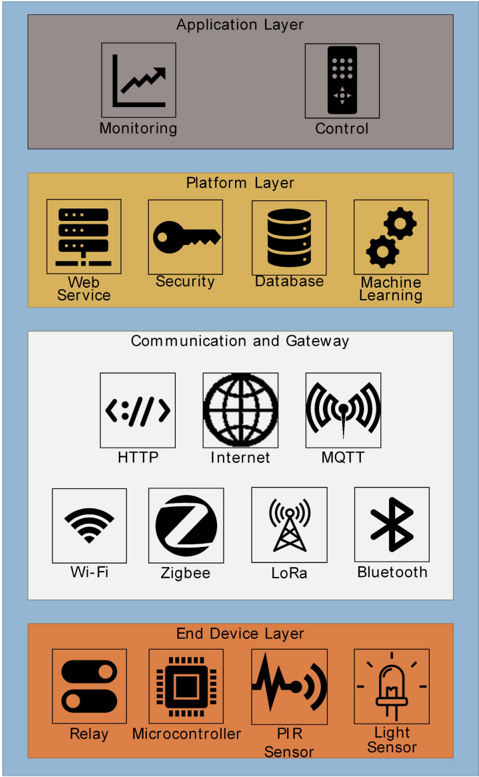
“The Internet of things (IoT) concept with the end device, platform, and application layer plays an essential role in optimizing the advantages of LED lighting in the emergence of smart lighting [2].”
A Framework of Machine Learning Models for IoT Device Control in Smart Classrooms
Nguyen, T. V. A., Hoang Giang, L. E., Chu, P. D. T., et al. (2026) · Lecture notes in networks and systems · doi:10.1007/978-3-032-18316-3_25
Lighting from an Efficient System to a Smart System
Parise, G., & Zissis, G. (2024) · IEEE Industry Applications Society Annual Meeting (IAS) · doi:10.1109/ias55788.2024.11023688
Salman, A., Adam, S. M. A. A., Yavarian, R., & Bousseliou, N. (2026) · Journal of Language Literature and Educational Research · doi:10.37251/jolle.v2i2.2758
Energy-Efficient Smart Lighting Systems for Residential Environments: A Review
Navada, S. G., Vijayalaxmi, & Vaishnavi (2026) · International Conference on Computer Networks, Big Data and IoT (ICCBI) · doi:10.1109/iccbi68589.2026.11619603
“The survey in [13] reviews different data-based methods used in smart lighting to improve user comfort.”
Концептуальна модель людино-орієнтованої розумної системи освітлення
Petrenko, T., & Павлусенко, К. О. (2023) · Інформаційно-керуючі системи на залізничному транспорті · doi:10.18664/ikszt.v28i3.290100
Sistemas de iluminação inteligente com IoT para a indústria 4.0: eficiência e sustentabilidade
Simões, W. C. S. S., Pacheco, G. D. A., França, L. D. O., et al. (2025) · STUDIES IN ENGINEERING AND EXACT SCIENCES · doi:10.54021/seesv5n3-143
Lee, P. Z., Lau, S. P., & Tan, C. E. (2025) · doi:10.1109/iceei68459.2025.11330223
“Beyond TALiSMaN, several smart lighting frameworks adopt adaptive [15] or AI-driven [16] approaches to improve illumination control and energy management.”
Lv, R., Duan, P., Zang, B., et al. (2026) · International Conference on Electronic Engineering and Informatics (EEI) · doi:10.1109/eei70303.2026.11640677
“During periods of sparse nighttime pedestrian flow, continuous illumination results in considerable power loss; conversely, if low-sensitivity sensor-based lighting is employed, short-term crowd gatherings may experience insufficient illumination, creating safety hazards such as stampedes [1], [2].”
Shankaranarayanan, S., Murugan, D. K., & Said, Z. (2026) · Elsevier eBooks · doi:10.1016/b978-0-443-33767-3.00008-2
Sneha, K., Sathiraju, N. J. P., & sai, K. H. (2024) · International Conference on Intelligent Communication Technologies and Virtual Mobile Networks (ICICV) · doi:10.1109/icicv62344.2024.00070
Predictor: Critical Illness from Chronic Problems and Discovered Features using ML
Giri, M., Suresh, D. A., Babu, N., Anandan, B., Vanathi, S., & Kamal, N. (2025) · International Conference on Internet of Things: Smart Innovation and Usages (IoT-SIU) · doi:10.1109/iot-siu65919.2025.11402789 · Cited by 2
“…patient data with errors, doctors prescribe medicines or continue treatment based on faulty data, the consequence are waste of time to treat patients, waste of money, and also sometimes patients may die due to wrong treatment or side effects of medicine suggested based on faulty patients data [3].”
Chouikh, S., Elmitwally, N. S., & Saeed, F. (2026) · Sustainable Energy Technologies and Assessments · doi:10.1016/j.seta.2026.105315
Optimizing Indoor Lighting With CNN and LSTM Enhancing Comfort and Efficiency
Yu, K., Dong, G., & Li, X. (2025) · International Journal of Ambient Computing and Intelligence · doi:10.4018/ijaci.386084
Yaşa, M. D., & Yağmur, Ş. A. (2025) · Results in Engineering · doi:10.1016/j.rineng.2025.108774
Bourian, I., Filali, C. E., & Choughdali, K. (2025) · The Journal of Supercomputing · doi:10.1007/s11227-025-07735-4 · Cited by 1
“[8–10].”
AI-based Environmental Sensing Control Model Enhancing Home Comfort and Energy Consumption
Ullah, F., Jadoon, I., Baig, H., Ahmed, E., & Khan, M. B. (2025) · International Conference on Computing, Management and Telecommunications · doi:10.1109/commantel68363.2025.11368439
“PWM and temperature setpoints follow references from [25], while lighting con-trol thresholds are derived from user comfort studies [26].”
Research on the Design of Intelligent Lighting Products Integrating Emotion Recognition
Zhang, S., Tu, Z., Wang, Y., Sun, S., & Zhang, R. (2025) · International Conference on Power, Electrical Engineering, Electronics and Control (PEEEC) · doi:10.1109/peeec67807.2025.00153
“The core objective of this study is to design and validate an intelligent lighting system that can integrate multimodal physiological signals for real-time emotion recognition, and dynamically optimize lighting parameters based on this [5] .”
Supervised Machine Learning Methods for the Prediction of Discomfort due to Glare
Maskarenj, M. S., & Altomonte, S. (2026) · LEUKOS The Journal of the Illuminating Engineering Society of North America · doi:10.1080/15502724.2025.2609655
Luo, G., & Lv, M. (2026) · International Conference on Machine Intelligence and Digital Applications (MIDA) · doi:10.1145/3801438.3806961
“With the advancement of machine learning, algorithms such as Support Vector Machines (SVM) [5], Artificial Neural Networks (ANN) [6], Random Forest (RF) [7], and Deep Neural Networks (DNN) [8] have also been applied to model the relationship between environmental variables and lighting parameters.”
Ye, Z., & Liang, T. (2025) · SSRN Electronic Journal · doi:10.2139/ssrn.5605272
Bridging Research and Practice: A Step-by-Step Methodology for Building Lighting Optimization
Muslimin, N. A., Mansor, N. N., Mokhlis, H., et al. (2025) · IEEE Student Conference on Research and Development (SCOReD) · doi:10.1109/scored68498.2025.11399083
Light Status Recognition and Runtime Analytics Using YOLOv5-tiny
Attharat, W., Puttinaovarat, S., & Puangsuwan, K. (2025) · doi:10.1145/3787120.3787128
How Does IoT Impact on Indoor Environmental Quality?
Ghiai, M. M., & Pahlevani, M. (2025) · Lecture notes in civil engineering · doi:10.1007/978-981-96-4051-5_93
Sanluang, M., Choowitsakunlert, S., Chotigo, S., & Silapunt, R. (2026) · IEEE Sensors Journal · doi:10.1109/jsen.2026.3670087
“This approach bridges the gap between cost effectiveness and measurement accuracy, enabling scalable and accessible human-centric lighting solutions [21].”
Metadata
- Authors
- Putrada, A. G., Abdurohman, M., Perdana, D., & Nuha, H. H.
- Affiliations
- Telkom University (ID)
- Venue
- IEEE Access
- Published
- 2022
- Volume
- 10
- Pages
- 45137-45178
- ISSN
- 2169-3536 (ISSN-L)
- OpenAlex
- W4226062023
- Cited by
- 101
- References
- 431
- Citations by year
- 2026: 15 · 2025: 31 · 2024: 22 · 2023: 24 · 2022: 9
- FWCI
- 9.40
- Type
- journal article
- Language
- en
- Open access
- gold
- doi.org
- Locations
- IEEE Access (publishedVersion, cc-by)
- DOAJ (DOAJ: Directory of Open Access Journals) (submittedVersion)
- Funders
- Telkom University through the Doctoral Dissertation Research Scheme and the Doctoral Study Program
- Biofarma Corporation
- Industri Telekomunikasi Indonesia (INTI) Corporation
- Lembaga Pengelola Dana Pendidikan (LPDP) of Ministry of Finance of Republic Indonesia through Riset Inovatif Produktif (Rispro) Scheme
- Topics
- Physical Sciences › Engineering › Building and Construction › Building Energy and Comfort Optimization
- Physical Sciences › Computer Science › Computer Vision and Pattern Recognition › Context-Aware Activity Recognition Systems
- Physical Sciences › Engineering › Electrical and Electronic Engineering › IoT-based Smart Home Systems
- Keywords
- smart lighting, user comfort, machine learning, activity recognition, Internet of Things, LED lighting, light-emitting diodes, correlated color temperature, flicker perception, energy efficiency, lighting control
About these checks
Registry, retraction, Cites and statistics results are computed, not judged, with one exception: a printed reference that no index lists is read once by a model before it counts as a citation error. Claims are extracted by a model and kept only when their quote appears verbatim in the text; each cited source is then checked, with a model’s help, for whether it says what the claim relies on. Those verdicts can be wrong — read the claim’s quote and the cited source before relying on one.
The claim verdicts this report counts are experimental: their accuracy is not yet measured.
A language model drew the claims from the paper on 2026-10-10, under version 3 of the claim definition (model deepseek-v4.1-flash, prompt extract-v3).
A second model labelled each claim on 2026-10-10 (model jev-1.13-20260917, definition revision gold-guideline-v0.2).
Cited sources are checked with a language model’s help (gpt-6-sol).
Statistics and arithmetic are recomputed, not judged.
Confidence bands are shown only for fields calibrated on our annotated test set. None is calibrated yet, so no band is shown.
What counts as a claim ›How we measure confidence ›How we check this ›
Are you an author, or do you see a problem with this page? Request a review
Data sources
Bibliographic data: Semantic Scholar, OpenAlex, Crossref.
Contains information from the Semantic Scholar Academic Graph Datasets, made available under the ODC Attribution License (ODC-BY 1.0).
Semantic Scholar’s data is described in: Kinney, R., et al. (2023). The Semantic Scholar Open Data Platform. arXiv:2301.10140.
