

Machine Learning Methods in Smart Lighting Toward Achieving User Comfort: A Survey
Open accessThe DOI matches its Crossref record; 416 of the 431 references it cites were found in a registry or an index; 13 of the 141 sources its claims cite were checked for support.
Abstract
Smart lighting has become a universal smart product solution, with global revenues of up to US $5.9 billion by 2021. Six main factors drive the technology: light-emitting diode (LED) lighting, sensors, control, analytics, and intelligence.
Overview
CoChat Summary
## TL;DR
This survey reviews smart lighting research from 1993 to 2021 and maps how machine learning is used to solve smart lighting problems, especially for user comfort. It argues that activity recognition is the most promising direction for improving user comfort, but current solutions still face cost, accuracy, and real-time constraints.
## Key findings
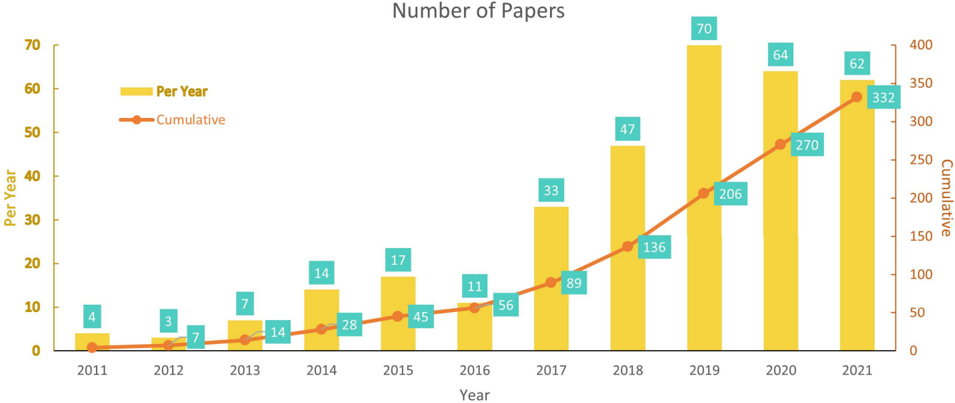
- The authors surveyed 332 papers on smart lighting and report that 59% of the publications were from 2019–2021.
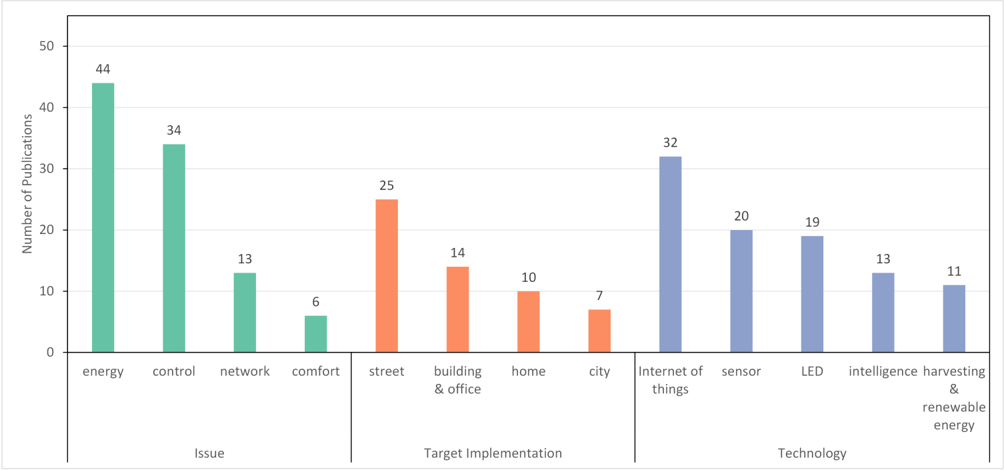
- From keyword-based classification, they found 4 main issues in smart lighting research (energy efficiency, computer network performance, control performance, and user comfort), 4 implementation targets (street lighting, building/office, home, and city), and 6 leading technologies (IoT, sensors, LED lights, intelligence, renewable energy, and energy harvesting).
- They identify 8 machine learning application areas in recent smart lighting research: predictive control, intelligent control, hand-gesture recognition, clustering, activity recognition, anomaly detection, optimization, computer vision, and elderly management.
- The paper reports that energy was the most popular topic with 44 papers, and only 6 papers discussed comfort in smart lighting.
- For user comfort metrics, the survey lists LUR, UNC, LCR, PRR, CCT, and others, and states that LUR = 1 is optimal while UNC is better when closer to 0.
## Methods
- The study is a systematic literature review (SLR) with stages of research question formulation, search strategy and selection, data extraction, and synthesis.
- Search and selection used inclusion criteria based on the strings “smart lighting,” “machine learning,” “user comfort,” and “activity recognition” in the title, with English or Indonesian papers from 1993 to 2021, available in Google Scholar, and in PDF or HTML format.
- The review analyzes the literature through topic classification, keyword extraction, and quality assessment, then synthesizes the results around smart lighting topics, machine learning methods, and user-comfort-related applications.
## Limitations
- The paper states that no survey paper had thoroughly discussed all machine learning techniques used in smart lighting research to achieve user comfort before this review.
- It says there is no existing research on activity recognition smart lighting that measures user comfort; this is explicitly presented as a research gap.
- Evident from the text: the review’s literature search is limited to papers available in Google Scholar and to English/Indonesian documents from 1993–2021, which may exclude relevant work in other languages or sources.
Model-written summary. Check it against the paper before relying on it.
Integrity signals
Registry
Cites
Statistics
Figures







Verification
Claims the paper makes
13 Valid · 36 Not valid · 136 Not checked · 97 Own results and interpretations
Every source the paper cites for this claim was checked and supports it.
In the paper
“Several environmental sensors play a role in this aspect, including magnetic switches, PIR sensors, and floor sensors [316].”
§ Machine Learning Methods in Smart Lighting Toward Achieving User Comfort: A Survey > 9) ELDERLY MANAGEMENT
What the sources say
- Supportedcites [316] source
The Introduction describes magnetic switches used to monitor an elderly person's movement. Sections 2.1 and 2.5 describe PIR motion sensors and floor sensors, respectively, as tools for elderly monitoring and care. (LLM, conf=0.91)
plainstates an association- Asserted: passes — The authors put it forward as true.
- Checkable: passes — It can be checked against evidence.
- Load-bearing: unclear — It is unclear whether the paper’s conclusions depend on it.
- Based: passes — The paper gives a reason why it holds.
- Supported
A result the paper reports from its own data — it cites no other source for it, so there is none to check. The quote shows it is in the paper.
In the paper
“We found six leading technologies through keyword searches in technology: IoT, sensors, LED lights, intelligence, renewable energy, and energy harvesting.”
§ Machine Learning Methods in Smart Lighting Toward Achieving User Comfort: A Survey > D. LITERATURE DEMOGRAPHICS
plain- Asserted: passes — The authors put it forward as true.
- Checkable: passes — It can be checked against evidence.
- Load-bearing: unclear — It is unclear whether the paper’s conclusions depend on it.
- Based: passes — The paper gives a reason why it holds.
- Rests on an assumption not shown here.
A result the paper reports from its own data — it cites no other source for it, so there is none to check. The quote shows it is in the paper.
In the paper
“The four main implementation targets obtained through keyword searches are street lighting, building and office, home, and city.”
§ Machine Learning Methods in Smart Lighting Toward Achieving User Comfort: A Survey > D. LITERATURE DEMOGRAPHICS
plain- Asserted: passes — The authors put it forward as true.
- Checkable: passes — It can be checked against evidence.
- Load-bearing: unclear — It is unclear whether the paper’s conclusions depend on it.
- Based: passes — The paper gives a reason why it holds.
- Rests on an assumption not shown here.
A result the paper reports from its own data — it cites no other source for it, so there is none to check. The quote shows it is in the paper.
In the paper
“Based on the keyword search on the issue, there are four main issues when people conduct smart lighting research: energy efficiency, computer network performance, control performance, and user comfort.”
§ Machine Learning Methods in Smart Lighting Toward Achieving User Comfort: A Survey > D. LITERATURE DEMOGRAPHICS
plain- Asserted: passes — The authors put it forward as true.
- Checkable: passes — It can be checked against evidence.
- Load-bearing: unclear — It is unclear whether the paper’s conclusions depend on it.
- Based: passes — The paper gives a reason why it holds.
- Rests on an assumption not shown here.
A result the paper reports from its own data — it cites no other source for it, so there is none to check. The quote shows it is in the paper.
In the paper
“There is an increasing trend where 59% of the publication year is within the range of 2019 -2021.”
§ Machine Learning Methods in Smart Lighting Toward Achieving User Comfort: A Survey > D. LITERATURE DEMOGRAPHICS
plainstates an association- Asserted: passes — The authors put it forward as true.
- Checkable: passes — It can be checked against evidence.
- Load-bearing: unclear — It is unclear whether the paper’s conclusions depend on it.
- Based: passes — The paper gives a reason why it holds.
- Rests on an assumption not shown here.
36 more claims
Create a free account to see all 282 claims and to verify the 26 references still open.
- Probably not a substantial claim. 225
- It may state two separate claims as one. 58
Self-check
Percentages, sums and reported differences re-computed from the paper’s own numbers.
Each contradiction between two passages listed here was confirmed by an independent check.
Rated minor: it would not touch a result — a value no result rests on, a p-value that stays on the same side of the significance level, or a conflict that is clerical, resolved elsewhere in the paper, or outside its own findings.
In the paper
§ Machine Learning Methods in Smart Lighting Toward Achieving User Comfort: A Survey > Abstract
“Six main factors drive the technology: light-emitting diode (LED) lighting, sensors, control, analytics, and intelligence.”
§ Machine Learning Methods in Smart Lighting Toward Achieving User Comfort: A Survey > A. MARKET TRENDS OF SMART LIGHTING
“There are six main driving factors in smart lighting: 1. light-emitting diode (LED) lighting, 2. sensors, 3. controls, 4. connectivity, 5. analytics, 6. intelligence.”
Citations
Cites
Guidance on Conducting a Systematic Literature Review
Xiao, Y., & Watson, M. (2019) · Journal of Planning Education and Research · doi:10.1177/0739456x17723971 · Cited by 3,467 · cited 1×
“All topics searched for and not related to RQ should be excluded [15].”
BackgroundSagi, O., & Rokach, L. (2018) · WIREs Data Mining and Knowledge Discovery · doi:10.1002/widm.1249 · Cited by 3,103 · cited 1×
“This method is considered a state-of-the-art method in the field of machine learning [218].”
MethodDeep learning for sensor-based activity recognition: A survey
Wang, J., Chen, Y., Hao, S., Peng, X., & Hu, L. (2019) · Pattern Recognition Letters · doi:10.1016/j.patrec.2018.02.010 · Cited by 2,014 · cited 1×
“The primary process of activity recognition is to detect high-level user activity from raw sensors [292].”
BackgroundA Review on Linear Regression Comprehensive in Machine Learning
Maulud, D., & Abdulazeez, A. M. (2020) · Journal of Applied Science and Technology Trends · doi:10.38094/jastt1457 · Cited by 1,262 · cited 1×
“Among the existing regression analysis methods, the simplest and most commonly used way is linear regression [194].”
MethodDeep Learning for Anomaly Detection: A Survey
Chalapathy, R., & Chawla, S. (2019) · arXiv · doi:10.48550/arxiv.1901.03407 · Cited by 1,240 · cited 1×
“Anomaly detection is implementable in intrusion detection systems (IDS), fraud detection, medical anomaly detection, industrial anomaly detection, or time-series anomaly data [299].”
BackgroundFast and wild: Bootstrap inference in Stata using boottest
Roodman, D., Nielsen, M. Ø., MacKinnon, J. G., & Webb, M. D. (2019) · The Stata Journal: Promoting communications on statistics and Stata · doi:10.1177/1536867x19830877 · Cited by 1,007 · cited 1×
“Bootstrap is a method of replicating multiple datasets from the main dataset using a sampling method [221].”
MethodLSTM-CNN Architecture for Human Activity Recognition
Xia, K., Huang, J., & Wang, H. (2020) · IEEE Access · doi:10.1109/access.2020.2982225 · Cited by 851 · cited 1×
“Xia et al. [332] compares three deep learning methods, namely LSTM, CNN, and a combination of LSTM and CNN. Predictions run on three different datasets with six movement classes.”
MethodLearning-Based Model Predictive Control: Toward Safe Learning in Control
Hewing, L., Wabersich, K. P., Menner, M., & Zeilinger, M. N. (2020) · Annual Review of Control, Robotics, and Autonomous Systems · doi:10.1146/annurev-control-090419-075625 · Cited by 835 · cited 1×
“The model is used to predict the future based on training data and then take control to deal with predicted future events [273].”
MethodAn overview of the supervised machine learning methods
Nasteski, V. (2017) · HORIZONS.B · doi:10.20544/horizons.b.04.1.17.p05 · Cited by 712 · cited 1×
“The class can be categorical or numerical, furtherly dividing the supervised method into classification and regression methods [177].”
MethodDeep Learning for Sensor-based Human Activity Recognition
Chen, K., Zhang, D., Yao, L., Guo, B., Yu, Z., & Liu, Y. (2022) · ACM Computing Surveys · doi:10.1145/3447744 · Cited by 690 · cited 1×
“Chen et al. [418] reveals that deep models can learn descriptive features from complex sensor data.”
BackgroundProblem formulations and solvers in linear SVM: a review
Chauhan, V. K., Dahiya, K., & Sharma, A. (2019) · Artificial Intelligence Review · doi:10.1007/s10462-018-9614-6 · Cited by 660 · cited 1×
“SVM is a margin-based classification method [185].”
A Review of Machine Learning and IoT in Smart Transportation
Zantalis, F., Koulouras, G., Karabetsos, S., & Kandris, D. (2019) · Future Internet · doi:10.3390/fi11040094 · Cited by 625 · cited 1×
“Zantalis et al. [173] said that the more IoT devices installed, the more data related to sensors emerge.”
BackgroundOverview and comparative study of dimensionality reduction techniques for high dimensional data
Ayesha, S., Hanif, M. K., & Talib, R. (2020) · Information Fusion · doi:10.1016/j.inffus.2020.01.005 · Cited by 569 · cited 1×
“Dimension reduction is a method to reduce the number of dimensions or the number of data features with high dimensionality while maintaining the valuable properties of the original data [210].”
MethodSix tips for your (systematic) literature review in business and management research
Fisch, C., & Block, J. (2018) · Management Review Quarterly · doi:10.1007/s11301-018-0142-x · Cited by 516 · cited 1×
“RQ is the essential part of the introduction and motivates in doing SLR [13].”
BackgroundDeep Reinforcement Learning for Smart Home Energy Management
Yu, L., Xie, W., Xie, D., Zou, Y., Zhang, D., Sun, Z., Zhang, L., Zhang, Y., & Jiang, T. (2020) · IEEE Internet of Things Journal · doi:10.1109/jiot.2019.2957289 · Cited by 471 · cited 1×
“Yu et al. [217] uses a reinforcement learning method called deep deterministic policy gradient (DDPG) to find the optimum decision based on several parameters that have uncertainty.”
MethodUğuz, H. (2011) · Knowledge-Based Systems · doi:10.1016/j.knosys.2011.04.014 · Cited by 460 · cited 1×
“In classical learning, to perform classification, datasets usually experience dimensionality problems and must go through the feature extraction and feature selection stages first [230].”
BackgroundA novel selective naïve Bayes algorithm
Chen, S., Webb, G. I., Liu, L., & Ma, X. (2020) · Knowledge-Based Systems · doi:10.1016/j.knosys.2019.105361 · Cited by 407 · cited 1×
“It is efficient because it takes the assumption that attributes are independent [189].”
BackgroundFeature Selection for Classification using Principal Component Analysis and Information Gain
Odhiambo Omuya, E., Onyango Okeyo, G., & Waema Kimwele, M. (2021) · Expert Systems with Applications · doi:10.1016/j.eswa.2021.114765 · Cited by 398 · cited 1×
“Omuya et al. [414] prove that by comparing four different scenarios, data that has gone through the PCA process has the best performance.”
BackgroundBayes’ Theorem and Naive Bayes Classifier
Berrar, D. (2019) · Encyclopedia of Bioinformatics and Computational Biology · doi:10.1016/b978-0-12-809633-8.20473-1 · Cited by 394 · cited 1×
“It is a theorem that looks at a new event’s hypothesis probability [188].”
BackgroundDemrozi, F., Pravadelli, G., Bihorac, A., & Rashidi, P. (2020) · IEEE Access · doi:10.1109/access.2020.3037715 · Cited by 368 · cited 1×
“In a survey paper on activity recognition, Demrozi et al. [333] revealed that there is a taxonomy related to detectable activities.”
BackgroundIoT based low cost and intelligent module for smart irrigation system
Nawandar, N. K., & Satpute, V. R. (2019) · Computers and Electronics in Agriculture · doi:10.1016/j.compag.2019.05.027 · Cited by 353 · cited 1×
“Nawandar et al. [359] use soil moisture, temperature, and humidity sensors and a controller with a total cost of US$ 13 combined with the ANN method for a smart irrigation solution.”
MethodReal-Time Sensor Anomaly Detection and Identification in Automated Vehicles
van Wyk, F., Wang, Y., Khojandi, A., & Masoud, N. (2020) · IEEE Transactions on Intelligent Transportation Systems · doi:10.1109/tits.2019.2906038 · Cited by 344 · cited 1×
“Van et al. [428] uses anomaly detection to find faulty sensors in connected and automated vehicles (CAVs) in the build phase.”
BackgroundDogo, E. M., Afolabi, O. J., Nwulu, N. I., Twala, B., & Aigbavboa, C. O. (2018) · 2018 International Conference on Computational Techniques, Electronics and Mechanical Systems (CTEMS) · doi:10.1109/ctems.2018.8769211 · Cited by 335 · cited 1×
“In training a CNN model for an image, gradient descent is applicable to find the local minimum of the loss function [236].”
MethodArtificial neural networks enabled by nanophotonics
Zhang, Q., Yu, H., Barbiero, M., Wang, B., & Gu, M. (2019) · Light: Science & Applications · doi:10.1038/s41377-019-0151-0 · Cited by 317 · cited 1×
“ANN emulates the structural, biological, and functional features of a biological neural network (BNN) [178].”
BackgroundDeep Learning for Sensor-based Human Activity Recognition: Overview, Challenges and Opportunities
Chen, K., Zhang, D., Yao, L., Guo, B., Yu, Z., & Liu, Y. (2020) · arXiv · doi:10.48550/arxiv.2001.07416 · Cited by 314 · cited 1×
“Chen et al. [418] reveals that deep models can learn descriptive features from complex sensor data.”
BackgroundAnomaly detection in wireless sensor networks
Rajasegarar, S., Leckie, C., & Palaniswami, M. (2008) · IEEE Wireless Communications · doi:10.1109/mwc.2008.4599219 · Cited by 310
Traffic accident detection using random forest classifier
Dogru, N., & Subasi, A. (2018) · 2018 15th Learning and Technology Conference (L&T) · doi:10.1109/lt.2018.8368509 · Cited by 308 · cited 1×
“The research of Dogru et al. [416] shows that the performance of random forest classification is better than SVM and ANN.”
MethodRecent trends in machine learning for human activity recognition—A survey
Ramasamy Ramamurthy, S., & Roy, N. (2018) · WIREs Data Mining and Knowledge Discovery · doi:10.1002/widm.1254 · Cited by 299 · cited 1×
“The implementation of activity recognition is diverse, including in the fields of smart home, sports, billing automation, elderly monitoring, security, and gaming [293].”
BackgroundA survey on application of machine learning for Internet of Things
Cui, L., Yang, S., Chen, F., Ming, Z., Lu, N., & Qin, J. (2018) · International Journal of Machine Learning and Cybernetics · doi:10.1007/s13042-018-0834-5 · Cited by 293 · cited 2×
“Cui et al. [10] They discuss machine learning in the IoT field.”
BackgroundTaherkhani, A., Cosma, G., & McGinnity, T. M. (2020) · Neurocomputing · doi:10.1016/j.neucom.2020.03.064 · Cited by 281 · cited 1×
“Taherkhani et al. [417] prove that the performance of the AdaBoost-CNN classification model on the imbalance dataset is better than using ResTNet.”
MethodHuman Activity Recognition: A Survey
Jobanputra, C., Bavishi, J., & Doshi, N. (2019) · Procedia Computer Science · doi:10.1016/j.procs.2019.08.100 · Cited by 274 · cited 1×
“Jobanputra et al. [421], in research on activity recognition, said that generally, simple algorithms have a short runtime but poor performance.”
BackgroundZekić-Sušac, M., Mitrović, S., & Has, A. (2021) · International Journal of Information Management · doi:10.1016/j.ijinfomgt.2020.102074 · Cited by 270 · cited 1×
“Zekic-Susac et al. [224] implements a random forest on the smart lighting system using big data from the system.”
MethodArtificial neural networks used in optimization problems
Villarrubia, G., De Paz, J. F., Chamoso, P., & la Prieta, F. D. (2018) · Neurocomputing · doi:10.1016/j.neucom.2017.04.075 · Cited by 260 · cited 1×
“Optimization is a method of finding the best results based on an objective function and several restrictions to get valid results [303].”
MethodA federated learning system with enhanced feature extraction for human activity recognition
Xiao, Z., Xu, X., Xing, H., Song, F., Wang, X., & Zhao, B. (2021) · Knowledge-Based Systems · doi:10.1016/j.knosys.2021.107338 · Cited by 251 · cited 1×
“Information about human activities is usually hidden in sensor data, so a feature extraction [327] process is required.”
BackgroundA Survey of Learning-Based Intelligent Optimization Algorithms
Li, W., Wang, G.-G., & Gandomi, A. H. (2021) · Archives of Computational Methods in Engineering · doi:10.1007/s11831-021-09562-1 · Cited by 251 · cited 1×
“Several machine learning methods that are usable as optimization methods are Bayesian network, reinforcement learning, and Q-learning [304].”
MethodLeveraging Machine Learning and Big Data for Smart Buildings: A Comprehensive Survey
Qolomany, B., Al-Fuqaha, A., Gupta, A., Benhaddou, D., Alwajidi, S., Qadir, J., & Fong, A. C. (2019) · IEEE Access · doi:10.1109/access.2019.2926642 · Cited by 246 · cited 1×
“Qolomany et al. [9] discusses machine learning and also big data in the smart building because it considers there is a vast amount of data in the system and data mining is a promising solution.”
BackgroundA review and categorization of techniques on device-free human activity recognition
Hussain, Z., Sheng, Q. Z., & Zhang, W. E. (2020) · Journal of Network and Computer Applications · doi:10.1016/j.jnca.2020.102738 · Cited by 241
Bootstrap Aggregating and Random Forest
Lee, T., Ullah, A., & Wang, R. (2019) · Advanced studies in theoretical and applied econometrics · doi:10.1007/978-3-030-31150-6_13 · Cited by 241 · cited 1×
“Namely, the aggregating method [222].”
Park, J. Y., Dougherty, T., Fritz, H., & Nagy, Z. (2019) · Building and Environment · doi:10.1016/j.buildenv.2018.10.028 · Cited by 238 · cited 3×
“LUR is an example of user comfort measurement based on control quality because the measure refers to the ratio of the time the lights are on with the time the lights are used [347].”
BackgroundInfluentialLeccese, F. (2013) · IEEE Transactions on Power Delivery · doi:10.1109/tpwrd.2012.2212215 · Cited by 237 · cited 1×
“Leccese [45] proposed Zigbee as a communication protocol in a street lighting system with remote control capabilities.”
BackgroundShen, F., Zhao, X., Kou, G., & Alsaadi, F. E. (2021) · Applied Soft Computing · doi:10.1016/j.asoc.2020.106852 · Cited by 232 · cited 1×
“The way boosting works is by increasing the weight of the miss-classified data in the previous classifier to the next classifier and then reclassifying the data [227].”
MethodOptimizing ensembles of small models for predicting the distribution of species with few occurrences
Breiner, F. T., Nobis, M. P., Bergamini, A., & Guisan, A. (2018) · Methods in Ecology and Evolution · doi:10.1111/2041-210x.12957 · Cited by 231 · cited 1×
“However, the drawback of ensemble learning is that by combining several methods, the algorithm will be more complex and become more computationally heavy [219].”
MethodSentiment Analysis Using Naive Bayes Algorithm Of The Data Crawler: Twitter
Wongkar, M., & Angdresey, A. (2019) · 2019 Fourth International Conference on Informatics and Computing (ICIC) · doi:10.1109/icic47613.2019.8985884 · Cited by 228 · cited 1×
“The naive Bayes classification formula is as follows where x is the data with an unknown class, c is the hypothetical data of a particular class, and P ( c | x ) is the posterior probability c based on x [190].”
BackgroundMoretti, F., Pizzuti, S., Panzieri, S., & Annunziato, M. (2015) · Neurocomputing · doi:10.1016/j.neucom.2014.08.100 · Cited by 213
A Novel Passive Offline LED Driver With Long Lifetime
Hui, S. Y., Li, S. N., Tao, X. H., Chen, W., & Ng, W. M. (2010) · IEEE Transactions on Power Electronics · doi:10.1109/tpel.2010.2048436 · Cited by 189 · cited 1×
“Then Hui et al. [87] adds that LED lighting has a longer lifespan, which is up to 80,000 hours.”
BackgroundLeccese, F., Cagnetti, M., & Trinca, D. (2014) · Sensors · doi:10.3390/s141224408 · Cited by 187 · cited 1×
“[130] Light, Presence None Xbee Raspberry Pi Web Service Mobile, Laptop Web Zigbee, WiMAX”
BackgroundElsaraiti, M., & Merabet, A. (2021) · Energies · doi:10.3390/en14206782 · Cited by 179 · cited 1×
“The autoregressive integrated moving average (ARIMA) and LSTM are methods that are applicable in predictive control [274].”
MethodHuman Physical Activity Recognition Using Smartphone Sensors
Voicu, R.-A., Dobre, C., Bajenaru, L., & Ciobanu, R.-I. (2019) · Sensors · doi:10.3390/s19030458 · Cited by 172 · cited 1×
“Voicu et al. [326] researched activity recognition utilizing existing sensors on smartphones such as accelerometer, gyroscope, and gravity sensor.”
BackgroundFrom clustering to clustering ensemble selection: A review
Golalipour, K., Akbari, E., Hamidi, S. S., Lee, M., & Enayatifar, R. (2021) · Engineering Applications of Artificial Intelligence · doi:10.1016/j.engappai.2021.104388 · Cited by 172 · cited 1×
“Clustering is finding natural grouping in a data set [203].”
BackgroundSmart Lighting Solutions for Smart Cities
Castro, M., Jara, A. J., & Skarmeta, A. F. G. (2013) · 2013 27th International Conference on Advanced Information Networking and Applications Workshops · doi:10.1109/waina.2013.254 · Cited by 172 · cited 1×
“Castro et al. [31] say that energy efficiency is the first goal in achieving sustainability.”
BackgroundDimension reduction of image deep feature using PCA
Ma, J., & Yuan, Y. (2019) · Journal of Visual Communication and Image Representation · doi:10.1016/j.jvcir.2019.102578 · Cited by 167
Ambient Sensors for Elderly Care and Independent Living: A Survey
Uddin, M. Z., Khaksar, W., & Torresen, J. (2018) · Sensors · doi:10.3390/s18072027 · Cited by 166 · cited 1×
“Several environmental sensors play a role in this aspect, including magnetic switches, PIR sensors, and floor sensors [316].”
BackgroundSmart lighting: The way forward? Reviewing the past to shape the future
Chew, I., Karunatilaka, D., Tan, C. P., & Kalavally, V. (2017) · Energy and Buildings · doi:10.1016/j.enbuild.2017.04.083 · Cited by 164 · cited 3×
“• Chew et al. [6] discusses smart lighting products that are already on the market.”
BackgroundInfluentialA Hybrid Deep Learning Model for Human Activity Recognition Using Multimodal Body Sensing Data
Gumaei, A., Hassan, M. M., Alelaiwi, A., & Alsalman, H. (2019) · IEEE Access · doi:10.1109/access.2019.2927134 · Cited by 157 · cited 1×
“For example, in the healthcare sector, activity recognition is used for the care of the elderly or the maintenance of physically impaired patients [294].”
BackgroundAdvanced Adaptive Street Lighting Systems for Smart Cities
Gagliardi, G., Lupia, M., Cario, G., Tedesco, F., Gaccio, F. C., Scudo, F. L., & Casavola, A. (2020) · Smart Cities · doi:10.3390/smartcities3040071 · Cited by 154 · cited 1×
“Gagliardi et al. [39] say that lighting control is essential in reducing energy consumption.”
BackgroundHand Gesture Recognition Based Omnidirectional Wheelchair Control Using IMU and EMG Sensors
Kundu, A. S., Mazumder, O., Lenka, P. K., & Bhaumik, S. (2018) · Journal of Intelligent & Robotic Systems · doi:10.1007/s10846-017-0725-0 · Cited by 152 · cited 1×
“An inertia measurement unit (IMU) sensor is applicable because it has the function of an accelerometer and a gyroscope [284].”
BackgroundIntelligent household LED lighting system considering energy efficiency and user satisfaction
Byun, J., Hong, I., Lee, B., & Park, S. (2013) · IEEE Transactions on Consumer Electronics · doi:10.1109/tce.2013.6490243 · Cited by 149
Intelligent system for lighting control in smart cities
De Paz, J. F., Bajo, J., Rodríguez, S., Villarrubia, G., & Corchado, J. M. (2016) · Information Sciences · doi:10.1016/j.ins.2016.08.045 · Cited by 146
AI Empowered RIS-Assisted NOMA Networks: Deep Learning or Reinforcement Learning?
Zhong, R., Liu, Y., Mu, X., Chen, Y., & Song, L. (2021) · IEEE Journal on Selected Areas in Communications · doi:10.1109/jsac.2021.3126068 · Cited by 146 · cited 1×
“Research conducted by Zhong et al. [425] shows that deep learning can reach convergence in 30 episodes while reinforcement learning reaches convergence in more than 150 episodes.”
MethodZheng, X., Wang, M., & Ordieres-Meré, J. (2018) · Sensors · doi:10.3390/s18072146 · Cited by 146
On the Personalization of Classification Models for Human Activity Recognition
Ferrari, A., Micucci, D., Mobilio, M., & Napoletano, P. (2020) · IEEE Access · doi:10.1109/access.2020.2973425 · Cited by 146 · cited 1×
“Ferrari et al. [329] first performs a peak centered segment of the time-series data from the accelerometer sensor and then performs a feature extraction.”
BackgroundLighting system control techniques in commercial buildings: Current trends and future directions
Wagiman, K. R., Abdullah, M. N., Hassan, M. Y., Radzi, N. H. M., Bakar, A. H. A., & Kwang, T. C. (2020) · Journal of Building Engineering · doi:10.1016/j.jobe.2020.101342 · Cited by 144 · cited 2×
“• Wagiman et al. [8] discusses smart lighting papers in general.”
BackgroundImpact of Automatic Feature Extraction in Deep Learning Architecture
Shaheen, F., Verma, B., & Asafuddoula, M. (2016) · 2016 International Conference on Digital Image Computing: Techniques and Applications (DICTA) · doi:10.1109/dicta.2016.7797053 · Cited by 144
IoT-enabled smart lighting systems for smart cities
Sikder, A. K., Acar, A., Aksu, H., Uluagac, A. S., Akkaya, K., & Conti, M. (2018) · IEEE Annual Computing and Communication Workshop and Conference (CCWC) · doi:10.1109/ccwc.2018.8301744 · Cited by 142 · cited 1×
“Wired communication options are not much vast in smart lighting, being PLC and DALI among them [119].”
BackgroundQuality Assessment in Systematic Literature Reviews: A Software Engineering Perspective
Yang, L., Zhang, H., Shen, H., Huang, X., Zhou, X., Rong, G., & Shao, D. (2021) · Information and Software Technology · doi:10.1016/j.infsof.2020.106397 · Cited by 141 · cited 1×
“QA is important because it evaluates the quality of the paper sought [17].”
BackgroundMulti-user activity recognition: Challenges and opportunities
Li, Q., Gravina, R., Li, Y., Alsamhi, S. H., Sun, F., & Fortino, G. (2020) · Information Fusion · doi:10.1016/j.inffus.2020.06.004 · Cited by 140 · cited 1×
“[427] divides activity recognition into single-user activity recognition (SAR) and multi-user activity recognition (MAR).”
BackgroundMekruksavanich, S., & Jitpattanakul, A. (2021) · Electronics · doi:10.3390/electronics10141685 · Cited by 138 · cited 1×
“Complex activities are washing dishes, watching TV, eating, and cooking, as classified by [335].”
BackgroundMulti-Sensor Fusion for Activity Recognition—A Survey
Aguileta, A. A., Brena, R., Mayora, O., Minero, E. M., & Trejo, L. A. (2019) · Sensors · doi:10.3390/s19173808 · Cited by 133 · cited 1×
“Aguileta et al. [426] through the survey paper on sensor fusion, revealed that combining several different sensors has better performance than combining several of the same sensors.”
BackgroundSatisfaction based Q-learning for integrated lighting and blind control
Cheng, Z., Zhao, Q., Wang, F., Jiang, Y., Xia, L., & Ding, J. (2016) · Energy and Buildings · doi:10.1016/j.enbuild.2016.05.067 · Cited by 132
Bachanek, K. H., Tundys, B., Wiśniewski, T., Puzio, E., & Maroušková, A. (2021) · Energies · doi:10.3390/en14113018 · Cited by 132 · cited 1×
“[160] forecast the implementation of smart lighting to see the benefits of implementing smart lighting.”
BackgroundLiu, J., Zhang, W., Chu, X., & Liu, Y. (2016) · Energy and Buildings · doi:10.1016/j.enbuild.2016.05.066 · Cited by 130
Smart lighting system using ANN-IMC for personalized lighting control and daylight harvesting
Kandasamy, N. K., Karunagaran, G., Spanos, C., Tseng, K. J., & Soong, B.-H. (2018) · Building and Environment · doi:10.1016/j.buildenv.2018.05.005 · Cited by 128
Smart lighting systems: state-of-the-art and potential applications in warehouse order picking
Füchtenhans, M., Grosse, E. H., & Glock, C. H. (2021) · International Journal of Production Research · doi:10.1080/00207543.2021.1897177 · Cited by 125 · cited 2×
“Survey Paper Discussion and Strength Limitation Fuchtenhans et al. [5] Focuses on smart lighting research to be implemented in the order picking process in the warehouse.”
BackgroundAn exploration of IoT platform development
Fahmideh, M., & Zowghi, D. (2019) · Information Systems · doi:10.1016/j.is.2019.06.005 · Cited by 125 · cited 1×
“The task of the IoT platform layer is to make everything connected, including contact from the microcontroller and also the web service for the user [109].”
BackgroundLow-Cost IoT-Based Sensor System: A Case Study on Harsh Environmental Monitoring
Sunny, A. I., Zhao, A., Li, L., & Sakiliba, S. K. (2020) · Sensors · doi:10.3390/s21010214 · Cited by 125 · cited 1×
“Sunny et al. [360] said that solutions in nuclear waste monitoring are usually expensive, then offer a cheap solution using gas sensors and AI for decision making and has good performance.”
BackgroundAutomatic Defect Categorization
Thung, F., Lo, D., & Jiang, L. (2012) · 2012 19th Working Conference on Reverse Engineering · doi:10.1109/wcre.2012.30 · Cited by 124 · cited 1×
“Clustering can also be called automatic classification, wherein in the classical classification, a label must be present if, in clustering, the label can be created by itself [204].”
BackgroundDesign of Smart Home Security System using Object Recognition and PIR Sensor
Surantha, N., & Wicaksono, W. R. (2018) · Procedia Computer Science · doi:10.1016/j.procs.2018.08.198 · Cited by 124
On occupant-centric building performance metrics
O’Brien, W., Gaetani, I., Carlucci, S., Hoes, P.-J., & Hensen, J. J. (2017) · Building and Environment · doi:10.1016/j.buildenv.2017.06.028 · Cited by 122
A smart lighting control to save energy
Martirano, L. (2011) · Proceedings of the 6th IEEE International Conference on Intelligent Data Acquisition and Advanced Computing Systems · doi:10.1109/idaacs.2011.6072726 · Cited by 122 · cited 1×
“According to Martirano et al. , [28], in Europe, lighting can contribute up to 40% of energy consumption in medium and large buildings.”
BackgroundA low cost smart power meter for IoT
Abate, F., Carratù, M., Liguori, C., & Paciello, V. (2018) · Measurement · doi:10.1016/j.measurement.2018.12.069 · Cited by 121
Influence of color temperature on comfort and preference for LED indoor lighting
Wang, Q., Xu, H., Zhang, F., & Wang, Z. (2017) · Optik · doi:10.1016/j.ijleo.2016.10.049 · Cited by 119 · cited 3×
“CCT is a measurement of the color temperature of a light [353].”
BackgroundMethodInfluentialTang, S. J. W., Kalavally, V., Ng, K. Y., & Parkkinen, J. P. S. (2016) · Energy and Buildings · doi:10.1016/j.enbuild.2016.12.069 · Cited by 115
Mohandas, P., Dhanaraj, J. S. A., & Gao, X.-Z. (2019) · Sustainable Cities and Society · doi:10.1016/j.scs.2019.101499 · Cited by 111 · cited 1×
“Regarding the application of ANN in smart lighting, Mo-handas et al. [181] uses the ANN method with fuzzy logic for decision-making in smart lighting control.”
MethodPerspective for smart factory in petrochemical industry
Li, D. (2016) · Computers & Chemical Engineering · doi:10.1016/j.compchemeng.2016.03.006 · Cited by 109
Equipment and Intelligent Control System in Aquaponics: A Review
Wei, Y., Li, W., An, D. U., Li, D., Jiao, Y., & Wei, Q. (2019) · IEEE Access · doi:10.1109/access.2019.2953491 · Cited by 105 · cited 1×
“Methods such as ANN can be applied to predict the proper control for each actuator based on various values of input sensors [278].”
MethodYang, S., Wan, M. P., Ng, B. F., Dubey, S., Henze, G. P., Chen, W., & Baskaran, K. (2021) · Applied Energy · doi:10.1016/j.apenergy.2021.117112 · Cited by 105 · cited 1×
“Yang et al. [275] utilizes predictive control in controlling smart lighting, air conditioning, ventilation, and shading in an integrated manner.”
BackgroundKhan, M. M. R., Siddique, M. A. B., Arif, R. B., & Oishe, M. R. (2018) · International Conference on Electrical Engineering and Information Communication Technology · doi:10.1109/ceeict.2018.8628138 · Cited by 104 · cited 1×
“The difference is that the weakness of k-means is that it is susceptible to noise in the data, while DBSCAN has a way to detect noise [207].”
BackgroundClark, R., Clark, L. A., Raffo, D. M., & Williams, R. I. (2020) · Management Review Quarterly · doi:10.1007/s11301-020-00184-8 · Cited by 103 · cited 1×
“Inclusion criteria set boundaries in research and help future researchers determine gaps for further SLRs [14].”
BackgroundDesign of an energy-saving controller for an intelligent LED lighting system
Yoong, I. C. K., Kalavally, V., Oo, N. W., & Parkkinen, J. P. S. (2016) · Energy and Buildings · doi:10.1016/j.enbuild.2016.03.041 · Cited by 101 · cited 1×
“Chew et al. [280] defines the target of smart lighting control, namely brightness, gain, hysteresis, timeout, and sampling period—the output control results from the combination of the user presence and brightness targets.”
BackgroundHuman activity classification based on sound recognition and residual convolutional neural network
Jung, M., & Chi, S. (2020) · Automation in Construction · doi:10.1016/j.autcon.2020.103177 · Cited by 100 · cited 1×
“Jung et al. [330] uses the ANN model to predict activity based on sound sensor data.”
MethodExamining Hybrid and Single SVM Models with Different Kernels to Predict Rock Brittleness
Armaghani, D. J., Asteris, P. G., Askarian, B., Hasanipanah, M., Tarinejad, R., & Huynh, V. V. (2020) · Sustainability · doi:10.3390/su12062229 · Cited by 99 · cited 1×
“In making the hyperplane, several available kernels include radial basis function (RBF), polynomial, sigmoid, and linear [186].”
BackgroundThe Design, Implementation, and Deployment of a Smart Lighting System for Smart Buildings
Xu, W., Zhang, J., Kim, J. Y., Huang, W., Kanhere, S. S., Jha, S. K., & Hu, W. S. (2019) · IEEE Internet of Things Journal · doi:10.1109/jiot.2019.2915952 · Cited by 97
[Overview of logistic regression model analysis and application].
Wang, Q. Q., Yu, S.-N., Qi, X., et al. (2019) · PubMed · doi:10.3760/cma.j.issn.0253-9624.2019.09.018 · Cited by 96 · cited 1×
“Logistic regression is a type of regression method, but it is handy to analyze the binary or categorical relationship between several factors that influence each other [192].”
MethodNagy, Z., Yong, F. Y., & Schlueter, A. (2016) · Energy and Buildings · doi:10.1016/j.enbuild.2016.05.075 · Cited by 96 · cited 1×
“Nagy et al. [349] say that the limitations of the test sample can reduce the quality of the conclusions drawn from user comfort.”
BackgroundEvolution of Dark Web Threat Analysis and Detection: A Systematic Approach
Nazah, S., Huda, S., Abawajy, J., & Hassan, M. M. (2020) · IEEE Access · doi:10.1109/access.2020.3024198 · Cited by 92 · cited 1×
“This paper uses a systematic literature review (SLR) methodology which goes through several stages [11] [12].”
MethodSensorless Illumination Control of a Networked LED-Lighting System Using Feedforward Neural Network
Dương, T. N., & Tan, Y. K. (2013) · IEEE Transactions on Industrial Electronics · doi:10.1109/tie.2013.2266084 · Cited by 92
Adaptive Street Lighting Predictive Control
Marino, F., Leccese, F., & Pizzuti, S. (2017) · Energy Procedia · doi:10.1016/j.egypro.2017.03.241 · Cited by 90
Estimating Energy Savings in Smart Street Lighting by Using an Adaptive Control System
Escolar, S., Carretero, J., Marinescu, M.-C., & Chessa, S. (2014) · International Journal of Distributed Sensor Networks · doi:10.1155/2014/971587 · Cited by 89 · cited 5×
“Topology options in WSN such as grid and tree can optimize WSN network performance [123].”
BackgroundInfluentialArtificial Neural Network Based Power Management for Smart Street Lighting Systems
Smys, S., Basar, A., & Wang, H. (2020) · Journal of Artificial Intelligence and Capsule Networks · doi:10.36548/jaicn.2020.1.005 · Cited by 88 · cited 1×
“Smys et al. [68] revealed that currently available technologies for street lighting are timers, nightfall sensors, and astronomical clocks.”
Backgroundvan Iersel, M. W., & Gianino, D. (2017) · HortScience · doi:10.21273/hortsci11385-16 · Cited by 87 · cited 1×
“Ways to control LED dimming include analog dimming and pulse width modulation (PWM) [91] dimming.”
BackgroundPardo-Bosch, F., Blanco, A., Sarasti, E. S., Ezcurra, F., & Pujadas, P. (2021) · Sustainable Cities and Society · doi:10.1016/j.scs.2021.103454 · Cited by 87 · cited 1×
“Pardo-Bosch et al. [158] made a holistic analysis in the form of a value creation ecosystem (VCE) and a city model canvas (CMC) applied to the city of San Sebastian, Spain.”
MethodEfficient Human Activity Recognition Solving the Confusing Activities Via Deep Ensemble Learning
Zhu, R., Xiao, Z., Li, Y., Yang, M., Tan, Y., Zhou, L., Lin, S., & Wen, H. (2019) · IEEE Access · doi:10.1109/access.2019.2922104 · Cited by 86 · cited 1×
“Firstly, sensing is divided by video-based, or sensor-based technology [322].”
Daylight adaptive smart indoor lighting control method using artificial neural networks
Seyedolhosseini, A., Masoumi, N., Modarressi, M., & Karimian, N. (2019) · Journal of Building Engineering · doi:10.1016/j.jobe.2019.101141 · Cited by 86
Enhanced Hand-Oriented Activity Recognition Based on Smartwatch Sensor Data Using LSTMs
Mekruksavanich, S., Jitpattanakul, A., Youplao, P., & Yupapin, P. (2020) · Symmetry · doi:10.3390/sym12091570 · Cited by 85 · cited 1×
“Wearable-based activity recognition is a method in which the sensor used comes from a device attached to the user’s body, for example, a smartwatch that takes data from the wrist, as done by Mekruksavanich et al. [325].”
MethodIllumination control of LED systems based on neural network model and energy optimization algorithm
Wang, Z., & Tan, Y. K. (2013) · Energy and Buildings · doi:10.1016/j.enbuild.2013.03.029 · Cited by 84
A Hierarchical Smart Street Lighting System With Brute-Force Energy Optimization
Mahoor, M., Salmasi, F. R., & Najafabadi, T. A. (2017) · IEEE Sensors Journal · doi:10.1109/jsen.2017.2684240 · Cited by 81 · cited 1×
“Mahoor et al. [60] said that the problems surrounding street lighting are reliability, resilience, energy costs reduction, and environmental issue management.”
BackgroundModel-Based Control of Soft Actuators Using Learned Non-linear Discrete-Time Models
Hyatt, P., Wingate, D., & Killpack, M. D. (2019) · Frontiers in Robotics and AI · doi:10.3389/frobt.2019.00022 · Cited by 80 · cited 1×
“DNN can be used to predict complex non-linear functions better than traditional methods and techniques [233].”
MethodNgarambe, J., Irakoze, A., Yun, G. Y., & Kim, G. (2020) · Sustainability · doi:10.3390/su12114471 · Cited by 78
Automatic Real-time Anomaly Detection for Autonomous Aerial Vehicles
Keipour, A., Mousaei, M., & Scherer, S. (2019) · Proceedings - IEEE International Conference on Robotics and Automation/Proceedings · doi:10.1109/icra.2019.8794286 · Cited by 77 · cited 1×
“Keipour et al. [430] detects measurement errors on the automated aerial vehicle (AAV) during air travel, assuming the aircraft can be landed in an emergency when there is early detection in the air.”
BackgroundA dynamic gradient boosting machine using genetic optimizer for practical breast cancer prognosis
Lu, H., Wang, H., & Yoon, S. W. (2018) · Expert Systems with Applications · doi:10.1016/j.eswa.2018.08.040 · Cited by 77 · cited 1×
“The final classifier is a linear combination of the previous classifiers [228].”
BackgroundEconomic feasibility of solar-powered led roadway lighting
Wu, M. S., Huang, H. H., Huang, B. J., Tang, C. W., & Cheng, C. W. (2009) · Renewable Energy · doi:10.1016/j.renene.2008.12.026 · Cited by 76 · cited 1×
“Wu et al. [86] said that the optical efficacy of LED lighting had reached 72 lm/W.”
BackgroundWatkin, T. L. H., & Nadal, J. (1994) · Journal of Physics A Mathematical and General · doi:10.1088/0305-4470/27/6/016 · Cited by 76 · cited 1×
“Because it does not make predictions on labels or outputs, un-supervised learning is more directed to find patterns between the training data [202].”
BackgroundActivity recognition based on inertial sensors for Ambient Assisted Living
Davis, K., Owusu, E., Bastani, V., Marcenaro, L., Hu, J., Regazzoni, C. S., & Feijs, L. M. G. (2016) · TU/e Research Portal · Cited by 76
An Implementation of High Efficient Smart Street Light Management System for Smart City
Yang, Y.-S., Lee, S.-H., Chen, G.-S., Yang, C.-S., Huang, Y.-M., & Hou, T.-W. (2020) · IEEE Access · doi:10.1109/access.2020.2975708 · Cited by 73 · cited 1×
“Yang et al. [82] reveal that 50% of the world’s population lives in cities.”
BackgroundA study of deep neural networks for human activity recognition
Sansano, E., Montoliu, R., & Belmonte Fernández, Ó. (2020) · Computational Intelligence · doi:10.1111/coin.12318 · Cited by 73 · cited 1×
“In the activity recognition method, machine learning plays a role in extracting activities from raw data obtained from [320] sensors.”
MethodThinger.io: An Open Source Platform for Deploying Data Fusion Applications in IoT Environments
Bustamante, Á. L., Patricio, M. A., & Molina, J. M. (2019) · Sensors · doi:10.3390/s19051044 · Cited by 72 · cited 1×
“Thinger.io can be used as a cloud service like ThingSpeak and can also be downloaded and installed to form a private server like Node-red [113].”
BackgroundLin, C., Wang, H., Wang, P., et al. (2020) · Journal of the American Ceramic Society · doi:10.1111/jace.17533 · Cited by 69 · cited 1×
“Lin et al. [163] proposes KNN based lead-free, transparent glass-ceramic to replace phosphor.”
BackgroundDesign and Application of a Smart Lighting System Based on Distributed Wireless Sensor Networks
Cheng, Y., Fang, C., Yuan, J., et al. (2020) · Applied Sciences · doi:10.3390/app10238545 · Cited by 68 · cited 1×
“In a study made by Cheng et al. [51], smart lighting works in subway trains where the number of passengers is small.”
BackgroundEmbedded Microcontroller with a CCD Camera as a Digital Lighting Control System
Adam, G. K., Kontaxis, P. A., Doulos, L. Τ., Madias, E.-N. D., Bouroussis, C. A., & Topalis, F. V. (2019) · Electronics · doi:10.3390/electronics8010033 · Cited by 68 · cited 1×
“Adams et al. [38] reveals that lighting control capabilities need to be more sophisticated to achieve the net-zero energy building (NZEB) target.”
BackgroundDesigning Efficient Smart Home Management with IoT Smart Lighting: A Case Study
Khoa, T. A., Nhu, L. M. B., Son, H. H., et al. (2020) · Wireless Communications and Mobile Computing · doi:10.1155/2020/8896637 · Cited by 68
Smart Public Lighting Control and Measurement System Using LoRa Network
Sánchez-Sutil, F., & Cano-Ortega, A. (2020) · Electronics · doi:10.3390/electronics9010124 · Cited by 66 · cited 1×
“Sanchez et al. , [44] created a bibliographical review on the available wireless technologies for smart lighting.”
BackgroundBoosting Random Forests to Reduce Bias; One-Step Boosted Forest and Its Variance Estimate
Ghosal, I., & Hooker, G. (2020) · Journal of Computational and Graphical Statistics · doi:10.1080/10618600.2020.1820345 · Cited by 65 · cited 1×
“If bagging can reduce variance, then boosting is an ensemble learning that can reduce bias [225].”
BackgroundBeccali, M., Bonomolo, M., Ciulla, G., & Brano, V. L. (2018) · Energy · doi:10.1016/j.energy.2018.04.106 · Cited by 63 · cited 1×
“Beccali et al. [200] uses ANN Regression to map the luminaries measured on the sensor, i.e., on the ceiling, against the luminaries on the workbench.”
Design, Deployment and Evolution of Heterogeneous Smart Public Lighting Systems
Pasolini, G., Toppan, P., Zabini, F., De Castro, C., & Andrisano, O. (2019) · Applied Sciences · doi:10.3390/app9163281 · Cited by 63 · cited 1×
“Pasolini et al. [83] state that because a large number of people live in cities, urban development must be sustainable.”
BackgroundGolgiyaz, S., Talu, M. F., & Onat, C. (2019) · Fuel · doi:10.1016/j.fuel.2019.115827 · Cited by 63 · cited 1×
“Then the name of the regression method of SVM is SVR. ANN regression is like ANN classification, but instead of categorical, the output is numeric dependent [197].”
MethodQ-learning with Nearest NeighborsPreprint
Shah, D., & Xie, Q. (2018) · arXiv (Cornell University) · doi:10.48550/arxiv.1802.03900 · Cited by 63
Markov Models for Anomaly Detection in Wireless Body Area Networks for Secure Health Monitoring
Salem, O., Alsubhi, K., Mehaoua, A., & Boutaba, R. (2020) · IEEE Journal on Selected Areas in Communications · doi:10.1109/jsac.2020.3020602 · Cited by 62
Wagiman, K. R., Abdullah, M. N., Hassan, M. Y., & Radzi, N. H. M. (2021) · Journal of Building Engineering · doi:10.1016/j.jobe.2021.102525 · Cited by 62
Stefani, O., & Cajochen, C. (2021) · Frontiers in Psychiatry · doi:10.3389/fpsyt.2021.652161 · Cited by 61 · cited 1×
“Some offices maintain a minimum light intensity standard (usually in lux units) to ensure employees’ productivity [2].”
BackgroundInternet of Things and Long-Range-Based Smart Lampposts for Illuminating Smart Cities
Gehlot, A., Alshamrani, S. S., Singh, R., Rashid, M. U., Akram, S. V., AlGhamdi, A. S., & Albogamy, F. R. (2021) · Sustainability · doi:10.3390/su13116398 · Cited by 59 · cited 1×
“[136] Camera, light, temperature, humidity, CO, NO Dimmer, Relay ESP32 Tensorflow Web Service, Encryption, Computer Vision Mobile, Laptop Web LoRA, Wi-Fi, Bluetooth, REST, WebSocket”
Wagiman, K. R., Abdullah, M. N., Hassan, M. Y., & Radzi, N. H. M. (2020) · Journal of Building Engineering · doi:10.1016/j.jobe.2020.101295 · Cited by 58
Classification of Illegal Activities on the Dark Web
He, S., He, Y., & Li, M. (2019) · Proceedings of the 2019 2nd International Conference on Information Science and Systems · doi:10.1145/3322645.3322691 · Cited by 58 · cited 1×
“Naïve Bayes can excel if used in the field of sentiment analysis or web crawling [412] [413].”
BackgroundHuman Activity Recognition Based on Evolution of Features Selection and Random Forest
Dewi, C., & Chen, R.-C. (2019) · Conference proceedings/Conference proceedings - IEEE International Conference on Systems, Man, and Cybernetics · doi:10.1109/smc.2019.8913868 · Cited by 58 · cited 1×
“Dewi et al. [331] compares random forest, SVM, KNN, and linear discriminant analysis (LDA) methods for the activity classification.”
MethodSmart Lighting Application for Energy Saving and User Well-Being in the Residential Environment
Soheilian, M., Fischl, G., & Aries, M. (2021) · Sustainability · doi:10.3390/su13116198 · Cited by 57 · cited 1×
“In 2020, Soheilian et al. [24] defines smart lighting as a system consisting of LED lighting, internet connectivity, and optionally sensors to achieve optimal lighting with a control system.”
BackgroundJin, Y., Yan, D., Zhang, X., An, J., & Han, M. (2020) · Building Simulation · doi:10.1007/s12273-020-0638-x · Cited by 57
Smart lighting as basic building block of smart city: An energy performance comparative case study
Petritoli, E., Leccese, F., Pizzuti, S., & Pieroni, F. (2019) · Measurement · doi:10.1016/j.measurement.2018.12.095 · Cited by 56 · cited 1×
“In addition, Petrioli et al. [70] directly compare astronomical clock systems with systems that employ dimming capabilities based on the information on average traffic flow rate.”
BackgroundPrediction of Air Quality Index Based on LSTM
Jiao, Y., Wang, Z., & Zhang, Y. (2019) · IEEE Joint International Information Technology and Artificial Intelligence Conference (ITAIC) · doi:10.1109/itaic.2019.8785602 · Cited by 56 · cited 1×
“The special units are cell, input gate, output gate, and forget gate [241].”
BackgroundIntelligent Energy Efficient Street Light Controlling System based on IoT for Smart City
Mary, M. C. V. S., Devaraj, G. P., Theepak, T. A., et al. (2018) · International Conference on Smart Systems and Inventive Technology (ICSSIT) · doi:10.1109/icssit.2018.8748324 · Cited by 55 · cited 1×
“ThingSpeak is a cloud service that can monitor sensor data and provide a web service so that data can be accessed remotely [111].”
BackgroundSmart lighting control with workspace and ceiling sensors
Caicedo, D., Li, S., & Pandharipande, A. (2016) · Lighting Research & Technology · doi:10.1177/1477153516629531 · Cited by 55 · cited 1×
“[37].”
Smart Lighting System ISO/IEC/IEEE 21451 Compatible
Higuera, J., Hertog, W., Peralvarez, M., Polo, J., & Carreras, J. (2015) · IEEE Sensors Journal · doi:10.1109/jsen.2015.2390262 · Cited by 55 · cited 1×
“Long Range (LoRA) protocol is communication with a small bandwidth and has a long communication distance [118].”
BackgroundBlockchain for the IoT: Opportunities and ChallengesPreprint
Ramachandran, G. S., & Krishnamachari, B. (2018) · arXiv (Cornell University) · doi:10.48550/arxiv.1805.02818 · Cited by 54
Srivatsa, D. K., Preethi, B., Parinitha, R., Sumana, G., & Kumar, A. V. R. (2013) · Texas Instruments India Educators' Conference (TIIEC) · doi:10.1109/tiiec.2013.25 · Cited by 53
Intelligent human-centric lighting for mental wellbeing improvement
Cupkova, D., Kajáti, E., Mocnej, J., Papcun, P., Koziorek, J., & Zolotová, I. (2019) · International Journal of Distributed Sensor Networks · doi:10.1177/1550147719875878 · Cited by 53
Offline Persian Handwriting Recognition with CNN and RNN-CTC
Safarzadeh, V. M., & Jafarzadeh, P. (2020) · International Computer Conference, Computer Society of Iran (CSICC) · doi:10.1109/csicc49403.2020.9050073 · Cited by 53 · cited 1×
“[240].”
Design of Office Intelligent Lighting System Based on Arduino
Li, Z., Li, J., Xiao-fan, L., et al. (2020) · Procedia Computer Science · doi:10.1016/j.procs.2020.02.035 · Cited by 52 · cited 1×
“Li et al. [76] said that the suitability of indoor illumination was also a topic.”
BackgroundEllefsen, A. L., Han, P., Cheng, X., Holmeset, F. T., Æsøy, V., & Zhang, H. (2020) · IEEE Transactions on Instrumentation and Measurement · doi:10.1109/tim.2020.2994012 · Cited by 51 · cited 1×
“Ellefsen et al. [431] detects anomalies in an autonomous ferry machine prognostic and health management (PHM), which detects odd occurrences to the ship’s engine.”
BackgroundDai, J., Wu, J., Saghafi, B., Konrad, J., & Ishwar, P. S. (2015) · IEEE/CVF Conference on Computer Vision and Pattern Recognition Workshops (CVPRW) · doi:10.1109/cvprw.2015.7301356 · Cited by 51 · cited 1×
“Some The research of Dai et al. [338] proposes a video-based activity recognition for smart lighting that has a high level of accuracy.”
BackgroundStreetlight Control System Based on Wireless Communication over DALI Protocol
Bellido-Outeiriño, F., Quiles-Latorre, F., Moreno-Moreno, C., Flores-Arias, J., Moreno-García, I., & Ortiz-López, M. (2016) · Sensors · doi:10.3390/s16050597 · Cited by 51 · cited 1×
“Bellido-Outeiriño et al. [42] proposed a lighting network system with the combination of IEEE 802.15.4 wireless standard and DALI protocol.”
InfluentialZhao, J., Feng, Y., & Yang, C. X. (2020) · Tunnelling and Underground Space Technology · doi:10.1016/j.tust.2020.103768 · Cited by 51
Platform design for lifelog-based smart lighting control
Cho, Y.-J., Seo, J., Lee, H., Choi, S., Choi, A.-S., Sung, M., & Hur, Y. (2020) · Building and Environment · doi:10.1016/j.buildenv.2020.107267 · Cited by 49 · cited 1×
“Cho et al. [311] uses deep learning utilizing services from IBM Watson to understand what kind of food an occupant is eating in a smart lighting system.”
MethodSmart lighting: Intelligent and weather adaptive lighting in street lights using IOT
Tripathy, A. K., Mishra, A. K., & Das, T. K. (2017) · 2017 International Conference on Intelligent Computing, Instrumentation and Control Technologies (ICICICT) · doi:10.1109/icicict1.2017.8342746 · Cited by 49 · cited 1×
“Zigbee is a wireless communication model that has a short distance and has small bandwidth, making it suitable for implementing IoT [117].”
BackgroundAn IoT-based automation system for older homes: a use case for lighting system
Motlagh, N. H., Khajavi, S. H., Jaribion, A., et al. (2018) · IEEE Conference on Service-Oriented Computing and Applications (SOCA) · doi:10.1109/soca.2018.8645771 · Cited by 48 · cited 1×
“Communication between each entity uses Wi-Fi, locally or via Internet [102].”
BackgroundA Data-Driven Daylight Estimation Approach to Lighting Control
Borile, S., Pandharipande, A., Caicedo, D., Schenato, L., & Cenedese, A. (2017) · IEEE Access · doi:10.1109/access.2017.2679807 · Cited by 48 · cited 1×
“Borile et al. [291] uses clustering to reduce the number of datasets.”
BackgroundSmart and dynamic route lighting control based on movement tracking
Juntunen, E., Sarjanoja, E.-M., Eskeli, J., et al. (2018) · Building and Environment · doi:10.1016/j.buildenv.2018.06.048 · Cited by 47
Energy saving potential through artificial lighting system in PV integrated smart buildings
Shankar, A., Vijayakumar, K., & Babu, B. C. (2021) · Journal of Building Engineering · doi:10.1016/j.jobe.2021.103080 · Cited by 47 · cited 1×
“Shankar et al. [171] explains the economic analysis in more detail by comparing the cost of smart lighting plus photovoltaic (PV), aka solar panels, with conventional electricity from the grid.”
BackgroundUsing smart lighting systems to reduce energy costs in warehouses: A simulation study
Füchtenhans, M., Glock, C. H., Grosse, E. H., & Zanoni, S. (2021) · International Journal of Logistics Research and Applications · doi:10.1080/13675567.2021.1937967 · Cited by 45 · cited 1×
“Füchtenhans et al. [157] stated that by implementing smart lighting in the warehouse, warehouse emissions decline, and by lowering warehouse emissions, environmental sustainability can take place.”
BackgroundDeceptive Reviews Detection Using Deep Learning Techniques
Jain, N., Kumar, A., Singh, S., Singh, C., & Tripathi, S. (2019) · Lecture notes in computer science · doi:10.1007/978-3-030-23281-8_7 · Cited by 44 · cited 1×
“The convolution and spooling functions in CNN are what make CNN superior in image processing because it pays attention to the locality of reference problems that other neural network methods do not do [237].”
BackgroundImplementation of Smart LED Lighting and Efficient Data Management System for Buildings
Kumar, A., Kar, P., Warrier, R., Kajale, A., & Panda, S. K. (2017) · Energy Procedia · doi:10.1016/j.egypro.2017.12.667 · Cited by 44
Taufiqurrahman, A., Putrada, A. G., & Dawani, F. (2020) · International Conference on Interactive Digital Media (ICIDM) · doi:10.1109/icidm51048.2020.9339669 · Cited by 43 · cited 1×
“Decision Tree is a decision-making model that resembles a tree, where the tree is formed from the result of training [182].”
BackgroundSelf-citationPlörer, D., Hammes, S., Hauer, M., van Karsbergen, V., & Pfluger, R. (2021) · Energies · doi:10.3390/en14133852 · Cited by 42 · cited 1×
“Plorer et al. [356] say that control strategies in smart lighting usually focus on user comfort or energy efficiency.”
BackgroundA smart lighting system for industrial and domestic use
Ciabattoni, L., Freddi, A., Ippoliti, G., Marcantonio, M., Marchei, D., Monteriu, A., & Pirro, M. (2013) · 2013 IEEE International Conference on Mechatronics (ICM) · doi:10.1109/icmech.2013.6518523 · Cited by 42 · cited 1×
“Ciabattoni et al. [96] reveals that in monitoring smart lighting, several sensors need to operate at once.”
BackgroundSampling-based robot motion planning
Salzman, O. (2019) · Communications of the ACM · doi:10.1145/3318164 · Cited by 41 · cited 1×
“Such datasets can experience various issues, as they cannot be reasoned and analyzed by humans who are used to dealing with 3-dimensional space [209].”
BackgroundCNN-Based Signal Detection for Banded Linear Systems
Fan, C., Yuan, X., & Zhang, Y. A. (2019) · IEEE Transactions on Wireless Communications · doi:10.1109/twc.2019.2924424 · Cited by 40 · cited 1×
“Thus causing other neural network methods to experience the curse of dimensionality problem [238].”
BackgroundLow-Cost IoT: A Holistic Approach
Ciuffoletti, A. (2018) · Journal of Sensor and Actuator Networks · doi:10.3390/jsan7020019 · Cited by 39 · cited 1×
“The key to a successful IoT project is the initial cost and scalability [357].”
BackgroundReal-time smart lighting control using human motion tracking from depth camera
Chun, S., Lee, C.-S., & Jang, J.-S. (2014) · Journal of Real-Time Image Processing · doi:10.1007/s11554-014-0414-1 · Cited by 38
Mora, H., Peral, J., Ferrandez, A., Gil, D., & Szymanski, J. (2019) · IEEE Access · doi:10.1109/access.2019.2914613 · Cited by 38 · cited 2×
“Mora et al. [7] They discuss multimedia data generated from cameras installed in the city for smart cities.”
BackgroundEffects of Ambient Lighting Displays on Peripheral Activity Awareness
Davis, K., Owusu, E., Marcenaro, L., Feijs, L. M. G., Regazzoni, C. S., & Hu, J. (2017) · IEEE Access · doi:10.1109/access.2017.2703866 · Cited by 38 · cited 1×
“Davis et al. [317] implements SVM-HMM to adjust the color and intensity of the lights based on the detected elderly activity.”
MethodEvolutionary Optimization Applied to Wireless Smart Lighting in Energy-Efficient Museums
Viani, F., Polo, A., Garofalo, P., Anselmi, N., Salucci, M., & Giarola, E. (2017) · IEEE Sensors Journal · doi:10.1109/jsen.2017.2647827 · Cited by 38
Smart lighting using LED luminaries
Bhardwaj, S., Ozcelebi, T., & Lukkien, J. (2010) · 2010 8th IEEE International Conference on Pervasive Computing and Communications Workshops (PERCOM Workshops) · doi:10.1109/percomw.2010.5470516 · Cited by 38 · cited 1×
“Another critical research in the field of smart lighting was in 2010 [20].”
BackgroundSmart indoor LED lighting design powered by hybrid renewable energy systems
Kıyak, İ., Oral, B., & Topuz, V. (2017) · Energy and Buildings · doi:10.1016/j.enbuild.2017.05.016 · Cited by 38 · cited 1×
“In addition to solar panels, wind turbines can also be used for renewable energy, as done by Kiyaki et al. [152].”
MethodBagheri-Sanjareh, M., Nazari, M. H., & Gharehpetian, G. B. (2020) · IEEE Access · doi:10.1109/access.2020.2995461 · Cited by 37 · cited 1×
“Bagheri et al. [90] say that to control LED dimming, there are several approaches.”
BackgroundAbeysekera, S., Kalavally, V., Ooi, M. P., & Kuang, Y. C. (2019) · Optics Express · doi:10.1364/oe.381115 · Cited by 37
A Smart Lighting System for Visual Comfort and Energy Savings in Industrial and Domestic Use
Cimini, G., Freddi, A., Ippoliti, G., Monteriù, A., & Pirro, M. (2015) · Electric Power Components and Systems · doi:10.1080/15325008.2015.1057777 · Cited by 37
Hernández‐del‐Olmo, F., Gaudioso, E., Dormido, R., et al. (2017) · Knowledge-Based Systems · doi:10.1016/j.knosys.2017.12.019 · Cited by 36 · cited 1×
“If supervised learning and unsupervised learning are analogous to "learning by reading," then reinforcement learning is equivalent to "learning by doing" [213].”
BackgroundMulti-channel low-cost light spectrum measurement using a multilayer perceptron
Botero-Valencia, J., Valencia-Aguirre, J., Durmus, D., & Davis, W. (2019) · Energy and Buildings · doi:10.1016/j.enbuild.2019.07.026 · Cited by 36 · cited 1×
“Boter-Valencia et al. [199] uses ANN regression to replace the role of spectral power distribution (SPD) to measure light quality at a low price.”
BackgroundForecasting Significant Wave Height using RNN-LSTM Models
Martina Maria Pushpam, P., & Enigo, V. S. F. (2020) · International Conference on Intelligent Computing and Control Systems (ICICCS) · doi:10.1109/iciccs48265.2020.9121040 · Cited by 35 · cited 1×
“RNN is deep learning that can deal with temporal sequences because RNN has an internal state (memory) that can store information from the current input to deal with future inputs recursively [239].”
BackgroundSensor-Based Predictive Modeling for Smart Lighting in Grid-Integrated Buildings
Basu, C., Caubel, J. J., Kim, K., et al. (2014) · IEEE Sensors Journal · doi:10.1109/jsen.2014.2352331 · Cited by 35
A Smart Classroom Based on Deep Learning and Osmotic IoT Computing
Pacheco, A., Cano, P., Flores, E., Trujillo, E., & Márquez, P. (2018) · Congreso Internacional de Innovación y Tendencias en Ingeniería (CONIITI) · doi:10.1109/coniiti.2018.8587095 · Cited by 35
IoT Enabled Smart Lighting System for Smart Cities
Gowda, D., V, Arudra, A., Ramesha, M., Kumar, K., & Singh, P. (2021) · Journal of Physics Conference Series · doi:10.1088/1742-6596/2089/1/012037 · Cited by 34 · cited 1×
“Dankan Gowda et al. [159] explains more deeply how smart cities, smart lighting, and sustainability are all related to one another.”
BackgroundA Plug-and-Play Realization of Decentralized Feedback Control for Smart Lighting Systems
Afshari, S., & Mishra, S. (2016) · IEEE Transactions on Control Systems Technology · doi:10.1109/tcst.2015.2487880 · Cited by 34 · cited 1×
“[99] reveal that color sensors can also be part of smart lighting.”
BackgroundSmart lighting in a historic context: a case study
Beccali, M., Bonomolo, M., Galatioto, A., & Pulvirenti, E. (2017) · Management of Environmental Quality An International Journal · doi:10.1108/meq-06-2015-0109 · Cited by 34
Tagliabue, L. C., Cecconi, F. R., Moretti, N., Rinaldi, S., Bellagente, P., & Ciribini, A. L. C. (2020) · Applied Sciences · doi:10.3390/app10062174 · Cited by 34 · cited 1×
“However, Arduino cannot connect to the Internet, either wired or wireless [105].”
BackgroundCredit Card Fraud Identification Using Machine Learning Approaches
Kumar, P., & Iqbal, F. (2019) · doi:10.1109/iciict1.2019.8741490 · Cited by 33 · cited 1×
“Anomaly detection is the detection of rare data whose presence raises suspicion because the data is very different from the usual data [298].”
BackgroundSensor-driven, human-in-the-loop lighting control
Tan, F., Caicedo, D., Pandharipande, A., & Zuniga, M. (2018) · Lighting Research & Technology · doi:10.1177/1477153517693887 · Cited by 33 · cited 1×
“Tan et al. [98] say that a sophisticated lighting control system involves an occupancy sensor and a light sensor to control the light based on natural light and achieve efficiency.”
BackgroundSmart street lighting system with light intensity control using power electronics
Rudrawar, O., Daga, S., Chadha, J. R., et al. (2018) · doi:10.1109/icsesp.2018.8376692 · Cited by 32 · cited 1×
“[128] Ultrasonic Dimmer Arduino Uno, NodeMCU Server Sunset/Sunrise Data, Web Service Laptop Computer Application Wi-Fi”
BackgroundMartinek, R., Bilik, P., Baros, J., Brablik, J., Kahankova, R., Jaros, R., Danys, L., Rzidky, J., & Wen, H. (2020) · Sensors · doi:10.3390/s20061718 · Cited by 31 · cited 1×
“According to Martinek et al. [62], street lighting contributes 15% of national energy consumption.”
BackgroundIoT-Based Energy Efficiency in Smart Homes by Smart Lighting Solutions
Ayan, O., & Turkay, B. (2020) · 2020 21st International Symposium on Electrical Apparatus & Technologies (SIELA) · doi:10.1109/siela49118.2020.9167065 · Cited by 31 · cited 1×
“Ayan et al. [79] add in the definition that those who control remotely can be smartphones, laptops, or other items connected via the Internet.”
BackgroundSeo, J., Choi, A., & Sung, M. (2021) · Building and Environment · doi:10.1016/j.buildenv.2021.107835 · Cited by 31
Kaddah, S. S., Abo-Al-Ez, K. M., & Megahed, T. F. (2016) · Electric Power Systems Research · doi:10.1016/j.epsr.2016.09.013 · Cited by 30
Acosta, I., Campano, M. Á., Domínguez-Amarillo, S., et al. (2018) · Energies · doi:10.3390/en11113143 · Cited by 30 · cited 1×
“According to Acosta et al. , [72], lighting energy consumption in the building is 15% to 30%.”
BackgroundApplication of fuzzy control method in a tunnel lighting system
Yang, C., Fan, S., Wang, Z., & Li, W. (2010) · Mathematical and Computer Modelling · doi:10.1016/j.mcm.2010.11.018 · Cited by 30
Garcés-Jiménez, A., Castillo, J. L., Valiente, A. D. C., Gomez-Pulido, J. M., & González-Seco, E. P. D. (2019) · IEEE Access · doi:10.1109/access.2019.2932055 · Cited by 30 · cited 2×
“Examples of classification methods in supervised learning are ANN classification [29], decision tree, SVM, KNN, naïve Bayes, and logistic regression.”
BackgroundMethodIntelligent Lighting Control System for Energy Savings in Office Building
Wagiman, K. R., & Abdullah, M. N. (2018) · Indonesian Journal of Electrical Engineering and Computer Science · doi:10.11591/ijeecs.v11.i1.pp195-202 · Cited by 29
A smart city adaptive lighting system
Gagliardi, G., Casavola, A., Lupia, M., Cario, G., Tedesco, F., Scudo, F. L., Gaccio, F. C., & Augimeri, A. (2018) · 2018 Third International Conference on Fog and Mobile Edge Computing (FMEC) · doi:10.1109/fmec.2018.8364076 · Cited by 29 · cited 1×
“Gagliardi et al. [84] adds that the increase in energy consumption will focus on big cities, not small cities.”
BackgroundIndustrial control engineering
Zhang, P. (2010) · Elsevier eBooks · doi:10.1016/b978-1-4377-7807-6.10002-6 · Cited by 28
Applications of Human Motion Tracking: Smart Lighting Control
Chun, S. Y., & Lee, C.-S. (2013) · 2013 IEEE Conference on Computer Vision and Pattern Recognition Workshops · doi:10.1109/cvprw.2013.65 · Cited by 28 · cited 1×
“Chun et al. [100] in their research said that ultrasonic sensors and PIR sensors estimate human location and function to turn on or turn off lights in smart lighting.”
BackgroundKatsanou, V. N., Alexiadis, M. C., & Labridis, D. P. (2019) · Journal of Building Performance Simulation · doi:10.1080/19401493.2019.1610067 · Cited by 27
Gu, X., See, K., Wang, Y., Zhao, L., & Pu, W. (2021) · Energies · doi:10.3390/en14123692 · Cited by 27 · cited 1×
“Instead of using voting to choose the suitable class, KNN regression uses local average [196] calculations.”
MethodDefining Enterprise Architecture: A Systematic Literature Review
Saint-Louis, P., Morency, M. C., & Lapalme, J. (2017) · 2017 IEEE 21st International Enterprise Distributed Object Computing Workshop (EDOCW) · doi:10.1109/edocw.2017.16 · Cited by 26 · cited 1×
“This paper uses a systematic literature review (SLR) methodology which goes through several stages [11] [12].”
MethodKiedrowski, P. (2015) · International Journal of Distributed Sensor Networks · doi:10.1155/2015/675926 · Cited by 26 · cited 1×
“Kiedrowski et al. [49] explained that since its introduction as the International Telecommunication Union Telecommunication Stan-dardization Sector (ITU-T), PLC has succeeded in increasing the bitrate in smart lighting communications.”
Background
Research works printed but not linked: 23
- 2022, Gartner Says Smart Lighting has the Potential to Reduce Energy Costs by 90 Percent
- Shaulova, 2022, Smart Home Report 2021—Comfort and Lighting
- 10.3390/su13116198 · DOI · Paper page
- Smys, 2020, Artificial neural network based power management for smart street lighting systems, J. Artif. Intell., 2, 42
- Braw, 2014, Illuminating cities with sustainable smart lighting systems, Guardian, 12, 1
- Lakade, 2019, Intelligent lighting system for classrooms and mall using iot, Int. Res. J. Eng. Technol., 6, 3223
- Mahandran, 2021, IoT based smart lighting system in an auditorium, Prog. Eng. Appl. Technol., 2, 8
- Fanoon, 2030, Smart lighting system for efficient street lighting, J. Technol. Value Addition, 1, 36
- Kim, 2019, Design of path prediction smart street lighting system on the Internet of Things, J. Chosun Natural Sci., 12, 14
- Khachane, 2018, Intelligent street lighting system, Int. J. Eng. Res. Comput. Sci. Eng, 5, 587
- 10.1051/itmconf/20213701024 · DOI · Paper page
- Saepurohman, 2019, Analisis principal component analysis (PCA) untuk mereduksi faktor-faktor Yang mempengaruhi kualitas kulit kikil sapi, Prosiding Seminar Konferensi Nasional IDEC, 6, C01
- Dharma, 2015, Implementasi principal component analysis pada sistem rekomendasi film dengan pendekatan user based collaborative filtering skripsi, 2, 3464
- Manju, 2011, An analysis of q-learning algorithms with strategies of reward function, Int. J. Comput. Sci. Eng., 3, 814
- 10.1109/SGCF.2018.8408951 · DOI · Paper page
- Divya, 2016, Survey on outlier detection techniques using categorical data, Int. Res. J. Eng. Technol., 3, 899
- Gao, 2020, Human action classification using adaptive boosting algorithm, Int. J. Elect., Electron., Comput. Eng. Technol., 1, 6
- Almeida, 2015, Computer vision based adaptive lighting solutions for smart and efficient system, J. Impact Factor, 6, 1
- Edition, 2010, Energy standard for buildings except low-rise residential buildings
- 10.1109/ACCESS.2019.2932055 · DOI
- Abdullayev, Mimo ann to daylight harvested hybrid lighting control for an office building, 169
- 10.1109/ACCESS.2020.2995461 · DOI · Paper page
- Daely, Implementation and analysis of real time scheduling for IoT: A case study of smart led street light, 622
Cited by
Human Activity Recognition via Wi-Fi and Inertial Sensors With Machine Learning
Guo, W., Yamagishi, S., & Jing, L. (2024) · IEEE Access · doi:10.1109/access.2024.3360490 · Cited by 66
“To tackle these issues, studies introduce HAR systems based on acoustic signals [18], Millimeter Wave (mmWave) [19], Ultra-Wideband (UWB) [20] and Wi-Fi devices [21].”
BackgroundScandurra, G., Arena, A., & Ciofi, C. (2023) · Sensors · doi:10.3390/s23115264 · Cited by 51
Smart Street Light Control: A Review on Methods, Innovations, and Extended Applications
Agramelal, F., Sadik, M., Moubarak, Y., & Abouzahir, S. (2023) · Energies · doi:10.3390/en16217415 · Cited by 66
Ramadhan, N. G., Adiwijaya, A., Maharani, W., & Gozali, A. A. (2024) · IEEE Access · doi:10.1109/access.2024.3406748 · Cited by 54
“Extraction data has two stages, namely: (i) collecting paper information based on extraction form (Table 3), and (ii) find more in-depth information on quality assessments (QA) (Table 3) [30].”
BackgroundSystematic Review of Extended Reality for Smart Built Environments Lighting Design Simulations
Mohammadrezaei, E., Ghasemi, S., Dongre, P., Gračanin, D., & Zhang, H. (2024) · IEEE Access · doi:10.1109/access.2024.3359167 · Cited by 37
“…human-centric lighting, gesture and voice control, energy management, occupancy sensing, personalized lighting profiles, data analytics, predictive design, security and safety integration, sustainability efforts, IoT integration [296], user feedback analysis, and creative lighting displays.”
Background
Metadata
- Authors
- Putrada, A. G., Abdurohman, M., Perdana, D., & Nuha, H. H.
- Affiliations
- Telkom University (ID)
- Venue
- IEEE Access
- Published
- 2022
- Volume
- 10
- Pages
- 45137-45178
- ISSN
- 2169-3536 (ISSN-L)
- OpenAlex
- W4226062023
- Cited by
- 101
- References
- 431
- Citations by year
- 2026: 15 · 2025: 31 · 2024: 22 · 2023: 24 · 2022: 9
- FWCI
- 9.40
- Type
- journal article
- Language
- en
- Open access
- gold
- doi.org
- Locations
- IEEE Access (publishedVersion, cc-by)
- DOAJ (DOAJ: Directory of Open Access Journals) (submittedVersion)
- Funders
- Telkom University through the Doctoral Dissertation Research Scheme and the Doctoral Study Program
- Biofarma Corporation
- Industri Telekomunikasi Indonesia (INTI) Corporation
- Lembaga Pengelola Dana Pendidikan (LPDP) of Ministry of Finance of Republic Indonesia through Riset Inovatif Produktif (Rispro) Scheme
- Topics
- Physical Sciences › Engineering › Building and Construction › Building Energy and Comfort Optimization
- Physical Sciences › Computer Science › Computer Vision and Pattern Recognition › Context-Aware Activity Recognition Systems
- Physical Sciences › Engineering › Electrical and Electronic Engineering › IoT-based Smart Home Systems
- Keywords
- smart lighting, user comfort, machine learning, activity recognition, Internet of Things, LED lighting, light-emitting diodes, correlated color temperature, flicker perception, energy efficiency, lighting control
About these checks
Registry, retraction, Cites and statistics results are computed, not judged, with one exception: a printed reference that no index lists is read once by a model before it counts as a citation error. Claims are extracted by a model and kept only when their quote appears verbatim in the text; each cited source is then checked, with a model’s help, for whether it says what the claim relies on. Those verdicts can be wrong — read the claim’s quote and the cited source before relying on one.
The claim verdicts this report counts are experimental: their accuracy is not yet measured.
A language model drew the claims from the paper on 2026-10-10, under version 3 of the claim definition (model deepseek-v4.1-flash, prompt extract-v3).
A second model labelled each claim on 2026-10-10 (model jev-1.13-20260917, definition revision gold-guideline-v0.2).
Cited sources are checked with a language model’s help (gpt-6-sol).
Statistics and arithmetic are recomputed, not judged.
Confidence bands are shown only for fields calibrated on our annotated test set. None is calibrated yet, so no band is shown.
What counts as a claim ›How we measure confidence ›How we check this ›
Are you an author, or do you see a problem with this page? Request a review
Data sources
Bibliographic data: Semantic Scholar, OpenAlex, Crossref.
Contains information from the Semantic Scholar Academic Graph Datasets, made available under the ODC Attribution License (ODC-BY 1.0).
Semantic Scholar’s data is described in: Kinney, R., et al. (2023). The Semantic Scholar Open Data Platform. arXiv:2301.10140.
