

Explainable Artificial Intelligence in CyberSecurity: A Survey
Open accessThe DOI matches its Crossref record; 243 of the 243 references it cites were found in a registry or an index.
Abstract
Nowadays, Artificial Intelligence (AI) is widely applied in every area of human being’s daily life. Despite the AI benefits, its application suffer from the opacity of complex internal mechanisms and doesn’t satisfy by design the principles of Explainable Artificial Intelligence (XAI). The lack of transparency further exacerbates the problem in the field of Cybersecurity because entrusting crucial decisions to a system that cannot explain itself presents obvious dangers. There are several methods in the literature capable of providing explainability of AI results. Anyway, the application of XAI in Cybersecurity can be a double-edged sword. It substantially improves the Cybersecurity practices but simultaneously leaves the system vulnerable to adversary attacks. Therefore, there is a need to analyze the state-of-the-art of XAI methods in Cybersecurity to provide a clear vision for future research. This study presents an in-depth examination of the application of XAI in Cybersecurity. It considers more than 300 papers to comprehensively analyze the main Cybersecurity application fields, like Intrusion Detection Systems,Malware detection, Phishing and Spam detection, BotNets detection, Fraud detection, Zero-Day vulnerabilities, Digital Forensics and Crypto-Jacking. Specifically, this study focuses on the explainability methods adopted or proposed in these fields, pointing out promising works and new challenges.
Overview
The claims and statistics of this paper haven’t been checked yet.
Free: it reads the open-access text and checks the first 5 claims that cite a source we can check. Create a free account to check every claim.
Integrity signals
Registry
Cites
Statistics
Figures
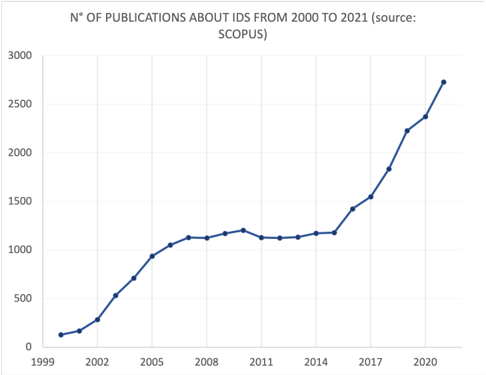
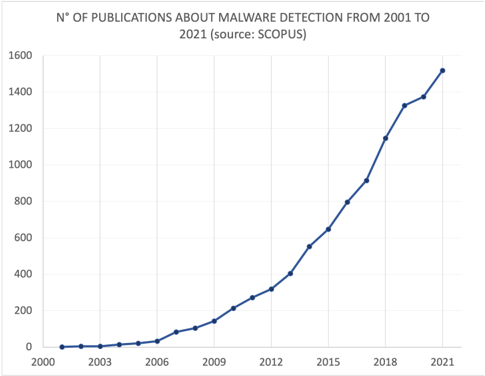
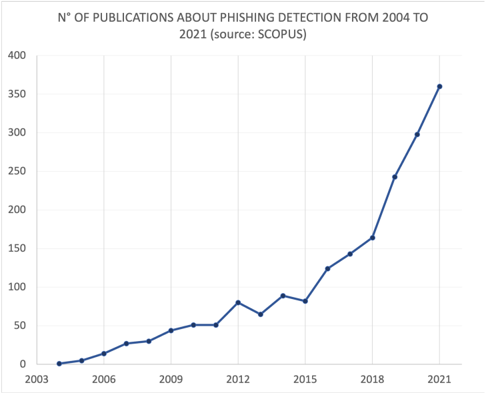
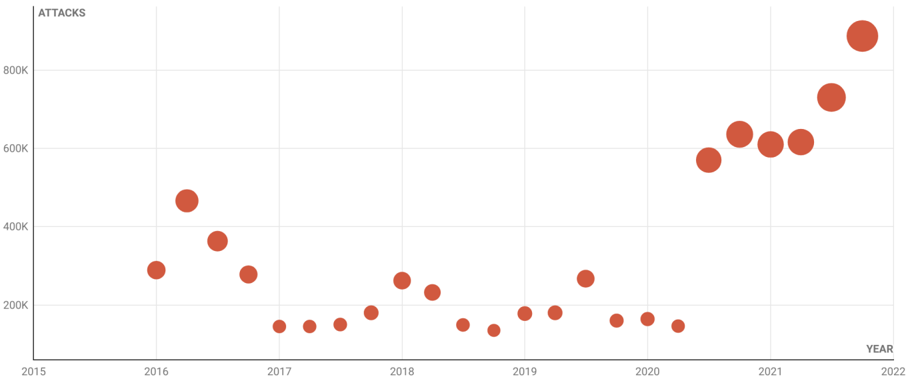




Verification
Claims the paper makes
The claims and statistics of this paper haven’t been checked yet.
Free: it reads the open-access text and checks the first 5 claims that cite a source we can check. Create a free account to check every claim.
Claims other papers make about this one
Each is checked against this paper’s own text: does it say what the citing paper says it does?
The check wasn’t confident either way, so it gives no verdict — never disputed.
In the citing paper
“In this way, AI-based testing methods not only enhance processing time but also improve the accuracy of randomness assessment processes by providing more comprehensive and reliable analyses”
From A novel deep learning-based statistical randomness evaluation test methodology for cryptographic applications (2025) · cites this paper as Capuano et al. 2022
Experimental — accuracy not yet measured
Self-check
Percentages, sums and reported differences re-computed from the paper’s own numbers.
The self-check needs the paper’s full text.
Citations
Cites
Grad-CAM: Visual Explanations from Deep Networks via Gradient-Based Localization
Selvaraju, R. R., Cogswell, M., Das, A., Vedantam, R., Parikh, D., & Batra, D. (2017) · 2017 IEEE International Conference on Computer Vision (ICCV) · doi:10.1109/iccv.2017.74 · Cited by 24,513
A Unified Approach to Interpreting Model Predictions
Lundberg, S., & Lee, S.-I. (2017) · arXiv · doi:10.48550/arxiv.1705.07874 · Cited by 23,707
Arrieta, A. B., Díaz-Rodríguez, N., Del Ser, J., Bennetot, A., Tabik, S., Barbado, A., García, S., Gil-López, S., Molina, D., Benjamins, R., et al. (2019) · arXiv · doi:10.48550/arxiv.1910.10045 · Cited by 11,321 · cited 1×
“In the same line, one of the works worth mentioning is that edited by Arrieta et al. [21], which developed a new style of organiza-347 tion that first distinguishes between transparent and post-hoc approaches and then creates sub-categories.”
BackgroundBarredo Arrieta, A., Díaz-Rodríguez, N., Del Ser, J., Bennetot, A., Tabik, S., Barbado, A., Garcia, S., Gil-Lopez, S., Molina, D., Benjamins, R., et al. (2020) · Information Fusion · doi:10.1016/j.inffus.2019.12.012 · Cited by 10,423
“Why Should I Trust You?”: Explaining the Predictions of Any Classifier
Ribeiro, M., Singh, S., & Guestrin, C. (2016) · Proceedings of the 2016 Conference of the North American Chapter of the Association for Computational Linguistics: Demonstrations · doi:10.18653/v1/n16-3020 · Cited by 6,682
Peeking Inside the Black-Box: A Survey on Explainable Artificial Intelligence (XAI)
Adadi, A., & Berrada, M. (2018) · IEEE Access · doi:10.1109/access.2018.2870052 · Cited by 6,294 · cited 1×
“312 Adadi and Berrada [16] conducted an exhaustive literature 313 analysis, collecting and analyzing 381 different scientific 314”
A detailed analysis of the KDD CUP 99 data set
Tavallaee, M., Bagheri, E., Lu, W., & Ghorbani, A. A. (2009) · 2009 IEEE Symposium on Computational Intelligence for Security and Defense Applications · doi:10.1109/cisda.2009.5356528 · Cited by 5,396
Explanation in Artificial Intelligence: Insights from the Social Sciences
Miller, T. (2017) · arXiv · doi:10.48550/arxiv.1706.07269 · Cited by 5,338
Toward Generating a New Intrusion Detection Dataset and Intrusion Traffic Characterization
Sharafaldin, I., Habibi Lashkari, A., & Ghorbani, A. A. (2018) · Proceedings of the 4th International Conference on Information Systems Security and Privacy · doi:10.5220/0006639801080116 · Cited by 5,318
Explanation in artificial intelligence: Insights from the social sciences
Miller, T. (2019) · Artificial Intelligence · doi:10.1016/j.artint.2018.07.007 · Cited by 5,302
Research works printed but not linked: 12
- APPLICATION NAME YEAR REF. URL INTRUSION DETECTION SYSTEMS KDDCUP 99 1999 [223] http://kdd.ics.uci.edu/databases/kddcup99/kddcup99.html NSL-KDD 1999 [224] https://www.unb.ca/cic/datasets/nsl.html ADFA-WD 2013 [225] https://research.unsw.edu.au/projects/adfa-ids-datasets ADFA-LD 2014 [226] https://research.unsw.edu.au/projects/adfa-ids-datasets UNSW-NB15 2015 [227] https://research.unsw.edu.au/projects/unsw-nb15-dataset AWID2 2016 [228] https://icsdweb.aegean.gr/awid/ CICIDS2017 2017 [229] https://www.unb.ca/cic/datasets/ids-2017.html
- S. Morgan, Special report: Cyberwarfare in the c-suite, online], Cybercrime Magazine, https://cybersecurityventures.com/cybercrime- damages-6-trillion-by-2021/ (2020).
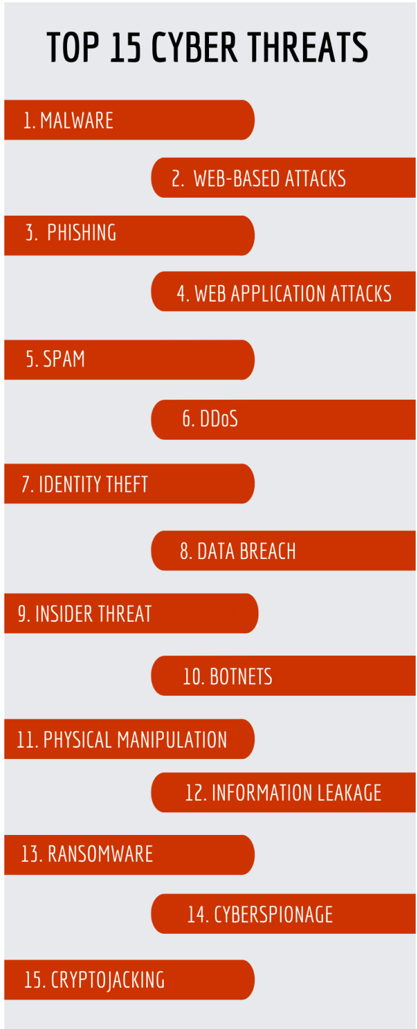
- ENISA, Enisa threat landscape 2020-list of top 15 threats (2020).
- C. V. Dalave, T. Dalave, A review on artificial intelligence in cyber security (2022).
- S. K. Biswas, et al., Intrusion detection using machine learning: A comparison study, International Journal of pure and applied mathematics 118 (19) (2018) 101-114.
- E. Tcydenova, T. W. Kim, C. Lee, J. H. Park, Detection of adversarial attacks in ai-based intrusion detection systems using explainable ai, HUMAN-CENTRIC COMPUTING AND INFORMATION SCIENCES 11 (2021).
- I. Baptista, S. Shiaeles, N. Kolokotronis, A novel malware detection system based on machine learning and binary visualization, in: 2019 IEEE International Conference on Communications Workshops (ICC Workshops), IEEE, 2019, pp. 1-6. · doi:10.1109/iccw.2019.8757060
- L. Yang, W. Guo, Q. Hao, A. Ciptadi, A. Ahmadzadeh, X. Xing, G. Wang, {CADE}: Detecting and explaining concept drift samples for security applications, in: 30th USENIX Security Symposium (USENIX Security 21), 2021, pp. 2327-2344.
- C. Khanan, W. Luewichana, K. Pruktharathikoon, J. Jiarpakdee, C. Tan- tithamthavorn, M. Choetkiertikul, C. Ragkhitwetsagul, T. Sunetnanta, Jitbot: an explainable just-in-time defect prediction bot, in: Proceedings of the 35th IEEE/ACM international conference on automated software engineering, 2020, pp. 1336-1339.
- L. Dhanabal, S. Shantharajah, A study on nsl-kdd dataset for intrusion detection system based on classification algorithms, International journal of advanced research in computer and communication engineering 4 (6) (2015) 446-452.
- G. Creech, Developing a high-accuracy cross platform host-based in- trusion detection system capable of reliably detecting zero-day attacks, Ph.D. thesis, UNSW Sydney (2014).
- R. Panigrahi, S. Borah, A detailed analysis of cicids2017 dataset for de- signing intrusion detection systems, International Journal of Engineering & Technology 7 (3.24) (2018) 479-482.
Cited by
Items 101–200 of 330
Batra, I. (2024) · Journal of Electrical Systems · doi:10.52783/jes.2000 · Cited by 15
“…include designing XAI techniques for CPS, developing comprehensive data collection techniques, creating XAI-aware CPS algorithms, validating XAI-enabled CPS models, and designing user interfaces that allow humans to understand how the system makes decisions and access more data and algorithms [16].”
MethodArtificial intelligence in crime counteraction: From legal regulation to implementation
Shepitko, V. Y., Shepitko, M. V., Latysh, K. V., Капустіна, М. В., & Demydova, Y. Y. (2024) · Social & Legal Studios · doi:10.32518/sals1.2024.135 · Cited by 8
Robustness of models addressing Information Disorder: A comprehensive review and benchmarking study
Fenza, G., Loia, V., Stanzione, C., & Gisi, M. D. (2024) · Neurocomputing · doi:10.1016/j.neucom.2024.127951 · Cited by 12
Self-citationOchoa, E. R., Pérez-Díaz, J. A., Garcia-Ceja, E., & Rodriguez‐Hernandez, G. (2025) · IEEE Access · doi:10.1109/access.2025.3580395 · Cited by 13
“Madani et al. [25] analyzed Through ensemble soft voting, Moreira et al. [30] used Logistic Regression (LR), Random Forest (RF) and eXtreme Gradient Boosting (XGB), achieving 97.53% accuracy while using SHapley Additive exPlanations (SHAP) to ensure interpretability, required in cybersecurity [43].”
InfluentialMohamed, N. A. (2025) · Cogent Business & Management · doi:10.1080/23311975.2025.2518496 · Cited by 27
“…and adjust their detection strategies accordingly. adversarial machine learning will continue to be both a challenge and a focus of research (capuano et al., 2022). as cyber attackers increasingly exploit vulnerabilities in aI systems, the development of more robust adversarial defenses…”
Policy-Aware Secure Data Governance in Distributed Information Systems Using Explainable AI Models
Potluri, S. (2025) · International Journal of AI BigData Computational and Management Studies · doi:10.63282/3050-9416.ijaibdcms-v6i3p101 · Cited by 19
Introduction to Artificial Intelligence in Cybersecurity and Forensic Science
Zangana, H. M., Omar, M., & Mohammed, D. (2024) · Advances in information security, privacy, and ethics book series · doi:10.4018/979-8-3373-0588-2.ch001 · Cited by 8
Chithanuru, V., & Ramaiah, M. (2025) · PeerJ Computer Science · doi:10.7717/peerj-cs.2630 · Cited by 9
Odion, S., & Addula, S. R. (2026) · Future Internet · doi:10.3390/fi18040209 · Cited by 10
Interpreting Machine and Deep Learning Models for PDF Malware Detection using XAI and SHAP Framework
Rahman, T., Ahmed, N., Monjur, S., Haque, F. M., & Hossain, M. I. (2023) · International Conference for Innovation in Technology (INOCON) · doi:10.1109/inocon57975.2023.10101116 · Cited by 10
“The other frameworks, such as LIME, GRAD-CAM, and LORE,[11] , [6], [13] have limitations such as working with synthetic data generated through a genetic algorithm or visual data.”
MethodDalal, A. (2018) · Turkish Journal of Computer and Mathematics Education (TURCOMAT) · doi:10.61841/turcomat.v9i3.14670 · Cited by 11
Nowroozi, E., Taheri, R., Hajizadeh, M., & Bauschert, T. (2024) · IEEE International Conference on Cyber Security and Resilience (CSR) · doi:10.1109/csr61664.2024.10679401 · Cited by 8
“The demand for explainability is a leading priority in high-assurance defense techniques, which offers significant challenges for verification and auditing processes [16] and also plays a pivotal role in different domains [17] such as health care systems, cyber-physical methods, and so on.”
BackgroundA REVIEW ON ARTIFICIAL INTELLIGENCE TECHNIQUES IN PREVENTING CYBER THREATS
Krishnappa, T. (2023) · International Journal of Engineering Applied Sciences and Technology · doi:10.33564/ijeast.2023.v08i01.029 · Cited by 7
MH-1M: A 1.34 Million-Sample Multi-Feature Android Malware Dataset with Rich Metadata
Bragança, H. L. D. S., Kreutz, D., Rocha, V. D. S., Assolin, J., & Feitosa, E. L. (2025) · Scientific Data · doi:10.1038/s41597-025-06469-5 · Cited by 8
Sarcea, O.-A., & Zbuchea, A. (2025) · Advances in finance, accounting, and economics book series · doi:10.4018/979-8-3693-7036-0.ch014 · Cited by 10
A Survey of Data Stream-Based Intrusion Detection Systems
Miani, R. S., Bernardo, G. D. G., Cassales, G. W., Senger, H., & Faria, E. R. (2025) · IEEE Access · doi:10.1109/access.2025.3561105 · Cited by 12
“Recentworks have used eXplainable AI (XAI) for ML-based IDS [92] to improve the control and trust in detecting new types of attacks.”
Cyber Security's Silver Bullet - A Systematic Literature Review of AI-Powered Security
Tabassum, I., Bazai, S. U., Zaland, Z., Marjan, S., Khan, M. Z., & Ghafoor, M. I. (2022) · International Informatics and Software Engineering Conference (IISEC) · doi:10.1109/iisec56263.2022.9998305 · Cited by 12
“The global cyber security industry was estimated by Mordor Intelligence to be worth $156.24 billion in 2020 and to expand to $352.25 billion with an average annual growth rate of 14.5% by 2026 [2].”
BackgroundInfluentialSecuring Network Traffic Classification Models against Adversarial Examples Using Derived Variables
Adeke, J. M., Liu, G., Zhao, J., Wu, N., & Bashir, H. M. (2023) · Future Internet · doi:10.3390/fi15120405 · Cited by 10
“For example, Capuano et al. [32], in their survey, demonstrated that adversarial attacks can cause DT to produce counterintuitive and misleading explanations for network traffic classification.”
Bit-by-Bit: A Quantization-Aware Training Framework with XAI for Robust Metaverse Cybersecurity
Nkoro, E. C., Nwakanma, C. I., Lee, J., & Kim, D.-S. (2024) · International Conference on Artificial Intelligence in Information and Communication (ICAIIC) · doi:10.1109/icaiic60209.2024.10463374 · Cited by 6
“XAI is an AI-enabled NIDS that aims to understand the intrinsic model properties to prevent cyberattacks [16].”
BackgroundMethodKathait, U. S., Rana, A., Chauhan, R. S., & Rawat, R. (2024) · International Conference on Sustainable Expert Systems (ICSES) · doi:10.1109/icses63445.2024.10763115 · Cited by 8
“Consequently, segmentation, classification, and disease prediction in healthcare images using AI [5].”
InfluentialMachmeier, S., Hoecker, M., & Heuveline, V. (2023) · IEEE Symposium Series on Computational Intelligence (SSCI) · doi:10.1109/ssci52147.2023.10371980 · Cited by 8
“Applying DL approaches to detect malicious activities in networks has been incorporated in Intrusion Detection Systems (IDSs) to automate the process of finding intrusions [28].”
BackgroundMethodInfluentialVORTEX : Visual phishing detectiOns aRe Through EXplanations
Charmet, F., Morikawa, T., Tanaka, A., & Takahashi, T. (2024) · ACM Transactions on Internet Technology · doi:10.1145/3654665 · Cited by 11
“XAI in cybersecurity is still a growing field [12, 13, 44].”
BackgroundDigital Forensic Data Mining and Pattern Recognition
Albtosh, L. B. (2024) · Advances in information security, privacy, and ethics book series · doi:10.4018/979-8-3373-0588-2.ch009 · Cited by 6
Beyond the Black Box: XAI Strategies for Safeguarding Critical Infrastructure
Singh, A., Kathait, S., Kothari, A., Joshi, S., Agarwal, Y., Badoni, S., Bhatt, M., & Mishra, P. (2024) · Springer eBooks · doi:10.1007/978-3-031-76473-8_7 · Cited by 7
A Study of AI-Based In-Vehicle Intrusion Detection Systems
Gherbi, E., Khemissa, H., Bouchouia, M. L., & Ayrault, M. (2024) · IEEE Consumer Communications and Networking Conference · doi:10.1109/ccnc51664.2024.10454752 · Cited by 5
“[4], XAI in Cybersecu-rity can be a double-edged sword, as it can leave the system vulnerable to adversary attacks, meaning that, malicious actors that understand how the X-IDS works can exploit it to craft attacks challenging its robustness.”
BackgroundAutomated Evidence Collection and Analysis Using AI
Albtosh, L. B. (2024) · Advances in information security, privacy, and ethics book series · doi:10.4018/979-8-3373-0588-2.ch006 · Cited by 6
Evaluating Rule-Based Global XAI Malware Detection Methods
Li, R., & Gadyatskaya, O. (2023) · Lecture notes in computer science · doi:10.1007/978-3-031-39828-5_1 · Cited by 8
Enhancements in the world of digital forensics
Vaddi, K. S., Kamble, D., Vaingankar, R., Khatri, T., & Bhalerao, P. (2023) · IAES International Journal of Artificial Intelligence · doi:10.11591/ijai.v13.i1.pp680-686 · Cited by 8
“This translates to improved forecasting capabilities and deeper insights provided by the models [17], [18].”
BackgroundRule-Based eXplainable Autoencoder for DNS Tunneling Detection
Bernardi, G. D., Gaggero, G. B., Patrone, F., Zappatore, S., Marchese, M., & Mongelli, M. (2025) · Computers · doi:10.3390/computers14090375 · Cited by 9
Alohali, M. A., Aljebreen, M., Aḥmad, N., Alahmari, S., Albouq, S. S., Alqazzaz, A., Alkhiri, H., & Said, Y. (2025) · Scientific Reports · doi:10.1038/s41598-025-10601-1 · Cited by 9
Alzuabidi, I. A., Mahmood, H. E., Hussein, R. R. A., Ahmed, A. A., Al-Dmour, N. A., Najim, A. H., & Abdeldayem, M. M. (2026) · Procedia Computer Science · doi:10.1016/j.procs.2026.01.101 · Cited by 7
Intrusion Detection using Explainable Machine Learning Techniques
Mallick, R., Rout, S., Biswas, S., Vashishtha, L. K., & Sahu, S. K. (2023) · OITS International Conference on Information Technology (OCIT) · doi:10.1109/ocit59427.2023.10430641 · Cited by 6
Position: The Explainability Paradox - Challenges for XAI in Malware Detection and Analysis
Rui, L., & Gadyatskaya, O. (2024) · IEEE European Symposium on Security and Privacy Workshops (EuroS&PW) · doi:10.1109/eurospw61312.2024.00067 · Cited by 7
“The integration of XAI in cybersecurity has already witnessed significant success [10], [85], [91].”
BackgroundOVERVIEW OF CYBERSECURITY METHODS AND STRATEGIES USING ARTIFICIAL INTELLIGENCE
Lunhol, O. M. (2024) · Cybersecurity Education Science Technique · doi:10.28925/2663-4023.2024.25.379389 · Cited by 13
Diagnosing Unknown Attacks in Smart Homes Using Abductive Reasoning
Ramkumar, K., Cai, W., McCarthy, J., Doherty, G. J., Nuseibeh, B., & Pasquale, L. (2025) · IEEE Transactions on Software Engineering · doi:10.1109/tse.2025.3610540 · Cited by 8
“Of the explainable AI techniques commonly used in IDS, malware, phishing and botnet detection, SHAP and LIME are among the most commonly used for posthoc-explanations for machine learning-based approaches [19].”
InfluentialFatima, Z., Tanveer, M. H., Voicu, R., Chakravarty, S., Ashfaq, M., Khan, M. A., Zaib, A., & Desa, H. (2025) · Engineering Technology & Applied Science Research · doi:10.48084/etasr.11595 · Cited by 12
“LRP was initially applied in areas such as computer vision; however, its potential in cybersecurity has been explored, specifically to identify patterns within malicious network traffic that influence decisions [10].”
Yadao, S., Linh, N. T. D., Fatima, A., & Puri, B. (2024) · IEEE International Conference on Machine Learning and Applied Network Technologies (ICMLANT) · doi:10.1109/icmlant63295.2024.00015 · Cited by 5
“XAI techniques provide insights into the decision-making process of complex models, elucidating which features or patterns led to the identification of specific cryptographic algorithms [23].”
Baugher, J., & Qu, Y. (2024) · European Journal of Electrical Engineering and Computer Science · doi:10.24018/ejece.2024.8.2.608 · Cited by 6
From Detection to Decision: Transforming Cybersecurity with Deep Learning and Visual Analytics
Chavan, S., & Pappas, G. (2025) · AI · doi:10.3390/ai6090214 · Cited by 3
“• New CVE data incrementally updates the model without full retraining, supporting adaptive and explainable decision-making in operational environments [1,23].”
InfluentialCyber-physical anomaly detection a deep adversarial fusion of sensor and network data
Pinto, A., Herrera, L.-C., Donoso, Y., & Gutierrez, J. A. (2026) · Discover Computing · doi:10.1007/s10791-026-10064-6 · Cited by 3
Explainable AI: Bridging Transparency and Trust in AI
Oyenuga, M. O., & OLADELE, T. O. (2026) · Advances in computational intelligence and robotics book series · doi:10.4018/406019 · Cited by 3
A Controlled Phishing Attack in a University Community: A Case Study
Vivas, D. E. D., Pena, W. Y. G., Botero, S. P. C., & Rojas, A. E. (2024) · Journal of Internet Services and Information Security · doi:10.58346/jisis.2024.i2.007 · Cited by 15
Blockchain for security and privacy in the smart healthcare
Chowdhury, S., Ranaweera, P. S., & Jurcut, A. D. (2025) · Elsevier eBooks · doi:10.1016/b978-0-443-30300-5.00025-7 · Cited by 3
A Comprehensive Survey on Enhancing Digital Twin Security Systems with Explainable AI Techniques
Lalithadevi, B., & Krishnaveni, S. (2025) · International Conference on Intelligent Data Communication Technologies and Internet of Things (IDCIoT) · doi:10.1109/idciot64235.2025.10915028 · Cited by 4
Enhancing Reasoning Capacity of SLM Using Cognitive Enhancement
Pan, J., Wong, S. L., Chia, X. W., & Yuan, Y. (2025) · International Conference on Artificial Intelligence in Information and Communication (ICAIIC) · doi:10.1109/icaiic64266.2025.10920811 · Cited by 6
“In the absence of the means to evaluate the correctness of such models, these cyber security practitioners would be less inclined to accept the decisions made by these models[14].”
Explainable AI for cybersecurity decisions: challenges and opportunities
Calvo, A., Preetam, S., & Compastié, M. (2025) · Elsevier eBooks · doi:10.1016/b978-0-44-329135-7.00018-7 · Cited by 4
CANDICE: An explainable and intelligent framework for network intrusion detection
Li, S., Du, R., Chen, J., He, K., Wu, C., & Feng, Y. (2025) · Future Generation Computer Systems · doi:10.1016/j.future.2025.108059 · Cited by 7
Chitnis, A., Chandre, P. R., & Pathan, S. (2023) · International Conference on Communication and Electronics Systems (ICCES) · doi:10.1109/icces57224.2023.10192764 · Cited by 3
“Convolutional Neural Networks (CNNs) have excelled in a number of image and signal processing applications among other AI and ML techniques[2][3].”
BackgroundExplainable IoT Forensics: Investigation on Digital Evidence
Gopinath, A., Kumar, K. P., Saleem, K. M. S., & John, J. (2023) · IEEE International Conference on Contemporary Computing and Communications (InC4) · doi:10.1109/inc457730.2023.10262942 · Cited by 3
“XAI can also aid in the progress and accuracy of danger discovery by analyzing expansive volumes of information and recognizing designs that will be obscure to human investigators [6].”
BackgroundInterpreting Intrusions - The Role of Explainability in AI-Based Intrusion Detection Systems
Pawlicki, M., Pawlicka, A., Śrutek, M., Kozik, R., & Choraś, M. (2023) · Lecture notes in networks and systems · doi:10.1007/978-3-031-41630-9_5 · Cited by 4
Decrypting Disruptive Technologies: Review and Research Agenda of Explainable AI as a Game Changer
Dabas, V., Thomas, A., Khatri, P., Iandolo, F., & Usai, A. (2023) · IEEE International Conference on Technology Management, Operations and Decisions (ICTMOD) · doi:10.1109/ictmod59086.2023.10438156 · Cited by 4
“The perennial concern of insufficient transparency is exacerbated in the context of cyber security (6.5 percent) [13], [16] by the evident risks involved in delegating key decisions to a device that is incapable of explaining the decision made [17], [46].”
BackgroundInfluentialExplainable AI (EXAI) for Smart Healthcare Automation
Shafik, W., & Lakshmi, D. (2024) · Advances in bioinformatics and biomedical engineering book series · doi:10.4018/979-8-3693-4439-2.ch012 · Cited by 4
A Systematic Review of the Role of Artificial Intelligence in Cybersecurity
Olatunji, A. P., Alozie, E., Olagunju, H. I., & Udensi, F. O. (2024) · IEEE Nigeria International Conference on Disruptive Technologies for Sustainable Development (NIGERCON) · doi:10.1109/nigercon62786.2024.10926941 · Cited by 4
Maqousi, A. Y. A., Basu, K., Al–Qerem, A., & Aldweesh, A. Y. (2025) · Advances in computational intelligence and robotics book series · doi:10.4018/979-8-3373-0954-5.ch017 · Cited by 3
Validating network attack concepts: A TCAV-driven approach
Robinson, R. R. R., Prasad, R. R., Thomas, C., & Balakrishnan, N. (2024) · Journal of Computer Virology and Hacking Techniques · doi:10.1007/s11416-024-00535-z · Cited by 2
“Capuano et al. [21] conduct an extensive analysis of XAI focusing on cybersecurity applications, showcasing promising outcomes and emerging challenges.”
Explainable AI for Transparent Phishing Email Detection
Yakandawala, Y. L. D. H., Madushanka, M. K. P., & Ilmini, W. M. K. S. (2024) · International Conference on Advances in Technology and Computing (ICATC) · doi:10.1109/icatc64549.2024.11025302 · Cited by 2
“[13]”
Thalpage, N. S. (2025) · Journal of Digital Science · doi:10.33847/2686-8296.7.1_1 · Cited by 2
Odeh, A., Salameh, W. A., Taleb, A. A., Al-Haija, Q. S. A., & Alhajahjeh, T. (2025) · Communications in computer and information science · doi:10.1007/978-3-031-93601-2_3 · Cited by 3
CryptojackGuard: A Multi-Modal Framework for Proactive Cryptojacking Detection and Mitigation
Alorainy, W. S. (2025) · IEEE Access · doi:10.1109/access.2025.3631529 · Cited by 2
AlZoubi, W. A., Mohsin, S., Hashim, A. M., Radhi, A. D., Alrashid, Z. G., Az-Zo’bi, E. A., & Tashtoush, M. A. (2025) · International Conference on Cybersecurity and AI-Based Systems (Cyber-AI) · doi:10.1109/cyber-ai66431.2025.11233720 · Cited by 2
“In cybersecurity, the explainability of a model is crucial [3].”
Web Technologies Security in the AI Era: A Survey of CDN-Enhanced Defenses
Hosain, M., Shuvo, S. A., Ogbe, M. I., Mazumder, M. S. J., Rahman, Y., Hakim, M. A., & Pandey, A. (2025) · IEEE Asia Pacific Conference on Wireless and Mobile (APWiMob) · doi:10.1109/apwimob67231.2025.11269122 · Cited by 2
“Data quality and XAI are central: skewed or sparse labels harm generalization, while faithful explanations support analyst trust and audits [56].”
AI-Driven Digital Twin Framework for Security Threat Simulation and Compliance Optimization
Venkatesan, V., & Arunachalam, C. (2025) · IEEE International Carnahan Conference on Security Technology (ICCST) · doi:10.1109/iccst63435.2025.11293889 · Cited by 2
“The approach supports the ingestion of various telemetry in real time, AI-driven anomaly detection, and automated compliance mapping to frameworks such as NIST CSF and ISO 27001 [15].”
Counterfactual Explanations for Enhanced Interpretability in Cross-Site Scripting (XSS) Detection
Mathew, A. K., Ashwin, M., Kolil, V. K., & Rajeev, D. (2025) · International Conference on Innovative Data Communication Technologies and Application (ICIDCA) · doi:10.1109/icidca66325.2025.11280340 · Cited by 3
“It creates a simple explanation that shows which features were most important for the model’s decision in that specific case [4].”
HAGEN: Unveiling Obfuscated Memory Threats via Hierarchical Attention-Gated Explainable Networks
Farfoura, M. E., Alia, M. A., & Connie, T. (2026) · Electronics · doi:10.3390/electronics15020352 · Cited by 2
Evolving trends in cryptomining malware: a systematic literature review
Mauko, E., Rubini, S., & Igwe, C. (2026) · Crime Science · doi:10.1186/s40163-025-00267-5 · Cited by 2
Explainable AI for Cloud Intrusion Detection: A User Study of SHAP and LIME in AWS GuardDuty
Goncalves, H., & Alomari, Z. (2026) · IEEE International Conference on AI in Cybersecurity (ICAIC) · doi:10.1109/icaic67076.2026.11395766 · Cited by 3
“Prior work has explored XAI in IDS through IoT applications [9], [13], technique comparisons [8], [14], analyst-centered frameworks [15], [16], and adversarial assessment [17].”
DroPTC: Sentence-level drone flight log forensics using contrastive learning and explainable AI
Silalahi, S., Ahmad, T., Studiawan, H., & Breitinger, F. (2026) · Forensic Science International Digital Investigation · doi:10.1016/j.fsidi.2026.302051 · Cited by 5
Survey on Explainable AI for Traditional Machine Learning and Domains
Hanif, A., Shawi, R. E., Beheshti, A., & Benatallah, B. (2026) · ACM Computing Surveys · doi:10.1145/3806829 · Cited by 4
“However, its lack of transparency limits trust, complicates compliance, and challenges security analysts in validating decisions [38].”
A Review of Automatic Identification System Approaches for Maritime Cyber Security
Zaman, S. M. A. U., Qamar, F., Mohd, M., Suhaimi, N. H. S., & Khandakar, A. A. (2026) · Security and Communication Networks · doi:10.1155/sec/5898106 · Cited by 3
An interpretable approach for trustworthy intrusion detection systems against evasion samples
Nguyen, N. T., Hoang, H. D., Phan, T. D., & Pham, V.-H. (2023) · CTU Journal of Innovation and Sustainable Development · doi:10.22144/ctujoisd.2023.030 · Cited by 3
“In the cybersecurity domain, XAI can achieve transparency of models or enhance model performance, as well as explain errors made by classifiers (Capuano, 2022).”
BackgroundX-HDNN: Explainable Hybrid DNN for Industrial Internet of Things Backdoor Attack Detection
Ahakonye, L. A. C., Nwakanma, C. I., Lee, J. M., & Kim, D. (2023) · International Conference on Information and Communication Technology Convergence (ICTC) · doi:10.1109/ictc58733.2023.10393379 · Cited by 2
“[17] gave detailed explanations on the calculations and application of SHAP, emphasizing its importance in XAI for cybersecurity.”
BackgroundThe Role of Explainable AI in Enhancing Threat Intelligence Analysis in Cybersecurity Operations
(2024) · International Research Journal of Modernization in Engineering Technology and Science · doi:10.56726/irjmets60971 · Cited by 3
Using Natural Language Processing (NLP) for Phishing and Spam Detection
Shamoo, Y. (2024) · Advances in information security, privacy, and ethics book series · doi:10.4018/979-8-3373-0588-2.ch003 · Cited by 2
Striving for Simplicity in Deep Neural Models Trained for Malware Detection
AL-Essa, M., Andresini, G., Appice, A., & Malerba, D. (2024) · Communications in computer and information science · doi:10.1007/978-3-031-74633-8_40 · Cited by 2
AI-Enhanced Cybersecurity: A Comprehensive Review of Techniques and Challenges
Burhanuddin, L. A. B., Shibghatullah, A. S., Ilias, I. S. C., Zainudin, Z., & Zamry, N. M. (2025) · Studies in computational intelligence · doi:10.1007/978-3-031-75091-5_7 · Cited by 5
Interpretable Machine Learning for Mitigating Feature-Driven Attacks
Hartman, C. M., & Rimal, B. P. (2025) · IEEE Transactions on Technology and Society · doi:10.1109/tts.2025.3531780 · Cited by 2
“Interpretable ML has recently received considerable attention for its ability to interpret and produce insight from ML models, e.g., [4], [5], [6], [7] and in cybersecurity (e.g., [8], [9], [10]).”
Detecting Jailbreaking Prompts: an Anti-Persuasion Filter Framework
Fenza, G., Gallo, M., Loia, V., Nicolosi, A., & Stanzione, C. (2025) · Lecture notes in social networks · doi:10.1007/978-3-031-85240-4_14 · Cited by 3
Self-citationEvaluating Explanation Quality in X-IDS Using Feature Alignment Metrics
Alquliti, M., Karafili, E., & Kang, B. (2025) · Lecture notes in computer science · doi:10.1007/978-3-032-00630-1_4 · Cited by 2
Garg, M., Kaza, P. R., Kilaru, A., Basha, S. S., Gunupudi, C., & Kondapalli, K. K. (2026) · International Conference on AI-Driven Smart Systems and Ubiquitous Computing (ICAUC) · doi:10.1109/icauc68182.2026.11441080 · Cited by 6
“But while ML models show a lot of promise for blocking previously unknown attacks, they can be difficult to scale and are not suitable for large, dynamic networks that must constantly be adjusted to block new threats [11].”
RetractedResearch on botnet detection technology in network security
Yu, H. (2023) · Applied and Computational Engineering · doi:10.54254/2755-2721/18/20230967 · Cited by 2
Improved cloud storage auditing scheme with deduplication
Zhang, J., Ogiela, U., Taniar, D., & Nedjah, N. (2023) · Mathematical Biosciences & Engineering · doi:10.3934/mbe.2023342 · Cited by 1
Makubhai, S. S., Pathak, G. R., & Chandre, P. R. (2024) · Advances in healthcare information systems and administration book series · doi:10.4018/979-8-3693-7277-7.ch004 · Cited by 1
Systematic literature review on malware detection using Explainable Machine Learning (XAI)
Heryana, A., Haryanto, A., & Suhardi, S. (2024) · International Conference on Information Technology Systems and Innovation · doi:10.1109/icitsi65188.2024.10929452 · Cited by 1
Swarm AI for Distributed Cyber Defense and Autonomous Threat Detection
Hadi, W. M., Hamarsheh, A., Al–Qerem, A., & Aldweesh, A. Y. (2025) · Advances in computational intelligence and robotics book series · doi:10.4018/979-8-3373-0954-5.ch007 · Cited by 1
Ma, Y., Li, C., Wang, Y., & Wang, Y. (2024) · Journal of Computational Methods in Sciences and Engineering · doi:10.1177/14727978241309550 · Cited by 7
Towards understanding the behavior of image-based network intrusion detection systems
Abdel-Ghani, A., Zakraoui, J., Al-Ali, A. K., Belhi, A., Rahme, S., & Bouras, A. (2025) · Journal of Network and Computer Applications · doi:10.1016/j.jnca.2025.104254 · Cited by 3
Leveraging Artificial Intelligence for Enhanced Cybersecurity: Opportunities and Challenges
Odeh, A., Al-Haija, Q. S. A., Salameh, W. A., Taleb, A. A., & Alhajahjeh, T. (2025) · Communications in computer and information science · doi:10.1007/978-3-032-01948-6_9 · Cited by 1
Future Trends in AI for Cybersecurity and Digital Forensics: A Systematic Literature Survey
Nelufule, N. (2025) · International Convention on Information and Communication Technology, Electronics and Microelectronics · doi:10.1109/mipro65660.2025.11131766 · Cited by 2
Artificial Intelligence (AI) in Cybersecurity: Foundations, Applications, and Research Trends
Shrivastav, A., Chaturvedi, K., Sankathala, S., Patre, K., Saraf, A. H., & Das, S. (2025) · Advances in computational intelligence and robotics book series · doi:10.4018/979-8-3373-2252-0.ch002 · Cited by 1
Healthcare Security using Federated Learning and Explainable AI with Secure Aggregation
Mukhila, R., Sundhari, M., Nandeta, S., & Pavithra, S. (2025) · International Conference on Sustainable Communication Networks and Application (ICSCNA) · doi:10.1109/icscn67106.2025.11308245 · Cited by 1
“Capuano et al. (2022) present a more thorough overview of XAI in cybersecurity, highlighting the need for interpretability for intrusion detection.”
Explainable AI For Phishing Detection: Techniques, Challenges, and Experimental Validation
G, V. V., & Thomas, P. A. (2025) · IEEE Recent Advances in Intelligent Computational Systems · doi:10.1109/raics66191.2025.11332593 · Cited by 1
“Capuano et al. [5] surveyed XAI applications in phishing, malware detection, and intrusion detection systems, discussing benefits and challenges in adversarial contexts.”
Transforming Healthcare with Natural Language Processing
Sachdeo, R., Chandre, P. R., Bhujbal, P., & Shendkar, B. D. (2026) · Lecture notes in networks and systems · doi:10.1007/978-3-032-12987-1_36 · Cited by 1
Elevating Cybersecurity Strategies with the Insights of Explainable AI
Shakir, H. M., Hasan, D. I., Alsadh, M. H. A., Ahmed, A. A., Mahmood, H. E., Ibrahim, N. J., & Ghazal, T. M. (2026) · Procedia Computer Science · doi:10.1016/j.procs.2026.01.097 · Cited by 1
de Lima, G. M., & Pisani, P. H. (2026) · Journal of the Brazilian Computer Society · doi:10.5753/jbcs.2026.5376 · Cited by 3
A Multi-Protocol, Explainable AI-Based Framework for Real-Time IoT Forensics
Manojkumar, M., & Sangeetha, V. (2026) · International Conference on Computing, Communication, Control and Cyber-Physical Systems (I5CPS) · doi:10.1109/i5cps67958.2026.11452282 · Cited by 1
Daudpota, N. (2026) · International Symposium on Digital Forensics and Security (ISDFS) · doi:10.1109/isdfs69419.2026.11459021 · Cited by 1
Machine Learning-Driven Threat Detection and Response Framework for Modern Cybersecurity Systems
Sivashanmugam, S. P. (2026) · International Symposium on Digital Forensics and Security (ISDFS) · doi:10.1109/isdfs69419.2026.11459108 · Cited by 1
“Capuano et al. (2022) reviewed more than 300 articles on XAI in cybersecurity involving IDS, malware, phishing, spam, botnets, fraud, zero-day vulnerabilities, digital forensics, and cryptojacking, but did not quantitatively compare the XAI techniques and adversarial robustness [20].”
Kavitha, P. N., Devi, G. N. R., Chitti, S., Sudhakar, G., Lakshmanarao, A., & G.Mahalakshmi (2026) · Discover Computing · doi:10.1007/s10791-026-10097-x · Cited by 2
X-GATE: Attribution-Aware Distillation and Hardening for Compressed Edge-IIoT Intrusion Detection
Le, T. D., Bao, Y., & Arifuzzaman, M. (2026) · Electronics · doi:10.3390/electronics15112284 · Cited by 1
“The integration of XAI into intrusion detection represents a growing research direction [10,28].”
Jimmington, A., & Thampi, S. M. (2026) · International Journal of Computers and Applications · doi:10.1080/1206212x.2026.2680544 · Cited by 2
Metadata
- Authors
- Capuano, N., Fenza, G., Loia, V., & Stanzione, C.
- Affiliations
- University of Basilicata (IT)
- University of Salerno (IT)
- Centro Alti Studi per la Difesa (CASD) (IT)
- Venue
- IEEE Access
- Published
- 2022
- Volume
- 10
- Pages
- 93575-93600
- ISSN
- 2169-3536 (ISSN-L)
- OpenAlex
- W4294691140
- Cited by
- 330
- References
- 239
- Citations by year
- 2026: 102 · 2025: 98 · 2024: 82 · 2023: 43 · 2022: 3
- FWCI
- 18.59
- Type
- journal article
- Language
- en
- Open access
- gold
- doi.org
- Locations
- IEEE Access (publishedVersion, cc-by)
- DOAJ (DOAJ: Directory of Open Access Journals) (submittedVersion, cc-by-sa)
- CINECA IRIS Institutional Research Information System (University of Basilicata) (submittedVersion)
- Topics
- Physical Sciences › Computer Science › Artificial Intelligence › Explainable Artificial Intelligence (XAI)
- Physical Sciences › Computer Science › Computer Networks and Communications › Network Security and Intrusion Detection
- Physical Sciences › Computer Science › Artificial Intelligence › Adversarial Robustness in Machine Learning
- Keywords
- explainable AI, cybersecurity, intrusion detection systems, malware detection, phishing detection, spam detection, botnet detection, fraud detection, zero-day vulnerabilities, digital forensics, cryptojacking
About these checks
Registry, retraction, Cites and statistics results are computed, not judged, with one exception: a printed reference that no index lists is read once by a model before it counts as a citation error. Claims are extracted by a model and kept only when their quote appears verbatim in the text; each cited source is then checked, with a model’s help, for whether it says what the claim relies on. Those verdicts can be wrong — read the claim’s quote and the cited source before relying on one.
Statistics and arithmetic are recomputed, not judged.
Confidence bands are shown only for fields calibrated on our annotated test set. None is calibrated yet, so no band is shown.
What counts as a claim ›How we measure confidence ›How we check this ›
Are you an author, or do you see a problem with this page? Request a review
Data sources
Bibliographic data: Semantic Scholar, OpenAlex, Crossref.
Contains information from the Semantic Scholar Academic Graph Datasets, made available under the ODC Attribution License (ODC-BY 1.0).
Semantic Scholar’s data is described in: Kinney, R., et al. (2023). The Semantic Scholar Open Data Platform. arXiv:2301.10140.
