

Explainable Artificial Intelligence in CyberSecurity: A Survey
Open accessThe DOI matches its Crossref record; 242 of the 242 references it cites were found in a registry or an index.
Abstract
Nowadays, Artificial Intelligence (AI) is widely applied in every area of human being’s daily life. Despite the AI benefits, its application suffer from the opacity of complex internal mechanisms and doesn’t satisfy by design the principles of Explainable Artificial Intelligence (XAI). The lack of transparency further exacerbates the problem in the field of Cybersecurity because entrusting crucial decisions to a system that cannot explain itself presents obvious dangers. There are several methods in the literature capable of providing explainability of AI results. Anyway, the application of XAI in Cybersecurity can be a double-edged sword. It substantially improves the Cybersecurity practices but simultaneously leaves the system vulnerable to adversary attacks. Therefore, there is a need to analyze the state-of-the-art of XAI methods in Cybersecurity to provide a clear vision for future research. This study presents an in-depth examination of the application of XAI in Cybersecurity. It considers more than 300 papers to comprehensively analyze the main Cybersecurity application fields, like Intrusion Detection Systems,Malware detection, Phishing and Spam detection, BotNets detection, Fraud detection, Zero-Day vulnerabilities, Digital Forensics and Crypto-Jacking. Specifically, this study focuses on the explainability methods adopted or proposed in these fields, pointing out promising works and new challenges.
Overview
The claims and statistics of this paper haven’t been checked yet.
Free: it reads the open-access text and checks the first 5 claims that cite a source we can check. Create a free account to check every claim.
Integrity signals
Registry
Cites
Statistics
Figures
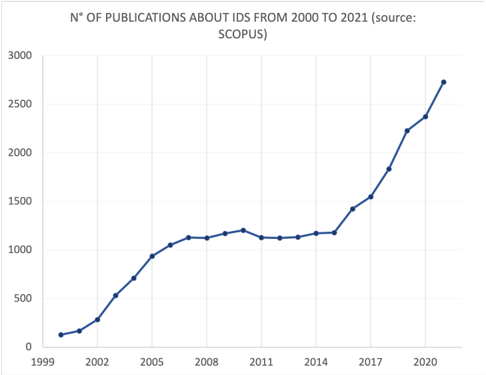
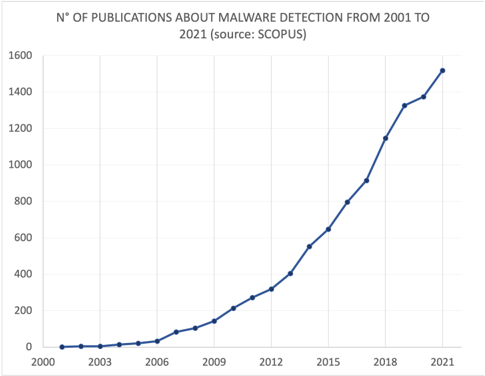
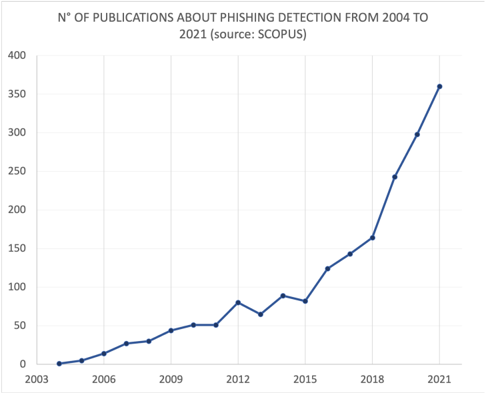
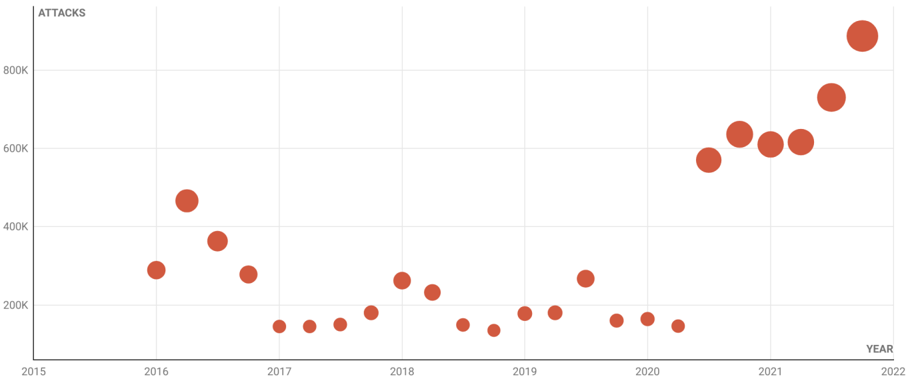




Verification
Claims the paper makes
The claims and statistics of this paper haven’t been checked yet.
Free: it reads the open-access text and checks the first 5 claims that cite a source we can check. Create a free account to check every claim.
Claims other papers make about this one
Each is checked against this paper’s own text: does it say what the citing paper says it does?
The check wasn’t confident either way, so it gives no verdict — never disputed.
In the citing paper
“In this way, AI-based testing methods not only enhance processing time but also improve the accuracy of randomness assessment processes by providing more comprehensive and reliable analyses”
From A novel deep learning-based statistical randomness evaluation test methodology for cryptographic applications (2025) · cites this paper as Capuano et al. 2022
Experimental — accuracy not yet measured
Self-check
Percentages, sums and reported differences re-computed from the paper’s own numbers.
The self-check needs the paper’s full text.
Citations
Cites
Grad-CAM: Visual Explanations from Deep Networks via Gradient-Based Localization
Selvaraju, R. R., Cogswell, M., Das, A., Vedantam, R., Parikh, D., & Batra, D. (2017) · 2017 IEEE International Conference on Computer Vision (ICCV) · doi:10.1109/iccv.2017.74 · Cited by 24,513
A Unified Approach to Interpreting Model Predictions
Lundberg, S., & Lee, S.-I. (2017) · arXiv · doi:10.48550/arxiv.1705.07874 · Cited by 23,707
Arrieta, A. B., Díaz-Rodríguez, N., Del Ser, J., Bennetot, A., Tabik, S., Barbado, A., García, S., Gil-López, S., Molina, D., Benjamins, R., et al. (2019) · arXiv · doi:10.48550/arxiv.1910.10045 · Cited by 11,321
Barredo Arrieta, A., Díaz-Rodríguez, N., Del Ser, J., Bennetot, A., Tabik, S., Barbado, A., Garcia, S., Gil-Lopez, S., Molina, D., Benjamins, R., et al. (2020) · Information Fusion · doi:10.1016/j.inffus.2019.12.012 · Cited by 10,423
“Why Should I Trust You?”: Explaining the Predictions of Any Classifier
Ribeiro, M., Singh, S., & Guestrin, C. (2016) · Proceedings of the 2016 Conference of the North American Chapter of the Association for Computational Linguistics: Demonstrations · doi:10.18653/v1/n16-3020 · Cited by 6,682
Peeking Inside the Black-Box: A Survey on Explainable Artificial Intelligence (XAI)
Adadi, A., & Berrada, M. (2018) · IEEE Access · doi:10.1109/access.2018.2870052 · Cited by 6,294 · cited 1×
“312 Adadi and Berrada [16] conducted an exhaustive literature 313 analysis, collecting and analyzing 381 different scientific 314”
A detailed analysis of the KDD CUP 99 data set
Tavallaee, M., Bagheri, E., Lu, W., & Ghorbani, A. A. (2009) · 2009 IEEE Symposium on Computational Intelligence for Security and Defense Applications · doi:10.1109/cisda.2009.5356528 · Cited by 5,396
Toward Generating a New Intrusion Detection Dataset and Intrusion Traffic Characterization
Sharafaldin, I., Habibi Lashkari, A., & Ghorbani, A. A. (2018) · Proceedings of the 4th International Conference on Information Systems Security and Privacy · doi:10.5220/0006639801080116 · Cited by 5,318
Explanation in artificial intelligence: Insights from the social sciences
Miller, T. (2019) · Artificial Intelligence · doi:10.1016/j.artint.2018.07.007 · Cited by 5,302
Wohlin, C. (2014) · Proceedings of the 18th International Conference on Evaluation and Assessment in Software Engineering · doi:10.1145/2601248.2601268 · Cited by 4,234
Research works printed but not linked: 12
- Morgan, 2020, Special report: Cyberwarfare in the C-suite
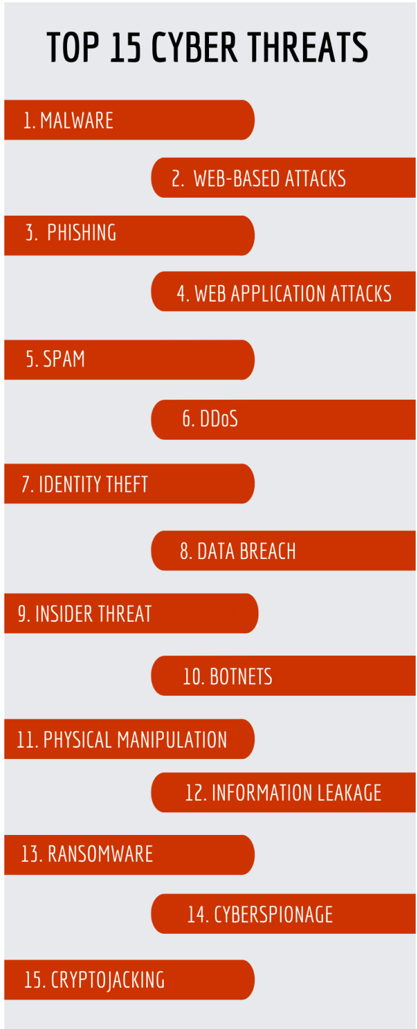
- 2020, Enisa Threat Landscape 2020—List of Top 15 Threats
- Dalave, A review on artificial intelligence in cyber security, 304
- Biswas, 2018, Intrusion detection using machine learning: A comparison study, Int. J. pure Appl. Math., 118, 101
- Tcydenova, 2021, Detection of adversarial attacks in ai-based intrusion detection systems using explainable AI, Hum.-Centric Comput. Inf. Sci., 11, 1
- 10.1109/ICCW.2019.8757060 · doi:10.1109/iccw.2019.8757060
- Yang, CADE: Detecting and explaining concept drift samples for security applications, 2327
- 10.2172/1878725 · doi:10.2172/1878725
- Khanan, JITBOT: An explainable just-in-time defect prediction bot, 1336
- Dhanabal, 2015, A study on NSL-KDD dataset for intrusion detection system based on classification algorithms, Int. J. Adv. Res. Comput. Commun. Eng., 4, 446
- Creech, 2014, Developing a high-accuracy cross platform host-based intrusion detection system capable of reliably detecting zero-day attacks
- Panigrahi, 2018, A detailed analysis of CICIDS2017 dataset for designing intrusion detection systems, Int. J. Eng. Technol., 7, 479
Cited by
Items 201–300 of 330
Gamal, N., Younis, E. M. G., & Mohamed, W. M. (2026) · Information Processing & Management · doi:10.1016/j.ipm.2026.104967 · Cited by 1
Gombar, M. (2026) · Electronics · doi:10.3390/electronics15122739 · Cited by 3
Gwenhure, A. K., & Bhandari, M. (2026) · International Journal of Human-Computer Interaction · doi:10.1080/10447318.2026.2688498 · Cited by 1
Explainable Adversarial Mitigation Framework for Zero-Trust Cyber Warfare
Nkoro, E. C., Nwakanma, C. I., Lee, J., & Kim, D. (2023) · International Conference on Information and Communication Technology Convergence (ICTC) · doi:10.1109/ictc58733.2023.10392359 · Cited by 1
“The motivation for XAI adoption in cybersecurity is to interpret, explain, and evaluate the confidence level, usability, reliability, and fairness of the decisions of the ML model [12].”
BackgroundMachine Learning Classifiers for Social Media Bots Detection on Twitter using Explainable AI
Gupta, S., & Sinha, A. (2023) · International Conference on Informatics (ICI) · doi:10.1109/ici60088.2023.10421550 · Cited by 1
“LIME provides an effective framework for producing contextualized and understandable justifications for model predictions [26-27].”
BackgroundPatricio, M. A., Granados, N., Molina, J. M., & Berlanga, A. (2024) · Engineering Applications of Artificial Intelligence · doi:10.1016/j.engappai.2024.109359 · Cited by 1
Efficient and Standardized Alarm Rationalization for Cybersecurity Monitoring
Alabdulhadi, S. M., & Al-Matouq, A. (2024) · IEEE Access · doi:10.1109/access.2024.3492264 · Cited by 3
“Several recent surveys on using AI in cybersecurity systems, as in [10], [11], [12], and [13] demonstrated the application of AI in cybersecurity for the purpose of warning and defense.”
Network Forensics and Traffic Analysis With Machine Learning
Shamoo, Y. (2024) · Advances in information security, privacy, and ethics book series · doi:10.4018/979-8-3373-0588-2.ch004 · Cited by 1
Artificial Intelligence Based Intrusion Detection Systems
Reddy, V., Sunitha, R., Anusha, M., Chaitra, S., & Kumar, A. P. (2024) · International Conference on Mobile Networks and Wireless Communications (ICMNWC) · doi:10.1109/icmnwc63764.2024.10872055 · Cited by 1
Pan, X., & Lin, S. (2025) · Applied Economics · doi:10.1080/00036846.2025.2489148 · Cited by 2
Leveraging Explainable AI for Cybersecurity
Nezhadsistani, N., & Stiller, B. (2025) · IGI Global eBooks · doi:10.4018/979-8-3373-2200-1.ch009 · Cited by 1
Enhanced Malicious URL Detection Through Feature Significance Analysis
Patel, T., & Rathod, D. M. (2025) · Communications in computer and information science · doi:10.1007/978-3-032-00350-8_9 · Cited by 1
Crítica y redefinición de la planeación estratégica: hacia un enfoque adaptativo
Fonseca, F. R., Silva, H. F. C., & Avella, J. D. P. A. (2017) · Mundo FESC · doi:10.21512/jas.v5i1.2129 · Cited by 1
Barnard, P., DaSilva, L. A., & Marchetti, N. (2024) · doi:10.36227/techrxiv.170775198.87587642/v1 · Cited by 2
Explaining Explainable Ai, with Applications to Phishing DetectionPreprint
Calzarossa, M. C., & Zieni, R. (2024) · SSRN Electronic Journal · doi:10.2139/ssrn.4790045 · Cited by 1
A Comparative Analysis of DNN-based White-Box Explainable AI Methods in Network SecurityPreprint
Arreche, O., & Abdallah, M. (2024) · Research Square · doi:10.21203/rs.3.rs-4790512/v1 · Cited by 1
Explainable AI for Threat Intelligence and Incident ResponsePreprint
Smith, J. A. V. D. L. (2025) · SSRN Electronic Journal · doi:10.2139/ssrn.5140447 · Cited by 1
Mohamed, A. S., Fritz, C., Saber, A. M., Ma, Y., Kaur, R., Al-Darwbi, M., Friedrich, D., & Kundur, D. (2026) · arXiv · doi:10.48550/arxiv.2609.00171
Dynamic Simulation System of Financial Risk Based on Artificial Intelligence TVP-FAVAR Model
Sun, N. (2022) · International Conference on Knowledge Engineering and Communication Systems (ICKECS) · doi:10.1109/ickecs56523.2022.10060405
“Due to the infinity of information, the total amount of information between the two transactions in the financial market is not consistent, which is also often said to be the case of information data asymmetry [7-8].”
BackgroundSimulation System of Digital Media 3D Art Design Based on Artificial Intelligence
Zhao, Y. (2022) · International Conference on Artificial Intelligence of Things and Crowdsensing (AIoTCs) · doi:10.1109/aiotcs58181.2022.00091
“For example, the library of famous American artists published an article entitled "DM Technology for Multidisciplinary growth in the Future World" [5-6].”
BackgroundChen, Y.-H., Sharma, C., Sharma, S., Sharma, K., & Sethi, G. K. (2023) · Research Square · doi:10.2139/ssrn.4573960
Phishing attack detection using gradient boosting
Aslin, S. R. (2024) · i-manager s Journal on Digital Forensics & Cyber Security · doi:10.26634/jdf.2.1.20840
Cybersecurity alerts and advisories: Leveraging artificial intelligence to secure digital assets
Malatji, M. (2024) · IEEE Technology and Engineering Management Conference - Latin America (TEMSCON LATAM) · doi:10.1109/temsconlatam61834.2024.10717777
“Imagine an AI-driven intrusion detection system (anomaly-based) encountering an attack pattern similar to those described in historical data [34] or advisories.”
ResultAn Approach Based on LLMs for Forensic Threat Detection in Autonomous Systems
Sobrín-Hidalgo, D., González-Fernández, I., González-Santamarta, M. Á., Campazas, A., Álvarez-Aparicio, C., Guerrero‐Higueras, Á. M., Rodríguez-Lera, F. J., & Olivera, V. M. (2024) · Lecture notes in networks and systems · doi:10.1007/978-3-031-75016-8_3
Özbay, R., & Yavanoğlu, U. (2024) · International Symposium on Networks, Computers and Communications (ISNCC) · doi:10.1109/isncc62547.2024.10758980
The Role of Machine Learning and Deep Learning in Threat Detection
Ali, O. (2024) · Advances in information security, privacy, and ethics book series · doi:10.4018/979-8-3373-0588-2.ch002
Impact of Machine Learning and AI on Cybersecurity Risks and OpportunitiesPreprint
Dilhara, A. (2025) · SSRN Electronic Journal · doi:10.2139/ssrn.5135152 · Cited by 1
Alhawari, A. R., & Ebadinezhad, S. (2025) · International Conference on Mobile Computing and Sustainable Informatics (ICMCSI) · doi:10.1109/icmcsi64620.2025.10883623
“For consumers, developers, security professionals, and malware analyzers, precision and interpretability are essential [6].”
InfluentialA Systematic Review on Cyber Security Forensics: An AI-Driven Approach
Bogiri, N., Limkar, S. V., Dhage, P., Sharma, R. K., Choudhari, A., & More, A. H. (2025) · Smart innovation, systems and technologies · doi:10.1007/978-981-96-0147-9_43
Approaching the Current State of the Art of the Use of Artificial Intelligence in Cybersecurity
Sanz-Martín, L., Parra-Domínguez, J., la Prieta, F. D., & Chamoso, P. (2025) · Lecture notes in networks and systems · doi:10.1007/978-3-031-76459-2_33
Navigating the CISO’s Mind by Integrating GenAI for Strategic Cyber Resilience
Grigaliūnas, Š., Brūzgienė, R., Driaunys, K., Danielienė, R., Veitaitė, I., Astromskis, P., Nemickienė, Ž., Vengalienė, D., Lopata, A., Andrijauskaitė, I., et al. (2025) · Electronics · doi:10.3390/electronics14071342 · Cited by 1
AI in Cybersecurity for Proactive Threat Detection and Prevention
(2025) · International Journal of Science and Engineering Applications · doi:10.7753/ijsea1404.1010
Challenges of Implementing Explainable AI in Large-Scale Cyber Defense SystemsPreprint
Uthman, H. (2025) · SSRN Electronic Journal · doi:10.2139/ssrn.5140435
The Future of Explainable AI in Cybersecurity: Trends and InnovationsPreprint
Uthman, H. (2025) · SSRN Electronic Journal · doi:10.2139/ssrn.5140433 · Cited by 1
Evaluating the Trade-offs Between Explainability and Security in AI-Powered Cyber DefensePreprint
Mia, L. (2025) · SSRN Electronic Journal · doi:10.2139/ssrn.5140427 · Cited by 1
The Uses of Artificial Intelligence in Cybersecurity: Opportunities and Challenges
Abuzer, D., & Maqableh, M. (2025) · Emerald Group Publishing Limited eBooks · doi:10.1108/978-1-83662-518-620251007 · Cited by 1
The Role of Machine Learning in Industrial Cybersecurity
Selvakumar, P., Sasikala, S., Singh, S., Kar, A., Mandal, R., & Manjunath, T. C. (2025) · Advances in computational intelligence and robotics book series · doi:10.4018/979-8-3373-3241-3.ch001
THE ROLE OF ARTIFICIAL INTELLIGENCE IN ENSURING THE CYBER SECURITY OF SCADA SYSTEMS
Alakbarov, R. G., & Hashimov, M. A. (2025) · International Journal of Artificial Intelligence & Applications · doi:10.5121/ijaia.2025.16301
Understanding the Role of Training for Trust in AI-Based Cybersecurity
Gafni, R., & Aviv, I. (2025) · Informing Science and IT Education Conference · doi:10.28945/5576
Gurabi, M. A., Mansoor, M. U., Matzutt, R., Mandal, A., & Decker, S. (2025) · Lecture notes in computer science · doi:10.1007/978-3-031-87760-5_3 · Cited by 1
Odeh, A., Salameh, W. A., Alhajahjeh, T., Aparicio‐Navarro, F. J., Ayesh, A., & Karim, M. A. (2025) · Communications in computer and information science · doi:10.1007/978-3-032-04228-6_11
Multi-Viewpoint Evaluation of Explanation Quality in X-IDS Using Aggregated and Consensus Metrics
Alquliti, M., Karafili, E., & Kang, B. (2025) · ACM SIGCOMM Conference Posters and Demos · doi:10.1145/3744969.3748440
“ML/DL-based IDSs equipped with explainable AI (X-IDSs) are increasingly used to help security analysts understand why an attack is detected [2, 3].”
The Role of Artificial Intelligence in Cybersecurity
Mohammed, D. (2025) · Wiley eBooks · doi:10.1002/9781394340750.ch4
Trustworthy and Explainable LLM Security Frameworks
Tiwari, N. K., & Mohanty, S. N. (2025) · IGI Global eBooks · doi:10.4018/979-8-3373-7133-7.ch007
Alloza-García, S., García‐Magariño, I., & Lacuesta, R. (2025) · Future Internet · doi:10.3390/fi17110524
“Regarding the application of XAI in cybersecurity, various fields are studied [18], including intrusion detection systems, malware detection, phishing and spam detection, botnets detection, fraud detection, zero-day vulnerabilities, digital forensics, and crypto-jacking [19–21].”
From Insight to Action: XAI-Enhanced Detection of DDoS Attacks in Software Defined Networks
Senevirathna, T., Paltun, B. G., Fuladi, R., Wang, S., & Liyanage, M. (2025) · IEEE International Symposium on Personal, Indoor and Mobile Radio Communications (PIMRC) · doi:10.1109/pimrc62392.2025.11274964
“Several studies have explored the application of XAI to improve the interpretability of ML models in security-related domains [8], [9].”
BERT-based Semantic Matching for Detecting Phishing URLs in Email Content
Depuru, S., Hamsaveni, K., Akhila, M., Prasad, K. D., & Karthik, L. (2025) · International Conference on Innovative Data Communication Technologies and Application (ICIDCA) · doi:10.1109/icidca66325.2025.11280568
“Having a profound contextual knowledge and capability to spot subtle linguistic styles and samples allows these models to have a potential of detecting even more advanced phishing attacks that demand a mix of both technical obscurity and psychological control [11,12].”
Hande, Y., Lokhande, J., & Gunjal, A. S. (2026) · Lecture notes in networks and systems · doi:10.1007/978-981-96-8895-1_23
Thoyyibah, T. (2025) · International Conference on Computing and Applied Informatics (ICCAI) · doi:10.1109/iccai65301.2025.11279387
“Spam attacks apart from SMS are also found in the context of social media, such as tweeting and security [10] [11] [12].”
Explainable Artificial Intelligence in Cyber Defense-A Review
Kaur, G., Kaur, G., Choudhury, A., Christi, A., Dey, A., & Srivastava, A. (2025) · International Symposium on Advanced Electrical and Communication Technologies (ISAECT) · doi:10.1109/isaect68904.2025.11318816
“An attacker may exploit explanations to learn about system behaviour, perform data poisoning, or disclose sensitive training information [10].”
InfluentialAnalyzing the Role of LIME and SHAP in Explainable DoS Attack Detection for IoT Systems
Paul, A., Kumari, S., Navadia, N. R., & Sinha, S. (2025) · International Conference on Automation, Computing and Renewable Systems (ICACRS) · doi:10.1109/icacrs67045.2025.11324170
“The authors in [22] provide a comprehensive review of Explainable Artificial Intelligence (XAI) methods applied within cybersecurity domains such as intrusion detection, malware and phishing detection, fraud analysis, and digital forensic analysis.”
Ethical Considerations in Deploying AI for Cyber Resilience to Manage Security and Privacy
Sharma, R., Dave, M., & Joshi, H. (2026) · Lecture notes in networks and systems · doi:10.1007/978-981-95-3701-3_36
Fatih, D. A., Hamonangan, A., & Hidayat, T. (2025) · International Conference on Emerging Trends in Information Systems and Informatics (ICETISI) · doi:10.1109/icetisi67983.2025.11406019
“Traditional defense mechanisms, including Intrusion Detection Systems (IDS) and firewalls, provide baseline protection but often struggle against rapidly evolving phishing tactics[3][4].”
Detecting Social Engineering Attacks Using TinyBERT and Explainable AI Techniques
Anand, P., Varghese, T., Gowda, K. R., & Kumar, M. (2025) · Asia Pacific Conference on Innovation in Technology (APCIT) · doi:10.1109/apcit65661.2025.11410611
“Our system uses TinyBERT to classify messages as either safe or suspicious [6].”
The influence of diverse artificial intelligence roles on decision-making outcomes
Babu, B. S., Bhanumathi, P., & Umakanth, M. (2026) · Elsevier eBooks · doi:10.1016/b978-0-443-34135-9.00010-6
Data Science and Machine Learning for Cyber Intrusion Detection: A Systematic Review
Ren, Y. (2026) · Machine Learning Research · doi:10.11648/j.mlr.20261101.12 · Cited by 5
PrepWise: AI Interview Assistant
Deshpande, H. G. D. R., & Jadhav, B. S. A. (2026) · International Journal of Advanced Research in Science Communication and Technology · doi:10.48175/ijarsct-32168
Multi layered Misbehavior Detection for a connected and autonomous vehicle
Bouchouia, M. L. (2023) · theses.fr (ABES) · doi:10.70675/adcaf01ez612fz457bzbb1ez691934a1c81f
Ethical AI in Cybersecurity: Foundations, Challenges, and Evaluation Perspectives
Shetty, S., & Hasan, M. M. (2026) · Advances in computational intelligence and robotics book series · doi:10.4018/979-8-3373-8252-4.ch004
AlRumaih, R. A., Moulahi, T., & Ibrahim, D. M. (2026) · doi:10.3390/cmsf2026013005
“Similarly, Capuano et al. [18] analyze over 300 papers mapping XAI applications in cybersecurity (malware, phishing, botnets, etc.), using model-agnostic methods like SHAP and LIME.”
Jhawar, V., Grover, K., Samanta, P. K., Darshana, S., Mishra, S., & Bakshi, A. (2026) · International Conference on Computing, Electronics & Communications Engineering (iCCECE) · doi:10.1109/iccece69715.2026.11493103
“This has brought about the creation of smart, autonomous defenses: the traditional Intrusion Detection Systems (IDS) such as the host-based (HIDS) and the network-based (NIDS) methods have traditionally used signature-based methods that only identify known malware [1], [2].”
A Dynamic AI-Powered Cyber Range for Cybersecurity Awareness and Skill Testing
Shibi Kumar, S., Manasa, K., Nishad, A. K., Nagaraja, S. R., Vincent, R., & Kannadaguli, P. (2026) · Contemporary Computing Innovations Conference (CCIC) · doi:10.1109/ccic68129.2026.11486131
“The existing training assessment measures show that the employees might score highly in the standardized test, but such a performance hardly reflects to enhanced security practices in the practical context [7].”
Explainable AI for Predicting and Understanding Teen Cyber Risks
Auxtero, A. M. B., & Reyes, A. R. L. (2026) · International Conference on Inventive Computation Technologies (ICICT) · doi:10.1109/icict68280.2026.11510837
“Despite the proliferation of XAI in domains like healthcare [9-11], finance [12], and critical infrastructure [13-14], there is a lack of research applying these techniques to online human behavior and safety.”
InfluentialAldabagh, H., Younis, Y. A., & Alsaif, O. I. (2026) · Springer proceedings in earth and environmental sciences · doi:10.1007/978-3-032-18970-7_78
Hybrid Naïve Bayes–ID3 Model for Phishing Classification Using Lexical and Behavioural Features
Jayshnav, S., Suseela, G., Niranjana, G., & Mahendran, A. (2026) · International Conference on Intelligent Computing (ICONIC) · doi:10.1109/iconic67661.2026.11517615
“Adversarial attacks targeting ML-based models involve small changes to evade detection and misclassify phishing websites [5].”
151Introduction to AI-Driven Cybersecurity: A Bibliometric Analysis Utilizing the Scopus Database
Varghese, A. M., Wisetsri, W., & Kanade, T. M. (2025) · De Gruyter eBooks · doi:10.1515/9783112212158-006
AI-Powered Cyber Defense Desktop Application with Real-Time Behavioral Analysis, Threat Intelligence
Shrihari, M. R., Ajay, N., Chethan, M., raj, C. D., & Prabhu.S, D. (2026) · International Conference on Knowledge Engineering and Communication Systems (ICKECS) · doi:10.1109/ickecs70176.2026.11528113
“Traditional security mechanisms such as signature-based antivirus systems and rule-driven intrusion detection systems (IDS) are no longer adequate, as they rely heavily on predefined patterns and known threat signatures[1].”
Ghandat, A. B., Aher, S., Kuri, M. M., Deshmukh, S., Nimbalkar, M., & Chandre, P. R. (2026) · Lecture notes in networks and systems · doi:10.1007/978-3-032-27160-0_26
XAI-1DSig: Explainable and Robust 1D Signal-Based IoT Malware ClassificationPreprint
Dahir, U. M., Kebande, V. R., Hashi, A. O., Abdirahman, A. A., & Elmi, M. A. (2026) · Research Square · doi:10.21203/rs.3.rs-9576397/v1
An Explainable Deep Learning Framework for Real-Time Zero-Day Intrusion Detection
Vashisth, A., Kaur, G., Kaur, R., & Singh, I. (2026) · International Conference on Emerging Trends in Advancements and Applications of Computational Intelligence Techniques (ETAACT) · doi:10.1109/etaact69135.2026.11541709
“Thus, based on the recent developments in deep learning-based IDS [8], hybrid CNN-LSTM systems [11], explainable AI models [2], [7], and real-time anomaly detector systems [9], [14], the proposed work will suggest the development of a unified real-time explainable deep learning framework that is…”
Rewaskar, V. D., & Chandre, P. R. (2026) · International Conference on Recent Trends in Computer Science and Technology (ICRTCST) · doi:10.1109/icrtcst68392.2026.11545448
“Nevertheless, the increasing challenges of interpretability with the surging complexity, magnitude, and heterogeneity of these data sets - redundant features, sample imbalance, and the shifting evolution of the attack signatures [2], [4], [12].”
InfluentialUnderstanding AI models: An overview of explainable AI models, taxonomy, programming, and challenges
Sawalha, L. (2026) · Elsevier eBooks · doi:10.1016/b978-0-443-44163-9.00010-8
Cybersecurity Specialists’ Perspectives on the Use of Generative AI in Professional Practice
Lindström, A., Martucci, L. A., Fischer‐Hübner, S., & Beckerle, M. (2026) · Communications in computer and information science · doi:10.1007/978-3-032-28957-5_9
Ethical hacking based on trust tests: A vision oriented to cybersecurity and risk mitigation
Maldonado, J. J. C., Buitrago, P., Zapata-Baena, B. D. J., & Urda-Benitez, R. D. (2026) · Revista Politécnica · doi:10.33571/rpolitec.v22n43a5
“Furthermore, limited interoperability between cybersecurity platforms remains a challenge in trust management [97]; [134]; [19]; [135].”
Mahbub, M. J. A., Dipu, S. A., Hasan, R., Islam, M. F. U., Hasan, M. M., Tahsin, A., Alam, M. G. R., & Uddin, M. Z. (2026) · PeerJ Computer Science · doi:10.7717/peerj-cs.3905
XAI in cybersecurity: A survey on techniques, challenges, and future directions
Sani, S. D., Olapojoye, R., Salman, T., & Teixeira, M. A. (2026) · Journal of Information Security and Applications · doi:10.1016/j.jisa.2026.104563 · Cited by 5
Explainable AI-Driven Intrusion Detection for Trustworthy Cybersecurity in IoT–Cloud EnvironmentsPreprint
Oise, G. P., Uloko, F. O., OBRORINDO, I. C., & OSHASHA, R. L. (2026) · SSRN Electronic Journal · doi:10.2139/ssrn.7069193
Explainable AI-Driven Intrusion Detection for Trustworthy Cybersecurity in IoT–Cloud EnvironmentsPreprint
Oise, G. P., Uloko, F. O., OBRORINDO, I. C., & OSHASHA, R. L. (2026) · SSRN Electronic Journal · doi:10.2139/ssrn.7079426
A secure aggregation scheme for DFL based on chain-based cryptographic verification
Wang, B., Lyu, L., Xiaoya, Y., Wang, C., & Zhang, L. (2026) · The Journal of Supercomputing · doi:10.1007/s11227-026-08699-9
Deep Learning for Cybersecurity AI-Driven Intrusion Detection and Prevention Systems
Kolhar, A., & Sridevi (2026) · IGI Global eBooks · doi:10.4018/979-8-3373-7488-8.ch004
Gayathri, K., & Chitra, A. (2026) · Communications in computer and information science · doi:10.1007/978-3-032-26269-1_14
Systematization of human-centered continuous audit for IoT security compliance
Briliyant, O. C., Javed, A., & Cherdantseva, Y. (2026) · Journal of Cybersecurity · doi:10.1093/cybsec/tyag021 · Cited by 1
Aljadir, T., García‐Magariño, I., & Lacuesta, R. (2026) · Future Internet · doi:10.3390/fi18080385
Feretzakis, G., Karapiperis, D., & Mitropoulos, S. (2026) · Information · doi:10.3390/info17080723
Gunupudi, C., Kondapalli, K. K., & Reddy, N. (2026) · International Conference on Computer Networks, Big Data and IoT (ICCBI) · doi:10.1109/iccbi68589.2026.11619897
“Open research gaps in explainability, operational scalability, and provable regulatory conformance continue to motivate domain-tailored framework design [9], [11], [12], [14], [16].”
Manivannan, D. (2026) · High-Confidence Computing · doi:10.1016/j.hcc.2026.100423 · Cited by 5
AI-Enhanced CTI for SOCs: Practitioner Priorities from a Multi-Sector Survey
Felkner, A., & Pegado, A. M. (2026) · IEEE International Symposium on Cluster, Cloud and Internet Computing Workshops (CCGridW) · doi:10.1109/ccgridw69005.2026.00019
“…false-positive reduction emerging as both an operational pain point and a primary success criteria, even when not framed as a formal metric [3], [12], [13]: • Outcome metrics: measurable reductions in false positives and improvements in MTTD/MTTR; • Explainability: decisions must expose…”
Explainable Artificial Intelligence for Cyberattack Detection in Industrial IoT Environments
Wahhab, S. (2026) · Al-Noor Journal of Engineering Management and Computer Science · doi:10.71229/zwvq5m76
Explainable attention-based intrusion detection for encrypted 5G network traffic
Dhumpati, R., Vemulapalli, V., Pamula, U., Lella, K. K., Chaitanya, N. S., Krishna, D. P., & Rahman, S. Z. (2026) · Discover Applied Sciences · doi:10.1007/s42452-026-09287-5 · Cited by 1
“Similarly, Capuano et al. surveyed XAI techniques applied to cybersecurity systems and identified methods such as SHAP, LIME, and attention visualization as prominent approaches for interpreting deep learning models [26].”
Toward Transparent Intrusion Detection Systems: An Explainable Ai Approach For Network Security
Amponsah, C., Kyiewu, B., Oppong-Asante, A., & Antwi, M. N. (2026) · Journal of Information Technology Cybersecurity and Artificial Intelligence · doi:10.70715/jitcai.2026.v3.i4.079
Murtaza, A., Shahid, A., Hassan, S.-U., Rizvi, S. M. U., & Siraj, S. (2025) · International Journal of Innovations in Science and Technology · doi:10.33411/ijist/1279
Demystifying Phishing Detection: Using Explainable AI to Identify Suspicious Email Features
Gangrade, M., & Sivasamy, S. (2026) · Lecture notes in networks and systems · doi:10.1007/978-3-032-25631-7_25
Cybersecurity is the True Frontier for Generative AI Success or Failure
Raff, E., Ashkenazi, M., Samtani, S., Elkind, D. J., & Krasser, S. (2026) · IEEE European Symposium on Security and Privacy Workshops (EuroS&PW) · doi:10.1109/eurospw72509.2026.00035 · Cited by 3
“[99, 100] surveys the necessity of explainable AI for threat intelligence, anomaly detection, malware analysis and more.”
Wanichthanarak, K., Duangkumpha, K., Kleebkomut, N., Saiviroonporn, P., Tongdee, T., Sirivatanauksorn, Y., Kitiyakara, C., & Khoomrung, S. (2026) · ACS Measurement Science Au · doi:10.1021/acsmeasuresciau.6c00108
Explainable AI-Driven Intrusion Detection Framework for Sustainable and Trustworthy IoT Ecosystems
Pal, D., Sardar, T. H., Ghosh, P., & Das, S. (2026) · Internet of things · doi:10.1007/978-3-032-27248-5_4
Shelestov, I., Kanatova, A., Yessentay, N., & Zhetessova, G. S. (2026) · International Conference on Cybersecurity, Digital Forensics, and AI Applications (ICCSDFAI) · doi:10.1109/iccsdfai70505.2026.11647969 · Cited by 1
“…contribution types: broad surveys of LLMs, cybersecurity, vulnerability detection, and explainability [1], [3], [6] – [7], [9], [11], [19], [30] – [31], [36], [39], [42], [47]; transformer and code-language-model detectors such as CodeBERT, GPT-based systems, TEDVIL, LPASS, and CodeSentry [8],…”
Chaudhary, U. M.-U.-D., Arshad, H., Mohmand, M. I., Ashraf, E., & Ghanem, W. (2026) · Computers · doi:10.3390/computers15080536
X-ZeroSec: Zero-Shot Evasion Attack Detection in Deep Learning-Based Beamforming Prediction With XAI
Senevirathna, T., Siniarski, B., Liyanage, M., & Wang, S. (2026) · IEEE Transactions on Machine Learning in Communications and Networking · doi:10.1109/tmlcn.2026.3724613
“There are several attempts at using explanations to increase the performance of models using XAI in general security applications [25], [26], [27], [28], [29].”
Almufarreh, A., Ahmad, A., Arshad, M., Onn, C. W., & Kiplangat, Y. M. (2026) · Frontiers in Computer Science · doi:10.3389/fcomp.2026.1863891
Explainable Ensemble Framework for Cyber Threat Detection in UAV Networks
Chidimma, C. C., Asuquo, P., Nnanna, I. C., Enang, I. O., Agbor, B. A., Stephen, B. U.-A., & Bassey, V. A. (2026) · E3S Web of Conferences · doi:10.1051/e3sconf/202673505003
Metadata
- Authors
- Capuano, N., Fenza, G., Loia, V., & Stanzione, C.
- Affiliations
- University of Basilicata (IT)
- University of Salerno (IT)
- Centro Alti Studi per la Difesa (CASD) (IT)
- Venue
- IEEE Access
- Published
- 2022
- Volume
- 10
- Pages
- 93575-93600
- ISSN
- 2169-3536 (ISSN-L)
- OpenAlex
- W4294691140
- Cited by
- 330
- References
- 239
- Citations by year
- 2026: 102 · 2025: 98 · 2024: 82 · 2023: 43 · 2022: 3
- FWCI
- 18.59
- Type
- journal article
- Language
- en
- Open access
- gold
- doi.org
- Locations
- IEEE Access (publishedVersion, cc-by)
- DOAJ (DOAJ: Directory of Open Access Journals) (submittedVersion, cc-by-sa)
- CINECA IRIS Institutional Research Information System (University of Basilicata) (submittedVersion)
- Topics
- Physical Sciences › Computer Science › Artificial Intelligence › Explainable Artificial Intelligence (XAI)
- Physical Sciences › Computer Science › Computer Networks and Communications › Network Security and Intrusion Detection
- Physical Sciences › Computer Science › Artificial Intelligence › Adversarial Robustness in Machine Learning
- Keywords
- explainable AI, cybersecurity, intrusion detection systems, malware detection, phishing detection, spam detection, botnet detection, fraud detection, zero-day vulnerabilities, digital forensics, cryptojacking
About these checks
Registry, retraction, Cites and statistics results are computed, not judged, with one exception: a printed reference that no index lists is read once by a model before it counts as a citation error. Claims are extracted by a model and kept only when their quote appears verbatim in the text; each cited source is then checked, with a model’s help, for whether it says what the claim relies on. Those verdicts can be wrong — read the claim’s quote and the cited source before relying on one.
Statistics and arithmetic are recomputed, not judged.
Confidence bands are shown only for fields calibrated on our annotated test set. None is calibrated yet, so no band is shown.
What counts as a claim ›How we measure confidence ›How we check this ›
Are you an author, or do you see a problem with this page? Request a review
Data sources
Bibliographic data: Semantic Scholar, OpenAlex, Crossref.
Contains information from the Semantic Scholar Academic Graph Datasets, made available under the ODC Attribution License (ODC-BY 1.0).
Semantic Scholar’s data is described in: Kinney, R., et al. (2023). The Semantic Scholar Open Data Platform. arXiv:2301.10140.
