

The DOI matches its Crossref record; 242 of the 242 references it cites were found in a registry or an index.
Explainable Artificial Intelligence in CyberSecurity: A Survey
Open accessAbstract
Nowadays, Artificial Intelligence (AI) is widely applied in every area of human being’s daily life. Despite the AI benefits, its application suffer from the opacity of complex internal mechanisms and doesn’t satisfy by design the principles of Explainable Artificial Intelligence (XAI). The lack of transparency further exacerbates the problem in the field of Cybersecurity because entrusting crucial decisions to a system that cannot explain itself presents obvious dangers. There are several methods in the literature capable of providing explainability of AI results. Anyway, the application of XAI in Cybersecurity can be a double-edged sword. It substantially improves the Cybersecurity practices but simultaneously leaves the system vulnerable to adversary attacks. Therefore, there is a need to analyze the state-of-the-art of XAI methods in Cybersecurity to provide a clear vision for future research. This study presents an in-depth examination of the application of XAI in Cybersecurity. It considers more than 300 papers to comprehensively analyze the main Cybersecurity application fields, like Intrusion Detection Systems,Malware detection, Phishing and Spam detection, BotNets detection, Fraud detection, Zero-Day vulnerabilities, Digital Forensics and Crypto-Jacking. Specifically, this study focuses on the explainability methods adopted or proposed in these fields, pointing out promising works and new challenges.
Overview
The claims and statistics of this paper haven’t been checked yet.
Free: it reads the open-access text and checks the first 5 claims that cite a source we can check. Create a free account to check every claim.
Integrity signals
Registry
Cites
Statistics
Figures




Verification
Claims the paper makes
The claims and statistics of this paper haven’t been checked yet.
Free: it reads the open-access text and checks the first 5 claims that cite a source we can check. Create a free account to check every claim.
Claims other papers make about this one
Each is checked against this paper’s own text: does it say what the citing paper says it does?
The check wasn’t confident either way, so it gives no verdict — never disputed.
In the citing paper
“In this way, AI-based testing methods not only enhance processing time but also improve the accuracy of randomness assessment processes by providing more comprehensive and reliable analyses”
From A novel deep learning-based statistical randomness evaluation test methodology for cryptographic applications (2025) · cites this paper as Capuano et al. 2022
Experimental — accuracy not yet measured
Self-check
Percentages, sums and reported differences re-computed from the paper’s own numbers.
The self-check needs the paper’s full text.
Citations
Cites
Items 201–242 of 242
AI-Powered Honeypots for Enhanced IoT Botnet Detection
Memos, V. A., & Psannis, K. E. (2020) · World Symposium on Communication Engineering (WSCE) · doi:10.1109/wsce51339.2020.9275581 · Cited by 30
Guerra-Manzanares, A., Nõmm, S., & Bahşi, H. (2019) · International Conference on Machine Learning and Applications · doi:10.1109/icmla.2019.00193 · Cited by 29 · cited 1×
“This latter is also used in [195] and [196] where the final goal is the detection in IoT Networks.”
BackgroundGenerating End-to-End Adversarial Examples for Malware Classifiers Using Explainability
Rosenberg, I., Meir, S., Berrebi, J., Gordon, I., Sicard, G., & David, E. O. (2020) · International Joint Conference on Neural Networks (IJCNN) · doi:10.1109/ijcnn48605.2020.9207168 · Cited by 29 · cited 1×
“Other such works are [151], [152] employing SHAP and [153] proposing a new explanation algorithm to identify the root cause of evasive samples.”
UMUDGA: A dataset for profiling algorithmically generated domain names in botnet detection
Zago, M., Pérez, M. G., & Pérez, G. M. (2020) · Data in Brief · doi:10.1016/j.dib.2020.105400 · Cited by 27
A Review on Cybersecurity based on Machine Learning and Deep Learning Algorithms
Jahwar, A. F., & Ameen, S. Y. (2021) · Journal of Soft Computing and Data Mining · doi:10.30880/jscdm.2021.02.02.002 · Cited by 27 · cited 1×
“In [50] and [51], both cases are analyzed with an in-depth analysis of the various techniques used.”
BackgroundExplainable Malware Detection Using Predefined Network Flow
Hsupeng, B., Lee, K.-W., Wei, T.-E., & Wang, S. (2022) · International Conference on Advanced Communication Technology · doi:10.23919/icact53585.2022.9728897 · Cited by 27
A Modern Implementation of System Call Sequence Based Host-based Intrusion Detection Systems
Byrnes, J., Hoang, T., Nitin, M. N., & Cheng, Y. H. (2020) · IEEE International Conference on Trust, Privacy and Security in Intelligent Systems and Applications (TPS-ISA) · doi:10.1109/tps-isa50397.2020.00037 · Cited by 24
Social Botomics: A Systematic Ensemble ML Approach for Explainable and Multi-Class Bot Detection
Dimitriadis, I., Georgiou, K., & Vakali, A. I. (2021) · Applied Sciences · doi:10.3390/app11219857 · Cited by 24
Deep Learning for Cyber Security Applications: A Comprehensive SurveyPreprint
Vinayakumar, R., Alazab, M., Soman, K. P., Srinivasan, S., Venkatraman, S., Pham, Q., & Simran, K. (2021) · doi:10.36227/techrxiv.16748161.v1 · Cited by 24
Stites, M. C., Nyre-Yu, M., Moss, B., Smutz, C., & Smith, M. R. (2021) · Lecture notes in computer science · doi:10.1007/978-3-030-77772-2_18 · Cited by 23
DENAS: automated rule generation by knowledge extraction from neural networks
Chen, S., Bateni, S., Grandhi, S., Li, X., Liu, C., & Yang, W. (2020) · ACM Joint European Software Engineering Conference and Symposium on the Foundations of Software Engineering (ESEC/FSE) · doi:10.1145/3368089.3409733 · Cited by 23
Paredes, J. N., Teze, J. C., Simari, G. I., & Martínez, M. V. (2021) · arXiv (Cornell University) · doi:10.48550/arxiv.2108.02006 · Cited by 23 · cited 1×
“Exciting work is [65] where the authors made three con-497 tributions: a proposal and discussion of desiderata for the explanation of outputs generated by AI-based CyberSecu-499 rity systems; a comparative analysis of approaches in the literature on Explainable Artificial Intelligence (XAI), and a…”
BackgroundAutomatic Generation of Adversarial Examples for Interpreting Malware Classifiers.Preprint
Song, W., Li, X., Afroz, S., Garg, D., Kuznetsov, D., & Yin, H. (2020) · arXiv (Cornell University) · Cited by 21
Interpretable Visualizations of Deep Neural Networks for Domain Generation Algorithm Detection
Becker, F., Drichel, A., Müller, C., & Ertl, T. (2020) · IEEE Symposium on Visualization for Cyber Security (VIZSEC) · doi:10.1109/vizsec51108.2020.00010 · Cited by 20
Explainable machine learning in identifying credit card defaulters
Srinath, T., & Gururaja, H. S. (2022) · Global Transitions Proceedings · doi:10.1016/j.gltp.2022.04.025 · Cited by 19
Deep Learning Based Spam Detection System
Chetty, G., Bui, H. M., & White, M. (2019) · International Conference on Machine Learning and Data Engineering (iCMLDE) · doi:10.1109/icmlde49015.2019.00027 · Cited by 19
Pei, X., Tian, S., Yu, L., Wang, H., & Peng, Y. (2020) · Journal of Network and Systems Management · doi:10.1007/s10922-020-09554-9 · Cited by 18
Interpretability Evaluation of Botnet Detection Model based on Graph Neural Network
Zhu, X., Zhang, Y., Zhang, Z., Guo, D., Li, Q. L., & Li, Z. (2022) · IEEE Conference on Computer Communications Workshops (INFOCOM WKSHPS) · doi:10.1109/infocomwkshps54753.2022.9798287 · Cited by 18 · cited 1×
“BD-GNNExplainer [197] is a Botnet Detection Model based on Graph Neural Network.”
MethodEarly DGA-based botnet identification: pushing detection to the edges
Zago, M., Pérez, M. G., & Pérez, G. M. (2021) · Cluster Computing · doi:10.1007/s10586-020-03213-z · Cited by 17 · cited 1×
“Reference [199], [200], [201], three explainable studies focused on DGA-based botnet detection, are also worth mentioning, as is [202], in which the authors created a Gradient-based Explainable Variational Autoencoder for Net-1374 work Anomaly Detection utilizing a BotNet dataset as a test.”
MethodRabah, N. B., Grand, B. L., & Pinheiro, M. K. (2021) · IEEE International Conference on Enabling Technologies: Infrastructure for Collaborative Enterprises (WETICE) · doi:10.1109/wetice53228.2021.00030 · Cited by 17 · cited 1×
“This latter is also used in [195] and [196] where the final goal is the detection in IoT Networks.”
BackgroundFirst Step Towards EXPLAINable DGA Multiclass Classification
Drichel, A., Faerber, N., & Meyer, U. (2021) · RWTH Publications (RWTH Aachen) · Cited by 15
Gu, J., Na, J., Park, J., & Kim, H. Y. (2021) · Applied Sciences · doi:10.3390/app11157147 · Cited by 15 · cited 1×
“Gu et al. [177] examine the use of DL models to predict the effectiveness of outbound telemarketing for insurance policy loans to decrease Spam problems created by phon-1230 ing non-potential customers.”
MethodExplainable Detection of Zero Day Web Attacks
Sejr, J. H., Zimek, A., & Schneider–Kamp, P. (2020) · International Conference on Data Intelligence and Security (ICDIS) · doi:10.1109/icdis50059.2020.00016 · Cited by 14
Dynamic Voting based Explainable Intrusion Detection System for In-vehicle Network
Mowla, N. I., Rosell, J., & Vahidi, A. (2022) · International Conference on Advanced Communication Technology · doi:10.23919/icact53585.2022.9728968 · Cited by 13 · cited 1×
“In conclusion, this work mentions [109], where an explain-793 able automotive intrusion detection system is proposed, 794 and [110] where a new general method is presented and tested 795 on an IDS dataset.”
MethodTowards Interpretable Machine-Learning-Based DDoS Detection
Zhou, Q., Li, R., Xu, L., Nallanathan, A., Yang, J., & Fu, A. (2023) · SN Computer Science · doi:10.1007/s42979-023-02383-y · Cited by 13
Explaining the Suspicion: Design of an XAI-Based User-Focused Anti-Phishing Measure
Kluge, K., & Eckhardt, R. (2021) · Lecture notes in information systems and organisation · doi:10.1007/978-3-030-86797-3_17 · Cited by 12 · cited 1×
“Kluge et al. [172] propose a framework to convey to the user which words and phrases in an e-mail influenced a Phishing detector’s classification of the e-mail as suspicious.”
BackgroundKraetzer, C., Siegel, D., Seidlitz, S., & Dittmann, J. (2022) · Sensors · doi:10.3390/s22093137 · Cited by 12
Siegel, D., Kraetzer, C., Seidlitz, S., & Dittmann, J. (2022) · Electronic Imaging · doi:10.2352/ei.2022.34.4.mwsf-324 · Cited by 12 · cited 1×
“For media forensic investigations focusing on media foren-1466 sic object modification detection, such as DeepFake detec-1467 tion, a domain-adapted forensic data model is introduced in [217] and [218].”
MethodAPPLICATION OF ARTIFICIAL INTELLIGENCE IN FIGHTING AGAINST CYBER CRIMES: A REVIEW
Siddiqui, M. Z., Yadav, S., & Husain, M. S. (2018) · International Journal of Advanced Research in Computer Science · doi:10.26483/ijarcs.v9i0.6149 · Cited by 11
Explainable cyber-physical energy systems based on knowledge graph
Aryan, P. R., Ekaputra, F. J., Sabou, M., Hauer, D., Mosshammer, R., Einfalt, A., Miksa, T., & Rauber, A. (2021) · Workshop on Modeling and Simulation of Cyber-Physical Energy Systems (MSCPES) · doi:10.1145/3470481.3472704 · Cited by 11 · cited 1×
“An Explainable Cyber-Physical Systems based on Knowl-1489 edge Graph is proposed in [220] for Energy Systems while in [221] the authors propose a framework to build Self-1491 Explainable Cyber-Physical System.”
BackgroundDeep Learning Methods applied to Intrusion Detection: Survey, Taxonomy and Challenges
Lifandali, O., & Abghour, N. (2021) · International Conference on Decision Aid Sciences and Applications (DASA) · doi:10.1109/dasa53625.2021.9682357 · Cited by 10 · cited 1×
“In the sphere of CyberSecurity, researchers apply DL techniques for a variety of applications such as detecting network intrusions, malware traffic detec-471 tion and classification, and so on, as analyzed extensively in [55], [56], [57], and [58].”
MethodAn Explainable Intrusion Detection System
Wang, Y., Wang, P., Wang, Z., & Cao, M. (2021) · IEEE International Conference on High Performance Computing and Communications; IEEE International Conference on Smart City; IEEE International Conference on Data Science and Systems (HPCC/SmartCity/DSS) · doi:10.1109/hpcc-dss-smartcity-dependsys53884.2021.00244 · Cited by 10
The Review of Artificial Intelligence in Cyber Security
Sivasankar, G. A. (2022) · International Journal for Research in Applied Science and Engineering Technology · doi:10.22214/ijraset.2022.40072 · Cited by 9
Understand Watchdogs: Discover How Game Bot Get Discovered
Park, E., Park, K. H., & Kim, H. K. (2021) · International Conference on Agents and Artificial Intelligence (ICAART) · doi:10.5220/0010264609240931 · Cited by 6
Liu, M., Xue, Z., He, X., & Chen, J. (2021) · arXiv (Cornell University) · doi:10.48550/arxiv.2109.11821 · Cited by 6
Mining M-Grams by a Granular Computing Approach for Text Classification
Capillo, A., Santis, E. D., Mascioli, F. M. F., & Rizzi, A. (2020) · International Joint Conference on Computational Intelligence · doi:10.5220/0010109803500360 · Cited by 5 · cited 1×
“[180], [181] are two works focused on text classifica-1248 tion that use Spam datasets.”
BackgroundLira, D. B., Xavier, F. W., & Digiampietri, L. A. (2021) · Anais do Simpósio Brasileiro de Sistemas de Informação (SBSI) · doi:10.1145/3466933.3466970 · Cited by 5 · cited 1×
“SHAP and LIME are used in [206] for game BOT detec-1381 tion, while in [207], the authors used a Decision Tree model, Explainable by definition, for automatic detection on Twitter with a particular case study on posts about COVID-19.”
MethodTowards Explainable Meta-Learning for DDoS DetectionPreprint
Zhou, Q., Li, R., Xu, L., et al. (2022) · arXiv (Cornell University) · doi:10.48550/arxiv.2204.02255 · Cited by 3
FreshGraph: A Spam-Aware Recommender System for Cold Start Problem
Zhang, D., Zhang, Q., Zhang, G., & Lü, J. (2019) · International Conference on Intelligent Systems and Knowledge Engineering (ISKE) · doi:10.1109/iske47853.2019.9170319 · Cited by 2 · cited 1×
“FreshGraph [176] is a two-step system for recommending new products to target people that is Spam-aware.”
BackgroundPethe, Y. S., & Dandekar, P. R. (2022) · International Conference on Applied Artificial Intelligence and Computing (ICAAIC) · doi:10.1109/icaaic53929.2022.9793220 · Cited by 2 · cited 1×
“ATLE2FC [216] is a model for IoT Forensics using Ensem-1462 ble Classification with an Explainable layer consisting of FPGrowth with GRU-based RNN classifier for rule estima-1464 tion and severity classification.”
MethodWhen and How to Fool Explainable Models (and Humans) with Adversarial ExamplesPreprint
Vadillo, J., Santana, R., & Lozano, J. A. (2021) · arXiv (Cornell University) · doi:10.48550/arxiv.2107.01943
Deep Learning for Android Malware Defenses: a Systematic Literature ReviewPreprint
Liu, Y., Tantithamthavorn, C., Li, L., et al. (2021) · arXiv (Cornell University) · doi:10.48550/arxiv.2103.05292 · cited 1×
“Indeed, [68] 509 focuses on Android Malware Defenses and XAI applications 510 in this field; they point out that nine out of ten primary sources 511 are proposed after 2019, indicating that Explainable Deep 512 Learning approaches for malware defenses are a current hot 513 research topic.”
Background
Research works printed but not linked: 12
- Morgan, 2020, Special report: Cyberwarfare in the C-suite
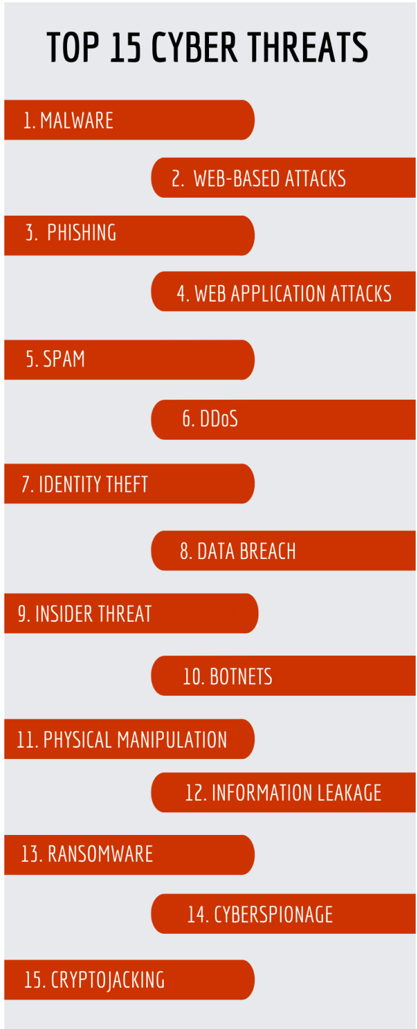
- 2020, Enisa Threat Landscape 2020—List of Top 15 Threats
- Dalave, A review on artificial intelligence in cyber security, 304
- Biswas, 2018, Intrusion detection using machine learning: A comparison study, Int. J. pure Appl. Math., 118, 101
- Tcydenova, 2021, Detection of adversarial attacks in ai-based intrusion detection systems using explainable AI, Hum.-Centric Comput. Inf. Sci., 11, 1
- 10.1109/ICCW.2019.8757060 · doi:10.1109/iccw.2019.8757060
- Yang, CADE: Detecting and explaining concept drift samples for security applications, 2327
- 10.2172/1878725 · doi:10.2172/1878725
- Khanan, JITBOT: An explainable just-in-time defect prediction bot, 1336
- Dhanabal, 2015, A study on NSL-KDD dataset for intrusion detection system based on classification algorithms, Int. J. Adv. Res. Comput. Commun. Eng., 4, 446
- Creech, 2014, Developing a high-accuracy cross platform host-based intrusion detection system capable of reliably detecting zero-day attacks
- Panigrahi, 2018, A detailed analysis of CICIDS2017 dataset for designing intrusion detection systems, Int. J. Eng. Technol., 7, 479
Cited by
Moustafa, N., Koroniotis, N., Keshk, M., Zomaya, A. Y., & Tari, Z. (2023) · IEEE Communications Surveys & Tutorials · doi:10.1109/comst.2023.3280465 · Cited by 266
Survey on Explainable AI: From Approaches, Limitations and Applications Aspects
Yang, W., Wei, Y., Wei, H., Chen, Y., Huang, G., Li, X., Li, R., Yao, N., Wang, X., Gu, X., et al. (2023) · Human-Centric Intelligent Systems · doi:10.1007/s44230-023-00038-y · Cited by 240
Mohamed, N. (2025) · Knowledge and Information Systems · doi:10.1007/s10115-025-02429-y · Cited by 208
Nwakanma, C. I., Ahakonye, L. A. C., Njoku, J. N., Odirichukwu, J. C., Okolie, S. A., Uzondu, C., Ndubuisi Nweke, C. C., & Kim, D.-S. (2023) · Applied Sciences · doi:10.3390/app13031252 · Cited by 202
Sarker, I. H., Janicke, H., Mohsin, A., Gill, A., & Maglaras, L. (2024) · ICT Express · doi:10.1016/j.icte.2024.05.007 · Cited by 188
Metadata
- Authors
- Capuano, N., Fenza, G., Loia, V., & Stanzione, C.
- Affiliations
- University of Basilicata (IT)
- University of Salerno (IT)
- Centro Alti Studi per la Difesa (CASD) (IT)
- Venue
- IEEE Access
- Published
- 2022
- Volume
- 10
- Pages
- 93575-93600
- ISSN
- 2169-3536 (ISSN-L)
- OpenAlex
- W4294691140
- Cited by
- 330
- References
- 239
- Citations by year
- 2026: 102 · 2025: 98 · 2024: 82 · 2023: 43 · 2022: 3
- FWCI
- 18.59
- Type
- journal article
- Language
- en
- Open access
- gold
- doi.org
- Locations
- IEEE Access (publishedVersion, cc-by)
- DOAJ (DOAJ: Directory of Open Access Journals) (submittedVersion, cc-by-sa)
- CINECA IRIS Institutional Research Information System (University of Basilicata) (submittedVersion)
- Topics
- Physical Sciences › Computer Science › Artificial Intelligence › Explainable Artificial Intelligence (XAI)
- Physical Sciences › Computer Science › Computer Networks and Communications › Network Security and Intrusion Detection
- Physical Sciences › Computer Science › Artificial Intelligence › Adversarial Robustness in Machine Learning
- Keywords
- explainable AI, cybersecurity, intrusion detection systems, malware detection, phishing detection, spam detection, botnet detection, fraud detection, zero-day vulnerabilities, digital forensics, cryptojacking
About these checks
Registry, retraction, Cites and statistics results are computed, not judged, with one exception: a printed reference that no index lists is read once by a model before it counts as a citation error. Claims are extracted by a model and kept only when their quote appears verbatim in the text; each cited source is then checked, with a model’s help, for whether it says what the claim relies on. Those verdicts can be wrong — read the claim’s quote and the cited source before relying on one.
Statistics and arithmetic are recomputed, not judged.
Confidence bands are shown only for fields calibrated on our annotated test set. None is calibrated yet, so no band is shown.
What counts as a claim ›How we measure confidence ›How we check this ›
Are you an author, or do you see a problem with this page? Request a review
Data sources
Bibliographic data: Semantic Scholar, OpenAlex, Crossref.
Contains information from the Semantic Scholar Academic Graph Datasets, made available under the ODC Attribution License (ODC-BY 1.0).
Semantic Scholar’s data is described in: Kinney, R., et al. (2023). The Semantic Scholar Open Data Platform. arXiv:2301.10140.
