

Explainable Artificial Intelligence (XAI) for Intrusion Detection and Mitigation in Intelligent Connected Vehicles: A Review
Open accessThe DOI matches its Crossref record; 126 of the 126 references it cites were found in a registry or an index.
Abstract
The potential for an intelligent transportation system (ITS) has been made possible by the growth of the Internet of things (IoT) and artificial intelligence (AI), resulting in the integration of IoT and ITS—known as the Internet of vehicles (IoV). To achieve the goal of automatic driving and efficient mobility, IoV is now combined with modern communication technologies (such as 5G) to achieve intelligent connected vehicles (ICVs). However, IoV is challenged with security risks in the following five (5) domains: ICV security, intelligent device security, service platform security, V2X communication security, and data security. Numerous AI models have been developed to mitigate the impact of intrusion threats on ICVs. On the other hand, the rise in explainable AI (XAI) results from the requirement to inject confidence, transparency, and repeatability into the development of AI for the security of ICV and to provide a safe ITS. As a result, the scope of this review covered the XAI models used in ICV intrusion detection systems (IDSs), their taxonomies, and outstanding research problems. The results of the study show that XAI though in its infancy of application to ICV, is a promising research direction in the quest for improving the network efficiency of ICVs. The paper further reveals that XAI increased transparency will foster its acceptability in the automobile industry.
Overview
The claims and statistics of this paper haven’t been checked yet.
Free: it reads the open-access text and checks the first 5 claims that cite a source we can check. Create a free account to check every claim.
Integrity signals
Registry
Cites
Statistics
Figures
Verification
Claims the paper makes
The claims and statistics of this paper haven’t been checked yet.
Free: it reads the open-access text and checks the first 5 claims that cite a source we can check. Create a free account to check every claim.
Claims other papers make about this one
Each is checked against this paper’s own text: does it say what the citing paper says it does?
The source backs part of the claim, not all of it — or backs it for a different population, condition or comparison.
In the citing paper
“In cybersecurity practice, XAI has become critical not only for intrusion detection systems, where it helps reduce false positives and improve analyst trust, but also in IoT and IIoT networks, where it highlights abnormal device behavior, and in forensic and compliance contexts, where transparency is necessary to meet regulatory demands such as the EU AI Act (Nwakanma et al., 2023;Moustafa et al.,”
From Explainable AI: enhancing decision-making in the detection of cyber threats (2026) · cites this paper as Nwakanma et al., 2023
Experimental — accuracy not yet measured
Self-check
Percentages, sums and reported differences re-computed from the paper’s own numbers.
The self-check needs the paper’s full text.
Citations
Cites
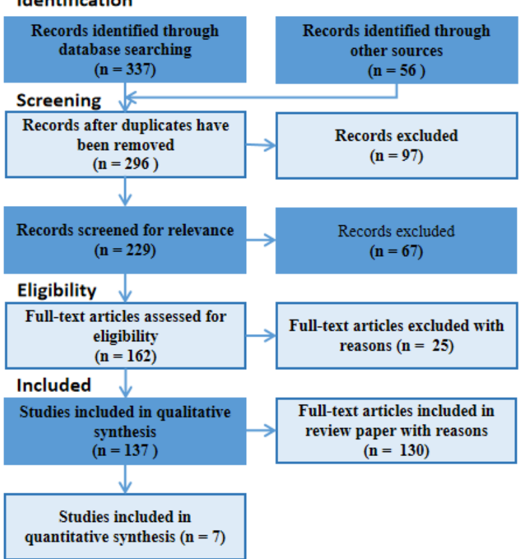
Preferred reporting items for systematic reviews and meta-analyses: The PRISMA statement
Moher, D., Liberati, A., Tetzlaff, J., Altman, D. G., & the PRISMA Group* (2009) · Annals of Internal Medicine · doi:10.7326/0003-4819-151-4-200908180-00135 · Cited by 37,554
A Unified Approach to Interpreting Model Predictions
Lundberg, S., & Lee, S.-I. (2017) · arXiv · doi:10.48550/arxiv.1705.07874 · Cited by 23,707
"Why Should I Trust You?": Explaining the Predictions of Any Classifier
Ribeiro, M. T., Singh, S., & Guestrin, C. (2016) · Proceedings of the 22nd ACM SIGKDD International Conference on Knowledge Discovery and Data Mining · doi:10.1145/2939672.2939778 · Cited by 17,555
Arrieta, A. B., Díaz-Rodríguez, N., Del Ser, J., Bennetot, A., Tabik, S., Barbado, A., García, S., Gil-López, S., Molina, D., Benjamins, R., et al. (2019) · arXiv · doi:10.48550/arxiv.1910.10045 · Cited by 11,321
Barredo Arrieta, A., Díaz-Rodríguez, N., Del Ser, J., Bennetot, A., Tabik, S., Barbado, A., Garcia, S., Gil-Lopez, S., Molina, D., Benjamins, R., et al. (2020) · Information Fusion · doi:10.1016/j.inffus.2019.12.012 · Cited by 10,423
Grad-CAM: Visual Explanations from Deep Networks via Gradient-Based Localization
Selvaraju, R. R., Cogswell, M., Das, A., Vedantam, R., Parikh, D., & Batra, D. (2020) · International Journal of Computer Vision · doi:10.1007/s11263-019-01228-7 · Cited by 6,909
Peeking Inside the Black-Box: A Survey on Explainable Artificial Intelligence (XAI)
Adadi, A., & Berrada, M. (2018) · IEEE Access · doi:10.1109/access.2018.2870052 · Cited by 6,294
Survey of intrusion detection systems: Techniques, datasets and challenges
Khraisat, A., Gondal, I., Vamplew, P., & Kamruzzaman, J. (2019) · Cybersecurity · doi:10.1186/s42400-019-0038-7 · Cited by 2,024
Ahmad, Z., Shahid Khan, A., Wai Shiang, C., Abdullah, J., & Ahmad, F. (2021) · Transactions on Emerging Telecommunications Technologies · doi:10.1002/ett.4150 · Cited by 1,288
Autonomous vehicle perception: The technology of today and tomorrow
Van Brummelen, J., O’Brien, M., Gruyer, D., & Najjaran, H. (2018) · Transportation Research Part C: Emerging Technologies · doi:10.1016/j.trc.2018.02.012 · Cited by 869
Research works printed but not linked: 8
- 7. Mütze, F. Cooperative Intelligent Transport Systems (C-ITS) ; European Transport Safety Council: Brussels, Belgium, November 2017; pp. 1-12. Available online: https://etsc.eu/briefing-cooperative-intelligent-transport-systems-c-its/ (accessed on 8 January 2023).
- 12. Consortium, C.C. C-ITS: Cooperative Intelligent Transport Systems and Services. In Proceedings of the 16th Car 2 CAr Forum. Car 2 CAr Communication Consortium, Moses Lake, WA, USA, 28-29 September 2022. Available online: https://www.car-2-car. org/about-c-its/ (accessed on 11 January 2023).
- 30. Taparia, A. IoT 2022 in reveiew: The 10 most relevant IoT developments of the year. In Proceedings of the IoT Analytics: Market Insights for the Internet of Things, Hamburg, Germany, 9 January 2023. Available online: https://iot-analytics.com/iot-2022-inreview/ (accessed on 9 January 2023).
- 61. Tian, H. Introduction of IoV Security ; China Academy of Information and Communication Technology (CAICT): Beijing, China, 2017; pp. 1-59.
- 62. Mandal, S. Protecting Software-defined Vehicles with Cybersecurity Solutions. In Proceedings of the Connected Vehicle 2022 Summit: From ADAS to Autonomous Mobility, Bengaluru, India, 4-6 May 2022.
- 71. Slijepcevic, D.; Horst, F.; Lapuschkin, S.; Raberger, A.M.; Zeppelzauer, M.; Samek, W.; Breiteneder, C.; Schöllhorn, W.I.; Horsak, B. On the Explanation of Machine Learning Predictions in Clinical Gait Analysis. arXiv 2019 , arXiv:1912.07737. · arXiv
- 120. Heijden, R.W.V.D.; Lukaseder, T.; Kargl, F. VeReMi: A Dataset for Comparable Evaluation of Misbehavior Detection in VANETs. arXiv 2018 , arXiv:1804.06701. · arXiv
- 125. Goodfellow, I.; Bengio, Y.; Courville, A. Deep Learning ; MIT Press: Cambridge, MA, USA, 2016. Available online: http://www. deeplearningbook.org (accessed on 5 January 2023).
Cited by
Mersha, M., Lam, K., Wood, J., AlShami, A. K., & Kalita, J. (2024) · Neurocomputing · doi:10.1016/j.neucom.2024.128111 · Cited by 237
Friha, O., Amine Ferrag, M., Kantarci, B., Cakmak, B., Ozgun, A., & Ghoualmi-Zine, N. (2024) · IEEE Open Journal of the Communications Society · doi:10.1109/ojcoms.2024.3456549 · Cited by 189
Arreche, O., Guntur, T. R., & Abdallah, M. (2024) · Applied Sciences · doi:10.3390/app14104170 · Cited by 224
Mathew, D. E., Ebem, D. U., Ikegwu, A. C., Ukeoma, P. E., & Dibiaezue, N. F. (2025) · Neural Processing Letters · doi:10.1007/s11063-025-11732-2 · Cited by 168
Advanced Learning Technologies for Intelligent Transportation Systems: Prospects and Challenges
Khalil, R. A., Safelnasr, Z., Yemane, N., Kedir, M., Shafiqurrahman, A., & Saeed, N. (2024) · IEEE Open Journal of Vehicular Technology · doi:10.1109/ojvt.2024.3369691 · Cited by 168
“Training DL models on noisy data can exacerbate these inaccuracies, potentially leading to sub-optimal performance and unreliable predictions in real-world transportation applications.”
Background
Metadata
- Authors
- Nwakanma, C. I., Ahakonye, L. A. C., Njoku, J. N., Odirichukwu, J. C., Okolie, S. A., Uzondu, C., Ndubuisi Nweke, C. C., & Kim, D.-S.
- Affiliations
- Kumoh National Institute of Technology (KR)
- Federal University of Technology Owerri (NG)
- Department of Big Data Solution Architecture, Conestoga College, Kitchener, ON N2G 4M4, Canada
- Corresponding author
- Kim, Dong-Seong
- ORCID
- Venue
- Applied Sciences
- Publisher
- MDPI AG
- Published
- 2023-01-17
- Volume
- 13
- Issue
- 3
- Pages
- 1252
- ISSN
- 2076-3417 (ISSN-L)
- OpenAlex
- W4317207036
- Cited by
- 202
- References
- 117
- Citations by year
- 2026: 44 · 2025: 60 · 2024: 67 · 2023: 30
- FWCI
- 22.35
- Type
- journal article
- Language
- en
- Open access
- gold
- doi.org
- Licence
- Locations
- Applied Sciences (publishedVersion, cc-by)
- DOAJ (DOAJ: Directory of Open Access Journals) (submittedVersion, cc-by-sa)
- Edge Hill University Research Information Repository (Edge Hill University) (submittedVersion, cc-by)
- Funders
- Priority Research Centers Program through the national research foundation of Korea (NRF) (2018R1A6A1A03024003, IITP-2023-2020-0-01612)
- ministry of education, science and technology (MEST) (2018R1A6A1A03024003, IITP-2023-2020-0-01612)
- ministry of science and information & communication technology (MSIT) (2018R1A6A1A03024003, IITP-2023-2020-0-01612)
- information technology research center support program (2018R1A6A1A03024003, IITP-2023-2020-0-01612)
- Institute for Information & communications Technology Planning & Evaluation (IITP) (2018R1A6A1A03024003, IITP-2023-2020-0-01612)
- Topics
- Physical Sciences › Computer Science › Computer Networks and Communications › Network Security and Intrusion Detection
- Physical Sciences › Computer Science › Artificial Intelligence › Explainable Artificial Intelligence (XAI)
- Physical Sciences › Computer Science › Artificial Intelligence › Adversarial Robustness in Machine Learning
- Keywords
- explainable AI, intrusion detection, intelligent connected vehicles, Internet of Vehicles, automotive cybersecurity, intrusion mitigation, intelligent transportation systems, Internet of Things security, 5G
About these checks
Registry, retraction, Cites and statistics results are computed, not judged, with one exception: a printed reference that no index lists is read once by a model before it counts as a citation error. Claims are extracted by a model and kept only when their quote appears verbatim in the text; each cited source is then checked, with a model’s help, for whether it says what the claim relies on. Those verdicts can be wrong — read the claim’s quote and the cited source before relying on one.
Statistics and arithmetic are recomputed, not judged.
Confidence bands are shown only for fields calibrated on our annotated test set. None is calibrated yet, so no band is shown.
What counts as a claim ›How we measure confidence ›How we check this ›
Are you an author, or do you see a problem with this page? Request a review
How to cite
Cite CoChat for the checks on this page, and the paper for its own findings.
- This page
- CoChat. (2026). Citation check: Explainable Artificial Intelligence (XAI) for Intrusion Detection and Mitigation in Intelligent Connected Vehicles: A Review. https://app.cochat.ai/papers/10.3390/app13031252
- The paper
- Nwakanma, C. I., Ahakonye, L. A. C., Njoku, J. N., Odirichukwu, J. C., Okolie, S. A., Uzondu, C., Ndubuisi Nweke, C. C., & Kim, D.-S. (2023). Explainable Artificial Intelligence (XAI) for Intrusion Detection and Mitigation in Intelligent Connected Vehicles: A Review. Applied Sciences. https://doi.org/10.3390/app13031252
Data sources
Bibliographic data: Semantic Scholar, OpenAlex, Crossref.
Contains information from the Semantic Scholar Academic Graph Datasets, made available under the ODC Attribution License (ODC-BY 1.0).
Semantic Scholar’s data is described in: Kinney, R., et al. (2023). The Semantic Scholar Open Data Platform. arXiv:2301.10140.
