

Blind Hyperspectral Unmixing Using Autoencoders: A Critical Comparison
Open accessThe DOI matches its Crossref record; 131 of the 132 references it cites were found in a registry or an index.
Abstract
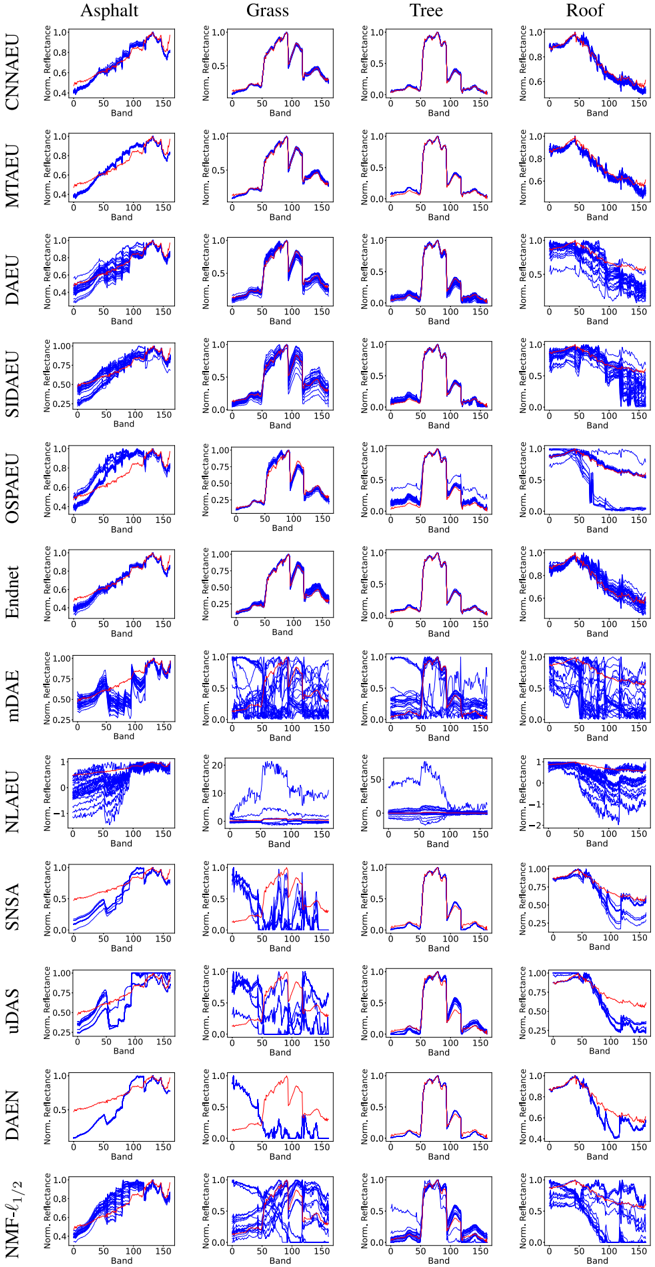
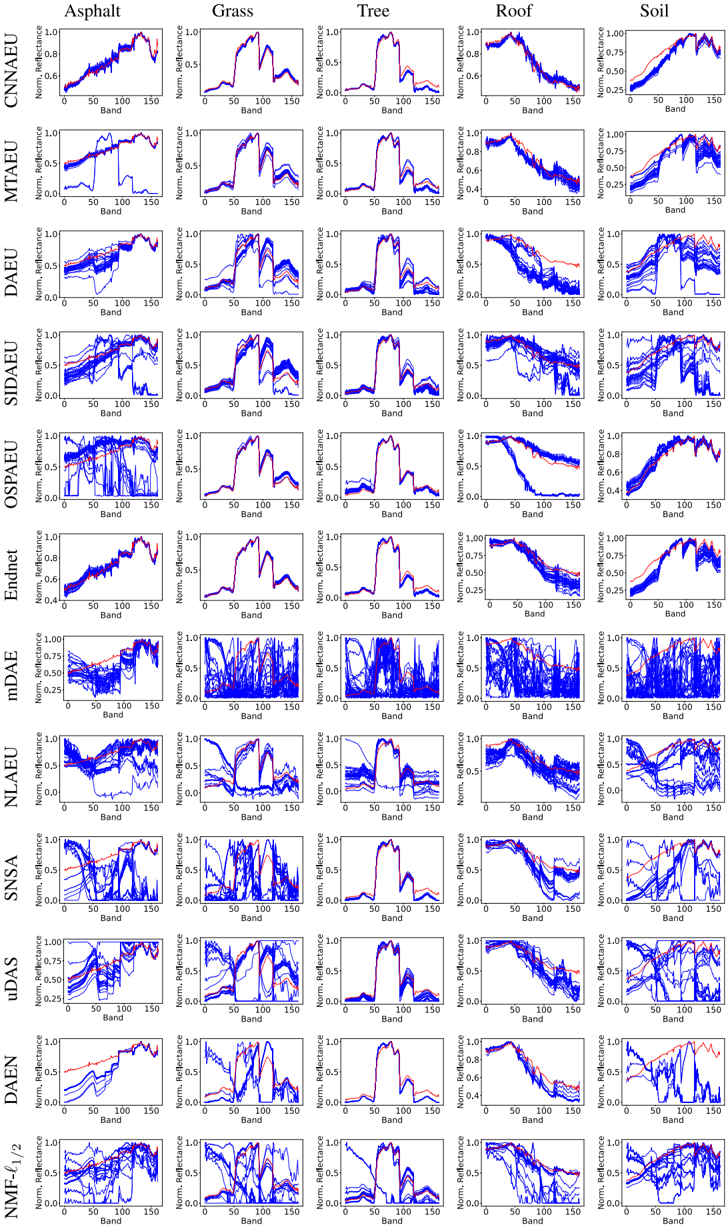
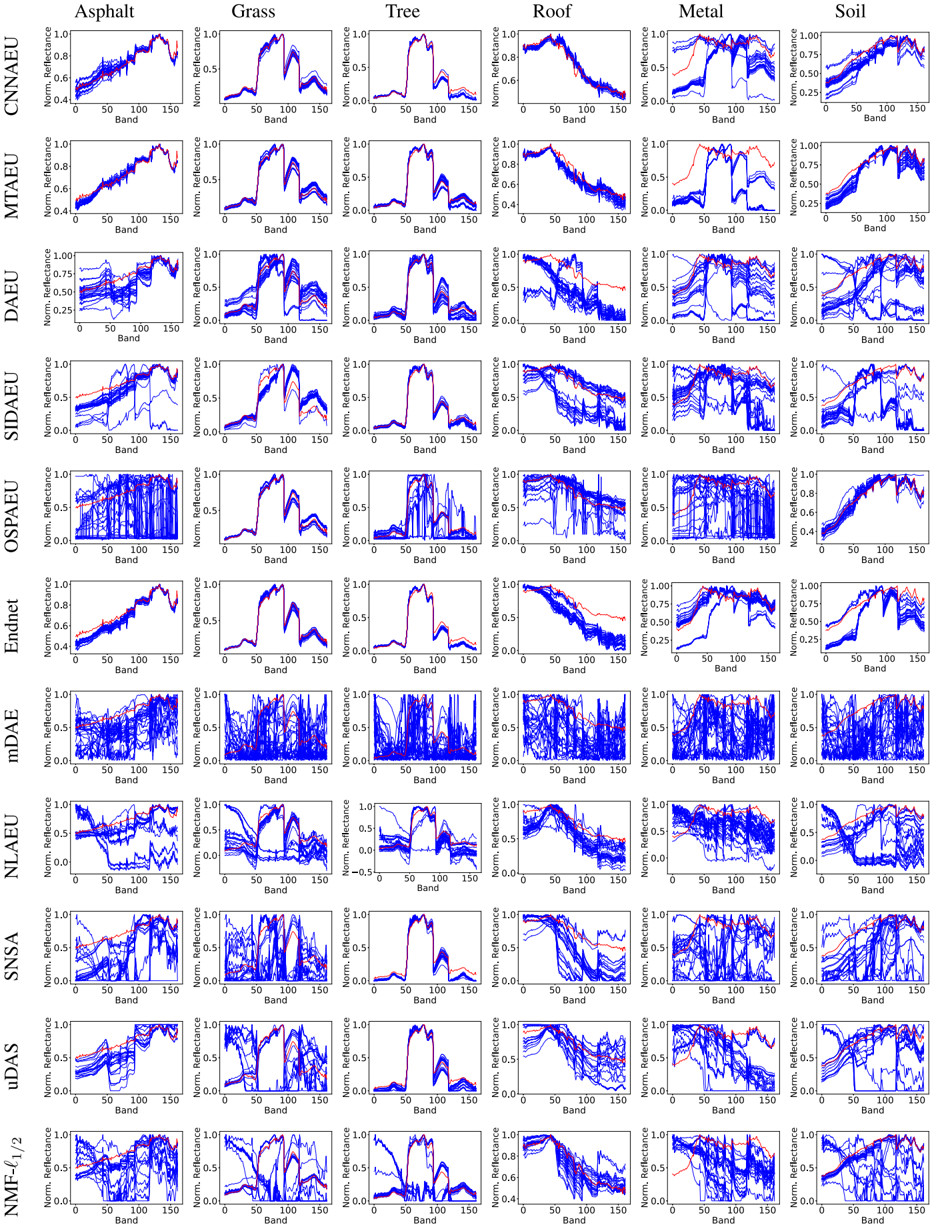
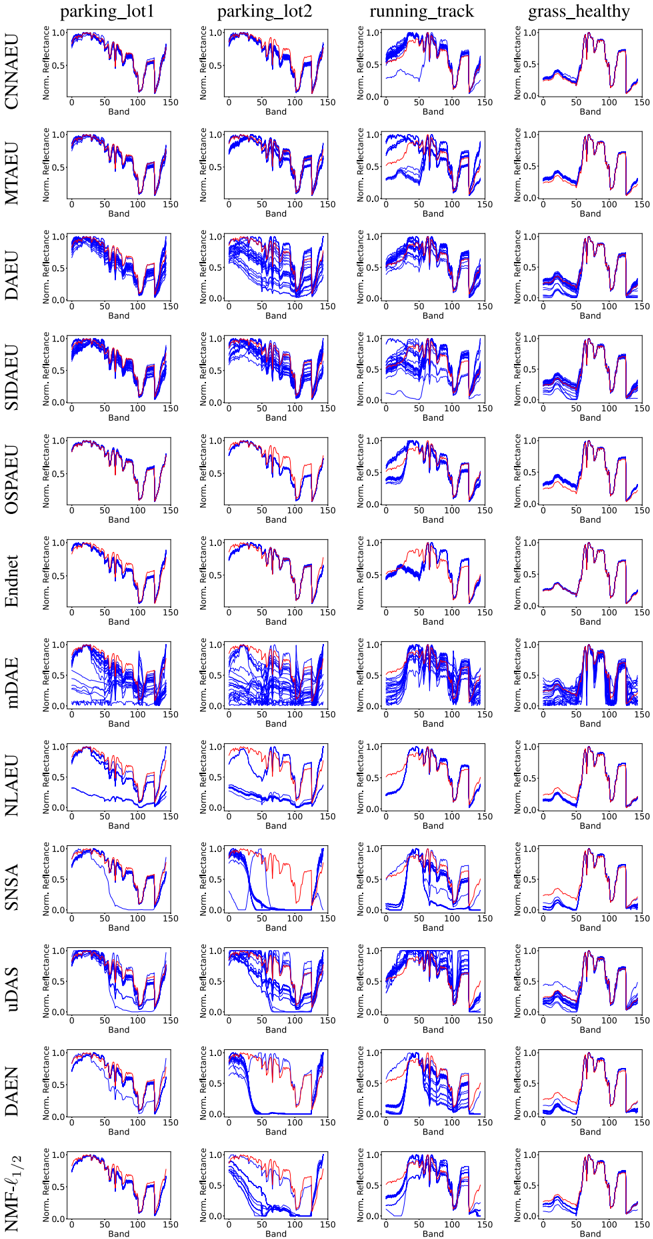
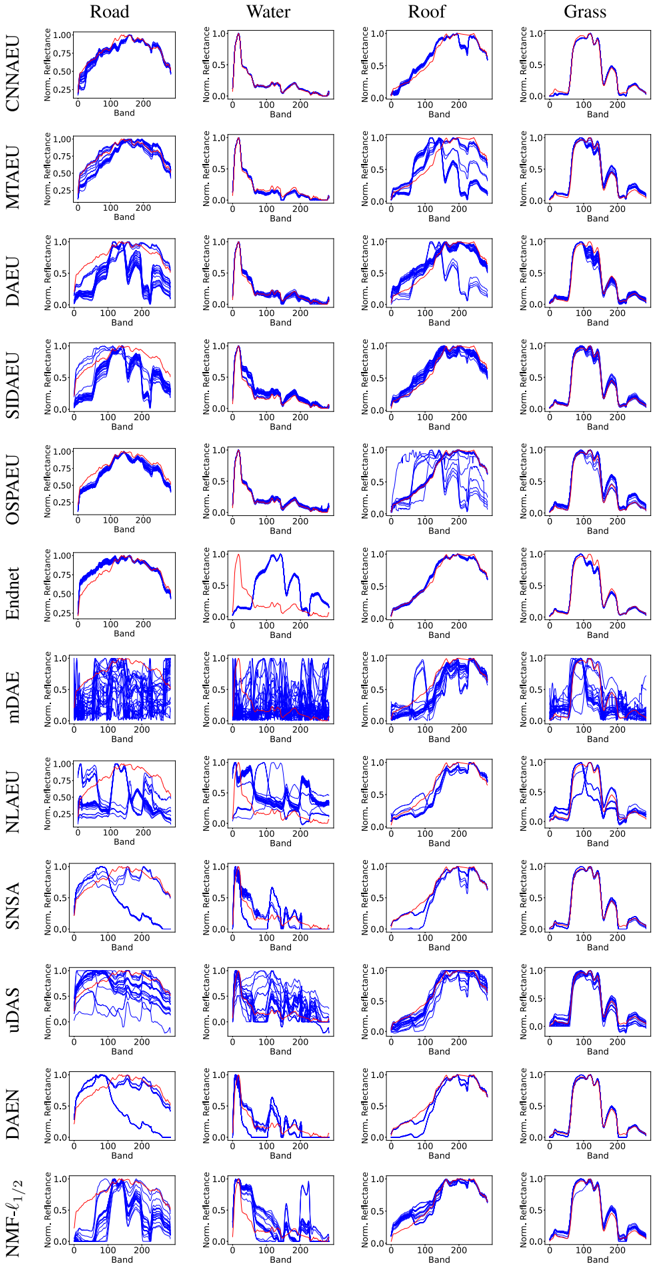
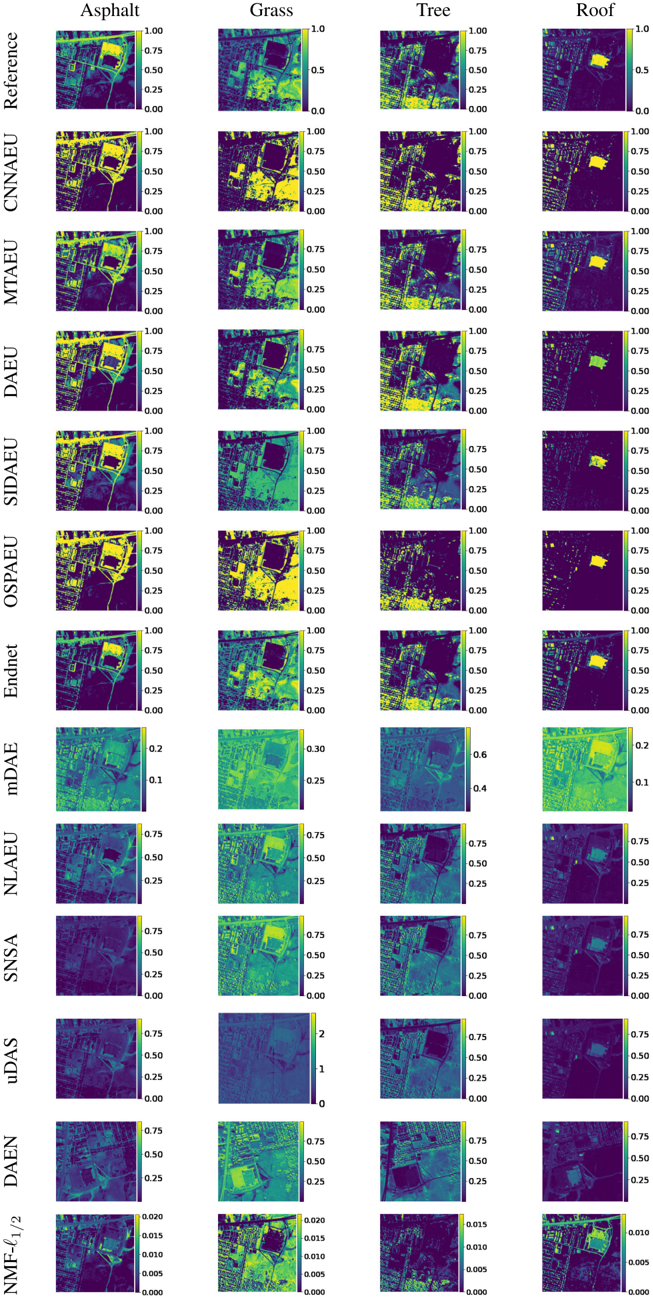
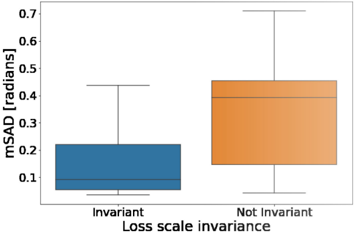
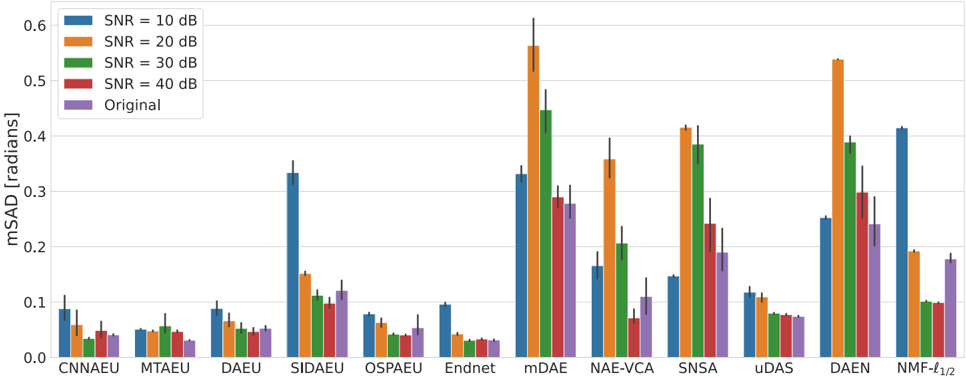
Deep learning (DL) has heavily impacted the data-intensive field of remote sensing. Autoencoders are a type of DL methods that have been found to be powerful for blind hyperspectral unmixing (HU). HU is the process of resolving the measured spectrum of a pixel into a combination of a set of spectral signatures called endmembers and simultaneously determining their fractional abundances in the pixel. This article details the various autoencoder architectures used in HU and provides a critical comparison of some of the existing published blind unmixing methods based on autoencoders. Eleven different autoencoder methods and one traditional method will be compared in blind unmixing experiments using four real datasets and four synthetic datasets with different spectral variability. Additionally, extensive ablation experiments with a simple spectral unmixing autoencoder will be performed. The results are interpreted in terms of the various implementation details, and the question of why autoencoder methods are so powerful compared to traditional methods is unraveled. The source codes for all methods implemented in this article can be found athttps://github.com/burknipalsson/hu_autoencoders.
Overview
The claims and statistics of this paper haven’t been checked yet.
Free: it reads the open-access text and checks the first 5 claims that cite a source we can check. Create a free account to check every claim.
Integrity signals
Registry
Cites
Statistics
Figures


Verification
Claims the paper makes
The claims and statistics of this paper haven’t been checked yet.
Free: it reads the open-access text and checks the first 5 claims that cite a source we can check. Create a free account to check every claim.
Self-check
Percentages, sums and reported differences re-computed from the paper’s own numbers.
The self-check needs the paper’s full text.
Citations
Cites
Hochreiter, S., & Schmidhuber, J. (1997) · Neural Computation · doi:10.1162/neco.1997.9.8.1735 · Cited by 102,318 · cited 1×
“The method in [110] is the first blind HU method to utilize a long short-term memory [111] network.”
Method(2014) · Cited by 33,419
Batch Normalization: Accelerating Deep Network Training by Reducing Internal Covariate Shift
Ioffe, S., & Szegedy, C. (2015) · arXiv · doi:10.48550/arxiv.1502.03167 · Cited by 27,818 · cited 2×
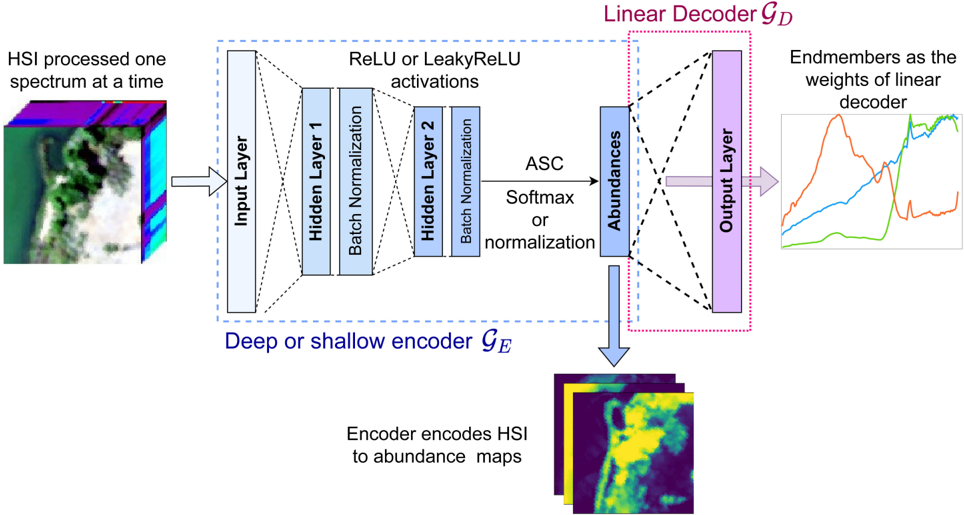
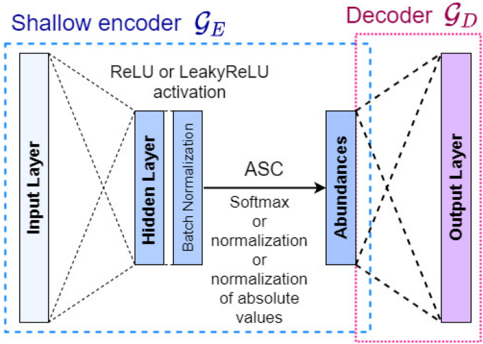
“Batch normalization is used to speed up the training of neural networks and make them more stable through normalization of the inputs to a layer by recentering and rescaling [86].”
BackgroundMethodUnpaired image-to-image translation using cycle-consistent adversarial networks
Zhu, J.-Y., Park, T., Isola, P., & Efros, A. A. (2017) · 2017 IEEE International Conference on Computer Vision (ICCV) · doi:10.1109/iccv.2017.244 · Cited by 23,602
Reducing the dimensionality of data with neural networks
Hinton, G. E., & Salakhutdinov, R. R. (2006) · Science · doi:10.1126/science.1127647 · Cited by 20,928
Auto-Encoding Variational Bayes
Kingma, D. P., & Welling, M. (2013) · arXiv · doi:10.48550/arxiv.1312.6114 · Cited by 20,067
Learning Internal Representations by Error Propagation
Rumelhart, D. E., Hinton, G. E., & Williams, R. J. (1985) · doi:10.21236/ada164453 · Cited by 16,172
(2012) · Cited by 8,009
Practical Bayesian Optimization of Machine Learning Algorithms
Snoek, J., Larochelle, H., & Adams, R. P. (2012) · arXiv · doi:10.48550/arxiv.1206.2944 · Cited by 6,691 · cited 1×
“In recent years, Bayesian optimization [118] has emerged as a state-of-the-art optimization framework for the optimization of blackbox functions, especially expensive ones.”
Background(2017) · International Conference on Machine Learning · Cited by 6,382
Research works printed but not linked: 7
- 13. I. Goodfellow, Y. Bengio, and A. Courville, Deep Learning. Cambridge, MA, USA: MIT Press, 2016.
- 40. J. Bioucas-Dias and J. Nascimento, "Hyperspectral subspace identifica- tion," IEEE Trans. Geosci. Remote Sens., vol. 46, no. 8, pp. 2435-2445, Aug. 2008.
- 53. J. Sigurdsson, M. O. Ulfarsson, and J. R. Sveinsson, "Hyperspectral unmixing with l q regularization," IEEE Trans. Geosci. Remote Sens., vol. 52, no. 11, pp. 6793-6806, Nov. 2014.
- 63. A. Makhzani, J. Shlens, N. Jaitly, and I. Goodfellow, "Adversarial au- toencoders," 2016. [Online]. Available: http://arxiv.org/abs/1511.0564
- 67. M. Chen, Z. Xu, K. Q. Weinberger, and F. Sha, "Marginalized stacked denoising autoencoders," in j. Mach. Learn. Res., vol. 16, no. 1, pp. 3849-3875, 2015.
- 71. A. L. Maas, A. Y. Hannun, and A. Y. Ng, "Rectifier nonlinearities improve neural network acoustic models," in Proc. Int. Conf. Mach. Learn., 2013, vol. 30, no. 1, p. 3.
- 102. M. Arjovsky, S. Chintala, and L. Bottou, "Wasserstein generative ad- versarial networks," in Proc. 34th Int. Conf. Mach. Learn., Aug. 2017, vol. 70, pp. 214-223.
Cited by
Items 101–114 of 114
Xu, M., Xu, J. C., Yang, Z., Li, W., Xu, Y., Wei, S., Liu, S., Du, B., & Wang, Z. (2026) · IEEE Transactions on Neural Networks and Learning Systems · doi:10.1109/tnnls.2026.3698485
DSEK-AE: A Dual-Stream Autoencoder Based on Endmember Kernel for Blind Hyperspectral Unmixing
Wan, C., Li, L., & Wang, B. (2026) · IEEE Transactions on Geoscience and Remote Sensing · doi:10.1109/tgrs.2026.3706689 · Cited by 1
“In particular, due to the strong compatibility of the autoencoder (AE) architecture with the unmixing problem, many AE-based methods have been successfully applied in the field of unmixing [24], [25].”
Self-supervised spectral unmixing using scene-aware deep priors
Suresh, S., Ramesh, S. C., Arun, P. V., Srivastava, V., & Buddhiraju, K. M. (2026) · International Journal of Applied Earth Observation and Geoinformation · doi:10.1016/j.jag.2026.105483 · Cited by 1
Multisource Feature Embedding Network for Joint Subpixel Mapping of Hyperspectral and LiDAR Data
Xu, J., Xu, M., Zhao, D., Liu, S., Sheng, H., & Shi, Q. (2026) · IEEE Journal of Selected Topics in Applied Earth Observations and Remote Sensing · doi:10.1109/jstars.2026.3718585
“Hyperspectral unmixing (HU) can alleviate the problem of mixed pixels by analyzing the composition (i.e., endmember) and proportion (i.e., abundance) of ground objects within pixels [7], [8], [9].”
Sharma, L., & Marin, A. (2026) · IEEE/CVF Winter Conference on Applications of Computer Vision Workshops (WACVW) · doi:10.1109/wacvw68408.2026.00153
“Key examples include traditional Autoencoders (AEs) and their advanced variations like Sparse Autoen-coders [26], Denoising AEs [40], Variational Autoencoders (VAEs) [29], and more recently, the highly effective Masked Autoencoders (MAEs) [17].”
Farah, N., Bouabid, R., Ouzemou, J.-E., Chehbouni, A., Roudies, N., & Laamrani, A. (2026) · Remote Sensing · doi:10.3390/rs18152636
Transition-Aware Boundary-Guided Dual-Frequency Network for Hyperspectral Unmixing
Chen, Y., Liang, S., Cheng, Q., Zhang, B., Xiong, S., & Lu, X. (2026) · IEEE Transactions on Geoscience and Remote Sensing · doi:10.1109/tgrs.2026.3725214
“By leveraging convolutional neural networks (CNNs) [28], AEs [29], and attention mechanisms [30], these methods have demonstrated superior performance in extracting endmembers and estimating abundances, particularly in scenarios with complex mixing patterns and low signal-to-noise ratios (SNRs).”
Aala, S., Sikhakolli, S. K., Deshpande, A. P., Elumalai, K., Pandurangan, S. K., Kumar, R. K., & Chinnadurai, S. (2026) · Results in Engineering · doi:10.1016/j.rineng.2026.112706
A Review of Hyperspectral Unmixing Considering Spectral Variability
Huang, J., Li, H., Li, J., Wu, Z., Hong, D., Liu, H., & Wei, Z. (2026) · IEEE Journal of Selected Topics in Applied Earth Observations and Remote Sensing · doi:10.1109/jstars.2026.3731580
“Palsson et al. [45] focused on autoencoder-based unmixing methods, discussing their network architectures, implementation details, loss functions, and regularization strategies.”
Sparse Tensor Attention for Hyperspectral Unmixing
Wang, J., Xiong, F., Wen, Z., Zhao, Z., Zhou, J. W., & Qian, Y. (2026) · IEEE Transactions on Geoscience and Remote Sensing · doi:10.1109/tgrs.2026.3734168
“Among them, autoencoders have emerged as a dominant framework because their latent representations can be interpreted as abundance maps, while the decoder weights can be associated with endmember signatures [32], [33], [34], [35], [36], [37].”
Prior-guided unmixing transformer for underwater hyperspectral target detection
Gao, H., Pei, Y., Chen, Z., & Xu, S. (2026) · Optics & Laser Technology · doi:10.1016/j.optlastec.2026.116410
RSSM-HUN: A Robust Spectral–Spatial Mamba-Based Network for Hyperspectral Unmixing
Long, Z., Jiang, L., & Fu, G. (2026) · IEEE International Geoscience and Remote Sensing Symposium (IGARSS) · doi:10.1109/igarss60577.2026.11730774
“Hyperspectral unmixing (HU) addresses this problem by de-composing each pixel into endmember spectra and corresponding abundance fractions [6, 7], commonly under the linear mixing model (LMM) with abundance non-negativity (ANC) and sum-to-one (ASC) constraints [8].”
Zhu, Y., Yang, F., Yue, K., Nie, J., Shi, W., Li, X., & Chang, K. (2026) · Remote Sensing · doi:10.3390/rs18213676
Saoudi, M. S., Iftene, M., Larabi, M. E. A., & Abbedou, L. (2026) · International Journal of Remote Sensing · doi:10.1080/01431161.2026.2740245
Metadata
- Authors
- Palsson, B., Sveinsson, J. R., & Ulfarsson, M. O.
- Affiliations
- University of Iceland (IS)
- Venue
- IEEE Journal of Selected Topics in Applied Earth Observations and Remote Sensing
- Published
- 2022
- Volume
- 15
- Pages
- 1340-1372
- ISSN
- 1939-1404 (ISSN-L)
- 2151-1535
- OpenAlex
- W4206620949
- Semantic Scholar
- 8475118dcfc15e84d175514b4b242035da50955e
- Cited by
- 107
- References
- 132
- Citations by year
- 2026: 16 · 2025: 27 · 2024: 32 · 2023: 24 · 2022: 8
- FWCI
- 8.88
- Type
- journal article
- Language
- en
- Open access
- gold
- doi.org
- Locations
- IEEE Journal of Selected Topics in Applied Earth Observations and Remote Sensing (publishedVersion, cc-by)
- DOAJ (DOAJ: Directory of Open Access Journals) (submittedVersion, cc-by-sa)
- Opin vísindi (Opin vísindi) (submittedVersion, other-oa)
- Opin vísindi (Opin vísindi) (submittedVersion, cc-by-nc-sa)
- Funders
- Icelandic Research Fund (174075-05, 207233-052)
- Topics
- Physical Sciences › Computer Science › Computer Vision and Pattern Recognition › Remote-Sensing Image Classification
- Physical Sciences › Earth and Planetary Sciences › Geochemistry and Petrology › Geochemistry and Geologic Mapping
- Physical Sciences › Chemistry › Analytical Chemistry › Spectroscopy and Chemometric Analyses
- Keywords
- autoencoder, endmember extraction, fractional abundance estimation, spectral signatures, ablation study, deep learning for remote sensing
About these checks
Registry, retraction, Cites and statistics results are computed, not judged, with one exception: a printed reference that no index lists is read once by a model before it counts as a citation error. Claims are extracted by a model and kept only when their quote appears verbatim in the text; each cited source is then checked, with a model’s help, for whether it says what the claim relies on. Those verdicts can be wrong — read the claim’s quote and the cited source before relying on one.
Statistics and arithmetic are recomputed, not judged.
Confidence bands are shown only for fields calibrated on our annotated test set. None is calibrated yet, so no band is shown.
What counts as a claim ›How we measure confidence ›How we check this ›
Are you an author, or do you see a problem with this page? Request a review
Data sources
Bibliographic data: Semantic Scholar, OpenAlex, Crossref.
Contains information from the Semantic Scholar Academic Graph Datasets, made available under the ODC Attribution License (ODC-BY 1.0).
Semantic Scholar’s data is described in: Kinney, R., et al. (2023). The Semantic Scholar Open Data Platform. arXiv:2301.10140.
