

Blind Hyperspectral Unmixing Using Autoencoders: A Critical Comparison
Open accessThe DOI matches its Crossref record; 131 of the 132 references it cites were found in a registry or an index.
Abstract
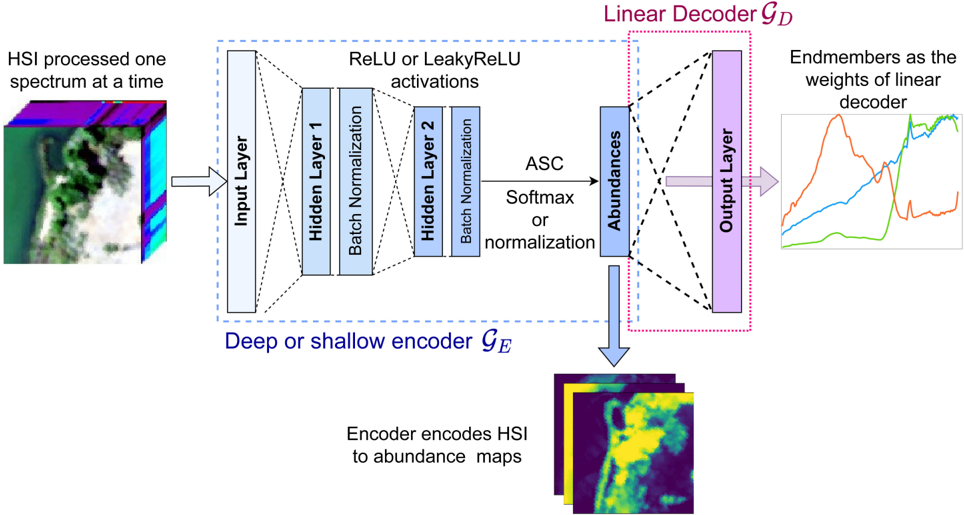
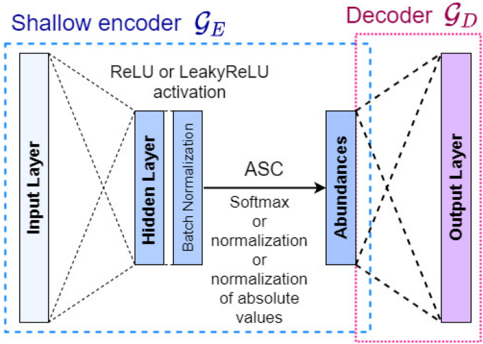
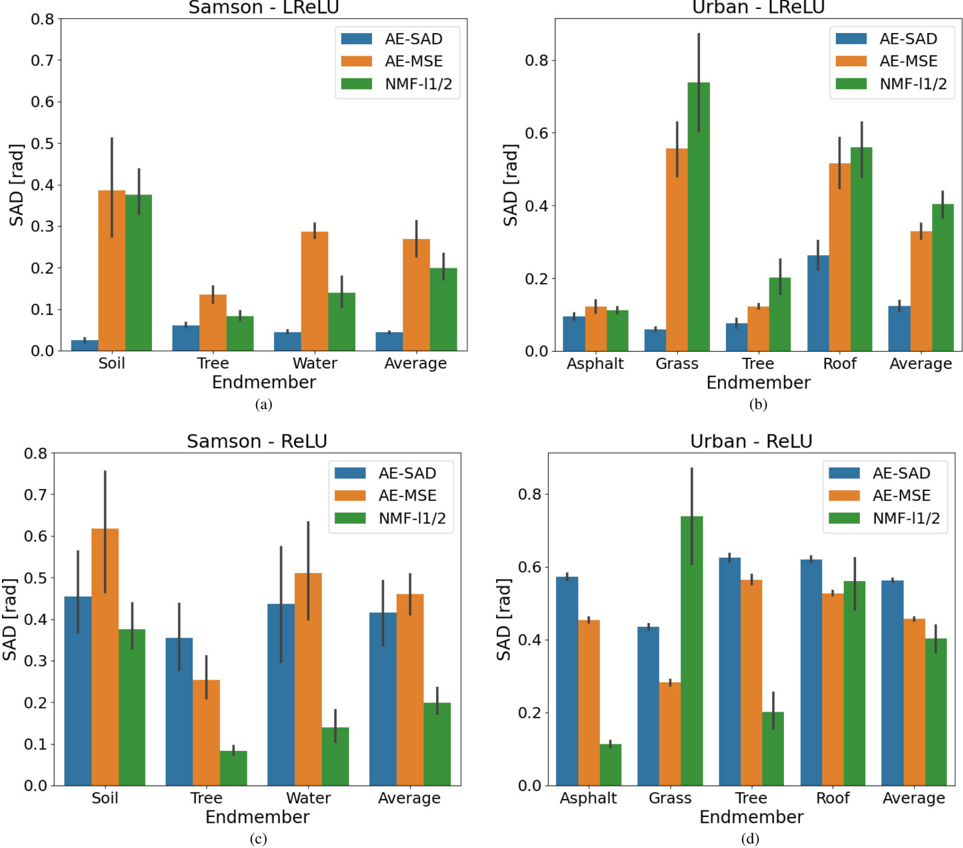
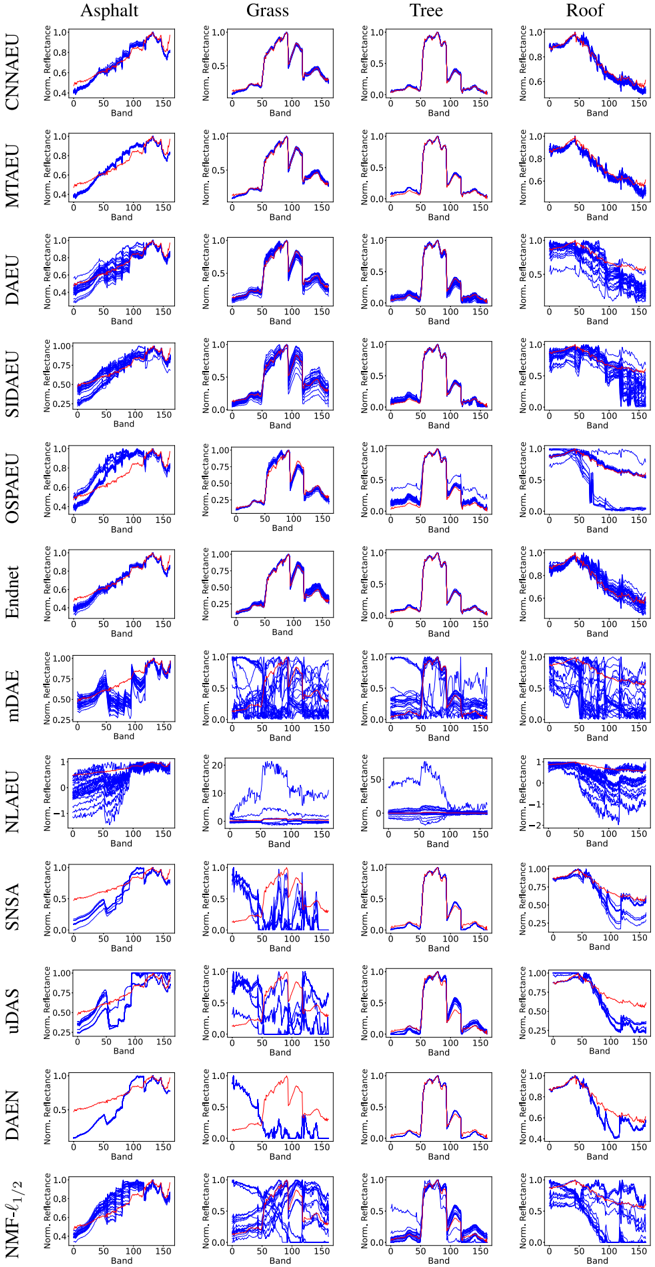
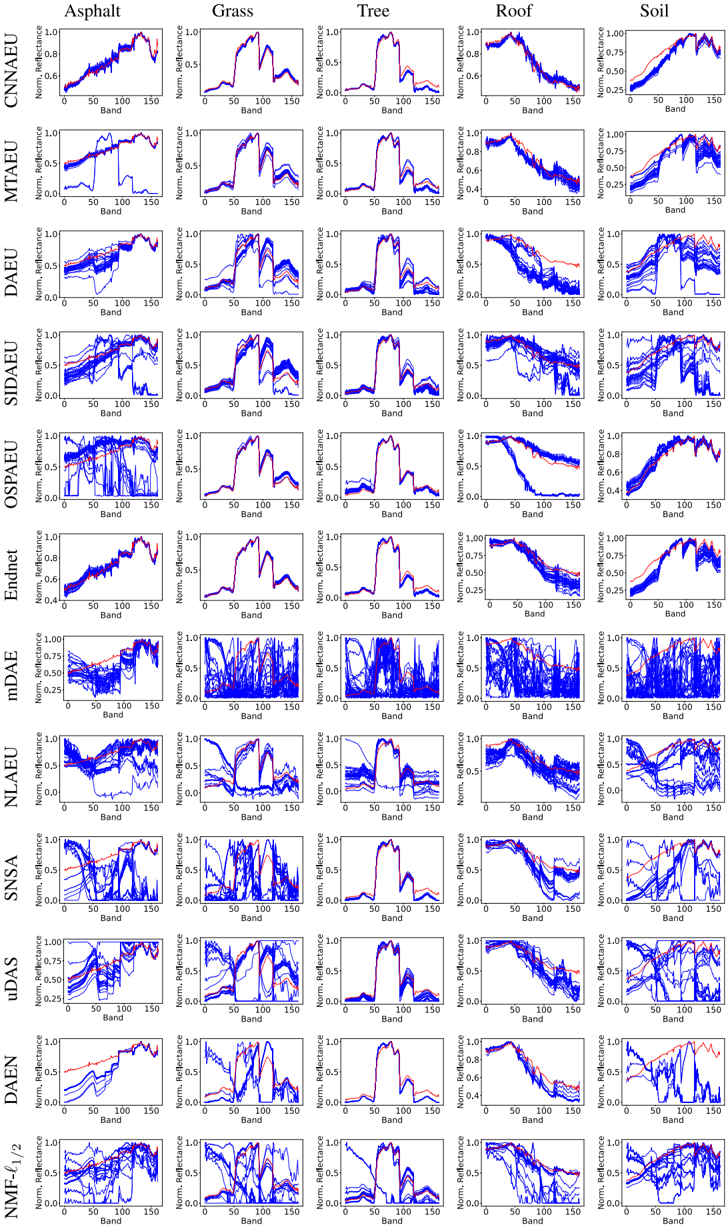
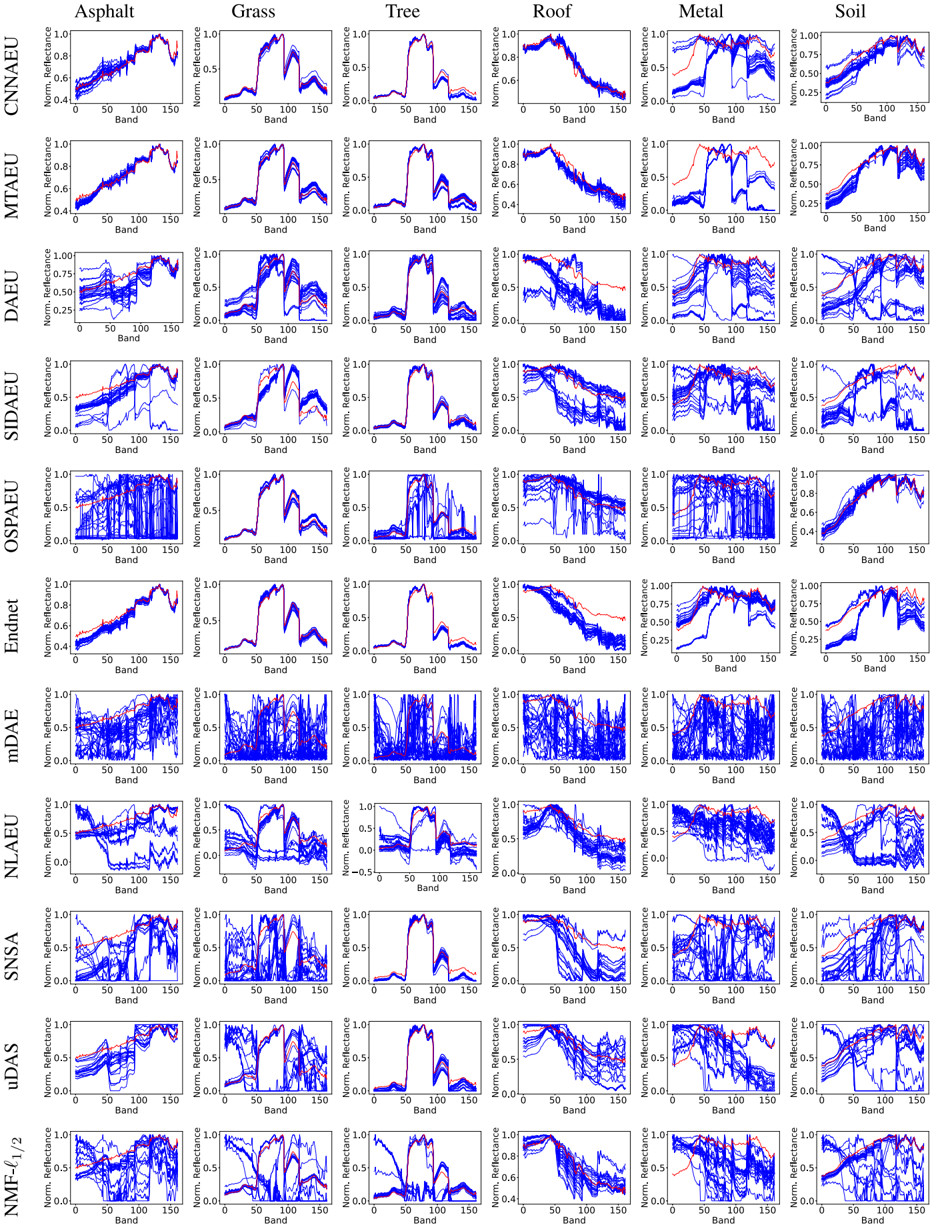
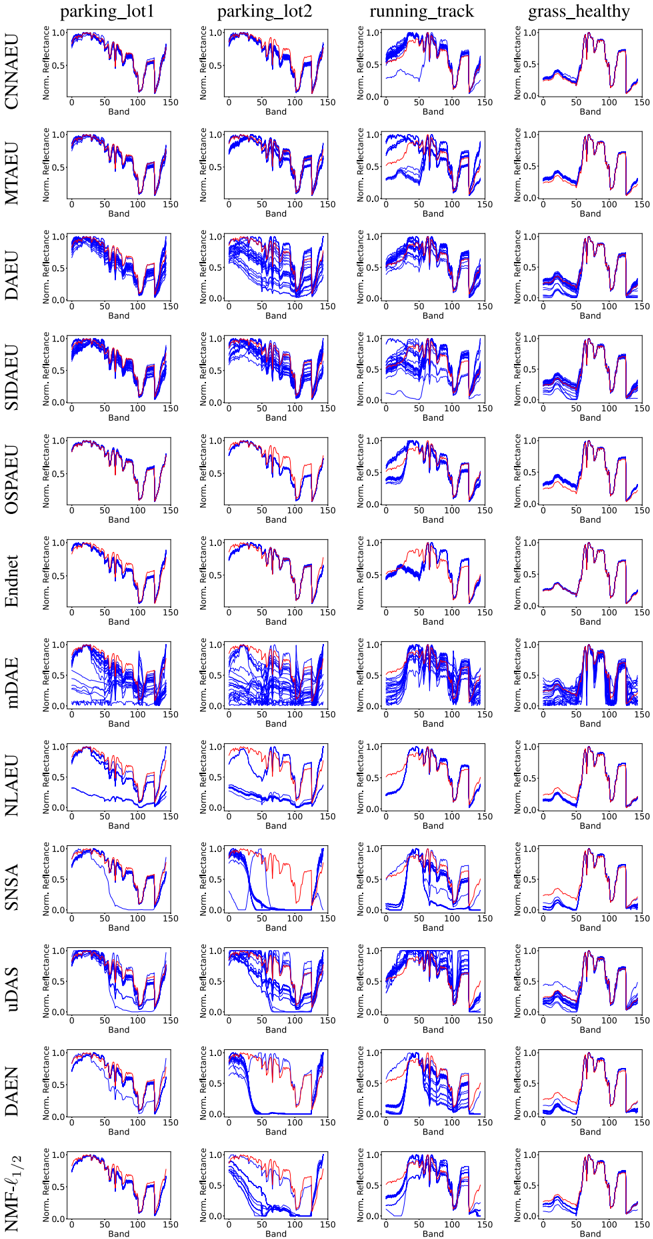
Deep learning (DL) has heavily impacted the data-intensive field of remote sensing. Autoencoders are a type of DL methods that have been found to be powerful for blind hyperspectral unmixing (HU). HU is the process of resolving the measured spectrum of a pixel into a combination of a set of spectral signatures called endmembers and simultaneously determining their fractional abundances in the pixel. This article details the various autoencoder architectures used in HU and provides a critical comparison of some of the existing published blind unmixing methods based on autoencoders. Eleven different autoencoder methods and one traditional method will be compared in blind unmixing experiments using four real datasets and four synthetic datasets with different spectral variability. Additionally, extensive ablation experiments with a simple spectral unmixing autoencoder will be performed. The results are interpreted in terms of the various implementation details, and the question of why autoencoder methods are so powerful compared to traditional methods is unraveled. The source codes for all methods implemented in this article can be found athttps://github.com/burknipalsson/hu_autoencoders.
Overview
The claims and statistics of this paper haven’t been checked yet.
Free: it reads the open-access text and checks the first 5 claims that cite a source we can check. Create a free account to check every claim.
Integrity signals
Registry
Cites
Statistics
Figures
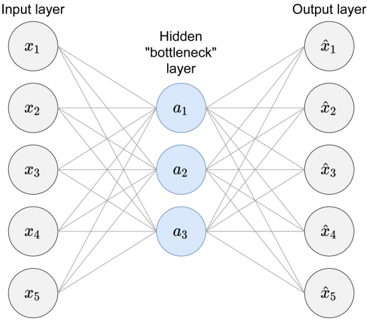
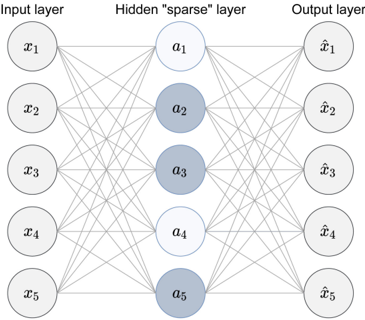
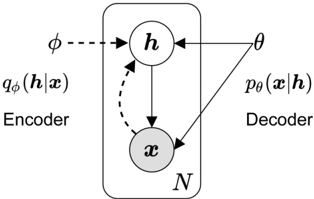
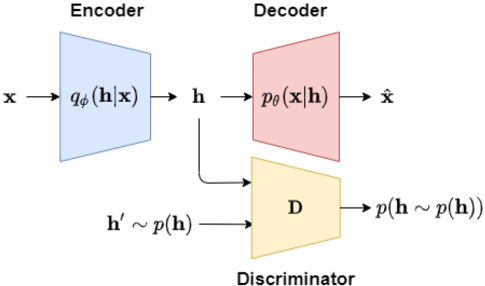
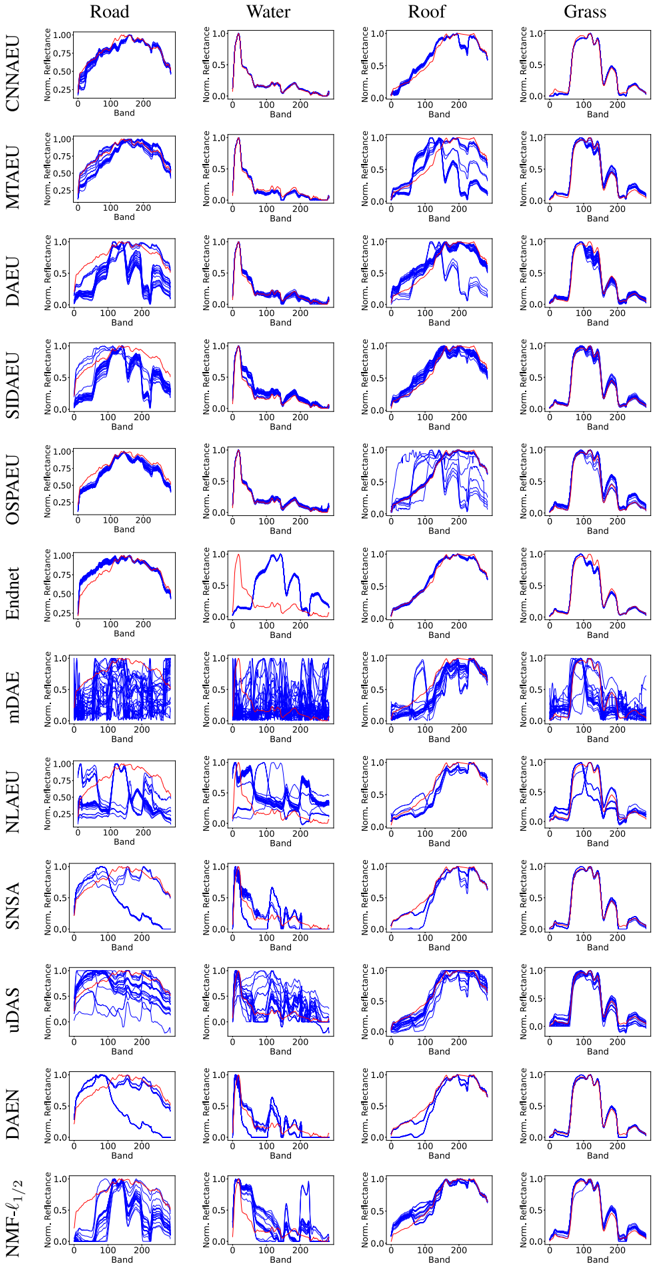
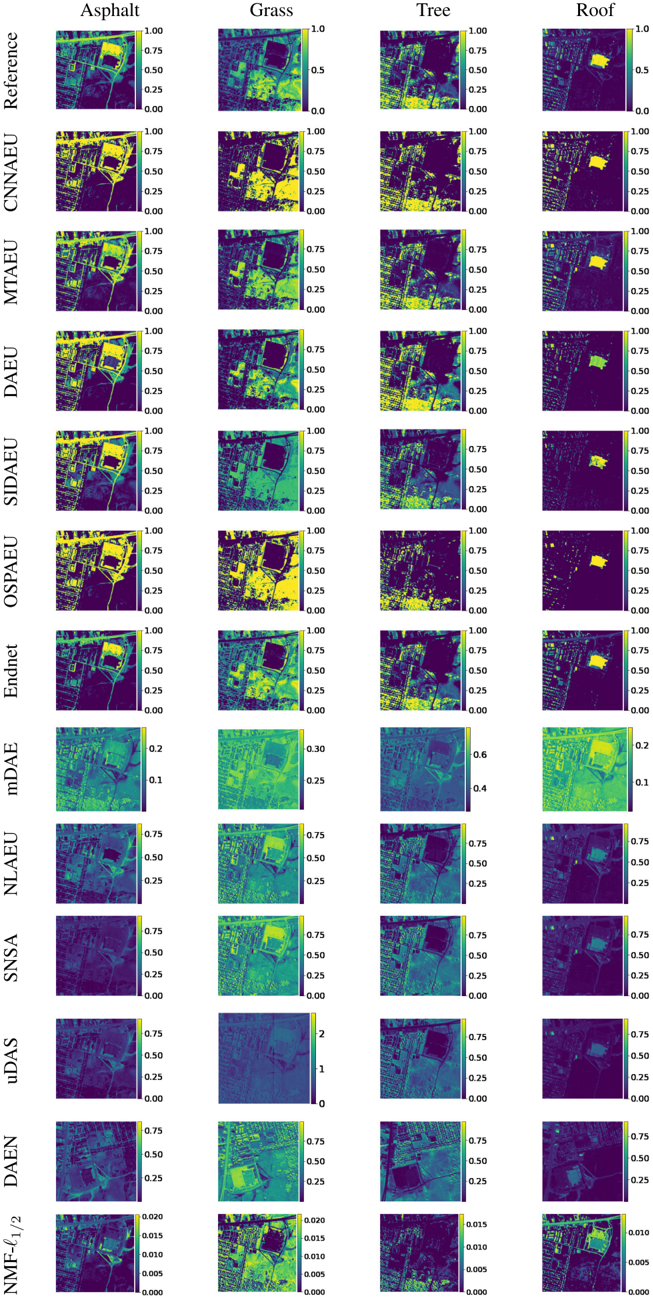
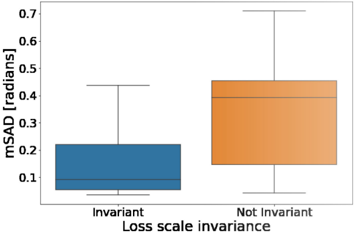
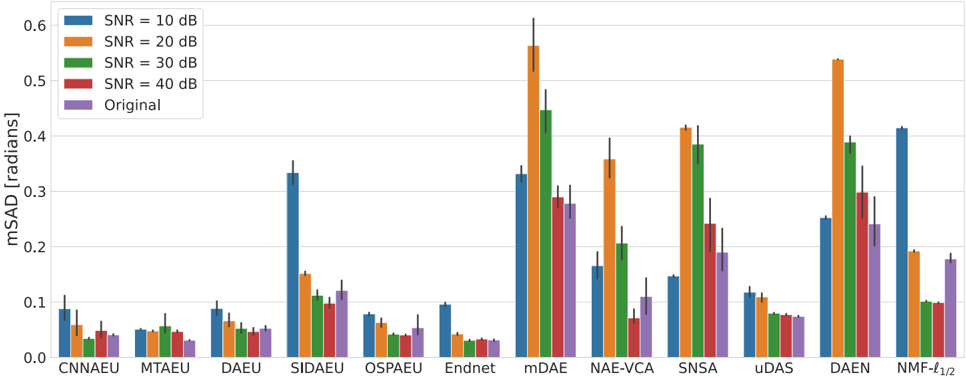


Verification
Claims the paper makes
The claims and statistics of this paper haven’t been checked yet.
Free: it reads the open-access text and checks the first 5 claims that cite a source we can check. Create a free account to check every claim.
Self-check
Percentages, sums and reported differences re-computed from the paper’s own numbers.
The self-check needs the paper’s full text.
Citations
Cites
Hochreiter, S., & Schmidhuber, J. (1997) · Neural Computation · doi:10.1162/neco.1997.9.8.1735 · Cited by 102,318 · cited 1×
“The method in [110] is the first blind HU method to utilize a long short-term memory [111] network.”
Method(2014) · Cited by 33,419
Batch Normalization: Accelerating Deep Network Training by Reducing Internal Covariate Shift
Ioffe, S., & Szegedy, C. (2015) · arXiv · doi:10.48550/arxiv.1502.03167 · Cited by 27,818 · cited 2×
“Batch normalization is used to speed up the training of neural networks and make them more stable through normalization of the inputs to a layer by recentering and rescaling [86].”
BackgroundMethodUnpaired image-to-image translation using cycle-consistent adversarial networks
Zhu, J.-Y., Park, T., Isola, P., & Efros, A. A. (2017) · 2017 IEEE International Conference on Computer Vision (ICCV) · doi:10.1109/iccv.2017.244 · Cited by 23,602
Reducing the dimensionality of data with neural networks
Hinton, G. E., & Salakhutdinov, R. R. (2006) · Science · doi:10.1126/science.1127647 · Cited by 20,928
Auto-Encoding Variational Bayes
Kingma, D. P., & Welling, M. (2013) · arXiv · doi:10.48550/arxiv.1312.6114 · Cited by 20,067
Learning Internal Representations by Error Propagation
Rumelhart, D. E., Hinton, G. E., & Williams, R. J. (1985) · doi:10.21236/ada164453 · Cited by 16,172
(2012) · Cited by 8,009
Practical Bayesian Optimization of Machine Learning Algorithms
Snoek, J., Larochelle, H., & Adams, R. P. (2012) · arXiv · doi:10.48550/arxiv.1206.2944 · Cited by 6,691 · cited 1×
“In recent years, Bayesian optimization [118] has emerged as a state-of-the-art optimization framework for the optimization of blackbox functions, especially expensive ones.”
Background(2017) · International Conference on Machine Learning · Cited by 6,382
Fast and Accurate Deep Network Learning by Exponential Linear Units (ELUs)
Clevert, D.-A., Unterthiner, T., & Hochreiter, S. (2015) · arXiv · doi:10.48550/arxiv.1511.07289 · Cited by 4,513 · cited 1×
“Other nonsaturating activation function include exponential linear unit (ELU) [82], scaled ELU [83], and Swish [84].”
Background(2010) · Journal of Machine Learning Research · doi:10.5555/1756006.1953039 · Cited by 4,051 · cited 3×
“Autoencoders having only a single hidden layer and which take a partially corrupted input and are trained to recover the original uncorrupted input are known as denoising autoencoders (DAs) [66].”
BackgroundInfluentialDeep Learning in Remote Sensing: A Comprehensive Review and List of Resources
Zhu, X. X., Tuia, D., Mou, L., Xia, G.-S., Zhang, L., Xu, F., & Fraundorfer, F. (2017) · IEEE Geoscience and Remote Sensing Magazine · doi:10.1109/mgrs.2017.2762307 · Cited by 3,400
Hyperspectral Unmixing Overview: Geometrical, Statistical, and Sparse Regression-Based Approaches
Bioucas-Dias, J. M., Plaza, A., Dobigeon, N., Parente, M., Du, Q., Gader, P., & Chanussot, J. (2012) · IEEE Journal of Selected Topics in Applied Earth Observations and Remote Sensing · doi:10.1109/jstars.2012.2194696 · Cited by 2,836 · cited 2×
“Traditional methods for spectral unmixing are often grouped into three main categories, with the categories defined by how the problem is interpreted [21].”
BackgroundDeep learning-based classification of hyperspectral data
Chen, Y., Lin, Z., Zhao, X., Wang, G., & Gu, Y. (2014) · IEEE Journal of Selected Topics in Applied Earth Observations and Remote Sensing · doi:10.1109/jstars.2014.2329330 · Cited by 2,679
Vertex component analysis: a fast algorithm to unmix hyperspectral data
Nascimento, J. M. P., & Dias, J. M. B. (2005) · IEEE Transactions on Geoscience and Remote Sensing · doi:10.1109/tgrs.2005.844293 · Cited by 2,669 · cited 1×
“A well-known and widely used pure pixel method is the vertex component analysis (VCA) [50], while minimum volume simplex analysis [51] is an excellent example of a minimum volume technique.”
MethodSearching for activation functions
Ramachandran, P., Zoph, B., & Le, Q. V. (2017) · arXiv · doi:10.48550/arxiv.1710.05941 · Cited by 2,335 · cited 1×
“Other nonsaturating activation function include exponential linear unit (ELU) [82], scaled ELU [83], and Swish [84].”
BackgroundSelf-Normalizing Neural Networks
Klambauer, G., Unterthiner, T., Mayr, A., & Hochreiter, S. (2017) · arXiv · doi:10.48550/arxiv.1706.02515 · Cited by 2,267
An Overview of Multi-Task Learning in Deep Neural Networks
Ruder, S. (2017) · arXiv (Cornell University) · doi:10.48550/arxiv.1706.05098 · Cited by 2,265 · cited 2×
“Thus, the different tasks are implemented as different branches of one network, which can have multiple inputs and outputs, depending on the problem being solved [97].”
BackgroundEmpirical Evaluation of Rectified Activations in Convolutional Network
Xu, B., Wang, N., Chen, T., & Li, M. (2015) · arXiv · doi:10.48550/arxiv.1505.00853 · Cited by 2,264 · cited 1×
“…select an activation function for the last encoder layer that outputs only nonnegative numbers such as the rectified linear unit (ReLU) activation [58] given by ReLU ( z i ) = max(0 , z i ) (8) or the sigmoid activation function given by sigmoid Another way is to let the implementation of the ASC…”
MethodHyperspectral remote sensing data analysis and future challenges
Bioucas-Dias, J. M., Plaza, A., Camps-Valls, G., Scheunders, P., Nasrabadi, N., & Chanussot, J. (2013) · IEEE Geoscience and Remote Sensing Magazine · doi:10.1109/mgrs.2013.2244672 · Cited by 2,223
Stacked Convolutional Auto-Encoders for Hierarchical Feature Extraction
Masci, J., Meier, U., Cireşan, D., & Schmidhuber, J. (2011) · Lecture Notes in Computer Science · doi:10.1007/978-3-642-21735-7_7 · Cited by 1,955 · cited 1×
“Convolutional autoencoders [69] are based on convolutional neural networks (CNNs).”
BackgroundImaging Spectrometry for Earth Remote Sensing
Goetz, A. F. H., Vane, G., Solomon, J. E., & Rock, B. N. (1985) · Science · doi:10.1126/science.228.4704.1147 · Cited by 1,928
Bidirectional reflectance spectroscopy: 1. Theory
Hapke, B. (1981) · Journal of Geophysical Research: Solid Earth · doi:10.1029/jb086ib04p03039 · Cited by 1,888 · cited 1×
“The Hapke model [37] is one example.”
Makhzani, A., Shlens, J., Jaitly, N., Goodfellow, I., & Frey, B. (2015) · arXiv · doi:10.48550/arxiv.1511.05644 · Cited by 1,579
Refaeilzadeh, P., Tang, L., & Liu, H. (2009) · Encyclopedia of Database Systems · doi:10.1007/978-0-387-39940-9_565 · Cited by 1,549
Feurer, M., & Hutter, F. (2019) · The Springer Series on Challenges in Machine Learning · doi:10.1007/978-3-030-05318-5_1 · Cited by 1,414
Efficient object localization using Convolutional Networks
Tompson, J., Goroshin, R., Jain, A., LeCun, Y., & Bregler, C. (2015) · 2015 IEEE Conference on Computer Vision and Pattern Recognition (CVPR) · doi:10.1109/cvpr.2015.7298664 · Cited by 1,365 · cited 1×
“In convolutional networks, feature maps, instead of units, are set randomly to zero or dropped, a case of dropout known as spatial dropout [90].”
BackgroundHow Does Batch Normalization Help Optimization?
Santurkar, S., Tsipras, D., Ilyas, A., & Madry, A. (2018) · arXiv · doi:10.48550/arxiv.1805.11604 · Cited by 1,092 · cited 1×
“Initially, it was believed that batch normalization did work by mitigating internal covariance shift, which reduces the learning rate of the network [86], but recent research shows that it works by smoothing the objective function [87].”
BackgroundSparse Unmixing of Hyperspectral Data
Iordache, M.-D., Bioucas-Dias, J. M., & Plaza, A. (2011) · IEEE Transactions on Geoscience and Remote Sensing · doi:10.1109/tgrs.2010.2098413 · Cited by 1,056 · cited 1×
“Among the earliest methods are the sparse regression methods that seek to express the observed spectra as linear combinations of known spectral signatures from spectral libraries [43]–[46].”
MethodAn Augmented Linear Mixing Model to Address Spectral Variability for Hyperspectral Unmixing
Hong, D., Yokoya, N., Chanussot, J., & Zhu, X. X. (2019) · IEEE Transactions on Image Processing · doi:10.1109/tip.2018.2878958 · Cited by 948
Estimation of Number of Spectrally Distinct Signal Sources in Hyperspectral Imagery
Chang, C.-I., & Du, Q. (2004) · IEEE Transactions on Geoscience and Remote Sensing · doi:10.1109/tgrs.2003.819189 · Cited by 936
Total Variation Spatial Regularization for Sparse Hyperspectral Unmixing
Iordache, M.-D., Bioucas-Dias, J. M., & Plaza, A. (2012) · IEEE Transactions on Geoscience and Remote Sensing · doi:10.1109/tgrs.2012.2191590 · Cited by 753
AutoencodersPreprint
Bank, D., Koenigstein, N., & Giryes, R. (2020) · arXiv (Cornell University) · doi:10.48550/arxiv.2003.05991 · Cited by 680
Endmember variability in Spectral Mixture Analysis: A review
Somers, B., Asner, G. P., Tits, L., & Coppin, P. (2011) · Remote Sensing of Environment · doi:10.1016/j.rse.2011.03.003 · Cited by 672 · cited 1×
“The papers [23] and [24] focus on endmember variability in HU and review how it can be addressed, and the work [25] gives a signal processing perspective on HU.”
BackgroundR1-PCA: rotational invariant L1-norm principal component analysis for robust subspace factorization
Ding, C., Zhou, D., He, X., & Zha, H. (2006) · Proceedings of the 23rd international conference on Machine learning - ICML '06 · doi:10.1145/1143844.1143880 · Cited by 633 · cited 1×
“The method in [81] applies (cid:2) 21 regularization to the encoder’s weights with 21 -norm being a rotational invariant (cid:2) 1 -norm (R1-norm) de-fined as [95] for an m × n matrix W .”
MethodHyperspectral Unmixing via $L_{1/2}$ Sparsity-Constrained Nonnegative Matrix Factorization
Qian, Y., Jia, S., Zhou, J., & Robles-Kelly, A. (2011) · IEEE Transactions on Geoscience and Remote Sensing · doi:10.1109/tgrs.2011.2144605 · Cited by 598
A Review of Nonlinear Hyperspectral Unmixing Methods
Heylen, R., Parente, M., & Gader, P. (2014) · IEEE Journal of Selected Topics in Applied Earth Observations and Remote Sensing · doi:10.1109/jstars.2014.2320576 · Cited by 591
Caruana, R. (1998) · Learning to Learn · doi:10.1007/978-1-4615-5529-2_5 · Cited by 577
On Large-Batch Training for Deep Learning: Generalization Gap and Sharp Minima
Keskar, N. S., Mudigere, D., Nocedal, J., Smelyanskiy, M., & Tang, P. T. P. (2016) · arXiv (Cornell University) · doi:10.48550/arxiv.1609.04836 · Cited by 525
Swish: a Self-Gated Activation FunctionPreprint
Ramachandran, P., Zoph, B., & Le, Q. V. (2017) · arXiv (Cornell University) · Cited by 510
Collaborative Sparse Regression for Hyperspectral Unmixing
Iordache, M.-D., Bioucas-Dias, J. M., & Plaza, A. (2014) · IEEE Transactions on Geoscience and Remote Sensing · doi:10.1109/tgrs.2013.2240001 · Cited by 485
A Bayesian/Information Theoretic Model of Learning to Learn via Multiple Task Sampling
Baxter, J. (1997) · Machine Learning · doi:10.1023/a:1007327622663 · Cited by 462 · cited 1×
“2) Reduced risk of overfitting: It has been shown that when layers are shared between tasks, the risk of overfitting the shared parameters can be up to an order N smaller, where N is the number of tasks [98].”
BackgroundA Signal Processing Perspective on Hyperspectral Unmixing: Insights from Remote Sensing
Ma, W.-K., Bioucas-Dias, J. M., Chan, T.-H., Gillis, N., Gader, P., Plaza, A. J., Ambikapathi, A., & Chi, C.-Y. (2014) · IEEE Signal Processing Magazine · doi:10.1109/msp.2013.2279731 · Cited by 456 · cited 1×
“The papers [23] and [24] focus on endmember variability in HU and review how it can be addressed, and the work [25] gives a signal processing perspective on HU.”
BackgroundNonlinear Unmixing of Hyperspectral Images Using a Generalized Bilinear Model
Halimi, A., Altmann, Y., Dobigeon, N., & Tourneret, J.-Y. (2011) · IEEE Transactions on Geoscience and Remote Sensing · doi:10.1109/tgrs.2010.2098414 · Cited by 443
NONLINEAR UNMIXING OF HYPERSPECTRAL IMAGES: MODELS AND ALGORITHMS
Dobigeon, N., Tourneret, J., Richard, C., Bermudez, J. C. M., McLaughlin, S., & Hero, A. O. (2014) · Cited by 433
Asner, G. P., & Heidebrecht, K. B. (2002) · International Journal of Remote Sensing · doi:10.1080/01431160110115960 · Cited by 424
Nonlinear Unmixing of Hyperspectral Images: Models and Algorithms
Dobigeon, N., Tourneret, J.-Y., Richard, C., Bermudez, J. C. M., McLaughlin, S., & Hero, A. O. (2014) · IEEE Signal Processing Magazine · doi:10.1109/msp.2013.2279274 · Cited by 420 · cited 1×
“2) Nonlinear Models: When the mixing scale is not macroscopic as for intimate mixtures of materials, or the incident light scattersoffmultiplematerials,nonlinearmodelsareneeded[19], [33].”
BackgroundDeep Learning Meets Hyperspectral Image Analysis: A Multidisciplinary Review
Signoroni, A., Savardi, M., Baronio, A., & Benini, S. (2019) · Journal of Imaging · doi:10.3390/jimaging5050052 · Cited by 385 · cited 1×
“Therehave also been reviews published on DL in remote sensing in general and for hyperspectral imaging, such as [15] and [27].”
BackgroundZare, A., & Ho, K. C. (2014) · IEEE Signal Processing Magazine · doi:10.1109/msp.2013.2279177 · Cited by 378 · cited 1×
“The papers [23] and [24] focus on endmember variability in HU and review how it can be addressed, and the work [25] gives a signal processing perspective on HU.”
BackgroundJoint Bayesian Endmember Extraction and Linear Unmixing for Hyperspectral Imagery
Dobigeon, N., Moussaoui, S., Coulon, M., Tourneret, J.-Y., & Hero, A. O. (2009) · IEEE Transactions on Signal Processing · doi:10.1109/tsp.2009.2025797 · Cited by 378
DAEN: Deep Autoencoder Networks for Hyperspectral Unmixing
Su, Y., Li, J., Plaza, A., Marinoni, A., Gamba, P., & Chakravortty, S. (2019) · IEEE Transactions on Geoscience and Remote Sensing · doi:10.1109/tgrs.2018.2890633 · Cited by 335 · cited 4×
“In [92], a VAE is used as an abundance regularization to enforce the ASC constraint.”
MethodInfluentialA New Pan-Sharpening Method With Deep Neural Networks
Huang, W., Xiao, L., Wei, Z., Liu, H., & Tang, S. (2015) · IEEE Geoscience and Remote Sensing Letters · doi:10.1109/lgrs.2014.2376034 · Cited by 334 · cited 1×
“Works based on autoencoders for pan-sharpening and image fusion start to appear in 2015 with the method in [16] among the first to be published.”
MethodThe cross entropy method for classification
Mannor, S., Peleg, D., & Rubinstein, R. (2005) · Proceedings of the 22nd international conference on Machine learning - ICML '05 · doi:10.1145/1102351.1102422 · Cited by 312
Hyperspectral imaging for non-contact analysis of forensic traces
Edelman, G. J., Gaston, E., van Leeuwen, T. G., Cullen, P. J., & Aalders, M. C. G. (2012) · Forensic Science International · doi:10.1016/j.forsciint.2012.09.012 · Cited by 305
Hong, D., He, W., Yokoya, N., Yao, J., Gao, L., Zhang, L., Chanussot, J., & Zhu, X. (2021) · IEEE Geoscience and Remote Sensing Magazine · doi:10.1109/mgrs.2021.3064051 · Cited by 275
Spectral Variability in Hyperspectral Data Unmixing: A comprehensive review
Borsoi, R. A., Imbiriba, T., Bermudez, J. C. M., Richard, C., Chanussot, J., Drumetz, L., Tourneret, J.-Y., Zare, A., & Jutten, C. (2021) · IEEE Geoscience and Remote Sensing Magazine · doi:10.1109/mgrs.2021.3071158 · Cited by 265 · cited 2×
“In recent years, excellent reviews have been published on traditional HU methods; examples include [19]–[26].”
BackgroundConvolutional Autoencoder for Spectral–Spatial Hyperspectral Unmixing
Palsson, B., Ulfarsson, M. O., & Sveinsson, J. R. (2021) · IEEE Transactions on Geoscience and Remote Sensing · doi:10.1109/tgrs.2020.2992743 · Cited by 265
Self-citationHyperspectral Unmixing Using a Neural Network Autoencoder
Palsson, B., Sigurdsson, J., Sveinsson, J. R., & Ulfarsson, M. O. (2018) · IEEE Access · doi:10.1109/access.2018.2818280 · Cited by 256 · cited 4×
“The methods in [38], [70], and [73]–[77] employ deep encoders.”
MethodInfluentialSelf-citationuDAS: An Untied Denoising Autoencoder With Sparsity for Spectral Unmixing
Qu, Y., & Qi, H. (2019) · IEEE Transactions on Geoscience and Remote Sensing · doi:10.1109/tgrs.2018.2868690 · Cited by 251 · cited 4×
“The methods in [68], [75], [81], and [85] use this to weakly enforce the ASC constraint.”
BackgroundMethodInfluentialBlind Hyperspectral Unmixing Using an Extended Linear Mixing Model to Address Spectral Variability
Drumetz, L., Veganzones, M.-A., Henrot, S., Phlypo, R., Chanussot, J., & Jutten, C. (2016) · IEEE Transactions on Image Processing · doi:10.1109/tip.2016.2579259 · Cited by 251 · cited 1×
“There are other extended and augmented LMMs that can model spectral variability, such as the perturbed LMM in [29], the extended linear model in [30], the augmented model in [31], and the data-dependent multiscale model in [32].”
BackgroundEndNet: Sparse AutoEncoder Network for Endmember Extraction and Hyperspectral Unmixing
Ozkan, S., Kaya, B., & Akar, G. B. (2019) · IEEE Transactions on Geoscience and Remote Sensing · doi:10.1109/tgrs.2018.2856929 · Cited by 244
Structured Sparse Method for Hyperspectral Unmixing
Zhu, F., Wang, Y., Xiang, S., Fan, B., & Pan, C. (2014) · ISPRS Journal of Photogrammetry and Remote Sensing · doi:10.1016/j.isprsjprs.2013.11.014 · Cited by 243
Hong, D., Gao, L., Yao, J., Yokoya, N., Chanussot, J., Heiden, U., & Zhang, B. (2022) · IEEE Transactions on Neural Networks and Learning Systems · doi:10.1109/tnnls.2021.3082289 · Cited by 234 · cited 1×
“The papers [126] and [127] are examples of this type of approach.”
BackgroundHyperspectral Unmixing With Spectral Variability Using a Perturbed Linear Mixing Model
Thouvenin, P.-A., Dobigeon, N., & Tourneret, J.-Y. (2016) · IEEE Transactions on Signal Processing · doi:10.1109/tsp.2015.2486746 · Cited by 230 · cited 1×
“There are other extended and augmented LMMs that can model spectral variability, such as the perturbed LMM in [29], the extended linear model in [30], the augmented model in [31], and the data-dependent multiscale model in [32].”
BackgroundIncorporating spatial information in spectral unmixing: A review
Shi, C., & Wang, L. (2014) · Remote Sensing of Environment · doi:10.1016/j.rse.2014.03.034 · Cited by 229 · cited 1×
“In [20], efforts to incorporate spatial information are reviewed.”
BackgroundMinimum Volume Simplex Analysis: A Fast Algorithm for Linear Hyperspectral Unmixing
Li, J., Agathos, A., Zaharie, D., Bioucas-Dias, J. M., Plaza, A., & Li, X. (2015) · IEEE Transactions on Geoscience and Remote Sensing · doi:10.1109/tgrs.2015.2417162 · Cited by 229 · cited 1×
“A well-known and widely used pure pixel method is the vertex component analysis (VCA) [50], while minimum volume simplex analysis [51] is an excellent example of a minimum volume technique.”
MethodSchaepman, M. E., Jehle, M., Hueni, A., D'Odorico, P., Damm, A., Weyermann, J., Schneider, F. D., Laurent, V., Popp, C., Seidel, F. C., et al. (2015) · Remote Sensing of Environment · doi:10.1016/j.rse.2014.11.014 · Cited by 210
CyCU-Net: Cycle-Consistency Unmixing Network by Learning Cascaded Autoencoders
Gao, L., Han, Z., Hong, D., Zhang, B., & Chanussot, J. (2022) · IEEE Transactions on Geoscience and Remote Sensing · doi:10.1109/tgrs.2021.3064958 · Cited by 209 · cited 2×
“Themethodin[105]borrowstheconceptofcycleconsistency, similar to the concept behind CycleGan [106].”
ResultVillani, C. (2009) · Grundlehren der mathematischen Wissenschaften · doi:10.1007/978-3-540-71050-9_6 · Cited by 186 · cited 1×
“There, the Wasserstein distance [100] between features in the discriminator is used to regularize the autoencoder, which is using the SAD as the loss function.”
MethodQuintano, C., Fernández-Manso, A., Shimabukuro, Y. E., & Pereira, G. (2012) · International Journal of Remote Sensing · doi:10.1080/01431161.2012.661095 · Cited by 184
Integration of Full and Mixed Pixel Techniques to Obtain Thematic Maps with a Rened Resolution
(2012) · Signal and Image Processing for Remote Sensing · doi:10.1201/b11656-24 · Cited by 181
When and Why Are Deep Networks Better Than Shallow Ones?
Mhaskar, H., Liao, Q., & Poggio, T. (2017) · Proceedings of the AAAI Conference on Artificial Intelligence · doi:10.1609/aaai.v31i1.10913 · Cited by 168
Eches, O., Dobigeon, N., Mailhes, C., & Tourneret, J.-Y. (2010) · IEEE Transactions on Image Processing · doi:10.1109/tip.2010.2042993 · Cited by 167 · cited 1×
“The last category of traditional methods is statistical methods, which reformulate the unmixing problem as an inference problem [54]–[56].”
MethodIordache, M.-D., Bioucas‐Dias, J. M., Plaza, A., & Somers, B. (2013) · IEEE Transactions on Geoscience and Remote Sensing · doi:10.1109/tgrs.2013.2281589 · Cited by 160 · cited 1×
“Among the earliest methods are the sparse regression methods that seek to express the observed spectra as linear combinations of known spectral signatures from spectral libraries [43]–[46].”
MethodHyperspectral Unmixing Based on Mixtures of Dirichlet Components
Nascimento, J. M. P., & Bioucas-Dias, J. M. (2012) · IEEE Transactions on Geoscience and Remote Sensing · doi:10.1109/tgrs.2011.2163941 · Cited by 159
UnDIP: Hyperspectral Unmixing Using Deep Image Prior
Rasti, B., Koirala, B., Scheunders, P., & Ghamisi, P. (2021) · IEEE Transactions on Geoscience and Remote Sensing · doi:10.1109/tgrs.2021.3067802 · Cited by 158
Nonlinear Unmixing of Hyperspectral Data via Deep Autoencoder Networks
Wang, M., Zhao, M., Chen, J., & Rahardja, S. (2019) · IEEE Geoscience and Remote Sensing Letters · doi:10.1109/lgrs.2019.2900733 · Cited by 147
Regularization Parameter Selection in Minimum Volume Hyperspectral Unmixing
Zhuang, L., Lin, C.-H., Figueiredo, M. A. T., & Bioucas‐Dias, J. M. (2019) · IEEE Transactions on Geoscience and Remote Sensing · doi:10.1109/tgrs.2019.2929776 · Cited by 135 · cited 1×
“One approach that has been published on automatic regularization parameter tuning on HSIs without any ground truth is described in [121].”
BackgroundHyperspectral image unmixing using autoencoder cascade
Guo, R., Wang, W., & Qi, H. (2015) · 2015 7th Workshop on Hyperspectral Image and Signal Processing: Evolution in Remote Sensing (WHISPERS) · doi:10.1109/whispers.2015.8075378 · Cited by 132 · cited 4×
“The first published method using an autoencoder for HU dates back to 2015 [18], and now, six years later, more than two dozen papers have been published on HU using autoencoders.”
MethodInfluentialStacked Nonnegative Sparse Autoencoders for Robust Hyperspectral Unmixing
Su, Y., Marinoni, A., Li, J., Plaza, J., & Gamba, P. (2018) · IEEE Geoscience and Remote Sensing Letters · doi:10.1109/lgrs.2018.2841400 · Cited by 128 · cited 3×
“The methods in [68], [75], [81], and [85] use this to weakly enforce the ASC constraint.”
MethodDeep Generative Endmember Modeling: An Application to Unsupervised Spectral Unmixing
Borsoi, R. A., Imbiriba, T., & Bermudez, J. C. M. (2020) · IEEE Transactions on Computational Imaging · doi:10.1109/tci.2019.2948726 · Cited by 123 · cited 1×
“The paper [99] employs a VAE to learn a spectral variability model and generate endmembers.”
MethodDeep Learning in Hyperspectral Unmixing: A Review
Bhatt, J. S., & Joshi, M. V. (2020) · IGARSS 2020 - 2020 IEEE International Geoscience and Remote Sensing Symposium · doi:10.1109/igarss39084.2020.9324546 · Cited by 121 · cited 1×
“The only review paper focusing on DL for spectral unmixing is [28].”
BackgroundHYDICE: an airborne system for hyperspectral imaging
Rickard, L. J., Basedow, R. W., Zalewski, E. F., Silverglate, P. R., & Landers, M. (1993) · Proceedings of SPIE, the International Society for Optical Engineering/Proceedings of SPIE · doi:10.1117/12.157055 · Cited by 114
Hyperspectral Unmixing for Additive Nonlinear Models With a 3-D-CNN Autoencoder Network
Zhao, M., Wang, M., Chen, J., & Rahardja, S. (2021) · IEEE Transactions on Geoscience and Remote Sensing · doi:10.1109/tgrs.2021.3098745 · Cited by 114
Deep Autoencoders With Multitask Learning for Bilinear Hyperspectral Unmixing
Su, Y., Xu, X. D., Li, J., Qi, H., Gamba, P. E., & Plaza, A. (2020) · IEEE Transactions on Geoscience and Remote Sensing · doi:10.1109/tgrs.2020.3041157 · Cited by 104
Adversarial Autoencoder Network for Hyperspectral Unmixing
Jin, Q., Ma, Y., Fan, F., Huang, J., Mei, X., & Ma, J. (2023) · IEEE Transactions on Neural Networks and Learning Systems · doi:10.1109/tnnls.2021.3114203 · Cited by 101 · cited 1×
“In[103],anadversariallossisusedtoguideanautoencoder networkbyencouragingtheencodertomatchanabundance prior derived from superpixels using VCA and fully constrained least squares.”
MethodHyperspectral Unmixing Using Deep Convolutional Autoencoders in a Supervised Scenario
Khajehrayeni, F., & Ghassemian, H. (2020) · IEEE Journal of Selected Topics in Applied Earth Observations and Remote Sensing · doi:10.1109/jstars.2020.2966512 · Cited by 85 · cited 1×
“Thework[123]alsousesadeepconvolu-tionalencoderandafullyconnecteddecoderwithfixedweights to perform supervised or nonblind unmixing.”
Hyperspectral Unmixing With $l_{q}$ Regularization
Sigurðsson, J., Ulfarsson, M. O., & Sveinsson, J. R. (2014) · IEEE Transactions on Geoscience and Remote Sensing · doi:10.1109/tgrs.2014.2303155 · Cited by 77 · cited 3×
“In addition, in [53], the Bayesian information criterion is used to select optimal regularization parameters.”
MethodSelf-citationRobust blind spectral unmixing for fluorescence microscopy using unsupervised learning
McRae, T. D., Oleksyn, D., Miller, J., & Gao, Y.-R. (2019) · PLOS ONE · doi:10.1371/journal.pone.0225410 · Cited by 77
TANet: An Unsupervised Two-Stream Autoencoder Network for Hyperspectral Unmixing
Jin, Q., Ma, Y., Mei, X., & Ma, J. (2021) · IEEE Transactions on Geoscience and Remote Sensing · doi:10.1109/tgrs.2021.3094884 · Cited by 75 · cited 1×
“A conceptually similar paper is [104].”
Empirical Automatic Estimation of the Number of Endmembers in Hyperspectral Images
Luo, B., Chanussot, J., Douté, S., & Zhang, L. (2012) · IEEE Geoscience and Remote Sensing Letters · doi:10.1109/lgrs.2012.2189934 · Cited by 74 · cited 1×
“The most common methods for this are the method of virtual dimensionality [39], hyperspectral signal identification with minimum error method [40], the eigenvalue likelihood maximization method [41], and hyperspectral sub-space identification using SURE [42].”
MethodCreating RGB Images from Hyperspectral Images Using a Color Matching Function
Magnússon, M. S., Sigurðsson, J., Armannsson, S. E., Ulfarsson, M. O., Deborah, H., & Sveinsson, J. R. (2020) · IEEE International Geoscience and Remote Sensing Symposium (IGARSS) · doi:10.1109/igarss39084.2020.9323397 · Cited by 74
Self-citationAirborne hyperspectral imagery and linear spectral unmixing for mapping variation in crop yield
Yang, C., Everitt, J. H., & Bradford, J. M. (2007) · Precision Agriculture · doi:10.1007/s11119-007-9045-x · Cited by 72
LSTM-DNN Based Autoencoder Network for Nonlinear Hyperspectral Image Unmixing
Zhao, M., Yan, L., & Chen, J. (2021) · IEEE Journal of Selected Topics in Signal Processing · doi:10.1109/jstsp.2021.3052361 · Cited by 72 · cited 1×
“The method in [110] is the first blind HU method to utilize a long short-term memory [111] network.”
MethodSpectral-Spatial Hyperspectral Unmixing Using Multitask Learning
Palsson, B., Sveinsson, J. R., & Ulfarsson, M. O. (2019) · IEEE Access · doi:10.1109/access.2019.2944072 · Cited by 58 · cited 7×
“Recently, there have been two techniques for HU [74], [75] that have utilized multitask learning (MTL).”
MethodInfluentialSelf-citationUnsupervised Hyperspectral Unmixing via Nonlinear Autoencoders
Shahid, K. T., & Schizas, I. D. (2022) · IEEE Transactions on Geoscience and Remote Sensing · doi:10.1109/tgrs.2021.3077833 · Cited by 58 · cited 1×
“In [113], a method for nonlinear unmixing is given that is a combination of a kernelization layer using radial basis functions and autoencoder structures.”
MethodBlind Hyperspectral Unmixing Using Total Variation and $\ell_q$ Sparse Regularization
Sigurðsson, J., Ulfarsson, M. O., & Sveinsson, J. R. (2016) · IEEE Transactions on Geoscience and Remote Sensing · doi:10.1109/tgrs.2016.2582824 · Cited by 51
Self-citationNeural network hyperspectral unmixing with spectral information divergence objective
Pálsson, F., Sigurðsson, J., Sveinsson, J. R., & Ulfarsson, M. O. (2017) · IEEE International Geoscience and Remote Sensing Symposium (IGARSS) · doi:10.1109/igarss.2017.8127062 · Cited by 50 · cited 1×
“The methods in [38], [70], [73], and [74] all use the SAD similarity measure as the fidelity term of the objective function, while the method in [91] uses the SID measure.”
MethodSelf-citationA Data Dependent Multiscale Model for Hyperspectral Unmixing With Spectral Variability
Borsoi, R. A., Imbiriba, T., & Bermudez, J. C. M. (2020) · IEEE Transactions on Image Processing · doi:10.1109/tip.2020.2963959 · Cited by 50 · cited 1×
“There are other extended and augmented LMMs that can model spectral variability, such as the perturbed LMM in [29], the extended linear model in [30], the augmented model in [31], and the data-dependent multiscale model in [32].”
BackgroundDeep Half-Siamese Networks for Hyperspectral Unmixing
Han, Z., Hong, D., Gao, L., Zhang, B., & Chanussot, J. (2021) · IEEE Geoscience and Remote Sensing Letters · doi:10.1109/lgrs.2020.3011941 · Cited by 50
Bilinear models for nonlinear unmixing of hyperspectral images
Altmann, Y., Dobigeon, N., & Tourneret, J.-Y. (2011) · 2011 3rd Workshop on Hyperspectral Image and Signal Processing: Evolution in Remote Sensing (WHISPERS) · doi:10.1109/whispers.2011.6080928 · Cited by 49 · cited 1×
“Modelsthatmodelbilinearinteractions arecalledbilinearmodels[34]–[36].”
Maximum-a-posteriori estimation with unknown regularisation parameters
Pereyra, M., Bioucas‐Dias, J. M., & Figueiredo, M. A. T. (2015) · European Signal Processing Conference (EUSIPCO) · doi:10.1109/eusipco.2015.7362379 · Cited by 49 · cited 1×
“It is, therefore, challenging to use traditional hyperparameter tuning methods such as Bayesian hyperparameter optimization or maximum a posteriori [120] to select hyperparameters for au-toencoder unmixing methods.”
MethodDeep spectral convolution network for hyperspectral image unmixing with spectral library
Qi, L., Li, J., Wang, Y., Lei, M., & Gao, X. (2020) · Signal Processing · doi:10.1016/j.sigpro.2020.107672 · Cited by 49 · cited 1×
“The technique in [125] is an example of such a method.”
MethodBlind Monaural Source Separation on Heart and Lung Sounds Based on Periodic-Coded Deep Autoencoder
Tsai, K.-H., Wang, W.-C., Cheng, C.-H., Tsai, C.-Y., Wang, J.-K., Lin, T.-H., Fang, S.-H., Chen, L., & Tsao, Y. (2020) · IEEE journal of biomedical and health informatics · doi:10.1109/jbhi.2020.3016831 · Cited by 47 · cited 1×
“Such autoencoders are widely used in problems that can be solved through NMF, such as various blind separation problems [59], [60].”
BackgroundBadaró, A. T., Amigo, J. M., Blasco, J., Aleixos, N., Ferreira, A. R., Clerici, M. T. P. S., & Barbin, D. F. (2020) · Food Chemistry · doi:10.1016/j.foodchem.2020.128517 · Cited by 46
A Practical Approach for Hyperspectral Unmixing Using Deep Learning
Vijayashekhar, S. S., Deshpande, V. S., & Bhatt, J. S. (2021) · IEEE Geoscience and Remote Sensing Letters · doi:10.1109/lgrs.2021.3127075 · Cited by 46 · cited 1×
“A conceptually similar cascade approach, which additionally utilizes self-supervised learning, is [107].”
BackgroundModel-Based Deep Autoencoder Networks for Nonlinear Hyperspectral Unmixing
Li, H., Borsoi, R. A., Imbiriba, T., Closas, P., Bermudez, J. C. M., & Deniz Erdogmus, B. (2021) · IEEE Geoscience and Remote Sensing Letters · doi:10.1109/lgrs.2021.3075138 · Cited by 43 · cited 1×
“The method proposed in [114] is a model-based autoencoder method that considers the mixing model to be a nonlinear fluctuation over a linear mixture.”
MethodJMnet: Joint Metric Neural Network for Hyperspectral Unmixing
Min, A., Guo, Z., Li, H., & Peng, J. (2021) · IEEE Transactions on Geoscience and Remote Sensing · doi:10.1109/tgrs.2021.3069476 · Cited by 43 · cited 2×
“A joint metric neural network in the form of an adversarial autoencoder is suggested in [65].”
BackgroundHyperspectral unmixing using deep convolutional autoencoder
Elkholy, M. M., Mostafa, M., Ebied, H. M., & Tolba, M. F. (2020) · International Journal of Remote Sensing · doi:10.1080/01431161.2020.1724346 · Cited by 42
Su, Y., Marinoni, A., Li, J., Plaza, A., & Gamba, P. (2017) · 2017 IEEE International Geoscience and Remote Sensing Symposium (IGARSS) · doi:10.1109/igarss.2017.8126930 · Cited by 40 · cited 2×
“The most common non-scale-invariant similarity measure is the MSE given by All the methods in [18], [68], [75], [79], [81], [85], [92], and [93] use the MSE measure as the fidelity term of the network’s loss function.”
MethodDou, Z., Gao, K., Zhang, X., Wang, H., & Wang, J. (2020) · IEEE Transactions on Geoscience and Remote Sensing · doi:10.1109/tgrs.2020.2977819 · Cited by 40 · cited 6×
“In [76], it is argued that the histogram of the reconstruction error of an unmixing autoencoder follows a hyper-Laplacian distribution, and hence, an optimal fidelity term should have the form where q is a positive real number, the optimal value determined as 0.7 in [76].”
BackgroundMethodInfluentialHyperspectral Subspace Identification Using SURE
Rasti, B., Ulfarsson, M. O., & Sveinsson, J. R. (2015) · IEEE Geoscience and Remote Sensing Letters · doi:10.1109/lgrs.2015.2485999 · Cited by 38
Self-citationCurvelet Transform Domain-Based Sparse Nonnegative Matrix Factorization for Hyperspectral Unmixing
Xu, X. D., Li, J., Shutao Li, A., & Plaza, A. (2020) · IEEE Journal of Selected Topics in Applied Earth Observations and Remote Sensing · doi:10.1109/jstars.2020.3017023 · Cited by 26
Spectral Unmixing Using Autoencoder with Spatial and Spectral Regularizations
Patel, J. R., Joshi, M. V., & Bhatt, J. S. (2021) · IEEE International Geoscience and Remote Sensing Symposium (IGARSS) · doi:10.1109/igarss47720.2021.9553799 · Cited by 25 · cited 2×
“In [94], an IGMRF prior is used for spectral regularization of the end-members.”
MethodA Blind Spectral Unmixing in Wavelet Domain
Vijayashekhar, S. S., & Bhatt, J. S. (2021) · IEEE Journal of Selected Topics in Applied Earth Observations and Remote Sensing · doi:10.1109/jstars.2021.3116698 · Cited by 24
Spectral unmixing through part-based non-negative constraint denoising autoencoder
Qu, Y., Guo, R., & Qi, H. (2017) · IEEE International Geoscience and Remote Sensing Symposium (IGARSS) · doi:10.1109/igarss.2017.8126931 · Cited by 20 · cited 4×
“The methods in [68], [75], [81], and [85] use this to weakly enforce the ASC constraint.”
BackgroundMethodInfluentialDeep Spectral Convolution Network for Hyperspectral Unmixing
Özkan, S., & Akar, G. B. (2018) · Proceedings - International Conference on Image Processing · doi:10.1109/icip.2018.8451420 · Cited by 18
Hyperspectral image anomaly targets detection with online deep learning
Ma, N., Peng, Y., Wang, S., & Liu, D. (2018) · IEEE International Instrumentation and Measurement Technology Conference · doi:10.1109/i2mtc.2018.8409615 · Cited by 14 · cited 2×
“For more information, see https://creativecommons.org/licenses/by/4.0/ detection, with [17] from 2018 being among the first papers to utilize autoencoders.”
BackgroundMethodInfluentialAutoencoder based blind source separation for photoacoustic resolution enhancement
Benyamin, M., Genish, H., Califa, R., Wolbromsky, L., Ganani, M., Wang, Z., Zhou, S., Xie, Z., & Zalevsky, Z. (2020) · Scientific Reports · doi:10.1038/s41598-020-78310-5 · Cited by 12 · cited 1×
“Such autoencoders are widely used in problems that can be solved through NMF, such as various blind separation problems [59], [60].”
BackgroundBlind Sparse Nonlinear Hyperspectral Unmixing Using an $\ell_{q}$ Penalty
Sigurðsson, J., Ulfarsson, M. O., & Sveinsson, J. R. (2018) · IEEE Geoscience and Remote Sensing Letters · doi:10.1109/lgrs.2018.2862895 · Cited by 9 · cited 1×
“Modelsthatmodelbilinearinteractions arecalledbilinearmodels[34]–[36].”
Self-citationHyperspectral Unmixing Via Wavelet Based Autoencoder Network
Yan, B., Wu, Z., Liu, H., Xu, Y., & Wei, Z. (2019) · Workshop on Hyperspectral Image and Signal Processing: Evolution in Remote Sensing · doi:10.1109/whispers.2019.8920935 · Cited by 9
Blind Hyperspectral Unmixing using Dual Branch Deep Autoencoder with Orthogonal Sparse Prior
Dou, Z., Gao, K., Zhang, X., Wang, H., & Wang, J. (2020) · IEEE International Conference on Acoustics Speech and Signal Processing · doi:10.1109/icassp40776.2020.9053341 · Cited by 9 · cited 6×
“The papers [76], [77], and [80] use the soft-max function without scaling to implement the ASC, while the methods in [70] and [74] use it with a scaling.”
BackgroundMethodInfluentialLopes, M. B., Bioucas‐Dias, J. M., Figueiredo, M. A. T., Wolff, J., Mistry, N., & Warrack, J. (2011) · Workshop on Hyperspectral Image and Signal Processing: Evolution in Remote Sensing · doi:10.1109/whispers.2011.6080869 · Cited by 7
Structured sparse BAYESIAN hyperspectral compressive sensing using spectral unmixing
Zhang, L., Wei, W., Zhang, Y., Li, F., & Yan, H. (2014) · Workshop on Hyperspectral Image and Signal Processing: Evolution in Remote Sensing · doi:10.1109/whispers.2014.8077636 · Cited by 7
UTDN: An Unsupervised Two-Stream Dirichlet-Net for Hyperspectral Unmixing
Jin, Q., Ma, Y., Mei, X., Li, H., & Ma, J. (2021) · IEEE International Conference on Acoustics Speech and Signal Processing · doi:10.1109/icassp39728.2021.9414810 · Cited by 6 · cited 1×
“A variation of this is the method described in [128], where the guiding network is itself a spectral unmixing autoencoder that shares decoder weights with another spectral unmixing autoencoder.”
MethodCompressed sensing based hyperspectral unmixing
Albayrak, R. T., Gürbüz, A. C., & Günyel, B. (2014) · Signal Processing and Communications Applications Conference (SIU) · doi:10.1109/siu.2014.6830510 · Cited by 5
Compressive sensing for endmember extraction
Xusu (2016) · IEEE International Conference on Computer and Communications (ICCC) · doi:10.1109/compcomm.2016.7924923 · Cited by 5 · cited 1×
“Methods based on compressed sensing, such as [47]–[49], also belong to this category of sparse regression methods.”
MethodParameter Estimation For Blind lq Hyperspectral Unmixing Using Bayesian Optimization
Sigurðsson, J., Ulfarsson, M. O., & Sveinsson, J. R. (2018) · Workshop on Hyperspectral Image and Signal Processing: Evolution in Remote Sensing · doi:10.1109/whispers.2018.8747247 · Cited by 4 · cited 1×
“In [119], Bayesian optimization is used with such an objective function that scores the extracted endmembers with the average SAD from given reference end-members.”
MethodSelf-citationSpectral Unmixing With Multinomial Mixture Kernel and Wasserstein Generative Adversarial LossPreprint
Özkan, S., & Akar, G. B. (2020) · arXiv (Cornell University) · doi:10.48550/arxiv.2012.06859 · Cited by 4 · cited 1×
“In [101], an abundance estimation method is suggested using 1-”
MethodToroidal AutoEncoderPreprint
Mikulski, M., & Duda, J. (2019) · arXiv (Cornell University) · doi:10.48550/arxiv.1903.12286 · Cited by 4 · cited 1×
“The latent space of traditional autoencoders is irregular, making them unsuitable as generative models [61].”
Background
Research works printed but not linked: 7
- 13. I. Goodfellow, Y. Bengio, and A. Courville, Deep Learning. Cambridge, MA, USA: MIT Press, 2016.
- 40. J. Bioucas-Dias and J. Nascimento, "Hyperspectral subspace identifica- tion," IEEE Trans. Geosci. Remote Sens., vol. 46, no. 8, pp. 2435-2445, Aug. 2008.
- 53. J. Sigurdsson, M. O. Ulfarsson, and J. R. Sveinsson, "Hyperspectral unmixing with l q regularization," IEEE Trans. Geosci. Remote Sens., vol. 52, no. 11, pp. 6793-6806, Nov. 2014.
- 63. A. Makhzani, J. Shlens, N. Jaitly, and I. Goodfellow, "Adversarial au- toencoders," 2016. [Online]. Available: http://arxiv.org/abs/1511.0564
- 67. M. Chen, Z. Xu, K. Q. Weinberger, and F. Sha, "Marginalized stacked denoising autoencoders," in j. Mach. Learn. Res., vol. 16, no. 1, pp. 3849-3875, 2015.
- 71. A. L. Maas, A. Y. Hannun, and A. Y. Ng, "Rectifier nonlinearities improve neural network acoustic models," in Proc. Int. Conf. Mach. Learn., 2013, vol. 30, no. 1, p. 3.
- 102. M. Arjovsky, S. Chintala, and L. Bottou, "Wasserstein generative ad- versarial networks," in Proc. 34th Int. Conf. Mach. Learn., Aug. 2017, vol. 70, pp. 214-223.
Cited by
Autoencoders and their applications in machine learning: a survey
Berahmand, K., Daneshfar, F., Salehi, E. S., Li, Y., & Xu, Y. (2024) · Artificial Intelligence Review · doi:10.1007/s10462-023-10662-6 · Cited by 593
Self-Supervised Learning in Remote Sensing: A review
Wang, Y., Albrecht, C. M., Braham, N. A. A., Mou, L., & Zhu, X. X. (2022) · IEEE Geoscience and Remote Sensing Magazine · doi:10.1109/mgrs.2022.3198244 · Cited by 364
“AUTOENCODERS IN REMOTE SENSING AEs have been widely used to learn representation from various remote sensing data like multispectral images [92]–[99], HSIs [100]–[107], and SAR images [108]–[111].”
MethodHyperspectral Unmixing Using Transformer Network
Ghosh, P., Roy, S. K., Koirala, B., Rasti, B., & Scheunders, P. (2022) · IEEE Transactions on Geoscience and Remote Sensing · doi:10.1109/tgrs.2022.3196057 · Cited by 175
“In [30], autoencoders that have been used for hyperspectral unmixing are grouped into five different categories: (a) Sparse nonnegative autoencoders (a stack of nonnegative sparse autoencoders (SNSA)) [31] (b) Variational autoencoders (Deep AutoEncoder Network (DAEN) [32], Deep Generative Unmixing algorithm (DeepGUn)…”
MethodHyperspectral Unmixing Based on Nonnegative Matrix Factorization: A Comprehensive Review
Feng, X.-R., Li, H.-C., Wang, R., Du, Q., Jia, X., & Plaza, A. (2022) · IEEE Journal of Selected Topics in Applied Earth Observations and Remote Sensing · doi:10.1109/jstars.2022.3175257 · Cited by 179
“Therefore, many researchers have focused on hyperspectral unmixing using autoencoder and its variants, achieving more competitive unmixing performance [41]–[47].”
BackgroundTensor Decompositions for Hyperspectral Data Processing in Remote Sensing: A comprehensive review
Wang, M., Hong, D., Han, Z., Li, J., Yao, J. T., Gao, L., Zhang, B., & Chanussot, J. (2023) · IEEE Geoscience and Remote Sensing Magazine · doi:10.1109/mgrs.2022.3227063 · Cited by 146
“A classic tutorial [244] is presented for practitioners to understand the parallel and distributed computation of big tensors from the perspective of mathematical analytics.”
Background
Metadata
- Authors
- Palsson, B., Sveinsson, J. R., & Ulfarsson, M. O.
- Affiliations
- University of Iceland (IS)
- Venue
- IEEE Journal of Selected Topics in Applied Earth Observations and Remote Sensing
- Published
- 2022
- Volume
- 15
- Pages
- 1340-1372
- ISSN
- 1939-1404 (ISSN-L)
- 2151-1535
- OpenAlex
- W4206620949
- Cited by
- 107
- References
- 132
- Citations by year
- 2026: 16 · 2025: 27 · 2024: 32 · 2023: 24 · 2022: 8
- FWCI
- 8.88
- Type
- journal article
- Language
- en
- Open access
- gold
- doi.org
- Locations
- IEEE Journal of Selected Topics in Applied Earth Observations and Remote Sensing (publishedVersion, cc-by)
- DOAJ (DOAJ: Directory of Open Access Journals) (submittedVersion, cc-by-sa)
- Opin vísindi (Opin vísindi) (submittedVersion, other-oa)
- Opin vísindi (Opin vísindi) (submittedVersion, cc-by-nc-sa)
- Funders
- Icelandic Research Fund (174075-05, 207233-052)
- Topics
- Physical Sciences › Computer Science › Computer Vision and Pattern Recognition › Remote-Sensing Image Classification
- Physical Sciences › Earth and Planetary Sciences › Geochemistry and Petrology › Geochemistry and Geologic Mapping
- Physical Sciences › Chemistry › Analytical Chemistry › Spectroscopy and Chemometric Analyses
- Keywords
- autoencoder, endmember extraction, fractional abundance estimation, spectral signatures, ablation study, deep learning for remote sensing
About these checks
Registry, retraction, Cites and statistics results are computed, not judged, with one exception: a printed reference that no index lists is read once by a model before it counts as a citation error. Claims are extracted by a model and kept only when their quote appears verbatim in the text; each cited source is then checked, with a model’s help, for whether it says what the claim relies on. Those verdicts can be wrong — read the claim’s quote and the cited source before relying on one.
Statistics and arithmetic are recomputed, not judged.
Confidence bands are shown only for fields calibrated on our annotated test set. None is calibrated yet, so no band is shown.
What counts as a claim ›How we measure confidence ›How we check this ›
Are you an author, or do you see a problem with this page? Request a review
Data sources
Bibliographic data: Semantic Scholar, OpenAlex, Crossref.
Contains information from the Semantic Scholar Academic Graph Datasets, made available under the ODC Attribution License (ODC-BY 1.0).
Semantic Scholar’s data is described in: Kinney, R., et al. (2023). The Semantic Scholar Open Data Platform. arXiv:2301.10140.
