

Robust Network Intrusion Detection Through Explainable Artificial Intelligence (XAI)
Open accessPublished version of a preprint
The DOI matches its Crossref record; 18 of the 18 references it cites were found in a registry or an index.
Abstract
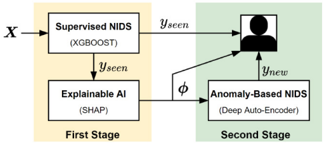
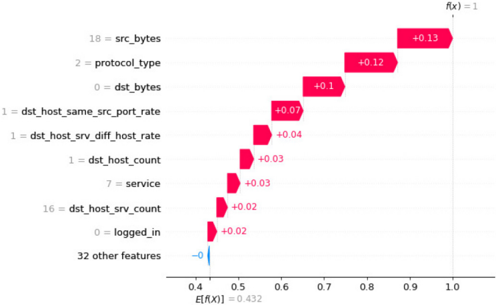
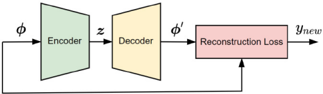
In this letter, we present a two-stage pipeline for robust network intrusion detection. First, we implement an extreme gradient boosting (XGBoost) model to perform supervised intrusion detection, and leverage the SHapley Additive exPlanation (SHAP) framework to devise explanations of our model. In the second stage, we use these explanations to train an auto-encoder to distinguish between previously seen and unseen attacks. Experiments conducted on the NSL-KDD dataset show that our solution is able to accurately detect new attacks encountered during testing, while its overall performance is comparable to numerous state-of-the-art works from the cybersecurity literature.
Overview
The claims and statistics of this paper haven’t been checked yet.
Free: it reads the open-access text and checks the first 5 claims that cite a source we can check. Create a free account to check every claim.
Integrity signals
Registry
Cites
Statistics
Figures
Verification
Claims the paper makes
The claims and statistics of this paper haven’t been checked yet.
Free: it reads the open-access text and checks the first 5 claims that cite a source we can check. Create a free account to check every claim.
Claims other papers make about this one
Each is checked against this paper’s own text: does it say what the citing paper says it does?
The source backs part of the claim, not all of it — or backs it for a different population, condition or comparison.
In the citing paper
“First, SHAP solutions satisfy three essential properties for any additive feature attribution model: local accuracy, missingness, and consistency [21].”
From Explainable AI-Aided Feature Selection and Model Reduction for DRL-Based V2X Resource Allocation (2025) · cites this paper as [21]
Experimental — accuracy not yet measuredIn the citing paper
“These insights helped determine how particular behaviors were associated with normal or malicious activity.”
From A Comprehensive Survey of Explainable Artificial Intelligence Techniques for Malicious Insider Threat Detection (2025) · cites this paper as [50]
In the citing paper
“SHAP improved the interpretability and trustworthiness of XGBoost in ITD by clarifying the contribution of individual features.”
From A Comprehensive Survey of Explainable Artificial Intelligence Techniques for Malicious Insider Threat Detection (2025) · cites this paper as [50]
In the citing paper
“The study demonstrated how SHAP provided insights into the importance of features such as login frequency and data access patterns.”
From A Comprehensive Survey of Explainable Artificial Intelligence Techniques for Malicious Insider Threat Detection (2025) · cites this paper as [50]
In the citing paper
“This demonstrates that SHAP can support interpretability across both simple and complex models in the context of insider threat analysis.”
From A Comprehensive Survey of Explainable Artificial Intelligence Techniques for Malicious Insider Threat Detection (2025) · cites this paper as [50]
3 more claims about this paper
Create a free account to see every claim other papers make about this one.
Self-check
Percentages, sums and reported differences re-computed from the paper’s own numbers.
The self-check needs the paper’s full text.
Citations
Cites
Scikit-learn: Machine Learning in Python
Pedregosa, F., Varoquaux, G., Gramfort, A., Michel, V., Thirion, B., Grisel, O., Blondel, M., Müller, A., Nothman, J., Louppe, G., et al. (2012) · arXiv · doi:10.48550/arxiv.1201.0490 · Cited by 71,016 · cited 1×
“To ensure this requirement is met during the training and testing of our solution, we apply label encoding to all non-numerical features passed to our model using the ‘LabelEncoder’ method from the Scikit-Learn [14] library for Python.”
MethodFrom local explanations to global understanding with explainable AI for trees
Lundberg, S. M., Erion, G., Chen, H., DeGrave, A., Prutkin, J. M., Nair, B., Katz, R., Himmelfarb, J., Bansal, N., & Lee, S.-I. (2020) · Nature Machine Intelligence · doi:10.1038/s42256-019-0138-9 · Cited by 10,551 · cited 4×
“Finally, we use an open-source implementation of SHAP [11] to compute explanations our model.”
BackgroundMethodResultInfluentialA detailed analysis of the KDD CUP 99 data set
Tavallaee, M., Bagheri, E., Lu, W., & Ghorbani, A. A. (2009) · 2009 IEEE Symposium on Computational Intelligence for Security and Defense Applications · doi:10.1109/cisda.2009.5356528 · Cited by 5,396 · cited 2×
“Moreover, numerical evaluations conducted on the NSL-KDD intrusion dataset [12] show that our solution is able to outperform various state-of-the-art works in terms of its overall accuracy, recall and precision.”
MethodToward Generating a New Intrusion Detection Dataset and Intrusion Traffic Characterization
Sharafaldin, I., Habibi Lashkari, A., & Ghorbani, A. A. (2018) · Proceedings of the 4th International Conference on Information Systems Security and Privacy · doi:10.5220/0006639801080116 · Cited by 5,318 · cited 1×
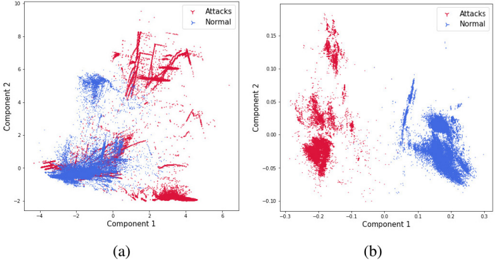
“…as the effectiveness of the ‘explanation domain’ in separating clusters of attacks from normal traffic, as well as to optimise the various stages our pipeline and to extend its ability to support multiclass classification across additional intrusion datasets, such as the more recent CIC-IDS2017 [18].”
BackgroundA Survey of Data Mining and Machine Learning Methods for Cyber Security Intrusion Detection
Buczak, A. L., & Guven, E. (2016) · IEEE Communications Surveys & Tutorials · doi:10.1109/comst.2015.2494502 · Cited by 3,332
A Deep Learning Approach to Network Intrusion Detection
Shone, N., Ngoc, T. N., Phai, V. D., & Shi, Q. (2018) · IEEE Transactions on Emerging Topics in Computational Intelligence · doi:10.1109/tetci.2017.2772792 · Cited by 1,819 · cited 1×
“On the other hand, recent works adopting deep learning solutions for anomaly-based NIDS, such as deep autoencoders [4]–[6], have demonstrated promising results against detecting new attacks.”
BackgroundInvestigating Ad Transparency Mechanisms in Social Media: A Case Study of Facebook's Explanations
Andreou, A., Venkatadri, G., Goga, O., Gummadi, K. P., Loiseau, P., & Mislove, A. (2018) · Proceedings 2018 Network and Distributed System Security Symposium · doi:10.14722/ndss.2018.23191 · Cited by 1,477
A Deep Learning Approach for Network Intrusion Detection System
Javaid, A., Niyaz, Q., Sun, W., & Alam, M. (2016) · Proceedings of the 9th EAI International Conference on Bio-inspired Information and Communications Technologies (formerly BIONETICS) · doi:10.4108/eai.3-12-2015.2262516 · Cited by 1,274 · cited 1×
“To benchmark our work, we also compare our results against those reported in various state-of-the-art works which also incorporate the NSL-KDD dataset in their evaluations [6], [17], as well as any other works which offer explainability in their solutions [8], [10].”
ResultMachine Learning and Deep Learning Methods for Cybersecurity
Xin, Y., Kong, L., Liu, Z., Chen, Y., Li, Y., Zhu, H., Gao, M., Hou, H., & Wang, C. (2018) · IEEE Access · doi:10.1109/access.2018.2836950 · Cited by 1,228 · cited 1×
“At the forefront of today’s state-of-the-art, machine learning (ML), and in particular deep learning methods for NIDSs, have allowed experts to achieve high detection accuracy on a wide host of simulated and real-world intrusion datasets [1].”
BackgroundDeep learning approach for Network Intrusion Detection in Software Defined Networking
Tang, T. A., Mhamdi, L., McLernon, D., Zaidi, S. A. R., & Ghogho, M. (2016) · 2016 International Conference on Wireless Networks and Mobile Communications (WINCOM) · doi:10.1109/wincom.2016.7777224 · Cited by 806 · cited 1×
“In the cybersecurity literature, two main approaches dominate the design of a NIDS [2].”
Background
Research works printed but not linked: 1
- 15. M. Abadi et al.. "TensorFlow: Large-Scale Machine Learning on Heterogeneous Systems." 2015. [Online]. Available: https://www.tensorflow.org/
Cited by
Explainable Artificial Intelligence Applications in Cyber Security: State-of-the-Art in Research
Zhang, Z., Hamadi, H. A., Damiani, E., Yeun, C. Y., & Taher, F. (2022) · IEEE Access · doi:10.1109/access.2022.3204051 · Cited by 450
“[204] proposed a two-staged pipeline for robust network intrusion detection, which deployed XGBoost in the first phase and Autoencoder in the second phase.”
BackgroundInfluentialGaspar, D., Silva, P., & Silva, C. (2024) · IEEE Access · doi:10.1109/access.2024.3368377 · Cited by 234
“Barnard et al. [9] present a two-stage pipeline for robust network intrusion detection.”
BackgroundMohale, V. Z., & Obagbuwa, I. C. (2025) · Frontiers in Computer Science · doi:10.3389/fcomp.2025.1520741 · Cited by 237
Explainable AI in Manufacturing and Industrial Cyber–Physical Systems: A Survey
Moosavi, S., Farajzadeh-Zanjani, M., Razavi‐Far, R., Palade, V., & Saif, M. (2024) · Electronics · doi:10.3390/electronics13173497 · Cited by 194
Mutalib, N. H. A., Sabri, A. Q. M., Wahab, A. W. A., Abdullah, E. R. M. F., & AlDahoul, N. (2024) · Artificial Intelligence Review · doi:10.1007/s10462-024-10890-4 · Cited by 139
Metadata
- Authors
- Barnard, P., Marchetti, N., & DaSilva, L. A.
- Affiliations
- Trinity College Dublin (IE)
- Virginia Tech (US)
- Venue
- IEEE Networking Letters
- Published
- 2022-09
- Volume
- 4
- Issue
- 3
- Pages
- 167-171
- ISSN
- 2576-3156 (ISSN-L)
- OpenAlex
- W4285248859
- Cited by
- 145
- References
- 18
- Citations by year
- 2026: 45 · 2025: 46 · 2024: 39 · 2023: 13 · 2022: 2
- FWCI
- 11.09
- Type
- journal article
- Language
- en
- Open access
- hybrid
- doi.org
- Locations
- IEEE Networking Letters (publishedVersion, cc-by)
- VTechWorks (Virginia Tech) (submittedVersion, public-domain)
- Figshare (submittedVersion, cc-by)
- Funders
- Science Foundation Ireland (18/CRT/6222, 13/RC/2077_P2)
- Commonwealth Cyber Initiative
- Topics
- Physical Sciences › Computer Science › Computer Networks and Communications › Network Security and Intrusion Detection
- Physical Sciences › Computer Science › Hardware and Architecture › Network Packet Processing and Optimization
- Physical Sciences › Computer Science › Artificial Intelligence › Adversarial Robustness in Machine Learning
- Keywords
- network intrusion detection, explainable AI, SHAP, XGBoost, autoencoder, anomaly detection, unknown attack detection, robustness, NSL-KDD dataset
About these checks
Registry, retraction, Cites and statistics results are computed, not judged, with one exception: a printed reference that no index lists is read once by a model before it counts as a citation error. Claims are extracted by a model and kept only when their quote appears verbatim in the text; each cited source is then checked, with a model’s help, for whether it says what the claim relies on. Those verdicts can be wrong — read the claim’s quote and the cited source before relying on one.
Statistics and arithmetic are recomputed, not judged.
Confidence bands are shown only for fields calibrated on our annotated test set. None is calibrated yet, so no band is shown.
What counts as a claim ›How we measure confidence ›How we check this ›
Are you an author, or do you see a problem with this page? Request a review
Data sources
Bibliographic data: Semantic Scholar, OpenAlex, Crossref.
Contains information from the Semantic Scholar Academic Graph Datasets, made available under the ODC Attribution License (ODC-BY 1.0).
Semantic Scholar’s data is described in: Kinney, R., et al. (2023). The Semantic Scholar Open Data Platform. arXiv:2301.10140.
