

Robust Network Intrusion Detection Through Explainable Artificial Intelligence (XAI)
Open accessPublished version of a preprint
The DOI matches its Crossref record; 18 of the 18 references it cites were found in a registry or an index.
Abstract
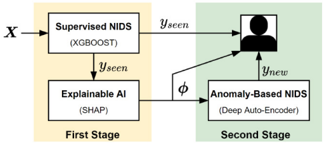
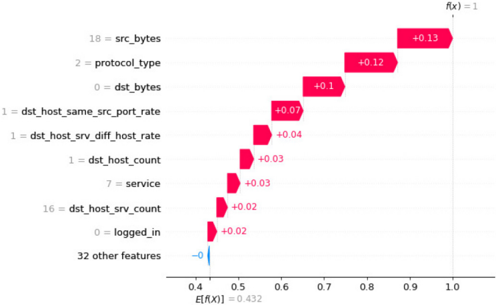
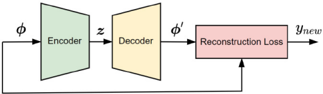
In this letter, we present a two-stage pipeline for robust network intrusion detection. First, we implement an extreme gradient boosting (XGBoost) model to perform supervised intrusion detection, and leverage the SHapley Additive exPlanation (SHAP) framework to devise explanations of our model. In the second stage, we use these explanations to train an auto-encoder to distinguish between previously seen and unseen attacks. Experiments conducted on the NSL-KDD dataset show that our solution is able to accurately detect new attacks encountered during testing, while its overall performance is comparable to numerous state-of-the-art works from the cybersecurity literature.
Overview
The claims and statistics of this paper haven’t been checked yet.
Free: it reads the open-access text and checks the first 5 claims that cite a source we can check. Create a free account to check every claim.
Integrity signals
Registry
Cites
Statistics
Figures
Verification
Claims the paper makes
The claims and statistics of this paper haven’t been checked yet.
Free: it reads the open-access text and checks the first 5 claims that cite a source we can check. Create a free account to check every claim.
Claims other papers make about this one
Each is checked against this paper’s own text: does it say what the citing paper says it does?
The source backs part of the claim, not all of it — or backs it for a different population, condition or comparison.
In the citing paper
“First, SHAP solutions satisfy three essential properties for any additive feature attribution model: local accuracy, missingness, and consistency [21].”
From Explainable AI-Aided Feature Selection and Model Reduction for DRL-Based V2X Resource Allocation (2025) · cites this paper as [21]
Experimental — accuracy not yet measuredIn the citing paper
“These insights helped determine how particular behaviors were associated with normal or malicious activity.”
From A Comprehensive Survey of Explainable Artificial Intelligence Techniques for Malicious Insider Threat Detection (2025) · cites this paper as [50]
In the citing paper
“SHAP improved the interpretability and trustworthiness of XGBoost in ITD by clarifying the contribution of individual features.”
From A Comprehensive Survey of Explainable Artificial Intelligence Techniques for Malicious Insider Threat Detection (2025) · cites this paper as [50]
In the citing paper
“The study demonstrated how SHAP provided insights into the importance of features such as login frequency and data access patterns.”
From A Comprehensive Survey of Explainable Artificial Intelligence Techniques for Malicious Insider Threat Detection (2025) · cites this paper as [50]
In the citing paper
“This demonstrates that SHAP can support interpretability across both simple and complex models in the context of insider threat analysis.”
From A Comprehensive Survey of Explainable Artificial Intelligence Techniques for Malicious Insider Threat Detection (2025) · cites this paper as [50]
3 more claims about this paper
Create a free account to see every claim other papers make about this one.
Self-check
Percentages, sums and reported differences re-computed from the paper’s own numbers.
The self-check needs the paper’s full text.
Citations
Cites
Scikit-learn: Machine Learning in Python
Pedregosa, F., Varoquaux, G., Gramfort, A., Michel, V., Thirion, B., Grisel, O., Blondel, M., Müller, A., Nothman, J., Louppe, G., et al. (2012) · arXiv · doi:10.48550/arxiv.1201.0490 · Cited by 71,016 · cited 1×
“To ensure this requirement is met during the training and testing of our solution, we apply label encoding to all non-numerical features passed to our model using the ‘LabelEncoder’ method from the Scikit-Learn [14] library for Python.”
MethodFrom local explanations to global understanding with explainable AI for trees
Lundberg, S. M., Erion, G., Chen, H., DeGrave, A., Prutkin, J. M., Nair, B., Katz, R., Himmelfarb, J., Bansal, N., & Lee, S.-I. (2020) · Nature Machine Intelligence · doi:10.1038/s42256-019-0138-9 · Cited by 10,551 · cited 4×
“Finally, we use an open-source implementation of SHAP [11] to compute explanations our model.”
BackgroundMethodResultInfluentialA detailed analysis of the KDD CUP 99 data set
Tavallaee, M., Bagheri, E., Lu, W., & Ghorbani, A. A. (2009) · 2009 IEEE Symposium on Computational Intelligence for Security and Defense Applications · doi:10.1109/cisda.2009.5356528 · Cited by 5,396 · cited 2×
“Moreover, numerical evaluations conducted on the NSL-KDD intrusion dataset [12] show that our solution is able to outperform various state-of-the-art works in terms of its overall accuracy, recall and precision.”
MethodToward Generating a New Intrusion Detection Dataset and Intrusion Traffic Characterization
Sharafaldin, I., Habibi Lashkari, A., & Ghorbani, A. A. (2018) · Proceedings of the 4th International Conference on Information Systems Security and Privacy · doi:10.5220/0006639801080116 · Cited by 5,318 · cited 1×
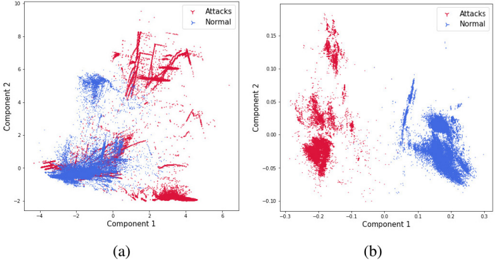
“…as the effectiveness of the ‘explanation domain’ in separating clusters of attacks from normal traffic, as well as to optimise the various stages our pipeline and to extend its ability to support multiclass classification across additional intrusion datasets, such as the more recent CIC-IDS2017 [18].”
BackgroundA Survey of Data Mining and Machine Learning Methods for Cyber Security Intrusion Detection
Buczak, A. L., & Guven, E. (2016) · IEEE Communications Surveys & Tutorials · doi:10.1109/comst.2015.2494502 · Cited by 3,332
A Deep Learning Approach to Network Intrusion Detection
Shone, N., Ngoc, T. N., Phai, V. D., & Shi, Q. (2018) · IEEE Transactions on Emerging Topics in Computational Intelligence · doi:10.1109/tetci.2017.2772792 · Cited by 1,819 · cited 1×
“On the other hand, recent works adopting deep learning solutions for anomaly-based NIDS, such as deep autoencoders [4]–[6], have demonstrated promising results against detecting new attacks.”
BackgroundInvestigating Ad Transparency Mechanisms in Social Media: A Case Study of Facebook's Explanations
Andreou, A., Venkatadri, G., Goga, O., Gummadi, K. P., Loiseau, P., & Mislove, A. (2018) · Proceedings 2018 Network and Distributed System Security Symposium · doi:10.14722/ndss.2018.23191 · Cited by 1,477
A Deep Learning Approach for Network Intrusion Detection System
Javaid, A., Niyaz, Q., Sun, W., & Alam, M. (2016) · Proceedings of the 9th EAI International Conference on Bio-inspired Information and Communications Technologies (formerly BIONETICS) · doi:10.4108/eai.3-12-2015.2262516 · Cited by 1,274 · cited 1×
“To benchmark our work, we also compare our results against those reported in various state-of-the-art works which also incorporate the NSL-KDD dataset in their evaluations [6], [17], as well as any other works which offer explainability in their solutions [8], [10].”
ResultMachine Learning and Deep Learning Methods for Cybersecurity
Xin, Y., Kong, L., Liu, Z., Chen, Y., Li, Y., Zhu, H., Gao, M., Hou, H., & Wang, C. (2018) · IEEE Access · doi:10.1109/access.2018.2836950 · Cited by 1,228 · cited 1×
“At the forefront of today’s state-of-the-art, machine learning (ML), and in particular deep learning methods for NIDSs, have allowed experts to achieve high detection accuracy on a wide host of simulated and real-world intrusion datasets [1].”
BackgroundDeep learning approach for Network Intrusion Detection in Software Defined Networking
Tang, T. A., Mhamdi, L., McLernon, D., Zaidi, S. A. R., & Ghogho, M. (2016) · 2016 International Conference on Wireless Networks and Mobile Communications (WINCOM) · doi:10.1109/wincom.2016.7777224 · Cited by 806 · cited 1×
“In the cybersecurity literature, two main approaches dominate the design of a NIDS [2].”
Background
Research works printed but not linked: 1
- 15. M. Abadi et al.. "TensorFlow: Large-Scale Machine Learning on Heterogeneous Systems." 2015. [Online]. Available: https://www.tensorflow.org/
Cited by
Explainable Artificial Intelligence Applications in Cyber Security: State-of-the-Art in Research
Zhang, Z., Hamadi, H. A., Damiani, E., Yeun, C. Y., & Taher, F. (2022) · IEEE Access · doi:10.1109/access.2022.3204051 · Cited by 450
“[204] proposed a two-staged pipeline for robust network intrusion detection, which deployed XGBoost in the first phase and Autoencoder in the second phase.”
BackgroundInfluentialGaspar, D., Silva, P., & Silva, C. (2024) · IEEE Access · doi:10.1109/access.2024.3368377 · Cited by 234
“Barnard et al. [9] present a two-stage pipeline for robust network intrusion detection.”
BackgroundMohale, V. Z., & Obagbuwa, I. C. (2025) · Frontiers in Computer Science · doi:10.3389/fcomp.2025.1520741 · Cited by 237
Explainable AI in Manufacturing and Industrial Cyber–Physical Systems: A Survey
Moosavi, S., Farajzadeh-Zanjani, M., Razavi‐Far, R., Palade, V., & Saif, M. (2024) · Electronics · doi:10.3390/electronics13173497 · Cited by 194
Mutalib, N. H. A., Sabri, A. Q. M., Wahab, A. W. A., Abdullah, E. R. M. F., & AlDahoul, N. (2024) · Artificial Intelligence Review · doi:10.1007/s10462-024-10890-4 · Cited by 139
Sivamohan, S., & Sridhar, S. S. (2023) · Neural Computing and Applications · doi:10.1007/s00521-023-08319-0 · Cited by 118
“(2022) and [22] Extreme gradient boosting (XGBoost) design Performing the supervised intrusion detections High detection accuracy It failed to support the multiclass classification”
BackgroundHooshmand, M. K., Huchaiah, M. D., Alzighaibi, A. R., Hashim, H., Atlam, E.-S., & Gad, I. (2024) · Alexandria Engineering Journal · doi:10.1016/j.aej.2024.03.041 · Cited by 76
Ahmed, U., Zheng, J., Almogren, A., Sadiq, M., Rehman, A. U., Sadiq, M. T., & Choi, J. (2024) · Scientific Reports · doi:10.1038/s41598-024-81151-1 · Cited by 110
“Reference 28 presents a two-step pipeline for intrusion detection in industrial cyber-physical systems, embedding explainable AI with SHAP for enhanced interpretability.”
Nascita, A., Aceto, G., Ciuonzo, D., Montieri, A., Persico, V., & Pescapè, A. (2024) · IEEE Communications Surveys & Tutorials · doi:10.1109/comst.2024.3504955 · Cited by 102
“…instances based on labeled examples and seeks to generalize this classification to unseen data [92], [93], [94], [95], [96], [97], [98], [99], [100], [101], [102], [104], [105], [106], [107], [108], [109], [110], [111], [112], [113], [115], [116], [117], [118], [120], [121], [122], [123], [124].”
InfluentialAlabbadi, A., & Bajaber, F. (2025) · Sensors · doi:10.3390/s25030847 · Cited by 100
XAI‐driven model for crop recommender system for use in precision agriculture
Srinivasu, P. N., Ijaz, M. F., & Woźniak, M. (2024) · Computational Intelligence · doi:10.1111/coin.12629 · Cited by 64
“Another similar study using XGBoost is used in intrusion detection over SHAP-based analysis and obtained an accuracy of 93.28% as experimented by Barnard et al. 35 There are numerous applications of XAI in feature analysis and explainability of the algorithms in the healthcare domain, Das et al. 36 have experimented w…”
MethodInfluentialCyber Attack Prediction: From Traditional Machine Learning to Generative Artificial Intelligence
Ankalaki, S., Atmakuri, A. R., Pallavi, M., Hukkeri, G. S., Jan, T., & Naik, G. R. (2025) · IEEE Access · doi:10.1109/access.2025.3547433 · Cited by 95
Explainable AI-based Intrusion Detection in the Internet of Things
Siganos, M., Grammatikis, P. I. R., Kotsiuba, I., Markakis, E., Moscholios, I. D., Goudos, S. K., & Sarigiannidis, P. G. (2023) · International Conference on Availability, Reliability and Security (ARES) · doi:10.1145/3600160.3605162 · Cited by 76
“In [1], the authors introduce a framework for network intrusion detection using XAI.”
BackgroundSaeed Alketbi, K., & Mehmood, A. (2025) · IEEE Access · doi:10.1109/access.2025.3587114 · Cited by 41
“In a study by Barnard et al. [50], XGBoost was tested on the NSL-KDD dataset.”
Kaur, N., & Gupta, L. (2025) · Sensors · doi:10.3390/s25030854 · Cited by 59
“To address this challenge, our proposed framework utilizes the most recent CICIoT2023 dataset from the University of New Brunswick [22], which has been generated in a real-time IoT environment.”
Machine Learning Explainability for Intrusion Detection in the Industrial Internet of Things
Ahakonye, L. A. C., Nwakanma, C. I., Lee, J. M., & Kim, D.-S. (2024) · IEEE Internet of Things Magazine · doi:10.1109/iotm.001.2300171 · Cited by 35
“A two-stage pipeline involving XGBoost and an autoencoder trained on SHAP explanations to represent the model behavior during the training process [9].”
MethodExplainable artificial intelligence models in intrusion detection systems
Al, S., & Sağıroğlu, Ş. (2025) · Engineering Applications of Artificial Intelligence · doi:10.1016/j.engappai.2025.110145 · Cited by 76
Review of eXplainable artificial intelligence for cybersecurity systems
Reynaud, S., & Roxin, A. (2025) · Discover Artificial Intelligence · doi:10.1007/s44163-025-00318-5 · Cited by 53
“Barnard, et al. [40] proposed a two-stage pipeline for robust network intrusion detection using XGBoost 3 and AE, 4 with SHAP method for a post hoc interpretation.”
Arnob, A. K. B., Chowdhury, R. R., Chaiti, N. A., Saha, S. K., & Roy, A. (2025) · Journal of Edge Computing · doi:10.55056/jec.885 · Cited by 53
“All of this means explainability is key to both technical trust and organizational adoption of IDS so that they are effective, reliable, and compliant with evolving cybersecurity threats [20, 101].”
A comprehensive review of explainable AI in cybersecurity: Decoding the black box
Sharma, A., Rani, S., & Shabaz, M. (2025) · ICT Express · doi:10.1016/j.icte.2025.10.004 · Cited by 61
IoT-based intrusion detection system using explainable multi-class deep learning approaches
Sadhwani, S., Navare, A., Mohan, A., Muthalagu, R., & Pawar, P. M. (2025) · Computers & Electrical Engineering · doi:10.1016/j.compeleceng.2025.110256 · Cited by 43
Sahoo, J. P., Kar, B., Abdelmoniem, A. M., & Chatzopoulos, D. (2025) · Information Fusion · doi:10.1016/j.inffus.2025.103473 · Cited by 40
Mazid, A., Kirmani, S., & Abid, M. (2024) · Information Security Journal A Global Perspective · doi:10.1080/19393555.2024.2408256 · Cited by 37
Kalakoti, R., Nõmm, S., & Bahşi, H. (2025) · Computer Networks · doi:10.1016/j.comnet.2025.111479 · Cited by 55
Islam, M. T., Syfullah, M. K., Rashed, M. G., & Das, D. (2024) · International Journal of Machine Learning and Cybernetics · doi:10.1007/s13042-024-02242-z · Cited by 38
Hasan, T., & Tasnim, S. (2025) · Ad Hoc Networks · doi:10.1016/j.adhoc.2025.103937 · Cited by 41
Deceiving Post-Hoc Explainable AI (XAI) Methods in Network Intrusion Detection
Senevirathna, T., Siniarski, B., Liyanage, M., & Wang, S. (2024) · 2024 IEEE 21st Consumer Communications & Networking Conference (CCNC) · doi:10.1109/ccnc51664.2024.10454633 · Cited by 25
“For instance, when explanations are fed back to the AI model to improve the accuracy from the client side training [8], [9].”
BackgroundA versatile XAI-based framework for efficient and explainable intrusion detection systems
Nugraha, B., Jnanashree, A. V., & Bauschert, T. (2025) · Annals of Telecommunications · doi:10.1007/s12243-025-01118-9 · Cited by 43
Shebl, A., Elsedimy, E. I., Ismail, A., Salama, A. A., & Herajy, M. (2024) · EURASIP Journal on Information Security · doi:10.1186/s13635-024-00184-1 · Cited by 37
Explainable AI for Comparative Analysis of Intrusion Detection Models
Corea, P. M., Liu, Y., Wang, J., Niu, S., & Song, H. (2024) · IEEE International Mediterranean Conference on Communications and Networking (MeditCom) · doi:10.1109/meditcom61057.2024.10621339 · Cited by 38
“Furthermore, Wang et al. [20] and Barnard et al. [21] have contributed significantly by integrating techniques like SHAP (SHapley Additive exPlanations) to elucidate the decision-making processes of their intrusion detection models, thus facilitating a better understanding and trust among network…”
MethodAdaptable, incremental, and explainable network intrusion detection systems for internet of things
Cerasuolo, F., Bovenzi, G., Ciuonzo, D., & Pescapè, A. (2025) · Engineering Applications of Artificial Intelligence · doi:10.1016/j.engappai.2025.110143 · Cited by 32
Explainable AI-Aided Feature Selection and Model Reduction for DRL-Based V2X Resource Allocation
Khan, N., Abdallah, A., Celik, A., Eltawil, A. M., & Coleri, S. (2025) · IEEE Transactions on Communications · doi:10.1109/tcomm.2025.3554655 · Cited by 20
“The scope of the above works [20], [21], [22], [23], [24] does not extend beyond providing insights into the feature relevance in the decision-making process of the underlying machine learning models in different wireless settings.”
Enhancing intrusion detection performance using explainable ensemble deep learning
N’Cir, C.-E. B., HajKacem, M. A. B., & Alattas, M. I. (2024) · PeerJ Computer Science · doi:10.7717/peerj-cs.2289 · Cited by 31
Oki, A., Ogawa, Y., Ota, K., & Dong, M. (2024) · IEEE Networking Letters · doi:10.1109/lnet.2024.3465516 · Cited by 20
“Moreover, Barnard et al. used SHAP values to train an auto-encoder to distinguish between previously seen and unseen attacks [10].”
BackgroundExplainable SCADA-Edge Network Intrusion Detection System: Tree-LIME Approach
Nwakanma, C. I., Ahakonye, L. A. C., Jun, T., Lee, J. M., & Kim, D.-S. (2023) · 2023 IEEE International Conference on Communications, Control, and Computing Technologies for Smart Grids (SmartGridComm) · doi:10.1109/smartgridcomm57358.2023.10333968 · Cited by 19
“Another study [12] employed the XGBoost and SHAP to develop a robust IDS.”
MethodAlamro, H., Alahmari, S., Nemri, N., Aljebreen, M., Alhashmi, A. A., Alamro, S., Alqazzaz, A., & Duhayyim, M. A. (2025) · Scientific Reports · doi:10.1038/s41598-025-06761-9 · Cited by 25
Enhancing IoT Security in 6G Environment With Transparent AI: Leveraging XGBoost, SHAP and LIME
Kaur, N., & Gupta, L. (2024) · IEEE International Conference on Network Softwarization (NetSoft) · doi:10.1109/netsoft60951.2024.10588922 · Cited by 24
“Similarly, [13] utilizes an XGBoost model and SHapley Additive Explanation framework for network intrusion detection, achieving 93% accuracy.”
MethodJinad, R., Islam, A. R., & Shashidhar, N. K. (2024) · Electronics · doi:10.3390/electronics13132438 · Cited by 22
Siddiqui, E. F., Haleem, M., Ahmad, S. F., Salhi, A., Zamani, A. T., & Varish, N. (2025) · IEEE Access · doi:10.1109/access.2025.3610526 · Cited by 16
“Graph neural networks have also been used to eliminate financial frauds with an accuracy rate of 89% detecting frauds transactions [41].”
AI for IoMT security: a comprehensive survey of intrusion detection and system architectures
Yacoubi, M., Moussaoui, O., & Drocourt, C. (2026) · Internet of Things · doi:10.1016/j.iot.2025.101869 · Cited by 15
MetaCluster: A Universal Interpretable Classification Framework for Cybersecurity
Ge, W., Cui, Z., Wang, J., Tang, B., & Li, X. (2024) · IEEE Transactions on Information Forensics and Security · doi:10.1109/tifs.2024.3372808 · Cited by 13
“Moreover, LIME and SHAP have found applications in other domains such as spam file retrieval [11] and network intrusion detection [15], [46], where their explainability features have been leveraged.”
BackgroundAI-on-RAN for Cyber Defense: An XAI-LLM Framework for Interpretable Anomaly Detection
Chatzimiltis, S., Shojafar, M., Mashhadi, M. B., & Tafazolli, R. (2025) · IEEE Transactions on Network Science and Engineering · doi:10.1109/tnse.2025.3629983 · Cited by 20
“Barnard et al. [69] proposed a two-stage pipeline combining XGBoost-based Authorized licensed use limited to the terms of the applicable license agreement with IEEE.”
Evaluation of XAI Algorithms in IoT Traffic Anomaly Detection
Do, U., Lahesoo, L., Carnier, R. M., & Fukuda, K. (2024) · International Conference on Artificial Intelligence in Information and Communication (ICAIIC) · doi:10.1109/icaiic60209.2024.10463357 · Cited by 17
“SHAP is used to explain the XGBoost model in the network intruder detection [2], AE model in DDOS attack detection [5], sensor behavior [4], and traffic classification of mobile IoT devices model [11], selected importance feature for ANN AD model [13], enhance trust of IDS for IoT network [16].”
MethodNancy Ambritta, P., Mahalle, P. N., Bhapkar, H. R., Shinde, G. R., & Sable, N. P. (2025) · International Journal of Information Technology · doi:10.1007/s41870-025-02444-w · Cited by 16
Elgarhy, I., Badr, M. M., Mahmoud, M. M. E. A., Ni, J., Alsabaan, M., & Alshawi, T. A. (2025) · IEEE Internet of Things Journal · doi:10.1109/jiot.2025.3576225 · Cited by 16
“It achieves this by generating explanations that are easy for humans to understand, such as highlighting the specific features or patterns in input data that have the most influence on the model’s decisions [19], [20].”
Camilleri, M. A. (2026) · Technological Forecasting and Social Change · doi:10.1016/j.techfore.2026.124710 · Cited by 12
Wei, W., Chen, S., Chen, C., Wang, H., Liu, J., Cheng, Z., & Zou, X. (2024) · Science China Information Sciences · doi:10.1007/s11432-023-4067-x · Cited by 10
Explainable AI in Disease Diagnosis
Bedi, P., Thukral, A., & Dhiman, S. (2024) · Computational intelligence methods and applications · doi:10.1007/978-981-97-3705-5_5 · Cited by 9
Larriva-Novo, X. A., Pérez-Miguel, L., Villagrá, V. A., Álvarez-Campana, M., Sánchez-Zas, C., & Jover, Ó. (2024) · Applied Sciences · doi:10.3390/app142411511 · Cited by 12
Novel Actionable Counterfactual Explanations for Intrusion Detection Using Diffusion Models
Galwaduge, V., & Samarabandu, J. K. (2025) · Journal of Cybersecurity and Privacy · doi:10.3390/jcp5030068 · Cited by 9
“A comprehensive survey regarding the utility of XAI for NIDSs in the IoT domain is presented by Moustafa et al. [20], and a number of similar feature-based explanation frameworks can be found in the litera-J ture [21–23].”
Empowering Urban Connectivity in Smart Cities using Federated Intrusion Detection
Djenouri, Y., & Belbachir, A. N. (2023) · IEEE International Conference on Data Science and Advanced Analytics (DSAA) · doi:10.1109/dsaa60987.2023.10302528 · Cited by 12
“Addressing this issue, eXplainable Artificial Intelligence (XAI) offers various techniques that aim to provide deep learning AI solutions with a minimum level of justification [42], [43], [44], [45].”
BackgroundAn Explainable and Optimized Network Intrusion Detection Model using Deep Learning
Haripriya, C., & Jagadeesh, P. (2024) · International Journal of Advanced Computer Science and Applications · doi:10.14569/ijacsa.2024.0150145 · Cited by 12
Intrusion Detection System in Explainable Artificial Intelligence by Using Different Algorithms
Satyanarayana, D., & Saikiran, E. (2024) · International Conference on Distributed Computing and Optimization Techniques (ICDCOT) · doi:10.1109/icdcot61034.2024.10515463 · Cited by 5
Verma, S., & Prabakeran, S. (2024) · International Conference on Communication and Electronics Systems (ICCES) · doi:10.1109/icces63552.2024.10859595 · Cited by 5
Improving Transferability of Network Intrusion Detection in a Federated Learning Setup
Ghosh, S., Jameel, A. S. M. M., & Gamal, A. E. (2024) · IEEE International Conference on Machine Learning for Communication and Networking (ICMLCN) · doi:10.1109/icmlcn59089.2024.10624761 · Cited by 11
“Recent developments in the IDS domain center around deep learning algorithms [4], and these approaches are taken as benchmarks during dataset development [5].”
BackgroundDeveloping Explainable Intrusion Detection Systems for Internet of Things
Çelik, A. F., Sağlam, B., & Demirci, S. (2023) · 2023 16th International Conference on Information Security and Cryptology (ISCTürkiye) · doi:10.1109/isctrkiye61151.2023.10336102 · Cited by 5
“In these steps, we use the LabelEncoder [11], OneHotEncoder [18], StandardScaler [18], and RFE [19] functions of “Sklearn” library.”
MethodNugraha, B., Jnanashree, A. V., & Bauschert, T. (2024) · Cyber Security in Networking Conference (CSNet) · doi:10.1109/csnet64211.2024.10851760 · Cited by 9
“Barnard et al. [14] proposed a two-stage IDS with XGBoost and SHAP but encountered detection performance issues.”
Intrusion Detection using Explainable Machine Learning Techniques
Mallick, R., Rout, S., Biswas, S., Vashishtha, L. K., & Sahu, S. K. (2023) · OITS International Conference on Information Technology (OCIT) · doi:10.1109/ocit59427.2023.10430641 · Cited by 6
A Feed-Forward and Back Propagation Neural Network Approach for Identifying Network Anomalies
Prashanthi, A., & Reddy, R. R. (2023) · International Conference for Advancement in Technology (ICONAT) · doi:10.1109/iconat57137.2023.10080784 · Cited by 5
“The literature classifies IDSs as signature-based [3, 4], anomalybased [5, 6], and hybrid [3, 6] systems.”
BackgroundMethodShand, C., Fong, R. C.-W., & Butt, U. (2024) · Advanced sciences and technologies for security applications · doi:10.1007/978-3-031-47594-8_17 · Cited by 5
Afolabi, A. S., & Akinola, O. A. (2024) · IEEE International Symposium on Technology and Society (ISTAS) · doi:10.1109/istas61960.2024.10732647 · Cited by 3
“These NIDSs use AI techniques such as deep learning and machine learning (ML) algorithms [8], [9], [10] to get familiar with and recognize typical patterns of behavior on a network or system, then be on the lookout for any unusual activities that are inconsistent with those patterns.”
MethodTowards White-Box IDS: Integrating Explainability in IoT Ecosystems
Tewari, T., & Singal, G. (2025) · National Conference on Communications · doi:10.1109/ncc63735.2025.10983550 · Cited by 3
“Many works like [7]–[9] have utilized SHAP and LIME to provide assessments on local and global explanations generated by several ML classifiers like Decision Tree, XGBoost, Random Forest, etc.”
Explainable AI for UAV Mobility Management: A Deep Q-Network Approach for Handover Minimization
Meer, I. A., Hörmann, B., Özger, M., Geyer, F., Viseras, A., Schupke, D., & Çavdar, Ç. (2025) · IEEE International Symposium on Personal, Indoor and Mobile Radio Communications (PIMRC) · doi:10.1109/pimrc62392.2025.11274880 · Cited by 9
Federated Explainability for Network Anomaly Characterization
Sáez-de-Cámara, X., Flores, J. L., Arellano, C., Urbieta, A., & Zurutuza, U. (2023) · International Symposium on Research in Attacks, Intrusions and Defenses (RAID) · doi:10.1145/3607199.3607234 · Cited by 7
“Barnard et al. [8] present a network IDS divided into two stages.”
BackgroundDecrypting Disruptive Technologies: Review and Research Agenda of Explainable AI as a Game Changer
Dabas, V., Thomas, A., Khatri, P., Iandolo, F., & Usai, A. (2023) · IEEE International Conference on Technology Management, Operations and Decisions (ICTMOD) · doi:10.1109/ictmod59086.2023.10438156 · Cited by 4
“An XAI approach known as Shapley additive exPlanations (SHAP) is often used in conjunction with Game Theory [13], [21].”
BackgroundMethodInfluentialTowards Accountable and Resilient AI-Assisted Networks: Case Studies and Future Challenges
Wang, S., Sandeepa, C., Senevirathna, T., Siniarski, B., Nguyen, M.-D., Marchal, S., & Liyanage, M. (2024) · Joint European Conference on Networks and Communications & 6G Summit (EuCNC/6G Summit) · doi:10.1109/eucnc/6gsummit60053.2024.10597060 · Cited by 5
“Furthermore, most of the existing work using XAI for trustworthy networks focus on specific task [4], [5], which is difficult to generalise to wider network applications in a stakeholders-involved and ever-evolving environment.”
BackgroundValidating network attack concepts: A TCAV-driven approach
Robinson, R. R. R., Prasad, R. R., Thomas, C., & Balakrishnan, N. (2024) · Journal of Computer Virology and Hacking Techniques · doi:10.1007/s11416-024-00535-z · Cited by 2
“In IDS-specific literature, SHAP is a widely utilized technique, evident in studies by Barnard et al. [11], Abou et al. [12], Hariharan et al. [13], and Wang et al. [14].”
A Novel Explainable Method based on Grad-CAM for Network Intrusion Detection
Sun, Y., Lian, Z., Zhang, S., Wang, Z., & Duan, T. (2024) · IEEE International Conference on Software Quality, Reliability and Security (QRS) · doi:10.1109/qrs62785.2024.00046 · Cited by 2
Lin, L., Wang, X., Zhu, X., Huang, Y., Fang, D., & Piran, M. J. (2025) · IEEE Transactions on Intelligent Transportation Systems · doi:10.1109/tits.2025.3555715 · Cited by 4
“Barnard et al. [18] presented a two-step approach for effective network intrusion detection: 1) using XGBoost for supervised detection and SHAP for explaining the model, 2) training an auto-encoder with these explanations to differentiate known and unknown attacks.”
Ilias, L., Palmos, S., Doukas, G. S., Blika, A., Kiokes, G. C., Ntanos, C., & Askounis, D. (2025) · IEEE Open Journal of the Communications Society · doi:10.1109/ojcoms.2025.3612124 · Cited by 2
“The authors in [12] propose a two-stage explainable IDS that combines supervised and unsupervised learning with explainable artificial intelligence (XAI) to enhance detection of both known and novel attacks.”
BiTAD: An Interpretable Temporal Anomaly Detector for 5G Networks with TwinLens Explainability
Lau, J. H., Pang, Y. H., Zarakovitis, C. C., Lim, H. S., Skordoulis, D., Yin, O. S., Chan, K., & Pang, W. L. (2025) · Future Internet · doi:10.3390/fi17110482 · Cited by 4
Metaheuristically Enhanced ANN-Based Intrusion Detection System with Explainable AI Integration
Rehman, M. U., Abrar, M., Khalid, S., Kazim, M., & Singh, V. K. (2025) · International Joint Conference on Neural Networks (IJCNN) · doi:10.1109/ijcnn64981.2025.11229287 · Cited by 2
Arya, K., Sasode, S., & Upadhyay, L. (2025) · IEEE Access · doi:10.1109/access.2025.3637857 · Cited by 4
Molla, A. S., Datta, T., Florence, F. D., Rayhan, R., Rahman, M. K., & Kabir, M. H. (2025) · IEEE International Conference on Computing, Applications and Systems (COMPAS) · doi:10.1109/compas67506.2025.11381654 · Cited by 2
“For example, Barnard et al. [2] utilized the NSL-KDD dataset with an XGBoost-based supervised detection method and applied SHAP for explainability, achieving 93% accuracy.”
Komarchesqui, M., Lent, D. M. B., Ruffo, V. G. D. S., Carvalho, L. F., Lloret, J., & Proença, M. L. (2024) · International Conference on Software Defined Systems (SDS) · doi:10.1109/sds64317.2024.10883903 · Cited by 4
XAI-Based Framework for Protocol Anomaly Classification and Identification to 6G NTNs with Drones
Sun, Q., Zeng, J., Dai, L., Hu, Y., & Tian, L. (2025) · Drones · doi:10.3390/drones9050324 · Cited by 2
Budagam, D. K. (2025) · Future Technology · doi:10.55670/fpll.futech.4.2.5 · Cited by 1
Synthetic Data-Driven Explainability for Federated Learning-Based Intrusion Detection System
Kalakoti, R., Bahşi, H., & Nõmm, S. (2025) · IEEE Internet of Things Journal · doi:10.1109/jiot.2025.3633946 · Cited by 6
“This underscores the need for systematically assessing the quality of generated explanations to build trust in XAI-based systems [19], [21], [25], [27], [28], [29].”
Interpretable Detector Secure Against Stealthy False Power Consumption Attacks
Elgarhy, I., Badr, M. M., El-Toukhy, A. T., Mahmoud, M. M. E. A., Alshawi, T. A., Alsabaan, M., & Fouda, M. M. (2026) · IEEE Transactions on Network and Service Management · doi:10.1109/tnsm.2026.3659131 · Cited by 3
“Additionally, XAI is designed to improve the interpretability of decisions made by machine learning (ML) black-box detectors [14], [15].”
InfluentialA SHAP-Based Explainable AI Approach for Intrusion Detection Models
Luong, X.-B., Pham, T.-N., Nguyen, K.-T., An, P.-D., & Ha, Q.-T. (2025) · RIVF International Conference on Computing and Communication Technologies (RIVF) · doi:10.1109/rivf68649.2025.11365205 · Cited by 1
“SHAP is recognized for its fair attribution of feature contributions and its ability to provide granular, local explanations [10] [15] [16].”
Mwiga, K. J., Dida, M. A., Mohsin, A., & Sarker, I. H. (2026) · New Generation Computing · doi:10.1007/s00354-026-00318-8 · Cited by 5
Enhancing Network Traffic Monitoring Through eXplainable Artificial Intelligence Methodologies
Bucur, C.-E., Crihan, G., Rădoi, A., Robe-Voinea, E.-G., & Moroșan, I.-N. (2026) · Telecom · doi:10.3390/telecom7020034 · Cited by 2
Mangiacapre, G., Nascita, A., Cerasuolo, F., Montieri, A., & Pescapè, A. (2026) · IFIP Networking Conference (IFIP Networking) · doi:10.23919/ifipnetworking70592.2026.11579020 · Cited by 1
“As summarized in Table I, unlike most prior works, our study does not employ XAI merely to interpret model behavior [9–11, 13 ], but rather exploits it to”
Explanation-Based Runtime Verification for Trustworthy ML-Driven Optical Networks
Ayoub, O., Natalino, C., Housseini, A. A., Foschum, F., Morger, P., Leidi, T., Hock, D., & Paolo Monti, A. (2026) · International Conference on Optical Network Design and Modeling (ONDM) · doi:10.23919/ondm68511.2026.11618783 · Cited by 1
“In [22], SHAP explanations were used as secondary signals to distinguish between previously seen and unseen network attacks, effectively leveraging feature attributions for robustness enhancement.”
Susarla, H. M., Srinivasu, N., & Bingu, R. (2026) · Computers & Electrical Engineering · doi:10.1016/j.compeleceng.2026.111395 · Cited by 1
Generating Interpretable Features for Context-Aware Document Clustering: A Cybersecurity Case Study
Gutiérrez, L. F. G., & Namin, A. S. (2022) · IEEE International Conference on Big Data (BigData) · doi:10.1109/bigdata55660.2022.10021049 · Cited by 3
“[15] also used an interpretable model (i.”
Hybrid Explainable Intrusion Detection System: Global vs. Local Approach
Tanuwidjaja, H. C., Takahashi, T., Lin, T.-N., Lee, B., & Ban, T. (2023) · doi:10.1145/3605772.3624004 · Cited by 4
“The role of X-IDS as a bridge to create trust between humans and AI was mentioned by Keshk et al. [9] and Barnard et al. [10].”
BackgroundAchieving High-Fidelity Explanations for Risk Exposition Assessment in the Cybersecurity Domain
Calvo, A., Escuder, S., Escrig, J., Marrugat, X., Ortiz, N., & Guijarro, J. (2023) · APWG Symposium on Electronic Crime Research (eCrime) · doi:10.1109/ecrime61234.2023.10485502 · Cited by 1
“See, for instance, [11] [12] or [13].”
Fourier Series Fitting-Based Intrusion Detection for Real-Time Industrial Control Systems
Zhang, H., Wang, Y., Xue, Y., Deng, R., Li, H., & Zhang, J. (2024) · International Conference on Artificial Intelligence of Things and Systems (AIoTSys) · doi:10.1109/aiotsys63104.2024.10780547 · Cited by 1
“In recent years, the number of ransomware attacks against ICS has also started to increase [10], [11].”
An Analysis on Generative Adversarial Networks Integrated Network Intrusion Detection System
Kumar, A., Barath, C., Jenitha, J. M. M., & Gladence, L. M. (2025) · International Conference on Sentiment Analysis and Deep Learning (ICSADL) · doi:10.1109/icsadl65848.2025.10933451 · Cited by 1
“The first step [13] uses a supervised learning model for intrusion detection and, at the same time, with the help of explanations, improves the recognition of attacks in the second stage.”
Barnard, P., DaSilva, L. A., & Marchetti, N. (2024) · doi:10.36227/techrxiv.170775198.87587642/v1 · Cited by 2
Self-citationNetwork Intrusion Prediction using Machine Learning
Nithiya, M. K., Sathya Jayasri., S., & Vijithra., P. (2023) · International Journal of Advanced Research in Science Communication and Technology · doi:10.48175/ijarsct-9513
Prashanthi, R. R. R. A. (2023) · Journal of Propulsion Technology · doi:10.52783/tjjpt.v44.i6.3484
“Euclidean distance was utilized as the distance measure for the KNN algorithm [23].”
MethodExploring Explainable Ai: A Paradigm Shift in Building Transparent Intrusion Detection ModelsPreprint
Chinu, & Bansal, U. (2024) · SSRN Electronic Journal · doi:10.2139/ssrn.4691420
Leveraging Data Fitting and Trust Assessment to Improve the Security of Industrial Networks
Zhang, H., Wang, Y., Xue, Y., Deng, R., Li, H., & Zhang, J. (2024) · Chinese Control Conference (CCC) · doi:10.23919/ccc63176.2024.10662787
“In recent years, security incidents against INCS have increased [6, 7].”
BackgroundWhite-Box Style Intrusion Detection System Integration into Industrial Metaverses
Kilic, Y., Kılıç, V. N., & İnan, A. (2024) · International Conference on Computer Science and Engineering (UBMK) · doi:10.1109/ubmk63289.2024.10773616 · Cited by 1
“In efforts to make these complex models more explainable, ad-hoc model approaches are often employed [23], [24].”
Cyberattacks Classification by Tuning Deep Hyperparameters Using Bayesian Optimization
Le, T.-T., & Huynh‐The, T. (2025) · International Conference on Ubiquitous Information Management and Communication (IMCOM) · doi:10.1109/imcom64595.2025.10857492 · Cited by 1
Deep Learning to Effectively Detect and Eliminate Real-Time Network Intrusions
Harikesh., S., & Sujatha, G. (2025) · International Conference on Intelligent Data Communication Technologies and Internet of Things (IDCIoT) · doi:10.1109/idciot64235.2025.10914847
“The first step [13] uses a supervised learning model for intrusion detection, and in the second stage, by utilizing explanations, helps better recognize attacks.”
Intrusion Detection in Wireless Networks Using Novel Classification Models
Gandla, A., Dinesh, K., Gambhirrao, V., Sureddi, R. M. K., Kolikipogu, R., & Kuchipudi, R. (2025) · Wiley eBooks · doi:10.1002/9781394305216.ch8
Network Intrusion Detection Systems An Evaluation of Black-Box Explainable AI Frameworks (E-XAI)
Umasankar, S., Viswanath, G., Bharathi, V. M., & Prathyusha, G. (2025) · International Journal of Applied Engineering and Management Letters · doi:10.47992/ijaeml.2581.7000.0235
Metadata
- Authors
- Barnard, P., Marchetti, N., & DaSilva, L. A.
- Affiliations
- Trinity College Dublin (IE)
- Virginia Tech (US)
- Venue
- IEEE Networking Letters
- Published
- 2022-09
- Volume
- 4
- Issue
- 3
- Pages
- 167-171
- ISSN
- 2576-3156 (ISSN-L)
- OpenAlex
- W4285248859
- Cited by
- 145
- References
- 18
- Citations by year
- 2026: 45 · 2025: 46 · 2024: 39 · 2023: 13 · 2022: 2
- FWCI
- 11.09
- Type
- journal article
- Language
- en
- Open access
- hybrid
- doi.org
- Locations
- IEEE Networking Letters (publishedVersion, cc-by)
- VTechWorks (Virginia Tech) (submittedVersion, public-domain)
- Figshare (submittedVersion, cc-by)
- Funders
- Science Foundation Ireland (18/CRT/6222, 13/RC/2077_P2)
- Commonwealth Cyber Initiative
- Topics
- Physical Sciences › Computer Science › Computer Networks and Communications › Network Security and Intrusion Detection
- Physical Sciences › Computer Science › Hardware and Architecture › Network Packet Processing and Optimization
- Physical Sciences › Computer Science › Artificial Intelligence › Adversarial Robustness in Machine Learning
- Keywords
- network intrusion detection, explainable AI, SHAP, XGBoost, autoencoder, anomaly detection, unknown attack detection, robustness, NSL-KDD dataset
About these checks
Registry, retraction, Cites and statistics results are computed, not judged, with one exception: a printed reference that no index lists is read once by a model before it counts as a citation error. Claims are extracted by a model and kept only when their quote appears verbatim in the text; each cited source is then checked, with a model’s help, for whether it says what the claim relies on. Those verdicts can be wrong — read the claim’s quote and the cited source before relying on one.
Statistics and arithmetic are recomputed, not judged.
Confidence bands are shown only for fields calibrated on our annotated test set. None is calibrated yet, so no band is shown.
What counts as a claim ›How we measure confidence ›How we check this ›
Are you an author, or do you see a problem with this page? Request a review
Data sources
Bibliographic data: Semantic Scholar, OpenAlex, Crossref.
Contains information from the Semantic Scholar Academic Graph Datasets, made available under the ODC Attribution License (ODC-BY 1.0).
Semantic Scholar’s data is described in: Kinney, R., et al. (2023). The Semantic Scholar Open Data Platform. arXiv:2301.10140.
