

The DOI matches its Crossref record; 42 of the 42 references it cites were found in a registry or an index.
Machine Learning Based Misbehaviour Detection in VANET Using Consecutive BSM Approach
Abstract
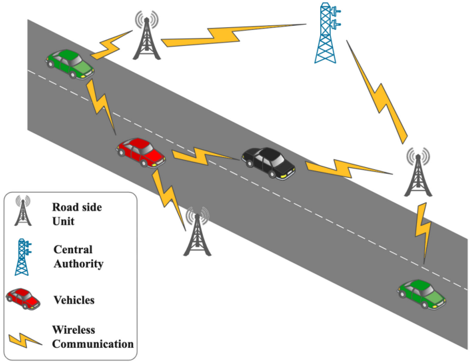
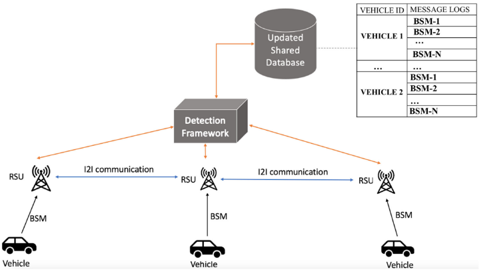
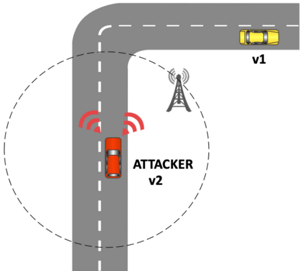
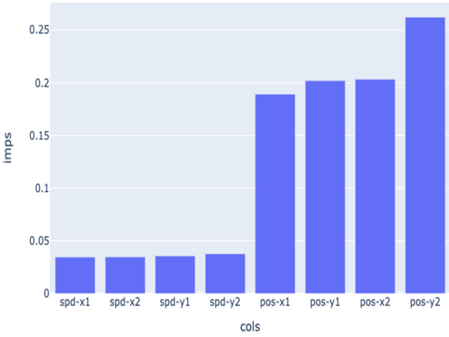
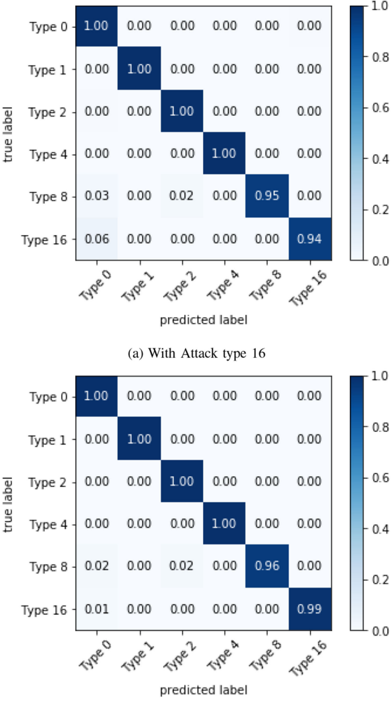
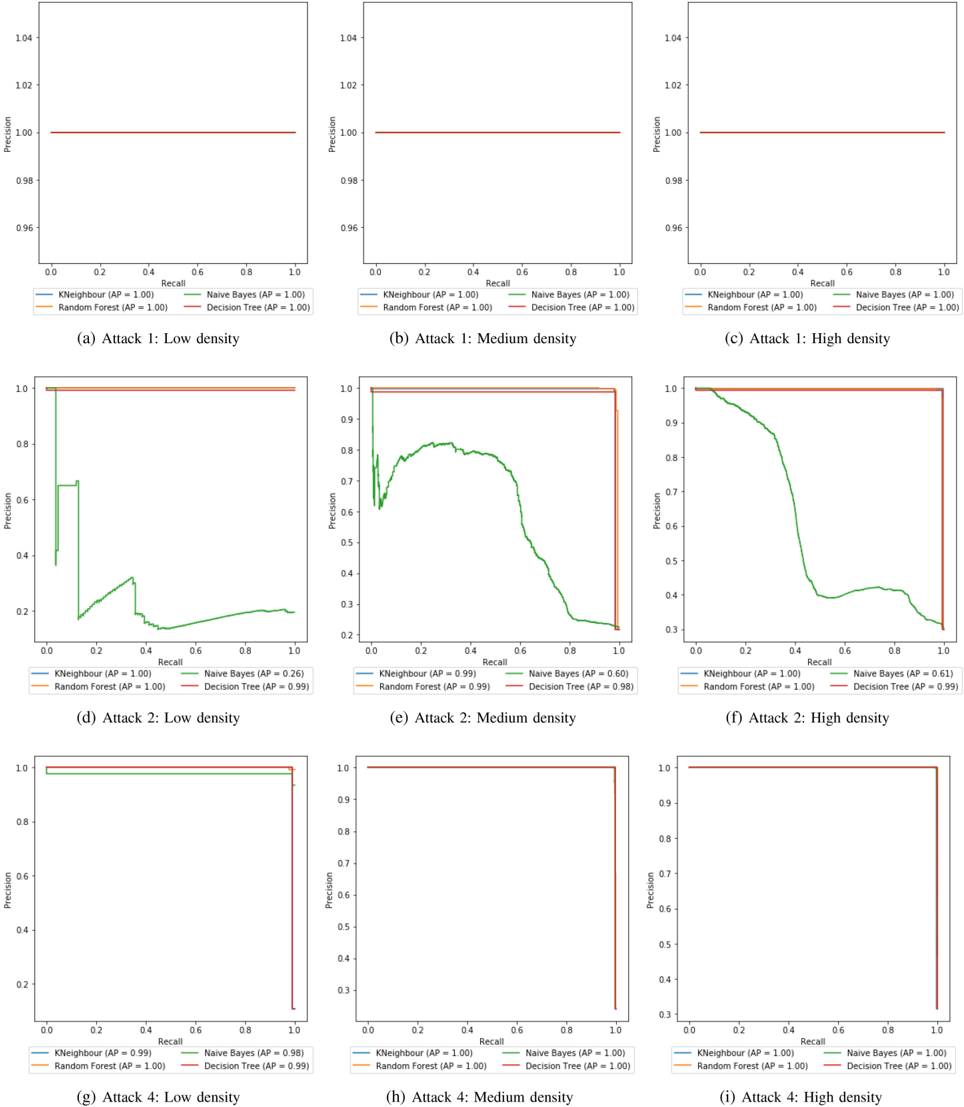
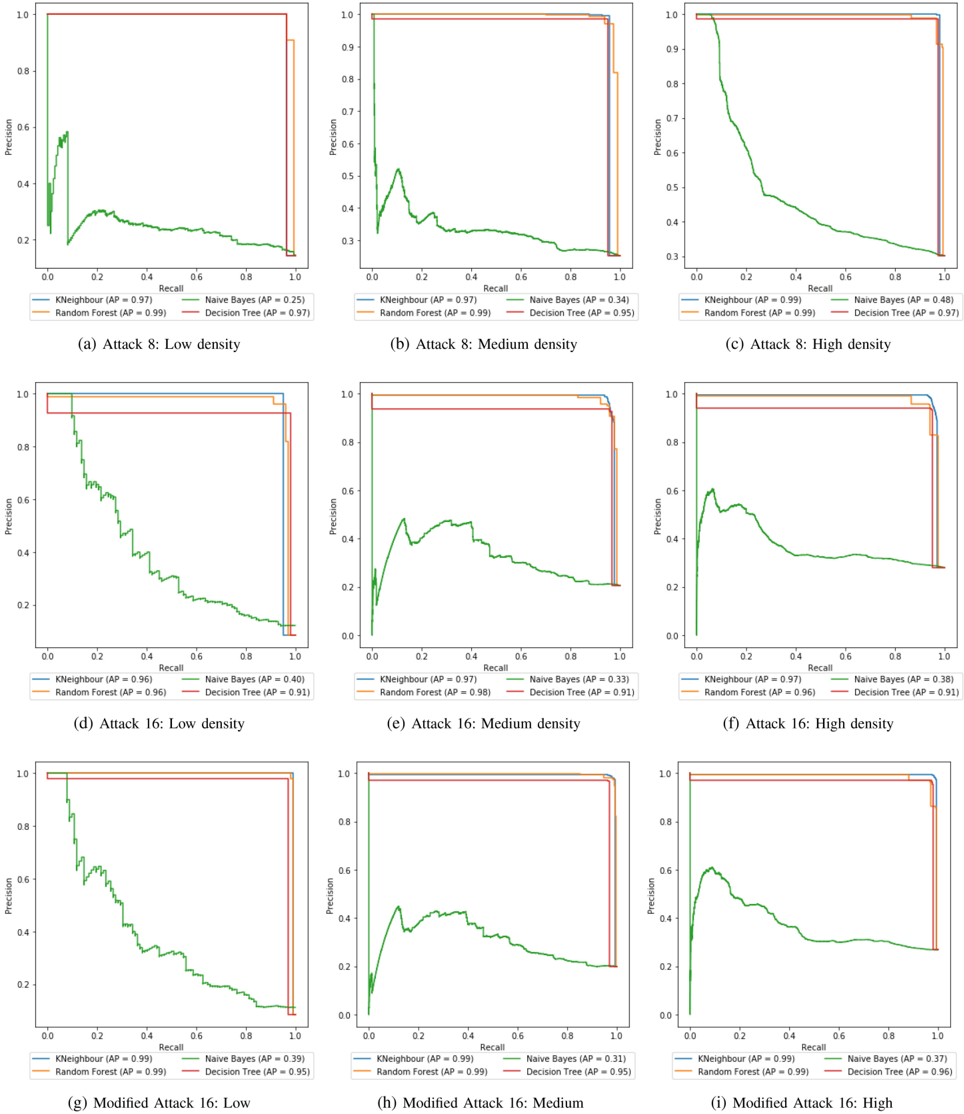
Vehicular ad-hoc network (VANET) is an emerging technology for vehicle-to-vehicle communication vital for reducing road accidents and traffic congestion in an Intelligent Transportation System (ITS). VANET communication is vulnerable to various attacks and cryptographic techniques are commonly used for message integrity and authentication of vehicles. However, cryptograhpic techniques alone may not be sufficient to protect against insider attacks. Many VANET safety applications rely on periodic broadcast of basic safety messages (BSMs) from surrounding vehicles that contain important status information about a vehicle such as its position, speed, and heading. If an attacker (misbehaving vehicle) injects false position information in a BSM, it can lead to serious consequences including traffic congestion or even accidents. Therefore, it is imperative to accurately detect and identify such attackers to ensure safety in the network. This paper presents a novel data-centric approach to detectposition falsificationattacks, using machine learning (ML) algorithms. Unlike existing techniques, the proposed approach combines information from 2 consecutive BSMs for training and testing. Simulations using the Vehicular Reference Misbehavior (VeReMi) dataset demonstrate that the proposed model clearly outperforms existing approaches for identifying a range of different attack types.
Overview
The claims and statistics of this paper haven’t been checked yet.
Run the check — free, no account needed. It reads the open-access text and checks the sources it cites.
Integrity signals
Registry
Cites
Statistics
Figures



Verification
Claims the paper makes
The claims and statistics of this paper haven’t been checked yet.
Run the check — free, no account needed. It reads the open-access text and checks the sources it cites.
Claims other papers make about this one
Each is checked against this paper’s own text: does it say what the citing paper says it does?
The source backs part of the claim, not all of it — or backs it for a different population, condition or comparison.
In the citing paper
“Traditional security measures such as firewalls and signature-based IDSs are inadequate in VANETs due to their real-time, mobile, and scalable requirements12,13.”
From A Hybrid Deep Learning Model for Detection and Mitigation of DDoS Attacks in VANETs (2025) · cites this paper as [12]
Experimental — accuracy not yet measured
Self-check
Percentages, sums and reported differences re-computed from the paper’s own numbers.
The self-check needs the paper’s full text.
Citations
Cites
Ensemble methods in machine learning
Dietterich, T. G. (2000) · Lecture Notes in Computer Science · doi:10.1007/3-540-45014-9_1 · Cited by 8,408
A comprehensive survey on vehicular Ad Hoc network
Al-Sultan, S., Al-Doori, M. M., Al-Bayatti, A. H., & Zedan, H. (2014) · Journal of Network and Computer Applications · doi:10.1016/j.jnca.2013.02.036 · Cited by 1,348
Vehicular ad hoc networks (VANETS): status, results, and challenges
Zeadally, S., Hunt, R., Chen, Y.-S., Irwin, A., & Hassan, A. (2012) · Telecommunication Systems · doi:10.1007/s11235-010-9400-5 · Cited by 1,208
Indian Hedgehog: A Mechanotransduction Mediator in Condylar Cartilage
Tang, G. H., Rabie, A. B. M., & Hägg, U. (2004) · Journal of Dental Research · doi:10.1177/154405910408300516 · Cited by 819
VANet security challenges and solutions: A survey
Hasrouny, H., Samhat, A. E., Bassil, C., & Laouiti, A. (2017) · Vehicular Communications · doi:10.1016/j.vehcom.2017.01.002 · Cited by 642
Supervised Classification Algorithms in Machine Learning: A Survey and Review
Sen, P. C., Hajra, M., & Ghosh, M. (2020) · Advances in Intelligent Systems and Computing · doi:10.1007/978-981-13-7403-6_11 · Cited by 515
Mohammed, M., Khan, M. B., & Bashier, E. B. M. (2016) · doi:10.1201/9781315371658 · Cited by 389
Area under the Precision-Recall Curve: Point Estimates and Confidence Intervals
Boyd, K., Eng, K. H., & Page, C. D. (2013) · Lecture Notes in Computer Science · doi:10.1007/978-3-642-40994-3_29 · Cited by 381
k-Nearest Neighbor Classification
Mucherino, A., Papajorgji, P. J., & Pardalos, P. M. (2009) · Springer optimization and its applications · doi:10.1007/978-0-387-88615-2_4 · Cited by 369
An effective intrusion detection approach using SVM with naïve Bayes feature embedding
Gu, J., & Lu, S. (2021) · Computers & Security · doi:10.1016/j.cose.2020.102158 · Cited by 340
Research works printed but not linked: 3
- Leung, 2007, Naive bayesian classifier, 123
- Sharanya, 2017, Classifying malicious nodes in VANETs using support vector machines with modified fading memory, 12, 171
- Brownlee, 2019, A gentle introduction to imbalanced classification, Mach. Learn. Mastery, 22
Cited by
Abdel Hakeem, S. A., & Kim, H. (2025) · IEEE Transactions on Intelligent Transportation Systems · doi:10.1109/tits.2025.3558849 · Cited by 90
TON-IoT: Detection of Attacks on Internet of Things in Vehicular Networks
Sharma, A., Babbar, H., & Sharma, A. (2022) · 2022 6th International Conference on Electronics, Communication and Aerospace Technology · doi:10.1109/iceca55336.2022.10009070 · Cited by 55
Self-citationA Hybrid Deep Learning Model for Detection and Mitigation of DDoS Attacks in VANETs
Jayakrishna, N., & Prasanth, N. N. (2025) · Scientific Reports · doi:10.1038/s41598-025-15215-1 · Cited by 20
Metadata
- Authors
- Sharma, A., & Jaekel, A.
- Affiliations
- School of Computer Science, University of Windsor, Windsor, ON, Canada
- ORCID
- Jaekel, Arunita
- Venue
- IEEE Open Journal of Vehicular Technology
- Published
- 2022
- Volume
- 3
- Pages
- 1-14
- ISSN
- 2644-1330
- Cited by
- 88
- References
- 42
- Funders
- Natural Sciences and Engineering Research Council of Canada (RGPIN-2015-05641)
About these checks
Registry, retraction, Cites and statistics results are computed, not judged, with one exception: a printed reference that no index lists is read once by a model before it counts as a citation error. Claims are extracted by a model and kept only when their quote appears verbatim in the text; each cited source is then checked, with a model’s help, for whether it says what the claim relies on. Those verdicts can be wrong — read the claim’s quote and the cited source before relying on one.
Statistics and arithmetic are recomputed, not judged.
Confidence bands are shown only for fields calibrated on our annotated test set. None is calibrated yet, so no band is shown.
What counts as a claim ›How we measure confidence ›How we check this ›
Are you an author, or do you see a problem with this page? Request a review
How to cite
Cite CoChat for the checks on this page, and the paper for its own findings.
- This page
- CoChat. (2026). Citation check: Machine Learning Based Misbehaviour Detection in VANET Using Consecutive BSM Approach. https://app.cochat.ai/papers/10.1109/ojvt.2021.3138354
- The paper
- Sharma, A., & Jaekel, A. (2022). Machine Learning Based Misbehaviour Detection in VANET Using Consecutive BSM Approach. IEEE Open Journal of Vehicular Technology. https://doi.org/10.1109/ojvt.2021.3138354
Data sources
Bibliographic data: Semantic Scholar, OpenAlex, Crossref.
Contains information from the Semantic Scholar Academic Graph Datasets, made available under the ODC Attribution License (ODC-BY 1.0).
Semantic Scholar’s data is described in: Kinney, R., et al. (2023). The Semantic Scholar Open Data Platform. arXiv:2301.10140.
