

Dataset Artefacts in Anti-Spoofing Systems: A Case Study on the ASVspoof 2017 Benchmark
Open accessThe DOI matches its Crossref record; 65 of the 65 references it cites were found in a registry or an index.
Abstract
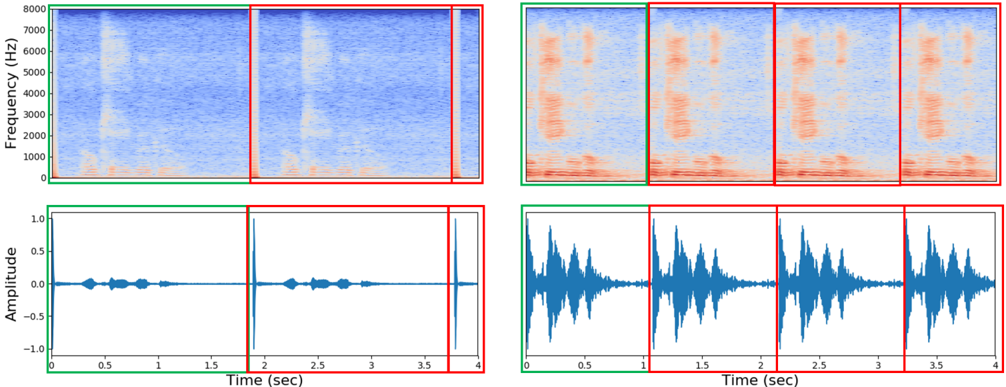
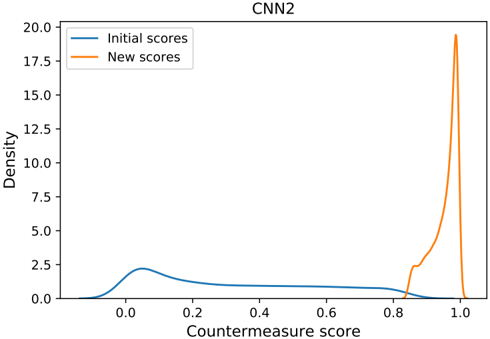
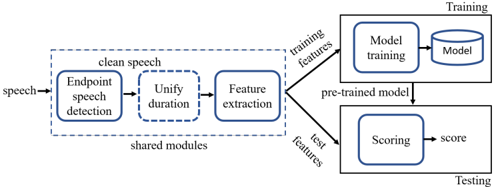
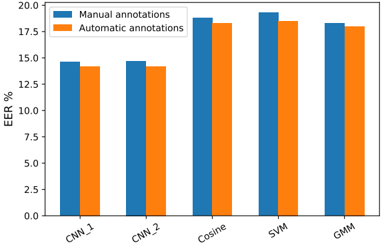
The Automatic Speaker Verification Spoofing and Countermeasures Challenges motivate research in protecting speech biometric systems against a variety of different access attacks. The 2017 edition focused on replay spoofing attacks, and involved participants building and training systems on a provided dataset (ASVspoof 2017). More than 60 research papers have so far been published with this dataset, but none have sought to answer why countermeasures appear successful in detecting spoofing attacks. This article shows how artefacts inherent to the dataset may be contributing to the apparent success of published systems. We first inspect the ASVspoof 2017 dataset and summarize various artefacts present in the dataset. Second, we demonstrate how countermeasure models can exploit these artefacts to appear successful in this dataset. Third, for reliable and robust performance estimates on this dataset we propose discarding nonspeech segments and silence before and after the speech utterance during training and inference. We create speech start and endpoint annotations in the dataset and demonstrate how using them helps countermeasure models become less vulnerable from being manipulated using artefacts found in the dataset. Finally, we provide several new benchmark results for both frame-level and utterance-level models that can serve as new baselines on this dataset.
Overview
The claims and statistics of this paper haven’t been checked yet.
Free: it reads the open-access text and checks the first 5 claims that cite a source we can check. Create a free account to check every claim.
Integrity signals
Registry
Cites
Statistics
Figures



Verification
Claims the paper makes
The claims and statistics of this paper haven’t been checked yet.
Free: it reads the open-access text and checks the first 5 claims that cite a source we can check. Create a free account to check every claim.
Claims other papers make about this one
Each is checked against this paper’s own text: does it say what the citing paper says it does?
The cited source says what the claim attributes to it.
In the citing paper
“Last, we have been alerted to the presence of shortcut artefacts (Geirhos et al., 2020) which plagues some earlier ASVspoof databases (Chettri et al., 2020; Müller et al., 2021; Shim et al., 2023; Zhang et al., 2023; Liu et al., 2023), namely artefacts which are semantically unrelated to the spoof/deepfake problem but which can nonetheless be utilised for detection.”
From ASVspoof 5: Design, collection and validation of resources for spoofing, deepfake, and adversarial attack detection using crowdsourced speech (2026) · cites this paper as Chettri et al., 2020
The cited source says what the claim attributes to it.
In the citing paper
“Our analysis revealed five potential shortcut artefacts: the peak waveform amplitude; the durations of the leading and trailing non-speech segments (Chettri et al., 2020; Müller et al., 2021); the duration and energy of the whole utterance.”
From ASVspoof 5: Design, collection and validation of resources for spoofing, deepfake, and adversarial attack detection using crowdsourced speech (2026) · cites this paper as Chettri et al., 2020
Self-check
Percentages, sums and reported differences re-computed from the paper’s own numbers.
The self-check needs the paper’s full text.
Citations
Cites
Deep Residual Learning for Image Recognition
He, K., Zhang, X., Ren, S., & Sun, J. (2016) · 2016 IEEE Conference on Computer Vision and Pattern Recognition (CVPR) · doi:10.1109/cvpr.2016.90 · Cited by 235,474 · cited 2×
“Some of the well-known deep models from computer vision including ResNet [24] and light CNN [25] were adapted for replay spoofing detection in [20], [21] and [16], respectively demonstrating good performance on the ASVspoof 2017 dataset.”
MethodScikit-learn: Machine Learning in Python
Pedregosa, F., Varoquaux, G., Gramfort, A., Michel, V., Thirion, B., Grisel, O., Blondel, M., Müller, A., Nothman, J., Louppe, G., et al. (2012) · arXiv · doi:10.48550/arxiv.1201.0490 · Cited by 71,016 · cited 2×
“We use the Scikit-learn [55] library with default parameters for training and testing the SVM model.”
MethodPattern Recognition and Machine Learning
(2006) · doi:10.1007/978-0-387-45528-0 · Cited by 9,824
Intriguing properties of neural networks
Szegedy, C., Zaremba, W., Sutskever, I., Bruna, J., Erhan, D., Goodfellow, I., & Fergus, R. (2013) · arXiv · doi:10.48550/arxiv.1312.6199 · Cited by 8,143 · cited 1×
“Studies on fooling ML models using adversarial machine learning is an active research topic [59]–[61].”
Background(2006) · Springer eBooks · Cited by 8,123
Deep Residual Learning for Image Recognition
He, K., Zhang, X., Ren, S., & Sun, J. (2015) · arXiv · doi:10.48550/arxiv.1512.03385 · Cited by 4,196 · cited 2×
“Some of the well-known deep models from computer vision including ResNet [24] and light CNN [25] were adapted for replay spoofing detection in [20], [21] and [16], respectively demonstrating good performance on the ASVspoof 2017 dataset.”
MethodFront-End Factor Analysis for Speaker Verification
Dehak, N., Kenny, P. J., Dehak, R., Dumouchel, P., & Ouellet, P. (2011) · IEEE Transactions on Audio, Speech, and Language Processing · doi:10.1109/tasl.2010.2064307 · Cited by 3,549 · cited 1×
“We study five different types of classifiers: GMMs trained on CQCCs [15]; Cosine Distance and Support Vector Machines (SVMs) trained on CQCC-based i-vectors [52]; and two CNNs”
MethodDeep neural networks are easily fooled: High confidence predictions for unrecognizable images
Nguyen, A., Yosinski, J., & Clune, J. (2015) · 2015 IEEE Conference on Computer Vision and Pattern Recognition (CVPR) · doi:10.1109/cvpr.2015.7298640 · Cited by 3,258 · cited 1×
“models using adversarial machine learning is an active research topic [59]–[61].”
MethodDeep Neural Networks are Easily Fooled: High Confidence Predictions for Unrecognizable Images
Nguyen, A., Yosinski, J., & Clune, J. (2014) · arXiv · doi:10.48550/arxiv.1412.1897 · Cited by 3,258 · cited 1×
“models using adversarial machine learning is an active research topic [59]–[61].”
MethodX-Vectors: Robust DNN Embeddings for Speaker Recognition
Snyder, D., Garcia-Romero, D., Sell, G., Povey, D., & Khudanpur, S. (2018) · 2018 IEEE International Conference on Acoustics, Speech and Signal Processing (ICASSP) · doi:10.1109/icassp.2018.8461375 · Cited by 2,620
Research works printed but not linked: 2
- 8. K. A. Lee, B. Ma, and H. Li, "Speaker verification makes its debut in smartphone," IEEE Signal Processing Society SLTC Newsletter, 2013.
- 58. W. Cai, C. Danwei, W. Liu, G. Li, and M. Li, "Countermeasures for automatic speaker verification replay spoofing attack: On data augmentation, feature representation, classification and fusion," 2017, pp. 17-21. · DOI
Cited by
ASVspoof 2021: Towards Spoofed and Deepfake Speech Detection in the Wild
Liu, X., Wang, X., Sahidullah, M., Patino, J., Delgado, H., Kinnunen, T., Todisco, M., Yamagishi, J., Evans, N., Nautsch, A., et al. (2023) · IEEE/ACM Transactions on Audio, Speech, and Language Processing · doi:10.1109/taslp.2023.3285283 · Cited by 312
A Comparative Study on Recent Neural Spoofing Countermeasures for Synthetic Speech Detection
Wang, X., & Yamagishi, J. (2021) · Interspeech 2021 · doi:10.21437/interspeech.2021-702 · Cited by 137
A Survey on Speech Deepfake Detection
Li, M., Ahmadiadli, Y., & Zhang, X.-P. (2025) · ACM Computing Surveys · doi:10.1145/3714458 · Cited by 101
“Here, we categorize these models based on their primary structure.”
The Impact of Silence on Speech Anti-Spoofing
Zhang, Y., Li, Z., Lu, J., Hua, H., Wang, W., & Zhang, P. (2023) · IEEE/ACM Transactions on Audio Speech and Language Processing · doi:10.1109/taslp.2023.3306711 · Cited by 53
“Several studies have demonstrated the impact of silence in both LA and PA spoof speech detection [28], [29], [30], [31], [32], [33].”
BackgroundGe, W., Patino, J., Todisco, M., & Evans, N. (2022) · ICASSP 2022 - 2022 IEEE International Conference on Acoustics, Speech and Signal Processing (ICASSP) · doi:10.1109/icassp43922.2022.9747476 · Cited by 40
“Additional motivation comes from the numerous reports in the literature which show that some solutions apply greater attention to non-speech intervals than to speech intervals [17–19].”
BackgroundResultTan, C. B., Hijazi, M. H. A., Khamis, N., Nohuddin, P. N. E. B., Zainol, Z., Coenen, F., & Gani, A. (2021) · Multimedia Tools and Applications · doi:10.1007/s11042-021-11235-x · Cited by 40
“Meanwhile, there have been some interesting researches carried out related to biases in model performance resulting from dataset artifacts [19].”
BackgroundWang, X., Delgado, H., Tak, H., Jung, J.-W., Shim, H.-J., Todisco, M., Kukanov, I., Liu, X., Sahidullah, M., Kinnunen, T., et al. (2026) · Computer Speech & Language · doi:10.1016/j.csl.2025.101825 · Cited by 30
“Our analysis revealed five potential shortcut artefacts: the peak waveform amplitude; the durations of the leading and trailing non-speech segments [13, 14]; the duration and energy of the whole utterance.”
Wang, L., Yu, L., Zhang, Y., & Xie, H. (2024) · IEEE/ACM Transactions on Audio Speech and Language Processing · doi:10.1109/taslp.2024.3414340 · Cited by 25
“However, some works [23], [24], [25], [26] observe that silence information can seriously interfere with the detection performance.”
BackgroundMethodA Practical Guide to Logical Access Voice Presentation Attack Detection
Wang, X., & Yamagishi, J. (2022) · Studies in autonomic, data-driven and industrial computing · doi:10.1007/978-981-19-1524-6_8 · Cited by 25
Self-Attention and Hybrid Features for Replay and Deep-Fake Audio DetectionPreprint
Huang, L. F., & Pun, C. (2024) · arXiv (Cornell University) · doi:10.48550/arxiv.2401.05614 · Cited by 23
“In [15], Chettri et al. believed that many successful countermeasures took advantage of the fact that the database contains some recording artifacts.”
BackgroundWang, X., Delgado, H., Tak, H., Jung, J.-W., Shim, H.-J., Todisco, M., Kukanov, I., Liu, X., Sahidullah, M., Kinnunen, T., et al. (2025) · arXiv (Cornell University) · doi:10.48550/arxiv.2502.08857 · Cited by 19
“Our analysis revealed five potential shortcut artefacts: the peak waveform amplitude; the durations of the leading and trailing non-speech segments [13, 14]; the duration and energy of the whole utterance.”
Deepfake Audio Detection in Voice Authentication: A Spectral and CNN-Based Comprehensive Review
Salih, A. O. M., Emam, A. H. M., Ahmed, A. B. G. E., Khalifa, M., Suliman, A., & Babiker, N. B. M. (2025) · Engineering Technology & Applied Science Research · doi:10.48084/etasr.13400 · Cited by 17
“Key approaches include: CNNs applied to Mel spectrograms or CQCCs: These models have demonstrated strong performance in distinguishing spoofed from genuine audio [31].”
Complementary regional energy features for spoofed speech detection
Dişken, G. (2023) · Computer Speech & Language · doi:10.1016/j.csl.2023.101602 · Cited by 17
Huang, L. F., Yang, J., Zhao, J., & Wu, C. (2025) · Expert Systems · doi:10.1111/exsy.70054 · Cited by 11
A blended framework for audio spoof detection with sequential models and bags of auditory bites
Sharafudeen, M., S, V. C. S., Andrew, J., & Sei, Y. (2024) · Scientific Reports · doi:10.1038/s41598-024-71026-w · Cited by 11
The Clever Hans Effect in Voice Spoofing Detection
Chettri, B. (2023) · IEEE Spoken Language Technology Workshop (SLT) · doi:10.1109/slt54892.2023.10022624 · Cited by 10
“Furthermore, our extended version of this work [38] also shows that such effect is evident even with generative models such as GMM and i-vector based anti-spoofing systems.”
BackgroundResultInfluentialSelf-citationNoise robust automatic speaker verification systems: review and analysis
Joshi, S., & Dua, M. (2024) · Telecommunication Systems · doi:10.1007/s11235-024-01212-8 · Cited by 10
“The feature extraction techniques can be classified on the basis of different factors such as: Magnitude, Phase, Cepstral coefficient etc. [20].”
Data Quality as Predictor of Voice Anti-Spoofing Generalization
Chettri, B., Hautamäki, R. G., Sahidullah, M., & Kinnunen, T. (2021) · Interspeech (USB) · doi:10.21437/interspeech.2021-1180 · Cited by 9
Self-citationReplay Attack Detection Based on Voice and Non-voice Sections for Speaker Verification
Mills, A. G., Kaewcharuay, P., Sathirasattayanon, P., Duangpummet, S., Galajit, K., Karnjana, J., & Aimmanee, P. (2022) · Asia-Pacific Signal and Information Processing Association Annual Summit and Conference (APSIPA ASC) · doi:10.23919/apsipaasc55919.2022.9980225 · Cited by 9
Multi-Channel Replay Speech Detection Using an Adaptive Learnable Beamformer
Neri, M., & Virtanen, T. I. (2025) · IEEE Open Journal of Signal Processing · doi:10.1109/ojsp.2025.3568758 · Cited by 9
“In fact, several datasets have been published with the aim to tackle these attacks, e.g., the ASVSpoof series [2], [4].”
Improving Spoofing Capability for End-to-end Any-to-many Voice Conversion
Hua, H., Chen, Z., Zhang, Y., Li, M., & Zhang, P. (2022) · doi:10.1145/3552466.3556532 · Cited by 7
Improving Voice Spoofing Detection Through Extensive Analysis of Multicepstral Feature Reduction
de Souza, L. M., Guido, R. C., Contreras, R. C., Viana, M. S., & Bongarti, M. A. D. S. (2025) · Sensors · doi:10.3390/s25154821 · Cited by 5
Generalizable Detection of Audio Deepfakes
Lopez, J. A., Stemmer, G., & Cordourier-Maruri, H. (2026) · IEEE International Conference on Acoustics Speech and Signal Processing · doi:10.1109/icassp55912.2026.11463470 · Cited by 5
Neamtu, C.-T., Mihalache, Ş., & Burileanu, D. (2023) · International Conference on Speech Technology and Human-Computer Dialogue (SpeD) · doi:10.1109/sped59241.2023.10314940 · Cited by 5
“The results obtained are close to the current state-of-the-art found in the literature [2-5].”
MethodResultBeyond Silence: Bias Analysis through Loss and Asymmetric Approach in Audio Anti-Spoofing
Shim, H.-J., Sahidullah, M., Jung, J.-W., Watanabe, S., & Kinnunen, T. (2024) · Synthetic Data's Transformative Role in Foundational Speech Models (SynData4GenAI) · doi:10.21437/syndata4genai.2024-12 · Cited by 5
A Comparative Study on Recent Neural Spoofing Countermeasures for Synthetic Speech Detection
Wang, X., & Yamagishi, J. (2021) · arXiv · doi:10.48550/arxiv.2103.11326 · Cited by 4
Bekiryazıcı, Ş., Hanilçi, C., & Ozcan, N. (2025) · Computer Speech & Language · doi:10.1016/j.csl.2025.101906 · Cited by 4
RIRplay: Generation of a Replay Stereo Corpus for Voice Biometrics Anti-Spoofing
Sánchez-Valera, J. C., Peinado, A. M., Martín-Doñas, J. M., Gomez-Alanis, A., Gomez, A. M., & Todisco, M. (2026) · IEEE Transactions on Information Forensics and Security · doi:10.1109/tifs.2026.3684815 · Cited by 4
“A notable example is ASVspoof 2017, which contains artifacts such as initial non-speech noise, burst clicks, and corrupted files [24].”
Contreras, R. C., Viana, M. S., Fonseca, E. S., Bongarti, M. A. D. S., Toygar, Ö., & Guido, R. C. (2025) · Computers & Electrical Engineering · doi:10.1016/j.compeleceng.2025.110570 · Cited by 3
Spoofed Speech Detection with Weighted Phase Features and Convolutional Networks
Dişken, G. (2022) · Archives of Acoustics · doi:10.24425/aoa.2022.141648 · Cited by 2
Chaudhari, A., Shedge, D., Bairagi, V. K., & Nanthaamornphong, A. (2024) · Symmetry · doi:10.3390/sym16070788 · Cited by 2
“The implementation of features mentioned in Table 7 are available in [28,53,54].”
BackgroundLarsen, C., Koch, P. M., & Tan, Z. (2022) · Interspeech (USB) · doi:10.21437/interspeech.2022-10033 · Cited by 2
“It is widely used as a pre-processing step in more complex audio signal processing tasks such as speech recognition [4], speaker verification [5] or speech enhancement [6], but can also be applied on its own to reduce the computational cost of downstream processing.”
MethodPULMO: Precise utterance-level modeling for speech anti-spoofing
Yoon, S.-H. (2024) · Applied Acoustics · doi:10.1016/j.apacoust.2024.110221 · Cited by 2
What's the Real: A Novel Design Philosophy for Robust AI-Synthesized Voice Detection
Xuan, H., Liu, X., Tan, Y., Liu, G., Li, S., Niu, W., Zhou, R., & Zhou, X. (2024) · ACM International Conference on Multimedia (ACM MM) · doi:10.1145/3664647.3681100 · Cited by 2
“However, several studies [8, 29, 46, 47] have pointed out that the noticeable difference in silence segments before and after human voice presented in the ASVspoof datasets (the most widely used datasets in AI-synthesized voice detection) could make all detectors trained and evaluated on these…”
SiFMimicEvader: Evading Fake Voice Detection with Adversarial Neural Mimicry Attacks
Xuan, H., Liu, X., Zhang, Z., Yu, Z., Kong, X., Li, S., Niu, W., Zhou, R., & Zhou, Q. (2025) · ACM International Conference on Multimedia (ACM MM) · doi:10.1145/3746027.3755595 · Cited by 1
Enhancing Audio Replay Attack Detection with Silence-Based Blind Channel Impulse Response Estimation
Bekiryazıcı, Ş., Hanilçi, C., & Ozcan, N. (2025) · Lecture notes in computer science · doi:10.1007/978-3-032-07956-5_24 · Cited by 1
The Watermark Shortcut: How Provenance Marking Sabotages Audio Deepfake Detection
Müller, N. M., & Debus, P. (2026) · IEEE Signal Processing Letters · doi:10.1109/lsp.2026.3724777 · Cited by 1
“Index Terms —Audio deepfake detection, anti-spoofing, watermarking, provenance, shortcut learning.”
Bekiryazıcı, Ş., Hanilçi, C., & Ozcan, N. (2026) · IEEE Access · doi:10.1109/access.2026.3708257 · Cited by 1
“…that replay detection performance on ASVspoof datasets can be strongly influenced by silence and low-energy regions, as systematic differences in non-speech segments between bonafide and replayed recordings may introduce unintended bias toward exploiting silence-related artifacts [61], [62], [63].”
An Intervention-Based Framework for Shortcut Diagnosis in Spoofing Countermeasures
Rubio, S., Bello, P., Ribas, D., Miguel, A. D., Lleida, E., & Ortega, A. (2026) · The Speaker and Language Recognition Workshop (Odyssey) · doi:10.21437/odyssey.2026-1 · Cited by 1
“Despite these efforts, the field lacks a formal way to characterise shortcut learning beyond simply documenting individual artifacts [17, 19, 20].”
Phonetically Explainable Speech Deepfake DetectionPreprint
Chhibber, M., Mishra, J., & Kinnunen, T. (2026) · arXiv (Cornell University) · doi:10.48550/arxiv.2606.15454 · Cited by 1
“…example, the silent regions of synthetic utterances contain literal zero-valued samples, while bonafide recordings preserve the low-level ambient background of the original recording environment, allowing detectors to exploit this shortcut [62] rather than learning genuine phonetic cues [63, 64].”
A One-class Model for Voice Replay Attack Detection
Cheng, X., Li, L., Xu, M., Wang, D., & Zheng, T. F. (2023) · Advances in computer vision and pattern recognition · doi:10.1007/978-981-19-5288-3_14
MultiSiFer: Detecting Multiple-Speaker Fake Voice Without Speaker-Irrelative Features
Liu, X., Xuan, H., Yu, Z., Zhang, Z., Fei, Q., & Zhou, Q. (2025) · IEEE Internet of Things Journal · doi:10.1109/jiot.2025.3648834
“The works [7], [8], [9], [10] show that the ASVspoof datasets [11], [12], [13], which are the most widely used datasets in fake voice detection, have a serious data feature distribution flaw.”
Mixing Data Augmentation for Robust Replay Attack Detection with Real Telephonic Speech
Kashif, K., Gomez, A. M., Sanchez, J. C., López‐Espejo, I., Torrano, Í. O., Larumbe-Bergera, A., González-de-Suso, J. L., & Peinado, A. M. (2026) · International Workshop on Biometrics and Forensics (IWBF) · doi:10.1109/iwbf68042.2026.11558170
“Trimming [19] is a critical pre-processing step in PA anti-spoofing tasks, since extended silence or non-speech segments that occur unevenly across classes can lead models to rely on irrelevant cues, rather than genuine spoofing artifacts, during training [20]–[22].”
Shi, G. (2026) · arXiv (Cornell University) · doi:10.48550/arxiv.2609.07981
ECAQ: Evidence-Constrained Audio Deepfake Answering with Artifact-Query Detection
Hu, X. (2026) · ACM International Conference on Multimedia (ACM MM) · doi:10.1145/3767308.3838615
Metadata
- Authors
- Chettri, B., Benetos, E., & Sturm, B. L. T.
- Affiliations
- University of London (GB)
- KTH Royal Institute of Technology (SE)
- Venue
- IEEE/ACM Transactions on Audio, Speech, and Language Processing
- Published
- 2020
- Volume
- 28
- Pages
- 3018-3028
- ISSN
- 2329-9290 (ISSN-L)
- 2329-9304
- OpenAlex
- W3092742905
- Cited by
- 35
- References
- 61
- Citations by year
- 2026: 3 · 2025: 11 · 2024: 6 · 2023: 6 · 2022: 6 · 2021: 3
- FWCI
- 1.47
- Type
- journal article
- Language
- en
- Open access
- green
- arxiv.org
- Licence
- Locations
- IEEE/ACM Transactions on Audio Speech and Language Processing (publishedVersion)
- arXiv (Cornell University) (submittedVersion, cc-by-nc-sa)
- arXiv (Cornell University) (submittedVersion)
- Queen Mary Research Online (Queen Mary University of London) (submittedVersion)
- arXiv (Cornell University)
- Topics
- Physical Sciences › Computer Science › Artificial Intelligence › Speech Recognition and Synthesis
- Physical Sciences › Computer Science › Signal Processing › Biometric Identification and Security
- Physical Sciences › Computer Science › Signal Processing › Speech and Audio Processing
- Keywords
- ASVspoof 2017, anti-spoofing countermeasures, speaker verification, anti-spoofing, benchmark results
About these checks
Registry, retraction, Cites and statistics results are computed, not judged, with one exception: a printed reference that no index lists is read once by a model before it counts as a citation error. Claims are extracted by a model and kept only when their quote appears verbatim in the text; each cited source is then checked, with a model’s help, for whether it says what the claim relies on. Those verdicts can be wrong — read the claim’s quote and the cited source before relying on one.
Statistics and arithmetic are recomputed, not judged.
Confidence bands are shown only for fields calibrated on our annotated test set. None is calibrated yet, so no band is shown.
What counts as a claim ›How we measure confidence ›How we check this ›
Are you an author, or do you see a problem with this page? Request a review
Data sources
Bibliographic data: Semantic Scholar, OpenAlex, Crossref.
Contains information from the Semantic Scholar Academic Graph Datasets, made available under the ODC Attribution License (ODC-BY 1.0).
Semantic Scholar’s data is described in: Kinney, R., et al. (2023). The Semantic Scholar Open Data Platform. arXiv:2301.10140.
