

Explaining Deep Learning Models for Spoofing and Deepfake Detection with Shapley Additive Explanations
Open accessThe DOI matches its Crossref record; 38 of the 38 references it cites were found in a registry or an index.
Abstract
Substantial progress in spoofing and deepfake detection has been made in recent years. Nonetheless, the community has yet to make notable inroads in providing an explanation for how a classifier produces its output. The dominance of black box spoofing detection solutions is at further odds with the drive toward trustworthy, explainable artificial intelligence. This paper describes our use of SHapley Additive exPlanations (SHAP) to gain new insights in spoofing detection. We demonstrate use of the tool in revealing unexpected classifier behaviour, the artefacts that contribute most to classifier outputs and differences in the behaviour of competing spoofing detection models. The tool is both efficient and flexible, being readily applicable to a host of different architecture models in addition to related, different applications. All results reported in the paper are reproducible using open-source software.
Overview
The claims and statistics of this paper haven’t been checked yet.
Free: it reads the open-access text and checks the first 5 claims that cite a source we can check. Create a free account to check every claim.
Integrity signals
Registry
Cites
Statistics
Figures

Verification
Claims the paper makes
The claims and statistics of this paper haven’t been checked yet.
Free: it reads the open-access text and checks the first 5 claims that cite a source we can check. Create a free account to check every claim.
Claims other papers make about this one
Each is checked against this paper’s own text: does it say what the citing paper says it does?
The source backs part of the claim, not all of it — or backs it for a different population, condition or comparison.
In the citing paper
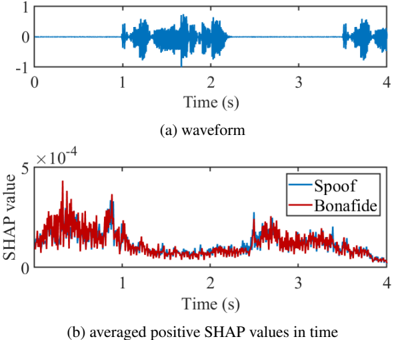
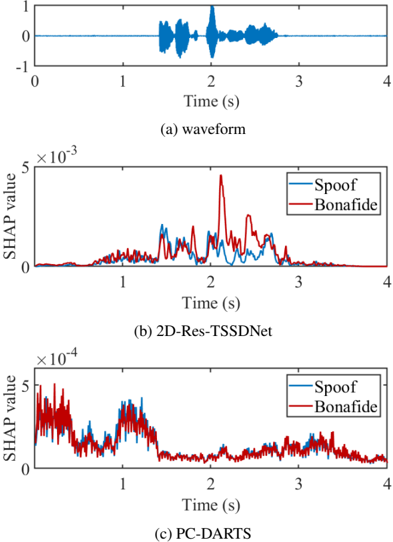
“Their findings revealed significant differences in how these models focused on speech and nonspeech intervals, with some models relying more heavily on silence duration rather than speech content to determine authenticity [167].”
From Audio Deepfake Detection: What Has Been Achieved and What Lies Ahead (2025) · cites this paper as [165]
Experimental — accuracy not yet measuredThe cited source says what the claim attributes to it.
In the citing paper
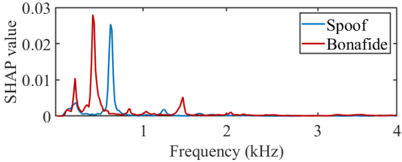
“Furthermore, the study demonstrated that different types of spoofing attacks often leave unique traces in specific frequency bands, suggesting that detection models can significantly enhance their discrimination capabilities by concentrating on these regions.”
From Audio Deepfake Detection: What Has Been Achieved and What Lies Ahead (2025) · cites this paper as [165]
Self-check
Percentages, sums and reported differences re-computed from the paper’s own numbers.
The self-check needs the paper’s full text.
Citations
Cites
Grad-CAM: Visual Explanations from Deep Networks via Gradient-Based Localization
Selvaraju, R. R., Cogswell, M., Das, A., Vedantam, R., Parikh, D., & Batra, D. (2017) · 2017 IEEE International Conference on Computer Vision (ICCV) · doi:10.1109/iccv.2017.74 · Cited by 24,513
A Unified Approach to Interpreting Model Predictions
Lundberg, S., & Lee, S.-I. (2017) · arXiv · doi:10.48550/arxiv.1705.07874 · Cited by 23,707
"Why Should I Trust You?": Explaining the Predictions of Any Classifier
Ribeiro, M. T., Singh, S., & Guestrin, C. (2016) · Proceedings of the 22nd ACM SIGKDD International Conference on Knowledge Discovery and Data Mining · doi:10.1145/2939672.2939778 · Cited by 17,555
Gauriat, C.-M., Pencolé, Y., Ribot, P., & Brouillet, G. (2024) · HAL (Le Centre pour la Communication Scientifique Directe) · doi:10.4230/oasics.dx.2024.27 · Cited by 12,586
Identity mappings in deep residual networks
He, K., Zhang, X., Ren, S., & Sun, J. (2016) · Lecture Notes in Computer Science · doi:10.1007/978-3-319-46493-0_38 · Cited by 10,741
Barredo Arrieta, A., Díaz-Rodríguez, N., Del Ser, J., Bennetot, A., Tabik, S., Barbado, A., Garcia, S., Gil-Lopez, S., Molina, D., Benjamins, R., et al. (2020) · Information Fusion · doi:10.1016/j.inffus.2019.12.012 · Cited by 10,423
17. A Value for n-Person Games
Shapley, L. S. (1953) · Contributions to the Theory of Games (AM-28), Volume II · doi:10.1515/9781400881970-018 · Cited by 6,950
Learning Important Features Through Propagating Activation Differences
Shrikumar, A., Greenside, P., & Kundaje, A. (2017) · arXiv · doi:10.48550/arxiv.1704.02685 · Cited by 2,761
Consistent Individualized Feature Attribution for Tree Ensembles
Lundberg, S. M., Erion, G. G., & Lee, S.-I. (2018) · arXiv · doi:10.48550/arxiv.1802.03888 · Cited by 1,430
ASVspoof 2019: Future Horizons in Spoofed and Fake Audio Detection
Todisco, M., Wang, X., Vestman, V., Sahidullah, M., Delgado, H., Nautsch, A., Yamagishi, J., Evans, N., Kinnunen, T., & Lee, K. A. (2019) · arXiv · doi:10.48550/arxiv.1904.05441 · Cited by 688 · cited 2×
“We show a number of illustrative examples for which the input utterances, all drawn from the ASVspoof 2019 LA database [13], are chosen specially to demonstrate the potential insights which can be gained.”
BackgroundSelf-citation
Cited by
Nwakanma, C. I., Ahakonye, L. A. C., Njoku, J. N., Odirichukwu, J. C., Okolie, S. A., Uzondu, C., Ndubuisi Nweke, C. C., & Kim, D.-S. (2023) · Applied Sciences · doi:10.3390/app13031252 · Cited by 202
Audio Deepfake Detection: What Has Been Achieved and What Lies Ahead
Zhang, B., Cui, H., Nguyen, V., & Whitty, M. (2025) · Sensors · doi:10.3390/s25071989 · Cited by 72
Deepfakes as a threat to a speaker and facial recognition: An overview of tools and attack vectors
Firc, A., Malinka, K., & Hanáček, P. (2023) · Heliyon · doi:10.1016/j.heliyon.2023.e15090 · Cited by 80
Xue, J., Fan, C., Lv, Z., Tao, J., Yi, J., Zheng, C., Wen, Z., Yuan, M., & Shao, S. (2022) · Proceedings of the 1st International Workshop on Deepfake Detection for Audio Multimedia · doi:10.1145/3552466.3556526 · Cited by 40
“In addition, many studies [6, 21, 35] show that different subbands contain different discriminative information.”
BackgroundThe Impact of Silence on Speech Anti-Spoofing
Zhang, Y., Li, Z., Lu, J., Hua, H., Wang, W., & Zhang, P. (2023) · IEEE/ACM Transactions on Audio Speech and Language Processing · doi:10.1109/taslp.2023.3306711 · Cited by 53
Metadata
- Authors
- Ge, W., Patino, J., Todisco, M., & Evans, N.
- Affiliations
- EURECOM (FR)
- Venue
- ICASSP 2022 - 2022 IEEE International Conference on Acoustics, Speech and Signal Processing (ICASSP)
- Publisher
- IEEE
- Published
- 2022-05-23
- Pages
- 6387-6391
- ISSN
- 1520-6149 (ISSN-L)
- OpenAlex
- W3203575608
- Cited by
- 40
- References
- 35
- Citations by year
- 2026: 1 · 2025: 18 · 2024: 9 · 2023: 9 · 2022: 3
- FWCI
- 5.39
- Type
- conference paper
- Language
- en
- Open access
- green
- arxiv.org
- Locations
- IEEE International Conference on Acoustics Speech and Signal Processing (publishedVersion)
- arXiv (Cornell University) (submittedVersion, cc-by)
- HAL (submittedVersion)
- Funders
- Agence Nationale de la Recherche (ANR-18-CE92-0024, ANR-19-CE23-0001)
- Topics
- Physical Sciences › Computer Science › Artificial Intelligence › Explainable Artificial Intelligence (XAI)
- Physical Sciences › Computer Science › Computer Vision and Pattern Recognition › Digital Media Forensic Detection
- Physical Sciences › Computer Science › Artificial Intelligence › Speech Recognition and Synthesis
- Keywords
- deepfake detection, anti-spoofing, explainable AI, SHAP, model interpretability, audio forensics
About these checks
Registry, retraction, Cites and statistics results are computed, not judged, with one exception: a printed reference that no index lists is read once by a model before it counts as a citation error. Claims are extracted by a model and kept only when their quote appears verbatim in the text; each cited source is then checked, with a model’s help, for whether it says what the claim relies on. Those verdicts can be wrong — read the claim’s quote and the cited source before relying on one.
Statistics and arithmetic are recomputed, not judged.
Confidence bands are shown only for fields calibrated on our annotated test set. None is calibrated yet, so no band is shown.
What counts as a claim ›How we measure confidence ›How we check this ›
Are you an author, or do you see a problem with this page? Request a review
How to cite
Cite CoChat for the checks on this page, and the paper for its own findings.
- This page
- CoChat. (2026). Citation check: Explaining Deep Learning Models for Spoofing and Deepfake Detection with Shapley Additive Explanations. https://app.cochat.ai/papers/10.1109/icassp43922.2022.9747476
- The paper
- Ge, W., Patino, J., Todisco, M., & Evans, N. (2022). Explaining Deep Learning Models for Spoofing and Deepfake Detection with Shapley Additive Explanations. ICASSP 2022 - 2022 IEEE International Conference on Acoustics, Speech and Signal Processing (ICASSP). https://doi.org/10.1109/icassp43922.2022.9747476
Data sources
Bibliographic data: Semantic Scholar, OpenAlex, Crossref.
Contains information from the Semantic Scholar Academic Graph Datasets, made available under the ODC Attribution License (ODC-BY 1.0).
Semantic Scholar’s data is described in: Kinney, R., et al. (2023). The Semantic Scholar Open Data Platform. arXiv:2301.10140.
