

Faster R-CNN: Towards Real-Time Object Detection with Region Proposal Networks
Open accessThe DOI matches its Crossref record; 56 of the 60 references it cites were found in a registry or an index; 15 of the 27 sources its claims cite were checked for support.
Abstract
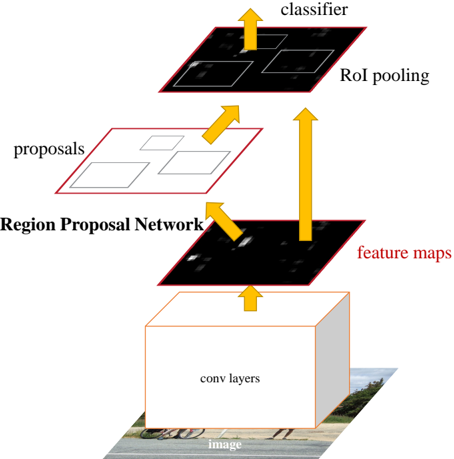
State-of-the-art object detection networks depend on region proposal algorithms to hypothesize object locations. Advances like SPPnet [1] and Fast R-CNN [2] have reduced the running time of these detection networks, exposing region proposal computation as a bottleneck. In this work, we introduce a Region Proposal Network (RPN) that shares full-image convolutional features with the detection network, thus enabling nearly cost-free region proposals. An RPN is a fully convolutional network that simultaneously predicts object bounds and objectness scores at each position. The RPN is trained end-to-end to generate high-quality region proposals, which are used by Fast R-CNN for detection. We further merge RPN and Fast R-CNN into a single network by sharing their convolutional features-using the recently popular terminology of neural networks with 'attention' mechanisms, the RPN component tells the unified network where to look. For the very deep VGG-16 model [3] , our detection system has a frame rate of 5 fps (including all steps) on a GPU, while achieving state-of-the-art object detection accuracy on PASCAL VOC 2007, 2012, and MS COCO datasets with only 300 proposals per image. In ILSVRC and COCO 2015 competitions, Faster R-CNN and RPN are the foundations of the 1st-place winning entries in several tracks. Code has been made publicly available.
Overview
CoChat Summary
TL;DR
Faster R-CNN introduces a Region Proposal Network (RPN) that shares convolutional features with Fast R-CNN, making region proposals nearly cost-free and enabling a unified object detection system. It achieves near real-time detection with state-of-the-art accuracy on PASCAL VOC and MS COCO.
Key findings
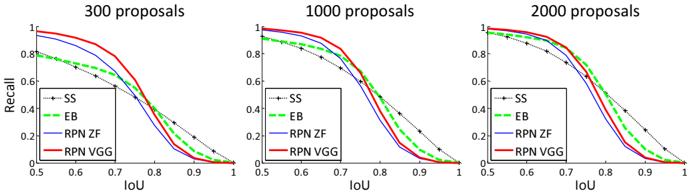
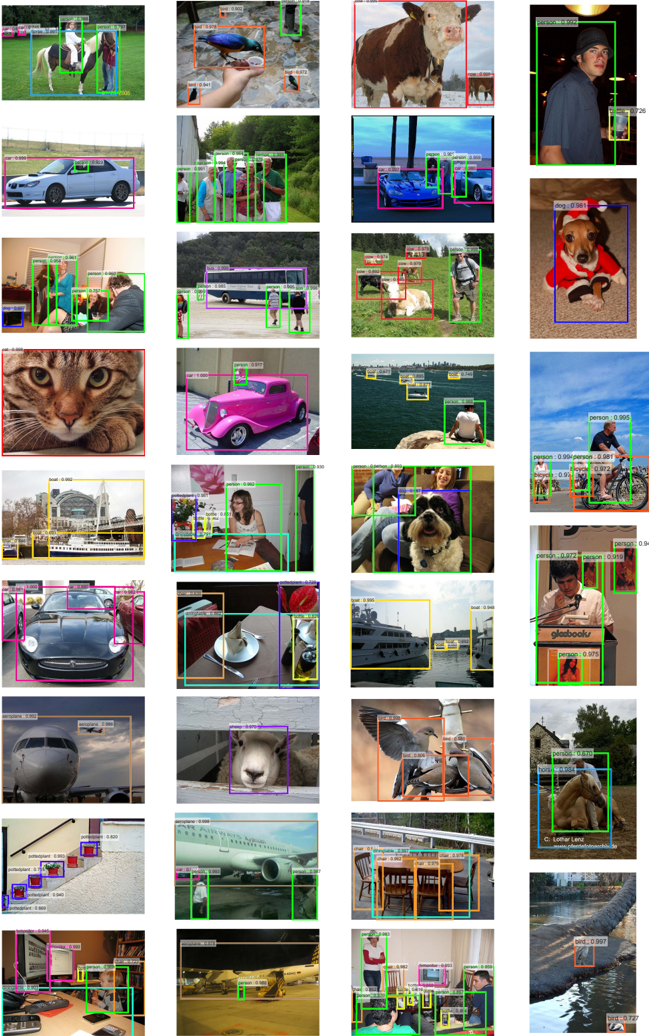
- With VGG-16 and shared features, Faster R-CNN reaches 69.9% mAP on PASCAL VOC 2007 test using 300 proposals, 73.2% with VOC07+12 training, 70.4% on VOC 2012 with 07++12, and 78.8% on VOC 2007 with COCO+07+12.
- Runtime: VGG-16 RPN + Fast R-CNN takes 198 ms total (5 fps), with RPN proposals costing 10 ms; ZF runs at 59 ms total (17 fps), versus SS + Fast R-CNN at 1830 ms (0.5 fps).
- Ablations: sharing features improves ZF mAP from 58.7% (unshared) to 59.9%; removing the reg layer drops mAP to 52.1%, and removing cls with 100 proposals drops it to 44.6%.
- On MS COCO test-dev, Faster R-CNN with VGG-16 and COCO train reaches 42.1% mAP@0.5 and 21.5% mAP@[.5,.95]; with COCO trainval it reaches 42.7% and 21.9%.
Methods
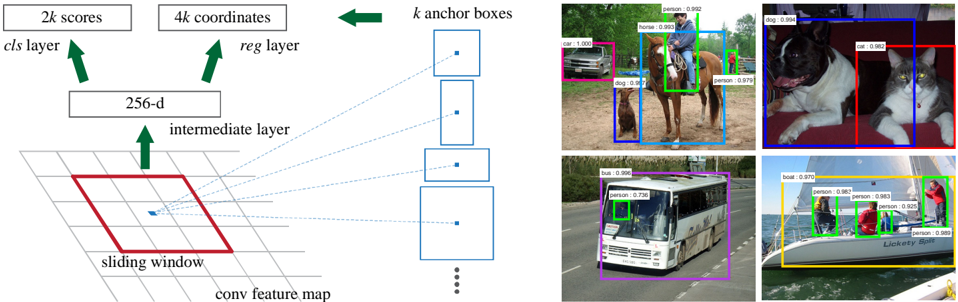
- The RPN is a fully convolutional network that slides a 3×3 window over shared conv features and predicts objectness scores and box regressions relative to anchors; default anchors use 3 scales (128², 256², 512²) and 3 aspect ratios (1:1, 1:2, 2:1), giving k = 9 anchors per position.
- Training uses a 4-step alternating scheme with ImageNet-pretrained ZF or VGG-16, SGD, single-scale images (shorter side s = 600), NMS at IoU 0.7, and 300 proposals at test time; evaluation is on PASCAL VOC 2007/2012 and MS COCO.
- Main metrics are detection mAP on PASCAL VOC and mAP@0.5 / mAP@[.5,.95] on MS COCO, with timing measured on a K40 GPU.
Limitations
- Stated in the paper: non-approximate joint training would require a differentiable RoI pooling/warping layer and is beyond the paper’s scope; the approximate joint training ignores gradients with respect to proposal box coordinates.
- Stated in the paper: cross-boundary anchors are ignored during training, and multi-scale feature extraction may improve accuracy but does not offer a good speed-accuracy trade-off.
- Evident from the text: the main experiments focus on PASCAL VOC and MS COCO with ZF/VGG-16 backbones, so generalization to other datasets, backbones, or detection regimes is not extensively characterized.
Model-written summary. Check it against the paper before relying on it.
Integrity signals
Registry
Cites
Statistics
Figures


Verification
Claims the paper makes
12 Valid · 5 Not valid · 8 Not checked · 83 Own results and interpretations
Every source the paper cites for this claim was checked and supports it.
In the paper
“Only by replacing VGG-16 with a 101layer residual net (ResNet-101) [18], the Faster R-CNN system increases the mAP from 41.5%/21.2% (VGG16) to 48.4%/27.2% (ResNet-101) on the COCO val set.”
What the sources say
- Supportedcites [18] [18] K. He, X. Zhang, S. Ren, and J. Sun, 'Deep residual learning for image recognition,' arXiv:1512.03385 , 2015. - source
Table 8 (p. 8) reports the exact COCO validation-set mAP values for baseline Faster R-CNN with VGG-16 and ResNet-101. Section 4.3 (p. 8) says the detection implementation was the same for both models and attributes the gain to replacing VGG-16 with ResNet-101. (LLM, conf=0.95)
plainstates a cause- Asserted: passes — The authors put it forward as true.
- Checkable: passes — It can be checked against evidence.
- Load-bearing: passes — The paper’s conclusions depend on it.
- Based: passes — The paper gives a reason why it holds.
- Supported
Every source the paper cites for this claim was checked and supports it.
In the paper
“This observation is still valid even when one increases the depth substantially to over 100 layers [18].”
What the sources say
- Supportedcites [18] [18] K. He, X. Zhang, S. Ren, and J. Sun, 'Deep residual learning for image recognition,' arXiv:1512.03385 , 2015. - source
In ImageNet Classification (p. 7), the paper reports that 101- and 152-layer ResNets outperform the 34-layer model, with no observed degradation. Its CIFAR-10 analysis (p. 7) also reports that a 110-layer ResNet converges well. These results support the stated extension to over 100 layers, although the isolated sentence does not specify what “this observation” refers to. (LLM, conf=0.87)
plain- Asserted: passes — The authors put it forward as true.
- Checkable: passes — It can be checked against evidence.
- Load-bearing: unclear — It is unclear whether the paper’s conclusions depend on it.
- Based: passes — The paper gives a reason why it holds.
- Supported
The cited sources support only part of this claim — read each source’s verdict below.
In the paper
“In ILSVRC and COCO 2015 competitions, Faster R-CNN and RPN are the basis of several 1st-place entries [18] in the tracks of ImageNet detection, ImageNet localization, COCO detection, and COCO segmentation.”
What the sources say
- Partly supportedcites [18] [18] K. He, X. Zhang, S. Ren, and J. Sun, 'Deep residual learning for image recognition,' arXiv:1512.03385 , 2015. - sourceExperimental — accuracy not yet measured
Section 4.3 (p. 8) lists first-place finishes in all four tracks, and the Object Detection Baselines (p. 10) describe a Faster R-CNN system using an RPN. The ImageNet Localization section (p. 12) also identifies its RPN-based method. But the copy attributes the entries collectively to deep residual nets; it does not establish that Faster R-CNN and RPN underpinned the COCO segmentation entry. (LLM, conf=0.86)
plainstates a cause- Asserted: passes — The authors put it forward as true.
- Checkable: passes — It can be checked against evidence.
- Load-bearing: unclear — It is unclear whether the paper’s conclusions depend on it.
- Based: passes — The paper gives a reason why it holds.
- Partly supported
The cited sources that could be checked couldn’t confirm or dispute this claim.
In the paper
“Yet when compared to efficient detection networks [2], Selective Search is an order of magnitude slower, at 2 seconds per image in a CPU implementation.”
What the sources say
- Could not verifycites [4] [4] J. R. Uijlings, K. E. van de Sande, T. Gevers, and A. W. Smeulders, 'Selective search for object recognition,' International Journal of Computer Vision (IJCV) , 2013. - sourceExperimental — accuracy not yet measured
The computational discussion in §5.3 (pp. 12–13) gives timings for complete object-recognition pipelines, not a two-second CPU runtime for Selective Search. The comparisons in §5.2.1 (p. 11) concern other object-location methods, not efficient detection networks. Searches for a two-second per-image runtime and a network comparison found neither claim in our copy. (LLM, conf=0.73)
- Not checked — no full text of the sourcecites [2] [2] R. Girshick, 'Fast R-CNN,' in IEEE International Conference on Computer Vision (ICCV) , 2015. - source
plainstates an association- Asserted: passes — The authors put it forward as true.
- Checkable: passes — It can be checked against evidence.
- Load-bearing: passes — The paper’s conclusions depend on it.
- Based: passes — The paper gives a reason why it holds.
- Could not verify
Every source the paper cites for this claim was checked and supports it.
In the paper
“We comprehensively evaluate our method on the PASCAL VOC detection benchmarks [11] where RPNs with Fast R-CNNs produce detection accuracy better than the strong baseline of Selective Search with Fast R-CNNs.”
What the sources say
- Supportedcites [11] [11] M. Everingham, L. Van Gool, C. K. I. Williams, J. Winn, and A. Zisserman, 'The PASCAL Visual Object Classes Challenge 2007 (VOC2007) Results,' 2007. - source
The citation is attached to “PASCAL VOC detection benchmarks,” not to the citing authors’ comparison of RPNs and Selective Search. Sections 5.2 and 6.2 describe the VOC detection task, its submitted methods, and its results, confirming the benchmark identification. (LLM, conf=0.92)
plainstates a cause- Asserted: passes — The authors put it forward as true.
- Checkable: passes — It can be checked against evidence.
- Load-bearing: passes — The paper’s conclusions depend on it.
- Based: passes — The paper gives a reason why it holds.
- Rests on an assumption not shown here.
- Supported
56 more claims
Create a free account to see all 108 claims and to verify the 2 references still open.
- Probably not a substantial claim. 11
- It may state two separate claims as one. 40
- The quote only partly states this claim. 1
Claims other papers make about this one
Each is checked against this paper’s own text: does it say what the citing paper says it does?
The source backs part of the claim, not all of it — or backs it for a different population, condition or comparison.
In the citing paper
“Unlike the original paper [19] that adopted stage-wise training regarding RPN, we use an improved implementation with end-to-end joint training similar to [37], which leads to higher baselines than [19].”
From Non-local Neural Networks (2018) · cites this paper as [37]
Experimental — accuracy not yet measuredThe source backs part of the claim, not all of it — or backs it for a different population, condition or comparison.
In the citing paper
“Faster RCNN is the first near-realtime deep learning detector (COCO mAP@.5=42.7%, VOC07 mAP=73.2%, 17fps with ZF-Net [48]).”
From Object Detection in 20 Years: A Survey (2023) · cites this paper as [19]
Experimental — accuracy not yet measuredThe source backs part of the claim, not all of it — or backs it for a different population, condition or comparison.
In the citing paper
“Faster RCNN is the first near-realtime deep learning detector (COCO mAP@.5=42.7%, VOC07 mAP=73.2%, 17fps with ZF-Net [48]).”
From Object Detection in 20 Years: A Survey (2023) · cites this paper as [47]
Experimental — accuracy not yet measuredThe source backs part of the claim, not all of it — or backs it for a different population, condition or comparison.
In the citing paper
“In the deep learning era, due to the increase of computing power, bootstrap was shortly discarded in object detection during 2014-2016 [16-20].”
From Object Detection in 20 Years: A Survey (2023) · cites this paper as [19]
Experimental — accuracy not yet measuredThe source backs part of the claim, not all of it — or backs it for a different population, condition or comparison.
In the citing paper
“The most commonly used idea to reduce the feature computational redundancy is to compute the feature map of the whole image only once [18, 19, 124], which have achieved tens or even hundreds of times of acceleration.”
From Object Detection in 20 Years: A Survey (2023) · cites this paper as [19]
Experimental — accuracy not yet measured
21 more claims about this paper
Create a free account to see every claim other papers make about this one.
Citations
Cites
Deep Residual Learning for Image Recognition
He, K., Zhang, X., Ren, S., & Sun, J. (2016) · 2016 IEEE Conference on Computer Vision and Pattern Recognition (CVPR) · doi:10.1109/cvpr.2016.90 · Cited by 235,474 · cited 7×
“to propose regions from data, and thus can easily benefit from deeper and more expressive features (such as the 101layer residual nets adopted in [18]).”
BackgroundInfluentialSelf-citationVery Deep Convolutional Networks for Large-Scale Image Recognition
Simonyan, K., & Zisserman, A. (2014) · arXiv · doi:10.48550/arxiv.1409.1556 · Cited by 114,148
ImageNet classification with deep convolutional neural networks
Krizhevsky, A., Sutskever, I., & Hinton, G. E. (2017) · Communications of the ACM · doi:10.1145/3065386 · Cited by 112,155 · cited 1×
“For the regression loss, we use L where R is the robust loss function (smooth L 1 ) defined in [5].”
MethodGoing deeper with convolutions
Szegedy, C., Liu, W., Jia, Y., Sermanet, P., Reed, S., Anguelov, D., Erhan, D., Vanhoucke, V., & Rabinovich, A. (2015) · 2015 IEEE Conference on Computer Vision and Pattern Recognition (CVPR) · doi:10.1109/cvpr.2015.7298594 · Cited by 48,562 · cited 1×
“1× 10(6) parameters (1536 × (4 + 1) × 800 for GoogleNet [34] in MultiBox [27]).”
Microsoft COCO: Common Objects in Context
Lin, T.-Y., Maire, M., Belongie, S., Hays, J., Perona, P., Ramanan, D., Dollár, P., & Zitnick, C. L. (2014) · Lecture Notes in Computer Science · doi:10.1007/978-3-319-10602-1_48 · Cited by 45,460 · cited 1×
“Region proposal methods typically rely on inexpensive features and economical inference schemes.”
MethodImageNet Large Scale Visual Recognition Challenge
Russakovsky, O., Deng, J., Su, H., Krause, J., Satheesh, S., Ma, S., Huang, Z., Karpathy, A., Khosla, A., Bernstein, M., et al. (2015) · International Journal of Computer Vision · doi:10.1007/s11263-015-0816-y · Cited by 39,380 · cited 1×
“, the shared convolutional layers) are initialized by pre-training a model for ImageNet classification [36], as is standard practice [5].”
MethodFully convolutional networks for semantic segmentation
Long, J., Shelhamer, E., & Darrell, T. (2015) · 2015 IEEE Conference on Computer Vision and Pattern Recognition (CVPR) · doi:10.1109/cvpr.2015.7298965 · Cited by 38,834 · cited 5×
“Our RPNs are thus a kind of fully-convolutional network (FCN) [14] and they can be trained end-to-end specifically for the task for generating detection proposals.”
BackgroundMethodInfluentialRich Feature Hierarchies for Accurate Object Detection and Semantic Segmentation
Girshick, R., Donahue, J., Darrell, T., & Malik, J. (2014) · 2014 IEEE Conference on Computer Vision and Pattern Recognition · doi:10.1109/cvpr.2014.81 · Cited by 32,684 · cited 7×
“, Selective Search [4] object detectors, RCNN [5], and Fast R-CNN [2]).”
BackgroundMethodInfluentialSelf-citationGirshick, R. (2015) · 2015 IEEE International Conference on Computer Vision (ICCV) · doi:10.1109/iccv.2015.169 · Cited by 28,105
Self-citationThe pascal visual object classes (VOC) challenge
Everingham, M., Van Gool, L., Williams, C. K. I., Winn, J., & Zisserman, A. (2010) · International Journal of Computer Vision · doi:10.1007/s11263-009-0275-4 · Cited by 19,599
Research works printed but not linked: 1
- [10] S. Ren, K. He, R. Girshick, and J. Sun, 'Faster R-CNN: Towards real-time object detection with region proposal networks,' in Neural Information Processing Systems (NIPS) , 2015. -
Cited by
Items 1,701–1,800 of 56,406
Learning Spatio-Temporal Representation With Local and Global Diffusion
Qiu, Z., Yao, T., Ngo, C.-W., Tian, X., & Mei, T. (2019) · 2019 IEEE/CVF Conference on Computer Vision and Pattern Recognition (CVPR) · doi:10.1109/cvpr.2019.01233 · Cited by 198
Learning to Track with Object Permanence
Tokmakov, P., Li, J., Burgard, W., & Gaidon, A. (2021) · 2021 IEEE/CVF International Conference on Computer Vision (ICCV) · doi:10.1109/iccv48922.2021.01068 · Cited by 226
“[7] utilize the box regression branch in the Faster RCNN detector [45] to propagate objects from frame t − 1 to t.”
MethodA hybrid deep architecture for robotic grasp detection
Guo, D., Sun, F., Liu, H., Kong, T., Fang, B., & Xi, N. (2017) · 2017 IEEE International Conference on Robotics and Automation (ICRA) · doi:10.1109/icra.2017.7989191 · Cited by 217
“Inspired by the Faster R-CNN [22] framework which integrates the region proposal network to the object detection network.”
MethodMulti-Granularity Generator for Temporal Action Proposal
Liu, Y., Ma, L., Zhang, Y., Liu, W., & Chang, S.-F. (2019) · 2019 IEEE/CVF Conference on Computer Vision and Pattern Recognition (CVPR) · doi:10.1109/cvpr.2019.00372 · Cited by 216
CitySim: A Drone-Based Vehicle Trajectory Dataset for Safety-Oriented Research and Digital Twins
Zheng, O., Abdel-Aty, M., Yue, L., Abdelraouf, A., Wang, Z., & Mahmoud, N. (2024) · Transportation Research Record: Journal of the Transportation Research Board · doi:10.1177/03611981231185768 · Cited by 216
“Object detection and tracking algorithms can be divided into one-stage algorithms (e.g., YOLO and its follow-up improvements [ 42–44 ]), multistage algorithms (e.g., R-CNN [ 45 ], fast R-CNN [ 46 ]), and anchor free algorithms ( 47 , 48 ).”
BackgroundStrengths and weaknesses of deep learning models for face recognition against image degradations
Grm, K., Štruc, V., Artiges, A., Caron, M., & Ekenel, H. K. (2018) · IET Biometrics · doi:10.1049/iet-bmt.2017.0083 · Cited by 216
“Recent advances in deep learning and convolutional neural networks (CNNs) have contributed to significant performance improvements in a number of computer vision problems, ranging from low-level vision tasks, such as saliency detection and modeling [3], [24] to higher-level problems such as object detection [10], [28]…”
BackgroundLearning to Anonymize Faces for Privacy Preserving Action Detection
Ren, Z., Lee, Y. J., & Ryoo, M. S. (2018) · Lecture Notes in Computer Science · doi:10.1007/978-3-030-01246-5_38 · Cited by 215
Deep 3D Object Detection Networks Using LiDAR Data: A Review
Wu, Y., Wang, Y., Zhang, S., & Ogai, H. (2021) · IEEE Sensors Journal · doi:10.1109/jsen.2020.3020626 · Cited by 216
“The advent of deep networks [32], [33] showed that a learning-based feature extraction may provide superior proposals as well as improve the second discriminative stage [1]–[3].”
BackgroundMethodInfluentialShorfuzzaman, M., Hossain, M. S., & Alhamid, M. F. (2021) · Sustainable Cities and Society · doi:10.1016/j.scs.2020.102582 · Cited by 216
“We present a two-stage detector called Faster R-CNN (Faster Region with Convolutional Neural Networks) (Ren, He, Girshick, & Sun, 2015) and two one-stage detectors called SSD (single shot multistage detector) (Liu et al., 2015) and YOLO (you only look once) (Redmon & Farhadi, 2017).”
MethodZhao, W., Xu, M., Cheng, X., & Zhao, Z. (2021) · IEEE Transactions on Instrumentation and Measurement · doi:10.1109/tim.2021.3112227 · Cited by 215
Revisiting Anchor Mechanisms for Temporal Action Localization
Yang, L., Peng, H., Zhang, D., Fu, J., & Han, J. (2020) · IEEE Transactions on Image Processing · doi:10.1109/tip.2020.3016486 · Cited by 216
Transductive Semi-Supervised Deep Learning Using Min-Max Features
Shi, W., Gong, Y., Ding, C., Ma, Z., Tao, X., & Zheng, N. (2018) · Lecture Notes in Computer Science · doi:10.1007/978-3-030-01228-1_19 · Cited by 215
“To date, Deep Convolutional Neural Networks (DCNNs) have shown state-of-the-art performances in numerous computer vision applications, such as image classification [1–5], object detection [6, 7], face recognition [8–10], image retrieval [11–14], etc.”
BackgroundHigh-Speed Ship Detection in SAR Images Based on a Grid Convolutional Neural Network
Zhang, T., & Zhang, X. (2019) · Remote Sensing · doi:10.3390/rs11101206 · Cited by 215
“However, the biggest disadvantage of R-CNN is the large number of calculations, resulting in very slow detection speed.”
BackgroundMethodInfluentialA survey: object detection methods from CNN to transformer
Arkin, E., Yadikar, N., Xu, X., Aysa, A., & Ubul, K. (2023) · Multimedia Tools and Applications · doi:10.1007/s11042-022-13801-3 · Cited by 215
“Faster R-CNN even compared with recent algorithms, it still a good algorithm, but there are also the following improvements: 1.”
BackgroundInfluentialDetection and localization of rebar in concrete by deep learning using ground penetrating radar
Liu, H., Lin, C., Cui, J., Fan, L., Xie, X., & Spencer, B. F. (2020) · Automation in Construction · doi:10.1016/j.autcon.2020.103279 · Cited by 213
Gong, H., Mu, T., Li, Q., Dai, H., Li, C., He, Z., Wang, W., Han, F., Tuniyazi, A., Li, H., et al. (2022) · Remote Sensing · doi:10.3390/rs14122861 · Cited by 211
Overview of two-stage object detection algorithms
Du, L., Zhang, R., & Wang, X. (2020) · Journal of Physics: Conference Series · doi:10.1088/1742-6596/1544/1/012033 · Cited by 215
Multiple Object Tracking with Correlation Learning
Wang, Q., Zheng, Y., Pan, P., & Xu, Y. (2021) · 2021 IEEE/CVF Conference on Computer Vision and Pattern Recognition (CVPR) · doi:10.1109/cvpr46437.2021.00387 · Cited by 215
Fully Quantized Network for Object Detection
Li, R., Wang, Y., Liang, F., Qin, H., Yan, J., & Fan, R. (2019) · 2019 IEEE/CVF Conference on Computer Vision and Pattern Recognition (CVPR) · doi:10.1109/cvpr.2019.00292 · Cited by 214
“In recent years, the dominant method for object detection has been anchor-based detection networks, including single stage detectors such as SSD [23], YOLO [25] and RetinaNet [21], and the two stage R-CNN series of detectors [7, 6, 26, 20].”
BackgroundMethodLai, Z.-H., Tao, W., Leu, M. C., & Yin, Z. (2020) · Journal of Manufacturing Systems · doi:10.1016/j.jmsy.2020.02.010 · Cited by 214
Air-to-Air Visual Detection of Micro-UAVs: An Experimental Evaluation of Deep Learning
Zheng, Y., Chen, Z., Lv, D., Li, Z., Lan, Z., & Zhao, S. (2021) · IEEE Robotics and Automation Letters · doi:10.1109/lra.2021.3056059 · Cited by 214
“eight representative deep-learning algorithms based on our proposed dataset: RetinaNet [8], SSD [9], YOLOv3 [10], FPN [11], Faster R-CNN [12], RefineDet [13], Grid R-CNN [14], and Cascade R-CNN [15].”
MethodCao, B., Zhao, J., Lv, Z., Gu, Y., Yang, P., & Halgamuge, S. K. (2020) · IEEE Transactions on Fuzzy Systems · doi:10.1109/tfuzz.2020.2972207 · Cited by 213
DSNet: A Flexible Detect-to-Summarize Network for Video Summarization
Zhu, W., Lu, J., Li, J., & Zhou, J. (2021) · IEEE Transactions on Image Processing · doi:10.1109/tip.2020.3039886 · Cited by 213
Moon, J. H., Lee, H., Shin, W., Kim, Y.-H., & Choi, E. (2022) · IEEE Journal of Biomedical and Health Informatics · doi:10.1109/jbhi.2022.3207502 · Cited by 212
Yolo V4 for Advanced Traffic Sign Recognition With Synthetic Training Data Generated by Various GAN
Dewi, C., Chen, R.-C., Liu, Y.-T., Jiang, X., & Hartomo, K. D. (2021) · IEEE Access · doi:10.1109/access.2021.3094201 · Cited by 213
A Survey on Visual TransformerPreprint
Han, K., Wang, Y., Chen, H., et al. (2020) · arXiv (Cornell University) · doi:10.48550/arxiv.2012.12556 · Cited by 214
Deng, J., Lu, Y., & Lee, V. C. (2020) · Computer-Aided Civil and Infrastructure Engineering · doi:10.1111/mice.12497 · Cited by 214
“For this reason, a box pyramid scale factor of 1.2 was used to successively upscale the size of the anchor box and allow multi-scale object detection with a finer resolution, instead of the factor of 2 that was used in the previous studies (Cha et al., 2018; Ren et al., 2015).”
BackgroundMethodInfluentialMask-Refined R-CNN: A Network for Refining Object Details in Instance Segmentation
Zhang, Y., Chu, J., Leng, L., & Miao, J. (2020) · Sensors · doi:10.3390/s20041010 · Cited by 214
Scale-Adaptive Convolutions for Scene Parsing
Zhang, R., Tang, S., Zhang, Y., Li, J., & Yan, S. (2017) · 2017 IEEE International Conference on Computer Vision (ICCV) · doi:10.1109/iccv.2017.224 · Cited by 195
Review of the State of the Art of Deep Learning for Plant Diseases: A Broad Analysis and Discussion
Hasan, R. I., Yusuf, S. M., & Alzubaidi, L. (2020) · Plants · doi:10.3390/plants9101302 · Cited by 213
“In the Faster-R-CNN version, the ROI is filtered via the fully convolutional region proposal network then, the filtered features are shared with a detection network called the ROI pooling network; this ensures that the extraction process is fast and accurate [100,101].”
MethodKnowledge base graph embedding module design for Visual question answering model
Zheng, W., Yin, L., Chen, X., Ma, Z., Liu, S., & Yang, B. (2021) · Pattern Recognition · doi:10.1016/j.patcog.2021.108153 · Cited by 214
Reconfigurable, non-volatile neuromorphic photovoltaics
Li, T., Miao, J., Fu, X., Song, B., Cai, B., Ge, X., Zhou, X., Zhou, P., Wang, X., Jariwala, D., et al. (2023) · Nature Nanotechnology · doi:10.1038/s41565-023-01446-8 · Cited by 213
“Conventional object detection models typically require direct regression of the coordinates of the top-left corner ( r , c ) or the object centre ( x , y ) and its height and width ( h , w ) 46,47 .”
BackgroundChen, Z., Hu, W., Wang, J., Zhao, S., Amos, B., Wu, G., Ha, K., Elgazzar, K., Pillai, P., Klatzky, R., et al. (2017) · Proceedings of the Second ACM/IEEE Symposium on Edge Computing · doi:10.1145/3132211.3134458 · Cited by 213
Mazzia, V., Khaliq, A., Salvetti, F., & Chiaberge, M. (2020) · IEEE Access · doi:10.1109/access.2020.2964608 · Cited by 212
“However, Faster R-CNN consists of region proposal networks (RPN) and clas-sification networks that produced excellent results in terms of accuracy, while the detection speed is slow, which can not achieve good results in real-time with high image resolution.”
MethodInfluentialDeepSOCIAL: Social Distancing Monitoring and Infection Risk Assessment in COVID-19 Pandemic
Rezaei, M., & Azarmi, M. (2020) · Applied Sciences · doi:10.3390/app10217514 · Cited by 212
Fast and accurate detection of kiwifruit in orchard using improved YOLOv3-tiny model
Fu, L., Feng, Y., Wu, J., Liu, Z., Gao, F., Majeed, Y., Al-Mallahi, A., Zhang, Q., Li, R., & Cui, Y. (2021) · Precision Agriculture · doi:10.1007/s11119-020-09754-y · Cited by 212
Face Mask Recognition System with YOLOV5 Based on Image Recognition
Yang, G., Feng, W., Jin, J., Lei, Q., Li, X., Gui, G., & Wang, W. (2020) · 2020 IEEE 6th International Conference on Computer and Communications (ICCC) · doi:10.1109/iccc51575.2020.9345042 · Cited by 211
Automatic detection method of tunnel lining multi‐defects via an enhanced You Only Look Once network
Zhou, Z., Zhang, J., & Gong, C. (2022) · Computer-Aided Civil and Infrastructure Engineering · doi:10.1111/mice.12836 · Cited by 211
MLCVNet: Multi-Level Context VoteNet for 3D Object Detection
Xie, Q., Lai, Y.-K., Wu, J., Wang, Z., Zhang, Y., Xu, K., & Wang, J. (2020) · 2020 IEEE/CVF Conference on Computer Vision and Pattern Recognition (CVPR) · doi:10.1109/cvpr42600.2020.01046 · Cited by 210
Deep Occlusion-Aware Instance Segmentation with Overlapping BiLayers
Ke, L., Tai, Y.-W., & Tang, C.-K. (2021) · 2021 IEEE/CVF Conference on Computer Vision and Pattern Recognition (CVPR) · doi:10.1109/cvpr46437.2021.00401 · Cited by 212
An Overview on Visual SLAM: From Tradition to Semantic
Chen, W., Shang, G., Ji, A., Zhou, C., Wang, X., Xu, C., Li, Z., & Hu, K. (2022) · Remote Sensing · doi:10.3390/rs14133010 · Cited by 211
SePiCo: Semantic-Guided Pixel Contrast for Domain Adaptive Semantic Segmentation
Xie, B., Li, S., Li, M., Liu, C. H., Huang, G., & Wang, G. (2023) · IEEE Transactions on Pattern Analysis and Machine Intelligence · doi:10.1109/tpami.2023.3237740 · Cited by 211
Sharma, A., Kumar, V., & Longchamps, L. (2024) · Smart Agricultural Technology · doi:10.1016/j.atech.2024.100648 · Cited by 212
Orthographic feature transform for monocular 3d object detection
Roddick, T., Kendall, A., & Cipolla, R. (2018) · arXiv · doi:10.48550/arxiv.1811.08188 · Cited by 211
Addressing Failure Prediction by Learning Model Confidence
Corbière, C., Thome, N., Bar-Hen, A., Cord, M., & Pérez, P. (2019) · arXiv · doi:10.48550/arxiv.1910.04851 · Cited by 211
“Deep neural networks have seen a wide adoption, driven by their impressive performance in various tasks including image classification [25], object recognition [43, 33, 37], natural language processing [34, 35], and speech recognition [18, 15].”
BackgroundCsillik, O., Cherbini, J., Johnson, R., Lyons, A., & Kelly, M. (2018) · Drones · doi:10.3390/drones2040039 · Cited by 210
“, Fast R-CNN, Faster R-CNN) that detect objects by identifying regions that are most likely to contain the object to be identified [77,78] are proving to be fast and efficient in detecting objects.”
BackgroundManagement of Thyroid Nodules Seen on US Images: Deep Learning May Match Performance of Radiologists
Buda, M., Wildman-Tobriner, B., Hoang, J. K., Thayer, D., Tessler, F. N., Middleton, W. D., & Mazurowski, M. A. (2019) · Radiology · doi:10.1148/radiol.2019181343 · Cited by 210
“To detect the calipers, we trained a Faster Region-based Convolutional Neural Network detection algorithm (13).”
MethodWordSup: Exploiting Word Annotations for Character Based Text Detection
Hu, H., Zhang, C., Luo, Y., Wang, Y., Han, J., & Ding, E. (2017) · 2017 IEEE International Conference on Computer Vision (ICCV) · doi:10.1109/iccv.2017.529 · Cited by 210
Multilabel Image Classification With Regional Latent Semantic Dependencies
Zhang, J., Wu, Q., Shen, C., Zhang, J., & Lu, J. (2018) · IEEE Transactions on Multimedia · doi:10.1109/tmm.2018.2812605 · Cited by 203
Concrete crack detection using context‐aware deep semantic segmentation network
Zhang, X., Rajan, D., & Story, B. (2019) · Computer-Aided Civil and Infrastructure Engineering · doi:10.1111/mice.12477 · Cited by 210
“A crack detection method using fast-Region-based Convolutional Neural Networks (RCNN) (Ren, He, Girshick, & Sun, 2015) with bounding box regression is used (Cha et al., 2018) to further improve the performance of traditional sliding-window-based deep CNNs.”
MethodAutomotive Radar Signal Processing: Research Directions and Practical Challenges
Engels, F., Heidenreich, P., Wintermantel, M., Stacker, L., Al Kadi, M., & Zoubir, A. M. (2021) · IEEE Journal of Selected Topics in Signal Processing · doi:10.1109/jstsp.2021.3063666 · Cited by 211
Multi-modal Graph Fusion for Named Entity Recognition with Targeted Visual Guidance
Zhang, D., Wei, S., Li, S., Wu, H., Zhu, Q., & Zhou, G. (2021) · Proceedings of the AAAI Conference on Artificial Intelligence · doi:10.1609/aaai.v35i16.17687 · Cited by 211
RetractedLaneRCNN: Distributed Representations for Graph-Centric Motion Forecasting
Zeng, W., Liang, M., Liao, R., & Urtasun, R. (2021) · 2021 IEEE/RSJ International Conference on Intelligent Robots and Systems (IROS) · doi:10.1109/iros51168.2021.9636035 · Cited by 210
Sparse Instance Activation for Real-Time Instance Segmentation
Cheng, T., Wang, X., Chen, S., Zhang, W., Zhang, Q., Huang, C., Zhang, Z., & Liu, W. (2022) · 2022 IEEE/CVF Conference on Computer Vision and Pattern Recognition (CVPR) · doi:10.1109/cvpr52688.2022.00439 · Cited by 210
3D Pose Regression Using Convolutional Neural Networks
Mahendran, S., Ali, H., & Vidal, R. (2017) · 2017 IEEE Conference on Computer Vision and Pattern Recognition Workshops (CVPRW) · doi:10.1109/cvprw.2017.73 · Cited by 210
Steel Surface Defect Recognition: A Survey
Wen, X., Shan, J., He, Y., & Song, K. (2022) · Coatings · doi:10.3390/coatings13010017 · Cited by 210
YOLO-SE: Improved YOLOv8 for Remote Sensing Object Detection and Recognition
Wu, T., & Dong, Y. (2023) · Applied Sciences · doi:10.3390/app132412977 · Cited by 210
“Notable two-stage object detection algorithms encompass Spatial Pyramid Pooling Networks (SPP-Net) [8], Region-based CNN (R-CNN) [9], and Faster R-CNN [10].”
BackgroundResultAdapNet: Adaptive semantic segmentation in adverse environmental conditions
Valada, A., Vertens, J., Dhall, A., & Burgard, W. (2017) · 2017 IEEE International Conference on Robotics and Automation (ICRA) · doi:10.1109/icra.2017.7989540 · Cited by 209
“Over the past years, Deep Convolutional Neural Network (DCNN) approaches have achieved impressive results in various visual perception problems including object classification [8], [21], [22], detection [6], [18] and scene parsing [1], [15], [17].”
BackgroundArbitrary Shape Scene Text Detection With Adaptive Text Region Representation
Wang, X., Jiang, Y., Luo, Z., Liu, C.-L., Choi, H., & Kim, S. (2019) · 2019 IEEE/CVF Conference on Computer Vision and Pattern Recognition (CVPR) · doi:10.1109/cvpr.2019.00661 · Cited by 209
“Let ( w, w ∗ ) indicates ( v i , v ∗ i ) or ( u i , u ∗ i ) , L reg ( w, w ∗ ) is defined as the smooth L1 loss as in Faster R-CNN [23]: For the stop/continue label classification loss term, it is also a binary classification and its loss is formatted similar as text/non-text classification loss.”
MethodInfluentialDeep learning-based automatic volumetric damage quantification using depth camera
Beckman, G. H., Polyzois, D., & Cha, Y.-J. (2019) · Automation in Construction · doi:10.1016/j.autcon.2018.12.006 · Cited by 209
Mochida, K., Koda, S., Inoue, K., Hirayama, T., Tanaka, S., Nishii, R., & Melgani, F. (2019) · GigaScience · doi:10.1093/gigascience/giy153 · Cited by 209
“Faster region-based CNN (RCNN) is a CNN-based region proposal network that enables representation of high-quality region proposals through end-to-end training [82].”
Dark Model Adaptation: Semantic Image Segmentation from Daytime to Nighttime
Dai, D., & Gool, L. V. (2018) · 2018 21st International Conference on Intelligent Transportation Systems (ITSC) · doi:10.1109/itsc.2018.8569387 · Cited by 207
Deep learning for autonomous ship-oriented small ship detection
Chen, Z., Chen, D., Zhang, Y., Cheng, X., Zhang, M., & Wu, C. (2020) · Safety Science · doi:10.1016/j.ssci.2020.104812 · Cited by 209
Meta Faster R-CNN: Towards Accurate Few-Shot Object Detection with Attentive Feature Alignment
Han, G., Huang, S., Ma, J., He, Y., & Chang, S.-F. (2022) · Proceedings of the AAAI Conference on Artificial Intelligence · doi:10.1609/aaai.v36i1.19959 · Cited by 211
Zhou, X., Yin, T., Koltun, V., & Krahenbuhl, P. (2022) · 2022 IEEE/CVF Conference on Computer Vision and Pattern Recognition (CVPR) · doi:10.1109/cvpr52688.2022.00857 · Cited by 209
“An object detector [8,36,45,70] takes the image I as input and produces a set of objects {pi} with locations {bi}, bi ∈ R(4) as its output.”
BackgroundMethodInfluentialMahmood, T., Arsalan, M., Owais, M., Lee, M. B., & Park, K. R. (2020) · Journal of Clinical Medicine · doi:10.3390/jcm9030749 · Cited by 209
“The The Faster R-CNN is a region-based CNN [28] that was presented in the object-detection competition of the ImageNet Large-Scale Visual Recognition Challenge 2015 [34].”
MethodInfluentialComputer vision for solid waste sorting: A critical review of academic research
Lu, W., & Chen, J. (2022) · Waste Management · doi:10.1016/j.wasman.2022.02.009 · Cited by 209
Learning Context Graph for Person Search
Yan, Y., Zhang, Q., Ni, B., Zhang, W., Xu, M., & Yang, X. (2019) · 2019 IEEE/CVF Conference on Computer Vision and Pattern Recognition (CVPR) · doi:10.1109/cvpr.2019.00226 · Cited by 209
Joint Training of Cascaded CNN for Face Detection
Qin, H., Yan, J., Li, X., & Hu, X. (2016) · 2016 IEEE Conference on Computer Vision and Pattern Recognition (CVPR) · doi:10.1109/cvpr.2016.376 · Cited by 208
“0% trained with 4-stage training method proposed in [21].”
BackgroundMethodAreas of Attention for Image Captioning
Pedersoli, M., Lucas, T., Schmid, C., & Verbeek, J. (2017) · 2017 IEEE International Conference on Computer Vision (ICCV) · doi:10.1109/iccv.2017.140 · Cited by 208
“Similarly to [29], we rescale the image so that the smaller image dimension is 300 pixels while keeping the original aspect-ratio.”
BackgroundMethodSnapshot Distillation: Teacher-Student Optimization in One Generation
Yang, C., Xie, L., Su, C., & Yuille, A. L. (2019) · 2019 IEEE/CVF Conference on Computer Vision and Pattern Recognition (CVPR) · doi:10.1109/cvpr.2019.00297 · Cited by 208
“The most powerful models, i.e. , the baseline and SD versions of ResNet152, are transferred using a standard approach, which preserves the network backbone (all layers before the final pooling layer), and introduces a network head known as Faster R-CNN [34] for object detetion, and DeepLab-v3 [4] for semantic segmentat…”
BackgroundMethodInfluentialA Coarse-Fine Network for Keypoint Localization
Huang, S., Gong, M., & Tao, D. (2017) · 2017 IEEE International Conference on Computer Vision (ICCV) · doi:10.1109/iccv.2017.329 · Cited by 193
Chargrid: Towards Understanding 2D Documents
Katti, A. R., Reisswig, C., Guder, C., Brarda, S., Bickel, S., Höhne, J., & Faddoul, J. B. (2018) · Proceedings of the 2018 Conference on Empirical Methods in Natural Language Processing · doi:10.18653/v1/d18-1476 · Cited by 199
Semi-Supervised and Unsupervised Deep Visual Learning: A Survey
Chen, Y., Mancini, M., Zhu, X., & Akata, Z. (2024) · IEEE Transactions on Pattern Analysis and Machine Intelligence · doi:10.1109/tpami.2022.3201576 · Cited by 220
Xiao, F., Wang, H., Xu, Y., & Zhang, R. (2023) · Agronomy · doi:10.3390/agronomy13061625 · Cited by 207
An efficient lightweight convolutional neural network for industrial surface defect detection
Zhang, D., Hao, X., Wang, D., Qin, C., Zhao, B., Liang, L., & Liu, W. (2023) · Artificial Intelligence Review · doi:10.1007/s10462-023-10438-y · Cited by 208
“The mAP scores of Faster R-CNN (ResNet), SSD (VGG), RetinaNet and CenterNet on this dataset are 5.77%, 12.37%, 6.24% and 26.41%.”
MethodInfluentialMonoDETR: Depth-guided Transformer for Monocular 3D Object Detection
Zhang, R., Qiu, H., Wang, T., Guo, Z., Cui, Z., Qiao, Y., Li, H., & Gao, P. (2023) · 2023 IEEE/CVF International Conference on Computer Vision (ICCV) · doi:10.1109/iccv51070.2023.00840 · Cited by 208
“2D object detectors [20, 21, 38] have achieved excellent performance in recent years but have cumbersome post-processing such as non-maximum suppression (NMS) [31, 1].”
BackgroundMethodInfluentialImproving the Performance of OpenCL-based FPGA Accelerator for Convolutional Neural Network
Zhang, J., & Li, J. (2017) · Proceedings of the 2017 ACM/SIGDA International Symposium on Field-Programmable Gate Arrays · doi:10.1145/3020078.3021698 · Cited by 208
“The Convolutional Neural Network (CNN) is currently the most popular deep learning architecture in the domain of artificial intel-CU ligence (AI) [8] and computer vision (CV) [5, 9, 10].”
BackgroundDeepIM: Deep Iterative Matching for 6D Pose Estimation
Li, Y., Wang, G., Ji, X., Xiang, Y., & Fox, D. (2020) · International Journal of Computer Vision · doi:10.1007/s11263-019-01250-9 · Cited by 208
“To demonstrate the robustness of our framework on pose initialization, we have implemented a simple 6D pose estimation method for pose initialization, where we extend the Faster R-CNN framework designed for 2D object detection (Ren et al. 2015) to 6D pose estimation.”
MethodInfluentialDeep Self-Taught Learning for Weakly Supervised Object Localization
Jie, Z., Wei, Y., Jin, X., Feng, J., & Liu, W. (2017) · 2017 IEEE Conference on Computer Vision and Pattern Recognition (CVPR) · doi:10.1109/cvpr.2017.457 · Cited by 207
“WSL is gaining increasing importance in largescale vision applications because it does not require expensive bounding box annotations like its fully-supervised counterpart [1, 2, 3, 4, 5, 6] in the model training phase.”
BackgroundTransVOD: End-to-End Video Object Detection With Spatial-Temporal Transformers
Zhou, Q., Li, X., He, L., Yang, Y., Cheng, G., Tong, Y., Ma, L., & Tao, D. (2023) · IEEE Transactions on Pattern Analysis and Machine Intelligence · doi:10.1109/tpami.2022.3223955 · Cited by 207
DocBank: A Benchmark Dataset for Document Layout Analysis
Li, M., Xu, Y., Cui, L., Huang, S., Wei, F., Li, Z., & Zhou, M. (2020) · Proceedings of the 28th International Conference on Computational Linguistics · doi:10.18653/v1/2020.coling-main.82 · Cited by 217
RelationTrack: Relation-Aware Multiple Object Tracking With Decoupled Representation
Yu, E., Li, Z., Han, S., & Wang, H. (2023) · IEEE Transactions on Multimedia · doi:10.1109/tmm.2022.3150169 · Cited by 207
“For example, Tracktor [35] adopts the bounding box regression module in Faster R-CNN [36] to correct the predicted results.”
MethodPan, X., Yang, T. Y., Xiao, Y., Yao, H., & Adeli, H. (2023) · Engineering Structures · doi:10.1016/j.engstruct.2023.115676 · Cited by 207
Machine Learning‐Enabled Smart Sensor Systems
Ha, N., Xu, K., Ren, G., Mitchell, A., & Ou, J. Z. (2020) · Advanced Intelligent Systems · doi:10.1002/aisy.202000063 · Cited by 207
Self-supervised 6D Object Pose Estimation for Robot Manipulation
Deng, X., Xiang, Y., Mousavian, A., Eppner, C., Bretl, T., & Fox, D. (2020) · 2020 IEEE International Conference on Robotics and Automation (ICRA) · doi:10.1109/icra40945.2020.9196714 · Cited by 207
“In general, any state-of-the-art object detector can be used, such as YOLO [32], SSD [33] or Faster R-CNN [34].”
MethodVideo Object Segmentation with Joint Re-identification and Attention-Aware Mask Propagation
Li, X., & Loy, C. C. (2018) · Lecture Notes in Computer Science · doi:10.1007/978-3-030-01219-9_6 · Cited by 207
Tracking by Instance Detection: A Meta-Learning Approach
Wang, G., Luo, C., Sun, X., Xiong, Z., & Zeng, W. (2020) · 2020 IEEE/CVF Conference on Computer Vision and Pattern Recognition (CVPR) · doi:10.1109/cvpr42600.2020.00632 · Cited by 206
“was proposed in Faster R-CNN detector [30], has been adopted in SiamRPN tracker and its variants [21, 20, 43].”
MethodPanopticFusion: Online Volumetric Semantic Mapping at the Level of Stuff and Things
Narita, G., Seno, T., Ishikawa, T., & Kaji, Y. (2019) · 2019 IEEE/RSJ International Conference on Intelligent Robots and Systems (IROS) · doi:10.1109/iros40897.2019.8967890 · Cited by 206
“After initialization with MS COCO [13] pre-trained weights, the network was fine-tuned by 4-step alternating learning [23] using an ADAM optimizer for 25 epochs with a learning rate of 0.”
MethodTowards Universal Object Detection by Domain Attention
Wang, X., Cai, Z., Gao, D., & Vasconcelos, N. (2019) · 2019 IEEE/CVF Conference on Computer Vision and Pattern Recognition (CVPR) · doi:10.1109/cvpr.2019.00746 · Cited by 206
Zhou, Y., Qi, H., & Ma, Y. (2019) · 2019 IEEE/CVF International Conference on Computer Vision (ICCV) · doi:10.1109/iccv.2019.00105 · Cited by 206
“Our pipeline and LoI pooling (Section 3.6) are conceptually similar to the RoI pooling in Faster RCNN and Fast R-CNN.”
BackgroundMethodInfluentialHSF-Net: Multiscale Deep Feature Embedding for Ship Detection in Optical Remote Sensing Imagery
Li, Q., Mou, L., Liu, Q., Wang, Y., & Zhu, X. X. (2018) · IEEE Transactions on Geoscience and Remote Sensing · doi:10.1109/tgrs.2018.2848901 · Cited by 206
Deep Learning on Multi Sensor Data for Counter UAV Applications—A Systematic Review
Samaras, S., Diamantidou, E., Ataloglou, D., Sakellariou, N., Vafeiadis, A., Magoulianitis, V., Lalas, A., Dimou, A., Zarpalas, D., Votis, K., et al. (2019) · Sensors · doi:10.3390/s19224837 · Cited by 206
“[93] designed and evaluated different pedestrian detection solutions based on the Faster-RCNN [94] architecture and registered multi-spectral (color and thermal) input data.”
MethodInfluentialUltra Fast Deep Lane Detection With Hybrid Anchor Driven Ordinal Classification
Qin, Z., Zhang, P., & Li, X. (2024) · IEEE Transactions on Pattern Analysis and Machine Intelligence · doi:10.1109/tpami.2022.3182097 · Cited by 206
“Usually, the regression methods work for a local range prediction setting [7], [8], [9], [10], [11], [12], [13], [14] and are relatively weak in modeling long-range and global localization [15], [16], [17].”
Person-in-WiFi: Fine-Grained Person Perception Using WiFi
Wang, F., Zhou, S., Panev, S., Han, J., & Huang, D. (2019) · 2019 IEEE/CVF International Conference on Computer Vision (ICCV) · doi:10.1109/iccv.2019.00555 · Cited by 206
“Recent prevalent approaches [20, 11, 15, 35, 56] use a powerful person detector such as Faster R-CNN [42], SSD [30] Yolo [41], FPN [29] to crop Region-of-Interest of each person from image feature maps.”
MethodInfluentialFully Motion-Aware Network for Video Object Detection
Wang, S., Zhou, Y., Yan, J., & Deng, Z. (2018) · Lecture Notes in Computer Science · doi:10.1007/978-3-030-01261-8_33 · Cited by 206
“In our method, all the modules, including feature extractor Nfeat, Nrpn, Nrfcn, pixel-level calibration, instance-level calibration and motion pattern reasoning are trained end-to-end.”
BackgroundMethodInfluentialA Video-Based Fire Detection Using Deep Learning Models
Kim, B., & Lee, J. (2019) · Applied Sciences · doi:10.3390/app9142862 · Cited by 206
Hierarchy Parsing for Image Captioning
Yao, T., Pan, Y., Li, Y., & Mei, T. (2019) · 2019 IEEE/CVF International Conference on Computer Vision (ICCV) · doi:10.1109/iccv.2019.00271 · Cited by 206
“Given an input image, we firstly apply Faster R-CNN trained on Visual Genome [16] to detect the image regions of objects.”
MethodInfluentialDeep Object Detection of Crop Weeds: Performance of YOLOv7 on a Real Case Dataset from UAV Images
Gallo, I., Rehman, A. U., Dehkordi, R. H., Landro, N., La Grassa, R., & Boschetti, M. (2023) · Remote Sensing · doi:10.3390/rs15020539 · Cited by 206
“To identify weeds using the LB and CP datasets, we used one of the SOTA YOLOv7 one-stage detectors and compared its performance with other one-stage detectors, such as YOLOv5 [23], YOLOv4 [22], and YOLOv3 [21], and two-stage detectors such as the Faster-RCNN [17].”
Learning a Mixture of Granularity-Specific Experts for Fine-Grained Categorization
Zhang, L., Huang, S., Liu, W., & Tao, D. (2019) · 2019 IEEE/CVF International Conference on Computer Vision (ICCV) · doi:10.1109/iccv.2019.00842 · Cited by 205
“Deep learning based methods has made significant progress in recent years [28, 35, 14, 36, 5, 4, 47, 43], especially in the field of fine-grained classification [6, 39, 37, 40, 45, 41].”
Background
Metadata
- Authors
- Ren, S., He, K., Girshick, R., & Sun, J.
- Affiliations
- University of Science and Technology of China (CN)
- Visual Computing Group, Microsoft Research, Beijing, China
- Meta (United States) (US)
- ORCID
- Venue
- IEEE Transactions on Pattern Analysis and Machine Intelligence
- Published
- 2017-06-01
- Volume
- 39
- Issue
- 6
- Pages
- 1137-1149
- ISSN
- 0162-8828 (ISSN-L)
- 2160-9292
- 1939-3539
- OpenAlex
- W639708223
- Cited by
- 73,472
- References
- 60
- Citations by year
- 2026: 5632 · 2025: 9233 · 2024: 9699 · 2023: 9795 · 2022: 9251 · 2021: 9857 · 2020: 7617 · 2019: 6376 · 2018: 3729 · 2017: 1740
- FWCI
- 2215.09
- Type
- journal article
- Language
- en
- Open access
- green
- arxiv.org
- Licence
- Locations
- IEEE Transactions on Pattern Analysis and Machine Intelligence (publishedVersion)
- PubMed (publishedVersion)
- arXiv (Cornell University) (submittedVersion)
- arXiv (Cornell University)
- neural information processing systems
- Funders
- Microsoft Research
- Topics
- Physical Sciences › Computer Science › Computer Vision and Pattern Recognition › Advanced Neural Network Applications
- Physical Sciences › Computer Science › Computer Vision and Pattern Recognition › Visual Attention and Saliency Detection
- Physical Sciences › Computer Science › Computer Vision and Pattern Recognition › Advanced Image and Video Retrieval Techniques
- Keywords
- Faster R-CNN, region proposal network, real-time object detection, Fast R-CNN, bounding box regression, VGG16, attention mechanism, end-to-end learning, Pascal VOC, MS COCO
About these checks
Registry, retraction, Cites and statistics results are computed, not judged, with one exception: a printed reference that no index lists is read once by a model before it counts as a citation error. Claims are extracted by a model and kept only when their quote appears verbatim in the text; each cited source is then checked, with a model’s help, for whether it says what the claim relies on. Those verdicts can be wrong — read the claim’s quote and the cited source before relying on one.
The claim verdicts this report counts are experimental: their accuracy is not yet measured.
A language model drew the claims from the paper on 2026-10-10, under version 3 of the claim definition (model deepseek-v4.1-flash, prompt extract-v3).
A second model labelled each claim on 2026-10-10 (model jev-1.13-20260917, definition revision gold-guideline-v0.2).
Cited sources are checked with a language model’s help (gpt-6-sol).
Statistics and arithmetic are recomputed, not judged.
Confidence bands are shown only for fields calibrated on our annotated test set. None is calibrated yet, so no band is shown.
What counts as a claim ›How we measure confidence ›How we check this ›
Are you an author, or do you see a problem with this page? Request a review
Data sources
Bibliographic data: Semantic Scholar, OpenAlex, Crossref.
Contains information from the Semantic Scholar Academic Graph Datasets, made available under the ODC Attribution License (ODC-BY 1.0).
Semantic Scholar’s data is described in: Kinney, R., et al. (2023). The Semantic Scholar Open Data Platform. arXiv:2301.10140.
