

Faster R-CNN: Towards Real-Time Object Detection with Region Proposal Networks
Open accessThe DOI matches its Crossref record; 56 of the 60 references it cites were found in a registry or an index; 15 of the 27 sources its claims cite were checked for support.
Abstract
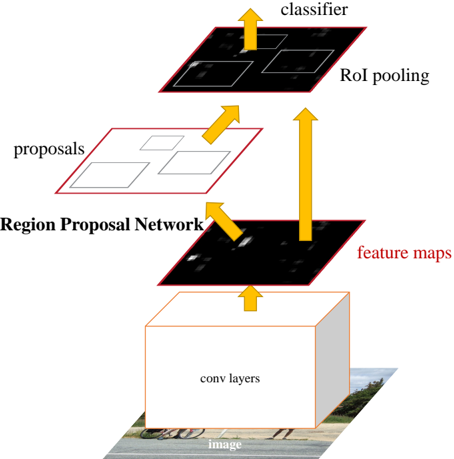
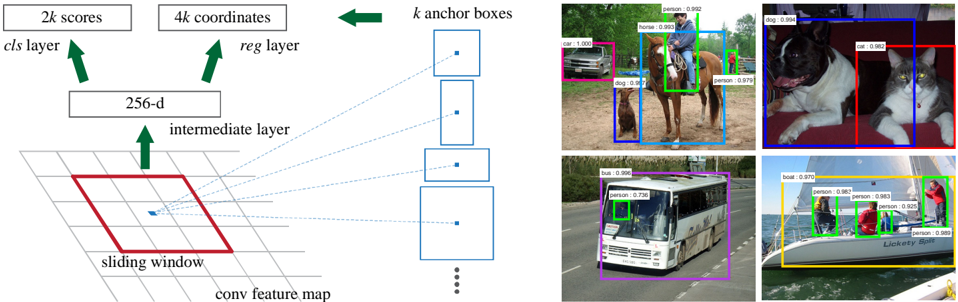
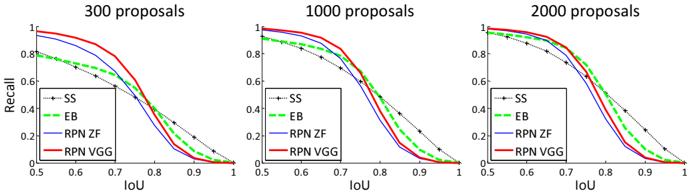
State-of-the-art object detection networks depend on region proposal algorithms to hypothesize object locations. Advances like SPPnet [1] and Fast R-CNN [2] have reduced the running time of these detection networks, exposing region proposal computation as a bottleneck. In this work, we introduce a Region Proposal Network (RPN) that shares full-image convolutional features with the detection network, thus enabling nearly cost-free region proposals. An RPN is a fully convolutional network that simultaneously predicts object bounds and objectness scores at each position. The RPN is trained end-to-end to generate high-quality region proposals, which are used by Fast R-CNN for detection. We further merge RPN and Fast R-CNN into a single network by sharing their convolutional features-using the recently popular terminology of neural networks with 'attention' mechanisms, the RPN component tells the unified network where to look. For the very deep VGG-16 model [3] , our detection system has a frame rate of 5 fps (including all steps) on a GPU, while achieving state-of-the-art object detection accuracy on PASCAL VOC 2007, 2012, and MS COCO datasets with only 300 proposals per image. In ILSVRC and COCO 2015 competitions, Faster R-CNN and RPN are the foundations of the 1st-place winning entries in several tracks. Code has been made publicly available.
Overview
CoChat Summary
TL;DR
Faster R-CNN introduces a Region Proposal Network (RPN) that shares convolutional features with Fast R-CNN, making region proposals nearly cost-free and enabling a unified object detection system. It achieves near real-time detection with state-of-the-art accuracy on PASCAL VOC and MS COCO.
Key findings
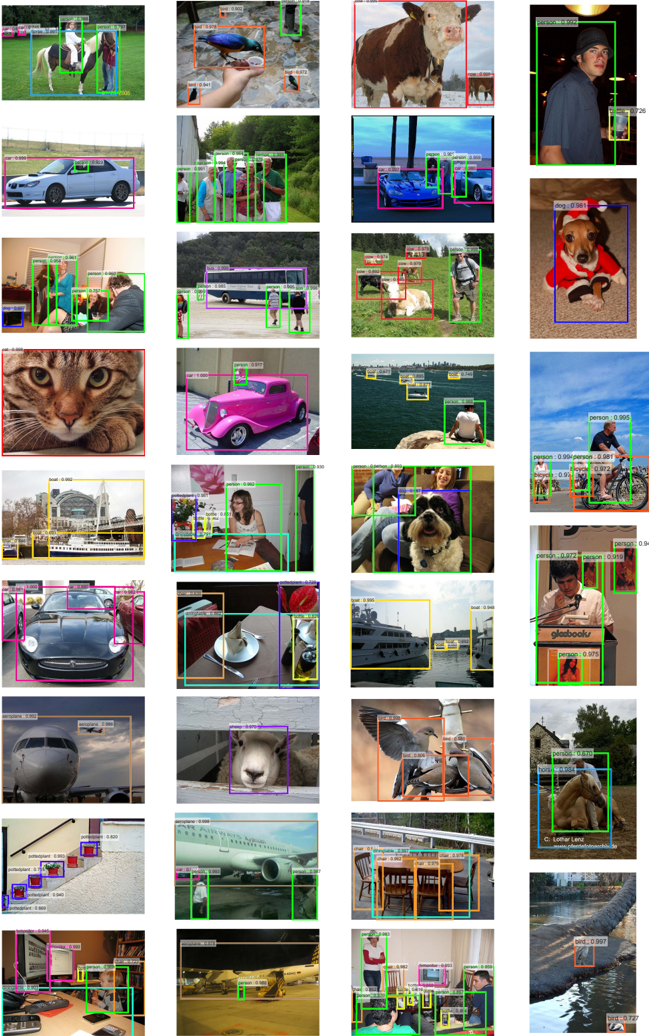
- With VGG-16 and shared features, Faster R-CNN reaches 69.9% mAP on PASCAL VOC 2007 test using 300 proposals, 73.2% with VOC07+12 training, 70.4% on VOC 2012 with 07++12, and 78.8% on VOC 2007 with COCO+07+12.
- Runtime: VGG-16 RPN + Fast R-CNN takes 198 ms total (5 fps), with RPN proposals costing 10 ms; ZF runs at 59 ms total (17 fps), versus SS + Fast R-CNN at 1830 ms (0.5 fps).
- Ablations: sharing features improves ZF mAP from 58.7% (unshared) to 59.9%; removing the reg layer drops mAP to 52.1%, and removing cls with 100 proposals drops it to 44.6%.
- On MS COCO test-dev, Faster R-CNN with VGG-16 and COCO train reaches 42.1% mAP@0.5 and 21.5% mAP@[.5,.95]; with COCO trainval it reaches 42.7% and 21.9%.
Methods
- The RPN is a fully convolutional network that slides a 3×3 window over shared conv features and predicts objectness scores and box regressions relative to anchors; default anchors use 3 scales (128², 256², 512²) and 3 aspect ratios (1:1, 1:2, 2:1), giving k = 9 anchors per position.
- Training uses a 4-step alternating scheme with ImageNet-pretrained ZF or VGG-16, SGD, single-scale images (shorter side s = 600), NMS at IoU 0.7, and 300 proposals at test time; evaluation is on PASCAL VOC 2007/2012 and MS COCO.
- Main metrics are detection mAP on PASCAL VOC and mAP@0.5 / mAP@[.5,.95] on MS COCO, with timing measured on a K40 GPU.
Limitations
- Stated in the paper: non-approximate joint training would require a differentiable RoI pooling/warping layer and is beyond the paper’s scope; the approximate joint training ignores gradients with respect to proposal box coordinates.
- Stated in the paper: cross-boundary anchors are ignored during training, and multi-scale feature extraction may improve accuracy but does not offer a good speed-accuracy trade-off.
- Evident from the text: the main experiments focus on PASCAL VOC and MS COCO with ZF/VGG-16 backbones, so generalization to other datasets, backbones, or detection regimes is not extensively characterized.
Model-written summary. Check it against the paper before relying on it.
Integrity signals
Registry
Cites
Statistics
Figures

Verification
Claims the paper makes
12 Valid · 5 Not valid · 8 Not checked · 83 Own results and interpretations
Every source the paper cites for this claim was checked and supports it.
In the paper
“Only by replacing VGG-16 with a 101layer residual net (ResNet-101) [18], the Faster R-CNN system increases the mAP from 41.5%/21.2% (VGG16) to 48.4%/27.2% (ResNet-101) on the COCO val set.”
What the sources say
- Supportedcites [18] [18] K. He, X. Zhang, S. Ren, and J. Sun, 'Deep residual learning for image recognition,' arXiv:1512.03385 , 2015. - source
Table 8 (p. 8) reports the exact COCO validation-set mAP values for baseline Faster R-CNN with VGG-16 and ResNet-101. Section 4.3 (p. 8) says the detection implementation was the same for both models and attributes the gain to replacing VGG-16 with ResNet-101. (LLM, conf=0.95)
plainstates a cause- Asserted: passes — The authors put it forward as true.
- Checkable: passes — It can be checked against evidence.
- Load-bearing: passes — The paper’s conclusions depend on it.
- Based: passes — The paper gives a reason why it holds.
- Supported
Every source the paper cites for this claim was checked and supports it.
In the paper
“This observation is still valid even when one increases the depth substantially to over 100 layers [18].”
What the sources say
- Supportedcites [18] [18] K. He, X. Zhang, S. Ren, and J. Sun, 'Deep residual learning for image recognition,' arXiv:1512.03385 , 2015. - source
In ImageNet Classification (p. 7), the paper reports that 101- and 152-layer ResNets outperform the 34-layer model, with no observed degradation. Its CIFAR-10 analysis (p. 7) also reports that a 110-layer ResNet converges well. These results support the stated extension to over 100 layers, although the isolated sentence does not specify what “this observation” refers to. (LLM, conf=0.87)
plain- Asserted: passes — The authors put it forward as true.
- Checkable: passes — It can be checked against evidence.
- Load-bearing: unclear — It is unclear whether the paper’s conclusions depend on it.
- Based: passes — The paper gives a reason why it holds.
- Supported
The cited sources support only part of this claim — read each source’s verdict below.
In the paper
“In ILSVRC and COCO 2015 competitions, Faster R-CNN and RPN are the basis of several 1st-place entries [18] in the tracks of ImageNet detection, ImageNet localization, COCO detection, and COCO segmentation.”
What the sources say
- Partly supportedcites [18] [18] K. He, X. Zhang, S. Ren, and J. Sun, 'Deep residual learning for image recognition,' arXiv:1512.03385 , 2015. - sourceExperimental — accuracy not yet measured
Section 4.3 (p. 8) lists first-place finishes in all four tracks, and the Object Detection Baselines (p. 10) describe a Faster R-CNN system using an RPN. The ImageNet Localization section (p. 12) also identifies its RPN-based method. But the copy attributes the entries collectively to deep residual nets; it does not establish that Faster R-CNN and RPN underpinned the COCO segmentation entry. (LLM, conf=0.86)
plainstates a cause- Asserted: passes — The authors put it forward as true.
- Checkable: passes — It can be checked against evidence.
- Load-bearing: unclear — It is unclear whether the paper’s conclusions depend on it.
- Based: passes — The paper gives a reason why it holds.
- Partly supported
The cited sources that could be checked couldn’t confirm or dispute this claim.
In the paper
“Yet when compared to efficient detection networks [2], Selective Search is an order of magnitude slower, at 2 seconds per image in a CPU implementation.”
What the sources say
- Could not verifycites [4] [4] J. R. Uijlings, K. E. van de Sande, T. Gevers, and A. W. Smeulders, 'Selective search for object recognition,' International Journal of Computer Vision (IJCV) , 2013. - sourceExperimental — accuracy not yet measured
The computational discussion in §5.3 (pp. 12–13) gives timings for complete object-recognition pipelines, not a two-second CPU runtime for Selective Search. The comparisons in §5.2.1 (p. 11) concern other object-location methods, not efficient detection networks. Searches for a two-second per-image runtime and a network comparison found neither claim in our copy. (LLM, conf=0.73)
- Not checked — no full text of the sourcecites [2] [2] R. Girshick, 'Fast R-CNN,' in IEEE International Conference on Computer Vision (ICCV) , 2015. - source
plainstates an association- Asserted: passes — The authors put it forward as true.
- Checkable: passes — It can be checked against evidence.
- Load-bearing: passes — The paper’s conclusions depend on it.
- Based: passes — The paper gives a reason why it holds.
- Could not verify
Every source the paper cites for this claim was checked and supports it.
In the paper
“We comprehensively evaluate our method on the PASCAL VOC detection benchmarks [11] where RPNs with Fast R-CNNs produce detection accuracy better than the strong baseline of Selective Search with Fast R-CNNs.”
What the sources say
- Supportedcites [11] [11] M. Everingham, L. Van Gool, C. K. I. Williams, J. Winn, and A. Zisserman, 'The PASCAL Visual Object Classes Challenge 2007 (VOC2007) Results,' 2007. - source
The citation is attached to “PASCAL VOC detection benchmarks,” not to the citing authors’ comparison of RPNs and Selective Search. Sections 5.2 and 6.2 describe the VOC detection task, its submitted methods, and its results, confirming the benchmark identification. (LLM, conf=0.92)
plainstates a cause- Asserted: passes — The authors put it forward as true.
- Checkable: passes — It can be checked against evidence.
- Load-bearing: passes — The paper’s conclusions depend on it.
- Based: passes — The paper gives a reason why it holds.
- Rests on an assumption not shown here.
- Supported
56 more claims
Create a free account to see all 108 claims and to verify the 2 references still open.
- Probably not a substantial claim. 11
- It may state two separate claims as one. 40
- The quote only partly states this claim. 1
Claims other papers make about this one
Each is checked against this paper’s own text: does it say what the citing paper says it does?
The source backs part of the claim, not all of it — or backs it for a different population, condition or comparison.
In the citing paper
“Unlike the original paper [19] that adopted stage-wise training regarding RPN, we use an improved implementation with end-to-end joint training similar to [37], which leads to higher baselines than [19].”
From Non-local Neural Networks (2018) · cites this paper as [37]
Experimental — accuracy not yet measuredThe source backs part of the claim, not all of it — or backs it for a different population, condition or comparison.
In the citing paper
“Faster RCNN is the first near-realtime deep learning detector (COCO mAP@.5=42.7%, VOC07 mAP=73.2%, 17fps with ZF-Net [48]).”
From Object Detection in 20 Years: A Survey (2023) · cites this paper as [19]
Experimental — accuracy not yet measuredThe source backs part of the claim, not all of it — or backs it for a different population, condition or comparison.
In the citing paper
“Faster RCNN is the first near-realtime deep learning detector (COCO mAP@.5=42.7%, VOC07 mAP=73.2%, 17fps with ZF-Net [48]).”
From Object Detection in 20 Years: A Survey (2023) · cites this paper as [47]
Experimental — accuracy not yet measuredThe source backs part of the claim, not all of it — or backs it for a different population, condition or comparison.
In the citing paper
“In the deep learning era, due to the increase of computing power, bootstrap was shortly discarded in object detection during 2014-2016 [16-20].”
From Object Detection in 20 Years: A Survey (2023) · cites this paper as [19]
Experimental — accuracy not yet measuredThe source backs part of the claim, not all of it — or backs it for a different population, condition or comparison.
In the citing paper
“The most commonly used idea to reduce the feature computational redundancy is to compute the feature map of the whole image only once [18, 19, 124], which have achieved tens or even hundreds of times of acceleration.”
From Object Detection in 20 Years: A Survey (2023) · cites this paper as [19]
Experimental — accuracy not yet measured
21 more claims about this paper
Create a free account to see every claim other papers make about this one.
Citations
Cites
Deep Residual Learning for Image Recognition
He, K., Zhang, X., Ren, S., & Sun, J. (2016) · 2016 IEEE Conference on Computer Vision and Pattern Recognition (CVPR) · doi:10.1109/cvpr.2016.90 · Cited by 235,474 · cited 7×
“to propose regions from data, and thus can easily benefit from deeper and more expressive features (such as the 101layer residual nets adopted in [18]).”
BackgroundInfluentialSelf-citationVery Deep Convolutional Networks for Large-Scale Image Recognition
Simonyan, K., & Zisserman, A. (2014) · arXiv · doi:10.48550/arxiv.1409.1556 · Cited by 114,148
ImageNet classification with deep convolutional neural networks
Krizhevsky, A., Sutskever, I., & Hinton, G. E. (2017) · Communications of the ACM · doi:10.1145/3065386 · Cited by 112,155 · cited 1×
“For the regression loss, we use L where R is the robust loss function (smooth L 1 ) defined in [5].”
MethodGoing deeper with convolutions
Szegedy, C., Liu, W., Jia, Y., Sermanet, P., Reed, S., Anguelov, D., Erhan, D., Vanhoucke, V., & Rabinovich, A. (2015) · 2015 IEEE Conference on Computer Vision and Pattern Recognition (CVPR) · doi:10.1109/cvpr.2015.7298594 · Cited by 48,562 · cited 1×
“1× 10(6) parameters (1536 × (4 + 1) × 800 for GoogleNet [34] in MultiBox [27]).”
Microsoft COCO: Common Objects in Context
Lin, T.-Y., Maire, M., Belongie, S., Hays, J., Perona, P., Ramanan, D., Dollár, P., & Zitnick, C. L. (2014) · Lecture Notes in Computer Science · doi:10.1007/978-3-319-10602-1_48 · Cited by 45,460 · cited 1×
“Region proposal methods typically rely on inexpensive features and economical inference schemes.”
MethodImageNet Large Scale Visual Recognition Challenge
Russakovsky, O., Deng, J., Su, H., Krause, J., Satheesh, S., Ma, S., Huang, Z., Karpathy, A., Khosla, A., Bernstein, M., et al. (2015) · International Journal of Computer Vision · doi:10.1007/s11263-015-0816-y · Cited by 39,380 · cited 1×
“, the shared convolutional layers) are initialized by pre-training a model for ImageNet classification [36], as is standard practice [5].”
MethodFully convolutional networks for semantic segmentation
Long, J., Shelhamer, E., & Darrell, T. (2015) · 2015 IEEE Conference on Computer Vision and Pattern Recognition (CVPR) · doi:10.1109/cvpr.2015.7298965 · Cited by 38,834 · cited 5×
“Our RPNs are thus a kind of fully-convolutional network (FCN) [14] and they can be trained end-to-end specifically for the task for generating detection proposals.”
BackgroundMethodInfluentialRich Feature Hierarchies for Accurate Object Detection and Semantic Segmentation
Girshick, R., Donahue, J., Darrell, T., & Malik, J. (2014) · 2014 IEEE Conference on Computer Vision and Pattern Recognition · doi:10.1109/cvpr.2014.81 · Cited by 32,684 · cited 7×
“, Selective Search [4] object detectors, RCNN [5], and Fast R-CNN [2]).”
BackgroundMethodInfluentialSelf-citationGirshick, R. (2015) · 2015 IEEE International Conference on Computer Vision (ICCV) · doi:10.1109/iccv.2015.169 · Cited by 28,105
Self-citationThe pascal visual object classes (VOC) challenge
Everingham, M., Van Gool, L., Williams, C. K. I., Winn, J., & Zisserman, A. (2010) · International Journal of Computer Vision · doi:10.1007/s11263-009-0275-4 · Cited by 19,599
Research works printed but not linked: 1
- [10] S. Ren, K. He, R. Girshick, and J. Sun, 'Faster R-CNN: Towards real-time object detection with region proposal networks,' in Neural Information Processing Systems (NIPS) , 2015. -
Cited by
Items 1,601–1,700 of 56,406
TransCenter: Transformers With Dense Representations for Multiple-Object Tracking
Xu, Y., Ban, Y., Delorme, G., Gan, C., Rus, D., & Alameda-Pineda, X. (2023) · IEEE Transactions on Pattern Analysis and Machine Intelligence · doi:10.1109/tpami.2022.3225078 · Cited by 226
Learning Object Bounding Boxes for 3D Instance Segmentation on Point Clouds
Yang, B., Wang, J., Clark, R., Hu, Q., Wang, S., Markham, A., & Trigoni, N. (2019) · arXiv (Cornell University) · doi:10.48550/arxiv.1906.01140 · Cited by 229
“However, most of these approaches rely on predefined anchors and the two-stage region proposal network [39].”
BackgroundMethodBrief History of Artificial Intelligence
Muthukrishnan, N., Maleki, F., Ovens, K., Reinhold, C., Forghani, B., & Forghani, R. (2020) · Neuroimaging Clinics of North America · doi:10.1016/j.nic.2020.07.004 · Cited by 229
Auto-FPN: Automatic Network Architecture Adaptation for Object Detection Beyond Classification
Xu, A., Yao, A., Li, A., Liang, A., & Zhang, A. (2019) · 2019 IEEE/CVF International Conference on Computer Vision (ICCV) · doi:10.1109/iccv.2019.00675 · Cited by 228
“C O C O Faster-RCNN [50] ResNet-101 34.”
BackgroundMethodInfluentialAnalyzing and Increasing the Reliability of Convolutional Neural Networks on GPUs
Santos, F. F. D., Pimenta, P. F., Lunardi, C., Draghetti, L., Carro, L., Kaeli, D., & Rech, P. (2019) · IEEE Transactions on Reliability · doi:10.1109/tr.2018.2878387 · Cited by 226
InstaBoost: Boosting Instance Segmentation via Probability Map Guided Copy-Pasting
Fang, H.-S., Sun, J., Wang, R., Gou, M., Li, Y.-L., & Lu, C. (2019) · 2019 IEEE/CVF International Conference on Computer Vision (ICCV) · doi:10.1109/iccv.2019.00077 · Cited by 228
Self-citationCCL: Cross-modal Correlation Learning With Multigrained Fusion by Hierarchical Network
Peng, Y., Qi, J., Huang, X., & Yuan, Y. (2018) · IEEE Transactions on Multimedia · doi:10.1109/tmm.2017.2742704 · Cited by 228
Learned Contextual Feature Reweighting for Image Geo-Localization
Kim, H. J., Dunn, E., & Frahm, J.-M. (2017) · 2017 IEEE Conference on Computer Vision and Pattern Recognition (CVPR) · doi:10.1109/cvpr.2017.346 · Cited by 228
“[15] that uses a region proposal network [44] to learn which regions should be pooled to form a global image descriptor.”
BackgroundAn Edge Network Orchestrator for Mobile Augmented Reality
Liu, Q., Huang, S., Opadere, J., & Han, T. (2018) · IEEE INFOCOM 2018 - IEEE Conference on Computer Communications · doi:10.1109/infocom.2018.8486241 · Cited by 228
“Although the object detection and recognition have been well studied in computer vision researches, the existing solutions are designed to run with powerful CPU/GPU and cannot be applied to MAR directly due to the limited computing resource in mobile devices [4]– [7].”
BackgroundStrawberry Yield Prediction Based on a Deep Neural Network Using High-Resolution Aerial Orthoimages
Chen, Y., Lee, W. S., Gan, H., Peres, N., Fraisse, C., Zhang, Y., & He, Y. (2019) · Remote Sensing · doi:10.3390/rs11131584 · Cited by 224
Fully Convolutional Grasp Detection Network with Oriented Anchor Box
Zhou, X., Lan, X., Zhang, H., Tian, Z., Zhang, Y., & Zheng, N. (2018) · 2018 IEEE/RSJ International Conference on Intelligent Robots and Systems (IROS) · doi:10.1109/iros.2018.8594116 · Cited by 235
Wang, Y., Jiang, Z., Li, Y., Hwang, J.-N., Xing, G., & Liu, H. (2021) · IEEE Journal of Selected Topics in Signal Processing · doi:10.1109/jstsp.2021.3058895 · Cited by 228
An Anchor-Free Detection Method for Ship Targets in High-Resolution SAR Images
Sun, Z., Dai, M., Leng, X., Lei, Y., Xiong, B., Ji, K., & Kuang, G. (2021) · IEEE Journal of Selected Topics in Applied Earth Observations and Remote Sensing · doi:10.1109/jstars.2021.3099483 · Cited by 227
Curriculum Temperature for Knowledge Distillation
Li, Z., Li, X., Yang, L., Zhao, B., Song, R., Luo, L., Li, J., & Yang, J. (2023) · Proceedings of the AAAI Conference on Artificial Intelligence · doi:10.1609/aaai.v37i2.25236 · Cited by 227
A real-time detection approach for bridge cracks based on YOLOv4-FPM
Yu, Z., Shen, Y., & Shen, C. (2021) · Automation in Construction · doi:10.1016/j.autcon.2020.103514 · Cited by 227
End-to-End Learning of Motion Representation for Video Understanding
Fan, L., Huang, W., Gan, C., Ermon, S., Gong, B., & Huang, J. (2018) · 2018 IEEE/CVF Conference on Computer Vision and Pattern Recognition · doi:10.1109/cvpr.2018.00630 · Cited by 230
Locate, Size and Count: Accurately Resolving People in Dense Crowds via Detection
Babu Sam, D., Peri, S. V., Narayanan Sundararaman, M., Kamath, A., & Radhakrishnan, V. B. (2020) · IEEE Transactions on Pattern Analysis and Machine Intelligence · doi:10.1109/tpami.2020.2974830 · Cited by 234
Concrete crack detection and quantification using deep learning and structured light
Park, S. E., Eem, S.-H., & Jeon, H. (2020) · Construction and Building Materials · doi:10.1016/j.conbuildmat.2020.119096 · Cited by 227
Sensors, Features, and Machine Learning for Oil Spill Detection and Monitoring: A Review
Al-Ruzouq, R., Gibril, M. B. A., Shanableh, A., Kais, A., Hamed, O., Al-Mansoori, S., & Khalil, M. A. (2020) · Remote Sensing · doi:10.3390/rs12203338 · Cited by 226
Patch2Pix: Epipolar-Guided Pixel-Level Correspondences
Zhou, Q., Sattler, T., & Leal-Taixe, L. (2021) · 2021 IEEE/CVF Conference on Computer Vision and Pattern Recognition (CVPR) · doi:10.1109/cvpr46437.2021.00464 · Cited by 226
Joint Activity Recognition and Indoor Localization With WiFi Fingerprints
Wang, F., Feng, J., Zhao, Y., Zhang, X., Zhang, S., & Han, J. (2019) · IEEE Access · doi:10.1109/access.2019.2923743 · Cited by 227
“C2D applies 2D convolutional kernels to sweep along the width and height of an image to capture its semantic and structural information for image classification [24]–[26], object detection [44], instance segmentation [27], etc.”
MethodDeep learning for face anti-spoofing: A survey
Yu, Z., Qin, Y., Li, X., Zhao, C., Lei, Z., & Zhao, G. (2022) · IEEE Transactions on Pattern Analysis and Machine Intelligence · doi:10.1109/tpami.2022.3215850 · Cited by 227
Application of Deep-Learning Methods to Bird Detection Using Unmanned Aerial Vehicle Imagery
Hong, S.-J., Han, Y., Kim, S.-Y., Lee, A.-Y., & Kim, G. (2019) · Sensors · doi:10.3390/s19071651 · Cited by 227
“, Alexnet [40], Googlenet (Inception) [44], VGGNet [45], Squeezenet [46], Resnet [47], or Densenet [48].”
BackgroundMethodResultInteractive perception: Leveraging action in perception and perception in action
Bohg, J., Hausman, K., Sankaran, B., Brock, O., Kragic, D., Schaal, S., & Sukhatme, G. S. (2017) · IEEE Transactions on Robotics · doi:10.1109/tro.2017.2721939 · Cited by 227
“t given only a single input image. A method has to cope with occlusions, different lighting conditions, scale of the images, just to name a few. State-of-the-art approaches in Computer Vision as e.g. [107, 108] require enormous amounts of training data to handle these variations. Interactive Perception approaches allo…”
MethodPrecise Detection in Densely Packed Scenes
Goldman, E., Herzig, R., Eisenschtat, A., Goldberger, J., & Hassner, T. (2019) · 2019 IEEE/CVF Conference on Computer Vision and Pattern Recognition (CVPR) · doi:10.1109/cvpr.2019.00537 · Cited by 227
“Method MAE RMSE Counting results on CARPK Faster R-CNN (2015) [38] 24.”
BackgroundMethodInfluentialLearning High-Precision Bounding Box for Rotated Object Detection via Kullback-Leibler Divergence
Yang, X., Yang, X., Yang, J., Ming, Q., Wang, W., Tian, Q. C., & Yan, J. (2021) · arXiv (Cornell University) · doi:10.48550/arxiv.2106.01883 · Cited by 227
“For horizontal bounding box regression, the model [7, 8, 9, 10, 11] mainly outputs four items for location and size:”
BackgroundMethodInfluentialHybrid Transformer with Multi-level Fusion for Multimodal Knowledge Graph Completion
Chen, X., Zhang, N., Li, L., Deng, S., Tan, C., Xu, C., Huang, F., Si, L., & Chen, H. (2022) · Proceedings of the 45th International ACM SIGIR Conference on Research and Development in Information Retrieval · doi:10.1145/3477495.3531992 · Cited by 226
Group DETR: Fast DETR Training with Group-Wise One-to-Many Assignment
Chen, Q., Chen, X., Wang, J., Zhang, S., Yao, K., Feng, H., Han, J., Ding, E., Zeng, G., & Wang, J. (2023) · 2023 IEEE/CVF International Conference on Computer Vision (ICCV) · doi:10.1109/iccv51070.2023.00610 · Cited by 238
Zhao, W., Yang, J., Sun, Y., Li, C., Wu, W., Jin, L., Yang, Z., Ni, B., Gao, P., Wang, P., et al. (2018) · Cancer Research · doi:10.1158/0008-5472.can-18-0696 · Cited by 226
On the Effectiveness of Least Squares Generative Adversarial Networks
Mao, X., Li, Q., Xie, H., Lau, R. Y. K., Wang, Z., & Smolley, S. P. (2019) · IEEE Transactions on Pattern Analysis and Machine Intelligence · doi:10.1109/tpami.2018.2872043 · Cited by 225
“DEEP learning has launched a profound reformation and even been applied to many real-world tasks, such as image classification [1], object detection [2], and segmentation [3].”
Hyperspectral Classification Based on Lightweight 3-D-CNN With Transfer Learning
Zhang, H., Li, Y., Jiang, Y., Wang, P., Shen, Q., & Shen, C. (2019) · IEEE Transactions on Geoscience and Remote Sensing · doi:10.1109/tgrs.2019.2902568 · Cited by 225
“Since 2012, when AlexNet [10] won the ImageNet classification challenge, deep learning (DL) has become a hot topic in computer vision including image classification [11], object detection [12], [13], tracking [14], and semantic segmentation [15].”
BackgroundCan a Machine Generate Humanlike Language Descriptions for a Remote Sensing Image?
Shi, Z., & Zou, Z. (2017) · IEEE Transactions on Geoscience and Remote Sensing · doi:10.1109/tgrs.2017.2677464 · Cited by 225
Ge, W., Yang, S., & Yu, Y. (2018) · 2018 IEEE/CVF Conference on Computer Vision and Pattern Recognition · doi:10.1109/cvpr.2018.00139 · Cited by 210
CAT-Net: Compression Artifact Tracing Network for Detection and Localization of Image Splicing
Kwon, M.-J., Yu, I.-J., Nam, S.-H., & Lee, H.-K. (2021) · 2021 IEEE Winter Conference on Applications of Computer Vision (WACV) · doi:10.1109/wacv48630.2021.00042 · Cited by 226
BAF-Detector: An Efficient CNN-Based Detector for Photovoltaic Cell Defect Detection
Su, B., Chen, H., & Zhou, Z. (2022) · IEEE Transactions on Industrial Electronics · doi:10.1109/tie.2021.3070507 · Cited by 223
Enhancing Social Media Analysis with Visual Data Analytics: A Deep Learning Approach
Shin, D., He, S., Lee, G. M., Whinston, A. B., Cetintas, S., & Lee, K.-C. (2020) · MIS Quarterly · doi:10.25300/misq/2020/14870 · Cited by 230
Multimodal vehicle detection: fusing 3D-LIDAR and color camera data
Asvadi, A., Garrote, L., Premebida, C., Peixoto, P., & J. Nunes, U. (2018) · Pattern Recognition Letters · doi:10.1016/j.patrec.2017.09.038 · Cited by 225
Synthesizing Training Data for Object Detection in Indoor Scenes
Georgakis, G., Mousavian, A., Berg, A., & Kosecka, J. (2017) · Robotics: Science and Systems XIII · doi:10.15607/rss.2017.xiii.043 · Cited by 225
Where Are the Blobs: Counting by Localization with Point Supervision
Laradji, I. H., Rostamzadeh, N., Pinheiro, P. O., Vazquez, D., & Schmidt, M. (2018) · Lecture Notes in Computer Science · doi:10.1007/978-3-030-01216-8_34 · Cited by 225
TextCaps: A Dataset for Image Captioning with Reading Comprehension
Sidorov, O., Hu, R., Rohrbach, M., & Singh, A. (2020) · Lecture Notes in Computer Science · doi:10.1007/978-3-030-58536-5_44 · Cited by 225
ICDAR2017 Competition on Reading Chinese Text in the Wild (RCTW-17)
Shi, B., Yao, C., Liao, M., Yang, M., Xu, P., Cui, L., Belongie, S., Lu, S., & Bai, X. (2017) · 2017 14th IAPR International Conference on Document Analysis and Recognition (ICDAR) · doi:10.1109/icdar.2017.233 · Cited by 224
Mini-YOLOv3: Real-Time Object Detector for Embedded Applications
Mao, Q.-C., Sun, H.-M., Liu, Y.-B., & Jia, R.-S. (2019) · IEEE Access · doi:10.1109/access.2019.2941547 · Cited by 224
The EPIC-KITCHENS Dataset: Collection, Challenges and Baselines
Damen, D., Doughty, H., Farinella, G. M., Fidler, S., Furnari, A., Kazakos, E., Moltisanti, D., Munro, J., Perrett, T., Price, W., et al. (2021) · IEEE Transactions on Pattern Analysis and Machine Intelligence · doi:10.1109/tpami.2020.2991965 · Cited by 221
Prime Sample Attention in Object Detection
Cao, Y., Chen, K., Loy, C. C., & Lin, D. (2020) · 2020 IEEE/CVF Conference on Computer Vision and Pattern Recognition (CVPR) · doi:10.1109/cvpr42600.2020.01160 · Cited by 243
Kim, S., Choi, J., Kim, T., & Kim, C. (2019) · 2019 IEEE/CVF International Conference on Computer Vision (ICCV) · doi:10.1109/iccv.2019.00619 · Cited by 224
“Faster R-CNN [26] further improves the performance via replacing selective search with a fully convolutional network called region proposal network (RPN).”
BackgroundMethodInfluentialWinoground: Probing Vision and Language Models for Visio-Linguistic Compositionality
Thrush, T., Jiang, R., Bartolo, M., Singh, A., Williams, A., Kiela, D., & Ross, C. (2022) · 2022 IEEE/CVF Conference on Computer Vision and Pattern Recognition (CVPR) · doi:10.1109/cvpr52688.2022.00517 · Cited by 224
“For the image embedding, five transformers (VisualBERT, ViLBERT, LXMERT, UNITER, ViLLA) [12,23,47,51,76] use region features extracted from the fc6 layer of a Faster R-CNN [58] trained on Visual Genome [43].”
MethodA Survey of Data-driven and Knowledge-aware eXplainable AI
Li, X.-H., Cao, C. C., Shi, Y., Bai, W., Gao, H., Qiu, L., Wang, C., Gao, Y., Zhang, S., Xue, X., et al. (2020) · IEEE Transactions on Knowledge and Data Engineering · doi:10.1109/tkde.2020.2983930 · Cited by 224
An Improved YOLOv2 for Vehicle Detection
Sang, J., Wu, Z., Guo, P., Hu, H., Xiang, H., Zhang, Q., & Cai, B. (2018) · Sensors · doi:10.3390/s18124272 · Cited by 223
“However, as a general object detection model, YOLOv2 is applicable to cases where there are a variety of classes to be detected, and the differences among the classes are large, such as persons, horses, and bicycles.”
Weakly Supervised Adversarial Domain Adaptation for Semantic Segmentation in Urban Scenes
Wang, Q., Gao, J., & Li, X. (2019) · IEEE Transactions on Image Processing · doi:10.1109/tip.2019.2910667 · Cited by 223
“Recently, convolutional neural networks (CNNs) have obtained the amazing performances in the three fundamental vision tasks: image classification [1]–[3], object detection [4], [5], and semantic segmentation [6].”
Intelligent Monitoring and Inspection of Power Line Components Powered by UAVs and Deep Learning
Nguyen, V. N., Jenssen, R., & Roverso, D. (2019) · IEEE Power and Energy Technology Systems Journal · doi:10.1109/jpets.2018.2881429 · Cited by 223
“To select an object detector for implementing the mast detector and the component detector, we evaluate four stateof-the-art object detectors, which are SSD [2], YOLO [17], Faster R-CNN [23], and R-FCN [16], in terms of speed and mean Average Precision (mAP) [24]:”
MethodSaliency-Aware Convolution Neural Network for Ship Detection in Surveillance Video
Shao, Z., Wang, L., Wang, Z., Du, W., & Wu, W. (2020) · IEEE Transactions on Circuits and Systems for Video Technology · doi:10.1109/tcsvt.2019.2897980 · Cited by 223
“1) Comparison with Other Detection Methods We compare our method with other detection methods, such as Fast R-CNN [10], Faster R-CNN [11], SSD [14], and”
MethodFruit detection, segmentation and 3D visualisation of environments in apple orchards
Kang, H., & Chen, C. (2020) · Computers and Electronics in Agriculture · doi:10.1016/j.compag.2020.105302 · Cited by 223
“tage detector and one-stage detector (Lin et al., 2017). The representative work of the two-stage detector is Region Convolution Neural Network (RCNN), which include Fast/Faster-RCNN (Girshick, 2015, Ren et al., 2015) and MaskRCNN (He et al., 2017). Faster-RCNN applies Region Proposal Network (RPN) and Region of Inter…”
MethodOW-DETR: Open-world Detection Transformer
Gupta, A., Narayan, S., Joseph, K. J., Khan, S., Khan, F. S., & Shah, M. (2022) · 2022 IEEE/CVF Conference on Computer Vision and Pattern Recognition (CVPR) · doi:10.1109/cvpr52688.2022.00902 · Cited by 223
“We also report the performance of Faster R-CNN [31] and the standard Deformable DETR (DDETR) [37] frameworks.”
BackgroundMethodInfluentialRethinking Efficient Lane Detection via Curve Modeling
Feng, Z., Guo, S., Tan, X., Xu, K., Wang, M., & Ma, L. (2022) · 2022 IEEE/CVF Conference on Computer Vision and Pattern Recognition (CVPR) · doi:10.1109/cvpr52688.2022.01655 · Cited by 225
Automated License Plate Recognition: A Survey on Methods and Techniques
Shashirangana, J., Padmasiri, H., Meedeniya, D., & Perera, C. (2021) · IEEE Access · doi:10.1109/access.2020.3047929 · Cited by 223
Vision-language navigation with self-supervised auxiliary reasoning tasks
Zhu, F., Zhu, Y., Chang, X., & Liang, X. (2020) · 2020 IEEE/CVF Conference on Computer Vision and Pattern Recognition (CVPR) · doi:10.1109/cvpr42600.2020.01003 · Cited by 223
Explainable and Explicit Visual Reasoning Over Scene Graphs
Shi, J., Zhang, H., & Li, J. (2019) · 2019 IEEE/CVF Conference on Computer Vision and Pattern Recognition (CVPR) · doi:10.1109/cvpr.2019.00857 · Cited by 223
“— mastering super-human skills in game playing [22], speech recognition [1], and image recognition [8, 20] — is mainly attributed to the “winning streak” of connectionism, more specifically, the deep neural networks [15], over the “old-school” symbolism, where their controversy can be dated back to the birth of A.”
BackgroundPP-YOLO: An Effective and Efficient Implementation of Object Detector
Long, X., Deng, K., Wang, G., Zhang, Y., Dang, Q., Gao, Y., Shen, H., Ren, J., Han, S., Ding, E., et al. (2020) · arXiv · doi:10.48550/arxiv.2007.12099 · Cited by 223
“Anchor-based methods are still the mainstream of object detection [33, 21, 31, 32, 1, 22, 28, 9, 45, 2, 5, 37, 20, 4, 15], which evolved from early proposal based detectors, such as Fast R-CNN [11].”
BackgroundMethodPixelwise Instance Segmentation with a Dynamically Instantiated Network
Arnab, A., & Torr, P. H. S. (2017) · 2017 IEEE Conference on Computer Vision and Pattern Recognition (CVPR) · doi:10.1109/cvpr.2017.100 · Cited by 222
“This network can be seen as an extension of the end-to-end Faster-RCNN [37] detection framework, which generates box-proposals and classifies them.”
Speaking the Same Language: Matching Machine to Human Captions by Adversarial Training
Shetty, R., Rohrbach, M., Hendricks, L. A., Fritz, M., & Schiele, B. (2017) · 2017 IEEE International Conference on Computer Vision (ICCV) · doi:10.1109/iccv.2017.445 · Cited by 222
“Following [36], we additionally extract 80-dimensional object detection features using a Faster Region-Based Convolutional Neural Network (RCNN) [32] trained on the 80 object categories in the COCO dataset.”
WiderPerson: A Diverse Dataset for Dense Pedestrian Detection in the Wild
Zhang, S., Xie, Y., Wan, J., Xia, H., Li, S. Z., & Guo, G. (2020) · IEEE Transactions on Multimedia · doi:10.1109/tmm.2019.2929005 · Cited by 222
“Before delving into our new dataset, we first build two strong baseline detectors as a tool for our experiment analyses based on Faster R-CNN [11] and RetinaNet [58], which are two repre-”
MethodResultInfluentialCitrus disease detection and classification using end-to-end anchor-based deep learning model
Syed-Ab-Rahman, S. F., Hesamian, M. H., & Prasad, M. (2022) · Applied Intelligence · doi:10.1007/s10489-021-02452-w · Cited by 222
“The proposed network structure for this study is a two-stage deep convolutional neural network based on Faster R-CNN [47].”
MethodAutomatic Colon Polyp Detection Using Region Based Deep CNN and Post Learning Approaches
Shin, Y., Qadir, H. A., Aabakken, L., Bergsland, J., & Balasingham, I. (2018) · IEEE Access · doi:10.1109/access.2018.2856402 · Cited by 219
Iterative Answer Prediction With Pointer-Augmented Multimodal Transformers for TextVQA
Hu, R., Singh, A., Darrell, T., & Rohrbach, M. (2020) · 2020 IEEE/CVF Conference on Computer Vision and Pattern Recognition (CVPR) · doi:10.1109/cvpr42600.2020.01001 · Cited by 217
Instant-Teaching: An End-to-End Semi-Supervised Object Detection Framework
Zhou, Q., Yu, C., Wang, Z., Qian, Q., & Li, H. (2021) · 2021 IEEE/CVF Conference on Computer Vision and Pattern Recognition (CVPR) · doi:10.1109/cvpr46437.2021.00407 · Cited by 226
A Review of Vehicle Detection Techniques for Intelligent Vehicles
Wang, Z., Zhan, J., Duan, C., Guan, X., Lu, P., & Yang, K. (2023) · IEEE Transactions on Neural Networks and Learning Systems · doi:10.1109/tnnls.2021.3128968 · Cited by 220
Automatic bridge crack detection using Unmanned aerial vehicle and Faster R-CNN
Li, R., Yu, J., Li, F., Yang, R., Wang, Y., & Peng, Z. (2023) · Construction and Building Materials · doi:10.1016/j.conbuildmat.2022.129659 · Cited by 222
A large-scale study on unsupervised spatiotemporal representation learning
Feichtenhofer, C., Fan, H., Xiong, B., Girshick, R., & He, K. (2021) · 2021 IEEE/CVF Conference on Computer Vision and Pattern Recognition (CVPR) · doi:10.1109/cvpr46437.2021.00331 · Cited by 222
Self-citationActor-Centric Relation Network
Sun, C., Shrivastava, A., Vondrick, C., Murphy, K., Sukthankar, R., & Schmid, C. (2018) · Lecture Notes in Computer Science · doi:10.1007/978-3-030-01252-6_20 · Cited by 222
Zhang, R., Xu, L., Yu, Z., Shi, Y., Mu, C., & Xu, M. (2022) · IEEE Transactions on Multimedia · doi:10.1109/tmm.2021.3070138 · Cited by 222
Object detection from UAV thermal infrared images and videos using YOLO models
Jiang, C., Ren, H., Ye, X., Zhu, J., Zeng, H., Nan, Y., Sun, M., Ren, X., & Huo, H. (2022) · International Journal of Applied Earth Observation and Geoinformation · doi:10.1016/j.jag.2022.102912 · Cited by 220
Ling, Q., & Isa, N. A. M. (2023) · IEEE Access · doi:10.1109/access.2023.3245093 · Cited by 223
Xu, X., Zhang, X., & Zhang, T. (2022) · Remote Sensing · doi:10.3390/rs14041018 · Cited by 221
RoarNet: A Robust 3D Object Detection based on RegiOn Approximation Refinement
Shin, K., Kwon, Y. P., & Tomizuka, M. (2019) · 2019 IEEE Intelligent Vehicles Symposium (IV) · doi:10.1109/ivs.2019.8813895 · Cited by 221
“The architecture of our model is analogous to standard two stage object detectors for 2D image such as Fast-RCNN and Faster-RCNN [1], [2], and we adopt several modifications in order to make training of each stage easier (Section III-B).”
MethodRoboTHOR: An Open Simulation-to-Real Embodied AI Platform
Deitke, M., Han, W., Herrasti, A., Kembhavi, A., Kolve, E., Mottaghi, R., Salvador, J., Schwenk, D., VanderBilt, E., Wallingford, M., et al. (2020) · 2020 IEEE/CVF Conference on Computer Vision and Pattern Recognition (CVPR) · doi:10.1109/cvpr42600.2020.00323 · Cited by 220
“Image+Detection-A3C - The image is fed into FasterRCNN [48] trained on the MSCOCO dataset.”
BackgroundMethodPixel-level crack delineation in images with convolutional feature fusion
Ni, F., Zhang, J., & Chen, Z. (2019) · Structural Control and Health Monitoring · doi:10.1002/stc.2286 · Cited by 220
Instance-Aware, Context-Focused, and Memory-Efficient Weakly Supervised Object Detection
Ren, Z., Yu, Z., Yang, X., Liu, M.-Y., Lee, Y. J., Schwing, A. G., & Kautz, J. (2020) · 2020 IEEE/CVF Conference on Computer Vision and Pattern Recognition (CVPR) · doi:10.1109/cvpr42600.2020.01061 · Cited by 225
Underwater target detection based on Faster R-CNN and adversarial occlusion network
Zeng, L., Sun, B., & Zhu, D. (2021) · Engineering Applications of Artificial Intelligence · doi:10.1016/j.engappai.2021.104190 · Cited by 221
Deng, J., Singh, A., Zhou, Y., Lu, Y., & Lee, V. C.-S. (2022) · Construction and Building Materials · doi:10.1016/j.conbuildmat.2022.129238 · Cited by 217
Mask-Guided Attention Network for Occluded Pedestrian Detection
Pang, Y., Xie, J., Khan, M. H., Anwer, R. M., Khan, F. S., & Shao, L. (2019) · 2019 IEEE/CVF International Conference on Computer Vision (ICCV) · doi:10.1109/iccv.2019.00507 · Cited by 220
“1 displays the performance of baseline Faster R-CNN pedestrian detector [24] under heavy occlusions.”
BackgroundMethodInfluentialLocalization Distillation for Dense Object Detection
Zheng, Z., Ye, R., Wang, P., Ren, D., Zuo, W., Hou, Q., & Cheng, M.-M. (2022) · 2022 IEEE/CVF Conference on Computer Vision and Pattern Recognition (CVPR) · doi:10.1109/cvpr52688.2022.00919 · Cited by 220
“Recently, bounding box representation has evolved from Dirac delta distribution [32,39,42] to Gaussian distribution [7,18], and further to probability distribution [28, 37].”
BackgroundMethodInfluentialRobust Methods for Real-Time Diabetic Foot Ulcer Detection and Localization on Mobile Devices
Goyal, M., Reeves, N. D., Rajbhandari, S., & Yap, M. H. (2019) · IEEE Journal of Biomedical and Health Informatics · doi:10.1109/jbhi.2018.2868656 · Cited by 220
“…has two-stage loss Single Shot Multibox Detector (SSD) [42] is a new architecture for the object localization which uses a single stage CNN to predict classes directly and anchor offsets without the need of second stage proposal generator unlike Faster R-CNN [39] and R-FCN [41] as shown in the Fig.”
BackgroundMethodInfluentialPillar-Based Object Detection for Autonomous Driving
Wang, Y., Fathi, A., Kundu, A., Ross, D. A., Pantofaru, C., Funkhouser, T., & Solomon, J. (2020) · Lecture Notes in Computer Science · doi:10.1007/978-3-030-58542-6_2 · Cited by 220
Multi-Temporal Remote Sensing Image Registration Using Deep Convolutional Features
Yang, Z., Dan, T., & Yang, Y. (2018) · IEEE Access · doi:10.1109/access.2018.2853100 · Cited by 219
Burlina, P., Pacheco, K. D., Joshi, N., Freund, D. E., & Bressler, N. M. (2017) · Computers in Biology and Medicine · doi:10.1016/j.compbiomed.2017.01.018 · Cited by 219
“In particular, recent progress in DCNN have exploited deeper networks, better DCNN parameter optimization, and expanded computational power afforded by GPUs, which in turn have led to substantial performance improvement in visual recognition tasks [16],[18],[23],[24],[25],[26],[27],[28],[29].”
BackgroundLiu, H., Zhang, C., Deng, Y., Xie, B., Liu, T., & Li, Y.-F. (2025) · IEEE Transactions on Multimedia · doi:10.1109/tmm.2023.3238548 · Cited by 219
“Due to the task agnostic inherent feature of the DL network architecture, BRL methods are widely used for numerous computer vision tasks [3], [10], [23], [24], [25], [26] and nature language processing tasks [19].”
Borrowing Treasures from the Wealthy: Deep Transfer Learning through Selective Joint Fine-Tuning
Ge, W., & Yu, Y. (2017) · 2017 IEEE Conference on Computer Vision and Pattern Recognition (CVPR) · doi:10.1109/cvpr.2017.9 · Cited by 221
Using a Single RGB Frame for Real Time 3D Hand Pose Estimation in the Wild
Panteleris, P., Oikonomidis, I., & Argyros, A. (2018) · 2018 IEEE Winter Conference on Applications of Computer Vision (WACV) · doi:10.1109/wacv.2018.00054 · Cited by 201
Soviany, P., & Ionescu, R. T. (2018) · 2018 20th International Symposium on Symbolic and Numeric Algorithms for Scientific Computing (SYNASC) · doi:10.1109/synasc.2018.00041 · Cited by 217
Surface crack detection using deep learning with shallow CNN architecture for enhanced computation
Kim, B., Yuvaraj, N., Sri Preethaa, K. R., & Arun Pandian, R. (2021) · Neural Computing and Applications · doi:10.1007/s00521-021-05690-8 · Cited by 217
Fu, L., Majeed, Y., Zhang, X., Karkee, M., & Zhang, Q. (2020) · Biosystems Engineering · doi:10.1016/j.biosystemseng.2020.07.007 · Cited by 218
Hu, W.-S., Li, H.-C., Pan, L., Li, W., Tao, R., & Du, Q. (2020) · IEEE Transactions on Geoscience and Remote Sensing · doi:10.1109/tgrs.2019.2961947 · Cited by 218
Seeing Out of tHe bOx: End-to-End Pre-training for Vision-Language Representation Learning
Huang, Z., Zeng, Z., Huang, Y., Liu, B., Fu, D., & Fu, J. (2021) · 2021 IEEE/CVF Conference on Computer Vision and Pattern Recognition (CVPR) · doi:10.1109/cvpr46437.2021.01278 · Cited by 221
A Progressive Review: Emerging Technologies for ADAS Driven Solutions
Nidamanuri, J., Nibhanupudi, C., Assfalg, R., & Venkataraman, H. (2022) · IEEE Transactions on Intelligent Vehicles · doi:10.1109/tiv.2021.3122898 · Cited by 217
Chen, L., Chen, H., Wei, Z., Jin, X., Tan, X., Jin, Y., & Chen, E. (2022) · 2022 IEEE/CVF Conference on Computer Vision and Pattern Recognition (CVPR) · doi:10.1109/cvpr52688.2022.00704 · Cited by 223
Ampatzidis, Y., Partel, V., & Costa, L. (2020) · Computers and Electronics in Agriculture · doi:10.1016/j.compag.2020.105457 · Cited by 218
“Furthermore, instead of a YOLO (Redmon and Farhadi, 2018) algorithm (adopted by Ampatzidis and Partel, 2019), this proposed methodology uses a Faster R-CNN algo-rithm (Ren et al., 2015) for the first CNN tree detection.”
MethodLearning JPEG Compression Artifacts for Image Manipulation Detection and Localization
Kwon, M.-J., Nam, S.-H., Yu, I.-J., Lee, H.-K., & Kim, C. (2022) · International Journal of Computer Vision · doi:10.1007/s11263-022-01617-5 · Cited by 218
“They design a neural network based on U-Net (Ronneberger et al. 2015) and analyze the conventional semantic property by providing an RGB pixel image as input to the network.”
MethodEnd-to-End Object Detection with Fully Convolutional Network
Wang, J., Song, L., Li, Z., Sun, H., Sun, J., & Zheng, N. (2021) · 2021 IEEE/CVF Conference on Computer Vision and Pattern Recognition (CVPR) · doi:10.1109/cvpr46437.2021.01559 · Cited by 235
“Modern onestage [22, 25, 31, 38, 29, 7] or two-stage detectors [33, 21, 2] heavily rely on the anchors or anchor-based proposals.”
BackgroundSelf-citationDepth-Based 3D Hand Pose Estimation: From Current Achievements to Future Goals
Yuan, S., Garcia-Hernando, G., Stenger, B., Moon, G., Chang, J. Y., Lee, K. M., Molchanov, P., Kautz, J., Honari, S., Ge, L., et al. (2018) · 2018 IEEE/CVF Conference on Computer Vision and Pattern Recognition · doi:10.1109/cvpr.2018.00279 · Cited by 217
“During fast hand motion, Faster RCNN [33] is used for re-initialization.”
MethodA closer look at Faster R-CNN for vehicle detection
Fan, Q., Brown, L., & Smith, J. (2016) · 2016 IEEE Intelligent Vehicles Symposium (IV) · doi:10.1109/ivs.2016.7535375 · Cited by 214
Metadata
- Authors
- Ren, S., He, K., Girshick, R., & Sun, J.
- Affiliations
- University of Science and Technology of China (CN)
- Visual Computing Group, Microsoft Research, Beijing, China
- Meta (United States) (US)
- ORCID
- Venue
- IEEE Transactions on Pattern Analysis and Machine Intelligence
- Published
- 2017-06-01
- Volume
- 39
- Issue
- 6
- Pages
- 1137-1149
- ISSN
- 0162-8828 (ISSN-L)
- 2160-9292
- 1939-3539
- OpenAlex
- W639708223
- Cited by
- 73,472
- References
- 60
- Citations by year
- 2026: 5632 · 2025: 9233 · 2024: 9699 · 2023: 9795 · 2022: 9251 · 2021: 9857 · 2020: 7617 · 2019: 6376 · 2018: 3729 · 2017: 1740
- FWCI
- 2215.09
- Type
- journal article
- Language
- en
- Open access
- green
- arxiv.org
- Licence
- Locations
- IEEE Transactions on Pattern Analysis and Machine Intelligence (publishedVersion)
- PubMed (publishedVersion)
- arXiv (Cornell University) (submittedVersion)
- arXiv (Cornell University)
- neural information processing systems
- Funders
- Microsoft Research
- Topics
- Physical Sciences › Computer Science › Computer Vision and Pattern Recognition › Advanced Neural Network Applications
- Physical Sciences › Computer Science › Computer Vision and Pattern Recognition › Visual Attention and Saliency Detection
- Physical Sciences › Computer Science › Computer Vision and Pattern Recognition › Advanced Image and Video Retrieval Techniques
- Keywords
- Faster R-CNN, region proposal network, real-time object detection, Fast R-CNN, bounding box regression, VGG16, attention mechanism, end-to-end learning, Pascal VOC, MS COCO
About these checks
Registry, retraction, Cites and statistics results are computed, not judged, with one exception: a printed reference that no index lists is read once by a model before it counts as a citation error. Claims are extracted by a model and kept only when their quote appears verbatim in the text; each cited source is then checked, with a model’s help, for whether it says what the claim relies on. Those verdicts can be wrong — read the claim’s quote and the cited source before relying on one.
The claim verdicts this report counts are experimental: their accuracy is not yet measured.
A language model drew the claims from the paper on 2026-10-10, under version 3 of the claim definition (model deepseek-v4.1-flash, prompt extract-v3).
A second model labelled each claim on 2026-10-10 (model jev-1.13-20260917, definition revision gold-guideline-v0.2).
Cited sources are checked with a language model’s help (gpt-6-sol).
Statistics and arithmetic are recomputed, not judged.
Confidence bands are shown only for fields calibrated on our annotated test set. None is calibrated yet, so no band is shown.
What counts as a claim ›How we measure confidence ›How we check this ›
Are you an author, or do you see a problem with this page? Request a review
Data sources
Bibliographic data: Semantic Scholar, OpenAlex, Crossref.
Contains information from the Semantic Scholar Academic Graph Datasets, made available under the ODC Attribution License (ODC-BY 1.0).
Semantic Scholar’s data is described in: Kinney, R., et al. (2023). The Semantic Scholar Open Data Platform. arXiv:2301.10140.
