

DiffLoad: Uncertainty Quantification in Electrical Load Forecasting With the Diffusion Model
Open accessThe DOI matches its Crossref record; 49 of the 49 references it cites were found in a registry or an index.
Abstract
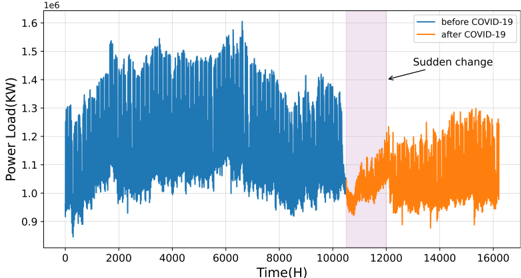
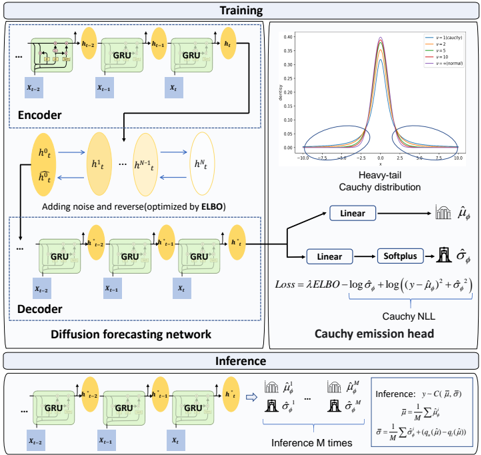
Electrical load forecasting plays a crucial role in decision-making for power systems. The integration of renewable energy sources and the occurrence of external events, such as the COVID-19 pandemic, have rapidly increased uncertainties in load forecasting. The uncertainties in load forecasting can be divided into two types: epistemic uncertainty and aleatoric uncertainty. Modeling these types of uncertainties can help decision-makers better understand where and to what extent the uncertainty is, thereby enhancing their confidence in the following decision-making. This paper proposes a diffusion-based Seq2seq structure to estimate epistemic uncertainty and employs the robust additive Cauchy distribution to estimate aleatoric uncertainty. Our method not only ensures the accuracy of load forecasting but also demonstrates the ability to separate and model the two types of uncertainties for different levels of loads.
Overview
The claims and statistics of this paper haven’t been checked yet.
Free: it reads the open-access text and checks the first 5 claims that cite a source we can check. Create a free account to check every claim.
Integrity signals
Registry
Cites
Statistics
Figures





Verification
Claims the paper makes
The claims and statistics of this paper haven’t been checked yet.
Free: it reads the open-access text and checks the first 5 claims that cite a source we can check. Create a free account to check every claim.
Claims other papers make about this one
Each is checked against this paper’s own text: does it say what the citing paper says it does?
The cited source says what the claim attributes to it.
In the citing paper
“DiffLoad [103] proposes a diffusion-based structure for electrical load probabilistic forecasting by considering both epistemic and aleatoric uncertainties.”
From Self-Supervised Learning for Time Series Analysis: Taxonomy, Progress, and Prospects (2024) · cites this paper as [103]
Self-check
Percentages, sums and reported differences re-computed from the paper’s own numbers.
The self-check needs the paper’s full text.
Citations
Cites
Denoising Diffusion Probabilistic Models
Ho, J., Jain, A., & Abbeel, P. (2020) · arXiv · doi:10.48550/arxiv.2006.11239 · Cited by 8,712 · cited 2×
“In the diffusion model, we achieve the approximation by first adding noise (cid:2) to the hidden state: where the { α n } n =1: N ∈ (0 , 1) are set values the same as [31].”
Variational Inference: A Review for Statisticians
Blei, D. M., Kucukelbir, A., & McAuliffe, J. D. (2017) · Journal of the American Statistical Association · doi:10.1080/01621459.2017.1285773 · Cited by 3,811 · cited 1×
“However, we can fix this problem by considering the origin hidden state as a condition and then minimizing Evidence Lower Bound (ELBO) [33], which is the upper bound of the NLL.”
Simple and Scalable Predictive Uncertainty Estimation using Deep Ensembles
Lakshminarayanan, B., Pritzel, A., & Blundell, C. (2016) · arXiv · doi:10.48550/arxiv.1612.01474 · Cited by 3,666 · cited 2×
“Because epistemic uncertainty represents model uncertainty during the training process,ensemblemethods[26]havebecomeoneofthemethods forestimatingmodeluncertainty.”
Are Transformers Effective for Time Series Forecasting?
Zeng, A., Chen, M., Zhang, L., & Xu, Q. (2023) · Proceedings of the AAAI Conference on Artificial Intelligence · doi:10.1609/aaai.v37i9.26317 · Cited by 3,320
Learning Phrase Representations using RNN Encoder-Decoder for Statistical Machine Translation
Cho, K., van Merrienboer, B., Gulcehre, C., Bahdanau, D., Bougares, F., Schwenk, H., & Bengio, Y. (2014) · arXiv · doi:10.48550/arxiv.1406.1078 · Cited by 3,317 · cited 2×
“To achieve this goal, our model utilizes the Gated Recurrent Unit (GRU) [32] as the Encoder, which effectively extracts features from time series data.”
What Uncertainties Do We Need in Bayesian Deep Learning for Computer Vision?
Kendall, A., & Gal, Y. (2017) · arXiv · doi:10.48550/arxiv.1703.04977 · Cited by 3,088 · cited 2×
“(cid:2) Bayes By Backprop(BBB) [18], [48]: Bayesian neural network is an extension of the ensemble training method.”
DeepAR: Probabilistic forecasting with autoregressive recurrent networks
Salinas, D., Flunkert, V., Gasthaus, J., & Januschowski, T. (2020) · International Journal of Forecasting · doi:10.1016/j.ijforecast.2019.07.001 · Cited by 2,661
Short-Term Residential Load Forecasting Based on LSTM Recurrent Neural Network
Kong, W., Dong, Z. Y., Jia, Y., Hill, D. J., Xu, Y., & Zhang, Y. (2019) · IEEE Transactions on Smart Grid · doi:10.1109/tsg.2017.2753802 · Cited by 2,645 · cited 1×
“The Long Short Term Memory (LSTM) recurrent NN was applied to model the power load of individual electric customers [9], demonstrating the superiority of NN in load forecasting tasks.”
Probabilistic energy forecasting: Global Energy Forecasting Competition 2014 and beyond
Hong, T., Pinson, P., Fan, S., Zareipour, H., Troccoli, A., & Hyndman, R. J. (2016) · International Journal of Forecasting · doi:10.1016/j.ijforecast.2016.02.001 · Cited by 1,044 · cited 1×
“(cid:2) Global Energy Forecasting (GEF) competition [39].”
Scoring Rules for Continuous Probability Distributions
Matheson, J. E., & Winkler, R. L. (1976) · Management Science · doi:10.1287/mnsc.22.10.1087 · Cited by 957 · cited 1×
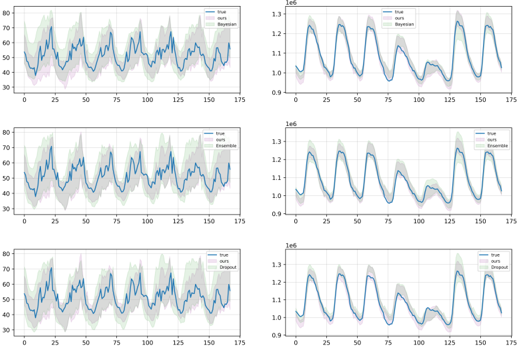
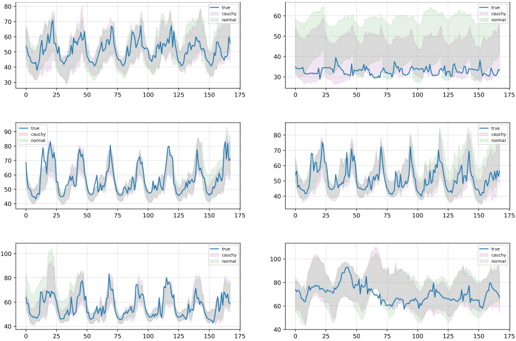
“6, even though the confidence intervals of both distributions can roughly contain the true values, forecasts based on Gaussian distributions may exhibit abnormally large confidence intervals in certain areas, resulting in lower forecasting accuracy.”
Autoregressive Denoising Diffusion Models for Multivariate Probabilistic Time Series ForecastingPreprint
Rasul, K., Seward, C., Schuster, I., & Vollgraf, R. (2021) · arXiv (Cornell University) · doi:10.48550/arxiv.2101.12072 · Cited by 795 · cited 2×
“The experiment’s code can be found in”
Huber, P. J. (2011) · International Encyclopedia of Statistical Science · doi:10.1007/978-3-642-04898-2_594 · Cited by 595
Probabilistic individual load forecasting using pinball loss guided LSTM
Wang, Y., Gan, D., Sun, M., Zhang, N., Lu, Z., & Kang, C. (2019) · Applied Energy · doi:10.1016/j.apenergy.2018.10.078 · Cited by 446 · cited 1×
“The experiment’s code can be found in”
Self-citationUnderstanding the Disharmony Between Dropout and Batch Normalization by Variance Shift
Li, X., Chen, S., Hu, X., & Yang, J. (2019) · 2019 IEEE/CVF Conference on Computer Vision and Pattern Recognition (CVPR) · doi:10.1109/cvpr.2019.00279 · Cited by 318 · cited 2×
“However,ithasbeenproventhatits forecastingperformancewasunstableduetoinconsistenciesin thetrainingandtestingprocesses[28].”
Normalizing Flows for Probabilistic Modeling and Inference
Papamakarios, G., Nalisnick, E., Rezende, D. J., Mohamed, S., & Lakshminarayanan, B. (2019) · arXiv (Cornell University) · doi:10.48550/arxiv.1912.02762 · Cited by 318 · cited 1×
“Similar to Variational Auto Encoder (VAE) [29] and Normalizing Flow [30], the diffusion model starts with a normal distribution and eventually transforms it into the desired distribution.”
Miller, C., Kathirgamanathan, A., Picchetti, B., Arjunan, P., Park, J. Y., Nagy, Z., Raftery, P., Hobson, B. W., Shi, Z., & Meggers, F. (2020) · Scientific Data · doi:10.1038/s41597-020-00712-x · Cited by 271 · cited 1×
“(cid:2) The BDG2 dataset [40].”
Using Bayesian Deep Learning to Capture Uncertainty for Residential Net Load Forecasting
Sun, M., Zhang, T., Wang, Y., Strbac, G., & Kang, C. (2020) · IEEE Transactions on Power Systems · doi:10.1109/tpwrs.2019.2924294 · Cited by 262 · cited 2×
“Similarly, [20] also applied Bayesian NN to capture two types of uncertainties, and the results were used in subsequent pooling clustering, ultimately improving forecasting accuracy.”
Self-citationOlivares, K. G., Challu, C., Marcjasz, G., Weron, R., & Dubrawski, A. (2023) · International Journal of Forecasting · doi:10.1016/j.ijforecast.2022.03.001 · Cited by 262 · cited 1×
“Note that here we consider the influence of covariates and use the version from [45], denoted as NBEATSX.”
A Review of Deep Learning Methods Applied on Load Forecasting
Almalaq, A., & Edwards, G. (2017) · 2017 16th IEEE International Conference on Machine Learning and Applications (ICMLA) · doi:10.1109/icmla.2017.0-110 · Cited by 253 · cited 1×
“To this end, researchers have gradually turned their attention to NN in recent years [6], [7], [8].”
Short-term load forecasting of industrial customers based on SVMD and XGBoost
Wang, Y., Sun, S., Chen, X., Zeng, X., Kong, Y., Chen, J., Guo, Y., & Wang, T. (2021) · International Journal of Electrical Power & Energy Systems · doi:10.1016/j.ijepes.2021.106830 · Cited by 245 · cited 1×
“Combining two types of uncertainties, our forecasting model will provide high-quality load forecasts.”
Self-citationMethods and Models for Electric Load Forecasting: A Comprehensive Review
Hammad, M. A., Jereb, B., Rosi, B., & Dragan, D. (2020) · Logistics & Sustainable Transport · doi:10.2478/jlst-2020-0004 · Cited by 241 · cited 1×
“The first is statistics-based methods, which explicitly construct the relationship between input data (such as historical load) and the load to be forecasted.”
Alpha-stable modeling of noise and robust time-delay estimation in the presence of impulsive noise
Georgiou, P. G., Tsakalides, P., & Kyriakakis, C. (1999) · IEEE Transactions on Multimedia · doi:10.1109/6046.784467 · Cited by 238 · cited 1×
“Definition 1 [37]: α -stable distribution is a kind of distribution that has no general closed form, but it can be defined by the continuous Fourier transform of its characteristic function ϕ ( t ) , where Note that Gaussian and Cauchy are both special cases of this kind of distribution while…”
Attention-based interpretable neural network for building cooling load prediction
Li, A., Xiao, F., Zhang, C., & Fan, C. (2021) · Applied Energy · doi:10.1016/j.apenergy.2021.117238 · Cited by 227 · cited 1×
“(cid:2) Propose a robust emission head to capture the aleatoric uncertainties: A likelihood model based on the additive Cauchy distribution is proposed to estimate the uncertainty of the data.”
Self-citationBayesian Deep Learning-Based Probabilistic Load Forecasting in Smart Grids
Yang, Y., Li, W., Gulliver, T. A., & Li, S. (2020) · IEEE Transactions on Industrial Informatics · doi:10.1109/tii.2019.2942353 · Cited by 199 · cited 1×
“Yang, et al. [24] proposed a novel probabilistic day-ahead net load forecasting method to capture epistemic and aleatoric uncertainty using Bayesian deep learning.”
N-BEATS: Neural basis expansion analysis for interpretable time series forecasting
Oreshkin, B. N., Carpov, D., Chapados, N., & Bengio, Y. (2019) · arXiv (Cornell University) · doi:10.48550/arxiv.1905.10437 · Cited by 162
Non-autoregressive Conditional Diffusion Models for Time Series PredictionPreprint
Shen, L., & Kwok, J. T.-Y. (2023) · arXiv (Cornell University) · doi:10.48550/arxiv.2306.05043 · Cited by 161 · cited 1×
“TimeGrad [16] and [17] used NN to extract information from time series data and assist in constructing Markov Chains, ultimately obtaining uncertainty estimations that do not require hypothetical distributions.”
buds-lab/building-data-genome-project-2: v1.0
Miller, C. C., Kathirgamanathan, A., Picchetti, B., Arjunan, P., Park, J. Y., Nagy, Z., Raftery, P., Hobson, B. W., Shi, Z., & Meggers, F. (2020) · Singapore Management University Institutional Knowledge (InK) (Singapore Management University) · doi:10.5281/zenodo.3887305 · Cited by 159
Xu, L., Wang, S., & Tang, R. (2019) · Applied Energy · doi:10.1016/j.apenergy.2019.01.022 · Cited by 155 · cited 1×
“Xu, et al. [15] considered peak areas with often more significant uncertainty and supposed that the load data consists of probabilistic normal load and the probabilistic peak abnormal differential load.”
Modeling Uncertainty: Some Conceptual Thoughts
Journel, A. G. (1994) · Quantitative geology and geostatistics · doi:10.1007/978-94-011-0824-9_5 · Cited by 129 · cited 1×
“This makes researchers shift their focus from point forecasting to probabilistic forecasting, which essentially models the uncertainties in forecasting [12].”
Sampling-Free Epistemic Uncertainty Estimation Using Approximated Variance Propagation
Postels, J., Ferroni, F., Coskun, H., Navab, N., & Tombari, F. (2019) · 2019 IEEE/CVF International Conference on Computer Vision (ICCV) · doi:10.1109/iccv.2019.00302 · Cited by 128
Modeling and forecasting of cooling and electricity load demand
Vaghefi, A., Jafari, M. A., Bisse, E., Lu, Y., & Brouwer, J. (2014) · Applied Energy · doi:10.1016/j.apenergy.2014.09.004 · Cited by 122 · cited 1×
“The framework can estimate and separate the two kinds of uncertainties while reducing distribution assumptions and does not significantly increase the computational burden.”
Lindberg, K. B., Bakker, S. J. S., & Sartori, I. (2019) · Utilities Policy · doi:10.1016/j.jup.2019.03.004 · Cited by 103 · cited 1×
“[4]usedtime, externalvariables(suchastemperature),anddaytype(holiday ornot)toconstructalinearregressionmodel.”
Deep ensemble learning based probabilistic load forecasting in smart grids
Yang, Y., Hong, W., & Li, S. (2019) · Energy · doi:10.1016/j.energy.2019.116324 · Cited by 99 · cited 1×
“In [14], a novel deep ensemble learning-based probabilistic load forecasting framework was proposed to quantify the load uncertainties of individual customers.”
Robust Load Forecasting Towards Adversarial Attacks via Bayesian Learning
Zhou, Y., Ding, Z., Wen, Q., & Wang, Y. (2022) · IEEE Transactions on Power Systems · doi:10.1109/tpwrs.2022.3175252 · Cited by 82 · cited 1×
“To this end, researchers have gradually turned their attention to NN in recent years [6], [7], [8].”
Self-citationDiagnosing and Enhancing VAE Models
Dai, B., & Wipf, D. (2019) · arXiv (Cornell University) · doi:10.48550/arxiv.1903.05789 · Cited by 81 · cited 1×
“Similar to Variational Auto Encoder (VAE) [29] and Normalizing Flow [30], the diffusion model starts with a normal distribution and eventually transforms it into the desired distribution.”
A Global Modeling Framework for Load Forecasting in Distribution Networks
Grabner, M., Wang, Y., Wen, Q., Blažič, B., & Štruc, V. (2023) · IEEE Transactions on Smart Grid · doi:10.1109/tsg.2023.3264525 · Cited by 77 · cited 1×
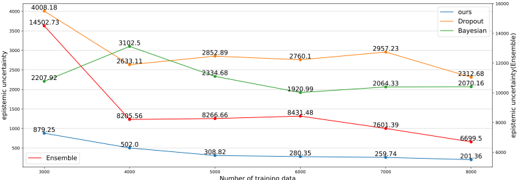
“Unlike previous methods that set model parameters to random variables like Bayesian NN and dropout, we utilize a diffusion-based encoder to concentrate uncertainty in the hidden layer of the NN before inputting it into the decoder.”
Self-citationBayesian Layers: A Module for Neural Network Uncertainty
Tran, D., Dusenberry, M. W., van der Wilk, M., & Hafner, D. (2018) · arXiv (Cornell University) · doi:10.48550/arxiv.1812.03973 · Cited by 74 · cited 1×
“Because the deep ensemble approach necessitates training numerous separate neural networks, its training time increases linearly when compared to standard DeepAR.”
Single-Model Uncertainties for Deep Learning
Tagasovska, N., & López-Paz, D. (2018) · arXiv (Cornell University) · doi:10.48550/arxiv.1811.00908 · Cited by 70
Day-Ahead Electricity Demand Forecasting Competition: Post-COVID Paradigm
Farrokhabadi, M., Browell, J., Wang, Y., Makonin, S., Su, W., & Zareipour, H. (2022) · IEEE Open Access Journal of Power and Energy · doi:10.1109/oajpe.2022.3161101 · Cited by 56 · cited 1×
“(cid:2) The dataset from Day-ahead electricity demand forecasting competition: Post-covid paradigm [41].”
Self-citationLearning Robust Deep State Space for Unsupervised Anomaly Detection in Contaminated Time-Series
Li, L., Yan, J., Wen, Q., Jin, Y., & Yang, X. (2022) · IEEE Transactions on Knowledge and Data Engineering · doi:10.1109/tkde.2022.3171562 · Cited by 55 · cited 1×
“Restrictions apply. which is not heavy-tailed, we suggest using the heavy-tailed Cauchy distribution to make the model more robust to outliers and mutation according to robust statistics [27], [35].”
Self-citationAdaptive Feature Selection and Construction for Day-Ahead Load Forecasting Use Deep Learning Method
Jiao, R., Wang, S., Zhang, T., Lu, H. D., He, H. X., & Gupta, B. B. (2021) · IEEE Transactions on Network and Service Management · doi:10.1109/tnsm.2021.3110577 · Cited by 49 · cited 1×
“Jiao, et al. [11] designed a method to handle external weather and calendar variables jointly and then combined them with LSTM.”
Economic Dispatch Under Uncertainty: The Probabilistic Envelopes Approach
Nosair, H., & Bouffard, F. (2017) · IEEE Transactions on Power Systems · doi:10.1109/tpwrs.2016.2602942 · Cited by 44
Gaussian Process-Aided Transfer Learning for Probabilistic Load Forecasting Against Anomalous Events
Zhao, P., Cao, D., Wang, Y., Chen, Z., & Hu, W. (2023) · IEEE Transactions on Power Systems · doi:10.1109/tpwrs.2023.3256130 · Cited by 44 · cited 1×
“…of extreme external events such as COVID-19 on load forecasting and downstream power grid dispatching tasks has received increasing attention [23], indicating that we not only need to consider the impact of aleatoric uncertainty caused by data noise on normal situations but also the impact…”
Self-citationLiang, X., Liu, Z., Wang, J., Jin, X., & Du, Z. (2023) · Applied Energy · doi:10.1016/j.apenergy.2023.120889 · Cited by 41 · cited 2×
“25forprobabilityoutput(thesamein[47]).”
Denoising Diffusion Gamma ModelsPreprint
Nachmani, E., Roman, R. S., & Wolf, L. (2021) · arXiv (Cornell University) · doi:10.48550/arxiv.2110.05948 · Cited by 36 · cited 1×
“In this way, we can solve the problem of approximating the reverse distribution by approximating the expectation, that is For n = 0 , [34] claims that we can ignore it for simplification.”
RobustTSF: Towards Theory and Design of Robust Time Series Forecasting with Anomalies
Cheng, H., Wen, Q., Liu, Y., & Sun, L. (2024) · International Conference on Learning Representations · doi:10.48550/arxiv.2402.02032 · Cited by 32 · cited 1×
“…, we assume that whether there is noise depends on a binomial distribution, which means with probability 1 − η, y A t , with probability η. Lemma 1 [36]: Let (cid:9) be the loss function, f be the forecasting model, R (cid:5) ( f ) be the empirical loss on the clean training set, and R η ( f ) be…”
Self-citationEnergy forecasting with robust, flexible, and explainable machine learning algorithms
Zhu, Z., Chen, W., Xia, R., Zhou, T., Niu, P., Peng, B., Wang, W., Liu, H., Ma, Z., Gu, X., et al. (2023) · AI Magazine · doi:10.1002/aaai.12130 · Cited by 26 · cited 1×
“In recent years, Neural Network (NN)-based load forecasting methods have been widely applied [1], [2].”
Self-citationAdaptive probabilistic load forecasting for individual buildings
Wang, C., Qin, D., Wen, Q., Zhou, T., Sun, L., & Wang, Y. (2022) · iEnergy · doi:10.23919/ien.2022.0041 · Cited by 18 · cited 1×
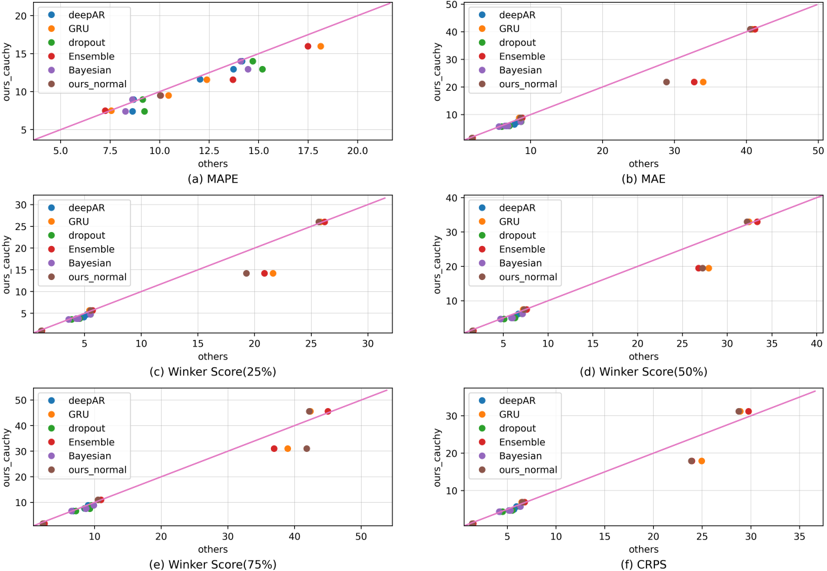
“Continuous Ranked Probability Score (CRPS) [42] and Winker Score [43] are used to evaluate the probabilistic forecasts.”
Self-citationLoad Uncertainty-Aware Economic Dispatch
Rawal, K., & Ahmad, A. (2023) · Asia-Pacific Power and Energy Engineering Conference (APPEEC) · doi:10.1109/appeec57400.2023.10561960 · Cited by 1 · cited 1×
“Epistemic uncertainties, on the other hand, arise from incomplete information in the training set Rawal and Ahmad, [22].”
Research works printed but not linked: 2
- Y. Gal and Z. Ghahramani, "Dropout as a bayesian approximation: Representing model uncertainty in deep learning," in international conference on machine learning. PMLR, 2016, pp. 1050-1059. · doi:10.5555/3045390.3045502
- J. Gao, X. Song, Q. Wen, P. Wang, L. Sun, and H. Xu, "RobustTAD: Robust time series anomaly detection via decomposition and convolu- tional neural networks," KDD Workshop on Mining and Learning from Time Series (KDD-MileTS'20), 2020.
Cited by
Foundation Models for Time Series Analysis: A Tutorial and Survey
Liang, Y., Wen, H., Nie, Y., Jiang, Y., Jin, M., Song, D., Pan, S., & Wen, Q. (2024) · Proceedings of the 30th ACM SIGKDD Conference on Knowledge Discovery and Data Mining · doi:10.1145/3637528.3671451 · Cited by 225
Self-citationSelf-Supervised Learning for Time Series Analysis: Taxonomy, Progress, and Prospects
Zhang, K., Wen, Q., Zhang, C., Cai, R., Jin, M., Liu, Y., Zhang, J. Y., Liang, Y., Pang, G., Song, D., et al. (2024) · IEEE Transactions on Pattern Analysis and Machine Intelligence · doi:10.1109/tpami.2024.3387317 · Cited by 295
Self-citationDiffusion models for time-series applications: a survey
Lin, L., Li, Z., Li, R., Li, X., & Gao, J. (2023) · Frontiers of Information Technology & Electronic Engineering · doi:10.1631/fitee.2300310 · Cited by 249
A Survey on Diffusion Models for Time Series and Spatio-Temporal Data
Yang, Y., Jin, M., Wen, H., Zhang, C., Liang, Y., Ma, L., Wang, Y., Liu, C., Yang, B., Xu, Z., et al. (2026) · ACM Computing Surveys · doi:10.1145/3783986 · Cited by 199
Self-citationDiffSTG: Probabilistic Spatio-Temporal Graph Forecasting with Denoising Diffusion Models
Wen, H., Lin, Y., Xia, Y., Wan, H., Wen, Q., Zimmermann, R., & Liang, Y. (2023) · Proceedings of the 31st ACM International Conference on Advances in Geographic Information Systems · doi:10.1145/3589132.3625614 · Cited by 130
Self-citation
Metadata
- Authors
- Wang, Z., Wen, Q., Zhang, C., Sun, L., & Wang, Y.
- Affiliations
- University of Hong Kong (HK)
- Alibaba Group (United States) (US)
- Alibaba DAMO Academy (China) (CN)
- Venue
- IEEE Transactions on Power Systems
- Published
- 2025-03
- Volume
- 40
- Issue
- 2
- Pages
- 1777-1789
- ISSN
- 0885-8950 (ISSN-L)
- 1558-0679
- OpenAlex
- W4401806916
- Cited by
- 34
- References
- 48
- Citations by year
- 2026: 16 · 2025: 13
- FWCI
- 3.32
- Type
- journal article
- Language
- en
- Open access
- green
- arxiv.org
- Licence
- Locations
- IEEE Transactions on Power Systems (publishedVersion)
- arXiv (Cornell University) (submittedVersion)
- The HKU Scholars Hub (University of Hong Kong) (submittedVersion, cc-by-nc-nd)
- arXiv (Cornell University)
- Funders
- National Key R&D Program of China (2022YFB2403300)
- Applied Basic Research Foundation
- Young Elite Scientists Sponsorship Program by CAST
- Topics
- Physical Sciences › Engineering › Electrical and Electronic Engineering › Energy Load and Power Forecasting
- Physical Sciences › Engineering › Electrical and Electronic Engineering › Smart Grid Energy Management
- Social Sciences › Transportation › Traffic Prediction and Management Techniques
- Keywords
- load forecasting, uncertainty quantification, epistemic uncertainty, aleatoric uncertainty, diffusion models, Seq2Seq, renewable energy integration
About these checks
Registry, retraction, Cites and statistics results are computed, not judged, with one exception: a printed reference that no index lists is read once by a model before it counts as a citation error. Claims are extracted by a model and kept only when their quote appears verbatim in the text; each cited source is then checked, with a model’s help, for whether it says what the claim relies on. Those verdicts can be wrong — read the claim’s quote and the cited source before relying on one.
Statistics and arithmetic are recomputed, not judged.
Confidence bands are shown only for fields calibrated on our annotated test set. None is calibrated yet, so no band is shown.
What counts as a claim ›How we measure confidence ›How we check this ›
Are you an author, or do you see a problem with this page? Request a review
Data sources
Bibliographic data: Semantic Scholar, OpenAlex, Crossref.
Contains information from the Semantic Scholar Academic Graph Datasets, made available under the ODC Attribution License (ODC-BY 1.0).
Semantic Scholar’s data is described in: Kinney, R., et al. (2023). The Semantic Scholar Open Data Platform. arXiv:2301.10140.
