

Responsible AI—Two Frameworks for Ethical Design Practice
Open accessThe DOI matches its Crossref record; 70 of the 70 references it cites were found in a registry or an index.
Abstract
In 2019, the IEEE launched the P7000 standards projects intended to address ethical issues in the design of autonomous and intelligent systems. This move came amidst a growing public concern over the unintended consequences of artificial intelligence (AI), compounded by the lack of an anticipatory process for attending to ethical impact within professional practice. However, the difficulty in moving from principles to practice presents a significant challenge to the implementation of ethical guidelines. Herein, we describe two complementary frameworks for integrating ethical analysis into engineering practice to help address this challenge. We then provide the outcomes of an ethical analysis informed by these frameworks, conducted within the specific context of Internet-delivered therapy in digital mental health. We hope both the frameworks and analysis can provide tools and insights, not only for the context of digital healthcare but also for data-enabled and intelligent technology development more broadly.
Overview
The claims and statistics of this paper haven’t been checked yet.
Free: it reads the open-access text and checks the first 5 claims that cite a source we can check. Create a free account to check every claim.
Integrity signals
Registry
Cites
Statistics
Figures




Verification
Claims the paper makes
The claims and statistics of this paper haven’t been checked yet.
Free: it reads the open-access text and checks the first 5 claims that cite a source we can check. Create a free account to check every claim.
Claims other papers make about this one
Each is checked against this paper’s own text: does it say what the citing paper says it does?
The source backs part of the claim, not all of it — or backs it for a different population, condition or comparison.
In the citing paper
“By converting citizens to prosumers of AI-powered digital health systems (Peters et al., 2020), end-users will feel empowered in controlling their own data and securing their privacy, which can lead to a more ethically aligned deployment of AI-powered health systems”
From SHIFTing artificial intelligence to be responsible in healthcare: a systematic review (2022) · cites this paper as Peters et al., 2020
Experimental — accuracy not yet measuredIn the citing paper
“The need for an ethical framework becomes even more pronounced as AI is poised to extend its influence beyond healthcare into various domains, such as education, transportation, and governance [34].”
From Ethical Framework for Harnessing the Power of AI in Healthcare and Beyond (2024) · cites this paper as [34]
Self-check
Percentages, sums and reported differences re-computed from the paper’s own numbers.
The self-check needs the paper’s full text.
Citations
Cites
Principles of Biomedical Ethics
(2012) · Thieves of Virtue · doi:10.7551/mitpress/9079.003.0009 · Cited by 13,453
The global landscape of AI ethics guidelines
Jobin, A., Ienca, M., & Vayena, E. (2019) · Nature Machine Intelligence · doi:10.1038/s42256-019-0088-2 · Cited by 6,220 · cited 2×
“Indeed, recent reports indicate that there are currently more than 70 publicly available sets of ethical principles or frameworks for AI, most of which have been released within the last five years [3], [9], [10].”
Floridi, L., Cowls, J., Beltrametti, M., Chatila, R., Chazerand, P., Dignum, V., Luetge, C., Madelin, R., Pagallo, U., Rossi, F., et al. (2018) · Minds and Machines · doi:10.1007/s11023-018-9482-5 · Cited by 4,774 · cited 5×
“Between this set of principles and the set we will be using from the meta-analysis by Floridi et al. [3], there is a significant overlap.”
BackgroundMethodInfluentialPrinciples of biomedical ethics
Horton, J. (2002) · Transactions of the Royal Society of Tropical Medicine and Hygiene · doi:10.1016/s0035-9203(02)90265-8 · Cited by 4,377
The motivational pull of video games: a self-determination theory approach
Ryan, R. M., Rigby, C. S., & Przybylski, A. (2006) · Motivation and Emotion · doi:10.1007/s11031-006-9051-8 · Cited by 3,332 · cited 1×
“Additionally, a series of studies comparing how different game designs impact wellbeing and autonomy have been conducted using psychological measures [40], [41].”
BackgroundDeveloping a framework for responsible innovation
Stilgoe, J., Owen, R., & Macnaghten, P. (2013) · Research Policy · doi:10.1016/j.respol.2013.05.008 · Cited by 3,184 · cited 3×
“Responsible innovation requires these methods to be anticipatory, reflexive, inclusive, and responsive [23].”
BackgroundMethodInfluentialGebru, T., Morgenstern, J., Vecchione, B., Vaughan, J. W., Wallach, H., Daumé, H., & Crawford, K. (2018) · arXiv · doi:10.48550/arxiv.1803.09010 · Cited by 2,474 · cited 2×
“Yet, moving effectively from ethical theory and principles into context specific, actionable practice is proving a signifi-cant barrier for the widespread uptake of systematic ethical impact analysis in software engineering [13], [14].”
BackgroundMethodGebru, T., Morgenstern, J., Vecchione, B., Vaughan, J. W., Wallach, H., III, H. D., & Crawford, K. (2021) · Communications of the ACM · doi:10.1145/3458723 · Cited by 2,469 · cited 2×
“Yet, moving effectively from ethical theory and principles into context specific, actionable practice is proving a signifi-cant barrier for the widespread uptake of systematic ethical impact analysis in software engineering [13], [14].”
BackgroundMethodThe Ethics of AI Ethics: An Evaluation of Guidelines
Hagendorff, T. (2020) · Minds and Machines · doi:10.1007/s11023-020-09517-8 · Cited by 1,911 · cited 3×
“Yet, moving effectively from ethical theory and principles into context specific, actionable practice is proving a signifi-cant barrier for the widespread uptake of systematic ethical impact analysis in software engineering [13], [14].”
Background
Research works printed but not linked: 15
- A. Sen, The Idea of Justice. London, U.K.: Penguin, 2010.
- S. Brown Consequence Scanning Manual, Version 1. London, U.K.: Doteveryone, 2019.
- UD Council. (2004). Double Diamond Diagram. [Online]. Available: https://www.designcouncil.org.uk/news-opinion/what-framework- innovation-design-councils-evolved-double-diamond
- Plato, Plato's Phaedrus. Cambridge, U.K.: Cambridge Univ. Press, 1952.
- AP Association. (2019). App Evaluation Model. [Online]. Available: https://www.psychiatry.org/psychiatrists/practice/mental-health-apps/ app-evaluation-model
- IEEE. (2019). Ethically Aligned Design. [Online]. Available: https://ethicsinaction.ieee.org
- ACM. (2018). ACM Code of Ethics and Professional Conduct. [Online]. Available: https://www.acm.org/code-of-ethics
- Y. Zeng, E. Lu, and C. Huangfu, "Linking artificial intelligence princi- ples," in Proc. AAAI Workshop Artif. Intell. Safety (AAAI-Safe AI), 2019, pp. 1-15.
- A. Zimmermann and B. Zevenbergen, Ai Ethics: Seven Traps, Tinker, Oklahoma City, OK, USA 2019.
- J. Whittlestone, R. Nyrup, A. Alexandrova, K. Dihal, and S. Cave, Ethical and Societal Implications of Algorithms, Data, and Artificial Intelligence: A Roadmap for Research. London, U.K.: Nuffield Found., 2019.
- A. Tieu. (2015). We Now Have an Ai Therapist, and She's Doing Her Job Better Than Humans Can. [Online]. Available: https://futurism.com/uscs-new-ai-ellie-has-more-success-than-actual- therapists
- E. Montague, P.-Y. Chen, J. Xu, B. Chewning, and B. Barrett, "Nonverbal interpersonal interactions in clinical encounters and patient perceptions of empathy," J. Participatory Med., vol. 5, p. e33, Aug. 2013.
- U.K. House of Lords Select Committee on Artificial Intelligence. (2018). Ai in the U.K.: Ready, Willing and Able? Report of Session 2017-19. [Online]. Available: https://publications.parliament.uk/pa/ld201719/ldselect/ldai/100/100.pdf
- Universite de Montreal. (2017). Montreal Declaration for Responsible Ai. [Online]. Available: https://www.montrealdeclaration- responsibleai.com/the-declaration
- 2019). Psyberguide. [Online]. Available: http://www.Psyberguide.org
Cited by
Items 101–200 of 293
Prioritizing Policies for Furthering Responsible Artificial Intelligence in the United States
Hadley, E. (2022) · IEEE International Conference on Big Data (BigData) · doi:10.1109/bigdata55660.2022.10020551 · Cited by 16
“In the last 5 years, one of the most popular and publicized efforts to support the ethical or responsible development of AI and ML has been the drafting of AI Ethics frameworks, principles, guidelines, and statements by high-profile companies, organizations, and countries [15], [35]–[39].”
BackgroundHybrid Cognitive-Affective Strategies for AI Safety
Aliman, N.-M. (2020) · Utrecht University Repository (Utrecht University) · doi:10.33540/203 · Cited by 13
Enhancing Ethical Governance of Artificial Intelligence Through Dynamic Feedback Mechanism
Liu, Y., Zheng, W., & Su, Y. (2024) · Lecture notes in computer science · doi:10.1007/978-3-031-57867-0_8 · Cited by 14
Navigating AI Biases in Education: A Foundation for Equitable Learning
Bhavana, S., Jayashree, K., & Rao, T. V. N. (2024) · Advances in educational marketing, administration, and leadership book series · doi:10.4018/979-8-3693-5443-8.ch005 · Cited by 11
Nkwo, M. S., Ikwunne, T. A., Adejoro, C. O., & Anuyah, O. (2025) · Human-computer interaction series · doi:10.1007/978-3-031-88326-2_5 · Cited by 15
Hemmati, Y. B., Rasouli, M., & Falahchai, M. (2025) · European Journal Of Dental Education · doi:10.1111/eje.13144 · Cited by 14
Computational Transcendence: Responsibility and agency
Deshmukh, J., & Srinivasa, S. (2022) · Frontiers in Robotics and AI · doi:10.3389/frobt.2022.977303 · Cited by 16
“Responsible behavior is often in conflict with self-interest driven autonomous agency Rapoport et al. (1965); Axelrod and Hamilton (1981).”
BackgroundDai, Z. (2024) · International Conference on Frontiers of Artificial Intelligence and Machine Learning (FAIML) · doi:10.1145/3653644.3653662 · Cited by 17
“Researchers should consider societal implications, avoiding the perpetuation of harmful stereotypes or exacerbating inequalities [15][16].”
Strecker, J., Mayer, S., & Bektaş, K. (2025) · Designing Interactive Systems Conference · doi:10.1145/3715336.3735709 · Cited by 10
“Frameworks for Respon-sible Artificial Intelligence (AI) highlight the need to consider human well-being and autonomy [144], social responsibility [30], and ethical impacts [198] of AI systems.”
Making the Right Thing: Bridging HCI and Responsible AI in Early-Stage AI Concept Selection
Jung, J.-Y., Saxena, D., Park, M., Kim, J., Forlizzi, J., Holstein, K., & Zimmerman, J. (2025) · Designing Interactive Systems Conference · doi:10.1145/3715336.3735745 · Cited by 14
“We are committed to RAI’s goals of maximizing AI’s benefits while minimizing its harms [69].”
Cogan, N., Kirk, A. F., & Graf, C. (2026) · JMIR Research Protocols · doi:10.2196/72250 · Cited by 8
“Training and education for mental health professionals and community organizations on the use of DIs are crucial [97].”
AI for Aerospace and Electronic Systems: Technical Dimensions of Responsible Design
Koch, W. (2022) · IEEE Aerospace and Electronic Systems Magazine · doi:10.1109/maes.2022.3228300 · Cited by 8
What a Philosopher Learned at an AI Ethics Evaluation
Brusseau, J. (2020) · AI Ethics Journal · doi:10.47289/aiej20201214 · Cited by 9
“First, sprawling sets of ethical principles compiled by academic organizations and private companies (Peters et Morley et al (2020: 2147) call “the second phase of AI ethics: translating between the ‘what’ and the ‘how.’””
BackgroundSeamful XAI: Operationalizing Seamful Design in Explainable AIPreprint
Ehsan, U., Liao, Q. V., Passi, S., Riedl, M. O., & Daumé, H. (2022) · arXiv (Cornell University) · doi:10.13016/at4q-63xb · Cited by 8
Tariq, S. B., Zhang, J., & Gilal, F. G. (2024) · Kybernetes · doi:10.1108/k-02-2024-0409 · Cited by 14
The ethical thread: AI’s role in the tapestry of fashion
Manchiraju, S. (2025) · AI & Society · doi:10.1007/s00146-024-02151-3 · Cited by 11
“The IEEE’s P7000 standards project is an initiative aimed at addressing ethical issues in the design of autonomous and intelligent systems, which could be applied to the fashion industry to ensure responsible AI integration (Peters et al. 2020; for IEEE 7010, see Schiff et al. 2020).”
Mathes, S., Ferber, D., Dreyer, T. F., Borm, K. J., Modersohn, L., Willem, T., Dirven, R. J., Vibert, J., Kreutzfeldt, S., Pérez-López, R., et al. (2025) · npj Precision Oncology · doi:10.1038/s41698-025-01180-5 · Cited by 12
“As a newconceptdevelopingethicalstandardsforthecreationofresponsibleAI-systems,RAIhasemergedfromrelatedscienti fi c fi elds 35 .”
Role of Ethical and Responsible AI in Education for Next Generation Inventors
Kathala, K. C. R., Arroyo, I., & Mannuru, N. R. (2024) · Communications in computer and information science · doi:10.1007/978-3-031-64312-5_9 · Cited by 10
Teh, P. L., & Uwasomba, C. F. (2024) · Journal of Social Computing · doi:10.23919/jsc.2024.0011 · Cited by 14
Ethics in AI for energy systems safety
Arunthavanathan, R., Sajid, Z., & Amin, M. T. (2024) · Methods in chemical process safety · doi:10.1016/bs.mcps.2024.08.002 · Cited by 10
Langlois, L., & Régis, C. (2021) · Lecture notes in computer science · doi:10.1007/978-3-030-69128-8_10 · Cited by 8
An agentic framework for compliant, ethical and trustworthy GenAI applications in healthcare
Menezes, V. P., Chowdhury, M. J. M., & Mahmood, A. (2025) · Proceedings of the 2025 Australasian Computer Science Week · doi:10.1145/3727166.3727191 · Cited by 6
Navigating many voices: lessons for ELSA/RRI from the pragmatist perspective of ELSA-by-design
Juhasz, C., Gianni, R., Kamalski, J., & Meacham, D. (2025) · Journal of Responsible Innovation · doi:10.1080/23299460.2024.2445308 · Cited by 7
DreamDirector: Designing a Generative AI System to Aid Therapists in Treating Clients' Nightmares
Zhao, Y., Li, Z., Wang, Y., Cai, X., ZHOU, X. ‐., Yan, Y., Jin, K., Ding, S., Shao, Y., Cao, J., et al. (2025) · ACM International Conference on Intelligent User Interfaces (IUI) · doi:10.1145/3708359.3712078 · Cited by 8
“Nevertheless, it’s crucial to highlight that despite the promising prospects of AI in the realm of psychological therapy [49, 64], further research and validation are essential to ensure its sustained efectiveness and safety [44].”
Lukkien, D., Nap, H. H., ter Stal, M., Boon, W., Peine, A., Minkman, M. M. N., & Moors, E. H. M. (2024) · Journal of Responsible Technology · doi:10.1016/j.jrt.2024.100091 · Cited by 12
Responsible AI Adoption in Healthcare: Opportunities and Challenges
Chakraborty, S., Sarangi, T., Ghosh, S., Misra, B., & Dey, N. (2024) · International Conference on Advanced Computing and Communication Systems (ICACCS) · doi:10.1109/icaccs60874.2024.10717182 · Cited by 9
“Fig AI [3] in the context of ethical design practice in 2020.”
BackgroundEquilibrio entre la privacidad y la ética en el uso de la inteligencia artificial en la educación
Peña, J. M., Moreno, O. B., Herrera, Á. L. O., & Moreno, T. (2024) · Sapiens International Multidisciplinary Journal · doi:10.71068/m4gqp119 · Cited by 6
Towards Positive Artificial Intelligence
da Silva, F. S. C. (2021) · Lecture notes in computer science · doi:10.1007/978-3-030-77091-4_22 · Cited by 6
AI Governance and Ethics in Public Procurement: Bridging the Gap Between Theory and Practice
Behr, T. V., & Abrahamsson, P. (2022) · IEEE International Conference on Engineering, Technology and Innovation (ICE/ITMC) · doi:10.1109/ice/itmc-iamot55089.2022.10033173 · Cited by 15
“In the last three years, the research has developed from outlining common ethical principles of AI to developing practical methods and tools for implementing ethics in AI systems development [1].”
BackgroundInfluentialConsiderations for Comparing Video Game AI Agents with Humans
Madan, C. R. (2020) · Challenges · doi:10.3390/challe11020018 · Cited by 8
Navigating the Nexus of ethical standards and moral values
Hammerschmidt, T. (2025) · Ethics and Information Technology · doi:10.1007/s10676-025-09826-5 · Cited by 11
“Additionally, the unsupervised learning capacities of AI result in AI increasingly adapts based on user data and feedback, reflecting user values and virtues, besides adhering to given ethical principles by design (Etzioni & Etzioni, 2017; Greene et al., 2023; Peters et al., 2020).”
A Practical Guide for Ethical AI Product Development
Gupta, P., Kashiramka, S., & Barman, S. (2024) · IEEE Uttar Pradesh Section International Conference on Electrical, Electronics and Computer Engineering (UPCON) · doi:10.1109/upcon62832.2024.10983504 · Cited by 12
Huang, C., & Yao, X. (2025) · IEEE Computational Intelligence Magazine · doi:10.1109/mci.2025.3593452 · Cited by 7
Towards a Responsible AI Organizational Maturity Model
Heger, A., Passi, S., Dhanorkar, S., Kahn, Z., Wang, R., & Vorvoreanu, M. (2025) · Proceedings of the ACM on Human-Computer Interaction · doi:10.1145/3757514 · Cited by 19
“Increasingly frustrated by how little help high-level principles offer for their day job [85], AI practitioners continuously ask for practical resources to help with RAI, including supplemental support for existing tools, checklists, and documentation [26, 58, 59, 66, 70, 71, 126].”
Tuyet, T. T. L., & Nguyen, K. M. (2026) · Cognition Technology & Work · doi:10.1007/s10111-025-00851-4 · Cited by 7
“Rapid AI advancements mark a new era where many decisions are delegated to intelligent systems, requiring careful ethical reflection (Baeza-Yates 2024; Dennehy et al. 2022; Peters et al. 2020).”
Shadiev, R., Shi, G., Altınay, F., Zhussupova, R. F., Li, Y., Lu, K., & Kerimbayev, N. (2026) · Journal of Educational Computing Research · doi:10.1177/07356331261427105 · Cited by 7
“Previous studies suggest that ethics is closely related to the safe and responsible application of AI systems (Cheng et al., 2021; Murugan et al., 2025; Peters et al., 2020).”
Goirand, M., Austin, E. E., & Clay‐Williams, R. (2023) · PLoS ONE · doi:10.1371/journal.pone.0288448 · Cited by 6
McGrath, Q. P., Hevner, A. R., & de Vreede, G. (2025) · IEEE Transactions on Engineering Management · doi:10.1109/tem.2025.3565221 · Cited by 14
“First, the “principles-to-practice” gap is a recognized problem, and while many researchers have proposed solutions that include frameworks, toolkits, and guidelines [6], [7], [56], [57], [61], their lack of organizational adoption persists [41], [62], [63], [64].”
Tanweer, A. (2022) · Big Data & Society · doi:10.1177/20539517221101351 · Cited by 7
“For Peters et al. (2020), there is an inherent tension between the establishment of higher order principles and the realities of “ context-speci fi c, actionable practice, ” such that “ there will always be ethical decisions and trade-offs that are not amenable to universally applicable speci fi -…”
BackgroundYingsoon, G. Y., Chua, N. A., Suyan, Z., Yiming, C., Haiyan, Z., & Xiaoyao, T. (2025) · Advances in computational intelligence and robotics book series · doi:10.4018/979-8-3693-9015-3.ch003 · Cited by 7
Designed to Seduce: Epistemically Retrograde Ideation and YouTube's Recommender System
Tollon, F. (2021) · International Journal of Technoethics · doi:10.4018/ijt.2021070105 · Cited by 5
A Deployment Model to Extend Ethically Aligned AI Implementation Method ECCOLA
Antikainen, J., Agbese, M., Alanen, H.-K., Halme, E., Isomäki, H., Jantunen, M., Kemell, K., Rousi, R. A., Vainio-Pekka, H., & Vakkuri, V. (2021) · IEEE International Requirements Engineering Conference Workshops (REW) · doi:10.1109/rew53955.2021.00043 · Cited by 8
“…judging (ECCOLA), (8) multi-disciplinary [4, 27], (9) facilitating participation and stakeholder involvement ([4,26,25]), (10) supporting systematic ethical impact analysis when ethical trade-offs arise ([4,26]), (11) applicable through and at any point in software product’s lifecycle ([4,27]).”
BackgroundInfluentialEthically Informed Software Process for Smart Health Home
Zhang, X., Pike, M., Mustafa, N., & Brusić, V. (2022) · Proceedings - IEEE Symposium on Computer-Based Medical Systems · doi:10.1109/cbms55023.2022.00040 · Cited by 5
“Privacy, safety, security, trust, and reliability are the main requirements for smart health systems [48-50].”
BackgroundSynchronizing Innovation and Accountability in the Ethical Consequences of Artificial Intelligence
Yadav, S., Singh, N., Devi, K. V. R., Nijhawan, G., Zabibah, R. S., & Aravinda, K. (2023) · IEEE Uttar Pradesh Section International Conference on Electrical, Electronics and Computer Engineering (UPCON) · doi:10.1109/upcon59197.2023.10434644 · Cited by 5
“Establishing clear ethical frameworks is the foundation of responsible AI development [5].”
BackgroundMoral Values in Medical AI: A Scoping ReviewPreprint
Victor, G., Barbu, A., & Bélisle‐Pipon, J. (2024) · Research Square · doi:10.21203/rs.3.rs-4391239/v1 · Cited by 8
AI Integration in Higher Education: Trends and Implications from Saudi Arabia
Al-Motrif, A. (2025) · International Journal of Human-Computer Interaction · doi:10.1080/10447318.2025.2526578 · Cited by 8
“Educators and policymakers can create inclusive, equitable learning environments by integrating ethical considerations into designing and implementing AI-enhanced learning environments that empower students and foster responsible digital citizenship (Peters et al., 2020).”
Modular oversight methodology: a framework to aid ethical alignment of algorithmic creations
Kyriakou, K., & Otterbacher, J. (2024) · Design Science · doi:10.1017/dsj.2024.23 · Cited by 6
“…designing, developing, implementing and monitoring AI-based solutions following ethical and legal principles, frameworks and good practices (Sambasivan & Holbrook 2018; Peters et al. 2020; Shneiderman 2021; Lu, Zhu, Xu, Whittle, Douglas & Sanderson 2022; Matsui & Goya 2022a; Soklaski et al. 2022).”
Climate Change Mitigation Through AI Solutions
Rafiq, M., & Farrukh, M. H. M. (2023) · Advances in environmental engineering and green technologies book series · doi:10.4018/979-8-3693-0892-9.ch009 · Cited by 4
Goirand, M., Austin, E. E., & Clay‐Williams, R. (2024) · AI and Ethics · doi:10.1007/s43681-024-00466-x · Cited by 9
“Various consultative approaches to implementing ethics in AI for AIHA have been reported in pre-COVID times [8–11].”
Developing and evaluating a design method for positive artificial intelligence
van der Maden, W., Lomas, D., & Hekkert, P. (2024) · Artificial intelligence for engineering design analysis and manufacturing · doi:10.1017/s0890060424000155 · Cited by 11
“While established methods such as inverse reinforcement learning (IRL) (Ng & Russell, 2000), contestable AI (Alfrink, Keller, Kortuem, & Doorn, 2022), and reinforcement learning with human feedback (RLHF) (Christiano et al., 2017) exist for aligning AI systems, they often do not adequately equip…”
Ethical Considerations Balancing Emotion and Autonomy in AI Systems
Mudunuri, L. N. R., & Bhattacharya, P. (2024) · Advances in computational intelligence and robotics book series · doi:10.4018/979-8-3693-7011-7.ch023 · Cited by 22
COVID-19 Impacts in the New Technological Era: Cross-Border Privacy Issues With Emphasis on AI
Rizou, S., Alexandropoulou-Egyptiadou, E., & Psannis, K. E. (2022) · IEEE Transactions on Technology and Society · doi:10.1109/tts.2022.3203962 · Cited by 5
“The applications of AI, which emerge ethical issues as well [47], [48], demand specific data protection, as it presented in this Section, and more particularly in figure 3.”
BackgroundIntroduction to the Topical Collection on AI and Responsibility
Conradie, N. H., Kempt, H., & Königs, P. (2022) · Philosophy & Technology · doi:10.1007/s13347-022-00583-7 · Cited by 4
“Furthermore, there is often an apparent gulf between the general principles that inform the criteria and the details of how they are to be implemented technically (Hagendorf, 2020; Peters et al., 2020).”
BackgroundTurchet, L. (2024) · IEEE Transactions on Technology and Society · doi:10.1109/tts.2024.3443540 · Cited by 7
“More broadly, existing methods to assess trustworthy AI in practice [97], [98] have not yet been utilized in IoMusT settings.”
MethodJetha, A., Crouch, M., Vold, K., Peters, S. E., Vietas, J., Sriharan, A., & Irvin, E. (2025) · Systematic Reviews · doi:10.1186/s13643-025-03000-0 · Cited by 14
“Recognizing the impact of AI on work, there is growing scholarly and policy attention towards safe and responsible AI design which focuses on developing, deploying, and using AI systems in ways that are ethical, transparent, accountable, and have societal benefits [7, 43, 50].”
Self-citationExamining the Challenges and Opportunities of Integrating Chatbots into Educational Settings
Tickoo, K., Yadav, P. S., Pandey, M., & Reddy, P. R. (2024) · doi:10.53555/kuey.v30i4.2486 · Cited by 4
AI-Enabled Business Models and Innovations: A Systematic Literature Review
Yang, T., Aqsa, Kazmi, R., & Rajashekaran, K. (2024) · KSII Transactions on Internet and Information Systems · doi:10.3837/tiis.2024.06.006 · Cited by 15
Okolo, C. T., & Lin, H. (2024) · ACM Conference on Equity and Access in Algorithms, Mechanisms, and Optimization (EAAMO) · doi:10.1145/3689904.3694707 · Cited by 5
Navigating the Future of Educational Research: Leveraging Generative AI for Improved Insights
Poornesh, M. (2024) · The Clearing House A Journal of Educational Strategies Issues and Ideas · doi:10.1080/00098655.2025.2450435 · Cited by 3
“This involves establishing clear lines of responsibility for decisions made during the research process, particularly regarding data handling and analysis (Peters et al. 2020).”
Building Ethical Foundations: Educating Researchers for Responsible Use of AI
Karmakar, D., Das, A., & Khati, A. (2025) · Advances in human and social aspects of technology book series · doi:10.4018/979-8-3693-9035-1.ch008 · Cited by 4
Chadès, I., McGrath, M. J., Bohensky, E. L., Carter, L., Coates, R. L., Harwood, B., Islam, M. Z., Kandanaarachchi, S., Ong, C. S., Reeson, A. F., et al. (2025) · IEEE Transactions on Technology and Society · doi:10.1109/tts.2025.3556879 · Cited by 4
“Although there is increasing recognition of the need for interdisciplinary collaboration to develop responsible AI [12], [31], there remains a gap in expertise on effectively integrating diverse knowledge.”
How important are Chatbots within Engineering Education? A literature-based review from 2011 to 2023
Maladzhi, R. W., Tšoeu, M. S., Mthombeni, N. H., Moloi, K., Mashifana, T., & Nemavhola, F. J. (2023) · World Engineering Education Forum - Global Engineering Deans Council (WEEF-GEDC) · doi:10.1109/weef-gedc59520.2023.10344203 · Cited by 5
“The existence of AI in the education environment sparked interests between both students and lecturers [3], [4] even though faced with the challenges of unintended risks of AI usage [5]; [6] [7] Atkins et al., 2021).”
BackgroundAsiri, E., Bin-Hady, W. R. A., & Sahari, Y. (2024) · JURNAL ARBITRER · doi:10.25077/ar.11.2.109-122.2024 · Cited by 3
AI and the Future of Education
Oleet, J. B., & Yu, C. (2025) · Advances in computational intelligence and robotics book series · doi:10.4018/979-8-3693-7873-1.ch015 · Cited by 5
Trimodal Thinking for Architecting Human-Centric AI Systems: Fast, Slow, and Control
Gill, A. Q. (2025) · IEEE Transactions on Technology and Society · doi:10.1109/tts.2025.3551142 · Cited by 3
“Thus, ethics and trust are considered at the design of the AI system architecture rather an afterthought [51].”
Planning Courses on Ethics in Engineering CurriculaPreprint
Vedhathiri, T. (2023) · doi:10.32388/2k5amo · Cited by 3
Olunuga, O. (2023) · Carleton University's Institutional Repository (MacOdrum Library, Carleton University) · doi:10.22215/etd/2023-15586 · Cited by 4
Code sharing and artificial intelligence can help decolonise public health modelling
Hooda, Y., & Saha, S. (2024) · BMJ · doi:10.1136/bmj.q27 · Cited by 2
Human-Centered AI (Also) for Humanistic Management
Facchini, A., & Mangili, F. (2024) · Humanism in business series · doi:10.1007/978-3-031-67155-5_11 · Cited by 5
Bias mitigation in text classification through cGAN and LLMs
Kumar, G., & Singh, J. P. (2024) · Proceedings of the Indian National Science Academy · doi:10.1007/s43538-024-00371-1 · Cited by 3
“Various authors have extensively discussed the ethical implications, biases, and fairness aspects of AI-based automated systems across different societal domains (Peters et al. 2020; Zicari et al. 2021; Drozdowski et al. 2020; Khakurel et al. 2022).”
Ethical Pluralism in AI Policy: A Framework for Islamic Integration into Global AI Governance
Muchtasor, N. S. (2025) · Sinergi International Journal of Islamic Studies · doi:10.61194/ijis.v3i3.897 · Cited by 12
“…(applicability to technical or governance contexts) • Compliance utility (support for regulatory alignment) Empirical insights from real-world applications (Peters et al., 2020) were simulated to test the tool’s ability to identify ethical blind spots and support post-deployment accountability.”
Zhou, S. (2025) · International Journal for the Semiotics of Law - Revue internationale de Sémiotique juridique · doi:10.1007/s11196-025-10388-4 · Cited by 5
“The term “Responsible AI” has emerged as a central theme in discussions around how to ethically govern AI technology [2].”
Giordino, D., Ballesio, E., Alshaghdali, N. O., & Galgotia, D. (2025) · Technological Forecasting and Social Change · doi:10.1016/j.techfore.2025.124499 · Cited by 9
Detecting large language models in text using responsible artificial intelligence practices
Ding, W., Abdel‐Basset, M., Ibrahim, M., Eldrandaly, K. A., & AbdelAziz, N. M. (2026) · Information Sciences · doi:10.1016/j.ins.2026.123346 · Cited by 2
Spennemann, D. H. R. (2026) · Heritage · doi:10.3390/heritage9040124 · Cited by 2
Transforming Experimental Cobot Cell to Industrial Realization – an Ethical AI Approach
Mezgár, I., Váncza, J., Paniti, I., & Tóth, J. (2023) · IFAC-PapersOnLine · doi:10.1016/j.ifacol.2023.10.347 · Cited by 4
Harle, S. M. (2024) · Current Materials Science · doi:10.2174/0126661454279515231225151023 · Cited by 3
Transformative Technologies for Children: Going beyond ‘Good’
Fitton, D., Read, J. C., Eriksson, E. W., Bonsignore, E., Iivari, N., Hartikainen, H., & Dick, R. A. (2024) · CHI Conference Extended Abstracts on Human Factors in Computing Systems (CHI EA) · doi:10.1145/3613905.3636317 · Cited by 2
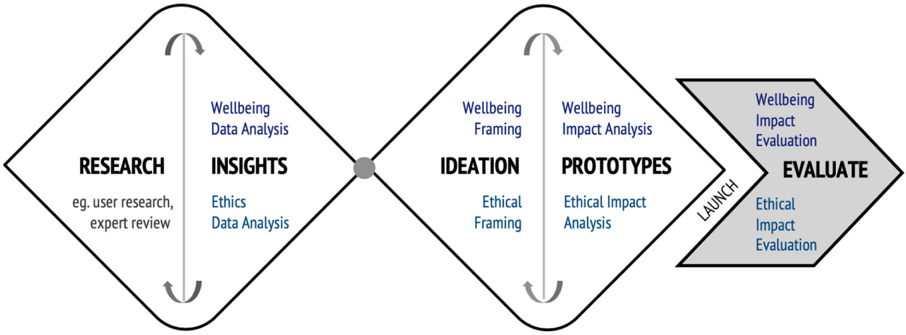
“One particularly relevant example is the Responsible design process framework shown in Figure 1 which forefronts user wellbeing and arose from consideration of ethical design practice in the context of AI [17].”
MethodEthical AI Development and Deployment
Gaurav, A., Gupta, B. B., & Castiglione, A. (2024) · Advances in computational intelligence and robotics book series · doi:10.4018/979-8-3693-3860-5.ch004 · Cited by 2
Never Mind the Codes of Conduct. DARE You to Tackle Ethics in Software Development for eHealth
Krumme, J., Wienands, L., & Teynor, A. (2024) · Studies in health technology and informatics · doi:10.3233/shti240330 · Cited by 2
Ethical Design and Standardization for Robot Governance
Weng, Y.-H. (2024) · Cambridge University Press eBooks · doi:10.1017/9781009386708.029 · Cited by 4
Guidelines for Responsible Smart Home Development
Bugeja, J., & Jacobsson, A. (2024) · IEEE World Forum on Internet of Things (WF-IoT) · doi:10.1109/wf-iot62078.2024.10811342 · Cited by 5
Developing Mental Health Support Chatbots in India: Challenges and Insights
Halder, S. (2025) · Annals of Indian Psychiatry · doi:10.4103/aip.aip_187_24 · Cited by 2
AI in High-Stakes and Standardized Testing
Trajkovski, G., & Hayes, H. (2025) · Digital education and learning · doi:10.1007/978-3-031-88252-4_8 · Cited by 3
Power Imbalances in Society and AI: On the Need to Expand the Feminist Approach
Gengler, E. J., Wedel, M., Wudel, A., & Laumer, S. (2025) · Lecture notes in information systems and organisation · doi:10.1007/978-3-031-80119-8_6 · Cited by 2
Surf or sleep? Understanding the influence of bedtime patterns on campus
Guo, T., Li, L., Zhang, D., & Xia, F. (2021) · ACM SIGKDD Explorations Newsletter · doi:10.1145/3510374.3510378 · Cited by 3
“First, these data are not easy to obtain due to privacy protection [23; 36].”
BackgroundHaas, N., & Sessler, M.-L. (2022) · HMD Praxis der Wirtschaftsinformatik · doi:10.1365/s40702-022-00848-x · Cited by 2
Tertiary Education Integrity in a ChatGPT Conscious World: Preliminary Kenyan Observations
Wachira, K., Wachira, L. N., Mwangi, E., Absaloms, H. O., & Jeon, G. (2023) · IEEE AFRICON · doi:10.1109/africon55910.2023.10293448 · Cited by 4
“Industry and academia have responded to these rapid changes in human expert domains in a mixed way with no clear consensus on whether these models can be considered ethical, affective or responsible [5]–[7].”
BackgroundMETAPHYSICS, ONTOLOGY AND SCENARIOS OF THE GREAT ANTHROPOLOGICAL TRANSITION
Budanov, V. (2023) · doi:10.29039/vgb-76-157 · Cited by 3
Stimson, C. E., & Raper, R. (2024) · Lecture notes in computer science · doi:10.1007/978-3-031-72059-8_13 · Cited by 3
A Brief Review of Responsible AI and Socially Responsible Investment in Financial and Stock TradingPreprint
Ullah, A. K. M. A., Sultana, S., Faisal, F., Rahi, M. M. I., Alam, M. A., & Alam, M. G. R. (2021) · doi:10.36227/techrxiv.15093762.v1 · Cited by 5
“The difficulty in transitioning from principles to practice, on the other hand, poses a major obstacle to the application of ethical standards [4].”
BackgroundA Brief Review of Responsible AI and Socially Responsible Investment in Financial and Stock TradingPreprint
Ullah, A. K. M. A., Sultana, S., Faisal, F., Rahi, M. M. I., Alam, M. A., & Alam, M. G. R. (2021) · doi:10.36227/techrxiv.15093762 · Cited by 4
Jetha, A., Crouch, M., Vold, K., Peters, S. E., Vietas, J., Sriharan, A., & Irvin, E. (2025) · SSRN Electronic Journal · doi:10.2139/ssrn.5124436 · Cited by 2
Self-citationArshinov, V., & Svirskiy, Y. (2023) · doi:10.29039/via-jis-158-266 · Cited by 7
THE SPIRIT AND STYLE OF CARTESIANISM IN MODERN TRANSDISCIPLINARY OPTICS
Роальдовна, Д. С. (2023) · doi:10.29039/srd-518-550 · Cited by 1
SCIENCE AND HUMAN PHENOMENA IN THE ERA OF CIVILIZATIONAL MACROSHIFT
Budanov, V., Arshinov, V., Svirskiy, Y., Александровна, Б. И., Розин, В. М., Lepskiy, V., Malahova, E., Семенович, Д. Э., Дергачева, Е., Gerasimova, I. A., et al. (2023) · doi:10.29039/978-5-88230-495-8 · Cited by 2
ETHICAL REGULATION OF ARTIFICIAL INTELLIGENCE AS A TOPIC OF PHILOSOPHICAL DISCUSSION
Malahova, E. (2023) · doi:10.29039/evm-364-381 · Cited by 2
Navigating the Ethereal Waters: Establishing Accountability in the Autonomous Age of Generative AI
Shan, R. (2024) · Advances in computational intelligence and robotics book series · doi:10.4018/979-8-3693-9173-0.ch005 · Cited by 1
Ignalig, W. O., Santos, J. B. D. L., & Bauyot, M. M. (2024) · European Journal of Arts Humanities and Social Sciences · doi:10.59324/ejahss.2024.1(5).08 · Cited by 4
Moral panic in the discourse on AI: Challenges and solutions
Jefić, I. (2024) · Kultura · doi:10.5937/kultura2484139j · Cited by 1
Metadata
- Authors
- Peters, D., Vold, K., Robinson, D., & Calvo, R. A.
- Affiliations
- University of Cambridge (GB)
- Imperial College London (GB)
- Venue
- IEEE Transactions on Technology and Society
- Published
- 2020-03
- Volume
- 1
- Issue
- 1
- Pages
- 34-47
- ISSN
- 2637-6415 (ISSN-L)
- OpenAlex
- W3007204236
- Cited by
- 293
- References
- 69
- Citations by year
- 2026: 37 · 2025: 67 · 2024: 75 · 2023: 55 · 2022: 32 · 2021: 21 · 2020: 6
- FWCI
- 38.79
- Type
- journal article
- Language
- en
- Open access
- hybrid
- doi.org
- Locations
- IEEE Transactions on Technology and Society (publishedVersion, cc-by)
- Spiral (Imperial College London) (submittedVersion, cc-by)
- Apollo (University of Cambridge) (submittedVersion, cc-by)
- Apollo (cc-by)
- Funders
- Leverhulme Centre for the Future of Intelligence, Leverhulme Trust (RC-2015-067)
- Digital Charter Fellowship Programme at the Alan Turing Institute, U.K.
- Topics
- Physical Sciences › Computer Science › Artificial Intelligence › Ethics and Social Impacts of AI
- Physical Sciences › Engineering › General Engineering › Flooding and Environmental Impact
- Health Sciences › Medicine › Health Informatics › Artificial Intelligence in Healthcare and Education
- Keywords
- responsible AI, ethical design, ethical impact assessment, engineering practice, digital mental health, online therapy, AI ethics framework
About these checks
Registry, retraction, Cites and statistics results are computed, not judged, with one exception: a printed reference that no index lists is read once by a model before it counts as a citation error. Claims are extracted by a model and kept only when their quote appears verbatim in the text; each cited source is then checked, with a model’s help, for whether it says what the claim relies on. Those verdicts can be wrong — read the claim’s quote and the cited source before relying on one.
Statistics and arithmetic are recomputed, not judged.
Confidence bands are shown only for fields calibrated on our annotated test set. None is calibrated yet, so no band is shown.
What counts as a claim ›How we measure confidence ›How we check this ›
Are you an author, or do you see a problem with this page? Request a review
Data sources
Bibliographic data: Semantic Scholar, OpenAlex, Crossref.
Contains information from the Semantic Scholar Academic Graph Datasets, made available under the ODC Attribution License (ODC-BY 1.0).
Semantic Scholar’s data is described in: Kinney, R., et al. (2023). The Semantic Scholar Open Data Platform. arXiv:2301.10140.
