

Responsible AI—Two Frameworks for Ethical Design Practice
Open accessThe DOI matches its Crossref record; 70 of the 70 references it cites were found in a registry or an index.
Abstract
In 2019, the IEEE launched the P7000 standards projects intended to address ethical issues in the design of autonomous and intelligent systems. This move came amidst a growing public concern over the unintended consequences of artificial intelligence (AI), compounded by the lack of an anticipatory process for attending to ethical impact within professional practice. However, the difficulty in moving from principles to practice presents a significant challenge to the implementation of ethical guidelines. Herein, we describe two complementary frameworks for integrating ethical analysis into engineering practice to help address this challenge. We then provide the outcomes of an ethical analysis informed by these frameworks, conducted within the specific context of Internet-delivered therapy in digital mental health. We hope both the frameworks and analysis can provide tools and insights, not only for the context of digital healthcare but also for data-enabled and intelligent technology development more broadly.
Overview
The claims and statistics of this paper haven’t been checked yet.
Free: it reads the open-access text and checks the first 5 claims that cite a source we can check. Create a free account to check every claim.
Integrity signals
Registry
Cites
Statistics
Figures




Verification
Claims the paper makes
The claims and statistics of this paper haven’t been checked yet.
Free: it reads the open-access text and checks the first 5 claims that cite a source we can check. Create a free account to check every claim.
Claims other papers make about this one
Each is checked against this paper’s own text: does it say what the citing paper says it does?
The source backs part of the claim, not all of it — or backs it for a different population, condition or comparison.
In the citing paper
“By converting citizens to prosumers of AI-powered digital health systems (Peters et al., 2020), end-users will feel empowered in controlling their own data and securing their privacy, which can lead to a more ethically aligned deployment of AI-powered health systems”
From SHIFTing artificial intelligence to be responsible in healthcare: a systematic review (2022) · cites this paper as Peters et al., 2020
Experimental — accuracy not yet measuredIn the citing paper
“The need for an ethical framework becomes even more pronounced as AI is poised to extend its influence beyond healthcare into various domains, such as education, transportation, and governance [34].”
From Ethical Framework for Harnessing the Power of AI in Healthcare and Beyond (2024) · cites this paper as [34]
Self-check
Percentages, sums and reported differences re-computed from the paper’s own numbers.
The self-check needs the paper’s full text.
Citations
Cites
Principles of Biomedical Ethics
(2012) · Thieves of Virtue · doi:10.7551/mitpress/9079.003.0009 · Cited by 13,453
The global landscape of AI ethics guidelines
Jobin, A., Ienca, M., & Vayena, E. (2019) · Nature Machine Intelligence · doi:10.1038/s42256-019-0088-2 · Cited by 6,220 · cited 2×
“Indeed, recent reports indicate that there are currently more than 70 publicly available sets of ethical principles or frameworks for AI, most of which have been released within the last five years [3], [9], [10].”
Floridi, L., Cowls, J., Beltrametti, M., Chatila, R., Chazerand, P., Dignum, V., Luetge, C., Madelin, R., Pagallo, U., Rossi, F., et al. (2018) · Minds and Machines · doi:10.1007/s11023-018-9482-5 · Cited by 4,774 · cited 5×
“Between this set of principles and the set we will be using from the meta-analysis by Floridi et al. [3], there is a significant overlap.”
BackgroundMethodInfluentialPrinciples of biomedical ethics
Horton, J. (2002) · Transactions of the Royal Society of Tropical Medicine and Hygiene · doi:10.1016/s0035-9203(02)90265-8 · Cited by 4,377
The motivational pull of video games: a self-determination theory approach
Ryan, R. M., Rigby, C. S., & Przybylski, A. (2006) · Motivation and Emotion · doi:10.1007/s11031-006-9051-8 · Cited by 3,332 · cited 1×
“Additionally, a series of studies comparing how different game designs impact wellbeing and autonomy have been conducted using psychological measures [40], [41].”
BackgroundDeveloping a framework for responsible innovation
Stilgoe, J., Owen, R., & Macnaghten, P. (2013) · Research Policy · doi:10.1016/j.respol.2013.05.008 · Cited by 3,184 · cited 3×
“Responsible innovation requires these methods to be anticipatory, reflexive, inclusive, and responsive [23].”
BackgroundMethodInfluentialGebru, T., Morgenstern, J., Vecchione, B., Vaughan, J. W., Wallach, H., Daumé, H., & Crawford, K. (2018) · arXiv · doi:10.48550/arxiv.1803.09010 · Cited by 2,474 · cited 2×
“Yet, moving effectively from ethical theory and principles into context specific, actionable practice is proving a signifi-cant barrier for the widespread uptake of systematic ethical impact analysis in software engineering [13], [14].”
BackgroundMethodGebru, T., Morgenstern, J., Vecchione, B., Vaughan, J. W., Wallach, H., III, H. D., & Crawford, K. (2021) · Communications of the ACM · doi:10.1145/3458723 · Cited by 2,469 · cited 2×
“Yet, moving effectively from ethical theory and principles into context specific, actionable practice is proving a signifi-cant barrier for the widespread uptake of systematic ethical impact analysis in software engineering [13], [14].”
BackgroundMethodThe Ethics of AI Ethics: An Evaluation of Guidelines
Hagendorff, T. (2020) · Minds and Machines · doi:10.1007/s11023-020-09517-8 · Cited by 1,911 · cited 3×
“Yet, moving effectively from ethical theory and principles into context specific, actionable practice is proving a signifi-cant barrier for the widespread uptake of systematic ethical impact analysis in software engineering [13], [14].”
Background
Research works printed but not linked: 15
- A. Sen, The Idea of Justice. London, U.K.: Penguin, 2010.
- S. Brown Consequence Scanning Manual, Version 1. London, U.K.: Doteveryone, 2019.
- UD Council. (2004). Double Diamond Diagram. [Online]. Available: https://www.designcouncil.org.uk/news-opinion/what-framework- innovation-design-councils-evolved-double-diamond
- Plato, Plato's Phaedrus. Cambridge, U.K.: Cambridge Univ. Press, 1952.
- AP Association. (2019). App Evaluation Model. [Online]. Available: https://www.psychiatry.org/psychiatrists/practice/mental-health-apps/ app-evaluation-model
- IEEE. (2019). Ethically Aligned Design. [Online]. Available: https://ethicsinaction.ieee.org
- ACM. (2018). ACM Code of Ethics and Professional Conduct. [Online]. Available: https://www.acm.org/code-of-ethics
- Y. Zeng, E. Lu, and C. Huangfu, "Linking artificial intelligence princi- ples," in Proc. AAAI Workshop Artif. Intell. Safety (AAAI-Safe AI), 2019, pp. 1-15.
- A. Zimmermann and B. Zevenbergen, Ai Ethics: Seven Traps, Tinker, Oklahoma City, OK, USA 2019.
- J. Whittlestone, R. Nyrup, A. Alexandrova, K. Dihal, and S. Cave, Ethical and Societal Implications of Algorithms, Data, and Artificial Intelligence: A Roadmap for Research. London, U.K.: Nuffield Found., 2019.
- A. Tieu. (2015). We Now Have an Ai Therapist, and She's Doing Her Job Better Than Humans Can. [Online]. Available: https://futurism.com/uscs-new-ai-ellie-has-more-success-than-actual- therapists
- E. Montague, P.-Y. Chen, J. Xu, B. Chewning, and B. Barrett, "Nonverbal interpersonal interactions in clinical encounters and patient perceptions of empathy," J. Participatory Med., vol. 5, p. e33, Aug. 2013.
- U.K. House of Lords Select Committee on Artificial Intelligence. (2018). Ai in the U.K.: Ready, Willing and Able? Report of Session 2017-19. [Online]. Available: https://publications.parliament.uk/pa/ld201719/ldselect/ldai/100/100.pdf
- Universite de Montreal. (2017). Montreal Declaration for Responsible Ai. [Online]. Available: https://www.montrealdeclaration- responsibleai.com/the-declaration
- 2019). Psyberguide. [Online]. Available: http://www.Psyberguide.org
Cited by
Chen, Y., Jensen, S., Albert, L. J., Gupta, S., & Lee, T. (2023) · Information Systems Frontiers · doi:10.1007/s10796-022-10291-4 · Cited by 685
“…(AI) has provided promising opportunities for addressing important problems in education and society (Cowls et al., 2021; Tomašev et al., 2020) while also provoking considerations about the unintended consequences and risks of AI usage (Hagendorff, 2020; Peters et al., 2020; Atkins et al., 2021).”
BackgroundAli, O., Abdelbaki, W., Shrestha, A., Elbasi, E., Alryalat, M. A. A., & Dwivedi, Y. K. (2023) · Journal of Innovation & Knowledge · doi:10.1016/j.jik.2023.100333 · Cited by 568
An Overview of Artificial Intelligence Ethics
Huang, C., Zhang, Z., Mao, B., & Yao, X. (2023) · IEEE Transactions on Artificial Intelligence · doi:10.1109/tai.2022.3194503 · Cited by 482
“[133] proposed two frameworks for responsible AI by integrating ethical analysis into engineering practice in AI.”
BackgroundSHIFTing artificial intelligence to be responsible in healthcare: a systematic review
Siala, H., & Wang, Y. (2022) · Social Science & Medicine · doi:10.1016/j.socscimed.2022.114782 · Cited by 358
Shaping the future of healthcare: ethical clinical challenges and pathways to trustworthy AI
Goktas, P., & Grzybowski, A. (2025) · Journal of Clinical Medicine · doi:10.3390/jcm14051605 · Cited by 336
“Healthcare organizations, already under scrutiny for their contribution to greenhouse gas emissions and environmental stressors, must weigh the ecological costs of their AI investments.”
Stahl, B. C. (2021) · SpringerBriefs in Research and Innovation Governance · doi:10.1007/978-3-030-69978-9 · Cited by 317
Challenges of Deep Learning in Medical Image Analysis—Improving Explainability and Trust
Dhar, T., Dey, N., Borra, S., & Sherratt, R. S. (2023) · IEEE Transactions on Technology and Society · doi:10.1109/tts.2023.3234203 · Cited by 309
“To remedy such challenges, researchers could use techniques involving pseudonymized data or differential privacy rather than identified data [44].”
BackgroundPrivacy and Security Concerns in Generative AI: A Comprehensive Survey
Golda, A., Mekonen, K., Pandey, A., Singh, A., Hassija, V., Chamola, V., & Sikdar, B. (2024) · IEEE Access · doi:10.1109/access.2024.3381611 · Cited by 264
“Policymakers must navigate a complex ethical landscape [91] when regulating deepfake technology.”
BackgroundHaque, A. B., Islam, A. K. M. N., & Mikalef, P. (2023) · Technological Forecasting and Social Change · doi:10.1016/j.techfore.2022.122120 · Cited by 240
“With our findings, we contribute to research conducted to design and govern responsible AI systems (Wearn et al., 2019; Maas, 2018; Peters et al., 2020; Rakova et al., 2021).”
MethodArtificial Intelligence in Healthcare: Review, Ethics, Trust Challenges & Future Research Directions
Kumar, P., Chauhan, S., & Awasthi, L. K. (2023) · Engineering Applications of Artificial Intelligence · doi:10.1016/j.engappai.2023.105894 · Cited by 218
Wang, W., Chen, L., Xiong, M., & Wang, Y. (2023) · Information Systems Frontiers · doi:10.1007/s10796-021-10154-4 · Cited by 164
Ethical Framework for Harnessing the Power of AI in Healthcare and Beyond
Nasir, S., Khan, R. A., & Bai, S. (2024) · IEEE Access · doi:10.1109/access.2024.3369912 · Cited by 152
“The need for an ethical framework becomes even more pronounced as AI is poised to extend its influence beyond healthcare into various domains, such as education, transportation, and governance [34].”
BackgroundManning, L., Brewer, S., Craigon, P. J., Frey, J. G., Gutiérrez, A., Jacobs, N. J., Kanza, S., Munday, S., Sacks, J., & Pearson, S. (2022) · Trends in Food Science & Technology · doi:10.1016/j.tifs.2022.04.025 · Cited by 188
“…the P7000 standards projects intended to create a series of new standards to address ethical issues in the design of autonomous and intelligent systems, many of which have specific focus on aspects of responsibility and responsible technology development (Peters, Vold, Robinson, & Calvo, 2020).”
BackgroundThe Boeing 737 MAX: Lessons for Engineering Ethics
Herkert, J. R., Borenstein, J., & Miller, K. (2020) · Science and Engineering Ethics · doi:10.1007/s11948-020-00252-y · Cited by 204
Wang, Y., Wang, L., & Siau, K. L. (2024) · International Journal of Human-Computer Interaction · doi:10.1080/10447318.2024.2316376 · Cited by 189
“On the other hand, feedback provided by users, such as reports on system failures, biases, or unethical behaviours, assists developers in identifying and rectifying issues in AI, thus achieving improvement (Peters et al., 2020).”
Z-Inspection ® : A Process to Assess Trustworthy AI
Zicari, R. V., Brodersen, J., Brusseau, J., Dudder, B., Eichhorn, T., Ivanov, T., Kararigas, G., Kringen, P., McCullough, M., Moslein, F., et al. (2021) · IEEE Transactions on Technology and Society · doi:10.1109/tts.2021.3066209 · Cited by 134
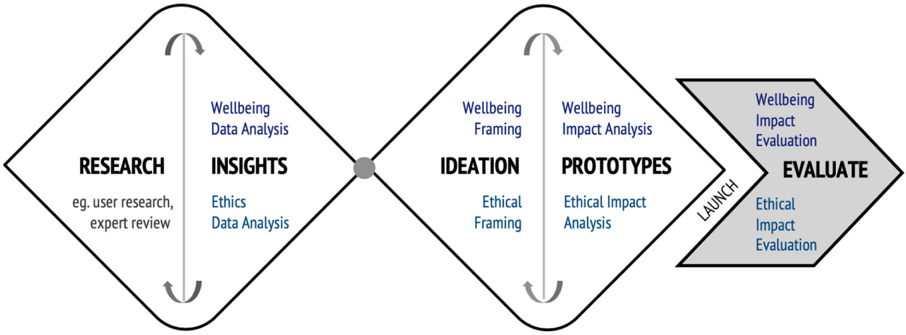
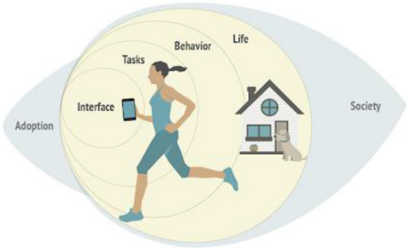
“[14] recently published two frameworks (Responsible Design Process and Spheres of Technology Experience) that are supposed to help the design of what they call responsible AI.”
BackgroundInfluentialA Comprehensive Survey of Deep Learning Approaches in Image Processing
Τρίγκα, Μ., & Dritsas, E. (2025) · Sensors · doi:10.3390/s25020531 · Cited by 211
Responsible AI Systems: Who are the Stakeholders?
Deshpande, A., & Sharp, H. (2022) · Proceedings of the 2022 AAAI/ACM Conference on AI, Ethics, and Society · doi:10.1145/3514094.3534187 · Cited by 103
“Depending on the guideline and the stakeholders, ethical AI covers moral, ethical principles of AI operation, issues of privacy, trust, transparency, responsibility, accountability, and bias in AI systems, criticality of the data collected to train the AI systems, and legal compliance of AI systems [28] [56].”
van der Schyff, E. L., Ridout, B., Amon, K. L., Forsyth, R., & Campbell, A. J. (2023) · Journal of Medical Internet Research · doi:10.2196/46448 · Cited by 109
“The difficulty of designing ethically robust interventions with AI is that ethical design and review cannot remain a one-off, as the technology itself is continuously developing for both the user and clinical providers [23].”
The Application of the Principles of Responsible AI on Social Media Marketing for Digital Health
Liu, R., Gupta, S., & Patel, P. (2023) · Information Systems Frontiers · doi:10.1007/s10796-021-10191-z · Cited by 102
“Our The principle of autonomy facilitates the performance of social media marketing Sources: Peters et al., 2020; Sanches et al., 2019; Olson, 2018; D ’ Alfonso, 2020; Floridi, 2018; Morley et al., 2020; Shaban-Nejad et al., 2018; Brownstein et al., 2009; Dredze, 2012; Hoffman et al., 1999 discussion is organized by r…”
BackgroundInfluentialEmbedding responsibility in intelligent systems: from AI ethics to responsible AI ecosystems
Stahl, B. C. (2023) · Scientific Reports · doi:10.1038/s41598-023-34622-w · Cited by 151
“Such tools and methodologies can draw on and be inspired by a large number of ethics principles and frameworks 45,46 and find their expression in ethics codes 47 which may be part of professional guidance 48 and include process of standardisation 49,50 and certification 51,52 .”
Implementing Ethics in Healthcare AI-Based Applications: A Scoping Review
Goirand, M., Austin, E., & Clay-Williams, R. (2021) · Science and Engineering Ethics · doi:10.1007/s11948-021-00336-3 · Cited by 101
Exploring ethics and human rights in artificial intelligence – A Delphi study
Stahl, B. C., Brooks, L., Hatzakis, T., Santiago, N., & Wright, D. (2023) · Technological Forecasting and Social Change · doi:10.1016/j.techfore.2023.122502 · Cited by 95
Ethical framework for artificial intelligence in healthcare research: A path to integrity
Abujaber, A. A., & Nashwan, A. J. (2024) · World Journal of Methodology · doi:10.5662/wjm.v14.i3.94071 · Cited by 126
Consensus mechanism for software-defined blockchain in internet of things
Huang, R., Yang, X., & Ajay, P. (2022) · Internet of Things and Cyber-Physical Systems · doi:10.1016/j.iotcps.2022.12.004 · Cited by 98
Challenges of responsible AI in practice: scoping review and recommended actions
Sadek, M., Kallina, E., Bohné, T., Mougenot, C., Calvo, R. A., & Cave, S. (2025) · AI & SOCIETY · doi:10.1007/s00146-024-01880-9 · Cited by 79
“…feminist Lauren Klein and her colleague Catherine D’Ignazio (D’ignazio and Klein 2020), as well as the technology design researcher Dorian Peters (Peters et al. 2020): Instead of leaving the interpretation of the abstract RAI principles to practitioners, it is essential to collect insights…”
InfluentialSelf-citationRecent Advances of Artificial Intelligence in Healthcare: A Systematic Literature Review
Kitsios, F., Kamariotou, M. I., Syngelakis, A. I., & Talias, Μ. A. (2023) · Applied Sciences · doi:10.3390/app13137479 · Cited by 131
“These systems are responsible for data collection, processing, storage, monitoring, and collaboration [86,96,118,119].”
BackgroundKjell, O., Kjell, K., & Schwartz, H. A. (2023) · Psychiatry Research · doi:10.1016/j.psychres.2023.115667 · Cited by 156
“There is a growing interest in ethical principles and frameworks for developing and deploying AI (Jobin et al., 2019; Peters et al., 2020), with an active debate about best practices.”
Ghosh, A., Saini, A., & Barad, H. (2025) · AI & Society · doi:10.1007/s00146-025-02312-y · Cited by 134
“A systematic method to provide concrete examples of successful implementations of ethical principles into AI code involves conducting detailed case studies that document how specific AI systems have integrated regulatory and ethical principles into their design (Peters et al. 2020).”
Sadek, M., Calvo, R. A., & Mougenot, C. (2023) · AI and Ethics · doi:10.1007/s43681-023-00373-7 · Cited by 94
Self-citationResponsible AI literacy: A stakeholder-first approach
Domínguez Figaredo, D., & Stoyanovich, J. (2023) · Big Data & Society · doi:10.1177/20539517231219958 · Cited by 64
“…remain — mainly about how these principles should be understood and what other elements there may be (Ghallab, 2019; Jobin et al., 2019; Wang et al., 2020), and how the criteria should be applied in practice (Birhane et al., 2022; Hagendorf, 2020; Peters et al., 2020; Schiff et al., 2020).”
BackgroundEthical Challenges in the Development of Virtual Assistants Powered by Large Language Models
Piñeiro-Martín, A., García-Mateo, C., Docío-Fernández, L., & López-Pérez, M. D. C. (2023) · Electronics · doi:10.3390/electronics12143170 · Cited by 64
Ethical AI in practice: Balancing technological advancements with human values
Ayinla, B. S., Amoo, O. O., Atadoga, A., Abrahams, T. O., Osasona, F., & Farayola, O. A. (2024) · International Journal of Science and Research Archive · doi:10.30574/ijsra.2024.11.1.0218 · Cited by 37
“Peters et al. (2020) describe two complementary frameworks for integrating ethical analysis into engineering practice to help address the challenge of moving from principles to practice in ethical AI.”
Ijiga, A. C., Abutu, E. P., Idoko, I. P., Agbo, D. O., Harry, K. D., Ezebuka, C. I., & Umama, E. E. (2024) · International Journal of Biological and Pharmaceutical Sciences Archive · doi:10.53771/ijbpsa.2024.7.1.0015 · Cited by 147
“Peters, Vold, Robinson, and Calvo (2020) describe two frameworks for integrating ethical analysis into engineering practice, specifically in the context of digital healthcare.”
BackgroundSamuel, G. N., Chubb, J., & Derrick, G. (2021) · Journal of Empirical Research on Human Research Ethics · doi:10.1177/15562646211002744 · Cited by 67
“We refer to AI as “ the capability of a machine to imitate intelligent human behavior ” (Peters et al., 2020).”
BackgroundExploring how politeness impacts the user experience of chatbots for mental health support
Bowman, R., Cooney, O., Newbold, J. W., Thieme, A., Clark, L., Doherty, G. J., & Cowan, B. R. (2023) · International Journal of Human-Computer Studies · doi:10.1016/j.ijhcs.2023.103181 · Cited by 82
Fostering responsible AI literacy: A systematic review of K-12 AI ethics education
Ma, M., Ng, D. T. K., Liu, Z., & Wong, G. K. W. (2025) · Computers and Education Artificial Intelligence · doi:10.1016/j.caeai.2025.100422 · Cited by 133
On the Safety of Conversational Models: Taxonomy, Dataset, and Benchmark
Sun, H., Xu, G., Deng, J., Cheng, J., Zheng, C., Zhou, H., Peng, N., Zhu, X., & Huang, M. (2022) · Findings of the Association for Computational Linguistics: ACL 2022 · doi:10.18653/v1/2022.findings-acl.308 · Cited by 49
State of the Art in Parallel and Distributed Systems: Emerging Trends and Challenges
Dai, F., Hossain, M. A., & Wang, Y. (2025) · Electronics · doi:10.3390/electronics14040677 · Cited by 86
A Survey on Evaluating the Quality of Autonomic Internet of Things Applications
Fizza, K., Banerjee, A., Jayaraman, P. P., Auluck, N., Ranjan, R. K., Mitra, K., & Georgakopoulos, D. (2022) · IEEE Communications Surveys & Tutorials · doi:10.1109/comst.2022.3205377 · Cited by 53
Ten UNESCO Recommendations on the Ethics of Artificial IntelligencePreprint
Morandín-Ahuerma, F. (2023) · OSF Preprints (OSF Preprints) · doi:10.31219/osf.io/csyux · Cited by 55
A principles-based ethics assurance argument pattern for AI and autonomous systems
Porter, Z., Habli, I., McDermid, J. A., & Kaas, M. H. L. (2023) · AI and Ethics · doi:10.1007/s43681-023-00297-2 · Cited by 72
“Meanwhile, the whole field of AI/AS ethics emerged largely because of the risks of different kinds of harm that these novel technologies can incur [82].”
Li, H., Xue, T., Zhang, A., Luo, X., Kong, L., & Huang, G. (2024) · Heliyon · doi:10.1016/j.heliyon.2024.e40037 · Cited by 99
Seamful XAI: Operationalizing Seamful Design in Explainable AI
Ehsan, U., Liao, Q. V., Passi, S., Riedl, M. O., & Daumé, H. (2024) · Proceedings of the ACM on Human-Computer Interaction · doi:10.1145/3637396 · Cited by 106
“To develop the design process, we draw on key notions from the seamful design literature (reviewed in Section 2.1): 1) seams are inevitable, arising from the integration of heterogeneous sociotechnical components during technology deployments.”
MethodInfluentialAI-Native Multi-Access Future Networks—The REASON Architecture
Katsaros, K., Mavromatis, I., Αντωνάκογλου, Κ., Ghosh, S., Kaleshi, D., Mahmoodi, T., Asgari, H., Karousos, A., Tavakkolnia, I., Safi, H., et al. (2024) · IEEE Access · doi:10.1109/access.2024.3507186 · Cited by 56
From human-centered to symbiotic artificial intelligence: a focus on medical applications
Desolda, G., Esposito, A., Lanzilotti, R., Piccinno, A., & Costabile, M. F. (2024) · Multimedia Tools and Applications · doi:10.1007/s11042-024-20414-5 · Cited by 69
Ethical Considerations in AI Development
Singh, B. P., & Joshi, A. (2024) · Advances in computational intelligence and robotics book series · doi:10.4018/979-8-3693-2964-1.ch010 · Cited by 47
In Defence of Principlism in AI Ethics and Governance
Seger, E. (2022) · Philosophy & Technology · doi:10.1007/s13347-022-00538-y · Cited by 53
“However, it is also widely acknowledged that such high-level principles are difficult to translate into practices via explicit rules and design guidelines (Morley et al., 2020; Peters et al., 2020).”
BackgroundCo-designing Resources for Ethics Education in HCI
Pillai, A. G., Kocaballi, A. B., Leong, T. W., Calvo, R. A., Parvin, N., Shilton, K., Waycott, J., Fiesler, C. L., Havens, J. C., & Ahmadpour, N. (2021) · CHI Conference Extended Abstracts on Human Factors in Computing Systems (CHI EA) · doi:10.1145/3411763.3441349 · Cited by 41
“responsible design frameworks and principles, for instance for AI [20], address that gap through a process-driven approach to ethics with great appreciation for human wellbeing.”
BackgroundSelf-citationThe Promise and Perils of International Human Rights Law for AI Governance
Su, A. (2022) · Law Technology and Humans · doi:10.5204/lthj.2332 · Cited by 39
Integrating a Blockchain-Based Governance Framework for Responsible AI
Asif, R., Hassan, S. R., & Parr, G. P. (2023) · Future Internet · doi:10.3390/fi15030097 · Cited by 57
Responsible AI: Gender bias assessment in emotion recognitionPreprint
Domnich, A., & Anbarjafari, G. (2021) · arXiv (Cornell University) · doi:10.48550/arxiv.2103.11436 · Cited by 102
“Hence, usage of these attributes are considered as protected and defended by law [95, 96, 97].”
BackgroundA Systematic Review of Responsible Artificial Intelligence Principles and Practice
Gunasekara, L., El-Haber, N., Nagpal, S., Moraliyage, H., Issadeen, Z., Manic, M., & Silva, D. D. (2025) · Applied System Innovation · doi:10.3390/asi8040097 · Cited by 70
An ontology-based approach to engineering ethicality requirements
Guizzardi, R. S. S., Amaral, G. C. M., Guizzardi, G., & Mylopoulos, J. (2023) · Software & Systems Modeling · doi:10.1007/s10270-023-01115-3 · Cited by 48
“Interesting initiatives are those of Rashid, Moore, May-Chahal and Chitchyan [47], Peters, Vold, Robinson and Calvo [45], Etzioni and Etzioni [19], Dignum [17] and Floridi et al. [22].”
Rethinking responsible AI from ethical pillars to sociotechnical practice
Ibitoye, A., Nkwo, M. S., & Orji, R. (2025) · AI and Ethics · doi:10.1007/s43681-025-00809-2 · Cited by 58
“Frameworks proposed by organ-isations such as the European Commission [ 16], UNESCO [ 17 ], and IEEE [ 18] outline comprehensive lists of principles intended to guide the design, deployment, and governance of AI technologies.”
No such thing as one-size-fits-all in AI ethics frameworks: a comparative case study
Qiang, V., Rhim, J., & Moon, A. (2023) · AI & Society · doi:10.1007/s00146-023-01653-w · Cited by 38
“The Foresight into AI Ethics Toolkit (FAIE) took the longest time to apply at approximately 20 h, while the Guidelines for Trustworthy AI (GTA) framework took about 9 h to apply.”
InfluentialUsing AI ethically to tackle covid-19
Cave, S., Whittlestone, J., Nyrup, R., hÉigeartaigh, S. Ó., & Calvo, R. A. (2021) · BMJ · doi:10.1136/bmj.n364 · Cited by 34
“8 For example, is the system optimising a commercial value, the interests of a government, or the health of the individual?”
BackgroundSelf-citationUsmani, U. A., Happonen, A., & Watada, J. (2022) · Lecture notes in networks and systems · doi:10.1007/978-3-031-18461-1_19 · Cited by 44
State-of-the-Art in Responsible, Explainable, and Fair AI for Medical Image Analysis
Amirian, S., Gao, F., Littlefield, N. G., Hill, J. H., Yates, A. J., Plate, J. F., Pantanowitz, L., Rashidi, H. H., & Tafti, A. P. (2025) · IEEE Access · doi:10.1109/access.2025.3555543 · Cited by 38
Mahrishi, M., Abbas, A., & Siddiqui, M. K. (2025) · Digital Government Research and Practice · doi:10.1145/3672462 · Cited by 55
“The initiative has focused on promoting ethical considerations in designing and implementing autonomous and intelligent systems [43].”
Malicious Design in AIVR, Falsehood and Cybersecurity-oriented Immersive Defenses
Aliman, N.-M., & Kester, L. J. H. M. (2020) · IEEE International Conference on Artificial Intelligence and Virtual Reality (AIVR) · doi:10.1109/aivr50618.2020.00031 · Cited by 35
The Invisible Arms Race: Digital Trends in Illicit Goods Trafficking and AI-Enabled Responses
Mademlis, I., Mancuso, M., Paternoster, C., Evangelatos, S., Finlay, E., Hughes, J. G., Grammatikis, P. I. R., Sarigiannidis, P. G., Stavropoulos, G., Votis, K., et al. (2024) · IEEE Transactions on Technology and Society · doi:10.1109/tts.2024.3514683 · Cited by 38
“All these initiatives paved the way for many ethical frameworks [140] regarding trustworthy AI in various domains, such as digital healthcare [141], telecommunications (6G) [142], or fintech [143], as well as for many types of sectors, e.g., public, private and non-governmental organizations [144].”
Implementing Ai Principles: Frameworks, Processes, and ToolsPreprint
Boza, P., & Evgeniou, T. (2021) · SSRN Electronic Journal · doi:10.2139/ssrn.3783124 · Cited by 36
Addressing Ethical Issues in AI
Stahl, B. C. (2021) · SpringerBriefs in research and innovation governance · doi:10.1007/978-3-030-69978-9_5 · Cited by 31
Ethical decision-making in IT governance: A review of models and frameworks
Farayola, O. A., & Olorunfemi, O. L. (2023) · International Journal of Science and Research Archive · doi:10.30574/ijsra.2024.11.2.0373 · Cited by 36
“However, the framework may have limitations in addressing highly complex or novel ethical dilemmas that require interdisciplinary expertise or consideration of broader societal impacts (Peters et al ., 2020).”
BackgroundSelf-Determination Theory and Technology Design
Peters, D., & Calvo, R. A. (2023) · Oxford University Press eBooks · doi:10.1093/oxfordhb/9780197600047.013.49 · Cited by 27
Self-citationDeeply embedded wages: Navigating digital payments in data work
Posada, J. (2024) · Big Data & Society · doi:10.1177/20539517241242446 · Cited by 30
“Here, the nature of financial compensation and how workers are remunerated emerges as a pivotal determinant that actualizes the requisite conditions of ethical data production.”
Research Handbook on Health, AI and the Law
Biasin, E., Kamenjašević, E., & Ludvigsen, K. R. (2024) · Edward Elgar Publishing eBooks · doi:10.4337/9781802205657 · Cited by 43
Ethical Guidelines and Principles in the Context of Artificial Intelligence
de Cerqueira, J. A. S., Tives, H. A., & Canedo, E. D. (2021) · Anais do Simpósio Brasileiro de Sistemas de Informação (SBSI) · doi:10.1145/3466933.3466969 · Cited by 29
“[35] apresentaram dois frameworks para ética em IA que fazem uso indiretamente e em certa medida”
BackgroundInfluentialBurema, D., Debowski, N., von Janowski, A., Grabowski, J., Maftei, M., Jacobs, M., van der Smagt, P., & Benbouzid, D. (2023) · Proceedings of the AAAI/ACM Conference on AI Ethics and Society · doi:10.1145/3600211.3604680 · Cited by 35
“As important as such initiatives are for raising awareness for ethical issues of AI, they have been criticized as being too abstract [39, 57] and offering little to no practical applicability [66, 73, 75].”
Wang, J., Huo, Y., Mahe, J., Ge, Z., Liu, Z., Wang, W., & Zhang, L. (2024) · IEEE Access · doi:10.1109/access.2024.3501332 · Cited by 32
Design-Centered HRI Governance for Healthcare Robots
Weng, Y.-H., & Hirata, Y. (2022) · Journal of Healthcare Engineering · doi:10.1155/2022/3935316 · Cited by 19
Trustworthy machine learning in the context of security and privacy
Upreti, R., Lind, P. G., Elmokashfi, A. M., & Yazidi, A. (2024) · International Journal of Information Security · doi:10.1007/s10207-024-00813-3 · Cited by 32
“Despite the exponential adoption of AI-based solutions, several studies have unveiled some security and privacy vulnerabilities associated with AI systems [1–3].”
Responsible AI Framework for Autonomous Vehicles: Addressing Bias and Fairness Risks
Tiwari, A., & Farag, H. E. Z. (2025) · IEEE Access · doi:10.1109/access.2025.3556781 · Cited by 30
“As concerns over AI’s unintended consequences grow, proposed frameworks aim to integrate ethical analysis into engineering practices to address these challenges [8].”
Trust Management for Artificial Intelligence: A Standardization Perspective
Um, T., Kim, J., Lim, S., & Lee, G. M. (2022) · Applied Sciences · doi:10.3390/app12126022 · Cited by 25
MLOps: a guide to its adoption in the context of responsible AI
Matsui, B. M. A., & Goya, D. (2022) · doi:10.1145/3526073.3527591 · Cited by 33
“application, and use of AI by society [35], adhering to ethical and legal principles [17, 24].”
BackgroundUnpacking Human-AI interactions: From Interaction Primitives to a Design Space
Tsiakas, K., & Murray-Rust, D. (2024) · ACM Transactions on Interactive Intelligent Systems · doi:10.1145/3664522 · Cited by 31
On the Road to Designing Responsible AI Systems in Military Cyber Operations
Maathuis, C. (2022) · European Conference on Cyber Warfare and Security · doi:10.34190/eccws.21.1.204 · Cited by 20
Mitigating Algorithm Aversion in Recruiting: A Study on Explainable AI for Conversational Agents
Fleiß, J., Bäck, E., & Thalmann, S. (2024) · ACM SIGMIS Database the DATABASE for Advances in Information Systems · doi:10.1145/3645057.3645062 · Cited by 25
“…manner, self-determination theory has previously been used to assess motivation to use an IS, finding that autonomy-supportive IS, as compared to controlling IS, increases the motivation to use it by creating a positive and also meaningful experience (Peters et al., 2020; Yang & Aurisicchio, 2021).”
MethodResponsible AI, ethics, and the AI lifecycle: how to consider the human influence?
Elia, M., Ziethmann, P., Krumme, J., Schlögl-Flierl, K., & Bauer, B. (2025) · AI and Ethics · doi:10.1007/s43681-025-00666-z · Cited by 17
“In the context of RAI, “[...] the difficulty in moving from principles to practice presents a significant challenge to the implementation of ethical guidelines” [35, 1].”
Human machine interactions: from past to future- a systematic literature review
Jain, N., Gupta, V., Temperini, V., Meissner, D., & D’angelo, E. (2024) · Journal of Management History · doi:10.1108/jmh-12-2022-0085 · Cited by 27
Kjell, O., Kjell, K., & Schwartz, H. A. (2023) · doi:10.31234/osf.io/yfd8g · Cited by 15
Dual-process theory and decision-making in large language models
Brady, O., Nulty, P., Zhang, L., Ward, T. E., & McGovern, D. P. (2025) · Nature Reviews Psychology · doi:10.1038/s44159-025-00506-1 · Cited by 33
“Ethical analysis provides guidelines for responsible AI use that emphasize fairness, accountability and transparency 135 .”
Morgan, P., & Cogan, N. A. (2024) · Journal of Public Mental Health · doi:10.1108/jpmh-07-2024-0095 · Cited by 16
Artificial intelligence in low-altitude flight: Developmental opportunity or ethical challenge?
Li, J., Liu, S., Huang, W., & Yan, B. (2025) · The Aeronautical Journal · doi:10.1017/aer.2025.2 · Cited by 15
Balancing Progress and Responsibility: A Synthesis of Sustainability Trade-Offs of AI-Based Systems
Kumar, A. N. P., Bogner, J., Funke, M., & Lago, P. (2024) · IEEE International Conference on Software Architecture Companion (ICSA-C) · doi:10.1109/icsa-c63560.2024.00045 · Cited by 35
“It is recommended that practitioners consider adopting frameworks for sustainable ML [17], ethical design of AI [18] or apply green tactics [19] to aid their decision-making to adopt AI.”
BackgroundChiwaridzo, O. T., & Chiwaridzo, S. (2024) · Business Strategy & Development · doi:10.1002/bsd2.380 · Cited by 21
The Role of Artificial Intelligence in Shaping the Islamic Worldview of the Digital Economy
Firnando, H. G., & Wahyudi, M. (2024) · Journal of Islamic Economics and Philanthropy · doi:10.21111/jiep.v6i3.11386 · Cited by 39
“Addressing these challenges requires the development of a robust regulatory and ethical framework to ensure responsible AI deployment (Peters et al., 2020).”
BackgroundResolving Ethics Trade-offs in Implementing Responsible AI
Sanderson, C., Schleiger, E., Douglas, D., Kuhnert, P., & Lu, Q. (2024) · IEEE Conference on Artificial Intelligence (CAI) · doi:10.1109/cai59869.2024.00215 · Cited by 26
From General Principles to Procedural Values: Responsible Digital Health Meets Public Health Ethics
Nyrup, R. (2021) · Frontiers in Digital Health · doi:10.3389/fdgth.2021.690417 · Cited by 15
“While the Four Principles do include a principle of Justice, political issues covered under this heading mainly concern the question of what health-related goods society should provide and how to allocate resources within healthcare systems (5, chapter 6).”
BackgroundInfluentialAlshibani, S. M., Korayim, D., Mehrotra, A., & Agarwal, V. (2025) · Technological Forecasting and Social Change · doi:10.1016/j.techfore.2025.124272 · Cited by 16
Kuhail, M. A., Al-Shamaileh, O., Farooq, S., Shahin, H., Abdelzaher, F., & Thomas, J. (2025) · Human Behavior and Emerging Technologies · doi:10.1155/hbe2/9942295 · Cited by 11
Greaves, J., & Colucci, E. (2025) · BMC Public Health · doi:10.1186/s12889-025-23298-8 · Cited by 13
“Ethical AI guidelines generally regard transparency as essential for maintaining trust and for setting realistic expectations about the type of support that can be provided [60].”
Artificial intelligence in web accessibility: A systematic mapping study
Campoverde‐Molina, M., & Luján‐Mora, S. (2025) · Computer Standards & Interfaces · doi:10.1016/j.csi.2025.104055 · Cited by 19
Eliciting Ethicality Requirements Using the Ontology-Based Requirements Engineering Method
Guizzardi, R. S. S., Amaral, G. C. M., Guizzardi, G., & Mylopoulos, J. (2022) · Lecture notes in business information processing · doi:10.1007/978-3-031-07475-2_15 · Cited by 15
Digital wellbeing through design
Peters, D., & Ahmadpour, N. (2020) · Australian Conference on Human-Computer Interaction (OzCHI) · doi:10.1145/3441000.3441008 · Cited by 11
Self-citationOoi, P. B., & Wilkinson, G. G. (2024) · British Journal of Guidance and Counselling · doi:10.1080/03069885.2024.2373180 · Cited by 16
“In recent years, studies have focused on the need for AI systems to be loyal to their stakeholders (Aguirre et al., 2020), responsible (Peters et al., 2020), designed and used ethically (Luxton, 2014), and both fair and non-discriminatory and worthy of public trust (Cortes et al., 2021).”
Logging requirement for continuous auditing of responsible machine learning-based applications
Foalem, P. L., Silva, L. D., Khomh, F., Li, H., & Merlo, E. (2025) · Empirical Software Engineering · doi:10.1007/s10664-025-10656-8 · Cited by 24
“Peters et al. (Peters et al., 2020) emphasized embedding explain-ability frameworks into AI engineering practices, demonstrating their use in digital mental health applications to promote fairness and transparency.”
Xie, S., Zimmerman, J., & Eslami, M. (2025) · CHI Conference on Human Factors in Computing Systems · doi:10.1145/3706598.3713841 · Cited by 24
“In recent years, AI literacy has contributed significantly to advancing the goal of Responsible AI (RAI) [48, 80, 84], which focuses on maximizing the benefits and minimizing the harms of AI innovations [40, 41, 70].”
Exploring digital sovereignty: open questions for design in digital healthcare
Pierri, P., & Herlo, B. (2021) · Design for Health · doi:10.1080/24735132.2021.1928381 · Cited by 16
“Dealing with the design of technologies is not something that can be deployed simplistically, as during the technological development phase ethical issues are translated into context specific and actionable practices through design choices (Peters et al. 2020).”
Background
Metadata
- Authors
- Peters, D., Vold, K., Robinson, D., & Calvo, R. A.
- Affiliations
- University of Cambridge (GB)
- Imperial College London (GB)
- Venue
- IEEE Transactions on Technology and Society
- Published
- 2020-03
- Volume
- 1
- Issue
- 1
- Pages
- 34-47
- ISSN
- 2637-6415 (ISSN-L)
- OpenAlex
- W3007204236
- Cited by
- 293
- References
- 69
- Citations by year
- 2026: 37 · 2025: 67 · 2024: 75 · 2023: 55 · 2022: 32 · 2021: 21 · 2020: 6
- FWCI
- 38.79
- Type
- journal article
- Language
- en
- Open access
- hybrid
- doi.org
- Locations
- IEEE Transactions on Technology and Society (publishedVersion, cc-by)
- Spiral (Imperial College London) (submittedVersion, cc-by)
- Apollo (University of Cambridge) (submittedVersion, cc-by)
- Apollo (cc-by)
- Funders
- Leverhulme Centre for the Future of Intelligence, Leverhulme Trust (RC-2015-067)
- Digital Charter Fellowship Programme at the Alan Turing Institute, U.K.
- Topics
- Physical Sciences › Computer Science › Artificial Intelligence › Ethics and Social Impacts of AI
- Physical Sciences › Engineering › General Engineering › Flooding and Environmental Impact
- Health Sciences › Medicine › Health Informatics › Artificial Intelligence in Healthcare and Education
- Keywords
- responsible AI, ethical design, ethical impact assessment, engineering practice, digital mental health, online therapy, AI ethics framework
About these checks
Registry, retraction, Cites and statistics results are computed, not judged, with one exception: a printed reference that no index lists is read once by a model before it counts as a citation error. Claims are extracted by a model and kept only when their quote appears verbatim in the text; each cited source is then checked, with a model’s help, for whether it says what the claim relies on. Those verdicts can be wrong — read the claim’s quote and the cited source before relying on one.
Statistics and arithmetic are recomputed, not judged.
Confidence bands are shown only for fields calibrated on our annotated test set. None is calibrated yet, so no band is shown.
What counts as a claim ›How we measure confidence ›How we check this ›
Are you an author, or do you see a problem with this page? Request a review
Data sources
Bibliographic data: Semantic Scholar, OpenAlex, Crossref.
Contains information from the Semantic Scholar Academic Graph Datasets, made available under the ODC Attribution License (ODC-BY 1.0).
Semantic Scholar’s data is described in: Kinney, R., et al. (2023). The Semantic Scholar Open Data Platform. arXiv:2301.10140.
