

Responsible AI—Two Frameworks for Ethical Design Practice
Open accessThe DOI matches its Crossref record; 70 of the 70 references it cites were found in a registry or an index.
Abstract
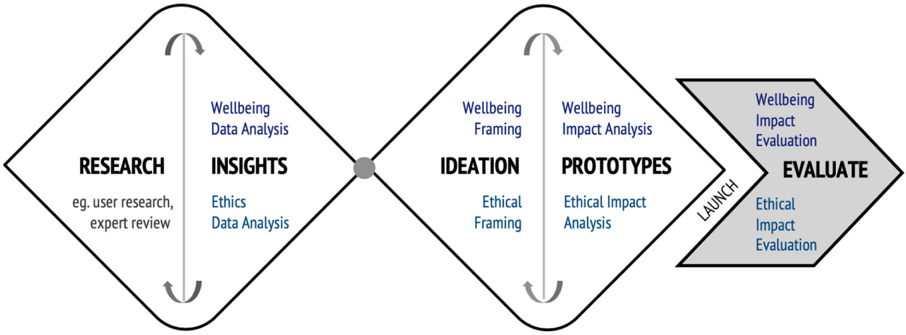
In 2019, the IEEE launched the P7000 standards projects intended to address ethical issues in the design of autonomous and intelligent systems. This move came amidst a growing public concern over the unintended consequences of artificial intelligence (AI), compounded by the lack of an anticipatory process for attending to ethical impact within professional practice. However, the difficulty in moving from principles to practice presents a significant challenge to the implementation of ethical guidelines. Herein, we describe two complementary frameworks for integrating ethical analysis into engineering practice to help address this challenge. We then provide the outcomes of an ethical analysis informed by these frameworks, conducted within the specific context of Internet-delivered therapy in digital mental health. We hope both the frameworks and analysis can provide tools and insights, not only for the context of digital healthcare but also for data-enabled and intelligent technology development more broadly.
Overview
The claims and statistics of this paper haven’t been checked yet.
Free: it reads the open-access text and checks the first 5 claims that cite a source we can check. Create a free account to check every claim.
Integrity signals
Registry
Cites
Statistics
Figures





Verification
Claims the paper makes
The claims and statistics of this paper haven’t been checked yet.
Free: it reads the open-access text and checks the first 5 claims that cite a source we can check. Create a free account to check every claim.
Claims other papers make about this one
Each is checked against this paper’s own text: does it say what the citing paper says it does?
The source backs part of the claim, not all of it — or backs it for a different population, condition or comparison.
In the citing paper
“By converting citizens to prosumers of AI-powered digital health systems (Peters et al., 2020), end-users will feel empowered in controlling their own data and securing their privacy, which can lead to a more ethically aligned deployment of AI-powered health systems”
From SHIFTing artificial intelligence to be responsible in healthcare: a systematic review (2022) · cites this paper as Peters et al., 2020
Experimental — accuracy not yet measuredIn the citing paper
“The need for an ethical framework becomes even more pronounced as AI is poised to extend its influence beyond healthcare into various domains, such as education, transportation, and governance [34].”
From Ethical Framework for Harnessing the Power of AI in Healthcare and Beyond (2024) · cites this paper as [34]
Self-check
Percentages, sums and reported differences re-computed from the paper’s own numbers.
The self-check needs the paper’s full text.
Citations
Cites
Principles of Biomedical Ethics
(2012) · Thieves of Virtue · doi:10.7551/mitpress/9079.003.0009 · Cited by 13,453
The global landscape of AI ethics guidelines
Jobin, A., Ienca, M., & Vayena, E. (2019) · Nature Machine Intelligence · doi:10.1038/s42256-019-0088-2 · Cited by 6,220 · cited 2×
“Indeed, recent reports indicate that there are currently more than 70 publicly available sets of ethical principles or frameworks for AI, most of which have been released within the last five years [3], [9], [10].”
Floridi, L., Cowls, J., Beltrametti, M., Chatila, R., Chazerand, P., Dignum, V., Luetge, C., Madelin, R., Pagallo, U., Rossi, F., et al. (2018) · Minds and Machines · doi:10.1007/s11023-018-9482-5 · Cited by 4,774 · cited 5×
“Between this set of principles and the set we will be using from the meta-analysis by Floridi et al. [3], there is a significant overlap.”
BackgroundMethodInfluentialPrinciples of biomedical ethics
Horton, J. (2002) · Transactions of the Royal Society of Tropical Medicine and Hygiene · doi:10.1016/s0035-9203(02)90265-8 · Cited by 4,377
The motivational pull of video games: a self-determination theory approach
Ryan, R. M., Rigby, C. S., & Przybylski, A. (2006) · Motivation and Emotion · doi:10.1007/s11031-006-9051-8 · Cited by 3,332 · cited 1×
“Additionally, a series of studies comparing how different game designs impact wellbeing and autonomy have been conducted using psychological measures [40], [41].”
BackgroundDeveloping a framework for responsible innovation
Stilgoe, J., Owen, R., & Macnaghten, P. (2013) · Research Policy · doi:10.1016/j.respol.2013.05.008 · Cited by 3,184 · cited 3×
“Responsible innovation requires these methods to be anticipatory, reflexive, inclusive, and responsive [23].”
BackgroundMethodInfluentialGebru, T., Morgenstern, J., Vecchione, B., Vaughan, J. W., Wallach, H., Daumé, H., & Crawford, K. (2018) · arXiv · doi:10.48550/arxiv.1803.09010 · Cited by 2,474 · cited 2×
“Yet, moving effectively from ethical theory and principles into context specific, actionable practice is proving a signifi-cant barrier for the widespread uptake of systematic ethical impact analysis in software engineering [13], [14].”
BackgroundMethodGebru, T., Morgenstern, J., Vecchione, B., Vaughan, J. W., Wallach, H., III, H. D., & Crawford, K. (2021) · Communications of the ACM · doi:10.1145/3458723 · Cited by 2,469 · cited 2×
“Yet, moving effectively from ethical theory and principles into context specific, actionable practice is proving a signifi-cant barrier for the widespread uptake of systematic ethical impact analysis in software engineering [13], [14].”
BackgroundMethodThe Ethics of AI Ethics: An Evaluation of Guidelines
Hagendorff, T. (2020) · Minds and Machines · doi:10.1007/s11023-020-09517-8 · Cited by 1,911 · cited 3×
“Yet, moving effectively from ethical theory and principles into context specific, actionable practice is proving a signifi-cant barrier for the widespread uptake of systematic ethical impact analysis in software engineering [13], [14].”
BackgroundThe Ethics of AI Ethics -- An Evaluation of Guidelines
Hagendorff, T. (2019) · arXiv · doi:10.48550/arxiv.1903.03425 · Cited by 1,907 · cited 3×
“Yet, moving effectively from ethical theory and principles into context specific, actionable practice is proving a signifi-cant barrier for the widespread uptake of systematic ethical impact analysis in software engineering [13], [14].”
BackgroundGoogle Effects on Memory: Cognitive Consequences of Having Information at Our Fingertips
Sparrow, B., Liu, J., & Wegner, D. M. (2011) · Science · doi:10.1126/science.1207745 · Cited by 1,762 · cited 1×
“, [61] and [62])—a concern that dates back at least as far as Plato’s discussion of the diminishing effects that writing”
BackgroundRoutledge International Handbook of Participatory Design
(2012) · doi:10.4324/9780203108543 · Cited by 1,606
Medical ethics: four principles plus attention to scope
Gillon, R. (1994) · BMJ · doi:10.1136/bmj.309.6948.184 · Cited by 1,107 · cited 1×
“Rights-based justice requires that people’s basic human rights be respected [72].”
BackgroundMoralizing Technology: Understanding and Designing the Morality of Things
Verbeek, P.-P. (2011) · doi:10.7208/chicago/9780226852904.001.0001 · Cited by 923 · cited 1×
“For more information, see http://creativecommons.org/licenses/by/4.0/ inscribe the values of the designers, engineers, and businesses who make them [16], [17].”
BackgroundInfluentialDesigning for Motivation, Engagement and Wellbeing in Digital Experience
Peters, D., Calvo, R. A., & Ryan, R. M. (2018) · Frontiers in Psychology · doi:10.3389/fpsyg.2018.00797 · Cited by 888 · cited 4×
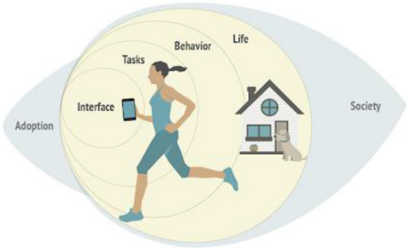
“This “Spheres of Technology Experience” framework is described in detail by Peters et al. [32] wherein they also provided methods for wellbeing-supportive design.”
BackgroundMethodInfluentialSelf-citationValue Sensitive Design: Shaping Technology with Moral Imagination
Friedman, B., & Hendry, D. G. (2019) · The MIT Press eBooks · doi:10.7551/mitpress/7585.001.0001 · Cited by 838
Materializing Morality: Design Ethics and Technological Mediation
Verbeek, P.-P. (2006) · Science, Technology, & Human Values · doi:10.1177/0162243905285847 · Cited by 683
LUDWICK, D., & DOUCETTE, J. (2009) · International Journal of Medical Informatics · doi:10.1016/j.ijmedinf.2008.06.005 · Cited by 668 · cited 1×
“There is some evidence, for example, that the data entry required for electronic medical records (EMRs) disrupts the nonverbal relationship between health-care providers and patients (e.g., [55]).”
BackgroundMoralizing technology: understanding and designing the morality of things
(2012) · Choice Reviews Online · doi:10.5860/choice.49-4425 · Cited by 530
Peng, W., Lin, J.-H., Pfeiffer, K. A., & Winn, B. (2012) · Media Psychology · doi:10.1080/15213269.2012.673850 · Cited by 426 · cited 1×
“Additionally, a series of studies comparing how different game designs impact wellbeing and autonomy have been conducted using psychological measures [40], [41].”
BackgroundThe Role and Limits of Principles in AI Ethics: Towards a Focus on Tensions
Whittlestone, J., Nyrup, R., Alexandrova, A., & Cave, S. (2019) · Proceedings of the 2019 AAAI/ACM Conference on AI, Ethics, and Society · doi:10.1145/3306618.3314289 · Cited by 399 · cited 2×
“It is unlikely that the same priorities and solutions applicable to one domain, context, or project, will translate across to others [22], [25], [26].”
BackgroundThe Ethics of AI Ethics: An Evaluation of Guidelines
Hagendorff, T. (2020) · PhilPapers (PhilPapers Foundation) · Cited by 394
Greene, D., Hoffmann, A. L., & Stark, L. (2019) · Proceedings of the Annual Hawaii International Conference on System Sciences · doi:10.24251/hicss.2019.258 · Cited by 386 · cited 1×
“Other recent systematic reviews of AI ethics principles have produced somewhat different taxonomies (see [14], [20], [21]).”
BackgroundPositive Computing: Technology for Wellbeing and Human Potential
Calvo, R. A., & Peters, D. (2014) · doi:10.7551/mitpress/9764.001.0001 · Cited by 376 · cited 1×
“As such, we argue that a responsible technology development process will need to incorporate evidence-based methods for evaluating the impact on, and designing for, human wellbeing, by drawing on psychology (see [32], [33]).”
BackgroundSelf-citationMohr, D. C., Weingardt, K. R., Reddy, M., & Schueller, S. M. (2017) · Psychiatric Services · doi:10.1176/appi.ps.201600541 · Cited by 365 · cited 2×
“Furthermore, as mentioned, researchers have expressed a need for more involvement of people living with mental health issues in technology design [43]–[45].”
BackgroundOnline manipulation: hidden influences in a digital world
Susser, D., Roessler, B., & Nissenbaum, H. F. (2018) · SSRN Electronic Journal · doi:10.2139/ssrn.3306006 · Cited by 341 · cited 1×
“apy applications that collect, store, and make use of personal data raise several important concerns around privacy, which in turn can pose risks to user autonomy [48], [49].”
BackgroundUsing science to sell apps: Evaluation of mental health app store quality claims
Larsen, M. E., Huckvale, K., Nicholas, J., Torous, J., Birrell, L., Li, E., & Reda, B. (2019) · npj Digital Medicine · doi:10.1038/s41746-019-0093-1 · Cited by 334 · cited 2×
“A number of authors within human–computer interaction have articulated some of the ethically loaded socio-technical challenges facing digital mental health developers [28]–[31], [43], [44].”
BackgroundMental health: there’s an app for that
Anthes, E. (2016) · Nature · doi:10.1038/532020a · Cited by 333
Heteromation, and Other Stories of Computing and Capitalism
Ekbia, H. R., & Nardi, B. A. (2017) · doi:10.7551/mitpress/10767.001.0001 · Cited by 285 · cited 1×
“With regard to the design process, one type of ethical challenge arises from “heteromation”: the extraction of economic value from low-cost (or free) labor [73].”
BackgroundPositive computing: technology for wellbeing and human potential
(2015) · Choice Reviews Online · doi:10.5860/choice.189530 · Cited by 283
Self-citationAuthenticity in the age of digital companions
Turkle, S. (2007) · Interaction Studies. Social Behaviour and Communication in Biological and Artificial Systems · doi:10.1075/is.8.3.11tur · Cited by 265
Demographic prediction based on user's browsing behavior
Hu, J., Zeng, H.-J., Li, H., Niu, C., & Chen, Z. (2007) · Proceedings of the 16th international conference on World Wide Web · doi:10.1145/1242572.1242594 · Cited by 259
Evaluation of a Patient Activation and Empowerment Intervention in Mental Health Care
Alegría, M., Polo, A., Gao, S., Santana, L., Rothstein, D., Jimenez, A., Hunter, M. L., Mendieta, F., Oddo, V., & Normand, S.-L. (2008) · Medical Care · doi:10.1097/mlr.0b013e318158af52 · Cited by 254 · cited 1×
“Beyond initial uptake, there is further evidence that minority populations tend to have lower retention in mental healthcare [78].”
BackgroundNebeker, C., Torous, J., & Bartlett Ellis, R. J. (2019) · BMC Medicine · doi:10.1186/s12916-019-1377-7 · Cited by 241 · cited 2×
“[31] have cautioned: “it is critical that the minimal requirements used to make a digital health technology”
BackgroundSanches, P., Janson, A., Karpashevich, P., Nadal, C., Qu, C., Daudén Roquet, C., Umair, M., Windlin, C., Doherty, G., Höök, K., et al. (2019) · Proceedings of the 2019 CHI Conference on Human Factors in Computing Systems · doi:10.1145/3290605.3300475 · Cited by 221 · cited 6×
“In their recent report, Sanches et al. [43] expressed a desire to see “more novel designs of systems that foster and support benefi-cial human interactions, beyond the design of autonomous agents imitating empathy and aimed at replacing human contact.””
BackgroundInfluentialKerner, C., & Goodyear, V. A. (2017) · American Journal of Health Education · doi:10.1080/19325037.2017.1343161 · Cited by 192 · cited 1×
“For example, Kerner and Goodyear [39] conducted a study investigating the psychological impact of wearable fitness trackers.”
BackgroundDo We Still Have a Digital Divide in Mental Health? A Five-Year Survey Follow-up
Robotham, D., Satkunanathan, S., Doughty, L., & Wykes, T. (2016) · Journal of Medical Internet Research · doi:10.2196/jmir.6511 · Cited by 184 · cited 2×
“This includes designing for differing requirements relating to income, literacy levels, and technology access [60].”
BackgroundDesign and evaluation guidelines for mental health technologies
Doherty, G., Coyle, D., & Matthews, M. (2010) · Interacting with Computers · doi:10.1016/j.intcom.2010.02.006 · Cited by 179 · cited 5×
“Doherty et al. [52] similarly recommended that systems be based on accepted theoretical approaches for clinical validity.”
BackgroundMethodInfluentialLanzing, M. (2019) · Philosophy & Technology · doi:10.1007/s13347-018-0316-4 · Cited by 160 · cited 1×
“These concerns are true in traditional (face-to-face) therapy as well, but relying on digital online platforms, from EMRs, to online therapies, poses new risks to both informational and decisional privacy [65].”
BackgroundValue sensitive design : shaping technology with moral imagination
Friedman, B., & Hendry, D. G. (2019) · Cited by 156
Supporting Human Autonomy in AI Systems: A Framework for Ethical Enquiry
Calvo, R. A., Peters, D., Vold, K., & Ryan, R. M. (2020) · Philosophical Studies Series · doi:10.1007/978-3-030-50585-1_2 · Cited by 148
Self-citationCan't surf, won't surf: The digital divide in mental health
Ennis, L., Rose, D., Denis, M., Pandit, N., & Wykes, T. (2012) · Journal of Mental Health · doi:10.3109/09638237.2012.689437 · Cited by 127 · cited 1×
“Taking digital mental health as a cautionary example, a failure to involve psychologists, health practitioners, end users, and other domain experts has led to an exploding industry of mental health tools that lack evidence, inclusivity, and effectiveness (and at worst, cause harm) [28]–[30].”
BackgroundModeling and Understanding Visual Attributes of Mental Health Disclosures in Social Media
Manikonda, L., & De Choudhury, M. (2017) · Proceedings of the 2017 CHI Conference on Human Factors in Computing Systems · doi:10.1145/3025453.3025932 · Cited by 116 · cited 1×
“Technology-specific guidelines have also been developed, including the guidelines for the design of interventions for mental health on social media [70].”
BackgroundTrust, choice and power in mental health care: Experiences of patients with psychosis
Laugharne, R., Priebe, S., McCabe, R., Garland, N., & Clifford, D. (2012) · International Journal of Social Psychiatry · doi:10.1177/0020764011408658 · Cited by 106 · cited 1×
“In addition to concerns about alienation and reduced quality of communication, some evidence suggests that relational authenticity also encourages patient engagement and trust [57].”
BackgroundPatai, E. Z., Javadi, A.-H., Ozubko, J. D., O’Callaghan, A., Ji, S., Robin, J., Grady, C., Winocur, G., Rosenbaum, R. S., Moscovitch, M., et al. (2019) · Cerebral Cortex · doi:10.1093/cercor/bhz044 · Cited by 102 · cited 1×
“Over-reliance on technology has been cited as a contributor to atrophy of skills in many different contexts (e.g., [61] and [62])—a concern that dates back at least as far as Plato’s discussion of the diminishing effects that writing would have on memory [63].”
BackgroundAI Extenders: The Ethical and Societal Implications of Humans Cognitively Extended by AI
Hernández-Orallo, J., & Vold, K. (2019) · Proceedings of the 2019 AAAI/ACM Conference on AI, Ethics, and Society · doi:10.1145/3306618.3314238 · Cited by 99 · cited 2×
“Additionally, dependence on a technology to manage care may result in lower feelings of self-efficacy, empowerment, and control [64].”
BackgroundSelf-citationWykes, T., & Schueller, S. (2019) · Journal of Medical Internet Research · doi:10.2196/12390 · Cited by 95 · cited 1×
“For example, the transparency for trust principles [68] includes questions around privacy and data security, development characteristics, feasibility, and health benefits, and their creators advocate that all apps should be required to provide information relating to these four principles at minimum.”
BackgroundAI Ethics – Too Principled to Fail?
Mittelstadt, B. (2019) · SSRN Electronic Journal · doi:10.2139/ssrn.3391293 · Cited by 82
Morley, J., Floridi, L., Kinsey, L., & Elhalal, A. (2019) · arXiv.org · doi:10.48550/arxiv.1905.06876 · Cited by 76 · cited 2×
“Indeed, recent reports indicate that there are currently more than 70 publicly available sets of ethical principles or frameworks for AI, most of which have been released within the last five years [3], [9], [10].”
BackgroundLinking Artificial Intelligence Principles
Zeng, Y., Lu, E., & Huangfu, C. (2018) · arXiv (Cornell University) · doi:10.48550/arxiv.1812.04814 · Cited by 71 · cited 1×
“Other recent systematic reviews of AI ethics principles have produced somewhat different taxonomies (see [14], [20], [21]).”
BackgroundLet’s Show Patients Their Mental Health Records
Kahn, M. W., Bell, S. K., Walker, J., & Delbanco, T. (2014) · JAMA · doi:10.1001/jama.2014.1824 · Cited by 65
Ethics in engineering education: A literature review
Hamad, J. A., Hasanain, M., Abdulwahed, M. S., & Alammari, R. A. M. (2013) · IEEE Frontiers in Education Conference (FIE) · doi:10.1109/fie.2013.6685099 · Cited by 57
Marriage and Family Counselors’ Perceived Ethical Issues Related to Online Therapy
Hertlein, K. M., Blumer, M. L. C., & Mihaloliakos, J. H. (2015) · The Family Journal · doi:10.1177/1066480714547184 · Cited by 57 · cited 3×
“…case of online therapy, patients not only have to trust their counselor’s good intentions, they also have to trust that counselors will protect their computer screen or other devices from onlookers, protect their passwords, use secure network connections, and not use shared computers [54], [66].”
BackgroundCalvo, R. A., Peters, D., Johnson, D., & Rogers, Y. (2014) · CHI '14 Extended Abstracts on Human Factors in Computing Systems · doi:10.1145/2559206.2560468 · Cited by 57
Self-citationQuantifying benefit-risk preferences for new medicines in rare disease patients and caregivers
Morel, T., Aymé, S., Cassiman, D. M., Simoens, S., Morgan, M., & Vandebroek, M. L. (2016) · Orphanet Journal of Rare Diseases · doi:10.1186/s13023-016-0444-9 · Cited by 57 · cited 1×
“One area to potentially draw upon in considering these issues is the cost-benefit considerations at play in the treatment of rare diseases for which there are no known and tested cures [75].”
BackgroundMental Health Technologies: Designing With Consumers
Orlowski, S., Matthews, B., Bidargaddi, N., Jones, G., Lawn, S., Venning, A., & Collin, P. (2016) · JMIR Human Factors · doi:10.2196/humanfactors.4336 · Cited by 52 · cited 3×
“Orlowski et al. [44] provided specific examples of practical applications of participatory design and design thinking meth-ods for mental health technology.”
BackgroundSupporting Human Autonomy in AI Systems: A Framework for Ethical Enquiry
Calvo, R. A., Peters, D., Vold, K., & Ryan, R. M. (2019) · Spiral (Imperial College London) · doi:10.17863/cam.45866 · Cited by 50 · cited 1×
“An application of the framework to human autonomy in AI is described in [37].”
MethodSelf-citationMorley, J., Floridi, L., Kinsey, L., & Elhalal, A. (2019) · arXiv (Cornell University) · Cited by 39
Advancing impact assessment for intelligent systems
Calvo, R. A., Peters, D., & Cave, S. (2020) · Nature Machine Intelligence · doi:10.1038/s42256-020-0151-z · Cited by 39 · cited 1×
“This need for ethical impact assessment for technology is akin to the need for environmental impact assessment in other types of engineering [27].”
BackgroundSelf-citationEQClinic: a platform for learning communication skills in clinical consultations
Liu, C., Scott, K. M., Lim, R., Taylor, S., & Calvo, R. A. (2016) · Medical Education Online · doi:10.3402/meo.v21.31801 · Cited by 39
Self-citationEmpowerment or Engagement? Digital Health Technologies for Mental Healthcare
Burr, C., & Morley, J. (2020) · Digital ethics lab yearbook · doi:10.1007/978-3-030-29145-7_5 · Cited by 37
Teaching global perspectives: engineering ethics across international and academic borders
Sunderland, M. E., Taebi, B., Carson, C., & Kastenberg, W. E. (2014) · Journal of Responsible Innovation · doi:10.1080/23299460.2014.922337 · Cited by 37 · cited 1×
“Engineering educators have already responded to this change in sentiment by evolving curricula to help ensure the next generation of technology makers is better equipped to engineer more responsibly [11], [12].”
BackgroundPersonality and Website Choice
Kosiński, M., Stillwell, D. J., Kohli, P., Bachrach, Y., & Graepel, T. (2012) · Cited by 34
Why software engineering courses should include ethics coverage
Narayanan, A., & Vallor, S. (2014) · Communications of the ACM · doi:10.1145/2566966 · Cited by 28 · cited 1×
“Engineering educators have already responded to this change in sentiment by evolving curricula to help ensure the next generation of technology makers is better equipped to engineer more responsibly [11], [12].”
BackgroundWhen Personal Feels Invasive: Foreseeing Challenges in Precision Medicine Communication
Ratcliff, C. L., Kaphingst, K. A., & Jensen, J. D. (2018) · Journal of Health Communication · doi:10.1080/10810730.2017.1417514 · Cited by 20 · cited 1×
“There is evidence that some people may be willing to share their data, even without direct compensation, if these benefits are communicated to them [76], [77].”
BackgroundPrivacy, Autonomy, and Personalised Targeting: rethinking how personal data is used
Vold, K., & Whittlestone, J. (2019) · PhilPapers (PhilPapers Foundation) · doi:10.17863/cam.43129 · Cited by 18
Self-citationMental Health App Design: A Journey From Concept to Completion
Topham, P., Caleb-Solly, P., Matthews, P., Farmer, A., & Mash, C. (2015) · Proceedings of the 17th International Conference on Human-Computer Interaction with Mobile Devices and Services Adjunct · doi:10.1145/2786567.2787136 · Cited by 16 · cited 1×
“Topham et al. [67] argued that it is an ethical responsibility “to ensure that mental health technologies are grounded in solid and valid principles to maximize the benefits and limit harm.””
BackgroundThe ethics of telemedicine. Unique nature of virtual encounters calls for special sensitivities.
Nelson, W. A. (2011) · PubMed · Cited by 11
Data Altruism: Honoring Patients' Expectations for Continuous Learning
Permanente, K., Halvorson, G. C., & Novelli, W. D. (2014) · NAM Perspectives · doi:10.31478/201401e · Cited by 1 · cited 1×
“out direct compensation, if these benefits are communicated to them [76], [77].”
Background
Research works printed but not linked: 15
- A. Sen, The Idea of Justice. London, U.K.: Penguin, 2010.
- S. Brown Consequence Scanning Manual, Version 1. London, U.K.: Doteveryone, 2019.
- UD Council. (2004). Double Diamond Diagram. [Online]. Available: https://www.designcouncil.org.uk/news-opinion/what-framework- innovation-design-councils-evolved-double-diamond
- Plato, Plato's Phaedrus. Cambridge, U.K.: Cambridge Univ. Press, 1952.
- AP Association. (2019). App Evaluation Model. [Online]. Available: https://www.psychiatry.org/psychiatrists/practice/mental-health-apps/ app-evaluation-model
- IEEE. (2019). Ethically Aligned Design. [Online]. Available: https://ethicsinaction.ieee.org
- ACM. (2018). ACM Code of Ethics and Professional Conduct. [Online]. Available: https://www.acm.org/code-of-ethics
- Y. Zeng, E. Lu, and C. Huangfu, "Linking artificial intelligence princi- ples," in Proc. AAAI Workshop Artif. Intell. Safety (AAAI-Safe AI), 2019, pp. 1-15.
- A. Zimmermann and B. Zevenbergen, Ai Ethics: Seven Traps, Tinker, Oklahoma City, OK, USA 2019.
- J. Whittlestone, R. Nyrup, A. Alexandrova, K. Dihal, and S. Cave, Ethical and Societal Implications of Algorithms, Data, and Artificial Intelligence: A Roadmap for Research. London, U.K.: Nuffield Found., 2019.
- A. Tieu. (2015). We Now Have an Ai Therapist, and She's Doing Her Job Better Than Humans Can. [Online]. Available: https://futurism.com/uscs-new-ai-ellie-has-more-success-than-actual- therapists
- E. Montague, P.-Y. Chen, J. Xu, B. Chewning, and B. Barrett, "Nonverbal interpersonal interactions in clinical encounters and patient perceptions of empathy," J. Participatory Med., vol. 5, p. e33, Aug. 2013.
- U.K. House of Lords Select Committee on Artificial Intelligence. (2018). Ai in the U.K.: Ready, Willing and Able? Report of Session 2017-19. [Online]. Available: https://publications.parliament.uk/pa/ld201719/ldselect/ldai/100/100.pdf
- Universite de Montreal. (2017). Montreal Declaration for Responsible Ai. [Online]. Available: https://www.montrealdeclaration- responsibleai.com/the-declaration
- 2019). Psyberguide. [Online]. Available: http://www.Psyberguide.org
Cited by
Chen, Y., Jensen, S., Albert, L. J., Gupta, S., & Lee, T. (2023) · Information Systems Frontiers · doi:10.1007/s10796-022-10291-4 · Cited by 685
“…(AI) has provided promising opportunities for addressing important problems in education and society (Cowls et al., 2021; Tomašev et al., 2020) while also provoking considerations about the unintended consequences and risks of AI usage (Hagendorff, 2020; Peters et al., 2020; Atkins et al., 2021).”
BackgroundAli, O., Abdelbaki, W., Shrestha, A., Elbasi, E., Alryalat, M. A. A., & Dwivedi, Y. K. (2023) · Journal of Innovation & Knowledge · doi:10.1016/j.jik.2023.100333 · Cited by 568
An Overview of Artificial Intelligence Ethics
Huang, C., Zhang, Z., Mao, B., & Yao, X. (2023) · IEEE Transactions on Artificial Intelligence · doi:10.1109/tai.2022.3194503 · Cited by 482
“[133] proposed two frameworks for responsible AI by integrating ethical analysis into engineering practice in AI.”
BackgroundSHIFTing artificial intelligence to be responsible in healthcare: a systematic review
Siala, H., & Wang, Y. (2022) · Social Science & Medicine · doi:10.1016/j.socscimed.2022.114782 · Cited by 358
Shaping the future of healthcare: ethical clinical challenges and pathways to trustworthy AI
Goktas, P., & Grzybowski, A. (2025) · Journal of Clinical Medicine · doi:10.3390/jcm14051605 · Cited by 336
“Healthcare organizations, already under scrutiny for their contribution to greenhouse gas emissions and environmental stressors, must weigh the ecological costs of their AI investments.”
Metadata
- Authors
- Peters, D., Vold, K., Robinson, D., & Calvo, R. A.
- Affiliations
- University of Cambridge (GB)
- Imperial College London (GB)
- Venue
- IEEE Transactions on Technology and Society
- Published
- 2020-03
- Volume
- 1
- Issue
- 1
- Pages
- 34-47
- ISSN
- 2637-6415 (ISSN-L)
- OpenAlex
- W3007204236
- Cited by
- 293
- References
- 69
- Citations by year
- 2026: 37 · 2025: 67 · 2024: 75 · 2023: 55 · 2022: 32 · 2021: 21 · 2020: 6
- FWCI
- 38.79
- Type
- journal article
- Language
- en
- Open access
- hybrid
- doi.org
- Locations
- IEEE Transactions on Technology and Society (publishedVersion, cc-by)
- Spiral (Imperial College London) (submittedVersion, cc-by)
- Apollo (University of Cambridge) (submittedVersion, cc-by)
- Apollo (cc-by)
- Funders
- Leverhulme Centre for the Future of Intelligence, Leverhulme Trust (RC-2015-067)
- Digital Charter Fellowship Programme at the Alan Turing Institute, U.K.
- Topics
- Physical Sciences › Computer Science › Artificial Intelligence › Ethics and Social Impacts of AI
- Physical Sciences › Engineering › General Engineering › Flooding and Environmental Impact
- Health Sciences › Medicine › Health Informatics › Artificial Intelligence in Healthcare and Education
- Keywords
- responsible AI, ethical design, ethical impact assessment, engineering practice, digital mental health, online therapy, AI ethics framework
About these checks
Registry, retraction, Cites and statistics results are computed, not judged, with one exception: a printed reference that no index lists is read once by a model before it counts as a citation error. Claims are extracted by a model and kept only when their quote appears verbatim in the text; each cited source is then checked, with a model’s help, for whether it says what the claim relies on. Those verdicts can be wrong — read the claim’s quote and the cited source before relying on one.
Statistics and arithmetic are recomputed, not judged.
Confidence bands are shown only for fields calibrated on our annotated test set. None is calibrated yet, so no band is shown.
What counts as a claim ›How we measure confidence ›How we check this ›
Are you an author, or do you see a problem with this page? Request a review
Data sources
Bibliographic data: Semantic Scholar, OpenAlex, Crossref.
Contains information from the Semantic Scholar Academic Graph Datasets, made available under the ODC Attribution License (ODC-BY 1.0).
Semantic Scholar’s data is described in: Kinney, R., et al. (2023). The Semantic Scholar Open Data Platform. arXiv:2301.10140.
