

The impact of health literacy interventions on glycemic control and self‐management outcomes among type 2 diabetes mellitus: A systematic review
Open accessThe DOI matches its Crossref record; 55 of the 55 references it cites were found in a registry or an index; none of the 63 sources its claims cite is checked for support yet.
Abstract
Diabetes imposes an increasing health and economic burden on individuals living with it and their societies worldwide. Glycemic control is necessary to reduce morbidity and mortality of type 2 diabetes mellitus (T2DM). Self‐management is the primary tool for managing diabetes. Health literacy (HL) is the primary driver of self‐management activities. The aim of this review is to evaluate the impact of HL interventions on glycemic control and self‐management outcomes among T2DM. MEDLINE, CINAHL, PubMed, Cochrane, Scopus, and Web of Science were searched for eligible papers. Fifteen randomized controlled trials published in English between 1997 and 2021, used HL‐driven intervention, and measured the level of glycohemoglobin A1c (HbA1c) and self‐management of T2DM patients were included in this review. The findings showed that HL‐driven intervention had a positive impact on glycemic control and improved self‐management behaviors. The level of glycemic control and self‐management skills were improved through individual and telephone‐based intervention respectively. Community worker‐led interventions were effective in improvements in diabetes knowledge and self‐care behaviors; however, nurse‐led interventions were effective in glycemic control. Better glycemic control is achieved in hospital settings compared to outpatient settings. HL interventions yielded better improvement in self‐management among people with longer diabetes duration (more than 7 years). It was possible to achieve a large reduction in HbA1c level after a 3‐month intervention in hospital settings. HL‐driven interventions are effective in glycemic and diabetes self‐management outcomes.
Overview
CoChat Summary
TL;DR
This systematic review of 15 randomized controlled trials found that health literacy-driven interventions generally improved glycemic control and self-management outcomes among adults with type 2 diabetes. Fourteen of 15 trials showed significant HbA1c improvement, with the largest reduction (3.4%) after a 3-month nurse-led individual intervention in a hospital setting.
Key findings
- Across 15 RCTs including 3556 participants (sample sizes 101–623; ages 18–85; 55% female), 14 studies showed a significant positive impact of health literacy interventions on HbA1c control, while 1 study found no significant HbA1c change.
- The largest HbA1c reduction was 3.4% after a 3-month nurse-led individual intervention with 6-month follow-up in a hospital setting; nurse-led interventions were effective for glycemic control, whereas community worker-led interventions improved diabetes knowledge and self-care behaviors.
- Self-management outcomes were evaluated in nine studies; seven of nine RCTs assessing self-management found improvements (e.g., physical activity, healthy diet, diabetes knowledge, problem-solving, quality of life), while two found no association with self-management behaviors, quality of life, or satisfaction with daily life. Five studies evaluating diabetes knowledge all found a positive correlation with health literacy interventions.
- Better glycemic control was achieved in hospital settings compared with outpatient settings; telephone-based interventions improved self-management, especially among less educated participants and those with longer diabetes duration (more than 7 years).
Methods
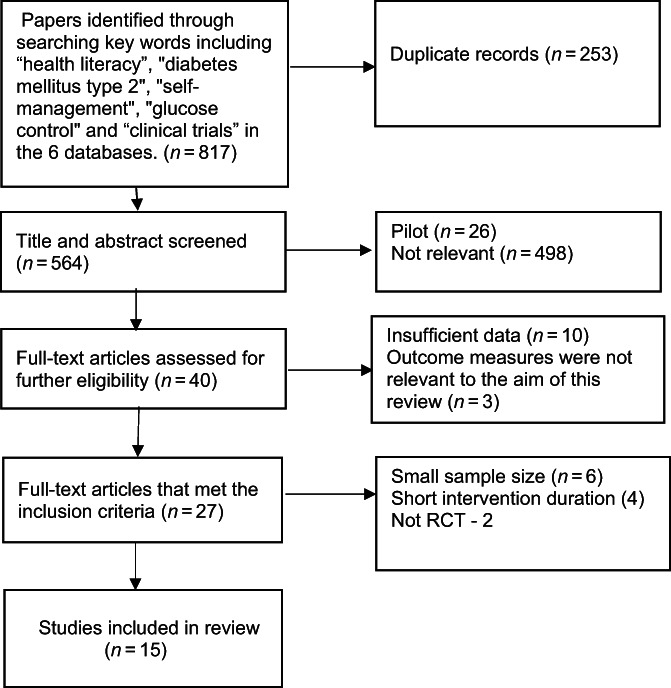
- Systematic review following PRISMA guidelines and registered in PROSPERO (CRD42022348050); searched MEDLINE, CINAHL, PubMed, Cochrane, Scopus, and Web of Science, identifying 817 records initially, screening 40 full texts, and including 15 RCTs.
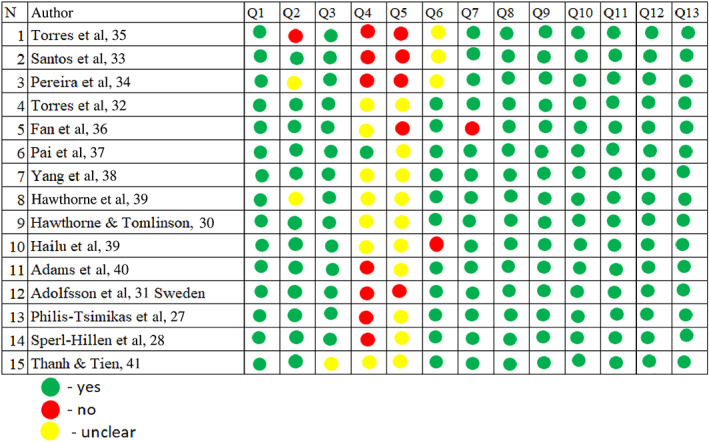
- Inclusion criteria: health literacy-driven RCTs published in English among T2DM patients aged over 18 years, reporting both glycemic control and self-management outcomes, with a minimum sample size of 100 and intervention duration >3 months. Quality was assessed with the Joanna Briggs Institute critical appraisal tool; overall mean quality score was 80.9%.
- Data were extracted on HbA1c and self-management outcomes; included studies were heterogeneous in intervention type, setting, duration, follow-up, and intervention providers, and no meta-analysis was reported.
Limitations
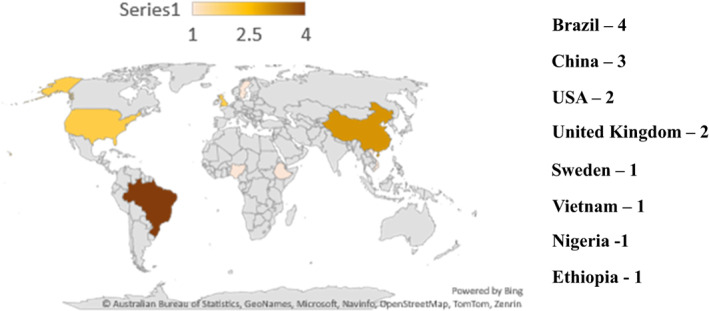
- Stated by the paper: only English-language studies were included; most selected studies were conducted in developed countries (though the Results report 10 studies in developing countries and 5 in developed countries); heterogeneity of settings, intervention strategies, and socioeconomic characteristics limits generalizability; lack of information about the professional background of intervention deliverers; different outcome measures and tools made analysis difficult; outcomes were presented for less than 1 year so long-term effects could not be examined; and only RCTs were included, limiting generalizability to real-world settings.
- Evident from the text: the review is narrative and does not pool effect sizes; the country distribution described in the Results conflicts with the stated limitation that most studies were from developed countries; and self-management definitions and measures varied across studies.
Model-written summary. Check it against the paper before relying on it.
Integrity signals
Registry
Cites
Statistics
Figures
Verification
Claims the paper makes
0 Valid · 2 Not valid · 54 Not checked · 28 Own results and interpretations
None of the sources cited for this claim have been checked yet.
In the paper
“Participants with low BMI level had lower HbA1c level after interventions in some studies. 27 , 32”
§ The impact of health literacy interventions on glycemic control and self‐management outcomes among type 2 diabetes mellitus: A systematic review > DISCUSSION
What the sources say
- Not checked yetcites [27] Philis‐Tsimikas A, Fortmann A, Lleva‐Ocana L, Walker C, Gallo LC. Peer‐led diabetes education programs in high‐risk Mexican Americans improve glycemic control compared with standard approaches: a project Dulce promotora randomized trial. Diabetes Care. 2011; 34(9): 1926‐ 1931. 21775748 PMC3161298 source
- Not checked yetcites [32] Torres HDC, Pace AE, Chaves FF, Velasquez‐Melendez G, Reis IA. Evaluation of the effects of a diabetes educational program: a randomized clinical trial. Rev Saude Publica. 2018; 52: 8. 29412378 PMC5802646
hedgedstates an association- Asserted: passes — The authors put it forward as true.
- Checkable: passes — It can be checked against evidence.
- Load-bearing: unclear — It is unclear whether the paper’s conclusions depend on it.
- Based: passes — The paper gives a reason why it holds.
A result the paper reports from its own data — it cites no other source for it, so there is none to check. The quote shows it is in the paper.
In the paper
“Fourteen out of 15 included RCTs showed that HL interventions resulted in significant improvements in HbA1c levels.”
§ The impact of health literacy interventions on glycemic control and self‐management outcomes among type 2 diabetes mellitus: A systematic review > DISCUSSION
plainstates a cause- Asserted: passes — The authors put it forward as true.
- Checkable: passes — It can be checked against evidence.
- Load-bearing: passes — The paper’s conclusions depend on it.
- Based: passes — The paper gives a reason why it holds.
- Rests on 3 assumptions not shown here.
None of the sources cited for this claim have been checked yet.
In the paper
“HL‐driven interventions were also more effective in HbA1c control among people who had comorbidities and low levels of alcohol consumption.”
§ The impact of health literacy interventions on glycemic control and self‐management outcomes among type 2 diabetes mellitus: A systematic review > RESULTS > Main findings
plainstates a cause- Asserted: passes — The authors put it forward as true.
- Checkable: passes — It can be checked against evidence.
- Load-bearing: unclear — It is unclear whether the paper’s conclusions depend on it.
- Based: passes — The paper gives a reason why it holds.
None of the sources cited for this claim have been checked yet.
In the paper
“We found that that telephone‐based HL interventions among patients with a longer diabetes duration were more likely to yield positive improvements in self‐management behaviors especially among less educated participants compared to face‐to face group education. 33 , 34”
§ The impact of health literacy interventions on glycemic control and self‐management outcomes among type 2 diabetes mellitus: A systematic review > DISCUSSION
What the sources say
- Not checked yetcites [33] Santos JCD, Cortez DN, Macedo MML, Reis EA, Reis IA, Torres HC. Comparison of education group strategies and home visits in type 2 diabetes mellitus: clinical trial. Rev Lat Am Enfermagem. 2017; 25: 25. PMC5738960 29267547
- Not checked yetcites [34] Pereira PF, Santos JCD, Cortez DN, Reis IA, Torres HC. Evaluation of group education strategies and telephone intervention for type 2 diabetes. Rev Esc Enferm USP. 2021; 55:e03746. 34105688
hedgedstates a possible cause- Asserted: passes — The authors put it forward as true.
- Checkable: passes — It can be checked against evidence.
- Load-bearing: passes — The paper’s conclusions depend on it.
- Based: passes — The paper gives a reason why it holds.
None of the sources cited for this claim have been checked yet.
In the paper
“Diabetes education intervention delivered by a nurse in an outpatient setting was more effective in reducing HbA1c (1.5% reduction) among more educated participants.”
§ The impact of health literacy interventions on glycemic control and self‐management outcomes among type 2 diabetes mellitus: A systematic review > RESULTS > Main findings
plainstates a cause- Asserted: passes — The authors put it forward as true.
- Checkable: passes — It can be checked against evidence.
- Load-bearing: unclear — It is unclear whether the paper’s conclusions depend on it.
- Based: passes — The paper gives a reason why it holds.
33 more claims
Create a free account to see all 84 claims and to verify the 62 references still open.
- It may state two separate claims as one. 28
- Probably not a substantial claim. 23
Self-check
Percentages, sums and reported differences re-computed from the paper’s own numbers.
Each contradiction between two passages listed here was confirmed by an independent check.
Rated minor: it would not touch a result — a value no result rests on, a p-value that stays on the same side of the significance level, or a conflict that is clerical, resolved elsewhere in the paper, or outside its own findings.
In the paper
§ The impact of health literacy interventions on glycemic control and self‐management outcomes among type 2 diabetes mellitus: A systematic review > LIMITATIONS
“Most of the selected studies were conducted in developed countries”
§ The impact of health literacy interventions on glycemic control and self‐management outcomes among type 2 diabetes mellitus: A systematic review > RESULTS > General study description
“Five of them were conducted in developed countries including 2 in the United States, 27 , 28 2 in England, 29 , 30 1 in Sweden, 31 and 10 in developing countries”
Rated minor: it would not touch a result — a value no result rests on, a p-value that stays on the same side of the significance level, or a conflict that is clerical, resolved elsewhere in the paper, or outside its own findings.
In the paper
§ The impact of health literacy interventions on glycemic control and self‐management outcomes among type 2 diabetes mellitus: A systematic review > RESULTS > General study description
“Sperl‐Hillen et al, 2010, United States 28”
§ The impact of health literacy interventions on glycemic control and self‐management outcomes among type 2 diabetes mellitus: A systematic review > References
“28. Sperl‐Hillen J, Beaton S, Fernandes O, et al. Comparative effectiveness of patient education methods for type 2 diabetes: a randomized controlled trial. Arch Intern Med. 2011; 171(22): 2001‐ 2010.”
Rated minor: it would not touch a result — a value no result rests on, a p-value that stays on the same side of the significance level, or a conflict that is clerical, resolved elsewhere in the paper, or outside its own findings.
In the paper
“Yang et al, 2015 China 38 | 245 (male 132, female 113), control 116, intervention 121”
§ The impact of health literacy interventions on glycemic control and self‐management outcomes among type 2 diabetes mellitus: A systematic review > RESULTS > General study description
Reported 245 · recomputed 237
Rated minor: it would not touch a result — a value no result rests on, a p-value that stays on the same side of the significance level, or a conflict that is clerical, resolved elsewhere in the paper, or outside its own findings.
In the paper
§ The impact of health literacy interventions on glycemic control and self‐management outcomes among type 2 diabetes mellitus: A systematic review > LIMITATIONS
“The study outcomes were presented for less than 1 year so long‐term effects could not be examined.”
§ The impact of health literacy interventions on glycemic control and self‐management outcomes among type 2 diabetes mellitus: A systematic review > RESULTS > Description of interventions
“The long follow‐up period of 12 months was performed in four studies, 31 , 33 , 34 , 38”
Rated minor: it would not touch a result — a value no result rests on, a p-value that stays on the same side of the significance level, or a conflict that is clerical, resolved elsewhere in the paper, or outside its own findings.
In the paper
§ The impact of health literacy interventions on glycemic control and self‐management outcomes among type 2 diabetes mellitus: A systematic review > RESULTS > Main findings
“14 studies showed that HL had a significant and positive impact on HbA1c control and 1 study did not find any significant changes in HbA1c level after a HL intervention program. 31”
§ The impact of health literacy interventions on glycemic control and self‐management outcomes among type 2 diabetes mellitus: A systematic review > RESULTS > Main findings
“Hailu et al, 2018, Ethiopia 39 | HbA1c | Reduction by 2.57% | Reduction by 2.88% | NA | .208”
2 more findings
Create a free account to see every finding of this check.
Citations
Cites
Sun, H., Saeedi, P., Karuranga, S., Pinkepank, M., Ogurtsova, K., Duncan, B. B., Stein, C., Basit, A., Chan, J. C. N., Mbanya, J. C., et al. (2022) · Diabetes Research and Clinical Practice · doi:10.1016/j.diabres.2021.109119 · Cited by 10,123 · cited 3×
“In 2021, diabetes resulted in health expenditures of at least US$966 billion globally, reflecting a 316% increase over the last 15 years.(1) Complications related to diabetes in the lower extremities are a significant and expanding source of disability across the globe.”
InfluentialStratton, I. M. (2000) · BMJ · doi:10.1136/bmj.321.7258.405 · Cited by 9,059 · cited 1×
“Each 1% reduction in HbA1c decreases the risk of microvascular complications by 37%, deaths related to diabetes by 21% and myocardial infarction by 14%.(11) Reducing the HbA1c level by 1% is associated with a 13% decrease in diabetes-related total health care costs.”
Vasileiou, K., Barnett, J., Thorpe, S., & Young, T. (2018) · BMC Medical Research Methodology · doi:10.1186/s12874-018-0594-7 · Cited by 3,115 · cited 1×
“This is because RCTs using smaller samples and shorter intervention delivery time were seen as a threat to the validity and generalizability of research results.(26)”
Economic Costs of Diabetes in the U.S. in 2017
American Diabetes Association (2018) · Diabetes Care · doi:10.2337/dci18-0007 · Cited by 2,528
Pathophysiology and treatment of type 2 diabetes: perspectives on the past, present, and future
Kahn, S. E., Cooper, M. E., & Del Prato, S. (2014) · The Lancet · doi:10.1016/s0140-6736(13)62154-6 · Cited by 1,743
Methodological quality of case series studies: an introduction to the JBI critical appraisal tool
Munn, Z., Barker, T. H., Moola, S., Tufanaru, C., Stern, C., McArthur, A., Stephenson, M., & Aromataris, E. (2019) · JBI Database of Systematic Reviews and Implementation Reports · doi:10.11124/jbisrir-d-19-00099 · Cited by 1,581
Understanding and Responding to Health Literacy as a Social Determinant of Health
Nutbeam, D., & Lloyd, J. E. (2021) · Annual Review of Public Health · doi:10.1146/annurev-publhealth-090419-102529 · Cited by 1,178 · cited 1×
“HL is the capacity to read, understand, make decisions, and take actions that affect health status.(19) Low HL has been linked to several negative health outcomes, such as poorer overall health, higher hospitalization and mortality rates, reduced ability to manage chronic illnesses, and increased patient expenses.”
WHO Global report on diabetes: A summary
Roglic, G. (2016) · International Journal of Noncommunicable Diseases · doi:10.4103/2468-8827.184853 · Cited by 998
Chrvala, C. A., Sherr, D., & Lipman, R. D. (2016) · Patient Education and Counseling · doi:10.1016/j.pec.2015.11.003 · Cited by 914
Global Disability Burdens of Diabetes-Related Lower-Extremity Complications in 1990 and 2016
Zhang, Y., Lazzarini, P. A., McPhail, S. M., van Netten, J. J., Armstrong, D. G., & Pacella, R. E. (2020) · Diabetes Care · doi:10.2337/dc19-1614 · Cited by 560
Research works printed but not linked: 2
- Jha SC, Dey S, Ranjan R. To determine the correlation between BMI and glycated hemoglobin (HbA1c) level in patients of type 2 diabetes mellitus. Eur J Mol Clin Med. 2022; 9(3): 3014‐ 3018.
- Agrawal N, Agrawal MK, Kumari T, Kumar S. Correlation between body mass index and blood glucose levels in Jharkhand population. Int J Contemp Med Res. 2017; 4(8): 1633‐ 1636.
Cited by
1. Improving Care and Promoting Health in Populations: Standards of Care in Diabetes—2025
ElSayed, N. A., McCoy, R. G., Aleppo, G., Balapattabi, K., Beverly, E. A., Early, K. B., Bruemmer, D., Ebekozien, O. A., Echouffo-Tcheugui, J. B., Ekhlaspour, L., et al. (2024) · Diabetes Care · doi:10.2337/dc25-s001 · Cited by 217
1. Improving Care and Promoting Health in Populations: Standards of Care in Diabetes—2026
Bajaj, M. S., McCoy, R. G., Balapattabi, K., Bannuru, R. R., Bellini, N. J., Bennett, A. K., Beverly, E. A., Early, K. B., ChallaSivaKanaka, S., Ebekozien, O. A., et al. (2025) · Diabetes Care · doi:10.2337/dc26-s001 · Cited by 93
Health literacy in patients with Type 2 Diabetes Mellitus: A systematic review
de Carvalho, A. C., Silva, M. T., Treptow, I. L. G., Latorraca, C. D. O. C., Pacheco, R. L., Valsecchi, V. A. D. S., Riera, R., & Cunha, L. L. (2025) · Clinics · doi:10.1016/j.clinsp.2025.100774 · Cited by 27
Pratiwi, I. N., Oktav, D. D., Wahyuni, E. D., Nursalam, N., Widyawati, I. Y., & Yahaya, N. A. (2025) · Aptisi Transactions On Technopreneurship (ATT) · doi:10.34306/att.v8i1.626 · Cited by 20
Al-Qerem, W. A., Jarab, A. S., Hammad, A. M., Eberhardt, J., Alasmari, F. F., Alkaee, S. M., Alsabaa, Z. H., & Al-Ibadah, M. A. (2024) · PLoS ONE · doi:10.1371/journal.pone.0312833 · Cited by 17
Phuwilert, P., Khiewkhern, S., Phajan, T., Wongprachum, K., Wibuloutai, J., Srichomphoo, C., Nghiep, L. K., & Tudpor, K. (2024) · Healthcare · doi:10.3390/healthcare12191916 · Cited by 16
Chen, J., Wen, L., Fu, G., Bai, C., Lei, X., & Zhang, Y. (2024) · Frontiers in Endocrinology · doi:10.3389/fendo.2024.1334100 · Cited by 16
Zeng, M., Liu, Y., He, Y., & Huang, W. (2025) · JMIR Medical Informatics · doi:10.2196/63956 · Cited by 16
Ren, J.-J., Zhu, Y., Lin, J., Fang, J., & Huang, R. (2025) · BMC Public Health · doi:10.1186/s12889-025-24860-0 · Cited by 12
Sari, C. W. M., Haroen, H., Juniarti, N., Amalia, L., & Pardosi, J. F. (2025) · Journal of Multidisciplinary Healthcare · doi:10.2147/jmdh.s536258 · Cited by 12
Wang, Z., Li, R., Chen, X., Ren, H., Wang, C., Min, R., & Zhang, X. (2024) · Fitoterapia · doi:10.1016/j.fitote.2024.106117 · Cited by 12
Huntsman, D. D., & Bulaj, G. W. (2025) · International Journal of Environmental Research and Public Health · doi:10.3390/ijerph22020225 · Cited by 11
Wu, K., Qi, X., Li, A., Dong, H., Wang, X., & Ji, M. (2025) · Nursing Reports · doi:10.3390/nursrep15030090 · Cited by 12
(2023) · doi:10.1007/978-3-031-48306-6_10 · Cited by 9
Şenoymak, İ., ERBATUR, N. H., Şenoymak, M. C., & Eğici, M. T. (2024) · International Journal of Diabetes in Developing Countries · doi:10.1007/s13410-024-01401-w · Cited by 8
Shan, J., & Panuthai, S. (2025) · Patient Education and Counseling · doi:10.1016/j.pec.2025.109319 · Cited by 8
Chen, Y., Wang, Z., Jiang, F., Shi, J., & Jiang, K. (2024) · Journal of Diabetes Research · doi:10.1155/jdr/5110867 · Cited by 8
Wang, L., Xu, X., Li, R., Zhang, Y., Cai, Y., Tang, J. Y., Yang, X., Han, J., Chen, F., & Qiao, X. (2025) · International Journal for Equity in Health · doi:10.1186/s12939-025-02677-y · Cited by 8
Lee, D.-H., Yang, Q., Crowley, M. J., Hatch, D., Pennington, G., Matters, D., & Shaw, R. J. (2025) · The Science of Diabetes Self-Management and Care · doi:10.1177/26350106251336311 · Cited by 7
Mapping Barriers and Interventions to Diabetes Self-Management in Latino Youth: A Scoping Review
de Lucca, M., de Visser, M., André, T. G., LETURIA, S. M. N., Nascimento, L. C., & Banca, R. O. L. (2025) · Children · doi:10.3390/children12070882 · Cited by 7
Sriklo, M., & Sermsinsiri, K. (2026) · Belitung Nursing Journal · doi:10.33546/bnj.4156 · Cited by 7
Jiang, S., Gao, X., Diao, H., Zhang, Y., Lu, G., Liu, X., & Li, Y. (2026) · JMIR mHealth and uHealth · doi:10.2196/70429 · Cited by 6
Lin, C., Guan, Q., Su, B., Lin, H., Xu, Y., Wu, Q., & Ge, L. (2025) · BMC Pregnancy and Childbirth · doi:10.1186/s12884-025-07932-2 · Cited by 5
Chew, N., Kong, G., Cader, F. A., Chen, Y., Chong, B., Chow, C. K., Goh, R. J. L., Grey, C., Guo, Y., Himan, H. R., et al. (2026) · The Lancet Regional Health - Western Pacific · doi:10.1016/j.lanwpc.2026.101902 · Cited by 6
Bevilacqua, R., Marziali, R. A., Margaritini, A., Bonfigli, A. R., Maranesi, E., Tortato, E., Luconi, M. P., Lattanzio, F., & Giammarchi, C. (2025) · JMIR Research Protocols · doi:10.2196/78254 · Cited by 5
Nakhon, P. P. N. S., Aimkaew, M., Tongsai, S., & Leesuksawat, W. (2023) · Heliyon · doi:10.1016/j.heliyon.2023.e21937 · Cited by 5
Pao, J.-B., Wu, S., Guo, Y.-W., & Huang, W. (2025) · The Science of Diabetes Self-Management and Care · doi:10.1177/26350106251361368 · Cited by 5
Valcarce, I. D., González, M. M. P., García, C. F., Lindström, J., Zaletel, J., Giacomozzi, C., Tolika, F., Hidalgo, I. R., & Lana, A. (2025) · BMC Public Health · doi:10.1186/s12889-025-22246-w · Cited by 4
Li, H., Moungkum, S., & Jullamate, P. (2025) · Belitung Nursing Journal · doi:10.33546/bnj.3785 · Cited by 4
Xin, H., Feng, J. B., Zhou, B., Ouyang, F., Shao, H., Xia, C., & Chen, M. (2024) · American Journal of Translational Research · doi:10.62347/nbkn4311 · Cited by 4
Nopitasari, A., & Ghozali, M. T. (2024) · Research Journal of Pharmacy and Technology · doi:10.52711/0974-360x.2024.00906 · Cited by 4
Integrating Community Care for the Prevention and Treatment of Diabetes
Fuse, K., Kamimura, N., Iguchi, S., Kato, K., & Takahashi, H. E. (2024) · International Journal of Integrated Care · doi:10.5334/ijic.7607 · Cited by 4
Lu, Q., Ma, X., Han, G., Jia, J., Cao, J., Liu, H., Jin, J., Zhang, Z., Yang, Y., Zhu, X., et al. (2025) · Aquaculture Reports · doi:10.1016/j.aqrep.2025.103031 · Cited by 4
Health literacy training for older adults: a systematic review with meta-analysis
Pinheiro, J. K. S., Maximiano‐Barreto, M. A., Orlandi, F. D. S., Bas‐Sarmiento, P., & Luchesi, B. M. (2026) · BMC Geriatrics · doi:10.1186/s12877-026-07402-0 · Cited by 3
Seçkiner, S., Palamutoğlu, M. İ., Baş, D., İdiz, C., & Baş, M. (2025) · BMC Public Health · doi:10.1186/s12889-025-25948-3 · Cited by 3
Panagiotidis, P., Kalokairinou, A., Tzavara, C. K., Michailidou, A., & Velonaki, V. S. (2025) · Cureus · doi:10.7759/cureus.80239 · Cited by 4
Tip 2 Diyabet Hastalarının Sağlık Okuryazarlığı İle Öz Bakım Yönetimi Arasındaki İlişki
Dilekçi, N. N., & Aşiret, G. D. (2025) · Hemşirelikte araştırma geliştirme dergisi. · doi:10.69487/hemarge.1582908 · Cited by 3
Amanat, M., Singh, T. G., & Singh, R. (2025) · International Journal of Biological Macromolecules · doi:10.1016/j.ijbiomac.2025.147651 · Cited by 3
Qi, Z., Wang, M., Kang, Y. M., Zhao, C.-M., Wang, Y.-H., Gao, J., & Wang, X. (2025) · BMC Family Practice · doi:10.1186/s12875-025-03111-6 · Cited by 2
Xie, L., Shu, T., Yuan, Z., Jiang, M., Liu, D., Yang, W., & Xie, H. (2026) · Health Education Research · doi:10.1093/her/cyag005 · Cited by 2
Sun, X., Wang, X., Zhou, R., Deng, W., Jiang, J., & Shi, Y. X. (2025) · Diabetes Metabolic Syndrome and Obesity · doi:10.2147/dmso.s498507 · Cited by 2
MOHAMMI, S., Mechita, N. B., Lafdili, L., Obtel, M., & Razıne, R. (2025) · Clinical Epidemiology and Global Health · doi:10.1016/j.cegh.2025.102263 · Cited by 2
Lee, J. H., & Lee, S. J. (2025) · Journal of Korean Academy of Nursing · doi:10.4040/jkan.25009 · Cited by 2
Liu, L., chen, Y., Li, X., Du, H., Gui, R., Jin, H., Chen, F., Lin, Y., Huang, Q., & Tong, Y. (2026) · Journal of Medical Internet Research · doi:10.2196/83935 · Cited by 2
Sun, W., Xie, D. H., Zhang, M., Hou, W., Wang, Z., Wang, C., Xu, G., & He, Y. (2025) · Frontiers in Public Health · doi:10.3389/fpubh.2025.1708967 · Cited by 2
Fu, Y., Xia, Y., Wang, Z., Xie, J., & Xu, D. (2025) · Scientific Reports · doi:10.1038/s41598-025-34194-x · Cited by 2
Impact of Social Support on Health Literacy Among People With Diabetes: A Cross‐Sectional Study
Gu, X., Hou, Q., Ma, K., Liu, H., Guo, L., Li, J., Lei, Y., Li, X., Sun, L., Yang, L., et al. (2025) · Journal of Clinical Nursing · doi:10.1111/jocn.70056 · Cited by 2
Health Literacy in People with Diabetes: An Evolutionary Concept Analysis Using Rodgers' Approach
da Silva, E. G., Silva, A. D. S., do Monte, C. F., Mangueira, S. D. O., Silva, R. A., de Sousa, M. M., Costa, M. M. L., & de Andrade, L. L. (2025) · Investigación y Educación en Enfermería · doi:10.17533/udea.iee.v43n2e02 · Cited by 2
Alchawa, M., Alasaad, R., Maaloul, J. M., Zirie, M. A., & Bougmiza, I. M. (2025) · Biomedicine Hub · doi:10.1159/000548011 · Cited by 2
Development and validation of gestational diabetes mellitus health literacy scale
Gu, R., Sun, T., Pan, Y., Wang, J., Li, Q., Zhang, Y., Tang, Y., Zhou, H., & Wei, L. S. (2024) · Patient Education and Counseling · doi:10.1016/j.pec.2024.108365 · Cited by 1
Lule, K. O., Akçoban, S., Berk, A., Bor, N. A., & Berşe, S. (2026) · Healthcare · doi:10.3390/healthcare14172806 · Cited by 1
Li, Y., Wang, C., Yang, L., & Zhang, L. (2026) · Diabetes Metabolic Syndrome and Obesity · doi:10.2147/dmso.s581591 · Cited by 1
Raza, A., Kaleem, M., Kalpina, F., Alamgir, E., Rehmat, M., Ahmad, M., Fatima, F., Shah, A. A., Turkmani, M. M., & Khan, U. (2025) · The American Journal of the Medical Sciences · doi:10.1016/j.amjms.2025.11.008 · Cited by 1
van Driel, A. G., de Heide, J., van der Klis, A., van Staa, A., van Hooft, S. M., & Jaarsma, T. (2025) · Research Square · doi:10.21203/rs.3.rs-7573055/v1 · Cited by 1
Chen, H. N., Whittemore, R., Hannon, T. S., Weiner, M., Schleyer, T., & Draucker, C. B. (2026) · Diabetes Obesity and Cardiometabolic CARE · doi:10.2337/doc25-0035 · Cited by 1
Zheng, Y., Fan, H., & Kong, W. (2026) · Medicine · doi:10.1097/md.0000000000047204 · Cited by 1
Kershner, S. H., George, T. P., & DeCristofaro, C. (2024) · The Journal for Nurse Practitioners · doi:10.1016/j.nurpra.2024.105177 · Cited by 1
Cabral, F. C., Chagas, M. E. V., Silva, G. D. O. L., Rollin, G., Cordoni, M. G., Motta, L. D., Celi, L. A., & Moreira, T. D. C. (2025) · PLOS Digital Health · doi:10.1371/journal.pdig.0000979 · Cited by 1
Health Literacy: Key to Self-Care in Diabetes & Hypertension
Ramírez, M. R. H. B., & Esquivel, D. Y. C. (2025) · Acta Medica (Hradec Kralove Czech Republic) · doi:10.14712/18059694.2026.7 · Cited by 1
Eltrikanawati, T., Machmud, R., Decroli, E., & Purna, R. S. (2026) · Belitung Nursing Journal · doi:10.33546/bnj.4932 · Cited by 1
Rompas, M., Iswanti, D. I., & Utama, J. E. P. (2024) · JURNAL INFO KESEHATAN · doi:10.31965/infokes.vol22.iss4.1665 · Cited by 1
Öztürk, Y. E. (2025) · International Journal of Academic Value Studies (Javstudies JAVS) · doi:10.29228/javs.86885 · Cited by 1
Association between health literacy and glycemic control in urban Vs. rural diabetic patients
Iqbal, M. N., Hassan, M. U., Pirzada, S. A. R., Aamir, M., Qaisar, F., & Hayat, U. (2025) · Pakistan Journal of Pathology · doi:10.55629/pakjpathol.v36i4.959 · Cited by 1
Fuse, K., Kamimura, N., Iguchi, S., Kato, K., & Takahashi, H. E. (2025) · Springer eBooks · doi:10.1007/978-3-031-96286-8_89 · Cited by 1
Ahmed, E. D. M. (2025) · Medical Research Updates Journal · doi:10.70084/pmrcc.mruj3.11 · Cited by 1
Öztürk, M. H., & Kılıç, S. P. (2025) · İnönü Üniversitesi Sağlık Hizmetleri Meslek Yüksek Okulu Dergisi · doi:10.33715/inonusaglik.1567435 · Cited by 1
Mauberger, C., Nöhammer, E., & Ostermann, H. (2026) · Journal of Public Health · doi:10.1007/s10389-026-02747-7 · Cited by 1
Dangchopkit, P., Taiwong, A., Dana, K., Jaisue, D., & Kaewmanee, K. (2026) · Journal of Nursing and Therapeutic Care · Cited by 1
Lotfi, M., Sedghi, S., & Panahi, S. (2024) · Journal of Medical Library and Information Science · doi:10.22037/jmlis.v5i.44712 · Cited by 1
Sholiha, S. R., Pangestu, Y. A., Manan, A., Sari, R. Y., & Khoiroh, H. (2023) · Jurnal EduHealth · doi:10.54209/jurnaleduhealth.v14i3.2466 · Cited by 1
Türkiye’de Sağlık Okuryazarlığı ve Özbakım Gücü Arasındaki İlişki: Bir Meta Analiz Çalışması
Fidan, C. (2025) · Hacettepe Üniversitesi Sağlık Bilimleri Fakültesi Dergisi · doi:10.21020/husbfd.1336085
The Relationship between Diabetic Patients' Health Literacy and HBA1c Level in Jordan
Bawab, A. Q. A., Al-Qerem, W. A., Jarab, A. S., Eberhardt, J., Alasmari, F. F., Hammad, A. M., Alkaee, S. M., & Alsabaa, Z. H. (2025) · Jordan Journal of Pharmaceutical Sciences · doi:10.35516/jjps.v18i3.2821
Yang, N., Wu, X., & Kim, C. S. (2024) · American Journal of Health Education · doi:10.1080/19325037.2024.2396596
Lifestyle in the glycemic management of type 2 diabetes
Poulia, K. (2025) · Elsevier eBooks · doi:10.1016/b978-0-443-13825-6.00297-1
Ağralı, H., & Bayrak, B. (2025) · Online Türk Sağlık Bilimleri Dergisi · doi:10.26453/otjhs.1780032
Heidarpour, M., Faridani, L., Akbari, M., Shahzeydi, A., Melali, H., & Abazari, P. (2025) · SAGE Open Nursing · doi:10.1177/23779608251365336
Knowledge Gaps in Patients Undergoing Thyroid Fine-Needle Aspiration Biopsy
Şenoymak, M. C., Babacanlar, N., ERBATUR, N. H., Deniz, F., & Yönem, A. (2025) · Endocrine Metabolic & Immune Disorders - Drug Targets · doi:10.2174/0118715303364657250415115259
“Map of Sugar”: wearable non-invasive glucose monitoring and community data sharing (Preprint)Preprint
Meng, Y., Qin, H., Liu, Z., Lei, Z., & Hu, Z. (2025) · doi:10.2196/preprints.82874
Empowering Diabetes Care: The Intersection of Cultural Competence and Health Literacy
Brown-Riggs, C., Hintz, A., Huang, H.-H., Jimenez‐Vega, J., Rodríguez, B., Rov-Ikpah, E., & Duker, P. N. (2025) · ADCES in Practice · doi:10.1177/2633559x251321793
Impact of Telehealth on Type 2 Diabetes Self-Management During the COVID-19 Pandemic
Marshall, N. O. (2024) · ScholarWorks (Walden University)
Lindkvist, A. M., & Nilsson, M. (2025) · Sophiahemmet University Library (Sophiahemmet University)
Perceived Behavior Control in Diabetic Patients: A Conceptual Analysis
Wana, N., Cahyanti, S. N., Pranata, S., & Mubin, M. F. (2026) · Jurnal Indonesia Sosial Sains · doi:10.59141/jiss.v7i1.2176
Şenoymak, M. C., & Baş, S. (2023) · Geriatrik Bilimler Dergisi · doi:10.47141/geriatrik.1375374
Silva, A. D. S., Batista, G. S., do Monte, C. F., da Silva, E. G., de Lima, C. L. J., de Carvalho, M. A. P., & de Andrade, L. L. (2025) · Cogitare Enfermagem · doi:10.1590/ce.v30i0.96647pt
Silva, A. D. S., Batista, G. S., do Monte, C. F., da Silva, E. G., de Lima, C. L. J., de Carvalho, M. A. P., & de Andrade, L. L. (2025) · Cogitare Enfermagem · doi:10.1590/ce.v30i0.96647en
Silva, A. D. S., Batista, G. S., do Monte, C. F., da Silva, E. G., de Lima, C. L. J., de Carvalho, M. A. P., & de Andrade, L. L. (2025) · Cogitare Enfermagem · doi:10.1590/ce.v30i0.96647es
Ekström, A., & Carlsson, H. (2025) · Publications (Mid Sweden University)
Yenny, Liman, P. B., Kalumpiu, J. V., Khusfiani, T., Samira, J., & Devita, A. (2025) · Global Medical & Health Communication (GMHC) · doi:10.29313/gmhc.v13i3.7551
Fuse, K., Kamimura, N., Iguchi, S., Kato, K., & Takahashi, H. E. (2025) · Springer eBooks · doi:10.1007/978-3-031-25376-8_89-1
Imran, M., Bibi, A., Anwar, M., Akhtar, N., & Hussain, S. (2025) · Physical Education Health and Social Sciences · doi:10.63163/jpehss.v3i2.339
Dabyl, A., МАХАНБЕТКУЛОВА, Д. Н., Рикликене, О., Алимкулова, М. Ю., Махамбетова, Ш. Н., & Kyzaikyzy, K. (2025) · Фтизиопульмонология · doi:10.26212/2227-1937.2025.51.76.026
Exploring key determinants of health literacy in type 2 diabetes patients: A cross-sectional study
Huyen, D. T. T. (2025) · Tạp chí Nghiên cứu Y học · doi:10.52852/tcncyh.v190i5e16.3305
Uso de aplicativos móveis para o monitoramento de mulheres com diabetes gestacional
de Aquino, A. C. S., & Rolim, L. A. D. M. D. M. (2025) · Revista Eletrônica Acervo Científico · doi:10.25248/reac.e20587.2025
Arba, M. (2026) · Turkish computational and theoretical chemistry/Turkish computational and theoretical chemistry : · doi:10.33435/tcandtc.1615590
Relationship between patient satisfaction with nursing services and health awareness levels
Alghamdi, N. M., Alanazi, N. K. S., Alanazi, D., Altalhi, G. H., Alshalawi, A. S., Naseeb, G. M., Alanazi, M. A., Almasoudi, F. T., Alanazi, N. A. S., Alanazi, A. O., et al. (2025) · Saudi Journal of Medicine and Public Health · doi:10.64483/20252245
Haloob, A., Mahdi, M. F., & Raauf, A. M. R. (2026) · Turkish computational and theoretical chemistry/Turkish computational and theoretical chemistry : · doi:10.33435/tcandtc.1617260
Alchawa, M., Alasaad, R., Maaloul, J. M., Zirie, M., & Bougmiza, I. M. (2025) · Qatar medical journal · doi:10.5339/qmj.2025.104
The Relationship between Glycohemoglobin Levels and Insulin Sensitivity in Diabetic Adult Patients
Ezeorah, F. C., & Edoziuno, M. O. (2026) · Zenodo (CERN European Organization for Nuclear Research) · doi:10.5281/zenodo.18126445
Metadata
- Authors
- Butayeva, J., Ratan, Z. A., Downie, S., & Hosseinzadeh, H.
- Affiliations
- University of Wollongong (AU)
- Corresponding author
- Hosseinzadeh, Hassan
- Venue
- Journal of Diabetes
- Publisher
- Wiley
- Published
- 2023-07-05
- Volume
- 15
- Issue
- 9
- Pages
- 724-735
- ISSN
- 1753-0407 (ISSN-L)
- 1753-0393
- PMC
- PMC10509520
- OpenAlex
- W4383215195
- Semantic Scholar
- 4b73dd44de8eb44e68d2e17eb704c89e157f3086
- Cited by
- 173
- References
- 55
- Citations by year
- 2026: 82 · 2025: 68 · 2024: 19 · 2023: 4
- FWCI
- 4.59
- Type
- journal article
- Language
- en
- Open access
- gold
- doi.org
- Licence
- Locations
- Journal of Diabetes (publishedVersion, cc-by)
- PubMed Central (publishedVersion, cc-by)
- PubMed (publishedVersion)
- Research Online (University of Wollongong) (submittedVersion)
- DOAJ (DOAJ: Directory of Open Access Journals) (submittedVersion, cc-by-sa)
- Figshare (submittedVersion)
- Funders
- University of Wollongong
- Topics
- Health Sciences › Medicine › Endocrinology, Diabetes and Metabolism › Diabetes Management and Education
- Health Sciences › Health Professions › General Health Professions › Health Literacy and Information Accessibility
- Health Sciences › Medicine › Endocrinology, Diabetes and Metabolism › Diabetes Management and Research
- Keywords
- health literacy interventions, type 2 diabetes, glycemic control, HbA1c, diabetes self-management, self-care behavior, telephone-delivered intervention, nurse-led intervention, hospital-based intervention, diabetes duration, diabetes knowledge
- MeSH terms
- Self-Management, Glycemic Control, Diabetes Mellitus, Type 2, Glycated Hemoglobin, Humans, Self Care, Randomized Controlled Trials as Topic, Health Literacy
About these checks
Registry, retraction, Cites and statistics results are computed, not judged, with one exception: a printed reference that no index lists is read once by a model before it counts as a citation error. Claims are extracted by a model and kept only when their quote appears verbatim in the text; each cited source is then checked, with a model’s help, for whether it says what the claim relies on. Those verdicts can be wrong — read the claim’s quote and the cited source before relying on one.
A language model drew the claims from the paper on 2026-11-20, under version 3 of the claim definition (model deepseek-v4.1-flash, prompt extract-v3).
A second model labelled each claim on 2026-11-20 (model jev-1.13-20260917, definition revision gold-guideline-v0.2).
Statistics and arithmetic are recomputed, not judged.
Confidence bands are shown only for fields calibrated on our annotated test set. None is calibrated yet, so no band is shown.
What counts as a claim ›How we measure confidence ›How we check this ›
Are you an author, or do you see a problem with this page? Request a review
Data sources
Bibliographic data: Semantic Scholar, OpenAlex, Crossref.
Contains information from the Semantic Scholar Academic Graph Datasets, made available under the ODC Attribution License (ODC-BY 1.0).
Semantic Scholar’s data is described in: Kinney, R., et al. (2023). The Semantic Scholar Open Data Platform. arXiv:2301.10140.
