

The impact of health literacy interventions on glycemic control and self‐management outcomes among type 2 diabetes mellitus: A systematic review
Open accessThe DOI matches its Crossref record; 55 of the 55 references it cites were found in a registry or an index; none of the 63 sources its claims cite is checked for support yet.
Abstract
Diabetes imposes an increasing health and economic burden on individuals living with it and their societies worldwide. Glycemic control is necessary to reduce morbidity and mortality of type 2 diabetes mellitus (T2DM). Self‐management is the primary tool for managing diabetes. Health literacy (HL) is the primary driver of self‐management activities. The aim of this review is to evaluate the impact of HL interventions on glycemic control and self‐management outcomes among T2DM. MEDLINE, CINAHL, PubMed, Cochrane, Scopus, and Web of Science were searched for eligible papers. Fifteen randomized controlled trials published in English between 1997 and 2021, used HL‐driven intervention, and measured the level of glycohemoglobin A1c (HbA1c) and self‐management of T2DM patients were included in this review. The findings showed that HL‐driven intervention had a positive impact on glycemic control and improved self‐management behaviors. The level of glycemic control and self‐management skills were improved through individual and telephone‐based intervention respectively. Community worker‐led interventions were effective in improvements in diabetes knowledge and self‐care behaviors; however, nurse‐led interventions were effective in glycemic control. Better glycemic control is achieved in hospital settings compared to outpatient settings. HL interventions yielded better improvement in self‐management among people with longer diabetes duration (more than 7 years). It was possible to achieve a large reduction in HbA1c level after a 3‐month intervention in hospital settings. HL‐driven interventions are effective in glycemic and diabetes self‐management outcomes.
Overview
CoChat Summary
TL;DR
This systematic review of 15 randomized controlled trials found that health literacy-driven interventions generally improved glycemic control and self-management outcomes among adults with type 2 diabetes. Fourteen of 15 trials showed significant HbA1c improvement, with the largest reduction (3.4%) after a 3-month nurse-led individual intervention in a hospital setting.
Key findings
- Across 15 RCTs including 3556 participants (sample sizes 101–623; ages 18–85; 55% female), 14 studies showed a significant positive impact of health literacy interventions on HbA1c control, while 1 study found no significant HbA1c change.
- The largest HbA1c reduction was 3.4% after a 3-month nurse-led individual intervention with 6-month follow-up in a hospital setting; nurse-led interventions were effective for glycemic control, whereas community worker-led interventions improved diabetes knowledge and self-care behaviors.
- Self-management outcomes were evaluated in nine studies; seven of nine RCTs assessing self-management found improvements (e.g., physical activity, healthy diet, diabetes knowledge, problem-solving, quality of life), while two found no association with self-management behaviors, quality of life, or satisfaction with daily life. Five studies evaluating diabetes knowledge all found a positive correlation with health literacy interventions.
- Better glycemic control was achieved in hospital settings compared with outpatient settings; telephone-based interventions improved self-management, especially among less educated participants and those with longer diabetes duration (more than 7 years).
Methods
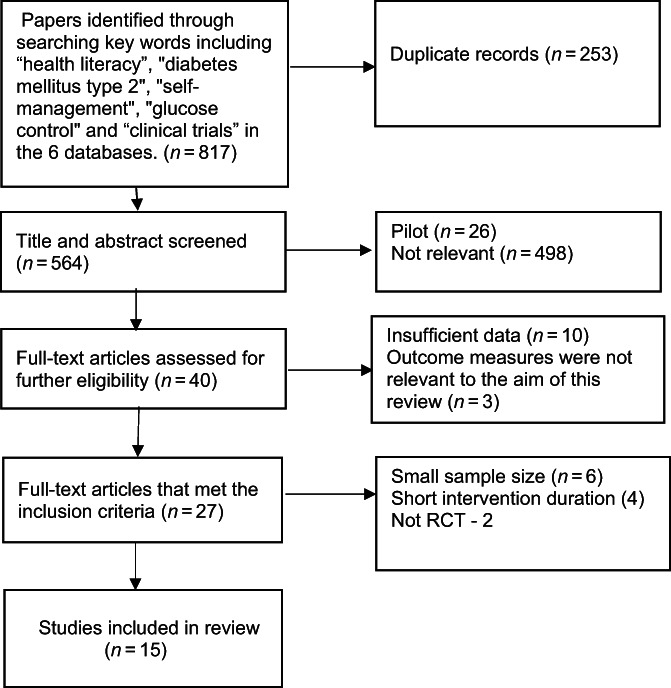
- Systematic review following PRISMA guidelines and registered in PROSPERO (CRD42022348050); searched MEDLINE, CINAHL, PubMed, Cochrane, Scopus, and Web of Science, identifying 817 records initially, screening 40 full texts, and including 15 RCTs.
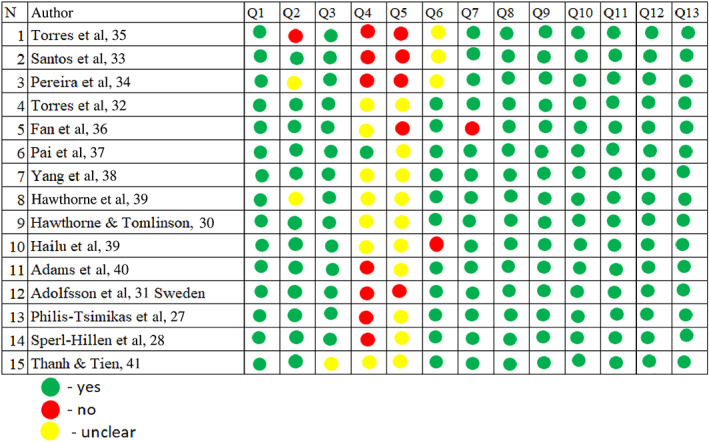
- Inclusion criteria: health literacy-driven RCTs published in English among T2DM patients aged over 18 years, reporting both glycemic control and self-management outcomes, with a minimum sample size of 100 and intervention duration >3 months. Quality was assessed with the Joanna Briggs Institute critical appraisal tool; overall mean quality score was 80.9%.
- Data were extracted on HbA1c and self-management outcomes; included studies were heterogeneous in intervention type, setting, duration, follow-up, and intervention providers, and no meta-analysis was reported.
Limitations
- Stated by the paper: only English-language studies were included; most selected studies were conducted in developed countries (though the Results report 10 studies in developing countries and 5 in developed countries); heterogeneity of settings, intervention strategies, and socioeconomic characteristics limits generalizability; lack of information about the professional background of intervention deliverers; different outcome measures and tools made analysis difficult; outcomes were presented for less than 1 year so long-term effects could not be examined; and only RCTs were included, limiting generalizability to real-world settings.
- Evident from the text: the review is narrative and does not pool effect sizes; the country distribution described in the Results conflicts with the stated limitation that most studies were from developed countries; and self-management definitions and measures varied across studies.
Model-written summary. Check it against the paper before relying on it.
Integrity signals
Registry
Cites
Statistics
Figures
Verification
Claims the paper makes
0 Valid · 2 Not valid · 54 Not checked · 28 Own results and interpretations
None of the sources cited for this claim have been checked yet.
In the paper
“Participants with low BMI level had lower HbA1c level after interventions in some studies. 27 , 32”
§ The impact of health literacy interventions on glycemic control and self‐management outcomes among type 2 diabetes mellitus: A systematic review > DISCUSSION
What the sources say
- Not checked yetcites [27] Philis‐Tsimikas A, Fortmann A, Lleva‐Ocana L, Walker C, Gallo LC. Peer‐led diabetes education programs in high‐risk Mexican Americans improve glycemic control compared with standard approaches: a project Dulce promotora randomized trial. Diabetes Care. 2011; 34(9): 1926‐ 1931. 21775748 PMC3161298 source
- Not checked yetcites [32] Torres HDC, Pace AE, Chaves FF, Velasquez‐Melendez G, Reis IA. Evaluation of the effects of a diabetes educational program: a randomized clinical trial. Rev Saude Publica. 2018; 52: 8. 29412378 PMC5802646
hedgedstates an association- Asserted: passes — The authors put it forward as true.
- Checkable: passes — It can be checked against evidence.
- Load-bearing: unclear — It is unclear whether the paper’s conclusions depend on it.
- Based: passes — The paper gives a reason why it holds.
A result the paper reports from its own data — it cites no other source for it, so there is none to check. The quote shows it is in the paper.
In the paper
“Fourteen out of 15 included RCTs showed that HL interventions resulted in significant improvements in HbA1c levels.”
§ The impact of health literacy interventions on glycemic control and self‐management outcomes among type 2 diabetes mellitus: A systematic review > DISCUSSION
plainstates a cause- Asserted: passes — The authors put it forward as true.
- Checkable: passes — It can be checked against evidence.
- Load-bearing: passes — The paper’s conclusions depend on it.
- Based: passes — The paper gives a reason why it holds.
- Rests on 3 assumptions not shown here.
None of the sources cited for this claim have been checked yet.
In the paper
“HL‐driven interventions were also more effective in HbA1c control among people who had comorbidities and low levels of alcohol consumption.”
§ The impact of health literacy interventions on glycemic control and self‐management outcomes among type 2 diabetes mellitus: A systematic review > RESULTS > Main findings
plainstates a cause- Asserted: passes — The authors put it forward as true.
- Checkable: passes — It can be checked against evidence.
- Load-bearing: unclear — It is unclear whether the paper’s conclusions depend on it.
- Based: passes — The paper gives a reason why it holds.
None of the sources cited for this claim have been checked yet.
In the paper
“We found that that telephone‐based HL interventions among patients with a longer diabetes duration were more likely to yield positive improvements in self‐management behaviors especially among less educated participants compared to face‐to face group education. 33 , 34”
§ The impact of health literacy interventions on glycemic control and self‐management outcomes among type 2 diabetes mellitus: A systematic review > DISCUSSION
What the sources say
- Not checked yetcites [33] Santos JCD, Cortez DN, Macedo MML, Reis EA, Reis IA, Torres HC. Comparison of education group strategies and home visits in type 2 diabetes mellitus: clinical trial. Rev Lat Am Enfermagem. 2017; 25: 25. PMC5738960 29267547
- Not checked yetcites [34] Pereira PF, Santos JCD, Cortez DN, Reis IA, Torres HC. Evaluation of group education strategies and telephone intervention for type 2 diabetes. Rev Esc Enferm USP. 2021; 55:e03746. 34105688
hedgedstates a possible cause- Asserted: passes — The authors put it forward as true.
- Checkable: passes — It can be checked against evidence.
- Load-bearing: passes — The paper’s conclusions depend on it.
- Based: passes — The paper gives a reason why it holds.
None of the sources cited for this claim have been checked yet.
In the paper
“Diabetes education intervention delivered by a nurse in an outpatient setting was more effective in reducing HbA1c (1.5% reduction) among more educated participants.”
§ The impact of health literacy interventions on glycemic control and self‐management outcomes among type 2 diabetes mellitus: A systematic review > RESULTS > Main findings
plainstates a cause- Asserted: passes — The authors put it forward as true.
- Checkable: passes — It can be checked against evidence.
- Load-bearing: unclear — It is unclear whether the paper’s conclusions depend on it.
- Based: passes — The paper gives a reason why it holds.
33 more claims
Create a free account to see all 84 claims and to verify the 62 references still open.
- It may state two separate claims as one. 28
- Probably not a substantial claim. 23
Self-check
Percentages, sums and reported differences re-computed from the paper’s own numbers.
Each contradiction between two passages listed here was confirmed by an independent check.
Rated minor: it would not touch a result — a value no result rests on, a p-value that stays on the same side of the significance level, or a conflict that is clerical, resolved elsewhere in the paper, or outside its own findings.
In the paper
§ The impact of health literacy interventions on glycemic control and self‐management outcomes among type 2 diabetes mellitus: A systematic review > LIMITATIONS
“Most of the selected studies were conducted in developed countries”
§ The impact of health literacy interventions on glycemic control and self‐management outcomes among type 2 diabetes mellitus: A systematic review > RESULTS > General study description
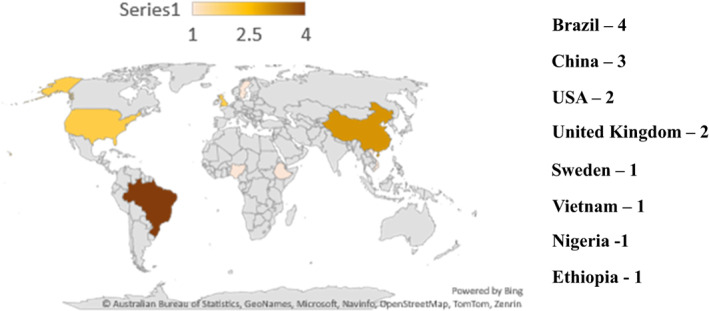
“Five of them were conducted in developed countries including 2 in the United States, 27 , 28 2 in England, 29 , 30 1 in Sweden, 31 and 10 in developing countries”
Rated minor: it would not touch a result — a value no result rests on, a p-value that stays on the same side of the significance level, or a conflict that is clerical, resolved elsewhere in the paper, or outside its own findings.
In the paper
§ The impact of health literacy interventions on glycemic control and self‐management outcomes among type 2 diabetes mellitus: A systematic review > RESULTS > General study description
“Sperl‐Hillen et al, 2010, United States 28”
§ The impact of health literacy interventions on glycemic control and self‐management outcomes among type 2 diabetes mellitus: A systematic review > References
“28. Sperl‐Hillen J, Beaton S, Fernandes O, et al. Comparative effectiveness of patient education methods for type 2 diabetes: a randomized controlled trial. Arch Intern Med. 2011; 171(22): 2001‐ 2010.”
Rated minor: it would not touch a result — a value no result rests on, a p-value that stays on the same side of the significance level, or a conflict that is clerical, resolved elsewhere in the paper, or outside its own findings.
In the paper
“Yang et al, 2015 China 38 | 245 (male 132, female 113), control 116, intervention 121”
§ The impact of health literacy interventions on glycemic control and self‐management outcomes among type 2 diabetes mellitus: A systematic review > RESULTS > General study description
Reported 245 · recomputed 237
Rated minor: it would not touch a result — a value no result rests on, a p-value that stays on the same side of the significance level, or a conflict that is clerical, resolved elsewhere in the paper, or outside its own findings.
In the paper
§ The impact of health literacy interventions on glycemic control and self‐management outcomes among type 2 diabetes mellitus: A systematic review > LIMITATIONS
“The study outcomes were presented for less than 1 year so long‐term effects could not be examined.”
§ The impact of health literacy interventions on glycemic control and self‐management outcomes among type 2 diabetes mellitus: A systematic review > RESULTS > Description of interventions
“The long follow‐up period of 12 months was performed in four studies, 31 , 33 , 34 , 38”
Rated minor: it would not touch a result — a value no result rests on, a p-value that stays on the same side of the significance level, or a conflict that is clerical, resolved elsewhere in the paper, or outside its own findings.
In the paper
§ The impact of health literacy interventions on glycemic control and self‐management outcomes among type 2 diabetes mellitus: A systematic review > RESULTS > Main findings
“14 studies showed that HL had a significant and positive impact on HbA1c control and 1 study did not find any significant changes in HbA1c level after a HL intervention program. 31”
§ The impact of health literacy interventions on glycemic control and self‐management outcomes among type 2 diabetes mellitus: A systematic review > RESULTS > Main findings
“Hailu et al, 2018, Ethiopia 39 | HbA1c | Reduction by 2.57% | Reduction by 2.88% | NA | .208”
2 more findings
Create a free account to see every finding of this check.
Citations
Cites
Sun, H., Saeedi, P., Karuranga, S., Pinkepank, M., Ogurtsova, K., Duncan, B. B., Stein, C., Basit, A., Chan, J. C. N., Mbanya, J. C., et al. (2022) · Diabetes Research and Clinical Practice · doi:10.1016/j.diabres.2021.109119 · Cited by 10,123 · cited 3×
“In 2021, diabetes resulted in health expenditures of at least US$966 billion globally, reflecting a 316% increase over the last 15 years.(1) Complications related to diabetes in the lower extremities are a significant and expanding source of disability across the globe.”
InfluentialStratton, I. M. (2000) · BMJ · doi:10.1136/bmj.321.7258.405 · Cited by 9,059 · cited 1×
“Each 1% reduction in HbA1c decreases the risk of microvascular complications by 37%, deaths related to diabetes by 21% and myocardial infarction by 14%.(11) Reducing the HbA1c level by 1% is associated with a 13% decrease in diabetes-related total health care costs.”
Vasileiou, K., Barnett, J., Thorpe, S., & Young, T. (2018) · BMC Medical Research Methodology · doi:10.1186/s12874-018-0594-7 · Cited by 3,115 · cited 1×
“This is because RCTs using smaller samples and shorter intervention delivery time were seen as a threat to the validity and generalizability of research results.(26)”
Economic Costs of Diabetes in the U.S. in 2017
American Diabetes Association (2018) · Diabetes Care · doi:10.2337/dci18-0007 · Cited by 2,528
Pathophysiology and treatment of type 2 diabetes: perspectives on the past, present, and future
Kahn, S. E., Cooper, M. E., & Del Prato, S. (2014) · The Lancet · doi:10.1016/s0140-6736(13)62154-6 · Cited by 1,743
Methodological quality of case series studies: an introduction to the JBI critical appraisal tool
Munn, Z., Barker, T. H., Moola, S., Tufanaru, C., Stern, C., McArthur, A., Stephenson, M., & Aromataris, E. (2019) · JBI Database of Systematic Reviews and Implementation Reports · doi:10.11124/jbisrir-d-19-00099 · Cited by 1,581
Understanding and Responding to Health Literacy as a Social Determinant of Health
Nutbeam, D., & Lloyd, J. E. (2021) · Annual Review of Public Health · doi:10.1146/annurev-publhealth-090419-102529 · Cited by 1,178 · cited 1×
“HL is the capacity to read, understand, make decisions, and take actions that affect health status.(19) Low HL has been linked to several negative health outcomes, such as poorer overall health, higher hospitalization and mortality rates, reduced ability to manage chronic illnesses, and increased patient expenses.”
WHO Global report on diabetes: A summary
Roglic, G. (2016) · International Journal of Noncommunicable Diseases · doi:10.4103/2468-8827.184853 · Cited by 998
Chrvala, C. A., Sherr, D., & Lipman, R. D. (2016) · Patient Education and Counseling · doi:10.1016/j.pec.2015.11.003 · Cited by 914
Global Disability Burdens of Diabetes-Related Lower-Extremity Complications in 1990 and 2016
Zhang, Y., Lazzarini, P. A., McPhail, S. M., van Netten, J. J., Armstrong, D. G., & Pacella, R. E. (2020) · Diabetes Care · doi:10.2337/dc19-1614 · Cited by 560
Research works printed but not linked: 2
- Jha SC, Dey S, Ranjan R. To determine the correlation between BMI and glycated hemoglobin (HbA1c) level in patients of type 2 diabetes mellitus. Eur J Mol Clin Med. 2022; 9(3): 3014‐ 3018.
- Agrawal N, Agrawal MK, Kumari T, Kumar S. Correlation between body mass index and blood glucose levels in Jharkhand population. Int J Contemp Med Res. 2017; 4(8): 1633‐ 1636.
Cited by
Items 101–173 of 173
The role of self-management in the rehabilitation of type 2 diabetes patients
Kryukova, I. V. (2026) · Реабилитология. · doi:10.17749/2949-5873/rehabil.2025.54
Rungnoei, N., Kruttakart, S., Phianthanyakam, N., Klinhom, P., Nokpaet, U., Sirikunwiwat, J., & Jaitham, B. (2026) · Journal of Health Research · doi:10.56808/2586-940x.1209
Ruiz, P. H. G. D. M., Kirchner, L. D. F., & de Castro, E. K. (2026) · Frontiers in Psychology · doi:10.3389/fpsyg.2026.1822037
Public Health Communication as a Pillar of Governance
Luz, E. (2026) · IGI Global eBooks · doi:10.4018/979-8-3373-7670-7.ch006
YEŞİLDAL, M., Tetik, A., & Siyar, A. (2026) · Patient Preference and Adherence · doi:10.2147/ppa.s586362
Ren, Y., Lai, H., Chen, S., Zhang, S., He, H., & Lin, T. (2026) · Research Square · doi:10.21203/rs.3.rs-10793573/v1
Pinheiro, F. M. A., Amaral, M. O., & Loureiro, A. F. (2026) · Healthcare · doi:10.3390/healthcare14172809
Magi, C. E., Longobucco, Y., Aoufy, K. E., Mannucci, E., Dicembrini, I., Lorini, C., Bonaccorsi, G., Bambi, S., Rasero, L., & Iovino, P. (2026) · Diabetes Research and Clinical Practice · doi:10.1016/j.diabres.2026.113458
Ma, R., Yu, X., Zhang, L., Hu, Z., Zhang, Y., Luo, Q., Huang, J., Li, C., & Li, J. (2026) · Patient Preference and Adherence · doi:10.2147/ppa.s586903
YÜCEBAŞ, S., Yücebaş, M., & Topel, H. (2026) · Health An Interdisciplinary Journal for the Social Study of Health Illness and Medicine · doi:10.1177/13634593261491630
Sastre, L. R., Stroud, B. J., Breinholt, R., Fratacangeli, A., Elliot, S., Turner, A., Das, B. M., Lee-Elmore, S., Cristiani, Y., Buxton, J. A., et al. (2026) · Preventing Chronic Disease · doi:10.5888/pcd23.250471
Brun, M. L., de Pinho, Q. G., Lagouanelle, M.-C., Ansel-Wallois, A., Camps, L., Diai, S., Kaplanski, G., Benyamine, A., & Granel, B. (2026) · BMJ Open · doi:10.1136/bmjopen-2025-115738
Health literacy, patient adherence and digital health technology in diabetic foot ulcer management
Xie, M. H., Jain, S., Cluck, M., Panchamukhi, A. V., Cauthen, L. A., Ruiz, I. P. T., Poythress, E. L., & Fukuta, Y. (2025) · Journal of Lower Limb Wound Care · doi:10.12968/llwc.2025.0006
Panjaitan, Y. R., Sari, R. D. I., & Lase, K. Y. (2025) · The International Journal of Medical Science and Health Research · doi:10.70070/ehg2p341
Self-Management of Cardiovascular-Kidney-Metabolic Syndrome: A Concept Analysis
Ayorinde, M. A., Cousin, L., Booker, S. Q., & Dungan, J. R. (2026) · Journal of Holistic Nursing · doi:10.1177/08980101261458446
Wu, Y., Zhong, Y., Huang, Q., Chen, W., Chen, Y., & Liu, X. (2026) · Frontiers in Endocrinology · doi:10.3389/fendo.2026.1942380
Carbonnier, G., Lambert, Y., Fanou, J., Giove, G., Faurous, W., Mergeay-Fabre, M., Adenis, A., Fahrasmane, A., Ntoutoum, A., Tabellah, M., et al. (2026) · Diabetes & Metabolism · doi:10.1016/j.diabet.2026.101795
Wang, W., Gao, K., Li, G., Li, K., Liu, S., Yu, H., & Xing, R. (2026) · Carbohydrate Research · doi:10.1016/j.carres.2026.110005
Souza, L. R. D. (2026) · IntechOpen eBooks · doi:10.5772/intechopen.1015451
Nguyen, T.-T. T., Vo, H. T., Nguyen, T. T. V., Son, P. M., Xim, V. T., Pham, T. M. N., Phan, M. A., & Nguyen, T. T. V. (2026) · Nursing Reports · doi:10.3390/nursrep16060205
NURSE-LED DIABETES SELF-MANAGEMENT EDUCATION AND SELF-CARE SUPPORT IN DIABETES CARE
Alharbi, R. F., Mutairi, S. M. A., Albugami, R. M., Awaji, F. Y., Shammari, D. M. A., AlDossary, M. S., Alanazi, M. S., Farhan, A. F. A., Aljohani, A. H., & AlGumosani, R. W. (2026) · International Journal of Advanced Research · doi:10.21474/ijar01/23656
Ertürk, N. E., & Bülbül, N. (2026) · Ethnicity and Health · doi:10.1080/13557858.2026.2731476
Dönmez, A. H. (2025) · Marmara University Open Access System
Tavares, C., Gonçalves, R. S., & Llamas‐Ramos, R. (2026) · Research Square · doi:10.21203/rs.3.rs-10208614/v1
Qaribi, M., pagan, S. H., Hariati, H., & Satria, O. (2026) · Best Journal (Biology Education Sains and Technology) · doi:10.30743/best.v9i2.14527
Sociodemographic determinants of health literacy in Bangladeshi adults with diabetes
Akter, S., Azhar, B. S., Islam, M. S., Alam, S., & Banna, M. H. A. (2026) · Discover Public Health · doi:10.1186/s12982-026-01541-w
LETRAMENTO EM SAÚDE SOBRE O DIABETES MELLITUS DE PESSOAS QUE VIVENCIARAM A AMPUTAÇÃO
de Oliveira, S. C. V., Alves, I. J. D. S., Alvim, A. L. S., Amorim, T. V., & Paiva, A. D. C. P. C. (2026) · Revista Enfermagem Atual In Derme · doi:10.31011/reaid-2026-v.100-n.4-art.2830
Health Literacy and A1C: Evaluating Glycemic Control in Patients with Type 2 Diabetes
Hickey, M. (2026) · DigitalCommons@Pace (Pace University)
Edukasi Booklet Meningkatkan Kepatuhan Diet Pasien Diabetes Melitus di Posyandu Bina Sejahtera
Nopriani, Y., & Rustika, F. M. (2026) · JURNAL LENTERA ILMIAH PENGABDIAN MASYARAKAT · doi:10.52120/jlipm.v3i2.109
Fauziyah, N., Taufiqah, A. Z. R., Ardianingrum, V., Putri, S. B. N., Yusfranda, A., Gimnastiar, H. A., & Sudaryanto, A. (2026) · Abdi Cendekia Jurnal Pengabdian Masyarakat · doi:10.61253/abdicendekia.v5i3.1305
Tsakalou, G., & Georgakouli, K. (2026) · Dietetics · doi:10.3390/dietetics5020030
Bulandari, Qodir, A., & Amalia, W. (2026) · JURNAL KEPERAWATAN SUAKA INSAN (JKSI) · doi:10.51143/jksi.v11i1.1161
Brousseau‐Foley, M. (2026) · Le dépôt institutionnel (Université du Québec à Trois-Rivières) · doi:10.71781/36476
Ferreira, E. R. D. O., Leite, M. D. L. C., Fernandes, A., Costa, L. D. R., da Cruz, A. N., Araújo, N. R. S., Andrade, C. C. F., de Oliveira, H. B. A., Harkovtzeff, F. B. P., Faturi, C. L. N., et al. (2026) · Revista Ibero-Americana de Humanidades, Ciências e Educação · doi:10.51891/rease.v12i7.29068
Dewi, R. I. S., Hayu, R., Susilo, H., & Dafriani, P. (2026) · Science Midwifery
Talordpong, P., Pibanwong, P., Jinarat, J., & Mongcondit, W. (2026) · Thai journal of nursing
Phetphim, C., Sutheeraprasert, P., Phonrat, K., & Polsavat, B. (2024) · Journal of Environmental Education Medical and Health
陈婵芳, Su, J., Chen, W., Guo, M., Chen, L., & Liu, Q. (2026) · Frontiers in Public Health · doi:10.3389/fpubh.2026.1930710
Chen, S., Subramaniam, P., Hao, Q., & Hng, S. H. (2026) · Asian Journal of Medicine & Health Sciences · doi:10.70672/m9wk5c11
Ma, L., 宋雅玲, Long, W., & Li, A. (2026) · Patient Preference and Adherence · doi:10.2147/ppa.s615429
Yossala, S., Fukfon, K., & Techakunviroj, R. (2026) · Siriraj Medical Journal/San Sirirat · doi:10.33192/smj.v78i8.281295
The Intertwined Threat: How Diabetes Impacts Neurological Disorders – A Review Article
Rajput, P., Jakhar, M., Kashyap, A., Rani, N., & Singh, T. G. (2026) · Acta Neurologica Taiwanica · doi:10.4103/ant.ant-d-24-00046
Gürçay, B., Bilgin, A., Yılmaz, F. T., & Yaylacı, S. (2026) · Online Türk Sağlık Bilimleri Dergisi · doi:10.26453/otjhs.1990037
Teng, H., Kuai, Y., Su, X., Tian, Y., Chen, J., Wu, Q., Mengni, Z. H. E. N., Shu, Q., & Chun-mei, L. (2026) · International Journal of Nursing Practice · doi:10.1111/ijn.70162
Diabetes and cardiac complications: A narrative review
Ishuiza, F. G., Torres, J. M. G., Isuiza, T. A., Delgado, P. Z. V., Putpaña, X. D. C. T., Morales-García, W. C., Álvarez-Manrique, V. D., & Morales-García, M. (2026) · doi:10.62486/978-9915-704-33-3.ch02
Solihin, O., Rantona, S., Sovianti, R., & Kurniawan, R. (2026) · International Archives of Medical Sciences and Public Health · doi:10.53806/iamsph.v7i1.1436
蔡玲矯, Nabkasorn, C., Jullamate, P., & Guan, Y. (2026) · Thai Journal of Public Health
Hessain, D., Dalsgaard, E., Maindal, H. T., & Andersen, A. (2026) · Primary care diabetes · doi:10.1016/j.pcd.2026.03.007
Rini, M. A., Lestaria, D., Pallupi, A. A., Sitinjak, A. A. Y., Septiya, E. A., Indriyani, E. R., Shabirah, I., & Riwa, K. K. (2026) · Jurnal Kesehatan Tambusai · doi:10.31004/jkt.v7i1.52249
Noviyanti, N. I., Johan, R. B., Rusmiati, R., Ismuniar, C., Ruqaiyah, R., Aspar, H., & Padlilah, R. (2026) · International Journal of Public Health Science (IJPHS) · doi:10.11591/ijphs.v15i2.27074
Hu, X., Su, X., Chen, S. Y., Wang, Q., He, F., & Zhang, R. (2026) · Endocrine · doi:10.1007/s12020-026-04626-3
EDUKASI DAGUSIBU UNTUK MENINGKATKAN PENGETAHUAN PENGELOLAAN OBAT PADA PASIEN DIABETES MELITUS TIPE 2
Arba, M., Pascayantri, A., Jabbar, A., Nasrudin, N., Tamsa, A. I. J., Safitri, E., Meithasari, K. A., Rahmah, R., Nuryani, W. O., Mubarak, M., et al. (2026) · MAJU Indonesian Journal of Community Empowerment · doi:10.62335/maju.v3i4.2664
Shi, Y., & Omar, I. M. (2026) · Journal of Nusantara Studies (JONUS) · doi:10.24200/jonus.vol11iss2pp306-325
Abdillah, W., & Setyawan, Y. (2026) · JOURNAL OF Pharmacy and Tropical Issues · doi:10.56922/pti.v6i3.3846
Samantaray, K. K., Das, S., Sahoo, K. C., Reddy, N. V., & Siva, N. (2026) · Journal of Integrative Nursing · doi:10.4103/jin.jin_66_26
Janthamunee, W., Parimanon, C., Noosanit, B., Koedsommat, N., Tongtua, P., Heetpaow, C., & Sookchonnanun, P. (2026) · Journal of Health Policy, Law and Administration
Krimak, C. (2026) · Academic Journal for Primary Care and Public Health Development
Tunyarak, H., Riththatham, S., Krainara, T., Rumpoei, S., Darapong, S., & Makkaew, T. (2024) · Lanna Public Health Journal
Takpho, P., Nunthaitaweekul, P., & Jittamanee, S. (2025) · Nursing Journal CMU
Preventive treatment of an adult patient with diabetes millitus type 2 in communty health care
Lukovnjak, L. (2025) · University of Maribor digital library (University of Maribor)
Keawjumrat, P., Pradubpoth, K., & Khongsrichay, O. (2026) · Journal of Environmental Education Medical and Health
Nernhard, K., & Chaisit, S. (2026) · Academic Journal for Primary Care and Public Health Development
Alhayafah, R. M. (2026) · Scientific Reports · doi:10.1038/s41598-026-74852-2
Autocuidado de pessoas com Diabetes tipo 2 em serviço ambulatorial público de saúde
Batista, K. C. A., Rocha, F., Lima, S. C., da Cunha, J. B., Dantas, S. M. D. S., Pinho, G. D. A., Castro, V. C., Gomes, N. R. B., Queiroz, V. V. V., & Silva, D. E. (2026) · Revista Eletrônica Acervo Saúde · doi:10.25248/reas.e25341.2026
Letramento em saúde de pessoas com diabetes mellitus tipo 2: protocolo de ensaio pragmático
Mezaroba, E., & Rosset, I. (2026) · Revista Recien · doi:10.24276/rrecien2026.16.44070
Megawaty, I., Indrawati, I., Maya, R., Arum, D. F. K., Rahmania, & Putri, C. A. (2026) · Bina Generasi Jurnal Kesehatan · doi:10.35907/bgjk.v18i1.646
Probosiwi, N. (2026) · Jurnal Ilmiah Pharmacy · doi:10.52161/jiphar.v13i2.967
Putri, A. N., Nabilah, M. P., Wibisono, T. A. N., Calista, C., & Hardiansyah, I. A. (2026) · Health Frontiers · doi:10.62255/mjhp.v4isuppl1.341
Al-Qerem, W., Jarab, A., Hammad, A., Eberhardt, J., Alasmari, F., Alkaee, S. M., Alsabaa, Z. H., & Al-Ibadah, M. (2024) · doi:10.1371/journal.pone.0312833.r001
Panyawong, M., Sansuk, W., Tammaku, N., & Srisaket, J. (2026) · The Academic and Nursing Journal of Boromarajonani College of Nursing, Chakriraj
Hasanat, N. U., Marvianto, R. D., & Sidqi, A. F. R. A. (2026) · Acta Psychologica · doi:10.1016/j.actpsy.2026.108182
SMART–IDEAL for Church-Based Diabetes Prevention and Management in Ambon
Sumah, D. F., Ivakdalam, L. M., Tuhumury, R., & Johannes, I. R. M. (2026) · Karya Kesehatan Siwalima · doi:10.54639/kks.v5i2.2114
Metadata
- Authors
- Butayeva, J., Ratan, Z. A., Downie, S., & Hosseinzadeh, H.
- Affiliations
- University of Wollongong (AU)
- Corresponding author
- Hosseinzadeh, Hassan
- Venue
- Journal of Diabetes
- Publisher
- Wiley
- Published
- 2023-07-05
- Volume
- 15
- Issue
- 9
- Pages
- 724-735
- ISSN
- 1753-0407 (ISSN-L)
- 1753-0393
- PMC
- PMC10509520
- OpenAlex
- W4383215195
- Semantic Scholar
- 4b73dd44de8eb44e68d2e17eb704c89e157f3086
- Cited by
- 173
- References
- 55
- Citations by year
- 2026: 82 · 2025: 68 · 2024: 19 · 2023: 4
- FWCI
- 4.59
- Type
- journal article
- Language
- en
- Open access
- gold
- doi.org
- Licence
- Locations
- Journal of Diabetes (publishedVersion, cc-by)
- PubMed Central (publishedVersion, cc-by)
- PubMed (publishedVersion)
- Research Online (University of Wollongong) (submittedVersion)
- DOAJ (DOAJ: Directory of Open Access Journals) (submittedVersion, cc-by-sa)
- Figshare (submittedVersion)
- Funders
- University of Wollongong
- Topics
- Health Sciences › Medicine › Endocrinology, Diabetes and Metabolism › Diabetes Management and Education
- Health Sciences › Health Professions › General Health Professions › Health Literacy and Information Accessibility
- Health Sciences › Medicine › Endocrinology, Diabetes and Metabolism › Diabetes Management and Research
- Keywords
- health literacy interventions, type 2 diabetes, glycemic control, HbA1c, diabetes self-management, self-care behavior, telephone-delivered intervention, nurse-led intervention, hospital-based intervention, diabetes duration, diabetes knowledge
- MeSH terms
- Self-Management, Glycemic Control, Diabetes Mellitus, Type 2, Glycated Hemoglobin, Humans, Self Care, Randomized Controlled Trials as Topic, Health Literacy
About these checks
Registry, retraction, Cites and statistics results are computed, not judged, with one exception: a printed reference that no index lists is read once by a model before it counts as a citation error. Claims are extracted by a model and kept only when their quote appears verbatim in the text; each cited source is then checked, with a model’s help, for whether it says what the claim relies on. Those verdicts can be wrong — read the claim’s quote and the cited source before relying on one.
A language model drew the claims from the paper on 2026-11-20, under version 3 of the claim definition (model deepseek-v4.1-flash, prompt extract-v3).
A second model labelled each claim on 2026-11-20 (model jev-1.13-20260917, definition revision gold-guideline-v0.2).
Statistics and arithmetic are recomputed, not judged.
Confidence bands are shown only for fields calibrated on our annotated test set. None is calibrated yet, so no band is shown.
What counts as a claim ›How we measure confidence ›How we check this ›
Are you an author, or do you see a problem with this page? Request a review
Data sources
Bibliographic data: Semantic Scholar, OpenAlex, Crossref.
Contains information from the Semantic Scholar Academic Graph Datasets, made available under the ODC Attribution License (ODC-BY 1.0).
Semantic Scholar’s data is described in: Kinney, R., et al. (2023). The Semantic Scholar Open Data Platform. arXiv:2301.10140.
