

The DOI matches its Crossref record; 73 of the 74 references it cites were found in a registry or an index.
Why Do People Choose Emergency and Urgent Care Services? A Rapid Review Utilizing a Systematic Literature Search and Narrative Synthesis
Open accessAbstract
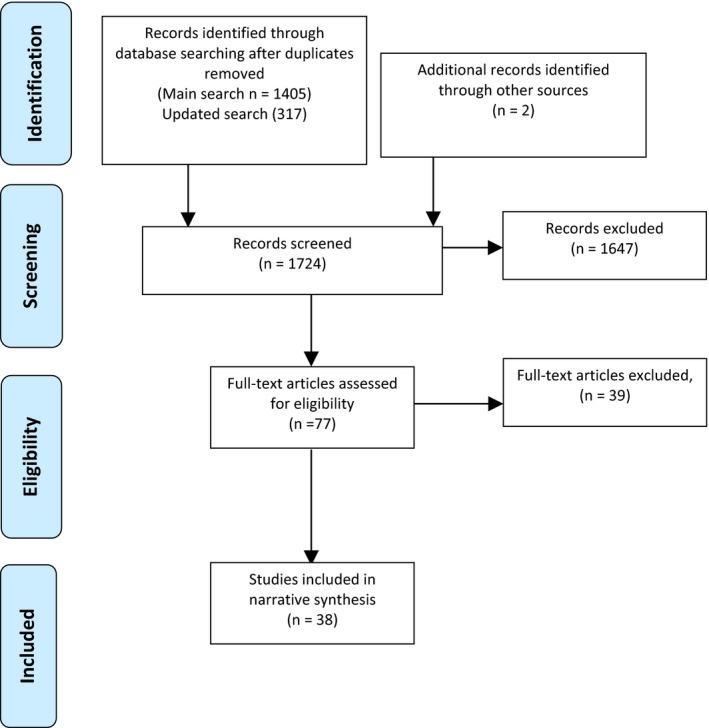
Objectives: Rising demand for emergency and urgent care services is well documented, as are the consequences, for example, emergency department ( ED ) crowding, increased costs, pressure on services, and waiting times. Multiple factors have been suggested to explain why demand is increasing, including an aging population, rising number of people with multiple chronic conditions, and behavioral changes relating to how people choose to access health services. The aim of this systematic mapping review was to bring together published research from urgent and emergency care settings to identify drivers that underpin patient decisions to access urgent and emergency care. Methods: Systematic searches were conducted across Medline (via Ovid SP ), EMBASE (via Ovid), The Cochrane Library (via Wiley Online Library), Web of Science (via the Web of Knowledge), and the Cumulative Index to Nursing and Allied Health Literature ( CINAHL ; via EBSCO host). Peer‐reviewed studies written in English that reported reasons for accessing or choosing emergency or urgent care services and were published between 1995 and 2016 were included. Data were extracted and reasons for choosing emergency and urgent care were identified and mapped. Thematic analysis was used to identify themes and findings were reported qualitatively using framework‐based narrative synthesis. Results: Thirty‐eight studies were identified that met the inclusion criteria. Most studies were set in the United Kingdom (39.4%) or the United States (34.2%) and reported results relating to ED (68.4%). Thirty‐nine percent of studies utilized qualitative or mixed research designs. Our thematic analysis identified six broad themes that summarized reasons why patients chose to access ED or urgent care. These were access to and confidence in primary care; perceived urgency, anxiety, and the value of reassurance from emergency‐based services; views of family, friends, or healthcare professionals; convenience (location, not having to make appointment, and opening hours); individual patient factors (e.g., cost); and perceived need for emergency medical services or hospital care, treatment, or investigations. Conclusions: We identified six distinct reasons explaining why patients choose to access emergency and urgent care services: limited access to or confidence in primary care; patient perceived urgency; convenience; views of family, friends, or other health professionals; and a belief that their condition required the resources and facilities offered by a particular healthcare provider. There is a need to examine demand from a whole system perspective to gain better understanding of demand for different parts of the emergency and urgent care system and the characteristics of patients within each sector.
Overview
The claims and statistics of this paper haven’t been checked yet.
Run the check — free, no account needed. It reads the open-access text and checks the sources it cites.
Integrity signals
Registry
Cites
Statistics
Figures
Verification
Claims the paper makes
The claims and statistics of this paper haven’t been checked yet.
Run the check — free, no account needed. It reads the open-access text and checks the sources it cites.
Claims other papers make about this one
Each is checked against this paper’s own text: does it say what the citing paper says it does?
In the citing paper
“there is existing evidence that some older adults prefer visiting the ED, even when they have a primary care provider.”
From Factors associated with recurrent emergency department visits among people living with dementia: A retrospective cohort study (2023) · cites this paper as [43]
Self-check
Percentages, sums and reported differences re-computed from the paper’s own numbers.
The self-check needs the paper’s full text.
Citations
Cites
Preferred Reporting Items for Systematic Reviews and Meta-Analyses: the PRISMA statement
Moher, D., Liberati, A., Tetzlaff, J., Altman, D. G., & for the PRISMA Group (2009) · BMJ · doi:10.1136/bmj.b2535 · Cited by 83,823
Preferred Reporting Items for Systematic Reviews and Meta-Analyses: The PRISMA Statement
Moher, D., Liberati, A., Tetzlaff, J., Altman, D. G., & The PRISMA Group (2009) · PLoS Medicine · doi:10.1371/journal.pmed.1000097 · Cited by 64,042
Preferred reporting items for systematic reviews and meta-analyses: The PRISMA statement
Moher, D., Liberati, A., Tetzlaff, J., Altman, D. G., & the PRISMA Group* (2009) · Annals of Internal Medicine · doi:10.7326/0003-4819-151-4-200908180-00135 · Cited by 37,554
Wang, G., Ma, R., Qiao, G., Wada, K., Aizawa, Y., & Satoh, T. (2015) · Integrative Medicine International · doi:10.1159/000368408 · Cited by 18,762
Qualitative data analysis for applied policy research
(2002) · Analyzing Qualitative Data · doi:10.4324/9780203413081-14 · Cited by 4,964
Qualitative data analysis for applied policy research
Ritchie, J., & Spencer, L. (2010) · Analyzing qualitative data · doi:10.4324/9780203413081_chapter_9 · Cited by 4,800
National Hospital Ambulatory Medical Care Survey: 1994 emergency department summary.
Stussman, B. J. (1996) · PubMed · Cited by 2,232
National Hospital Ambulatory Medical Care Survey: 2007 Emergency Department Summary
Niska, R. W., Bhuiya, F., & Xu, J. (2010) · PsycEXTRA Dataset · doi:10.1037/e587172010-001 · Cited by 1,570
Evidence summaries: the evolution of a rapid review approach
Khangura, S., Konnyu, K., Cushman, R., Grimshaw, J., & Moher, D. (2012) · Systematic Reviews · doi:10.1186/2046-4053-1-10 · Cited by 1,232
A scoping review of rapid review methods
Tricco, A. C., Antony, J., Zarin, W., Strifler, L., Ghassemi, M., Ivory, J., Perrier, L., Hutton, B., Moher, D., & Straus, S. E. (2015) · BMC Medicine · doi:10.1186/s12916-015-0465-6 · Cited by 1,146
Research works printed but not linked: 4
- Australian Institute of Health and Welfare, 2010, Australian Hospital Statistics 2009–10: Emergency Department Care and Elective Surgery Waiting Times
- Emergency Medical Services at the Crossroads, 2001, Future of Emergency Care Series
- Citizens Advice.Younger Adults More Likely to Turn to Walk‐in Centres and A&E. 2014. Available at:https://www.citizensadvice.org.uk/about-us/how-citizens-advice-works/media/press-releases/younger-adults-more-likely-to-turn-to-walk-in-centres-and-a-amp-e/Accessed Oct 21 2016.
- O'Shea J, 2008, The Crisis in America's Emergency Rooms and What Can Be Done. Health Care Reform
Cited by
Sorted by citations
Wolfe, M. K., McDonald, N., & Holmes, G. M. (2020) · American Journal of Public Health · doi:10.2105/ajph.2020.305579 · Cited by 504
Hamel, C., Michaud, A., Thuku, M., Skidmore, B., Stevens, A., Nussbaumer-Streit, B., & Garritty, C. (2021) · Journal of Clinical Epidemiology · doi:10.1016/j.jclinepi.2020.09.041 · Cited by 384
Arsenault‐Lapierre, G., Henein, M., Gaid, D., Berre, M. L., Gore, G. C., & Vedel, I. (2021) · JAMA Network Open · doi:10.1001/jamanetworkopen.2021.11568 · Cited by 213
Characteristics and Trends of Emergency Department Visits in the United States (2010–2014)
Hooker, E. A., Mallow, P. J., & Oglesby, M. M. (2019) · Journal of Emergency Medicine · doi:10.1016/j.jemermed.2018.12.025 · Cited by 180
Black Cisgender Women's PrEP Knowledge, Attitudes, Preferences, and Experience in Chicago
Hirschhorn, L. R., Brown, R. N., Friedman, E. E., Greene, G. J., Bender, A., Christeller, C., Bouris, A. M., Johnson, A. K., Pickett, J., Modali, L., et al. (2020) · JAIDS Journal of Acquired Immune Deficiency Syndromes · doi:10.1097/qai.0000000000002377 · Cited by 127
Metadata
- Authors
- Coster, J. E., Turner, J. K., Bradbury, D., & Cantrell, A.
- Affiliations
- University of Sheffield (GB)
- Northampton General Hospital NHS Trust (GB)
- Corresponding author
- Coster, Joanne E.
- Venue
- Academic Emergency Medicine
- Publisher
- Wiley
- Published
- 2017-06-19
- Volume
- 24
- Issue
- 9
- Pages
- 1137-1149
- ISSN
- 1069-6563 (ISSN-L)
- 1553-2712
- PMC
- PMC5599959
- OpenAlex
- W2613680655
- Cited by
- 379
- References
- 74
- Citations by year
- 2026: 34 · 2025: 45 · 2024: 52 · 2023: 55 · 2022: 59 · 2021: 53 · 2020: 45 · 2019: 30 · 2018: 5 · 2017: 1
- FWCI
- 5.66
- Type
- journal article
- Language
- en
- Open access
- hybrid
- doi.org
- Licence
- Locations
- Academic Emergency Medicine (publishedVersion, cc-by-nc)
- PubMed Central (publishedVersion, cc-by-nc)
- PubMed (publishedVersion)
- White Rose Research Online (University of Leeds, The University of Sheffield, University of York) (acceptedVersion)
- Funders
- National Institute for Health Research (13/05/12)
- Health Services and Delivery Research Programme
- University of Sheffield
- Topics
- Health Sciences › Medicine › Emergency Medicine › Emergency and Acute Care Studies
- Health Sciences › Medicine › Emergency Medicine › Trauma and Emergency Care Studies
- Health Sciences › Medicine › Emergency Medicine › Emergency Medicine Education and Research
- Keywords
- emergency department utilization, urgent care, patient help-seeking behavior, primary care access, perceived urgency, convenience, health care costs, emergency department overcrowding, health care demand
- MeSH terms
- Ambulatory Care, Attitude to Health, Choice Behavior, Decision Making, Emergencies, Emergency Service, Hospital, Health Services Accessibility, Health Services Needs and Demand, Humans, Primary Health Care, Qualitative Research, Patient Preference
About these checks
Registry, retraction, Cites and statistics results are computed, not judged, with one exception: a printed reference that no index lists is read once by a model before it counts as a citation error. Claims are extracted by a model and kept only when their quote appears verbatim in the text; each cited source is then checked, with a model’s help, for whether it says what the claim relies on. Those verdicts can be wrong — read the claim’s quote and the cited source before relying on one.
Statistics and arithmetic are recomputed, not judged.
Confidence bands are shown only for fields calibrated on our annotated test set. None is calibrated yet, so no band is shown.
What counts as a claim ›How we measure confidence ›How we check this ›
Are you an author, or do you see a problem with this page? Request a review
