

The DOI matches its Crossref record; 3 of the 3 references it cites were found in a registry or an index.
Molecular allergology and its impact in specific allergy diagnosis and therapy
Abstract
Progressive knowledge of allergenic structures resulted in a broad availability of allergenic molecules for diagnosis. Component‐resolved diagnosis allowed a better understanding of patient sensitization patterns, facilitating allergen immunotherapy decisions. In parallel to the discovery of allergenic molecules, there was a progressive development of a regulation framework that affected both in vitro diagnostics and Allergen Immunotherapy products. With a progressive understanding of underlying mechanisms associated to Allergen immunotherapy and an increasing experience of application of molecular diagnosis in daily life, we focus in analyzing the evidences of the value provided by molecular allergology in daily clinical practice, with a focus on Allergen Immunotherapy decisions.
Overview
The claims and statistics of this paper haven’t been checked yet.
Run the check — free, no account needed. It reads the open-access text and checks the sources it cites.
Integrity signals
Registry
Cites
Statistics
Figures



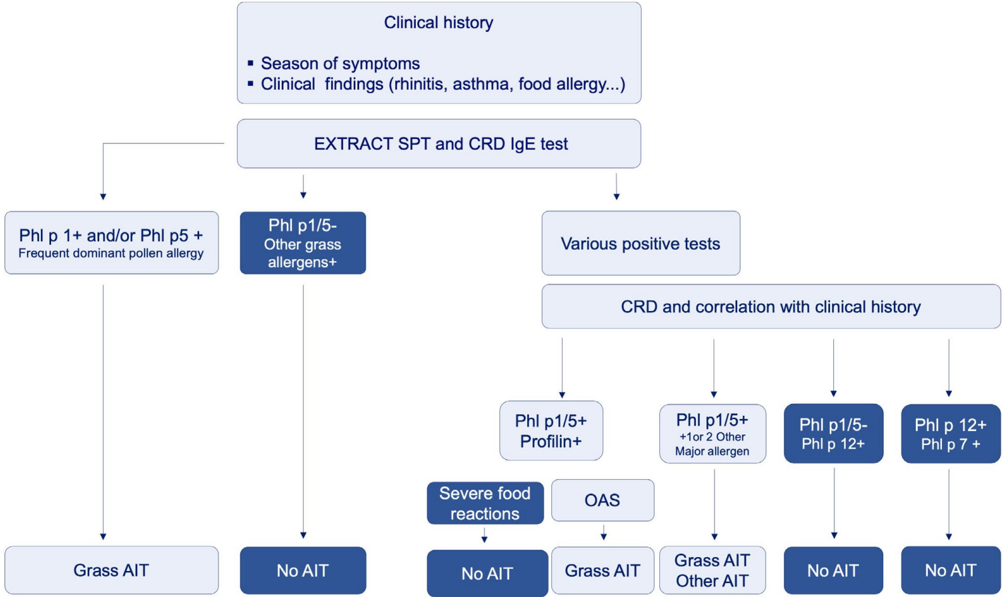

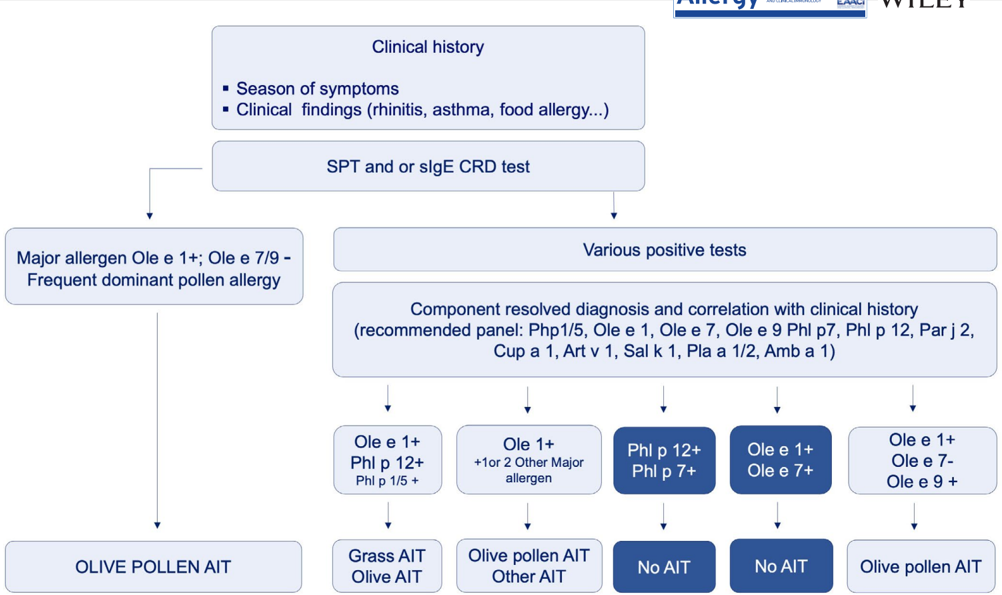
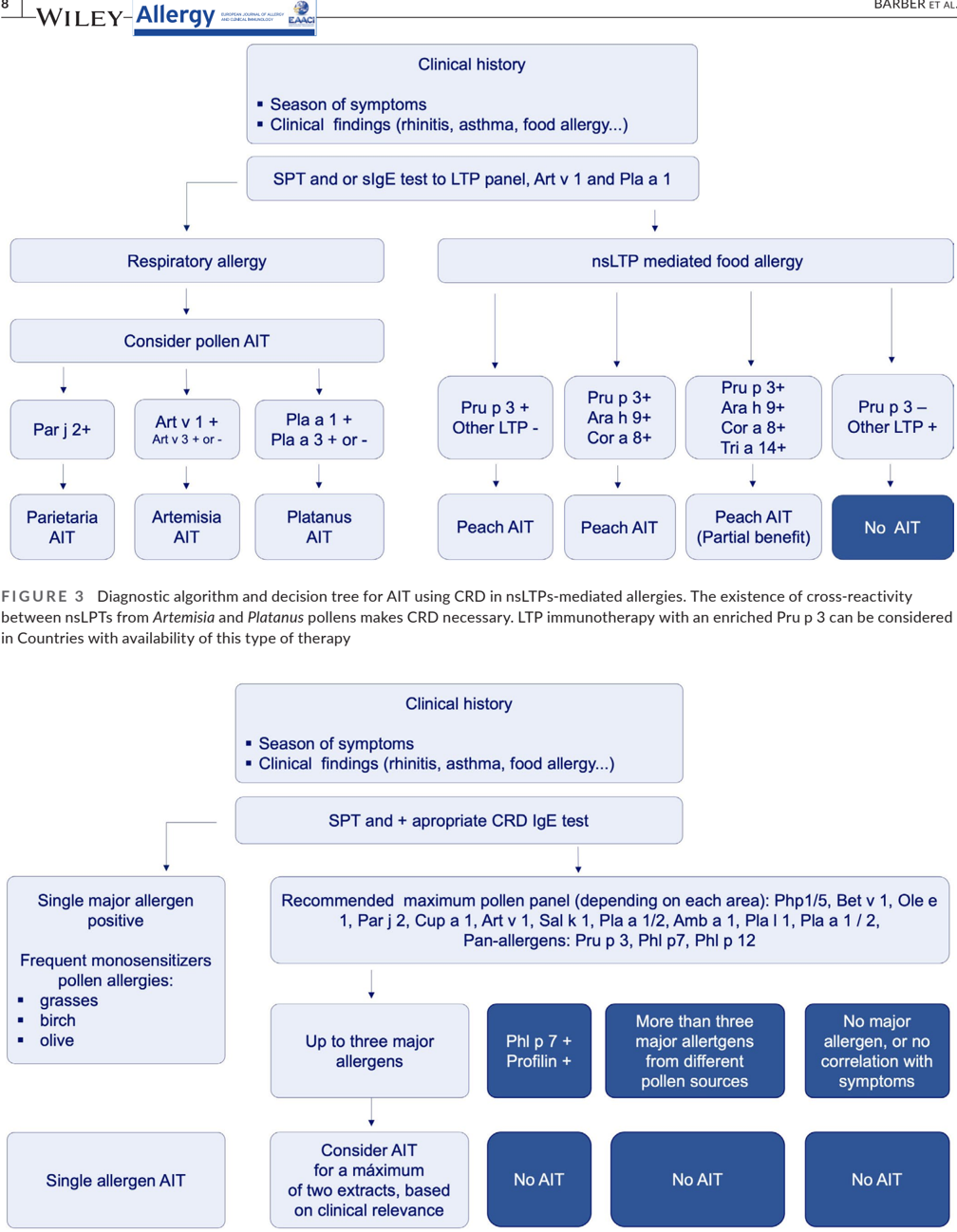

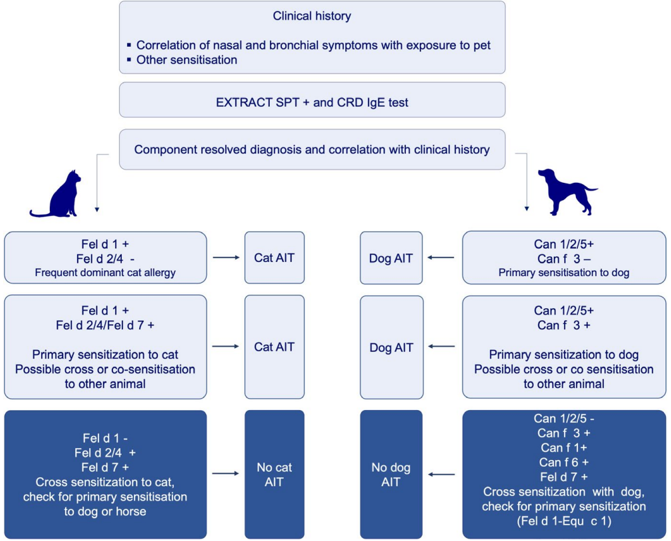


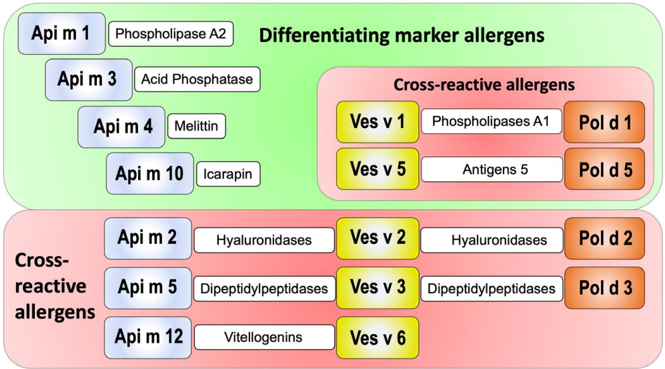
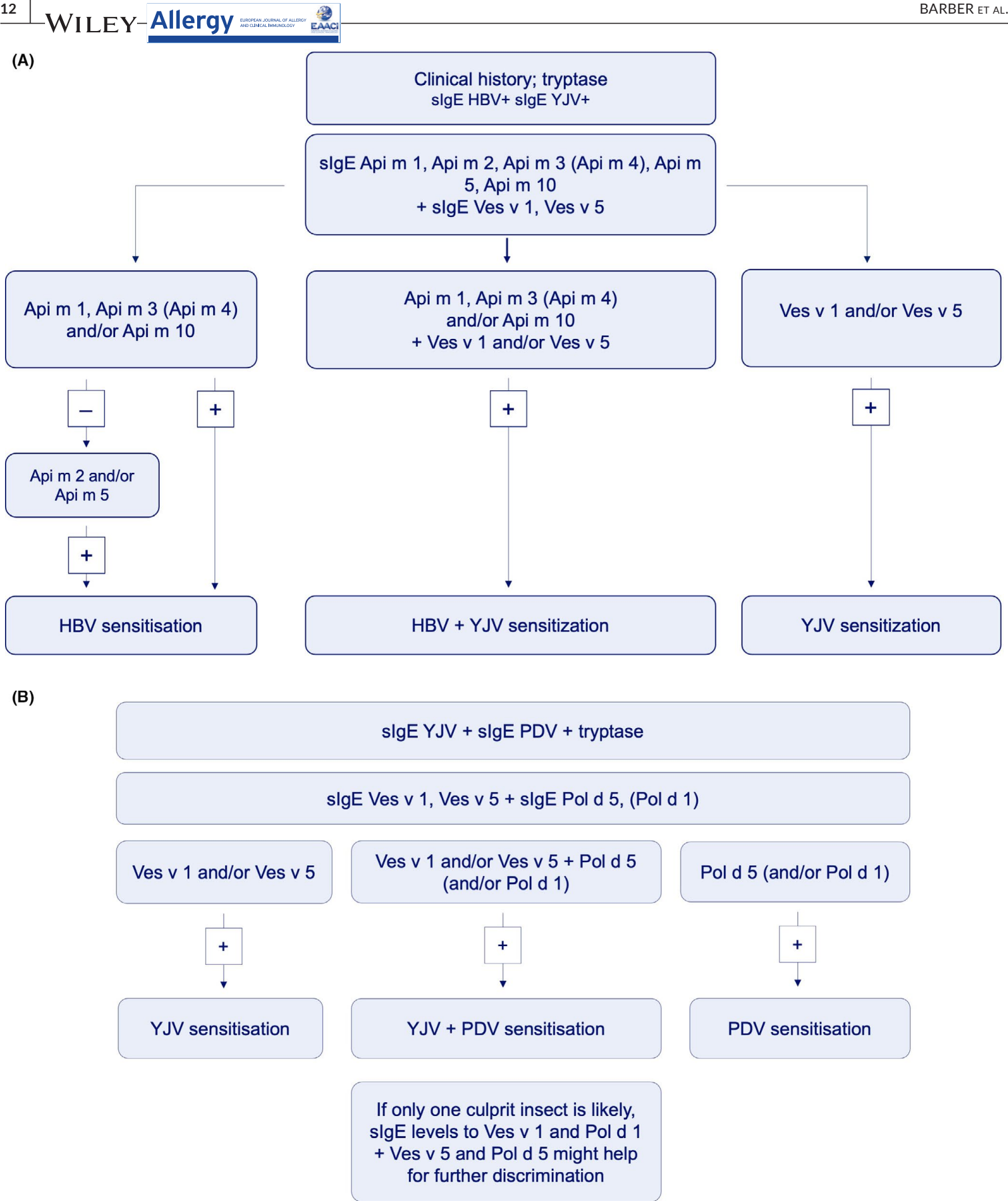
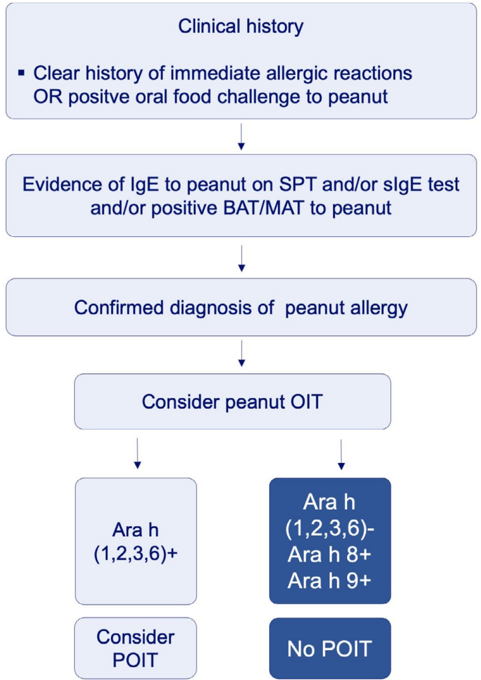





Verification
Claims the paper makes
The claims and statistics of this paper haven’t been checked yet.
Run the check — free, no account needed. It reads the open-access text and checks the sources it cites.
Claims other papers make about this one
Each is checked against this paper’s own text: does it say what the citing paper says it does?
In the citing paper
“Profilin-mediated allergic reactions are generally mild and confined to the oropharyngeal region, manifesting as itching, tingling, or mild swelling of the lips, tongue, and throat [137].”
From Pollen–Food Allergy Syndrome: Allergens, Clinical Insights, Diagnostic and Therapeutic Challenges (2024) · cites this paper as [137]
Self-check
Percentages, sums and reported differences re-computed from the paper’s own numbers.
The self-check needs the paper’s full text.
Citations
Cites
Evolution pathways of IgE responses to grass and mite allergens throughout childhood
Custovic, A., Sonntag, H.-J., Buchan, I. E., Belgrave, D., Simpson, A., & Prosperi, M. C. F. (2015) · Journal of Allergy and Clinical Immunology · doi:10.1016/j.jaci.2015.03.041 · Cited by 159
Suárez-Fueyo, A., Ramos, T., Galán, A., Jimeno, L., Wurtzen, P. A., Marin, A., de Frutos, C., Blanco, C., Carrera, A. C., Barber, D., et al. (2014) · Journal of Allergy and Clinical Immunology · doi:10.1016/j.jaci.2013.09.043 · Cited by 147
Self-citationMolecular diagnosis and immunotherapy
Sastre, J. (2013) · Current Opinion in Allergy & Clinical Immunology · doi:10.1097/aci.0b013e328364f4c6 · Cited by 33
Self-citation
Research works printed but not linked: 130
- 10.1111/all.13266 · DOI
- 10.1111/all.13357 · DOI
- 10.1111/j.1398-9995.2007.01612.x · DOI
- 10.1111/pai.12563 · DOI · Paper page
- 10.1111/all.14565 · DOI
- 10.1111/all.13973 · DOI
- 10.5415/apallergy.2019.9.e37 · DOI
- 10.1111/all.13860 · DOI
- 10.1111/all.13563 · DOI
- 10.1016/j.jaci.2018.03.013 · DOI
- 10.1111/all.13628 · DOI
- 10.1080/21645515.2019.1622976 · DOI
- 10.1111/all.13553 · DOI
- 10.1111/all.14126 · DOI
- 10.1097/ACI.0000000000000580 · DOI
- 10.1111/all.14763 · DOI
- 10.1111/imr.12937 · DOI
- 10.1016/j.jaci.2020.08.042 · DOI
- 10.1016/j.waojou.2019.100091 · DOI · Paper page
- 10.1111/all.13693 · DOI
- 10.1007/s12016‐020‐08810‐9 · DOI
- 10.1007/s12016‐020‐08826‐1 · DOI
- Kaul S, 2017, Validation of ELISA methods for quantification of the major birch allergen Bet v 1 (BSP090), Pharmeur Bio Sci Notes, 2017, 69
- 10.1111/all.12898 · DOI
- Vieths S, 2012, Establishment of recombinant major allergens Bet v 1 and Phl p 5a as Ph. Eur. reference standards and validation of ELISA methods for their measurement. Results from feasibility studies, Pharmeur Bio Sci Notes, 2012, 118
- 10.1016/j.anai.2015.09.018 · DOI
- 10.1159/000092532 · DOI
- Barber D, 2007, Degree of olive pollen exposure and sensitization patterns. Clinical implications, J Investig Allergol Clin Immunol, 17, 11
- 10.1016/j.jaci.2012.05.053 · DOI
- 10.1016/j.jaci.2016.08.014 · DOI · Paper page
- 10.1111/pai.12200 · DOI
- 10.1111/all.13351 · DOI
- 10.1111/j.1398-9995.2008.01807.x · DOI
- 10.1111/j.1365-2222.2009.03351.x · DOI
- 10.1111/all.13338 · DOI
- 10.1111/all.14347 · DOI
- 10.1111/j.1365-2222.2008.02980.x · DOI
- 10.1016/j.jaci.2011.03.008 · DOI
- 10.1111/all.12509 · DOI · Paper page
- 10.18176/jiaci.0193 · DOI
- 10.1016/j.jaci.2020.04.012 · DOI
- 10.1016/j.bbalip.2007.01.001 · DOI
- 10.1111/all.14797 · DOI
- 10.1111/j.1398-9995.2008.01921.x · DOI
- 10.1111/cea.12901 · DOI
- 10.1002/mnfr.201700669 · DOI
- 10.1111/all.13758 · DOI · Paper page
- 10.1016/j.jaci.2018.12.1001 · DOI
- 10.1016/j.jaip.2021.01.035 · DOI
- 10.1111/cea.13788 · DOI
- 10.3390/nu12020519 · DOI
- 10.1111/all.14242 · DOI
- 10.1016/j.jaci.2020.03.015 · DOI
- 10.1159/000381059 · DOI
- 10.1016/j.jaip.2018.11.044 · DOI
- 10.1111/pai.13189 · DOI
- 10.1016/j.anai.2015.09.016 · DOI
- 10.1016/j.jaci.2013.03.019 · DOI
- 10.1016/j.jaip.2020.03.041 · DOI
- 10.1111/all.12917 · DOI · Paper page
- 10.1186/s13223-016-0167-4 · DOI
- 10.1111/j.1398-9995.2012.02797.x · DOI
- 10.1016/j.jaci.2020.12.640 · DOI
- 10.18176/jiaci.0656 · DOI
- 10.1016/j.jaci.2015.09.052 · DOI · Paper page
- 10.1016/j.jaci.2004.08.049 · DOI
- 10.1111/all.13785 · DOI
- 10.1016/j.jaci.2006.07.055 · DOI
- 10.18176/jiaci.0415 · DOI
- 10.18176/jiaci.0307 · DOI
- 10.1111/j.1365-2222.2012.03993.x · DOI · Paper page
- 10.1111/all.13776 · DOI
- 10.1016/j.jaci.2007.02.028 · DOI
- 10.1016/S0091-6749(97)70047-2 · DOI
- 10.18176/jiaci.0359 · DOI
- 10.1016/j.jaci.2020.03.029 · DOI
- 10.1016/j.jaci.2011.10.045 · DOI
- 10.1038/nature05260 · DOI
- 10.1016/j.bbapap.2005.07.017 · DOI
- 10.1016/j.jprot.2013.04.039 · DOI
- 10.1111/all.12348 · DOI
- 10.3389/fimmu.2014.00077 · DOI
- 10.1016/j.jaci.2016.04.024 · DOI
- 10.1016/j.jaci.2013.10.060 · DOI
- 10.1111/j.1365-2222.2012.03966.x · DOI
- 10.1371/journal.pone.0062009 · DOI
- Michel Y, 2012, The putative serine protease inhibitor Api m 6 from Apis mellifera venom: recombinant and structural evaluation, J Investig Allergol Clin Immunol, 22, 476
- 10.1016/j.anai.2015.01.010 · DOI
- 10.1159/000024440 · DOI
- 10.1034/j.1398-9995.2002.02157.x · DOI
- 10.1111/j.1742-4658.2005.04841.x · DOI
- 10.1016/j.molimm.2009.10.005 · DOI
- 10.4049/jimmunol.0803709 · DOI
- 10.1016/j.jaci.2013.09.047 · DOI
- 10.1111/cea.12057 · DOI
- 10.1016/j.jaci.2011.12.975 · DOI
- 10.1016/j.jaci.2010.03.017 · DOI
- 10.1186/1476-7961-8-7 · DOI
- 10.1016/j.jaci.2012.07.041 · DOI
- 10.1016/j.jaci.2010.06.042 · DOI
- 10.1111/j.1398-9995.2008.01794.x · DOI
- 10.1016/j.jaci.2009.08.037 · DOI
- 10.1111/j.1398-9995.2011.02781.x · DOI
- 10.1038/s41598-018-19666-7 · DOI
- 10.1111/all.12850 · DOI
- 10.1056/NEJMoa1812856 · DOI
- 10.1016/S2352-4642(20)30234-0 · DOI
- 10.2500/aap.2020.41.190011 · DOI
- 10.1016/j.jaip.2020.09.037 · DOI · Paper page
- 10.1111/all.14301 · DOI
- 10.1016/j.jaci.2020.03.035 · DOI
- 10.1080/1744666X.2020.1770083 · DOI
- 10.1016/j.jaci.2020.03.026 · DOI
- 10.1111/all.12575 · DOI · Paper page
- 10.1111/j.1398-9995.2011.02761.x · DOI
- 10.1046/j.1365-2222.1999.00653.x · DOI · Paper page
- 10.1016/j.jaci.2018.12.1021 · DOI
- 10.1186/s40413-015-0079-7 · DOI
- 10.1111/cea.12679 · DOI
- 10.1111/cea.13264 · DOI
- 10.1111/pai.13165 · DOI
- 10.1016/j.iac.2015.08.012 · DOI
- 10.1111/j.1398-9995.2012.02808.x · DOI
- 10.1097/ACI.0000000000000318 · DOI · Paper page
- 10.1111/all.13749 · DOI
- 10.1111/all.13319 · DOI
- 10.1007/s11882-014-0496-7 · DOI
- 10.1111/all.14340 · DOI
- 10.3390/ijms20071730 · DOI
- 10.1111/cea.13090 · DOI
Cited by
Sorted by citations
Pollen–Food Allergy Syndrome: Allergens, Clinical Insights, Diagnostic and Therapeutic Challenges
Haidar, L., Bănărescu, C. F., Uța, C., Moldovan, S. I., Zimbru, E.-L., Zimbru, R.-I., Ciurariu, E., Georgescu, M., & Panaitescu, C. (2024) · Applied Sciences · doi:10.3390/app15010066 · Cited by 21
Metadata
- Authors
- Barber, D., Diaz‐Perales, A., Escribese, M. M., Kleine‐Tebbe, J., Matricardi, P. M., Ollert, M., Santos, A. F., & Sastre, J.
- Affiliations
- Departamento de Ciencias Médicas Básicas Facultad de Medicina IMMA, Universidad San Pablo CEU, CEU Universities Madrid Spain
- ARADyAL‐RD16/0006/0015 RD16/0006/0003 Thematic Network and Cooperative Research Centers ISCIII Madrid Spain
- Allergy and Asthma Center Westend Berlin Germany
- Department of Pediatric Pneumology and Immunology Charitè Medical University of Berlin Berlin Germany
- Department of Infection and Immunity Luxembourg Institute of Health Esch‐sur‐Alzette Luxembourg
- Department of Women and Children's Health (Pediatric Allergy School of Life Course Sciences Faculty of Life Sciences and Medicine King's College London London UK
- Fundación Jiménez Diaz AllergyDepartment Universidad Autonomade Madrid, CIBERES, Instituto de Salud Carlos III Madrid Spain
- ORCID
- Venue
- Allergy
- Publisher
- Wiley
- Published
- 2021-06-22
- Volume
- 76
- Issue
- 12
- Pages
- 3642-3658
- ISSN
- 0105-4538
- 1398-9995
- Cited by
- 59
- References
- 3
- Language
- en
- Funders
- Instituto de Salud Carlos III (PI19/00044, PI18/01467)
- Ministerio de Ciencia e Innovación (RTI2018‐095166‐B‐100)
About these checks
Registry, retraction, Cites and statistics results are computed, not judged, with one exception: a printed reference that no index lists is read once by a model before it counts as a citation error. Claims are extracted by a model and kept only when their quote appears verbatim in the text; each cited source is then checked, with a model’s help, for whether it says what the claim relies on. Those verdicts can be wrong — read the claim’s quote and the cited source before relying on one.
Statistics and arithmetic are recomputed, not judged.
Confidence bands are shown only for fields calibrated on our annotated test set. None is calibrated yet, so no band is shown.
What counts as a claim ›How we measure confidence ›How we check this ›
Are you an author, or do you see a problem with this page? Request a review
