

The DOI matches its Crossref record; 283 of the 284 references it cites were found in a registry or an index, and 1 are not checked yet; none of the 140 sources its claims cite is checked for support yet.
Understanding the Type 2 Immunity: An Evolving View Beyond Allergic Diseases
Open accessAbstract
Type 2 (T2) immunity is classically associated with defense against helminths and environmental threats, from a physiological perspective, and with allergies and eosinophilic inflammatory diseases, in a pathological sense. However, growing evidence reveals that T2 pathways also support other essential homeostatic functions, including tissue protection and repair. There are major clues from the early evolution of T2 responses for protection against massive tissue damage and positive selection for survival against parasites starting over 500 million years ago. These responses likely co‐evolved stepwise with immune‐regulatory circuits, culminating in the emergence of the fully functional human‐type IgG4 in the great apes (Hominidae) within the last ~10 million years. The involvement of body barriers along with the strong influence of local epithelial cells and their interaction with the microbiome and the immune system is a common characteristic of T2 inflammation. An expanding list of new T2 diseases is being reported, characterized by epithelial cell and immune system activation, epithelial barrier damage, and microbial dysbiosis, including opportunistic pathogen colonization and loss of commensals. This evolving understanding coincides with the clinical success of biologics targeting key T2 mediators such as IL‐4, IL‐5, IL‐13, IL‐31, TSLP, and IgE, which have transformed the management of severe allergic diseases and other T2‐driven pathologies. However, the contribution of T2 immunity to homeostatic programs raises questions about the long‐term consequences of sustained T2 suppression. In this review, we examine the dual role of T2 immunity in health and disease, revisit its evolutionary origins, highlight its protective functions beyond allergy, and discuss the potential implications of prolonged T2 pathway blockade.
Checked 2026-11-12 · 1 reference not checked yet
Overview
AI snapshot
Written from the paper’s full text.
TL;DR
This review argues that type 2 (T2) immunity is not only a driver of allergic disease but an evolutionarily ancient surface-surveilling system with homeostatic roles in barrier repair, parasite defense, toxin neutralization, food aversion, cancer surveillance, cardiovascular health, aging/thymic regeneration, metabolism, and neuroimmune function. It reviews biologics targeting IL-4/IL-13, IL-5, IL-31, TSLP, and IgE, and cautions that long-term, broad T2 suppression may have understudied consequences.
Key findings
- T2 immunity evolved as a survival system at body surfaces: mast-cell-like cells date back >500 million years, ILCs arose ~500 Mya, IgE arose in early mammals 220–300 Mya, and fully functional human-type IgG4 emerged in great apes within the last ~10 million years; allergic diseases affect nearly 1 billion people.
- Beyond allergy, T2 pathways contribute to anti-helminth defense, toxin neutralization, food aversion, tissue repair, cancer immune surveillance, cardiovascular homeostasis, thymic regeneration, adipose/metabolic regulation, and neuronal function.
- New T2 diseases are characterized by epithelial cell and immune activation, epithelial barrier damage, and microbial dysbiosis; biologics targeting IL-4, IL-5, IL-13, IL-31, TSLP, and IgE have transformed management of severe allergic and other T2-driven pathologies.
- Safety signals include helminth infections with eosinophil-depleting therapies (reporting OR typically >3–4), increased lymphoma/CTCL risk with anti-IL-4Rα in real-world data, and cardiovascular event signals with omalizumab, dupilumab, and tezepelumab, though absolute risks are low and evidence remains inconclusive.
Methods
- Narrative review; no datasets were generated or analyzed (Data availability statement).
- Synthesizes evolutionary, preclinical, epidemiological, clinical trial, and pharmacovigilance literature, with figures and tables summarizing mechanisms and biologic therapies.
- No systematic search strategy, inclusion criteria, or meta-analysis is reported.
Limitations
- Stated: long-term consequences of sustained T2 suppression remain unclear, particularly for barrier integrity and repair, host defense against infections, and cancer immune surveillance; evidence linking T2-targeted therapies to infections, malignancy, and cardiovascular events remains inconclusive and requires prospective validation.
- Stated: real-world and pharmacovigilance data have inherent limitations, including potential misclassification of early CTCL as atopic dermatitis and confounding by indication.
- Evident: as a narrative review, it lacks systematic methods and primary data, and many conclusions rely on preclinical models and observational associations.
Model-written summary. Check it against the paper before relying on it.
Integrity signals
Registry
Cites
Statistics
Figures
Verification
Claims the paper makes
83 Sources not found · 36 Own interpretation · 16 No basis given · 3 Not checked yet
A conclusion the paper draws from its own results — it cites no other source for it, so there is none to check. The quote shows it is in the paper.
In the paper
“However, growing evidence reveals that T2 pathways also support other essential homeostatic functions, including tissue protection and repair.”
§ Understanding the Type 2 Immunity: An Evolving View Beyond Allergic Diseases > Abstract
plainstates a cause- Asserted: passes — The authors put it forward as true.
- Checkable: passes — It can be checked against evidence.
- Load-bearing: passes — The paper’s conclusions depend on it.
- Based: passes — The paper gives a reason why it holds.
The paper states this without a source or data behind it here, so there is nothing to check it against. The quote shows it is in the paper.
In the paper
“This evolving understanding coincides with the clinical success of biologics targeting key T2 mediators such as IL-4, IL-5, IL-13, IL-31, TSLP, and IgE, which have transformed the management of severe allergic diseases and other T2driven pathologies.”
§ Understanding the Type 2 Immunity: An Evolving View Beyond Allergic Diseases > Abstract
plainstates a cause- Asserted: passes — The authors put it forward as true.
- Checkable: passes — It can be checked against evidence.
- Load-bearing: passes — The paper’s conclusions depend on it.
- Based: unclear — It is unclear why the paper says it holds.
A conclusion the paper draws from its own results — it cites no other source for it, so there is none to check. The quote shows it is in the paper.
In the paper
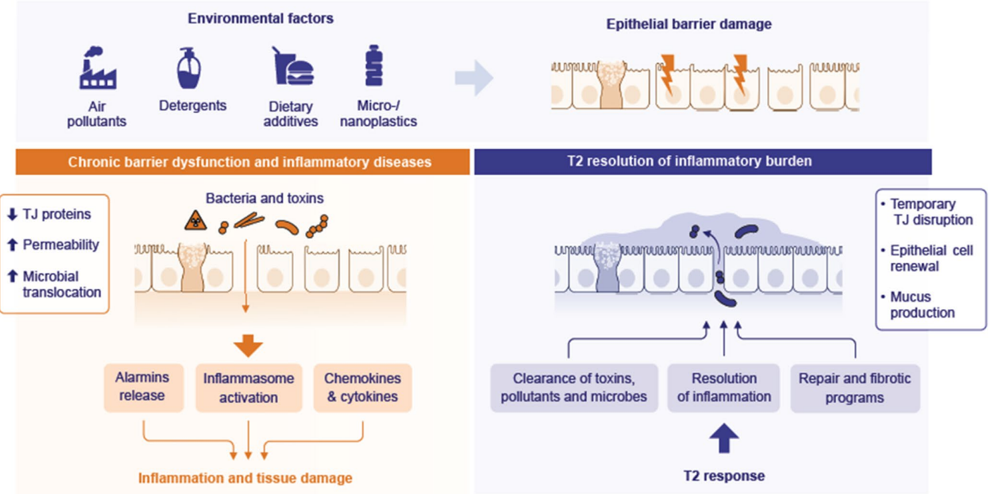
“These environmental exposures compromise epithelial surfaces of the skin, respiratory tract, and gastrointestinal system.”
§ Understanding the Type 2 Immunity: An Evolving View Beyond Allergic Diseases > 2.2.1 | Protection Against Chronic Substance Exposure-Related Danger to Body Surfaces
plainstates a cause- Asserted: passes — The authors put it forward as true.
- Checkable: passes — It can be checked against evidence.
- Load-bearing: passes — The paper’s conclusions depend on it.
- Based: passes — The paper gives a reason why it holds.
A conclusion the paper draws from its own results — it cites no other source for it, so there is none to check. The quote shows it is in the paper.
In the paper
“Persistent barrier dysfunction, sustained by microbial dysbiosis, chronic inflammation, and epigenetic alterations, leads to a self-perpetuating cycle that underlies disease chronicity.”
§ Understanding the Type 2 Immunity: An Evolving View Beyond Allergic Diseases > 2.2.1 | Protection Against Chronic Substance Exposure-Related Danger to Body Surfaces
plainstates a cause- Asserted: passes — The authors put it forward as true.
- Checkable: passes — It can be checked against evidence.
- Load-bearing: passes — The paper’s conclusions depend on it.
- Based: passes — The paper gives a reason why it holds.
None of the sources cited for this claim could be matched to a paper in Crossref, so there is nothing to check it against.
In the paper
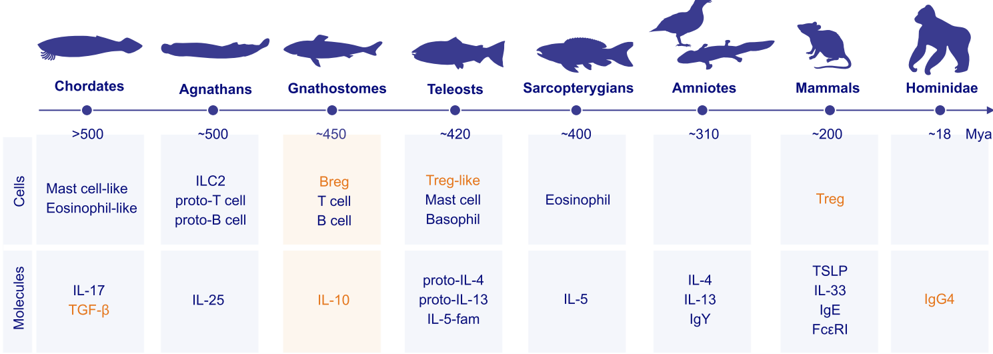
“Comparative studies suggest that these immunoregulatory properties became further specialized during hominoid evolution [38,39].”
§ Understanding the Type 2 Immunity: An Evolving View Beyond Allergic Diseases > 2.1 | Evolutionary Origins of T2 Immunity
What the sources say
- Not matchedcites [38]
Couldn’t be matched to a paper in Crossref, so it can’t be checked.
- Not matchedcites [39]
Couldn’t be matched to a paper in Crossref, so it can’t be checked.
hedgedstates a cause- Asserted: passes — The authors put it forward as true.
- Checkable: passes — It can be checked against evidence.
- Load-bearing: unclear — It is unclear whether the paper’s conclusions depend on it.
- Based: passes — The paper gives a reason why it holds.
- Not matched
None of the sources cited for this claim could be matched to a paper in Crossref, so there is nothing to check it against.
In the paper
“In addition, air pollutants including particulate matter [58], and ozone [59], as well as micro-and nano-plastics [60][61][62], contribute significantly to epithelial barrier damage in experimental settings.”
§ Understanding the Type 2 Immunity: An Evolving View Beyond Allergic Diseases > 2.2.1 | Protection Against Chronic Substance Exposure-Related Danger to Body Surfaces
What the sources say
- Not matchedcites [58]
Couldn’t be matched to a paper in Crossref, so it can’t be checked.
- Not matchedcites [59]
Couldn’t be matched to a paper in Crossref, so it can’t be checked.
- Not matchedcites [60]
Couldn’t be matched to a paper in Crossref, so it can’t be checked.
plainstates a cause- Asserted: passes — The authors put it forward as true.
- Checkable: passes — It can be checked against evidence.
- Load-bearing: unclear — It is unclear whether the paper’s conclusions depend on it.
- Based: passes — The paper gives a reason why it holds.
- Not matched
None of the sources cited for this claim could be matched to a paper in Crossref, so there is nothing to check it against.
In the paper
“Accumulating evidence suggest that the increase in allergic and autoimmune diseases, as well as multimorbid conditions over the past six decades, parallels rising exposure to many of these agents, particularly through their detrimental effects on skin and mucosal epithelial barriers [15,[47][48][49][50][51].”
§ Understanding the Type 2 Immunity: An Evolving View Beyond Allergic Diseases > 2.2.1 | Protection Against Chronic Substance Exposure-Related Danger to Body Surfaces
What the sources say
- Not matchedcites [15]
Couldn’t be matched to a paper in Crossref, so it can’t be checked.
- Not matchedcites [47]
Couldn’t be matched to a paper in Crossref, so it can’t be checked.
- Not matchedcites [48]
Couldn’t be matched to a paper in Crossref, so it can’t be checked.
hedgedstates an association- Asserted: passes — The authors put it forward as true.
- Checkable: passes — It can be checked against evidence.
- Load-bearing: unclear — It is unclear whether the paper’s conclusions depend on it.
- Based: passes — The paper gives a reason why it holds.
- Not matched
In the paper
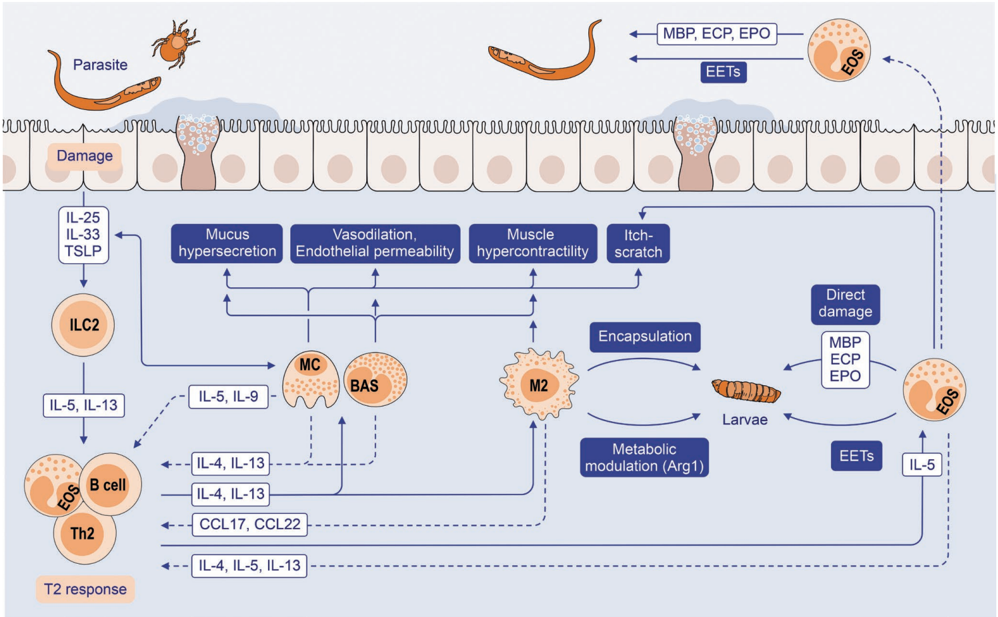
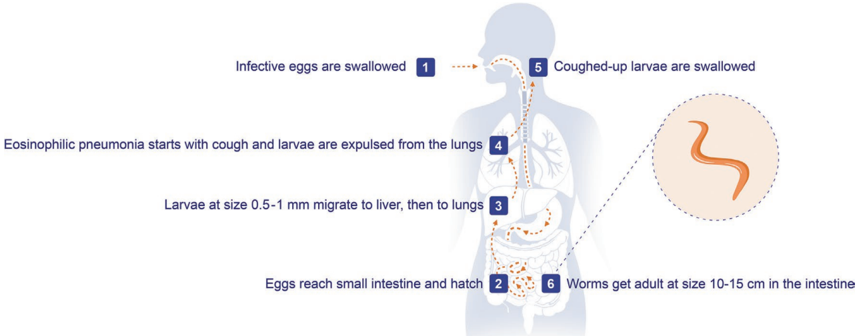
“administration of recombinant IL-33 to wild-type and Rag2 -/- mice lacking T and B cells triggered tight junction disruption, whereas Rag2 -/-Il2rg -/-and Rora sg/sg mice undergoing bone marrow transplantation that lack ILC2s did not show any barrier leakiness [75].”
§ Understanding the Type 2 Immunity: An Evolving View Beyond Allergic Diseases > FIGURE 4 | T2 response in life cycle and migration of Ascaris lumbricoides in human infection.
What the sources say
- Not matchedcites [75]
Couldn’t be matched to a paper in Crossref, so it can’t be checked.
plainstates a cause- Asserted: passes — The authors put it forward as true.
- Checkable: passes — It can be checked against evidence.
- Load-bearing: passes — The paper’s conclusions depend on it.
- Based: passes — The paper gives a reason why it holds.
- Not matched
None of the sources cited for this claim could be matched to a paper in Crossref, so there is nothing to check it against.
In the paper
“Dietary exposure to ultra-processed foods [63,64], and certain additives [65,66], emulsifiers [67], artificial sweeteners, food colorants, and flavor enhancers further exacerbate this effect [47,[68][69][70][71].”
§ Understanding the Type 2 Immunity: An Evolving View Beyond Allergic Diseases > 2.2.1 | Protection Against Chronic Substance Exposure-Related Danger to Body Surfaces
What the sources say
- Not matchedcites [63]
Couldn’t be matched to a paper in Crossref, so it can’t be checked.
- Not matchedcites [64]
Couldn’t be matched to a paper in Crossref, so it can’t be checked.
- Not matchedcites [65]
Couldn’t be matched to a paper in Crossref, so it can’t be checked.
- Not matchedcites [66]
Couldn’t be matched to a paper in Crossref, so it can’t be checked.
- Not matchedcites [67]
Couldn’t be matched to a paper in Crossref, so it can’t be checked.
plainstates a cause- Asserted: passes — The authors put it forward as true.
- Checkable: passes — It can be checked against evidence.
- Load-bearing: unclear — It is unclear whether the paper’s conclusions depend on it.
- Based: passes — The paper gives a reason why it holds.
- Not matched
A conclusion the paper draws from its own results — it cites no other source for it, so there is none to check. The quote shows it is in the paper.
In the paper
“Several conditions present with phenotypes that closely resemble those observed in allergic disease.However, the underlying immunological features distinguish them as different entities, as their central mechanism does not require allergen-specific responses (Table 1).”
§ Understanding the Type 2 Immunity: An Evolving View Beyond Allergic Diseases > 3.2 | Pathogenic Contribution of T2 Responses in Non-Allergic Disease
plain- Asserted: passes — The authors put it forward as true.
- Checkable: passes — It can be checked against evidence.
- Load-bearing: passes — The paper’s conclusions depend on it.
- Based: passes — The paper gives a reason why it holds.
- Probably not a substantial claim. 19
- It may state two separate claims as one. 67
A conclusion the paper draws from its own results — it cites no other source for it, so there is none to check. The quote shows it is in the paper.
In the paper
“These responses likely co-evolved stepwise with immune-regulatory circuits, culminating in the emergence of the fully functional human-type IgG4 in the great apes (Hominidae) within the last ~10 million years.”
§ Understanding the Type 2 Immunity: An Evolving View Beyond Allergic Diseases > Abstract
hedgedstates a cause- Asserted: passes — The authors put it forward as true.
- Checkable: passes — It can be checked against evidence.
- Load-bearing: fails — The paper’s conclusions may not depend on it.
- Based: fails — The paper may give no reason why it holds.
Probably not a substantial claim. The paper’s conclusions may not depend on it. The paper may give no reason why it holds.
In the paper
“Type 2 (T2) immunity, understood as an immunological program driven by IL-4, IL-5, IL-9, and IL-13, primarily produced by Th2 cells and group 2 innate lymphoid cells (ILC2s), enables IgE responses that help to engage effector cells such as eosinophils, basophils, and mast cells (MCs) [1].”
§ Understanding the Type 2 Immunity: An Evolving View Beyond Allergic Diseases > 1 | Introduction
What the sources say
- Not matchedcites [1]
Couldn’t be matched to a paper in Crossref, so it can’t be checked.
plainstates a cause- Asserted: passes — The authors put it forward as true.
- Checkable: passes — It can be checked against evidence.
- Load-bearing: passes — The paper’s conclusions depend on it.
- Based: passes — The paper gives a reason why it holds.
It may state two separate claims as one.
- Not matched
A conclusion the paper draws from its own results — it cites no other source for it, so there is none to check. The quote shows it is in the paper.
In the paper
“The involvement of body barriers along with the strong influence of local epithelial cells and their interaction with the microbiome and the immune system is a common characteristic of T2 inflammation.”
§ Understanding the Type 2 Immunity: An Evolving View Beyond Allergic Diseases > Abstract
plainstates an association- Asserted: passes — The authors put it forward as true.
- Checkable: passes — It can be checked against evidence.
- Load-bearing: passes — The paper’s conclusions depend on it.
- Based: passes — The paper gives a reason why it holds.
It may state two separate claims as one.
In the paper
“The outcome is bronchial eosinophilic infiltration, mucosal edema, mucus hypersecretion, and smooth muscle hyperreactivity, resulting in variable bronchial obstruction [196].”
§ Understanding the Type 2 Immunity: An Evolving View Beyond Allergic Diseases > 3.2 | Pathogenic Contribution of T2 Responses in Non-Allergic Disease
What the sources say
- Not matchedcites [196]
Couldn’t be matched to a paper in Crossref, so it can’t be checked.
plainstates a cause- Asserted: passes — The authors put it forward as true.
- Checkable: passes — It can be checked against evidence.
- Load-bearing: unclear — It is unclear whether the paper’s conclusions depend on it.
- Based: passes — The paper gives a reason why it holds.
It may state two separate claims as one.
- Not matched
A conclusion the paper draws from its own results — it cites no other source for it, so there is none to check. The quote shows it is in the paper.
In the paper
“T2 immunity and its canonical mediators have been implicated in homeostatic processes beyond classical allergy, including cancer immune surveillance, cardiovascular health, aging, thymic regeneration and tolerance, neuronal function, and metabolic regulation.”
§ Understanding the Type 2 Immunity: An Evolving View Beyond Allergic Diseases > 2.2 | T2 Immunity as a Surface-Surveilling and Survival System
plainstates an association- Asserted: passes — The authors put it forward as true.
- Checkable: passes — It can be checked against evidence.
- Load-bearing: passes — The paper’s conclusions depend on it.
- Based: unclear — It is unclear why the paper says it holds.
It may state two separate claims as one.
In the paper
“Immune regulation precedes T2 immunity, with suppressive pathways such as TGF-β signaling already present in invertebrates [33].”
§ Understanding the Type 2 Immunity: An Evolving View Beyond Allergic Diseases > 2.1 | Evolutionary Origins of T2 Immunity
What the sources say
- Not matchedcites [33]
Couldn’t be matched to a paper in Crossref, so it can’t be checked.
plainstates a cause- Asserted: passes — The authors put it forward as true.
- Checkable: passes — It can be checked against evidence.
- Load-bearing: unclear — It is unclear whether the paper’s conclusions depend on it.
- Based: passes — The paper gives a reason why it holds.
It may state two separate claims as one.
- Not matched
In the paper
“Furthermore, CD4 + T-cell responses have been reported to dynamically regulate intestinal stem cell fate, where pro-inflammatory signals (such as IL-13) promote epithelial differentiation while regulatory signals (such as IL-10) preserve stem cell renewal, thereby maintaining epithelial homeostasis [78].”
§ Understanding the Type 2 Immunity: An Evolving View Beyond Allergic Diseases > FIGURE 4 | T2 response in life cycle and migration of Ascaris lumbricoides in human infection.
What the sources say
- Not matchedcites [78]
Couldn’t be matched to a paper in Crossref, so it can’t be checked.
hedgedstates a cause- Asserted: passes — The authors put it forward as true.
- Checkable: passes — It can be checked against evidence.
- Load-bearing: unclear — It is unclear whether the paper’s conclusions depend on it.
- Based: passes — The paper gives a reason why it holds.
It may state two separate claims as one.
- Not matched
In the paper
“Also, IL-4 and IL-13 contribute to local IgE production and epithelial remodeling [201].”
§ Understanding the Type 2 Immunity: An Evolving View Beyond Allergic Diseases > 3.2 | Pathogenic Contribution of T2 Responses in Non-Allergic Disease
What the sources say
- Not matchedcites [201]
Couldn’t be matched to a paper in Crossref, so it can’t be checked.
plainstates a cause- Asserted: passes — The authors put it forward as true.
- Checkable: passes — It can be checked against evidence.
- Load-bearing: unclear — It is unclear whether the paper’s conclusions depend on it.
- Based: passes — The paper gives a reason why it holds.
It may state two separate claims as one.
- Not matched
In the paper
“Birds, once thought to lack FoxP3, were recently shown to express orthologs hidden in GC-rich genomic regions, confirming that Treg-like programs extend across amniotes [45].”
§ Understanding the Type 2 Immunity: An Evolving View Beyond Allergic Diseases > 2.1 | Evolutionary Origins of T2 Immunity
What the sources say
- Not matchedcites [45]
Couldn’t be matched to a paper in Crossref, so it can’t be checked.
boostedstates a cause- Asserted: passes — The authors put it forward as true.
- Checkable: passes — It can be checked against evidence.
- Load-bearing: unclear — It is unclear whether the paper’s conclusions depend on it.
- Based: passes — The paper gives a reason why it holds.
It may state two separate claims as one.
- Not matched
None of the sources cited for this claim have been checked yet.
In the paper
“B cells (B-cell-receptor-based adaptive immunity) and IL-10/STAT3 signaling are ancient features of jawed vertebrates.”
§ Understanding the Type 2 Immunity: An Evolving View Beyond Allergic Diseases > 2.1 | Evolutionary Origins of T2 Immunity
plain- Asserted: passes — The authors put it forward as true.
- Checkable: passes — It can be checked against evidence.
- Load-bearing: unclear — It is unclear whether the paper’s conclusions depend on it.
- Based: passes — The paper gives a reason why it holds.
It may state two separate claims as one.
None of the sources cited for this claim could be matched to a paper in Crossref, so there is nothing to check it against.
In the paper
“Most patients exhibit a local T2 environment [198] with elevated numbers of ILC2s and IL-5 driving eosinophil survival and activation [199,200].”
§ Understanding the Type 2 Immunity: An Evolving View Beyond Allergic Diseases > 3.2 | Pathogenic Contribution of T2 Responses in Non-Allergic Disease
What the sources say
- Not matchedcites [198]
Couldn’t be matched to a paper in Crossref, so it can’t be checked.
- Not matchedcites [199]
Couldn’t be matched to a paper in Crossref, so it can’t be checked.
- Not matchedcites [200]
Couldn’t be matched to a paper in Crossref, so it can’t be checked.
plainstates a cause- Asserted: passes — The authors put it forward as true.
- Checkable: passes — It can be checked against evidence.
- Load-bearing: passes — The paper’s conclusions depend on it.
- Based: passes — The paper gives a reason why it holds.
It may state two separate claims as one.
- Not matched
None of the sources cited for this claim have been checked yet.
In the paper
“IgE retained the complete IgY domain architecture (V, CH1-CH4), and co-evolved with its high-affinity receptor (FcεRI), whose α chain became fully functional in mammals, enabling the compartmentalization of humoral immunity.”
§ Understanding the Type 2 Immunity: An Evolving View Beyond Allergic Diseases > 2.1 | Evolutionary Origins of T2 Immunity
plainstates a cause- Asserted: passes — The authors put it forward as true.
- Checkable: passes — It can be checked against evidence.
- Load-bearing: unclear — It is unclear whether the paper’s conclusions depend on it.
- Based: passes — The paper gives a reason why it holds.
It may state two separate claims as one.
In the paper
“Once the epithelial barrier is compromised, commensal microorganisms and opportunistic pathogens translocate deeper into tissues leading to microbial dysbiosis, loss of biodiversity, and colonization by opportunistic pathogens [73].”
§ Understanding the Type 2 Immunity: An Evolving View Beyond Allergic Diseases > 2.2.1 | Protection Against Chronic Substance Exposure-Related Danger to Body Surfaces
What the sources say
- Not matchedcites [73]
Couldn’t be matched to a paper in Crossref, so it can’t be checked.
plainstates a cause- Asserted: passes — The authors put it forward as true.
- Checkable: passes — It can be checked against evidence.
- Load-bearing: passes — The paper’s conclusions depend on it.
- Based: passes — The paper gives a reason why it holds.
It may state two separate claims as one.
- Not matched
In the paper
“ILCs likely arose in early vertebrates (~500 Mya) alongside adaptive immune lineages [18], with signature genes already present in the most basal vertebrates, preceding the emergence of the ILC spectrum [18].”
§ Understanding the Type 2 Immunity: An Evolving View Beyond Allergic Diseases > 2.1 | Evolutionary Origins of T2 Immunity
What the sources say
- Not matchedcites [18]
Couldn’t be matched to a paper in Crossref, so it can’t be checked.
hedgedstates an association- Asserted: passes — The authors put it forward as true.
- Checkable: passes — It can be checked against evidence.
- Load-bearing: unclear — It is unclear whether the paper’s conclusions depend on it.
- Based: passes — The paper gives a reason why it holds.
It may state two separate claims as one.
- Not matched
In the paper
“Since the chemical revolution of the 1950s, around 350,000 new chemical compounds have been introduced into the environment, largely without adequate evaluation of their long-term health effects [46].”
§ Understanding the Type 2 Immunity: An Evolving View Beyond Allergic Diseases > 2.2.1 | Protection Against Chronic Substance Exposure-Related Danger to Body Surfaces
What the sources say
- Not matchedcites [46]
Couldn’t be matched to a paper in Crossref, so it can’t be checked.
plain- Asserted: passes — The authors put it forward as true.
- Checkable: passes — It can be checked against evidence.
- Load-bearing: unclear — It is unclear whether the paper’s conclusions depend on it.
- Based: passes — The paper gives a reason why it holds.
It may state two separate claims as one.
- Not matched
A conclusion the paper draws from its own results — it cites no other source for it, so there is none to check. The quote shows it is in the paper.
In the paper
“The T2 response appears to play a dual role, contributing to barrier opening and repairing while also facilitating the clearance of inflammatory burden from affected tissues (Figure 2).”
§ Understanding the Type 2 Immunity: An Evolving View Beyond Allergic Diseases > 2.2.1 | Protection Against Chronic Substance Exposure-Related Danger to Body Surfaces
hedgedstates a cause- Asserted: passes — The authors put it forward as true.
- Checkable: passes — It can be checked against evidence.
- Load-bearing: passes — The paper’s conclusions depend on it.
- Based: passes — The paper gives a reason why it holds.
It may state two separate claims as one.
In the paper
“Similarly, the eosinophil lineage is conserved across all vertebrate species, possibly with functional orthologs in invertebrates [17].”
§ Understanding the Type 2 Immunity: An Evolving View Beyond Allergic Diseases > 2.1 | Evolutionary Origins of T2 Immunity
What the sources say
- Not matchedcites [17]
Couldn’t be matched to a paper in Crossref, so it can’t be checked.
hedged- Asserted: passes — The authors put it forward as true.
- Checkable: passes — It can be checked against evidence.
- Load-bearing: unclear — It is unclear whether the paper’s conclusions depend on it.
- Based: passes — The paper gives a reason why it holds.
It may state two separate claims as one.
- Not matched
A conclusion the paper draws from its own results — it cites no other source for it, so there is none to check. The quote shows it is in the paper.
In the paper
“Consequently, local inflammation, tissue damage, and remodeling processes are triggered, contributing to disease development.”
§ Understanding the Type 2 Immunity: An Evolving View Beyond Allergic Diseases > 2.2.1 | Protection Against Chronic Substance Exposure-Related Danger to Body Surfaces
plainstates a cause- Asserted: passes — The authors put it forward as true.
- Checkable: passes — It can be checked against evidence.
- Load-bearing: passes — The paper’s conclusions depend on it.
- Based: passes — The paper gives a reason why it holds.
It may state two separate claims as one.
None of the sources cited for this claim could be matched to a paper in Crossref, so there is nothing to check it against.
In the paper
“This adaptation is thought to reflect selection by chronic antigen exposure, including parasites [40], and is now harnessed in allergen immunotherapy (AIT) [41].”
§ Understanding the Type 2 Immunity: An Evolving View Beyond Allergic Diseases > 2.1 | Evolutionary Origins of T2 Immunity
What the sources say
- Not matchedcites [40]
Couldn’t be matched to a paper in Crossref, so it can’t be checked.
- Not matchedcites [41]
Couldn’t be matched to a paper in Crossref, so it can’t be checked.
hedgedstates a possible cause- Asserted: passes — The authors put it forward as true.
- Checkable: passes — It can be checked against evidence.
- Load-bearing: unclear — It is unclear whether the paper’s conclusions depend on it.
- Based: passes — The paper gives a reason why it holds.
It may state two separate claims as one.
- Not matched
In the paper
“Beyond allergic diseases, recent studies have revealed that T2 immunity also regulates diverse biological processes, tissues, and organs [14], which conflicts with the emergence and use of several treatments targeting this pathway.”
§ Understanding the Type 2 Immunity: An Evolving View Beyond Allergic Diseases > 1 | Introduction
What the sources say
- Not matchedcites [14]
Couldn’t be matched to a paper in Crossref, so it can’t be checked.
plainstates a cause- Asserted: passes — The authors put it forward as true.
- Checkable: passes — It can be checked against evidence.
- Load-bearing: passes — The paper’s conclusions depend on it.
- Based: passes — The paper gives a reason why it holds.
It may state two separate claims as one.
- Not matched
None of the sources cited for this claim could be matched to a paper in Crossref, so there is nothing to check it against.
In the paper
“T2 cytokines and epithelial alarmins may further amplify disease activity in some patients, although their precise roles remain incompletely defined [207,208].”
§ Understanding the Type 2 Immunity: An Evolving View Beyond Allergic Diseases > 3.2 | Pathogenic Contribution of T2 Responses in Non-Allergic Disease
What the sources say
- Not matchedcites [207]
Couldn’t be matched to a paper in Crossref, so it can’t be checked.
- Not matchedcites [208]
Couldn’t be matched to a paper in Crossref, so it can’t be checked.
hedgedstates a possible cause- Asserted: passes — The authors put it forward as true.
- Checkable: passes — It can be checked against evidence.
- Load-bearing: unclear — It is unclear whether the paper’s conclusions depend on it.
- Based: passes — The paper gives a reason why it holds.
It may state two separate claims as one.
- Not matched
In the paper
“In addition to classical effector cells, IL-4/IL-13-driven alternatively activated (M2) macrophages accumulate in T2 settings, where they promote tissue remodeling and fibrosis, support eosinophilic inflammation, and reinforce Th2 responses through metabolic reprogramming and arginase-1 and IL-9-dependent pathways [8].”
§ Understanding the Type 2 Immunity: An Evolving View Beyond Allergic Diseases > 1 | Introduction
What the sources say
- Not matchedcites [8]
Couldn’t be matched to a paper in Crossref, so it can’t be checked.
plainstates a cause- Asserted: passes — The authors put it forward as true.
- Checkable: passes — It can be checked against evidence.
- Load-bearing: unclear — It is unclear whether the paper’s conclusions depend on it.
- Based: passes — The paper gives a reason why it holds.
It may state two separate claims as one.
- Not matched
A statement the paper makes itself — it cites no source for it, so there is none to check. The quote shows it is in the paper.
In the paper
“They sense environmental insults, undergo damage, and release alarmins such as IL-33, TSLP, and IL-25, which induce ILC2s, condition dendritic cells (DCs), and shape both innate and adaptive T2 responses.”
§ Understanding the Type 2 Immunity: An Evolving View Beyond Allergic Diseases > 1 | Introduction
plainstates a cause- Asserted: passes — The authors put it forward as true.
- Checkable: passes — It can be checked against evidence.
- Load-bearing: passes — The paper’s conclusions depend on it.
- Based: passes — The paper gives a reason why it holds.
It may state two separate claims as one.
None of the sources cited for this claim could be matched to a paper in Crossref, so there is nothing to check it against.
In the paper
“IL-5 promotes eosinophilia and tissue infiltration of eosinophils, which contribute to organ fibrosis and thrombosis via degranulation and the release of profibrotic mediators including TGF-β [203,204].”
§ Understanding the Type 2 Immunity: An Evolving View Beyond Allergic Diseases > 3.2 | Pathogenic Contribution of T2 Responses in Non-Allergic Disease
What the sources say
- Not matchedcites [203]
Couldn’t be matched to a paper in Crossref, so it can’t be checked.
- Not matchedcites [204]
Couldn’t be matched to a paper in Crossref, so it can’t be checked.
plainstates a cause- Asserted: passes — The authors put it forward as true.
- Checkable: passes — It can be checked against evidence.
- Load-bearing: unclear — It is unclear whether the paper’s conclusions depend on it.
- Based: passes — The paper gives a reason why it holds.
It may state two separate claims as one.
- Not matched
None of the sources cited for this claim could be matched to a paper in Crossref, so there is nothing to check it against.
In the paper
“It is thought to be triggered by stimuli that damage the bronchial epithelium and release alarmins, which directly activate ILC2s and induce IL-5 and IL-13 production [175,194,195].”
§ Understanding the Type 2 Immunity: An Evolving View Beyond Allergic Diseases > 3.2 | Pathogenic Contribution of T2 Responses in Non-Allergic Disease
What the sources say
- Not matchedcites [175]
Couldn’t be matched to a paper in Crossref, so it can’t be checked.
- Not matchedcites [194]
Couldn’t be matched to a paper in Crossref, so it can’t be checked.
- Not matchedcites [195]
Couldn’t be matched to a paper in Crossref, so it can’t be checked.
hedgedstates a cause- Asserted: passes — The authors put it forward as true.
- Checkable: passes — It can be checked against evidence.
- Load-bearing: passes — The paper’s conclusions depend on it.
- Based: passes — The paper gives a reason why it holds.
It may state two separate claims as one.
- Not matched
A conclusion the paper draws from its own results — it cites no other source for it, so there is none to check. The quote shows it is in the paper.
In the paper
“Lampreys and hagfish lack CSF2RB, suggesting that IL-5 emerged within the gnathostome lineage after divergence from agnathans, approximately 500 Mya.”
§ Understanding the Type 2 Immunity: An Evolving View Beyond Allergic Diseases > 2.1 | Evolutionary Origins of T2 Immunity
hedgedstates a cause- Asserted: passes — The authors put it forward as true.
- Checkable: passes — It can be checked against evidence.
- Load-bearing: unclear — It is unclear whether the paper’s conclusions depend on it.
- Based: passes — The paper gives a reason why it holds.
It may state two separate claims as one.
A conclusion the paper draws from its own results — it cites no other source for it, so there is none to check. The quote shows it is in the paper.
In the paper
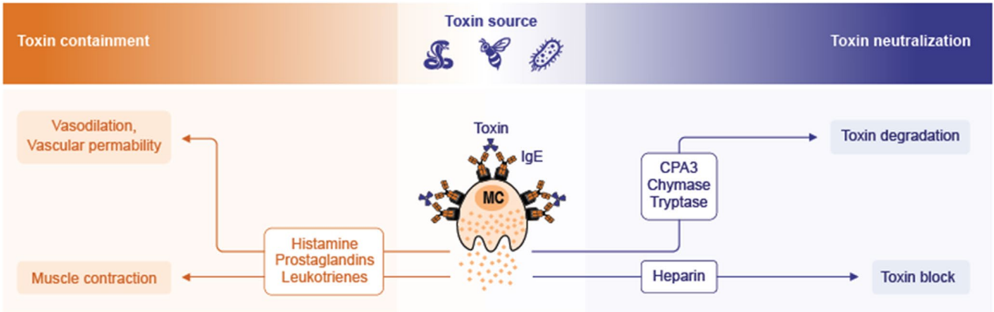
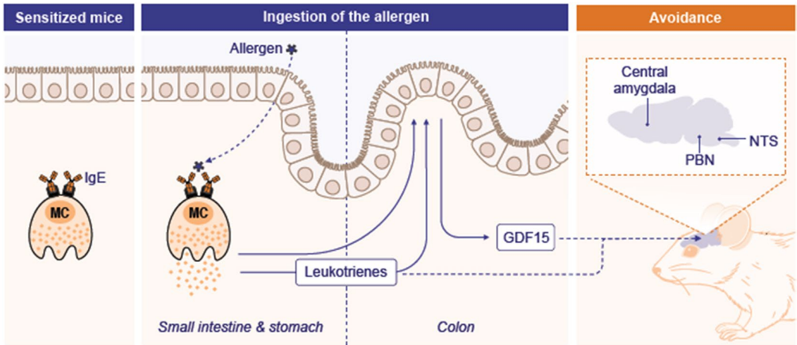
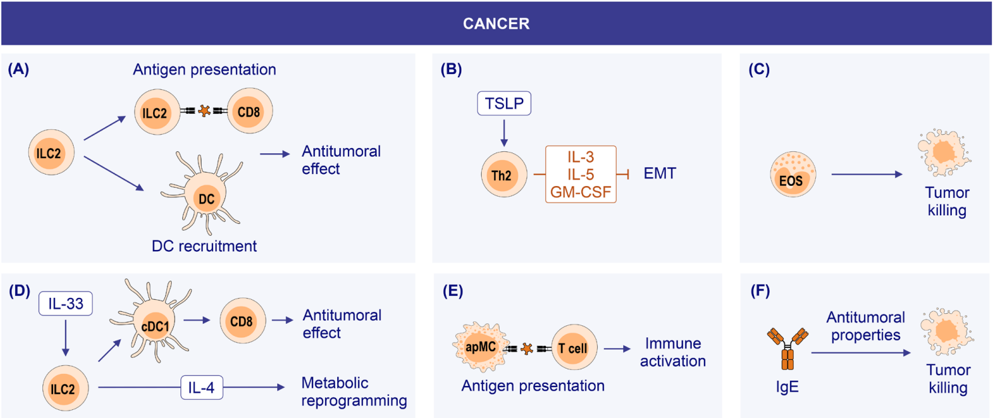
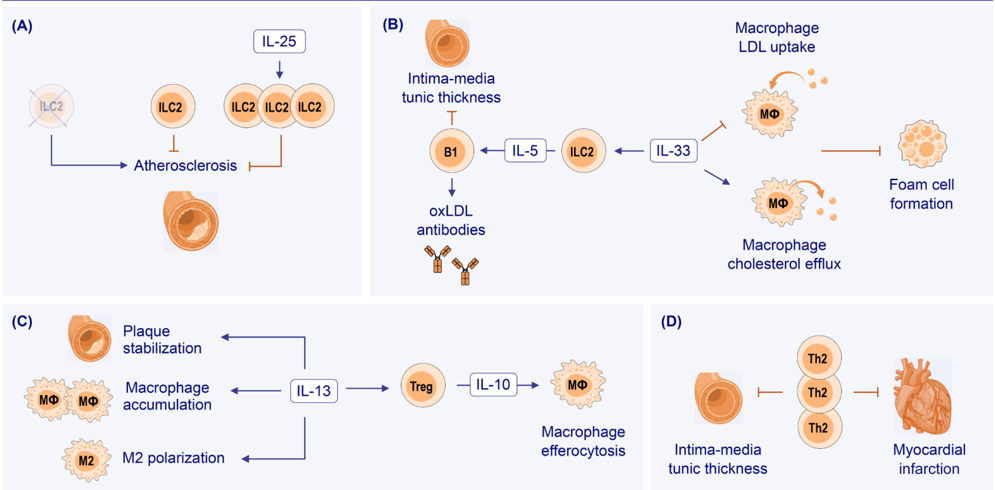
“Indeed, T2 immunity is a finely tuned evolutionary program developed for maintaining the integrity of body surfaces, particularly in early mammals, when all core T2 components became operative for the following major functions that are overlapping (Figures 23456).”
§ Understanding the Type 2 Immunity: An Evolving View Beyond Allergic Diseases > 2.2 | T2 Immunity as a Surface-Surveilling and Survival System
plainstates a cause- Asserted: passes — The authors put it forward as true.
- Checkable: passes — It can be checked against evidence.
- Load-bearing: fails — The paper’s conclusions may not depend on it.
- Based: fails — The paper may give no reason why it holds.
Probably not a substantial claim. The paper’s conclusions may not depend on it. The paper may give no reason why it holds.
None of the sources cited for this claim could be matched to a paper in Crossref, so there is nothing to check it against.
In the paper
“Key molecular mechanisms driving this process include oxidative and endoplasmic reticulum stress, unfolded protein responses, mitochondrial dysfunction, impaired DNA repair, and dysregulated innate and adaptive immune responses [54,68,69,72].”
§ Understanding the Type 2 Immunity: An Evolving View Beyond Allergic Diseases > 2.2.1 | Protection Against Chronic Substance Exposure-Related Danger to Body Surfaces
What the sources say
- Not matchedcites [54]
Couldn’t be matched to a paper in Crossref, so it can’t be checked.
- Not matchedcites [68]
Couldn’t be matched to a paper in Crossref, so it can’t be checked.
- Not matchedcites [69]
Couldn’t be matched to a paper in Crossref, so it can’t be checked.
- Not matchedcites [72]
Couldn’t be matched to a paper in Crossref, so it can’t be checked.
plainstates a cause- Asserted: passes — The authors put it forward as true.
- Checkable: passes — It can be checked against evidence.
- Load-bearing: unclear — It is unclear whether the paper’s conclusions depend on it.
- Based: passes — The paper gives a reason why it holds.
It may state two separate claims as one.
- Not matched
In the paper
“In turn, IgE responses adapted for tissue and mucosal defense, while IgG predominated systemically [32], a division that already existed before the monotreme-therian split (~150-170 Mya).”
§ Understanding the Type 2 Immunity: An Evolving View Beyond Allergic Diseases > 2.1 | Evolutionary Origins of T2 Immunity
What the sources say
- Not matchedcites [32]
Couldn’t be matched to a paper in Crossref, so it can’t be checked.
plainstates a cause- Asserted: passes — The authors put it forward as true.
- Checkable: passes — It can be checked against evidence.
- Load-bearing: unclear — It is unclear whether the paper’s conclusions depend on it.
- Based: passes — The paper gives a reason why it holds.
It may state two separate claims as one.
- Not matched
None of the sources cited for this claim could be matched to a paper in Crossref, so there is nothing to check it against.
In the paper
“The transcription factor FoxP3 arose in early gnathostomes, with functional orthologs present in bony, but not in cartilaginous fish [42,43].”
§ Understanding the Type 2 Immunity: An Evolving View Beyond Allergic Diseases > 2.1 | Evolutionary Origins of T2 Immunity
What the sources say
- Not matchedcites [42]
Couldn’t be matched to a paper in Crossref, so it can’t be checked.
- Not matchedcites [43]
Couldn’t be matched to a paper in Crossref, so it can’t be checked.
plain- Asserted: passes — The authors put it forward as true.
- Checkable: passes — It can be checked against evidence.
- Load-bearing: unclear — It is unclear whether the paper’s conclusions depend on it.
- Based: passes — The paper gives a reason why it holds.
It may state two separate claims as one.
- Not matched
None of the sources cited for this claim could be matched to a paper in Crossref, so there is nothing to check it against.
In the paper
“Teleosts possess ancestral IL-4/IL-13 paralogues that partition innate and adaptive-like regulatory functions, whereas amniotes (birds, reptiles, mammals) evolved distinct IL-4 and IL-13 genes with conserved STAT6 pathways [19,20].”
§ Understanding the Type 2 Immunity: An Evolving View Beyond Allergic Diseases > 2.1 | Evolutionary Origins of T2 Immunity
What the sources say
- Not matchedcites [19]
Couldn’t be matched to a paper in Crossref, so it can’t be checked.
- Not matchedcites [20]
Couldn’t be matched to a paper in Crossref, so it can’t be checked.
plainstates a cause- Asserted: passes — The authors put it forward as true.
- Checkable: passes — It can be checked against evidence.
- Load-bearing: unclear — It is unclear whether the paper’s conclusions depend on it.
- Based: passes — The paper gives a reason why it holds.
It may state two separate claims as one.
- Not matched
In the paper
“However, direct functional evidence is currently strongest in bony fish, where IL-10-producing B cells modulated inflammation through conserved mechanisms, establishing an energetically favorable regulatory circuit preserved across vertebrate lineages [36].”
§ Understanding the Type 2 Immunity: An Evolving View Beyond Allergic Diseases > 2.1 | Evolutionary Origins of T2 Immunity
What the sources say
- Not matchedcites [36]
Couldn’t be matched to a paper in Crossref, so it can’t be checked.
boostedstates a cause- Asserted: passes — The authors put it forward as true.
- Checkable: passes — It can be checked against evidence.
- Load-bearing: unclear — It is unclear whether the paper’s conclusions depend on it.
- Based: passes — The paper gives a reason why it holds.
It may state two separate claims as one.
- Not matched
A conclusion the paper draws from its own results — it cites no other source for it, so there is none to check. The quote shows it is in the paper.
In the paper
“Altogether, these changes lead to goblet cell hyperplasia, mucus overproduction, and chronic mucosal edema, ultimately promoting eosinophilic polyp formation.”
§ Understanding the Type 2 Immunity: An Evolving View Beyond Allergic Diseases > 3.2 | Pathogenic Contribution of T2 Responses in Non-Allergic Disease
plainstates a cause- Asserted: passes — The authors put it forward as true.
- Checkable: passes — It can be checked against evidence.
- Load-bearing: passes — The paper’s conclusions depend on it.
- Based: passes — The paper gives a reason why it holds.
It may state two separate claims as one.
In the paper
“While these events are uncommon, with reporting OR in the range of 2-5, they suggest that pathway-specific inhibition may influence immune and tissue-regulatory processes beyond allergic inflammation [273].”
§ Understanding the Type 2 Immunity: An Evolving View Beyond Allergic Diseases > 5.2 | Helminth and Barrier Defense
What the sources say
- Not matchedcites [273]
Couldn’t be matched to a paper in Crossref, so it can’t be checked.
hedgedstates a possible cause- Asserted: passes — The authors put it forward as true.
- Checkable: passes — It can be checked against evidence.
- Load-bearing: passes — The paper’s conclusions depend on it.
- Based: passes — The paper gives a reason why it holds.
It may state two separate claims as one.
- Not matched
The paper states this without a source or data behind it here, so there is nothing to check it against. The quote shows it is in the paper.
In the paper
“Current clinical data indicate a generally favorable safety profile of T2targeted biologics in the short to medium term”
§ Understanding the Type 2 Immunity: An Evolving View Beyond Allergic Diseases > What is known
hedged- Asserted: passes — The authors put it forward as true.
- Checkable: passes — It can be checked against evidence.
- Load-bearing: fails — The paper’s conclusions may not depend on it.
- Based: fails — The paper may give no reason why it holds.
Probably not a substantial claim. The paper’s conclusions may not depend on it. The paper may give no reason why it holds.
A conclusion the paper draws from its own results — it cites no other source for it, so there is none to check. The quote shows it is in the paper.
In the paper
“While these observations do not suggest developmental harm from current therapies, they identify biological processes that fall outside the scope of conventional safety endpoints.”
§ Understanding the Type 2 Immunity: An Evolving View Beyond Allergic Diseases > 5.4 | Cardiovascular Events
hedged- Asserted: passes — The authors put it forward as true.
- Checkable: passes — It can be checked against evidence.
- Load-bearing: passes — The paper’s conclusions depend on it.
- Based: passes — The paper gives a reason why it holds.
It may state two separate claims as one.
A conclusion the paper draws from its own results — it cites no other source for it, so there is none to check. The quote shows it is in the paper.
In the paper
“The apparent clinical tolerability of T2-targeted biologics does not imply that T2 immunity is dispensable or that treatment switches the pathway entirely “off.””
§ Understanding the Type 2 Immunity: An Evolving View Beyond Allergic Diseases > 5.4 | Cardiovascular Events
plain- Asserted: passes — The authors put it forward as true.
- Checkable: passes — It can be checked against evidence.
- Load-bearing: passes — The paper’s conclusions depend on it.
- Based: passes — The paper gives a reason why it holds.
It may state two separate claims as one.
None of the sources cited for this claim could be matched to a paper in Crossref, so there is nothing to check it against.
In the paper
“For instance, in the US, dupilumab is indicated for AD from 6 months of age [290], and omalizumab for IgE-mediated food allergy from 1 year [291].”
§ Understanding the Type 2 Immunity: An Evolving View Beyond Allergic Diseases > 5.4 | Cardiovascular Events
What the sources say
- Not matchedcites [290]
Couldn’t be matched to a paper in Crossref, so it can’t be checked.
- Not matchedcites [291]
Couldn’t be matched to a paper in Crossref, so it can’t be checked.
plain- Asserted: passes — The authors put it forward as true.
- Checkable: passes — It can be checked against evidence.
- Load-bearing: unclear — It is unclear whether the paper’s conclusions depend on it.
- Based: passes — The paper gives a reason why it holds.
It may state two separate claims as one.
- Not matched
In the paper
“For example, chemosensory tuft cells detect microbial signals and release IL-25, thereby activating ILC2s to produce IL-13, which promotes goblet-cell hyperplasia and mucus secretion, facilitating pathogen clearance [250].”
§ Understanding the Type 2 Immunity: An Evolving View Beyond Allergic Diseases > 5.1 | Antiviral Response and Infection Risk
What the sources say
- Not matchedcites [250]
Couldn’t be matched to a paper in Crossref, so it can’t be checked.
plainstates a cause- Asserted: passes — The authors put it forward as true.
- Checkable: passes — It can be checked against evidence.
- Load-bearing: unclear — It is unclear whether the paper’s conclusions depend on it.
- Based: passes — The paper gives a reason why it holds.
It may state two separate claims as one.
- Not matched
In the paper
“Notably, the excess risk was most pronounced in older individuals and early after treatment initiation, supporting the hypothesis that anti-IL-4Rα may unmask or accelerate pre-existing, subclinical CTCL rather than induce de novo lymphomagenesis [277].”
§ Understanding the Type 2 Immunity: An Evolving View Beyond Allergic Diseases > 5.3 | Malignancy and Immune Surveillance
What the sources say
- Not matchedcites [277]
Couldn’t be matched to a paper in Crossref, so it can’t be checked.
hedgedstates a possible cause- Asserted: passes — The authors put it forward as true.
- Checkable: passes — It can be checked against evidence.
- Load-bearing: passes — The paper’s conclusions depend on it.
- Based: passes — The paper gives a reason why it holds.
It may state two separate claims as one.
- Not matched
The paper states this without a source or data behind it here, so there is nothing to check it against. The quote shows it is in the paper.
In the paper
“The efficacy of biologics targeting key components of T2 immunity is now well established and has transformed disease management.”
§ Understanding the Type 2 Immunity: An Evolving View Beyond Allergic Diseases > 6 | Future Prospects
boostedstates a cause- Asserted: passes — The authors put it forward as true.
- Checkable: passes — It can be checked against evidence.
- Load-bearing: passes — The paper’s conclusions depend on it.
- Based: fails — The paper may give no reason why it holds.
Probably not a substantial claim. The paper may give no reason why it holds. It may state two separate claims as one.
A conclusion the paper draws from its own results — it cites no other source for it, so there is none to check. The quote shows it is in the paper.
In the paper
“Although AIT remains limited by prolonged treatment duration, suboptimal adherence, adverse reactions, and variable long-term tolerance, its clinical efficacy provides a mechanistic rationale for the therapeutic strategy proposed here and underscores the need”
§ Understanding the Type 2 Immunity: An Evolving View Beyond Allergic Diseases > 6 | Future Prospects
plainstates a cause- Asserted: passes — The authors put it forward as true.
- Checkable: passes — It can be checked against evidence.
- Load-bearing: passes — The paper’s conclusions depend on it.
- Based: passes — The paper gives a reason why it holds.
It may state two separate claims as one.
None of the sources cited for this claim could be matched to a paper in Crossref, so there is nothing to check it against.
In the paper
“In IPF, recurrent epithelial injury and dysregulated repair lead to fibroblast expansion and matrix accumulation, with IL-4 and IL-13 promoting M2 macrophage activation and TGF-β-mediated fibrogenesis [223, 224].”
§ Understanding the Type 2 Immunity: An Evolving View Beyond Allergic Diseases > 3.2 | Pathogenic Contribution of T2 Responses in Non-Allergic Disease
What the sources say
- Not matchedcites [223]
Couldn’t be matched to a paper in Crossref, so it can’t be checked.
- Not matchedcites [224]
Couldn’t be matched to a paper in Crossref, so it can’t be checked.
plainstates a cause- Asserted: passes — The authors put it forward as true.
- Checkable: passes — It can be checked against evidence.
- Load-bearing: passes — The paper’s conclusions depend on it.
- Based: passes — The paper gives a reason why it holds.
It may state two separate claims as one.
- Not matched
The paper states this without a source or data behind it here, so there is nothing to check it against. The quote shows it is in the paper.
In the paper
“The advent of monoclonal antibody technology revolutionized therapeutic strategies across medicine.”
§ Understanding the Type 2 Immunity: An Evolving View Beyond Allergic Diseases > 6 | Future Prospects
plainstates a cause- Asserted: passes — The authors put it forward as true.
- Checkable: passes — It can be checked against evidence.
- Load-bearing: fails — The paper’s conclusions may not depend on it.
- Based: fails — The paper may give no reason why it holds.
Probably not a substantial claim. The paper’s conclusions may not depend on it. The paper may give no reason why it holds.
None of the sources cited for this claim could be matched to a paper in Crossref, so there is nothing to check it against.
In the paper
“Biological therapies have transformed the management of allergic diseases and have demonstrated efficacy in T2-mediated conditions [228][229][230].”
§ Understanding the Type 2 Immunity: An Evolving View Beyond Allergic Diseases > 4 | The Transformative Impact of Biologicals in T2 Diseases
What the sources say
- Not matchedcites [228]
Couldn’t be matched to a paper in Crossref, so it can’t be checked.
- Not matchedcites [229]
Couldn’t be matched to a paper in Crossref, so it can’t be checked.
- Not matchedcites [230]
Couldn’t be matched to a paper in Crossref, so it can’t be checked.
boostedstates a cause- Asserted: passes — The authors put it forward as true.
- Checkable: passes — It can be checked against evidence.
- Load-bearing: passes — The paper’s conclusions depend on it.
- Based: passes — The paper gives a reason why it holds.
It may state two separate claims as one.
- Not matched
In the paper
“Additional pharmacovigilance studies have identified broader safety signals associated with T2-targeted therapies, including infection clusters with anti-IL-5R [272], and noninfectious effects, such as alopecia or metabolic alterations, with anti-IL-4Rα.”
§ Understanding the Type 2 Immunity: An Evolving View Beyond Allergic Diseases > 5.2 | Helminth and Barrier Defense
What the sources say
- Not matchedcites [272]
Couldn’t be matched to a paper in Crossref, so it can’t be checked.
plainstates an association- Asserted: passes — The authors put it forward as true.
- Checkable: passes — It can be checked against evidence.
- Load-bearing: passes — The paper’s conclusions depend on it.
- Based: passes — The paper gives a reason why it holds.
It may state two separate claims as one.
- Not matched
None of the sources cited for this claim could be matched to a paper in Crossref, so there is nothing to check it against.
In the paper
“However, preliminary observational evidence suggests that a subset of patients with FPIES may harbor a T2 program involving OX40L-expressing DCs and T2 cytotoxic CD8 + T cells, with clinical responsiveness to IL-4Rα blockade [226, 227].”
§ Understanding the Type 2 Immunity: An Evolving View Beyond Allergic Diseases > 3.2 | Pathogenic Contribution of T2 Responses in Non-Allergic Disease
What the sources say
- Not matchedcites [226]
Couldn’t be matched to a paper in Crossref, so it can’t be checked.
- Not matchedcites [227]
Couldn’t be matched to a paper in Crossref, so it can’t be checked.
hedgedstates a possible cause- Asserted: passes — The authors put it forward as true.
- Checkable: passes — It can be checked against evidence.
- Load-bearing: unclear — It is unclear whether the paper’s conclusions depend on it.
- Based: passes — The paper gives a reason why it holds.
It may state two separate claims as one.
- Not matched
A conclusion the paper draws from its own results — it cites no other source for it, so there is none to check. The quote shows it is in the paper.
In the paper
“However, the homeostatic roles of T2 immunity in barrier defense, metabolism, vasculature, neuro-immune regulation, and tissue repair argue for caution regarding longterm, broad, or early-life suppression.”
§ Understanding the Type 2 Immunity: An Evolving View Beyond Allergic Diseases > 6 | Future Prospects
plainstates a possible cause- Asserted: passes — The authors put it forward as true.
- Checkable: fails — It may be too vague to check against evidence.
- Load-bearing: passes — The paper’s conclusions depend on it.
- Based: passes — The paper gives a reason why it holds.
Probably not a substantial claim. It may be too vague to check against evidence.
A statement the paper makes itself — it cites no source for it, so there is none to check. The quote shows it is in the paper.
In the paper
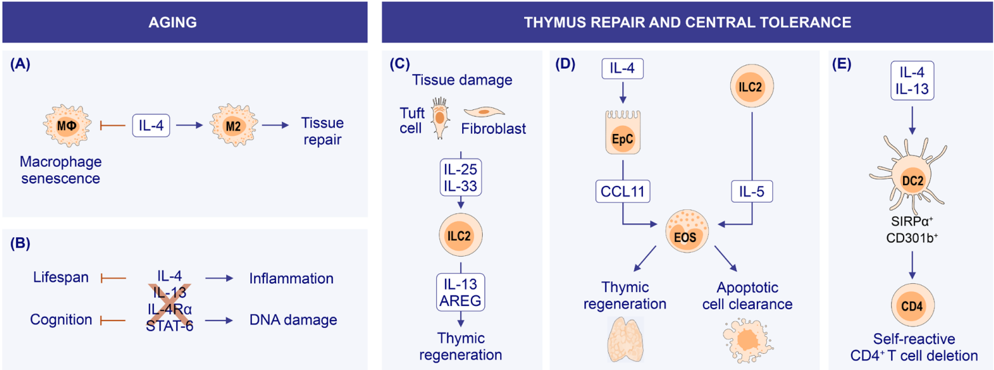
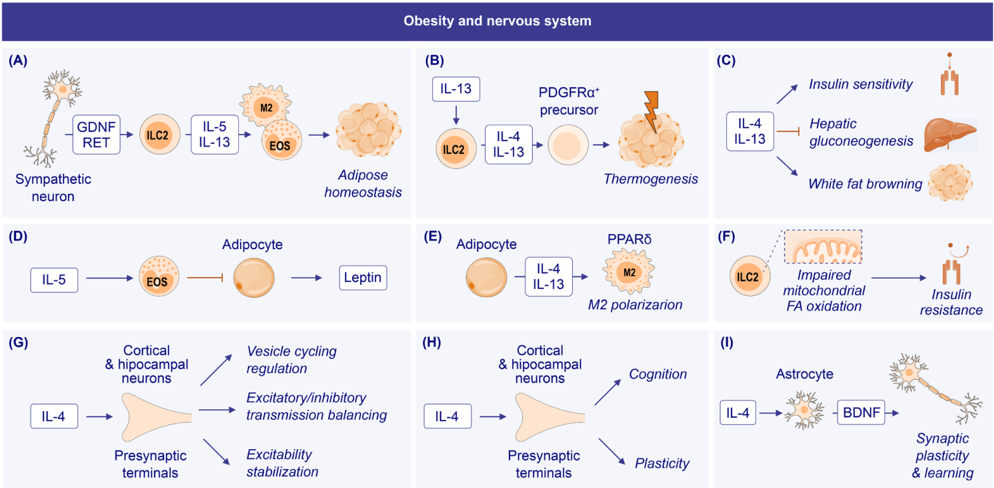
“Preclinical and mechanistic data implicate T2 cytokines in thymic regeneration and central tolerance, adiposetissue homeostasis, neuroglial function, and epithelial remodeling.”
§ Understanding the Type 2 Immunity: An Evolving View Beyond Allergic Diseases > 5.4 | Cardiovascular Events
hedgedstates a possible cause- Asserted: passes — The authors put it forward as true.
- Checkable: passes — It can be checked against evidence.
- Load-bearing: passes — The paper’s conclusions depend on it.
- Based: passes — The paper gives a reason why it holds.
It may state two separate claims as one.
In the paper
“Notably, eosinophil-depleting therapies have been associated with increased reporting of helminth infections, with an OR typically exceeding 3-4, although absolute case numbers remain low and exposure durations are generally limited to 6-24 months [271].”
§ Understanding the Type 2 Immunity: An Evolving View Beyond Allergic Diseases > 5.2 | Helminth and Barrier Defense
What the sources say
- Not matchedcites [271]
Couldn’t be matched to a paper in Crossref, so it can’t be checked.
plainstates an association- Asserted: passes — The authors put it forward as true.
- Checkable: passes — It can be checked against evidence.
- Load-bearing: passes — The paper’s conclusions depend on it.
- Based: passes — The paper gives a reason why it holds.
It may state two separate claims as one.
- Not matched
The paper states this without a source or data behind it here, so there is nothing to check it against. The quote shows it is in the paper.
In the paper
“For decades, aside from AIT, pharmacological treatments were broad, non-specific, and primarily symptomatic.”
§ Understanding the Type 2 Immunity: An Evolving View Beyond Allergic Diseases > 6 | Future Prospects
plain- Asserted: passes — The authors put it forward as true.
- Checkable: passes — It can be checked against evidence.
- Load-bearing: fails — The paper’s conclusions may not depend on it.
- Based: fails — The paper may give no reason why it holds.
Probably not a substantial claim. The paper’s conclusions may not depend on it. The paper may give no reason why it holds.
The paper states this without a source or data behind it here, so there is nothing to check it against. The quote shows it is in the paper.
In the paper
“Epithelial cells act as key orchestrators through alarmins (IL-33, TSLP, IL-25), linking barrier disruption to immune activation”
§ Understanding the Type 2 Immunity: An Evolving View Beyond Allergic Diseases > What is known
plainstates an association- Asserted: passes — The authors put it forward as true.
- Checkable: passes — It can be checked against evidence.
- Load-bearing: fails — The paper’s conclusions may not depend on it.
- Based: fails — The paper may give no reason why it holds.
Probably not a substantial claim. The paper’s conclusions may not depend on it. The paper may give no reason why it holds.
The paper states this without a source or data behind it here, so there is nothing to check it against. The quote shows it is in the paper.
In the paper
“Omalizumab (anti-IgE) reduces exacerbations and symptom burden in asthma and CRSwNP, remains the standard”
§ Understanding the Type 2 Immunity: An Evolving View Beyond Allergic Diseases > 4 | The Transformative Impact of Biologicals in T2 Diseases
plainstates a cause- Asserted: passes — The authors put it forward as true.
- Checkable: passes — It can be checked against evidence.
- Load-bearing: fails — The paper’s conclusions may not depend on it.
- Based: fails — The paper may give no reason why it holds.
Probably not a substantial claim. The paper’s conclusions may not depend on it. The paper may give no reason why it holds. It may state two separate claims as one.
A conclusion the paper draws from its own results — it cites no other source for it, so there is none to check. The quote shows it is in the paper.
In the paper
“In this regard, AIT merits particular emphasis as an existing precedent for immune modulation rather than pathway ablation.”
§ Understanding the Type 2 Immunity: An Evolving View Beyond Allergic Diseases > 6 | Future Prospects
plain- Asserted: passes — The authors put it forward as true.
- Checkable: fails — It may be too vague to check against evidence.
- Load-bearing: passes — The paper’s conclusions depend on it.
- Based: passes — The paper gives a reason why it holds.
Probably not a substantial claim. It may be too vague to check against evidence.
None of the sources cited for this claim could be matched to a paper in Crossref, so there is nothing to check it against.
In the paper
“However, within the SLE spectrum, accumulating evidence suggests that lupus nephritis (LN) patients present with autoreactive IgE, basophil activation, and T2 T-follicular helper responses that can enhance autoantibody production [214, 215].”
§ Understanding the Type 2 Immunity: An Evolving View Beyond Allergic Diseases > 3.2 | Pathogenic Contribution of T2 Responses in Non-Allergic Disease
What the sources say
- Not matchedcites [214]
Couldn’t be matched to a paper in Crossref, so it can’t be checked.
- Not matchedcites [215]
Couldn’t be matched to a paper in Crossref, so it can’t be checked.
hedgedstates a possible cause- Asserted: passes — The authors put it forward as true.
- Checkable: passes — It can be checked against evidence.
- Load-bearing: passes — The paper’s conclusions depend on it.
- Based: passes — The paper gives a reason why it holds.
It may state two separate claims as one.
- Not matched
In the paper
“Similarly, in a placebo-controlled trial of tezepelumab, cardiovascular events were more frequent in the active arm (1.3% vs. 0.23%), although all affected patients had ≥ 2 baseline cardiovascular risk factors [287].”
§ Understanding the Type 2 Immunity: An Evolving View Beyond Allergic Diseases > 5.4 | Cardiovascular Events
What the sources say
- Not matchedcites [287]
Couldn’t be matched to a paper in Crossref, so it can’t be checked.
plainstates an association- Asserted: passes — The authors put it forward as true.
- Checkable: passes — It can be checked against evidence.
- Load-bearing: passes — The paper’s conclusions depend on it.
- Based: passes — The paper gives a reason why it holds.
It may state two separate claims as one.
- Not matched
A conclusion the paper draws from its own results — it cites no other source for it, so there is none to check. The quote shows it is in the paper.
In the paper
“Rather, current biologics interrupt specific molecules with varying degrees of pathway interference, while substantial redundancy persists across epithelial alarmins, effector cytokines, immune and structural cells, and parallel regulatory or tissue-repair circuits.”
§ Understanding the Type 2 Immunity: An Evolving View Beyond Allergic Diseases > 5.4 | Cardiovascular Events
plainstates a cause- Asserted: passes — The authors put it forward as true.
- Checkable: passes — It can be checked against evidence.
- Load-bearing: passes — The paper’s conclusions depend on it.
- Based: passes — The paper gives a reason why it holds.
It may state two separate claims as one.
The paper states this without a source or data behind it here, so there is nothing to check it against. The quote shows it is in the paper.
In the paper
“Biologic therapies targeting T2 pathways (e.g., anti-IgE, anti-IL-5, anti-IL-4Rα, anti-TSLP) have transformed the management of severe allergic and eosinophilic diseases”
§ Understanding the Type 2 Immunity: An Evolving View Beyond Allergic Diseases > What is known
plainstates a cause- Asserted: passes — The authors put it forward as true.
- Checkable: passes — It can be checked against evidence.
- Load-bearing: fails — The paper’s conclusions may not depend on it.
- Based: fails — The paper may give no reason why it holds.
Probably not a substantial claim. The paper’s conclusions may not depend on it. The paper may give no reason why it holds.
A conclusion the paper draws from its own results — it cites no other source for it, so there is none to check. The quote shows it is in the paper.
In the paper
“Their synthesis supports a context-dependent role of T2 immunity, whereby T2-driven barrier repair and eosinophil-mediated antiviral effects may be protective in some settings, whereas unchecked T2 inflammation, barrier leakiness, and impaired early IFN responses favor higher viral loads, more frequent exacerbations of chronic airway disease, and prolonged post-viral symptoms.”
§ Understanding the Type 2 Immunity: An Evolving View Beyond Allergic Diseases > 5.1 | Antiviral Response and Infection Risk
hedgedstates a possible cause- Asserted: passes — The authors put it forward as true.
- Checkable: passes — It can be checked against evidence.
- Load-bearing: passes — The paper’s conclusions depend on it.
- Based: passes — The paper gives a reason why it holds.
It may state two separate claims as one.
In the paper
“While systemic T2 blockade maintains an excellent safety profile in non-endemic Western cohorts where environmental pathogen exposure is negligible, global datasets reveal a contrasting epidemiological reality [270].”
§ Understanding the Type 2 Immunity: An Evolving View Beyond Allergic Diseases > 5.2 | Helminth and Barrier Defense
What the sources say
- Not matchedcites [270]
Couldn’t be matched to a paper in Crossref, so it can’t be checked.
plainstates an association- Asserted: passes — The authors put it forward as true.
- Checkable: passes — It can be checked against evidence.
- Load-bearing: passes — The paper’s conclusions depend on it.
- Based: passes — The paper gives a reason why it holds.
It may state two separate claims as one.
- Not matched
A conclusion the paper draws from its own results — it cites no other source for it, so there is none to check. The quote shows it is in the paper.
In the paper
“While biologics can normalize T2 pathways, the long-term consequences of sustained pathway blockade remain incompletely defined.”
§ Understanding the Type 2 Immunity: An Evolving View Beyond Allergic Diseases > 5 | Potential Effects of Chronic T2 Pathway Suppression
plain- Asserted: passes — The authors put it forward as true.
- Checkable: passes — It can be checked against evidence.
- Load-bearing: fails — The paper’s conclusions may not depend on it.
- Based: passes — The paper gives a reason why it holds.
Probably not a substantial claim. The paper’s conclusions may not depend on it.
A conclusion the paper draws from its own results — it cites no other source for it, so there is none to check. The quote shows it is in the paper.
In the paper
“Selective blockade is not expected to be toxic per se, but tissue-specific, cumulative, or life-stage-dependent effects cannot be excluded and warrant long-term prospective study in pediatric populations, including assessments of vaccine responses, infection patterns, growth, metabolism, and organ-specific immune remodeling.”
§ Understanding the Type 2 Immunity: An Evolving View Beyond Allergic Diseases > 5.4 | Cardiovascular Events
plain- Asserted: passes — The authors put it forward as true.
- Checkable: passes — It can be checked against evidence.
- Load-bearing: passes — The paper’s conclusions depend on it.
- Based: passes — The paper gives a reason why it holds.
It may state two separate claims as one.
None of the sources cited for this claim could be matched to a paper in Crossref, so there is nothing to check it against.
In the paper
“In contrast, a pharmacovigilance study comparing anti-IL-5/ IL-5R agents to omalizumab found no overall excess cardiovascular events but suggested a potential signal for ischemic stroke with anti-IL-5/IL-5R and for hypertension and arrhythmia with omalizumab [284,285].”
§ Understanding the Type 2 Immunity: An Evolving View Beyond Allergic Diseases > 5.4 | Cardiovascular Events
What the sources say
- Not matchedcites [284]
Couldn’t be matched to a paper in Crossref, so it can’t be checked.
- Not matchedcites [285]
Couldn’t be matched to a paper in Crossref, so it can’t be checked.
hedgedstates an association- Asserted: passes — The authors put it forward as true.
- Checkable: passes — It can be checked against evidence.
- Load-bearing: unclear — It is unclear whether the paper’s conclusions depend on it.
- Based: passes — The paper gives a reason why it holds.
It may state two separate claims as one.
- Not matched
The paper states this without a source or data behind it here, so there is nothing to check it against. The quote shows it is in the paper.
In the paper
“T2 immunity plays key roles in barrier defense and repair.”
§ Understanding the Type 2 Immunity: An Evolving View Beyond Allergic Diseases > 5 | Potential Effects of Chronic T2 Pathway Suppression
plainstates a cause- Asserted: passes — The authors put it forward as true.
- Checkable: passes — It can be checked against evidence.
- Load-bearing: passes — The paper’s conclusions depend on it.
- Based: fails — The paper may give no reason why it holds.
Probably not a substantial claim. The paper may give no reason why it holds.
A conclusion the paper draws from its own results — it cites no other source for it, so there is none to check. The quote shows it is in the paper.
In the paper
“Real-world evidence from parasitic-endemic territories demonstrates a distinct, exposure-dependent risk of helminthic infections following prolonged T2 targeted biological therapy, providing concrete clinical validation for the evolutionary “surface-surveillance” hypothesis.”
§ Understanding the Type 2 Immunity: An Evolving View Beyond Allergic Diseases > 5.2 | Helminth and Barrier Defense
boostedstates a cause- Asserted: passes — The authors put it forward as true.
- Checkable: passes — It can be checked against evidence.
- Load-bearing: fails — The paper’s conclusions may not depend on it.
- Based: fails — The paper may give no reason why it holds.
Probably not a substantial claim. The paper’s conclusions may not depend on it. The paper may give no reason why it holds. It may state two separate claims as one.
None of the sources cited for this claim could be matched to a paper in Crossref, so there is nothing to check it against.
In the paper
“In SSc, endothelial injury promotes fibroblast activation and extracellular matrix deposition, with IL-4 and IL-13 directly inducing collagen synthesis and myofibroblast differentiation [219, 220].”
§ Understanding the Type 2 Immunity: An Evolving View Beyond Allergic Diseases > 3.2 | Pathogenic Contribution of T2 Responses in Non-Allergic Disease
What the sources say
- Not matchedcites [219]
Couldn’t be matched to a paper in Crossref, so it can’t be checked.
- Not matchedcites [220]
Couldn’t be matched to a paper in Crossref, so it can’t be checked.
plainstates a cause- Asserted: passes — The authors put it forward as true.
- Checkable: passes — It can be checked against evidence.
- Load-bearing: passes — The paper’s conclusions depend on it.
- Based: passes — The paper gives a reason why it holds.
It may state two separate claims as one.
- Not matched
In the paper
“Eosinophils exhibit broad antimicrobial activity, including the release of extracellular traps, reactive oxygen species, and cytotoxic granule proteins, which can damage pathogens and degrade viral RNA [257].”
§ Understanding the Type 2 Immunity: An Evolving View Beyond Allergic Diseases > 5.1 | Antiviral Response and Infection Risk
What the sources say
- Not matchedcites [257]
Couldn’t be matched to a paper in Crossref, so it can’t be checked.
plainstates a cause- Asserted: passes — The authors put it forward as true.
- Checkable: passes — It can be checked against evidence.
- Load-bearing: unclear — It is unclear whether the paper’s conclusions depend on it.
- Based: passes — The paper gives a reason why it holds.
It may state two separate claims as one.
- Not matched
A conclusion the paper draws from its own results — it cites no other source for it, so there is none to check. The quote shows it is in the paper.
In the paper
“Overall, available data support a favorable benefit-risk profile for licensed T2-targeted biologics in appropriately selected patients, with no major safety signal that would currently preclude their use.”
§ Understanding the Type 2 Immunity: An Evolving View Beyond Allergic Diseases > 6 | Future Prospects
plain- Asserted: passes — The authors put it forward as true.
- Checkable: passes — It can be checked against evidence.
- Load-bearing: passes — The paper’s conclusions depend on it.
- Based: fails — The paper may give no reason why it holds.
Probably not a substantial claim. The paper may give no reason why it holds. It may state two separate claims as one.
The paper states this without a source or data behind it here, so there is nothing to check it against. The quote shows it is in the paper.
In the paper
“In allergology, T2 immunity is considered a pathogenic program driving the diverse clinical manifestations of allergic diseases.”
§ Understanding the Type 2 Immunity: An Evolving View Beyond Allergic Diseases > 6 | Future Prospects
plainstates a cause- Asserted: passes — The authors put it forward as true.
- Checkable: passes — It can be checked against evidence.
- Load-bearing: passes — The paper’s conclusions depend on it.
- Based: fails — The paper may give no reason why it holds.
Probably not a substantial claim. The paper may give no reason why it holds.
In the paper
“MCs contribute to antimicrobial defense through the release of peptides, proteases, and extracellular traps, and through direct bacterial killing and immune cell recruitment [256].”
§ Understanding the Type 2 Immunity: An Evolving View Beyond Allergic Diseases > 5.1 | Antiviral Response and Infection Risk
What the sources say
- Not matchedcites [256]
Couldn’t be matched to a paper in Crossref, so it can’t be checked.
plainstates a cause- Asserted: passes — The authors put it forward as true.
- Checkable: passes — It can be checked against evidence.
- Load-bearing: unclear — It is unclear whether the paper’s conclusions depend on it.
- Based: passes — The paper gives a reason why it holds.
It may state two separate claims as one.
- Not matched
None of the sources cited for this claim could be matched to a paper in Crossref, so there is nothing to check it against.
In the paper
“Similar pathways operate in viral infection, where ILC2-derived factors promote epithelial repair following influenza and contribute to eosinophil recruitment [253-255].”
§ Understanding the Type 2 Immunity: An Evolving View Beyond Allergic Diseases > 5.1 | Antiviral Response and Infection Risk
What the sources say
- Not matchedcites [253]
Couldn’t be matched to a paper in Crossref, so it can’t be checked.
- Not matchedcites [254]
Couldn’t be matched to a paper in Crossref, so it can’t be checked.
- Not matchedcites [255]
Couldn’t be matched to a paper in Crossref, so it can’t be checked.
plainstates a cause- Asserted: passes — The authors put it forward as true.
- Checkable: passes — It can be checked against evidence.
- Load-bearing: unclear — It is unclear whether the paper’s conclusions depend on it.
- Based: passes — The paper gives a reason why it holds.
It may state two separate claims as one.
- Not matched
In the paper
“IL-31 further contributes to itch and correlates with eosinophil counts [213].”
§ Understanding the Type 2 Immunity: An Evolving View Beyond Allergic Diseases > 3.2 | Pathogenic Contribution of T2 Responses in Non-Allergic Disease
What the sources say
- Not matchedcites [213]
Couldn’t be matched to a paper in Crossref, so it can’t be checked.
plainstates an association- Asserted: passes — The authors put it forward as true.
- Checkable: passes — It can be checked against evidence.
- Load-bearing: unclear — It is unclear whether the paper’s conclusions depend on it.
- Based: passes — The paper gives a reason why it holds.
It may state two separate claims as one.
- Not matched
The paper states this without a source or data behind it here, so there is nothing to check it against. The quote shows it is in the paper.
In the paper
“PN involves a complex interplay between the immune and nervous systems, with evidence supporting contributions from T2 inflammation, neural sensitization, and skin barrier dysfunction.”
§ Understanding the Type 2 Immunity: An Evolving View Beyond Allergic Diseases > 3.2 | Pathogenic Contribution of T2 Responses in Non-Allergic Disease
plainstates an association- Asserted: passes — The authors put it forward as true.
- Checkable: passes — It can be checked against evidence.
- Load-bearing: passes — The paper’s conclusions depend on it.
- Based: fails — The paper may give no reason why it holds.
Probably not a substantial claim. The paper may give no reason why it holds. It may state two separate claims as one.
The paper states this without a source or data behind it here, so there is nothing to check it against. The quote shows it is in the paper.
In the paper
“T2 immunity plays a central pathogenic role in allergic diseases, including asthma, atopic dermatitis, food allergy, and eosinophilic disorders”
§ Understanding the Type 2 Immunity: An Evolving View Beyond Allergic Diseases > What is known
plainstates a cause- Asserted: passes — The authors put it forward as true.
- Checkable: passes — It can be checked against evidence.
- Load-bearing: passes — The paper’s conclusions depend on it.
- Based: fails — The paper may give no reason why it holds.
Probably not a substantial claim. The paper may give no reason why it holds.
The paper states this without a source or data behind it here, so there is nothing to check it against. The quote shows it is in the paper.
In the paper
“Beyond allergy, T2 immunity contributes to tissue homeostasis, including barrier integrity and repair:”
§ Understanding the Type 2 Immunity: An Evolving View Beyond Allergic Diseases > What is known
plainstates a cause- Asserted: passes — The authors put it forward as true.
- Checkable: passes — It can be checked against evidence.
- Load-bearing: passes — The paper’s conclusions depend on it.
- Based: unclear — It is unclear why the paper says it holds.
It may state two separate claims as one.
The paper states this without a source or data behind it here, so there is nothing to check it against. The quote shows it is in the paper.
In the paper
“Yet, T2 immunity also plays essential roles in tissue homeostasis, repair, and host defense.”
§ Understanding the Type 2 Immunity: An Evolving View Beyond Allergic Diseases > 6 | Future Prospects
plainstates a cause- Asserted: passes — The authors put it forward as true.
- Checkable: passes — It can be checked against evidence.
- Load-bearing: passes — The paper’s conclusions depend on it.
- Based: unclear — It is unclear why the paper says it holds.
It may state two separate claims as one.
None of the sources cited for this claim could be matched to a paper in Crossref, so there is nothing to check it against.
In the paper
“They also contribute to pathogen control through nitric oxide-dependent mechanisms and IFN-induced antiviral programs, and can participate in early containment of fungal and bacterial infections [258-261].”
§ Understanding the Type 2 Immunity: An Evolving View Beyond Allergic Diseases > 5.1 | Antiviral Response and Infection Risk
What the sources say
- Not matchedcites [258]
Couldn’t be matched to a paper in Crossref, so it can’t be checked.
- Not matchedcites [259]
Couldn’t be matched to a paper in Crossref, so it can’t be checked.
- Not matchedcites [260]
Couldn’t be matched to a paper in Crossref, so it can’t be checked.
- Not matchedcites [261]
Couldn’t be matched to a paper in Crossref, so it can’t be checked.
plainstates a cause- Asserted: passes — The authors put it forward as true.
- Checkable: passes — It can be checked against evidence.
- Load-bearing: passes — The paper’s conclusions depend on it.
- Based: passes — The paper gives a reason why it holds.
It may state two separate claims as one.
- Not matched
The paper states this without a source or data behind it here, so there is nothing to check it against. The quote shows it is in the paper.
In the paper
“However, emerging evidence indicates that it is also linked to tissue remodeling, sensory neuron activation, and reflex responses such as itch and cough.”
§ Understanding the Type 2 Immunity: An Evolving View Beyond Allergic Diseases > 5 | Potential Effects of Chronic T2 Pathway Suppression
hedgedstates an association- Asserted: passes — The authors put it forward as true.
- Checkable: passes — It can be checked against evidence.
- Load-bearing: passes — The paper’s conclusions depend on it.
- Based: unclear — It is unclear why the paper says it holds.
It may state two separate claims as one.
In the paper
“ILC2s can also respond to microbial cues and contribute to humoral immunity [251].”
§ Understanding the Type 2 Immunity: An Evolving View Beyond Allergic Diseases > 5.1 | Antiviral Response and Infection Risk
What the sources say
- Not matchedcites [251]
Couldn’t be matched to a paper in Crossref, so it can’t be checked.
plainstates a cause- Asserted: passes — The authors put it forward as true.
- Checkable: passes — It can be checked against evidence.
- Load-bearing: unclear — It is unclear whether the paper’s conclusions depend on it.
- Based: passes — The paper gives a reason why it holds.
It may state two separate claims as one.
- Not matched
The paper states this without a source or data behind it here, so there is nothing to check it against. The quote shows it is in the paper.
In the paper
“T2 responses evolved as a surface-surveilling system to protect against helminths, toxins, and environmental threats, promoting expulsion mechanisms, mucus production, and tissue repair”
§ Understanding the Type 2 Immunity: An Evolving View Beyond Allergic Diseases > What is known
plainstates a cause- Asserted: passes — The authors put it forward as true.
- Checkable: passes — It can be checked against evidence.
- Load-bearing: fails — The paper’s conclusions may not depend on it.
- Based: fails — The paper may give no reason why it holds.
Probably not a substantial claim. The paper’s conclusions may not depend on it. The paper may give no reason why it holds.
In the paper
“In a 5-year observational cohort, omalizumab-treated asthma patients showed a higher incidence of serious cardiovascular events compared to matched controls [283], prompting the FDA to include this risk in the US label, although it is not reflected in the European Medicines Agency (EMA) or the Agencia Española de Medicamentos y Productos Sanitarios (AEMPS) documents.”
§ Understanding the Type 2 Immunity: An Evolving View Beyond Allergic Diseases > 5.4 | Cardiovascular Events
What the sources say
- Not matchedcites [283]
Couldn’t be matched to a paper in Crossref, so it can’t be checked.
plainstates an association- Asserted: passes — The authors put it forward as true.
- Checkable: passes — It can be checked against evidence.
- Load-bearing: unclear — It is unclear whether the paper’s conclusions depend on it.
- Based: passes — The paper gives a reason why it holds.
It may state two separate claims as one.
- Not matched
The paper relies on this without support.
Findings from murine and preclinical models can be extrapolated to human T2 immunity and disease.
“Most mechanistic insights into the ontogeny of allergic disease come from murine models [163], which consistently revealed environmental cues (alarmins), usually but not exclusively of epithelial origin, that precondition the tissue and, ultimately, the immune system to sense exogenous antigens as threats, thereby promoting T2 responses [4, 164-167] (Figure 11).”
Self-check
Percentages, sums and reported differences re-computed from the paper’s own numbers.
Each contradiction between two passages listed here was confirmed by an independent check.
Rated minor: it would not touch a result — a value no result rests on, a p-value that stays on the same side of the significance level, or a conflict that is clerical, resolved elsewhere in the paper, or outside its own findings.
In the paper
§ Understanding the Type 2 Immunity: An Evolving View Beyond Allergic Diseases > 2.2.3 | Neutralization of Toxins
“However, a series of murine studies in the 2010s vindicated this idea [98,99].”
§ Understanding the Type 2 Immunity: An Evolving View Beyond Allergic Diseases > References
“98. M. Metz, A. M. Piliponsky, C. C. Chen, et al., "Mast Cells Can Enhance Resistance to Snake and Honeybee Venoms," Science 313, no. 5786 (2006): 526-530.”
Rated minor: it would not touch a result — a value no result rests on, a p-value that stays on the same side of the significance level, or a conflict that is clerical, resolved elsewhere in the paper, or outside its own findings.
In the paper
§ Understanding the Type 2 Immunity: An Evolving View Beyond Allergic Diseases > 2.6 | Adipose Tissue and the Nervous System
“sympathetic neurons stimulates adipose-resident ILC2s via mesenchymal-derived glial cell line-derived neurotrophic factor (GDNF) and rearranged during transfection (RET) signaling”
§ Understanding the Type 2 Immunity: An Evolving View Beyond Allergic Diseases > What is known
“(A) Sympathetic neurons release GDNF and RET, regulating adipose tissue homeostasis in a process mediated by ILC2s, eosinophils, and M2.”
Rated minor: it would not touch a result — a value no result rests on, a p-value that stays on the same side of the significance level, or a conflict that is clerical, resolved elsewhere in the paper, or outside its own findings.
In the paper
§ Understanding the Type 2 Immunity: An Evolving View Beyond Allergic Diseases > 3.2 | Pathogenic Contribution of T2 Responses in Non-Allergic Disease
“Hypereosinophilic syndromes (HES) comprise a heterogeneous group of disorders defined by persistent eosinophilia (> 1500/ μL) and eosinophil-mediated tissue injury in the absence of known secondary causes [202].”
§ Understanding the Type 2 Immunity: An Evolving View Beyond Allergic Diseases > 3.2 | Pathogenic Contribution of T2 Responses in Non-Allergic Disease
“Hypereosinophilic syndromes Systemic Persistent eosinophilia due to neoplastic, lymphocytic, reactive, familiar or idiopathic causes”
Citations
Cites
Tolerance, Danger and the Extended Family
Matzinger, P. (1994) · Annual Review of Immunology · doi:10.1146/annurev.iy.12.040194.005015 · Cited by 5,107
Macrophages in Tissue Repair, Regeneration, and Fibrosis
Wynn, T. A., & Vannella, K. M. (2016) · Immunity · doi:10.1016/j.immuni.2016.02.015 · Cited by 4,481
Human epithelial cells trigger dendritic cell–mediated allergic inflammation by producing TSLP
Soumelis, V., Reche, P. A., Kanzler, H., Yuan, W., Edward, G., Homey, B., Gilliet, M. F., Ho, S., Antonenko, S. V., Lauerma, A., et al. (2002) · Nature Immunology · doi:10.1038/ni805 · Cited by 2,221
Dupilumab Efficacy and Safety in Moderate-to-Severe Uncontrolled Asthma
Castro, M., Corren, J., Pavord, I. D., Maspero, J. F., Wenzel, S. E., Rabe, K. F., Busse, W. W., Ford, L., Sher, L., FitzGerald, J. M., et al. (2018) · New England Journal of Medicine · doi:10.1056/nejmoa1804092 · Cited by 2,016
Microglia Biology: One Century of Evolving Concepts
Prinz, M., Jung, S., & Priller, J. (2019) · Cell · doi:10.1016/j.cell.2019.08.053 · Cited by 1,525
Bile acid metabolites control TH17 and Treg cell differentiation
Hang, S., Paik, D., Yao, L., Kim, E., Trinath, J., Lu, J., Ha, S., Nelson, B. N., Kelly, S. P., Wu, L., et al. (2019) · Nature · doi:10.1038/s41586-019-1785-z · Cited by 1,457
Innate lymphoid cells promote lung-tissue homeostasis after infection with influenza virus
Monticelli, L. A., Sonnenberg, G. F., Abt, M. C., Alenghat, T., Ziegler, C. G. K., Doering, T. A., Angelosanto, J., Laidlaw, B. J., Yang, C. Y., Sathaliyawala, T., et al. (2011) · Nature Immunology · doi:10.1038/ni.2131 · Cited by 1,327
Zuberbier, T., Abdul Latiff, A. H., Abuzakouk, M., Aquilina, S., Asero, R., Baker, D., Ballmer‐Weber, B., Bangert, C., Ben‐Shoshan, M., Bernstein, J. A., et al. (2022) · Allergy · doi:10.1111/all.15090 · Cited by 1,263
Tuft-cell-derived IL-25 regulates an intestinal ILC2-epithelial response circuit
von Moltke, J., Ji, M., Liang, H.-E., & Locksley, R. M. (2016) · Nature · doi:10.1038/nature16161 · Cited by 1,230
Lambrecht, B. N., Hammad, H., & Fahy, J. V. (2019) · Immunity · doi:10.1016/j.immuni.2019.03.018 · Cited by 1,108
Research works printed but not linked: 11
- Galli S. J., 2017, Mast Cells and IgE Can Enhance Survival During Innate and Acquired Host Responses to Venoms, Transactions of the American Clinical and Climatological Association, 128, 193
- Atagozli T., 2023, Helminth Lessons in Inflammatory Bowel Diseases (IBD), Biomedicine, 11
- Suarez‐Lopez L., 2018, MK2 Contributes to Tumor Progression by Promoting M2 Macrophage Polarization and Tumor Angiogenesis, Proceedings of the National Academy of Sciences of the United States of America, 115, E4236
- Mendez‐Garcia L. A., 2025, Role of the Th2‐Like Immune Response in Obesity: IL‐4 as a Metabolic Regulator and IL‐13 as an Effector of Muscle Energy Metabolism, Biomedicine, 13
- Mikhail E. S., 2026, StatPearls
- Chen X., 2001, Elevated Interleukin‐13 in Patients With Active Lupus Nephritis, Chinese Medical Journal (English Edition), 114, 1022
- Mavalia C., 1997, Type 2 Helper T‐Cell Predominance and High CD30 Expression in Systemic Sclerosis, American Journal of Pathology, 151, 1751
- 10.1016/j.jacig.2025.100592 · DOI
- Gallagher A., 2021, Anti‐Interleukin‐13 and Anti‐Interleukin‐4 Agents Versus Placebo, Anti‐Interleukin‐5 or Anti‐Immunoglobulin‐E Agents, for People With Asthma, Cochrane Database of Systematic Reviews, 10
- Food US, Drug A, 2025, Approved Drug Products With Therapeutic Equivalence Evaluations (Orange Book)
- 10.1016/j.jaip.2020.12.031 · DOI
Cited by
Sorted by citations
Potaczek, D. P., & Acevedo, N. (2026) · Frontiers in Immunology · doi:10.3389/fimmu.2026.2014380
Pawankar, R., Nadeau, K. C., & Akdiş, C. A. (2026) · Allergy · doi:10.1111/all.70550
Self-citation
Metadata
- Authors
- Jiménez‐Saiz, R., Iborra, S., Blanco, C., González‐Pérez, R., Nuñez‐Borque, E., Zeyneloglu, C., Babayev, H., Göksel, O., Göksel, T., Khaitov, M., Kudlay, D., Gao, Y., Sevim, M., Brüggen, M., Alpan, O., Wang, M., Zhang, L., Torres, M. J., Shamji, M., Akdis, M., Nadeau, K. C., Ogulur, I., & Akdis, C. A.
- Affiliations
- Universidad Francisco de Vitoria (ES)
- Fundación Inmunotek Alcalá de Henares Spain
- Hospital Universitario de La Princesa (ES)
- Hospital Universitario de Canarias (ES)
- University of Zurich (CH)
- Department of Pulmonary Medicine, Division of Immunology and Allergy, Laboratory of Occupational & Environmental Respiratory Diseases and Asthma, Faculty of Medicine, Translational Pulmonary Research Center (EgeSAM) Ege University Izmir Turkey
- Ege University (TR)
- Pirogov Russian National Research Medical University (RU)
- Sechenov University (RU)
- First Affiliated Hospital Zhejiang University (CN)
- Istinye Universitesi Istanbul Turkey
- University Hospital Zurich (CH)
- Amerimmune McLean Virginia USA
- Beijing Tongren Hospital (CN)
- Hospital Regional Universitario de Málaga (ES)
- Imperial College London (GB)
- Swiss Institute of Allergy and Asthma Research (SIAF) University of Zurich Davos Switzerland
- Harvard University (US)
- Corresponding author
- Jiménez‐Saiz, Rodrigo
- ORCID
- Jiménez‐Saiz, Rodrigo
- Iborra, Salvador
- Blanco, Carlos
- González‐Pérez, Ruperto
- Nuñez‐Borque, Emilio
- Zeyneloglu, Can
- Babayev, Huseyn
- Göksel, Ozlem
- Göksel, Tuncay
- Khaitov, Musa
- Kudlay, Dmitry
- Gao, Yadong
- Sevim, Mustafa
- Brüggen, Marie‐Charlotte
- Alpan, Oral
- Wang, Ming
- Zhang, Luo
- Torres, María J.
- Shamji, Mohamed
- Akdis, Mübeccel
- Nadeau, Kari C.
- Ogulur, Ismail
- Akdis, Cezmi A.
- Venue
- Allergy
- Publisher
- Wiley
- Published
- 2026-09-09
- Volume
- 81
- Issue
- 11
- Pages
- 3825-3852
- ISSN
- 0105-4538 (ISSN-L)
- 1398-9995
- OpenAlex
- W7212017201
- Semantic Scholar
- 5f97849c45c034a89448abbc251ae547f26117a9
- Cited by
- 2
- References
- 283
- Citations by year
- 2026: 2
- FWCI
- 1.18
- Type
- journal article
- Language
- en
- Open access
- hybrid
- doi.org
- Licence
- Locations
- Allergy (publishedVersion, cc-by-nc)
- PubMed (publishedVersion)
- Funders
- Instituto de Salud Carlos III (RD24/0007/0037, PI22/00236, PI25/00477, CD23/00125, MV25/00085)
- Fundación Domingo Martínez (FDM2025)
- Weston Family Foundation (POP24‐11435)
- Comunidad de Madrid (IND2024/BMD‐33910)
- Fundación BBVA (LEO26‐1‐21202)
- Topics
- Life Sciences › Immunology and Microbiology › Immunology › IL-33, ST2, and ILC Pathways
- Health Sciences › Medicine › Pulmonary and Respiratory Medicine › Asthma and respiratory diseases
- Life Sciences › Immunology and Microbiology › Immunology › Mast cells and histamine
- Keywords
- Th2 immune response, helminthiasis, allergic diseases, eosinophilic inflammation, tissue repair, tissue protection, immune system evolution, IgG4, great apes, epithelial barrier function, microbiome, dysbiosis, opportunistic pathogens, IL-4, IL-5, IL-13, IL-31, thymic stromal lymphopoietin, IgE, biologic therapy, immune homeostasis
About these checks
Registry, retraction, Cites and statistics results are computed, not judged, with one exception: a printed reference that no index lists is read once by a model before it counts as a citation error. Claims are extracted by a model and kept only when their quote appears verbatim in the text; each cited source is then checked, with a model’s help, for whether it says what the claim relies on. Those verdicts can be wrong — read the claim’s quote and the cited source before relying on one.
A language model drew the claims from the paper on 2026-11-12, under version 3 of the claim definition (model deepseek-v4.1-flash, prompt extract-v3).
A second model labelled each claim on 2026-11-12 (model jev-1.13-20260917, definition revision gold-guideline-v0.2).
Statistics and arithmetic are recomputed, not judged.
Confidence bands are shown only for fields calibrated on our annotated test set. None is calibrated yet, so no band is shown.
What counts as a claim ›How we measure confidence ›How we check this ›
Are you an author, or do you see a problem with this page? Request a review
How to cite
Cite CoChat for the checks on this page, and the paper for its own findings.
- This page
- CoChat. (2026). Citation check: Understanding the Type 2 Immunity: An Evolving View Beyond Allergic Diseases. https://app.cochat.ai/papers/10.1111/all.70512
- The paper
- Jiménez‐Saiz, R., Iborra, S., Blanco, C., González‐Pérez, R., Nuñez‐Borque, E., Zeyneloglu, C., Babayev, H., Göksel, O., Göksel, T., Khaitov, M., Kudlay, D., Gao, Y., Sevim, M., Brüggen, M., Alpan, O., Wang, M., Zhang, L., Torres, M. J., Shamji, M., . . . Akdis, C. A. (2026). Understanding the Type 2 Immunity: An Evolving View Beyond Allergic Diseases. Allergy. https://doi.org/10.1111/all.70512
