

How do organizations refine their post‐merger integration routines over consecutive acquisitions?
Open accessThe DOI matches its Crossref record; 79 of the 79 references it cites were found in a registry or an index; none of the 28 sources its claims cite is checked for support yet.
Abstract
The post‐merger integration (PMI) phase of mergers and acquisitions (M&A) can determine M&A success. Little is known about how organizations refine their PMI routines with accumulated M&A experience. This study proposes a process model of PMI‐routine development, where the outcomes of routines enacted in earlier acquisitions shape routines in subsequent acquisitions. We test the model using 312 instances of routine implementation, across five consecutive acquisitions by the same acquiring company, and make two key scholarly contributions. First, we advance prior research by identifying how a routine's level of complexity moderates the association between routine adherence and routine outcomes. Second, we elucidate the effect of learning from failure—uncovering a learning process with performance feedback as input. Specifically, negative routine outcomes at the focal acquisition strengthened the positive effect of the improvisation (low adherence) enacted in the focal acquisition on the subsequent modifications to the codified routine, which are likely to improve its performance in future acquisitions.
Overview
CoChat Summary
TL;DR
The paper develops and tests a process model of how post-merger integration (PMI) routines evolve across consecutive acquisitions, using 312 routine-implementation instances from five acquisitions by one acquirer. It finds that codification improves outcomes via adherence, but this link weakens when acquisitions differ, strengthens for complex routines, and poor outcomes strengthen the effect of low adherence on later routine recodification.
Key findings
- Routine codification (RC) had a positive indirect effect on routine outcomes (RO) via routine adherence (RA): indirect effect = 0.191, 95% percentile bootstrap CI = [0.130, 0.268].
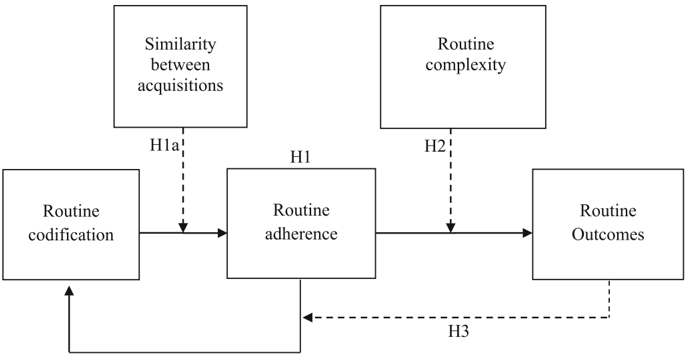
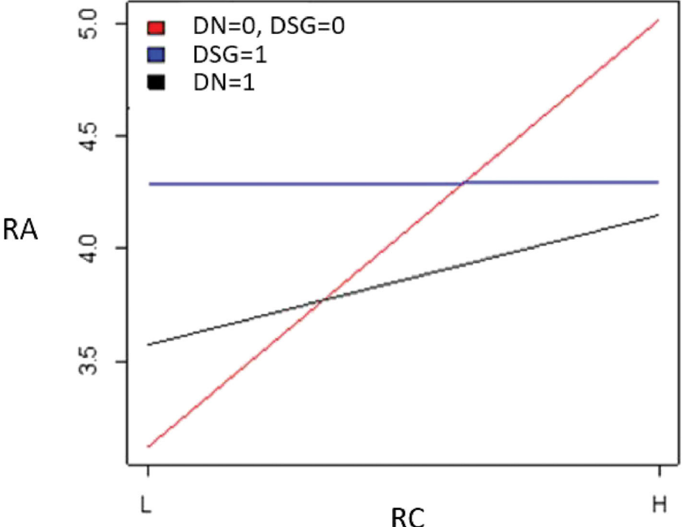
- Acquisition similarity moderated the RC–RA association: Wald χ² = 117.951, df = 2, p < 0.01; simple slopes were B = 0.864, p < 0.01 when the focal acquisition was similar to prior acquisitions, B = 0.262, p < 0.01 with an additional dimension of novelty, and B = 0.005, p > 0.05 for a different strategic group.
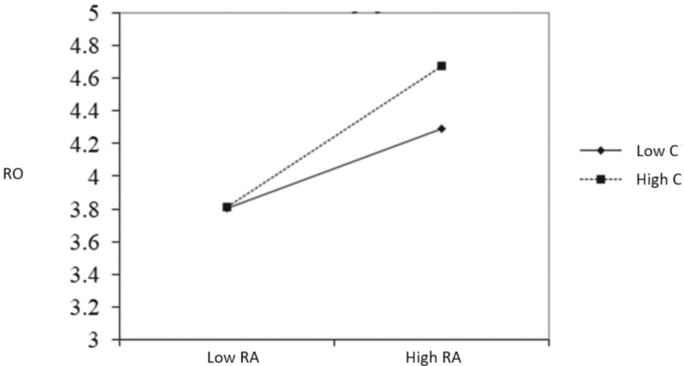
- Routine complexity moderated the RA–RO association: RA × complexity B = 0.011, p < 0.05; the adherence–outcome slope was stronger under high complexity (B = 0.390, p < 0.01) than under low complexity (B = 0.221, p < 0.01).
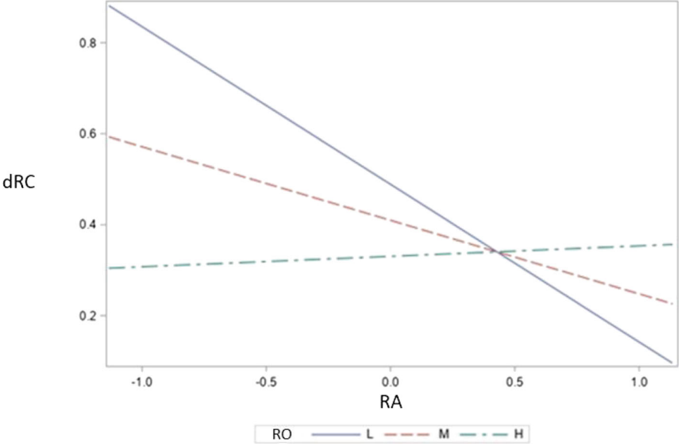
- RO moderated the RA–change in RC association: RA × RO B = 0.246, p < 0.01; the RA–dRC slope was negative and significant under low RO (−0.290, p < 0.01), negative and marginally significant at mean RO (−0.105, p = 0.052), and non-significant under high RO (0.079, p > 0.10).
Methods
- Sample: one large multinational food and drug firm with 35,000–50,000 employees; 63 PMI routines tracked across five consecutive acquisitions over 6 years, yielding 315 routine-implementation instances, of which 312 were analyzed after omitting three cases with missing complexity values. Data came from nearly 1000 documents.
- Measures: RC, RA, and RO were rated on 1–5 scales; complexity was the product of internal and external complexity; change in RC (dRC) was the difference in RC between the previous and focal acquisition. Inter-rater reliabilities were 0.81 for RC, 0.98 for RA, and 0.92 for RO.
- Analysis: a mixed-model approach with two models—a codification-performance model fitted in Mplus 8.4 with cluster-robust standard errors, and a feedback-(re)codification model fitted in SAS 9.4 Mixed—plus moderated-mediation tests.
Limitations
- The paper states that it focused on one multinational enterprise in one industry, so generalizability is limited; future research should examine other industries, small/start-up versus large acquisitions, additional similarity dimensions such as acquisition modality, and target-firm perspectives.
- The text also makes evident that the two moderators were rated by a single research assistant, and the data were derived from the acquirer’s archives, lacking visibility into target firms’ perspectives.
- Data cannot be made openly available due to commercial concerns, as stated in the data availability note.
Model-written summary. Check it against the paper before relying on it.
Integrity signals
Registry
Cites
Statistics
Figures

Verification
Claims the paper makes
0 Valid · 1 Not valid · 17 Not checked · 44 Own results and interpretations
A result the paper reports from its own data — it cites no other source for it, so there is none to check. The quote shows it is in the paper.
In the paper
“we advance prior research by identifying how a routine's level of complexity moderates the association between routine adherence and routine outcomes.”
§ How do organizations refine their post-merger integration routines over consecutive acquisitions? > Abstract
plainstates an association- Asserted: passes — The authors put it forward as true.
- Checkable: passes — It can be checked against evidence.
- Load-bearing: passes — The paper’s conclusions depend on it.
- Based: passes — The paper gives a reason why it holds.
A result the paper reports from its own data — it cites no other source for it, so there is none to check. The quote shows it is in the paper.
In the paper
“Hypothesis 2 suggested that the positive effect of routine adherence on RO is moderated by routine complexity.Table 4 (Model 2) confirms this hypothesis (B = 0.011, p < 0.05).”
- Also stated in: § F I G U R E 3 · plain
“Routine complexity was found to interact with adherence in affecting RO.”
§ How do organizations refine their post-merger integration routines over consecutive acquisitions? > RESULTS
boostedstates a possible cause- Asserted: passes — The authors put it forward as true.
- Checkable: passes — It can be checked against evidence.
- Load-bearing: passes — The paper’s conclusions depend on it.
- Based: passes — The paper gives a reason why it holds.
- Also stated in: § F I G U R E 3 · plain
A result the paper reports from its own data — it cites no other source for it, so there is none to check. The quote shows it is in the paper.
In the paper
“For mean levels of RO, the association is negative and marginally significant (À0.105, p = 0.052).”
§ How do organizations refine their post-merger integration routines over consecutive acquisitions? > RESULTS
plainstates an association- Asserted: passes — The authors put it forward as true.
- Checkable: passes — It can be checked against evidence.
- Load-bearing: unclear — It is unclear whether the paper’s conclusions depend on it.
- Based: passes — The paper gives a reason why it holds.
A result the paper reports from its own data — it cites no other source for it, so there is none to check. The quote shows it is in the paper.
In the paper
“Hypothesis 3 suggested that RO affect the degree to which adherence to pre-existing routines in a focal acquisition is likely to be followed by a dRC.As Table 5 shows, a significant moderation effect was observed.”
§ How do organizations refine their post-merger integration routines over consecutive acquisitions? > RESULTS
hedgedstates an association- Asserted: passes — The authors put it forward as true.
- Checkable: passes — It can be checked against evidence.
- Load-bearing: passes — The paper’s conclusions depend on it.
- Based: passes — The paper gives a reason why it holds.
A result the paper reports from its own data — it cites no other source for it, so there is none to check. The quote shows it is in the paper.
In the paper
“The interactive effect of routine codification and similarity between acquisitions on routine adherence.”
§ How do organizations refine their post-merger integration routines over consecutive acquisitions? > Limitations and suggestions for future research
plainstates an association- Asserted: passes — The authors put it forward as true.
- Checkable: passes — It can be checked against evidence.
- Load-bearing: passes — The paper’s conclusions depend on it.
- Based: passes — The paper gives a reason why it holds.
29 more claims
Create a free account to see all 62 claims and to verify the 16 references still open.
- It may state two separate claims as one. 13
- The quote only partly states this claim. 5
- Probably not a substantial claim. 16
Self-check
Percentages, sums and reported differences re-computed from the paper’s own numbers.
Each contradiction between two passages listed here was confirmed by an independent check.
Rated minor: it would not touch a result — a value no result rests on, a p-value that stays on the same side of the significance level, or a conflict that is clerical, resolved elsewhere in the paper, or outside its own findings.
In the paper
§ How do organizations refine their post-merger integration routines over consecutive acquisitions? > RESULTS
“DSG (4) 315 0.400 0.491 0.167 0.025 0.125 1.000 DN (5) 315 0.200 0.401 0.226 0.179 0.087 À0.408 1.000”
§ How do organizations refine their post-merger integration routines over consecutive acquisitions? > 5. Prioritizing based on difficulty and importance matrix
“the 3rd acquisition belonged to a different strategic group (DSG) of firms in the industry (Fiegenbaum & Thomas, 1990) characterized, inter alia, by firm's strategic orientation, that is, differentiation versus cost leadership (Porter, 1985).The fourth and fifth acquisitions, in turn, belonged to strategic groups from which the firm had previously acquired, yet each acquisition involved an additional dimension of novelty (DN)”
Citations
Cites
Hu, L., & Bentler, P. M. (1999) · Structural Equation Modeling A Multidisciplinary Journal · doi:10.1080/10705519909540118 · Cited by 108,788
Exploration and Exploitation in Organizational Learning
March, J. G. (1991) · Organization Science · doi:10.1287/orsc.2.1.71 · Cited by 21,942
An Evolutionary Theory of Economic Change.
Loasby, B. J., Nelson, R. R., & Winter, S. G. (1983) · The Economic Journal · doi:10.2307/2232409 · Cited by 21,366
Organizational Learning: A Theory of Action Perspective
Argyris, C., & Schön, D. A. (1997) · Reis · doi:10.2307/40183951 · Cited by 11,113
Deliberate learning and the evolution of dynamic capabilities
Zollo, M., & Winter, S. G. (2002) · Organization Science · doi:10.1287/orsc.13.3.339.2780 · Cited by 6,963
Understanding dynamic capabilities
Winter, S. G. (2003) · Strategic Management Journal · doi:10.1002/smj.318 · Cited by 5,315
Reconceptualizing Organizational Routines as a Source of Flexibility and Change
Feldman, M. S., & Pentland, B. T. (2003) · Administrative Science Quarterly · doi:10.2307/3556620 · Cited by 4,020
Hayes, A. F. (2018) · Communication Monographs · doi:10.1080/03637751.2017.1352100 · Cited by 3,516
COVID-19 and the workplace: Implications, issues, and insights for future research and action.
Kniffin, K. M., Narayanan, J., Anseel, F., Antonakis, J., Ashford, S. P., Bakker, A. B., Bamberger, P., Bapuji, H., Bhave, D. P., Choi, V. K., et al. (2021) · American Psychologist · doi:10.1037/amp0000716 · Cited by 1,712
Bauer, D. J., Preacher, K. J., & Gil, K. M. (2006) · Psychological Methods · doi:10.1037/1082-989x.11.2.142 · Cited by 1,704
Research works printed but not linked: 4
- Bunnell D., 2000, Making the Cisco connection
- Hass K.B., 2009, Managing complex projects: a new model
- Thompson J.D., 1967, Organizations in action
- Zollo M., 2004, Can firms learn to acquire? Do markets notice? Working Paper 99‐82‐SM
Cited by
Wang, C., & Luong, D.-T. (2026) · International Journal of Fuzzy Systems · doi:10.1007/s40815-025-02222-7 · Cited by 1
Madhusudhan, C. K. T. (2025) · Economic Sciences. · doi:10.69889/6nmmsf98 · Cited by 1
Lucini-Paioni, A., Desyllas, P., Marsili, O., & Cefis, E. (2026) · Entrepreneurship Theory and Practice · doi:10.1177/10422587261435937 · Cited by 1
Strategic organisational improvising: Designing flexibility through planned incompleteness
Abrantes, A. C. M., Cunha, M. P. E., & Clegg, S. R. (2026) · European Management Review · doi:10.1111/emre.70104
Luur, K., & Rohtla, R. (2026) · DSpace repository (University of Tartu)
Esihenkilöt muutoksen mahdollistajina ja toimintatapojen yhdistäjinä pankkifuusiossa
Salmi, H. (2025) · Theseus (Ammattikorkeakoulujen)
Gonçalves, M. A. B. S. D. S. (2026) · Portuguese National Funding Agency for Science, Research and Technology (RCAAP Project by FCT)
Selection to Value Creation in Bolt-On Acquisitions: A Multi-Stage Configurational Framework
Makkai, C. (2026) · CROSS-CULTURAL MANAGEMENT JOURNAL · doi:10.70147/c28175186
Amrani, A. E. (2026) · International Journal of Research in Economics and Finance · doi:10.71420/ijref.v3i11-1.449
Metadata
- Authors
- Abravanel, I., Biron, M., & Brueller, N. N.
- Affiliations
- University of Haifa (IL)
- Tel Aviv University (IL)
- Corresponding author
- Biron, Michal
- Venue
- European Management Review
- Publisher
- Wiley
- Published
- 2024-08-20
- Volume
- 22
- Issue
- 3
- Pages
- 706-721
- ISSN
- 1740-4754 (ISSN-L)
- 1740-4762
- OpenAlex
- W4401973336
- Cited by
- 9
- References
- 79
- Citations by year
- 2026: 7 · 2025: 2
- FWCI
- 1.92
- Type
- journal article
- Language
- en
- Open access
- hybrid
- doi.org
- Licence
- Locations
- European Management Review (publishedVersion, cc-by)
- Funders
- Israel Science Foundation (181/17)
- Topics
- Social Sciences › Economics, Econometrics and Finance › Finance › Corporate Finance and Governance
- Social Sciences › Business, Management and Accounting › Strategy and Management › Innovation and Knowledge Management
- Social Sciences › Business, Management and Accounting › Strategy and Management › International Business and FDI
- Keywords
- post-merger integration, mergers and acquisitions, learning from failure, performance feedback, improvisation, codification, M&A experience, process model
About these checks
Registry, retraction, Cites and statistics results are computed, not judged, with one exception: a printed reference that no index lists is read once by a model before it counts as a citation error. Claims are extracted by a model and kept only when their quote appears verbatim in the text; each cited source is then checked, with a model’s help, for whether it says what the claim relies on. Those verdicts can be wrong — read the claim’s quote and the cited source before relying on one.
A language model drew the claims from the paper on 2026-11-23, under version 3 of the claim definition (model deepseek-v4.1-flash, prompt extract-v3).
A second model labelled each claim on 2026-11-23 (model jev-1.13-20260917, definition revision gold-guideline-v0.2).
Statistics and arithmetic are recomputed, not judged.
Confidence bands are shown only for fields calibrated on our annotated test set. None is calibrated yet, so no band is shown.
What counts as a claim ›How we measure confidence ›How we check this ›
Are you an author, or do you see a problem with this page? Request a review
Data sources
Bibliographic data: Semantic Scholar, OpenAlex, Crossref.
Contains information from the Semantic Scholar Academic Graph Datasets, made available under the ODC Attribution License (ODC-BY 1.0).
Semantic Scholar’s data is described in: Kinney, R., et al. (2023). The Semantic Scholar Open Data Platform. arXiv:2301.10140.
