

The DOI matches its Crossref record; 62 of the 62 references it cites were found in a registry or an index.
Mitochondrial and lysosomal biogenesis are activated following PINK 1/parkin‐mediated mitophagy
Open accessAbstract
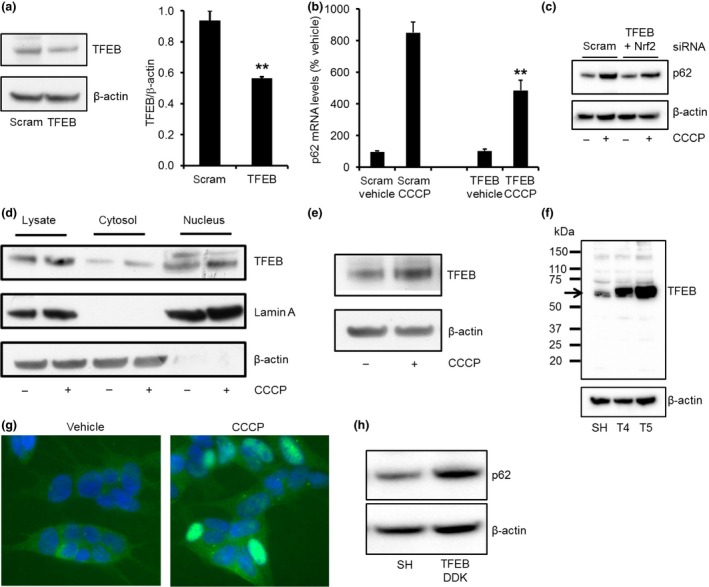
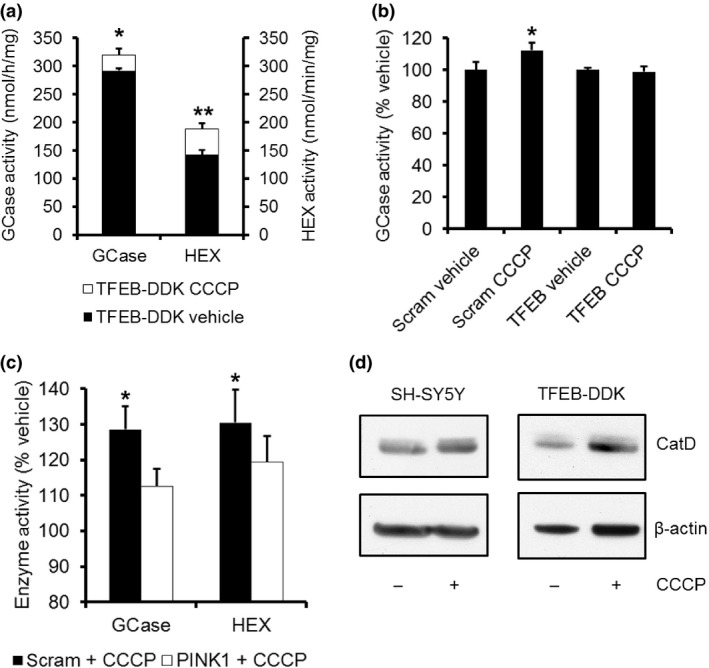
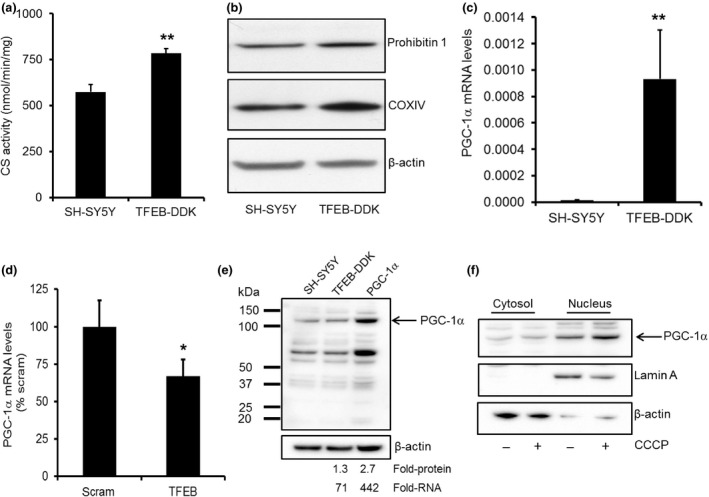
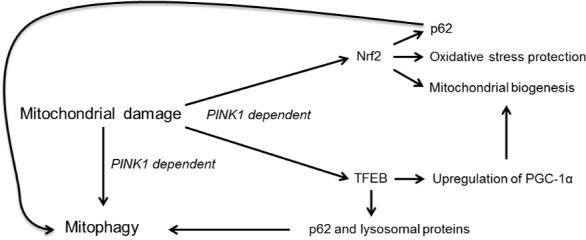
Impairment of the autophagy-lysosome pathway is implicated with the changes in α-synuclein and mitochondrial dysfunction observed in Parkinson's disease (PD). Damaged mitochondria accumulate PINK1, which then recruits parkin, resulting in ubiquitination of mitochondrial proteins. These can then be bound by the autophagic proteins p62/SQSTM1 and LC3, resulting in degradation of mitochondria by mitophagy. Mutations in PINK1 and parkin genes are a cause of familial PD. We found a significant increase in the expression of p62/SQSTM1 mRNA and protein following mitophagy induction in human neuroblastoma SH-SY5Y cells. p62 protein not only accumulated on mitochondria, but was also greatly increased in the cytosol. Increased p62/SQSMT1 expression was prevented in PINK1 knock-down cells, suggesting increased p62 expression was a consequence of mitophagy induction. The transcription factors Nrf2 and TFEB, which play roles in mitochondrial and lysosomal biogenesis, respectively, can regulate p62/SQSMT1. We report that both Nrf2 and TFEB translocate to the nucleus following mitophagy induction and that the increase in p62 mRNA levels was significantly impaired in cells with Nrf2 or TFEB knockdown. TFEB translocation also increased expression of itself and lysosomal proteins such as glucocerebrosidase and cathepsin D following mitophagy induction. We also report that cells with increased TFEB protein have significantly higher PGC-1α mRNA levels, a regulator of mitochondrial biogenesis, resulting in increased mitochondrial content. Our data suggests that TFEB is activated following mitophagy to maintain autophagy-lysosome pathway and mitochondrial biogenesis. Therefore, strategies to increase TFEB may improve both the clearance of α-synuclein and mitochondrial dysfunction in PD. Damaged mitochondria are degraded by the autophagy-lysosome pathway and is termed mitophagy. Following mitophagy induction, the transcription factors Nrf2 and TFEB translocate to the nucleus, inducing the transcription of genes encoding for autophagic proteins such as p62, as well as lysosomal and mitochondrial proteins. We propose that these events maintain autophagic flux, replenish lysosomes and replace mitochondria.
Overview
The claims and statistics of this paper haven’t been checked yet.
Run the check — free, no account needed. It reads the open-access text and checks the sources it cites.
Integrity signals
Registry
Cites
Statistics
Figures
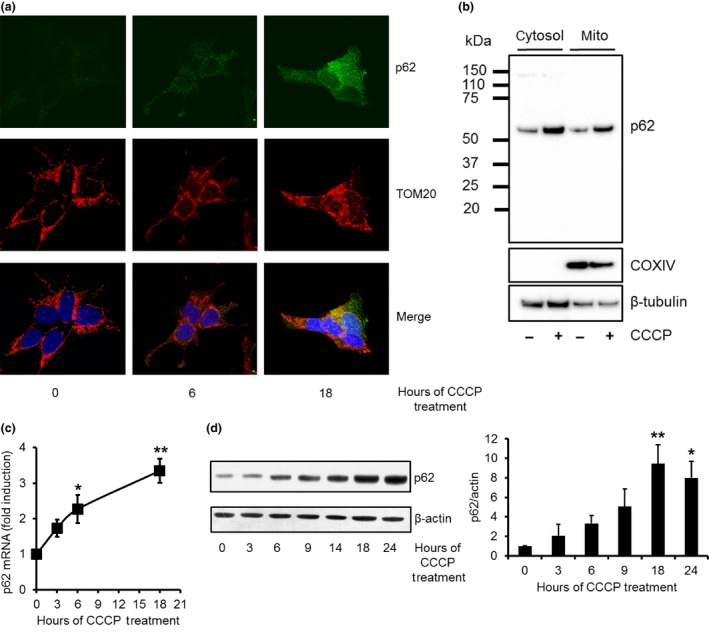
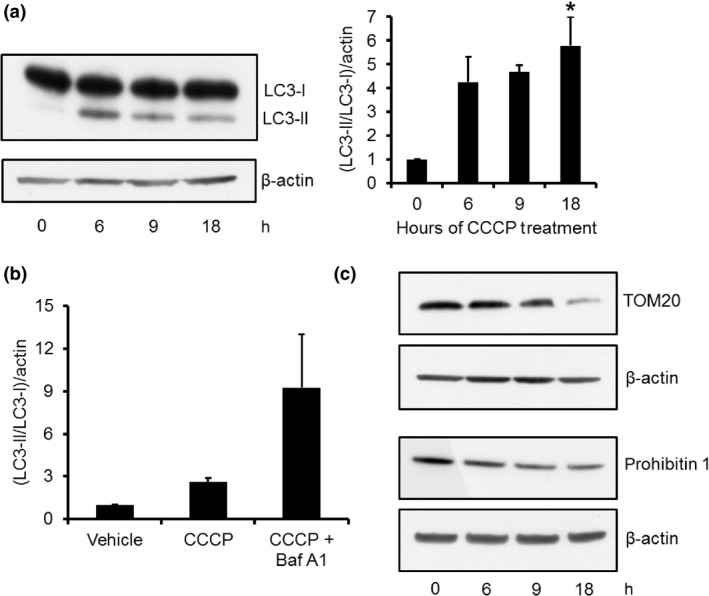
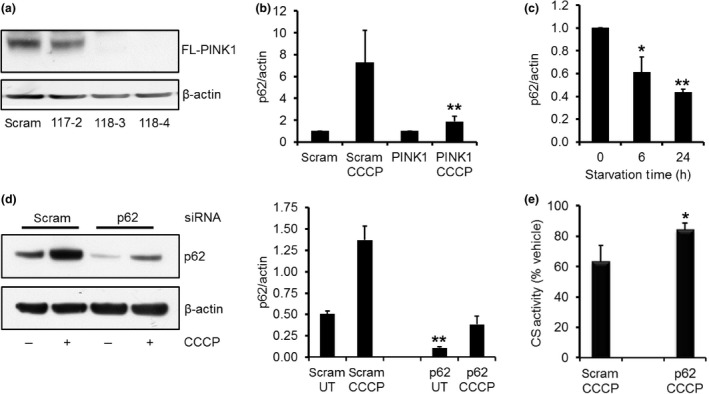
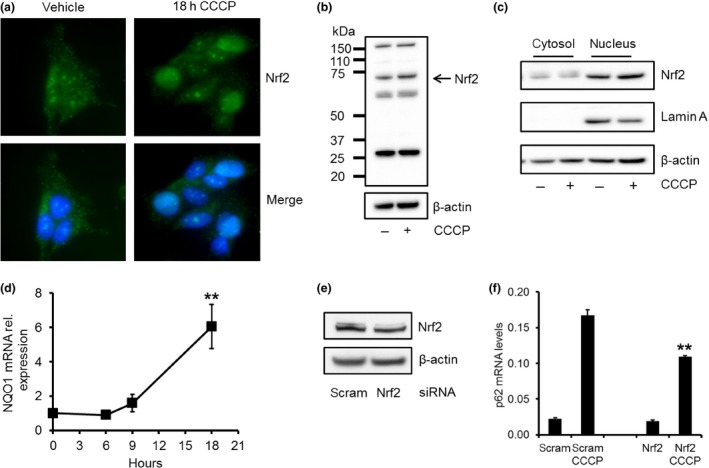
Verification
Claims the paper makes
The claims and statistics of this paper haven’t been checked yet.
Run the check — free, no account needed. It reads the open-access text and checks the sources it cites.
Claims other papers make about this one
Each is checked against this paper’s own text: does it say what the citing paper says it does?
In the citing paper
“As expected, shortly after mitophagy initiation by CCCP, the transcription factors Nrf2 (Nuclear factor erythroid 2-related factor 2) and TFEB are both translocated to the nucleus [132].”
From Mitochondrial Uncoupling: A Key Controller of Biological Processes in Physiology and Diseases (2019) · cites this paper as [132]
Self-check
Percentages, sums and reported differences re-computed from the paper’s own numbers.
The self-check needs the paper’s full text.
Citations
Cites
Repertoires of Autophagy in the Pathogenesis of Ocular Diseases
Li, Y., Jiang, Q. L., Cao, G.-F., Yao, J., & Yan, B. (2015) · Cellular Physiology and Biochemistry · doi:10.1159/000373980 · Cited by 16,351
Mutations in the parkin gene cause autosomal recessive juvenile parkinsonism
Kitada, T., Asakawa, S., Hattori, N., Matsumine, H., Yamamura, Y., Minoshima, S., Yokochi, M., Mizuno, Y., & Shimizu, N. (1998) · Nature · doi:10.1038/33416 · Cited by 5,227
Cui, C., Cui, J., Jin, F., Cui, Y., Li, R., Jiang, X., Tian, Y., Wang, R. C., Jiang, P., & Gao, J. (2017) · Cellular Physiology and Biochemistry · doi:10.1159/000479571 · Cited by 5,214
Parkin is recruited selectively to impaired mitochondria and promotes their autophagy
Narendra, D., Tanaka, A., Suen, D.-F., & Youle, R. J. (2008) · The Journal of Cell Biology · doi:10.1083/jcb.200809125 · Cited by 4,026
Hereditary Early-Onset Parkinson's Disease Caused by Mutations in PINK1
Valente, E. M., Abou-Sleiman, P. M., Caputo, V., Muqit, M. M. K., Harvey, K., Gispert, S., Ali, Z., Del Turco, D., Bentivoglio, A. R., Healy, D. G., et al. (2004) · Science · doi:10.1126/science.1096284 · Cited by 3,481
PINK1 Is Selectively Stabilized on Impaired Mitochondria to Activate Parkin
Narendra, D. P., Jin, S. M., Tanaka, A., Suen, D.-F., Gautier, C. A., Shen, J., Cookson, M. R., & Youle, R. J. (2010) · PLoS Biology · doi:10.1371/journal.pbio.1000298 · Cited by 2,944
PINK1/Parkin-mediated mitophagy is dependent on VDAC1 and p62/SQSTM1
Geisler, S., Holmström, K. M., Skujat, D., Fiesel, F. C., Rothfuss, O. C., Kahle, P. J., & Springer, W. (2010) · Nature Cell Biology · doi:10.1038/ncb2012 · Cited by 2,835
A Gene Network Regulating Lysosomal Biogenesis and Function
Sardiello, M., Palmieri, M., di Ronza, A., Medina, D. L., Valenza, M., Gennarino, V. A., Di Malta, C., Donaudy, F., Embrione, V., Polishchuk, R. S., et al. (2009) · Science · doi:10.1126/science.1174447 · Cited by 2,543
Multicenter Analysis of Glucocerebrosidase Mutations in Parkinson's Disease
Sidransky, E., Nalls, M. A., Aasly, J. O., Aharon-Peretz, J., Annesi, G., Barbosa, E. R., Bar-Shira, A., Berg, D., Bras, J., Brice, A., et al. (2009) · New England Journal of Medicine · doi:10.1056/nejmoa0901281 · Cited by 2,135
The role of autophagy in neurodegenerative disease
Nixon, R. A. (2013) · Nature Medicine · doi:10.1038/nm.3232 · Cited by 2,059
Cited by
Sorted by citations
The mitophagy pathway and its implications in human diseases
Wang, S., Long, H., Hou, L., Feng, B., Ma, Z., Wu, Y., Zeng, Y., Cai, J., Zhang, D., & Zhao, G. (2023) · Signal Transduction and Targeted Therapy · doi:10.1038/s41392-023-01503-7 · Cited by 959
Deciphering the Molecular Signals of PINK1/Parkin Mitophagy
Nguyen, T. N., Padman, B. S., & Lazarou, M. (2016) · Trends in Cell Biology · doi:10.1016/j.tcb.2016.05.008 · Cited by 749
Gureev, A. P., Shaforostova, E. A., & Popov, V. N. (2019) · Frontiers in Genetics · doi:10.3389/fgene.2019.00435 · Cited by 663
Moldogazieva, N. T., Mokhosoev, I. M., Melnikova, T. I., Porozov, Y. B., & Terentiev, A. A. (2019) · Oxidative Medicine and Cellular Longevity · doi:10.1155/2019/3085756 · Cited by 510
Mitochondrial Uncoupling: A Key Controller of Biological Processes in Physiology and Diseases
Demine, S., Renard, P., & Arnould, T. (2019) · Cells · doi:10.3390/cells8080795 · Cited by 476
Metadata
- Authors
- Ivankovic, D., Chau, K., Schapira, A. H. V., & Gegg, M. E.
- Affiliations
- UCL Queen Square Institute of Neurology (GB)
- Corresponding author
- Gegg, Matthew E.
- Venue
- Journal of Neurochemistry
- Publisher
- Wiley
- Published
- 2015-11-24
- Volume
- 136
- Issue
- 2
- Pages
- 388-402
- ISSN
- 0022-3042 (ISSN-L)
- 1471-4159
- PMC
- PMC4949652
- OpenAlex
- W1853148353
- Cited by
- 264
- References
- 62
- Citations by year
- 2026: 22 · 2025: 31 · 2024: 28 · 2023: 30 · 2022: 33 · 2021: 28 · 2020: 24 · 2019: 24 · 2018: 16 · 2017: 18 · 2016: 9
- FWCI
- 11.24
- Type
- journal article
- Language
- en
- Open access
- hybrid
- doi.org
- Licence
- Locations
- Journal of Neurochemistry (publishedVersion, cc-by)
- Europe PMC (PubMed Central) (publishedVersion, cc-by)
- PubMed Central (publishedVersion, cc-by)
- PubMed (publishedVersion)
- UCL Discovery (University College London) (submittedVersion)
- Funders
- Medical Research Council (MR/M006646/1)
- Topics
- Life Sciences › Biochemistry, Genetics and Molecular Biology › Cell Biology › Autophagy in Disease and Therapy
- Health Sciences › Medicine › Clinical Neurology › Parkinson's Disease Mechanisms and Treatments
- Life Sciences › Biochemistry, Genetics and Molecular Biology › Molecular Biology › Nuclear Receptors and Signaling
- Keywords
- mitophagy, PINK1, Parkin, autophagy-lysosome pathway, mitochondrial biogenesis, lysosomal biogenesis, p62, Nrf2, TFEB, PGC-1α, alpha-synuclein, Parkinson's disease, glucocerebrosidase, cathepsin D, mitochondrial dysfunction, SH-SY5Y cells
- MeSH terms
- Sequestosome-1 Protein, Mitochondrial Precursor Protein Import Complex Proteins, PTEN-Induced Putative Kinase, Carbonyl Cyanide m-Chlorophenyl Hydrazone, Cell Nucleolus, Cytosol, Gene Expression Regulation, Heat-Shock Proteins, Humans, Lysosomes, Mitochondria, Neuroblastoma, Protein Kinases, Receptors, Cell Surface, Time Factors, Transfection, Tubulin, Gene Expression Regulation, Neoplastic, Membrane Transport Proteins, RNA, Small Interfering, Ubiquitin-Protein Ligases, Cell Line, Tumor, Basic Helix-Loop-Helix Leucine Zipper Transcription Factors, Proton Ionophores, Mitophagy
About these checks
Registry, retraction, Cites and statistics results are computed, not judged, with one exception: a printed reference that no index lists is read once by a model before it counts as a citation error. Claims are extracted by a model and kept only when their quote appears verbatim in the text; each cited source is then checked, with a model’s help, for whether it says what the claim relies on. Those verdicts can be wrong — read the claim’s quote and the cited source before relying on one.
Statistics and arithmetic are recomputed, not judged.
Confidence bands are shown only for fields calibrated on our annotated test set. None is calibrated yet, so no band is shown.
What counts as a claim ›How we measure confidence ›How we check this ›
Are you an author, or do you see a problem with this page? Request a review
